Training device having immediate training effect in water for swimmers
US20160107034A1
2016-04-21
14/828,511
2015-08-17
Abstract:
The purpose of the invention was to develop a training device that allows acquiring sense of water immediately after workouts with it.
The possible embodiment comprise an elastic or stretching material with gaseous medium between water and sportsman's palm and (or) forearm, and at least one valve. The embodiment allows to create the artificial gaseous medium at the inner side of human hand and/or forearm in water and to change its pressure and volume. The gaseous medium pressure and volume are set for a sportsman to change his psychosomatic sensations and lead to changes in mechanics and dynamics of the sportsman strokes in water.
The invention with gaseous medium assists swimmer to improve his ability to sense water. If pressure of gaseous medium is properly selected there is an effect of vanishing support during execution of strokes. The effect occurs due to properties of fluent gaseous medium in elastic/stretchy material. Shape of the gaseous medium is very responsive to propulsive forces during underwater part of a stroke. The gaseous medium deformations by water streams/flows cause feedback to swimmer hand, arm, and brain about applied forces. Interactive perception of water through the vanishing gas support assists swimmer to find right mechanics and dynamics of strokes that correspond with the current factors influencing swimming. In other words the device assists in development of human physical qualities required for increase in efficiency of applying hand's (or arm's) force during underwater part of strokes. A sportsman recalls the developed mechanics and dynamics right after workout with the device and its doffing.
Inventors:
- Dmitry Konstantinovich Shaytan 2 🇷🇺 Moscow, Russian Federation
- Alexandr Borisovich Kochergin 2 🇷🇺 Penza, Russian Federation
- Maria Vasilyevna Zberiya 1 🇷🇺 Moscow, Russian Federation
Interested in similar patents?
Get notified when new applications in this technology area are published.
Description
CROSS-REFERENCE TO RELATED APPLICATIONS
RU2014133753 date 18 Aug. 2014
FEDERALLY SPONSORED RESEARCH
None
The following is references cited of some prior art that presently appears relevant:
U.S. Patent Documents
U.S. Pat. No. 1,664,187 A, US 20080064573 A, US 20080242168 A1, US D299262,
US D344113 S, U.S. Pat. No. 3,698,026, U.S. Pat. No. 3,802,009, U.S. Pat. No. 3,827,095, U.S. Pat. No. 3,835,493 A,
U.S. Pat. No. 3,874,014, U.S. Pat. No. 4,027,347 A, U.S. Pat. No. 4,316,300 A, U.S. Pat. No. 4,547,919 A, U.S. Pat. No. 4,676,760 A,
U.S. Pat. No. 6,685,521, U.S. Pat. No. 4,690,651 A, U.S. Pat. No. 4,832,643, U.S. Pat. No. 4,913,418 A, U.S. Pat. No. 5,025,502 A,
U.S. Pat. No. 5,304,080 A, U.S. Pat. No. 5,641,316 A, U.S. Pat. No. 5,651,710 A, U.S. Pat. No. 5,820,526 A, U.S. Pat. No. 6,743,023 B2,
U.S. Pat. No. 6,899,581 B1, U.S. Pat. No. 6,955,633 B2, U.S. Pat. No. 7,033,235, U.S. Pat. No. 7,090,618 B2, U.S. Pat. No. 7,179,146 B2,
U.S. Pat. No. 7,582,045, U.S. Pat. No. 8,585,453 B2, U.S. Pat. No. 8,961,251.
Foreign Patent Documents
CH184900 (A), DE 202004006374 U1, FR2596659 (A1), FR2855421 (A1),
GB2423259 (A), RU 2430764 C1, SU 1443907, SU 1583115, SU 1666132A1,
SU 450740, SU 931201, SU 952280, United Kingdom Patent 2516285-A.
FIELD OF THE INVENTION
This invention relates to training process of a human in water using his/her hands and arms.
The purpose of the invention is to enable a sportsman to adjust resistance and hydrodynamic parameters of hand or hand and forearm in water during training process, while maintaining natural position of limb (hand, forearm, and arm) and its sensations of water streams/flows, and providing an immediate training effect. The invention refers to training means having an expeditious training effect, i.e. to training means having training effect that occurs immediately after their use. After doffing of the invention sportsman has the sense of water and a feeling of support in water, so he/she sense the most effective mechanics and dynamics of his/her strokes, i.e. he/she sense how to apply his limbs strength to a stroke for getting more propulsive force and he/she is able to convert his/her power into speed more effectively.
Moreover, the invention can be used for performing athletic (strength) gymnastics in water due to its possibilities to adjust propulsion of human limb in water for sportsman's objectives during training process. In this case high pressure and large volume of the gaseous medium are used.
All the described properties are achieved by the fact that the device is designed as a gaseous medium shell worn on the inner side of hand or hand and forearm.
BACKGROUND OF THE INVENTION
While working with trainers from Russian national swimming team I found out that there was an issue of immediate regain or improvement of sense of water during strokes by bared hands, forearms, and arms. Prior art devices and methods had delayed training effect or inconvenient usability for this objective. Moreover, the prior art devices distorted propulsion of limbs in water in a way preventing to get the desired immediate effect. The objective of the invention was to develop easy to use device that allows sportsman to get immediate effect after its use in improving sense of water during strokes.
For fast swimming a sportsman should use not only his strength and endurance qualities but also his swimming techniques the most effectively. In the other words he/she should convert his power into speed the most efficiently.
Effective mechanics and dynamics of strokes are individual for each swimmer and depend on many factors including, but not limited to: changes in swimmer's weight, his/her center of inertia, muscles strength and tension, strokes frequency, and body surfaces shapes. As a consequence a swimmer must adapt his mechanics and dynamics of strokes regularly. Swimmer's skill to adapt his mechanics and dynamics of strokes to the most effective propulsion is a result of his ability to sense water. The so-called sense of water is an interactive perception of water streams/flows by swimmer that allows him/her to create his/her greatest possible propulsive force in water.
Inability to find or loss of sense of water is a common condition that requires immediate correction. Low hydrodynamic characteristics of strokes negatively affect swimmers competitive activities (results) and jeopardize preparatory training period.
That is why swimmers need training devices that allow them to acquire sense of water immediately and easily during major training workouts.
The purpose of the invention was to develop a training device that allows sportsman to acquire sense of water immediately after workouts with it. While developing the device we fathomed that it had to allow changing and setting of required parameters of hand propulsion in water for a sportsman, it must allow mobility (or motility) of joints/tissues of hands and forearms, it must allow swimmer to keep sensation of water streams/flows, and even to enhance this sensation.
The prior art devices have lack of:
-
- immediate training affect,
- or features of setting required parameters of hand propulsion for a sportsman,
- or hand and forearm sensitivity to allow swimmer to keep sensation of water stream by his hands/forearms
- or to keep natural/unforced position of hand during stroke.
Our invention doesn't have these set of disadvantages that makes the invention perfect for immediate and easy solution to solve sense of water issues.
DESCRIPTION OF THE PRIOR ART There are a lot of training means to develop swimmer's different qualities by assisting him/her to:
-
- control over the trajectory of a hand, arm, foot, and leg during stroke in swimming (for example, RU 1443907, U.S. Pat. No. 8,585,453 B2, U.S. Pat. No. 5,641,316, U.S. Pat. No. 4,832,643);
- ensure an equitable distribution of the load on muscles and joints during stroke in swimming (for example, SU 1704801 A1);
- control over a proper position and form of fingers, forearm, arm, shoulder and other body parts during swimming (for example, UK2516285-A, GB2423259 (A), U.S. Pat. No. 8,585,453, US 20090318041);
- change propulsive force of hand and arm and (or) leg in water for strengthening of swimmer's hands, arms, forearms, shoulders, legs etc. by increasing resistance of limbs to water (for example, RU2430764, U.S. Pat. No. 8,961,251, U.S. Pat. No. 5,651,710 A, U.S. Pat. No. 6,955,633 B2, FR2855421 (A1), DE 202004006374 U1, U.S. Pat. No. 7,179,146 B2, U.S. Pat. No. 6,899,581 B1, U.S. Pat. No. 4,913,418 A, U.S. Pat. No. 5,304,080 A, U.S. Pat. No. 7,582,045, U.S. Pat. No. 5,820,526 A, FR2596659 (A1), U.S. Pat. No. 7,090,618 B2, US D344113 S);
- change propulsive force of hand and arm and (or) leg in water to improve propulsion technique (SU931201, SU 1666132A1, RU 1583115, U.S. Pat. No. 6,743,023 B2, U.S. Pat. No. 3,835,493 A, U.S. Pat. No. 3,698,026).
The training means that assist sportsmen in development swimming qualities could be grouped based on:
-
- what they are aimed for;
- how they attached to a hand, forearm, and arm;
- time to achieve the desired training effect (delayed or immediate);
- materials used for construction (flexible, non flexible, or stretching);
- inflatable or non-inflatable;
Below is brief discussion about advantages and disadvantages of each group of devices:
-
- 1) Attachment of non-flexible material to hand in the area of palm. As a rule, these materials are rigid, hereinafter rigid material mean that changes that occur in geometry of the device during stroke are insignificant relative to its dimensions. Such devices are called swimming paddles. They change the surface area of a palm that leads to changes in propulsion of hand in water. Paddles are well known for their geometrical and dimension variety (examples, U.S. Pat. No. 4,316,300 A, U.S. Pat. No. 8,585,453 B2, U.S. Pat. No. 8,585,453).
A fixed dimension is one of disadvantages of most paddles that does not allow sportsman to adjust propulsion of hand in water for sportsman's objectives during training process. The other major disadvantage of these devices is rigidity of construction required to create resistance during stroke. In this case palm and hand lost natural/free flexibility in contact with water. The hand pushes water by laying on rigid structure. Rigidity of material provides fixed hydrodynamic properties of a paddle, but simultaneously a sportsman loses hand's sensations of water streams/flows and its hands natural/unforced position during stroke. However, sensation of water is one of the main factors in effective swimming. After swimming with the paddles, after their removal, the absence of the sense of water does not allow swimmers to transfer trained power to swimming speed. Training effect after training with the swimming paddles comes only in a few days or more. Such devices are called training means with delayed training effect.
-
- 2) Attachment to hand in the area of palm a flexible (but not stretchy) material or any material with special convexity (or convexities) or a material having special form (examples, UK2516285-A, RU 1583115, U.S. Pat. No. 5,651,710 A, U.S. Pat. No. 6,899,581 B1, U.S. Pat. No. 4,913,418 A, U.S. Pat. No. 5,304,080 A, U.S. Pat. No. 3,698,026). Such devices refer to swimming paddles also. They change the surface area of palm, what leads to changes in propulsion of a hand in water. Because of its flexibility or special convexity (or convexities) sportsman can keep natural position of his hand, but simultaneously sportsman loses his hand's sensations of water stream during stroke. For more understanding we can draw an analogy between swimmer hand during stroke and surgeon hand during an operation: swimmer hand and forearm need to be the most sensitive and their joints/tissues mobile to be able to set right configuration during stroke. For keeping maximum of sensitivity and mobility or motility of a hand during operation surgeon uses thin surgical gloves because any dense, non-elastic materials, reduce sensitivity and mobility or motility of his hand. Back to the swimming paddles reviewed above they enable to change very few parameters of position of a hand and a forearm in water (for example, angle between fingers and palm, position of fingers and so on) but they don't allow swimmer to keep sensitivity and mobility or motility of a bared hand, forearm, or arm during stroke. The other disadvantage is fixed dimensions that don't allow swimmer to set (or fix) required parameters of propulsion of hand in water for sportsman's objectives during training process. Other disadvantage of such devices is the delayed training effect. Training effect after training with these swimming paddles comes only in a few days or more. Such devices are called training means with delayed training effect.
- 3) Attachment of flexible or non-flexible material with holes to hand in the area of palm (U.S. Pat. No. 7,179,146 B2, SU 1704801 A1). Such devices also refer to swimming paddles. They change the surface area of palm, what leads to changes in propulsion of hand in water. A swimmer can feel by palm water passing through holes. However, a swimmer can't get sense of water of his/her bare hand propulsion during stroke. The disadvantage is fixed dimensions that don't allow sportsman to set/fix required parameters of propulsion of hand in water for sportsman's objectives during training process. Other disadvantage of such devices is that training effect after training comes only in a few days or more. Such devices are training means with delayed training effect.
- 4) Putting on hand a device with webbed fingers. Such devices are called swimming gloves and made from flexible or elastic materials (for example, U.S. Pat. No. 1,664,187 A, U.S. Pat. No. 4,027,347 A, U.S. Pat. No. 5,641,316 A, U.S. Pat. No. 8,961,251, US 20080242168 A1, U.S. Pat. No. 5,641,316, and FR2596659 (A1)). With the help of such devices a human can adjust propulsion of hand in water by moving his/her fingers apart, that is, due to increase of effective area of the webs among fingers. These devices are able to provide natural feel of hand in water. However, their disadvantages are off-key/forced position of fingers during strokes in swimming, as well as impossibility of exact settings of parameters of gloves corresponding to propulsion of hand in water that is required for sportsman. The other disadvantage of such devices is that training effect after training comes only in a few days or more. Such devices are training means with the delayed training effect.
- 5) Devices held in a hand grip that are called dumbbells in water aerobics (examples, U.S. Pat. No. 7,090,618 B2, US D344113 S). Dumbbells allow sportsman to adjust propulsion of hand in water by rotating it at different angles in relation to strokes. To their disadvantage is an off-key/forced position of fingers during strokes in swimming. The second disadvantage is rigidity of construction required to create resistance during stroke. Rigidity of material is required to fix hydrodynamic properties of dumbbells, but simultaneously sportsman loses his hand's natural sensations during strokes. The other disadvantage of such devices is that training effect after training comes only in a few days or more. Such devices are training means with the delayed training effect.
- 6) Devices held in a hand grip with varying resistance (for example, RU2430764, U.S. Pat. No. 6,955,633 B2). The devices allow sportsman to adjust propulsion of a hand in water by rotating it at different angles in relation to stroke and by moving it in different directions under the water. Such devices change its resistance during motion; also these devices allow adjusting propulsion of hand in water for sportsman's needs during training process. Their disadvantage is an off-key or forced position of fingers during stroke in swimming and as a result loss of feel and sensation of water stream by palm or hand.
- 7) Devices attached to the side surface of hand or (and) arm (for example, SU 1443907, U.S. Pat. No. 6,743,023 B2, GB2423259 (A), U.S. Pat. No. 3,827,095, US 20090318041). The devices are not inflatable. Such devices allow sportsman to adjust propulsion of hand in water for sportsman's needs during training process. They also allow swimmer to keep his/her hand's sensations of water streams/flows and hands natural position during stroke. However, these devices are used to improve swimming techniques and not for immediate detection of sense of water. Disadvantage of such devices is that training effect after training comes only in a few days or more. Such devices are training means with delayed training effect.
- 8) Inflatable or buoyant products for swimming, for example, such as armlets and other devices used to retain body afloat (for example, U.S. Pat. No. 3,802,009, U.S. Pat. No. 7,033,235), the devices for trainings of beginners (for example, U.S. Pat. No. 7,033,235), the devices for easy or relax swimming (for example, U.S. Pat. No. 7,033,235, U.S. Pat. No. 6,685,521), the devices for gymnastics in water (for example, FR2855421 A1, DE 202004006374 U1). Effects of these devices are not related to improve propulsion of hands in water during stroke. More over if these devices are used to improve the hand propulsion there are same disadvantages as described in the previous training means above.
- 9) Non-inflatable devices having glove or mitten form. Such devices are used for easy, comfortable and fast swimming (for example, SU952280, U.S. Pat. No. 3,874,014), but not assist in improving propulsion technique of swimming. For example, U.S. Pat. No. 3,874,014 and SU952280 are webbed mitts that enables user to increase the effective area of his hand and thereby attain greater stroking force to propel him through water by spreading his fingers outwardly. The SU952280 has a special feature in design having no web between thumb and forefinger. This helps human not only to swim but also to work, keep objects in/under water. More over if someone uses these devices to improve hand propulsion there are same disadvantages as described in the previous training means above.
- 10) Inflatable devices having glove or mitten form. Such devices are used to retain hands afloat, or for easy and comfortable swimming (for example, U.S. Pat. No. 4,676,760, U.S. Pat. No. 4,690,651 A, CH 184900 (A), US D299262), or for comfortable working under water (for example, U.S. Pat. No. 5,025,502 A), or as water-rescue equipment (for example, SU450740, U.S. Pat. No. 4,547,919 A, US D299262) but all of them don't assist in improving propulsion technique of swimming. More over if someone uses these devices to improve hand propulsion there are same disadvantages as described in the previous training means above.
The following is brief discussion of particular inventions/devices that are regarded as prior art for the current patent application.
-
- 11) The objective of invention SU931201 is to increase sportsman's efforts for creating water support during strokes. This is achieved by deterioration of hydrodynamic properties of hand that forces swimmer to put more effort in the frontal plane to create a feeling of support in water. The swimmer must put more efforts to get water support during strokes. The device is non-inflatable paddle that is made from rigid material. The embodiment has special design with holes that are made to reduce water resistance during strokes. Disadvantage of the invention is that swimmer's hand has off-key/forced position because of straight rigid panel supporting hand. Other disadvantage is fixed dimensions that don't allow adjusting and setting required propulsion of hand in water for sportsman's needs during training process.
- 12) Special device called PT Paddles or Palm Paddles or Egg Trainer (official website link is http://www.swimsmooth.com/ptpaddles.html). In refer to the website content: “PT Paddles are a great tool to help you develop more feel for the water. They do this by removing the influence and propulsion of your hand when you are swimming, whilst keeping your hand in the correct position. Why would you want to remove the propulsion from your hand? By doing this, you are forced to start to use your forearm to generate some propulsion on the water. This is one of the secrets of elite swimmers, not only do they use their hands to generate propulsion but their forearms too—Perfect Technique”. While using the device hand is almost not involved in stroke, so the device doesn't refer to a training means that allows swimmer to acquire a feeling of support in water by hand or palm. Neither the device is oriented towards retention or immediate regain the sense of water by hand for effective mechanics and dynamics of strokes. Other disadvantage is fixed dimensions that don't allow adjusting and setting propulsion of hand in water for sportsman's needs during training process. The device is made from rigid material, hereinafter rigid material mean that changes in geometry during stroke are insignificant relative to its dimensions.
- 13) Invention SU 1666132A1 objective is to exercise swimmer's efforts for creating water support during strokes. It is non-inflatable device. The operating principle is to increase rowing part of the surface of a limb. In addition it is possible to adjust the amount and nature of resistance and to change a nature of streams flowing around limbs (laminar stream or turbulent stream) by attaching different number of straps/tapes. The device comprise flexible supporting element attached to a limb (for example, a sock, a glove, a belt) and straps/tapes that are attached to the supporting element. Disadvantage is in delayed training effect. The other possible disadvantage is complicated usability.
- 14) Device U.S. Pat. No. 3,835,493 is a swim fin of fabric type material. The device is attached to swimmer at its fore and aft ends thereby providing ballooning effect between the points of attachment during power stroke. The ballooning effect increases propulsion of arm in water. Impossibility of improving of propulsion technique of hands is to their disadvantage. Other disadvantage is fixed dimensions that don't allow adjusting and setting propulsion of hand in water for sportsman's needs during training process.
- 15) Device described in the patent U.S. Pat. No. 7,582,045. The device is a variable resistance aquatic exercise apparatus relates to aquatic exercise training means. Its disadvantage is an unnatural position of hands during strokes. Other disadvantage is that the device assists in strengthening of swimmer's hands but not in improving propulsion techniques.
- 16) Device described in the patent U.S. Pat. No. 5,820,526 A. It is a weighted aquatic exercise glove with variable resistance. Weights permit enhancement of muscular tension and aerobic efficiency both when the swimmer's hand is in air and in water, complimenting the enhancement provided by water resistance due to the glove webbing. Unnatural/forced position of fingers during the stroke and the delayed training effect are to their disadvantage. Other disadvantage is that the device assists in strengthening of swimmer's hands and arms but not in improving propulsion techniques.
- 17) Device described in the patent U.S. Pat. No. 4,832,643. It is a mitten-like paddle. The hand paddle is based on the concept that if paddle is used in reasonably proper execution of any of the four swimming styles than the Bernoulli Effect on the hand paddle provides increased speed and as a result it will make inefficiencies in swimmer's strokes more readily detectable. One disadvantage is the delayed training effect. The other disadvantage is fixed dimensions that don't allow adjusting propulsion of hand in water for sportsman's needs during training process.
- 18) Device described in the patent U.S. Pat. No. 3,827,095. It is non-inflatable hand fin. The position of the fin members is adjusted automatically in response to variations in the force applied. Whereby the fin action is adjusted to the strength of the individual user. One disadvantage is that the device is used for easy and comfortable swimming and underwater works, but it doesn't assist in improving propulsion techniques.
- 19) Device described in the patent US D299262 for the ornamental design for an inflatable swimming glove. It has one chamber/cavity for air or other gas covering all the surface of hand. Such device can be used for easy and comfortable swimming or as water-rescue equipment, but not for improving in propulsion techniques.
- 20) Device described in the patent SU 1583115. The device has a plate made of flexible material or it consists of pivotally interconnected two parts and carrying loops for attachment to limbs. The device allow swimmer to adjust propulsion of a hand in water for his/her needs during the training process due to changes in curvature of plate or angles between two plates. Disadvantages are the delayed training effect and forced position of hands during stroke. Other disadvantage is that the device doesn't assist in improving sense of water or feel of support in water; the device is used for improving a speed factor of stroke (a stroke frequency factor).
SUMMARY OF THE PRIOR ART DISADVANTAGES
The prior art devices or means have the following problems for training in water that not allow sportsman to retain or immediately find after their use the sense of water for effective mechanics and dynamics of strokes:
-
- One disadvantage is that such devices don't allow swimmer to keep or even increase sportsman sensitivity of water streams during stroke. In other words these devices decrease or deprive sensations of water streams by hands, and (or) forearms, and (or) arms during stroke. Hence, decrease human brain feasibility to adjust limb movements;
- The other disadvantage is unnatural/forced position of fingers and (or) of hand and (or) of arm during stroke. In other words these devices decrease or deprive mobility or motility of a hand, and (or) forearm, and (or) arm during stroke.
- The other disadvantage is fixed dimension of such devices that don't allow setting propulsion of hand in water for sportsman's objectives during training process.
- The other disadvantage is that training effect after training with such devices comes only in a few days or more. Such devices are called training means with the delayed training effect.
SUMMARY OF THE INVENTION
The purpose of the invention was to develop a training device that allows acquiring sense of water immediately after workouts with it. While developing the device we fathomed that it had to allow to change and to set required parameters of hand propulsion in water for a sportsman, it must allow mobility (or motility) of joints/tissues of hands and forearms, it must allow swimmer to keep sensation of water streams, and even to enhance this sensation.
The invention is a device for training in water comprising:
-
- at least one shell for air or other gas,
- said shell is made from elastic material,
- said shell is worn on inner side of human hand or inner side of hand and forearm,
- said shell has at least one valve,
- said shell changes its volume and, or, mechanical strain of elastic material due to pressure changes,
- said shell is attached to inner side of hand or hand and forearm by a material embracing hand or hand and forearm of swimmer or sportsman during strokes in water.
The possible embodiment comprise an elastic or stretching material with gaseous medium between water and sportsman's palm and (or) forearm, and at least one valve.
The embodiment allows to create the artificial gaseous medium at the inner side of human hand and/or forearm in water and to change its pressure and volume. The gaseous medium pressure and volume are set for a sportsman to change his psychosomatic sensations and lead to changes in mechanics and dynamics of the sportsman strokes in water.
The invention with gaseous medium assists swimmer to improve his ability to sense water. If pressure of gaseous medium is properly selected there is an effect of vanishing support during execution of strokes. The effect occurs due to properties of fluent gaseous medium in elastic/stretchy material. Shape of the gaseous medium is responsive to propulsive forces during underwater part of a stroke. The gaseous medium deformations by water streams/flows cause feedback to swimmer hand, arm, and brain about applied forces. Interactive perception of water through the vanishing gas support assists swimmer to find right mechanics and dynamics of strokes that correspond with the current factors influencing swimming. In other words the device assists in development of human physical qualities required for increase in efficiency of applying hand's (or arm's) force during underwater part of strokes. A sportsman recalls the developed mechanics and dynamics right after workout with the device and its doffing.
The invention refers to training means having an expeditious training effect, i.e. to training means having a training effect that occurs immediately after their use. After doffing of the device swimmer has the sense of water and a feeling of support in water by his/her bared arm, so he/she senses the most effective mechanics and dynamics of his/her stroke, i.e. he/she knows how to apply his/her arm's strength to a stroke for getting more propulsive force and he/she is able to convert power into speed more effectively.
The invention can be worn (but not limited) on the hand or hand and forearm.
All the described properties are achieved by the fact that the device is designed as an elastic shell for gas that is worn on a hand or hand and forearm. The elastic shell for gas is mounted on the palm side of a hand by straps or it is a part of a mitten or a glove like embodiments that human puts on a hand or hand and forearm.
For example, one possible embodiment of the disclosed invention has a mitten like form. It is made from elastic material that enables high mobility and/or motility of a hand and/or forearm during strokes. This design lets freedom for the hand's and forearm's joints/tissues in finding the best position for effective propulsion. This version of embodiment is more useful for sportsmen that perfectly execute their swimming techniques.
The other possible elastic mitten like form embodiment can have non-elastic material insertions to stabilize/reinforce relative position of hand and forearm, and/or fingers and palm. This version of embodiment is more useful for swimmers when both corrections for sense of water and for the relative positions of arm's joints/tissues should be made.
Moreover, the invention can be used for performing athletic (strength) gymnastics in water due to its possibilities to adjust propulsion of human limbs in water for sportsman's objectives during the training process. In this case higher pressure and larger volume of the gaseous medium are used.
BRIEF DESCRIPTION OF THE DRAWINGS
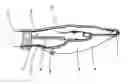
FIG. 1A is a side view of the training aid on a human hand and forearm that shows possible embodiment with the gaseous medium at the inner side of the human hand with at least one valve.
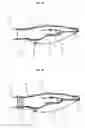
FIG. 1B is a side view of the training aid on human hand and forearm that shows possible embodiment with the gaseous medium at the inner side of human hand with a wrist band.
FIG. 1C is a side view of the training aid on human hand and forearm that shows possible embodiment with a wrist-band and fastening.
FIG. 1D is a side view of the training aid on human hand and forearm that shows the gaseous medium partly covering the inner side of human hand.
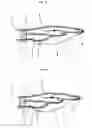
FIG. 2A is a side view of the training aid on human hand and forearm that shows the continuous gaseous medium at the inner side of hand and forearm.
FIG. 2B is a side view of the training aid on human hand and forearm that shows gaseous mediums at the inner side of hand and the inner side of forearm.
REFERENCE NUMERALS USED IN THE FIGURES
-
- 1—Human forearm
- 2—Human hand
- 3—Elastic material
- 4—Shell for air or gas
- 5—Air or other gas
- 6—Valve
- 7—Band
- 8—Fastening
DETAILED DESCRIPTION OF THE INVENTION
The present invention will be now described more fully with the reference to accompanying drawings. The following detailed description is presented for the purpose of describing certain embodiments in detail and is, thus, not to be considered as limiting the invention to the embodiments described. Rather than, the true scope of the invention is defined by the claims. Additionally, any features of any embodiments described herein are equally applicable to any other embodiments envisioned by one of ordinary skill in the art.
FIG. 1A shows a side view of the embodiment on human hand 2 and forearm 1. Elastic material 3 enfolds entire surface of hand, including wrist joint. In the area of inner side of hand the elastic material forms shell 4 with positive pressure of air or other gas 5 that gets into shell 4 through a valve 6. Volume of the shell 4 and mechanical strain of the elastic material 3 of the shell 4 are regulated by amount of positive pressure in the shell 4. Different values of positive gas 5 pressure in the shell 4 leads to changes in propulsion of hand 2 during strokes that allows sportsman to adjust propulsion of hands for requirements of training process. If positive pressure of gas 5 is set relatively to the swimmer's force of strokes in a way that it allows the shell 4 deformations by water streams/flows than he/she gets feedbacks to sense water. Interactive perception of water through the vanishing support of shell 4 assists swimmer to find right mechanics and dynamics of strokes that correspond with the current factors influencing swimming. If positive pressure allows only minor deformations of shell 4 or lead to oversized volume of the shell 4 than the invention can be used for performing athletic (strength) gymnastics in water.
Various modifications of the presented embodiment at FIG. 1A can be made for usability purposes. For example, there can be different ways of fastening the shell 4 at limbs by bands of embracing material with any clasps, fasteners, zippers, hasps, snaps, hooks, velcro, etc. or other variations in different areas. Those usability means don't change subject matter of the gaseous medium effect of the shell 4 to retain or to find the sense of water.
For example, FIGS. 1B and 1C show possible variations of usability improvements of the embodiment. At FIG. 1B there is a wrist bend 7 to improve the embodiment bracing of hand and/or to reduce amount of water getting inside between hand 2 and the shell 4. At FIG. 1C there is fastening 8 in a form of a zipper to improve put on and doffing of the shell 4.
FIG. 1D shows embodiment with the shell 4 that only partly cover the inner side of hand.
FIGS. 2A and 2B show possible variations of the invention when embodiment has elastic material 3 covering most of forearm 1 surface. At FIG. 2A there is embodiment where the elastic material 3 forms one shell 4 at the area of inner side of hand 2 and forearm 1. In the shell 4 positive pressure of air or other gas 5 can be generated through valve 6. Volume of the shell 4 and mechanical strain of the elastic material 3 of the shell 4 are regulated by amount of positive pressure in the shell 4. An amount of positive pressure in the shell 4 leads to changes in propulsion of hand 2 and forearm 1 during strokes that allows swimmer to adjust propulsion of hand 2 for requirements of training process.
FIG. 2B shows possible variation of embodiment from FIG. 2A. The difference is that at FIG. 2B embodiment comprises two shells 4. The embodiments can comprise other number of shells 4 or chambers inside shell 4, or valves 6 but these modifications don't change subject matter and the effect of the device to retain and to find the sense of water.
Claims
1) A device for training in water comprising:
a) at least one shell for air or other gas,
b) said shell is made from elastic material,
c) said shell is worn on inner side of human hand or inner side of hand and forearm,
d) said shell has at least one valve,
e) said shell changes its volume and, or, mechanical strain of elastic material due to pressure changes,
f) said shell is attached to inner side of hand or hand and forearm by a material embracing hand or hand and forearm of swimmer or sportsman during strokes in water.
2) The embracing material of claim 1 is made from the same material as the said shell.
3) The embracing material of claim 1 has a mitten like form.
4) The embracing material of claim 1 embraces the entire surface of hand or hand and forearm with fingers serried together.
5) The embracing material of claim 1 embraces the entire surface of hand or hand and forearm with each finger separately.
6) The embracing material of claim 1 has insertions like bands, clasps, fasteners, zippers, hasps, snaps, hooks, velcro.
7) The shell of claim 1 has separate chambers for creating positive pressure.
Images & Drawings included:
Sources:
- United States Patent and Trademark Office - verify current appl. status at the USPTO↗
Recent applications in this class:
- » 20200276477 2020-09-03
Ergonomic training paddle with reduced finger slippage - » 20150072579 2015-03-12
SWIMMING GLOVES - » 20090280703 2009-11-12
Strap-on swimming fin - » 20050186865 2005-08-25
Webbed swim glove with water squirting feature - » 20050124237 2005-06-09
Glove structure