Convertiplane with new aerodynamic and technical solutions which make the aircraft safe and usable
US20160167780A1
2016-06-16
14/908,850
2014-08-07
✅ Patent granted
US 9,919,796 B2
2018-03-20
WO; PCT/IT2014/000212; 20140807
WO; WO2015/022711; 20150219
Medhat Badawi
Egbert Law Offices, PLLC
2034-10-02
Abstract:
A convertiplane has the ability to take off like a helicopter and then fly horizontally like a conventional aircraft. The aircraft includes a variable incidence front wing of variable span located below the fuselage and mounted on a structure in the form of a venturi tube, a rear wing having two propellers for controlling the stability of the vehicle in pitch and roll installed therein, two counter-rotating, pivotally mounted ducted propellers equipped with four flaps orthogonal to each other provided on the sides of the cockpit, engines placed behind the cockpit close to the center of gravity, a static balancing system for controlling the center of gravity of the aircraft consisting of a weight placed in the lower part of the fuselage, self-propelled on the track rack longitudinally to the fuselage, and a digital flight control system.
Assignee:
- UNIT 1SRL 1 🇮🇹 Roma, Italy
- UNIT 1 SRL 1 🇮🇹 Rome, Italy
Applicant:
Interested in similar patents?
Get notified when new applications in this technology area are published.
Classification:
B64C39/02 IPC
Aircraft not otherwise provided for characterised by special use
B64C29/0033 » CPC main
Aircraft capable of landing or taking-off vertically having its flight directional axis horizontal when grounded the lift during taking-off being created by free or ducted propellers or by blowers the propellers being tiltable relative to the fuselage
B64C29/00 IPC
Aircraft capable of landing or taking-off vertically
B64C3/54 » CPC further
Wings; Adjustment of complete wings or parts thereof Varying in area
B64C39/024 » CPC further
Aircraft not otherwise provided for characterised by special use of the remote controlled vehicle type, i.e. RPV
B64C3/385 » CPC further
Wings; Adjustment of complete wings or parts thereof Variable incidence wings
B64D27/08 » CPC further
Arrangement or mounting of power plant in aircraft; Aircraft characterised thereby; Aircraft characterised by the type or position of power plant of piston type within or attached to fuselage
B64C2201/021 » CPC further
Unmanned aerial vehicles; Equipment therefor characterized by type of aircraft Airplanes, i.e. having wings and tail planes
B64C2201/104 » CPC further
Unmanned aerial vehicles; Equipment therefor characterised by the lift producing means Fixed wings
B64C2201/108 » CPC further
Unmanned aerial vehicles; Equipment therefor characterised by the lift producing means using rotors, or propellers
B64C2201/162 » CPC further
Unmanned aerial vehicles; Equipment therefor characterised by type of propulsion unit using ducted fans or propellers
B64C27/22 IPC
Rotorcraft; Rotors peculiar thereto Compound rotorcraft, i.e. aircraft using in flight the features of both aeroplane and rotorcraft
B64C3/38 IPC
Wings Adjustment of complete wings or parts thereof
Description
In the name of the company UNIT 1 srl domiciled in Rome, via Nomentana Nuova 25, 00141, P.IVA 10876161000 and the inventor arch. Pietro Giovenga, F.C. :GVNPTR49D14F585U, domiciled in the same place.
The convertiplane aircraft is always conceived and designed with a basic concept it has the ability to take off like a helicopter and then fly horizontally like a normal aircraft wings supported.
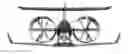
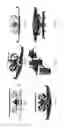
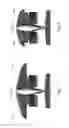
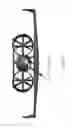
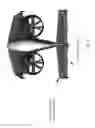
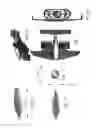
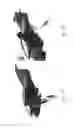
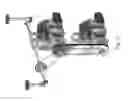
The patent the company want to record, following the withdrawal of the previous application RM2012A000046 of the architect Pietro Giovenga still on the same subject, the withdrawal is motivated by the addition of some modifications regarding the use of technical solutions of the patent in the convertiplane projects of all sizes and use and because will to use in the assets control solutions even cyclic variation of the pitch of propellers in front and rear, therefore, concerns to a new type of convertiplane, also achievable like ultra light plane, called “GRIFO”. It is equipped with features designed in order to allow an easier use of this aircraft, thus enabling new ways to fly. The convertiplane in question proposes the use of a wide range of functions concentrated only in one plane, as opposed to now where each of these functions is used on a specific plane. (See FIG. 1, FIG. 2, FIG. 3, FIG. 4, FIG. 5, FIG. 6, drawings in all positions).
The convertiplane “GRIFO”, object of the patent, allows to obtain the maneuverability at low and very low speed of a helicopter along with the ability of flight of an aircraft, obtaining an ability to displacement at low cost. The convenience of use of the aircraft is evident. (see Table 1, 3d designs in all positions)
The Grifo as ultralight aircraft has the following functional characteristics operational:
The fuselage: Internal height variable from 110 cm to 140 cm (See, FIG. 13, FIG. 14, FIG. 15), interior width variable from 90 cm to 120 cm (See, FIG. 14), Cabin length variable from 160 cm to 220 cm, the fuselage length variable from 400 cm to 500 cm (See FIG. 13);
Ground clearance: Propellers shaft variable from 120 cm to 140 cm, the fuselage variable from 50 cm to 80 cm, front wings variable from 20 cm to 50 cm;
Wingspan: minimum size variable from 400 cm to 500 cm (See, FIG. 8), maximum size variable from 850 cm to 970 cm (See, FIG. 7);
Wing surface load-bearing, Considering front wing and tail planes surfaces: At the maximum wingspan variable from 10.50 to 15.00 sq mt, At the minimum wing area variable from 6.50 sq mt to 10.50 sq mt;
Total weight without liquids: no more than 230.00 kg; Fuel: early 80 kg; No 2 passengers: nearly 200 kg; Payload: nearly 40 kg; Total take-off weight: nearly 550 kg;
Load capacity: 2 people side by side or 1 person and a 1 stretcher.
General Aviation Features of a Convertiplane Type “Grifo”
The aircraft consists of:
-
- Front-load bearing wing length variable (see in plant view for maximum FIG. 7 and minimum FIG. 8 wing extension);
- Each half wing is equipped with two flaps, one operated by the control system set-up and one for the government of the vehicle by the pilot (See, FIG. 7, FIG. 8). The main Wing (front) has the characteristics necessary to adapt to different arrangements of flight, it can rotate on its longitudinal barycentral axis a range of degrees related to the airfoil adopted (See. FIG. 9), and a part of it is retractable in the part of a wing attached to the fuselage. This solution is adopted to reduce the size of the vehicle on landing and take off vertically and also to decrease the resistance during the flight under certain operational conditions. The wing has a vertical dihedral that can vary from 3° to 6° to help the stability of the vehicle. The efficiency and stability is improved by two vertical “wings of the end” applied on the wing itself. The front wing is connected to the fuselage by two brackets that support an axis around which the wing can make a rotation of some grades in relation of each specific airfoil chosen. (See FIG. 9 showing the wing rotation).
- The supports that hold the wings are part of the structure and they have in the ends the slots that hold the bearings that allow the coupling the tube axis, placed between the ribs supporting the winging in the central area, with the structure of the plane. The movement is actuated by two hydraulic or electric actuators operated by the on board computer that manages the set-up of the plane.
- The supports are clad in a way that creates a “Venturi tube” section in which is generated the acceleration of the airflow. This increases the lift of the wing section placed under the fuselage, without however creating opposing forces the increase in lift on the other walls of the tube. (See Sheet of drawings no 4/9 highlight the design with 3D “Venturi tube” FIG. 8).
- Rear wing carrier, which function as tail (See FIG. 12), with a maximum length equal to the minimum length of the forewings, it is equipped with four flaps, two operated by the control system set-up and two for the government of the plane. In the wing profile are placed two coplanar propellers (See, FIG. 12), with the possibility of the thrust appropriate for the size of the aircraft. These have the function of actuators for vehicle stability in pitch and roll. They are controlled by the control system set up. The stability propellers are rotated by electric motors and are equipped with a system which changes by electromechanical actuators the direction of push through the inversion of the propeller in hundredths of the second. The maintenance of the position established by the pilot (hovering) is ensured by the management structure computed by the control of the deflecting fins placed in the flow of ducted propellers at the end of intubation of the same and possibly also alternatively or jointly through the control of the pitch of propellers right or left as a function alternative to the cyclic system used on helicopters. (FIG. 12 view of rear wing, asset control thrusters, 4 flaps of control and government);
- A fuselage with the rapport between the width and length of about 1:4.5, while the ratio between the width and height may be about 1:1.5. (See, FIG. 16, FIG. 17, FIG. 18 fuselage in plan and side views, top view of the fuselage, organs of sustenance in the transaction side view, aircraft in horizontal asset top view, aircraft in horizontal asset front view).
- Two counter-rotating ducted propellers on the sides of the fuselage (see, FIG. 12) with the possibility to rotate approximately 100° (normally 90°) from vertical to horizontal position with the propeller thrust axis in the direction of the fore-aft the fuselage, which coincides with the axis on which it is placed the result of the global resistance of the plane, in order to prevent torques of inversion not optimal for the asset of the vehicle. The propellers are supported by a structure consisting of a tubular element, of appropriate size, connected transversely to the axis of the fore-aft the fuselage and to the support structure of the engine inside the fuselage itself. Inside the tubular element is placed a support shaft of the motor movement of engines to the counter-rotating propellers through the application of reverse conic gears. (See Sheet FIG. 19, FIG. 20 rotation ducted counter-rotating propellers, propellers in position for vertical asset, propellers in rotation for variation of flying asset).
- The Intubations of each propeller supports four flaps that are orthogonal to each other (See FIG. 19, FIG. 20, FIG. 7, FIG. 8) to deflect the air flow of the propellers for airplane control in vertical flight and low speed disposition. In particular, the flight control system varies the use of these different systems in the two dispositions to fly. When the propellers are in vertical thrust at low speeds, the flaps of the propellers are the only ones to control the aircraft flight allowing the movement forward, backward, sideways at any angle with respect to bow and turn around its vertical axis on itself in one way or another. During horizontal flight disposition of the flaps propellers assist the ailerons of the wings moving like them allowing the turns to the right and left, the pull-up and beaten, and assist the vertical tail flaps in the disposition of the plane with crosswind. The aircraft has two engines coupled overlapping and independent of each other for a maximum power varying from 200 hp to 300 hp, of ultralight aircraft, higher power on aircraft certified. (See FIG. 21 matching engine and transmission system)
- The engines are placed behind the cockpit very close to the center of gravity of the airplane inside the fuselage. The engines are connected by special free wheels to absorb variations in speed between the same two engines and two propellers are connected through a transmission system using mixture of crowns and chains and drive shafts and bevel gears, which allow the opposed propeller rotation to cancel the torques of the moments of inertia of the tilting moments. The convertiplane can also be driven by electric motors placed in coaxially inside the tubular support of the propellers. The efficiency of electric motors similar to those endothermic (less power more torque) will be powered by a power generator capable of supplying power to a battery with sufficient autonomy to a quick landing. The generator and battery are placed behind the cockpit inside the fuselage in the place provided for combustion engines mentioned. The hubs of the propellers are fitted with a system of pitch change propellers with appropriate diameter variable in function of the weights are intubated with four ailerons management of air flow connected to intubation. The maximum thrust will vary in function of the takeoff weight of the medium with the two propellers with at least three variable pitch blades.
- System static balancing center of gravity of the vehicle consists of a weight placed in the lowest part of the fuselage, moving longitudinally on to the fuselage itself on a track rack (FIG. 22), so as to balance the disposition of weights at the time of take-off, in vertical orientation, and then to set of weights of the convertiplane when it is moving in the horizontal disposition placing the barycenter of the vehicle in the best position for this kind of flight, putting this one on the wings pushing center. (See FIG. 22 System barycentric weight management, weight movable, guide rails).
- Operational characteristics:
140/250 knots cruising speed, max speed over 300 knots, autonomy about 3 h to 850 km, Tangent about 5.000 meters variable depending on the engines power and other vital support for the passengers.
Ability to takeoff and landing, both in vertical in spaces of 5×5 m, with the possibility of fully automatic mode, both in conventional as normal airplane on the airfield runways.
Management Systems of Automatic Digital Flight Controls:
The convertiplane has the following sensors:
-
- At least three gyroscopes to control the three axes as a function of stability in any condition of takeoff or landing.
- Pitometer to measure the speed of the plane in relation to the air, GPS with other functions, the speed over the ground to the altitude than at sea level and above ground, to the location coordinates to the navigation system, also with reference to territorial maps of road and land navigation specific height maps of the soil, for greater safety in air navigation.
- Aircraft Altimeter;
- Sensors of proximity for vertical takeoff and landing.
- Stretch sensor of wing area able for calculating the wing lift to manage the transition from vertical flight to horizontal flight.
- 5 cameras for multilateral view around the plane to help the driving during flight without pilot using radio remote control, especially during takeoff and landing.
- An instrument that indicates the disposition of the plane respects the horizon.
- Degrees sensor of incidence for wings stretch sensors of the wing structures for the calculation of lift and the management of the transition from the horizontal disposition to the vertical and vice versa, and to manage the size of the wing in flight depending on the resistance of the plane at high speed
HW System for Processing Flight Data:
-
- There are three computers connected. The first direct management of the plane, the second support in the event of failure of the first one, the third for management and control of the first two pc.
Computers in Consideration of the Parameters Detected by the Sensors Check:
-
- The stability of the vehicle through the management of the weight for center of gravity control in the two flight static disposition, management of the propellers placed in the rear tail for the control of the dynamic roll and pitch of the plane, through the management of the auxiliary flaps on the wings of the vehicle during the horizontal flight.
- The transition from vertical to horizontal flight, maintaining the correct flight parameters during the passage of disposition according to requirements of the pilot and the position of the vehicle, the speed of assets transfer in function of environmental parameters and of the potential of the plane, considering the component of wings lift and motors lift and the mutation of the positions of this two elements.
- Engine power control applications as required from the flight disposition.
- Hydraulic controls for the automatic variation in the incidence of the wings and flaps for maximum lift and minimum drag in the change of disposition from vertical to horizontal flight and the maximum speed, the wings can vary the effect on the horizontal plane fly from 2° to 13°. The incidence of anterior flaps on the wings can vary from 0° to 60° in relation to the chord of the profile. The highest incidence of front wing flaps occurs during the flight in order not influence the vertical thrust of the propellers positioned horizontally, as the propellers varies from horizontal to vertical position; the flaps go to 0° incidence.
- Commands, with electromechanical actuators, for the differentiated management of the various flaps in the different systems for flight disposition control.
- Automatic control of hydraulic extraction and retraction of the additional wings according to plane speed.
- Control of the hydraulic system for propellers axis rotation of 100° considering the disposition and the speed of the plane.
- The electrical automatic control of the pitch propellers for maximum performance in the various disposition of the plane.
- Management of the rear tail propellers for vehicle dynamics control in vertical disposition flight.
- Management of a weight, at the bottom of the fuselage, allowing moving, on the apposite rail, to have the optimal center of gravity of plane in different disposition.
- The propellers on the rear tail are operated by electric motors that rotate at constant speed, the most important characteristic is that they usually turn to step zero and the pitch varies continuously to manage the plane disposition and stability, in particular in vertical flight. The management of the pitch is carried out by electronic actuators with response in hundredth of second operated by the disposition control of computer system.
Instrumental Equipment on Board:
Airspeed indicator, altimeter, vehicle disposition control, navigation center, intelligent autopilot, a radio control of flying, a monitor of sufficient size in order to use some cameras for the 360° horizontally and vertically around the plane for external vision even at night with infrared, support take-off and landing. Instruments complete engines. Navigation system for unmanned flight with remote control or automatic flight on desired course with automatic return and landing. Aircraft base will always be present the computer for control of the assets.
Optional: Radar, parachute at rapid dynamic expulsion, control of the front obstacles with laser brush.
Some Possible Uses of Plane:
-
- Regional Monitoring, also without Pilot;
- Quick Movement of the Persons From the areas with limited take-off zone.
- Civil Protection And Rescue Without Pilot;
- Police And Military Operations In Any Kind Of Situations At Low Altitude, Including Insurgency, With Light Artillery Equipment;
- Used to move anonymously, safe point to point.
Claims
1. Convertiplane, comprising a supporting fuselage, supporting two complex wing surfaces, one in front and one in back, both aerodynamically bearers, the fuselage have placed inside two engines which are connected to each other as tandem, placed behind the pilots, these give the motion to two counter-rotating ducted propeller with variable pitch, possibly also with cyclic variation of the pitch, placed at the sides of the fuselage, their backbone is placed on the vertical plane passing through the center of gravity of the aircraft, the rear wing surfaces contain, at the ends in their profile, two small propellers pitch reversible, in the lower part of the fuselage is placed a weight longitudinally self-propelled and a digital control system of the assets of flight, managed by three computers, that receive data from sensors accelerometers, gyroscopic, flexed metric and trim, there is a system of navigation and piloting, which considers the aeronautical and road maps using a GPS, characterized by the fact that the convertiplane adopts a series of technical and aerodynamic solutions that allow the aircraft to fly safely, the aircraft has the characteristic of being composed with a fuselage sections (vertical and horizontal) that respect each other (+/−10%) the ratio between 1:4.5 width/height and length, the fuselage supports the wing surfaces connected to her through two shelves as structural supports, these shelves have shaping such as to bring the fuselage from the front wings of about 30 centimeters above it, this structure creates, with the help of a fairing, a venturi tube that enhances the bearing capacity of the ‘wing area located below the nacelle itself, shelves support a tubular axis aluminum placed on the axis of aerodynamic lift of the wing (fire), in that axis, integral with the fuselage, is placed a tube integral with the wings front, and with bearings, allows these to rotate to change the incidence, such a solution, with a higher incidence increases lift at low speeds and with lower incidence decreases the aerodynamic resistance at high speed, the front wings can be rotated of 14° about their longitudinal axis, parallel to the plane of the horizontal flight of the aircraft, normally from 3° to 6° and their ends can be retracted within the central parts of the same, in such a way as to allow a variation of the lift and the running resistance of the aircraft and to pass from a flight horizontal trim to the vertical one and vice versa without incurring the danger of loss of altitude or loss of control of the vehicle, the axis of the tubular support to the front wing is perpendicular to the direction of horizontal flight and is connected to the central structural element of the front wings, the axis together with other structures creates a volume boxed to which are anchored the longitudinal members of the wing front that protrude to the right and to the left of the fuselage, in each side of the wing, between the mentioned longitudinal members is formed a space suitable for the reception of the retractable wing of suitable length such as to occupy the whole the half wing attached to the fuselage until stiff ribs under the fuselage itself, the two half wings retractable, are controlled by a hydraulic or electromechanical system controlled by the onboard computer system for buoyancy control; in the ends of the retractable wings are placed winglets to improve aerodynamics and reduce aerodynamical resistance, the rear wing surfaces are aerodynamically bearers and are supported by the empennage, they are placed in a position such as not to be influenced by the yield air of the pushing ducted propeller, rear wings move the point of application of the lift of the complex of the wing surfaces (Fire wing of the complex) towards the center of gravity of the aircraft, the fixed rear wings are to incidence of about 3° to the direction running, on the opposite ends of these are placed, in the thickness of the section of the same and parallel to their rope, two variable pitch propellers that can vary pushing from −20 kg+20 kg each independently creating rotation torques to counter any rolling motion and pitching during the flight in vertical orientation, such propellers are moved by electric motors and their pitch is controlled by electromechanical actuators at high speed, controlled management system of buoyancy; to the sides of the fuselage there are two ducted propellers that rotate from −2° to +100° (counterclockwise) on the supporting axis, respect to the plane vertical to the plane of horizontal flight of the aircraft, with functions of the bearing capacity and governability in vertical asset and pushed forward in the horizontal asset, these supporting propellers can have normal variation of the pitch jointly to the possible cyclic pitch variation, the front wings and propellers can rotate on their axis independently of each other; on each half wing, there are two front and rear spoilers (8 total) one of these for each half wing is managed automatically by the computer control system during the horizontal flight and the other by the pilot for manual operations of government of the airplane; The airplane also makes use of a management system of the center of gravity, it is constituted by a weight, suitably calibrated, self-propelled on the rail, which at the time of vertical takeoff, commanded by the computer system management, on solicitation of three gyroscopes digital, moving longitudinally makes that the center of gravity falls exactly on the axis of thrust of the propellers.
2. The convertiplane of claim 1, characterized in that the ducted propellers placed at the sides of the fuselage are supported from the axis made with a tubular placed on the plane vertical to the longitudinal axis of center of gravity of the aircraft fixed to the supporting structure of the plane, in this rotate the axis of transmission of motion to the propellers, the front wings and the propellers can rotate on their axis independently of each other, in the final part of intubation of the propellers are placed on orthogonal axes four ailerons which serve for the aircraft government during flight at vertical asset.
3. The convertiplane of claim 1, characterized in that the management of the rotation of the bearing elements, wing surfaces and propellers, together with the position of the movable weight and the thrust of the propellers placed in the profile of the rear wings, both for control of the proper position of the CG/asset at any time of the flight is coordinated and controlled simultaneously, but in different ways, according to the specific flight conditions and as required by the pilot, the computer system management framework that linked to sensors accelerometers, gyroscopic, measuring tapes and trim, measure the attitude of the aircraft, the bearing capacity of the apparatuses, and then determines its rotation, for the bearing capacity, the position of the weight to the center of gravity and the thrust of the propellers rear for the control of the pitching and roll at low speed.
4. The convertiplane of claim 1, characterized in that the control elements of the structure of flight can be four, one constituted by two propellers placed at the end of the rear wings in the thickness of the section and parallel to the wing chord, moved by electric motors and pitch variable operated by electromechanical fast actuators for a complete inversion of the thrust +/−100% (about 20 kg), designed to control the movements of pitch and roll at low speed, jointly to the possible cyclic variation of the pitch of the supporting propellers the other consisting of a weight placed in the most bottom of the fuselage centerline, self-propelled on a rail longitudinally, act, with its movement, to place at the time of takeoff the center of gravity on the axis of thrust of the propellers to the horizontal attitude and the center of gravity in an optimal position relative to the center of lift (fire) of the wing system, the third is formed by a series of flaps on each wing which are juxtaposed with those of government optimizing the horizontal stability, in fact, on each wing, front and rear there are two ailerons (8 altogether), one of these, for each wing, is managed automatically by the asset system control during horizontal flight and the other by the pilot to manual operations of government of the aircraft at the indication of 3 digital gyroscopes, the propellers and the weight of self-propelled are used for the vertical position, the ailerons and also the weight for the horizontal asset.
5. The convertiplane of claim 1, characterized in that the system engines (1 or 2) is placed inside the fuselage, in case of double motor these are stacked in tandem with each other and connected with a transmission system composed of mixed of sprockets and chains, also with reductive function of the number of revolutions of the propellers, by a transmission axis parallel to the shafts of the motors that motors via two bevel gears inverted enable propellers rotate against for the annulment torque drift of the aircraft.
6. The convertiplane of claim 1, characterized in that the front wings can be retracted up to 50% of their length inside the first part of the wings themselves, in fact, in each of the lateral wings, between the two side members of the internal wing, connected with the support brackets, is a space suitable for the reception of the final external retractable wing at the ends of the wings retractable fins are placed end to improve aerodynamics, reduce rolling resistance and decrease the size maximum of the aircraft.
7. The convertiplane of claim 1, characterized in that for the navigation system uses the overlap of a terrestrial and aircraft cartographic system to allows the rider to get as close as possible to the desired point of arrival and allows the vertical takeoff and landing attended by almost automatic determination of the landing point identified by a camera connected to a GPS for the automatic determination of the coordinates of the location, near the landing is assisted by proximity sensors useful for avoiding obstacles.
8. The convertiplane of claim 1, characterized in that the steering system is wireless and allows the aircraft to be remote controlled from the ground without driver with the simple release of the control console from the aircraft, in this situation the console becomes a radio command to distance.
9. The convertiplane of claim 1, characterized in that the aircraft is equipped with an electronic asset management system that is informed by three gyros electronic for the control of the three axes of the aircraft, by the tension sensors of the wing structures for the control of the bearing capacity, a GPS system to control the location, altitude and speed of the aircraft coupled with the typical aircraft instruments, pitometer, altimeter, compass, trim, accelerometer, sensors are managed by three computers which run during the vertical flight asset of the aircraft by moving the counterweight for positioning the center of gravity axis of the propellers, as a function of the weight distribution at the time of take-off, and the propellers on the rear wings during the flight with vertical thrust, the passage from the vertical asset to horizontal flight, and vice versa, managing the carrying capacities of the wings, the position of the gravity center and the thrust of the propellers maintaining the aircraft flight on the axis of pre-established without loss of altitude or other drawbacks. During the transition assets the commands, stick and pedals, manage, during the vertical flight the ailerons of intubation propellers, in horizontal flight the ailerons of the wings, the tail planes, and only in aid, the ailerons intubation of the propellers, the three computers manage as part of pre-determined intervals and in different phases of flight, the power of the engines, the pitch of the propellers, the incidence of the front wings, the extraction or retraction of the semi outer front wings, the three computers operate separately in cascade, the first controlling all the operations described, the second repeats simultaneously to the first all the operations provided by the system and the third, in addition to repeat all of the same operations, check that there are no discrepancies between the two and in case of malfunction excludes that broken down and joins the residual communicating malfunction.
Images & Drawings included:
Sources:
- United States Patent and Trademark Office - verify current appl. status at the USPTO↗
Recent applications in this class:
- » 20250276790 2025-09-04
VTOL AIRCRAFT USING LARGE, VARIABLE SPEED TILT ROTORS - » 20250269954 2025-08-28
BATTERY AND ENGINE ARCHITECTURE FOR VTOL AIRCRAFT - » 20250269953 2025-08-28
SYSTEMS AND METHODS FOR TILTER MOTOR COOLING - » 20250263167 2025-08-21
Tilting Hexrotor Aircraft - » 20250256842 2025-08-14
BLADE PITCH COUPLED TO PROPULSION SYSTEM TILT - » 20250250005 2025-08-07
Proprotor Lockout Systems for Tiltrotor Aircraft - » 20250242911 2025-07-31
Cable Tilt Actuator for an Aircraft - » 20250223032 2025-07-10
SYSTEMS AND METHODS FOR PROPELLER THRUST PROTECTION - » 20250214702 2025-07-03
AIRCRAFT WITH TILTING FAN ASSEMBLIES - » 20250214701 2025-07-03
AIRCRAFT WITH TILTING FAN ASSEMBLIES