Rodent Resistant Drywall
US20170058522A1
2017-03-02
14/842,737
2015-09-01
Abstract:
Rodent Resistant Drywall is a drywall with an embedded metal aggregate.
Interested in similar patents?
Get notified when new applications in this technology area are published.
Classification:
E04C2/44 » CPC main
Building elements of relatively thin form for the construction of parts of buildings, e.g. sheet materials, slabs, or panels characterised by the purpose
B32B2607/00 » CPC further
Walls, panels
E04B2/00 IPC
Walls, e.g. partitions, for buildings; Wall construction with regard to insulation; Connections specially adapted to walls
B32B13/06 » CPC further
Layered products comprising a a layer of water-setting substance, e.g. concrete, plaster, asbestos cement, or like builders' material comprising such substance as the main or only constituent of a layer, next to another layer of a of metal
E04C2/04 » CPC further
Building elements of relatively thin form for the construction of parts of buildings, e.g. sheet materials, slabs, or panels characterised by specified materials of concrete or other stone-like material; of asbestos cement; of cement and other mineral fibres
Description
FIELD OF THE INVENTION
This invention relates to construction materials for dwellings with an emphasis on rodent resistance.
BACKGROUND OF THE INVENTION
Rodent infestation has long been an issue for dwellings in residential, commercial, and recreational settings. Damage by rodents has been documented in homes, apartments, hotels, office complexes, retail businesses, manufacturing facilities, food processing and warehouse facilities, and a variety of other structures. Infestations are of particular concern to individuals living in rural or newly developed areas as rodents can carry and transmit a variety of diseases, such as salmonellosis, leptospirosis, and murine typhus, which are transmittable to humans. They may also transmit diseases to livestock and pets.
Rodents are capable of destroying insulation, electrical wiring, and other structural components of buildings which can be costly. Electrical fires may result from rodent compromised wiring threatening human safety. As such, a proactive, preventative method is desirable. Many traditional methods of rodent protection are used once a problem has already been established—using a reactive approach rather than a proactive one. These methods tend to be costly, require routine maintenance, and can be harmful to children, pets, and endangered species. The most effective means of limiting rodent damage is rodent-resistant construction. Rodent Resistant Drywall addresses the problem during the construction phase of a structure. New buildings should be designed and built with Rodent Resistant Drywall to prevent rodent entry.
Existing structures should be remodeled using Rodent Resistant Drywall. Constructing a rodent-resistant building is far less expensive than addressing rodent infestation later.
BRIEF DESCRIPTION OF THE DRAWINGS OF THE PATENT PROTOTYPE
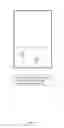
FIG. 1 depicts a piece of the rodent resistant drywall with two drill away holes cut into it.
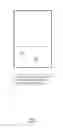
FIG. 2 depicts the inside of the rodent resistant drywall.
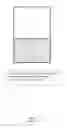
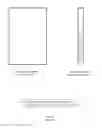
FIG. 3 depicts a finished sheet of rodent resistant drywall as well as an opened side view of the rodent resistant drywall.
DETAILED DESCRIPTION OF THE DRAWINGS OF THE PATENT PROTOTYPE
FIG. 1 depicts the finished rodent resistant drywall that has two drill away holes cut into it in order for the viewer to see a portion of the EMA that is enclosed.
FIG. 2 depicts the inside of the rodent resistant drywall with the EMA exposed so the viewer can see the contents.
FIG. 3 depicts a finished sheet of rodent resistant drywall as well as a sheet of rodent resistant drywall that has been cut open on the side in order to display the otherwise invisible lining of EMA.
SUMMARY
Rodent resistant drywall addresses the problem of rodent invasion.
Rodent resistant drywall provides a safer, more environmentally friendly alternative to traps, poisons, and sprays.
Rodent resistant drywall does not take up any additional space in a dwelling.
Rodent resistant drywall is a less costly alternative to reactive rodent protection initiatives.
Rodent resistant drywall offers built-in protection, eliminating the need for additional installation considerations.
Rodent resistant drywall offers unseen protection and poses no danger to children, pets, or endangered animals.
Claims
1. Embedded Metal Aggregate (EMA) forms a rodent resistant barrier when incorporated into drywall.
EMA can be integrated into the drywall at any ratio of coverage.
EMA is effective when placed in any pattern or shape within the drywall.
The EMA within the drywall will cause pain and injury to rodents attempting to claw or chew through the drywall.
The EMA may be added to the drywall in its construction state.
Images & Drawings included:
Sources:
- United States Patent and Trademark Office - verify current appl. status at the USPTO↗
Recent applications in this class:
- » 20250019967 2025-01-16
Panel for a Structure - » 20220042307 2022-02-10
Gigacubes coasters and lids - » 20200332529 2020-10-22
Kitchen Kit - » 20160145865 2016-05-26
PROTECTIVE PANEL - » 20160069079 2016-03-10
Insulating panels made of stone wool, and concrete wall provided with such panels - » 20150135634 2015-05-21
Composite Building Components Building System - » 20150101263 2015-04-16
BUILDING FOUNDATION - » 20150059274 2015-03-05
FLOOR TILE DESIGNED FOR MULTIPLE TILE IMAGES - » 20150059272 2015-03-05
Old-fashion clapboard-like wood siding system with ventilation gaps - » 20150013922 2015-01-15
Partition systems