Bottle cap with integrated frequency transmitter
US20170107120A1
2017-04-20
14/884,728
2015-10-15
✅ Patent granted
US 10,071,916 B2
2018-09-11
-
-
James N Smalley
2036-04-08
Abstract:
A bottle cap having an integrated circuit wherein a frequency can be transmitted to structure water. When the bottle cap is twisted open, a current is created in the circuit strip and the RF chip transmits a predetermined frequency. Particular predetermined frequencies are known to affect the structure of water contained in the bottle, specifically to a healthy hexagonal structure.
Inventors:
- SALMAN SAJID 2 🇺🇸 LOS ANGELES, CA, United States
- Gualberto Lozano 1 🇺🇸 Los Angeles, CA, United States
Applicant:
Interested in similar patents?
Get notified when new applications in this technology area are published.
Classification:
C02F1/005 » CPC main
Treatment of water, waste water, or sewage Systems or processes based on supernatural or anthroposophic principles, cosmic or terrestrial radiation, geomancy or rhabdomancy
C02F1/00 IPC
Treatment of water, waste water, or sewage
B65D41/34 » CPC further
Caps, e.g. crown caps or crown seals, i.e. members having parts arranged for engagement with the external periphery of a neck or wall defining a pouring opening or discharge aperture; Protective cap-like covers for closure members, e.g. decorative covers of metal foil or paper; Caps or cap-like covers with lines of weakness, tearing-strips, tags, or like opening or removal devices, e.g. to facilitate formation of pouring openings Threaded or like caps or cap-like covers provided with tamper elements formed in, or attached to, the closure skirt
C02F1/302 » CPC further
Treatment of water, waste water, or sewage by irradiation with microwaves
B65D51/24 » CPC further
Closures not otherwise provided for combined or co-operating with auxiliary devices for non-closing purposes
C02F1/30 » CPC further
Treatment of water, waste water, or sewage by irradiation
B65D41/3428 » CPC further
Caps, e.g. crown caps or crown seals, i.e. members having parts arranged for engagement with the external periphery of a neck or wall defining a pouring opening or discharge aperture; Protective cap-like covers for closure members, e.g. decorative covers of metal foil or paper; Caps or cap-like covers with lines of weakness, tearing-strips, tags, or like opening or removal devices, e.g. to facilitate formation of pouring openings; Threaded or like caps or cap-like covers provided with tamper elements formed in, or attached to, the closure skirt with flexible tabs, or elements rotated from a non-engaging to an engaging position, formed on the tamper element or in the closure skirt the tamper element being integrally connected to the closure by means of bridges
B65D2203/10 » CPC further
Decoration means, markings, information elements, contents indicators Transponders
Description
BACKGROUND OF THE INVENTION
The present invention generally relates to a bottle cap with an integrated frequency transmitter, more particularly to a bottle cap for bottled water, in which the frequency transmitted by the transmitter corresponds to a particular desired frequency.
There are many who know for a fact through extensive scientific research in the benefits of structured water. Structured water or structure-altered water (“SAW”) is water that has been subjected to waves of a particular frequency that are known to alter the “structure” of the water. For example, a frequency of 528 MHz and other frequencies listed herein are known through scientific experiments to change the structure of water into a healthier structure, providing a number of physical and emotional benefits for the wellbeing of a person.
The present invention provides various means to transmit a particular frequency to water. In one example, the means provided in a bottle cap. However, the means to transmit a particular frequency to structure water can be provided in other materials, and not limited to a bottle cap.
SUMMARY OF THE INVENTION
The system and method in accordance with the present invention provides a means to deliver a particular frequency to structured water.
The structure of water can constantly change, depending on its surrounding environment. The system in accordance with the present invention, when applied to a non-disposable disposable container, for example, can maintain healthy structure of the water inside the container by emitting particular frequencies. These frequencies can be emitted by one of a number of devices (e.g., RF emitter) powered by one of a number of sources (e.g., battery (solar powered, rechargeable or other), standard power outlet, or kinetic energy). In the case of a disposable container, such as a water bottle with a twist-off cap, kinetic energy from the twisting motion of the cap by the user provides kinetic energy, which is then transformed to power the frequency emitter. Once the structure of the water is changed into a healthy structure, the system will allow maintenance of the healthy structure during its time in the container.
BRIEF DESCRIPTION OF THE DRAWINGS
A more complete understanding of the present invention may be obtained with reference to the Detailed Description when taken in conjunction with the accompanying Drawings.
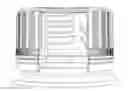
FIG. 1. is a cross-sectional view of a bottle cap in accordance with one aspect of the present invention; and
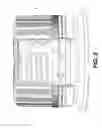
FIG. 2 is a cut-away view showing the inside of a bottle cap without the circuit.
DETAILED DESCRIPTION OF THE INVENTION
Referring now to FIG. 1, a cross-sectional view of an exemplary bottle cap in accordance with one aspect of the present invention is shown. Bottle cap 101 has a circuit strip 102 placed along the circumference of bottle cap 101. Circuit strip 102 has at least one capacitor 103, at least one resistor 104, and at least one RF chip 105. Extending from circuit strip 102 are strips of barium titanate 106.
Extending on the inside of the circumference of bottle cap 101 are spaced protrusions 107. As such, in between each protrusion 107 is a space 108 created there between creating a plurality of bottle cap breaking points 109. As the bottle cap 101 is twisted off, bottle cap breaking points 109 activate the barium titanate to create a current through circuit strip 102. As current flows though the circuit strip 102, RF chip 105 transmits a specified frequency to structure the water in the water bottle.
In other words, kinetic energy used to open the bottle is generally transferred to the barium titanate, which has piezoelectric properties. The mechanical stress on or kinetic energy applied to the cap is converted to electrical current via the barium titanate. Power is stored and distributed by the capacitor, while the resistor regulates the flow of the current. The RF chip then uses the energy to transmit the desired frequency to the water in the bottle.
FIG. 2 shows a cut-away view showing the inside of a bottle cap without the circuit. Bottle cap 101 here shows the protrusions 107 and breaking points 109 formed along an inside circumference of the bottle cap 101 to activate the barium titanate (not shown in this figure).
As shown by way of example, certain frequencies are known to change the structure of the water to a healthy hexagonal structure, and believed to do the following as well (frequencies provided are in hertz (Hz)):
-
- 174: believed to be a natural anesthetic, reduce physical and emotional pain
- 285: believed to return tissue to its original form; influence energy field that sends a message to restructure damaged organs
- 396: believed to turn grief into joy, liberate guilt and fear
- 417: believed to undo situations and facilitate change, cleanses traumatic experiences, clear destructive influences of past events
- 528: believed to be the “Love Frequency,” whereby the structure of water is turned into a hexagonal structure; believed to transform matter and enable miracles; repair DNA; increased energy, clarity of mind, awareness, awaken of activated creativity, ecstatic states (inner peace), dance and celebration
- 639: believed to reconnect and balance relationships
- 741: believed to solve problems
- 852: believed to awaken intuition; return matter to spiritual order
- 963: believed to awaken any system to its original perfect state
While the exemplary embodiment obtains its energy from a barium titanate along a circuit strip, other piezoelectric materials and/or power sources could be used. For example, a wall plug in, solar, other types of kinetic energy, battery (rechargeable or standard) could also be used.
While the foregoing written description of the invention enables one of ordinary skill in the art to make and use the invention, those of ordinary skill in the art will understand and appreciate the existence of variations, combination, and equivalents of the embodiments, methods, and examples provided herein. The invention should, therefore, not be limited by the embodiments and examples disclosed here, but by all embodiments and methods within the scope and spirit of the invention as claimed.
Claims
1. A bottle cap having a circumference comprising:
a circuit strip along the circumference of the bottle cap;
said circuit strip having at least one capacitor, one resistor and one RF chip;
at least one barium titanate strips placed along said circuit strip; and
at least one bottle cap break point surrounding at least one barium titanate strip;
wherein when the bottle cap is twisted, a current is created in said circuit strip, causing said RF chip to emit a specified frequency.
2. A bottle cap having a circumference comprising:
a circuit strip along the circumference of the bottle cap; and
said circuit strip having at least one capacitor, one resistor and one RF chip;
wherein when the bottle cap is twisted, a current is created in said circuit strip, causing said RF chip to emit a specified frequency.
Images & Drawings included:
Sources:
- United States Patent and Trademark Office - verify current appl. status at the USPTO↗
Recent applications in this class:
- » 20250223195 2025-07-10
METHODS OF MAKING AND TESTING FUNCTIONAL WATER WITH ENHANCED CELL-PENETRATING CAPABILITY AND APPLICATIONS THEREOF - » 20240043286 2024-02-08
WATER ACTIVATION DEVICE AND CONTAINER - » 20230227330 2023-07-20
SYSTEM FOR AND METHOD OF AFFECTING MOLECULES AND ATOMS WITH ELECTROMAGNETIC RADIATION - » 20220259069 2022-08-18
DEVICE FOR PRODUCTION OF REDOX WATER - » 20210387865 2021-12-16
WATER DISPENSER WITH MEANS FOR REFRESHING AND IMPROVING WATER QUALITY - » 20210188661 2021-06-24
Inverter wave generator for tempering water and method for tempering a tempering medium - » 20200346943 2020-11-05
ACTIVATED TREATED WATER, METHOD FOR MANUFACTURING ACTIVATED TREATED WATER, METHOD FOR MANUFACTURING ACTIVATED TREATED MEDIUM, DEVICE FOR MANUFACTURING ACTIVATED TREATED WATER, METHOD FOR PRESERVING FOOD PRODUCT, AND ACTIVATED TREATED MEDIUM - » 20200325039 2020-10-15
Water treatment system and method - » 20200198989 2020-06-25
DEVICE FOR PROCESSING FLUIDS - » 20190382284 2019-12-19
WATER TREATMENT DEVICE