Electrical conductor for aeronautical applications
US20170169915A1
2017-06-15
15/373,839
2016-12-09
✅ Patent granted
US 9,984,791 B2
2018-05-29
-
-
Timothy Thompson | Charles Pizzuto
Sofer & Haroun, LLP
2036-12-09
Abstract:
A stranded electrical conductor includes a single center strand in aluminum or aluminum alloy (10, 20, 30, 40A, 50A) and a plurality of conductor strands (11, 21, 31, 41, 51) arranged in at least one layer around said center strand. The relation between the diameter of said center strand in aluminum or aluminum alloy and the diameter of said peripheral conductor strands is greater than or equal to 3.
Inventors:
- Patrick Rybski 9 🇫🇷 Yerres, France
- Sebastien Dablement 3 🇫🇷 Oisy, France
- Werner WILCKEN 1 🇩🇪 BRAMSCHE, Germany
Assignee:
- NEXANS 286 🇫🇷 Paris, France
Applicant:
Interested in similar patents?
Get notified when new applications in this technology area are published.
Classification:
H01B1/023 » CPC further
Conductors or conductive bodies characterised by the conductive materials; Selection of materials as conductors mainly consisting of metals or alloys Alloys based on aluminium
H01B1/026 » CPC further
Conductors or conductive bodies characterised by the conductive materials; Selection of materials as conductors mainly consisting of metals or alloys Alloys based on copper
H01B1/02 IPC
Conductors or conductive bodies characterised by the conductive materials; Selection of materials as conductors mainly consisting of metals or alloys
H01B7/00 IPC
Insulated conductors or cables characterised by their form
H01B7/0009 » CPC further
Insulated conductors or cables characterised by their form Details relating to the conductive cores
H01B5/08 » CPC main
Non-insulated conductors or conductive bodies characterised by their form Several wires or the like stranded in the form of a rope
Description
RELATED APPLICATION
This application claims the benefit of priority from French Patent Application No. 15 62065, filed on Dec. 9, 2015, the entirety of which is incorporated by reference.
BACKGROUND
Field of the Invention
The invention relates to an electrical conductor for aeronautical applications.
Description of the Related Art
Patent document FR 3 009 126 describes such a stranded electrical conductor comprising at least one center strand in silver-plated aluminum and a plurality of silver-plated copper strands arranged around said center strand.
More precisely, said document describes a first conductor comprising one aluminum strand arranged in the center of the conductor, surrounded by six peripheral copper strands in contact two-by-two and arranged in a single layer.
It also describes a second conductor comprising seven aluminum strands arranged in the center of the conductor, namely one center strand surrounded by six strands, said seven strands being surrounded by twelve peripheral copper strands in contact two-by-two and arranged in a single layer.
It finally describes a third conductor comprising nineteen aluminum strands arranged in the center of the conductor, namely one center strand surrounded by six strands, surrounded by twelve strands, said nineteen strands being surrounded by eighteen peripheral copper strands in contact two-by-two and arranged in a single layer.
According to all the described embodiments, the diameter of the center aluminum strands is substantially equal to that of the peripheral copper strands.
Assembly cohesion of the strands is obtained by means of an assembly operation, commonly known as stranding, and which makes it possible, by twisting and according to a preferred pitch value, to maintain the relative position of each strand in relation to the others.
The aluminum strands are therefore of a smaller diameter and their assembly by stranding is difficult on account of the fragility of said strands.
Furthermore, a stranded electrical conductor is known from Patent document WO 2012/073843, comprising a single center strand possibly in aluminum or aluminum alloy and a plurality of conductor strands arranged in at least one layer around said center strand.
OBJECTS AND SUMMARY
Without compromising the flexibility of the conductor, the invention proposes to reduce the use of aluminum strands with such a small cross section.
To do this, the invention proposes a stranded electrical conductor comprising a single center strand in aluminum or aluminum alloy and a plurality of conductor strands arranged in at least one layer around said center strand, wherein the relation between the diameter of said center strand in aluminum or aluminum alloy and the diameter of the peripheral conductor strands is greater than or equal to 3.
According to a preferred embodiment, the relation between the diameter of said center strand in aluminum or aluminum alloy and the diameter of the peripheral conductor strands is between 3 and 5.
The diameter of all said peripheral conductor strands is preferably substantially identical.
Furthermore, the size known as American Wire Gauge (acronym AWG, also known by the name Brown and Sharp (B&S) Wire Gauge) is a unit of measurement used in the United States among others, allowing the diameter of a single-strand non-ferrous metal conductor to be measured and standardized. Said size is defined by the following data:
| AWG | Diameter (mm) | Cross-section (mm2) |
| 12 | 2.05 | 3.31 |
| 13 | 1.83 | 2.62 |
| 14 | 1.63 | 2.08 |
| 15 | 1.45 | 1.65 |
| 16 | 1.29 | 1.31 |
| 17 | 1.15 | 1.04 |
| 18 | 1.02 | 0.823 |
| 19 | 0.912 | 0.653 |
| 20 | 0.812 | 0.518 |
| 21 | 0.723 | 0.410 |
| 22 | 0.644 | 0.326 |
| 23 | 0.573 | 0.258 |
| 24 | 0.511 | 0.205 |
| 25 | 0.455 | 0.162 |
| 26 | 0.405 | 0.129 |
| 27 | 0.361 | 0.102 |
| 28 | 0.321 | 0.0810 |
| 29 | 0.286 | 0.0642 |
| 30 | 0.255 | 0.0509 |
Said size is also used to describe conductors with several stranded wires. In this case, it refers to a conductor whose transverse cross section is equal to the sum of the transverse cross sections of the individual wires, the space between individual wires not being considered.
According to an embodiment of the invention, the conductor being AWG between 16 and 30, comprising a single center strand in aluminum or aluminum alloy and a plurality of conductor strands arranged around said center strand, the relation between the diameter of said strand in aluminum or aluminum alloy and the diameter of said peripheral conductor strands is 3, said peripheral conductor strands being in contact two-by-two and twelve in number.
Advantageously, said conductor strands are in copper or copper alloy. They can also be hybrid, comprising, for example, an aluminum part and a copper part.
At least one of said conductor strands preferably consists of at least one layer of copper and one layer of silver-plated copper alloy, whose mass ratio of silver is between 0.1% and 0.5%.
The mass ratio represents the relation between the mass of silver and the mass of silver-plated copper alloy. The specific contribution of each strand consisting of a layer in copper and a layer of silver-plated copper alloy, whose mass ratio of silver is between 0.1% and 0.5%, is that it allows the conductor to have greater mechanical strength than that of a copper strand of an equivalent cross-section, without degrading electric conductivity. The conductor can possess either a single strand or several strands of such a composition. Said conductor can also comprise other conductor strands consisting of different compositions.
Strands arranged on the periphery of the conductor and consisting of at least one layer of copper and one layer of silver-plated copper alloy make it possible to minimize contact resistances consecutive to the connection of connection components by the user.
The strands are advantageously coated with a protective layer vis-à-vis corrosion.
Mechanical strains, variations of temperature, hygrometry and pressure, together with insulating materials, in effect impose on conductors and hence on the constituent strands of said conductors, a specific adaptation vis-à-vis the risks of corrosion.
The protective layer can be a layer of nickel.
The invention also relates to an electric cable consisting of at least such a conductor.
BRIEF DESCRIPTION OF THE DRAWINGS
The invention is described below in more detail with the help of the figures, showing only preferred embodiments of the invention.
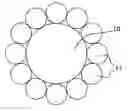
FIG. 1 is a view in transverse section of a first embodiment of the invention.
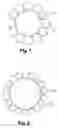
FIG. 2 is a view in transverse section of a second embodiment of the invention.
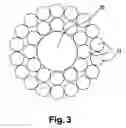
FIG. 3 is a view in transverse section of a third embodiment of the invention.
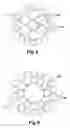
FIG. 4 is a view in transverse section of a fourth embodiment of the invention.
FIG. 5 is a view in transverse section of a fifth embodiment of the invention.
DETAILED DESCRIPTION
The conductor shown on FIG. 1 is AWG between 16 and 30 and comprises a single center strand 10 in aluminum or aluminum alloy and a plurality of strands 11 in copper or copper alloy arranged around said center strand. The relation between the diameter of the strand in aluminum or aluminum alloy and the diameter of the peripheral strands in copper or copper alloy is 3, said peripheral strands in copper or copper alloy being in contact two-by-two and twelve in number. The relation between the cross section of the strand in aluminum or aluminum alloy and the cross section of the peripheral strands in copper or copper alloy is 43%.
More precisely, the characteristics of the strands according to AWG are specified in table 1 below.
| TABLE 1 | ||
| Al/Al alloy strands | Cu/Cu alloy strands |
| Wire Ø | Cross section | Wire Ø | Cross section | |||
| AWG | Number | mm | mm2 | Number | mm | mm2 |
| 30 | 1 | 0.191 | 0.029 | 12 | 0.0635 | 0.038 |
| 28 | 1 | 0.236 | 0.044 | 12 | 0.0785 | 0.058 |
| 26 | 1 | 0.3 | 0.071 | 12 | 0.1 | 0.094 |
| 24 | 1 | 0.345 | 0.093 | 12 | 0.115 | 0.125 |
| 22 | 1 | 0.48 | 0.181 | 12 | 0.16 | 0.241 |
| 20 | 1 | 0.609 | 0.291 | 12 | 0.203 | 0.388 |
| 18 | 1 | 0.762 | 0.456 | 12 | 0.254 | 0.608 |
| 16 | 1 | 0.9 | 0.636 | 12 | 0.3 | 0.848 |
The conductor shown on FIG. 2 is AWG 12 or 14 and comprises a single center strand 21 in aluminum or aluminum alloy and a plurality of strands 22 in copper or copper alloy arranged around said center strand. The relation between the diameter of the strand in aluminum or aluminum alloy and the diameter of the peripheral strands in copper or copper alloy is 5, said peripheral strands in copper or copper alloy being in contact two-by-two and eighteen in number. The relation between the cross section of the strand in aluminum or aluminum alloy and the cross section of the peripheral strands in copper or copper alloy is 58%.
More precisely, the characteristics of the strands according to AWG are specified in table 2 below.
| TABLE 2 | ||
| Al/Al alloy strands | Cu/Cu alloy strands |
| Wire Ø | Cross section | Wire Ø | Cross section | |||
| AWG | Number | mm | mm2 | Number | mm | mm2 |
| 14 | 1 | 1.250 | 1.227 | 18 | 0.25 | 0.884 |
| 12 | 1 | 1.600 | 2.011 | 18 | 0.32 | 1.448 |
The conductor shown on FIG. 3 is AWG 12 or 14 and comprises a single center strand 30 in aluminum or aluminum alloy and a plurality of strands 31 in copper or copper alloy arranged around said center strand. The relation between the diameter of the strand in aluminum or aluminum alloy and the diameter of the peripheral strands in copper or copper alloy is 3, said peripheral strands in copper or copper alloy being in contact two-by-two and arranged in two layers of twelve and eighteen strands. The relation between the cross section of the strand in aluminum or aluminum alloy and the cross section of the peripheral strands in copper or copper alloy is 23%.
More precisely, the characteristics of the strands according to AWG are specified in table 3 below.
| TABLE 3 | |
| Al/Al alloy strands |
| Wire Ø | Cross section | |||
| AWG | Number | mm | mm2 | |
| 14 | 1 | 0.750 | 0.442 | |
| 12 | 1 | 0.960 | 0.724 | |
| Cu/Cu alloy strands |
| Number | Wire Ø | Cross section | Number | Wire Ø | Cross section | |
| AWG | Layer 1 | mm | mm2 | Layer 2 | mm | mm2 |
| 14 | 12 | 0.250 | 0.589 | 18 | 0.25 | 0.884 |
| 12 | 12 | 0.320 | 0.965 | 18 | 0.32 | 1.448 |
The conductor shown on FIG. 4 is AWG 12 or 14 and comprises a layer of six strands 40B in aluminum on a center strand 40A and a plurality of strands in copper or copper alloy arranged in a single layer around said center strands. The relation between the diameter of the strands in aluminum or aluminum alloy and the diameter of the peripheral strands in copper or copper alloy is 1.67, said peripheral strands in copper or copper alloy being in contact two-by-two and eighteen in number. The relation between the cross section of the strands in aluminum or aluminum alloy and the cross section of the peripheral strands in copper or copper alloy is 52%.
More precisely, the characteristics of the strands according to AWG are specified in table 4 below.
| TABLE 4 | |
| Al/Al alloy strands |
| Number | Wire Ø | Cross section | Number | Wire Ø | Cross section | |
| AWG | Core | mm | mm2 | Layer 1 | mm | mm2 |
| 14 | 1 | 0.417 | 0.136 | 6 | 0.417 | 0.818 |
| 12 | 1 | 0.533 | 0.223 | 6 | 0.533 | 1.340 |
| Cu/Cu alloy strands |
| Wire Ø | Cross section | |||
| AWG | Number | mm | mm2 | |
| 14 | 18 | 0.25 | 0.884 | |
| 12 | 18 | 0.32 | 1.448 | |
The conductor shown on FIG. 5 is AWG 12 or 14 and comprises a layer of twelve strands 50B in aluminum on the center strand 50A and a plurality of strands 51 in copper or copper alloy arranged in a single layer around said center strands. The relation between the diameter of the center strand 50A in aluminum or aluminum alloy and the diameter of the peripheral strands in copper or copper alloy is 3, said peripheral strands in copper or copper alloy being in contact two-by-two and eighteen in number.
The relation between the cross section of the strands in aluminum or aluminum alloy 50A and 50B in aluminum or aluminum alloy and the cross section of the peripheral strands in copper or copper alloy is 54%. As for the relation between diameter of the center strand 50A in aluminum or aluminum alloy and the diameter of the layer of strands in aluminum or aluminum alloy surrounding it, it is also 3.
More precisely, the characteristics of the strands according to AWG are specified in table 5 below.
| TABLE 5 | |
| Al/Al alloy strands |
| Number | Wire Ø | Cross section | Number | Wire Ø | Cross section | |
| AWG | Core | mm | mm2 | Layer 1 | mm | mm2 |
| 14 | 1 | 0.750 | 0.442 | 12 | 0.250 | 0.589 |
| 12 | 1 | 0.960 | 0.724 | 12 | 0.320 | 0.965 |
| Cu/Cu alloy strands |
| Wire Ø | Cross section | |||
| AWG | Number | mm | mm2 | |
| 14 | 18 | 0.25 | 0.884 | |
| 12 | 18 | 0.32 | 1.448 | |
In every case, the conductor strands are arranged together such that the circular cross section of the conductor is as circular as possible. In effect, such a conductor is easy to handle. Furthermore, its flexing behavior is identical, whatever the direction of flexion. It is therefore easier to deploy and connect in order to make an electrical connection between different devices.
Claims
1. A stranded electrical conductor comprises:
a single center strand in aluminum or aluminum alloy; and
a plurality of conductor strands arranged in at least one layer around said center strand,
wherein the relation between the diameter of said center strand in aluminum or aluminum alloy and the diameter of said peripheral conductor strands is greater than or equal to 3.
2. The conductor as claimed in claim 1, wherein the relation between the diameter of said center strand in aluminum or aluminum alloy and the diameter of said peripheral conductor strands is between 3 and 5.
3. The conductor as claimed in claim 1, wherein the diameter of all said peripheral conductor strands is substantially identical.
4. The conductor as claimed in claim 1, being AWG between 16 and 30, having a single center strand in aluminum or aluminum alloy and a plurality of conductor strands arranged around said center strand, wherein the relation between the diameter of said strand in aluminum or aluminum alloy and the diameter of said peripheral conductor strands is 3, said peripheral conductor strands being in contact two-by-two and twelve in number.
5. The conductor as claimed in claim 1, wherein said peripheral conductor strands are in copper or copper alloy.
6. The conductor as claimed in claim 1, wherein at least one of said peripheral conductor strands (11, 21, 31, 41, 51) consists of at least one layer of copper and one layer of silver-plated copper alloy, whose mass ratio of silver is between 0.1% and 0.5%.
7. The electrical conductor as claimed in claim 1, wherein said strands are coated with a protective layer vis-à-vis corrosion.
8. The electrical conductor as claimed in claim 7, wherein said protective layer is a layer of nickel.
9. An electric cable comprising at least one conductor as claimed in claim 1.
Images & Drawings included:
Sources:
- United States Patent and Trademark Office - verify current appl. status at the USPTO↗
Similar patent applications:
- » 20160042832
Electrical conductor for aeronautical applications
Recent applications in this class:
- » 20210090757 2021-03-25
Electric wire conductor, covered electric wire, wire harness, and method for manufacturing electric wire conductor - » 20210050128 2021-02-18
Electric wire conductor, covered electric wire, wire harness, and method for manufacturing electric wire conductor - » 20210035706 2021-02-04
Coated carbon nanotube wire for coil, coil using coated carbon nanotube wire for coil, and method for manufacturing coated carbon nanotube wire coil - » 20210027913 2021-01-28
WIRE CONDUCTOR, INSULATED WIRE, AND WIRING HARNESS, AND METHOD FOR MANUFACTURING WIRE CONDUCTOR - » 20200043630 2020-02-06
Wire conductor, insulated wire, and wiring harness, and method for manufacturing wire conductor - » 20190108927 2019-04-11
Method for producing molten Al plated steel wire - » 20180130571 2018-05-10
ALUMINUM TWISTED WIRE AND WIRE HARNESS - » 20180096750 2018-04-05
COMPOSITE TWISTED WIRE CONDUCTOR AND INSULATED WIRE PROVIDED WITH SAME - » 20180090241 2018-03-29
Flexible fiber and resin composite core overhead wire and production method thereof - » 20170148541 2017-05-25
MOLTEN AL PLATED STEEL WIRE AND STRAND WIRE, AND METHOD FOR PRODUCING SAME
Recent applications for this Assignee:
- » 20170302062 2017-10-19
Threaded hole retainer - » 20170201084 2017-07-13
Sealing the connection point between two conductors - » 20170141506 2017-05-18
Device and method protecting a connector from debris while validating connector position assurance engagement - » 20170023746 2017-01-26
Reversible polarity MPO fiber optic connector with a removable key - » 20160380379 2016-12-29
Coupling part for an electrical conductor - » 20160261103 2016-09-08
Termination unit for a superconducting cable - » 20160141074 2016-05-19
Semi-conductive rubber shielded shuttle car cable - » 20160134095 2016-05-12
Termination of strength members of deep water cables - » 20160125974 2016-05-05
Medium- or high-voltage electric device - » 20160099557 2016-04-07
Arrangement for sealing the connection point of electrical lines