Package-on-package (PoP) device with integrated passive device in a via
US20170207207A1
2017-07-20
15/477,941
2017-04-03
✅ Patent granted
US 10,163,873 B2
2018-12-25
-
-
Changhyun Yi
Slater Matsil, LLP
2037-04-03
Abstract:
A package for a use in a package-on-package (PoP) device and a method of forming is provided. The package includes a substrate, a polymer layer formed on the substrate, a first via formed in the polymer layer, and a material disposed in the first via to form a first passive device. The material may be a high dielectric constant dielectric material in order to form a capacitor or a resistive material to form a resistor.
Inventors:
- Chen-Shien Chen 319 🇹🇼 Zhubei City, Taiwan
- Chen-Shien Chen 311 🇹🇼 Zhubei, Taiwan
- Ching-Wen Hsiao 64 🇹🇼 Hsinchu, Taiwan
Assignee:
- Taiwan Semiconductor Manufacturing Company 371 🇹🇼 Hsin-Chu, Taiwan
Applicant:
Interested in similar patents?
Get notified when new applications in this technology area are published.
Classification:
H01L25/105 » CPC main
Assemblies consisting of a plurality of individual semiconductor or other solid state devices ; Multistep manufacturing processes thereof all the devices being of a type provided for in the same subgroup of groups - , e.g. assemblies of rectifier diodes the devices having separate containers the devices being of a type provided for in group
H01L21/486 » CPC further
Processes or apparatus adapted for the manufacture or treatment of semiconductor or solid state devices or of parts thereof; Manufacture or treatment of semiconductor devices or of parts thereof the devices having at least one potential-jump barrier or surface barrier, e.g. PN junction, depletion layer or carrier concentration layer; Manufacture or treatment of parts, e.g. containers, prior to assembly of the devices, using processes not provided for in a single one of the subgroups -; Conductive parts; Leads on or in insulating or insulated substrates, e.g. metallisation Via connections through the substrate with or without pins
H01L21/4853 » CPC further
Processes or apparatus adapted for the manufacture or treatment of semiconductor or solid state devices or of parts thereof; Manufacture or treatment of semiconductor devices or of parts thereof the devices having at least one potential-jump barrier or surface barrier, e.g. PN junction, depletion layer or carrier concentration layer; Manufacture or treatment of parts, e.g. containers, prior to assembly of the devices, using processes not provided for in a single one of the subgroups -; Conductive parts; Leads on or in insulating or insulated substrates, e.g. metallisation Connection or disconnection of other leads to or from a metallisation, e.g. pins, wires, bumps
H01L23/147 » CPC further
Details of semiconductor or other solid state devices; Mountings, e.g. non-detachable insulating substrates characterised by the material or its electrical properties Semiconductor insulating substrates
H01L23/49822 » CPC further
Details of semiconductor or other solid state devices; Arrangements for conducting electric current to or from the solid state body in operation, e.g. leads, terminal arrangements ; Selection of materials therefor consisting of soldered constructions; Leads, on insulating substrates, Multilayer substrates
H01L23/49827 » CPC further
Details of semiconductor or other solid state devices; Arrangements for conducting electric current to or from the solid state body in operation, e.g. leads, terminal arrangements ; Selection of materials therefor consisting of soldered constructions; Leads, on insulating substrates, Via connections through the substrates, e.g. pins going through the substrate, coaxial cables
H01L23/5389 » CPC further
Details of semiconductor or other solid state devices; Arrangements for conducting electric current within the device in operation from one component to another, i.e. interconnections, e.g. wires, lead frames the interconnection structure between a plurality of semiconductor chips being formed on, or in, insulating substrates the chips being integrally enclosed by the interconnect and support structures
H01L23/642 » CPC further
Details of semiconductor or other solid state devices; Structural electrical arrangements for semiconductor devices not otherwise provided for, e.g. in combination with batteries; Impedance arrangements Capacitive arrangements
H01L23/647 » CPC further
Details of semiconductor or other solid state devices; Structural electrical arrangements for semiconductor devices not otherwise provided for, e.g. in combination with batteries; Impedance arrangements Resistive arrangements
H01L24/16 » CPC further
Arrangements for connecting or disconnecting semiconductor or solid-state bodies; Methods or apparatus related thereto; Means for bonding being attached to, or being formed on, the surface to be connected, e.g. chip-to-package, die-attach, "first-level" interconnects; Manufacturing methods related thereto; Bump connectors ; Manufacturing methods related thereto; Structure, shape, material or disposition of the bump connectors after the connecting process of an individual bump connector
H01L24/32 » CPC further
Arrangements for connecting or disconnecting semiconductor or solid-state bodies; Methods or apparatus related thereto; Means for bonding being attached to, or being formed on, the surface to be connected, e.g. chip-to-package, die-attach, "first-level" interconnects; Manufacturing methods related thereto; Layer connectors, e.g. plate connectors, solder or adhesive layers; Manufacturing methods related thereto; Structure, shape, material or disposition of the layer connectors after the connecting process of an individual layer connector
H01L24/73 » CPC further
Arrangements for connecting or disconnecting semiconductor or solid-state bodies; Methods or apparatus related thereto Means for bonding being of different types provided for in two or more of groups , , , , , , ,
H01L25/50 » CPC further
Assemblies consisting of a plurality of individual semiconductor or other solid state devices ; Multistep manufacturing processes thereof Multistep manufacturing processes of assemblies consisting of devices, each device being of a type provided for in group or
H01L28/20 » CPC further
Passive two-terminal components without a potential-jump or surface barrier for integrated circuits; Details thereof; Multistep manufacturing processes therefor Resistors
H01L28/60 » CPC further
Passive two-terminal components without a potential-jump or surface barrier for integrated circuits; Details thereof; Multistep manufacturing processes therefor; Capacitors Electrodes
H01L23/49816 » CPC further
Details of semiconductor or other solid state devices; Arrangements for conducting electric current to or from the solid state body in operation, e.g. leads, terminal arrangements ; Selection of materials therefor consisting of soldered constructions; Leads, on insulating substrates,; Additional leads joined to the metallisation on the insulating substrate, e.g. pins, bumps, wires, flat leads Spherical bumps on the substrate for external connection, e.g. ball grid arrays [BGA]
H01L28/90 » CPC further
Passive two-terminal components without a potential-jump or surface barrier for integrated circuits; Details thereof; Multistep manufacturing processes therefor; Capacitors; Electrodes with an enlarged surface, e.g. formed by texturisation having vertical extensions
H01L2224/73204 » CPC further
Indexing scheme for arrangements for connecting or disconnecting semiconductor or solid-state bodies and methods related thereto as covered by; Means for bonding being of different types provided for in two or more of groups; Location after the connecting process on the same surface; Bump and layer connectors the bump connector being embedded into the layer connector
H01L2225/06513 » CPC further
Details relating to assemblies covered by the group but not provided for in its subgroups; All the devices being of a type provided for in the same subgroup of groups - the devices not having separate containers the devices being of a type provided for in group; Stacked arrangements of devices Bump or bump-like direct electrical connections between devices, e.g. flip-chip connection, solder bumps
H01L2225/06517 » CPC further
Details relating to assemblies covered by the group but not provided for in its subgroups; All the devices being of a type provided for in the same subgroup of groups - the devices not having separate containers the devices being of a type provided for in group; Stacked arrangements of devices Bump or bump-like direct electrical connections from device to substrate
H01L2225/06541 » CPC further
Details relating to assemblies covered by the group but not provided for in its subgroups; All the devices being of a type provided for in the same subgroup of groups - the devices not having separate containers the devices being of a type provided for in group; Stacked arrangements of devices Conductive via connections through the device, e.g. vertical interconnects, through silicon via [TSV]
H01L2225/06565 » CPC further
Details relating to assemblies covered by the group but not provided for in its subgroups; All the devices being of a type provided for in the same subgroup of groups - the devices not having separate containers the devices being of a type provided for in group; Stacked arrangements of devices; Geometry of the stack, e.g. form of the devices, geometry to facilitate stacking the devices having the same size and there being no auxiliary carrier between the devices
H01L2225/1023 » CPC further
Details relating to assemblies covered by the group but not provided for in its subgroups; All the devices being of a type provided for in the same subgroup of groups - the devices having separate containers the devices being of a type provided for in group the containers being in a stacked arrangement the lowermost container comprising a device support the support being an insulating substrate
H01L2225/1035 » CPC further
Details relating to assemblies covered by the group but not provided for in its subgroups; All the devices being of a type provided for in the same subgroup of groups - the devices having separate containers the devices being of a type provided for in group the containers being in a stacked arrangement the lowermost container comprising a device support the device being entirely enclosed by the support, e.g. high-density interconnect [HDI]
H01L2225/1041 » CPC further
Details relating to assemblies covered by the group but not provided for in its subgroups; All the devices being of a type provided for in the same subgroup of groups - the devices having separate containers the devices being of a type provided for in group the containers being in a stacked arrangement Special adaptations for top connections of the lowermost container, e.g. redistribution layer, integral interposer
H01L2225/1058 » CPC further
Details relating to assemblies covered by the group but not provided for in its subgroups; All the devices being of a type provided for in the same subgroup of groups - the devices having separate containers the devices being of a type provided for in group the containers being in a stacked arrangement; Details of electrical connections between containers Bump or bump-like electrical connections, e.g. balls, pillars, posts
H01L2924/15311 » CPC further
Indexing scheme for arrangements or methods for connecting or disconnecting semiconductor or solid-state bodies as covered by; Details of package parts other than the semiconductor or other solid state devices to be connected; Die mounting substrate; Connection portion the connection portion being formed only on the surface of the substrate opposite to the die mounting surface being a ball array, e.g. BGA
H01L2924/19041 » CPC further
Indexing scheme for arrangements or methods for connecting or disconnecting semiconductor or solid-state bodies as covered by; Details of hybrid assemblies other than the semiconductor or other solid state devices to be connected; Structure; Component type being a capacitor
H01L2924/19105 » CPC further
Indexing scheme for arrangements or methods for connecting or disconnecting semiconductor or solid-state bodies as covered by; Details of hybrid assemblies other than the semiconductor or other solid state devices to be connected; Disposition of discrete passive components in a side-by-side arrangement on a common die mounting substrate
H01L25/10 IPC
Assemblies consisting of a plurality of individual semiconductor or other solid state devices ; Multistep manufacturing processes thereof all the devices being of a type provided for in the same subgroup of groups - , e.g. assemblies of rectifier diodes the devices having separate containers
H01L23/64 IPC
Details of semiconductor or other solid state devices; Structural electrical arrangements for semiconductor devices not otherwise provided for, e.g. in combination with batteries Impedance arrangements
H01L49/02 IPC
Solid state devices not provided for in groups - and and not provided for in any other subclass; Processes or apparatus peculiar to the manufacture or treatment thereof or of parts thereof Thin-film or thick-film devices
H01L21/48 IPC
Processes or apparatus adapted for the manufacture or treatment of semiconductor or solid state devices or of parts thereof; Manufacture or treatment of semiconductor devices or of parts thereof the devices having at least one potential-jump barrier or surface barrier, e.g. PN junction, depletion layer or carrier concentration layer Manufacture or treatment of parts, e.g. containers, prior to assembly of the devices, using processes not provided for in a single one of the subgroups -
H01L23/538 IPC
Details of semiconductor or other solid state devices; Arrangements for conducting electric current within the device in operation from one component to another, i.e. interconnections, e.g. wires, lead frames the interconnection structure between a plurality of semiconductor chips being formed on, or in, insulating substrates
H01L23/14 IPC
Details of semiconductor or other solid state devices; Mountings, e.g. non-detachable insulating substrates characterised by the material or its electrical properties
H01L21/56 » CPC further
Processes or apparatus adapted for the manufacture or treatment of semiconductor or solid state devices or of parts thereof; Manufacture or treatment of semiconductor devices or of parts thereof the devices having at least one potential-jump barrier or surface barrier, e.g. PN junction, depletion layer or carrier concentration layer; Assembly of semiconductor devices using processes or apparatus not provided for in a single one of the subgroups - , e.g. sealing of a cap to a base of a container Encapsulations, e.g. encapsulation layers, coatings
H01L23/00 IPC
Details of semiconductor or other solid state devices
H01L25/00 IPC
Assemblies consisting of a plurality of individual semiconductor or other solid state devices ; Multistep manufacturing processes thereof
H01L23/498 IPC
Details of semiconductor or other solid state devices; Arrangements for conducting electric current to or from the solid state body in operation, e.g. leads, terminal arrangements ; Selection of materials therefor consisting of soldered constructions Leads, on insulating substrates,
Description
This application is a divisional application of U.S. patent application Ser. No. 13/435,809, filed Mar. 30, 2012, entitled “Package-on-Package (PoP) Device with Integrated Passive Device,” which application is incorporated herein by reference in its entirety.
BACKGROUND
As the demand for smaller electronic products grows, manufacturers and others in the electronics industry continually seek ways to reduce the size of integrated circuits used in the electronic products. In that regard, three-dimensional type integrated circuit packaging techniques have been developed and used.
One packaging technique that has been developed is Package-on-Package (PoP). As the name implies, PoP is a semiconductor packaging innovation that involves stacking one package on top of another package. A PoP device may combine vertically discrete memory and logic ball grid array (BGA) packages. In PoP package designs, the top package may be interconnected to the bottom package through peripheral solder balls.
Another packaging technique that has been developed is Fan-in Package-on-Package (FiPoP). A Fi-PoP device may incorporate multiple logic, analog, and memory devices in the bottom package. The Fi-PoP device structure permits smaller top packages (e.g., memory packages) to be mounted to the bottom package using center ball grid array patterns on the top package.
Because of the desire to continually reduce the size and height of PoP devices, the available space between the top and bottom packages is extremely limited.
BRIEF DESCRIPTION OF THE DRAWINGS
For a more complete understanding of the present disclosure, and the advantages thereof, reference is now made to the following descriptions taken in conjunction with the accompanying drawings, in which:
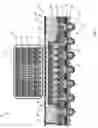
FIG. 1 is a cross section of an embodiment of a fan-in package-on-package (FiPoP) device;
FIG. 2 is a representative portion of the FiPoP device of FIG. 1 highlighting two of the vias in the FiPoP device;
FIG. 3 is a simplified circuit model for a capacitor formed in one of the vias of FIG. 2;
FIG. 4 is a representative portion of an embodiment of another FiPoP device highlighting two of the vias in the FiPoP device;
FIG. 5 is a simplified circuit model for a resistor formed in one of the vias of FIG. 4; and
FIGS. 6a-6e collectively illustrate an embodiment of a process of forming the FiPoP device of FIG. 1.
DETAILED DESCRIPTION OF ILLUSTRATIVE EMBODIMENTS
The making and using of the presently preferred embodiments are discussed in detail below. It should be appreciated, however, that the present disclosure provides many applicable inventive concepts that can be embodied in a wide variety of specific contexts. The specific embodiments discussed are merely illustrative and do not limit the scope of the disclosure.
The present disclosure will be described with respect to preferred embodiments in a specific context, namely a Fan-in Package-on-Package (FiPoP) semiconductor device. The concepts in the disclosure may also apply, however, to other semiconductor structures or circuits.
Referring concurrently to FIG. 1, an embodiment FiPoP device 10 is illustrated. As will be more fully explained below, the FiPoP device 10 provides an innovative package-on-package structure with integrated, or built-in, passive devices. As such, the FiPoP device 10 offers improved electrical performance and a higher operation frequency relative to a conventional FiPoP device or a standard Package-on-Package (PoP) device. As shown in FIG. 1, the FiPoP device 10 generally includes a top package 12 coupled to a bottom package 14 through a center ball grid array 16 and corresponding contacts 18.
In an embodiment, the top package 12 includes several stacked memory chips 20. The memory chips 20 may be electrically coupled to each other through, for example, wire bonds 22. While several memory chips 20 are depicted in FIG. 1, in an embodiment the top package 12 may include a single memory chip 20. The top package 12 may also incorporate other chips, dies, or electronic circuitry depending on the intended use or performance needs of the FiPoP device 10.
The bottom package 14 includes a substrate 24 formed from a suitable semiconductor material (e.g., silicon, etc.). The substrate 24 generally includes and supports an under bump metallization (UBM) 26, a first passivation layer 28, and a molding layer 30. The UMB 26 is configured to engage with solder balls 32 from a ball grid array (BGA) 34. The BGA 34 may be employed to mount the FiPoP device 10 to, for example, a circuit board or another electronic device.
The first passivation layer 28 generally protects the substrate 22 and encapsulates the UBM 26. The first passivation layer 28 may be formed from, for example, a passivating oxide, silicon nitride (SiN), silicon nitrogen oxide (SiNOx), or silicon oxide (SiOx). Other layers, such as a polymeric layer formed from polybenzoxaxole, may be used in addition to, or instead of, the first passivation layer 28. The molding layer 30 overlies the first passivation layer 28 and is disposed adjacent to the solder balls 32. The molding layer 30 may be formed from a variety of suitable molding compounds.
Still referring to FIG. 1, the bottom package 14 includes numerous metal interconnections 36 formed through the substrate 24. The metal interconnections 36 extend between, and electrically couple, the UBM 26 to contacts 38 embedded in or supported by an upper portion of the substrate 24. In an embodiment, the contacts 38 are used to mount a die 40 (e.g., a logic integrated circuit, an analog device, etc.) to the substrate 24. In an embodiment, the die 40 (i.e., a chip) is mounted on the substrate 24 (e.g., a semiconductor wafer) using solder connections 42 formed during a chip-on-wafer (CoW) bonding process. As shown in FIG. 1, an underfill material 44 may be flowed between the die 40 and the substrate 24 in order to encapsulate the solder connections 42.
The bottom package 14 also includes a lamination layer 46 disposed on the substrate 24. The lamination layer 46 generally encapsulates the die 40 and may be formed from a polymer (e.g., an organic polyimide, lead oxide, an epoxy, etc.) or a photodielectric. As shown in FIG. 1, the lamination layer 46 also supports a second passivation layer 48.
The second passivation layer 48 may be formed from a passivating oxide, silicon nitride (SiN), silicon nitrogen oxide (SiNOx), or silicon oxide (SiOx). Other layers, such as a polymeric layer formed from polybenzoxaxole, may be used in addition to, or instead of, the second passivation layer 48. Still referring to FIG. 1, additional contacts 18 are disposed within the second passivation layer 48. As noted above, some of the contacts 18 are employed to mount the top package 12. Some of the other contacts 18 embedded or supported by the second passivation layer 48 are formed over vias 50 that have been formed in the lamination layer 46.
Referring now to FIG. 2, which represents and highlights a portion of the PoP device 10 of FIG. 1, two of the vias 50 are illustrated in greater detail. As shown in FIG. 2, a first via 52 has been plated with metal 54. As such, the first via 52 forms an electrical interconnection between one of the contacts 18 embedded in the second passivation layer 48 and one of contacts 38 embedded in the substrate 24 (FIG. 1). In an embodiment, the first via 52 is plated with copper or another highly conductive metal.
Still referring to FIG. 2, a second via 56 is plated with metal 54 and then filled with a dielectric material 58. In an embodiment, the dielectric material 58 is a material with a high dielectric constant compared to silicon dioxide (SiO2) such as, for example, hafnium silicate (HfSiO4), zirconium silicate (ZrSiO4), hafnium dioxide (HfO2), zirconium dioxide (ZrO2), yttrium oxide (Y2O3), aluminum oxide (Al2O3), and the like. Other dielectric materials may also be used in other embodiments.
As shown in FIG. 2, a top surface of the dielectric material 58 in the second via 56 engages or encounters a non-conducting material such as, for example, the second passivation layer 48 disposed under the contact 18. In contrast, a bottom surface of the dielectric material 58 in the second via 56 engages one of contacts 38 embedded in the substrate 24. In this configuration, the second via 56 forms a high volume capacitor 60 as shown in FIG. 3. Referring collectively to FIGS. 2 and 3, the contact 18 generally forms the top plate or contact while the contact 38 and the metal 54 plated sidewalls of the via 56 form the bottom plate or contact of the capacitor 60.
In an embodiment, several the second vias 56 in the bottom package 14 are filled with the dielectric material 58 to form a plurality of capacitors 60 depicted in FIG. 3. In an embodiment, one or more of the capacitors 60 in the plurality are electrically coupled together. In an embodiment, the capacitors 60 in the plurality may be directly horizontally adjacent to one another. In an embodiment, the capacitors 60 may be spaced apart from each other by one or more of the first vias 52 functioning as an interconnect. In an embodiment, some of the second vias 56 are filled with a different dielectric material 58 relative to other second vias 56. Therefore, one of the capacitors 60 in the bottom package 14 may provide a different capacitance relative to another of the capacitors 60 in the bottom package.
Referring collectively to FIGS. 4-5, in an embodiment the second vias 56 in the bottom package 14 of the PoP device 10 are filled with a resistive material 62 (instead of a dielectric material 58) in order to form a resistor 64. In an embodiment, the resistive material 62 may be formed from carbon, a carbon composition, a ceramic, a metal oxide (e.g., tin oxide), and the like. In an embodiment, some of the second vias 56 are filled with a different resistive material 62 relative to other second vias 56. Therefore, one of the resistors 64 in the bottom package 14 may provide a different resistance relative to another capacitor 64 in the bottom package.
Referring collectively to FIGS. 6a-6e, an embodiment of a process 66 for forming the FiPoP device 10 of FIG. 1 is sequentially illustrated. As shown in FIG. 6a, the substrate 24 (e.g., a silicon wafer) is subjected to a through silicon via (TSV) process to generate vias in the substrate 24. Once the vias have been formed, an electroplating process is initiated to plate the vias with, for example, copper. These copper-plated vias form the interconnections 36 in the substrate 24. After the vias in the substrate 24 have been plated, a back end of line (BEOL) scheme is implemented to electrically connect the copper-plated vias and to form the contacts 38. The copper-plated vias may be used to interconnect components of the top package 12 and components of the bottom package 14 (FIG. 1). Thereafter, in an embodiment a testing process is performed to ensure that the circuits formed by BEOL scheme are acceptable.
Moving now to FIG. 6b, the die 40 (e.g., a memory chip) is coupled to the substrate 24 through a chip-on-wafer (CoW) bonding process. In an embodiment, the chip 40 is coupled to the substrate 24 using a flip-chip bumping or other chip bonding process. Thereafter, the underfill 44 material is flowed or otherwise introduced in between the die 40 and the substrate 24.
Next, as shown in FIG. 6c, a lamination process is performed to generate a lamination layer 46 over the chip 40 and a top surface of the substrate 24 adjacent to the chip 40. In an embodiment, the lamination layer 46 is formed from a dielectric material such as a polymer (e.g., an organic polyimide, an epoxy, etc.), lead oxide, or a photodielectric. In an embodiment, the lamination layer 46 completely encapsulates the die 40.
Thereafter, the vias 50 are formed through the lamination layer 46 using, for example, a photo exposure process. Once the vias 50 have been formed, a deep trench plating process is employed to plate an exposed interior surface of the vias 50 with metal 54 (FIG. 2). In an embodiment, the deep trench plating process plates these vias 50 with a conductive metal 54 such as, for example, copper. In another embodiment, other conductive metals or alloys may be used to suitably plate the vias 50. One or more of the plated vias 50 may be electrically coupled together during the plating process. In an embodiment, all of the vias 50 are copper-plated during the plating process. In another embodiment, only some of the vias 50 are copper plated.
Still referring to FIG. 6c, in an embodiment some of the vias 50 (e.g., the second via 56) are filled with the dielectric material 58 (FIG. 2) in order to form high volume capacitors 60 (a single capacitor is shown in FIG. 6c). In an embodiment, a stencil printing process is employed to fill some of the vias 50 with the dielectric material 56. In an embodiment, the stencil printing process is also used to generate a layer of dielectric material over the contacts 18 and upon the lamination layer 46 (FIG. 2).
As shown in FIG. 6c, the capacitor 60 is embedded within what will eventually become the bottom package 14 of the FiPoP device 10 of FIG. 1. In an embodiment, another other passive device (e.g., a resistor) may be formed in one or more of the vias 50 by filling the vias with an appropriate resistive material 62 (e.g., carbon, a ceramic, etc.) instead of with the dielectric material 58.
In an embodiment, the capacitor 60 may be horizontally adjacent to one of the vias 50 that has not been filed with dielectric material (i.e., a copper-plated via 50 functioning as an interconnection) as shown in FIG. 2. In another embodiment, however, the capacitor 60 may be horizontally adjacent to another one of the capacitors 60 formed using the above described process. Indeed, several of the capacitors 60 may be situated side-by-side or otherwise arranged depending on the requirements of the bottom package 14 or the FiPoP device 10. In an embodiment, where several of the capacitors 60 are formed in the bottom package 14 of the FiPoP device 10, each of the capacitors 60 may offer the same capacitance (e.g., C1=0.2 pico Farard (pF), C2=0.2 pF, C3=0.2 pF, etc.). In another embodiment, each of the capacitors 60 may have different capacitances (e.g., C1=0.1 pF, C2=0.2 pF, C3=0.4 pF, etc.). In an embodiment, several of the capacitors 60 may be electrically coupled together to form a bank of capacitors.
The capacitors 60 formed as noted above are able to reduce the resistive-capacitive (RC) delay of the FiPoP device 10 relative to when distant capacitors (e.g., capacitors not incorporated into the FiPoP device 10) are used. The capacitors 60 are also able to reduce the signal rising/falling time of the FiPoP device 10.
After the vias 50 have been filled with the dielectric material 62 to form the capacitors 60 and/or copper plated to form interconnections or other electric circuitry, a redistribution layer (RDL) process is performed to generate a desired pattern of contacts 18 and/or metallization on or in a top surface of the lamination layer 46. As shown, the redistribution layer process generates the contacts 18 used to receive the center ball grid array (BGA) 16 of the top package 12 shown in FIG. 1. In an embodiment, a passivation process may be performed to generate the passivation layer 48 on the substrate 24 and around the contacts 18.
Referring now to FIG. 6d, a carrier bonding process is performed to temporarily bond a carrier 68 to the redistribution layer 46. The carrier 68 is used to effectively move and position the entire assembly for further processing. In an embodiment, the assembly is inverted using the carrier 68 and a backside thinning process is performed to remove a portion of the substrate 24 and to expose the metal interconnections 36. Once the metal interconnections 36 have been exposed, another RDL process and an under bump metallization (UBM) process are performed to provide the UBM 26 configured to receive solder balls 32 from the ball grid array 34. The ball grid array 34 may be employed to electrically couple the FiPoP device 10 to a circuit board or another electronic device. In an embodiment, a passivation process may be performed to generate the passivation layer 28 on the substrate 24 and over the contacts 26. In addition, in an embodiment a molding process may be performed to form the molding layer 30 over the passivation layer and around a portion of the solder balls 32.
Referring now to FIG. 6e, a carrier de-bonding process is performed to remove the carrier 68. Once the carrier 68 has been removed, a singulation process is performed generate individual bottom packages 14. Finally, a known good package (KGP) process is performed to test the packages 14.
Based on the above, those skilled in the art will recognize that the FiPoP device 10 provides an innovative package on package structure with built-in integrated passives. Therefore, performance of the FiPoP device 10 is increased. In addition, operational frequency for the FiPoP device 10 is higher.
A package for a use in a package-on-package (PoP) device. The PoP device comprises a substrate, a polymer layer formed on the substrate, a first via formed in the polymer layer, and a material disposed in the first via to form a first passive device.
A package-on-package (PoP) device comprises a top package and a bottom package operably coupled to the top package. The bottom package includes a substrate supporting a polymer layer. The polymer layer includes a first via filled with a first material to form a first passive device.
A method of forming a package for a use in a package-on-package (PoP) device. The method comprises forming a polymer layer on a substrate, forming a first via in the polymer layer, and filling the first via with a material to form a passive device.
While the disclosure has been provided with reference to illustrative embodiments, this description is not intended to be construed in a limiting sense. Various modifications and combinations of the illustrative embodiments, as well as other embodiments, will be apparent to persons skilled in the art upon reference to the description. It is therefore intended that the appended claims encompass any such modifications or embodiments.
Claims
What is claimed is:1. A method of forming a package for a use in a package-on-package (PoP) device, comprising:
forming a first contact over a substrate;
forming a first polymer layer over the first contact and the substrate;
forming a first via in the first polymer layer;
filling the first via with a first material; and
forming a second contact over the first via and the first polymer layer, wherein the first contact, the first material and the second contact form a passive device.
2. The method of claim 1, further comprising using a resistive material for the first material such that the passive device is a first resistor.
3. The method of claim 2, further comprising:
forming a second via in the first polymer layer; and
filling the second via with a second material to form a second resistor interposed between a third contact and a fourth contact.
4. The method of claim 3, wherein the first material is different than the second material.
5. The method of claim 1, further comprising using a dielectric material for the first material such that the passive device is a capacitor.
6. The method of claim 5, further comprising forming a plurality of additional vias in the first polymer layer and filling the additional vias with the dielectric material to form a plurality of additional capacitors.
7. The method of claim 1, further comprising, prior to filling the first via, forming a conductive layer along sidewalls of the first via.
8. The method of claim 1, further comprising, prior to forming the first via, embedding a die in the first polymer layer.
9. A method of forming a device, the method comprising:
attaching a die to a first side of a substrate;
embedding the die in an insulating layer disposed over the substrate;
forming a first via in the insulating layer, the first via exposing a first contact on the first side of the substrate;
lining sidewalls of the first via with a first material, the first material being conductive;
filling the first via with a second material over the first material, the second material being less conductive than the first material; and
forming a second contact over the first via, wherein a top surface of the second material contacts the second contact, and wherein a bottom surface of the second material contacts the first contact, thereby forming a passive device in the first via.
10. The method of claim 9, wherein a first package comprises the die in the insulating layer, and further comprising attaching a second package to the first package, the second contact being interposed between the second package and the first contact. ii. The method of claim 9, further comprising using a resistive material for the second material such that the passive device is a first resistor.
12. The method of claim ii, further comprising forming a second resistor in a second via in insulating layer, the first via being filled with a different resistive material than the second via.
13. The method of claim 9, further comprising using a dielectric material for the first material such that the passive device is a capacitor.
14. The method of claim 13, further comprising forming a second capacitor in a second via, the first via being filled with a different dielectric material than the second via.
15. A method of forming a package-on-package (PoP) device, the method comprising:
forming a top package;
forming a bottom package, comprising:
attaching a die to a first side of a substrate;
forming a first insulating layer over the first side of the substrate and around the die;
forming a first opening extending through the first insulating layer, the first opening exposing a first contact on the first side of the substrate;
plating a metal onto sidewalls of the first opening;
filling the first opening with a first dielectric material or a first resistive material after the plating; and
forming a first redistribution layer (RDL) comprising a second contact over the first opening and the first insulating layer; and
attaching the top package to the first RDL.
16. The method of claim 15, wherein the first opening is filled with the first resistive material, and wherein the first resistive material comprises carbon, a carbon composition, a ceramic, or a metal oxide.
17. The method of claim 15, wherein the first opening is filled with the first resistive material, and further comprising forming:
a second opening through the first insulating layer; and
filling the second opening with a second resistive material, the second resistive material being different than the first resistive material.
18. The method of claim 15, wherein the first opening is filled with the first dielectric material, and wherein the first dielectric material comprises a high-k material.
19. The method of claim 15, wherein the first opening is filled with the first dielectric material, and wherein the first dielectric material comprises hafnium silicate (HfSiO4), zirconium silicate (ZrSiO4), hafnium dioxide (HfO2), zirconium dioxide (ZrO2), yttrium oxide (Y2O3), or aluminum oxide (Al2O3).
20. The method of claim 15, wherein the first opening is filled with the first dielectric material, and further comprising:
forming a second opening through the first insulating layer; and
filling the second opening with a second dielectric material, the second dielectric material being different than the first dielectric material.
Images & Drawings included:



Sources:
- United States Patent and Trademark Office - verify current appl. status at the USPTO↗
Similar patent applications:
Recent applications in this class:
- » 20250286027 2025-09-11
SYSTEM PACKAGING FOR CELLULAR MODEM AND TRANSCEIVER SYSTEM OF HETEROGENEOUS STACKING - » 20250286026 2025-09-11
SEMICONDUCTOR DEVICE WITH SPACER AND METHOD FOR FABRICATING THE SAME - » 20250286025 2025-09-11
SEMICONDUCTOR DEVICE WITH SPACER AND METHOD FOR FABRICATING THE SAME - » 20250286024 2025-09-11
SEMICONDUCTOR DEVICE WITH SPACER AND METHOD FOR FABRICATING THE SAME - » 20250259975 2025-08-14
SEMICONDUCTOR PACKAGE INCLUDING REDISTRIBUTION SUBSTRATE - » 20250233117 2025-07-17
METHOD OF FORMING SEMICONDUCTOR DEVICE USING HIGH STRESS CLEAVE PLANE - » 20250210601 2025-06-26
PIXEL ARRAY AND MANUFACTURING METHOD THEREFOR - » 20250210600 2025-06-26
SYSTEM-ON-CHIP GAP FILL METHOD AND STRUCTURE - » 20250201784 2025-06-19
SEMICONDUCTOR DEVICE HAVING PACKAGE ON PACKAGE STRUCTURE AND METHOD OF MANUFACTURING THE SEMICONDUCTOR DEVICE - » 20250183237 2025-06-05
PACKAGE STRUCTURE INCLUDING A BACKSIDE METAL FILM ON A SEMICONDUCTOR DIE AND A THERMALLY CONDUCTIVE UNDERFILL LAYER ON THE BACKSIDE METAL FILM AND METHODS OF FORMING THE SAME
Recent applications for this Assignee:
- » 20230395588 2023-12-07
Semiconductor device packages, packaging methods, and packaged semiconductor devices - » 20230343634 2023-10-26
Mechanism for finFET well doping - » 20230207531 2023-06-29
Semiconductor package for thermal dissipation - » 20230112658 2023-04-13
Methods for non-resist nanolithography - » 20230107176 2023-04-06
Interconnect structure having a carbon-containing barrier layer - » 20220320029 2022-10-06
Dummy structure of stacked and bonded semiconductor device - » 20220302079 2022-09-22
Tools and systems for processing semiconductor devices, and methods of processing semiconductor devices - » 20220288627 2022-09-15
Spin dispenser module substrate surface protection system - » 20220189942 2022-06-16
Semiconductor device packages, packaging methods, and packaged semiconductor devices - » 20210358799 2021-11-18
Mechanism for FinFET well doping