CRITICAL CARE BACKUP VACUUM SYSTEM AND METHOD OF USE
US20170226760A1
2017-08-10
15/423,951
2017-02-03
Abstract:
ModuleVide™ takes a unique approach to sustaining vacuum service in Critical Zones within a hospital or other medical facility. This solution relates to a medical facility with a main vacuum plant connected via a main piping with branches that deliver vacuum to different areas within the facility. Critical Zone branches off the central vacuum piping system are augmented with integrated branch backup vacuum generating devices (ModuleVide™). Upon failure of vacuum in the branch piping, the ModuleVide™ activates to reestablish vacuum service in that branch piping segment. The branch of piping may for example correspond to the surgical theater suit of a hospital. The vacuum capacity of the ModuleVide™ is sized to match the specific Critical Zone branch's expected demand.
Interested in similar patents?
Get notified when new applications in this technology area are published.
Classification:
E04B1/7084 » CPC further
Constructions in general; Structures which are not restricted either to walls, e.g. partitions, or floors or ceilings or roofs; Insulation or other protection; Elements or use of specified material therefor; Drying or keeping dry, e.g. by air vents by ventilating with Knappen systems, i.e. atmospheric siphons
E04H3/08 » CPC main
Buildings or groups of buildings for public or similar purposes; Institutions, e.g. infirmaries, prisons Hospitals, infirmaries, or the like; Schools; Prisons
E04B1/92 » CPC further
Constructions in general; Structures which are not restricted either to walls, e.g. partitions, or floors or ceilings or roofs; Insulation or other protection; Elements or use of specified material therefor Protection against other undesired influences or dangers
E04B1/70 IPC
Constructions in general; Structures which are not restricted either to walls, e.g. partitions, or floors or ceilings or roofs; Insulation or other protection; Elements or use of specified material therefor Drying or keeping dry, e.g. by air vents
Description
CROSS REFERENCE TO RELATED APPLICATIONS
This application claims the benefit of priority under 35 U.S.C. §119(a) and (b) to U.S. Provisional Patent Application No. 62/291,074 filed Feb. 4, 2016, the entire contents of which are incorporated herein by reference.
BACKGROUND
Centrally piped medical vacuum (suction) is an essential service within acute care hospitals. It is fundamental to patient care protocols in emergency, intensive care, operative, post operative, and general care departments. Without adequate centrally piped suction service, hospitals cannot maintain critical care patient therapies and in certain cases must evacuate critical patients to other facilities.
In many medical facilities such as hospitals, there is often a central vacuum production plant or equipment that is connected to outlets throughout the facility via a piping network. Failure of this central vacuum system leads to loss of medical vacuum throughout the facility. Although the central medical vacuum plants are generally designed to provide redundancy through multiple pumps, these systems remain vulnerable to single faults such as loss of electrical power, inadvertent isolation valve closure, or pipeline breach.
Due to the critical nature of medical vacuum in patient care, many different options have been developed to manage central vacuum system failures. The most common solution is to deploy portable vacuum systems for direct use on patients, or to attempt to reestablish vacuum in the main piping system. This approach has several problems. The number of portable units required is generally large and cost prohibitive, leading to a shortage of pumps and a “rationing” of vacuum service. The portable units must be deployed, which takes considerable time. Combined with a vacuum service rationing protocol, this time lag to access can be long enough to compromise patient care. The situation can be further exacerbated by the fact that the portable vacuum pumps are not in regular service. Thus, some portables fail due to their long dormancy.
Numerous technologies are proposed to speed facets of portable vacuum deployment (for example CA2635506 C) or the return of central vacuum service (for example U.S. Pat. No. 6,131,596 A). These auxiliary technologies can only achieve a measure of improvement in the time to vacuum service restoration.
Because of the critical medical necessity for patient care, there have been a number of alternative backup vacuum technologies and strategies proposed in the literature. These solutions address a variety of specific central vacuum loss circumstances.
EP2058520 B1 titled “Backup vacuum-production installation and corresponding vacuum-production system” proposes a combination pneumatic vacuum motor and venturi that uses compressed air to produce suction. “As noted, if vacuum supply loss, for example during a power failure, the response time should be very short so as not to endanger the lives of patients in need of care requiring vacuum.” The EP2058520 B1 system is capable of providing vacuum in case of a complete power failure, such as loss of main power and backup generator power. This solution addresses the critical time to vacuum recovery issue for an entire facility by providing a short term pneumatic powered vacuum system for a limited period of time.
Problem Addressed
In any medical facility, there are known areas and functions where vacuum service is expected to be of critical concern on a routine basis (“Critical Zones”). These Critical Zones will often include a surgical theater or suite of adjoining surgical theaters in a surgery center. Intensive care units and emergency rooms are other large facility segments where vacuum service is expected to be of critical concern. Loss of vacuum for even a few minutes in these types of areas may endanger patient lives.
SUMMARY
The ModuleVide™ Solution
ModuleVide™ takes a unique approach to sustaining vacuum service in Critical Zones within a hospital or other medical facility. This solution relates to a medical facility with a main vacuum plant connected via a main piping with branches that deliver vacuum to different areas within the facility. Critical Zone branches off the central vacuum piping system are augmented with integrated branch backup vacuum generating devices (ModuleVide™). Upon failure of vacuum in the branch piping, the ModuleVide™ activates to reestablish vacuum service in that branch piping segment. The branch of piping may for example correspond to the surgical theater suit of a hospital. The vacuum capacity of the ModuleVide™ is sized to match the specific Critical Zone branch's expected demand. When portable vacuum generators are used to try to create vacuum in the medical piping system, the portable vacuums are generally attached via gauge ports. These gauge ports are normally ⅛ inch diameter, regardless of pipeline diameter, which is generally ¾″ up to as large as 2″ for Critical Zones. This introduces a severe flow restriction between the portable vacuum generator and the piping, further limiting the effectiveness of the portable vacuum units. Because ModuleVide™ is an integrated solution, the connections between ModuleVide™ vacuum system and the Critical Zones piping branch can be appropriately sized and designed to prevent flow restrictions. Hence, with the ModuleVide™, the various limitations of portable vacuum generators are avoided entirely.
The ModuleVide™ design further addresses the situation of piping structural failures outside the Critical Zone branch causing a loss of vacuum in the Critical Zone priority branch. A key element of the ModuleVide™ design is the use of isolation valves to render the ModuleVide™ piping branch fully autonomous from the failed main vacuum system. As a consequence, loss of piping integrity elsewhere in the main piping and lower priority piping branches (where the deployment of portable vacuums is expected to be an adequate solution) has no effect. This represents a particular benefit over having a redundant standard backup vacuum generator for the whole piping network. While the focus of ModuleVide™ is on Critical Zones, it is possible to apply the ModuleVide™ device to less critical medical piping branches or segments if desired.
In accordance with an aspect of the present invention, there is provided a medical vacuum apparatus for supplying medical vacuum to a portion of a medical vacuum piping network in a medical facility, the apparatus comprising:
a) a vacuum generating device (A) capable of causing a negative pressure within piping in fluid communication therewith (P),
b) wherein the vacuum generating device (A) is fluidly connected to the portion of the medical vacuum piping network (P) in the medical facility,
c) an isolation valve (C2, AV2) configured to fluidically isolate the portion of the medical vacuum piping network (P) in the medical facility from a remainder of the medical vacuum piping network (P) in the medical facility,
d) the isolation valve (C2, AV2) further configured to fluidically isolate the portion of the medical vacuum piping network (P) upon loss of vacuum in the medical vacuum piping network (P) resulting in a pre-determined vacuum pressure.
In accordance with another aspect of the present invention, the apparatus further comprises an isolation valve (C1, AV1) configured to fluidically isolate the vacuum generating device (A) when a vacuum pressure in the portion of the medical vacuum piping network (P) remains below the pre-determined vacuum pressure.
In accordance with another aspect of the present invention, the apparatus further comprises a bacteriological filter configured to remove bacteria and particulates from air passing through the portion of the medical vacuum piping network (P) in the medical facility fluidically connected to the vacuum generating device (A).
In accordance with another aspect of the present invention, the apparatus further comprises a zone alarm (D) configured to measure the level of vacuum in the medical vacuum piping network in the medical facility and further configured to detect the pre-determined vacuum pressure.
In accordance with another aspect of the present invention, the zone alarm (D) is configured to communicate to the vacuum generating device (A) that the zone alarm (D) has detected of a loss of vacuum below the pre-determined vacuum pressure.
In accordance with another aspect of the present invention, the vacuum generating device (A) is configured to operate to create a vacuum within the portion of the medical vacuum piping network in the medical facility upon receiving a communication from the zone alarm (D) that the zone alarm (D) has detected of a loss of vacuum below the pre-determined vacuum pressure.
In accordance with another aspect of the present invention, the isolation valves (C1, C2) are check valves.
In accordance with another aspect of the present invention, the isolation valves (C1, C2) are both in a vertical orientation relative to the floor of the medical facility.
In accordance with another aspect of the present invention, the isolation valves (AV1, AV2) are actuated valves.
In accordance with another aspect of the present invention, the zone alarm (D) is configured to communicate to the isolation valves that the zone alarm (D) has detected of a loss of vacuum below the pre-determined vacuum pressure.
In accordance with another aspect of the present invention, the isolation valves are configured to operate to isolate the portion of the medical vacuum piping network in the medical facility upon receiving a communication from the zone alarm (D) that the zone alarm (D) has detected of a loss of vacuum below the pre-determined vacuum pressure.
In accordance with another aspect of the present invention, the vacuum generating device (A) is fluidly connected to the portion of the medical vacuum piping network (P) via a piping connection that is sized and configured to not introduce a flow restriction point between the medical vacuum piping network (P) and the vacuum generating device (A).
In accordance with another aspect of the present invention, the piping connection is a “T” piping junction.
In accordance with another aspect of the present invention, there is provided a method for supplying medical vacuum to a portion of a medical vacuum piping network in a medical facility, the method comprising the steps of:
a) losing a pre-existing vacuum in the portion of the medical vacuum piping network in the medical facility,
b) isolating the portion of the medical vacuum piping network in the medical facility by an isolation valve (C2, AV2) configured to fluidically isolate the portion of the medical vacuum piping network (P) in the medical facility from a remainder of the medical vacuum piping network (P) in the medical facility, the isolation valve (C2, AV2) configured to fluidically isolate the portion of the medical vacuum piping network (P) in response to the loss of the pre-existing vacuum in the medical vacuum piping network (P),
c) activating a vacuum generating device (A) capable of causing a negative pressure within piping in fluid communication therewith (P), wherein the vacuum generating device (A) is fluidly connected to the portion of the medical vacuum piping network (P) in the medical facility,
d) forming a pre-determined vacuum pressure within the portion of the medical vacuum piping network (P) in the medical facility by the activated vacuum generating device (A).
BRIEF DESCRIPTION OF THE DRAWING
For a further understanding of the nature and aspects for the present invention, reference should be made to the following detailed description, taken in conjunction with the accompanying drawings, in which like elements are given the same or analogous reference numbers and wherein:
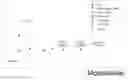
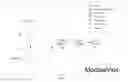
FIG. 1 illustrates the example embodiment described below.
DESCRIPTION OF PREFERRED EMBODIMENTS
ModuleVide™ Example System
A wall mounted DC current direct drive suction pump (A) interconnected to the zone piping via a full bore pipe “T” situated downstream of the zone isolation valve (E). The ModuleVide™ may (for example) be connected via low voltage wiring to the dry contacts within the local (zone) alarm (D) monitoring, and activates when the local alarm detects a loss of pressure in the central pipeline. Integral to the ModuleVide™ pipeline interconnect are two check valves (C1, C2) serving to isolate the ModuleVide™ (A) emergency vacuum service to the Critical Zone. C2 prevents the ModuleVide™ pump from attempting to draw down vacuum across the central pipeline and thus the entire vacuum piping network. When not in use, the C1 prevents the central vacuum system from drawing air through the idle ModuleVide™ vacuum pump. In a preferred arrangement, C1 and C2 are both installed in a vertical orientation.
The check valves may in some instances be replaced with actuated valves (AV1, AV2) for additional control over the system via a PLC. This provides further flexibility in the uses of ModuleVide™ . For example, a variety of issues can cause the vacuum level in a piping network to be sustained, but insufficient. An AV2 for example could allow for use of the ModuleVide™ to supplement an insufficient level of vacuum in the entire piping network to thereby reestablish sufficient vacuum service in the entire facility.
Claims
What is claimed is:1. A medical vacuum apparatus for supplying medical vacuum to a portion of a medical vacuum piping network in a medical facility, the apparatus comprising:
a) a vacuum generating device (A) capable of causing a negative pressure within piping in fluid communication therewith (P),
b) wherein the vacuum generating device (A) is fluidly connected to the portion of the medical vacuum piping network (P) in the medical facility,
c) an isolation valve (C2, AV2) configured to fluidically isolate the portion of the medical vacuum piping network (P) in the medical facility from a remainder of the medical vacuum piping network (P) in the medical facility,
d) the isolation valve (C2, AV2) further configured to fluidically isolate the portion of the medical vacuum piping network (P) upon loss of vacuum in the medical vacuum piping network (P) resulting in a pre-determined vacuum pressure.
2. The medical vacuum apparatus for supplying medical vacuum to the portion of the medical vacuum piping network in a medical facility of claim 1, the apparatus further comprising an isolation valve (C1, AV1) configured to fluidically isolate the vacuum generating device (A) when a vacuum pressure in the portion of the medical vacuum piping network (P) remains below the pre-determined vacuum pressure.
3. The medical vacuum apparatus for supplying medical vacuum to the portion of the medical vacuum piping network in a medical facility of claim 1, the apparatus further comprising a bacteriological filter configured to remove bacteria and particulates from air passing through the portion of the medical vacuum piping network (P) in the medical facility fluidically connected to the vacuum generating device (A).
4. The medical vacuum apparatus for supplying medical vacuum to the portion of the medical vacuum piping network in the medical facility of claim 1, further comprising a zone alarm (D) configured to measure the level of vacuum in the medical vacuum piping network in the medical facility and further configured to detect the pre-determined vacuum pressure.
5. The medical vacuum apparatus for supplying medical vacuum to the portion of the medical vacuum piping network in the medical facility of claim 4, wherein the zone alarm (D) is configured to communicate to the vacuum generating device (A) that the zone alarm (D) has detected of a loss of vacuum below the pre-determined vacuum pressure.
6. The medical vacuum apparatus for supplying medical vacuum to a portion of the medical vacuum piping network in the medical facility of claim 5, wherein the vacuum generating device (A) is configured to operate to create a vacuum within the portion of the medical vacuum piping network in the medical facility upon receiving a communication from the zone alarm (D) that the zone alarm (D) has detected of a loss of vacuum below the pre-determined vacuum pressure.
7. The medical vacuum apparatus for supplying medical vacuum to a portion of the medical vacuum piping network in the medical facility of claim 2, wherein the isolation valves (C1, C2) are check valves.
8. The medical vacuum apparatus for supplying medical vacuum to a portion of the medical vacuum piping network in the medical facility of claim 7, wherein the isolation valves (C1, C2) are both in a vertical orientation relative to the floor of the medical facility.
9. The medical vacuum apparatus for supplying medical vacuum to the portion of the medical vacuum piping network in the medical facility of claim 2, wherein the isolation valves (AV1, AV2) are actuated valves.
10. The medical vacuum apparatus for supplying medical vacuum to the portion of the medical vacuum piping network in the medical facility of claim 9, wherein the zone alarm (D) is configured to communicate to the isolation valves that the zone alarm (D) has detected of a loss of vacuum below the pre-determined vacuum pressure.
11. The medical vacuum apparatus for supplying medical vacuum to the portion of the medical vacuum piping network in the medical facility of claim 10, wherein the isolation valves are configured to operate to isolate the portion of the medical vacuum piping network in the medical facility upon receiving a communication from the zone alarm (D) that the zone alarm (D) has detected of a loss of vacuum below the pre-determined vacuum pressure.
12. The medical vacuum apparatus for supplying medical vacuum to the portion of the medical vacuum piping network (P) in the medical facility of claim 1, wherein the vacuum generating device (A) is fluidly connected to the portion of the medical vacuum piping network (P) via a piping connection that is sized and configured to not introduce a flow restriction point between the medical vacuum piping network (P) and the vacuum generating device (A).
13. The medical vacuum apparatus for supplying medical vacuum to the portion of the medical vacuum piping network (P) in the medical facility of claim 12, wherein the piping connection is a “T” piping junction.
14. A method for supplying medical vacuum to a portion of a medical vacuum piping network in a medical facility, the method comprising the steps of:
a) losing a pre-existing vacuum in the portion of the medical vacuum piping network in the medical facility,
b) isolating the portion of the medical vacuum piping network in the medical facility by an isolation valve (C2, AV2) configured to fluidically isolate the portion of the medical vacuum piping network (P) in the medical facility from a remainder of the medical vacuum piping network (P) in the medical facility, the isolation valve (C2, AV2) configured to fluidically isolate the portion of the medical vacuum piping network (P) in response to the loss of the pre-existing vacuum in the medical vacuum piping network (P),
c) activating a vacuum generating device (A) capable of causing a negative pressure within piping in fluid communication therewith (P), wherein the vacuum generating device (A) is fluidly connected to the portion of the medical vacuum piping network (P) in the medical facility,
d) forming a pre-determined vacuum pressure within the portion of the medical vacuum piping network (P) in the medical facility by the activated vacuum generating device (A).
Images & Drawings included:
Sources:
- United States Patent and Trademark Office - verify current appl. status at the USPTO↗
Recent applications in this class:
- » 20240191524 2024-06-13
PORTABLE BIOMEDICAL UTILITIES CONSOLE - » 20240052658 2024-02-15
MOBILE DIAGNOSTIC STRUCTURE - » 20220003013 2022-01-06
Cantilevered Mezzanine for modular jail cell - » 20210348407 2021-11-11
Modular configurable hospital system and method - » 20200347627 2020-11-05
Self-contained treatment unit for haemodialysis treatments - » 20200217096 2020-07-09
HYBRID OPERATING ROOM FOR SURGICAL AND FIXED IMAGING SERVICES IN AN AMBULATORY SURGICAL CENTER - » 20190383046 2019-12-19
Systems and Methods Related to Multi-Tenant Residential Building Construction - » 20190145118 2019-05-16
SELF-CONTAINED TREATMENT UNIT FOR HAEMODIALYSIS TREATMENTS - » 20190145117 2019-05-16
Hybrid operating room for combined surgical and fixed imaging services in an ambulatory surgical center - » 20190136553 2019-05-09
Building, in particular a hospital