Passenger communication lighting
US20170329438A1
2017-11-16
15/586,564
2017-05-04
✅ Patent granted
US 10,353,523 B2
2019-07-16
-
-
Robert J Michaud
The Webb Law Firm
2037-09-12
Abstract:
A passenger communication lighting display on or adjacent a touch bar on a passenger door of a transit vehicle comprises a display that can be controlled to display multiple colors continuous or blinking, and a control means causing the display to be dark when the door is closed, the display to be a first color when the operator has authorized opening, the display to flash a second color when the passenger has requested the door be opened, the display to be blinking the second color when the door is opening, the display to be continuously the second color when the door is resting in the open position, and the display to be blinking a third color while the door is closing.
Inventors:
- Timothy R. Schmidt 5 🇺🇸 Wheeling, IL, United States
- Karl J. Kobel 11 🇺🇸 Wildwood, IL, United States
Assignee:
- Westinghouse Air Brake Technologies Corporation 178 🇺🇸 Wilmerding, PA, United States
Applicant:
Interested in similar patents?
Get notified when new applications in this technology area are published.
Classification:
B60J5/0497 » CPC further
Doors arranged at the vehicle sides for load transporting vehicles or public transport, e.g. lorries, trucks, buses
B60Q1/2669 » CPC further
Arrangement of optical signalling or lighting devices, the mounting or supporting thereof or circuits therefor the devices being primarily intended to indicate the vehicle, or parts thereof, or to give signals, to other traffic mounted on parts having other functions on door or boot handles
B60Q1/503 » CPC further
Arrangement of optical signalling or lighting devices, the mounting or supporting thereof or circuits therefor the devices being primarily intended to indicate the vehicle, or parts thereof, or to give signals, to other traffic for indicating other intentions or conditions, e.g. request for waiting or overtaking using luminous text or symbol displays in or on the vehicle, e.g. static text
G09F13/005 » CPC further
Illuminated signs; Luminous advertising Illumination controller or illuminated signs including an illumination control system
G09G3/2003 » CPC further
Control arrangements or circuits, of interest only in connection with visual indicators other than cathode-ray tubes for presentation of an assembly of a number of characters, e.g. a page, by composing the assembly by combination of individual elements arranged in a matrix no fixed position being assigned to or needed to be assigned to the individual characters or partial characters Display of colours
B60K2370/143 » CPC further
Details of arrangements or adaptations of instruments specially adapted for vehicles, not covered by groups; Input devices or features thereof; Input devices or input features Touch sensitive input devices
B60K2370/161 » CPC further
Details of arrangements or adaptations of instruments specially adapted for vehicles, not covered by groups; Type of information Explanation of functions, e.g. instructions
B60K2370/186 » CPC further
Details of arrangements or adaptations of instruments specially adapted for vehicles, not covered by groups; Information management Displaying Information according to relevancy
B60K2370/188 » CPC further
Details of arrangements or adaptations of instruments specially adapted for vehicles, not covered by groups; Information management Displaying information using colour changes
B60K2370/193 » CPC further
Details of arrangements or adaptations of instruments specially adapted for vehicles, not covered by groups; Information management for improving awareness
B60K2370/33 » CPC further
Details of arrangements or adaptations of instruments specially adapted for vehicles, not covered by groups; Optical features of instruments Illumination features
B60K2370/52 » CPC further
Details of arrangements or adaptations of instruments specially adapted for vehicles, not covered by groups; Control arrangements; Data network features Control of displays
B60K2370/739 » CPC further
Details of arrangements or adaptations of instruments specially adapted for vehicles, not covered by groups; Arrangements of instruments in the vehicle with special adaptation to the user or to the vehicle the user being the passenger
B60K2370/77 » CPC further
Details of arrangements or adaptations of instruments specially adapted for vehicles, not covered by groups; Arrangements of instruments in the vehicle characterised by locations other than the dashboard
E05Y2400/818 » CPC further
Electronic control; Power supply; Power or signal transmission; User interfaces; User interfaces; User displays with visual display
E05Y2400/822 » CPC further
Electronic control; Power supply; Power or signal transmission; User interfaces; User interfaces; User displays with visual display Light emitters, e.g. LEDs
E05Y2400/85 » CPC further
Electronic control; Power supply; Power or signal transmission; User interfaces; User interfaces User input means
E05Y2900/506 » CPC further
Application of doors, windows, wings or fittings thereof for vehicles for buses
E05Y2900/51 » CPC further
Application of doors, windows, wings or fittings thereof for vehicles for railway cars or mass transit vehicles
G09F2013/222 » CPC further
Illuminated signs; Luminous advertising with luminescent surfaces or parts electroluminescent with LEDs
G06F3/044 » CPC main
Input arrangements for transferring data to be processed into a form capable of being handled by the computer; Output arrangements for transferring data from processing unit to output unit, e.g. interface arrangements; Input arrangements or combined input and output arrangements for interaction between user and computer; Arrangements for converting the position or the displacement of a member into a coded form; Digitisers, e.g. for touch screens or touch pads, characterised by the transducing means by capacitive means
B60J5/04 IPC
Doors arranged at the vehicle sides
B60K35/00 » CPC further
Arrangement of adaptations of instruments specially for vehicles; Dashboards
B60K35/00 » CPC further
Arrangement of adaptations of instruments
B60Q1/26 IPC
Arrangement of optical signalling or lighting devices, the mounting or supporting thereof or circuits therefor the devices being primarily intended to indicate the vehicle, or parts thereof, or to give signals, to other traffic
B60Q1/50 IPC
Arrangement of optical signalling or lighting devices, the mounting or supporting thereof or circuits therefor the devices being primarily intended to indicate the vehicle, or parts thereof, or to give signals, to other traffic for indicating other intentions or conditions, e.g. request for waiting or overtaking
G09F13/00 IPC
Illuminated signs; Luminous advertising
G09F23/04 » CPC further
Advertising on or in specific articles, e.g. ashtrays, letter-boxes the advertising matter being displayed by the operation of the article illuminated
G09G3/20 IPC
Control arrangements or circuits, of interest only in connection with visual indicators other than cathode-ray tubes for presentation of an assembly of a number of characters, e.g. a page, by composing the assembly by combination of individual elements arranged in a matrix no fixed position being assigned to or needed to be assigned to the individual characters or partial characters
B60K37/06 » CPC further
Dashboards; Arrangement of fittings on dashboard of controls, e.g. controls knobs
B60Q3/64 » CPC further
Arrangement of lighting devices for vehicle interiors; Lighting devices specially adapted for vehicle interiors characterised by optical aspects using light guides for a single lighting device
B60Q3/217 » CPC further
Arrangement of lighting devices for vehicle interiors; Lighting devices specially adapted for vehicle interiors for lighting specific fittings of passenger or driving compartments; mounted on specific fittings of passenger or driving compartments Doors, e.g. door sills; Steps
B60Q3/41 » CPC further
Arrangement of lighting devices for vehicle interiors; Lighting devices specially adapted for vehicle interiors specially adapted for specific vehicle types for mass transit vehicles, e.g. buses
B60Q3/47 » CPC further
Arrangement of lighting devices for vehicle interiors; Lighting devices specially adapted for vehicle interiors specially adapted for specific vehicle types for mass transit vehicles, e.g. buses Circuits; Control arrangements
B60Q3/14 » CPC further
Arrangement of lighting devices for vehicle interiors; Lighting devices specially adapted for vehicle interiors for dashboards lighting through the surface to be illuminated
G09F13/22 IPC
Illuminated signs; Luminous advertising with luminescent surfaces or parts electroluminescent
B60Q1/2696 » CPC further
Arrangement of optical signalling or lighting devices, the mounting or supporting thereof or circuits therefor the devices being primarily intended to indicate the vehicle, or parts thereof, or to give signals, to other traffic Mounting of devices using LEDs
B60K2370/1446 » CPC further
Details of arrangements or adaptations of instruments specially adapted for vehicles, not covered by groups; Input devices or features thereof; Input devices or input features; Touch sensitive input devices Touch switches
G09F21/04 » CPC further
Mobile visual advertising by land vehicles
Description
CROSS REFERENCE TO RELATED APPLICATIONS
This application claims the benefit of U.S. Provisional Patent Application No. 62/334,005, filed on May 10, 2016, the disclosure of which is hereby incorporated by reference in its entirety.
BACKGROUND OF THE INVENTION
Field of the Invention
This invention relates to automatically operated passenger doors on transit vehicles, such as, buses and trains. More specifically, it relates to passenger communication lighting that informs a passenger standing before or passing through the doors of the status of the automatic control of the doors.
Description of Related Art
It is well-known that a vast majority of urban transit vehicles utilize a plurality of side mounted powered door systems for passenger ingress and egress. In some applications, such as underground subways, where the transit vehicles operate in a multiple vehicle configuration and further operate in a climatically controlled environment, and where the passenger generally pays first to gain access to the transit vehicle, all side door systems in every transit vehicle are being operated at every station.
In other applications, especially where transit vehicles operate above ground, the passenger may pay only upon entering the vehicle through only one side door located next to a vehicle operator while the other side doors are used predominantly for passenger egress. In such applications, it is desirable to maintain a consistent interior climatic environment of the transit vehicles for passenger comfort and minimize the effect of external environmental factors. Selectively operating side door systems decrease component wear and increase durability and reliability of such side door systems. Therefore, in such applications, it is common for a vehicle operator to selectively open certain side doors while placing other side doors in a condition enabling the passenger to open such side doors by contacting a switch device mounted either directly on the side door or in its vicinity.
The well-known switch devices used in such applications are touch bars. A touch bar, comprising a tubular member terminated by upper and lower housings at each end, enables a small range of lateral movement in any direction. Either one or both end housings contain a switch of the electromechanical nature that is activated upon movement of the tubular member caused by the passenger contact. The resulting electrical signal is used by the door drive and door controller to open the door which then enables passenger egress. Other switch devices are known that simply respond to a passengers contact with the touch bar as, for example, the vTouch (tm) electronic touch bar sold by the assignee of this application and having no moving parts.
It would be desirable if the passenger at a door was aware of the status of the door, for example, whether the operator has authorized the opening of the door and/or the passenger's request has been received. Still further, it is desirable that passengers be apprised when the door is about to open or close or is opening or closing or resting in the open or closed position.
SUMMARY OF THE INVENTION
Briefly, according to this invention, there is provided a passenger communication system for a transit vehicle, comprising: an interactive display device positioned in close proximity to one or more vehicle doors on the transit vehicle and adapted to display a visual notification to one or more passengers on the transit vehicle; and a programmable control unit electrically coupled to the interactive display device and adapted to alter the visual notification on the display device to indicate one or more states of the vehicle door representing at least one of a fully opened state, a fully closed state, or a transition state between the fully opened state and the fully closed state, where the visual notification via the interactive display device may comprise either ON or OFF in a first state when the vehicle door is fully closed; where the visual notification via the interactive display device in a second state is a controlled display in a first color when the vehicle door is authorized for opening or closing; where the visual notification via the interactive display device in a third state is a controlled display in a second color when the vehicle door is fully open; and where the visual notification via the interactive display device in a forth state is a controlled display in a third color when the one or more passengers request that the vehicle door be opened.
Briefly, according to another embodiment of this invention, there is provided a method of providing notification to one or more passengers on a transit bus via a notification system to open a vehicle door on the transit bus, comprising: receiving an authorized command at the notification system indicative of when it is safe to open a vehicle door on the transit bus; notifying to the one or more passengers via an interactive display device that the notification system is waiting to receive a passenger input indicative of a need to open the vehicle door, wherein the interactive display device adapted to provide visual notification of at least one of a readiness to receive passenger input and a confirmation of the passenger input; opening the vehicle door to allow exit of the one or more passengers upon receiving the passenger input at the interactive display device; and providing controllable visual notification via the interactive display device to the one or more passengers during the transition of the vehicle door from the fully closed position to the fully open position.
Briefly, according to yet another embodiment of this invention, there is provided a passenger communication lighting display on or adjacent a touch bar of a passenger door on a transit vehicle comprising: a display that can be controlled to display multiple colors continuous or blinking; a control device responsive to signals indicating that the door is closed, the operator has authorized the door to be opened, a passenger has requested the door be opened, the door is about to open or is opening, the door is about to close or is closing, or the door is resting in the open position, the control means to thereby cause the display to be dark when the door is closed; the display to be a first color when the operator has authorized opening; the display to flash a second color when the passenger has requested the door be opened; the display to be blinking the second color when the door is opening; the display to continuously show the second color when the door is resting in the open position; and the display to be blinking a third color while the door is closing.
Briefly, according to a still further embodiment to this invention, there is provided a computer readable medium containing program instructions for providing notification to one or more passengers on a transit bus via a notification system to open a vehicle door on the transit bus, wherein execution of the program instructions by one or more processors of a computer system cause the one or more processors to carry out the steps of: receiving an authorized command at the notification system indicative of when it is safe to open a vehicle door on the transit bus; notifying to the one or more passengers via an interactive display device controlled by the notification system and mounted proximate to the vehicle door that the notification system is waiting to receive a passenger input indicative of a need to open the vehicle door, the interactive display device adapted to provide visual notification of at least one of a readiness to receive passenger input and a confirmation of the passenger input; opening the vehicle door safely to allow exit of the one or more passengers upon receiving the passenger input at the interactive display device; and providing controllable visual notification via the interactive display device to the one or more passengers during the transition of the vehicle door from fully closed position to fully open position.
BRIEF DESCRIPTION OF THE DRAWINGS
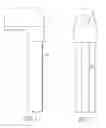
FIG. 1 is a partial side view of a touch bar on a transit vehicle wherein the display is a light bar on the face of the touch bar,
FIG. 2 is a front view of the touch bar shown in FIG. 1,
FIG. 3 is a partial side view of a touch bar on a transit vehicle wherein the display is on the end cap of the light bar on the face of the touch bar,
FIG. 4 is a front view of the touch bar shown in FIG. 3,
FIG. 5 is a front view of exit panels wherein the display is on the face of the touch bar,
FIG. 6 is a schematic of the relation between the controller and light display with the input to the controller illustrated, and
FIG. 7 is a state diagram showing the flow of control and output information.
DESCRIPTION OF THE INVENTION
Referring to FIGS. 1 and 2, a touch bar 10 is supported by an upper housing 12 and has a light bar 13 mounted on the front thereof. The light bar incorporates lighting running the length of the bar between the top and bottom housing. Optionally, the light bar is always lit in a particular color i.e., there is no off state when the bus is in service.
FIG. 5 shows the placement of the touch bar 10 positioned on transit vehicle door panels. In this embodiment, the lighting is incorporated in the door panel behind a translucent lens.
Referring to FIGS. 3 and 4, a touch bar 14 is supported by an upper housing 15 and has a light 16 mounted on the front of the upper housing.
FIG. 6 illustrates in schematic fashion the relation between a controller 30 and a light display 40, and FIG. 7 illustrates the flow of control and output information to and from the controller 30.
The door open (DFO) and closed (DFC) signals may be provided by mechanical switches that are activated when the door is in the fully open and fully closed positions. The authorize signal provided by the vehicle driver is generated by a switch located adjacent the vehicle driver. The passenger open request signal may be a switch that is sensitive to the touch by the passenger of the touch bar (FIGS. 1-4) or the lens (FIG. 5). The sensitivity to touch may be based on the change in capacitance sensed by the touch bar or lens. All input signals may have associated electronics that output a digital signal appropriate to the input to the controller.
The controller is a microcontroller or microprocessor that is programmed (having a stored program) to select the correct outputs based on the various inputs. FIG. 7 is a state diagram from which the specific computer program code for controlling the microcontroller may be expeditiously derived. The particular program code will depend on the specific microcontroller or computer incorporated.
The simplest lighting display would consist of a red, a green, and a yellow light bulb or two or three colored LEDs. The light may, for example, be presented via light guides or end ejection from optic fibers. In a preferred embodiment, the lighting display includes a microprocessor programmed to respond to outputs from the controller and selects the on/off and intensity of the lights via LED drivers. Typically, the lighting can use two color LEDs, say red and green, which in combination will produce yellow or can use three color LEDs, say red, green, and yellow, which can be produced in various color combinations and intensities. The colors can be the same, or different between combinations of first, second and/or third colors, and the possibility that there could be a 4th or nth color as well.
Having thus described the invention and detail required by the patent laws, what is desired protected by Letters Patent is set forth in the following claims.
Claims
The invention claimed is:1. A passenger communication system for a transit vehicle, comprising:
an interactive display device positioned in close proximity to one or more vehicle doors on the transit vehicle and adapted to display a visual notification to one or more passengers on the transit vehicle; and
a programmable control unit electrically coupled to the interactive display device and adapted to alter the visual notification on the display device to indicate one or more states of the vehicle door representing at least one of a fully opened state, a fully closed state, or a transition state between the fully opened state and the fully closed state,
where the visual notification via the interactive display device may comprise either ON or OFF in a first state when the vehicle door is fully closed;
where the visual notification via the interactive display device in a second state is a controlled display in a first color when the vehicle door is authorized for opening or closing;
where the visual notification via the interactive display device in a third state is a controlled display in a second color when the vehicle door is fully open; and
where the visual notification via the interactive display device in a fourth state is a controlled display in a third color when the one or more passengers request that the vehicle door be opened.
2. The passenger communication system of claim 1, wherein the interactive display device comprises a lighting unit adapted to display at least the first color, the second color, or the third color.
3. The passenger communication system of claim 1, wherein the controlled display on the interactive display device in at least one of the first color, the second color, or the third color may be programmed to display as a continuously ON signal state, an intermittently ON signal state, or a transition between the continuously ON and the intermittently ON signal states.
4. The passenger communication system of claim 3, wherein frequency of intermittency of the intermittently ON signal of the interactive display device is programmable.
5. The passenger communication system of claim 1, wherein the interactive display device is adapted for display on the vehicle door or about the vehicle door.
6. The passenger communication system of claim 2, wherein the lighting unit comprises one or more LED elements, the one or more LED elements configurable to emit light in one or more of the first color, the second color, or the third color.
7. The passenger communication system of claim 1, wherein the display device is configurable to display a textual message to alert the one or more passengers.
8. The passenger communication system of claim 1, wherein the first state of the interactive display device is an OFF state.
9. The passenger communication system of claim 1, wherein the second state of the interactive display device is an ON state.
10. The passenger communication system of claim 1, wherein the interactive display device is a grab handle affixed on the vehicle door.
11. The passenger communication system of claim 2, wherein brightness of light from the lighting unit is configurable to be at zero brightness/intensity, maximum brightness/intensity, or anywhere in between the zero brightness/intensity and maximum brightness/intensity.
12. A method of providing notification to one or more passengers on a transit bus via a notification system to open a vehicle door on the transit bus, comprising:
receiving an authorized command at the notification system indicative of when it is safe to open a vehicle door on the transit bus;
notifying to the one or more passengers via an interactive display device controlled by the notification system and mounted proximate to the vehicle door that the notification system is waiting to receive a passenger input indicative of a need to open the vehicle door, wherein the interactive display device adapted to provide visual notification of at least one of a readiness to receive passenger input and a confirmation of the passenger input;
opening the vehicle door to allow exit of the one or more passengers upon receiving the passenger input at the interactive display device; and
providing controllable visual notification via the interactive display device to the one or more passengers during the transition of the vehicle door from fully closed position to fully open position.
13. The method of claim 12, comprising:
controlling the visual notification by the interactive display device by altering at least one of duration of the visual notification, color of the visual notification, and intensity of the visual notification.
14. The method of claim 12, comprising:
maintaining the vehicle door in closed position upon failure to receive the passenger input at the interactive display device.
15. A computer readable medium containing program instructions for providing notification to one or more passengers on a transit bus via a notification system to open a vehicle door on the transit bus, wherein execution of the program instructions by one or more processors of a computer system causes the one or more processors to carry out the steps of:
receiving an authorized command at the notification system indicative of when it is safe to open a vehicle door on the transit bus;
notifying to the one or more passengers via an interactive display device controlled by the notification system and mounted proximate to the vehicle door that the notification system is waiting to receive a passenger input indicative of a need to open the vehicle door, the interactive display device adapted to provide visual notification of at least one of a readiness to receive passenger input and a confirmation of the passenger input;
opening the vehicle door safely to allow exit of the one or more passengers upon receiving the passenger input at the interactive display device; and
providing controllable visual notification via the interactive display device to the one or more passengers during the transition of the vehicle door from fully closed position to fully open position.
16. A passenger communication lighting display on or adjacent a touch bar on a passenger door of a transit vehicle comprising:
a display controlled to display multiple colors continuous or blinking; and
a control means comprising a programmed microcontroller responsive to signals indicating (a) that the door is closed, (b) the operator has authorized the door to be opened, (c) a passenger has requested the door be opened, (d) the door is about to open or is opening, (e) the door is about to close or is closing, or (f) the door is resting in the open position, the control means programmed to thereby cause the display to be dark when the door is closed, the display to be a first color when the operator has authorized opening, the display to flash a second color when the passenger has requested the door be opened, the display to be blinking the second color when the door is opening, the display to be continuously the second color when the door is resting in the open position, and the display to be blinking a third color while the door is closing.
17. The lighting display according to claim 16, positioned near or at eye level.
Images & Drawings included:



Sources:
- United States Patent and Trademark Office - verify current appl. status at the USPTO↗
Recent applications in this class:
- » 20250278154 2025-09-04
TOUCH CONTROLLER WITH INTEGRATED RFID READ CAPABILITIES, INCLUDING RELATED SYSTEMS, APPARATUSES, AND METHODS - » 20250271970 2025-08-28
MICRO-LED TOUCH DISPLAY DEVICE - » 20250251834 2025-08-07
ELECTROSTATIC CAPACITANCE-TYPE SENSOR-EQUIPPED DISPLAY DEVICE AND METHOD OF DRIVING THE SAME - » 20250231646 2025-07-17
TOUCHLESS DEVICE INTERFACES - » 20250216990 2025-07-03
A DRIVING SIGNAL OUTPUT DEVICE, A DRIVING SIGNAL OUTPUT METHOD, AND A DISPLAY DEVICE - » 20250199647 2025-06-19
EXTERNAL USER INTERFACE FOR HEAD WORN COMPUTING - » 20250190078 2025-06-12
Electronic Devices With Finger Sensors - » 20250138681 2025-05-01
ELECTRONIC DEVICE - » 20250130673 2025-04-24
AUTOMOTIVE TOUCH CIRCUIT DEVICE WITH ESD PROTECTION - » 20250130672 2025-04-24
TOUCH SENSING SYSTEM
Recent applications for this Assignee:
- » 20220097665 2022-03-31
Multi-vehicle braking system - » 20220082400 2022-03-17
Remote initialization system for a vehicle system - » 20220009462 2022-01-13
Brake control system - » 20210266988 2021-08-26
Operator authentication with a vehicle using different pathways - » 20210216081 2021-07-15
Systems and methods for preserving route instruction information - » 20210211067 2021-07-08
System with active filter for a battery - » 20210206409 2021-07-08
Obstruction detection system - » 20210197818 2021-07-01
Vehicle speed management systems and methods - » 20210195390 2021-06-24
Communication system - » 20210194167 2021-06-24
Connector assembly