Apple tree named 'PE'
US20180020583P1
2018-01-18
15/731,671
2017-07-15
Abstract:
A new and distinct apple tree (Malus domestica) named ‘PE’. ‘PE’ is a spontaneous limb mutation of the variety ‘Cripps Pink’ and is distinguished by its very early full pink-red color over the entire fruit surface, even in shaded areas of the limb. ‘PE’ is also distinguished from its parent by its early maturity, reddish-brown wood color on the sunny side, very large level of leaf anthocyanin, high levels of young fruit anthocyanin, and high intensity of pink-red overcolor. The pattern of overcolor is solid blush. Leaf blade incisions are serrate type 1, there are fewer lenticels on one-year-old wood, and leaf blade length and width are also smaller than for the parent.
Assignee:
- Fruit Varieties International Pty Ltd. 5 🇦🇺 Grove, Australia
Interested in similar patents?
Get notified when new applications in this technology area are published.
Classification:
A01H5/08 IPC
Angiosperms, i.e. flowering plants, characterised by their plant parts; Angiosperms characterised otherwise than by their botanic taxonomy Fruits
Description
Latin name of the genus and species: Botanical classification: Malus domestica.
Variety denomination: The new apple tree variety denomination is ‘PE’.
BACKGROUND OF THE VARIETY
The present invention is a new and distinct cultivar of apple tree botanically known as Malus domestica and referred to by the cultivar name ‘PE’. ‘PE’ was discovered as a spontaneous limb mutation of a ‘Cripps Pink’ tree in an orchard planting of the variety ‘Cripps Pink’ (U.S. Plant Pat. No. 7,880) in Tasmania, Australia.
‘PE’ was first observed on Feb. 21, 2013 in Dover, Tasmania, Australia, where it was distinguished by very early full pink-red color over the entire fruit surface, even in shaded areas of the limb. ‘PE’ is also distinguished from its parent by its early maturity, reddish-brown wood color on the sunny side, very large levels of leaf anthocyanin, high levels of young fruit anthocyanin, and high intensity of pink-red overcolor. The pattern of overcolor is solid blush. Leaf blade incisions are serrate type 1, there are fewer lenticels on one-year-old wood and leaf blade length and width are also smaller than for the parent ‘Cripps Pink’. Asexual reproduction of ‘PE’ was carried out by bud grafting in 2013 and trees of ‘PE’ were planted for additional observation at Lucaston, Tasmania, Australia. ‘PE’ has since been fruited through 3 successive asexually propagated generations at Lucaston, Tasmania, Australia and has been observed to remain true to type with the distinguishing characteristics retained through successive generations of asexual reproduction.
BRIEF DESCRIPTION OF THE VARIETY
The new variety ‘PE’ claimed herein is primarily distinguished by its very early full pink-red color over the entire fruit surface, even in shaded areas and its early maturity. These and other distinguishing characteristics are set forth in the tables below. Under similar growing conditions in Tasmania, Australia, under commercial practice, ‘PE’ is distinguishable from its parent ‘Cripps Pink’ as described in Table 1 below:
| TABLE 1 |
| Comparison of ‘PE’ to ‘Cripps Pink’ |
| Characteristic | ‘Cripps Pink’ | ‘PE’ |
| One-year-old shoot | Light Brown | Reddish Brown |
| on Sunny Side | ||
| Petiole Anthocyanin | Small | Very Large |
| Young Fruit Anthocyanin | Absent/Small | Medium |
| Fruit—Area of Overcolor | Small | Very Large |
| Fruit—Intensity of | Light | Dark |
| Overcolor | ||
| Fruit—Pattern of | Weak Stripes with | Solid Flush Only |
| Overcolor | Solid Flush | |
| Fruit—Time for Harvest | Very Late | Late |
| Fruit—Time for Eating | Very Late | Late |
| Leaf Blade—Incisions of | Bi-Crenate | Serrate Type 1 |
| Margin Upper Half | ||
| One-Year-Old | 140 average | 97 average |
| Shoot—Number of | per 100 mm of | per 100 mm of |
| Lenticels | stem—Many | stem—Medium |
| Leaf Blade—Width | 71 mm average | 61 mm average |
| Leaf Blade—Length | 103 mm average | 85 mm average |
A comparison of ‘PE’ to ‘PLBAR B1’ (U.S Plant Pat. No. 21,606), ‘Ruby Pink’ (U.S. Plant Pat. No. 16,725), and ‘Lady in Red’ (U.S. Plant Pat. No. 18,660), the most similar varieties of common knowledge, are set forth in Table 2a, 2b and 2c below:
| TABLE 2a |
| Comparison of ‘PE’ to ‘Lady in Red’ |
| Characteristic | ‘Lady in Red’ | ‘PE’ |
| One-Year-Old | Light Brown to | Reddish Brown |
| Shoot—Color on | Medium Brown | |
| Sunnyside | ||
| Petiole—Anthocyanin | Small | Very Large |
| Young Fruit—Extent of | Absent to Very Small | Large |
| Anthocyanin Overcolor | ||
| Fruit—Relative Area of | Small | Very Large |
| Overcolor | ||
| Fruit—Intensity of | Light | Dark |
| Overcolor | ||
| Fruit—Pattern of | Weak Stripes with | Only Solid Flush |
| Overcolor | Solid Flush | |
| One-Year-Old | 140 average lenticels | 97 average lenticels |
| Shoot—Number of | per 100 mm shoot | per 100 mm shoot |
| Lenticels | ||
| Leaf—Length | 95 mm average length | 85 mm average length |
| Leaf—Width | 65 mm average width | 60 mm average width |
| Time for Harvest | Very Late | Late |
| Time for Eating | Very Late | Late |
| Leaf Blade—Incisions of | Bi-Crenate | Serrate type 1 |
| Margin—Upper Half | ||
| TABLE 2b |
| Comparison of ‘PE’ to ‘Ruby Pink’ |
| Characteristic | ‘Ruby Pink’ | ‘PE’ |
| One-Year-Old Shoot—Color | Light Brown to | Reddish Brown |
| on Sunnyside | Medium Brown | |
| Petiole—Anthocyanin | Small | Very Large |
| Young Fruit—Extent of | Absent to Very | Large |
| Anthocyanin Overcolor | Small | |
| Fruit—Relative Area of | Small | Very Large |
| Overcolor | ||
| Fruit—Intensity of | Light | Dark |
| Overcolor | ||
| Fruit—Pattern of Overcolor | Weak Stripes with | Only Solid Flush |
| Solid Flush | ||
| Time for Harvest | Very Late | Late |
| Time for Eating | Very Late | Late |
| Leaf Blade—Incisions of | Bi-Crenate | Serrate type 1 |
| Margin—Upper Half | ||
| TABLE 2c |
| Comparison of ‘PE’ to ‘PLBAR B1’ |
| Characteristic | ‘PLBAR B1’ | ‘PE’ |
| One-Year-Old | Light Brown to | Reddish Brown |
| Shoot—Color on | Medium Brown | |
| Sunnyside | ||
| Petiole—Anthocyanin | Small | Very Large |
| Young Fruit—Extent of | Absent to Very Small | Large |
| Anthocyanin Overcolor | ||
| Fruit—Relative Area of | Small | Very Large |
| Overcolor | ||
| Fruit—Intensity of | Light | Dark |
| Overcolor | ||
| Fruit—Pattern of | Weak Stripes with | Only Solid Flush |
| Overcolor | Solid Flush | |
| One-Year-Old | 140 average lenticels | 97 average lenticels |
| Shoot—Number of | per 100 mm shoot | per 100 mm shoot |
| Lenticels | ||
| Leaf —Length | 95 mm average length | 85 mm average length |
| Leaf—Width | 65 mm average width | 60 mm average width |
| Leaf Blade—Incisions of | Bi-Crenate | Serrate type 1 |
| Margin—Upper Half | ||
BRIEF DESCRIPTION OF THE PHOTOGRAPHS
Typical specimens of the tree and blossoms for the new apple tree variety ‘PE’ are shown in the accompanying photographs. The colors shown are as true as possible within the usual limits of this kind of illustration.
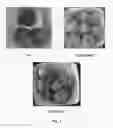
FIG. 1 illustrates the distinctive color of fresh fruit of ‘PE’ harvested at maturity as compared to immature fruit of ‘Cripps Pink’ and ‘Ruby Pink’ of comparable age and growth;
FIGS. 2 and 3 show an apple of ‘PE’ illustrating its distinctive color and advanced maturity in comparison to an apple of ‘Cripps Pink’ of the same age and growing conditions;
FIG. 4 shows an upper side view of leaves of ‘PE’;
FIG. 5 shows an underside view of leaves of ‘PE’;
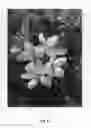
FIG. 6 shows a cluster of flowers of ‘PE’ on a ‘PE’ tree;
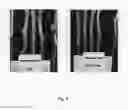
FIG. 7 shows the sun exposed side of the wood of a ‘PE’ tree illustrating its distinctive color in comparison to ‘Ruby Pink’;
FIG. 8 shows the shaded side of the wood of a ‘PE’ tree in comparison to ‘Ruby Pink’;
FIG. 9 shows ‘PE’ fruit on the tree illustrating its distinctive color and maturity in comparison to fruit of the same age and comparable growing conditions for ‘Cripps Pink’, ‘Lady in Red’ and ‘Ruby Pink’.
DETAILED BOTANICAL DESCRIPTION OF THE VARIETY
The following-detailed botanical description is based on observations made during the 2016 and 2017 growing season at Lucaston, Tasmania, Australia of three-year old trees planted on MM106 rootstock (unpatented). The cultivar has not been observed under all possible environmental conditions. The phenotype may vary significantly with variations in the environment such as temperature, length of day and light intensity, without any variance in genotype. It should be understood that the characteristics described will vary somewhat depending upon cultural practices and climatic conditions, and will vary with location and season. The plant and flower quantified measurements and foliage size are expressed as an average of measurements taken from a number of individual plants of the PE using standard commercial cultural practices. The measurements of any individual plant or any group of plants of the ‘PE’ may vary from the stated average. All colors are described according to The Royal Horticultural Society Colour Chart (5TH edition 2007).
- Tree:
-
- Vigor.—Medium to strong.
- Type.—Ramified, bearing on spurs and long shoots.
- Habit.—Spreading to occasionally upright.
- Height.—2.51 m.
- Trunk diameter.—47 mm.
- Bark texture.—Smooth with some ridging.
- Bark color.—Greyed-brown N199A on sun exposed side and Greyed-brown N199A on shaded side.
- Branch.—Fruiting branches located at around 700 mm above the graft union.
- Length.—1.9 m average.
- Diameter.—27.5 mm average at base.
- Crotch angle.—Branches on unpruned tree are spreading to upright from horizontal to 30 degrees in angle.
- Bark color.—Greyed-brown N199A on sun exposed side and Greyed-brown N199A on shaded side.
- Lenticel length.—1.25 mm on average.
- Lenticel color.—Greyed-orange 164B.
- Quantity of lenticels per cm2.—4 to 6.
- One-year old shoot.—
- Length.—700 mm average.
- Color.—Greyed-purple 183B on sun exposed side and Yellow-green 152A on shaded side.
- Pubescence.—Very weak to weak.
- Thickness.—6.81 mm.
- Internode length.—35 mm.
- Number of lenticels per cm2.—4 to 6 range-average of 97 per 100 mm section.
-
- Flowers:
-
- Diameter of fully open flower.—51.32 mm.
- Relative position of petal margin.—Free to touching.
- Quantity of flowers per cluster.—5 to 7 range.
- Date of beginning of flowering.—5th October 2016 in Tasmania.
- Date of full bloom.—20th October 2016 in Tasmania.
- Pollination requirement.—Pollination required by another diploid variety flowering at similar time.
-
- Petals:
-
- Quantity per flower.—5 petals per flower.
- Shape.—Ovate to ellipsoid.
- Length.—22.9 mm.
- Width.—15.5 mm.
- Apex.—Ovoid to elliptic.
- Base.—Cuneate to obovate at base.
- Margin.—Smooth.
- Color — Upper surface.—White in Color NN155C.
- Color — lower surface.—Red-purple in Color 61B
- Pistils.—15.9 mm long; Yellow-Green Color 150C.
- Stigma.—1.15 mm diameter; Yellow-green Color 152A.
- Position of stigma relative to anther.—Occasionally above, mostly the same level.
- Style.—5; Fused and Pubescent at the base; Length 8.06 mm; Color: Yellow-green 150C.
- Ovary.—Pubescent; 2.71 mm diameter; Color Yellow-green 150C.
- Anthers.—18 to 20 per flower; Length 2.73 mm; Width 1.93 mm; Ample pollen, Color Yellow 6D.
- Pedicel.—Length 36.25 mm; Diameter 1.98 mm; Color: Red-purple 59A on sun exposed side; Color Yellow-green 144B on shaded side.
- Sepals.—Quantity 5; Length 9.07 mm; Color: Yellow-green 144B with Red-purple 59A on tip; Recurved shape with smooth straight margin; Very Pubescent.
-
- Leaves:
-
- Length.—85 mm.
- Width.—60 mm.
- Length/width ratio.—5.6:4.
- Blade margin.—Serrate Type 1.
- Shape.—Oval to obtuse.
- Apex.—Shape: Mostly acute to occasionally elliptic.
- Base.—Shape: Obovate to obtuse in shape.
- Pubescence.—Lightly pubescent on underside.
- Color — upper surface.—Green 137A
- Color — lower surface.—Yellow-green 147C.
- Attitude in relation to shoot.—Outward.
- Petiole.—Length 26.8 mm; Diameter 26.80 mm; Color: Very High Level of Anthocyanin starting at base of petiole and extending well into leaf blade. Typically colored Red-purple 59B extends 32.1 mm in length along petiole.
-
- Fruit:
-
- Quantity per cluster.—5 to 7 per cluster if no thinning occurs.
- General shape in profile.—Cylindrical and slightly Ellipsoid at base.
- Position of maximum diameter.—Near center.
- Ribbing.—Moderate.
- Crowning at calyx end.—Moderate.
- Amount of overcolor.—Very high 95% to 100% on all fruit.
- Intensity of overcolor.—Dark.
- Pattern of overcolor.—Solid flush.
- Amount of russet around stalk cavity.—Low to medium.
- Amount of russet on cheeks.—Absent.
- Area of russet around eye basin.—Absent.
- Seeds.—Minimum of 1, mostly 2 per cell; 9 per fruit Acute in shape; Greyed-orange 167B Aperture of locules closed or slightly open.
- Disease/insect resistance/susceptibility.—No resistance/susceptibility noted.
- Market use.—Fresh.
-
Claims
I claim:1. A new and distinct apple tree substantially as described and illustrated herein.
Images & Drawings included:





Sources:
- United States Patent and Trademark Office - verify current appl. status at the USPTO↗
Recent applications in this class:
- » 20170374775 2017-12-28
Apple Tree Named 'GALA BIGBUCKS' - » 20170367231 2017-12-21
Apple Tree Named 'Venice' - » 20170367230 2017-12-21
Apple Tree Named 'Luiza'
Recent applications for this Assignee:
- » 20200383253 2020-12-03
Apple tree named 'Bella Rosa' - » 20190191610 2019-06-20
Apple tree named 'RDS' - » 20180027710 2018-01-25
Apple tree named 'YCP' - » 20150082499 2015-03-19
Apple tree named 'Pink Chief'