Cherry tree (ROOTSTOCK) NAMED 'CRAWFORD'
US20180124968P1
2018-05-03
15/330,730
2016-10-31
Abstract:
A new cherry tree variety suitable for use as rootstock.
Interested in similar patents?
Get notified when new applications in this technology area are published.
Classification:
A01H5/08 IPC
Angiosperms, i.e. flowering plants, characterised by their plant parts; Angiosperms characterised otherwise than by their botanic taxonomy Fruits
Description
Botanical designation: The present invention relates to a new Prunus cerasus L.×(Prunus cerasus L.×Prunus canescens Bois) cherry tree variety.
Variety denomination: The new plant has the varietal denomination ‘Crawford’.
BACKGROUND OF THE INVENTION
This invention relates to a new and distinct variety cherry tree. It has as its (female) seed parent the variety known as ‘Újfehértói Fürtös’ (Prunus cerasus) (not patented) and as its pollen parent (male) the variety known as ‘GiSelA® 6’ U.S. Plant Pat No. 8,954 (Prunus cerasus×P. canescens).
In the field of plant genetics, researchers conduct an extensive and continuing plant-breeding program including the organization and asexual reproduction of orchard trees, and of which plums, peaches, nectarines, apricots, cherries, almonds and interspecifics are exemplary. It was against this background of activities that the present variety of cherry tree was originated and asexually reproduced in our experimental orchard.
PRIOR VARIETIES
Among the existing varieties of cherry trees, which are known to us, and mentioned herein, ‘Újfehértói Fürtös’ (not patented), ‘Hedelfingen’ (not patented); ‘Bing’ (not patented); ‘GiSelA® 5’ U.S. Plant Pat. No. 9,644 and ‘GiSelA® 6’ U.S. Plant Pat. No 8,954.
ORIGIN OF THE VARIETY
The present variety was developed from a first generation cross between ‘Újfehértói Fürtös’, a Hungarian landrace sour cherry variety, and ‘GiSelA® 6’ made in 1998. Seeds resulting from the cross were germinated at Michigan State University and planted in Clarksville, Mich. in 2000. Seedlings were selected as candidate rootstocks based on overall plant health, virus tolerance (Prune Dwarf Virus, and Prunus Necrotic Ringspot Virus), and rooting percentage of softwood cuttings. Candidate rootstocks produced by asexual propagation were grafted with ‘Hedelfingen’ scion and planted in Clarksville, Mich. Further rootstock selection occurred on the basis of scion qualities to include precocity (early flowering and fruiting beginning the second year after planting) and reduced tree stature measured as trunk cross-sectional area. ‘Crawford’ was asexually reproduced through conventional softwood cutting methods, and grafted with ‘Bing’ scion. The ‘Bing’ trees grafted on the ‘Crawford’ rootstock were planted in Prosser, Wash. and evaluated for scion trunk cross-sectional area, tree height, growth habit, flowers per node, crop yield, cropping efficiency, and fruit weight, among other traits. Cherry tree ‘Crawford’ was selected from this trial.
ASEXUAL REPRODUCTION OF VARIETY
Asexual reproduction of the ‘Crawford’ cherry rootstock was achieved using the mother plant to obtain rooted liners using conventional softwood cutting procedures, and through meristem culture with commercial nurseries. Initially, liners were propagated from softwood cuttings in commercial greenhouses. A subset of these liners was used to establish a mother block in Clarksville, Mich. The remaining liners were sent to a nursery to make test trees of ‘Crawford’ that were budded with the scion ‘Hedefingen’. The resulting trees were planted in a trial in Clarksville, Mich. A second set of liners was propagated from softwood cuttings in commercial greenhouses. These ‘Crawford’ liners were budded with ‘Bing’ scion to make trees for a trial in Prosser, Wash. The living tissues (i.e. leaves, stems, buds, flowers and fruits) of the original mother block plants were observed to be identical to secondary and tertiary vegetatively propagated plants.
STATEMENT OF STABILITY
Asexual propagation as described has demonstrated that the combination of traits that characterize this tree are fixed and remain true to type through at least two successive propagation cycles.
SUMMARY OF THE INVENTION
‘Crawford’ is particularly useful as a rootstock. The variety results in dwarf trees with significantly smaller canopy size than traditional non-dwarfing rootstocks and significantly smaller than trees on ‘GiSelA® 6’ rootstocks. When this variety is used as rootstock for sweet cherry, the fruit can be harvested without using ladders. When used as a rootstock for sour cherry the fruit can be harvested by an over the row harvester that can move continuously down the row instead of being harvested by a trunk shaking machine that harvests each tree individually. The variety of the invention also has favorable precocity, which results in a scion variety having flower buds and fruit beginning in years two and three rather than years five or six when traditional rootstocks are used. ‘Crawford’ was selected as a potential cherry rootstock on the basis of its scion trunk cross-sectional area, tree height, growth habit, flowers per node, crop yield, cropping efficiency, and fruit weight, among other traits, in two experimental field trials. Scion trees grafted onto this rootstock showed significant reduction in trunk cross sectional area compared to ‘GiSelA® 6’ and a trunk cross sectional area similar to ‘GiSelA® 5’. ‘Crawford’ is suitable for standard nursery propagation practices for uniform liner production. ‘Crawford’ can be distinguished from its parents by the use of Simple Sequence Repeat DNA markers. With primer pair PceGA59, ‘Crawford’ is distinguished from its parent, ‘GiSelA® 6’ by the absence of the 226 base pair (bp) allele; and presence of the 194 bp allele. With the primer pair PruG4RS, ‘Crawford’ is distinguished from its parent, ‘GiSelA® 6’ by the presence of the 172 bp allele.
COMPARISON WITH PARENTS
The new cherry variety may be distinguished from its seed parent, ‘Újfehértói Fürtös’, a Hungarian landrace cherry variety in that ‘Crawford’ is not a sour cherry (Prunus cerasus) variety and ‘Újfehértói Fürtös’ is also not a dwarfing rootstock.
The new variety may be distinguished from its pollen parent, ‘GiSelA® 6’ by the following combination of characteristics: using the PceGA59 primer pair—the absence of the 226 bp allele; and presence of the 194 bp allele; using the PruG4RS primer pair—the presence of the 172 bp allele; anthocyanin coloration of apex; leaf blade length, shape, and ratio of length to width; nectary shape; and intensity of anthocyanin coloration of young leaf.
BRIEF DESCRIPTION OF PHOTOGRAPHS
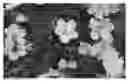
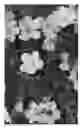
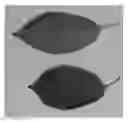
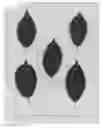
The accompanying photographs display flowers, leaves, leaves image 2 and fruits from a self-rooted mother block tree at Clarksville, Mich.
DESCRIPTION OF THE NEW VARIETY
The following is a detailed botanical description of the new variety of cherry tree, its flowers, foliage and fruit, as based on observations of various aged specimens grown near Clarksville, Mich. with color in accordance with The Royal Horticultural Society Colour Chart (R.H.S.), 2001 edition.
- Measurement details:
- Flowers:
-
- Inflorescence height.—Measured from where the flower cluster attaches to the branch to the most distal floral part.
- Flower diameter.—Measured across the petals in mm.
- Flower length.—Measured from the, bottom of the pedicel to the most distal flower point (mm).
- Pedicel.—The stem of an individual flower. It is measured from the attachment in the bud to the start of the perianth.
- Peduncle.—A stalk supporting an inflorescence. In these selections, the cherry flowers within a flower bud all start at the same base and they the stalk separates into individual pedicels supporting each flower.
- Anther color.—Before the anther's dehisce, when they are still bright yellow and plump.
- Anther length.—Measured for the longest anther measured from the top of the perianth tube.
- Style.—Measured above the swelled ovary.
-
- Tree:
-
- Height.—Approx. 10 ft.
- Diameter.—Approx. 10 ft.
- Vigor.—Weak.
- Branching habit.—Spreading.
- Branching.—Strong.
- Hardiness.—Cold Resistant.
- Scion compatibility confirmed.—Bing, Montmorency.
-
- Stem (trunk):
-
- Strength.—Medium.
- Texture.—Rough.
- Color.—Grey brown.
-
- One Year old shoot:
-
- Thickness.—Thin.
- Length of internode (middle third of shoot—mean of 10).—3.2 cm (2.9-4.0).
- Pubescence (upper third).—Present.
- Number of lenticels.—Medium.
- Anthocyanin coloration of apex.—Very weak.
- Position of vegetative bud in relation to shoot.—Slightly held out.
- Size of vegetative bud.—Small.
- Shape of apex of vegetative bud.—Obtuse.
- Size of vegetative bud support.—Small.
- Branching.—Medium.
-
- Leaves:
-
- Mature leaf arrangement.—Alternate.
- Intensity of anthocyanin coloration of you leaf (during rapid growth).—Weak.
- Leaf blade shape.—Obovate.
- Leaf blade length.—Medium.
- Leaf blade width.—Medium.
- Leaf blade.—Ratio length to width: medium.
- Leaf length-blade only (cm).—9.0.
- Leaf width (cm).—4.6.
- Leaf blade angle of apex (excluding tip).—Acute.
- Leaf blade length of tip.—Short-medium.
- Leaf blade shape of base.—Obtuse.
- Leaf blade shape of apex (e.g., acute).—Acute.
- Leaf blade.—Incisions of margin: crenate.
- Leaf blade.—Depth of incisions of margin: medium.
- Leaf blade color of upper side.—Light green.
- Leaf blade glossiness of upper side.—Medium.
- Leaf blade.—Pubescence of lower side of apex: medium.
- Petiole length.—Medium.
- Petiole.—Presence of pubescence of upper side: present.
- Petiole.—Intensity of pubescence of upper side: medium.
- Petiole.—Depth of groove: shallow.
- Leaf ratio length of leaf blade/length of petiole.—Medium.
- Leaf.—Presence of nectaries: present.
- Varieties with nectaries only.—Leaf — predominant number of nectaries: two.
- Leaf.—Position of nectaries: base of leaf blade.
- Nectary color.—Yellow-green.
- Nectary shape.—Reniform.
- Upper surface color (R.H.S.).—137B.
- Leaf upper surface texture/pubescence.—Smooth.
- Leaf upper surface venation color (R.H.S.).—138A.
- Lower surface color (R.H.S.).—137C.
- Leaf lower surface texture/pubescence.—Medium pubescence.
- Leaf lower surface venation color (R.H.S.).—138C.
- Leaf stipule frequency.—Present.
- Leaf stipule length (mm).—10.
- Leaf stipule width (mm).—2.
- Leaf stipule shape.—Pointed.
- Leaf stipule margin.—Serrated.
- Leaf petiole length (mm).—14.
- Leaf petiole diameter (mm).—1.4.
- Leaf petiole color (R.H.S.).—138B and 59A.
-
- Flowers:
-
- Flowers per cluster.—1 to 4.
- Fragrance.—None.
- Bloom date (50%).—Apr. 29, 2016.
- Inflorescence diameter (cm).—3.8.
- Flower diameter (mm).—24.
- Flower length (mm).—27.
- Petal number per flower.—5.
- Petal arrangement.—Flat whorl.
- Petal length (mm).—13.
- Petal width (mm).—10.
- Petal shape.—Oval/round.
- Petal apex.—Round.
- Petal margin.—Smooth.
- Petal texture.—Smooth.
- Petal color when fully opened—upper surface (R.H.S.).—155D.
- Petal color when fully opened—lower surface (R.H.S.).—155D.
- Sepal number.—5.
- Sepal length (mm).—6.
- Sepal width (mm).—4.
- Sepal shape.—Triangle.
- Sepal apex.—Pointed.
- Sepal margin.—Serrated.
- Sepal texture.—Smooth.
- Sepal color upper (R.H.S.).—138B.
- Sepal color lower (R.H.S.).—138B with some 59A.
- Flower pedicel length (mm).—11.
- Flower pedicel diameter (mm).—1.
- Flower pedicel angle (degrees).—30.
- Flower pedicel texture.—Smooth.
- Flower pedicel color (R.H.S.).—138B.
- Flower peduncle length (mm).—5.
- Flower peduncle diameter (mm).—2.
- Flower peduncle texture.—Smooth.
- Flower peduncle color (R.H.S.).—138B.
- Pistils.—Number of pistils per flower: 1.
- Pistil length (mm).—11.
- Pistil color (R.H.S.).—149B.
- Style length (mm).—9.
- Style color (R.H.S.).—138C.
- Stigma shape.—Round/indented.
- Stigma color (R.H.S.).—138B.
- Stamens.—Number per flower: 26 to 28.
- Longest filament length (mm).—7.
- Stamen filament color (R.H.S.).—155D.
- Longest anther length (mm).—9.
- Anther color (R.H.S.).—20B.
- Pollen color (R.H.S.).—17C.
-
- Fruit:
-
- Mature fruit shape.—Cordate.
- Mature fruit height (mm).—18.2.
- Mature fruit width 1 (mm).—16.8.
- Mature fruit width 2 (mm).—18.6.
- Mature fruit ratio height/width 2.—0.98.
- Mature fruit weight (g).—4.0.
- Mature fruit flesh taste.—Sour.
- Mature fruit skin color (R.H.S.).—187A.
- Mature fruit flesh color (R.H.S.).—187D.
- Stone color (R.H.S.).—164D.
- Stone shape.—Elongate.
- Stone number.—1.
- Stone height (mm).—11.1.
- Stone width 1 (mm).—9.0.
- Stone width 2 (mm).—7.2.
- Stone ratio height/width 2.—1.53.
- Stone weight (g).—0.36.
- Fruit stem length (mm).—29.
-
SIMPLE SEQUENCE REPEAT (SSR) MATERIALS AND METHODS
The use of clonally propagated Prunus sp. rootstocks in cherry production is increasing as these rootstocks provide reduced tree size and precocity. DNA markers that differentiate rootstocks are an important tool to verify identity among these rootstocks during the vegetative propagation stage. The simple sequence repeat (SSR) marker PceGA59 was previously determined to uniquely distinguish the commercially available GiSelA® rootstocks (Struss et al, 2002).
A targeted approach was used to develop a second SSR that was capable of providing differentiation of the rootstock selections of the invention and others by the inventors. The approach used was based on the ability to obtain genome-wide SNP (Single Nucleotide Polymorphism) data using the Illumina Infinium® cherry SNP array (Peace et al. 2012). An analysis of genome-wide SNP data for the rootstocks resulted in the identification of a genomic region on linkage group 4 that was likely to differ among the MSU rootstocks.
Using the peach genome sequence, an SSR marker was designed to target this region. This SSR marker, termed PruG4RS, successfully differentiated the MSU rootstocks. The development of PruG4RS and its combined use with PceGA59 has successfully circumvented the limitations of each individual marker and proven effective for use as a “quality control” DNA diagnostic tool for the commercial ‘GiSelA®’ rootstocks as well as the MSU breeding program rootstock selections.
SSR MARKERS USED
Fingerprinting was performed using two simple sequence repeat (SSR) markers: PceGA59 and PruG4RS. The forward and reverse primers sequences for these two SSR markers are as follows:
| Primer name | Primer sequences 5′ → 3′ |
| PceGA59_redesigned_F | TGAACCCCTCTACAAATTTTCC |
| PceGA59_redesigned_R | GACTGTAGAACCCAAAAGAACG |
| PruG4RS-F | TCAGAAAAGAAATTGCAACGGG |
| PruG4RS-R | CTT AGT GGT CTA GTC TGC ATG C |
The first primer pair, PceGA59, was published in Struss et al. (2002). However, the primer sequence reflects the addition of CC clamps. Based on genetic data for the MSU cherry rootstocks we designed a second primer, PruG4RS (Andersen et al. 2015)
PLANT MATERIAL USED AND DNA EXTRACTION
Cherry DNA was extracted from young unfolded leaf blades using the procedure of Edge-Garza et al. (2014).
POLYMERASE CHAIN REACTION (PCR)
PCR amplification was performed for the two SSRs using the following conditions:
94° C. for 5 min followed by 9 cycles of 94° C. for 30 s, 60° C. for 45 s (−1° C. per cycle), 72° C. for 1 min and then 24 cycles of 94° C. for 30 s, 55° C. for 45 s, 72° C. for 1 min with an elongation step of 72° C. for 5 min.
GEL ELECTROPHORESIS AND FRAGMENT VISUALIZATION
The PCR products were visualized by electrophoresis on a 6% denaturing polyacrylamide gel in a 50 cm Sequi-Gen GT vertical sequencing apparatus (Bio-Rad Laboratories, Hercules, Calif.) for 2.5 hours at 70 watts with 1×TBE buffer. Following electrophoresis, the gels were stained with the Silver Sequence DNA Sequencing System (Promega Corporation, Madison, Wis.) and dried for 24 hours. DNA fragment sizes were scored visually using 10 and 50 base pair ladders (Invitrogen Corporation, Carlsbad, Calif.).
DNA FINGERPRINT DATA
| Allele | PceGA59 | PruG4RS |
| (bp) | 182 | 186 | 189 | 194 | 226 | 172 | 182 | 190 | 192 | 196 | 198 | 200 |
| ‘Crawford’ | + | + | + | + | + | + | ||||||
| ‘Újfehértói | + | + | + | + | + | + | ||||||
| Fürtös’ | + | |||||||||||
| ‘GiSelA ® 6’ | + | + | + | + | + | |||||||
The following references for determination of various markers, are hereby incorporated in their entirety.
Struss D, Boritzki M, Karle R, and Iezzoni A F. 2002. Microsatellite markers differentiate eight Giessen cherry rootstocks. Hort Science 37: 191-193.
Andersen K, Sebolt A, Stegmeir T, Iezzoni A. 2015. Development of the Simple Sequence Repeat marker PruG4RS for the differentiation of cherry rootstocks. American Society for Horticultural Sciences Annual Conference, New Orleans, La., Aug 4-7, Poster #023.
Edge-Garza, D., Rowland, T., Haendiges, S. and Peace, C. 2014. A high-throughput and cost-efficient DNA extraction protocol for the tree fruit crops apple, sweet cherry, and peach relying on silica beads during tissue sampling. Molecular Breeding 34:2225-2228.
Claims
I claim:1. A new and distinct variety of cherry tree substantially as described and illustrated herein.
Images & Drawings included:
Sources:
- United States Patent and Trademark Office - verify current appl. status at the USPTO↗
Recent applications in this class:
- » 20240292771 2024-08-29
Campanula plant named 'Twilight' - » 20240251691 2024-07-25
HYDRANGEA PLANT NAMED 'HYLV17520' - » 20240251690 2024-07-25
Vaccinium Plant Named 'BWPBLUE02' - » 20240251689 2024-07-25
BLUEBERRY PLANT NAMED 'FC13-113' - » 20240251688 2024-07-25
BLUEBERRY PLANT NAMED 'FCM14-057' - » 20240237567 2024-07-11
PONGAMIA VARIETIES - » 20240224827 2024-07-04
PELARGONIUM PLANT NAMED 'PEQZ0103' - » 20240215470 2024-06-27
Agapanthus plant named 'Monsapho' - » 20240215469 2024-06-27
plant named ‘LOCORA3519’ - » 20240206359 2024-06-20
CORYLUS PLANT NAMED 'BWM01'