Substrate Based Fan-Out Wafer Level Packaging
US20180130720A1
2018-05-10
15/347,253
2016-11-09
Abstract:
A method and apparatus for manufacturing substrate based fan-out wafer level packaging is provided. The method includes providing a substrate, applying a first photoresist pattern, depositing copper or a copper alloy, applying a second photoresist pattern, forming chip attach site pillars by depositing a layer of copper or copper alloy, and attaching a semiconductor device via a flip chip bonding. The attaching includes forming a plurality of interconnect bumps between the semiconductor device and the chip attach site and forming a space between the semiconductor device and the substrate. The method further includes encapsulating the semiconductor device, grinding a second side of the substrate, applying a ball grid array pattern on the second side and etching the second side with copper, applying a solder mask coating, attaching a plurality of ball drops, and singulating a unit.
Inventors:
- Kim Heng Tan 4 🇲🇾 Kuala Lumpur, Malaysia
- Chan Wah Chai 4 🇲🇾 Ipoh, Malaysia
- Kwai Hong Wong 6 🇲🇾 Ipoh, Malaysia
Assignee:
- UNISEM (M) BERHAD 9 🇲🇾 Kuala Lumpur, Malaysia
Interested in similar patents?
Get notified when new applications in this technology area are published.
Classification:
H01L23/3128 » CPC main
Details of semiconductor or other solid state devices; Encapsulations, e.g. encapsulating layers, coatings, e.g. for protection characterised by the arrangement or shape the device being completely enclosed a substrate forming part of the encapsulation the substrate having spherical bumps for external connection
H01L23/49866 » CPC further
Details of semiconductor or other solid state devices; Arrangements for conducting electric current to or from the solid state body in operation, e.g. leads, terminal arrangements ; Selection of materials therefor consisting of soldered constructions; Leads, on insulating substrates, characterised by the materials
H01L23/49811 » CPC further
Details of semiconductor or other solid state devices; Arrangements for conducting electric current to or from the solid state body in operation, e.g. leads, terminal arrangements ; Selection of materials therefor consisting of soldered constructions; Leads, on insulating substrates, Additional leads joined to the metallisation on the insulating substrate, e.g. pins, bumps, wires, flat leads
H01L21/4853 » CPC further
Processes or apparatus adapted for the manufacture or treatment of semiconductor or solid state devices or of parts thereof; Manufacture or treatment of semiconductor devices or of parts thereof the devices having at least one potential-jump barrier or surface barrier, e.g. PN junction, depletion layer or carrier concentration layer; Manufacture or treatment of parts, e.g. containers, prior to assembly of the devices, using processes not provided for in a single one of the subgroups -; Conductive parts; Leads on or in insulating or insulated substrates, e.g. metallisation Connection or disconnection of other leads to or from a metallisation, e.g. pins, wires, bumps
H01L21/563 » CPC further
Processes or apparatus adapted for the manufacture or treatment of semiconductor or solid state devices or of parts thereof; Manufacture or treatment of semiconductor devices or of parts thereof the devices having at least one potential-jump barrier or surface barrier, e.g. PN junction, depletion layer or carrier concentration layer; Assembly of semiconductor devices using processes or apparatus not provided for in a single one of the subgroups - , e.g. sealing of a cap to a base of a container; Encapsulations, e.g. encapsulation layers, coatings Encapsulation of active face of flip-chip device, e.g. underfilling or underencapsulation of flip-chip, encapsulation preform on chip or mounting substrate
H01L23/49816 » CPC further
Details of semiconductor or other solid state devices; Arrangements for conducting electric current to or from the solid state body in operation, e.g. leads, terminal arrangements ; Selection of materials therefor consisting of soldered constructions; Leads, on insulating substrates,; Additional leads joined to the metallisation on the insulating substrate, e.g. pins, bumps, wires, flat leads Spherical bumps on the substrate for external connection, e.g. ball grid arrays [BGA]
H01L23/31 IPC
Details of semiconductor or other solid state devices; Encapsulations, e.g. encapsulating layers, coatings, e.g. for protection characterised by the arrangement or shape
H01L23/498 IPC
Details of semiconductor or other solid state devices; Arrangements for conducting electric current to or from the solid state body in operation, e.g. leads, terminal arrangements ; Selection of materials therefor consisting of soldered constructions Leads, on insulating substrates,
H01L21/48 IPC
Processes or apparatus adapted for the manufacture or treatment of semiconductor or solid state devices or of parts thereof; Manufacture or treatment of semiconductor devices or of parts thereof the devices having at least one potential-jump barrier or surface barrier, e.g. PN junction, depletion layer or carrier concentration layer Manufacture or treatment of parts, e.g. containers, prior to assembly of the devices, using processes not provided for in a single one of the subgroups -
H01L21/56 IPC
Processes or apparatus adapted for the manufacture or treatment of semiconductor or solid state devices or of parts thereof; Manufacture or treatment of semiconductor devices or of parts thereof the devices having at least one potential-jump barrier or surface barrier, e.g. PN junction, depletion layer or carrier concentration layer; Assembly of semiconductor devices using processes or apparatus not provided for in a single one of the subgroups - , e.g. sealing of a cap to a base of a container Encapsulations, e.g. encapsulation layers, coatings
H01L21/78 » CPC further
Processes or apparatus adapted for the manufacture or treatment of semiconductor or solid state devices or of parts thereof; Manufacture or treatment of devices consisting of a plurality of solid state components formed in or on a common substrate or of parts thereof; Manufacture of integrated circuit devices or of parts thereof; Manufacture or treatment of devices consisting of a plurality of solid state components or integrated circuits formed in, or on, a common substrate with subsequent division of the substrate into plural individual devices
Description
BACKGROUND OF THE INVENTION
Field of the Invention
This invention relates to semiconductor device packages. More particularly, this invention relates to a fan-out wafer level semiconductor device package.
Description of the Related Art
Molded plastic packages provide environmental protection to integrated circuit devices (dies). Such packages typically include at least one semiconductor device (die) having its input/output (I/O) pads electrically connected to a lead frame type substrate or an interposer type substrate, with a molding compound coating the die and at least a portion of the substrate. Typically, the I/O pads on the die are electrically connected to bond sites on the substrate using either a wire bonding, tape bonding, or flip-chip bonding method. The lead frame or interposer substrate transmits electrical signals between the I/O pads and an electrical circuit external to the package.
Fan-out wafer level packaging (FOWLP) provides for multiple dies with a higher integration level and a greater number of external contacts. Conventional FOWLP allows for a smaller package, while increasing the number of I/O connections. Particularly, the die is encapsulated in a material, such as a composite including epoxy resin. A redistribution layer (RDL) is then formed on the die and on the encapsulant. The RDL re-route's I/O connections on the die to the periphery of the encapsulant.
As a result, FOWLP provides for a thinner profile as compared to wafer level packaging, and an increase in I/O connections, while improving thermal and electrical performance. However, standard FOWLP processes often result in reconstituted wafer warpage resulting from heat processing, or die movement during the encapsulation process or handling. The result is a waste of wafer materials, increasing the cost of manufacturing.
U.S. Pat. No. 7,915,741, titled “Solder bump UBM structure” and commonly owned with the present application, discloses an under bump metallization structure to improve stress on semiconductor devices, and is incorporated herein by reference in its entirety. This patent, however does not address the need for a FOWLP that reduces chip wastage by attaching the semiconductor device directly to the interconnect bumps and eliminates shifting during the molding process.
U.S. Pat. No. 7,795,710, titled “Lead frame routed chip pads for semiconductor packages” and commonly owned with the present application, discloses a method for patterning external and internal lead ends and routing circuits from a single electrically conductive substrate, and is incorporated herein by reference in its entirety. This patent, however does not address the need for a FOWLP that reduces chip wastage by attaching the semiconductor device directly to the interconnect bumps and eliminates shifting during the molding process.
It would be advantageous, therefore, to provide for FOWLP that solves these problems by reducing chip wastage.
BRIEF SUMMARY OF THE INVENTION
In accordance with a first embodiment of the invention, there is provided a method for manufacturing substrate based fan-out wafer level packaging. The method includes (a) providing a substrate, (b) applying a first photoresist pattern, (c) depositing copper or a copper alloy on said first photoresist pattern, (d) applying a second photoresist pattern, (e) forming chip attach site pillars by depositing a layer of copper or copper alloy on said second photoresist pattern, (f) attaching a semiconductor device via a flip chip bonding, the attaching including forming a plurality of interconnect bumps between the semiconductor device and the chip attach site, and forming a space between the semiconductor device and the substrate, (g) encapsulating the semiconductor device with a molding compound, (h) grinding a second side of the substrate, the grinding including copper etching and thinning, (i) applying a ball grid array pattern on the second side, (j) etching the second side with copper, (k) applying a solder mask coating, (l) attaching a plurality of ball drops, and (m) singulating a unit.
In accordance with a second embodiment of the invention, there is provided a substrate based fan-out wafer level packaging. The packaging includes a substrate. The packaging further includes a first photoresist pattern adapted to be applied to the substrate, a copper or copper alloy layer adapted to be applied on top of the first photoresist pattern, and a second photoresist pattern adapted to be applied above the copper or copper alloy layer. A plurality of chip attach site pillars including a plurality of interconnect bumps are then formed on top of the second photoresist pattern, and a semiconductor device is adapted for placement above the interconnect bumps. The packaging further includes a molding compound that forms an encapsulant around the semiconductor device. A ball grid array (BGA) pattern is the applied to a second side of the copper of the substrate, with a solder mask coating applied below the BGA pattern, and a plurality of solder balls attached to the solder mask coating.
The details of one or more embodiments of the invention are set forth in the accompanying drawings and the description below. Other features, objects and advantages of the invention will be apparent from the description and drawings, and from the claims.
BRIEF DESCRIPTION OF THE DRAWINGS
The invention will be more fully understood from the following detailed description taken in conjunction with the accompanying drawings wherein like elements are numbered alike, and in which:
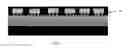
FIG. 1 illustrates a substrate and molding in accordance with the invention;
FIG. 2 illustrates a first pattern application in accordance with the invention;
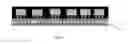
FIG. 3 illustrates application of copper plating in accordance with the invention;
FIG. 4 illustrates a second pattern application in accordance with the invention;
FIG. 5 illustrates formation of pillar bumps in accordance with the invention;
FIG. 6 illustrates the flip chip attachment in accordance with the invention;
FIG. 7 illustrates application of molding in accordance with the invention;
FIG. 8 illustrates the back grinding process in accordance with the invention;
FIG. 9 illustrates BGA pattern application in accordance with the invention;
FIG. 10 illustrates copper etching in accordance with the invention;
FIG. 11 illustrates solder mask coating in accordance with the invention;
FIG. 12 illustrates ball drop in accordance with the invention;
FIG. 13 illustrates unit singulation in accordance with the invention; and
FIG. 14 is another view of a portion of the invention.
DETAILED DESCRIPTION
FIG. 1 illustrates a cross-sectional view of an electrically conductive substrate 10 that is to be patterned into a lead frame. The lead frame is used to route electrical signals in a semiconductor package, which encases at least one semiconductor device.
In accordance with the invention, substrate 10 is formed of a copper or copper-alloy layer 13 and dielectric substrate molding compound 11. It should be noted that the any other suitable electrically conductive substrate may be used in place of copper.
Referring now to FIG. 2, a first pattern 12 may be applied to a copper layer 13 side of the substrate 10 by a known process such as photoetching or any other suitable process. As shown, first pattern 12 is applied to a first side 14 of substrate 10, forming a pattern of electrically conductive circuit traces 17. Circuit traces 17 are formed of lands 16 and channels 18. Lands 16 are formed from copper layer 13 treated with photoresist, while channels 18 are formed within the copper layer 13 after being exposed to a suitable etchant. Channels 18 may be formed by any suitable process, such as chemical etching or laser ablation.
As shown in FIG. 2, side 14 may be coated with a chemical resist 20 in the desired portions for forming the lands 16, and the first side 14 is exposed to etchant for a period of time to form channels 18 within gaps of photoresist. The channels 18 may have a depth of 45-65% of the thickness of the electronically conductive substrate, but depths ranging from 40-99% are also contemplated by the invention.
In accordance with the invention, the lands 16 are formed in an array pattern and are configured for bonding to external circuitry, such as an array of bond pads on an external printed circuit board. In one embodiment, lands 16 may be finished or plated with solderable materials, including, but not limited to, solder paste, Sn, Ag, Au, NiAu, or any other suitable solderable material, in order to facilitate attachment by soldering to an external circuit board.
Thus, substrate 10 is coated with chemical resist 20, and then exposed to light. The substrate 10 is then developed. Etching, including any suitable form of etching, is then performed to form the channels 18 and lands 16.
Referring to FIG. 3, copper plating is applied to the photoresist 20 using sputter technology. This causes the channels 18 to be filled with copper using electroplating. As illustrated, a copper plating 22 now resides at the top.
In reference to FIG. 4, a second pattern of photoresist 24 is applied to the substrate 10. A second chemical resist coating 24 is applied to the substrate 10, and the surface is exposed to a suitable etchant for a period of time suitable to form a series of lands 16 and channels 18. The second pattern 24 is then exposed to light and developed.
FIG. 5 illustrates application of another layer of copper, and the formation of metal pillar bumps 26 (chip attach sites). The photoresist is stripped and removed. The chip attach sites 26 are electrically interconnected to the lands 16 by routing circuits. Each chip attach site 26 protrudes from the surface of substrate 10.
Each chip attach site 26 attaches to an Input/Output (I/O) pad on a semiconductor device 28, as shown in FIG. 6. The semiconductor device/die 28 is interconnected to the chip attach sites 26 by a flip chip method. Thus, no intervening wire bond or tape automated bonding tape is utilized. The semiconductor device 28 is directly electrically interconnected to chip attach sites 26 by solder bumps. Chip attach sites 26 are disposed opposite the input/output pads of device 28, and are connected by interconnect bumps 29. Interconnect bumps 29 may be formed from solders, typically an alloy of gold, tin and lead, with a melting temperature between 180 degrees and 240 degrees Celsius. The I/O bumps 29 are microbumps that are formed on the device 28.
Chip attach sites 26 extend upward from the substrate 10, forming a space 31 between the semiconductor device 28 and the substrate. This facilitates flow of a second molding compound 30 to encapsulate the semiconductor device.
With reference to FIG. 7, molding compound 30 encapsulates semiconductor device 28 and pillars 26, causing the entire semiconductor package to be encased. The molding compound 30 is electrically non-conductive, and preferably formed from a polymer molding resin. The molding compound 30 may be identical or substantially identical to molding compound 11, or may be entirely different.
As shown in FIG. 8, the second side 32 of substrate 10, the backside, is ground down to remove a substantial portion, or all, of the molding compound 11. The underside of the copper layer, denoted as 13′, is then thinned and/or etched.
Referring to FIG. 9, a ball grid array pattern 34 is applied to the second side 32. The BGA provides a plurality of interconnects. The second side 32 is thus coated with chemical resist coating 20, and is then exposed to light and developed.
In reference now to FIG. 10, the copper etching and photoresist stripping is performed, forming a series of shallow channels 18 on second side 32. A solder mask coating 36, shown in FIG. 11, is then applied to second side 36.
As shown in FIG. 12, a plurality of solder balls 38 are applied to the underside of solder mask coating 36.
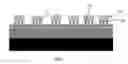
In reference to FIG. 13, unit singulation is performed, separating single die units 40 from the remainder of the wafer. Referring to FIG. 14, a close-up view illustrates the die 28 connected to the chip attach site 26 by microbump 29, with the BGA 34 at the bottom.
In accordance with the invention, interconnect bumps 29, such as those illustrated in FIG. 6, are formed at the substrate carrier. Utilizing a standard flip chip process, the semiconductor device 28 is attached directly to the interconnect bumps 29, which binds semiconductor device directly to the chip attach site 26. This eliminates shifting of the semiconductor device during the molding process on a reconstituted wafer, and reduces damage from handling.
The unique stress relief pattern implemented on the backside/second side 32 compensates and controls the thermomechanical stress build up due to high temperature processes. This removes the need for a de-bonding process of reconstituted wafer from the carrier which would otherwise be required.
The inventive process allows for use of lower costs materials on the I/O sides, and expensive chip wastage due to process yield loss is reduced.
One or more embodiments of the present invention have been described. Nevertheless, it will be understood that various modifications may be made without departing from the spirit and scope of the invention. Accordingly, other embodiments are within the scope of the following claims.
Claims
1. A method for manufacturing substrate based fan-out wafer level packaging, comprising:
providing a substrate;
applying a stress relief pattern to the substrate, the stress relief pattern forming a relief of stress for the packaging;
applying a first photoresist pattern;
depositing copper or a copper alloy on said first photoresist pattern;
applying a second photoresist pattern;
forming chip attach site pillars by depositing a layer of copper or copper alloy on said second photoresist pattern;
attaching a semiconductor device via a flip chip bonding, the attaching including:
forming a plurality of interconnect bumps between the semiconductor device and the chip attach site; and
forming a space between the semiconductor device and the substrate;
encapsulating the semiconductor device with a molding compound;
grinding a second side of the substrate, the grinding including copper etching and thinning;
applying a ball grid array pattern on the second side;
etching the second side with copper;
applying a solder mask coating;
attaching a plurality of ball drops; and
singulating a unit.
2. The method of claim 1 wherein the substrate includes copper and molding.
3. The method of claim 1 wherein the first pattern comprises a plurality of lands and channels.
4. The method of claim 1 wherein the first pattern is applied to a first side, the method further comprising:
coating the first side with a chemical resist to form a plurality of lands; and
exposing the first to etchant to form channels.
5. The method of claim 1 wherein the space is formed between the semiconductor device and the substrate by chemical etching.
6. The method of claim 1 wherein the space is formed between the semiconductor device and the substrate by laser ablation.
7. A substrate based fan-out wafer level packaging, comprising:
a substrate;
applying a stress relief pattern to the substrate, the stress relief pattern forming a relief of stress for the packaging;
a first photoresist pattern, the first photoresist pattern adapted to be applied to the substrate;
a copper or copper alloy layer, the copper or copper alloy layer adapted to be applied on top of the first photoresist pattern;
a second photoresist pattern, the second photoresist pattern adapted to be applied above the copper or copper alloy layer;
a plurality of chip attach site pillars, the chip attach site pillars including a plurality of interconnect bumps and formed on top of said second photoresist pattern;
a semiconductor device, the semiconductor device adapted to be placed above the interconnect bumps;
a molding compound, the molding compound forming an encapsulant around the semiconductor device;
a ball grid array pattern adapted to be applied to a second side of the substrate;
a solder mask coating applied below the ball grid array pattern; and
a plurality of solder balls attached to the solder mask coating.
Images & Drawings included:




Sources:
- United States Patent and Trademark Office - verify current appl. status at the USPTO↗
Similar patent applications:
- » 20180130768
Substrate Based Fan-Out Wafer Level Packaging - » 20180130769
Substrate Based Fan-Out Wafer Level Packaging - » 20190259731
SUBSTRATE BASED FAN-OUT WAFER LEVEL PACKAGING
Recent applications in this class:
- » 20250157870 2025-05-15
PACKAGE STRUCTURES - » 20250118609 2025-04-10
Semiconductor Packages and Methods of Forming - » 20250079248 2025-03-06
SEMICONDUCTOR PACKAGE AND METHOD OF MANUFACTURING SEMICONDUCTOR PACKAGE - » 20250054826 2025-02-13
SEMICONDUCTOR DEVICE, SEMICONDUCTOR PACKAGE AND MANUFACTURING METHOD THEREOF - » 20250038059 2025-01-30
MODULAR INTERCONNECTION UNIT, SEMICONDUCTOR PACKAGE AND METHOD FOR MAKING THE SAME - » 20250029882 2025-01-23
SEMICONDUCTOR PACKAGE AND METHOD OF MANUFACTURING THE SAME - » 20250014959 2025-01-09
MICROELECTRONIC DEVICES INCLUDING RECESSES IN AN ENCAPSULANT MATERIAL AND ASSOCIATED SYSTEMS AND METHODS - » 20250006577 2025-01-02
ELECTRONIC DEVICE AND MANUFACTURING METHOD THEREOF - » 20240429118 2024-12-26
SEMICONDUCTOR DEVICE AND METHOD OF MANUFACTURING SEMICONDUCTOR DEVICE - » 20240429117 2024-12-26
DIELECTRIC MATERIAL AND A MOLD COMPOUND WITH DIFFERENT DIELECTRIC CONSTANTS COUPLED TO A DIE THAT INCLUDES INTEGRATED CIRCUITRY
Recent applications for this Assignee:
- » 20190259731 2019-08-22
SUBSTRATE BASED FAN-OUT WAFER LEVEL PACKAGING - » 20180130769 2018-05-10
Substrate Based Fan-Out Wafer Level Packaging - » 20180130768 2018-05-10
Substrate Based Fan-Out Wafer Level Packaging - » 20160276251 2016-09-22
Lead frames with wettable flanks - » 20160221821 2016-08-04
Method for improving manufacturability of cavity packages for direct top port MEMS microphone - » 20150315014 2015-11-05
Top port MEMS cavity package and method of manufacture thereof - » 20140246739 2014-09-04
Top port MEMS cavity package and method of manufacture thereof - » 20140246738 2014-09-04
Top port MEMS cavity package and method of manufacture thereof