Titanium powder production apparatus and method
US20180169762A1
2018-06-21
15/588,993
2017-05-08
✅ Patent granted
US 10,583,492 B2
2020-03-10
-
-
George Wyszomierski
Nixon & Vanderhye PC
2037-12-23
Abstract:
A method and apparatus for producing titanium metal powder from a melt. The apparatus includes an atomization chamber having an inner wall that is coated with or formed entirely of a titanium alloy that is the same as the titanium metal powder to prevent contamination of titanium metal powder therein. The inner surfaces of some or all components of the apparatus in a flow path following the atomization chamber may also be coated with or formed entirely of the titanium alloy or CP-Ti.
Inventors:
- William M. Hanusiak 3 🇺🇸 Windermere, FL, United States
- Dale R. MCBRIDE 1 🇺🇸 Bruceton Mills, FL, United States
Assignee:
- PURIS, LLC 2 🇺🇸 Bruceton Mills, WV, United States
- CARPENTER TECHNOLOGY CORPORATION 8 🇺🇸 Philadelphia, PA, United States
Applicant:
Interested in similar patents?
Get notified when new applications in this technology area are published.
Classification:
B22F1/0003 » CPC further
Metallic powder; Treatment of metallic powder, e.g. to facilitate working or to improve properties Metallic powders ; Mixtures of metallic powders; Metallic powders mixed with a lubricating or binding agent
B22F2998/10 » CPC further
Supplementary information concerning processes or compositions relating to powder metallurgy Processes characterised by the sequence of their steps
B22F2301/205 » CPC further
Metallic composition of the powder or its coating; Refractory metals Titanium, zirconium or hafnium
B22F1/00 IPC
Metallic powder; Treatment of metallic powder, e.g. to facilitate working or to improve properties
B22F9/082 » CPC main
Making metallic powder or suspensions thereof using physical processes starting from liquid material by casting, e.g. through sieves or in water, by atomising or spraying atomising using a fluid
B22F2009/0824 » CPC further
Making metallic powder or suspensions thereof using physical processes starting from liquid material by casting, e.g. through sieves or in water, by atomising or spraying atomising using a fluid with a specific atomising fluid
B22F2009/0848 » CPC further
Making metallic powder or suspensions thereof using physical processes starting from liquid material by casting, e.g. through sieves or in water, by atomising or spraying atomising using a fluid Melting process before atomisation
B22F2009/0888 » CPC further
Making metallic powder or suspensions thereof using physical processes starting from liquid material by casting, e.g. through sieves or in water, by atomising or spraying atomising using a fluid casting construction of the melt process, apparatus, intermediate reservoir, e.g. tundish, devices for temperature control
B22F2009/0896 » CPC further
Making metallic powder or suspensions thereof using physical processes starting from liquid material by casting, e.g. through sieves or in water, by atomising or spraying atomising using a fluid particle transport, separation: process and apparatus
B22F9/08 IPC
Making metallic powder or suspensions thereof using physical processes starting from liquid material by casting, e.g. through sieves or in water, by atomising or spraying
C22C1/0458 » CPC further
Making alloys by powder metallurgy; Alloys based on refractory metals Alloys based on titanium, zirconium, hafnium
B22F2009/0892 » CPC further
Making metallic powder or suspensions thereof using physical processes starting from liquid material by casting, e.g. through sieves or in water, by atomising or spraying atomising using a fluid casting nozzle; controlling metal stream in or after the casting nozzle
B22F2999/00 » CPC further
Aspects linked to processes or compositions used in powder metallurgy
C22C1/04 IPC
Making alloys by powder metallurgy
Description
CROSS-REFERENCES TO RELATED APPLICATIONS
This application claims the priority of Provisional Patent Application No. 62/437,129 filed on Dec. 21, 2016 and entitled “TITANIUM POWDER PRODUCTION APPARATUS AND METHOD”.
BACKGROUND OF THE INVENTION
1. Field of the Invention
The present invention relates to a titanium powder production apparatus and method and, more particularly, to such an apparatus and method that prevents contamination of the titanium powder.
2. Description of the Background Art
Powder metallurgy is an important technology in the production of parts made out of titanium for critical applications such as aerospace. Titanium metal powder is the basic raw material in this process path. Atomization using an inert gas such as argon is a commonly used process to produce uniform spherical-shaped powders that possess high packing densities. A typical device for gas atomization consists of a liquid metal stream supply source, the atomizing gas jet, and a cooling chamber. The free-falling stream of molten titanium is impinged with inert gas jet at a high velocity, the atomized droplets of titanium solidify in flight through the chamber, and are collected at the bottom of the chamber. Extremely high values of cooling rates during the solidification of the droplets are desired in order to obtain very specific, controlled structures. Several aspects of design and construction of the atomization chamber are important:
-
- 1. The chamber must be constructed with a material that does not react with titanium up on contact;
- 2. The chamber must be large enough to allow titanium droplets to solidify before they come in contact with the walls or bottom section of the chamber;
- 3. The chamber should allow complete evacuation to prevent atmospheric contamination; and
- 4. The chamber design should allow easy access for complete cleaning and inspection of its interior.
Stainless steel is the most commonly used material for the construction of titanium atomization chambers. There exists a possibility that some of titanium droplets hit the atomization chamber before solidification. These droplets react with stainless steel producing low-melting point compounds that are brittle in nature. These compounds enter into the titanium powder stream as contaminants and remain undetected in standard quality control techniques. Components made out of these contaminated powders experience catastrophic in-service failures.
BRIEF SUMMARY OF THE INVENTION
In accordance with the present invention, the powder metal contamination can be eliminated by lining the metal powder flow path or fabricating the metal powder flow path beyond the atomization stage with a metal that is non-contaminating to the metal powder being produced.
In the case of titanium metal powder, the wall of the atomization chamber preferably is lined or fabricated from a titanium alloy that is the same as the titanium metal powder. For example, a titanium alloy such as Ti-6A1-4V could be used for the liner or chamber wall if the titanium powder metal being produced is Ti-6A1-4V.
This solution applies to any powder metal production system, since metal contamination can be created in the chamber cleaning operation, it is particularly applicable to metal powder production from a melt as this method experiences occasional powder ball to chamber wall bonding.
Atomization from a melt includes gas atomization (GA) in which a molten stream of metal is impinged by a high velocity inert gas jet to form a powder, and spinning electrode methods (PREP) in which the end of a metal bar is melted while the bar rotates rapidly throwing off metal droplets.
In either case, melting can be achieved by electron beam, plasma torch, electrical arc, induction heating, laser heating or any other sufficiently powerful heating method.
BRIEF DESCRIPTION OF THE DRAWING
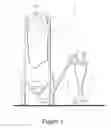
FIG. 1 is a schematic view of a portion of apparatus for producing titanium powder.
DETAILED DESCRIPTION OF THE INVENTION
Referring to FIG. 1, apparatus 10 for producing titanium powder includes an atomization or hot spray chamber 12 for receiving an atomized liquid metal stream supply from a known system such as a cold wall induction guiding system, an electrode induction melting gas atomization process, a plasma-melting induction-guiding gas atomization method, a triple melt process or any other known system. The powder from the atomization chamber 12 is passed through a conveying tube 14, through a cyclone separator 16 and then into powder containers 18, as shown in FIG. 1.
In accordance with the present invention, the entire inside surface 20 of the atomization chamber 12 is coated with or formed of a titanium alloy that is the same as the titanium metal powder being produced from a melt including titanium powder metal as hereinbefore described. As an illustrative example, a coating of a titanium alloy on the inner surface 20 of the atomization chamber 12 may have a thickness of about 2 mm. The atomization chamber may be formed of any suitable material, such as stainless steel. Alternatively, the atomization chamber 12 can be formed of the titanium alloy instead of a coating of the alloy on the inner surface formed of another material.
To further ensure against contamination of the titanium powder, all or part of the flow path after the atomization chamber 12 may be coated with or formed of a titanium alloy the same as the titanium powder or commercially pure titanium (CP-Ti). For example, one or more of the conveying tube 14, cyclone separator 16 and/or powder containers 18 may be formed of or coated internally with the titanium alloy or CP-Ti to prevent any contamination of the titanium powder.
As an illustrative example, a titanium alloy such as Ti-6A1-4V could be used for the liner or chamber wall 20 in the atomization chamber 12 and all or part of the subsequent flow path if the titanium powder metal being processed is Ti-6A1-4V.
While the invention has been described in connection with what is presently considered to be the most practical and preferred embodiments, it is to be understood that the invention is not to be limited to the disclosed embodiments, but on the contrary, is intended to cover various modifications and equivalent arrangements included within the spirit and scope of the appended claims.
Claims
1. Apparatus for producing titanium metal powder from a melt including titanium powder metal, comprising an atomization chamber having an inner wall that is coated with or formed entirely of a titanium alloy that is the same as the titanium metal powder to prevent contamination of titanium metal powder therein.
2. The apparatus of claim 1 further comprising a powder conveying tube connected to an exit opening of the atomization chamber, a cyclone separator connected to the powder conveying tube and a powder container connected to the cyclone separator, and wherein inner surfaces of one or more of the conveying tube, the cyclone separator and/or the powder container are coated with or formed entirely of the titanium alloy or CP-Ti.
3. The apparatus of claim 1 wherein the inner wall of the atomization chamber is coated with a titanium alloy having a thickness of about 2 mm.
4. A method for preventing contamination of titanium powder in an apparatus for producing it from a melt including titanium powder metal, the apparatus having an atomization chamber with an inner wall, comprising coating the inner wall or forming it entirely of a titanium alloy that is the same as the titanium powder.
5. The method of claim 4 wherein the coating of the titanium alloy on the inner wall is about 2 mm.
6. The method of claim 4 wherein the apparatus further comprises a conveying tube, a cyclone separator and a powder container in a flow path following the atomization chamber, and coating inner surfaces of one or more of the conveying tube, the cyclone separator and/or the powder container with the titanium alloy or CP-Ti or forming the inner surfaces entirely of the titanium alloy or CP-Ti.
7. Apparatus for producing titanium metal powder from a melt wherein a stream of molten titanium is impinged with inert gas at high velocity in an atomization chamber having an inner wall, and wherein the inner wall is coated with or formed entirely of a titanium alloy that is the same as the titanium metal powder to prevent contamination of the metal powder.
8. The method of claim 4, further comprising coating inner surfaces of one or more components of the apparatus in a flow path following the atomization chamber with the titanium alloy or CP-Ti or forming the inner surfaces entirely of the titanium alloy or CP-Ti.
Images & Drawings included:
Sources:
- United States Patent and Trademark Office - verify current appl. status at the USPTO↗
Similar patent applications:
- » 20130233129
Titanium powder production apparatus and method
Recent applications in this class:
- » 20250229330 2025-07-17
ATOMIZATION SYSTEM DIAGNOSTICS - » 20250214141 2025-07-03
DEVICE AND METHOD FOR PRODUCING METAL POWDER USING AN INDUCTION COIL AND AN INTERMEDIATE COIL - » 20250214140 2025-07-03
METHOD FOR CONTINUOUSLY PRODUCING EUTECTIC ALLOY FINE PARTICLES - » 20250205781 2025-06-26
ASSEMBLY AND METHOD FOR PRODUCING METAL POWDER - » 20250170646 2025-05-29
COLD TUNDISH, AND APPARATUS AND METHOD FOR PRODUCING SPHEROIDAL MICROPOWDERS - » 20250162031 2025-05-22
METHOD FOR MANUFACTURING COPPER ALLOY POWDER FOR METAL AM - » 20250153244 2025-05-15
METAL POWDER ATOMIZATION MANUFACTURING PROCESSES - » 20250135539 2025-05-01
REACTIVE METAL POWDERS IN-FLIGHT HEAT TREATMENT PROCESSES - » 20250135538 2025-05-01
METAL POWDER ATOMIZATION MANUFACTURING PROCESSES - » 20250135537 2025-05-01
METAL POWDER ATOMIZATION MANUFACTURING PROCESSES
Recent applications for this Assignee:
- » 20230211415 2023-07-06
Method to produce an additively manufactured, graded composite transition joint - » 20230193439 2023-06-22
Articles fabricated from cold-worked and case- hardened essentially co-free stainless steel alloys and methods of fabrication thereof - » 20220274180 2022-09-01
Metal powder management system for additive manufacturing - » 20210142933 2021-05-13
Soft magnetic composite materials and methods and powders for producing the same - » 20170335432 2017-11-23
Custom titanium alloy for 3-D printing and method of making same - » 20170335432 2017-11-23
Custom titanium alloy for 3-D printing and method of making same - » 20150167122 2015-06-18
Method of hardening articles and articles comprising the same - » 20130233129 2013-09-12
Titanium powder production apparatus and method