Quick rescue survival kit
US20180178889A1
2018-06-28
15/391,626
2016-12-27
✅ Patent granted
US 10,005,529 B1
2018-06-26
-
-
Andrew Polay
2037-02-06
Abstract:
A new invention for use in an emergency search and rescue situation. A simple, back-to-basic visual locator target easy to be seen from the air during the day or night to quickly locate and rescue the user in an emergency or distressed situation. The (1) circular single-layer of bright, neon material used for this target may preferably have a diameter of 25′ and be a strong, lightweight nylon parachute material which can also be used as a temporary shelter if needed until rescued. The vivid neon red-orange color will make it easy to be seen during the day and the neon lime-yellow color in the center and around the edge will glow-in-the-dark and inflate for water use making it easy to be seen at night for a quicker rescue. It can be used on land by laying it on the ground and securing it by using the (3) eight anchor hook connectors; (4) eight anchor hooks; & (5) 2 lb. rubber mallet for anchoring. It can also be used to float in the water with the inflatable, luminescent circumference, center and cross-sections of the target which includes an inflatable chamber therein. The (8) manual back-up air valve system requires the user to blow their breath into the air valve and the automatic inflation requires pulling a cord that causes a mechanism to puncture a (7) (CO2) compressed air cylinder, which then expels to rapidly inflate the bladder. The (6) quick-release pull-cord has a bright red reflective handle, and when pulled, inflates the joined (2) 12″ wide tubular circumference, the 4′ circular center and four 4″×8.5′ cross-sections. The method activates a single pin which is located on the top of the cylinder of compressed air as a deployment handle, which when pulled, releases the bottom of the cylinder and allows the inflatable areas to automatically inflate. The (9) swivel-hook and (10) rope can be used to connect the unit to the boat or user. The lightweight carry bag (11) is easy to carry and store the unit in a variety of places.
Accordingly, there remains a need for an emergency visual search and quick-rescue aid unit that is also inflatable for rescue operations where it is easy to use and inflate if needed. It will include a compact, lightweight carrying case for easy transport, is readily accessible to anyone in time of need, and can be easily stored in a variety of places.
Applicant:
Interested in similar patents?
Get notified when new applications in this technology area are published.
Classification:
B63B7/085 » CPC further
Collapsible, foldable, inflatable or like vessels having parts of non-rigid material; Inflatable Accessories or mountings specially adapted therefor, e.g. seats, sailing kits, motor mountings
B63B21/50 » CPC further
Tying-up; Shifting, towing, or pushing equipment; Anchoring Anchoring arrangements or methods for special vessels, e.g. for floating drilling platforms or dredgers
B63C2009/007 » CPC further
Life-saving in water; Particular features common to inflatable life-saving equipment Inflation devices comprising manual activation means, e.g. for puncturing gas-generating cartridges
B63B45/00 IPC
Arrangements or adaptations of signalling or lighting devices
B63C9/02 » CPC further
Life-saving in water Lifeboats, life-rafts or the like, specially adapted for life-saving
B63C9/21 » CPC main
Life-saving in water Boats, rafts, buoys or the like, characterised by signalling means, e.g. lights, reflectors
B63B7/08 » CPC further
Collapsible, foldable, inflatable or like vessels having parts of non-rigid material Inflatable
B63B2201/12 » CPC further
Signalling devices Reflecting means
B63B2231/40 » CPC further
Material used for some parts or elements, or for particular purposes Synthetic materials
B63C9/01 IPC
Life-saving in water Air-sea rescue devices, i.e. equipment carried by, and capable of being dropped from, an aircraft
B63C9/00 IPC
Life-saving in water
Description
CROSS-REFERENCE TO RELATED APPLICATIONS
This application is a continuation of U.S. patent application Ser. No. 15/391,626, filed Dec. 27, 2016, and entitled “Quick Rescue Survival Kit”.
STATEMENT REGARDING FEDERALLY SPONSORED RESEARCH OR DEVELOPMENT
Not Applicable
THE NAMES OF THE PARTIES TO A JOINT RESEARCH AGREEMENT
Not Applicable
REFERENCE TO APPENDIX
Not Applicable
STATEMENT REGARDING PRIOR DISCLOSURES BY THE INVENTOR
Not Applicable
BACKGROUND OF THE INVENTION
Not Applicable
BRIEF SUMMARY OF THE INVENTION
A new invention for use in an aerial emergency search and rescue situation. The vivid neon red-orange color will make it easy to be seen during the day and the neon lime-yellow color crossing in the center and around the edge will glow-in-the-dark and inflate for water use making it easy to be seen at night for a quicker aerial rescue.
A circular, bright-colored piece of lightweight fabric, large enough to be seen by search and rescue aircraft. It can be used on land by simply laying it on the ground, or on water by simply using a pull-cord to inflate the center and circumference of the unit keeping it afloat with a self-inflating flotation device comprising of at least one elongated inflatable chamber. A new invention for use in an emergency search and rescue situation. A simple, back-to-basic visual locator target easy to be seen from the air during the day or night to quickly locate and rescue the user in an emergency or distressed situation. The circular, single-layer of bright, neon material used for this target may preferably have a diameter of 25′ and be a strong, lightweight nylon parachute material which can also be used as a temporary shelter if needed until rescued. The vivid neon red-orange color will make it easy to be seen during the day and the neon lime-yellow color in the center and around the edge will glow-in-the-dark and inflate for water use making it easy to be seen at night for a quicker rescue.
For land use, the invention includes eight hook connectors and eight ground hook for anchoring into the ground using a 2 lb. rubber mallet. For water use, the design includes an inflatable bladder situated therein the 12″ wide circumference, 4′ center diameter and four 4″ wide×8.5′ long cross-sections. Located on the rim is a deployment handle pull-cord, which when pulled, releases the (CO2) compressed air cylinder and allows the invention to automatically inflate while falling into the water. Such actuation of the pull-cord causes the 12″ wide circumference, 4′ center diameter and four 4″ wide×8.5′ long cross-sections of the apparatus to rapidly inflate with air. A (CO2) compressed air cylinder is coupled to a one-way valve in fluid communication with the interior of the chamber for quickly and easily inflating the chamber. A manual, back-up air valve is available and located near the pull-cord and used by blowing breath into mouth-piece for outer-tube, center and cross-section inflation if automatic deployment is compromised. A swivel-hook mounted on the outer-rim, also next to the pull-cord, is used for attaching the 10′ rope with lead to connect the invention to the boat or person in distress.
BRIEF DESCRIPTION OF THE DRAWINGS
So that the manner in which the above recited features of the present disclosure can be understood in detail, a more particular description of the disclosure, briefly summarized above, may be had by reference to embodiments, some of which are illustrated in the appended drawings. It is to be noted, however, that the appended drawings illustrate only typical embodiments of this disclosure and are therefore not to be considered limiting of its scope, for the disclosure may admit to other equally effective embodiments.
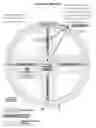
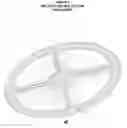
FIG. 1 illustrates the top and bottom view of the survival unit are mirrored images which is what would be seen in the aerial view of the rescuer. It is comprised of a strong, lightweight nylon parachute material in bright neon colors easy to be seen by an aerial search and rescue team.
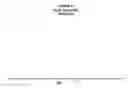
FIG. 2 is an illustration of a side, flat view of the deflated survival unit which is best used on land. When deflated, the invention is able to be rolled up into a relatively small size and stored in a lightweight carry bag or backpack.
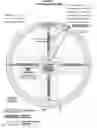
FIG. 3 is an inflated, side view of the survival unit which is primarily used to float on the water using the inflatable bladder situated therein.
FIG. 4 is an illustration of the inflated top and bottom angle view including an inflatable bladder situated therein the 12″ wide circumference, 4′ center diameter and four 4″ wide×8.5′ long cross-sections for water use.
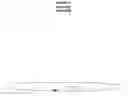
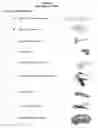
FIG. 5 contains various components included in the survival kit;
- (A.) eight anchor hook connectors attached to the edge of the circumference of he unit and used for anchoring into the ground;
- (B.) eight anchor hooks used in conjunction with the eight hook connectors for anchoring the invention to the ground;
- (C.) one 2 lb. rubber mallet is included and to be used along with the eight anchor hook connectors and hooks for anchoring and securing invention to the ground;
- (D.) one pull-cord deployment handle, located on the rim, which when used, rapidly inflates the bladder releasing a (CO2) compressed air cylinder and allows the invention to be used to float on water;
- (E.) one manual back-up air valve used when the pull-cord deployment handle is compromised. This allows the person to blow their breath into the valve and manually inflate the invention for water use;
- (F.) one (CO2) compressed air cylinder situated therein the inflatable bladder, which when released, allows automatic actuation to rapidly inflate apparatus.
- (G.) one swivel-hook used to attach the invention to a rope with a lead which then keeps the invention from floating away;
- (H.) one rope with lead to attach the invention to the swivel-hook;
- (I.) one lightweight carry bag used to store the survival kit and all it's components for easy storage.
In this respect, it is to be understood that the invention is not limited in its application to the details of construction and to the arrangements of the components set forth in the following description or illustrated in the drawings. The invention is capable of other embodiments and of being practiced and carried out in various ways. Also, it is to be understood that the phraseology and terminology employed herein are for the purpose of description and should not be regarded as limiting thereof.
Claims
What is claimed is:1. A circular, visual emergency search and rescue unit made with bright reflective light-weight fabric. The circular piece of single-layer fabric is joined together with a tough-coated rubber or vinyl reflective, glow-in-the-dark material used for the 4′ center, 12″ wide circumference and four 4″ wide×8.5′ long cross-sections which will inflate for water use. The glow-in-the-dark tubular circumference, center and cross-sections of the target can be inflated to keep the unit afloat in water and the anchor hooks can be used to secure the unit on land for an easier visual aid in an emergency rescue situation. This invention can be used for land or water; day or night.
2. The circular single-layer of nylon fabric will be lightweight for easy fold-up storage and bright in color for an easy-to-be-seen visual from the air. A neon yellow fluorescent material will be used for the outer circumference, center and cross-sections creating a bright target for a quick, nighttime search and rescue visual aid.
3. The 12″ wide outer circumference, 4′ center and four 4″ wide×8.5′ long cross-sections are joined together which may be of a glow-in-the-dark, reflective, material for a quick, nighttime search and rescue visual aid which can also inflate for water use. Located on the outer circumference of the invention is a deployment handle pull-cord (6), which when pulled, releases the air from a (CO2) compressed air cylinder (7) and allows the inflatable apparatus to automatically inflate while falling into the water. The (CO2) compressed air cylinder is coupled to a one-way valve in fluid communication with the interior of the chamber for quickly and easily inflating the chamber. Preferably, the inflatable areas are fabricated from a resilient fluorescent, luminescent material comprising any one of a vinyl, plastic, vinyl plastic such as vinyl chloride, vinyl acetate, polyethylene, a fabric coated urethane, rubberized nylon, polypropylene, canvas, vinyl/canvass, or any combination thereof.
4.
A. eight anchor hook connectors;
B. eight anchor hooks;
C. one 2 lb. rubber mallet used to insert anchor hooks into anchor hook connectors securing invention to the ground;
D. one pull-cord for automatic inflation located on the center and outer circumference of the unit, which when pulled, releases the bottom of the (CO2) compressed air cylinder and allows the apparatus to automatically inflate while falling into the water to create buoyancy;
E. one back-up air valve for manual inflation located near the pull-cord and used by blowing breath into mouth-piece for outer-tube, center and cross-section inflation if automatic deployment is compromised;
F. one swivel-hook mounted on the outer-rim of the unit used for attaching the rope to boat or person in distress;
G. one rope with lead for connection to swivel-hook;
H. one lightweight carry bag for easy storage of survival kit.
As various changes could be made in the above constructions without departing from the scope of the invention, it is intended that all matter contained in the above description or shown in the accompanying drawings shall be interpreted as illustrative and not in a limiting sense.
WARNING: This is not intended to be used as a life raft.
Images & Drawings included:
Sources:
- United States Patent and Trademark Office - verify current appl. status at the USPTO↗
Recent applications in this class:
- » 20210276674 2021-09-09
Rescue network system for watercraft - » 20150191231 2015-07-09
Radar reflector operating device for indicating emergency position - » 20140045395 2014-02-13
Dog flotation devices and life vests having safety flags