Tracheostoma valve
US20180272091A1
2018-09-27
15/530,923
2017-03-24
✅ Patent granted
US 10,398,865 B2
2019-09-03
-
-
Steven O Douglas
Reichel Stohry Dean LLP | Mark C. Reichel | Natalie J. Dean
2037-07-17
Abstract:
A tracheostoma valve to be applied to a tracheostomized person's neck comprises an air passage to be connected with the tracheostoma for connecting the trachea with the surroundings. A valve member is provided in the air passage, wherein the valve member is normally open and allows for inhalation and exhalation through the air passage. The valve further comprises a manually activated member for establishing an uninterrupted seal to block patient exhalation, thereby to direct it to the patient's pharynx, esophagus, sinuses, and mouth for speech following surgical removal of the larynx.
Assignee:
- Brian Kamradt 4 🇺🇸 Indianapolis, IN, United States
Applicant:
Interested in similar patents?
Get notified when new applications in this technology area are published.
Classification:
A61M16/0468 » CPC main
Devices for influencing the respiratory system of patients by gas treatment, e.g. mouth-to-mouth respiration; Tracheal tubes; Tracheal tubes; Tracheostomy tubes; Devices for performing a tracheostomy; Accessories therefor, e.g. masks, filters with valves at the proximal end limiting exhalation, e.g. during speaking or coughing
A61M16/0816 » CPC further
Devices for influencing the respiratory system of patients by gas treatment, e.g. mouth-to-mouth respiration; Tracheal tubes; Bellows; Connecting tubes ; Water traps; Patient circuits Joints or connectors
A61M16/00 IPC
Devices for influencing the respiratory system of patients by gas treatment, e.g. mouth-to-mouth respiration; Tracheal tubes
A61M16/1045 » CPC further
Devices for influencing the respiratory system of patients by gas treatment, e.g. mouth-to-mouth respiration; Tracheal tubes; Preparation of respiratory gases or vapours Devices for humidifying or heating the inspired gas by using recovered moisture or heat from the expired gas
A61M16/201 » CPC further
Devices for influencing the respiratory system of patients by gas treatment, e.g. mouth-to-mouth respiration; Tracheal tubes; Valves specially adapted to medical respiratory devices Controlled valves
A61M16/04 IPC
Devices for influencing the respiratory system of patients by gas treatment, e.g. mouth-to-mouth respiration; Tracheal tubes Tracheal tubes
A61M16/08 IPC
Devices for influencing the respiratory system of patients by gas treatment, e.g. mouth-to-mouth respiration; Tracheal tubes Bellows; Connecting tubes ; Water traps; Patient circuits
A61M16/10 IPC
Devices for influencing the respiratory system of patients by gas treatment, e.g. mouth-to-mouth respiration; Tracheal tubes Preparation of respiratory gases or vapours
A61M16/20 IPC
Devices for influencing the respiratory system of patients by gas treatment, e.g. mouth-to-mouth respiration; Tracheal tubes Valves specially adapted to medical respiratory devices
F16K7/14 » CPC further
Diaphragm cut-off apparatus, e.g. with a member deformed, but not moved bodily, to close the passage with flat, dished, or bowl-shaped diaphragm arranged to be deformed against a flat seat
Description
TECHNICAL FIELD
The invention relates to a tracheostoma valve adapted to control the flow of air through a tracheostoma.
BACKGROUND OF THE INVENTION
Due to deceases of different kinds it is sometimes necessary to remove the larynx by surgery and to open a tracheostoma in order that the individual exposed to the surgery can breathe. By the removal of the larynx the ability to speak will be lost but can be restored to some extent by means of another surgery wherein a fistula is opened between trachea and esophagus to pass air to the oral cavity via the fistula. A one-way valve is mounted in the fistula. This valve referred to as a voice prosthesis, allows air to pass from trachea to esophagus but blocks complete flow in the opposite direction. For speech to be generated the tracheostoma must be closed so that air can be passed from trachea via the voice prosthesis into the esophagus and to the mucous membranes of which are made to vibrate so that speech is produced. The tracheostoma can be closed by covering the tracheostoma with a finger but it is more convenient to use for this purpose, a tracheostoma valve of the kind referred to above, which is attached to the neck of the person that has been exposed to tracheostoma surgery, in order to control the connection between trachea and the ambient atmosphere via the tracheostoma. The tracheostoma valve provides manual control of said connection. Embodiments of such valves are disclosed in U.S. Pat. No. 5,738,095, U.S. Pat. No. 5,059,208, and U.S. Pat. No. 4,325,366. The drawback of these valves are of a mechanically complicated and costly construction and moreover often are not attractive aesthetically due to the dimensions thereof which make it difficult to conceal the valves under garments.
SUMMARY OF THE INVENTION
It is an object of the present invention to provide a tracheostoma valve which manually activated will establish an uninterrupted seal to block patient exhalation, thereby to direct it to the patient's pharynx, esophagus, and mouth for speech following surgical removal of the larynx. It is a further object of the present invention to provide a tracheostoma valve which is of mechanically simple construction, in particular to permit ease of operation by a user and/or ready cleaning and/or to reduce costs to such an extent that the valve or components thereof are disposable and replaceable. It is a further object of the present invention to provide a tracheostoma valve of a low profile construction and can be concealed under garments. Further advantageous features of the tracheostoma valve of the invention are defined in the dependent claims.
BRIEF DESCRIPTION OF THE DRAWINGS
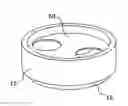
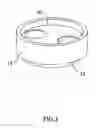
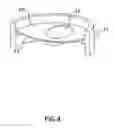
FIG. 1 is a representation of the Tracheostoma Valve with HME unit;
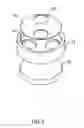
FIG. 2 is an exploded view of the Tracheostoma Valve with HME unit;
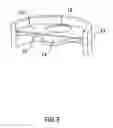
FIG. 3 is a section view of the Tracheostoma Valve in open position;
FIG. 4 is a section view of the Tracheostoma Valve in closed position;
DETAILED DESCRIPTION
The tracheostoma valve disclosed in the drawing comprises a housing 11 which is circular and having an open proximal and distal end and inside concave wall 14 positioned perpendicular to the axis which can be made of plastic material. Said inside concave wall 14 has openings therein 12 allowing air to pass there through. A displaceable member 10 which can be made of a thin resilient plastic sheet material has a disc shape and is located above said housing concave wall. Said displaceable member has openings therein 13 and are oriented at 90 DEG with respect to that of the openings in said housing concave wall allowing air to pass there through. The valve is combined with a heat and moisture exchange unit (HME unit) a plastic foam body 15 with open cells. The foam body is located and held in place inside the proximal end of the housing 11. The proximal end of the housing is intended to be connected to an adapter on a self-adhesive plaster to be attached to the person's neck over the tracheostoma, or to a laryngectomy tube to be inserted into trachea through the tracheostoma.
The valve is of the normally open type. To close, the displaceable member 10 is pressed with a finger inward so as to engage the surface of the housing concave wall 14 creating a seal as both displaceable member openings 13 and housing concave wall openings 12 are closed and air is not allowed to pass there through. To open, the finger is removed from the displaceable member to allow it to return to the normal open state allowing air to pass there through.
During breathing inhalation air passes from the ambient atmosphere through the openings 12,13 and through the HME unit 15 into trachea and then to the lungs. During expiration the breathing air follows the same path in the opposite direction. However, if the person wishes to produce speech by passing expiration air through a voice prosthesis the displaceable member 10 is pressed with a finger inward to engage the surface of the housing concave wall 14, both displaceable member openings 13 and housing concave wall openings 12 are closed and no expiration air can pass through the tracheostoma valve to the ambient atmosphere; the air will instead be passed through the voice prosthesis to the oral cavity and from there through the mouth to the ambient atmosphere.
Claims
What is claimed is:1. A tracheostoma valve to be applied to a tracheostomized person's neck comprising a housing which is circular having an open proximal and distal end and inside concave wall positioned perpendicular to the axis which can be made of plastic material. The inside concave wall has openings therein allowing air to pass there through, a displaceable member which can be made of a thin resilient plastic sheet material has a disc shape and is located above said housing concave wall. The displaceable member has openings therein and are oriented at 90 DEG with respect to that of the openings in said housing concave wall allowing air to pass there through. Manually operated said displaceable member is pressed with finger inward so as to engage the surface of the housing concave wall creating a seal as both displaceable member openings and housing concave wall openings are closed and air is not allowed to pass there through. To open, the finger is removed from said displaceable member to allow it to return to the normal open state allowing air to pass there through.
2. A tracheostoma valve according to claim 1, wherein a rib is provided above said displaceable member to prevent unintended closing of said valve.
3. A tracheostoma valve according to claim 1, wherein said valve comprises a tracheal cannula.
4. A tracheostoma valve according to claim 1, wherein said displaceable member is of a bowtie or hour glass shape.
5. A tracheostoma valve according to claim 1, wherein said housing has a retaining grove to locate and hold said displaceable member in a desired position.
6. A tracheostoma valve according to claim 1, wherein said housing has a retaining cross bar to locate and hold said HME unit in a desired position.
7. A tracheostoma valve according to claim 1, wherein said housing has a heat stake post to locate and hold said HME unit in a desired position.
Images & Drawings included:
Sources:
- United States Patent and Trademark Office - verify current appl. status at the USPTO↗
Similar patent applications:
- » 20210393910
Tracheostoma valve - » 10292598
Tracheostoma valve - » 20050178390
Tracheostoma valve - » 20100258135
Plaster for tracheostoma valves - » 20120090621
Tracheostoma valve - » 20130192604
Plaster for tracheostoma valves - » 9994706
Tracheostoma valve - » 20150083119
Tracheostoma valve - » 20150128955
Attachment Device for a Tracheostoma Valve - » 20160022940
Plaster for tracheostoma valves
Recent applications in this class:
- » 20240358951 2024-10-31
TRACHEOSTOMY GUARD AND ASSOCIATED ASSEMBLY - » 20240148996 2024-05-09
ARRANGEMENT IN THE MANNER OF A SPEECH VALVE FOR PLACING AND FITTING ON A TRACHEOSTOMY CANNULA - » 20230338684 2023-10-26
TRACHEOSTOMY TUBE SPEAKING VALVE - » 20230211102 2023-07-06
TRACHEOSTOMA DEVICE HOLDER - » 20230191060 2023-06-22
MEDICO-SURGICAL APPARATUS - » 20230158263 2023-05-25
APPARATUS FOR HUMIDIFYING AIR ENTERING INTO A TRACHEOSTOMY VALVE - » 20230127649 2023-04-27
TRACHEOSTOMY WEANING SYSTEM AND METHOD - » 20230121047 2023-04-20
VOICE PROSTHESIS WITH UMBRELLA VALVE - » 20230037492 2023-02-09
VENTILATION SYSTEM WITH A SPEAKING FUNCTION - » 20220193355 2022-06-23
Speaking valve
Recent applications for this Assignee:
- » 20190336276 2019-11-07
Voice prosthesis with disposable inner cannual valve assembly - » 20190133857 2019-05-09
Automatic patient turning and lifting method, system, and apparatus - » 20160029724 2016-02-04
Energy absorbing and displacing structure for body protective padding