Method of preparing aerogel particles and aerogel coated component
US20180282852A1
2018-10-04
15/478,891
2017-04-04
✅ Patent granted
US 10,724,132 B2
2020-07-28
-
-
Michael A Salvitti
McNees Wallace & Nurick LLC
2038-04-17
Abstract:
A method for preparing aerogel particles and a coated component are provided. The coated component includes a substrate and a coating. The coating includes aerogel particles sprayed from a hot gas jet or plasma jet. The method includes the step of feeding one or a plurality of gel particles into a hot gas jet or plasma j et. The one or a plurality of gel particles are sufficiently small to permit supercritical drying during the time the particles are in the jet. The method further includes the step of exposing the one or a plurality of gel particles to the temperatures and pressures of the hot gas jet or plasma jet to create the aerogel particles outside of a jet emitter and/or without a sealed pressure vessel.
Assignee:
- GENERAL ELECTRIC COMPANY 28,775 🇺🇸 Schenectady, NY, United States
Applicant:
Interested in similar patents?
Get notified when new applications in this technology area are published.
Classification:
C04B35/01 » CPC further
Shaped ceramic products characterised by their composition ; Ceramics compositions ; Processing powders of inorganic compounds preparatory to the manufacturing of ceramic products based on oxide ceramics
C04B35/62222 » CPC further
Shaped ceramic products characterised by their composition ; Ceramics compositions ; Processing powders of inorganic compounds preparatory to the manufacturing of ceramic products; Forming processes; Processing powders of inorganic compounds preparatory to the manufacturing of ceramic products obtaining ceramic coatings
B01J13/0091 » CPC further
Colloid chemistry, e.g. the production of colloidal materials or their solutions, not otherwise provided for; Making microcapsules or microballoons Preparation of aerogels, e.g. xerogels
C04B35/10 » CPC further
Shaped ceramic products characterised by their composition ; Ceramics compositions ; Processing powders of inorganic compounds preparatory to the manufacturing of ceramic products based on oxide ceramics based on aluminium oxide
C04B35/62655 » CPC further
Shaped ceramic products characterised by their composition ; Ceramics compositions ; Processing powders of inorganic compounds preparatory to the manufacturing of ceramic products; Forming processes; Processing powders of inorganic compounds preparatory to the manufacturing of ceramic products; Preparing or treating the powders individually or as batches ; preparing or treating macroscopic reinforcing agents for ceramic products, e.g. fibres; mechanical aspects section; Treating the starting powders individually or as mixtures; Thermal treatment of powders or mixtures thereof other than sintering Drying, e.g. freeze-drying, spray-drying, microwave or supercritical drying
B01J13/0052 » CPC further
Colloid chemistry, e.g. the production of colloidal materials or their solutions, not otherwise provided for; Making microcapsules or microballoons Preparation of gels
C04B38/0045 » CPC further
Porous mortars, concrete, artificial stone or ceramic ware; Preparation thereof by a process involving the formation of a sol or a gel, e.g. sol-gel or precipitation processes
C04B2111/00482 » CPC further
Mortars, concrete or artificial stone or mixtures to prepare them, characterised by specific function, property or use; Uses not provided for elsewhere in Coating or impregnation materials
C04B2111/00525 » CPC further
Mortars, concrete or artificial stone or mixtures to prepare them, characterised by specific function, property or use; Uses not provided for elsewhere in; Coating or impregnation materials for metallic surfaces
C04B2111/00551 » CPC further
Mortars, concrete or artificial stone or mixtures to prepare them, characterised by specific function, property or use; Uses not provided for elsewhere in; Coating or impregnation materials Refractory coatings, e.g. for tamping
C04B2235/3217 » CPC further
Aspects relating to ceramic starting mixtures or sintered ceramic products; Composition of constituents of the starting material or of secondary phases of the final product; Constituents and secondary phases not being of a fibrous nature; Metal oxides, mixed metal oxides, or oxide-forming salts thereof, e.g. carbonates, nitrates, (oxy)hydroxides, chlorides Aluminum oxide or oxide forming salts thereof, e.g. bauxite, alpha-alumina
C04B2235/3218 » CPC further
Aspects relating to ceramic starting mixtures or sintered ceramic products; Composition of constituents of the starting material or of secondary phases of the final product; Constituents and secondary phases not being of a fibrous nature; Metal oxides, mixed metal oxides, or oxide-forming salts thereof, e.g. carbonates, nitrates, (oxy)hydroxides, chlorides; Aluminum oxide or oxide forming salts thereof, e.g. bauxite, alpha-alumina Aluminium (oxy)hydroxides, e.g. boehmite, gibbsite, alumina sol
C04B2235/3244 » CPC further
Aspects relating to ceramic starting mixtures or sintered ceramic products; Composition of constituents of the starting material or of secondary phases of the final product; Constituents and secondary phases not being of a fibrous nature; Metal oxides, mixed metal oxides, or oxide-forming salts thereof, e.g. carbonates, nitrates, (oxy)hydroxides, chlorides; Refractory metal oxides, their mixed metal oxides, or oxide-forming salts thereof Zirconium oxides, zirconates, hafnium oxides, hafnates, or oxide-forming salts thereof
C04B2235/3246 » CPC further
Aspects relating to ceramic starting mixtures or sintered ceramic products; Composition of constituents of the starting material or of secondary phases of the final product; Constituents and secondary phases not being of a fibrous nature; Metal oxides, mixed metal oxides, or oxide-forming salts thereof, e.g. carbonates, nitrates, (oxy)hydroxides, chlorides; Refractory metal oxides, their mixed metal oxides, or oxide-forming salts thereof; Zirconium oxides, zirconates, hafnium oxides, hafnates, or oxide-forming salts thereof Stabilised zirconias, e.g. YSZ or cerium stabilised zirconia
C04B2235/3418 » CPC further
Aspects relating to ceramic starting mixtures or sintered ceramic products; Composition of constituents of the starting material or of secondary phases of the final product; Constituents and secondary phases not being of a fibrous nature; Non-metal oxides, non-metal mixed oxides, or salts thereof that form the non-metal oxides upon heating, e.g. carbonates, nitrates, (oxy)hydroxides, chlorides Silicon oxide, silicic acids, or oxide forming salts thereof, e.g. silica sol, fused silica, silica fume, cristobalite, quartz or flint
B01J2/08 IPC
Processes or devices for granulating materials, e.g. fertilisers in general; Rendering particulate materials free flowing in general, e.g. making them hydrophobic by dividing the liquid material into drops, e.g. by spraying, and solidifying the drops in a liquid medium Gelation of a colloidal solution
C04B35/622 IPC
Shaped ceramic products characterised by their composition ; Ceramics compositions ; Processing powders of inorganic compounds preparatory to the manufacturing of ceramic products Forming processes; Processing powders of inorganic compounds preparatory to the manufacturing of ceramic products
B01J13/00 IPC
Colloid chemistry, e.g. the production of colloidal materials or their solutions, not otherwise provided for; Making microcapsules or microballoons
C04B35/626 IPC
Shaped ceramic products characterised by their composition ; Ceramics compositions ; Processing powders of inorganic compounds preparatory to the manufacturing of ceramic products; Forming processes; Processing powders of inorganic compounds preparatory to the manufacturing of ceramic products Preparing or treating the powders individually or as batches ; preparing or treating macroscopic reinforcing agents for ceramic products, e.g. fibres; mechanical aspects section
C23C4/134 » CPC main
Coating by spraying the coating material in the molten state, e.g. by flame, plasma or electric discharge characterised by the method of spraying Plasma spraying
C23C4/126 » CPC further
Coating by spraying the coating material in the molten state, e.g. by flame, plasma or electric discharge characterised by the method of spraying Detonation spraying
C23C4/11 » CPC further
Coating by spraying the coating material in the molten state, e.g. by flame, plasma or electric discharge characterised by the coating material; Oxides, borides, carbides, nitrides or silicides; Mixtures thereof Oxides
B05D1/12 » CPC further
Processes for applying liquids or other fluent materials performed by spraying Applying particulate materials
C04B35/48 » CPC further
Shaped ceramic products characterised by their composition ; Ceramics compositions ; Processing powders of inorganic compounds preparatory to the manufacturing of ceramic products based on oxide ceramics based on zirconium or hafnium oxides, zirconates, zircon or hafnates
C23C4/04 » CPC further
Coating by spraying the coating material in the molten state, e.g. by flame, plasma or electric discharge characterised by the coating material
C04B35/14 » CPC further
Shaped ceramic products characterised by their composition ; Ceramics compositions ; Processing powders of inorganic compounds preparatory to the manufacturing of ceramic products based on oxide ceramics based on silica
C04B38/00 IPC
Porous mortars, concrete, artificial stone or ceramic ware; Preparation thereof
Description
FIELD OF THE INVENTION
The present invention is generally directed to a method of preparing aerogel particles and aerogel coated component. More specifically, the present invention is generally directed to a method of preparing aerogel particles using a hot gas jet or plasma jet and aerogel coated component.
BACKGROUND OF THE INVENTION
Aerogel materials have extremely low coefficients of thermal conductivity due to their extremely high porosity, making them excellent thermal insulators. Aerogels are made using a technique called supercritical drying where a gel is heated and pressurized until the liquid component of the gel is supercritical, where a liquid and a gas exist simultaneously, and then depressurized and/or cooled into a gaseous phase. By avoiding the boundary between liquid and gaseous phases in this way, the gel does not develop the high surface tension in its structure that it would experience in “typical” drying.
The aerogel structure is typically created in a chamber where the supercritical fluid diffuses into the air in the chamber, and thus out of the gel. In some processes, the air in the chamber is then purged and replaced with new air is typically repeated several times until all or most of the liquid is gone from the gel, leaving an aerogel. However, such method requires a chamber that can be pressurized and heated and introduces some limitations such as size limitations of final aerogel product.
BRIEF SUMMARY OF THE INVENTION
In an exemplary embodiment, a method for preparing aerogel particles is provided. The method includes the step of feeding one or a plurality of gel particles into a hot gas jet or plasma jet. The one or a plurality of gel particles are sufficiently small to permit supercritical drying during the time the particles are in the jet. The method further includes the step of exposing the one or a plurality of gel particles to the temperatures and pressures of the hot gas jet or plasma jet to create the one or a plurality of aerogel particles.
In another exemplary embodiment, a method for preparing aerogel particles is provided. The method includes the step of feeding one or a plurality of gel particles into a hot gas jet or plasma jet. The method further includes the step of exposing the one or a plurality of gel particles to the temperatures and pressures of the hot gas jet or plasma jet to create the one or a plurality of aerogel particles.
In another exemplary embodiment, a coated component is provided. The coated component includes a substrate and a coating. The coating includes aerogel particles sprayed from a hot gas jet or plasma jet.
Other features and advantages of the present invention will be apparent from the following more detailed description of the preferred embodiment, taken in conjunction with the accompanying drawings, which illustrate, by way of example, the principles of the invention.
BRIEF DESCRIPTION OF THE DRAWINGS
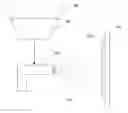
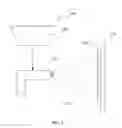
FIG. 1 illustrates a method, according to an exemplary embodiment of the present disclosure.
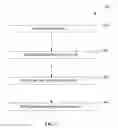
FIG. 2 shows a flow chart diagram illustrating an embodiment of a method.
Wherever possible, the same reference numbers will be used throughout the drawings to represent the same parts.
DETAILED DESCRIPTION OF THE INVENTION
The detailed description set forth below in connection with the appended drawings where like numerals reference like elements is intended as a description of various embodiments of the disclosed subject matter and is not intended to represent the only embodiments. Each embodiment described in this disclosure is provided merely as an example or illustration and should not be construed as preferred or advantageous over other embodiments. The illustrative examples provided herein are not intended to be exhaustive or to limit the claimed subject matter to the precise forms disclosed.
Provided are exemplary a method for preparing aerogel particles and a coated component. Embodiments of the present disclosure, in comparison to methods and articles not utilizing one or more features disclosed herein, enable aerogel to be supercritically dried in a hot gas jet or plasma jet, coating without seams, and coating components having complex geometries.
All numbers expressing quantities of ingredients and/or reaction conditions are to be understood as being modified in all instances by the term “about”, unless otherwise indicated.
All percentages and ratios are calculated by weight unless otherwise indicated. All percentages are calculated based on the total weight of a composition unless otherwise indicated. All component or composition levels are in reference to the active level of that component or composition, and are exclusive of impurities, for example, residual solvents or by-products, which may be present in commercially available sources.
The articles “a” and “an,” as used herein, mean one or more when applied to any feature in embodiments of the present invention described in the specification and claims. The use of “a” and “an” does not limit the meaning to a single feature unless such a limit is specifically stated. The article “the” preceding singular or plural nouns or noun phrases denotes a particular specified feature or particular specified features and may have a singular or plural connotation depending upon the context in which it is used. The adjective “any” means one, some, or all indiscriminately of whatever quantity.
The term “at least one,” as used herein, means one or more and thus includes individual components as well as mixtures/combinations.
The term “comprising” (and its grammatical variations), as used herein, is used in the inclusive sense of “having” or “including” and not in the exclusive sense of “consisting only of ”
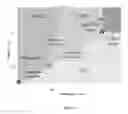
The term “supercritical drying,” as used herein, means a process wherein a gel is heated and pressurized until the liquid component of the gel is supercritical, where a liquid and a gas exist simultaneously, and then depressurized and/or cooled into a gaseous phase, as seen in FIG. 3.
With reference to FIG. 1, a jet emitter 102 is provided. One or a plurality of gel particles 101 are fed from a receptacle 106 into the jet emitter 102. The one or a plurality of gel particles 101 are pressurized in the jet emitter 102 and emitted to the hot gas jet or plasma jet 103. Then, the one or a plurality of gel particles 101 are emitted to be exposed to the temperatures and pressures of the hot gas jet or plasma jet 103 and depressurized and/or cooled rapidly to create the aerogel particles 105. The one or a plurality of gel particles 101 are sufficiently small to permit supercritical drying in the hot gas jet or plasma jet 103. In one embodiment, the sufficiently small one or a plurality of gel particles 101 are smaller than or equal to about 2mm in diameter. If the one or a plurality of gel particles 101 are sufficiently small, and the temperature and pressure of hot gas jet or plasma jet 103 are sufficient for supercritical drying of the liquid component of the gel, then the one or a plurality of gel particles 101 should undergo supercritical drying in the hot gas jet or plasma jet 103 to diffuse liquid out of the gel, thereby creating the aerogel particles 105.
In one embodiment, the aerogel particles 105 can be sprayed onto a substrate 104. In one embodiment, the aerogel particles 105 are attached to the substrate 104 via a mechanical bonding or a chemical bonding. The substrate 104 may be a surface of a large component including an abradable seal, a turbine component, a reservoir, a cryogenic device, a pipe, a pipe system for natural gas and oil, a barge, a ship, or a combination thereof, or other surfaces. In one embodiment, the substrate 104 may be pre-heated before spraying. In one embodiment, aerogel particles 105 sprayed onto a substrate 104 function as a thermal barrier coating (TBC) or an environmental barrier coating (EBC). In one embodiment, the aerogel particles 105 may be applicable for additive manufacturing process.
With reference to FIG. 2, a method 200 of for preparing aerogel particles 105 is provided, according to an exemplary embodiment. The method 200 includes the step of providing gel particles 101 (step 201). The method 200 further includes the step of delivering gel particles 101 to hot gas jet or plasma jet 103 (step 202). The method 200 further includes the step of forming aerogel particles 105 in hot gas jet or plasma jet 103 (step 203). The method 200 further includes the step of directing aerogel particles 105 to a substrate 104 (step 204).
In one embodiment, the one or a plurality of gel particles 101 are mixed with additive materials to form a mixed composite material when exposed to the supercritical temperatures and pressures of the hot gas jet or plasma jet 103. The mixed composite material is sprayed onto a substrate 104. The one or a plurality of gel particles 101 may include, but not be limited to, silica, zirconia, yttria doped zirconia, ceramic particles suspended in zirconia, yttria doped zirconia, or a combination thereof The liquid part of gel particles 101 may include, but not be limited to, water, liquid CO2, a combination thereof, or any suitable liquid. The additive materials may include, but not be limited to, a ceramic, an alumina based ceramic, a silicon based ceramic, a zirconia based ceramic, or a combination thereof. In an embodiment, the zirconia based ceramic includes a zirconia gel doped with yttrium. The additive materials further may include polyester to increase porosity.
In one embodiment, the aerogel particles 105 are sprayed to a surface to create aerogel in the form of powder, bead, tile, chip, or combinations thereof
In one embodiment, a primary coating is applied onto the substrate 104 before spraying aerogel particles onto the desired surface. The primary coating may include, but not limited to, ceramic TBC, HVOF, aluminide, or combinations thereof. In another embodiment, a primary coating is not applied onto the substrate 104 before spraying aerogel particles onto the desired surface.
In one embodiment, a hot gas jet or plasma jet 103 includes plasma jet, air jet, air plasma jet, vacuum plasma jet, CO2 jet, HVOF jet (High Velocity Oxygen Fuel jet), D-gun, cold spray, flame spray, wire arc, or a combination thereof
In one embodiment, one or a plurality of gel particles 101 are atomized before being fed from a receptacle 106 into the jet emitter 102. The atomization may include nozzle atomization, ultrasonic atomization, or centrifugal atomization.
In one embodiment, the aerogel particles 105 are created without a sealed pressure vessel. The term “sealed pressure vessel” as utilized herein is a vessel or chamber that is closed and capable of controlling pressure inside. In one embodiment, the aerogel particles 105 are created outside of the jet emitter 102. In one embodiment, the aerogel particles 105 are created without a sealed pressure vessel and/or outside of the jet emitter 102.
In one embodiment, a coated component 107 including a substrate 104 and a coating portion 105 is provided. The coating 105 includes aerogel particles sprayed from a hot gas jet or plasma j et 103. The substrate 104 may comprise, but not be limited to, stainless steel, nickel-based alloys, steel, titanium, CMCs, aluminum-based alloys or combinations thereof
While the invention has been described with reference to a preferred embodiment, it will be understood by those skilled in the art that various changes may be made and equivalents may be substituted for elements thereof without departing from the scope of the invention. In addition, many modifications may be made to adapt a particular situation or material to the teachings of the invention without departing from the essential scope thereof. Therefore, it is intended that the invention not be limited to the particular embodiment disclosed as the best mode contemplated for carrying out this invention, but that the invention will include all embodiments falling within the scope of the appended claims.
Claims
What is claimed is:1. A method for preparing aerogel particles, comprising:
feeding one or a plurality of gel particles into a hot gas jet or plasma jet, the one or a plurality of gel particles being sufficiently small to permit supercritical drying in the hot gas jet or plasma jet;
exposing the one or a plurality of gel particles to the temperatures and pressures of the hot gas jet or plasma jet to create the aerogel particles.
2. The method of claim 1, wherein the hot gas jet or plasma jet is selected from the group consisting of plasma jet, air jet, air plasma jet, CO2 jet, HVOF jet, and combinations thereof
3. The method of claim 1, wherein the feeding includes atomizing the one or a plurality of gel particles.
4. The method of claim 1, wherein the aerogel particles are created without a sealed pressure vessel.
5. The method of claim 1, further comprising spraying the aerogel particles onto a desired surface.
6. The method of claim 5, wherein the desired surface is a surface of a large component selected from the group consisting of an abradable seal, a turbine component, a reservoir, a cryogenic device, a pipe, a pipe system for natural gas and oil, a barge, a ship, and combinations thereof
7. The method of claim 1, further comprising applying a primary coating onto a desired surface.
8. The method of claim 1, further comprising mixing additive materials with the one or a plurality of gel particles to form a mixed composite material before the exposing.
9. The method of claim 8, further comprising spraying the mixed composite material onto a desired surface.
10. The method of claim 8, wherein the additive materials are selected from the group consisting of a ceramic, an alumina based ceramic, a silicon based ceramic, a zirconia based ceramic, and combinations thereof
11. The method of claim 10, wherein the additive materials further includes polyester.
12. The method of claim 10, further comprising applying a primary coating onto a desired surface.
13. A method for preparing aerogel particles, comprising:
feeding one or a plurality of gel particles into a hot gas jet or plasma jet;
exposing the one or a plurality of gel particles to the temperatures and pressures of the hot gas jet or plasma jet to create the aerogel particles.
14. A coated component, comprising:
a substrate;
a coating comprising aerogel particles sprayed from a hot gas jet or plasma j et.
15. The coated component of claim 14, wherein the hot gas jet or plasma jet is selected from the group consisting of plasma jet, air jet, air plasma jet, CO2 jet, HVOF jet, and combinations thereof
16. The coated component of claim 14, wherein the aerogel particles are mixed with additive materials to form a mixed composite material.
17. The coated component of claim 16, wherein the additive materials are selected from the group consisting of a ceramic, an alumina based ceramic, a silicon based ceramic, a zirconia based ceramic, and combinations thereof
18. The coated component of claim 17, wherein the additive materials further includes polyester.
19. The coated component of claim 14, wherein the substrate includes a primary coating.
20. The coated component of claim 14, wherein the substrate is a large component selected from the group consisting of an abradable seal, a turbine component, a reservoir, a cryogenic device, a pipe, a pipe system for natural gas and oil, a barge, a ship, and combinations thereof
Images & Drawings included:
Sources:
- United States Patent and Trademark Office - verify current appl. status at the USPTO↗
Recent applications in this class:
- » 20250257441 2025-08-14
METHOD FOR MANUFACTURING HIGH-DENSITY YTTRIA FILM BY ATMOSPHERIC PLASMA SPRAYING METHOD AND YTTRIA THERMAL-SPRAYED FILM MANUFACTURED USING SAME - » 20250236942 2025-07-24
SUSPENSION PLASMA SPRAY - » 20250171885 2025-05-29
SPRAYED COATING CONTAINING YTTRIUM ALUMINATE, PLASMA-RESISTANT MEMBER COMPRISING SAME, AND MANUFACTURING METHODS THEREOF - » 20250019814 2025-01-16
Method of Fabricating Cathode Film Layer of Lithium Ion Battery by Plasma Spraying - » 20240167142 2024-05-23
DENSE THICK ALLOY COATING WITHOUT LAYERED ORGANIZATIONAL STRUCTURE AND PREPARATION METHOD THEREOF - » 20240117481 2024-04-11
GRADIENT WITHIN A THERMAL BARRIER COATING AND METHODS OF THEIR FORMATION - » 20230416898 2023-12-28
Material For Plasma Spray Comprising Y-O-F Compound, Method for Producing the Same, And Spray Coating Prepared Using The Same - » 20230366074 2023-11-16
Oxygen Interception for Air Plasma Spray Processes - » 20230340655 2023-10-26
Preparation method and device of composite coating for resin matrix composite - » 20230295789 2023-09-21
DENSE VERTICALLY SEGMENTED SILICON COATING FOR LOW DEFECTIVITY IN HIGH-TEMPERATURE RAPID THERMAL PROCESSING
Recent applications for this Assignee:
- » 20250250942 2025-08-07
Overall Engine Efficiency Rating for Turbomachine Engines - » 20250243827 2025-07-31
MULTIPLE-FLOW AIRCRAFT TURBINE ENGINE - » 20250229333 2025-07-17
SYSTEMS AND METHODS FOR SMOOTHING A CONTOUR OF AN OBJECT FORMED DURING ADDITIVE MANUFACTURING - » 20250224115 2025-07-10
TURBINE ENGINE HAVING A COMBUSTION SECTION WITH A FUEL SUPPLY ASSEMBLY - » 20250223929 2025-07-10
UNDUCTED PROPELLER GAS TURBINE COMPRISING A COOLING AIR CHANNEL AND A VARIABLE BLEED VALVE EJECTION CHANNEL - » 20250222519 2025-07-10
ADDITIVE MANUFACTURING SUPPORTS AND METHODS FOR USING SAME IN ADDITIVELY MANUFACTURING PARTS - » 20250215830 2025-07-03
SUSPENSION OF A TRIPLE-FLOW AIRCRAFT TURBINE ENGINE - » 20250215826 2025-07-03
GAS TURBINE ENGINE - » 20250215811 2025-07-03
SYSTEMS AND METHODS FOR ATTACHMENT OF MATERIALS HAVING DIFFERENT THERMAL EXPANSION COEFFICIENTS - » 20250207534 2025-06-26
GAS TURBINE ENGINES AND EPICYCLIC GEARBOXES WITH PLANET GEAR CLEARANCES