Method and device for the output of haptic information to the driver of a motor vehicle via the brake pedal
US20180297613A1
2018-10-18
15/940,208
2018-03-29
✅ Patent granted
US 10,392,029 B2
2019-08-27
-
-
Anh V La
Norton Rose Fulbright US LLP | Gerard Messina
2038-03-29
Abstract:
A method for output of haptic information to a driver of a motor vehicle via a brake pedal includes ascertaining, based on signals of an environment-sensor system, imminence of a traffic situation that poses a potential risk to the motor vehicle, and modifying, during a driving of the motor vehicle, independent of a driver input, and in response to the ascertained imminence of the traffic situation, a characteristic of the brake pedal of the motor vehicle.
Inventors:
- Armin Verhagen 13 🇩🇪 Schwieberdingen, Germany
- Thomas Friedrich 15 🇩🇪 Ingersheim, Germany
- Simon Hansmann 12 🇺🇸 Plymouth, MI, United States
- Alessandro Moia 11 🇩🇪 Holzgerlingen, Germany
- Laszlo Boros 6 🇩🇪 Ludwigsburg, Germany
Assignee:
- Robert Bosch GMBH 19,123 🇩🇪 Stuttgart, Germany
Applicant:
Interested in similar patents?
Get notified when new applications in this technology area are published.
Classification:
B60Q9/00 » CPC further
Arrangement or adaptation of signal devices not provided for in one of main groups - , e.g. haptic signalling
B60W50/16 » CPC main
Details of control systems for road vehicle drive control not related to the control of a particular sub-unit, e.g. process diagnostic or vehicle driver interfaces; Interaction between the driver and the control system; Means for informing the driver, warning the driver or prompting a driver intervention Tactile feedback to the driver, e.g. vibration or force feedback to the driver on the steering wheel or the accelerator pedal
B60W30/0956 » CPC further
Purposes of road vehicle drive control systems not related to the control of a particular sub-unit, e.g. of systems using conjoint control of vehicle sub-units, or advanced driver assistance systems for ensuring comfort, stability and safety or drive control systems for propelling or retarding the vehicle predicting or avoiding probable or impending collision; Predicting travel path or likelihood of collision the prediction being responsive to traffic or environmental parameters
B60K2026/022 » CPC further
Arrangements or mounting of propulsion unit control devices in vehicles of initiating means or elements with means for providing feel, e.g. by changing pedal force characteristics with tactile feedback from a controller, e.g. vibrations
B60K26/02 » CPC further
Arrangements or mounting of propulsion unit control devices in vehicles of initiating means or elements
B60Q9/008 » CPC further
Arrangement or adaptation of signal devices not provided for in one of main groups - , e.g. haptic signalling for anti-collision purposes
B60W30/095 IPC
Purposes of road vehicle drive control systems not related to the control of a particular sub-unit, e.g. of systems using conjoint control of vehicle sub-units, or advanced driver assistance systems for ensuring comfort, stability and safety or drive control systems for propelling or retarding the vehicle predicting or avoiding probable or impending collision Predicting travel path or likelihood of collision
B60T7/042 » CPC further
Brake-action initiating means for personal initiation foot actuated by electrical means, e.g. using travel or force sensors
B60T8/3255 » CPC further
Arrangements for adjusting wheel-braking force to meet varying vehicular or ground-surface conditions, e.g. limiting or varying distribution of braking force responsive to a speed condition, e.g. acceleration or deceleration deceleration Systems in which the braking action is dependent on brake pedal data
B60T8/17 » CPC further
Arrangements for adjusting wheel-braking force to meet varying vehicular or ground-surface conditions, e.g. limiting or varying distribution of braking force Using electrical or electronic regulation means to control braking
G05G1/32 » CPC further
Controlling members, e.g. knobs or handles; Assemblies or arrangements thereof; Indicating position of controlling members; Controlling members actuated by foot with means to prevent injury
B60W30/18 IPC
Purposes of road vehicle drive control systems not related to the control of a particular sub-unit, e.g. of systems using conjoint control of vehicle sub-units, or advanced driver assistance systems for ensuring comfort, stability and safety or drive control systems for propelling or retarding the vehicle Propelling the vehicle
B60T7/06 » CPC further
Brake-action initiating means for personal initiation foot actuated Disposition of pedal
B60T8/00 » CPC further
Arrangements for adjusting wheel-braking force to meet varying vehicular or ground-surface conditions, e.g. limiting or varying distribution of braking force
B60T2201/03 » CPC further
Particular use of vehicle brake systems; Special systems using also the brakes; Special software modules within the brake system controller Brake assistants
B60T2210/32 » CPC further
Detection or estimation of road or environment conditions; Detection or estimation of road shapes; Environment conditions or position therewithin Vehicle surroundings
B60T2210/36 » CPC further
Detection or estimation of road or environment conditions; Detection or estimation of road shapes; Environment conditions or position therewithin Global Positioning System [GPS]
B60T2220/04 » CPC further
Monitoring, detecting driver behaviour; Signalling thereof; Counteracting thereof Pedal travel sensor, stroke sensor; Sensing brake request
B60Q1/00 IPC
Arrangement of optical signalling or lighting devices, the mounting or supporting thereof or circuits therefor
B60T7/04 » CPC further
Brake-action initiating means for personal initiation foot actuated
B60T8/32 IPC
Arrangements for adjusting wheel-braking force to meet varying vehicular or ground-surface conditions, e.g. limiting or varying distribution of braking force responsive to a speed condition, e.g. acceleration or deceleration
B60W30/18154 » CPC further
Purposes of road vehicle drive control systems not related to the control of a particular sub-unit, e.g. of systems using conjoint control of vehicle sub-units, or advanced driver assistance systems for ensuring comfort, stability and safety or drive control systems for propelling or retarding the vehicle; Propelling the vehicle related to particular drive situations Approaching an intersection
Description
CROSS-REFERENCE TO RELATED APPLICATIONS
The present application claims priority under 35 U.S.C. § 119 to DE 10 2017 206 264.9, filed in the Federal Republic of Germany on Apr. 12, 2017, the content of which is hereby incorporated by reference herein in its entirety.
FIELD OF THE INVENTION
The present invention relates to providing haptic information to a driver of a motor vehicle via a brake pedal.
BACKGROUND
The brake pedals of known automotive brake systems have a force/travel characteristic that is set during the development of the vehicles and is unable to be adapted as a function of the situation.
With the introduction of electric drives, which are capable of recuperating energy during a braking operation, approaches were developed that adapt the force/travel characteristic of the brake pedal and inform the driver, with the aid of a “pressure point,” of the position of the brake pedal at which the disk brakes engage. At this position, the resistance force or the response force of the brake pedal increases. Such a system enables the driver to brake purely electrically, to optimize the energy regeneration, and to employ the disk brakes only when necessary.
A method for operating a driver-assistance system as well as an associated driver-assistance system are known from the document DE 10 2011 117 297 A1. A loudspeaker, i.e., a signal-tone generator, as well as various haptic means, e.g., a vibration motor, are provided as output means in the steering wheel and on the foot pedals.
SUMMARY
The present invention relates to a method for outputting haptic information to the driver of a motor vehicle via the brake pedal. The pedal characteristic of the brake pedal is capable of being modified during the travel in a manner that is independent of the driver. The imminence of a traffic situation that poses a potential risk to the motor vehicle is ascertained with the aid of an environment-sensor system, and the pedal characteristic is modified as a function of the ascertained traffic situation. This provides assistance for the driver in the safe handling of an upcoming traffic situation.
One characteristic feature of an example embodiment of the present invention is that the pedal characteristic describes the correlation between a counterforce quantity that characterizes the counterforce acting on the driver's foot through the brake pedal, and a pedal-travel quantity that characterizes the pedal travel of the brake pedal.
One characteristic feature of an example embodiment of the present invention is that a brake force that is optimal for managing the impending traffic situation is ascertained, and that the pedal characteristic is modified in such a way that the counterforce of the brake pedal is reduced when the brake force applied by the driver is less than the optimal brake force and is increased when the brake force applied by the driver is greater than the optimal brake force. This motivates the driver, as a function of the optimal brake force, to operate the brake pedal with lesser or greater force and thereby guides the brake force applied by the driver in the direction of the ascertained optimal brake force.
A characteristic feature of an example embodiment of the present invention is that the impending traffic situation involves an upcoming curve.
A characteristic feature of an example embodiment of the present invention is that the impending traffic situation involves an upcoming intersection.
A characteristic feature of an example embodiment of the present invention is that the impending traffic situation involves an approaching of a vehicle that is driving ahead.
A characteristic feature of an example embodiment of the present invention is that the impending traffic situation involves the approach of a trailing vehicle.
A characteristic feature of an example embodiment of the present invention is that the environment-sensor system is a camera system, a radar system, an ultrasonic system, a GPS system, or a Car2X system.
In addition, the present invention encompasses a device developed to carry out the method according to the present invention. For example, in an example embodiment, the device includes a control unit in which the program code of the method according to the present invention is stored.
BRIEF DESCRIPTION OF THE DRAWINGS
FIG. 1 shows an increase in the force/travel characteristic according to an example embodiment of the present invention.
FIG. 2 shows a decrease in the force/travel characteristic according to an example embodiment of the present invention.
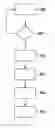
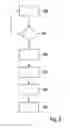
FIG. 3 is a flowchart that illustrates a method according to an example embodiment of the present invention.
DETAILED DESCRIPTION
Over the past few years, more and more sensors have been introduced in automotive systems for the purpose of detecting the environment. For instance, these are camera systems, radar systems, ultrasonic systems, GPS systems, or Car2X systems. The present invention relates to the adaptation of the force/travel characteristic of the brake pedal to the detected vehicle environment or to the driving situation in order to supply important haptic information to the driver for an optimal braking operation. This results in gains in comfort for the driver as a result of the haptic interventions because the driver is able to execute the optimal deceleration profiles that increase the driving comfort, as well as gains in safety for the driver inasmuch as the haptic interventions enable the driver to execute the deceleration profiles that minimize the risk of an accident, and the driver additionally receives information via the haptic interventions without having to take the driver's eyes off the road.
Conceivable as haptic interventions are both the modification of the force/travel characteristic of the brake pedal and the provision of haptic information to the driver with the aid of a vibration of the brake pedal.
In FIGS. 1 and 2, brake-pedal travel ‘s’ has been plotted in the direction of the abscissa, and resistance force ‘F’ by which the brake pedal reacts to the driver's foot has been plotted in the direction of the ordinate. Such a characteristic is termed a force/travel characteristic.
Characteristics 100 and 200 represent the standard characteristic, which is set without taking the vehicle environment into account.
In FIG. 1, 110 represents a characteristic at which, starting at a pressure point that is denoted by 101, the resistance force or the reaction force is increased in comparison with the standard characteristic. In other words, if the driver exceeds the pedal travel associated with point 101, then a considerable increase in the resistance force will be encountered. The intention is to motivate the driver not to brake even more forcefully in this instance. Of course, the reaction force can also be overridden in this case in that the driver operates the brake pedal at a greater force.
In FIG. 2, 210 denotes a characteristic curve where, starting at a pressure point denoted by 201, the resistance force or reaction force will be reduced. In other words, if the driver exceeds the pedal travel associated with point 201, the resistance force is kept constant or increases only slowly. The counterforce acting on the driver's foot is less than usually expected by the driver, and the driver is meant to be motivated to operate the brake pedal more forcefully. Starting at point 202, the reduction of the counterforce ends, and characteristic curve 210 adapts itself again to standard characteristic 200.
To provide the driver with additional information such as a prompt to initiate a full braking operation, it is also possible to actuate different vibration patterns with the aid of the brake pedal.
In the following text, a number of exemplary situations are examined.
-
- 1) With the aid of GPS data, e.g., the curve radius and curve slope, as well as data received in a wireless manner from a vehicle-external database, e.g., the condition of the road and the coefficient of friction of the road, an optimal cornering velocity is able to be ascertained, which allows for a safe passage through a curve located directly ahead. If the driver is driving too fast when approaching the curve and does not brake with sufficient strength, then the resistance force of the brake pedal is able to be reduced in order to motivate the driver to implement more forceful braking. For instance, in the example of FIG. 2, this can be done in that a switch takes place from pedal characteristic 200 to pedal characteristic 210. At the marked point 202 in FIG. 2, the brake-pedal counterforce is increased again since the optimal brake pressure has been reached. If the driver fails to brake with enough force, the driver can also additionally be prompted through haptic vibrations of the brake pedal to press the brake pedal again.
- 2) With the aid of GPS data, such as the distance from an intersection directly ahead and the road inclination, and also data received in a wireless manner from a vehicle-external database, e.g., the road condition and the coefficient of friction of the road, an optimal deceleration profile is able to be ascertained, which allows the vehicle to safely come to a standstill in front of an intersection that is located directly ahead. If the driver drives too fast ahead of the intersection and fails to brake forcefully enough, then the resistance force of the brake pedal is able to be reduced in order to motivate the driver to brake at a greater force. For instance, in the example of FIG. 2, this can be done in that a switch takes place from pedal characteristic 200 to pedal characteristic 210. At the marked point 202 in FIG. 2, the brake-pedal counterforce is increased again since the optimal brake pressure has been reached. If the driver fails to brake with enough force, the driver can also be prompted through haptic vibrations of the brake pedal to press the brake pedal again.
- 3) With the aid of camera and radar data as well as Car2X data, it is possible to ascertain the velocity profiles of other road users, and on that basis, to ascertain the optimal velocity profile of the ego vehicle so that potential accidents are able to be avoided. It may happen that the driver overestimates the distance to the vehicle traveling ahead and does not brake adequately. If the driver then suddenly notices that the current vehicle deceleration is insufficient, the driver presses the brake pedal again and possibly even initiates emergency braking. If this situation is detected, i.e., insufficient braking on the part of the driver, then the resistance force of the brake pedal can be lowered as a motivation for the driver to brake more forcefully. For example, in the example of FIG. 2, this can be done in that a switch takes place from pedal characteristic 200 to pedal characteristic 210. At the marked point 202 in FIG. 2, the brake-pedal counterforce is increased again since the optimal brake pressure has been reached. If the driver fails to brake with enough force, the driver can additionally also be prompted through haptic vibrations of the brake pedal to press the brake pedal again.
- 4) With the aid of camera, radar, and Car2X data, the velocity profiles of other road users and, on that basis, the optimal velocity profile of the ego vehicle, are able to be ascertained in order to avoid potential accidents. It is conceivable that a vehicle driving behind the ego vehicle fails to brake in time and rams the ego vehicle from behind. If it is then detected on the basis of camera, radar, and Car2X data that a sufficiently long, free braking distance is available in front of the ego vehicle, the pedal characteristic according to FIG. 1 is capable of being modified in such a way that the brake pedal exhibits a greater resistance force. This motivates the driver to brake less forcefully and to thereby reduce the relative velocity with respect to the trailing vehicle. This not only reduces the likelihood of a potential rear collision but also the accident severity of a potential rear collision caused by the trailing vehicle.
- 5) With the aid of GPS data, such as the curve radii and the curve slope, and also data received from a vehicle-external database in a wireless manner, such as the condition of the road and the coefficient of friction of the road, an optimal cornering velocity and an optimal braking point are able to be ascertained, which allow for the passage through a curve that is immediately ahead using the greatest possible dynamics. For example, such a functionality can be enabled for the driver on racetracks that are blocked to public road traffic so that the driver is able to increase his or her driving capabilities.
FIG. 3 illustrates an example method for the output of haptic information to the driver of a motor vehicle. After the start of the method in block 300, it is determined in block 301 with the aid of an environment-sensor system whether a traffic situation is looming that can potentially pose a risk to the motor vehicle. If this is not the case, then a return to block 300 takes place. However, if this is indeed the case, then the particular brake force that is optimal for the safe management of the impending traffic situation is ascertained in block 302. In block 303, the brake force applied by the driver is compared to the optimal brake force, and the pedal characteristic of the brake pedal is adapted as a function thereof in order to guide the driver to the optimal brake force. The present method ends in block 305.
Claims
What is claimed is:1. A method comprising:
ascertaining, by a processor and based on signals of an environment-sensor system, imminence of a traffic situation that poses a potential risk to a motor vehicle; and
modifying, by the processor, during a driving of the motor vehicle, independent of a driver input, and in response to the ascertained imminence of the traffic situation, a characteristic of a brake pedal of the motor vehicle, thereby providing haptic information to a driver of the motor vehicle.
2. The method of claim 1, wherein the pedal characteristic describes the correlation between a counterforce quantity that characterizes a counterforce acting on the driver's foot through the brake pedal, and a pedal-travel quantity that characterizes a pedal travel of the brake pedal.
3. The method of claim 1, wherein a brake force that is optimal for managing the impending traffic situation is ascertained, and the pedal characteristic is modified in a manner by which a counterforce of the brake pedal is reduced when a brake force applied by the driver is less than the optimal brake force.
4. The method of claim 1, wherein a brake force that is optimal for managing the impending traffic situation is ascertained, and the pedal characteristic is modified in a manner by which a counterforce of the brake pedal is increased when the brake force applied by the driver is greater than the optimal brake force.
5. The method of claim 1, wherein the impending traffic situation involves an upcoming curve.
6. The method of claim 1, wherein the impending traffic situation involves an intersection that is located ahead.
7. The method of claim 1, wherein the impending traffic situation involves an approach of a vehicle driving ahead.
8. The method of claim 1, wherein the impending traffic situation involves an approach by a trailing vehicle.
9. The method of claim 1, wherein the environment-sensor system includes a camera, a radar, an ultrasonic sensor, a GPS, or a Car2X system.
10. A system comprising:
a brake pedal;
an environment sensor; and
a processor, wherein the processor is configured to ascertain, based on signals obtained from the environment-sensor, imminence of a traffic situation that poses a potential risk to a motor vehicle; and
modify, during a driving of the motor vehicle, independent of a driver input, and in response to the ascertained imminence of the traffic situation, a characteristic of the brake pedal of the motor vehicle, thereby providing haptic information to a driver of the motor vehicle.
Images & Drawings included:

Sources:
- United States Patent and Trademark Office - verify current appl. status at the USPTO↗
Recent applications in this class:
- » 20250269870 2025-08-28
Method for Operating a Vehicle - » 20250269869 2025-08-28
Vehicle With an Operator Control Providing Haptic Feedback for Indicating a Potential Collision - » 20250269868 2025-08-28
Method for Operating a Driver Assistance System, Processing Device for Controlling a Driver Assistance System, and Motor Vehicle Having a Driver Assistance System - » 20250249926 2025-08-07
INFORMATION PROCESSING APPARATUS AND INFORMATION PROCESSING METHOD - » 20250249925 2025-08-07
HAPTIC CONTROL FOR AUTOMOTIVE ENVIRONMENTS - » 20250242828 2025-07-31
Driving Behavior Analysis and Correction - » 20250236310 2025-07-24
VEHICLE HUMAN-MACHINE INTERFACE ALERT GENERATION BASED ON OCCLUDED REGIONS - » 20250222948 2025-07-10
Method for Operating a Control System for the Automated Lateral Control of a Vehicle With the Output of Haptic Feedback, Control System and Driver Assistance System - » 20250196881 2025-06-19
Driver Reminding Method, Apparatus, and System, and Moving Carrier - » 20250196880 2025-06-19
VEHICLE CONTROL APPARATUS
Recent applications for this Assignee:
- » 20250154889 2025-05-15
PRESSURE CONTROL IN AN EXHAUST AFTERTREATMENT SYSTEM - » 20250154580 2025-05-15
ENZYME TRANSLOCATORS IN NANOGAP WITH 3' -ESTERS - » 20250147582 2025-05-08
METHOD FOR DETERMINING AN EYE DISTANCE IN A PAIR OF DATA GLASSES, AND DATA GLASSES - » 20250146568 2025-05-08
DRIVE ASSEMBLY AND VEHICLE HAVING SUCH A DRIVE ASSEMBLY - » 20250146495 2025-05-08
Flexible Pump Assembly for Use in a Fan Drive - » 20250140882 2025-05-01
FUEL CELL SYSTEM HAVING ENERGY RECUPERATION - » 20250137810 2025-05-01
METHOD FOR MATCHING A DIGITAL ROAD MAP - » 20250137033 2025-05-01
DNA UNFOLDING USING A FREE-END TAG FLOW MODIFIER - » 20250119751 2025-04-10
A BLUETOOTH COMMUNICATION METHOD AND SYSTEM - » 20250118116 2025-04-10
Diagnostic Protocol Search With Improved Efficiency