Drier with solar radiation simulation
US20180320966A1
2018-11-08
15/773,480
2016-11-03
✅ Patent granted
US 10,837,701 B2
2020-11-17
WO; PCT/TR2016/000159; 20161103
WO; WO2017/078639; 20170511
Stephen M Gravini
Adler, Pollock & Sheehan P.C.
2036-11-03
Abstract:
The present invention is a portable drier with solar simulator that can be used by small or medium scale farmers, which provides drying of the fruits and vegetables in general in the agriculture sector, in an organic manner through natural methods, which benefits from IR and UV rays during this process, and as a result, creates a difference in the extension of their shelf life, and which, in order to protect human health, minimizes the chemical remnants that cause diseases.
Inventors:
- Murat Turkyilmaz 2 🇹🇷 Edirne/Merkez, Turkey
- Murat TÜRKYILMAZ 1 🇹🇷 Edirne/Merkez, Turkey
- Artun AG 1 🇹🇷 Golcuk/Kocaeli, Turkey
- Artun A{hacek over (g)} 1 🇹🇷 Golcuk/Kocaeli, Turkey
Assignee:
- Visys Makine Sanayi ve Dis Ticaret Limited Sirketi 1 🇹🇷 Beylikduzu, Turkey
Applicant:
Interested in similar patents?
Get notified when new applications in this technology area are published.
Classification:
F26B3/286 » CPC further
Drying solid materials or objects by processes involving the application of heat by radiation, e.g. from the sun in combination with convection by solar radiation
F26B9/066 » CPC further
Machines or apparatus for drying solid materials or objects at rest or with only local agitation; Domestic airing cupboards in stationary drums or chambers the products to be dried being disposed on one or more containers, which may have at least partly gas-previous walls, e.g. trays or shelves in a stack
F26B3/30 » CPC main
Drying solid materials or objects by processes involving the application of heat by radiation, e.g. from the sun from infra-red-emitting elements
F26B3/347 » CPC further
Drying solid materials or objects by processes involving the application of heat by development of heat within the materials or objects to be dried, e.g. by fermentation or other microbiological action by using electrical effects Electromagnetic heating, e.g. induction heating or heating using microwave energy
F26B9/06 IPC
Machines or apparatus for drying solid materials or objects at rest or with only local agitation; Domestic airing cupboards in stationary drums or chambers
F26B3/20 » CPC further
Drying solid materials or objects by processes involving the application of heat by conduction, i.e. the heat is conveyed from the heat source, e.g. gas flame, to the materials or objects to be dried by direct contact the heat source being a heated surface, e.g. a moving belt or conveyor
F26B3/28 IPC
Drying solid materials or objects by processes involving the application of heat by radiation, e.g. from the sun
Description
TECHNICAL FIELD
The present invention is related to a drier which provides dried products with longer shelf life and higher nutritious values, by consuming less energy during the drying process of the products such as fruits and vegetables in the food industry and which contains a solar simulator and uses UV and IR rays in this simulator.
STATE OF THE ART
Drying is the process of evaporation and removal of the water content contained by any substance. During the drying process, the water content inside the substance first moves towards the surface of the substance by liquid or vapor diffusion and then to the air by evaporation from the surface
There are two process steps in drying process:
-
- Heat transmission in order to provide the required latent heat of evaporation
- Movement of the water content or water vapor in the foodstuff and then its removal from the foodstuff and accordingly, separation of the water content from the foodstuff.
Either solar energy (natural drying) or heated air (artificial drying) is used as the source of energy required for evaporation of the water content. Drying under the sun, or drying by using the solar energy is used commonly today including the developed countries. Drying the foodstuff by heated air is carried out since the II. World War Years. Artificial drying has some advantages when compared to the natural drying. In the natural drying; drying process is carried out outdoors by laying the product on the ground or on an appropriate platform. In the natural drying; drying conditions cannot be controlled. There is a difference of night-day and the drying conditions may change day by day. In the natural drying; the quality varies in the products obtained and a standard quality cannot be achieved. Moreover, drying speed is quite low, achieving hygienic conditions is quite difficult and loss of product during drying is quite much. In the drying process carried out by natural methods. Large spaces are required during the drying process by natural methods. Labor is quite high.
In artificial drying however, drying temperature and duration can be controlled, the product quality is preserved more since it is dried in closed systems, hygienic conditions can be provided during drying and more products can be dried in shorter time. In artificial drying; there is less product loss during drying.
The purpose of the drying process; is to extend the life of the foodstuff. As the water content in the foodstuff gets lesser, the speed of the spoilage reactions gets slower and this is minimized under a certain level of water content. Following the drying; transportation and storage is facilitated since the volume and weight of the foodstuff is reduced. Microorganisms causing the spoilage and rotting of the foodstuff cannot develop and reproduce in the absence of water content in the foodstuff. Many of the enzymes which can cause undesired changes in the chemical combination of the foodstuff, cannot be active in case there is no water content within the structure of the foodstuff. The speed of the other spoilage reactions such as enzymatic, non-enzymatic, oxidation reactions is also reduced.
In the state of the art, there are many different types of driers used in the food industry. Drying principles can be applied to any type of drier. Operation principles of some of the driers are provided below:
-
- Tray driers: Foodstuff is generally laid on the trays of the drier as a very fine layer. Heating is provided by heated air current sweeping over the trays, in other words, by internal circulation or by the heated plates on which the trays shall be placed or by conduction from the racks or by radiation from the heated surfaces. These types of driers are also heated by heated air current which also removes the vapor created. Tray driers are generally in the structure of a chamber where the walls are covered by an appropriate insulation material. There are racks in the chamber where the trays are placed. The foodstuffs to be subjected to drying process are laid on the trays which shall be taken into the chamber by the trolleys with racks. Heating of the air is realized in the drier in these types of driers. Heated air is not supplied from outside. The speed of the air flow provided by a fan goes beyond 100 m/min in order to enable sufficient air circulation within the chamber. Tray driers can dry 1 to 20 tons of raw materials (fruits and vegetables) per day.
- Drum Driers: In the drum driers; viscous foodstuff is spread over a metallic cylinder which is heated from inside and rotates slowly. While the cylinder rotates at specific speed, the foodstuff on the surface of the cylinder dries as based on the heat coming from inside. When the drying process is completed; the dried foodstuff is scraped off from the surface of the cylinder by a special scraper. The cylinders of these driers have a smooth surface and are produced of cast iron. In double cylinder driers, the cylinders rotate in opposite directions. Melted viscous substance to be dried is poured in the V-shaped gap between the cylinders. In large driers, there are moving feed pipes so that the melted substance is evenly spread on the cylinder surface and there are shakers in order to provide homogeneity. Cylinder driers are used in the production of milk powder, instant soup, some baby food and potato powder.
- Fluid bed driers: In fluid bed driers; the foodstuff to be dried is subjected to drying process by suspending against gravity. The suspended foodstuff is dried in an upward flowing heated airflow. The foodstuff can also be moved along the drier and dried by a horizontal airflow. The heat is usually transferred to the foodstuff by convection. Fluid bed driers are used in drying the foodstuff such as peas, green beans, carrots, onions, potatoes, meat, coffee, cocoa, salt, sugar etc.
- Pneumatic driers: In pneumatic driers; the foodstuff to be dried is conveyed rapidly in air flow. The drying is provided by the heated air. Usually there is a classifying system in the drier. With the help of this system; dried foodstuff is separated and removed from the drier, and the foodstuff which is not dried yet is recirculated into the system for further drying.
- Rotary driers: In the rotary driers, the foodstuff is placed in a cylinder. While the foodstuff is traveled in the cylinder, the heating process is realized by the heated air flow through the cylinder or by conduction of heat from the cylinder walls. In some cylinder driers, the cylinder itself rotates, and in some, the cylinder is stationary and a paddle or an endless screw rotates within the cylinder and conveys the foodstuff through.
- Spray driers: In the spray driers; the foodstuff in liquid form or in very fine solid particles is sprayed into the heated air. In spray driers, drying process is completed very rapidly. Due to this, spray drying is appropriate for the foodstuff which can be damaged by exposure to heat for a long period of time. Spray driers are used for the production of milk powder, whey powder, dry baby food produced of milk, butter and cheese, tea extract, coffee extract, fruit and vegetable powders, meat extract and yeast extract.
- Freeze driers: In freeze driers; the foodstuff to be dried is placed on racks in a chamber that is under high vacuum. In most cases, the foodstuff is in a frozen state before being placed in the drier. There is only 0.1-2.0 mm/Hg of pressure in the freeze driers. The vapor created by sublimation is removed from the foodstuff by a vacuum pump and it is condensed. In the “accelerated freeze drying” however, the heat is transferred to the foodstuff by conduction. In this process, thin metal sheets are placed in between the foodstuff and the heated plates in order to accelerate the heat transfer and removal of the water vapor created. A cooler can be used in order to condense the vapor created from the foodstuff by sublimation. Freeze driers are very expensive. They are used in drying some fruits with small particles such as wild strawberry, grapes or in some vegetables and in the drying coffee extract, tea extract and the seafood such as shrimps.
- Tunnel driers: Tunnel driers are systems that operate continuously. It would be appropriate to use the tunnel driers if the volume of the raw material to be dried is much, the general structure is homogenous and the distribution of the water content in it is homogenous. The raw materials which are required to be dried slowly are dried in the tunnel driers. Tunnel driers can be considered as the developed form of the tray driers. In the tunnel driers, the trays are placed on trolleys. The foodstuff is laid on the trays. Heating process and removal of the vapor is carried out in the tunnels. Usually air is used as the heating source. The foodstuff to be dried is moved with the air flow in the drier as parallel or in the opposite direction. Air flow can also be directed as vertical to the way of the trolleys. This way; different heating units can be used for the different parts of the mentioned tunnel. The tunnel dimensions can be for example, as 2×2×24 m. Tunnel driers can be categorized as parallel flow tunnel driers, counter flow tunnel driers, center exhaust tunnel driers and cross flow tunnel driers. Tunnel driers are used in drying the fruits and vegetables.
The Drier described in the document no KR101248473 with the title “WASHING AND DRYING APPARATUS FOR GINSENG” can be given as an example to the drum and cylinder driers mentioned above. As it can be seen, the mentioned drier is designed only for drying a certain type of plant (ginseng).
In the state of the art; there is a patent document no UA106461 with the title “IR DRYER FOR DRYING ORGANIC RAW PLANT MATERIAL”. In this drier; the drying process is carried out “only” by IR (Infrared) radiation. Moreover, the foodstuff to be dried is covered by a carbon heating film. The mentioned drier has a vertical cylindrical chamber with a cover on top. It is not possible for the foodstuff to have vitamin D in the driers which dry only by IR radiation. In the state of the art, IR radiation is widely used for the artificial drying processes. However, the taste, nutritious values and appearance of the natural drying cannot be achieved by artificial drying. In the natural drying process carried out under the sun; the foodstuff acquires vitamin D with the influence of the ultraviolet sunrays and is more delicious when compared to the artificially dried foodstuff. However, as mentioned above, natural drying has various disadvantages such as hygiene, time, labor, productivity, sustainability etc.
Many scientific studies show that; exposure to sunrays has protective effect against many types of cancer (prostate cancer, breast cancer, colon cancer, ovary cancer and lymphoma etc. . . . ). It is beyond doubt here that the protective effect is attributable to UVB (ultraviolet rays with wavelength: 320-290 nanometers) radiation. UVB radiation causes vitamin D synthesis in the body and the sunrays provide about 80-90% of the vitamin D need for many people.
According to USA Diet Guide published in 2005; it is stated that older individuals, individuals with dark skin color and individuals who are insufficiently exposed to sunrays are required to take vitamin D with food and/or externally by food supplements.
Moreover; the organic structure of the foodstuff which influence the drying process, the moisture contents, the level of being affected by the temperature and the desired dryness are different from each other. Accordingly, different drying conditions are required for each product. In the state of the art; different processes and driers are developed for the same product. The quality of the process is evaluated according to the product drying quality and fuel consumption. For example, since the intensity and viscosity of paddy and other agricultural products differ, these cannot be dried in the same drier. In the state of the art; for example, paddy cannot be dried in a drier in which corn is dried.
THE PURPOSE AND SHORT DESCRIPTION OF THE INVENTION
The purpose of the invention is to produce a portable drier with solar simulator that can be used by small or medium scale farmers, which provides drying of the fruits and vegetables in general in the agriculture sector, in an organic manner through natural methods and as a result extension of their shelf life, and which, in order to protect human health, minimizes the chemical remnants that cause diseases. Moreover, the most important purpose of the invention is to combine the advantages of the natural drying and artificial drying. The taste and nutritious values of natural drying and hygienic and productive nature of artificial drying can be provided simultaneously in the drier with solar simulator. Thanks to the drier with solar simulator; the ideal conditions (“very hot, dry and slightly windy air”) for drying process are provided in a portable drier with hygienic environment. Moreover, in the drier with solar simulator, the drying process is carried out with the controlled mix of infrared (IR) and ultraviolet (UV) rays. The parameters such as the amount, angles, intensities etc. of IR and UV rays are set specifically for each type of foodstuff. Mentioned settings are on the control computer as a module. This way, the user can select over the control computer (unit), the module (program) of the relevant product before the drying process and provide that the settings of the drier are appropriate for the product to be dried.
The water content evaporated (water vapor) from the structure of the foodstuff by IR and UV radiation is directed to a condensation area by a fan or fans. This way, a fan or fans provide that the ambient air in the drier remains at ideal dryness. The parameters such as speed, angle, operation time etc. of the mentioned fan or fans can be set separately for each product by the modules (programs) identified to the control computer (unit) in advance.
The main principle of the drier in the present invention is to provide a controlled contact of the products subjected to resonance on the trays, with infrared (IR) and ultraviolet (UV) rays and direction of the water vapor created on an aluminum condensation surface with the help of the fans and removal from the medium via liquid discharge channels.
In the drier with solar simulator; UV rays are used together with IR rays. Infrared (IR) rays and ultraviolet (UV) rays used for drying process in the drier with solar simulator in the present invention prevent the spoilage of the vitamins in the foodstuff. In the drier with solar simulator; UV rays with wavelength of 100 nm to 400 nm are used. Mentioned wavelength range includes the wavelength of UVB rays which provide vitamin D synthesis. In the drier with solar simulator, UV rays used together with IR rays in the drying process provide vitamin D synthesis in the dried foodstuff. This way; the people, who are required to get vitamin D from outside, can consume these dried foodstuff produced organically and adjust their levels of vitamin D.
In the drier in the present invention; different forms of drying are determined for each product by changing the proportions (programming) IR and UV rays as based on the type of the product to be dried. This way, different types of foodstuff can be dried by a single device under optimum conditions (by selecting the drying conditions appropriate for the relevant foodstuff over the computer program). As a result, a major advantage is provided when compared to the similar devices in the state of the art.
Moreover, thanks to the effect of UV (ultraviolet) rays which accelerate the chemical reactions; the foodstuff dried in the drier with solar simulators have the same aroma with the foodstuff dried naturally under the sun.
In the drier with solar simulators; there is a closed crying system. This way, following the drying process, the foodstuff dried can be packed at the desired dimensions or weight without any contact with air and manual contact.
The drier in the present invention is a portable device. This way, the fresh product can be dried at the location where it is picked.
The drier with solar simulator, simulates a “very hot, dry and slightly windy day” as the drying method. The type of the foodstuff to be dried is selected over the computer control panel and the drying process is carried out by the previously determined values. Moreover, these are devices that can directly be connected to the packing system.
In the drier with solar simulator; thanks to UV radiation; the microorganisms, bacteria and fungus which settle on the foodstuff at the stage of raising and which cause spoilage reactions such as enzymatic, non-enzymatic, oxidation reactions foodstuff, are eliminated. This way, the foodstuff dried in the drier with solar simulator can be stored after drying without any need for extra protective additives.
SHORT DESCRIPTIONS OF THE FIGURES
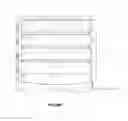
FIG. 1: The front view of the drier in the present invention
FIG. 2: The diagonal view of the drier in the present invention
LEGEND
| NO | NAME OF THE PART |
| 1 | Tray |
| 2 | IR - UV Slot |
| 3 | Aluminum Condensation Surface |
| 4 | Cooling Liquid Channel |
| 5 | Resonance Motor |
| 6 | Fan |
| 7 | Insulation Material |
| 8 | Liquid Discharge Channel |
| 9 | Product Discharge Section |
DETAILED EXPLANATION OF THE INVENTION
In the drier with solar simulator; there are trays (1) of which the dimensions and number may vary. The fresh products (fruits, vegetables) to be dried are placed on the mentioned trays (1). There are very small holes in the structure of the mentioned trays (1) which enable air flow to pass through.
In the drier with solar Simulator; there are IR-UV slots (2) (IR-UV sources) that provide the rays required for the drying process to be sent to the mentioned trays (1). The number of the mentioned IR-UV slots (2) vary as based on the dimensions of the trays (1). IR and UV rays mix is released from IR-UV slots (2). IR-UV rays mix is sent at the amount, duration and angle required by the drying process which is determined and selected over the computer panel. This way, the water and moisture content in the structure of the foodstuff, which is placed on the trays (1) are evaporated and removed.
The mentioned vapor is directed by the fans (6) on one side of the drier with solar simulator towards the aluminum condensation surface (3) on the other side. For an effective condensation, the mentioned aluminum condensation surface (3) is supported by the cooling liquid channels (4) through which cold water runs.
In the drier with solar simulator, all the surfaces, except the aluminum condensation surface (3), are covered by insulation material (7).
In order to turn the foodstuff during drying process; there are resonance motors (5) under each tray (l). Vibration can be given to the trays (1) at the desired duration and at the desired intensity by the mentioned resonance motors (5). The foodstuff on the tray (l) is also moved by this vibration. This way, the surface area on the foodstuff which is influenced by IR-UV rays is enlarged.
Following the termination of the drying process; the trays (1) are rotated by 10° to 90° (preferably 15°) by an arm or a motor connected to them. Upon rotation of the trays (1); the dried products are transferred to the product discharge section (9) located at the bottom part of the drier. The dried products are transferred to the packing unit from the mentioned product discharge section (9) via closed conveyor system. This way, dried products are packed and put out on market at the desired amounts and sizes without any manual contact.
As a model version of the invention, the food drying method in the drier with solar simulator is realized as follows:
The user places the fresh foodstuff (fruit, vegetable), which is desired to be dried, on the trays (1) of the drier with solar simulator. Then the user selects the (identified) drying process (program) from the computer control unit, which is appropriate for the foodstuff on the tray (l). Based on the drying program selected; the parameters such as angles of IR-UV slots (2), amounts of IR-UV rays, drying time, fan (6) speed and angle, vibration frequency of the resonance motor (5) etc. are adjusted optimally in compliance with the characteristics of the product on the tray (l).
The drying process is carried out by the IR-UV radiation given from the IR-UV slots (2). While the product on the tray (l) is exposed to IR-UV radiation, the resonance motors (5) provide the vibration of the tray (l). By the vibration of the tray (l), the surface of the product on the tray (l), which is exposed to IR-UV radiation is increased. Thanks to the micro holes on the trays (1), formation of the air flow on the surface of the foodstuff contacting the tray (l) is enabled.
The evaporation process of the water content in the fresh foodstuff, which is exposed to IR-UV radiation, starts. Moreover, vitamin D synthesis is started in the foodstuff, thanks to UV radiation.
Water vapor evaporated from the foodstuff is directed to the aluminum condensation surface (3) via the fan (6) or the fans (6). Water vapor arriving at the aluminum condensation surface (3) is condensed (becomes liquid again) and flows to the liquid discharge channel (8). There are cooling liquid channels (4) within the structure of the aluminum condensation surface (3). Condensation process is faster and more effective thanks to the cooling liquid flowing through the cooling liquid channels (4).
When the drying process is completed; the trays (1) are rotated for example by 45° by an arm or a motor. When the trays (1) are rotated; dried foodstuff falls into the product discharge section (9). The dried products are transferred to the packing unit from the mentioned product discharge section (9) by a closed conveyor system. This way, dried products are packed and put out on market at the desired amounts and sizes without any manual contact.
In addition; drying processes according to each foodstuff is programmed in the computer control unit of the drier with solar simulator. The user can select the settings according to each foodstuff, by a single selection.
Claims
1. The present invention relates to the operation method of the drier with solar simulator used in the drying process of foodstuff such as fruits, vegetables, plants and it is characterized by containing stages as;
Exposure of the fresh foodstuff laid on the trays, to IR-UV rays mix
Direction of the water content evaporating from the structure of the foodstuff exposed to IR-UV rays, towards the aluminum condensation surface by the fan or fans;\
Condensation (becoming liquid again) of the water content arriving at the aluminum condensation surface and is flow to the liquid discharge channel and discharge from this section;
Lifting of the trays by an arm or motor when the drying process is completed, and this way, transfer of the dried foodstuff to the product discharge section.
2. It is the foodstuff drying method mentioned in claim 1 and it is characterized by;
The vibration given to the trays during the drying process, by means of at least one resonance motor.
3. It is the foodstuff drying method mentioned in claim 1 and it is characterized by;
Selection of the parameters prior to the drying process through the computerized control unit, such as the angles of IR-UV slots, amount of IR-UV rays, drying duration, fan speed and angle, vibration frequency of the resonance motor, which were experimentally identified in advance for the foodstuff to be subjected to the drying process and for the desired drying results and which were installed on the computer as module programs;
Following the mentioned selection; automatic harmonization of all such parameters (settings) in the drier with solar simulator with the drying process of the foodstuff in the tray and/or desired drying results.
4. The present invention relates to the operation method of the drier with solar simulator used in the drying process of foodstuff such as fruits, vegetables, plants and it is characterized by;
containing IR-UV slots which are used for the purpose of sending the IR-UV rays mix, which provide the realization of the drying process and occurrence of vitamin D synthesis within the structure of the foodstuff during the drying process, unto the foodstuff placed on the trays.
5. It is the drier with solar simulator mentioned in claim 4 and it is characterized by;
containing a tray or trays providing the placement of the foodstuff to be subjected to drying process in the drier in a manner to enable exposure to IR-UV rays, which has/have small holes so that air can flow through.
6. It is the drier with solar simulator mentioned in claim 4 and it is characterized by;
containing a fan or fans directing the water content evaporating from the structure of the foodstuff exposed to IR-UV rays towards the aluminum condensation surface.
7. It is the drier with solar simulator mentioned in claim 4 and it is characterized by;
containing at least one resonance motor providing vibration to the trays, thus, (by turning the foodstuff), increasing the surface areas of the foodstuff on the trays exposed to IR-UV rays.
8. It is the drier with solar simulator mentioned in claim 4 and it is characterized by;
containing at least one aluminum condensation surface enabling the conversion of the water vapor into liquid state, which is removed from the structure of the foodstuff exposed to IR and UV rays and directed by the fans.
9. It is the drier with solar simulator mentioned in claim 4 and it is characterized by;
containing cooling liquid channels increasing the effectiveness of the condensation taking place on the aluminum condensation surface.
10. It is the drier with solar simulator mentioned in claim 4 and it is characterized by;
containing a liquid discharge channel enabling the discharge of the water vapor, which is liquidized on the aluminum condensation surface, from the drier.
11. It is the drier with solar simulator mentioned in claim 4 and it is characterized by;
containing product discharge section that takes the dried foodstuff from the drier or that transfers such dried foodstuff to the packing unit by a closed conveyor system.
12. It is the drier with solar simulator mentioned in claim 4 and it is characterized by;
containing a leverage mechanism or motor leverage that provides the rotation of the trays by 10° to 90° in order to transfer the dried foodstuff to the product discharge section.
13. It is the drier with solar simulator mentioned in claim 4 and it is characterized by;
the wavelength of UV ray used in drying process of the foodstuff being in the range of 100 nm to 400 nm.
14. It is the drier with solar simulator mentioned in claim 4 and it is characterized by;
containing a computer control system which provides the determination of the drying conditions (parameters) to be applied separately for each foodstuff item and the selection by the name of the product over the computer screen as based on the foodstuff.
Images & Drawings included:


Sources:
- United States Patent and Trademark Office - verify current appl. status at the USPTO↗
Recent applications in this class:
- » 20250277622 2025-09-04
METHOD AND SYSTEM FOR CURING COATINGS FROM THE INSIDE OUT - » 20250264275 2025-08-21
LASER DRIVEN COMMERCIAL DRYING - » 20250237433 2025-07-24
ELECTRODE MANUFACTURING SYSTEM - » 20250237432 2025-07-24
LAMP ARRANGEMENT AND METHOD FOR CURING MATERIAL - » 20250198699 2025-06-19
RF TREATMENT SYSTEMS AND METHODS - » 20250123053 2025-04-17
DRYER CONVEYOR BELT TRACKING SYSTEM - » 20250116455 2025-04-10
SYSTEM AND METHOD FOR CONTROLLING A CURING PROCESS - » 20250067508 2025-02-27
DRYING APPARATUS - » 20240240857 2024-07-18
DRYING DEVICE - » 20240175628 2024-05-30
ELECTRODE SHEET DRYING DEVICE