Method for preparing anthocyanin oligomers by using coenzyme derived from sp. strain
US20180327795A1
2018-11-15
16/046,012
2018-07-26
✅ Patent granted
US 10,774,351 B2
2020-09-15
-
-
Ganapathirama Raghu
Reinhart Boerner Van Deuren P.C.
2038-07-26
Abstract:
The present invention relates to a method of preparing an anthocyanin oligomer using a coenzyme derived from an Aspergillus sp. strain, and more particularly to a method of preparing an anthocyanin oligomer by fermenting an anthocyanin monomer with a coenzyme of Aspergillus niger, which is a kind of Aspergillus sp. strain. According to the present invention, in order to overcome contamination problems during the culturing process using Aspergillus niger, a coenzyme of Aspergillus niger is extracted and the fermentation process is performed using the same, whereby an anthocyanin oligomer characterized by reduced concern of contamination and superior radical-scavenging effects, compared to existing anthocyanin monomers, can be produced. Also, an anthocyanin oligomer, obtained through fermentation using glucosidase as an enzyme contained in the coenzyme, can exhibit excellent fermentation efficiency and radical-scavenging ability, and polymerization of the anthocyanin oligomer can be confirmed even upon the fermentation of the enzyme including glucosidase.
Inventors:
- Pyo-Jam Park 1 🇰🇷 Chungju-si, South Korea
- Tuk-Rai Jeong 1 🇰🇷 Seongnam-si, South Korea
- Hyun-Pil Yang 1 🇰🇷 Pyeongtaek-si, South Korea
- Jin Woo Hwang 1 🇰🇷 Chungju-si, South Korea
Assignee:
- KITTO LIFE 1 🇰🇷 Pyeongtaek-si, South Korea
Applicant:
Interested in similar patents?
Get notified when new applications in this technology area are published.
Classification:
C12N9/24 » CPC further
Enzymes; Proenzymes; Compositions thereof ; Processes for preparing, activating, inhibiting, separating or purifying enzymes; Hydrolases (3) acting on glycosyl compounds (3.2)
C12P19/60 » CPC further
Preparation of compounds containing saccharide radicals; Preparation of O-glycosides, e.g. glucosides having an oxygen of the saccharide radical directly bound to a non-saccharide heterocyclic ring or a condensed ring system containing a non-saccharide heterocyclic ring, e.g. coumermycin, novobiocin
C12P17/06 » CPC further
Preparation of heterocyclic carbon compounds with only O, N, S, Se or Te as ring hetero atoms; Oxygen as only ring hetero atoms containing a six-membered hetero ring, e.g. fluorescein
C12N1/16 » CPC further
Microorganisms, e.g. protozoa; Compositions thereof ; Processes of propagating, maintaining or preserving microorganisms or compositions thereof; Processes of preparing or isolating a composition containing a microorganism; Culture media therefor; Fungi ; Culture media therefor Yeasts; Culture media therefor
C12P17/16 IPC
Preparation of heterocyclic carbon compounds with only O, N, S, Se or Te as ring hetero atoms containing two or more hetero rings
C12P17/162 » CPC main
Preparation of heterocyclic carbon compounds with only O, N, S, Se or Te as ring hetero atoms containing two or more hetero rings Heterorings having oxygen atoms as the only ring heteroatoms, e.g. Lasalocid
Description
CROSS-REFERENCE TO RELATED PATENT APPLICATIONS
This patent application is a continuation of PCT Application No. PCT/KR2016/008429, filed Aug. 1, 2016, which claims priority to Korean Patent Application No. 10-2016-0010085, filed Jan. 27, 2016, the entire contents of which is incorporated herein for all purposes by this reference.
TECHNICAL FIELD
The present invention relates to a method of preparing an anthocyanin oligomer using a coenzyme derived from an Aspergillus sp. strain, and more particularly to a method of preparing an anthocyanin oligomer by fermenting an anthocyanin monomer with a coenzyme of Aspergillus niger, which is a kind of Aspergillus sp. strain, and with glucosidase, which is an enzyme contained in the coenzyme.
BACKGROUND ART
Anthocyanin functions as a natural pigment and also exhibits various physiological activities, such as an antioxidant function, reduction of a cholesterol level, improvement of vision, vascular protection, prevention of arteriosclerosis and heart disease, an anti-ulcer function, an anticancer function, an anti-inflammation function, diabetes suppression, protection from UV radiation, etc. Furthermore, anthocyanin is actively utilized in medicines and is thus receiving attention as a new material for producing health foods and new medicines.
Anthocyanin is unstable in neutral or alkaline solutions, and gradually becomes decolorized when exposed to light even in an acidic solution, and is thus considered to be a structurally unstable material. In particular, factors affecting the stability of an anthocyanin pigment include the chemical structure of anthocyanin, the concentration of the pigment, the pH of the solution, the temperature, the presence or absence of a coexisting pigment, metal ion, enzyme, oxygen, ascorbic acid, sugar, and the like, and the maintenance of chromaticity, that is, the structural stability thereof may vary depending on variation in these factors. Because of this structural instability, many difficulties are encountered in active utilization as foods and medicines, and studies are under way to improve the stability of anthocyanin.
Anthocyanin contained in most food materials is in a monomer form, which is unstable at neutral and alkaline pH and is also weakly resistant to light and heat. The polymer form is present in small amounts in foods but has higher functionality and stability than the monomer, and the typical antioxidant function thereof is also doubled. Recently, research into anthocyanin oligomers that improve subjective symptoms and contrast sensitivity in cases of myopia and amblyopia has been reported.
Related techniques include Korean Patent No. 10-1182630 (Sep. 7, 2012), Korean Patent Application Publication No. 10-2012-0079040 (Jul. 11, 2012), etc.
Aspergillus sp. mold is a useful microorganism for producing enzymes, organic acids and metabolites having pharmacological activity. It has been usefully employed in agriculture as well as in the food industry, the liquor industry, and the pharmaceutical industry, and has been used for producing traditional fermented foods for a long time, and is therefore recognized as a safe strain. Furthermore, since fungi have many exo-enzymes that are secreted to the outside and have a variety of functions, they may be used to economically produce useful materials by means of natural enzymes. There have been conventional reports for the production of anthocyanin oligomers using Aspergillus sp. mold, but the direct use of the strain is problematic in that contamination may occur in the course of production of anthocyanin oligomers.
In order to confirm whether an anthocyanin oligomer may be prepared using an enzyme that is secreted to the outside, without direct use of an Aspergillus sp. strain, the present inventors have devised methods of producing an anthocyanin oligomer using a coenzyme extracted from a culture media of an Aspergillus niger stain and also using as an enzyme glucosidase obtained by analyzing the coenzyme and Viscozyme L, and have ascertained the efficacy thereof, thus culminating in the present invention.
BRIEF SUMMARY
Accordingly, the present invention is intended to provide a method of economically producing an anthocyanin oligomer by synthesizing an anthocyanin oligomer using a coenzyme of Aspergillus niger and also using as an enzyme glucosidase obtained by analyzing the coenzyme and Viscozyme L.
Therefore, the present invention provides a method of preparing an anthocyanin oligomer, comprising: (1) isolating a water-soluble coenzyme from a culture media of an Aspergillus sp. strain; and (2) fermenting an anthocyanin monomer with the coenzyme isolated in step (1).
Preferably, the Aspergillus sp. strain in step (1) is Aspergillus niger.
Preferably, the strain in step (1) is cultured at a temperature of 15 to 30° C. for 4 to 8 days.
Preferably, the coenzyme in step (1) is isolated as an enzyme by adding the culture media with an organic solvent to give a precipitate and dissolving the precipitate in distilled water.
Preferably, the fermenting in step (2) includes mixing the anthocyanin monomer and distilled water at a mass ratio of 1:8 to 1:15 to prepare an anthocyanin monomer solution, after which mixing the anthocyanin monomer solution and the coenzyme isolated in step (1) at a substrate-to-enzyme mass ratio of 40:1 to 60:1.
Preferably, the fermenting in step (2) is performed at a temperature of 15 to 30° C. for 5 to 10 days.
In addition, the present invention provides a method of preparing an anthocyanin oligomer, comprising fermenting an anthocyanin monomer by adding the anthocyanin monomer with a coenzyme, which is present in a culture media of an Aspergillus sp. strain and contains glucosidase as an active ingredient, and with Viscozyme L.
According to the present invention, in order to overcome contamination problems during the culturing process using Aspergillus niger, a coenzyme of Aspergillus niger is extracted and the fermentation process is performed using the same, whereby an anthocyanin oligomer characterized by reduced concern of contamination and superior radical-scavenging effects, compared to existing anthocyanin monomers, can be produced.
Also, an anthocyanin oligomer, obtained through fermentation using glucosidase as an enzyme contained in the coenzyme, can exhibit excellent fermentation efficiency and radical-scavenging ability, and polymerization of the anthocyanin oligomer can be confirmed even upon the fermentation of the enzyme including glucosidase.
BRIEF DESCRIPTION OF THE DRAWINGS
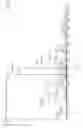
FIG. 1 shows a process of preparing an anthocyanin oligomer by fermenting an anthocyanin monomer with an Aspergillus niger culture media in Example 1 of the present invention;
FIG. 2 is a graph showing the results of ESI mass spectrometry of an anthocyanin monomer serving as a control in Example 1 of the present invention;
FIG. 3 is a graph showing whether synthesis of an anthocyanin oligomer occurred in Example 1 of the present invention through ESI mass spectrometry;
FIG. 4 is a graph showing the hydroxyl radical-scavenging activity of the anthocyanin oligomer synthesized by fermenting the anthocyanin monomer with an Aspergillus niger culture media in Example 1 of the present invention, depending on the concentration;
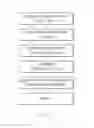
FIG. 5 shows a process of obtaining a coenzyme from an Aspergillus niger culture media in Example 2 of the present invention;
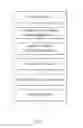
FIG. 6 shows a process of preparing an anthocyanin oligomer by fermenting an anthocyanin monomer with the coenzyme obtained from Aspergillus niger in Example 2 of the present invention;
FIG. 7 is a graph showing the results of ESI mass spectrometry of an anthocyanin monomer serving as a control in Example 2 of the present invention;
FIG. 8 is a graph showing whether synthesis of an anthocyanin oligomer occurred in Example 2 of the present invention through ESI mass spectrometry;
FIG. 9 is an SDS-PAGE image showing the expression of an Aspergillus niger coenzyme protein depending on the culturing period in Example 2 of the present invention;
FIG. 10 is an SDS-PAGE image for analysis of the enzyme contained in the Aspergillus niger coenzyme in Example 2 of the present invention;
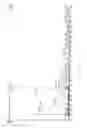
FIG. 11 shows a process of preparing an anthocyanin oligomer by fermenting an anthocyanin monomer with glucosidase, which is an enzyme obtained from Aspergillus niger, and with Viscozyme L in Example 3 of the present invention;
FIG. 12 shows the results of ESI mass spectrometry of an anthocyanin monomer serving as a control in Example 3 of the present invention;
FIG. 13 is a graph showing whether synthesis of an anthocyanin oligomer occurred when using glucosidase as an enzyme in Example 3 of the present invention through ESI mass spectrometry;
FIG. 14 is a graph showing whether synthesis of an anthocyanin oligomer occurred when using Viscozyme L as an enzyme in Example 3 of the present invention through ESI mass spectrometry; and
FIG. 15 is a graph showing the hydroxyl radical-scavenging activity of two kinds of anthocyanin oligomers prepared through fermentation with glucosidase, which is an enzyme obtained from Aspergillus niger, and with Viscozyme L in Example 3 of the present invention, depending on the concentration.
DETAILED DESCRIPTION
Hereinafter, a detailed description will be given of the present invention.
The present invention pertains to a method of preparing an anthocyanin oligomer, comprising (1) isolating a water-soluble coenzyme from a culture media of an Aspergillus sp. strain and (2) fermenting an anthocyanin monomer with the coenzyme isolated in step (1).
The Aspergillus sp. strain in step (1) is preferably Aspergillus niger.
The strain in step (1) is preferably cultured at a temperature of 15 to 30° C. for 4 to 8 days, and more preferably at 25° C. for 5 days.
The coenzyme in step (1) is preferably isolated as an enzyme by adding the culture media with an organic solvent to give a precipitate and dissolving the precipitate in distilled water.
The fermenting in step (2) is preferably includes mixing the anthocyanin monomer and distilled water at a mass ratio of 1:8 to 1:15 to prepare an anthocyanin monomer solution, after which mixing the anthocyanin monomer solution and the coenzyme isolated in step (1) at a substrate-to-enzyme mass ratio of 40:1 to 60:1. The substrate is an anthocyanin monomer. More preferably, the anthocyanin monomer and distilled water are mixed at a mass ratio of 1:10 to prepare an anthocyanin monomer solution, after which the anthocyanin monomer solution and the coenzyme isolated in step (1) are mixed at a mass ratio of 50:1.
The fermenting in step (2) is preferably at a temperature of 15 to 30° C. for 5 to 10 days, and more preferably at 25° C. for 7 days. The amount of the anthocyanin oligomer that is synthesized is increased up to 7 days, but does not change further even over time under conditions after 8 days.
The coenzyme isolated in step (1) contains glucosidase as an active ingredient.
In addition, the present invention pertains to a method of preparing an anthocyanin oligomer, comprising fermenting an anthocyanin monomer by adding the anthocyanin monomer with a coenzyme, which is present in a culture media of an Aspergillus sp. strain and contains glucosidase as an active ingredient, and with Viscozyme L.
A better understanding of the present invention will be given through the following examples, which are merely set forth to illustrate the present invention but are not to be construed as limiting the scope of the present invention, as will be apparent to those skilled in the art.
Example 1. Evaluation of Ability of Aspergillus sp. Strain Culture Media to Synthesize Oligomer
As summarized in FIG. 1, an anthocyanin monomer and distilled water were mixed at a mass ratio of 1:10 to give an anthocyanin monomer solution. Then, the anthocyanin monomer solution and an Aspergillus niger strain culture media were mixed at a mass ratio of 95:5 and fermented at 25° C. for 5 days. The strain culture media was made by culturing an Aspergillus niger strain in 1 L of a medium solution at 25° C. for 5 days.
After the fermentation, a filtration process was performed using filter paper, whereby materials other than anthocyanin, such as the strain and the like, were filtered and thus the anthocyanin oligomer was isolated and lyophilized, thereby obtaining an anthocyanin oligomer. In order to purify the anthocyanin oligomer, filtration is preferably conducted using a tubular, capillary, coiled spiral, or plane membrane.
An anthocyanin monomer serving as a control was subjected to peak observation through ESI mass spectrometry. As shown in FIG. 2, the peak near the molecular weight of 300 was very high. However, based on the results of peak observation of the obtained anthocyanin oligomer through ESI mass spectrometry, as shown in FIG. 3, a high peak was observed near a molecular weight of 600, and peaks were also observed near 900 and 1200. This means that the anthocyanin monomer was fermented and thus converted into an anthocyanin oligomer, such as a dimer, a trimer, a tetramer, etc., from which the anthocyanin oligomer can be found to be synthesized.
In order to compare the efficacy of the anthocyanin monomer with that of the anthocyanin oligomer, as shown in FIG. 4, hydroxyl radical-scavenging activity was tested using the monomer and the oligomer at different concentrations. Based on the test results, the inhibitory concentration (IC50) of the oligomer was only about half that of the monomer, from which the anthocyanin oligomer can be found to exhibit radical-scavenging activity even at a low concentration.
Example 2. Evaluation of Ability of Coenzyme Obtained from Aspergillus sp. Strain Culture Media to Synthesize Oligomer
As summarized in FIG. 5, in order to obtain a coenzyme from an Aspergillus niger strain culture media, an Aspergillus niger strain was cultured in 2 L of a medium solution at 25° C. for 5 days, thus affording a culture media, after which the strain was removed through filtration using filter paper and precipitation was performed at 4° C. for 8 to 12 hr by the addition of acetone. Thereafter, centrifugation was performed at 3000 rpm for 20 min to give a culture precipitate, and the enzyme of the culture precipitate, which was dissolved in deionized water, was isolated and lyophilized, whereby the coenzyme was prepared.
Next, as summarized in FIG. 6, the anthocyanin monomer and distilled water were mixed at a mass ratio of 1:10 to give an anthocyanin monomer solution. Furthermore, the anthocyanin monomer solution and the coenzyme were mixed at a mass ratio of 500:1 and fermented at 25° C. for 5 days.
After the fermentation, a filtration process was performed using filter paper, whereby materials other than anthocyanin were filtered and thus the anthocyanin oligomer was isolated and lyophilized, thereby obtaining an anthocyanin oligomer. In order to purify the anthocyanin oligomer, filtration is preferably conducted using a tubular, capillary, coiled spiral, or plane membrane.
An anthocyanin monomer serving as a control was subjected to peak observation through ESI mass spectrometry. The results are shown in FIG. 7. Based on the results of peak observation of the obtained anthocyanin oligomer through ESI mass spectrometry, as shown in FIG. 8, high peaks were observed near the molecular weights of 600, 900 and 1200 compared to the results shown in FIG. 7. This means that the anthocyanin monomer was fermented and thus converted into an anthocyanin oligomer, such as a dimer, a trimer, a tetramer, etc., from which the anthocyanin oligomer can be found to be synthesized.
In order to investigate the properties of the isolated coenzyme for synthesizing an anthocyanin oligomer and the culture conditions thereof, SDS-PAGE was performed. The results are shown in FIG. 9. Based on the results of SDS-PAGE for the amount of extracted coenzyme upon culturing for 4 to 8 days, the amount of the coenzyme that was extracted was similar even over time under conditions of 6 to 8 days. Thus, in order to prepare the coenzyme necessary to synthesize an anthocyanin oligomer, culturing Aspergillus niger for 5 days was found to be optimal.
As indicated by the rectangle in FIG. 10, nine thin fragments were obtained, digested with trypsin protease, and analyzed by LC-MS/MS in a Q-STAR Pulsar ESI-hybrid Q-TOF instrument. As results thereof, tens of proteins were validated and MS/MS spectrum peaks thereof were analyzed with Analyst QS (v1.1, Applied Biosystems) to identify proteins. The identified proteins are shown in the following Tables. Aspergillus niger is currently receiving attention as industrially useful model fungi, and these fungi are known to secrete hydrolytic proteins which are very suitable for the production of various food additives, pharmaceuticals and industrial enzymes. Among the identified proteins of Tables 1 and 2 below, some proteins expected to be involved in anthocyanin oligomer metabolism were selected and represented as italic types.
| TABLE 1 | |||
| Molecular | |||
| Gene I.D. | Protein name | Probability | Weight |
| gi|224027 | glucoamylase G1 | 627 | 65448 |
| gi|134081727 | unnamed protein product [Aspergillus niger] | 274 | 75190 |
| gi|765328 | acid phosphatase, orthophosphoric monoester | 265 | 64211 |
| phosphohydrolase, APase {EC 3.1.3.2} [Aspergillus | |||
| ficuum, NRRL 3135, Peptide, 583 aa] | |||
| gi|257187 | alpha-glucosidase P2 subunit, ANP P2 subunit {EC | 181 | 79656 |
| 3.2.1.20} [Aspergillus niger, Peptide, 719 aa] | |||
| gi|2344 | preproglucoamylase G2 [Aspergillus niger] | 531 | 56695 |
| gi|145242978 | hypothetical protein ANI_l_1546094 [Aspergillus | 351 | 59208 |
| niger CBS 513.88] | |||
| gi|145231236 | phospholipase C PLC-C [Aspergillus niger CBS | 410 | 49652 |
| 513.88] | |||
| gi|145235505 | serine carboxypeptidase [Aspergillus niger CBS | 297 | 62560 |
| 513.88] | |||
| gi|145252338 | phosphatidylglycerol specific phospholipase | 261 | 53895 |
| [Aspergillus niger CBS 513.88] | |||
| gi|4185610 | phytase [Aspergillus niger] | 218 | 50997 |
| gi|145241119 | 3-phytase B [Aspergillus niger CBS 513.88] | 256 | 52453 |
| gi|145241490 | 1,3-beta-glucanosyltransferase gel3 [Aspergillus | 161 | 56721 |
| niger CBS 513.88] | |||
| gi|83655609 | acid phosphatase [Aspergillus niger] | 142 | 52725 |
| gi|145242970 | hypothetical protein ANl_l_1540094 [Aspergillus | 128 | 45753 |
| niger CBS 513.88] | |||
| gi|145256696 | protein ecm33 [Aspergillus niger CBS 513.88] | 125 | 41026 |
| gi|317026828 | serine-type carboxypeptidase F [Aspergillus niger | 118 | 57756 |
| CBS 513.88] | |||
| gi|145248273 | polyamine oxidase [Aspergillus niger CBS 513.88] | 110 | 58728 |
| gi|145248205 | aspartic-type endopeptidase opsB [Aspergillus | 104 | 50958 |
| niger CBS 513.88] | |||
| gi|145234270 | glutaminase GtaA [Aspergillus niger CBS 513.88] | 99 | 75470 |
| gi|350633205 | hypothetical protein ASPNIDRAFT_55058 | 87 | 22487 |
| [Aspergillus niger ATCC 1015] | |||
| gi|350631594 | hypothetical protein ASPNIDRAFT_53033 | 63 | 57162 |
| [Aspergillus niger ATCC 1015] | |||
| gi|145235707 | FAD binding domain protein [Aspergillus niger | 59 | 61292 |
| CBS 513.88] | |||
| gi|145233743 | alpha-galactosidase B [Aspergillus niger CBS | 392 | 48796 |
| 513.88] | |||
| gi|317031802 | histidine acid phosphatase [Aspergillus niger CBS | 153 | 53047 |
| 513.88] | |||
| TABLE 2 | |||
| gi|317025164 | aspartic endopeptidase (AP1) [Aspergillus niger | 483 | 46701 |
| CBS 513.88] | |||
| gi|145242664 | sulphydryl oxidase [Aspergillus niger CBS 513.88] | 264 | 43471 |
| gi|74626383 | RecName: Full = Probable alpha-galactosidase B; | 175 | 48753 |
| AltName: Full = Melibiase B; Flags: Precursor | |||
| gi|134083538 | unnamed protein product [Aspergillus niger] | 173 | 45226 |
| gi|400801 | RecName: Full = Pectin lyase A; Short = PLA; | 135 | 39830 |
| AltName: Full = Pectin lyase II; Short = PLII; Flags: | |||
| Precursor | |||
| gi|145235303 | hypothetical protein ANI_1_496034 [Aspergillus | 103 | 52301 |
| niger CBS 513.88) | |||
| gi|134055991 | unnamed protein product [Aspergillus niger] | 85 | 41620 |
| gi|134076313 | unnamed protein product [Aspergillus niger] | 85 | 45581 |
| gi|145251519 | phosphoglycerate mutase family protein | 79 | 19282 |
| [Aspergillus niger CBS 513.88] | |||
| gi|350633205 | hypothetical protein ASPNIDRAFT_55058 | 73 | 22487 |
| [Aspergillus niger ATCC 1015] | |||
| gi|145232359 | endopolygalacturonase C [Aspergillus niger CBS | 241 | 37796 |
| 513.88] | |||
| gi|145235523 | glucan endo-1,3-beta-glucosidase eglC [Aspergillus | 129 | 46778 |
| niger CBS 513.88] | |||
| gi|145230419 | glycosidase crf1 [Aspergillus niger CBS 513.88] | 107 | 39862 |
| gi|129935 | RecName: Full-Endopolygalacturonase II; | 89 | 37489 |
| Short = EPG-II; AltName: Full = Pectinase 2; | |||
| AltName: Full = Polygalacturonase II; Short = PG-II; | |||
| AltName: Full = Polygalacturonase X2; Flags: | |||
| Precursor | |||
| gi|133176 | RecName: Full = Ribonuclease M; Short = RNase M | 89 | 26590 |
| gi|134055750 | unnamed protein product [Aspergillus niger] | 84 | 27072 |
| gi|145229151 | endo-1,3(4)-beta-glucanase [Aspergillus niger CBS | 83 | 46311 |
| 513.88] | |||
| gi|134075575 | hypothetical protein An07g00170 [Aspergillus | 69 | 90993 |
| niger] | |||
| gi|134083538 | unnamed protein product [Aspergillus niger] | 67 | 45226 |
| gi|145252266 | GPI anchored cell wall protein [Aspergillus niger | 64 | 19022 |
| CBS 513.88] | |||
| gi|83638302 | xylanase [Aspergillus phoenicis] | 117 | 10944 |
| gi|350633205 | hypothetical protein ASPNIDRAFT_55058 | 92 | 22487 |
| [Aspergillus nigerATCC 1015] | |||
Example 3. Evaluation of Ability of Glucosidase in Coenzyme Obtained from Aspergillus sp. Strain Culture Media and of Viscozyme L to Synthesize Oligomer
As summarized in FIG. 11, an anthocyanin monomer and distilled water were mixed at a mass ratio of 1:10 to give an anthocyanin monomer solution. Then, the anthocyanin monomer solution was mixed with each of glucosidase, which is an enzyme isolated from the Aspergillus niger strain coenzyme, and Viscozyme L, at a mass ratio of 1000:1 and 500:1, respectively (“100:1” of FIG. 11 is the mass ratio of the anthocyanin monomer itself, rather than the solution, to the enzyme, and Viscozyme L was used in double the amount in order to ensure similar effects due to the high enzyme efficiency of glucosidase), and fermented at 25° C. for 5 days.
Viscozyme L is an enzyme that includes glucosidase and is commercially available.
After the fermentation, a filtration process was performed using filter paper, whereby materials other than anthocyanin were filtered and thus the anthocyanin oligomer was isolated and lyophilized, thereby obtaining an anthocyanin oligomer. In order to purify the anthocyanin oligomer, filtration is preferably conducted using a tubular, capillary, coiled spiral, or plane membrane.
An anthocyanin monomer serving as a control was subjected to peak observation through ESI mass spectrometry. The results are shown in FIG. 12. However, based on the results of peak observation through ESI mass spectrometry of the anthocyanin oligomers obtained using glucosidase, which is an enzyme isolated from the Aspergillus niger strain coenzyme, and Viscozyme L, as shown in FIGS. 13 and 14, high peaks were observed near molecular weights of 600, 900 and 1200 compared to the results shown in FIG. 12. This means that the anthocyanin monomer was fermented and thus converted into an anthocyanin oligomer, such as a dimer, a trimer, a tetramer, etc., from which the anthocyanin oligomer can be found to be synthesized. Moreover, the amount of the synthesized oligomer was high when using glucosidase as the enzyme (FIG. 13) compared to when using Viscozyme L (FIG. 14).
In order to compare the efficacies of the anthocyanin oligomers obtained using individual enzymes, as shown in FIG. 15, the oligomer obtained using glucosidase and the oligomer obtained using Viscozyme L were set to different concentrations and tested for hydroxyl radical-scavenging activity. Based on the test results, the oligomer obtained using glucosidase exhibited an inhibitory concentration (IC50) of 0.217 mg/ml, which is much lower than 0.278 mg/ml, which is the inhibitory concentration (IC50) of the oligomer obtained using Viscozyme L, and was thus concluded to exhibit radical-scavenging activity even at a low concentration.
Having described specific portions of the present invention in detail, those skilled in the art will appreciate that these specific embodiments are merely preferred embodiments and that the scope of the present invention is not limited thereby. Accordingly, the actual scope of the present invention will be defined by the appended claims and equivalents thereof.
Claims
1. A method of preparing an anthocyanin oligomer, comprising:
(1) isolating a water-soluble coenzyme from a culture media of an Aspergillus sp. strain; and
(2) fermenting an anthocyanin monomer with the coenzyme isolated in step (1).
2. The method of claim 1, wherein the Aspergillus sp. strain in step (1) is Aspergillus niger.
3. The method of claim 1, wherein the strain in step (1) is cultured at a temperature of 15 to 30° C. for 4 to 8 days.
4. The method of claim 1, wherein the coenzyme in step (1) is isolated as an enzyme by adding the culture media with an organic solvent to give a precipitate and dissolving the precipitate in distilled water.
5. The method of claim 1, wherein the fermenting in step (2) includes mixing the anthocyanin monomer and distilled water at a mass ratio of 1:8 to 1:15 to prepare an anthocyanin monomer solution and then mixing the anthocyanin monomer solution and the coenzyme isolated in step (1) at a substrate-to-enzyme mass ratio of 40:1 to 60:1.
6. The method of claim 1, wherein the fermenting in step (2) is performed at a temperature of 15 to 30° C. for 5 to 10 days.
7. A method of preparing an anthocyanin oligomer, comprising fermenting an anthocyanin monomer by adding the anthocyanin monomer with glucosidase or Viscozyme L.
Images & Drawings included:





Sources:
- United States Patent and Trademark Office - verify current appl. status at the USPTO↗
Recent applications in this class:
- » 20250263762 2025-08-21
METHOD FOR PREPARING THEAFLAVIN WITH IMMOBILIZED SUBSTRATE - » 20250207162 2025-06-26
Culture conditions for high production of antibiotic compound aureothin from Streptomyces thioluteus - » 20250002954 2025-01-02
Novel Compound, Use Thereof, and Method for Producing Same, and Compound-Containing Composition, Method for Producing 4-Trehalosamine, and Microorganism - » 20240401095 2024-12-05
CONVERSION OF WASTE PLASTICS TO HIGH-VALUE METABOLITES - » 20240150803 2024-05-09
CONVERSION OF WASTE PLASTICS TO HIGH-VALUE METABOLITES - » 20240084345 2024-03-14
ENZYMATIC TREATMENT OF ANTHOCYANINS - » 20240043888 2024-02-08
FERMENTATION METHOD FOR MUPIROCIN - » 20230313248 2023-10-05
SYNTHESIS OF C-GLYCOSIDES OF INTEREST - » 20220411836 2022-12-29
METHODS FOR EXTRACTING ANTHOCYANINS TO IMPROVE URINARY HEALTH BY USING CRANBERRIES AND PLANT-BASED LACTOBACILLUS WHICH ENHANCE FEMALE REPRODUCTIVE HEALTH AND EXTRACTS OF THEREBY - » 20220340941 2022-10-27
Enzymatic treatment of anthocyanins