Pharmaceutical composition containing imidazoline derivative
US20190038755A1
2019-02-07
16/077,610
2017-02-17
✅ Patent granted
US 10,588,978 B2
2020-03-17
WO; PCT/CN2017/073868; 20170217
WO; WO2017/140253; 20170824
Anna Pagonakis
Panitch Schwarze Belisario & Nadel LLP
2037-02-17
Abstract:
Provided in the present invention is a pharmaceutical composition containing an imidazoline derivative. In particular, the pharmaceutical composition provided in the present invention contains (S)-4-(3-(4-(2,3-dihydroxypropoxy) phenyl)-4,4-dimethyl-5-carbonyl-2-thioxoimidazolidin-1-yl)-2-(trifluoromethyl) benzonitrile and cellulose ether; and the composition has a good stability, dissolution rate and bioavailability.
Inventors:
- Yun LU 12 🇨🇳 Lianyungang, Jiangsu, China
- Xinhua ZHANG 6 🇨🇳 Lianyungang, Jiangsu, China
- Daimei ZHANG 4 🇨🇳 Lianyungang, Jiangsu, China
- Daimei Zhang 4 🇨🇳 Jiangsu, China
- Yun Lu 12 🇨🇳 Jiangsu, China
- Xinhua Zhang 6 🇨🇳 Jiangsu, China
Assignee:
- JIANGSU HENGRUI MEDICINE CO., LTD. 75 🇨🇳 Lianyungang, Jiangsu, China
Applicant:
Interested in similar patents?
Get notified when new applications in this technology area are published.
Classification:
A61K9/2018 » CPC further
Medicinal preparations characterised by special physical form; Pills, tablets, discs, rods; Excipients; Inactive ingredients; Organic compounds, e.g. phospholipids, fats Sugars, or sugar alcohols, e.g. lactose, mannitol; Derivatives thereof, e.g. polysorbates
A61K47/38 » CPC main
Medicinal preparations characterised by the non-active ingredients used, e.g. carriers or inert additives; Targeting or modifying agents chemically bound to the active ingredient; Macromolecular organic or inorganic compounds, e.g. inorganic polyphosphates; Polysaccharides; Derivatives thereof, e.g. gums, starch, alginate, dextrin, hyaluronic acid, chitosan, inulin, agar or pectin Cellulose; Derivatives thereof
A61J3/07 » CPC further
Devices or methods specially adapted for bringing pharmaceutical products into particular physical or administering forms into the form of capsules or similar small containers for oral use
A61K9/1652 » CPC further
Medicinal preparations characterised by special physical form; Particulate form, e.g. powders, Processes for size reducing of pure drugs or the resulting products, Pure drug nanoparticles; Agglomerates; Granulates; Microbeadlets ; Microspheres; Pellets; Solid products obtained by spray drying, spray freeze drying, spray congealing,(multiple) emulsion solvent evaporation or extraction; Excipients; Inactive ingredients; Organic macromolecular compounds Polysaccharides, e.g. alginate, cellulose derivatives; Cyclodextrin
A61K9/2054 » CPC further
Medicinal preparations characterised by special physical form; Pills, tablets, discs, rods; Excipients; Inactive ingredients; Organic macromolecular compounds; Polysaccharides, e.g. alginate, gums; Cyclodextrin Cellulose; Cellulose derivatives, e.g. hydroxypropyl methylcellulose
A61K9/2095 » CPC further
Medicinal preparations characterised by special physical form; Pills, tablets, discs, rods Tabletting processes; Dosage units made by direct compression of powders or specially processed granules, by eliminating solvents, by melt-extrusion, by injection molding, by 3D printing
A61K31/4166 » CPC further
Medicinal preparations containing organic active ingredients; Heterocyclic compounds having nitrogen as a ring hetero atom, e.g. guanethidine or rifamycins having five-membered rings with two or more ring hetero atoms, at least one of which being nitrogen, e.g. tetrazole 1,3-Diazoles having oxo groups directly attached to the heterocyclic ring, e.g. phenytoin
A61K47/12 » CPC further
Medicinal preparations characterised by the non-active ingredients used, e.g. carriers or inert additives; Targeting or modifying agents chemically bound to the active ingredient; Organic compounds, e.g. natural or synthetic hydrocarbons, polyolefins, mineral oil, petrolatum or ozokerite containing oxygen, e.g. ethers, acetals, ketones, quinones, aldehydes, peroxides Carboxylic acids; Salts or anhydrides thereof
A61K47/26 » CPC further
Medicinal preparations characterised by the non-active ingredients used, e.g. carriers or inert additives; Targeting or modifying agents chemically bound to the active ingredient; Organic compounds, e.g. natural or synthetic hydrocarbons, polyolefins, mineral oil, petrolatum or ozokerite Carbohydrates, e.g. sugar alcohols, amino sugars, nucleic acids, mono-, di- or oligo-saccharides; Derivatives thereof, e.g. polysorbates, sorbitan fatty acid esters or glycyrrhizin
A61P35/00 » CPC further
Antineoplastic agents
A61K9/20 IPC
Medicinal preparations characterised by special physical form Pills, tablets, discs, rods
A61K9/16 IPC
Medicinal preparations characterised by special physical form; Particulate form, e.g. powders, Processes for size reducing of pure drugs or the resulting products, Pure drug nanoparticles Agglomerates; Granulates; Microbeadlets ; Microspheres; Pellets; Solid products obtained by spray drying, spray freeze drying, spray congealing,(multiple) emulsion solvent evaporation or extraction
Description
CROSS-REFERENCE TO RELATED APPLICATION
This application is a Section 371 of International Application No. PCT/CN2017/073868, filed Feb. 17, 2017, which was published in the Chinese language on Aug. 24, 2017, under International Publication No. WO 2017/140253 A1, which claims priority under 35 U.S.C. § 119(b) to Chinese Application No. 201610093969.7, filed Feb. 19, 2016, the disclosures of which are incorporated herein by reference in their entirety.
FIELD OF THE INVENTION
The present invention belongs to the field of pharmaceutical formulations. Specifically, the present invention relates to a pharmaceutical composition comprising (S)-4-(3-(4-(2,3-dihydroxypropoxy)phenyl)-4,4-dimethyl-5-carbonyl-2-thioimidazolin-1-yl)-2-(trifluoromethyl)benzonitrile.
BACKGROUND OF THE INVENTION
Prostate cancer (PCa) is a malignant tumor that occurs in the prostate tissue of males, and is the result of abnormal disordered growth of prostate acinar cells. The differentiation and growth of normal prostate epithelial cells as well as the development of prostate cancer all depend on androgen that is mainly (about 80-90%) synthesized in testis. Synthetic androgen binds to the androgen receptor (AR) after entering the cells, and causes the dissociation of heat shock protein (HSP) from the AR, then the AR enters the nucleus and activates multiple downstream genes, including prostate-specific antigen (PSA). Early prostate cancer is sensitive to androgen, orchiectomy (castration) thus can significantly inhibit the development of prostate cancer. However, the castration surgery is effective for a certain period of time, and many patients undergo the transformation from androgen-dependent to androgen-independent within a period of time after castration. The prostate cancer of these patients develops into the androgen independent prostate cancer (AIPC), and the anti-androgen therapy is no longer effective to them. The occurrence of AIPC still has an important relationship with the activation of AR signaling pathway in PCa cells.
The first-generation drugs, which aim at inhibiting AR activity, include Bicalutamide (or Casodex) and Flutamide. The second-generation AR antagonist drugs for AIPC therapy include MDV3100 and ARN-509. MDV3100 is the first second-generation non-steroidal AR antagonist drug in the world, and was approved by the FDA at the end of August 2012. The affinity of MDV-3100 to AR is 5-8 times higher than that of bicalutamide. MDV-3100 can inhibit the growth of AIPC in mouse and human by inhibiting AR activity, and has no effect of promoting tumor cell growth.
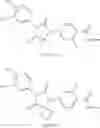
WO2014036897A1 discloses novel AR antagonists, including a compound of formula (I), with a chemical name of (S)-4-(3-(4-(2,3-dihydroxypropoxy)phenyl)-4,4-dimethyl-5-carbonyl-2-thioimidazolin-l-yl)-2-(trifluoromethyl)benzonitrile. The activity in vitro of this compound is slightly better than that of MDV-3100, and the hERG inhibition rate is further improved (IC50: 24.83 μM). The inhibition half lives of this compound on five major subtypes of CYP450 are all greater than 50 μM. The in vivo exposure of this compound in rats is comparable to that of MDV-3100, and the in vivo exposure of this compound in dogs is more than six times that of MDV-3100, at the same dose and in the same solvent. The compound of formula (I) has only one chiral center. The chiral starting material is easy to obtain, and the synthesis difficulty is greatly reduced. In addition, the compound of formula (I) has no AR agonist activity at 3 μM and 10 μM, and the ratio of the drug concentration in brain tissue to the drug concentration in plasma in mice is much lower than that of MDV-3100 compound, and so the possibility of epileptic side effects is smaller. Therefore, the compound of formula (I) has a broad clinical prospect.
However, the above-mentioned document does not disclose how to obtain a stable pharmaceutical composition comprising the above-mentioned compound and the dissolution rate which meets the requirement. Studies have found that the above-mentioned compound has poor stability, and some conventional formulations cannot guarantee the stability of the composition; meanwhile, the compound is poorly soluble in a lot of compositions prepared with conventional auxiliaries. Therefore, in-depth studies are required to find a stable composition with a good dissolution rate.
SUMMARY OF THE INVENTION
The object of the present invention is to provide a pharmaceutical composition with good stability and rapid dissolution. The process for preparing the pharmaceutical composition is simple and is more suitable for large-scale production.
The pharmaceutical composition according to the present invention comprises an active ingredient and a cellulose ether, wherein the active ingredient is (S)-4-(3-(4-(2,3-dihydroxypropoxy)phenyl)-4,4-dimethyl-5-carbonyl-2-thioimidazolin-1-yl)-2-(trifluoromethyl)benzonitrile. The active ingredient is present in an amount of 5%-50%, and preferably 10%-25% by weight, relative to the total weight of the pharmaceutical composition.
The cellulose ether can be one or more selected from the group consisting of alkyl cellulose, hydroxyalkyl cellulose and hydroxyalkyl alkyl cellulose, preferably hydroxyalkyl cellulose. The hydroxyalkyl cellulose is one or more selected from the group consisting of hydroxyethyl cellulose and hydroxypropyl cellulose, preferably hydroxypropyl cellulose, and more preferably hydroxypropyl cellulose SSL and SL. The hydroxyalkyl alkyl cellulose is one or more selected from the group consisting of hydroxyethyl methyl cellulose and hydroxypropyl methyl cellulose.
The content of cellulose ether is not particularly limited. In a preferred embodiment, the cellulose ether is present in an amount of 0.5%-50%, preferably 0.5%-15%, and most preferably 0.5%-10% by weight, relative to the total weight of the pharmaceutical composition.
In a particularly preferred embodiment, the pharmaceutical composition of the present invention comprises hydroxypropyl cellulose, which can significantly improve the compatibility with the active ingredient, and improve the dissolution rate and bioavailability of the drug.
The pharmaceutical composition according to the present invention can comprise a filler, wherein the filler can be one or more selected from the group consisting of lactose, mannitol, microcrystalline cellulose and pregelatinized starch. The filler is present in an amount of 30%-95% by weight, relative to the total weight of the pharmaceutical composition. In an embodiment of the present invention, the fillers used are lactose and microcrystalline cellulose, and the total amount of the two is 40-80%, preferably 60-75%.
The pharmaceutical composition according to the present invention can comprise a disintegrant, wherein the disintegrant can be one or more selected from the group consisting of croscarmellose sodium, sodium carboxymethyl starch, low-substituted hydroxypropyl cellulose and crospovidone. The disintegrant is present in an amount of 3%-20% by weight, relative to the total weight of the pharmaceutical composition.
The pharmaceutical composition according to the present invention can comprise a lubricant, wherein the lubricant can be one or more selected from the group consisting of magnesium stearate, stearic acid, and glyceryl behenate. The lubricant is present in an amount of 0.1-2% by weight, relative to the total weight of the pharmaceutical composition.
In a most preferred embodiment, the present invention provides a pharmaceutical composition, comprising the following ingredients:
1) 5%-50% by weight of (S)-4-(3-(4-(2,3-dihydroxypropoxy)phenyl)-4,4-dimethyl-5-carbonyl-2-thioimidazolin-1-yl)-2-(trifluoromethyl)benzonitrile;
2) 0.5%-10% by weight of hydroxypropyl cellulose;
3) 40-80% by weight of a filler, wherein the filler is a mixture of lactose and microcrystalline cellulose;
4) 3%-20% by weight of a disintegrant, wherein the disintegrant is one or more selected from the group consisting of croscarmellose sodium and sodium carboxymethyl starch; and
5) 0.1-2% by weight of a lubricant, wherein the lubricant is one or more selected from the group consisting of magnesium stearate, stearic acid, and glyceryl behenate.
The pharmaceutical composition of the present invention can be prepared by methods commonly used in the art. For example, a method such as high shear wet granulation, dry granulation, and one step granulation is used to prepare the granules of the pharmaceutical composition, which are then compressed into tablets or filled into capsules.
Due to the presence of cellulose ether such as hydroxypropyl cellulose, the stability of the pharmaceutical composition according to the present invention has been improved. After testing, when the composition of the present invention is placed under a closed condition at 60° C. for 4 weeks, the increase of related substances does not exceed 0.3%, preferably 0.2%, more preferably 0.1%, and most preferably 0.05%.
On the other hand, the dissolution of the composition of the present invention is very complete. The dissolution test is carried out on the composition of the present invention according to the second method (paddle method) of the dissolution rate test described in the appendix of volume IV of Chinese Pharmacopoeia (2015 Edition), using a 0.5% aqueous solution of sodium dodecyl sulfate (SDS) (the volume is preferably 1000 ml) as a dissolution medium at 37±0.5° C. and at a paddle speed of 50 rpm. The dissolution rate is greater than or equal to 95% at 45 minutes or at 60 minutes.
DETAILED DESCRIPTION OF THE INVENTION
The present invention is further described in detail by the following examples and experimental examples. These examples and experimental examples are for illustrative purposes only, and are not intended to limit the scope of the present invention.
Examples 1 to 4
(S)-4-(3-(4-(2,3-dihydroxypropoxy)phenyl)-4,4-dimethyl-5-carbonyl-2-thioimidazolin-1-yl)-2-(trifluoromethyl)benzonitrile (hereinafter referred to as compound A), lactose or mannitol, microcrystalline cellulose, and croscarmellose sodium were weighed according to the ratio shown in Table 1, then wet granulation was carried out by a high speed shear granulator using a 5% aqueous solution of polyvinylpyrrolidone K30 as a binder. The wet and soft material was wet-milled and dried, then the dry granules (moisture content is less than 3%) were dry-milled. A prescription amount of magnesium stearate was added, and mixed well with the granules. The resulting total mixed granules were compressed into tablets.
| TABLE 1 | ||
| Examples (mg/tablet) |
| Components | 1 | 2 | 3 | 4 | |
| Compound A | 100 | 100 | 100 | 100 | |
| Lactose | — | 270.0 | 310.0 | 230.0 | |
| Mannitol | 270.0 | — | — | — | |
| Microcrystalline cellulose | 85.0 | 85.0 | 45.0 | 125.0 | |
| Croscarmellose sodium | 25.0 | 25.0 | 25.0 | 25.0 | |
| Polyvinylpyrrolidone K30 | 12.8 | 11.7 | 9.7 | 13.1 | |
| Magnesium stearate | 5.0 | 5.0 | 5.0 | 5.0 | |
| Total | 498 | 497 | 495 | 498 | |
Experimental Example 1: Dissolution Test
The dissolution rates of the tablets of Examples 1-4 were determined according to the second method (paddle method) of the dissolution rate test disclosed in the appendix of volume IV of Chinese Pharmacopeia (2015 Edition). The dissolution test was carried out using 1000 ml of 0.5% aqueous solution of sodium dodecyl sulfate (SDS) as a dissolution medium at 37±0.5° C. and at the paddle speed of 50 rpm. The results show that the dissolution of compound A in Examples 1-4 is complete. The dissolution results are shown in Table 2.
| TABLE 2 | ||
| Time | Dissolution rate (%) |
| (min) | Example 1 | Example 2 | Example 3 | Example 4 |
| 5 | 38.0 | 35.1 | 36.2 | 38.4 |
| 15 | 78.9 | 79.0 | 77.8 | 81.0 |
| 30 | 92.1 | 93.1 | 92.0 | 93.2 |
| 45 | 96.9 | 98.9 | 97.8 | 99.0 |
| 60 | 97.2 | 98.9 | 98.7 | 98.6 |
Examples 5 to 6
(S)-4-(3-(4-(2,3-dihydroxypropoxy)phenyl)-4,4-dimethyl-5-carbonyl-2-thioimidazolin-1-yl)-2-(trifluoromethyl)benzonitrile (hereinafter referred to as compound A), lactose, microcrystalline cellulose, and croscarmellose sodium were weighed according to the ratio shown in Table 3, then wet granulation was carried out by a high speed shear granulator using an aqueous solution of polyvinylpyrrolidone K30, an aqueous solution of pregelatinized starch and an aqueous solution of hydroxypropyl cellulose SSL respectively as a binder. The wet and soft material was wet-milled and dried, then the dry granules (moisture content is less than 3%) were dry-milled. A prescription amount of magnesium stearate was added, and mixed well with the granules. The resulting total mixed granules were compressed into tablets.
| TABLE 3 | |
| Examples (mg/tablet) |
| Components | 2 | 5 | 6 | |
| Compound A | 100 | 100 | 100 | |
| Lactose | 270.0 | 255.0 | 270.0 | |
| Microcrystalline cellulose | 85.0 | 85.0 | 85.0 | |
| Croscarmellose sodium | 25.0 | 25.0 | 25.0 | |
| Polyvinylpyrrolidone K30 (5%) | 11.7 | — | — | |
| Pregelatinized starch (10%) | — | 28.4 | — | |
| Hydroxypropyl cellulose SSL (5%) | — | — | 10.2 | |
| Magnesium stearate | 5.0 | 5.0 | 5.0 | |
| Total | 497 | 498 | 495 | |
Experimental Example 2: Dissolution Test
The dissolution rates of the tablets of Examples 2, 5 and 6 were determined according to the second method (paddle method) of the dissolution rate test disclosed in the appendix of volume IV of Chinese Pharmacopeia (2015 Edition). The dissolution test was carried out using 1000 ml of 0.5% aqueous solution of sodium dodecyl sulfate (SDS) as a dissolution medium at 37±0.5° C. and at the paddle speed of 50 rpm. The results show that the dissolution of compound A in Example 5 is not complete; and the dissolution of compound A in Example 6 is complete. The dissolution results are shown in Table 4.
| TABLE 4 | ||
| Time | Dissolution rate (%) |
| (min) | Example 2 | Example 5 | Example 6 | |
| 5 | 35.1 | 28.9 | 36.7 | |
| 15 | 79.0 | 76.5 | 80.9 | |
| 30 | 93.1 | 89.0 | 94.9 | |
| 45 | 98.9 | 90.1 | 99.8 | |
| 60 | 98.9 | 92.7 | 98.7 | |
Examples 7 to 8
(S)-4-(3-(4-(2,3-dihydroxypropoxy)phenyl)-4,4-dimethyl-5-carbonyl-2-thioimidazolin-1-yl)-2-(trifluoromethyl)benzonitrile (hereinafter referred to as compound A), lactose, microcrystalline cellulose, croscarmellose sodium or sodium carboxymethyl starch or low substituted hydroxypropyl cellulose were weighed according to the ratio shown in Table 5, then wet granulation was carried out by a high speed shear granulator using an aqueous solution of hydroxypropyl cellulose SSL as a binder. The wet and soft material was wet-milled and dried, then the dry granules (moisture content is less than 3%) were dry-milled. A prescription amount of magnesium stearate was added, and mixed well with the granules. The resulting total mixed granules were compressed into tablets.
| TABLE 5 | |
| Examples (mg/tablet) |
| Components | 6 | 7 | 8 |
| Compound A | 100.0 | 100 | 100 |
| Lactose | 270.0 | 270.0 | 270.0 |
| Microcrystalline cellulose | 85.0 | 85.0 | 85.0 |
| Croscarmellose sodium | 25.0 | — | — |
| Low substituted hydroxypropyl cellulose | — | — | 25.0 |
| Sodium carboxymethyl starch | — | 25.0 | — |
| Hydroxypropyl cellulose SSL | 10.2 | 10.6 | 13.4 |
| Magnesium stearate | 5.0 | 5.0 | 5.0 |
| Total | 495 | 496 | 498 |
Experimental Example 3: Dissolution Test
The dissolution rates of the tablets of Examples 6-8 were determined according to the second method (paddle method) of the dissolution rate test disclosed in the appendix of volume IV of Chinese Pharmacopeia (2015 Edition). The dissolution test was carried out using 1000 ml of 0.5% aqueous solution of sodium dodecyl sulfate (SDS) as a dissolution medium at 37±0.5° C. and at the paddle speed of 50 rpm. The results show that the dissolution of compound A in Examples 6 and 7 is complete; and the dissolution of compound A in Example 8 is slightly incomplete. The dissolution results are shown in Table 6.
| TABLE 6 | ||
| Time | Dissolution rate (%) |
| (min) | Example 6 | Example 7 | Example 8 | |
| 5 | 35.9 | 34.9 | 23.9 | |
| 15 | 79.0 | 80.5 | 65.9 | |
| 30 | 90.1 | 93.2 | 87.5 | |
| 45 | 97.9 | 99.8 | 94.2 | |
| 60 | 98.0 | 100.2 | 95.9 | |
Experimental Example 4: Compatibility Study
When povidones were used as the binder, it was found by the compatibility study of auxiliary materials that the related substances could increase significantly, suggesting that the compatibility between povidones and the drug is poor. However, the stability was good when hydroxypropyl cellulose was used.
| TABLE 7 | ||||
| Related | ||||
| Study | Study time | substances | ||
| Items | conditions | (weeks) | Appearance | (%) |
| The drug in | Initial | 0 | Off-white | 0.19 |
| combination | point | powder | ||
| with polyvinyl- | 40° C./RH | 2 weeks | Off-white | 0.25 |
| pyrrolidone K30 | 75%/open | powder | ||
| 4 weeks | Off-white | 0.31 | ||
| powder | ||||
| 40° C./RH | 2 weeks | Off-white | 0.13 | |
| 75%/closed | powder | |||
| 4 weeks | Off-white | 0.19 | ||
| powder | ||||
| 60° C./ | 2 weeks | Off-white | 0.47 | |
| closed | powder | |||
| 4 weeks | Pale yellow | 0.58 | ||
| powder | ||||
| The drug in | Initial | 0 | Off-white | 0.19 |
| combination | point | powder | ||
| with Hydroxy- | 40° C./RH | 2 weeks | Off-white | 0.18 |
| propyl cellu- | 75%/open | powder | ||
| lose SSL | 4 weeks | Off-white | 0.19 | |
| powder | ||||
| 40° C./RH | 2 weeks | Off-white | 0.19 | |
| 75%/closed | powder | |||
| 4 weeks | Off-white | 0.19 | ||
| powder | ||||
| 60° C./ | 2 weeks | Off-white | 0.19 | |
| closed | powder | |||
| 4 weeks | Off-white | 0.21 | ||
| powder | ||||
It will be appreciated by those skilled in the art that changes could be made to the embodiments described above without departing from the broad inventive concept thereof. It is understood, therefore, that this invention is not limited to the particular embodiments disclosed, but it is intended to cover modifications within the spirit and scope of the present invention as defined by the appended claims.
Claims
What is claimed is:1. A pharmaceutical composition, comprising (S)-4-(3-(4-(2,3-dihydroxypropoxy)phenyl)-4,4-dimethyl-5-carbonyl-2-thioimidazolin- 1-yl)-2-(trifluoromethyl)benzonitrile, and a cellulose ether.
2. The pharmaceutical composition according to claim 1, wherein the cellulose ether is one or more selected from the group consisting of alkyl cellulose, hydroxyalkyl cellulose and hydroxyalkyl alkyl cellulose.
3. The pharmaceutical composition according to claim 2, wherein the hydroxyalkyl cellulose is one or more selected from the group consisting of hydroxyethyl cellulose and hydroxypropyl cellulose.
4. The pharmaceutical composition according to claim 2, wherein the hydroxyalkyl alkyl cellulose is one or more selected from the group consisting of hydroxyethyl methyl cellulose and hydroxypropyl methyl cellulose.
5. The pharmaceutical composition according to claim 1, wherein the cellulose ether is present in an amount of 0.5%-50% by weight, relative to the total weight of the pharmaceutical composition.
6. The pharmaceutical composition according to claim 1, further comprising a filler, wherein the filler comprises one or more selected from the group consisting of lactose, mannitol, microcrystalline cellulose and pregelatinized starch.
7. The pharmaceutical composition according to claim 1, further comprising a disintegrant, wherein the disintegrant comprises one or more selected from the group consisting of croscarmellose sodium, sodium carboxymethyl starch, low-substituted hydroxypropyl cellulose and crospovidone.
8. The pharmaceutical composition according to claim 1, further comprising a lubricant, wherein the lubricant comprises one or more selected from the group consisting of magnesium stearate, stearic acid, and glyceryl behenate.
9. A pharmaceutical composition, comprising:
1) 5%-50% by weight of (S)-4-(3-(4-(2,3-dihydroxypropoxy)phenyl)-4,4-dimethyl-5-carbonyl-2-thioimidazolin-1-yl)-2-(trifluoromethyl)benzonitrile;
2) 0.5%-10% by weight of hydroxypropyl cellulose;
3) 40-80% by weight of a filler, wherein the filler is-comprises a mixture of lactose and microcrystalline cellulose;
4) 3%-20% by weight of a disintegrant, wherein the disintegrant comprises one or more selected from the group consisting of croscarmellose sodium and sodium carboxymethyl starch; and
5) 0.1-2% by weight of a lubricant, wherein the lubricant comprises one or more selected from the group consisting of magnesium stearate, stearic acid, and glyceryl behenate.
10. A method for preparing a pharmaceutical composition according to claim 1, wherein the method comprises
a) preparing granules of (S)-4-(3-(4-(2,3-dihydroxypropoxy)phenyl)-4,4-dimethyl-5-carbonyl-2-thioimidazolin-1-yl)-2-(trifluoromethyl)benzonitrile and the cellulose ether by high shear granulation in a mixer, one step granulation in a fluidized bed or direct tableting; and
b) optionally tableting the granules or filling the granules into a capsule.
11. (canceled)
12. A method for treating and/or preventing prostate cancer in a subject in need thereof, the method comprising administering to the subject the pharmaceutical composition of claim 1.
13. The pharmaceutical composition according to claim 2, wherein the cellulose ether is hydroxyalkyl cellulose.
14. The pharmaceutical composition according to claim 3, wherein the hydroxyalkyl cellulose is hydroxypropyl cellulose.
15. The pharmaceutical composition according to claim 3, wherein the hydroxyalkyl cellulose is hydroxypropyl cellulose SSL or hydroxypropyl cellulose SL.
16. The pharmaceutical composition according to claim 5, wherein the cellulose ether is present in an amount of 0.5%-15% by weight, relative to the total weight of the pharmaceutical composition.
17. The pharmaceutical composition according to claim 5, wherein the cellulose ether is present in an amount of 0.5%-10% by weight, relative to the total weight of the pharmaceutical composition.
18. The pharmaceutical composition according to claim 6, wherein the filler comprises one or more selected from the group consisting of lactose and microcrystalline cellulose.
19. The pharmaceutical composition according to claim 7, wherein the disintegrant comprises one or more selected from the group consisting of croscarmellose sodium and sodium carboxymethyl starch.
20. A method of treating and/or preventing prostate cancer in a subject in need thereof, the method comprising administering to the subject the pharmaceutical composition of claim 9.
Images & Drawings included:

Sources:
- United States Patent and Trademark Office - verify current appl. status at the USPTO↗
Recent applications in this class:
- » 20250288681 2025-09-18
SOLID COMPOSITIONS COMPRISING A GLUCOKINASE ACTIVATOR AND METHODS OF MAKING AND USING THE SAME - » 20250235541 2025-07-24
AQUEOUS LIQUID PREPARATION - » 20250222111 2025-07-10
DUAL-RATE RELEASE FORMULATION WITH HIGH DRUG LOADING - » 20240316205 2024-09-26
COMPOSITION CONTAINING CATIONIC HYDROXYETHYL CELLULOSE - » 20240307544 2024-09-19
Aqueous liquid preparation - » 20240165238 2024-05-23
Vaginal Hydrogel - » 20240108730 2024-04-04
CORTICOSTEROID COMPOSITIONS - » 20240108729 2024-04-04
Pharmaceutical composition of diltiazem hydrochloride, preparation method therefor, and application thereof - » 20230321247 2023-10-12
Composition for treating and/or preventing fungal infections - » 20230181740 2023-06-15
VISCOSIFIED FLUIDS FOR MEDICAMENT DELIVERY
Recent applications for this Assignee:
- » 20210186952 2021-06-24
Pharmaceutical composition containing quinoline derivative - » 20210070760 2021-03-11
Process for preparing 4-(4-fluoro-3-(2-(trifluoromethyl)-5,6,7,8-tetrahydro-[1,2,4]triazolo[1,5-a]pyrazine-7-carbonyl)benzyl)phthalazin-1(2h)-one - » 20210040171 2021-02-11
PHARMACEUTICAL COMPOSITION COMPRISING ACYLATED DERIVATIVE OF HUMAN INSULIN ANALOG AND PREPARATION METHOD THEREOF - » 20200369774 2020-11-26
IL-6R ANTIBODY AND ANTIGEN BINDING FRAGMENT THEREOF AND MEDICAL USE - » 20200339692 2020-10-29
PD-L1 antibody, antigen-binding fragment thereof, and pharmaceutical use thereof - » 20200277278 2020-09-03
Deuterium Atom-Substituted Indole Formamide Derivative, Preparation Method Therefor, and Medical Applications Thereof - » 20200171031 2020-06-04
Pharmaceutical composition and method for preparing same - » 20200170999 2020-06-04
APREMILAST SUSTAINED RELEASE PREPARATION - » 20200138803 2020-05-07
Pharmaceutical composition comprising quinoline derivative or salt thereof - » 20190314349 2019-10-17
Pyridone derivative pharmaceutical composition and preparation method thereof