PD-CATALYZED DECOMPOSITION OF FORMIC ACID
US20190047855A1
2019-02-14
16/043,657
2018-07-24
Abstract:
Process for Pd-catalyzed decomposition of formic acid
Inventors:
- Robert Franke 221 🇩🇪 Marl, Germany
- Matthias Beller 70 🇩🇪 Ostseebad Nienhagen, Germany
- Ralf Jackstell 48 🇩🇪 Rostock, Germany
- Kaiwu DONG 29 🇨🇳 Bo Zhou, China
Assignee:
- Evonik Degussa GmbH 1,815 🇩🇪 Essen, Germany
Interested in similar patents?
Get notified when new applications in this technology area are published.
Classification:
C01B5/00 » CPC further
Water
C01B32/40 » CPC further
Carbon; Compounds thereof Carbon monoxide
C01B32/50 » CPC further
Carbon; Compounds thereof Carbon dioxide
B01J2531/824 » CPC further
Additional information regarding catalytic systems classified in; Complexes comprising metals of Group VIII as the central metal; Metals of the platinum group Palladium
C01B3/22 » CPC main
Hydrogen; Gaseous mixtures containing hydrogen; Separation of hydrogen from mixtures containing it ; Purification of hydrogen; Production of hydrogen or of gaseous mixtures containing a substantial proportion of hydrogen by decomposition of gaseous or liquid organic compounds
B01J31/2409 » CPC further
Catalysts comprising hydrides, coordination complexes or organic compounds containing coordination complexes; Phosphines, i.e. phosphorus bonded to only carbon atoms, or to both carbon and hydrogen atoms, including e.g. sp2-hybridised phosphorus compounds such as phosphabenzene, phosphole or anionic phospholide ligands; Cyclic ligands, including e.g. non-condensed polycyclic ligands, the phosphine-P atom being a ring member or a substituent on the ring with more than one complexing phosphine-P atom
C01B2203/0277 » CPC further
Integrated processes for the production of hydrogen or synthesis gas; Processes for making hydrogen or synthesis gas containing a decomposition step containing a catalytic decomposition step
B01J31/24 IPC
Catalysts comprising hydrides, coordination complexes or organic compounds containing coordination complexes Phosphines, i.e. phosphorus bonded to only carbon atoms, or to both carbon and hydrogen atoms, including e.g. sp2-hybridised phosphorus compounds such as phosphabenzene, phosphole or anionic phospholide ligands
Description
The invention relates to a process for Pd-catalyzed decomposition of formic acid (HCOOH).
Formic acid is used in chemical reactions as an acid or solvent for example but may also be generated as a byproduct of a reaction. On account of its corrosive or strong-smelling properties, it may be desirable to remove the formic acid.
The present invention has for its object to provide a process in which formic acid is efficiently decomposed with the aid of a catalyzed process.
The object is achieved by a process according to Claim 1.
Process comprising the process steps of:
a) presence of formic acid;
b) addition of a compound comprising Pd, wherein the Pd is capable of forming a complex;
c) addition of a compound of general formula (I):
wherein R1, R2, R3, R4 are each independently selected from: —H, —(C1-C12)-alkyl, —O—(C1-C12)-alkyl, —(C4-C14)-aryl, —O—(C4-C14)-aryl, cycloalkyl, —(C1-C12)-heteroalkyl, —O—(C1-C12)-heteroalkyl, —(C3-C14)-heteroaryl, —O—(C3-C14)-heteroaryl, —COO-alkyl, —COO-aryl, —C—O-alkyl, —C—O-aryl, NH2, halogen and the residues are also capable of forming a larger condensed ring;
wherein the recited alkyl groups, aryl groups, cycloalkyl, heteroalkyl groups, heteroaryl groups may be substituted as follows:
—(C1-C12)-alkyl, —O—(C1-C12)-alkyl, halogen;
and at least one of the radicals R1, R2, R3, R4 does not represent phenyl;
d) addition of MeOH;
e) heating of the reaction mixture to decompose the formic acid.
In one variant of the process, the compound in process step b) is selected from: Pd(acac)2, PdCl2, Pd(dba)3*CH3Cl (dba=dibenzylideneacetone), Pd(OAc)2, Pd(TFA)2, Pd(CH3CN)Cl2.
In one variant of the process, the compound in process step b) is Pd(OAc)2.
In one variant of the process, the process comprises the additional process step f):
f) addition of an acid.
In one variant of the process, the acid in process step f) is selected from: H2SO4, CH3SO3H, CF3SO3H, PTSA.
In one variant of the process, the acid in process step f) is PTSA.
In one variant of the process, R1, R2, R3, R4 are each independently selected from: —(C1-C12)-alkyl, —O—(C1-C12)-alkyl, —(C4-C14)-aryl, —O—(C4-C14)-aryl, cycloalkyl, —(C1-C12)-heteroalkyl, —O—(C1-C12)-heteroalkyl, —(C3-C14)-heteroaryl, —O—(C3-C14)-heteroaryl, —COO-alkyl, —COO-aryl, —C—O-alkyl, —C—O-aryl, NH2, halogen and the residues are also capable of forming a larger condensed ring;
wherein the recited alkyl groups, aryl groups, cycloalkyl, heteroalkyl groups, heteroaryl groups may be substituted as follows:
—(C1-C12)-alkyl, —O—(C1-C12)-alkyl, halogen;
and at least one of the radicals R1, R2, R3, R4 does not represent phenyl.
In one variant of the process, R1, R2, R3, R4 are each independently selected from: —(C1-C12)-alkyl, —(C4-C14)-aryl, cycloalkyl, —(C1-C12)-heteroalkyl, —(C3-C14)-heteroaryl, halogen and the residues are also capable of forming a larger condensed ring;
wherein the recited alkyl groups, aryl groups, cycloalkyl, heteroalkyl groups, heteroaryl groups may be substituted as follows:
—(C1-C12)-alkyl, —O—(C1-C12)-alkyl, halogen;
and at least one of the radicals R1, R2, R3, R4 does not represent phenyl.
In one variant of the process, R1, R2, R3, R4 are each independently selected from: —(C1-C12)-alkyl, cycloalkyl. —(C3-C14)-heteroaryl and the residues are also capable of forming a larger condensed ring;
wherein the recited alkyl groups, cycloalkyl, heteroaryl groups may be substituted as follows:
—(C1-C12)-alkyl, —O—(C1-C12)-alkyl, halogen,
and at least one of the radicals R1, R2, R3, R4 does not represent phenyl.
In one variant of the process, R1, R4 are each independently selected from: —(C1-C12)-alkyl, cycloalkyl and the residues are also capable of forming a larger condensed ring;
wherein the recited alkyl groups, cycloalkyl may be substituted as follows:
—(C1-C12)-alkyl, —O—(C1-C12)-alkyl, halogen.
In one variant of the process, R2, R3 each independently represent —(C3-C14)-heteroaryl, wherein the recited heteroaryl groups may be substituted as follows: —(C1-C12)-alkyl, —O—(C1-C12)-alkyl, halogen.
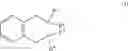
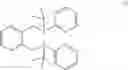
In one variant of the process, the compound of general formula (I) is selected from the structures (1) to (3):
In one variant of the process, the compound of general formula (I) has the structure (2):
In one variant of the process, the compound of general formula (I) has the structure (3):
The invention is elucidated in detail hereinafter by working examples.
Investigation of Pd-Catalyzed Decomposition of Formic Acid
Under an argon atmosphere [Pd(OAc)2] (4.48 mg, 0.02 mmol, 0.05 mol %), Ligand L (0.08 mmol, 0.2 mol %), PTSA.H2O (76 mg, 0.4 mmol, 1.0 mol %) were introduced into an autoclave. (Addition of individual constituents was eschewed in individual experiments as per following table.) Subsequently, MeOH (6.5 ml) and HCOOH (40 mmol, 1.50 ml) were injected with a syringe. The autoclave was then purged three times with nitrogen (5 bar). The reaction mixture was heated to 100° C. and held at this temperature for 18 h. After this time, the autoclave was cooled to room temperature.
Pressure was measured by electronic autoclave pressure recording sensors.
The selectivity of CO, H2 and CO2 was determined by gas GC analysis.
The results are summarized in the following table:
| TABLE | ||||||
| Total pressure | CO | H2 | CO2 | |||
| Pd | L | PTSA | (bar) | (bar, %) | (bar, %) | (bar, %) |
| − | − | − | 0.3 | 0.009, 3 | 0.147, 49 | 0.144, 48 |
| + | − | − | 0.4 | 0.020, 5 | 0.192, 48 | 0.188, 47 |
| − | − | + | 0.2 | 0.020, 10 | 0.092, 46 | 0.088, 44 |
| − | L4 | − | 0.5 | 0.055, 11 | 0.28, 56 | 0.165, 33 |
| + | − | + | 0.2 | 0.012, 6 | 0.126, 63 | 0.062, 31 |
| + | L4 | − | 2.2 | 1.474, 67 | 0.396, 18 | 0.330, 15 |
| + | L4 | + | 5.5 | 4.840, 88 | 0.385, 7 | 0.275, 5 |
| + | L3 | + | 2.2 | 1.914, 87 | 0.176, 8 | 0.110, 5 |
| + | L5 | + | 6.0 | 5.04, 84 | 0.54, 9 | 0.42, 7 |
| − | L3 | − | 0.8 | 0.24, 30 | 0.32, 40 | 0.24, 30 |
| +: added | ||||||
| −: not added |
As is shown by the experiments described above, the object is achieved by a process according to the invention.
Claims
1. Process comprising the process steps of:
a) presence of formic acid;
b) addition of a compound comprising Pd, wherein the Pd is capable of forming a complex;
c) addition of a compound of general formula (I):
wherein R1, R2, R3, R4 are each independently selected from: —H, —(C1-C12)-alkyl, —O—(C1-C12)-alkyl, —(C4-C14)-aryl, —O—(C4-C14)-aryl, cycloalkyl, —(C1-C12)-heteroalkyl, —O—(C1-C12)-heteroalkyl, —(C3-C14)-heteroaryl, —O—(C3-C14)-heteroaryl, —COO-alkyl, —COO-aryl, —C—O-alkyl, —C—O-aryl, NH2, halogen and the residues are also capable of forming a larger condensed ring;
wherein the recited alkyl groups, aryl groups, cycloalkyl, heteroalkyl groups, heteroaryl groups may be substituted as follows:
—(C1-C12)-alkyl, —O—(C1-C12)-alkyl, halogen;
and at least one of the radicals R1, R2, R3, R4 does not represent phenyl;
d) addition of MeOH;
e) heating of the reaction mixture to decompose the formic acid.
2. Process according to claim 1,
wherein the compound in process step b) is selected from:
Pd(acac)2, PdCl2, Pd(dba)3*CH3Cl (dba=dibenzylideneacetone), Pd(OAc)2, Pd(TFA)2, Pd(CH3CN)Cl2.
3. Process according to claim 1,
wherein the compound in process step b) is Pd(OAc)2.
4. Process according to claim 1,
wherein the process comprises additional process step f):
f) addition of an acid.
5. Process according to claim 4,
wherein the acid in process step f) is selected from: H2SO4, CH3SO3H, CF3SO3H, PTSA.
6. Process according to claim 4,
wherein the acid in process step f) is PTSA.
7. Process according to claim 1,
wherein R1, R2, R3, R4 are each independently selected from: —(C1-C12)-alkyl, —O—(C1-C12)-alkyl, —(C4-C14)-aryl, —O—(C4-C14)-aryl, cycloalkyl, —(C1-C12)-heteroalkyl, —O—(C1-C12)-heteroalkyl, —(C3-C14)-heteroaryl, —O—(C3-C14)-heteroaryl, —COO-alkyl, —COO-aryl, —C—O-alkyl, —C—O-aryl, NH2, halogen and the residues are also capable of forming a larger condensed ring;
wherein the recited alkyl groups, aryl groups, cycloalkyl, heteroalkyl groups, heteroaryl groups may be substituted as follows:
—(C1-C12)-alkyl, —O—(C1-C12)-alkyl, halogen;
and at least one of the radicals R1, R2, R3, R4 does not represent phenyl.
8. Process according to claim 1,
wherein R1, R2, R3, R4 are each independently selected from: —(C1-C12)-alkyl, —(C4-C14)-aryl, cycloalkyl, —(C1-C12)-heteroalkyl, —(C3-C14)-heteroaryl, halogen and the residues are also capable of forming a larger condensed ring;
wherein the recited alkyl groups, aryl groups, cycloalkyl, heteroalkyl groups, heteroaryl groups may be substituted as follows:
—(C1-C12)-alkyl, —O—(C1-C12)-alkyl, halogen;
and at least one of the radicals R1, R2, R3, R4 does not represent phenyl.
9. Process according to claim 1,
wherein R1, R2, R3, R4 are each independently selected from: —(C1-C12)-alkyl, cycloalkyl, —(C3-C14)-heteroaryl and the residues are also capable of forming a larger condensed ring;
wherein the recited alkyl groups, cycloalkyl, heteroaryl groups may be substituted as follows:
—(C1-C12)-alkyl, —O—(C1-C12)-alkyl, halogen,
and at least one of the radicals R1, R2, R3, R4 does not represent phenyl.
10. Process according to claim 1,
wherein R1, R4 are each independently selected from: —(C1-C12)-alkyl, cycloalkyl and the residues are also capable of forming a larger condensed ring;
wherein the recited alkyl groups, cycloalkyl may be substituted as follows:
—(C1-C12)-alkyl, —O—(C1-C12)-alkyl, halogen.
11. Process according to claim 1,
wherein R2, R3 each independently represent —(C3-C14)-heteroaryl,
wherein the recited heteroaryl groups may be substituted as follows:
—(C1-C12)-alkyl, —O—(C1-C12)-alkyl, halogen.
12. Process according to claim 1,
wherein the compound of general formula (I) is selected from the structures (1) to (3):
13. Process according to claim 1,
wherein the compound of general formula (I) has the structure (2):
14. Process according to claim 1,
wherein the compound of general formula (I) has the structure (3):
Images & Drawings included:



Sources:
- United States Patent and Trademark Office - verify current appl. status at the USPTO↗
Recent applications in this class:
- » 20250042729 2025-02-06
A Method for Producing Hydrogen Containing Gas - » 20240383747 2024-11-21
GASEOUS FUEL PRODUCTION SYSTEM - » 20240367967 2024-11-07
HIGH-PRESSURE HYDROGEN SUPPLY SYSTEM AND METHOD THEREOF - » 20240351867 2024-10-24
METHOD FOR PRODUCING HYDROGEN - » 20240217814 2024-07-04
PROCESS AND SYSTEM FOR PROVIDING HYDROGEN GAS - » 20240076183 2024-03-07
METHOD AND SYSTEM FOR CONTINUOUS PRODUCTION OF HYDROGEN - » 20230141528 2023-05-11
IMPROVED SYSTEM AND METHOD FOR STORING AND RE-RELEASING DIHYDROGEN - » 20230098199 2023-03-30
METHOD OF PRODUCING HYDROGEN - » 20220411263 2022-12-29
SYSTEM AND METHOD FOR HYDROGEN PRODUCTION BY DEHYDROGENATION OF FORMIC ACID - » 20220371885 2022-11-24
On demand hydrogen from methanol
Recent applications for this Assignee:
- » 20210228653 2021-07-29
BACILLUS LICHENIFORMIS STRAIN WITH PROBIOTIC ACTIVITY - » 20200231537 2020-07-23
Reductive alkylation of amines with orthocarboxylic acid esters - » 20200230703 2020-07-23
PROCESS FOR PRODUCING TUNGSTEN OXIDE AND TUNGSTEN MIXED OXIDES - » 20200199492 2020-06-25
Biodegradable cleaning composition - » 20200165278 2020-05-28
Halogermanides and methods for the preparation thereof - » 20200115334 2020-04-16
Method for preparing methionine - » 20200109102 2020-04-09
Process for hydroformylating short-chain olefins using a heterogenized catalyst system without ionic liquid - » 20200109101 2020-04-09
Process for hydroformylating short-chain olefins in the gas phase - » 20200109056 2020-04-09
Stannous compatible silica - » 20200087446 2020-03-19
Low temperature anhydride epoxy cured systems