PEPTIDE COMPOSITIONS AND RELATED METHODS
US20190062371A1
2019-02-28
16/012,706
2018-06-19
Abstract:
Peptide compositions and methods for inhibiting neovascularization or development of pathological or aberrant blood vessels in human or other animal subjects.
Inventors:
- John Y. Park 15 🇺🇸 Santa Ana, CA, United States
- Hampar L. Karageozian 22 🇺🇸 San Juan Capistrano, CA, United States
- Vicken H. Karageozian 15 🇺🇸 San Juan Capistrano, CA, United States
Interested in similar patents?
Get notified when new applications in this technology area are published.
Classification:
C07K5/06026 » CPC main
Peptides containing up to four amino acids in a fully defined sequence; Derivatives thereof containing only normal peptide links; Dipeptides with the first amino acid being neutral and aliphatic the side chain containing 0 or 1 carbon atom, i.e. Gly or Ala
A61K38/07 » CPC further
Medicinal preparations containing peptides; Peptides having up to 20 amino acids in a fully defined sequence; Derivatives thereof Tetrapeptides
A61K38/08 » CPC further
Medicinal preparations containing peptides; Peptides having up to 20 amino acids in a fully defined sequence; Derivatives thereof Peptides having 5 to 11 amino acids
C07K5/1008 » CPC further
Peptides containing up to four amino acids in a fully defined sequence; Derivatives thereof containing only normal peptide links; Tetrapeptides with the first amino acid being neutral and aliphatic the side chain containing 0 or 1 carbon atoms, i.e. Gly, Ala
C07K5/12 » CPC further
Peptides containing up to four amino acids in a fully defined sequence; Derivatives thereof containing only normal peptide links Cyclic peptides with only normal peptide bonds in the ring
A61K38/06 » CPC further
Medicinal preparations containing peptides; Peptides having up to 20 amino acids in a fully defined sequence; Derivatives thereof Tripeptides
C07K5/0806 » CPC further
Peptides containing up to four amino acids in a fully defined sequence; Derivatives thereof containing only normal peptide links; Tripeptides with the first amino acid being neutral and aliphatic the side chain containing 0 or 1 carbon atoms, i.e. Gly, Ala
A61K38/05 » CPC further
Medicinal preparations containing peptides; Peptides having up to 20 amino acids in a fully defined sequence; Derivatives thereof Dipeptides
A61K31/185 » CPC further
Medicinal preparations containing organic active ingredients Acids; Anhydrides, halides or salts thereof, e.g. sulfur acids, imidic, hydrazonic, hydroximic acids
A61K38/12 » CPC further
Medicinal preparations containing peptides; Peptides having up to 20 amino acids in a fully defined sequence; Derivatives thereof Cyclic peptides, e.g. bacitracins; Polymyxins; Gramicidins S, C; Tyrocidins A, B or C
Description
RELATED APPLICATION
This patent application claims priority to U.S. Provisional Patent Application No. 62/521,984 entitled Peptide Compositions and Related Methods filed Jun. 19, 2017, the entire disclosure of which is expressly incorporated herein by reference.
FIELD OF THE INVENTION
The present invention relates generally to the fields of Biology and medicine and more particularly to peptide compositions and their methods of use.
BACKGROUND
Pursuant to 37 CFR 1.71(e), this patent document contains material which is subject to copyright protection and the owner of this patent document reserves all copyright rights whatsoever.
Throughout this patent application amino acids may be referred to interchangeably using the following names, three letter codes and single letter codes:
| Amino Acid | Three letter code | Single Letter Code | |
| Alanine | Ala | A | |
| Arginine | Arg | R | |
| Asparagine | Asn | N | |
| Aspartic Acid | Asp | D | |
| Cysteine | Cys | C | |
| Cysteic Acid | Cys(Acid) | — | |
| Glutamic | Glu | E | |
| Glutamine | Gln | Q | |
| Glycine | Gly | G | |
| Histidine | His | H | |
| Isoleucine | Ile | I | |
| Leucine | Leu | L | |
| Lysine | Lys | K | |
| Methionine | Met | M | |
| Phenylalanine | Phe | F | |
| Proline | Pro | P | |
| Serine | Ser | S | |
| Threonine | Thr | T | |
| Tyrosine | Tyr | Y | |
| Valine | Val | V | |
Applicant is developing the synthetic oligopeptide Glycinyl-Arginyl-Glycinyl-Cysteic(Acid)-Threonyl-Proline (ALG-1001 or Luminate®, Allegro Ophthalmics, LLC) which has been shown to inhibit a number of integrins and to have significant antiangiogenic, anti-inflammatory, neuroprotective and other effects. When administered to the eye, ALG-1001 can cause vitreolysis, posterior vitreo-retinal detachment (PVD) and is useable for treatment of eye disorders such as wet macular degeneration (WMD), dry macular degeneration (DMD), diabetic retinopathy (PDR), diabetic macular edema (DME) and vitreomacular traction (VMT). Further information regarding ALG-1001 and related compounds is found in U.S. Pat. No. 9,018,352 entitled Peptide Compositions and Therapeutic Uses Thereof, U.S. Pat. No. 9,872,886 entitled Compositions and Methods for Inhibiting Cellular Adhesion or Directing Diagnostic or Therapeutic Agents to RGD Binding Sites and U.S. Pat. No. 9,896,480 entitled Integrin Receptor Antagonists and Their Methods of Use as well as pending U.S. patent application Ser. No. 15/874,814 entitled Therapeutic and Neuroprotective Peptides, the entire disclosure of each such patent and patent application being expressly incorporated herein by reference.
As described below, Applicant has synthesized and performed initial testing on a number of additional novel peptides, a number of which exhibit therapeutic effects in in vivo tests.
SUMMARY
In accordance with the present invention, there are provided peptide compounds and methods for inhibiting neovascularization of the development of pathological or aberrant blood vessels in human or animal subjects.
In accordance with one aspect of the present invention, there are provided compositions of matter which comprise peptides that consist of or include an amino acid sequence having the formula:
Y-X-Z
wherein:
-
- Y=R, H, K, Cys(acid), G or D;
- X=G, A, Cys(acid), R, G, D or E; and
- Z=Cys(acid), G, C, R, D, N or E.
Such peptides may comprise or consist of the amino acid sequences; R-G-Cys(Acid), R-R-Cys, R-CysAcid)-G, Cys(Acid)-R-G, Cys(Acid)-G-R, R-G-D, R-G-Cys(Acid). H-G-Cys(Acid), R-G-N, D-G-R, R-D-G, R-A-E, K-G-D, R-G-Cys(Acid)-G-G-G-D-G, Cyclo-{R-G-Cys(acid)-F-N-Me-V}, R-A-Cys (Acid), R-G-C, K-G-D, Cys(acid)-R-G, Cys(Acid)-G-R, Cyclo-{R-G-D-D-F-NMe-V}, H-G-Cys(acid) and salts thereof. Possible salts include but are not limited to acetate, trifluoroacetate (TFA) and hydrochloride salts. Such peptides are useful at least for inhibiting neovascularization of the development of pathological or aberrant blood vessels in human or animal subjects
Further in accordance with the present invention, peptides of the present invention, or the synthetic oligopeptide Glycinyl-Arginyl-Glycinyl-Cysteic(Acid)-Threonyl-Proline, may be combined with Taurine and administered to a human or animal subject for the purpose of inhibiting neovascularization of the development of pathological or aberrant blood vessels
Still further in accordance with the present invention, there are provided methods for inhibiting neovascularization or the development of pathological or aberrant blood vessels in a human or animal subjects who are in need thereof, such methods comprising the step of administering to the subject a therapeutically effective amount of a composition comprising a peptide as summarized above. In some instances, such methods may be carried out to treat a disease or disorder of the eye wherein neovascularization or development of pathological or aberrant blood vessels occurs. Such diseases or disorders of the eye include but are not necessarily limited to: diabetic retinopathy, neovascular age-related macular degeneration, retinopathy of prematurity (ROP), sickle cell retinopathy, retinal vein occlusion, ischemia-induced retinopathy and certain inflammatory diseases of the eye.
Still further in accordance with the present invention, there are provided methods for inhibiting neovascularization or the development of pathological or aberrant blood vessels in human or animal subjects at locations outside of the eye. In some instances, such methods may be carried out to inhibit the growth or metastasis of a vascularized tumor.
Still further aspects and details of the present invention will be understood upon reading of the detailed description and examples set forth herebelow.
BRIEF DESCRIPTION OF THE DRAWINGS
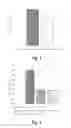
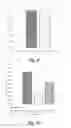
FIG. 1 is a bar graph of retinal neovascular area in ROP mouse eyes following treatment with either His-Gly-Cys(acid) (Test Compound No. 14) or Control Peptide (Arg-Gly-Glu).
FIG. 2 is a bar graph of retinal neovascular area in ROP mouse eyes following treatment with either Arg-Gly-Cys(acid)TFA (Positive Control), Arg-Ala-Cys (Test Compound No. 3) or Control Peptide (Arg-Gly-Glu).
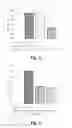
FIG. 3 is a bar graph of retinal neovascular area in ROP mouse eyes following treatment with either Arg-Gly-Cys(acid)TFA (Test Compound No. 1/positive control), Arg-Ala-Asp (Test Compound No. 23) or Control Peptide (Arg-Gly-Glu).
FIG. 4 is a bar graph of retinal neovascular area in ROP mouse eyes following treatment with either Arg-Gly-Cys(acid)TFA (Positive Control), Arg-Ala-Cys(Acid) (Test Compound No. 3) or Control Peptide (Arg-Gly-Glu).
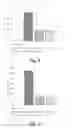
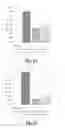
FIG. 5 is a bar graph of retinal neovascular area in ROP mouse eyes following treatment with either Arg-Gly-Cys(acid)TFA (Positive Control), Arg-Gly-Cys (Test Compound No. 4) or Control Peptide (Arg-Gly-Glu).
FIG. 6 is a bar graph of retinal neovascular area in ROP mouse eyes following treatment with either Arg-Gly-Cys(acid)TFA (Positive Control), Arg-Gly-Cys(acid)TFA (Masked) (Test Compound No. 1) or Control Peptide (Arg-Gly-Glu).
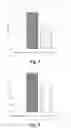
FIG. 7 is a bar graph of retinal neovascular area in ROP mouse eyes following treatment with either Lys-Glys-Asp (Test Compound No. 20) or Control Peptide (Arg-Gly-Glu).
FIG. 8 is a bar graph of retinal neovascular area in ROP mouse eyes following treatment with either His-Gly-Cys(Acid) (Test Compound No. 14) or Control Peptide (Arg-Gly-Glu).
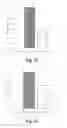
FIG. 9 is a bar graph of retinal neovascular area in ROP mouse eyes following treatment with either Lys-Gly-Cys(acid) (Test Compound No. 6) or Control Peptide (Arg-Gly-Glu).
FIG. 10 is a bar graph of retinal neovascular area in ROP mouse eyes following treatment with either Arg-Gly-Cys(acid)TFA (Positive Control), Arg-Cys(Acid)-Gly (Test Compound No. 5) or Control Peptide (Arg-Gly-Glu).
FIG. 11 is a bar graph of retinal neovascular area in CNV mouse eyes following treatment with either Arg-Gly-Cys(acid)TFA (Positive Control), Arg-Gly-Cys(Acid) Acetate (Test Compound No. 2) or Control Peptide (Arg-Gly-Glu).
FIG. 12 is a bar graph of retinal neovascular area in ROP mouse eyes following treatment with either Arg-Gly-Cys(acid)TFA (Positive Control), Arg-Gly-Cys(Acid) Acetate (Test Compound No. 2) or Control Peptide (Arg-Gly-Glu).
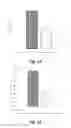
FIG. 13 is a bar graph of retinal neovascular area in ROP mouse eyes following treatment with either Asp-Gly-Arg (Test Compound No. 17) or Control Peptide (Arg-Gly-Glu).
FIG. 14 is a bar graph of retinal neovascular area in ROP mouse eyes following treatment with either Arg-Gly-Asp (Test Compound No. 15) or Control Peptide (Arg-Gly-Glu).
FIG. 15 is a bar graph of retinal neovascular area in ROP mouse eyes following treatment with either Arg-Cys(Acid)-Gly (Test Compound No. 18) or Control Peptide (Arg-Gly-Glu).
FIG. 16 is a bar graph of retinal neovascular area in ROP mouse eyes following treatment with either Arg-Gly-Cys(acid)-Gly-Gly-Asp-Gly (Test Compound No. 7) or Control Peptide (Arg-Gly-Glu).
FIG. 17 is a bar graph of retinal neovascular area in ROP mouse eyes following treatment with either Arg-Ala-Glu (Test Compound No. 19) or Control Peptide (Arg-Gly-Glu).
FIG. 18 is a bar graph of retinal neovascular area in ROP mouse eyes following treatment with either Gly-Cys(acid)-Arg (Test Compound No. 11) or Control Peptide (Arg-Gly-Glu).
FIG. 19 is a bar graph of retinal neovascular area in ROP mouse eyes following treatment with either Cys(Acid)-Ala-Arg (Test Compound No. 10) or Control Peptide (Arg-Gly-Glu).
FIG. 20 is a bar graph of retinal neovascular area in ROP mouse eyes following treatment with either Arg-Glu-Gly (Test Compound No. 22) or Control Peptide (Arg-Gly-Glu).
FIG. 21 is a bar graph of retinal neovascular area in ROP mouse eyes following treatment with either Cys(acid)-Arg-Gly (Test Compound No. 8) or Control Peptide (Arg-Gly-Glu).
FIG. 22 is a bar graph of retinal neovascular area in ROP mouse eyes following treatment with either Arg-Gly-Asn (Test Compound No. 16) or Control Peptide (Arg-Gly-Glu).
FIG. 23 is a bar graph of retinal neovascular area in ROP mouse eyes following treatment with either Arg-Gly-Cys(acid)TFA (Positive Control), Cyclo-{R-G-D-D-F-NMe-V} (Test Compound No. 13) or Control Peptide (Arg-Gly-Glu).
FIG. 24 is a bar graph of retinal neovascular area in ROP mouse eyes following treatment with either Arg-Gly-Cys(acid)TFA (Positive Control), Cyclo-{R-G-Cys(acid)-F-N-Me-V} (Test Compound No. 12) or Control Peptide (Arg-Gly-Glu).
FIG. 25 is a bar graph of retinal neovascular area in ROP mouse eyes following treatment with either Arg-Gly-Cys(acid)TFA (Positive Control), Cys(Acid)-Gly-Arg (Test Compound No. 9) or Control Peptide (Arg-Gly-Glu).
FIG. 26 is a bar graph of retinal neovascular area in ROP mouse eyes following treatment with either His-Gly-Cys(Acid) (Test Compound No. 14) or Control Peptide (Arg-Gly-Glu).
FIG. 27 is a bar graph of retinal neovascular area in ROP mouse eyes following treatment with either Arg-Gly-Cys(acid)TFA (Positive Control), Taurine (Test Compound No. 25), Arg-Gly-Cys(acid). TFA+Taurine (Test Compound No. 24) or Control Peptide (Arg-Gly-Glu).
DETAILED DESCRIPTION
The following detailed description and the accompanying drawings to which it refers are intended to describe some, but not necessarily all, examples or embodiments of the invention. The described embodiments are to be considered in all respects only as illustrative and not restrictive. The contents of this detailed description and the accompanying drawings do not limit the scope of the invention in any way.
A number of diseases and disorders are known to cause neovascularization or development of pathological or aberrant blood vessels, including diabetic retinopathy, neovascular age-related macular degeneration, retinopathy of prematurity (ROP), sickle cell retinopathy, retinal vein occlusion, ischemia-induced retinopathy, certain inflammatory diseases of the eye and the growth or metastasis of a vascularized tumors. Applicant has discovered a number of compounds that are shown to be active in an anti-neovascularization mouse ROP model as described below. On this basis, such compounds are potentially useful in the treatment of diseases and disorders which are known to cause neovascularization or development of pathological or aberrant blood vessels, including but not limited to those diseases and disorders listed above.
Each test compound was prepared in sterile water for injection, containing 0.08 mg/100 μL of sodium chloride and 0.005 mg/100 μL of trisodium citrate, the concentration of the peptide was at a concentration of 2.0 mg/1001 μL and pH=2.7 and dispensed by sterile filtration into sterile vials. The Taurine test compound was obtained from Sigma Aldrich company, which was >99% pure, and prepared the same way as mentioned previously, having a concentration of 3.0 mg/100 μL. The R-G-Cys(acid) at 2.0 mg/100 μL+Taurine at 3.0 mg/100 μL were prepared the same way as mentioned above
To screen the test compounds for activity against ischemia-induced retinal neovascularization, the well-established model of retinopathy of prematurity (ROP) in mice was used. Litters of C57Bl/6 mice were placed in 75% oxygen at postnatal day (P) 7, returned to room air at day (P) 12. The Pups were randomly assigned to treatment groups of 4 to 10 animals per group. The pups were treated as follows: Treatment eyes were treated by intravitreal injection of 1.0 microliters of solution containing 20 micrograms of Test Compound.
On post-natal day 17, 5 days after intravitreal injection, the animals were sacrificed, the retinas were flat mounted and the area of neovascularization in each retina was determined by Fluorescein-dextran image analysis.
Applicant has identified the tripeptide R-G-Cysteic(Acid) as an integrin binding motif of the oligopeptide Glycinyl-Arginyl-Glycinyl-Cysteic(Acid)-Threonyl-Proline (ALG-1001 or Luminate®, Allegro Ophthalmics, LLC). The trifluoroacetate (TFA) and acetate salts of the R-G-Cysteic(Acid) tripeptide (Test Compound Nos. 1 and 2) were tested in both the ROP Mouse Model as described above as well as in a mouse model of choroidal neovascularization induced by laser photocoagulation (“CNV Mouse Model”), as generally as described in Lambert, V., et al., Laser-Induced Choroidal Neovascarization Model to Study Age Related Macular Degeneration in Mice, Nature Protocols, 8; 2197-2211 (2013). Animals assigned to “Control” groups were treated by intravitreal injection of Arg-Gly-Glu (Control Peptide), which is known to be inactive. In some of the experiments, an additional “Positive Control” group was included. Animals assigned to a “Positive Control” group were treated by intravitreal injection of Arg-Gly-Cys(acid)TFA, which is known to be active.
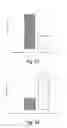
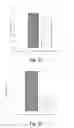
The following Table 1 summarizes the neovascularization inhibiting effect of each Test Compound at the dose tested. In each instance, the data was obtained using the ROP Mouse Model, except for the two table entries specifically labeled “CNV”. Only those table entries labeled “CNV” show data obtained from the CNV Mouse Model. Bar graphs showing the test results summarized in Table 1 are also provided herewith as FIGS. 1 through 27. Where indicated in the figures, the tests were performed in a blinded manner such that the persons performing the testing did not know the identity or structure of each test compound.
| TABLE 1 |
| SUPPRESSION OF RETINAL NEOVASCULARIZATION IN |
| MOUSE MODEL OF ROP (ISCHEMIC) RETINOPATHY |
| Mean % Reduction | |||
| Test | of Retinal | Activity | |
| Compound | Neovascularization | At Dose | |
| Number | Test Compound | In ROP Model | Tested |
| 1 | R-G-Cys(acid)•TFA-ROP | 61 | Active |
| 1(CNV) | R-G-Cys(acid)•TFA-CNV | 49 - FIG. 11 | Active |
| 2(CNV) | R-G-Cys(acid)•Acetate-CNV | 56 - FIG. 11 | Active |
| 2 | R-G-Cys(acid)•Acetate-ROP | 72 | Active |
| 3 | R-A-Cys (acid)•TFA | 60 | Active |
| 4 | R-G-Cysteine•TFA | 66 | Active |
| 5 | R-Cys(acid)-G•TFA | 33 | Slightly Active |
| 6 | K-G-Cys (acid)•TFA | 0 | Not Active |
| 7 | R-G-Cys(acid)-G-G-GD-G•TFA | 62 | Active |
| 8 | Cys(acid)-R-G•TFA | 21 | Slightiy Active |
| 9 | Cys(acid)-G-R•TFA | 63 | Active |
| 10 | Cys(acid)-A-R•TFA | 0 | Not Active |
| 11 | G-Cys(acid)-R•TFA | 0 | Not Active |
| 12 | Cyclo-{R-G-Cys(acid)- | 57 | Active |
| F—N—Me—V} Acetate | |||
| 13 | Cyclo-{R-G-D-D- | 75 | Active |
| F—NMe—V}•TFA | |||
| 14 | H-G-Cys(acid)•TFA | 28 | Slightly Active |
| 15 | R-G-D•TFA | 37 | Slightly Active |
| 16 | R-G-N•TFA | 64 | Active |
| 17 | D-G-R•TFA | 56 | Active |
| 18 | R-D-G•TFA | 44 | Active |
| 19 | R-A-E•TFA | 63 | Active |
| 20 | K-G-D•TFA | 40 | Active |
| 21 | R-G-E•TFA | 0 | Not Active |
| 22 | R-E-G•TFA | 0 | Not Active |
| 23 | R-A-D•TFA | 0 | Not Active |
| 24 | R-G-Cys(acid)•TFA + Taurine | 58 | Active |
| 25 | Taurine | 33 | Slightly Active |
In some of the Test Compounds, the amino acid sequence of the binding motif RGCys(acid) tripeptide in GRGCys(acid)TP (ALG-1001) was rearranged and/or replaced by other basic, acidic and neutral amino acids. Based on the results of the ROP and CNV testing summarized above, the result indicates that the presence of Arginine, Alanine and Cysteic Acid in the GRGCys(acid)TP peptide (ALG-1001/Luminate) plays an important role in the suppression of the neovascularization, notably the sequence of R-G-Cys and R-A-Cys. Furthermore, in the presence of arginine, replacement of Cysteic (Acid) by a neutral amino acid exhibited a strong suppressive effect in these experiments.
Y-X-Z General Formula 1
Wherein:
-
- Y=R*, H, K, Cys(acid), G or D;
- X=G*, A, Cys(acid), R, G, D or E; and
- Z=Cys*, G, Cysteine, R, D, N or E. *indicates component of the RGCys(acid) binding motif of tripeptide in GRGCys(acid)TP (ALG-1001), which was used as a Positive Control.
Based on the initial data set forth herein, certain structure/activity relationships are suggested in relation to specific changes made to the R-G-Cysteic Acid binding motif. For example, when the amino acid R (i.e., the Y Component) of the R-G-Cysteic(Acid) binding motif is replaced by a basic amino acid or acidic amino acid, the peptide's anti-neovascularization effects diminish, whereas in the presence of arginine in the binding motif aspartic acid as Component Y appears to promote the peptide's anti-neovascularization effects.
When amino acid G (i.e., the X Component) of the R-G-Cysteic Acid binding motif is replaced by a basic or acidic amino acid, the peptide's anti-neovascularization effects decrease. However, in the presence of arginine (a strong hydrogen bonding), two carbon length-space for hydrophobic interaction (Alanine and Aspartic Acid) may not influence the peptide's anti-neovascularization effects.
When Cys(Acid) (i.e., the Z Component) of the R-G-Cysteic(Acid) binding motif is replaced by a neutral amino acid, the peptide's neovascularization inhibiting activity increases whereas replacement of the Z component by acidic or basic amino acids causes the neovascularization inhibiting activity to decrease.
All indications are that the R-G-Cysteic(Acid) of the oligopeptide Glycinyl-Arginyl-Glycinyl-Cysteic(Acid)-Threonyl-Proline (ALG-1001 or Luminate®, Allegro Ophthalmics, LLC) is important for suppression of neovascularization. Also, addition of three parts taurine to one part of the Glycinyl-Arginyl-Glycinyl-Cysteic(Acid)-Threonyl-Proline (ALG-1001) improves the neovascularization suppressing activity.
It is to be appreciated that, although the invention has been described hereabove with reference to certain examples or embodiments of the invention, various additions, deletions, alterations and modifications may be made to those described examples and embodiments without departing from the intended spirit and scope of the invention. For example, any elements, steps, members, components, compositions, reactants, parts or portions of one embodiment or example may be incorporated into or used with another embodiment or example, unless otherwise specified or unless doing so would render that embodiment or example unsuitable for its intended use. Also, where the steps of a method or process have been described or listed in a particular order, the order of such steps may be changed unless otherwise specified or unless doing so would render the method or process unsuitable for its intended purpose. Additionally, the elements, steps, members, components, compositions, reactants, parts or portions of any invention or example described herein may optionally exist or be utilized in the absence or substantial absence of any other element, step, member, component, composition, reactant, part or portion unless otherwise noted. All reasonable additions, deletions, modifications and alterations are to be considered equivalents of the described examples and embodiments and are to be included within the scope of the following claims.
Claims
1. A composition of matter comprising a peptide which consists of or includes an amino acid sequence having the formula
Y-X-Z
wherein:
Y=R, H, K, Cys(acid), G or D;
X=G, A, Cys(acid), R, G, D or E; and
Z=Cys(acid), G, C, R, D, N or E.
2. A composition according to claim 1 wherein the peptide consists of R-G-Cys (acid).
3. A composition according to claim 1 wherein the peptide comprises R-G-Cys (acid).
4. A composition according to claim 2 wherein the peptide comprises R-G-Cys (acid)-G.
5. A composition according to claim 2 wherein the peptide comprises R-G-Cys(acid)-G-G-G-D-G.
6. A composition according to claim 2 wherein the peptide comprises Cyclo-{R-G-Cys(acid)-F-N-Me-V}.
7. A composition according to claim 1 wherein the amino acid sequence is R-A-Cys (acid).
8. A composition according to claim 1 wherein the amino acid sequence is R-G-Cysteine.
9. A composition according to claim 1 wherein the amino acid sequence is R-Cys(acid)-G.
10. A composition according to claim 1 wherein the amino acid sequence is Cys(acid)-R-G.
11. A composition according to claim 1 wherein the amino acid sequence is Cys(acid)-G-R.
12. A composition according to claim 1 wherein the amino acid sequence is R-G-D.
13. A composition according to claim 12 wherein the peptide comprises Cyclo-{R-G-D-D-F-NMe-V}.
14. A composition according to claim 1 wherein the amino acid sequence is H-G-Cys(acid).
15. A composition according to claim 1 wherein the amino acid sequence is R-G-N.
16. A composition according to claim 1 wherein the amino acid sequence is D-G-R.
17. A composition according to claim 1 wherein the amino acid sequence is R-D-G.
18. A composition according to claim 1 wherein the amino acid sequence is R-A-E.
19. A composition according to claim 1 wherein the amino acid sequence is K-G-D.
20. A composition according to claim 1 wherein the peptide comprises a salt.
21. A composition according to claim 20 wherein the salt is selected from trifluoroacetate, acetate and hydrochloride salt forms.
22. A composition according to claim 1 further comprising taurine.
23. A composition comprising G-R-G-Cys(acid)-T-P or a salt thereof in combination with Taurine.
24-29. (canceled)
Images & Drawings included:



Sources:
- United States Patent and Trademark Office - verify current appl. status at the USPTO↗
Similar patent applications:
- » 20200354402
PEPTIDE COMPOSITIONS AND RELATED METHODS - » 20240173375
CHEMOTACTIC AUTOPHAGY-INHIBITING PEPTIDE, COMPOSITIONS AND METHODS RELATED THERETO - » 20200392181
PEPTIDE COMPOSITIONS AND RELATED METHODS - » 20090226372
Methods and compositions related to peptides and proteins with C-terminal elements - » 20230173097
METHODS AND COMPOSITIONS RELATED TO PEPTIDES AND PROTEINS WITH C-TERMINAL ELEMENTS - » 20210087238
CELL PENETRATING PEPTIDES AND RELATED COMPOSITIONS AND METHODS - » 20230211001
Lysosomal Targeting Molecules Comprising Knottin Peptides And Related Compositions And Methods - » 20210023171
Peptides and related compositions and methods - » 20100209414
Methods and compositions related to cyclic peptide synthesis - » 20090215172
Methods and compositions related to cyclic peptide synthesis
Recent applications in this class:
- » 20240132542 2024-04-25
TREATMENTS FOR DISEASES AND DISORDERS THAT INVOLVE OXIDATIVE STRESS - » 20230174577 2023-06-08
LIPOPHILIC ENANTIOMERS OF DESACETYLGLUCOSAMINE MURAMYL DIPEPTIDE WITH ANTI-INFLAMMATORY AND GROWTH PROMOTING ACTIVITY - » 20230101009 2023-03-30
Therapeutics for the treatment of glaucoma - » 20220056073 2022-02-24
Peptidomimetic proteasome inhibitors - » 20220024975 2022-01-27
Alpha-v beta-6 integrin ligands and uses thereof - » 20210371459 2021-12-02
DIMERIC PEPTIDE INHIBITORS OF APOPTOSIS PROTEINS - » 20210054025 2021-02-25
Antimicrobial compounds and/or modulators of microbial infections and methods of using the same - » 20210040148 2021-02-11
Therapeutics for the treatment of glaucoma - » 20200392181 2020-12-17
PEPTIDE COMPOSITIONS AND RELATED METHODS - » 20200354402 2020-11-12
PEPTIDE COMPOSITIONS AND RELATED METHODS