Organic light-emitting device
US20190074468A1
2019-03-07
16/120,932
2018-09-04
✅ Patent granted
US 11,289,668 B2
2022-03-29
-
-
Gregory D Clark
Cantor Colburn LLP
2040-07-28
Abstract:
An organic light-emitting device including a first electrode, a second electrode facing the first electrode, and an emission layer disposed between the first electrode and the second electrode, wherein the emission layer comprises a host and a dopant, wherein the emission layer emits a phosphorescent light, wherein the dopant is an organometallic compound, and wherein the emission layer satisfies certain parameters described in the specification.
Inventors:
- Hyeonho CHOI 104 🇰🇷 Seoul, South Korea
- Seokhwan HONG 31 🇰🇷 Seoul, South Korea
- Sangdong KIM 28 🇰🇷 Seoul, South Korea
- Jiwhan KIM 42 🇰🇷 Seoul, South Korea
- Kyuyoung HWANG 105 🇰🇷 Anyang-si, South Korea
- Sunghun LEE 66 🇰🇷 Hwaseong-si, South Korea
- Hyun KOO 39 🇰🇷 Seongnam-si, South Korea
- Seungyeon KWAK 99 🇰🇷 Suwon-si, South Korea
Assignee:
- SAMSUNG ELECTRONICS CO., LTD. 16,784 🇰🇷 Gyeonggi-Do, South Korea
Applicant:
Interested in similar patents?
Get notified when new applications in this technology area are published.
Classification:
H01L51/5016 » CPC further
Solid state devices using organic materials as the active part, or using a combination of organic materials with other materials as the active part; Processes or apparatus specially adapted for the manufacture or treatment of such devices, or of parts thereof specially adapted for light emission, e.g. organic light emitting diodes [OLED] or polymer light emitting devices [PLED]; Electroluminescent [EL] layer Triplet emission
H01L51/50 IPC
Solid state devices using organic materials as the active part, or using a combination of organic materials with other materials as the active part; Processes or apparatus specially adapted for the manufacture or treatment of such devices, or of parts thereof specially adapted for light emission, e.g. organic light emitting diodes [OLED] or polymer light emitting devices [PLED]
H01L51/0059 » CPC further
Solid state devices using organic materials as the active part, or using a combination of organic materials with other materials as the active part; Processes or apparatus specially adapted for the manufacture or treatment of such devices, or of parts thereof; Selection of organic semiconducting materials, e.g. organic light sensitive or organic light emitting materials; Macromolecular systems with low molecular weight, e.g. cyanine dyes, coumarine dyes, tetrathiafulvalene Amine compounds having at least two aryl rest on at least one amine-nitrogen atom, e.g. triphenylamine
H01L51/5064 » CPC further
Solid state devices using organic materials as the active part, or using a combination of organic materials with other materials as the active part; Processes or apparatus specially adapted for the manufacture or treatment of such devices, or of parts thereof specially adapted for light emission, e.g. organic light emitting diodes [OLED] or polymer light emitting devices [PLED]; Carrier transporting layer; Hole transporting layer having a multilayered structure
H01L51/00 IPC
Solid state devices using organic materials as the active part, or using a combination of organic materials with other materials as the active part; Processes or apparatus specially adapted for the manufacture or treatment of such devices, or of parts thereof
H01L51/5028 » CPC main
Solid state devices using organic materials as the active part, or using a combination of organic materials with other materials as the active part; Processes or apparatus specially adapted for the manufacture or treatment of such devices, or of parts thereof specially adapted for light emission, e.g. organic light emitting diodes [OLED] or polymer light emitting devices [PLED]; Electroluminescent [EL] layer having a host comprising an emissive dopant and further additive materials, e.g. for improving the dispersability, for improving the stabilisation, for assisting energy transfer for assisting energy transfer, e.g. sensitization
H01L51/502 » CPC further
Solid state devices using organic materials as the active part, or using a combination of organic materials with other materials as the active part; Processes or apparatus specially adapted for the manufacture or treatment of such devices, or of parts thereof specially adapted for light emission, e.g. organic light emitting diodes [OLED] or polymer light emitting devices [PLED]; Electroluminescent [EL] layer comprising active inorganic nanostructures, e.g. luminescent quantum dots
H01L51/0053 » CPC further
Solid state devices using organic materials as the active part, or using a combination of organic materials with other materials as the active part; Processes or apparatus specially adapted for the manufacture or treatment of such devices, or of parts thereof; Selection of organic semiconducting materials, e.g. organic light sensitive or organic light emitting materials; Macromolecular systems with low molecular weight, e.g. cyanine dyes, coumarine dyes, tetrathiafulvalene; Polycyclic condensed aromatic hydrocarbons, e.g. anthracene Aromatic anhydride or imide compounds, e.g. perylene tetra-carboxylic dianhydride, perylene tetracarboxylic diimide
H01L51/0054 » CPC further
Solid state devices using organic materials as the active part, or using a combination of organic materials with other materials as the active part; Processes or apparatus specially adapted for the manufacture or treatment of such devices, or of parts thereof; Selection of organic semiconducting materials, e.g. organic light sensitive or organic light emitting materials; Macromolecular systems with low molecular weight, e.g. cyanine dyes, coumarine dyes, tetrathiafulvalene; Polycyclic condensed aromatic hydrocarbons, e.g. anthracene containing four rings, e.g. pyrene
H01L51/0067 » CPC further
Solid state devices using organic materials as the active part, or using a combination of organic materials with other materials as the active part; Processes or apparatus specially adapted for the manufacture or treatment of such devices, or of parts thereof; Selection of organic semiconducting materials, e.g. organic light sensitive or organic light emitting materials; Macromolecular systems with low molecular weight, e.g. cyanine dyes, coumarine dyes, tetrathiafulvalene aromatic compounds comprising a hetero atom, e.g.: N,P,S comprising only nitrogen as heteroatom
H01L51/0072 » CPC further
Solid state devices using organic materials as the active part, or using a combination of organic materials with other materials as the active part; Processes or apparatus specially adapted for the manufacture or treatment of such devices, or of parts thereof; Selection of organic semiconducting materials, e.g. organic light sensitive or organic light emitting materials; Macromolecular systems with low molecular weight, e.g. cyanine dyes, coumarine dyes, tetrathiafulvalene aromatic compounds comprising a hetero atom, e.g.: N,P,S; Polycyclic condensed heteroaromatic hydrocarbons comprising only nitrogen in the heteroaromatic polycondensed ringsystem, e.g. phenanthroline, carbazole
H01L51/0087 » CPC further
Solid state devices using organic materials as the active part, or using a combination of organic materials with other materials as the active part; Processes or apparatus specially adapted for the manufacture or treatment of such devices, or of parts thereof; Selection of organic semiconducting materials, e.g. organic light sensitive or organic light emitting materials; Coordination compounds, e.g. porphyrin; Transition metal complexes, e.g. Ru(II)polypyridine complexes comprising platinum
H01L2251/55 » CPC further
Indexing scheme relating to organic semiconductor devices covered by group; Organic light emitting devices characterised by parameters
H01L2251/5384 » CPC further
Indexing scheme relating to organic semiconductor devices covered by group; Organic light emitting devices; Structure Multiple hosts in the emissive layer
C09K11/06 » CPC further
Luminescent, e.g. electroluminescent, chemiluminescent materials containing organic luminescent materials
Description
CROSS-REFERENCE TO RELATED APPLICATION
This application claims priority to Korean Patent Applications Nos. 10-2017-0113561, filed on Sep. 5, 2017 and 10-2018-0105124, filed on Sep. 4, 2018, in the Korean Intellectual Property Office, and all the benefits accruing therefrom under 35 U.S.C. § 119, the content of which is incorporated herein in its entirety by reference.
BACKGROUND
1. Field
The present disclosure relates to an organic light-emitting device.
2. Description of the Related Art
Organic light-emitting devices (OLEDs) are self-emission devices which produce full-color images. In addition, OLEDs have wide viewing angles and exhibit excellent driving voltage and response speed characteristics.
OLEDs include an anode, a cathode, and an organic layer disposed between the anode and the cathode, wherein the organic layer includes an emission layer. A hole transport region may be disposed between the anode and the emission layer, and an electron transport region may be disposed between the emission layer and the cathode.
Holes provided from the anode may move toward the emission layer through the hole transport region, and electrons provided from the cathode may move toward the emission layer through the electron transport region. The holes and the electrons recombine in the emission layer to produce excitons. These excitons transit from an excited state to a ground state to thereby generate light.
Various types of organic light emitting devices are known. However, there still remains a need in OLEDs having low driving voltage, high efficiency, high brightness, and long lifespan.
SUMMARY
Provided is an organic light-emitting device satisfying certain parameters, and thus having a long lifespan.
Additional aspects will be set forth in part in the description which follows and, in part, will be apparent from the description, or may be learned by practice of the presented embodiments.
According to an aspect of an embodiment, an organic light-emitting device may include
a first electrode;
a second electrode facing the first electrode; and
an emission layer disposed between the first electrode and the second electrode,
wherein
the emission layer may include a host and a dopant,
the emission layer may emit a phosphorescent light,
the dopant may be an organometallic compound,
a photoluminescent quantum yield (PLQY) of the dopant may be about 0.8 or greater and about 1.0 or less,
a decay time of the dopant may be about 0.1 microseconds or greater and about 2.9 microseconds or less,
0.1 electron volts≤HOMO (dopant)−HOMO (host)≤about 0.4 electron volts,
wherein
the HOMO (dopant) represents a highest occupied molecular orbital (HOMO) energy level (expressed in electron volts) of the dopant, and
the HOMO (host) represents, in a case where the host included in the emission layer includes one type of host, a HOMO energy level (expressed in electron volts) of the one type of host; or in a case where the host included in the emission layer is a mixture of two or more different types of host, a highest HOMO energy level from among HOMO energy levels (expressed in electron volts) of the two or more different types of host,
the PLQY of the dopant may be a PLQY of Film 1,
the decay time of the dopant may be calculated from a time-resolved photoluminescence (TRPL) spectrum with respect to Film 1,
Film 1 is a film having a thickness of 40 nanometers obtained by vacuum-deposition of the host and the dopant included in the emission layer in a weight ratio of 90:10 on a quartz substrate at a vacuum degree of 10−7 torr.
the HOMO (dopant) may be a negative value measured by using a photoelectron spectrometer in an ambient atmosphere with respect to a film having a thickness of 40 nanometers obtained by vacuum-deposition of 1,4-bis(triphenylsilyl)benzene and the dopant included in the emission layer in a weight ratio of 85:15 on an indium tim oxide (ITO) substrate at a vacuum degree of 10−7 torr, and
the HOMO (host) may be, i) in a case where the host includes one type of host, a negative value measured by using a photoelectron spectrometer in an ambient atmosphere with respect to a film having a thickness of 40 nanometers obtained by vacuum-deposition of the one type of host on an ITO substrate at a vacuum degree of 10−7 torr; or ii) in a case where the host is a mixture of two or more different types of host, a largest negative value from among negative values measured by using a photoelectron spectrometer in an ambient atmosphere with respect to films having a thickness of 40 nanometers obtained by vacuum-deposition of each of the two or more different types of host on an ITO substrate at a vacuum degree of 10−7 torr.
According to an aspect of other embodiment, an organic light-emitting device may include:
a first electrode;
a second electrode facing the first electrode;
emission units in the number of m stacked between the first electrode and the second electrode and comprising at least one emission layer; and
charge generating layers in the number of m−1 disposed between each two adjacent emission units from among the m emission units, the each m−1 charge generating layers comprising an n-type charge generating layer and a p-type charge generating layer,
wherein m is an integer of 2 or greater,
a maximum emission wavelength of light emitted from at least one of the emission units in the number of m differs from that of light emitted from at least one of the other emission units,
the emission layer comprises a host and a dopant,
the emission layer emits a phosphorescent light,
the dopant is an organometallic compound,
a photoluminescence quantum yield (PLQY) of the dopant is about 0.8 or greater and about 1.0 or less,
a decay time of the dopant is about 0.1 microseconds or greater and about 2.9 microseconds or less,
0.1 electron volts≤HOMO (dopant)−HOMO (host)≤about 0.4 electron volts,
wherein the HOMO (dopant) represents a highest occupied molecular orbital (HOMO) energy level (expressed in electron volts) of the dopant, and the HOMO (host) represents, in a case where the host comprised in the emission layer comprises one type of host, a HOMO energy level (expressed in electron volts) of the one type of host; or in a case where the host comprised in the emission layer is a mixture of two or more different types of host, a highest HOMO energy level from among HOMO energy levels (expressed in electron volts) of the two or more different types of host,
the PLQY of the dopant is a PLQY of Film 1,
the decay time of the dopant is calculated from a time-resolved photoluminescence (TRPL) spectrum with respect to Film 1,
Film 1 is a film having a thickness of 40 nanometers obtained by vacuum-deposition of the host and the dopant comprised in the emission layer in a weight ratio of 90:10 on a quartz substrate at a vacuum degree of 10−7 torr,
the HOMO (dopant) is a negative value measured by using a photoelectron spectrometer in an ambient atmosphere with respect to a film having a thickness of 40 nanometers obtained by vacuum-deposition of 1,4-bis(triphenylsilyl)benzene and the dopant comprised in the emission layer in a weight ratio of 85:15 on an ITO substrate at a vacuum degree of 10−7 torr, and
the HOMO (host) is, i) in a case where the host comprises one type of host, a negative value measured by using a photoelectron spectrometer in an ambient atmosphere with respect to a film having a thickness of 40 nanometers obtained by vacuum-deposition of the one type of host on an ITO substrate at a vacuum degree of 10−7 torr; or ii) in a case where the host is a mixture of two or more different types of host, a largest negative value from among negative values measured by using a photoelectron spectrometer in an ambient atmosphere with respect to films having a thickness of 40 nanometers obtained by vacuum-deposition of each of the two or more different types of host on an ITO substrate at a vacuum degree of 10−7 torr.
According to an aspect of other embodiment, an organic light-emitting device may include:
a first electrode;
a second electrode facing the first electrode; and
emission layers in the number of m stacked between the first electrode and the second electrode,
wherein
m is an integer of 2 or greater,
a maximum emission wavelength of light emitted from at least one of the emission layers in the number of m differs from that of light emitted from at least one of the other emission layers,
the emission layer comprises a host and a dopant,
the emission layer emits a phosphorescent light,
the dopant is an organometallic compound,
a photoluminescence quantum yield (PLQY) of the dopant is about 0.8 or greater and about 1.0 or less,
a decay time of the dopant is about 0.1 microseconds or greater and about 2.9 microseconds or less,
0.1 electron volts≤HOMO (dopant)−HOMO (host)≤about 0.4 electron volts,
wherein the HOMO (dopant) represents a highest occupied molecular orbital (HOMO) energy level (expressed in electron volts) of the dopant, and the HOMO (host) represents, in a case where the host comprised in the emission layer comprises one type of host, a HOMO energy level (expressed in electron volts) of the one type of host; or in a case where the host comprised in the emission layer is a mixture of two or more different types of host, a highest HOMO energy level from among HOMO energy levels (expressed in electron volts) of the two or more different types of host,
the PLQY of the dopant is a PLQY of Film 1,
the decay time of the dopant is calculated from a time-resolved photoluminescence (TRPL) spectrum with respect to Film 1,
Film 1 is a film having a thickness of 40 nm obtained by vacuum-deposition of the host and the dopant comprised in the emission layer in a weight ratio of 90:10 on a quartz substrate at a vacuum degree of 10−7 torr,
the HOMO (dopant) is a negative value measured by using a photoelectron spectrometer in an ambient atmosphere with respect to a film having a thickness of 40 nanometers obtained by vacuum-deposition of 1,4-bis(triphenylsilyl)benzene and the dopant comprised in the emission layer in a weight ratio of 85:15 on an ITO substrate at a vacuum degree of 10−7 torr, and
the HOMO (host) is, i) in a case where the host comprises one type of host, a negative value measured by using a photoelectron spectrometer in an ambient atmosphere with respect to a film having a thickness of 40 nanometers obtained by vacuum-deposition of the one type of host on an ITO substrate at a vacuum degree of 10−7 torr; or ii) in a case where the host is a mixture of two or more different types of host, a largest negative value from among negative values measured by using a photoelectron spectrometer in an ambient atmosphere with respect to films having a thickness of 40 nanometers obtained by vacuum-deposition of each of the two or more different types of host on an ITO substrate at a vacuum degree of 10−7 torr.
BRIEF DESCRIPTION OF THE DRAWINGS
These and/or other aspects will become apparent and more readily appreciated from the following description of the embodiments, taken in conjunction with the accompanying drawings in which:
FIG. 1 illustrates a schematic view of an organic light-emitting device 10 according to an embodiment;
FIG. 2 is a diagram showing an organic light-emitting device according to an embodiment in terms of HOMO (dopant) and HOMO (host);
FIG. 3 is a schematic view of an organic light-emitting device 100 according to another embodiment;
FIG. 4 is a schematic view of an organic light-emitting device 200 according to still another embodiment; and
FIG. 5 is graphs for two decomposition modes i) A−+B or ii) A.+B− for Equation 1.
DETAILED DESCRIPTION
Reference will now be made in detail to embodiments, examples of which are illustrated in the accompanying drawings, wherein like reference numerals refer to like elements throughout. In this regard, the present embodiments may have different forms and should not be construed as being limited to the descriptions set forth herein. Accordingly, the embodiments are merely described below, by referring to the figures, to explain aspects of the present description. As used herein, the term “and/or” includes any and all combinations of one or more of the associated listed items. Expressions such as “at least one of,” when preceding a list of elements, modify the entire list of elements and do not modify the individual elements of the list.
It will be understood that when an element is referred to as being “on” another element, it can be directly in contact with the other element or intervening elements may be present therebetween. In contrast, when an element is referred to as being “directly on” another element, there are no intervening elements present.
It will be understood that, although the terms first, second, third etc. may be used herein to describe various elements, components, regions, layers, and/or sections, these elements, components, regions, layers, and/or sections should not be limited by these terms. These terms are only used to distinguish one element, component, region, layer, or section from another element, component, region, layer, or section. Thus, a first element, component, region, layer, or section discussed below could be termed a second element, component, region, layer, or section without departing from the teachings of the present embodiments.
The terminology used herein is for the purpose of describing particular embodiments only and is not intended to be limiting. As used herein, the singular forms “a,” “an,” and “the” are intended to include the plural forms as well, unless the context clearly indicates otherwise.
The term “or” means “and/or.” It will be further understood that the terms “comprises” and/or “comprising,” or “includes” and/or “including” when used in this specification, specify the presence of stated features, regions, integers, steps, operations, elements, and/or components, but do not preclude the presence or addition of one or more other features, regions, integers, steps, operations, elements, components, and/or groups thereof.
Unless otherwise defined, all terms (including technical and scientific terms) used herein have the same meaning as commonly understood by one of ordinary skill in the art to which this general inventive concept belongs. It will be further understood that terms, such as those defined in commonly used dictionaries, should be interpreted as having a meaning that is consistent with their meaning in the context of the relevant art and the present disclosure, and will not be interpreted in an idealized or overly formal sense unless expressly so defined herein.
Exemplary embodiments are described herein with reference to cross section illustrations that are schematic illustrations of idealized embodiments. As such, variations from the shapes of the illustrations as a result, for example, of manufacturing techniques and/or tolerances, are to be expected. Thus, embodiments described herein should not be construed as limited to the particular shapes of regions as illustrated herein but are to include deviations in shapes that result, for example, from manufacturing. For example, a region illustrated or described as flat may, typically, have rough and/or nonlinear features. Moreover, sharp angles that are illustrated may be rounded. Thus, the regions illustrated in the figures are schematic in nature and their shapes are not intended to illustrate the precise shape of a region and are not intended to limit the scope of the present claims.
“About” or “approximately” as used herein is inclusive of the stated value and means within an acceptable range of deviation for the particular value as determined by one of ordinary skill in the art, considering the measurement in question and the error associated with measurement of the particular quantity (i.e., the limitations of the measurement system). For example, “about” can mean within one or more standard deviations, or within ±30%, 20%, 10%, 5% of the stated value.
In an embodiment, an organic light-emitting device is provided. As shown in FIG. 1, the organic light-emitting device 10 includes a first electrode 11, a second electrode 19 facing the first electrode 11, and an organic layer 10A disposed between the first electrode 11 and the second electrode 19.
In FIG. 1, the organic layer 10A includes an emission layer 15, a hole transport region 12 disposed between the first electrode 11 and an emission layer 15, and an electron transport region 17 disposed between the emission layer 15 and the second electrode 19.
In FIG. 1, a substrate may be additionally placed under the first electrode 11 or above the second electrode 19. The substrate may be a glass substrate or a plastic substrate, each having excellent mechanical strength, thermal stability, transparency, surface smoothness, ease of handling, and water resistance.
First Electrode 11
The first electrode 11 may be formed by depositing or sputtering, onto the substrate, a material for forming the first electrode 11. When the first electrode 11 is an anode, the material for forming the first electrode 11 may be selected from materials with a high work function that facilitate hole injection.
The first electrode 11 may be a reflective electrode, a semi-transmissive electrode, or a transmissive electrode. When the first electrode 11 is a transmissive electrode, a material for forming the first electrode 11 may be selected from indium tin oxide (ITO), indium zinc oxide (IZO), tin oxide (SnO2), zinc oxide (ZnO), and any combinations thereof, but embodiments are not limited thereto. In some embodiments, when the first electrode 11 is a semi-transmissive electrode or a reflective electrode, as a material for forming the first electrode 11, at least one of magnesium (Mg), silver (Ag), aluminum (Al), aluminum-lithium (Al—Li), calcium (Ca), magnesium-indium (Mg—In), magnesium-silver (Mg—Ag), and any combination thereof may be used, but embodiments are not limited thereto.
The first electrode 11 may have a single-layered structure, or a multi-layered structure including two or more layers.
Emission Layer 15
The emission layer 15 may include a host and a dopant.
The emission layer 15 may emit a phosphorescent light. That is, the dopant may emit a phosphorescent light. The emission layer 15 emitting a phosphorescent light is distinct from an emission layer emitting a fluorescent light by including a general fluorescent dopant and/or a thermal activated delayed fluorescence (TADF) dopant.
The dopant may be an organometallic compound.
An emission energy of a maximum emission wavelength of an emission spectrum of the dopant may be about 2.31 electron volts (eV) or greater and about 2.48 eV or less. In some embodiments, an emission energy of a maximum emission wavelength of an emission spectrum of the dopant may be about 2.31 eV or greater and about 2.48 eV or less, about 2.31 eV or greater and about 2.40 eV or less, about 2.31 eV or greater and about 2.38 eV or less, about 2.31 eV or greater and about 2.36 eV or less, about 2.32 eV or greater and about 2.36 eV or less, or about 2.33 eV or greater and about 2.35 eV or less, but embodiments are not limited thereto. The term “maximum emission wavelength” refers to a wavelength at which the emission intensity is the maximum and can also be referred to as “peak emission wavelength”.
A photoluminescence quantum yield (PLQY) of the dopant may be about 0.8 or greater and about 1.0 or less. In some embodiments, a PLQY of the dopant may be about 0.9 or greater and about 1.0 or less, about 0.92 or greater and about 1.0 or less, about 0.94 or greater and about 1.0 or less, about 0.95 or greater and about 1.0 or less, about 0.96 or greater and about 1.0 or less, about 0.972 or greater and about 0.995 or less, about 0.974 or greater and about 0.995 or less, about 0.975 or greater and about 1.0 or less, about 0.975 or greater and about 0.995 or less, about 0.975 or greater and about 0.990 or less, about 0.978 or greater and about 0.985 or less, or about 0.978 or greater and about 0.980 or less, but embodiments are not limited thereto.
A decay time of the dopant may be about 0.1 microseconds (μs) or greater and about 2.9 μs or less. In some embodiments, a decay time of the dopant may be about 1.0 μs or greater and about 2.9 μs or less, about 1.5 μs or greater and about 2.9 μs or less, about 1.6 μs or greater and about 2.7 μs or less, about 1.5 μs or greater and about 2.6 μs or less, about 1.7 μs or greater and about 2.5 μs or less, about 1.8 μs or greater and about 2.5 μs or less, or about 2.0 μs or greater and about 2.5 s or less, but embodiments are not limited thereto.
The host and the dopant included in the emission layer may satisfy about 0.1 eV≤HOMO (dopant)−HOMO (host)≤about 0.4 eV. The HOMO (dopant) represents a highest occupied molecular orbital (HOMO) energy level (expressed in electron volts) of the dopant. The HOMO (host) represents, in a case where the host included in the emission layer includes one type of host (for example, the host included in the emission layer consists of one type of host), a HOMO energy level (expressed in electron volts) of the one type of host; or in a case where the host included in the emission layer is a mixture of two or more different types of host, a highest HOMO energy level from among HOMO energy levels (expressed in electron volts) of the two or more different types of host. FIG. 2 is a diagram showing the relationship between the HOMO (dopant) and the HOMO (host).
In some embodiments, the host and the dopant included in the emission layer may satisfy about 0.1 eV≤HOMO (dopant)−HOMO (host)≤about 0.3 eV, about 0.1 eV≤HOMO (dopant)−HOMO (host)≤about 0.25 eV, or about 0.15 eV≤HOMO (dopant)−HOMO (host)≤about 0.25 eV, but embodiments are not limited thereto.
In an embodiment, in the emission layer 15,
a PLQY of the dopant may be about 0.975 or greater and about 1.0 or less,
a decay time of the dopant may be about 2.0 μs or greater and about 2.5 μs or less, and
the host and the dopant may satisfy that about 0.15 eV≤HOMO (dopant)−HOMO (host)≤about 0.25 eV, but embodiments are not limited thereto.
In an embodiment, in the emission layer 15,
an emission energy of a maximum emission wavelength of an emission spectrum of the dopant may be about 2.31 eV or greater and about 2.36 eV or less,
a PLQY of the dopant may be about 0.975 or greater and about 1.0 or less,
a decay time of the dopant may be about 2.0 μs or greater and about 2.5 μs or less, and
the host and the dopant may satisfy that about 0.15 eV≤HOMO (dopant)−HOMO (host)≤about 0.25 eV, but embodiments are not limited thereto.
The emission energy of a maximum emission wavelength of an emission spectrum of the dopant may be calculated from a maximum emission wavelength of an emission spectrum with respect to Film 1.
The PLQY of the dopant may be a PLQY of Film 1.
The decay time of the dopant may be calculated from a TRPL spectrum with respect to Film 1.
Film 1 is a film having a thickness of 40 nanometers (nm) obtained by vacuum-deposition of the host and the dopant included in the emission layer in a weight ratio of 90:10 on a quartz substrate at a vacuum degree of 10−7 torr.
The HOMO (dopant) may be a negative value measured by using a photoelectron spectrometer (for example, AC3 available from Riken Keiki Co., Ltd.) in an ambient atmosphere with respect to a film having a thickness of 40 nm obtained by vacuum-deposition of 1,4-bis(triphenylsilyl)benzene and the dopant included in the emission layer in a weight ratio of 85:15 on an ITO substrate at a vacuum degree of 10−7 torr.
The HOMO (host) may be, i) in a case where the host includes one type of host (for example, the host included in the emission layer consists of one type of host), a negative value measured by using a photoelectron spectrometer in an ambient atmosphere with respect to a film having a thickness of 40 nm obtained by vacuum-deposition of the one type of host on an ITO substrate at a vacuum degree of 10−7 torr; or ii) in a case where the host is a mixture of two or more different types of host, a largest negative value from among negative values measured by using a photoelectron spectrometer in an ambient atmosphere with respect to films having a thickness of 40 nm obtained by vacuum-deposition of each of the two or more different types of host on an ITO substrate at a vacuum degree of 10−7 torr.
Evaluation methods of an emission energy of a maximum emission wavelength energy of an emission spectrum of the dopant, a PLQY of the dopant, a decay time of the dopant, HOMO (dopant), and HOMO (host) may be understood by referring to the descriptions for those provided herein with reference to Examples.
While not wishing to be bound by theory, it is understood that when the host and the dopant in the emission layer 15 satisfy “all” of the above described the PLQY range of the dopant, the decay time range of the dopant, and the HOMO (dopant)−HOMO (host) range “at the same time”, the organic light-emitting device 10 may have long lifespan characteristics. Furthermore, while not wishing to be bound by theory, it is understood that when the host and the dopant in the emission layer 15 additionally satisfy the above described emission energy range of maximum emission wavelength of an emission spectrum of the dopant, the organic light-emitting device 10 may have longer lifespan characteristics.
“t (5%)” refers to time required for the luminance of the organic light-emitting device 10 under given driving conditions to reduce from the initial luminance (100%) to 95% thereof, i.e., time taken for 5% of lifespan change. “R (5%)” refers to a rate required for the luminance of the organic light-emitting device 10 under given driving conditions to reduce from the initial luminance (100%) to 95%, i.e., a rate required for 5% of lifespan change. In this case, R (5%)=1/t (5%).
R (5%) may increase as an emission energy of excitons produced by a dopant included in the emission layer 15 increases, a density of the excitons increases, and a diffusion length for excitons to collide with polarons increases.
When an emission energy of a maximum emission wavelength of the dopant, i.e., excitons, included in the emission layer 15 excessively increases, polarons may be transitioned to a high energy level by exciton-polaron quenching. By this, various chemical bonds included in the host and/or the dopant molecules included in the emission layer 15 may be broken to thereby increase the possibility of decomposition of the host and/or the dopant molecules included in the emission layer 15. Therefore, a relationship between an emission energy (E) of a maximum emission wavelength of the dopant, i.e., excitons, included in the emission layer 15 and R(5%) may be shown as follows: R(5%) □ exp[−(Ed−E)/kT]. Here, Ed indicates carbon-nitrogen binding energy which is relatively weak bond among chemical bonds between atoms, 3.16 eV. kT indicates Boltzmann constant (e.g., kT is 25.7 millielectron volts (meV) at a temperature of 25° C. (298 Kelvins (K))).
Next, PLQY (ϕ) is a property that is directly related to luminescence ability of a dopant included in the emission layer 15. When PLQY (ϕ) of the dopant included in the emission layer 15 is low, luminescence efficiency of the organic light-emitting device 10 may be deteriorated. Thus, the organic light-emitting device 10 needs to be driven with a high current to achieve the predetermined luminance, which may result in deterioration of lifespan of the organic light-emitting device 10. Thus, a relationship between PLQY of the dopant included in the emission layer 15 and R(5%) may be shown as follows: R(5%) □ ϕ−1.
A diffusion length of excitons in the emission layer 15 is proportional to a square root of decay time (τ) of excitons i.e., the dopant in the emission layer 15. Thus, a relationship between decay time of the dopant in the emission layer 15 and R(5%) may be shown as follows: R(5%) ∝ τ0.5.
A density of excitons in the emission layer 15 may be determined by a HOMO energy level difference (ΔH) between the host and the dopant included in the emission layer 15. When the HOMO energy level difference (ΔH) between the host and the dopant is relatively high, holes provided to the emission layer 15 may be trapped thereinto, and excitons may be greatly produced in a region near to the hole transport region 12 in the emission layer 15, thereby increasing the density of excitons in the emission layer 15. When the HOMO energy level difference (ΔH) between the host and the dopant is relatively small, most holes provided to the emission layer 15 may be stacked in a region near to the electron transport region 17, and excitons may be greatly produced in the region, thereby increasing the density of excitons in the emission layer 15. Therefore, a relationship between a density of excitons and R(5%) may be shown as follows: R(5%) ∝ exp(|ΔH−ΔHopt|/kT). Here, ΔHopt indicates a HOMO energy level difference that can reduce the density of excitons, and kT indicates Boltzmann constant.
That is,
a) when a dopant in the emission layer 15 satisfies a PLQY range described herein, relatively low current driving conditions may be selected to achieve a high luminance of the organic light-emitting device 10,
b) when a dopant in the emission layer 15 satisfies a decay time range described herein, a diffusion length of excitons in the emission layer 15 may be decreased, and
c) when a host and a dopant in the emission layer 15 satisfies the HOMO (dopant)−HOMO (host) range described herein, excitons produced in the emission layer 15 are not concentrated either in a region near the hole transport region 12 or a region near the electron transport region 17 in the emission layer 15, and a density of excitons in the emission layer 15 may be decreased.
Thus, when the host and the dopant in the emission layer 15 satisfy “all” of the PLQY range of the dopant, the decay time range of the dopant, and the HOMO (dopant)−HOMO (host) range described herein “at the same time”, the organic light-emitting device 10 may have significantly improved lifespan characteristics.
Furthermore, when a dopant in the emission layer 15 satisfies the emission energy range of a maximum emission wavelength of an emission spectrum described herein, the possibility of decomposition of the host and/or the dopant molecules included in the emission layer 15, through breaking of various chemical bonds included in the host and/or the dopant molecules included in the emission layer 15 by polarons transitioned to a high energy level by exciton-polaron quenching, may be decreased.
Thus, when the host and the dopant in the emission layer 15 additionally satisfy the emission energy range of the maximum emission wavelength of an emission spectrum of the dopant, the organic light-emitting device 10 may have significantly improved lifespan characteristics.
Dopant in Emission Layer 15
The dopant in the emission layer 15 may be a phosphorescent compound. Thus, the organic light-emitting device 10 is quite different from an organic light-emitting device that emits a fluorescent light through a fluorescence mechanism.
The dopant may be an organometallic compound.
In one or more embodiments, the dopant may be an organometallic compound including a transition metal, thallium (TI), lead (Pb), bismuth (Bi), indium (In), tin (Sn), antimony (Sb), or tellurium (Te).
In some embodiments, the dopant may be an organometallic compound including a Group 1 (the first row) transition metal, a Group 2 (the second row) transition metal, or a Group 3 (the third row) transition metal of periodic table of elements.
In an embodiment, the dopant may be an iridium-free organometallic compound.
In one or more embodiments, the dopant may be an organometallic compound including platinum (Pt), osmium (Os), titanium (Ti), zirconium (Zr), hafnium (Hf), europium (Eu), terbium (Tb), thulium (Tm), rhodium (Rh), ruthenium (Ru), rhenium (Re), beryllium (Be), magnesium (Mg), aluminum (Al), calcium (Ca), manganese (Mn), cobalt (Co), copper (Cu), zinc (Zn), gallium (Ga), germanium (Ge), palladium (Pd), silver (Ag), or gold (Au). In some embodiments, the dopant may be an organometallic compound including platinum (Pt) or palladium (Pd), but embodiments are not limited thereto.
In one or more embodiments, the dopant may be a platinum (Pt)-containing organometallic compound.
In one or more embodiments, a dopant in the emission layer 15 may be an organometallic compound having a square-planar coordination.
In one or more embodiments, a dopant in the emission layer 15 may satisfy T1 (dopant)≤Egap (dopant)≤T1 (dopant)+0.5 eV, and in some embodiments, T1 (dopant)≤Egap (dopant)≤T1 (dopant)+0.36 eV, but embodiments are not limited thereto.
Egap (dopant) represents a difference between a HOMO energy level and a LUMO energy level of a dopant included in the emission layer 15, and HOMO (dopant) represents a HOMO energy level of a dopant included in the emission layer 15. The method of measuring HOMO (dopant) is as described herein.
When Egap (dopant) is within any of these ranges, a dopant in the emission layer 15, e.g., an organometallic compound having a square-planar coordination, may have a high radiative decay rate despite weak spin-orbital coupling (SOC) with a singlet energy level which is close to a triplet energy level.
In one or more embodiments, the dopant may include a metal M and an organic ligand, and the metal M and the organic ligand may form one, two, or three cyclometalated rings. The metal M may be platinum (Pt), osmium (Os), titanium (Ti), zirconium (Zr), hafnium (Hf), europium (Eu), terbium (Tb), thulium (Tm), rhodium (Rh), ruthenium (Ru), rhenium (Re), beryllium (Be), magnesium (Mg), aluminum (Al), calcium (Ca), manganese (Mn), cobalt (Co), copper (Cu), zinc (Zn), gallium (Ga), germanium (Ge), palladium (Pd), silver (Ag), or gold (Au). In some embodiments, the dopant may include a metal M, and the metal M may be Pt, Pd, or Au, but embodiments are not limited thereto.
In one or more embodiments, the dopant may include a metal M and a tetradentate organic ligand, and the metal M and the tetradentate organic ligand are capable of together forming three or four (e.g., three) cyclometalated rings. The metal M may be defined the same as described herein. The tetradentate organic ligand may include, for example, a benzimidazole group and a pyridine group, but embodiments are not limited thereto.
In one or more embodiments, the dopant may include a metal M and at least one of ligands represented by Formulae 1-1 to 1-4:
wherein, in Formulae 1-1 to 1-4,
A1 to A4 may each independently be selected from a substituted or unsubstituted C5-C30 carbocyclic group, a substituted or unsubstituted C1-C30 heterocyclic group, and a non-cyclic group,
Y11 to Y14 may each independently be a chemical bond, O, S, N(R91), B(R91), P(R91), or C(R91)(R92),
T1 to T4 may each independently be selected from a single bond, a double bond, *—N(R93)—*′, *—B(R93)—*′, *—P(R93)—*′, *—C(R93)(R94)—*′, *—Si(R93)(R94)—*′, *—Ge(R93)(R94)—*′, *—S—*′, *—Se—*′, *—O—*′, *—C(═O)—*′, *—S(═O)—*′, *—S(═O)2—*′, *—C(R93)=*′, *═C(R93)—*′, *—C(R93)═C(R94)—*′, *—C(═S)—*′, and *—C≡C—*′,
a substituent of the substituted C5-C30 carbocyclic group, a substituent of the substituted C1-C30 heterocyclic group, and R91 to R94 may each independently be selected from hydrogen, deuterium, —F, —CI, —Br, —I, —SF5, a hydroxyl group, a cyano group, a nitro group, an amidino group, a hydrazine group, a hydrazone group, a carboxylic acid group or a salt thereof, a sulfonic acid group or a salt thereof, a phosphoric acid group or a salt thereof, a substituted or unsubstituted C1-C60 alkyl group, a substituted or unsubstituted C2-C60 alkenyl group, a substituted or unsubstituted C2-C60 alkynyl group, a substituted or unsubstituted C1-C60 alkoxy group, a substituted or unsubstituted C3-C10 cycloalkyl group, a substituted or unsubstituted C1-C10 heterocycloalkyl group, a substituted or unsubstituted C3-C10 cycloalkenyl group, a substituted or unsubstituted C1-C10 heterocycloalkenyl group, a substituted or unsubstituted C6-C60 aryl group, a substituted or unsubstituted C6-C60 aryloxy group, a substituted or unsubstituted C6-C60 arylthio group, a substituted or unsubstituted C7-C60 arylalkyl group, a substituted or unsubstituted C1-C60 heteroaryl group, a substituted or unsubstituted C1-C60 heteroaryloxy group, a substituted or unsubstituted C1-C60 heteroarylthio group, a substituted or unsubstituted C2-C60 heteroarylalkyl group, a substituted or unsubstituted monovalent non-aromatic condensed polycyclic group, a substituted or unsubstituted monovalent non-aromatic condensed heteropolycyclic group, —N(Q1)(Q2), —Si(Q3)(Q4)(Q5), —B(Q6)(Q7), and —P(═O)(Q8)(Q9), provided that the substituent of the substituted C5-C30 carbocyclic group and the substituent of the substituted C1-C30 heterocyclic group are not a hydrogen,
*1, *2, *3 and *4 each indicate a binding site to the metal M of the dopant, and
wherein Q1 to Q9 are the same as defined below.
In some embodiments, in Formulae 1-1 to 1-4, A1 to A4 may each independently be selected from a benzene group, a naphthalene group, an anthracene group, a phenanthrene group, a triphenylene group, a pyrene group, a chrysene group, a cyclopentadiene group, a 1,2,3,4-tetrahydronaphthalene group, a thiophene group, a furan group, an indole group, a benzoborole group, a benzophosphole group, an indene group, a benzosilole group, a benzogermole group, a benzothiophene group, a benzoselenophene group, a benzofuran group, a carbazole group, a dibenzoborole group, a dibenzophosphole group, a fluorene group, a dibenzosilole group, a dibenzogermole group, a dibenzothiophene group, a dibenzoselenophene group, a dibenzofuran group, a dibenzothiophene 5-oxide group, a 9H-fluorene-9-one group, a dibenzothiophene 5,5-dioxide group, an azaindole group, an azabenzoborole group, an azabenzophosphole group, an azaindene group, an azabenzosilole group, a azabenzogermole group, an azabenzothiophene group, an azabenzoselenophene group, an azabenzofuran group, an azacarbazole group, an azadibenzoborole group, an azadibenzophosphole group, an azafluorene group, an azadibenzosilole group, an azadibenzogermole group, an azadibenzothiophene group, an azadibenzoselenophene group, an azadibenzofuran group, an azadibenzothiophene 5-oxide group, an aza-9H-fluoren-9-one group, an azadibenzothiophene 5,5-dioxide group, a pyridine group, a pyrimidine group, a pyrazine group, a pyridazine group, a triazine group, a quinoline group, an isoquinoline group, a quinoxaline group, a quinazoline group, a phenanthroline group, a pyrrole group, a pyrazole group, an imidazole group, a triazole group, an oxazole group, an iso-oxazole group, a thiazole group, an isothiazole group, an oxadiazole group, a thiadiazole group, a benzopyrazole group, a benzimidazole group, a benzoxazole group, a benzothiazole group, a benzoxadiazole group, a benzothiadiazole group, a 5,6,7,8-tetrahydroisoquinoline group, and a 5,6,7,8-tetrahydroquinoline group, each unsubstituted or substituted with at least one selected from deuterium, —F, —CI, —Br, —I, —SF5, a hydroxyl group, a cyano group, a nitro group, an amidino group, a hydrazine group, a hydrazone group, a carboxylic acid group or a salt thereof, a sulfonic acid group or a salt thereof, a phosphoric acid group or a salt thereof, a substituted or unsubstituted C1-C60 alkyl group, a substituted or unsubstituted C2-C60 alkenyl group, a substituted or unsubstituted C2-C60 alkynyl group, a substituted or unsubstituted C1-C60 alkoxy group, a substituted or unsubstituted C3-C10 cycloalkyl group, a substituted or unsubstituted C1-C10 heterocycloalkyl group, a substituted or unsubstituted C3-C10 cycloalkenyl group, a substituted or unsubstituted C1-C10 heterocycloalkenyl group, a substituted or unsubstituted C6-C60 aryl group, a substituted or unsubstituted C6-C60 aryloxy group, a substituted or unsubstituted C6-C60 arylthio group, a substituted or unsubstituted C7-C60 arylalkyl group, a substituted or unsubstituted C1-C60 heteroaryl group, a substituted or unsubstituted C1-C60 heteroaryloxy group, a substituted or unsubstituted C1-C60 heteroarylthio group, a substituted or unsubstituted C2-C60 heteroarylalkyl group, a substituted or unsubstituted monovalent non-aromatic condensed polycyclic group, a substituted or unsubstituted monovalent non-aromatic condensed heteropolycyclic group, —N(Q1)(Q2), —Si(Q3)(Q4)(Q5), —B(Q6)(Q7), and —P(═O)(Q8)(Q9), but embodiments are not limited thereto. Here, the substituents of A1 to A4 will be described in detail with regard to R1 in Formula 1A.
For example, the dopant may include a ligand represented by Formula 1-3, and two of A1 to A4 in Formula 1-3 may each be a substituted or unsubstituted benzimidazole group and a substituted or unsubstituted pyridine group, but embodiments are not limited thereto.
In one or more embodiments, the dopant may be an organometallic compound represented by Formula 1A:
wherein, in Formula 1A,
M may be selected from beryllium (Be), magnesium (Mg), aluminum (Al), calcium (Ca), titanium (Ti), manganese (Mn), cobalt (Co), copper (Cu), zinc (Zn), gallium (Ga), germanium (Ge), zirconium (Zr), ruthenium (Ru), rhodium (Rh), palladium (Pd), silver (Ag), rhenium (Re), platinum (Pt), and gold (Au),
X1 may be O or S, a bond between X1 and M may be a covalent bond,
X2 to X4 may each independently be selected from carbon (C) and nitrogen (N),
one bond selected from a bond between X2 and M, a bond between X3 and M, and a bond between X4 and M may be a covalent bond, while the remaining bonds are each a coordinate bond,
Y1 and Y3 to Y5 may each independently be C or N,
a bond between X2 and Y3, a bond between X2 and Y4, a bond between Y4 and Y5, a bond between Y5 and X51, and a bond between X51 and Y3 may each be a chemical bond,
CY1 to CY5 may each independently be selected from a C5-C30 carbocyclic group and a C1-C30 heterocyclic group, CY4 may not be a benzimidazole group,
a cyclometalated ring formed by CY5, CY2, CY3, and M may be a 6-membered ring,
X51 may be selected from O, S, N-[(L7)b7-(R7)c7], C(R7)(R8), Si(R7)(R8), Ge(R7)(R8), C(═O), N, C(R7), Si(R7), and Ge(R7),
R7 and R8 may optionally be bound via a first linking group to form a substituted or unsubstituted C5-C30 carbocyclic group or a substituted or unsubstituted C1-C30 heterocyclic group,
L1 to L4 and L7 may each independently be selected from a substituted or unsubstituted C5-C30 carbocyclic group and a substituted or unsubstituted C1-C30 heterocyclic group,
b1 to b4 and b7 may each independently be an integer from 0 to 5,
R1 to R4, R7, and R8 may each independently be selected from hydrogen, deuterium, —F, —CI, —Br, —I, —SF5, a hydroxyl group, a cyano group, a nitro group, an amidino group, a hydrazine group, a hydrazone group, a carboxylic acid group or a salt thereof, a sulfonic acid group or a salt thereof, a phosphoric acid group or a salt thereof, a substituted or unsubstituted C1-C60 alkyl group, a substituted or unsubstituted C2-C60 alkenyl group, a substituted or unsubstituted C2-C60 alkynyl group, a substituted or unsubstituted C1-C60 alkoxy group, a substituted or unsubstituted C3-C10 cycloalkyl group, a substituted or unsubstituted C1-C10 heterocycloalkyl group, a substituted or unsubstituted C3-C10 cycloalkenyl group, a substituted or unsubstituted C1-C10 heterocycloalkenyl group, a substituted or unsubstituted C6-C60 aryl group, a substituted or unsubstituted C6-C60 aryloxy group, a substituted or unsubstituted C6-C60 arylthio group, a substituted or unsubstituted C7-C60 arylalkyl group, a substituted or unsubstituted C1-C60 heteroaryl group, a substituted or unsubstituted C1-C60 heteroaryloxy group, a substituted or unsubstituted C1-C60 heteroarylthio group, a substituted or unsubstituted C2-C60 heteroarylalkyl group, a substituted or unsubstituted monovalent non-aromatic condensed polycyclic group, a substituted or unsubstituted monovalent non-aromatic condensed heteropolycyclic group, —N(Q1)(Q2), Si(Q3)(Q4)(Q5), —B(Q6)(Q7), and —P(═O)(Q8)(Q9),
c1 to c4 may each independently be an integer from 1 to 5,
a1 to a4 may each independently be 0, 1, 2, 3, 4 or 5,
at least two adjacent groups R1 selected from a plurality of groups R1 may optionally be bound to form a substituted or unsubstituted C5-C30 carbocyclic group or a substituted or unsubstituted C1-C30 heterocyclic group,
at least two adjacent groups R2 selected from a plurality of groups R2 may optionally be bound to form a substituted or unsubstituted C5-C30 carbocyclic group or a substituted or unsubstituted C1-C30 heterocyclic group,
at least two adjacent groups R3 selected from a plurality of groups R3 may optionally be bound to form a substituted or unsubstituted C5-C30 carbocyclic group or a substituted or unsubstituted C1-C30 heterocyclic group,
at least two adjacent groups R4 selected from a plurality of groups R4 may optionally be bound to form a substituted or unsubstituted C5-C30 carbocyclic group or a substituted or unsubstituted C1-C30 heterocyclic group, and
at least two adjacent groups selected from R1 to R4 may optionally be bound to form a substituted or unsubstituted C5-C30 carbocyclic group or a substituted or unsubstituted C1-C30 heterocyclic group.
In Formulae 1-1 to 1-4 and 1A, a C5-C30 carbocyclic group, a C1-C30 heterocyclic group, and a CY1 to CY4 may each independently be selected from a) a first ring, b) a condensed ring in which at least two first rings are condensed, or c) a condensed ring in which at least one first ring and at least one second ring are condensed, wherein the first ring may be selected from a cyclohexane group, a cyclohexene group, an adamantane group, a norbonane group, a norbonene group, a benzene group, a pyridine group, a pyrimidine group, a pyrazine group, a pyridazine group, and a triazine group, and the second ring may be selected from a cyclopentane group, a cyclopentene group, a cyclopentadiene group, a furan group, a thiophene group, a silole group, a pyrrole group, a pyrazole group, an imidazole group, a triazole group, an oxazole group, an iso-oxazole group, a thiazole group, an isothiazole group, an oxadiazole group, and a thiadiazole group.
The non-cyclic group in Formulae 1-1 to 1-4 may each be *—C(═O)—*′, *—O—C(═O)—*′, *—S—C(═O)—*′, *—O—C(═S)—*′, or *—S—C(═S)—*′, but embodiments are not limited thereto.
In Formulae 1-1 to 1-4 and 1A, a substituent of the substituted C5-C30 carbocyclic group, a substituent of the substituted C1-C30 heterocyclic group, R91 to R94, R1 to R4, R7, and R8 may each independently be selected from:
hydrogen, deuterium, —F, —CI, —Br, —I, a hydroxyl group, a cyano group, a nitro group, an amino group, an amidino group, a hydrazine group, a hydrazone group, a carboxylic acid group or a salt thereof, a sulfonic acid group or a salt thereof, a phosphoric acid group or a salt thereof, —SF5, a C1-C20 alkyl group, and a C1-C20 alkoxy group;
a C1-C20 alkyl group and a C1-C20 alkoxy group, each substituted with at least one selected from deuterium, —F, —CI, —Br, —I, —CD3, —CD2H, —CDH2, —CF3, —CF2H, —CFH2, a hydroxyl group, a cyano group, a nitro group, an amino group, an amidino group, a hydrazine group, a hydrazone group, a carboxylic acid group or a salt thereof, a sulfonic acid group or a salt thereof, a phosphoric acid group or a salt thereof, a C1-C10 alkyl group, a cyclopentyl group, a cyclohexyl group, a cycloheptyl group, a cyclooctyl group, an adamantanyl group, a norbornanyl group, a norbornenyl group, a cyclopentenyl group, a cyclohexenyl group, a cycloheptenyl group, a phenyl group, a naphthyl group, a pyridinyl group, and a pyrimidinyl group;
a cyclopentyl group, a cyclohexyl group, a cycloheptyl group, a cyclooctyl group, an adamantanyl group, a norbornanyl group, a norbornenyl group, a cyclopentenyl group, a cyclohexenyl group, a cycloheptenyl group, a phenyl group, a naphthyl group, a fluorenyl group, a phenanthrenyl group, an anthracenyl group, a fluoranthenyl group, a triphenylenyl group, a pyrenyl group, a chrysenyl group, a pyrrolyl group, a thiophenyl group, a furanyl group, an imidazolyl group, a pyrazolyl group, a thiazolyl group, an isothiazolyl group, an oxazolyl group, an isoxazolyl group, a pyridinyl group, a pyrazinyl group, a pyrimidinyl group, a pyridazinyl group, an isoindolyl group, an indolyl group, an indazolyl group, a purinyl group, a quinolinyl group, an isoquinolinyl group, a benzoquinolinyl group, a quinoxalinyl group, a quinazolinyl group, a cinnolinyl group, a carbazolyl group, a phenanthrolinyl group, a benzimidazolyl group, a benzofuranyl group, a benzothiophenyl group, an isobenzothiazolyl group, a benzoxazolyl group, an isobenzoxazolyl group, a triazolyl group, a tetrazolyl group, an oxadiazolyl group, a triazinyl group, a dibenzofuranyl group, a dibenzothiophenyl group, a dibenzosilolyl group, a benzocarbazolyl group, a dibenzocarbazolyl group, an imidazopyridinyl group, and an imidazopyrimidinyl group;
a cyclopentyl group, a cyclohexyl group, a cycloheptyl group, a cyclooctyl group, an adamantanyl group, a norbornanyl group, a norbornenyl group, a cyclopentenyl group, a cyclohexenyl group, a cycloheptenyl group, a phenyl group, a naphthyl group, a fluorenyl group, a phenanthrenyl group, an anthracenyl group, a fluoranthenyl group, a triphenylenyl group, a pyrenyl group, a chrysenyl group, a pyrrolyl group, a thiophenyl group, a furanyl group, an imidazolyl group, a pyrazolyl group, a thiazolyl group, an isothiazolyl group, an oxazolyl group, an isoxazolyl group, a pyridinyl group, a pyrazinyl group, a pyrimidinyl group, a pyridazinyl group, an isoindolyl group, an indolyl group, an indazolyl group, a purinyl group, a quinolinyl group, an isoquinolinyl group, a benzoquinolinyl group, a quinoxalinyl group, a quinazolinyl group, a cinnolinyl group, a carbazolyl group, a phenanthrolinyl group, a benzimidazolyl group, a benzofuranyl group, a benzothiophenyl group, an isobenzothiazolyl group, a benzoxazolyl group, an isobenzoxazolyl group, a triazolyl group, a tetrazolyl group, an oxadiazolyl group, a triazinyl group, a dibenzofuranyl group, a dibenzothiophenyl group, a dibenzosilolyl group, a benzocarbazolyl group, a dibenzocarbazolyl group, an imidazopyridinyl group, and an imidazopyrimidinyl group, each substituted with at least one selected from deuterium, —F, —CI, —Br, —I, —CD3, —CD2H, —CDH2, —CF3, —CF2H, —CFH2, a hydroxyl group, a cyano group, a nitro group, an amino group, an amidino group, a hydrazine group, a hydrazone group, a carboxylic acid group or a salt thereof, a sulfonic acid group or a salt thereof, a phosphoric acid group or a salt thereof, a C1-C20 alkyl group, a C1-C20 alkoxy group, a cyclopentyl group, a cyclohexyl group, a cycloheptyl group, a cyclooctyl group, an adamantanyl group, a norbornanyl group, a norbornenyl group, a cyclopentenyl group, a cyclohexenyl group, a cycloheptenyl group, a phenyl group, a naphthyl group, a fluorenyl group, a phenanthrenyl group, an anthracenyl group, a fluoranthenyl group, a triphenylenyl group, a pyrenyl group, a chrysenyl group, a pyrrolyl group, a thiophenyl group, a furanyl group, an imidazolyl group, a pyrazolyl group, a thiazolyl group, an isothiazolyl group, an oxazolyl group, an isoxazolyl group, a pyridinyl group, a pyrazinyl group, a pyrimidinyl group, a pyridazinyl group, an isoindolyl group, an indolyl group, an indazolyl group, a purinyl group, a quinolinyl group, an isoquinolinyl group, a benzoquinolinyl group, a quinoxalinyl group, a quinazolinyl group, a cinnolinyl group, a carbazolyl group, a phenanthrolinyl group, a benzimidazolyl group, a benzofuranyl group, a benzothiophenyl group, an isobenzothiazolyl group, a benzoxazolyl group, an isobenzoxazolyl group, a triazolyl group, a tetrazolyl group, an oxadiazolyl group, a triazinyl group, a dibenzofuranyl group, a dibenzothiophenyl group, a dibenzosilolyl group, a benzocarbazolyl group, a dibenzocarbazolyl group, an imidazopyridinyl group, an imidazopyrimidinyl group, and —Si(Q33)(Q34)(Q35); and
—N(Q1)(Q2), —Si(Q3)(Q4)(Q5), —B(Q6)(Q7), and —P(═O)(Q8)(Q9),
wherein Q1 to Q9 and Q33 to Q35 may each independently be selected from
—CH3, —CD3, —CD2H, —CDH2, —CH2CH3, —CH2CD3, —CH2CD2H, —CH2CDH2, —CHDCH3, —CHDCD2H, —CHDCDH2, —CHDCD3, —CD2CD3, —CD2CD2H, and —CD2CDH2;
an n-propyl group, an iso-propyl group, an n-butyl group, an iso-butyl group, a sec-butyl group, a tert-butyl group, an n-pentyl group, an iso-pentyl group, a sec-pentyl group, a tert-pentyl group, a phenyl group, and a naphthyl group; and
an n-propyl group, an iso-propyl group, an n-butyl group, an iso-butyl group, a sec-butyl group, a tert-butyl group, an n-pentyl group, an iso-pentyl group, a sec-pentyl group, a tert-pentyl group, a phenyl group, and a naphthyl group, each substituted with at least one selected from deuterium, a C1-C10 alkyl group, and a phenyl group, but embodiments are not limited thereto.
In one or more embodiments, X51 may be N-[(L7)b7-(R7)c7], but embodiments are not limited thereto.
In one or more embodiments, the dopant may be an organometallic compound represented by Formula 1A, wherein in Formula 1A,
X2 and X3 may each independently be C or N,
X4 may be N, and
in cases where i) M is Pt, ii) X1 is O, iii) X2 and X4 are each N, X3 is C, a bond between X2 and M and a bond between X4 and M are each a coordinate bond, and a bond between X3 and M is a covalent bond, iv) Y1 to Y5 are each C, v) a bond between Y5 and X51 and a bond between Y3 and X51 are each a single bond, vi) CY1, CY2, and CY3 are each a benzene group, and CY4 is a pyridine group, vii) X51 is O, S, or N-[(L7)b7-(R7)c7], and viii) b7 is 0, c7 is 1, and R7 is a substituted or unsubstituted C1-C60 alkyl group, a1 to a4 may each independently be 1, 2, 3, 4, or 5, and at least one selected from R1 to R4 may each independently be selected from a substituted or unsubstituted C3-C10 cycloalkyl group, a substituted or unsubstituted C1-C10 heterocycloalkyl group, a substituted or unsubstituted C3-C10 cycloalkenyl group, a substituted or unsubstituted C1-C10 heterocycloalkenyl group, a substituted or unsubstituted C6-C60 aryl group, a substituted or unsubstituted C1-C60 heteroaryl group, a substituted or unsubstituted monovalent non-aromatic condensed polycyclic group, and a substituted or unsubstituted monovalent non-aromatic condensed heteropolycyclic group.
In one or more embodiments, the dopant may be represented by Formula 1A-1:
wherein, in Formula 1A-1,
M, X1 to X3, and X51 may be defined the same as those described herein,
X11 may be N or C-[(L11)b11-(R11)c11], X12 may be N or C-[(L12)b12-(R12)c12], X13 may be N or C-[(L13)b13-(R13)c13], X14 may be N or C-[(L14)b14-(R14)c14],
L11 to L14, b11 to b14, R11 to R14, and c11 to c14 may each be defined the same as L1, b1, R1, and c1 described herein, respectively,
X21 may be N or C-[(L21)b21-(R21)c21], X22 may be N or C-[(L22)b22-(R22)c22], X23 may be N or C-[(L23)b23-(R23)c23],
L21 to L23, b21 to b23, R21 to R23, and c21 to c23 may each be defined the same as L2, b2, R2, and c2 described herein, respectively,
X31 may be N or C-[(L31)b31-(R31)c31], X32 may be N or C-[(L32)b32-(R32)c32], X33 may be N or C-[(L33)b33-(R33)c33],
L31 to L33, b31 to b33, R31 to R33, and c31 to c33 may each be defined the same as L3, b3, R3, and c3 described herein, respectively,
X41 may be N or C-[(L41)b41-(R41)c41], X42 may be N or C-[(L42)b42-(R42)c42], X43 may be N or C-[(L43)b43-(R43)c43], X44 may be N or C-[(L44)b44-(R44)c44],
L41 to L44, b41 to b44, R41 to R44, and c41 to c44 may each be defined the same as L4, b4, R4, and c4 described herein, respectively,
two selected from R11 to R14 may optionally be bound to form a substituted or unsubstituted C5-C30 carbocyclic group or a substituted or unsubstituted C1-C30 heterocyclic group,
two selected from R21 to R23 may optionally be bound to form a substituted or unsubstituted C5-C30 carbocyclic group or a substituted or unsubstituted C1-C30 heterocyclic group,
two selected from R31 to R33 may optionally be bound to form a substituted or unsubstituted C5-C30 carbocyclic group or a substituted or unsubstituted C1-C30 heterocyclic group, and
two selected from R41 to R44 may optionally be bound to form a substituted or unsubstituted C5-C30 carbocyclic group or a substituted or unsubstituted C1-C30 heterocyclic group.
In some embodiments, the dopant may be selected from Compounds 1-1 to 1-91, 2-1 to 2-47, and 3-1 to 3-582, but embodiments are not limited thereto:
Host in Emission Layer 15
A host in the emission layer 15 may be any suitable host that satisfies the HOMO (dopant)−HOMO (host) range described herein.
A content of the host in the emission layer 15 may be greater than that of the dopant in the emission layer 15.
In an embodiment, the host may consist of one type of host. When the host consists of one type of host, the one type of host may be selected from an electron transporting host and a hole transporting host described herein.
In one or more embodiments, the host may be a mixture of two or more types of hosts. In some embodiments, the host may be a mixture of an electron transporting host and a hole transporting host, a mixture of two different types of electron transporting hosts or a mixture of two different types of hole transporting hosts. The electron transporting host and the hole transporting host may be understood by referring to the descriptions for those provided herein.
The electron transporting host may include at least one electron transporting moiety, and the hole transporting host may not include an electron transporting moiety.
The at least one electron transporting moiety may be selected from a cyano group, a π electron-depleted nitrogen-containing cyclic group, and a group represented by one of following Formulae:
wherein, in Formulae above, *, *′, and *″ may each indicate a binding site to an adjacent atom.
In an embodiment, an electron transporting host in the emission layer 15 may include at least one of a cyano group and a π electron-depleted nitrogen-containing cyclic group.
In one or more embodiments, an electron transporting host in the emission layer 15 may include at least one cyano group.
In one or more embodiments, an electron transporting host in the emission layer 15 may include a cyano group and at least one π electron-depleted nitrogen-containing cyclic group.
In one or more embodiments, an electron transport host in the emission layer 15 may have a lowest anion decomposition energy of 2.5 eV or higher. While not wishing to be bound by theory, it is understood that when the lowest anion decomposition energy of the electron transport host is within the range described above, the decomposition of the electron transport host due to charges and/or excitons may be substantially prevented. The lowest anion decomposition energy may be measured according to Equation 1:
Elowest anion decomposition energy=E[A−B]−−[EA−+EB.(or EA.+EB−)] Equation 1
1. A density function theory (DFT) and/or ab initio method was used for quantum computation of the ground state of a neutral molecule.
2. A neutral molecular structure under an excess electron condition was used for quantum computation of the anionic state (E[A−B]−) of the molecule.
3. An anionic state being the most stable structure (global minimum) was used for quantum-computation of the energy of the decomposition process:
[A−B]−Ax and By([EA−+EB.(or EA.+EB−)]).
In this regard, the decomposition may produce i) A−+B or ii) A.+B−, as shown in FIG. 5, and from these two decomposition modes i and ii, the decomposition mode having a smaller decomposition energy value was selected for the computation.
In one or more embodiments, the electron transporting host may include at least one π electron-depleted nitrogen-free cyclic group and at least one electron transporting moiety, and the hole transporting host may include at least one π electron-depleted nitrogen-free cyclic group and may not include an electron transporting moiety. Here, the at least one electron transporting moiety may be a cyano group or a π electron-depleted nitrogen-containing cyclic group.
The term “π electron-depleted nitrogen-containing cyclic group” as used herein refers to a group including a cyclic group having at least one *—N=*′ moiety, e.g., an imidazole group, a pyrazole group, a thiazole group, an isothiazole group, an oxazole group, an isoxazole group, a pyridine group, a pyrazine group, a pyridazine group, a pyrimidine group, an indazole group, a purine group, a quinoline group, an isoquinoline group, a benzoquinoline group, a benzoisoquinoline group, a phthalazine group, a naphthyridine group, a quinoxaline group, a benzoquinoxaline group, a quinazoline group, a cinnoline group, a phenanthridine group, an acridine group, a phenanthroline group, a phenazine group, a benzimidazole group, an iso-benzothiazole group, a benzoxazole group, an isobenzoxazole group, a triazole group, a tetrazole group, an oxadiazole group, a triazine group, a thiadiazole group, an imidazopyridine group, an imidazopyrimidine group, an azacarbazole group, or a condensed ring group in which at least one of the foregoing groups is condensed with at least one cyclic group (e.g., a condensed ring group in which a triazole group is condensed with a naphthalene group).
The π electron-depleted nitrogen-free cyclic group may be a benzene group, a heptalene group, an indene group, a naphthalene group, an azulene group, an indacene group, acenaphthylene group, a fluorene group, a spiro-bifluorene group, a benzofluorene group, a dibenzofluorene group, a phenalene group, a phenanthrene group, an anthracene group, a fluoranthene group, a triphenylene group, a pyrene group, a chrysene group, a naphthacene group, a picene group, a perylene group, a pentacene group, a hexacene group, a pentaphene group, a rubicene group, a coronene group, an ovalene group, a pyrrole group, an isoindole group, an indole group, a furan group, a thiophene group, a benzofuran group, a benzothiophene group, a benzocarbazole group, a dibenzocarbazole group, a dibenzofuran group, a dibenzothiophene group, a dibenzothiophene sulfone group, a carbazole group, a dibenzosilole group, an indenocarbazole group, an indolocarbazole group, a benzofurocarbazole group, a benzothienocarbazole group, a benzosilolocarbazole group, or a triindolobenzene group, but embodiments are not limited thereto.
In some embodiments, the electron transporting host may be selected from Compounds represented by Formula E-1, and
the hole transporting host may be selected from Compounds represented by Formula H-1, but embodiments are not limited thereto:
[Ar301]xb11-[(L301)xb1-R301]xb21 Formula E-1
wherein, in Formula E-1,
Ar301 may be selected from a substituted or unsubstituted C5-C60 carbocyclic group and a substituted or unsubstituted C1-C60 heterocyclic group,
xb11 may be 1, 2, or 3,
L301 may each independently be selected from a single bond, groups represented by one of following Formulae, a substituted or unsubstituted C5-C60 carbocyclic group, and a substituted or unsubstituted C1-C60 heterocyclic group, wherein in the following Formulae, *, *′, and *″ may each indicate a binding site to an adjacent atom:
wherein, in Formulae above, xb1 may be an integer from 1 to 5,
R301 may be selected from hydrogen, deuterium, —F, —CI, —Br, —I, a hydroxyl group, a cyano group, a nitro group, an amidino group, a hydrazino group, a hydrazono group, a substituted or unsubstituted C1-C60 alkyl group, a substituted or unsubstituted C2-C60 alkenyl group, a substituted or unsubstituted C2-C60alkynyl group, a substituted or unsubstituted C1-C60 alkoxy group, a substituted or unsubstituted C3-C10 cycloalkyl group, a substituted or unsubstituted C1-C10 heterocycloalkyl group, a substituted or unsubstituted C3-C10 cycloalkenyl group, a substituted or unsubstituted C1-C10 heterocycloalkenyl group, a substituted or unsubstituted C6-C60 aryl group, a substituted or unsubstituted C6-C60 aryloxy group, a substituted or unsubstituted C6-C60 arylthio group, a substituted or unsubstituted C7-C60 arylalkyl group, a substituted or unsubstituted C1-C60 heteroaryl group, a substituted or unsubstituted C1-C60 heteroaryloxy group, a substituted or unsubstituted C1-C60 heteroarylthio group, a substituted or unsubstituted C2-C60 heteroarylalkyl group, a substituted or unsubstituted monovalent non-aromatic condensed polycyclic group, a substituted or unsubstituted monovalent non-aromatic condensed heteropolycyclic group, —Si(Q301)(Q302)(Q303), —N(Q301)(Q302), —B(Q301)(Q302), —C(═O)(Q301), —S(═O)2(Q301), —S(═O)(Q301), —P(═O)(Q301)(Q302), and —P(═S)(Q301)(Q302),
xb21 may be an integer from 1 to 5,
wherein Q301 to Q303 may each independently be selected from a C1-C10 alkyl group, a C1-C10 alkoxy group, a phenyl group, a biphenyl group, a terphenyl group, and a naphthyl group, and
at least one of Conditions 1 to 3 may be satisfied:
Condition 1
At least one selected from Ar301, L301, and R301 in Formula E-1 may each independently include a π electron-depleted nitrogen-containing cyclic group.
Condition 2
At least one selected from L301 in Formula E-1 may be a group represented by one of following Formulae:
Condition 3
At least one selected from R301 in Formula E-1 may be selected from a cyano group, —S(═O)2(Q301), —S(═O)(Q301), —P(═O)(Q301)(Q302), and —P(═S)(Q301)(Q302).
In Formulae H-1, 11, and 12,
L401 may be selected from
a single bond; and
a π electron-depleted nitrogen-free cyclic group (e.g., a benzene group, a heptalene group, an indene group, a naphthalene group, an azulene group, an indacene group, acenaphthylene group, a fluorene group, a spiro-bifluorene group, a benzofluorene group, a dibenzofluorene group, a phenalene group, a phenanthrene group, an anthracene group, a fluoranthene group, a triphenylene group, a pyrene group, a chrysene group, a naphthacene group, a picene group, a perylene group, a pentacene group, a hexacene group, a pentaphene group, a rubicene group, a coronene group, an ovalene group, a pyrrole group, an isoindole group, an indole group, a furan group, a thiophene group, a benzofuran group, a benzothiophene group, a benzocarbazole group, a dibenzocarbazole group, a dibenzofuran group, a dibenzothiophene group, a dibenzothiophene sulfone group, a carbazole group, a dibenzosilole group, an indenocarbazole group, an indolocarbazole group, a benzofurocarbazole group, a benzothienocarbazole group, and a triindolobenzene group) unsubstituted or substituted with at least one selected from deuterium, a C1-C10 alkyl group, a C1-C10 alkoxy group, a phenyl group, a naphthyl group, a fluorenyl group, a carbazolyl group, a dibenzofuranyl group, a dibenzothiophenyl group, a triphenylenyl group, a biphenyl group, a terphenyl group, a tetraphenyl group, and —Si(Q401) (Q402) (Q403),
xd1 may be an integer from 1 to 10; and when xd1 is 2 or greater, at least two L401 groups may be identical to or different from each other,
Ar401 may be selected from groups represented by Formulae 11 and 12,
Ar402 may be selected from
groups represented by Formulae 11 and 12 and a π electron-depleted nitrogen-free cyclic group (e.g., a phenyl group, a naphthyl group, a fluorenyl group, a carbazolyl group, a dibenzofuranyl group, a dibenzothiophenyl group, a biphenyl group, a terphenyl group, and a triphenylenyl group); and
a π electron-depleted nitrogen-free cyclic group (e.g., a phenyl group, a naphthyl group, a fluorenyl group, a carbazolyl group, a dibenzofuranyl group, a dibenzothiophenyl group, a biphenyl group, a terphenyl group, and a triphenylenyl group) substituted with at least one selected from deuterium, a hydroxyl group, an amino group, an amidino group, a hydrazine group, a hydrazone group, a carboxylic acid group or a salt thereof, a sulfonic acid group or a salt thereof, a phosphoric acid group or a salt thereof, a C1-C20 alkyl group, a C1-C20 alkoxy group, a phenyl group, a naphthyl group, a fluorenyl group, a carbazolyl group, a dibenzofuranyl group, a dibenzothiophenyl group, a biphenyl group, a terphenyl group, and a triphenylenyl group,
CY401 and CY402 may each independently be selected from a π electron-depleted nitrogen-free cyclic group (e.g., a benzene group, a naphthalene group, a fluorene group, a carbazole group, a benzocarbazole group, an indolocarbazole group, a dibenzofuran group, a dibenzothiophene group, a dibenzosilole group, a benzonaphthofuran group, a benzonapthothiophene group, and a benzonaphthosilole group),
A21 may be selected from a single bond, O, S, N(R51), C(R51)(R52), and Si(R51)(R52),
A22 may be selected from a single bond, O, S, N(R53), C(R53)(R54), and Si(R53)(R54),
at least one selected from A21 and A22 in Formula 12 may not be a single bond,
R51 to R54, R60, and R70 may each independently be selected from
hydrogen, deuterium, a hydroxyl group, an amino group, an amidino group, a hydrazine group, a hydrazone group, a carboxylic acid group or a salt thereof, a sulfonic acid group or a salt thereof, a phosphoric acid group or a salt thereof, a C1-C20 alkyl group, and a C1-C20 alkoxy group;
a C1-C20 alkyl group and a C1-C20 alkoxy group, each substituted with at least one selected from deuterium, a hydroxyl group, an amino group, an amidino group, a hydrazine group, a hydrazone group, a carboxylic acid group or a salt thereof, a sulfonic acid group or a salt thereof, a phosphoric acid group or a salt thereof, a phenyl group, a naphthyl group, a fluorenyl group, a carbazolyl group, a dibenzofuranyl group, and a dibenzothiophenyl group;
a π electron-depleted nitrogen-free cyclic group (e.g., a phenyl group, a naphthyl group, a fluorenyl group, a carbazolyl group, a dibenzofuranyl group, a dibenzothiophenyl group, a biphenyl group, a terphenyl group, and a triphenylenyl group);
a π electron-depleted nitrogen-free cyclic group (e.g., a phenyl group, a naphthyl group, a fluorenyl group, a carbazolyl group, a dibenzofuranyl group, a dibenzothiophenyl group, a biphenyl group, a terphenyl group, and a triphenylenyl group) substituted with at least one selected from deuterium, a hydroxyl group, an amino group, an amidino group, a hydrazine group, a hydrazone group, a carboxylic acid group or a salt thereof, a sulfonic acid group or a salt thereof, a phosphoric acid group or a salt thereof, a C1-C20 alkyl group, a C1-C20 alkoxy group, a phenyl group, a naphthyl group, a fluorenyl group, a carbazolyl group, a dibenzofuranyl group, a dibenzothiophenyl group, and a biphenyl group,
—Si(Q404)(Q405) (Q406),
e1 and e2 may each independently be an integer from 0 to 10,
wherein Q401 to Q406 may each independently be selected from hydrogen, deuterium, a hydroxyl group, an amino group, an amidino group, a hydrazine group, a hydrazone group, a carboxylic acid group or a salt thereof, a sulfonic acid group or a salt thereof, a phosphoric acid group or a salt thereof, a phenyl group, a naphthyl group, a fluorenyl group, a carbazolyl group, a dibenzofuranyl group, a dibenzothiophenyl group, a biphenyl group, a terphenyl group, and a triphenylenyl group, and
* indicates a binding site to an adjacent atom.
In an embodiment, in Formula E-1, Ar301 and L401 may each independently be selected from a benzene group, a naphthalene group, a fluorene group, a spiro-bifluorene group, a benzofluorene group, a dibenzofluorene group, a phenalene group, a phenanthrene group, an anthracene group, a fluoranthene group, a triphenylene group, a pyrene group, a chrysene group, a naphthacene group, a picene group, a perylene group, a pentaphene group, an indenoanthracene group, a dibenzofuran group, a dibenzothiophene group, an imidazole group, a pyrazole group, a thiazole group, an isothiazole group, an oxazole group, an isoxazole group, a pyridine group, a pyrazine group, a pyridazine group, a pyrimidine group, an indazole group, a purine group, a quinoline group, an isoquinoline group, a benzoquinoline group, a phthalazine group, a naphthyridine group, a quinoxaline group, a quinazoline group, a cinnoline group, a phenanthridine group, an acridine group, a phenanthroline group, a phenazine group, a benzimidazole group, an iso-benzothiazole group, a benzoxazole group, an isobenzoxazole group, a triazole group, a tetrazole group, an oxadiazole group, a triazine group, a thiadiazole group, an imidazopyridine group, an imidazopyrimidine group, and an azacarbazole group, each unsubstituted or substituted with at least one selected from deuterium, —F, —CI, —Br, —I, a hydroxyl group, a cyano group, a nitro group, an amidino group, a hydrazino group, a hydrazono group, a C1-C20 alkyl group, a C1-C20 alkoxy group, a phenyl group, a biphenyl group, a terphenyl group, a naphthyl group, a cyano group-containing phenyl group, a cyano group-containing biphenyl group, a cyano group-containing terphenyl group, a cyano group-containing naphthyl group, a pyridinyl group, a phenylpyridinyl group, a diphenylpyridinyl group, a biphenylpyridinyl group, a di(biphenyl)pyridinyl group, a pyrazinyl group, a phenylpyrazinyl group, a diphenylpyrazinyl group, a biphenylpyrazinyl group, a di(biphenyl)pyrazinyl group, a pyridazinyl group, a phenylpyridazinyl group, a diphenylpyridazinyl group, a biphenylpyridazinyl group, a di(biphenyl)pyridazinyl group, a pyrimidinyl group, a phenylpyrimidinyl group, a diphenylpyrimidinyl group, a biphenylpyrimidinyl group, a di(biphenyl)pyrimidinyl group, a triazinyl group, a phenyltriazinyl group, a diphenyltriazinyl group, a biphenyltriazinyl group, a di(biphenyl)triazinyl group, —Si(Q31)(Q32)(Q33), —N(Q31)(Q32), —B(Q31)(Q32), —C(═O)(Q31), —S(═O)2(Q31), and —P(═O)(Q31)(Q32),
at least one selected from L301 in the number of xb1 may be selected from an imidazole group, a pyrazole group, a thiazole group, an isothiazole group, an oxazole group, an isoxazole group, a pyridine group, a pyrazine group, a pyridazine group, a pyrimidine group, an indazole group, a purine group, a quinoline group, an isoquinoline group, a benzoquinoline group, a phthalazine group, a naphthyridine group, a quinoxaline group, a quinazoline group, a cinnoline group, a phenanthridine group, an acridine group, a phenanthroline group, a phenazine group, a benzimidazole group, an iso-benzothiazole group, a benzoxazole group, an isobenzoxazole group, a triazole group, a tetrazole group, an oxadiazole group, a triazine group, a thiadiazole group, an imidazopyridine group, an imidazopyrimidine group, and an azacarbazole group, each unsubstituted or substituted with at least one selected from deuterium, —F, —CI, —Br, —I, a hydroxyl group, a cyano group, a nitro group, an amidino group, a hydrazino group, a hydrazono group, a C1-C20 alkyl group, a C1-C20 alkoxy group, a phenyl group, a biphenyl group, a terphenyl group, a naphthyl group, a cyano group-containing phenyl group, a cyano group-containing biphenyl group, a cyano group-containing terphenyl group, a cyano group-containing naphthyl group, a pyridinyl group, a phenylpyridinyl group, a diphenylpyridinyl group, a biphenylpyridinyl group, a di(biphenyl)pyridinyl group, a pyrazinyl group, a phenylpyrazinyl group, a diphenylpyrazinyl group, a biphenylpyrazinyl group, a di(biphenyl)pyrazinyl group, a pyridazinyl group, a phenylpyridazinyl group, a diphenylpyridazinyl group, a biphenylpyridazinyl group, a di(biphenyl)pyridazinyl group, a pyrimidinyl group, a phenylpyrimidinyl group, a diphenylpyrimidinyl group, a biphenylpyrimidinyl group, a di(biphenyl)pyrimidinyl group, a triazinyl group, a phenyltriazinyl group, a diphenyltriazinyl group, a biphenyltriazinyl group, a di(biphenyl)triazinyl group, —Si(Q31)(Q32)(Q33), —N(Q31)(Q32), —B(Q31)(Q32), —C(═O)(Q31), —S(═O)2(Q31), and —P(═O)(Q31)(Q32), and
R301 may be selected from hydrogen, deuterium, —F, —CI, —Br, —I, a hydroxyl group, a cyano group, a nitro group, an amidino group, a hydrazino group, a hydrazono group, a C1-C20 alkyl group, a C1-C20 alkoxy group, a phenyl group, a biphenyl group, a terphenyl group, a tetraphenyl group, a naphthyl group, a cyano group-containing phenyl group, a cyano group-containing biphenyl group, a cyano group-containing terphenyl group, a cyano group-containing tetraphenyl group, a cyano group-containing naphthyl group, a pyridinyl group, a phenylpyridinyl group, a diphenylpyridinyl group, a biphenylpyridinyl group, a di(biphenyl)pyridinyl group, a pyrazinyl group, a phenylpyrazinyl group, a diphenylpyrazinyl group, a biphenylpyrazinyl group, a di(biphenyl)pyrazinyl group, a pyridazinyl group, a phenylpyridazinyl group, a diphenylpyridazinyl group, a biphenylpyridazinyl group, a di(biphenyl)pyridazinyl group, a pyrimidinyl group, a phenylpyrimidinyl group, a diphenylpyrimidinyl group, a biphenylpyrimidinyl group, a di(biphenyl)pyrimidinyl group, a triazinyl group, a phenyltriazinyl group, a diphenyltriazinyl group, a biphenyltriazinyl group, a di(biphenyl)triazinyl group, —Si(Q31)(Q32)(Q33), —N(Q31)(Q32), —B(Q31)(Q32), —C(═O)(Q31), —S(═O)2(Q31), and —P(═O)(Q31)(Q32),
wherein Q31 to Q33 may each independently be selected from a C1-C10 alkyl group, a C1-C10 alkoxy group, a phenyl group, a biphenyl group, a terphenyl group, and a naphthyl group, but embodiments are not limited thereto.
In some embodiments, Ar301 may be selected from a benzene group, a naphthalene group, a fluorene group, a spiro-bifluorene group, a benzofluorene group, a dibenzofluorene group, a phenalene group, a phenanthrene group, an anthracene group, a fluoranthene group, a triphenylene group, a pyrene group, a chrysene group, a naphthacene group, a picene group, a perylene group, a pentaphene group, an indenoanthracene group, a dibenzofuran group, and a dibenzothiophene group, each unsubstituted or substituted with at least one selected from deuterium, —F, —CI, —Br, —I, a hydroxyl group, a cyano group, a nitro group, an amidino group, a hydrazino group, a hydrazono group, a C1-C20 alkyl group, a C1-C20 alkoxy group, a phenyl group, a biphenyl group, a terphenyl group, a naphthyl group, a cyano group-containing phenyl group, a cyano group-containing biphenyl group, a cyano group-containing terphenyl group, a cyano group-containing naphthyl group, a pyridinyl group, a phenylpyridinyl group, a diphenylpyridinyl group, a biphenylpyridinyl group, a di(biphenyl)pyridinyl group, a pyrazinyl group, a phenylpyrazinyl group, a diphenylpyrazinyl group, a biphenylpyrazinyl group, a di(biphenyl)pyrazinyl group, a pyridazinyl group, a phenylpyridazinyl group, a diphenylpyridazinyl group, a biphenylpyridazinyl group, a di(biphenyl)pyridazinyl group, a pyrimidinyl group, a phenylpyrimidinyl group, a diphenylpyrimidinyl group, a biphenylpyrimidinyl group, a di(biphenyl)pyrimidinyl group, a triazinyl group, a phenyltriazinyl group, a diphenyltriazinyl group, a biphenyltriazinyl group, a di(biphenyl)triazinyl group, —Si(Q31)(Q32)(Q33), —N(Q31)(Q32), —B(Q31)(Q32), —C(═O)(Q31), —S(═O)2(Q31), and —P(═O)(Q31)(Q32); and
groups represented by Formulae 5-1 to 5-3 and 6-1 to 6-33, and
L301 may be selected from groups represented by Formulae 5-1 to 5-3 and 6-1 to 6-33:
wherein, in Formulae 5-1 to 5-3 and 6-1 to 6-33,
Z1 may be selected from hydrogen, deuterium, —F, —CI, —Br, —I, a hydroxyl group, a cyano group, a nitro group, an amidino group, a hydrazino group, a hydrazono group, a C1-C20 alkyl group, a C1-C20 alkoxy group, a phenyl group, a biphenyl group, a terphenyl group, a naphthyl group, a cyano group-containing phenyl group, a cyano group-containing biphenyl group, a cyano group-containing terphenyl group, a cyano group-containing naphthyl group, a pyridinyl group, a phenylpyridinyl group, a diphenylpyridinyl group, a biphenylpyridinyl group, a di(biphenyl)pyridinyl group, a pyrazinyl group, a phenylpyrazinyl group, a diphenylpyrazinyl group, a biphenylpyrazinyl group, a di(biphenyl)pyrazinyl group, a pyridazinyl group, a phenylpyridazinyl group, a diphenylpyridazinyl group, a biphenylpyridazinyl group, a di(biphenyl)pyridazinyl group, a pyrimidinyl group, a phenylpyrimidinyl group, a diphenylpyrimidinyl group, a biphenylpyrimidinyl group, a di(biphenyl)pyrimidinyl group, a triazinyl group, a phenyltriazinyl group, a diphenyltriazinyl group, a biphenyltriazinyl group, a di(biphenyl)triazinyl group, —Si(Q31)(Q32)(Q33), —N(Q31)(Q32), —B(Q31)(Q32), —C(═O)(Q31), —S(═O)2(Q31), and —P(═O)(Q31)(Q32),
d4 may be 0, 1, 2, 3, or 4,
d3 may be 0, 1, 2, or 3,
d2 may be 0, 1, or 2, and
* and *′ each indicate a binding site to an adjacent atom,
wherein Q31 to Q33 may be understood by referring to the descriptions for those provided herein.
In one or more embodiments, L301 may be selected from groups represented by Formulae 5-2, 5-3, and 6-8 to 6-33.
In one or more embodiments, R301 may be selected from a cyano group and groups represented by Formulae 7-1 to 7-18, at least one selected from Ar402 in the number of xd11 may be selected from groups represented by Formulae 7-1 to 7-18, but embodiments are not limited thereto:
wherein, in Formulae 7-1 to 7-18,
xb41 to xb44 may each be 0, 1, or 2, provided that xb41 in Formula 7-10 may not be 0, xb41+xb42 in Formulae 7-11 to 7-13 may not be 0, xb41+xb42+xb43 in Formulae 7-14 to 7-16 may not be 0, xb41+xb42+xb43+xb44 in Formulae 7-17 and 7-18 may not be 0, and * indicates a binding site to an adjacent atom.
In Formula E-1, at least two groups Ar301 may be identical to or different from each other, and at least two groups L301 may be identical to or different from each other.
In Formula H-1, at least two groups L401 may be identical to or different from each other, and at least two groups Ar402 may be identical to or different from each other.
In an embodiment, the electron transporting host may include i) at least one selected from a cyano group, a pyrimidine group, a pyrazine group, and a triazine group and ii) a triphenylene group, and the hole transporting host may include a carbazole group.
In one or more embodiments, the electron transporting host may include at least one cyano group.
In some embodiments, the electron transporting host may be selected from following compounds, but embodiments are not limited thereto:
In some embodiments, the hole transporting host may be selected from Compounds H-H1 to H-H103, but embodiments are not limited thereto:
When the host is a mixture of an electron transporting host and a hole transporting host, a weight ratio of the electron transporting host to the hole transporting host may be in a range of about 1:9 to about 9:1, for example, about 2:8 to about 8:2, or for example, about 4:6 to about 6:4. When a weight ratio of the electron transporting
Claims
What is claimed is:1. An organic light-emitting device comprising:
a first electrode;
a second electrode facing the first electrode; and
an emission layer disposed between the first electrode and the second electrode,
wherein
the emission layer comprises a host and a dopant,
the emission layer emits a phosphorescent light,
the dopant is an organometallic compound,
a photoluminescence quantum yield (PLQY) of the dopant is about 0.8 or greater and about 1.0 or less,
a decay time of the dopant is about 0.1 microseconds or greater and about 2.9 microseconds or less,
0.1 electron volts≤HOMO (dopant)−HOMO (host)≤about 0.4 electron volts,
wherein the HOMO (dopant) represents a highest occupied molecular orbital (HOMO) energy level (expressed in electron volts) of the dopant, and the HOMO (host) represents, in a case where the host comprised in the emission layer comprises one type of host, a HOMO energy level (expressed in electron volts) of the one type of host; or in a case where the host comprised in the emission layer is a mixture of two or more different types of host, a highest HOMO energy level from among HOMO energy levels (expressed in electron volts) of the two or more different types of host,
the PLQY of the dopant is a PLQY of Film 1,
the decay time of the dopant is calculated from a time-resolved photoluminescence (TRPL) spectrum with respect to Film 1,
Film 1 has a thickness of 40 nanometers obtained by vacuum-deposition of the host and the dopant comprised in the emission layer in a weight ratio of 90:10 on a quartz substrate at a vacuum degree of 10−7 torr,
the HOMO (dopant) is a negative value measured by using a photoelectron spectrometer in an ambient atmosphere with respect to a film having a thickness of 40 nanometers obtained by vacuum-deposition of 1,4-bis(triphenylsilyl)benzene and the dopant comprised in the emission layer in a weight ratio of 85:15 on an ITO substrate at a vacuum degree of 10−7 torr, and
the HOMO (host) is, i) in a case where the host comprises one type of host, a negative value measured by using a photoelectron spectrometer in an ambient atmosphere with respect to a film having a thickness of 40 nanometers obtained by vacuum-deposition of the one type of host on an ITO substrate at a vacuum degree of 10−7 torr; or ii) in a case where the host is a mixture of two or more different types of host, a largest negative value from among negative values measured by using a photoelectron spectrometer in an ambient atmosphere with respect to films having a thickness of 40 nanometers obtained by vacuum-deposition of each of the two or more different types of host on an ITO substrate at a vacuum degree of 10−7 torr.
2. The organic light-emitting device of claim 1, wherein the emission energy of a maximum emission wavelength of an emission spectrum of the dopant is about 2.31 electron volts or greater and about 2.48 electron volts or less and the emission energy of a maximum emission wavelength of an emission spectrum of the dopant is calculated from a maximum emission wavelength of an emission spectrum with respect to Film 1.
3. The organic light-emitting device of claim 1, wherein the PLQY of the dopant is about 0.9 or greater and about 1.0 or less.
4. The organic light-emitting device of claim 1, wherein a decay time of the dopant is about 1.0 microseconds or greater and about 2.9 microseconds or less.
5. The organic light-emitting device of claim 1, wherein 0.1 electron volts≤HOMO (dopant)−HOMO (host)≤about 0.25 electron volts.
6. The organic light-emitting device of claim 1, wherein
the PLQY of the dopant is about 0.975 or greater and about 1.0 or less,
the decay time of the dopant is about 2.0 microseconds or greater and about 2.5 microseconds or less, and
0.15 electron volts≤HOMO (dopant)−HOMO (host)≤about 0.25 electron volts.
7. The organic light-emitting device of claim 1, wherein the dopant is an iridium-free organometallic compound.
8. The organic light-emitting device of claim 1, wherein the dopant is an organometallic compound comprising platinum (Pt), osmium (Os), titanium (Ti), zirconium (Zr), hafnium (Hf), europium (Eu), terbium (Tb), thulium (Tm), rhodium (Rh), ruthenium (Ru), rhenium (Re), beryllium (Be), magnesium (Mg), aluminum (Al), calcium (Ca), manganese (Mn), cobalt (Co), copper (Cu), zinc (Zn), gallium (Ga), germanium (Ge), palladium (Pd), silver (Ag), or gold (Au).
9. The organic light-emitting device of claim 1, wherein the dopant is an organometallic compound comprising platinum.
10. The organic light-emitting device of claim 1, wherein the dopant has a square-planar coordination structure.
11. The organic light-emitting device of claim 1, wherein the dopant comprises a metal M and an organic ligand, wherein the metal M and the organic ligand are capable of together forming one, two, or three cyclometalated rings.
12. The organic light-emitting device of claim 1, wherein
the dopant comprises a metal M and a tetradentate organic ligand, wherein the metal M and the tetradentate organic ligand are capable of together forming three or four cyclometalated rings,
the metal M is platinum (Pt), osmium (Os), titanium (Ti), zirconium (Zr), hafnium (Hf), europium (Eu), terbium (Tb), thulium (Tm), rhodium (Rh), ruthenium (Ru), rhenium (Re), beryllium (Be), magnesium (Mg), aluminum (Al), calcium (Ca), manganese (Mn), cobalt (Co), copper (Cu), zinc (Zn), gallium (Ga), germanium (Ge), palladium (Pd), silver (Ag), or gold (Au), and
the tetradentate organic ligand comprises a benzimidazole group and a pyridine group.
13. The organic light-emitting device of claim 1, wherein
the host comprises an electron transporting host and a hole transporting host,
the electron transporting host comprises at least one electron transporting moiety,
the hole transporting host does not comprise an electron transporting moiety, and
the at least one electron transporting moiety is selected from a cyano group, a π electron-depleted nitrogen-containing cyclic group, and a group represented by one of following Formulae:
wherein, in the Formulae above, *, *′, and *″ each indicate a binding site to an adjacent atom.
14. The organic light-emitting device of claim 13, wherein
the electron transporting host comprises at least one π electron-depleted nitrogen-free cyclic group and at least one electron transporting moiety,
the hole transporting host comprises at least one π electron-depleted nitrogen-free cyclic group and does not comprise an electron transporting moiety, and
the at least one electron transporting moiety is a cyano group or a π electron-depleted nitrogen-containing cyclic group.
15. The organic light-emitting device of claim 14, wherein
the π electron-depleted nitrogen-containing cyclic group is an imidazole group, a pyrazole group, a thiazole group, an isothiazole group, an oxazole group, an isoxazole group, a pyridine group, a pyrazine group, a pyridazine group, a pyrimidine group, an indazole group, a purine group, a quinoline group, an isoquinoline group, a benzoquinoline group, a benzoisoquinolic group, a phthalazine group, a naphthyridine group, a quinoxaline group, a benzoquinoxaline group, a quinazoline group, a cinnoline group, a phenanthridine group, an acridine group, a phenanthroline group, a phenazine group, a benzimidazole group, an iso-benzothiazole group, a benzoxazole group, an isobenzoxazole group, a triazole group, a tetrazole group, an oxadiazole group, a triazine group, a thiadiazole group, an imidazopyridine group, an imidazopyrimidine group, an azacarbazole group, or a condensed ring group in which at least one of the foregoing groups is condensed with at least one cyclic group, and
the π electron-depleted nitrogen-free cyclic group is a benzene group, a heptalene group, an indene group, a naphthalene group, an azulene group, an indacene group, acenaphthylene group, a fluorene group, a spiro-bifluorene group, a benzofluorene group, a dibenzofluorene group, a phenalene group, a phenanthrene group, an anthracene group, a fluoranthene group, a triphenylene group, a pyrene group, a chrysene group, a naphthacene group, a picene group, a perylene group, a pentacene group, a hexacene group, a pentacene group, a rubicene group, a coronene group, an ovalene group, a pyrrole group, an isoindole group, an indole group, a furan group, a thiophene group, a benzofuran group, a benzothiophene group, a benzocarbazole group, a dibenzocarbazole group, a dibenzofuran group, a dibenzothiophene group, a dibenzothiophene sulfone group, a carbazole group, a dibenzosilole group, an indenocarbazole group, an indolocarbazole group, a benzofurocarbazole group, a benzothienocarbazole group, a benzosilolocarbazole group, or a triindolobenzene group.
16. The organic light-emitting device of claim 13, wherein
the electron transporting host comprises i) at least one selected from a cyano group, a pyrimidine group, a pyrazine group, and a triazine group and ii) a triphenylene group, and
the hole transporting host comprises a carbazole group.
17. The organic light-emitting device of claim 13, wherein the electron transporting host comprises at least one cyano group.
18. The organic light-emitting device of claim 1, wherein
a hole transport region is disposed between the first electrode and the emission layer, and
the hole transport region comprises an amine-containing compound.
19. An organic light-emitting device comprising:
a first electrode;
a second electrode facing the first electrode;
emission units in the number of m stacked between the first electrode and the second electrode and comprising at least one emission layer; and
charge generating layers in the number of m−1 disposed between each two adjacent emission units from among the m emission units, the each m−1 charge generating layers comprising an n-type charge generating layer and a p-type charge generating layer,
wherein m is an integer of 2 or greater,
a maximum emission wavelength of light emitted from at least one of the emission units in the number of m differs from that of light emitted from at least one of the other emission units,
the emission layer comprises a host and a dopant,
the emission layer emits a phosphorescent light,
the dopant is an organometallic compound,
a photoluminescence quantum yield (PLQY) of the dopant is about 0.8 or greater and about 1.0 or less,
a decay time of the dopant is about 0.1 microseconds or greater and about 2.9 microseconds or less,
0.1 electron volts≤HOMO (dopant)−HOMO (host)≤about 0.4 electron volts,
wherein the HOMO (dopant) represents a highest occupied molecular orbital (HOMO) energy level (expressed in electron volts) of the dopant, and the HOMO (host) represents, in a case where the host comprised in the emission layer comprises one type of host, a HOMO energy level (expressed in electron volts) of the one type of host; or in a case where the host comprised in the emission layer is a mixture of two or more different types of host, a highest HOMO energy level from among HOMO energy levels (expressed in electron volts) of the two or more different types of host,
the PLQY of the dopant is a PLQY of Film 1,
the decay time of the dopant is calculated from a time-resolved photoluminescence (TRPL) spectrum with respect to Film 1,
Film 1 is a film having a thickness of 40 nanometers obtained by vacuum-deposition of the host and the dopant comprised in the emission layer in a weight ratio of 90:10 on a quartz substrate at a vacuum degree of 10−7 torr,
the HOMO (dopant) is a negative value measured by using a photoelectron spectrometer in an ambient atmosphere with respect to a film having a thickness of 40 nanometers obtained by vacuum-deposition of 1,4-bis(triphenylsilyl)benzene and the dopant comprised in the emission layer in a weight ratio of 85:15 on an ITO substrate at a vacuum degree of 10−7 torr, and
the HOMO (host) is, i) in a case where the host comprises one type of host, a negative value measured by using a photoelectron spectrometer in an ambient atmosphere with respect to a film having a thickness of 40 nanometers obtained by vacuum-deposition of the one type of host on an ITO substrate at a vacuum degree of 10−7 torr; or ii) in a case where the host is a mixture of two or more different types of host, a largest negative value from among negative values measured by using a photoelectron spectrometer in an ambient atmosphere with respect to films having a thickness of 40 nanometers obtained by vacuum-deposition of each of the two or more different types of host on an ITO substrate at a vacuum degree of 10−7 torr.
20. An organic light-emitting device comprising:
a first electrode;
a second electrode facing the first electrode; and
emission layers in the number of m stacked between the first electrode and the second electrode,
wherein
m is an integer of 2 or greater,
a maximum emission wavelength of light emitted from at least one of the emission layers in the number of m differs from that of light emitted from at least one of the other emission layers,
the emission layer comprises a host and a dopant,
the emission layer emits a phosphorescent light,
the dopant is an organometallic compound,
a photoluminescence quantum yield (PLQY) of the dopant is about 0.8 or greater and about 1.0 or less,
a decay time of the dopant is about 0.1 microseconds or greater and about 2.9 microseconds or less,
0.1 electron volts≤HOMO (dopant)−HOMO (host)≤about 0.4 electron volts,
wherein the HOMO (dopant) represents a highest occupied molecular orbital (HOMO) energy level (expressed in electron volts) of the dopant, and the HOMO (host) represents, in a case where the host comprised in the emission layer comprises one type of host, a HOMO energy level (expressed in electron volts) of the one type of host; or in a case where the host comprised in the emission layer is a mixture of two or more different types of host, a highest HOMO energy level from among HOMO energy levels (expressed in electron volts) of the two or more different types of host,
the PLQY of the dopant is a PLQY of Film 1,
the decay time of the dopant is calculated from a time-resolved photoluminescence (TRPL) spectrum with respect to Film 1,
Film 1 is a film having a thickness of 40 nm obtained by vacuum-deposition of the host and the dopant comprised in the emission layer in a weight ratio of 90:10 on a quartz substrate at a vacuum degree of 10−7 torr,
the HOMO (dopant) is a negative value measured by using a photoelectron spectrometer in an ambient atmosphere with respect to a film having a thickness of 40 nanometers obtained by vacuum-deposition of 1,4-bis(triphenylsilyl)benzene and the dopant comprised in the emission layer in a weight ratio of 85:15 on an ITO substrate at a vacuum degree of 10−7 torr, and
the HOMO (host) is, i) in a case where the host comprises one type of host, a negative value measured by using a photoelectron spectrometer in an ambient atmosphere with respect to a film having a thickness of 40 nanometers obtained by vacuum-deposition of the one type of host on an ITO substrate at a vacuum degree of 10−7 torr; or ii) in a case where the host is a mixture of two or more different types of host, a largest negative value from among negative values measured by using a photoelectron spectrometer in an ambient atmosphere with respect to films having a thickness of 40 nanometers obtained by vacuum-deposition of each of the two or more different types of host on an ITO substrate at a vacuum degree of 10−7 torr.
Images & Drawings included:

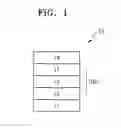


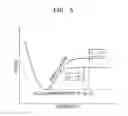










































































Sources:
- United States Patent and Trademark Office - verify current appl. status at the USPTO↗
Similar patent applications:
- » 20130299788
Organic light-emitting device, coating liquid for forming organic light-emitting device, material for forming organic light-emitting device, light source device using organic light-emitting device, and organic light-emitting device producing method - » 20180019411
INK COMPOSITION FOR ORGANIC LIGHT-EMITTING DEVICE, ORGANIC LIGHT-EMITTING DEVICE INCLUDING FILM FORMED BY USING THE INK COMPOSITION, AND METHOD OF MANUFACTURING THE ORGANIC LIGHT-EMITTING DEVICE - » 20200295273
Ink composition for organic light-emitting device, organic light-emitting device including film formed by using the ink composition, and method of manufacturing the organic light-emitting device - » 20180294412
Inkjet printing film-forming method, production method of organic light-emitting device, organic light-emitting device, and display apparatus - » 20120161616
Integrated organic light-emitting device, method for producing organic light-emitting device and organic light-emitting device produced by the method - » 20150280167
PACKAGING COVER PLATE FOR ORGANIC LIGHT-EMITTING DEVICE, ORGANIC LIGHT-EMITTING DEVICE AND DISPLAY DEVICE HAVING THE SAME - » 20070132368
METHOD FOR MANUFACTURING ORGANIC LIGHT-EMITTING DEVICE, ORGANIC LIGHT-EMITTING DEVICE, AND ELECTRONIC APPARATUS - » 20170183439
Copolymer, organic light-emitting device material including the same, and organic light-emitting device including the organic light-emitting device material - » 10669889
Organic light-emitting device, organic light-emitting display apparatus, and method of manufacturing organic light-emitting display apparatus - » 20170186950
Polymer, organic light-emitting device material including the same, and organic light-emitting device including the organic light-emitting device material
Recent applications in this class:
- » 20230092444 2023-03-23
ORGANIC ELECTROLUMINESCENT DEVICE, DISPLAY PANEL, AND DISPLAY APPARATUS - » 20220416190 2022-12-29
ORGANIC LIGHT-EMITTING DEVICE AND PREPARATION METHOD THEREFOR, DISPLAY PANEL, AND DISPLAY DEVICE - » 20220140274 2022-05-05
Light-emitting device, light-emitting appliance, display device, electronic appliance, and lighting device - » 20220131101 2022-04-28
Organic light emitting device, method of manufacturing same, and display panel - » 20220102662 2022-03-31
LIGHT EMITTING DEVICE, DISPLAY SUBSTRATE AND DISPLAY EQUIPMENT - » 20220077416 2022-03-10
Light-emitting device and electronic apparatus including the same - » 20210408422 2021-12-30
Excited state management - » 20210249621 2021-08-12
OLED display device, display panel and manufacturing method of OLED display device - » 20210226146 2021-07-22
Light-emitting element - » 20210202876 2021-07-01
Organic light emitting device and display device using the same
Recent applications for this Assignee:
- » 20250291489 2025-09-18
MEMORY DEVICE, MEMORY CONTROL DEVICE AND OPERATING METHOD OF MEMORY DEVICE FOR CHECKING COMMAND AND ADDRESS (CA) SIGNAL WITH PREDETERMINED PATTERN OF COMMAND - » 20250273015 2025-08-28
ELECTRONIC DEVICE GUIDING USER TOUCH INPUT AND METHOD FOR CONTROLLING THE SAME - » 20250265676 2025-08-21
ELECTRONIC APPARATUS AND CONTROLLING METHOD THEREOF - » 20250239461 2025-07-24
ETCHING GAS MIXTURE AND METHOD OF MANUFACTURING INTEGRATED CIRCUIT DEVICE USING THE SAME - » 20250199742 2025-06-19
ELECTRONIC DEVICE AND METHOD FOR CONTROLLING DISPLAY OF AT LEAST ONE EXTERNAL OBJECT AMONG ONE OR MORE EXTERNAL OBJECTS - » 20250199359 2025-06-19
CONNECTOR, PRINTED CIRCUIT BOARD MOUNTING THE CONNECTOR, AND DISPLAY APPARATUS INCLUDING THE SAME - » 20250174585 2025-05-29
SEMICONDUCTOR DIE AND SEMICONDUCTOR PACKAGE INCLUDING THE SAME - » 20250125179 2025-04-17
MICRO-SEMICONDUCTOR CHIP WETTING ALIGNMENT APPARATUS - » 20250103556 2025-03-27
FILE PROCESSING METHOD, ELECTRONIC APPARATUS AND STORAGE MEDIUM - » 20250069239 2025-02-27
ELECTRONIC DEVICE, METHOD, AND STORAGE MEDIUM FOR OBTAINING IMAGE FOR TRACKING