Housing for a flexible container
US20190224074A1
2019-07-25
16/373,177
2019-04-02
✅ Patent granted
US 11,207,239 B2
2021-12-28
-
-
Bryon P Gehman
Wenderoth, Lind & Ponack, L.L.P.
2039-04-02
Abstract:
The invention relates to a housing for a flexible container for transporting liquids, in particular medicaments. The housing is at least partially clad with an elastic foam.
Assignee:
- SINGLE USE SUPPORT GMBH 8 🇦🇹 Kufstein, Austria
Applicant:
Interested in similar patents?
Get notified when new applications in this technology area are published.
Classification:
A61J1/165 » CPC main
Containers specially adapted for medical or pharmaceutical purposes for collecting, storing or administering blood, plasma or medical fluids ; Infusion or perfusion containers; Details, e.g. provisions for hanging or shape retaining means ; Accessories therefor, e.g. inlet or outlet ports, filters or caps; Holders for containers Cooled holders, e.g. for medications, insulin, blood, plasma
A61J1/1468 » CPC further
Containers specially adapted for medical or pharmaceutical purposes for collecting, storing or administering blood, plasma or medical fluids ; Infusion or perfusion containers; Details, e.g. provisions for hanging or shape retaining means ; Accessories therefor, e.g. inlet or outlet ports, filters or caps Containers characterised by specific material properties
B65D25/14 » CPC further
Details of other kinds or types of rigid or semi-rigid containers Linings or internal coatings
B65D81/022 » CPC further
Containers, packaging elements, or packages, for contents presenting particular transport or storage problems, or adapted to be used for non-packaging purposes after removal of contents specially adapted to protect contents from mechanical damage Containers made of shock-absorbing material
A61J1/10 » CPC further
Containers specially adapted for medical or pharmaceutical purposes for collecting, storing or administering blood, plasma or medical fluids ; Infusion or perfusion containers Bag-type containers
A61J1/16 IPC
Containers specially adapted for medical or pharmaceutical purposes for collecting, storing or administering blood, plasma or medical fluids ; Infusion or perfusion containers; Details, e.g. provisions for hanging or shape retaining means ; Accessories therefor, e.g. inlet or outlet ports, filters or caps Holders for containers
B65D77/06 » CPC further
Packages formed by enclosing articles or materials in preformed containers, e.g. boxes, cartons, sacks or bags; Articles or materials enclosed in two or more containers disposed one within another Liquids or semi-liquids or other materials or articles enclosed in flexible containers disposed within rigid containers
A61J1/14 IPC
Containers specially adapted for medical or pharmaceutical purposes for collecting, storing or administering blood, plasma or medical fluids ; Infusion or perfusion containers Details, e.g. provisions for hanging or shape retaining means ; Accessories therefor, e.g. inlet or outlet ports, filters or caps
B65D81/02 IPC
Containers, packaging elements, or packages, for contents presenting particular transport or storage problems, or adapted to be used for non-packaging purposes after removal of contents specially adapted to protect contents from mechanical damage
Description
BACKGROUND OF THE INVENTION
The present invention concerns a housing for a flexible container for transporting liquids, in particular medicines. In addition to medicines other liquids which occur in the (bio)pharmaceutical production process can also be transported by a flexible container in such a housing.
Flexible containers with which medicines are transported in a housing are also referred to as “single use bags”. This is usually done in a frozen state, wherein the flexible container is placed in the housing before freezing. The liquid is then frozen by cooling the assembly.
The expansion in volume during freezing (about 8%) creates a pressure that is not to be underestimated on the housing and the flexible container. This entails the risk of mechanical damage and consequently leaks in the mechanical container.
The object of the present invention is to reduce the mechanical stress on the flexible container and the housing in relation to the state of the art upon freezing.
SUMMARY OF THE INVENTION
The above object is effected by an elastic foam—in other words, by at least one body of elastic foam—with which the housing is lined. In particular that can at least partially—preferably substantially completely—compensate for the increase in volume of the container arranged in the housing, that occurs during freezing. Protection is also sought for an arrangement comprising a housing according to the invention and a flexible container which is arranged therein and is filled with a liquid, in particular a medicine.
In addition, protection is sought for the use of a housing according to the invention, wherein a liquid, in particular a drug, is put into the flexible container, the filled container is disposed in the housing and the liquid is frozen by cooling the arrangement consisting of housing and container.
Liquids which can be transported in the flexible container are for example protein solutions, end products from a purification procedure, antibody solutions and other high-value intermediate products in the pharmaceutical production cycle, and naturally medicines themselves.
A preferred embodiment may be one in which the foam has decreasing elasticity with a decreasing temperature below the freezing point. It can also be provided that the foam substantially hardens at a temperature between 0° C. to −30° C., preferably between −5° C. and −25° C. and particularly preferably between −10° C. and −20° C., These measures can contribute to ensuring that the flexible container in the housing lies in a precisely adapted “bed” in the housing. All forces acting on the flexible container and the housing are thereby absorbed by larger surfaces. Damage caused by clamping or the like is thereby at least reduced, if not completely excluded.
In a particularly preferred embodiment, the foam is such that the hardening process is reversible. Upon an increase in the temperature of the assembly after transport, the elasticity of the foam is thus restored and thus affords a certain degree of protection from effects acting on the flexible container when it is removed from the housing. In addition, by virtue of by the reversible process, the housing can in principle be reused, if desired.
Hardening of the foam may also be referred to as becoming essentially inelastic. This does not involve curing in the production of the foam, but the change in the elasticity properties under the effect of cold.
In a particularly preferred embodiment, the housing is lined with the foam in such a way that the container—preferably including any attachments—is completely surrounded by the foam when the container is arranged in the housing. In that way not only the flexible container but also the attachments can be even better protected from damage.
As attachments for such flexible containers are often of differing shapes, because for example they comprise deformable tubes and the like, a foam block in the housing may be advantageous, which can receive the attachments (by deformation).
The housing may be of a substantially cuboidal configuration. This can facilitate for example easy stacking of the housings.
It can also happen that containers have to be transported, that have not been completely filled. In this case an additional layer of foam can be used, whereby in this case too a “bed” filling the volume of the housing is created for the flexible container.
BRIEF DESCRIPTION OF DRAWINGS
Further advantages and details of the invention will be apparent from the Figures and the associated specific description. In the Figures:
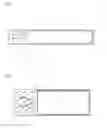
FIG. 1 is a sectional side view of a housing according to the invention with flexible container disposed therein, and
FIG. 2 is a sectional plan view thereof.
DETAILED DESCRIPTION OF THE INVENTION
As can be seen from FIGS. 1 and 2 the flexible container 2 is arranged within the housing 1. In this case the housing 1 is lined with foam 3 and a foam block 5. When the liquid within the container 2 freezes the container 2 expands. That increase in volume is absorbed by the foam 3 and the foam block 5 so that no stress—or at least not a significant one—arises between the container 2 and the housing 1. Attachments 4, for example hoses and valves and the like, are arranged above or within the foam block 5 which by virtue of its elasticity or flexibility can accommodate same.
In the present embodiment the housing 1 is of a completely enclosing design. The housing 1 may comprise plastics and/or metal. In the present embodiment the cover layers are each made from stainless steel and the side walls are made of a polyethylene (specifically: high density polyethylene, HDPE).
The completely closed design of the housing 1 ensures access protection for the container 2. Theoretically it would also be possible fit a closure or a seal whereby manipulation during the transport process or in the warehouse can be excluded or at least rendered visible.
The foam 3 may preferably be such that it is relatively yielding and flexible at room temperature (and slight negative temperatures) and hardens at lower temperatures (−15° C. and colder) and encloses the container 2 arranged in the housing 1 and protects it from relative movement. The container 2 protected in that way can accordingly not be bent or compressed because relative movement with respect to the housing 1 is indeed prevented. As a result cracks and leaks can be prevented on the container 2 which for example is made of plastic.
The foam used for example can be so-called visco-elastic foam which hardens at certain negative temperatures.
Freezing of the arrangement of housing 1 and filled container 2 can be effected for example by contact cooling or circulatory air cooling systems or in some other way. In contact cooling systems the cover surfaces of the housing 1 (also referred to as “shell”) lie against cooled surfaces. In circulatory air cooling systems cooled air flows around the housing 1.
The individual sides of the housing 1, in particular the cover surfaces (that is to say top and bottom), can be made of relatively thin material, in particular steel, in order to achieve fast heat conduction (or cold conduction).
The housing 1 according to the invention—as already mentioned—can be reused, in particular if the foam 3 is such that hardening at low temperatures is reversible. It will be appreciated that one-off use of the housing 1 is also conceivable. For that purpose the housing 1 can be easy to strip down for simple recycling measures.
Claims
1. A housing for a flexible container for transporting liquids, in particular medicines, which is at least partially lined with an elastic foam.
2. The housing according to claim 1, wherein the housing is lined with the foam in such a way that an increase in volume of the container arranged in the housing, that occurs upon freezing, is at least partially—preferably substantially completely—compensated by the foam.
3. The housing according to claim 1, wherein the foam has a decreasing elasticity with decreasing temperature below the freezing point.
4. The housing according to claim 1, wherein the foam substantially hardens at a temperature between 0° C. to −30° C., preferably between −5° C. and −25° C. and particularly preferably between −10° C. and −20° C.
5. The housing according to claim 4, wherein the hardening process is reversible.
6. The housing according to claim 1, wherein the housing is lined with the foam in such a way that the container—preferably together with any attachments—is completely surrounded by the foam when the container is arranged in the housing.
7. The housing according to claim 6, wherein a foam block is provided in the housing for receiving the attachments.
8. The housing according to claim 1, wherein the housing is of substantially cuboidal shape
9. An arrangement comprising the housing according to claim 1 and a flexible container arranged therein and filled with a liquid, in particular a medicine.
10. A use of the housing according to claim 1, wherein a liquid, in particular a medicine, is put into the flexible container, the filled container is arranged in the housing and the liquid is cooled by cooling the arrangement consisting of housing and container.
11. The use according to claim 10, wherein the liquid is frozen by cooling the arrangement of housing and container.
12. The use according to claim 11, wherein at least one additional layer of foam is arranged in the container when the flexible container is filled only to a part of its capacity.
Images & Drawings included:

Sources:
- United States Patent and Trademark Office - verify current appl. status at the USPTO↗
Similar patent applications:
- » 20060249535
Method of draining a flexible container housing a viscous product - » 20170285525
Developer cartridge having housing accommodating flexible container for storing developer - » 20220047457
Use of a housing for a flexible container - » 20230157928
Housing for a flexible container - » 20250268794
HOUSING FOR A FLEXIBLE CONTAINER
Recent applications in this class:
- » 20250268794 2025-08-28
HOUSING FOR A FLEXIBLE CONTAINER - » 20250235383 2025-07-24
MEDICINE REFRIGERATION CUP WITH PORTABLE MEDICINE BOX - » 20250195331 2025-06-19
THERMAL SENSOR FOR BIOPHARMECUTICAL STORAGE CONTAINERS AND METHODS OF CORRELATING THERMAL SENSORS - » 20250170021 2025-05-29
SYSTEMS AND METHODS FOR TEMPERATURE CONTROLLED BIOLOGICS STORAGE, DELIVERY, INTEGRITY, AND SECURITY - » 20250114275 2025-04-10
Insulin Bottle Insulator and Protection Device - » 20250090422 2025-03-20
DEVICES, SYSTEMS AND METHODS FOR CONTROLLING ENVIRONMENTAL CONDITIONS OF SUBSTANCES - » 20250017822 2025-01-16
CURVED BLOOD CASSETTE SYSTEM - » 20240350363 2024-10-24
PORTABLE TEMPERATURE CONTROLLED BAG WITH SECURELY MOUNTED UNPOWERED COOLING DEVICE - » 20240269041 2024-08-15
CONTAINER FOR BLOOD COMPONENT COOLING AND FREEZING - » 20240225957 2024-07-11
SELF CENTERING VIAL HOLDER FOR IMMERSION PROBES
Recent applications for this Assignee:
- » 20230157928 2023-05-25
Housing for a flexible container - » 20220185538 2022-06-16
Method for protecting tubing - » 20220063875 2022-03-03
Container - » 20220057035 2022-02-24
Sterile connector - » 20220047457 2022-02-17
Use of a housing for a flexible container - » 20200217579 2020-07-09
Method for freezing a liquid - » 20190226939 2019-07-25
Method for inspecting a seal of a flexible container