Liquid crystal composition, liquid crystal display element and liquid crystal display
US20200239777A1
2020-07-30
16/381,275
2019-04-11
✅ Patent granted
US 11,254,873 B2
2022-02-22
-
-
Chanceity N Robinson
Muncy, Geissler, Olds & Lowe, PC
2039-06-25
Abstract:
The present disclosure relates to a liquid crystal composition, and a liquid crystal display element or liquid crystal display comprising the liquid crystal composition, and belongs to the field of liquid crystal display, said liquid crystal composition comprises a compound represented by formula I, a compound represented by formula II, one or more compounds represented by formula III, and at least one polymerizable compound, wherein the liquid crystal composition simultaneously has a low rotary viscosity, a large refractive index, and a fast response speed.
Inventors:
- Guoliang Yun 27 🇨🇳 Shijiazhuang, China
- Zhian Liang 14 🇨🇳 Shijiazhuang, China
- Guoliang Yun 14 🇨🇳 Hebei, China
- Zhian LIANG 10 🇨🇳 Hebei, China
- Sumin KANG 15 🇨🇳 Hebei, China
- Sumin KANG 11 🇨🇳 Shijiazhuang, China
- Jiaming LI 7 🇨🇳 Shijiazhuang, China
- Xuan ZHANG 7 🇨🇳 Shijiazhuang, China
- Ruixiang LIANG 9 🇨🇳 Shijiazhuang, China
- Ruixiang Liang 9 🇨🇳 Hebei, China
- Jiaming Li 8 🇨🇳 Hebei, China
- Xuan Zhang 6 🇨🇳 Hebei, China
Assignee:
- SHIJIAZHUANG CHENGZHI YONGHUA DISPLAY MATERIAL CO., LTD. 17 🇨🇳 Hebei, China
Applicant:
Interested in similar patents?
Get notified when new applications in this technology area are published.
Classification:
C09K19/44 » CPC main
Liquid crystal materials characterised by the chemical structure of the liquid crystal components, e.g. by a specific unit; Mixtures of liquid crystal compounds covered by two or more of the preceding groups - containing compounds with benzene rings directly linked
C09K19/30 IPC
Liquid crystal materials characterised by the chemical structure of the liquid crystal components, e.g. by a specific unit; Non-steroidal liquid crystal compounds containing at least two non-condensed rings containing saturated or unsaturated non-aromatic rings, e.g. cyclohexane rings
C09K19/12 » CPC further
Liquid crystal materials characterised by the chemical structure of the liquid crystal components, e.g. by a specific unit; Non-steroidal liquid crystal compounds containing at least two non-condensed rings containing at least two benzene rings at least two benzene rings directly linked, e.g. biphenyls
C09K2019/3408 » CPC further
Liquid crystal materials characterised by the chemical structure of the liquid crystal components, e.g. by a specific unit; Non-steroidal liquid crystal compounds containing at least one heterocyclic ring having oxygen as hetero atom the heterocyclic ring being a five-membered ring Five-membered ring with oxygen(s) in fused, bridged or spiro ring systems
C09K19/34 IPC
Liquid crystal materials characterised by the chemical structure of the liquid crystal components, e.g. by a specific unit; Non-steroidal liquid crystal compounds containing at least one heterocyclic ring
C09K19/3003 » CPC further
Liquid crystal materials characterised by the chemical structure of the liquid crystal components, e.g. by a specific unit; Non-steroidal liquid crystal compounds containing at least two non-condensed rings containing saturated or unsaturated non-aromatic rings, e.g. cyclohexane rings; Cyclohexane rings Compounds containing at least two rings in which the different rings are directly linked (covalent bond)
C09K19/3028 » CPC further
Liquid crystal materials characterised by the chemical structure of the liquid crystal components, e.g. by a specific unit; Non-steroidal liquid crystal compounds containing at least two non-condensed rings containing saturated or unsaturated non-aromatic rings, e.g. cyclohexane rings; Cyclohexane rings in which at least two rings are linked by a carbon chain containing carbon to carbon single bonds
C09K19/3066 » CPC further
Liquid crystal materials characterised by the chemical structure of the liquid crystal components, e.g. by a specific unit; Non-steroidal liquid crystal compounds containing at least two non-condensed rings containing saturated or unsaturated non-aromatic rings, e.g. cyclohexane rings; Cyclohexane rings in which the rings are linked by a chain containing carbon and oxygen atoms, e.g. esters or ethers
C09K19/3098 » CPC further
Liquid crystal materials characterised by the chemical structure of the liquid crystal components, e.g. by a specific unit; Non-steroidal liquid crystal compounds containing at least two non-condensed rings containing saturated or unsaturated non-aromatic rings, e.g. cyclohexane rings Unsaturated non-aromatic rings, e.g. cyclohexene rings
C09K19/3405 » CPC further
Liquid crystal materials characterised by the chemical structure of the liquid crystal components, e.g. by a specific unit; Non-steroidal liquid crystal compounds containing at least one heterocyclic ring having oxygen as hetero atom the heterocyclic ring being a five-membered ring
C09K19/3491 » CPC further
Liquid crystal materials characterised by the chemical structure of the liquid crystal components, e.g. by a specific unit; Non-steroidal liquid crystal compounds containing at least one heterocyclic ring having sulfur as hetero atom
C09K2019/0448 » CPC further
Liquid crystal materials characterised by the chemical structure of the liquid crystal components, e.g. by a specific unit characterized by a linking chain between rings or ring systems, a bridging chain between extensive mesogenic moieties or an end chain group the end chain group being a polymerizable end group, e.g. -Sp-P or acrylate
C09K19/04 IPC
Liquid crystal materials characterised by the chemical structure of the liquid crystal components, e.g. by a specific unit
Description
TECHNICAL FIELD
The present disclosure belongs to the field of liquid crystal display, and more particularly relates to a liquid crystal composition and a liquid crystal display element or liquid crystal display comprising the liquid crystal composition.
BACKGROUND ART
Early commercial TFT-LCD products basically relate to using a TN display mode, and the largest problem thereof is a narrow viewing angle. With the increase in product size, especially in applications in the TV field, an IPS display mode and a VA display mode, which feature a wide view angle, have been sequentially developed and applied; in particular, on the basis of the improvement of the VA display mode, many big companies have successively made a breakthrough in the development thereof, which mainly depends on the advantages of a wide view angle, a high contrast, no need for rubbing alignment, etc., of the VA mode itself; furthermore, the contrast of the VA mode display is less dependent on the optical anisotropy (Δn) of a liquid crystal, the thickness of a liquid crystal cell (d) and the wavelength (λ) of an incident light, which will inevitably make the VA mode become a very promising display technique.
However, liquid crystal media used for display elements of the VA mode, etc. themselves are not perfect, and compared with positive dielectric anisotropic display elements, they have the disadvantages of a smaller dielectricity, a relatively slow response time, a relatively high drive voltage, etc., and are more prone to the problems of defective displaying, afterimage etc.
At present, liquid crystal compositions which are applicable to display devices and excellent in response speed and in which various display defects are improved are still desired.
SUMMARY OF THE INVENTION
In order to solve the problems in the prior art, the present inventors have conducted intensive studies and surprisingly found that a liquid crystal composition containing a combination represented by a compound represented by formula I, a compound represented by formula II, and a compound represented by formula III as mentioned hereinafter exhibits a fast response speed when applied to a liquid crystal display element, thereby completing the present disclosure.
A first object of the present disclosure is to provide a liquid crystal composition which has a low rotary viscosity and a fast response speed.
A second object of the present disclosure is to provide a liquid crystal display element comprising the liquid crystal composition of the present disclosure. The liquid crystal display element has a fast response speed.
A third object of the present disclosure is to further provide a liquid crystal display comprising the liquid crystal composition of the present disclosure. The liquid crystal display has a fast response speed.
In order to achieve the above-mentioned objects, the following technical solution is used in the present disclosure:
The present disclosure provides a liquid crystal composition comprising a compound represented by formula I, a compound represented by formula II, one or more compounds represented by formula III, and at least one polymerizable compound:
wherein
R1 and R2 each independently represent an alkoxy group having a carbon atom number of 1-10.
In the liquid crystal composition of the present disclosure, there is no limitation on the above-mentioned polymerizable compound, and a person skilled in the art would be able to select a suitable polymerizable compound according to common knowledge in the art.
The present disclosure further provides a liquid crystal display element comprising the liquid crystal composition of the present disclosure, which liquid crystal display element is an active matrix addressing display element or a passive matrix addressing display element.
The present disclosure further provides a liquid crystal display comprising the liquid crystal composition of the present disclosure, which liquid crystal display is an active matrix addressing display or a passive matrix addressing display.
DETAILED DESCRIPTION OF EMBODIMENTS
[Liquid Crystal Composition]
The liquid crystal composition of the present disclosure comprises a compound represented by formula I, a compound represented by formula II, one or more compounds represented by formula III, and at least one polymerizable compound.
wherein
R1 and R2 each independently represent an alkoxy group having a carbon atom number of 1-10.
As the alkoxy group having a carbon atom number of 1-10, examples include methoxy, ethoxy, n-propoxy, isopropoxy, n-butoxy, isobutoxy, pentyloxy, hexyloxy, heptyloxy, octyloxy, nonyloxy, decyloxy etc.
In the liquid crystal composition of the present disclosure, the above-mentioned polymerizable compound is preferably selected from formulas RM-1 to RM-8
The liquid crystal composition of the present disclosure preferably further comprises one or more compounds represented by formula IV:
wherein R3 and R4 represent an alkyl group having a carbon atom number of 1-10, a fluorine-substituted alkyl group having a carbon atom number of 1-10, an alkoxy group having a carbon atom number of 1-10, a fluorine-substituted alkoxy group having a carbon atom number of 1-10, an alkenyl group having a carbon atom number of 2-10, a fluorine-substituted alkenyl group having a carbon atom number of 2-10, an alkenoxy group having a carbon atom number of 3-8 or an fluorine-substituted alkenoxy group having a carbon atom number of 3-8, and any one or more unconnected CH2 in the groups represented by R3 and R4 are optionally substituted with cyclopentyl, cyclobutyl or cyclopropyl;
Z1 and Z2 each independently represent a single bond, —CH2CH2— or —CH2O—;
each independently represent 1,4-cyclohexylene, 1,4-cyclohexenylene, 1,4-phenylene or a fluorinated 1,4-phenylene; and
m and n each independently represent 0, 1 or 2, with m+n≤2;
furthermore, where m+n=1, Z1 and Z2 are single bonds, and
represent 1,4-phenylene, R3 and R4 do not simultaneously represent an alkoxy group having a carbon atom number of 1-10.
In the liquid crystal composition of the present disclosure, preferably, the compound represented by formula IV mentioned above is selected from the group consisting of compounds represented by formula IV-1 to IV-14 below:
wherein
R31 represents an alkyl group having a carbon atom number of 1-10, a fluorine-substituted alkyl group having a carbon atom number of 1-10, an alkenyl group having a carbon atom number of 2-10, a fluorine-substituted alkenyl group having a carbon atom number of 2-10, an alkenoxy group having a carbon atom number of 3-8 or an fluorine-substituted alkenoxy group having a carbon atom number of 3-8; R41 represents an alkyl group having a carbon atom number of 1-10, a fluorine-substituted alkyl group having a carbon atom number of 1-10, an alkoxy group having a carbon atom number of 1-10, a fluorine-substituted alkoxy group having a carbon atom number of 1-10, an alkenyl group having a carbon atom number of 2-10, a fluorine-substituted alkenyl group having a carbon atom number of 2-10 or an alkenoxy group having a carbon atom number of 3-8; and any one or more unconnected CH2 in the groups represented by R31 and R41 are optionally substituted with cyclopentyl, cyclobutyl or cyclopropyl.
In the liquid crystal composition of the present disclosure, preferably, where the total of the components other than the polymerizable compound is 100% by mass, the total mass content of the compound represented by formula I above is 1%-47%; the total mass content of the compound represented by formula II above is 1%-25%; the total mass content of the compound represented by formula III above is 1%-35%; and the polymerizable compound above is added in an amount of 0.01%-1%, preferably 0.03%-0.4% on the basis of the total mass % of the liquid crystal.
The liquid crystal composition of the present disclosure preferably further comprises one or more compounds represented by formula V:
wherein
R5 and R6 represent an alkyl group having a carbon atom number of 1-10, a fluorine-substituted alkyl group having a carbon atom number of 1-10, an alkoxy group having a carbon atom number of 1-10, a fluorine-substituted alkoxy group having a carbon atom number of 1-10, an alkenyl group having a carbon atom number of 2-10 or a fluorine-substituted alkenyl group having a carbon atom number of 2-10; and
each independently represent 1,4-cyclohexylene, 1,4-cyclohexenylene or 1,4-phenylene; furthermore, where
simultaneously represent 1,4-cyclohexylene, and one of R5 and R6 represents propyl, the other one of the R5 and R6 does not represent vinyl.
In the liquid crystal composition of the present disclosure, preferably, the compound represented by formula V mentioned above is selected from the group consisting of compounds represented by formula V-1 to V-3 below:
wherein R5 and R6 represent an alkyl group having a carbon atom number of 1-10, a fluorine-substituted alkyl group having a carbon atom number of 1-10, an alkoxy group having a carbon atom number of 1-10, a fluorine-substituted alkoxy group having a carbon atom number of 1-10, an alkenyl group having a carbon atom number of 2-10 or a fluorine-substituted alkenyl group having a carbon atom number of 2-10; and in formula V-1, where one of R5 and R6 represents propyl, the other one of the R5 and R6 does not represent vinyl.
The liquid crystal composition of the present disclosure preferably further comprises one or more selected from the group consisting of compounds represented by formula VI-1 to VI-3 below:
wherein
R71 represents an alkyl group having a carbon atom number of 1-10, a fluorine-substituted alkyl group having a carbon atom number of 1-10, an alkoxy group having a carbon atom number of 1-10, a fluorine-substituted alkoxy group having a carbon atom number of 1-10, or vinyl; and R72, R73 and R8 represent an alkyl group having a carbon atom number of 1-10, a fluorine-substituted alkyl group having a carbon atom number of 1-10, an alkoxy group having a carbon atom number of 1-10, a fluorine-substituted alkoxy group having a carbon atom number of 1-10, an alkenyl group having a carbon atom number of 2-10 or a fluorine-substituted alkenyl group having a carbon atom number of 2-10.
The liquid crystal composition of the present disclosure preferably further comprises one or more compounds represented by formula VII:
wherein
R9 represents an alkyl group having a carbon atom number of 1-10, a fluorine-substituted alkyl group having a carbon atom number of 1-10, an alkoxy group having a carbon atom number of 1-10 or a fluorine-substituted alkoxy group having a carbon atom number of 1-10, and any one or more unconnected CH2 in these groups are optionally substituted with cyclopentyl, cyclobutyl or cyclopropyl;
R10 represents an alkyl group having an atom number of 1-10, a fluorine-substituted alkyl group having a carbon atom number of 1-10, an alkoxy group having a carbon atom number of 1-10 or a fluorine-substituted alkoxy group having a carbon atom number of 1-10; and
X represents O or S.
In the liquid crystal composition of the present disclosure, preferably, the compound represented by formula VII mentioned above is selected from the group consisting of compounds represented by formula VII-1 to VII-12 below:
wherein R91 and R101 represent an alkyl group having a carbon atom number of 1-10.
[Liquid Crystal Display Element]
The liquid crystal display element of the present disclosure comprises the liquid crystal composition of the present disclosure, which liquid crystal display element is an active matrix display element or a passive matrix display element.
Optionally, said liquid crystal display element may be an active matrix liquid crystal display element.
Optionally, said active matrix display element may be, for example, a PSVA-TFT liquid crystal display element.
The liquid crystal display element comprising the liquid crystal composition of the present disclosure has a faster response speed and a smaller cell thickness.
[Liquid Crystal Display]
The liquid crystal display of the present disclosure comprises the liquid crystal composition of the present disclosure, which liquid crystal display is an active matrix display or a passive matrix display.
Optionally, said liquid crystal display may be an active matrix liquid crystal display.
Optionally, said active matrix display may be, for example, a PSVA-TFT liquid crystal display.
The liquid crystal display comprising the liquid crystal composition of the present disclosure has a faster response speed and a smaller cell thickness.
EXAMPLE
In order to more clearly illustrate the present disclosure, the present disclosure is further described below in conjunction with preferred examples. A person skilled in the art should understand that the content described in detail below is illustrative rather than limiting, and should not limit the scope of protection of the present disclosure.
In this description, unless otherwise specified, percentages are mass percentages, temperatures are in degree Celsius (° C.), and the specific meanings of the other symbols and the test conditions are as follows:
Cp represents the clearing point (° C.) of the liquid crystal measured by a DSC quantitative method;
Δn represents optical anisotropy, no is the refractive index of an ordinary light, ne is the refractive index of an extraordinary light, with the test conditions being: 25±2° C., 589 nm and using an abbe refractometer for testing;
Δε represents the dielectric anisotropy, Δε=ε//−ε⊥, wherein ε// is a dielectric constant parallel to a molecular axis, and ε⊥ is a dielectric constant perpendicular to the molecular axis, the test condition is 25±0.5° C., a 20 micron parallel cell is used, and INSTEC: ALCT-IR1 is used for the test;
γ1 represents a rotary viscosity (mPa·s), with the test conditions being 25±0.5° C., a 20 micron parallel cell, and INSTEC: ALCT-IR1 for testing; and
K11 is twist elastic constant, and K33 is splay elastic constant, with the test conditions being: 25° C., INSTEC:ALCT-IR1, and 18 μm vertical cell;
A method for preparing the liquid crystal composition involves: weighing various liquid crystal monomers at a certain ratio and then placing them in a stainless steel beaker; placing the stainless steel beaker containing these liquid crystal monomers on a magnetic stirring instrument for heating and melting; and after the liquid crystal monomers in the stainless steel beaker are mostly melted, adding a magnetic rotor to the stainless steel beaker; uniformly stirring the mixture; and cooling the mixture to room temperature to obtain the liquid crystal composition.
In the examples of the present disclosure, liquid crystal monomer structures are represented by codes, wherein the codes of cyclic structures, end groups and linking groups of liquid crystals are represented as follows in tables 1 and 2.
| TABLE 1 |
| Corresponding code for ring structure |
| Ring structure | Corresponding code | |
| C | ||
| P | ||
| L | ||
| Y | ||
| Sb | ||
| Sc | ||
| TABLE 2 |
| Corresponding code for end group and linking group |
| End group and linking group | Corresponding code | |
| CnH2n + 1— | n— | |
| CnH2n + 1O— | nO— | |
| —CF3 | —T | |
| —OCF3 | —OT | |
| —CH2O— | —O— | |
| —F | —F | |
| —CH2CH2— | —E— | |
| —CH═CH— | —V— | |
| —CH═CH—CnH2n + 1 | Vn— | |
| Cp— | ||
| Cpr— | ||
| Cpr1— | ||
Examples
the code of which is CC-Cp-V1;
the code of which is CPY-2-O2;
the code of which is CCY-3-O2;
the code of which is COY-3-O2;
the code of which is CCOY-3-O2;
the code of which is Sb-Cp1O-O4; and
the code of which is Sc-Cp1O-O4.
Example 1
The formulation of the liquid crystal composition and the corresponding properties thereof are as shown in table 3 below.
| TABLE 3 |
| Formulation of the liquid crystal composition of |
| Example 1 and the corresponding properties thereof |
| Liquid crystal | Content (in parts | |
| Category | monomer code | by mass) |
| I | CC-3-V | 40 |
| II | CCP-V2-1 | 25 |
| III | PY-2O-O2 | 15 |
| III | PY-2O-O4 | 10 |
| III | PY-1O-O2 | 10 |
| RM-1 | 1 | |
| Δε [1 KHz, 25° C.]: −2.4 | ||
| Δn [589 nm, 25° C.]: 0.105 | ||
| Cp: 75° C. | ||
| γ1: 71 mPa · s | ||
| K33: 17.6 |
Comparative Example 1
The formulation of the liquid crystal composition and the corresponding properties thereof are as shown in table 4 below.
| TABLE 4 |
| Formulation of the liquid crystal composition of Comparative |
| Example 1 and the corresponding properties thereof |
| Liquid crystal | Content (in | |
| Category | monomer code | parts by mass) |
| CC-5-V | 40 | |
| II | CCP-V2-1 | 25 |
| III | PY-2O-O2 | 15 |
| III | PY-2O-O4 | 10 |
| III | PY-1O-O2 | 10 |
| RM-1 | 1 | |
| Δε [1 KHz, 25° C.]: −2.5 | ||
| Δn [589 nm, 25° C.]: 0.107 | ||
| Cp: 78° C. | ||
| γ1: 95 mPa · s | ||
| K33: 18.2 |
CC-3-V in Example 1 is replaced by CC-5-V to form Comparative Example 1. Compared with Comparative Example 1, Example 1 has no crystal precipitation at normal temperature, and differ to a smaller extent in the properties of dielectricity, refractive index and k value, but has a smaller rotary viscosity γ1 and a smaller γ1/K33, thus resulting in a faster response. It can be seen therefrom that the liquid crystal composition of the present disclosure has a good low-temperature mutual solubility and a fast response speed.
Comparative Example 2
The formulation of the liquid crystal composition and the corresponding properties thereof are as shown in table 5 below.
| TABLE 5 |
| Formulation of the liquid crystal composition of Comparative |
| Example 2 and the corresponding properties thereof |
| Liquid crystal | Content (in parts | |
| Category | monomer code | by mass) |
| I | CC-3-V | 40 |
| CCP-3-1 | 25 | |
| III | PY-2O-O2 | 15 |
| III | PY-2O-O4 | 10 |
| III | PY-1O-O2 | 10 |
| RM-1 | 1 | |
| Δε [1 KHz, 25° C.]: −2.3 | ||
| Δn [589 nm, 25° C.]: 0.104 | ||
| Cp: 76° C. | ||
| γ1: 73 mPa · s | ||
| K33: 17.2 |
CCP-V2-1 in Example 1 is replaced by CCP-3-O1 to form Comparative Example 2. Compared with Comparative Example 2, Example 1 has no crystal precipitation at normal temperature, and differ to a smaller extent in the properties of dielectricity, refractive index and k value, but has a smaller rotary viscosity γ1 is and a smaller γ1/K33, thus resulting in a faster response. It can be seen therefrom that the liquid crystal composition of the present disclosure has a good low-temperature mutual solubility and a fast response speed.
Comparative Example 3
The formulation of the liquid crystal composition and the corresponding properties thereof are as shown in table 6 below.
| TABLE 6 |
| Formulation of the liquid crystal composition of Comparative |
| Example 3 and the corresponding properties thereof |
| Liquid crystal | Content (in parts | |
| Category | monomer code | by mass) |
| I | CC-3-V | 40 |
| II | CCP-V2-1 | 25 |
| PY-3-O2 | 15 | |
| PY-2-O4 | 10 | |
| PY-1-O2 | 10 | |
| RM-1 | 1 | |
| Δε [1 KHz, 25° C.]: −2.1 | ||
| Δn [589 nm, 25° C.]: 0.098 | ||
| Cp: 64° C. | ||
| γ1: 54 mPa · s | ||
| K33: 13.5 |
PY-2O-O2, PY-2O-O4 and PY-1O-O2 in Example 1 are replaced by PY-3-O2, PY-2-O4 and PY-1-O2 to form Comparative Example 3, and by comparing Example 1 with Comparative Example 3, Example 1 has a large dielectricity, a high clearing point, and a large refractive index. It can be seen therefrom that the liquid crystal composition of the present disclosure can be used for the development of a liquid crystal composition having a small cell thickness and a fast response speed.
Example 2
The formulation of the liquid crystal composition and the corresponding properties thereof are as shown in table 7 below.
| TABLE 7 |
| Formulation of the liquid crystal composition of |
| Example 2 and the corresponding properties thereof |
| Liquid crystal | Content (in parts | |
| Category | monomer code | by mass) |
| I | CC-3-V | 45 |
| II | CCP-V2-1 | 7 |
| III | PY-2O-O2 | 3 |
| III | PY-2O-O4 | 7 |
| IV | CY-3-O2 | 15 |
| IV | PY-3-O2 | 3 |
| IV | CCY-2-O2 | 5 |
| IV | CCY-3-O2 | 11 |
| IV | CPY-3-O2 | 4 |
| RM-1 | 0.01 | |
| Δε [1 KHz, 25° C.]: −3.0 | ||
| Δn [589 nm, 25° C.]: 0.084 | ||
| Cp: 65° C. | ||
| γ1: 63 mPa · s | ||
| K33: 14.3 |
Example 3
The formulation of the liquid crystal composition and the corresponding properties thereof are as shown in table 8 below.
| TABLE 8 |
| Formulation of the liquid crystal composition of |
| Example 3 and the corresponding properties thereof |
| Liquid crystal | Content (in parts | |
| Category | monomer code | by mass) |
| I | CC-3-V | 35 |
| II | CCP-V2-1 | 12 |
| III | PY-2O-O2 | 3 |
| IV | CY-3-O2 | 8 |
| IV | CCY-2-O2 | 7 |
| IV | CCY-3-O2 | 5 |
| IV | COY-3-O2 | 5 |
| IV | PY-3-O2 | 14 |
| IV | CCOY-3-O2 | 11 |
| RM-3 | 0.03 | |
| Δε [1 KHz, 25° C.]: −4.2 | ||
| Δn [589 nm, 25° C.]: 0.078 | ||
| Cp: 55° C. | ||
| γ1: 70 mPa · s | ||
| K33: 12.3 |
Example 4
The formulation of the liquid crystal composition and the corresponding properties thereof are as shown in table 9 below.
| TABLE 9 |
| Formulation of the liquid crystal composition of |
| Example 4 and the corresponding properties thereof |
| Liquid crystal | Content (in parts | |
| Category | monomer code | by mass) |
| I | CC-3-V | 19.5 |
| II | CCP-V2-1 | 9 |
| III | PY-2O-O2 | 5 |
| III | PY-2O-O4 | 10 |
| IV | CY-3-O2 | 7.7 |
| IV | CCY-2-O2 | 7 |
| IV | COY-3-O2 | 5 |
| IV | CCOY-3-O2 | 13 |
| V | CC-3-V1 | 5 |
| V | CC-2-3 | 11 |
| V | CC-4-3 | 3 |
| V | PP-5-1 | 3 |
| V | CP-3-O2 | 1.8 |
| RM-3 | 0.36 | |
| Δε [1 KHz, 25° C.]: −3.6 | ||
| Δn [589 nm, 25° C.]: 0.088 | ||
| Cp: 68° C. | ||
| γ1: 87 mPa · s | ||
| K33: 15.1 |
Example 5
The formulation of the liquid crystal composition and the corresponding properties thereof are as shown in table 10 below.
| TABLE 10 |
| Formulation of the liquid crystal composition of |
| Example 5 and the corresponding properties thereof |
| Liquid crystal | Content (in parts | |
| Category | monomer code | by mass) |
| I | CC-3-V | 5.5 |
| II | CCP-V2-1 | 9 |
| III | PY-2O-O2 | 2 |
| III | PY-2O-O4 | 7 |
| IV | PY-3-O2 | 11 |
| IV | CCOY-3-O2 | 13 |
| IV | CY-3-O2 | 16.5 |
| V | CC-2-3 | 19.5 |
| V | CC-4-3 | 7 |
| VI-1 | CCP-3-O1 | 7 |
| VI-1 | CCP-V-1 | 2.5 |
| RM-3 | 0.36 | |
| Δε [1 KHz, 25° C.]: −3.3 | ||
| Δn [589 nm, 25° C.]: 0.087 | ||
| Cp: 67° C. | ||
| γ1: 85 mPa · s | ||
| K33: 13.0 |
Example 6
The formulation of the liquid crystal composition and the corresponding properties thereof are as shown in table 11 below.
| TABLE 11 |
| Formulation of the liquid crystal composition of |
| Example 6 and the corresponding properties thereof |
| Liquid crystal | Content (in parts | |
| Category | monomer code | by mass) |
| I | CC-3-V | 1 |
| II | CCP-V2-1 | 11 |
| III | PY-2O-O2 | 7 |
| IV | COY-3-O2 | 13 |
| IV | CPY-3-O2 | 11 |
| IV | PY-3-O2 | 13 |
| V | CP-3-O2 | 11 |
| V | CC-2-3 | 7 |
| V | CC-5-3 | 7 |
| VI-1 | CCP-V-1 | 7 |
| VI-2 | CPP-3-2 | 5 |
| VII | Sb-CP1O-O4 | 2 |
| VII | Sc-CP1O-O4 | 5 |
| RM | 0.07 | |
| Δε [1 KHz, 25° C.]: −3.7 | ||
| Δn [589 nm, 25° C.]: 0.114 | ||
| Cp: 70° C. | ||
| γ1: 88 mPa · s | ||
| K33: 13.1 |
Example 7
The formulation of the liquid crystal composition and the corresponding properties thereof are as shown in table 12 below.
| TABLE 12 |
| Formulation of the liquid crystal composition of |
| Example 7 and the corresponding properties thereof |
| Liquid crystal | Content (in parts | |
| Category | monomer code | by mass) |
| I | CC-3-V | 13.5 |
| II | CCP-V2-1 | 3 |
| III | PY-2O-O2 | 3 |
| III | PY-2O-O4 | 9 |
| IV | PY-3-O2 | 9 |
| IV | COY-3-O2 | 11 |
| IV | CCY-3-O2 | 15 |
| IV | CCOY-3-O2 | 12 |
| V | CC-2-3 | 5 |
| V | CC-4-3 | 9 |
| V | CP-5-O2 | 3.5 |
| V | PP-5-1 | 1 |
| VI-2 | CPP-3-2V1 | 6 |
| RM-5 | 0.23 | |
| Δε [1 KHz, 25° C.]: −4.0 | ||
| Δn [589 nm, 25° C.]: 0.093 | ||
| Cp: 52° C. | ||
| γ1: 72 mPa · s | ||
| K33: 10.9 |
Example 8
The formulation of the liquid crystal composition and the corresponding properties thereof are as shown in table 13 below.
| TABLE 13 |
| Formulation of the liquid crystal composition of |
| Example 8 and the corresponding properties thereof |
| Liquid crystal | Content (in parts | |
| Category | monomer code | by mass) |
| I | CC-3-V | 29.5 |
| II | CCP-V2-1 | 5 |
| III | PY-2O-O2 | 1 |
| IV | PY-3-O2 | 11 |
| IV | CCY-3-O2 | 10.5 |
| IV | CCOY-3-O2 | 12 |
| V | CC-2-3 | 5 |
| V | CP-3-O2 | 5 |
| V | CC-3-V1 | 8 |
| VI-1 | CCP-V-1 | 7 |
| VI-2 | CPP-3-2 | 3 |
| VII | Sb-Cp1O-O4 | 3 |
| RM-4 | 0.38 | |
| Δε [1 KHz, 25° C.]: −2.8 | ||
| Δn [589 nm, 25° C.]: 0.089 | ||
| Cp: 82° C. | ||
| γ1: 83 mPa · s | ||
| K33: 17.0 |
Comparative Example 4
The formulation of the liquid crystal composition and the corresponding properties thereof are as shown in table 14 below.
| TABLE 14 |
| Formulation of the liquid crystal composition of Comparative |
| Example 4 and the corresponding properties thereof |
| Liquid crystal | Content (in parts | |
| Category | monomer code | by mass) |
| I | CC-3-V | 29.5 |
| CCP-3-1 | 5 | |
| III | PY-2O-O2 | 1 |
| IV | PY-3-O2 | 11 |
| IV | CCY-3-O2 | 10.5 |
| IV | CCOY-3-O2 | 12 |
| V | CC-2-3 | 5 |
| V | CP-3-O2 | 5 |
| V | CC-3-V1 | 8 |
| VI-1 | CCP-V-1 | 7 |
| VI-2 | CPP-3-2 | 3 |
| VII | Sb-Cp1O-O4 | 3 |
| RM-4 | 0.38 | |
| Δε [1 KHz, 25° C.]: −2.8 | ||
| Δn [589 nm, 25° C.]: 0.088 | ||
| Cp: 81° C. | ||
| γ1: 88 mPa · s | ||
| K33: 17.1 |
CCP-V2-1 in Example 8 is replaced by CCP-3-1 to form Comparative Example 4. Compared with Comparative Example 4, Example 8 differ to a smaller extent in the properties of dielectricity, refractive index, cleaning point and K33; however, Example 8 has a smaller γ1, a smaller γ1/K33, and a faster response. It can be seen therefrom that the liquid crystal composition of the present disclosure has the advantage of a fast response speed, and when applied to the manufacture procedure for an ODF liquid crystal display device, there is no defective displaying in the liquid crystal display device.
Example 9
The formulation of the liquid crystal composition and the corresponding properties thereof are as shown in table 15 below.
| TABLE 15 |
| Formulation of the liquid crystal composition of |
| Example 9 and the corresponding properties thereof |
| Liquid crystal | Content (in parts | |
| Category | monomer code | by mass) |
| I | CC-3-V | 13.5 |
| II | CCP-V2-1 | 10 |
| III | PY-2O-O2 | 5 |
| IV | PY-3-O2 | 3 |
| IV | CCY-3-O2 | 11 |
| IV | CCOY-3-O2 | 7 |
| IV | COY-3-O2 | 10 |
| V | CC-2-3 | 12 |
| V | CC-5-3 | 7 |
| V | PP-5-O2 | 9 |
| VI-1 | CCP-3-O1 | 7 |
| VI-2 | CPP-1V-2 | 5.5 |
| RM-5 | 0.25 | |
| Δε [1 KHz, 25° C.]: −2.7 | ||
| Δn [589 nm, 25° C.]: 0.100 | ||
| Cp: 91° C. | ||
| γ1: 91 mPa · s | ||
| K33: 18 |
Example 10
The formulation of the liquid crystal composition and the corresponding properties thereof are as shown in table 16 below.
| TABLE 16 |
| Formulation of the liquid crystal composition of |
| Example 10 and the corresponding properties thereof |
| Liquid crystal | Content (in parts | |
| Category | monomer code | by mass) |
| I | CC-3-V | 19 |
| II | CCP-V2-1 | 11 |
| III | PY-2O-O2 | 5 |
| IV | COY-3-O2 | 13 |
| IV | PY-3-O2 | 15 |
| IV | LY-Cp-O2 | 3 |
| V | CC-4-3 | 2.5 |
| V | CC-5-3 | 5 |
| V | CP-3-O2 | 1 |
| VI-1 | CCP-V-1 | 5 |
| VI-2 | CPP-3-2 | 2.5 |
| VI-1 | CCP-3-O1 | 2 |
| VI-2 | CPP-1V-2 | 1 |
| VI-2 | CPP-3-2V1 | 7 |
| VII | Sc-Cp1O-O4 | 8 |
| RM-1 | 0.15 | |
| Δε [1 KHz, 25° C.]: −3.0 | ||
| Δn [589 nm, 25° C.]: 0.107 | ||
| Cp: 70° C. | ||
| γ1: 66 mPa · s | ||
| K33: 12.7 |
Example 11
The formulation of the liquid crystal composition and the corresponding properties thereof are as shown in table 17 below.
| TABLE 17 |
| Formulation of the liquid crystal composition |
| of Example 11 and the corresponding properties thereof |
| Liquid crystal | Content (in parts | |
| Category | monomer code | by mass) |
| I | CC-3-V | 35 |
| II | CCP-V2-1 | 12 |
| III | PY-2O-O2 | 11 |
| III | PY-2O-O4 | 18 |
| III | PY-1O-O4 | 1 |
| V | CC-2-3 | 5 |
| V | CC-4-3 | 7 |
| V | CP-5-O2 | 9 |
| V | CP-3-O2 | 2 |
| RM-4 | 0.33 | |
| Δε [1 KHz, 25° C.]: −2.1 | ||
| Δn [589 nm, 25° C.]: 0.091 | ||
| Cp: 60° C. | ||
| γ1: 61 mPa · s | ||
| K33: 13.2 |
Example 12
The formulation of the liquid crystal composition and the corresponding properties thereof are as shown in table 18 below.
| TABLE 18 |
| Formulation of the liquid crystal composition of |
| Example 12 and the corresponding properties thereof |
| Liquid crystal | Content (in parts | |
| Category | monomer code | by mass) |
| I | CC-3-V | 17 |
| II | CCP-V2-1 | 5 |
| III | PY-2O-O2 | 8 |
| IV | PY-3-O2 | 13 |
| IV | COY-3-O2 | 11 |
| IV | CCOY-2-O2 | 14 |
| IV | CCOY-3-O2 | 15 |
| VI-2 | CPP-3-2 | 3 |
| VI-1 | CCP-3-1 | 2 |
| VI-1 | CCP-V-1 | 7 |
| VI-2 | CPP-1V-2 | 2 |
| VI-2 | CPP-3-2V1 | 3 |
| RM-3 | 0.29 | |
| Δε [1 KHz, 25° C.]: −4.5 | ||
| Δn [589 nm, 25° C.]: 0.109 | ||
| Cp: 87° C. | ||
| γ1: 141 mPa · s | ||
| K33: 16.8 |
Example 13
The formulation of the liquid crystal composition and the corresponding properties thereof are as shown in table 19 below.
| TABLE 19 |
| Formulation of the liquid crystal composition of |
| Example 13 and the corresponding properties thereof |
| Liquid crystal | Content (in parts | |
| Category | monomer code | by mass) |
| I | CC-3-V | 33 |
| II | CCP-V2-1 | 9 |
| III | PY-2O-O2 | 5 |
| III | PY-2O-O4 | 9 |
| IV | CY-3-O2 | 5 |
| IV | CPY-3-O2 | 11 |
| IV | CCOY-3-O2 | 7 |
| VI-1 | CCP-3-1 | 3 |
| VI-1 | CCP-V-1 | 9 |
| VI-2 | CPP-1V-2 | 2 |
| VII | Sb-4O-O4 | 2 |
| VII | Sc-2O-O4 | 5 |
| RM-1 | 0.09 | |
| Δε [1 KHz, 25° C.]: −3.2 | ||
| Δn [589 nm, 25° C.]: 0.110 | ||
| Cp: 90° C. | ||
| γ1: 96 mPa · s | ||
| K33: 18.5 |
Comparative Example 5
The formulation of the liquid crystal composition and the corresponding properties thereof are as shown in table 20 below.
| TABLE 20 |
| Formulation of the liquid crystal composition of Comparative |
| Example 5 and the corresponding properties thereof |
| Liquid crystal | Content (in parts | |
| Category | monomer code | by mass) |
| I | CC-3-V | 33 |
| CCP-3-O1 | 9 | |
| III | PY-2O-O2 | 5 |
| III | PY-2O-O4 | 9 |
| IV | CY-3-O2 | 5 |
| IV | CPY-3-O2 | 11 |
| IV | CCOY-3-O2 | 7 |
| VI-1 | CCP-3-1 | 3 |
| VI-1 | CCP-V-1 | 9 |
| VI-2 | CPP-1V-2 | 2 |
| VII | Sb-4O-O4 | 2 |
| VII | Sc-2O-O4 | 5 |
| RM-1 | 0.09 | |
| Δε [1 KHz, 25° C.]: −3.1 | ||
| Δn [589 nm, 25° C.]: 0.111 | ||
| Cp: 90° C. | ||
| γ1: 106 mPa · s | ||
| K33: 18.5 |
CCP-V2-1 in Example 13 is replaced by CCP-3-O1 to form Comparative Example 5. Compared with Comparative Example 5, Example 13 differ to a smaller extent in the properties of dielectricity, refractive index, cleaning point and K33; however, Example 13 has a smaller γ1, a smaller γ1/K33, and a faster response. It can be seen therefrom that the liquid crystal composition of the present disclosure has the advantage of a fast response.
Example 14
The formulation of the liquid crystal composition and the corresponding properties thereof are as shown in table 21 below.
| TABLE 21 |
| Formulation of the liquid crystal composition of |
| Example 14 and the corresponding properties thereof |
| Liquid crystal | Content (in parts | |
| Category | monomer code | by mass) |
| I | CC-3-V | 19 |
| II | CPP-V2-1 | 5 |
| III | PY-2O-O2 | 5 |
| III | PY-2O-O4 | 10 |
| IV | PY-3-O2 | 7 |
| IV | COY-3-O2 | 7 |
| IV | CCOY-3-O2 | 12 |
| V | CC-2-3 | 20 |
| V | CC-5-3 | 3 |
| V | CP-5-O2 | 4 |
| VII | Sb-Cp1O-O4 | 3 |
| VII | Sc-Cp1O-O2 | 5 |
| RM-2 | 0.33 | |
| Δε [1 KHz, 25° C.]: −4.1 | ||
| Δn [589 nm, 25° C.]: 0.090 | ||
| Cp: 53° C. | ||
| γ1: 74 mPa · s | ||
| K33: 11.5 |
Example 15
The formulation of the liquid crystal composition and the corresponding properties thereof are as shown in table 22 below.
| TABLE 22 |
| Formulation of the liquid crystal composition of |
| Example 15 and the corresponding properties thereof |
| Liquid crystal | Content (in parts | |
| Category | monomer code | by mass) |
| I | CC-3-V | 13 |
| II | CCP-V2-1 | 5 |
| III | PY-2O-O2 | 3 |
| III | PY-2O-O4 | 5 |
| IV | PY-3-O2 | 3 |
| IV | CCY-3-O2 | 9 |
| IV | CCOY-3-O2 | 13 |
| V | CC-2-3 | 19 |
| V | CC-4-3 | 5 |
| V | CC-3-V1 | 3 |
| V | CP-5-O2 | 3 |
| VI-1 | CCP-V-1 | 7 |
| VI-2 | CPP-1V-2 | 3 |
| VI-1 | CPP-3-2 | 4 |
| VII | Sb-Cp1O-O4 | 3 |
| VII | Sc-Cp1O-O2 | 2 |
| RM-4 | 0.31 | |
| Δε [1 KHz, 25° C.]: −3.0 | ||
| Δn [589 nm, 25° C.]: 0.095 | ||
| Cp: 88° C. | ||
| γ1: 107 mPa · s | ||
| K33: 16.9 |
Comparative Example 6
The formulation of the liquid crystal composition and the corresponding properties thereof are as shown in table 23 below.
| TABLE 23 |
| Formulation of the liquid crystal composition of Comparative |
| Example 6 and the corresponding properties thereof |
| Liquid crystal | Content (in parts | |
| Category | monomer code | by mass) |
| CC-5-V | 13 | |
| II | CCP-V2-1 | 5 |
| III | PY-2O-O2 | 3 |
| III | PY-2O-O4 | 5 |
| IV | PY-3-O2 | 3 |
| IV | CCY-3-O2 | 9 |
| IV | CCOY-3-O2 | 13 |
| V | CC-2-3 | 19 |
| V | CC-4-3 | 5 |
| V | CC-3-V1 | 3 |
| V | CP-5-O2 | 3 |
| VI-1 | CCP-V-1 | 7 |
| VI-2 | CPP-1V-2 | 3 |
| VI-1 | CPP-3-2 | 4 |
| VII | Sb-Cp1O-O4 | 3 |
| VII | Sc-Cp1O-O2 | 2 |
| RM-4 | 0.31 | |
| Δε [1 KHz, 25° C.]: −3.0 | ||
| Δn [589 nm, 25° C.]: 0.096 | ||
| Cp: 90° C. | ||
| γ1: 118 mPa · s | ||
| K33: 17.1 |
CC-3-V in Example 15 is replaced by CC-5-V to form Comparative Example 6. Compared with Comparative Example 6, Example 15 differ to a smaller extent in the properties of dielectricity, refractive index, cleaning point and K33; however, Example 15 has a smaller γ1, a smaller γ1/K33, and a faster response. It can be seen therefrom that the liquid crystal composition of the present disclosure has the advantage of a fast response.
Obviously, the above-mentioned examples of the present disclosure are merely examples for clearly illustrating the present disclosure, rather than limiting the embodiments of the present disclosure; for a person of ordinary skill in the art, on the basis of the above description, other variations or changes in different forms may also be made, it is impossible to exhaustively give all of the embodiments thereof herein, and any obvious variation or change derived from the technical solution of the present invention is still within the scope of protection of the present invention.
Claims
1. A liquid crystal composition, comprising: a compound represented by formula I, a compound represented by formula II, one or more compounds represented by formula III, and at least one polymerizable compound,
wherein in formula III, R1 and R2 each independently represent an alkoxy group having a carbon atom number of 1-10.
2. The liquid crystal composition according to claim 1, wherein said liquid crystal composition further comprises one or more compounds represented by formula IV
wherein in formula IV, R3 and R4 each independently represent an alkyl group having a carbon atom number of 1-10, a fluorine-substituted alkyl group having a carbon atom number of 1-10, an alkoxy group having a carbon atom number of 1-10, a fluorine-substituted alkoxy group having a carbon atom number of 1-10, an alkenyl group having a carbon atom number of 2-10, a fluorine-substituted alkenyl group having a carbon atom number of 2-10, an alkenoxy group having a carbon atom number of 3-8 or an fluorine-substituted alkenoxy group having a carbon atom number of 3-8; and any one or more unconnected CH2 in the groups represented by R3 and R4 are optionally substituted with cyclopentyl, cyclobutyl or cyclopropyl;
Z1 and Z2 each independently represent a single bond, —CH2CH2— or —CH2O—;
each independently represent 1,4-cyclohexylene, 1,4-cyclohexenylene, 1,4-phenylene or a fluorinated 1,4-phenylene; and m and n each independently represent 0, 1 or 2, with m+n≤2;
furthermore, where m+n=1, Z1 and Z2 are single bonds, and
represent 1,4-phenylene, R3 and R4 do not simultaneously represent an alkoxy group having a carbon atom number of 1-10.
3. The liquid crystal composition according to claim 2, wherein said one or more compounds represented by formula IV are selected from the group consisting of compounds represented by formulas IV-1 to IV-14:
wherein
R31 represents an alkyl group having a carbon atom number of 1-10, a fluorine-substituted alkyl group having a carbon atom number of 1-10, an alkenyl group having a carbon atom number of 2-10, a fluorine-substituted alkenyl group having a carbon atom number of 2-10, an alkenoxy group having a carbon atom number of 3-8 or an fluorine-substituted alkenoxy group having a carbon atom number of 3-8;
R41 represents an alkyl group having a carbon atom number of 1-10, a fluorine-substituted alkyl group having a carbon atom number of 1-10, an alkoxy group having a carbon atom number of 1-10, a fluorine-substituted alkoxy group having a carbon atom number of 1-10, an alkenyl group having a carbon atom number of 2-10, a fluorine-substituted alkenyl group having a carbon atom number of 2-10 or an alkenoxy group having a carbon atom number of 3-8; and
any one or more unconnected CH2 in the groups represented by R31 and R41 are optionally substituted with cyclopentyl, cyclobutyl or cyclopropyl.
4. The liquid crystal composition according to claim 1, wherein said liquid crystal composition further comprises one or more compounds represented by formula V:
wherein in formula V, R5 and R6 each independently represent an alkyl group having a carbon atom number of 1-10, a fluorine-substituted alkyl group having a carbon atom number of 1-10, an alkoxy group having a carbon atom number of 1-10, a fluorine-substituted alkoxy group having a carbon atom number of 1-10, an alkenyl group having a carbon atom number of 2-10 or a fluorine-substituted alkenyl group having a carbon atom number of 2-10; and
each independently represent 1,4-cyclohexylene, 1,4-cyclohexenylene or 1,4-phenylene; furthermore, where
simultaneously represent 1,4-cyclohexylene, and one of R5 and R6 represents propyl, the other one of the R5 and R6 is not vinyl.
5. The liquid crystal composition according to claim 4, wherein said one or more compounds represented by formula V are selected from the group consisting of compounds represented by formulas V-1 to V-3:
wherein
R5 and R6 each independently represent an alkyl group having a carbon atom number of 1-10, a fluorine-substituted alkyl group having a carbon atom number of 1-10, an alkoxy group having a carbon atom number of 1-10, a fluorine-substituted alkoxy group having a carbon atom number of 1-10, an alkenyl group having a carbon atom number of 2-10 or a fluorine-substituted alkenyl group having a carbon atom number of 2-10; and
in formula V-1, where one of R5 and R6 represents propyl, the other one of the R5 and R6 is not vinyl.
6. The liquid crystal composition according to claim 1, wherein said liquid crystal composition further comprises one or more selected from the group consisting of compounds represented by formula VI-1 to VI-3:
wherein
R71 represents an alkyl group having a carbon atom number of 1-10, a fluorine-substituted alkyl group having a carbon atom number of 1-10, an alkoxy group having a carbon atom number of 1-10, a fluorine-substituted alkoxy group having a carbon atom number of 1-10, or vinyl; and R72, R73 and R8 each independently represent an alkyl group having a carbon atom number of 1-10, a fluorine-substituted alkyl group having a carbon atom number of 1-10, an alkoxy group having a carbon atom number of 1-10, a fluorine-substituted alkoxy group having a carbon atom number of 1-10, an alkenyl group having a carbon atom number of 2-10 or a fluorine-substituted alkenyl group having a carbon atom number of 2-10.
7. The liquid crystal composition according to claim 1, wherein said liquid crystal composition further comprises one or more compounds represented by formula VII:
wherein in formula VII, R9 represents an alkyl group having a carbon atom number of 1-10, a fluorine-substituted alkyl group having a carbon atom number of 1-10, an alkoxy group having a carbon atom number of 1-10 or a fluorine-substituted alkoxy group having a carbon atom number of 1-10, and any one or more unconnected CH2 in R9 are optionally substituted with cyclopentyl, cyclobutyl or cyclopropyl;
R10 represents an alkyl group having an atom number of 1-10, a fluorine-substituted alkyl group having a carbon atom number of 1-10, an alkoxy group having a carbon atom number of 1-10 or a fluorine-substituted alkoxy group having a carbon atom number of 1-10; and
X represents O or S.
8. The liquid crystal composition according to claim 7, wherein said one or more compounds represented by formula VII are selected from the group consisting of compounds represented by formulas VII-1 to VII-12:
wherein R91 and R101 each independently represent an alkyl group having a carbon atom number of 1-10.
9. A liquid crystal display element, comprising the liquid crystal composition of claim 1, wherein said liquid crystal display element is an active matrix addressing display element, or a passive matrix addressing display element.
10. A liquid crystal display, comprising the liquid crystal composition of claim 1, wherein said liquid crystal display is an active matrix addressing display, or a passive matrix addressing display.
Images & Drawings included:
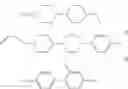


Sources:
- United States Patent and Trademark Office - verify current appl. status at the USPTO↗
Similar patent applications:
- » 20120229744
Liquid crystal display element, liquid crystal composition, aligning agent, method for producing liquid crystal display element, and use of liquid crystal composition - » 20150115200
LIQUID CRYSTAL COMPOSITION, LIQUID CRYSTAL DISPLAY ELEMENT, AND LIQUID CRYSTAL DISPLAY - » 20080099723
Liquid crystal composition, liquid crystal display element using the same, and electronic paper including the same - » 20150034873
Nematic liquid crystal composition, liquid crystal display element using same - » 20150028256
Liquid crystal composition, liquid crystal display element, and liquid crystal display - » 10682195
Liquid crystal composition, liquid crystal display element, method for manufacturing same, and method for controlling same - » 20150337200
LIQUID CRYSTAL COMPOSITION, LIQUID CRYSTAL DISPLAY ELEMENT, AND LIQUID CRYSTAL DISPLAY - » 20090272942
Liquid crystal composition, liquid crystal display element using the same, and electronic paper including the same - » 20140070142
Nematic liquid crystal composition, liquid crystal display element using same - » 20160024382
LIQUID CRYSTAL COMPOSITION, LIQUID CRYSTAL DISPLAY ELEMENT AND LIQUID CRYSTAL DISPLAY
Recent applications in this class:
- » 20250171692 2025-05-29
LIQUID CRYSTAL COMPOSITIONS AND DISPLAY PANELS USING THE SAME - » 20250043184 2025-02-06
OPTICALLY ANISOTROPIC FILM AND DISPLAY DEVICE - » 20240294830 2024-09-05
Liquid crystal composition, element and liquid crystal lens or a birefringent lens for stereoscopic image display - » 20220282159 2022-09-08
Liquid crystal mixture and light modulating device - » 20220041933 2022-02-10
LIQUID CRYSTAL COMPOSITION, LIQUID CRYSTAL DISPLAY ELEMENT AND LIQUID CRYSTAL DISPLAY - » 20210230482 2021-07-29
Liquid crystal composition and display device having the same - » 20210102122 2021-04-08
LIQUID CRYSTAL MEDIUM - » 20210095209 2021-04-01
LIQUID CRYSTAL COMPOSITION AND PHOTOELECTRIC DISPLAY DEVICE THEREOF - » 20210024826 2021-01-28
LIQUID-CRYSTAL DISPLAY - » 20210017450 2021-01-21
Liquid crystal composition and liquid crystal display device having same
Recent applications for this Assignee:
- » 20250188345 2025-06-12
BLUE LUMINESCENT COMPOSITION AND ORGANIC ELECTROLUMINESCENT DEVICE COMPRISING BLUE LUMINESCENT COMPOSITION - » 20240158419 2024-05-16
Heteroatom- and cycloalkyl-containing organic compound and organic electroluminescent device containing compound - » 20230303928 2023-09-28
Liquid crystal composition, liquid crystal display element and liquid crystal display - » 20230167362 2023-06-01
Negative liquid crystal composition, and liquid crystal display element or liquid crystal display - » 20220049162 2022-02-17
Liquid crystal composition, liquid crystal display element and liquid crystal display - » 20210355382 2021-11-18
Liquid crystal composition, liquid crystal display element and liquid crystal display - » 20210301205 2021-09-30
Liquid crystal composition, liquid crystal display element, and liquid crystal display - » 20210292650 2021-09-23
Liquid crystal composition, liquid crystal display element and liquid crystal display - » 20200381633 2020-12-03
Metal complex organic electroluminescent material and organic electroluminescent device - » 20200239779 2020-07-30
Liquid crystal composition, liquid crystal display element and liquid crystal display