Method of Causing a Fumble
US20220096910A1
2022-03-31
17/485,819
2021-09-27
Abstract:
A method is provided of causing a fumble or loss of control of a ball by a ball carrier, particularly in gridiron football or rugby. A defender makes contact with the ball carrier and subsequently applies force to the arm, hand, wrist, elbow, or combinations thereof of the ball carrier sufficient to dislodge the ball.
Assignee:
- Sport Edge LLC 1 🇺🇸 Columbus, OH, United States
Interested in similar patents?
Get notified when new applications in this technology area are published.
Classification:
A63B69/002 » CPC main
Training appliances or apparatus for special sports for football
A63B2243/007 » CPC further
Specific ball sports not provided for in -; Rugby; American football American football
A63B69/00 IPC
Training appliances or apparatus for special sports
Description
CROSS-REFERENCE TO RELATED APPLICATIONS
This application claims priority to U.S. Pat. App. No. 63/083,967, filed Sep. 27, 2020, entitled “Method of Causing a Fumble”, currently pending, which application is incorporated herein by reference.
FIELD OF THE INVENTION
This description relates generally to a method of a defender causing a fumble by a ball carrier, particularly in gridiron football or rugby.
BACKGROUND OF THE INVENTION
American football is played on a field called a gridiron by two eleven-player teams.
The gridiron is 100 yards long, not including a 10-yard end zone section at each end, and 53⅓ yards (160 feet) wide. The team controlling the ball (offense) attempts to move the ball down the field and into the end zone to score a touchdown. The other team (defense) tries to prevent the offense from moving the ball down the field. Thus, with the exception of a “safety” (scored by the defense when the ball carrier is tackled or downed in his own end zone), or in rare occasions a forfeit, the offense must possess the ball to score. When an offensive player is in possession of the ball, he is called the ball carrier. During a play, when the ball carrier is attempting to advance the ball by running toward the end zone, in addition to attempting to tackle the ball carrier and otherwise stop his forward travel, the defense will attempt to cause the ball carrier to lose control of the ball. This loss of control is called a fumble. While technically called a fumble, such loss of control is also known as stripping the ball from the ball carrier, or, colloquially, “coughing up the ball”. If the defense can then gain control or otherwise recover the ball, that team (formerly the defense) becomes the offense and attempts to score. One term often used is that there has been a turnover. That is, the offense has turned the ball over to the defense, albeit involuntarily. Since the ball carrier tries to hold the ball very firmly, however, fumbles tend to be very random regardless of the technique used.
As will be understood by those skilled in the art, similar issues arise with other types of sports where a ball carrier carries the ball. While there are numerous structural differences, Canadian football involves such activity. Rugby also involves ball carriers attempting to advance the ball and, in fact, rugby and American football have shared origins and similar game concepts. European football, also known as soccer does not involves such activity as carrying the ball because all but the goalies are prohibited from touching the ball with their hands or arms and the players move the ball forward using their feet, legs, or head. Finally, this document relies on masculine pronouns. While most ball-carrying activities as described herein are engaged in by men or boys, the techniques described are to be applicable in situations where the contestants are women or girls or where women or girls are engaged as contestants where most of the other contestants are men or boys, respectively.
BRIEF SUMMARY OF THE INVENTION
Disclosed is a method of causing, in a ball-carrying sport contest, a fumble or otherwise causing an offensive ball carrier to lose control of the ball, thus giving the defense an opportunity to gain control of the ball.
In one embodiment, the defender contacts the ball carrier in the form of a touch or other sudden contact and follows by urging, leveraging, pushing, pulling, or otherwise manipulating particular parts of the ball carrier's ball-carrying arm and hand sufficient to dislodge the ball. Parts of the arm leveraged by the defender include any part of the arm itself, including the forearm and upper arm, hands, wrists, and/or elbows. The defender may also contact and leverage the ball itself. While these embodiments picture and describe a single defender, the steps described may also be performed by more than one defender. While described herein as a single defender, the term defender may also refer to two or more defenders.
In a further embodiment, after optionally contacting the ball carrier in the form of a touch or other initial contact, the defender grasps the ball carrier's ball-carrying arm at a location selected from the upper arm, elbow, forearm, wrist, hand, or combinations thereof and urges the arm thus grasped toward a direction selected from upward, downward, laterally, medially, inward toward the ball carrier, away from the ball carrier, or any combination thereof. For completeness, the grasp may include an open-palmed push that forces the selected part of the arm or the ball in the desired direction.
In a further embodiment, the defender places one hand anteriorly on the body of the ball carrier. Simultaneously, or shortly thereafter, the defender grasps the ball carrier's ball-carrying arm with the other hand at a location selected from the upper arm, elbow, forearm, wrist, hand, or any combination thereof. The defender then urges the ball-carrying arm toward the direction selected from upward, downward, laterally, medially, inward toward the ball carrier, outward away from the ball carrier, or any combination thereof.
In a further embodiment, the defender contacts the arm or upper body of the ball carrier anterolaterally with, for example, the hypothenar or thenar eminence of his hand. Subsequently, the defender grasps the ball carrier's ball-carrying arm at a location selected from the upper arm, elbow, forearm, wrist, hand, or any combination thereof and urges or forces the ball from the grasp of the ball carrier.
In a further embodiment, with the ball carrier holding the ball in his right arm in a conventional grip, the defender's right hand grasps the ball-carrying hand and the defender's left hand grasps the ball-carrying elbow. The defender then forces the ball-carrying elbow downward, outward, or a combination thereof, and pushes the ball-carrying hand upward or downward.
In a further embodiment, with the ball carrier holding the ball in his right arm in a conventional grip, the defender first contacts the arm of the upper body of the ball carrier with the hypothenar eminence of his hand. The defender then forces the ball-carrying elbow outward away from the ball carrier and forces the ball-carrying hand downward.
In a further embodiment, with the ball carrier holding the ball in his right arm in a conventional grip, the defender's left hand forces the ball-carrying arm or ball-carrying elbow downward, inward toward the ball carrier, or a combination thereof, and the defender's right hand forces the ball-carrying had upward, away from the ball carrier.
In a further embodiment, the defender's left hand forces the ball-carrying hand downward.
In a further embodiment, the defender's left hand forces the ball-carrying wrist downward while the defender's right hand forces the ball-carrying hand upward.
In a further embodiment, the defender's left hand forces the ball-carrying elbow upward and outward away from the ball carrier and the defender's right hand forces the ball-carrying hand downward and inward toward the ball carrier.
In a further embodiment, the defender's left hand forces the ball-carrying wrist upward and outward away from the ball carrier and the defender's right hand forces the ball-carrying hand upward and away from the carrier.
As will be appreciated by those of ordinary skill in the relevant art, each of the combinations discussed herein above need not be accomplished by the same defender. During play, especially when the ball carrier is about to be tackled to the ground or his forward progress stopped, it is not unusual for a ball carrier to be in contact with two or more defenders. Thus, an initial contact may be made by a first defender and manipulations made by one or more other defenders. Furthermore, while the examples herein involve a ball carrier carrying the ball in his right arm, in actual practice, the ball carrier could carry the ball in his left arm. Thus, the embodiments shown herein would be adjusted accordingly.
The details of one or more implementations are set forth in the accompanying drawings and the description below. Other features will be apparent to those of ordinary skill in the relevant art from the description and the drawings, and from the claims.
BRIEF DESCRIPTION OF THE DRAWINGS
The invention will be more readily understood by reference to the accompanying figures which illustrate by way of example and not limitation. Identical reference numbers do not necessarily indicate an identical structure. Rather, the same reference number may be used to indicate a similar feature or a feature with similar functionality, as may non-identical reference numbers. While certain groups of figures may appear to show timed sequences, not all figures of such groups necessarily follow in strict metronomic or chronological order. Such groups are intended to illustrate the concept of certain specific embodiments of the invention. The figures are incorporated in, and constitute a part of, this specification, illustrate several embodiments consistent with the invention, and, together with the description, serve to explain the principles of the invention. For purposes of illustration, drawings may not be to scale.
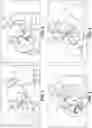
FIGS. 1-7 show an embodiment of the present invention along with multiple representations of an initial contact.
FIG. 1 shows a defender encountering a ball carrier.
FIG. 2 shows a defender making initial contact with the ball carrier.
FIG. 3 shows a defender making a different initial contact with the ball carrier.
FIG. 4 shows the defender making further contact with the ball carrier.
FIG. 5 shows the defender manipulating the ball carrier's arm.
FIG. 6 shows the defender stripping the ball from the ball carrier.
FIG. 7 shows the defender in possession of the ball.
FIGS. 8-11 show a further embodiment of the invention.
FIG. 8 shows the defender making contact with the ball carrier.
FIG. 9 shows the defender manipulating the ball carrier's arm.
FIG. 10 shows the defender stripping the ball from the ball carrier.
FIG. 11 shows the defender in possession of the ball.
FIGS. 12-14 show a further embodiment of the invention.
FIG. 12 shows the defender in contact with the ball carrier and beginning to manipulate the ball carrier's arm.
FIG. 13 shows the defender manipulating the ball and continuing to manipulate the ball carrier's arm.
FIG. 14 shows the defender stripping the ball from the ball carrier.
FIGS. 15-18 show a further embodiment of the invention.
FIG. 15 shows the defender making initial contact with the ball carrier with the defender's hand anteriorly on the body of the ball carrier.
FIG. 16 shows the defender making further contact with the ball carrier.
FIG. 17 shows the defender manipulating the ball carrier's arm.
FIG. 18 shows the defender in possession of the ball.
FIGS. 19-21 show a further embodiment of the invention.
FIG. 19 shows the defender in contact with the ball carrier and beginning to manipulate the ball carrier's arm.
FIG. 20 shows the defender further manipulating the ball carrier's arm.
FIG. 21 shows the defender in possession of the ball.
FIGS. 22 and 23 show a further embodiment of the invention.
FIG. 22 shows the defender beginning to manipulate the ball carrier's arm.
FIG. 23 shows the defender stripping the ball from the ball carrier.
In describing the various embodiments of the invention, specific terminology will be resorted to for the sake of clarity. However, it is not intended that the invention be limited to the specific terms so selected and it is to be understood that each specific term includes all technical equivalents which operate in a similar manner to accomplish a similar purpose.
DETAILED DESCRIPTION OF THE INVENTION
FIGS. 1-7 show an embodiment of the present invention. Initially, the defender 40 encounters the ball carrier 10, then may make initial contact the ball carrier 10 with a touch or a sharp blow (FIGS. 2, 3 and 15, e.g.) followed by moving his medial hand 42 toward the ball-carrying hand 16, then manipulates the ball-carrying arm 12 and hand 16 to dislodge the ball 20, and finally optionally taking possession of the ball 20 (FIG. 7).
Turning first to FIGS. 1, 2, and 3, the defender 40 is seen encountering the ball carrier 10. The ball carrier 10 holds the ball 20 in a conventional grip where one end of the ball 20 is held in the crux of his arm 12 and his body and the other end is held by his hand 16. Of course, if the ball carrier 10 is carrying the ball 20 in his left hand, everything is reversed. In practice, the ball carrier 10 may well be held back by other defenders such that he is either stopped or nearly stopped or maybe just struggling to move forward. Also in practice, the defender 40 may or need not be directly in front of the ball carrier 10 as long as he can physically perform the described actions. For clarity, FIG. 2 shows an example of the defender 40 about to strike the ball carrier 10, FIG. 3 shows another example of the defender 40 about to strike the ball carrier 10, and FIG. 15 shows yet another example of the defender 40 placing his medial hand 42 on the ball carrier 10. It is to be understood that these contacts may be used interchangeably with the various manipulations described herein. It is also to be understood that the illustrated contacts may not be required, but may make it easier to manipulate the ball-carrying arm 12. In FIG. 4, the defender 40 has just contacted the ball carrier 10 (FIGS. 2, 3, and 15, e.g.) and is beginning to move his medial hand 42 toward the ball 20 and the ball-carrying hand 16. FIG. 4 shows the defender 40 contacting the ball-carrying hand 16 with his medial hand 42 and the ball-carrying elbow 14 with his lateral hand 44 and beginning to manipulate the ball-carrying arm 12. FIG. 5 shows the manipulation in full where the defender 40 has immobilized or pulled the ball-carrying elbow 14 outward and the ball-carrying hand 16 (best seen in FIG. 4) upward and the ball carrier 10 has begun to lose control of the ball 20. FIG. 6 shows the ball carrier 10 losing complete control of the ball 20 and FIG. 7 shows the defender 40 now having full possession and control of the ball 20.
FIGS. 8-11 show a further embodiment involving the manipulation of the ball-carrying arm 12. This manipulation may follow an initial touch or sharp blow as described above (FIGS. 2, 3, and 15, e.g.), or it may begin immediately upon encountering the ball carrier 10. In practice, the contacts shown in FIGS. 2, 3, and 15 may be omitted. FIG. 8 shows the defender 40 just as he contacts the ball carrier 10. The defender's medial hand 42 is about to touch the ball-carrying hand 16 and the defender's lateral hand 44 is about to touch the ball-carrying elbow 14 or upper part of the ball-carrying arm 12. FIG. 9 shows the defender 40 manipulating the ball-carrying arm 12. The defender's medial hand 42 moves or pushes the ball-carrying hand 16 upward. At the same time, the defender 40 may either immobilize the upper part of the ball-carrying arm 12 or at the elbow 14 or move the elbow 14 down and inward toward the ball carrier 10 in the opposite direction of the movement of the defender's medial hand 42. This manipulation produces leverage on the ball-carrying arm 12 and results in the ball carrier 10 losing control of the ball 20 (FIG. 10). Finally, FIG. 11 shows in some circumstances, but not all, the defender 40 may gain full control of the ball 20.
FIGS. 12-14 show a further embodiment involving a further method of manipulating of the ball-carrying arm 12. FIG. 12 shows the defender 40 contacting the ball-carrying hand 16 and ball-carrying arm 12 at the top of the ball 20 and ball-carrying arm 12. FIG. 13 shows the defender 40 beginning to push the ball-carrying hand 16 downward. As will be appreciated by those of ordinary skill in the art, in practice the defender's lateral hand 44 may be in contact with only the ball 20, the ball 20 and the ball-carrying arm 12 or hand 16, or only the ball-carrying arm 12 or hand 16. Finally, FIG. 14 shows the ball carrier 10 losing control of the ball 20.
FIGS. 15-18 show a further embodiment with the defender 40 encountering the ball carrier 10 and manipulating the ball-carrying arm 12 to effect a fumble. Turning first to FIG. 15 (see also FIGS. 2 and 3, e.g.), the defender's medial hand 42 makes initial contact with a strike to the ball carrier 10 and the defender 40 immediately moves his medial hand 42 hand toward the ball 20. FIG. 16 shows the defender 40 in position to manipulate the ball-carrying arm 12 with the defender's lateral hand 44 engaging the ball-carrying wrist 18 (FIG. 16), elbow 14 (FIG. 17), ball-carrying arm 12, or combinations thereof. Turning next to FIG. 17, the defender 40 has manipulated the ball-carrying arm 12 by forcing the ball-carrying elbow 14 or ball-carrying wrist 18 downward and the ball-carrying hand 16 with the ball 20 upward. Finally, FIG. 18 shows the effect of the manipulation where the ball carrier 10 has lost control and possession of the ball 20.
FIGS. 19-21 show a further embodiment with the defender 40 encountering the ball carrier 10 and the defender manipulating the ball-carrying arm 12 to effect a fumble and subsequent control of the ball 20 by the defender 40. Turning first to FIG. 19, the defender 40 has placed his medial hand where the ball-carrying hand 16 grips the ball 20 and his lateral hand 44 grabs at or near the ball-carrying elbow 14. FIG. 20 then shows the action where the defender's medial hand 42 forces the ball-carrying hand 16 downward and the defender's lateral hand 44 manipulates the ball-carrying elbow 14 by forcing it up and out. FIG. 21 shows a moment later when continued manipulation of the ball-carrying arm 12 has caused the ball carrier 10 to lose control of the ball 20 and the defender 40 has taken possession of the ball 10.
FIGS. 22 and 23 show a further embodiment with the defender 40 encountering the ball carrier 10 and manipulating the ball-carrying arm 12 to effect a fumble and subsequent control of the ball 20 by the defender 40. Turning first to FIG. 22, the defender 40 is encountering the ball carrier 10. The ball carrier 10 is in a running stance and is carrying the ball 20 in the conventional way. While the defender 40 may deliver an initial touch or sharp blow, FIG. 22 shows the defender 40 beginning to manipulate the ball-carrying arm 12. The defender 40 has grabbed the ball-carrying arm 12 at or near the wrist 18 with his lateral hand 44 and is about to grab the ball-carrying hand 16 where it grips the ball 20. This allows the defender 40 to push the ball 20 up and out so that the ball carrier 10 loses control of the ball 20. It should be understood that these contact points need not be precise as application of the method does not require high precision, simply sufficient leverage to manipulate the ball-carrying arm 12. Finally, FIG. 23 shows the ball carrier 10 losing control of the ball 20. As will be appreciated by those of ordinary skill in the relevant art, the method described herein does not require possession of the ball 20 by the defender 40, merely causing the ball carrier 10 to lose control of the ball 20 is sufficient.
While not wishing to be bound by any particular theory, it is believed that the body's mechanoreceptors may play a part in the method described herein. As implied by the word “mechanoreceptor”, “mechano” refers to mechanical stimulation such as touching or striking while “receptor” refers to sensory neurons that respond to such touching or striking. It is thought that sudden stimulation of these mechanoreceptors causes a disruption in motor control away from the point of stimulation, thus facilitating manipulation and eventual loss of control of the ball.
This detailed description in connection with the drawings is intended principally as a description of the presently preferred embodiments of the invention, and is not intended to represent the only form in which the present invention may be constructed or utilized. The description sets forth the designs, functions, means, and methods of implementing the invention in connection with the illustrated embodiments. It is to be understood, however, that the same or equivalent functions and features may be accomplished by different embodiments that are also intended to be encompassed within the spirit and scope of the invention and that various modifications may be adopted without departing from the invention or scope of the following claims.
Claims
I claim:1. A method of causing a ball carrier to lose control of the ball, the method comprising the steps of:
(a) a defender first striking the upper body of the ball carrier with the hypothenar eminence of his hand; and
(b) the defender:
(i) forcing the ball-carrying elbow outward away from the ball carrier; and
(ii) forcing the ball-carrying hand downward.
2. A method of causing a ball carrier to lose control of the ball, the method comprising the steps of a defender:
(a) forcing the ball-carrying arm, wrist, elbow, or combinations thereof in a direction selected from upward, downward, laterally, medially, inward toward the ball carrier, outward away from the ball carrier, and combinations thereof; and
(b) forcing the ball-carrying hand in a direction selected from upward, downward, inward toward the ball carrier, outward away from the ball-carrier, and combinations thereof.
3. The method of claim 2, further including an initial step of the defender:
(a) contacting the ball carrier with a touch, tap, tweak, pat, hit, slap, bump poke, pinch, squeeze, hack, press, stroke, thump, combinations thereof, or by placing a hand anteriorly on the body of the ball carrier.
4. A method of causing a ball carrier to lose control of the ball, the method comprising the step of a defender:
(a) forcing the ball-carrying hand downward.
5. A method of causing a ball carrier to lose control of the ball, the method comprising the steps of a defender:
(a) forcing the ball-carrying wrist downward; and
(b) forcing the ball-carrying hand upward.
6. A method of causing a ball carrier to lose control of the ball, the method comprising the sequential steps of a defender:
(a) placing a hand anteriorly on the body of the ball carrier; and
(b) urging the ball-carrying arm of the ball carrier toward the direction selected from upward, downward, inward toward the ball carrier, outward away from the ball carrier, and combinations thereof.
Images & Drawings included:



Sources:
- United States Patent and Trademark Office - verify current appl. status at the USPTO↗
Recent applications in this class:
- » 20250065206 2025-02-27
Feedback System for Wearable Devices for Detecting and Improving American Football Spin Moves - » 20240374977 2024-11-14
CUSTOMIZED SPORTS TRAINING METHOD AND SYSTEM - » 20240367020 2024-11-07
SOCCER TRAINING EQUIPMENT AND KITS - » 20240342569 2024-10-17
Soccer Training and Trainer's Aid - » 20240293718 2024-09-05
SPORT BALL MOTION MONITORING METHODS AND SYSTEMS - » 20240139599 2024-05-02
Extended reality system for training and evaluation - » 20240115919 2024-04-11
SYSTEMS AND METHODS FOR FOOTBALL TRAINING - » 20240058674 2024-02-22
FOOTBALL BLOCKING PAD THAT IS PLACEABLE ON THE HIP AND THE BACK - » 20230356052 2023-11-09
Interactive communication training device - » 20230264088 2023-08-24
TRAINING DEVICE FOR SOCCER SHOES