In situ liner production system and method
US20220203399A1
2022-06-30
17/594,678
2020-04-26
✅ Patent granted
US 12,296,357 B2
2025-05-13
WO; PCT/IL2020/050467; 20200426
WO; WO2020/222227; 20201105
Michael P. Rodriguez
Dorsey & Whitney LLP
2040-06-01
Abstract:
A system for the in situ production of a liner suitable to shield active surfaces of apparatus for the processing of liquids and/or solids from coming into contact with, and being fouled by, the processed materials, comprises: 1) a spray head, adapted to spray a layer of curable polymeric material onto a surface; 2) circuitry adapted to direct the movement of said spray head according to data pertaining to the surface to be sprayed; and 3) curing apparatus, suitable to cure the layer of material sprayed onto said surface, thereby to produce a shielding liner in situ.
Inventors:
- Ehud FURMAN 2 🇮🇱 Nesher, Israel
- Tzvi FURMAN 2 🇮🇱 Kfar Vradim, Israel
- Tzvika FURMAN 1 🇮🇱 Kfar Vradim, Israel
Assignee:
- KIINNS FOODTECH LTD. 2 🇮🇱 Kfar Vradim, Israel
Applicant:
Interested in similar patents?
Get notified when new applications in this technology area are published.
Classification:
B05D3/067 » CPC further
Pretreatment of surfaces to which liquids or other fluent materials are to be applied; After-treatment of applied coatings, e.g. intermediate treating of an applied coating preparatory to subsequent applications of liquids or other fluent materials by exposure to radiation using U.V.; After-treatment Curing or cross-linking the coating
B05D2259/00 » CPC further
Applying the material to the internal surface of hollow articles other than tubes
B05B13/0636 » CPC further
Machines or plants for applying liquids or other fluent materials to surfaces of objects or other work by spraying, not covered by groups - specially designed for treating the inside of hollow bodies; Arrangements of nozzles or spray heads specially adapted for treating the inside of hollow bodies by means of rotatable spray heads or nozzles
B05B12/084 » CPC further
Arrangements for controlling delivery; Arrangements for controlling the spray area responsive to condition of liquid or other fluent material discharged, of ambient medium or of target responsive to condition of liquid or other fluent material already sprayed on the target, e.g. coating thickness, weight or pattern
B05D3/06 IPC
Pretreatment of surfaces to which liquids or other fluent materials are to be applied; After-treatment of applied coatings, e.g. intermediate treating of an applied coating preparatory to subsequent applications of liquids or other fluent materials by exposure to radiation
B05B12/08 IPC
Arrangements for controlling delivery; Arrangements for controlling the spray area responsive to condition of liquid or other fluent material discharged, of ambient medium or of target
B05B13/06 IPC
Machines or plants for applying liquids or other fluent materials to surfaces of objects or other work by spraying, not covered by groups - specially designed for treating the inside of hollow bodies
B05D1/02 » CPC main
Processes for applying liquids or other fluent materials performed by spraying
Description
FIELD OF THE INVENTION
The present invention relates to the processing of fluids and solids. More particularly, the invention relates to the use of liners in material processing apparatus.
BACKGROUND OF THE INVENTION
Fluids and solids processing is performed in a variety of equipment units, and it includes heating, cooling, mixing, blending, chopping, slurring, conveying, frothing of liquids, etc. Such equipment units are operated in industrial production lines and laboratories, and in home kitchens. Illustrative examples of such apparatus include food processors, mixers, dough kneaders, milk frothers, blenders, and conveyors. A processing unit typically comprises a container in which the ingredient food and beverage material(s) are processed and held, and a processing head, functionally placed in several optional positions within the container, and coupled to a driving system.
Current processing procedures unavoidably require cleaning the internal walls or working surfaces of the processing equipment, and exhibit severe drawbacks in respect of which the following considerations should be taken into account:
-
- Food safety: Food equipment's hygiene level is highly dependent on the level of equipment cleaning, and may suffer from ineffective or insufficient cleaning, leaving bacterial residues that may cause health risks. Bacteria may develop resistance to cleaning processes and remain on the equipment even after cleaning. Residues of food allergens and even chemicals from the cleaning process itself, remaining on the equipment, can cause severe health risks.
- Negative environmental impact: During the cleaning process, large amounts of water are wasted and detergents and organic waste flow to the sewage systems, polluting the environment.
- High operational costs: Cleaning of processing equipment is costly and complicates production scheduling and operations.
To date, the art has not provided means for addressing all such drawbacks, and the cleaning derived problems strongly and negatively affect production lines, as well as home users. It is therefore an object of the present invention to provide a system capable of preventing the fouling of processing equipment by the processed materials, thereby eliminating the need to clean them after each cycle or periodically, and the problems related thereto.
WO 2017/125913 of the same inventors hereof relates to a functional shielding layer for processing apparatus, comprising a shielding liner manufactured externally to the processing equipment. The liner, which is made of a polymer suitable for the processed material, is then placed inside the processing equipment (a mixer bowl for instance) and mechanically attached to the working surfaces that usually come in contact and are fouled by processed material.
While the abovementioned shield is useful and effective, it requires adaptation to the shielded equipment when manufactured, and then delivery to the equipment. It would therefore be highly desirable, and this is an object of the present invention, to provide a method and system that streamlines the manufacturing and delivery of a shielding layer to the processing equipment. This problem is solved by the invention, inter alia, by providing for the in situ production of a protective liner. By spraying and curing a protective layer directly on the working surfaces, absolute geometrical fitting is achieved, for any complex device structure, as well as adherence to the working surface.
SUMMARY OF THE INVENTION
In an aspect, the invention relates to a system for the in situ production of a liner suitable to shield active surfaces of apparatus for the processing of liquids and/or solids from coming into contact with, and being fouled by, the processed materials, comprising:
-
- i) a spray head, adapted to spray a layer of curable polymeric material onto a surface;
- ii) circuitry adapted to direct the movement of said spray head according to data pertaining to the surface to be sprayed;
- iii) curing apparatus, suitable to cure the layer of material sprayed onto said surface, thereby to produce a shielding liner in situ.
The data pertaining to the surface to be sprayed can be acquired by scanning and mapping apparatus, which may be integrated in the system or may be separate, or the data pertaining to the surface to be sprayed is obtained from pre-prepared data such as, for example, processing device manufacturing CAD file.
The system of the invention is provided with curing apparatus, which comprises an energy source, such as for instance a UV light source, or a heat source.
The above and other characteristics, objects and advantages of the invention will be better understood from the description of embodiments thereof, with reference to the appended drawings.
BRIEF DESCRIPTION OF THE DRAWINGS
In the drawings:
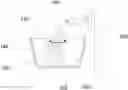
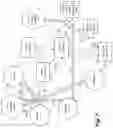
FIG. 1 schematically illustrates the overall layout of the shielding system, including central control unit, according to one embodiment of the invention;
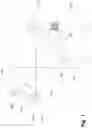
FIG. 2 schematically shows a detail of a liner material supply subsystem, taken from FIG. 1;
FIG. 3 is a schematic illustration of a robotic arm payload, according to one embodiment of the invention;
FIG. 4 is a schematic illustration of the central control of the system described in FIG. 1;
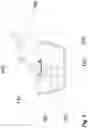
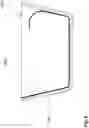
FIG. 5 schematically illustrates the shielding of an exemplary processing head according to one embodiment of the invention;
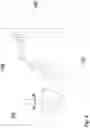
FIG. 6 schematically illustrates the discarding of a used liner by peeling;
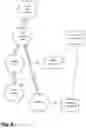
FIG. 7 shows a liner forming process scheme according to one embodiment of the invention;
FIG. 8 schematically illustrates a peeling process of a used liner, according to one embodiment of the invention;
FIG. 9 schematically illustrates one embodiment of the liner peeling trajectory; and
FIG. 10 schematically illustrates a sanitation step of an exemplary equipment, using a curing gun.
DETAILED DESCRIPTION OF THE INVENTION
In the context of this application the terms “coating”, “liner” and “shield,” are used interchangeably.
The system of the invention comprises optical acquisition apparatus such as a 3D scanner and/or an imaging device suitable to inspect the entire surface to be shielded, to acquire data relative thereto, and to feed such data to the control unit. Data acquisition can be done either from an equipment catalog predefined in the computer/control unit, which can be updated from time to time, or by operating the optical acquisition apparatus. With reference to FIG. 1, which illustrates a simplified embodiment of the invention, a mapping/scanning monitoring head 100 is seen, which is adapted to scan the equipment surfaces to be shielded, and to provide data relative to a geometric mapping thereof. This enables the control unit 101 to acquire and define the shielding required surfaces, and to drive the robotic arm payload 102 (further described with reference to FIG. 5) to the appropriate trajectory, enabling the required surfaces to be shielded and covered as required.
The tank/container 103 of the liner material contains the sprayable coating material. The required values for the controllable valve 104, pump/regulator unit, 105, and spraying nozzles 106 are fed into the control unit 101, either manually by an operator, or automatically from a database containing data for the specific equipment. Such pre-determined parameters take into account the liner thickness to be set, sprayed beam diameter and flow specification, and their determination is well within the scope of the skilled person. Control unit 101 determines the spraying head motion rate, distance and orientation from the processing equipment's working surfaces, according to the physical parameters of the liner to be obtained.
Depending on the polymer used, different curing procedures are employed. For instance, UV curable polymers will require irradiating the surface of the equipment on which the material was sprayed, for a period of time necessary for performing the curing step. The required values for curing activity (energy density, dimensions of beam) are fed into control unit 101. These pre-determined parameters are evaluated considering the liner thickness that has been sprayed. Control unit 101 determine the curing head 110 energy source to be selected, the motion rate and distance and orientation from the container's walls to achieve a solid ready-to-work liner in the required time. Polymers suitable for use with the invention will be recognized by the skilled person. Some illustrative examples of such polymers are:
1. Radiation-driven cured materials based on (e.g.) hybrid or IPN systems, where the main film forming material is a naturally based polymer (e.g. polysaccharide/protein), mixed with a UV curable resin, susceptible to chain polymerization via photo initiation, as well as direct food contact approved allyl monomers such as TPGDA, TMPTA and TMPEOTA.
2. Spontaneously cured materials film forming natural materials (e.g. soluble starch, WPI, gelatin, alginate) that are pre dissolved in water, then added with an emulsifier (e.g. glycerol), followed by the addition of an unsaturated fatty acid (e.g. oleic or linoleic acids). In some cases an emulsion is generated via homogenization, and oxygen is removed to reduce the risk of crosslinking and the film is allowed to dry and cure. In some cases alkyd autoxidation reaction with air oxygen is the drive for the crosslinking reaction and the use of catalysis allows fast curing.
3. Also exemplary commercial material that may be employed include those described in http://watersoluble.green-cycles.com/wp-content/u ploads/2019/12/Dossier-Ingles. Of, which are biodegradable, water-soluble, harmless, non-toxic, compostable, customizable, offering a variety of mechanical properties, thickness, temperature, formats, sizes. Green cycles polymeric material can be conveniently supplied in liquid form.
The system of the invention can be, in one particular embodiment, movable. In the illustrative embodiment of FIG. 1, the cart 107 on which the whole system is mounted with the operating head support structure 108, with the robotic arm 109, with the robotic arm payload 102, is brought into closed positioned relationship with the processing equipment 300 (as shown in FIG. 3) to be coated. Illustrative examples of equipment 300 include a food-mixer bowl, a conveyor, a dough-kneader etc. The control unit is set “on” and the robotic arm payload 102 is lowered towards the equipment, imparting the desired motion trajectory that has been pre-defined to the 6 degrees of freedom robotic arm 109 (e.g. an ABB robotic arm), which is known per se and therefore not discussed herein in detail, for the sake of brevity. Once the desired position is reached, spraying starts, and curing follows after spraying is completed on all of the required surfaces.
FIG. 5 schematically illustrated an equipment processing head 500, which can be of any type, such as, for instance, a stirrer, chopper, “guitar” mixing head etc. Processing heads can be located in several positions relative to the container, depending on its driver coupling (whether it is driven from above, bottom, side etc.). Control unit 101 contains a driving module to enable this head coverage. Whenever its function, shape and surface permit, the processing head can also be covered with a shielding liner, after which shielding is completed and the covering system is withdrawn from the scene enabling processing activity. If the processing head is of a type that cannot be coated, then it will be the only part of the equipment requiring cleaning or replacing after operation. Once coating and curing are completed, the solid liner completely shields the working surface and the processed liquids or solids do not contact or foul the equipment working surfaces throughout the entire processing cycle. When processing is completed, products are removed from the processing equipment. FIG. 6 illustrates the removal of the liner 600, which is easily peeled away as illustrated by arrow 601. The liner is then discarded, for instance to a proper bio-degradable waste can, or to a regular waste can or to a recycle bin or any other discarding process possible. Now the processing equipment is ready to start another process cycle, or to be stored, without the need for cleaning.
FIGS. 2 and 4 show details of the system of FIG. 1, using the same numerals thereof.
A variety of embodiments of this system can be provided by integrating any combination of the following functional, technical, physical and materialistic characteristics, properties and parameters—following the same basic materials and functionality:
-
- a. Any appropriate covering liner materials—preferably bio-degradable but also recyclable (plastic, polymeric, metallic, etc.);
- b. Any appropriate liner dimensions (length, width, thickness);
- c. Any appropriate processing equipment's material, size, dimensions, structure and topology;
- d. Any appropriate processing head material, dimensions and shape (stirrer, “guitar”, chopper, etc.);
- e. Any appropriate liner strength and other mechanical properties;
- f. Any relevant operational temperature range of production process;
- g. Any appropriate adhering parameters;
- h. Any appropriate to-be-processed materials (food, cosmetics, pharmaceutical, etc.);
- i. Any operational payload carrying arm and driving mechanism;
- j. Any method of active surfaces structure and dimensions acquisition (manufacturing CAD file, in situ mapping/scanning);
- k. Any appropriate liner peeling method;
- l. Any appropriate final sanitation method; and
- m. Any appropriate method for discovering remainders from the liner peeling process.
The above detailed description relates to an embodiment having an add-on system assembled as an add-on remote unit, whose components do not physically touch the processing equipment, with only the sprayed material, curing and mapping beams and peeling gripper contacting the equipment's active surfaces. In another embodiment of the invention the elements described above are integrated as a sub-system, and the liner production components is pre-designed to optimally and functionally be embedded in the processing equipment hardware and control unit.
In yet another embodiment of the invention, if shielded surfaces geometry and dimensions are acquired from the device manufacturer CAD file upfront, the mapping head can be eliminated, since it is unnecessary unless the system serves other processing units not having that file or prior knowledge.
In yet another embodiment of the invention the processing head coverage is devised such that linear 3D motions is controlled by the control unit (101) but rotation can be applied by the processing head itself.
Exemplary Processes
The following process schemes will further illustrate the invention through illustrative coating and coating removal examples.
Liner Coating
FIG. 7 shows a liner forming process scheme according to one embodiment of the invention. In the figure a hexagon indicates a hardware unit, a rectangle indicates a control module/unit, a simple arrow (→) indicates an electronic signal or information such as, for example I/O, and a full arrow indicates a physical activity, such as, for instance, scanning, motion, spraying. The numerals shown in solid rectangles indicate the sequence of steps, as follows:
1. Central control unit drives scanner control unit to initiate scanning and/or mapping of target food processing device;
2. central control unit initiates the robotic control unit;
3. The robotic control unit triggers the robotic arm motion, moving (3a) the scanner that is attached to it. The spatial definitions of the volume to be scanned are pre-fed into the central control unit;
4. The scanner control unit operates the scanner, and (4a) the scanner is driven into the food device and (3-D) scans and maps it;
5. The food device topography data is acquired by the scanner, where it is transformed into a mapping file;
6. This mapping file is sent to the central control unit, where it is transformed into an in-food-processing-device trajectory for the robotic arm to which the payload (spraying head and curing gun) is attached to, to ensure full active face masking;
7. This trajectory is fed into the robotic control unit;
8. Spraying material flux parameters and curing parameters are fed (or extracted from memory) into the central control unit—and sent to properly set the (8a) controllable valve and (8b) curing gun parameters;
9. Masking process is triggered by the central control unit, by triggering the various control modules:
-
- a. The robotic control is triggered.
- b. The spraying head control is triggered.
- c. The curing gun control is triggered.
10. The robotic arm is sent into motion following the previously set trajectory, carrying the spraying head and the curing gun;
11. Material starts to flow from the liquid polymer material tank to the controllable valve, and through it (11a) to the spraying head;
12. The spraying head is activated;
13. The curing gun is activated;
14. Liner forming starts:
-
- a. The robotic arm moves along the pre-assigned trajectory.
- b. Material is sprayed on the target device active surfaces.
- c. Fast curing follows—with the pre-determined delay.
15. Robotic control unit terminates (15a) the robotic arm motion when reaching the end of the pre-defined trajectory, sends termination signal (15b) to the central control unit, which sends shutdown signals to the controllable valve (15c), to the spraying head control unit (15d) and to the curing gun control unit (15e).
Liner Peeling
At the end of material processing, the shielding liner must be removed. This can be performed in many ways, e.g., mechanically, manually, chemically, etc. FIG. 8 schematically illustrates a peeling process of the used liner, according to one embodiment of the invention. Broadly speaking, the following steps are performed:
1. After food products are removed from the processing container, an energy intense beam (e.g. from the existing curing gun operated with higher intensity) is sent along a pre-determined spiral trajectory, based on the initial mapping of the container active surface performed by the 3-D scanner/mapper.
-
- 2. This action creates a spiral soft/physically weakened line in the used liner's material, and depending on the intensity of the beam, even a cut—full or perforated. This line defines and forms a continuous spiral “strip” in the yet adhering liner, much like a continuously peeled apple skin, as schematically illustrated in FIG. 9. The external surface in the peeled apple's skin example represents, in this illustration, the internal surface of the liner that was in direct contact with the host container.
- 3. According to one embodiment of the invention, the liner strip can be peeled off manually. According to another embodiment, the strip may be automatically peeled off.
- In one embodiment, a gripper is attached to the robotic arm. The robotic arm payload is sent into the food device container space, the edge of the strip is grasped by the gripper, and the robotic arm payload follows exactly the above mentioned trajectory, performing a full end-to-end peeling of the liner. Finally, the peeled liner material is discarded.
In the exemplary liner peeling process according to one embodiment of the invention shown in FIG. 8, a hexagon indicates a hardware/material unit, a rectangle indicates a control module/unit, a simple arrow (→) indicates an electronic signal or information such as, for example. I/O, and a full arrow indicates a physical activity, such as, for instance, motion, peeling. The numerals shown in solid rectangles indicate the sequence of steps, as follows:
18. A peeling gripper is attached to the robotic arm adjacent to the curing gun, replacing the spraying head;
19. central control unit loads the cutting parameters into the curing gun control unit, including the delay between cutting and actual peeling;
20. central control unit loads the pre-determined slitting motion trajectory into the robotic control unit;
21. curing gun is activated;
22. robotic arm is triggered into motion;
23. robotic arm payload (curing gun and peeling gripper) is driven into the working space;
24. curing gun is cutting the spiral slit along the predetermined required path;
25. peeling gripper is activated;
26. peeling gripper grasps the edge of the formed strip, and peels the liner material.
Finishing Activities
After removal of the liner, additional finishing activities may be performed according to one embodiment of the invention, to ensure proper removal of the liner material and sanitation of the equipment. The steps performed according to a particular embodiment are as follows:
-
- 1. Immediately after the liner peeling a high-resolution camera is mounted on the robotic arm, which is sent into the device's container space and operated to acquire images of the container's walls after the liner is removed. The digital picture(s) are sent into the central control unit, and analyzed by a high resolution algorithmic tool. Algorithms suitable for this purpose are well known to the skilled person and therefore are not discussed herein in detail, and may be, for instance, those available at https://elad.cs.technion.ac.il/wp-content/uploads/2018/02/Book ImageProcessing.pdf, or the well-known MATLAB processing tools, (e.g. http://www.imageprocessingplace.com/DIPUM-3E/dipum3e main page.htm), to reveal any un-peeled mini or micro liner material “island” that may have been left, and the overall result is compared to a pre-decided acceptance quality threshold. It should be noted that any remaining material will be coated by new liner deposition for the new cycle.
- 2. The curing gun (e.g., a UV one) is operated now at a sanitation-oriented, pre-determined energy flux, and driven back by the robot into the food device container, for example (but not exclusively) following exactly its previous curing trajectory, flooding the walls with a bacteria-killing irradiation, eliminating any bacteria that may be present. This operation can also be performed as a new cycle pre-production activity.
The numerals shown in FIG. 10 in solid rectangles indicate the sequence of steps, as follows:
47. central control unit loads the pre-determined sanitation motion trajectory into the robotic control unit;
50. central control unit loads the sanitation parameters into the curing gun control unit.
53. curing gun is activated;
56. robotic arm is triggered into motion;
58. robotic arm is driven into the food device space;
59. curing gun is activated to flood the walls with sanitizing irradiation.
All the above description of embodiments of the invention have been provided for the purpose of illustration and are not intended to limit the invention in any way, except as defined in the appended claims.
Claims
1-14. (canceled)
15. A system for the in situ production of a liner suitable to shield active surfaces of an apparatus for processing of liquids and/or solids from coming into contact with, and being fouled by, the processed materials, the system comprising:
a spray head, adapted to spray a layer of curable polymeric material onto a surface;
circuitry adapted to direct movement of said spray head according to data pertaining to the surface to be sprayed; and
a curing apparatus, suitable to cure the layer of material sprayed onto said surface, thereby to produce a shielding liner in situ.
16. The system according to claim 15 wherein the data pertaining to the surface to be sprayed is acquired by scanning and mapping apparatus.
17. The system according to claim 16, wherein the scanning and mapping apparatus is integrated in the system.
18. The system according to claim 15 wherein the data pertaining to the surface to be sprayed is obtained from pre-prepared data.
19. The system according to claim 15, wherein the curing apparatus includes an ultraviolet (“UV”) light source.
20. The system according to claim 15, wherein the curing apparatus includes an energy source.
21. The system according to claim 15, further comprising a liner-weakening apparatus suitable to weaken the liner, and a gripping apparatus suitable to grip the weakened liner and to exert pulling forces thereon, thereby to remove the weakened liner.
22. The system according to claim 21, wherein the liner-weakening apparatus includes the curing apparatus.
23. The system according to claim 22, wherein the curing apparatus if further used to sanitize the active surfaces after removal of the liner or before the application of a new liner.
24. A method for the in situ production of a liner suitable to shield active surfaces of an apparatus for processing of liquids and/or solids from coming into contact with, and being fouled by, the processed materials, the method comprising:
providing a spray head, adapted to spray a layer of a polymeric material onto a surface; and
directing the movement of said spray head according to data pertaining to the surface to be sprayed.
25. The method according to claim 24, further comprising curing the layer of material sprayed onto said surface, thereby to produce a shielding layer in situ.
26. The method according to claim 24, wherein the polymeric material is self-curing or solidifies without the need for curing.
27. The method according to claim 24, further comprising using the curing apparatus to sanitize the active surfaces before the application of a liner.
28. The method according to claim 27, wherein, prior to sanitizing the active surface, a liner previously formed thereon was removed.
29. The method according to claim 28, wherein removal of a previously formed liner was performed by applying a liner-weakening apparatus suitable to weaken the liner, and a gripping apparatus suitable to grip the weakened liner and to exert pulling forces thereon, thereby to remove the weakened liner.
Images & Drawings included:




Sources:
- United States Patent and Trademark Office - verify current appl. status at the USPTO↗
Recent applications in this class:
- » 20250229291 2025-07-17
Coating Applicator - » 20250214104 2025-07-03
TEXTURIZING A WALL OR CEILING WITH NON-ACOUSTICAL JOINT COMPOUND - » 20250161977 2025-05-22
FILM AND METHOD FOR PRODUCING SAME - » 20250153215 2025-05-15
FIRE SHIELD FOR AN AIRCRAFT ENGINE AND METHOD FOR FORMING SAME - » 20250128286 2025-04-24
METHOD OF APPLYING A COATING COMPOSITION TO A SUBSTRATE - » 20250100011 2025-03-27
BARRIER COATING - » 20250100010 2025-03-27
BARRIER COATING - » 20250033081 2025-01-30
METHODS OF TEMPORARILY ENHANCING THE LUSTER AND BRILLIANCE OF JEWELRY AND GEM STONES - » 20250010329 2025-01-09
A METHOD AND A SYSTEM FOR ENCAPSULATING A COMPONENT ARRANGED ON A SUBSTRATE - » 20240383000 2024-11-21
METHOD OF PROCESSING SUBSTRATE AND APPARATUS FOR PROCESSING SUBSTRATE
Recent applications for this Assignee:
- » 20190009233 2019-01-10
Internal shield system for fluids and solids processing devices and uses thereof