NOVEL ANTIBODIES
US20230090901A1
2023-03-23
17/801,786
2021-02-24
Abstract:
An isolated antibody or fragment thereof, which specifically binds to a gamma variable 4 (Vγ4) chain of a γδ T cell receptor (TCR) and not to a gamma variable 2 (Vγ2) chain of a γδ TCR is provided herein. Methods of treatment and other uses of said antibodies are also provided along with methods of producing said antibodies.
Inventors:
- Oliver NUSSBAUMER 17 🇬🇧 London, United Kingdom
- Adrian HAYDAY 7 🇬🇧 London, United Kingdom
- Pierre VANTOUROUT 8 🇬🇧 London, United Kingdom
- Oxana POLYAKOVA 6 🇬🇧 London, United Kingdom
Assignee:
- GammaDelta Therapeutics Limited 4 🇬🇧 London, United Kingdom
Interested in similar patents?
Get notified when new applications in this technology area are published.
Classification:
C07K16/2809 » CPC main
Immunoglobulins [IGs], e.g. monoclonal or polyclonal antibodies against material from animals or humans against receptors, cell surface antigens or cell surface determinants against the immunoglobulin superfamily against the T-cell receptor (TcR)-CD3 complex
C07K2317/21 » CPC further
Immunoglobulins specific features characterized by taxonomic origin from primates, e.g. man
A61K2039/505 » CPC further
Medicinal preparations containing antigens or antibodies comprising antibodies
C07K16/28 IPC
Immunoglobulins [IGs], e.g. monoclonal or polyclonal antibodies against material from animals or humans against receptors, cell surface antigens or cell surface determinants
A61P35/00 » CPC further
Antineoplastic agents
Description
FIELD OF THE INVENTION
The invention relates to antibodies and fragments thereof directed to the T cell receptor of gamma delta T cells.
BACKGROUND OF THE INVENTION
The growing interest in T cell immunotherapy for cancer has focused on the evident capacity of subsets of CD8+ and CD4+ alpha beta (ap) T cells to recognize cancer cells and to mediate host-protective functional potentials, particularly when de-repressed by clinically mediated antagonism of inhibitory pathways exerted by PD-1, CTLA-4, and other receptors. However, as T cells are MHC-restricted which can lead to graft versus host disease.
Gamma delta T cells (γδ T cells) represent a subset of T cells that express on their surface a distinct, defining γδ T-cell receptor (TCR). This TCR is made up of one gamma (γ) and one delta (δ) chain, each of which undergoes chain rearrangement but have a limited number of V genes as compared to aβ T cells. The main TRVG gene segments encoding Vγ are TRGV2, TRGV3, TRGV4, TRGV5, TRGV8, TRGV9 and non-functional genes TRGV10, TRGV11, TRGVA and TRGVB. The most frequent TRDV gene segments encode Vδ1, Vδ2, and Vδ3, plus several V segments that have both Vδ and Vα designation (Adams et al., 296:30-40 (2015) Cell Immunol.). Human γδ T cells can be broadly classified based on their TCR chains, as certain γ and 6 types are found on cells more prevalently, though not exclusively, in one or more tissue types. For example, most blood-resident γδ T cells express a Vδ2 TCR, commonly Vγ9Vδ2, whereas this is less common among tissue-resident γδ T cells such as those in the skin, which more frequently use the Vδ1 TCR paired with gamma chains, for example often paired with Vγ4 in the gut.
However to date, due to high homology between Vγ4 TCR and other TRGV family members such as the Vγ2 TCR, modalities capable of targeting only the Vγ4 TCR have not been possible. Therefore there is an unmet need for antibodies specific for Vγ4, including such specific antibodies that specifically bind or modulate the Vγ4 TCR.
SUMMARY OF THE INVENTION
According to a first aspect of the invention, there is provided an isolated antibody or fragment thereof, which specifically binds to a gamma variable 4 (Vγ4) chain of a γδ T cell receptor (TCR) and not to a gamma variable 2 (Vγ2) chain of a γδ TCR. It should be understood that this is with reference to a Vγ4 chain and a Vγ2 from the same species. Preferably, according to all aspects and embodiments described herein, the species is Homo sapiens (human) and therefore the invention provides an isolated antibody or fragment thereof, which specifically binds to a human gamma variable 4 (Vγ4) chain of a γδ T cell receptor (TCR) and not to a human gamma variable 2 (Vγ2) chain of a γδ TCR. For instance, the human Vγ4 chain may have a sequence according to amino acids 1-99 of SEQ ID NO. 1 and/or the human Vγ2 chain may have a sequence according to SEQ ID NO. 335. In other species, the isolated antibody or fragment thereof, specifically binds to the species-specific ortholog of the human gamma variable 4 (Vγ4) chain of a γδ T cell receptor (TCR) and not to the species-specific ortholog of the human gamma variable 2 (Vγ2) chain of a γδ TCR. Thus, the invention provides an isolated antibody or fragment thereof, which specifically binds to a human gamma variable 4 (Vγ4) chain of a γδ T cell receptor (TCR) having a sequence corresponding to amino acids 1-99 of SEQ ID NO. 1 or non-human ortholog thereof and not to a human gamma variable 2 (Vγ2) chain of a γδ TCR having a sequence corresponding to SEQ ID NO. 335 or non-human ortholog thereof. Ortholog in this context may mean a gamma chain sequence with the highest sequence similarity to the reference sequence, or preferably one which possesses the same function (e.g. interaction with orthologous cognate ligands in vivo). For instance, in mouse, the protein designated under the Heilig & Tonegave nomenclature as Vγ7 is functionally most closely related to human Vγ4 (Barros et al. (2016) Cell, 167:203-218.e17).
This is a significant advancement to the field. For instance, in humans, the Vγ4 chain and Vγ2 chain are highly homologous (sequence identity of 91%), differing in respect of only 9 amino acids. Three of these nine changes map across CDR1 and CDR2, whilst four of these nine changes map to a sub-region of framework region 3 (FR3)-amino acids 67-82 of SEQ ID NO: 1. Due to the very high sequence similarity between the Vγ4 chain and Vγ2 chain, it was previously thought that it would not be possible to develop an antibody or fragment thereof able to specifically distinguish between the human Vγ4 chain and Vγ2 chain of a γδ TCR. Surprisingly and contrary to the prevailing view in the art, the present inventors have been able to develop such antibodies using the methods described in more detail herein. Thus, the invention provides antibodies and fragments thereof which are able to specifically modulate Vγ4-containing γδ TCRs.
The antibody or fragment thereof of the invention may bind to an epitope of the human Vγ4 chain of the γδ TCR comprising one or more amino acid residues within amino acid region 67-82 of SEQ ID NO: 1.
According to a further aspect of the invention, there is provided an isolated anti-Vγ4 antibody or fragment thereof, which comprises one or more of:
-
- a CDR3 comprising a sequence having at least 80% sequence identity with any one of SEQ ID NOs: 2-47, preferably with SEQ ID NO: 10 and/or 33;
- a CDR2 comprising a sequence having at least 80% sequence identity with any one of SEQ ID NOs: 48-70 and SEQUENCES: A1-A23 (of FIG. 1), preferably with SEQ ID NO: 56 and/or A9; and/or
- a CDR1 comprising a sequence having at least 80% sequence identity with any one of SEQ ID NOs: 71-116, preferably with SEQ ID NO: 79 and/or 102.
In some aspects, the isolated anti-Vγ4 antibody or fragment thereof may comprise one or more of:
-
- a heavy chain CDR3 (HCDR3) comprising a sequence having at least 80% sequence identity with any one of SEQ ID NOs: 2-24, preferably with SEQ ID NO: 10;
- a heavy chain CDR2 (HCDR2) comprising a sequence having at least 80% sequence identity with any one of SEQ ID NOs: 48-70, preferably with SEQ ID NO: 56; and/or
- a heavy chain CDR1 (HCDR1) comprising a sequence having at least 80% sequence identity with any one of SEQ ID NOs: 71-93, preferably with SEQ ID NO: 79.
Alternatively, or in addition to, the isolated anti-Vγ4 antibody or fragment thereof may comprise one or more of:
-
- a light chain CDR3 (LCDR3) comprising a sequence having at least 80% sequence identity with any one of SEQ ID NOs: 25-47, preferably with SEQ ID NO: 33;
- a light chain CDR2 (LCDR2) comprising a sequence having at least 80% sequence identity with any one of SEQUENCES: A1-A23 (of FIG. 1), preferably with SEQ ID NO: A9; and/or
- a light chain CDR1 (LCDR1) comprising a sequence having at least 80% sequence identity with any one of SEQ ID NOs: 94-116, preferably with SEQ ID NO: 102.
According to a further aspect of the invention, there is provided an isolated anti-Vγ4 antibody or fragment thereof, which comprises an amino acid sequence having at least 80% sequence identity with any one of SEQ ID NOs: 117-162. In some aspects, the isolated anti-Vγ4 antibody or fragment thereof may comprise a heavy chain variable (VH) amino acid sequence having at least 80% sequence identity with any one of SEQ ID NOs: 117-139, preferably with SEQ ID NO: 125.
Alternatively, or in addition to, the isolated anti-Vγ4 antibody or fragment thereof may comprise a light chain variable (VL) amino acid sequence having at least 80% sequence identity with any one of SEQ ID NOs: 140-162, preferably with SEQ ID NO: 148.
The invention further provides an isolated anti-Vγ4 antibody or fragment thereof comprising one or more of:
-
- (a) a VH comprising a HCDR1 having SEQ ID NO: 79, a HCDR2 having SEQ ID NO: 56 and a HCDR3 having SEQ ID NO: 10, optionally wherein the VH comprises SEQ ID NO: 125; and
- a VL comprising a LCDR1 having SEQ ID NO: 102, a LCDR2 having SEQUENCE A9 (of FIG. 1) and a LCDR3 having SEQ ID NO: 33, optionally wherein the VL comprises SEQ ID NO: 148;
- (b) a VH comprising a HCDR1 having SEQ ID NO: 86, a HCDR2 having SEQ ID NO: 63 and a HCDR3 having SEQ ID NO: 17, optionally wherein the VH comprises SEQ ID NO: 132; and
- a VL comprising a LCDR1 having SEQ ID NO: 109, a LCDR2 having SEQUENCE A16 (of FIG. 1) and a LCDR3 having SEQ ID NO: 40, optionally wherein the VL comprises SEQ ID NO: 155;
- (c) a VH comprising a HCDR1 having SEQ ID NO: 73, a HCDR2 having SEQ ID NO: 50 and a HCDR3 having SEQ ID NO: 4, optionally wherein the VH comprises SEQ ID NO: 119; and
- a VL comprising a LCDR1 having SEQ ID NO: 96, a LCDR2 having SEQUENCE A3 (of FIG. 1) and a LCDR3 having SEQ ID NO: 27, optionally wherein the VL comprises SEQ ID NO: 142;
- (d) a VH comprising a HCDR1 having SEQ ID NO: 83, a HCDR2 having SEQ ID NO: 60 and a HCDR3 having SEQ ID NO: 14, optionally wherein the VH comprises SEQ ID NO: 129; and
- a VL comprising a LCDR1 having SEQ ID NO: 106, a LCDR2 having SEQUENCE A13 (of FIG. 1) and a LCDR3 having SEQ ID NO: 37, optionally wherein the VL comprises SEQ ID NO: 152;
- (e) a VH comprising a HCDR1 having SEQ ID NO: 84, a HCDR2 having SEQ ID NO: 61 and a HCDR3 having SEQ ID NO: 15, optionally wherein the VH comprises SEQ ID NO: 130; and
- a VL comprising a LCDR1 having SEQ ID NO: 107, a LCDR2 having SEQUENCE A14 (of FIG. 1) and a LCDR3 having SEQ ID NO: 38, optionally wherein the VL comprises SEQ ID NO: 153;
- (f) a VH comprising a HCDR1 having SEQ ID NO: 88, a HCDR2 having SEQ ID NO: 65 and a HCDR3 having SEQ ID NO: 19, optionally wherein the VH comprises SEQ ID NO: 134; and
- a VL comprising a LCDR1 having SEQ ID NO: 111, a LCDR2 having SEQUENCE A18 (of FIG. 1) and a LCDR3 having SEQ ID NO: 42, optionally wherein the VL comprises SEQ ID NO: 157;
- (g) a VH comprising a HCDR1 having SEQ ID NO: 92, a HCDR2 having SEQ ID NO: 69 and a HCDR3 having SEQ ID NO: 23, optionally wherein the VH comprises SEQ ID NO: 138; and
- a VL comprising a LCDR1 having SEQ ID NO: 115, a LCDR2 having SEQUENCE A22 (of FIG. 1) and a LCDR3 having SEQ ID NO: 46, optionally wherein the VL comprises SEQ ID NO: 161;
- (h) a VH comprising a HCDR1 having SEQ ID NO: 71, a HCDR2 having SEQ ID NO: 48 and a HCDR3 having SEQ ID NO: 2, optionally wherein the VH comprises SEQ ID NO: 117; and
- a VL comprising a LCDR1 having SEQ ID NO: 94, a LCDR2 having SEQUENCE A1 (of FIG. 1) and a LCDR3 having SEQ ID NO: 25, optionally wherein the VL comprises SEQ ID NO: 140;
- (i) a VH comprising a HCDR1 having SEQ ID NO: 72, a HCDR2 having SEQ ID NO: 49 and a HCDR3 having SEQ ID NO: 3, optionally wherein the VH comprises SEQ ID NO: 118; and
- a VL comprising a LCDR1 having SEQ ID NO: 95, a LCDR2 having SEQUENCE A2 (of FIG. 1) and a LCDR3 having SEQ ID NO: 26, optionally wherein the VL comprises SEQ ID NO: 141;
- (j) a VH comprising a HCDR1 having SEQ ID NO: 74, a HCDR2 having SEQ ID NO: 51 and a HCDR3 having SEQ ID NO: 5, optionally wherein the VH comprises SEQ ID NO: 120; and
- a VL comprising a LCDR1 having SEQ ID NO: 97, a LCDR2 having SEQUENCE A4 (of FIG. 1) and a LCDR3 having SEQ ID NO: 28, optionally wherein the VL comprises SEQ ID NO: 143;
- (k) a VH comprising a HCDR1 having SEQ ID NO: 75, a HCDR2 having SEQ ID NO: 52 and a HCDR3 having SEQ ID NO: 6, optionally wherein the VH comprises SEQ ID NO: 121; and
- a VL comprising a LCDR1 having SEQ ID NO: 98, a LCDR2 having SEQUENCE A5 (of FIG. 1) and a LCDR3 having SEQ ID NO: 29, optionally wherein the VL comprises SEQ ID NO: 144;
- (l) a VH comprising a HCDR1 having SEQ ID NO: 76, a HCDR2 having SEQ ID NO: 53 and a HCDR3 having SEQ ID NO: 7, optionally wherein the VH comprises SEQ ID NO: 122; and
- a VL comprising a LCDR1 having SEQ ID NO: 99, a LCDR2 having SEQUENCE A6 (of FIG. 1) and a LCDR3 having SEQ ID NO: 30, optionally wherein the VL comprises SEQ ID NO: 145;
- (m) a VH comprising a HCDR1 having SEQ ID NO: 77, a HCDR2 having SEQ ID NO: 54 and a HCDR3 having SEQ ID NO: 8, optionally wherein the VH comprises SEQ ID NO: 123; and
- a VL comprising a LCDR1 having SEQ ID NO: 100, a LCDR2 having SEQUENCE A7 (of FIG. 1) and a LCDR3 having SEQ ID NO: 31, optionally wherein the VL comprises SEQ ID NO: 146;
- (n) a VH comprising a HCDR1 having SEQ ID NO: 78, a HCDR2 having SEQ ID NO: 55 and a HCDR3 having SEQ ID NO: 9, optionally wherein the VH comprises SEQ ID NO: 124; and
- a VL comprising a LCDR1 having SEQ ID NO: 101, a LCDR2 having SEQUENCE A8 (of FIG. 1) and a LCDR3 having SEQ ID NO: 32, optionally wherein the VL comprises SEQ ID NO: 147;
- (o) a VH comprising a HCDR1 having SEQ ID NO: 80, a HCDR2 having SEQ ID NO: 57 and a HCDR3 having SEQ ID NO: 11, optionally wherein the VH comprises SEQ ID NO: 126; and
- a VL comprising a LCDR1 having SEQ ID NO: 103, a LCDR2 having SEQUENCE A10 (of FIG. 1) and a LCDR3 having SEQ ID NO: 34, optionally wherein the VL comprises SEQ ID NO: 149;
- (p) a VH comprising a HCDR1 having SEQ ID NO: 81, a HCDR2 having SEQ ID NO: 58 and a HCDR3 having SEQ ID NO: 12, optionally wherein the VH comprises SEQ ID NO: 127; and
- a VL comprising a LCDR1 having SEQ ID NO: 104, a LCDR2 having SEQUENCE A11 (of FIG. 1) and a LCDR3 having SEQ ID NO: 35, optionally wherein the VL comprises SEQ ID NO: 150;
- (q) a VH comprising a HCDR1 having SEQ ID NO: 82, a HCDR2 having SEQ ID NO: 59 and a HCDR3 having SEQ ID NO: 13, optionally wherein the VH comprises SEQ ID NO: 128; and
- a VL comprising a LCDR1 having SEQ ID NO: 105, a LCDR2 having SEQUENCE A12 (of FIG. 1) and a LCDR3 having SEQ ID NO: 36, optionally wherein the VL comprises SEQ ID NO: 151;
- (r) a VH comprising a HCDR1 having SEQ ID NO: 85, a HCDR2 having SEQ ID NO: 62 and a HCDR3 having SEQ ID NO: 16, optionally wherein the VH comprises SEQ ID NO: 131; and
- a VL comprising a LCDR1 having SEQ ID NO: 108, a LCDR2 having SEQUENCE A15 (of FIG. 1) and a LCDR3 having SEQ ID NO: 39, optionally wherein the VL comprises SEQ ID NO: 154;
- (s) a VH comprising a HCDR1 having SEQ ID NO: 87, a HCDR2 having SEQ ID NO: 64 and a HCDR3 having SEQ ID NO: 18, optionally wherein the VH comprises SEQ ID NO: 133; and
- a VL comprising a LCDR1 having SEQ ID NO: 110, a LCDR2 having SEQUENCE A17 (of FIG. 1) and a LCDR3 having SEQ ID NO: 41, optionally wherein the VL comprises SEQ ID NO: 156;
- (t) a VH comprising a HCDR1 having SEQ ID NO: 89, a HCDR2 having SEQ ID NO: 66 and a HCDR3 having SEQ ID NO: 20, optionally wherein the VH comprises SEQ ID NO: 135; and
- a VL comprising a LCDR1 having SEQ ID NO: 112, a LCDR2 having SEQUENCE A19 (of FIG. 1) and a LCDR3 having SEQ ID NO: 43, optionally wherein the VL comprises SEQ ID NO: 158;
- (u) a VH comprising a HCDR1 having SEQ ID NO: 90, a HCDR2 having SEQ ID NO: 67 and a HCDR3 having SEQ ID NO: 21, optionally wherein the VH comprises SEQ ID NO: 136; and
- a VL comprising a LCDR1 having SEQ ID NO: 113, a LCDR2 having SEQUENCE A20 (of FIG. 1) and a LCDR3 having SEQ ID NO: 44, optionally wherein the VL comprises SEQ ID NO: 159;
- (v) a VH comprising a HCDR1 having SEQ ID NO: 91, a HCDR2 having SEQ ID NO: 68 and a HCDR3 having SEQ ID NO: 22, optionally wherein the VH comprises SEQ ID NO: 137; and
- a VL comprising a LCDR1 having SEQ ID NO: 114, a LCDR2 having SEQUENCE A21 (of FIG. 1) and a LCDR3 having SEQ ID NO: 45, optionally wherein the VL comprises SEQ ID NO: 160;
- and/or
- (w) a VH comprising a HCDR1 having SEQ ID NO: 93, a HCDR2 having SEQ ID NO: 70 and a HCDR3 having SEQ ID NO: 24, optionally wherein the VH comprises SEQ ID NO: 139; and
- a VL comprising a LCDR1 having SEQ ID NO: 116, a LCDR2 having SEQUENCE A23 (of FIG. 1) and a LCDR3 having SEQ ID NO: 47, optionally wherein the VL comprises SEQ ID NO: 162.
- (a) a VH comprising a HCDR1 having SEQ ID NO: 79, a HCDR2 having SEQ ID NO: 56 and a HCDR3 having SEQ ID NO: 10, optionally wherein the VH comprises SEQ ID NO: 125; and
According to a further aspect of the invention, there is provided an isolated anti-Vγ4 antibody or fragment thereof which comprises an amino acid sequence having at least 80% sequence identity with any one of SEQ ID NOs: 163-185.
According to a further aspect of the invention, there is provided an isolated anti-Vγ4 antibody which comprises an amino acid sequence having at least 80% sequence identity with any one of SEQ ID NOs: 233-255. In a related aspect of the invention, there is provided an isolated anti-Vγ4 antibody which comprises or consists of a heavy chain amino acid sequence having at least 80% sequence identity with any one of SEQ ID NOs: 284-306 and/or a light chain amino acid sequence having at least 80% sequence identity with any one of SEQ ID NOs: 307-329.
The invention further provides an anti-Vγ4 antibody or fragment thereof that specifically binds to a Vγ4 chain of a γδ T cell receptor (TCR) and competes with binding to the Vγ4 chain of a γδ T cell receptor (TCR) with an antibody or fragment thereof of the invention as defined herein.
According to a further aspect of the invention, there is provided a polynucleotide sequence encoding the anti-Vγ4 antibody or fragment thereof as defined herein. For example, there is provided a polynucleotide sequence encoding an anti-Vγ4 antibody or fragment thereof comprising a sequence having at least 70% sequence identity with any of SEQ ID NOs: 187-232. Preferably, the polynucleotide sequence encoding the anti-Vγ4 antibody or fragment thereof comprises a sequence of any of SEQ ID NOs: 187-232.
According to a further aspect of the invention, there is provided an expression vector comprising a polynucleotide sequence of the invention as defined herein. For example, there is provided an expression vector comprising a VH-encoding polynucleotide sequence of any of SEQ ID NOs: 187-209 and/or a VL-encoding polynucleotide sequence of any of SEQ ID NOs: 210-232.
According to a further aspect of the invention, there is provided a cell comprising the polynucleotide sequence or the expression vector of the invention as defined herein. There is also provided a method for producing any antibody or fragment thereof of the invention, comprising culturing a cell of the invention in a cell culture medium. It will be understood in this context that said cell may be referred to as a “host cell”, as further defined herein.
According to a further aspect of the invention, there is provided a composition comprising the antibody or fragment thereof of the invention as defined herein. There is also provided a pharmaceutical composition comprising the antibody or fragment thereof of the invention as defined herein, together with a pharmaceutically acceptable diluent or carrier.
In a further aspect of the invention, there is provided a kit comprising an anti-Vγ4 antibody or fragment thereof of the invention or a pharmaceutical composition of the invention, optionally comprising instructions for use and/or an additional therapeutically active agent.
According to a further aspect of the invention, there is provided an isolated anti-Vγ4 antibody or fragment thereof of the invention or the pharmaceutical composition of the invention as defined herein, for use as a medicament. Similarly, there is provided a method of treating a disease or disorder (e.g. cancer, an infectious disease or an inflammatory disease) in a subject in need thereof, comprising administering to the subject a therapeutically effective amount of an isolated anti-Vγ4 antibody or fragment thereof of the invention or the pharmaceutical composition of the invention as defined herein.
As described above, prior to the development of the present invention it was conventionally held that it would not be possible to develop an antibody or fragment thereof able to specifically bind the Vγ4 chain, particularly human Vγ4. This was due to the high degree of sequence similarity (91%) between the human Vγ4 chain and Vγ2 chain of a γδ TCR. To overcome this significant challenge, the inventors developed specific antigens and methodologies. Thus, according to a further aspect of the invention, there is provided an isolated antigen comprising an amino acid sequence having at least 80% sequence identity with SEQ ID NO: 256 for use in generating an anti-Vγ4 antibody or fragment thereof. Another important aspect of the antigen preparation process was to design antigens which were suitable for expression as a protein. The γδ TCR is a complex protein involving a heterodimerwith inter-chain and intra-chain disulphide bonds. A leucine zipper (LZ) format and Fc format were used to generate soluble TCR antigens to be used in the phage display selections. Thus, the invention also provides an isolated antigen comprising an amino acid sequence having at least 80% sequence identity with SEQ ID NO: 257 or 258 for use in generating an anti-Vγ4 antibody or fragment thereof.
Furthermore, gamma delta (γδ) T cells are polyclonal with CDR3 polyclonality. In order to avoid a situation where generated antibodies would be selected against the CDR3 sequence (as the CDR3 sequence will differ from TCR clone to TCR clone), the antigen design involved maintaining a consistent CDR3 in different formats. This design aimed to generate antibodies recognising a sequence within the gamma-4 variable domain, which is germline encoded and therefore the same in all clones, thus providing antibodies which recognise a wider subset of γδ T cells. Furthermore, through this iterative approach of selecting of antibodies which bind this gamma-4 specific region in multiple formats combined with deselecting binders that also bind the highly similar gamma-2 specific regions and which contained the exact same hypervariable CDR3 sequence, antibodies were identified with exquisite selectivity. Specifically, and surprisingly, in some instances as described herein, antibodies were identified which bind to the region N-terminal of CDR3 on the human gamma 4 antigen but which did not bind the equivalent region N-terminal of CDR3 of the highly related human gamma 2 antigen. This was remarkable given the high degree of homology between gamma-4 and gamma-2 in this region combined with the fact the very minor sequence differences between these two gamma chains are scattered: three of the nine changes mapping across gamma variable chain CDR1 and CDR2, whilst four of the nine changes map to a sub-region of framework region 3 (FR3) known as ‘hypervariable region 4’ which is N-terminal of the gamma variable chain CDR3.
Thus, according to a further aspect of the invention, there is provided a method of generating an anti-Vγ4 antibody or fragment thereof comprising:
(i) designing a series of antigens comprising a TCR gamma variable 4 (TRGV4) amino acid sequence wherein the CDR3 sequence of the TRGV4 is the same for all antigens in the series;
(ii) exposing a first antigen designed in step (i) to an antibody library;
(iii) isolating the antibodies or fragments thereof which bind to the antigen;
(iv) exposing the isolated antibodies or fragments thereof to a second antigen designed in step (i); and
(v) isolating the antibodies or fragments thereof which bind to both the first and second antigen.
The method may further include:
-
- exposing the isolated antibodies or fragments thereof which bind to the first antigen and/or second antigen to an antigen comprising a TCR gamma variable amino acid sequence which is not TRGV4 (e.g. a TCR gamma variable 2 (TRGV2) or a TCR gamma variable 8 (TRGV8) amino acid sequence); and
- isolating the antibodies or fragments thereof which bind to the first antigen and/or second antigen but which do not bind to an antigen comprising a TCR gamma variable amino acid sequence which is not TRGV4.
The TRGV4, TRGV2 and TRGV8 amino acid sequences preferably correspond to human TRGV4, TRGV2 and TRGV8 respectively. Human TRGV4 corresponds to amino acids 1-99 of SEQ ID NO: 1. Human TRGV2 and TRGV8 correspond to amino acid sequences corresponding to SEQ ID NOs: 335 and 336 respectively.
According to a further aspect of the invention, there is provided an antibody obtained by the method as defined herein.
BRIEF DESCRIPTION OF THE FIGURES
FIG. 1: Complementarity Determining Region (CDR) sequences of exemplary anti-Vγ4 antibodies of the invention. Shown are the CDR sequences for exemplary anti-Vγ4 antibodies of the invention. The corresponding SEQ ID NO. is shown to the right of each sequence.
FIG. 2: Antibody specificity against heterodimeric TCR antigens via DELFIA Elisa Assay. (A) Presented are the results for all antibodies that passed QC assessment (Analytical SEC-HPLC) and which also exhibited specificity for human Vγ4 chain. These antibodies (X-axis) were tested for binding against four different recombinant heterodimeric human TCRs respectively (DV1-GV4; DV2-GV4; DV1-GV2; DV1-GV8). Controls include the isotype controlled anti-chicken Iysozyme D1.3 antibody (in-house, far left) plus anti-V51 antibodies REA173 (Miltenyi) and TS8.2 (Fisher)—far right. (B) Quantification of the data shown in (A) and further showing the fold-change increase in binding of each example clone to the human Vγ4 chain versus the human Vγ2 chain.
FIG. 3: A comparison of antibody binding to Vγ4Vδ1 TCRs presented as either recombinant antigens or as recombinant cell surface receptors. (A) Normalized and log transformed X/Y plot of antibody binding to either the DV1-GV4 antigen via Delfia ELISA (Y-axis) or to JRT3-hu17 cells (X-axis). Vertical grey dotted line indicates the cut-off for mAbs considered negative (left) and positive (right) for JRT3-hu17 binding in this study. X-axis gMFI signal was normalized to CD3 to account for the variation in TCR expression between each construct. (B) Flow data plot to further illustrate the negative/positive cut-off. Antibody G4_26 (mid-left panel) exhibits the highest normalized gMFI value among the negative group and exhibits a similar plot to the negative isotype control (D1.3; far left panel). G4_15 (middle panel) has the lowest normalized gMFI value among the positive group and exhibits a clear, albeit weak, staining enhancement when compared to the D1.3 isotype control. Examples of intermediate (G4_16; mid-right) and strong (G4_18; far right) signals are also provided for reference.
FIG. 4: Antibody binding to a panel of recombinantly expressed γ4 TCRs containing differing CDR3 sequences and/or paired with differing delta chains. (A) Histogram representation of antibody binding signals generated against recombinant TCRs expressed on Jurkat cells. Sequential analysis presented as follows: Antibody binding signal against Vγ4V51-hu17 (black bars); antibody binding signal against Vγ4V51-hu20 (horizontal striped bars); antibody binding signal against Vγ4Vδ2 hu20γ-PBδ (diagonal striped bars); antibody binding signal against Vγ4Vδ5-LES (white bars). All binding signals normalized to CD3 to account for the variation in TCR expression between differing TCR constructs in JRT3 cells. (B) Example flow data for two of the lead antibodies in this study to further illustrate the difference between an exemplar antibody (G4_3) shown positive for all Vγ4 TCRs versus another lead antibody (G4_4) shown positive for only some of the Vγ4 TCRs.
FIG. 5: Antibody binding and epitope mapping against chimeric hu17 TCRs expressed on JRT3 cells. (A) Alignment of the germline-encoded variable gamma regions of the indicated chimeric hu17 constructs is presented. Note that due to space limitations, the first 10 amino acids of the mature Vγ2/3/4 sequences (amino acids 1-10 of SEQ ID NO: 256 [SSNLEGRTKS]) are omitted but are identical across all constructs. Amino acids that are different from the reference hu17 sequence (wild-type Vγ4 TCR) are indicated. (B) Summary table of the reactivity of each antibody to the indicated chimeric TCR constructs. Results highlight the relative binding specificity of each indicated antibody to the individual TCRs expressed on JRT3 cells. (C) Example flow data of epitope mapping to illustrate the differential binding signals observed in this study.
FIG. 6: Example antibody binding and conferred function on Vγ4 TCR (hu17) expressing cells. (A) Titrated binding of antibodies to JRT3-hu17 showing all example antibodies bound to JRT3-hu17 cells. Non-transduced JRT3 cells (no TCR) employed as a negative control demonstrating that expression of hu17 was essential for antibody binding. (B) Conferred TCR downregulation by titrated antibodies versus downregulation conferred by positive control antibodies: anti-CD3E (UCHT-1, Biolegend) or anti-pan-TCRγδ (B1, Biolegend). (C) Conferred CD69 upregulation by titrated antibodies versus upregulation observed by comparator antibodies: anti-CD3E (UCHT-1, Biolegend) or anti-pan-TCRγδ (B1, Biolegend).
FIG. 7: Example antibody targeting and modulation of primary Vγ4-positive cells. (A) Titrated binding of anti-Vγ4 antibodies to primary Vγ4+ T cells expanded from the skin of two individual donors, showing that all example antibodies of the invention could bind to primary skin-derived Vγ4+ T cells in a dose-dependent manner. Isotype control was employed as a negative control demonstrating the specificity for Vγ4 of the example antibodies. (B) Binding of anti-Vγ4 antibodies to Vγ4+ T cells derived from peripheral blood mononuclear cells (PBMCs), showing that substantially all of the example antibodies of the invention could bind to primary blood-derived Vγ4+ T cells. RSV isotype control was employed as a negative control. (C) Binding of the anti-Vγ4 antibodies G4_3, G4_12 and G4_18 to gut-derived intraepithelial lymphocytes (IELs) from colorectal cancer (CRC) patients, showing binding of all three example antibodies to this cell population. Cells were gated as single, live, γδ+, IgG1+ (Vγ4)+. (D) Phenotyping of Vγ4+γδ T cells in the gut digest before stimulation with anti-Vγ4 antibodies, showing that example antibody, G4_18, could be used to identify Vγ4+ cells. 1.4% of live, single cells were Vδ1+. Of these, 44.2% were paired with Vγ4, and these displayed markers of tissue residency (CD69+CD103+). (E) Conferred TCR downregulation by example antibodies, G4_12 and G4_18, respectively versus downregulation conferred by isotype negative control, accompanied by representative FACS plots.
FIG. 8: Use of Vγ4-specific antibodies to increase the number of primary human Vγ4 T cells. (A) Example flow data to illustrate the increase in Vγ4 T cells (as determined by staining with clone G4_18) following a 14 day culture of PBMC with plate-bound anti-Vγ4 clone G4_12 compared to isotype control, in the presence of IL-2 or IL-2+IL-15. (B) Summary of the increase in Vγ4 T cells (as determined by staining with clone G4_18) after 7 days (top row) and 14 days (bottom row) cultures of PBMC from two donors with plate-bound anti-Vγ4 clone G4_12 compared to isotype control, in the presence of IL-2 or IL-2+IL-15.
DETAILED DESCRIPTION OF THE INVENTION
Definitions
Unless defined otherwise, all technical and scientific terms used herein have the meaning commonly understood by a person skilled in the art to which this invention belongs. As used herein, the following terms have the meanings ascribed to them below.
Gamma delta (γδ) T cells represent a small subset of T cells that express on their surface a distinct, defining T Cell Receptor (TCR). This TCR is made up of one gamma (γ) and one delta (6) chain. Each chain contains a variable (V) region, a constant (C) region, a transmembrane region and a cytoplasmic tail. The V region contains an antigen binding site. There are two major sub-types of human γδ T cells: one that is dominant in the peripheral blood and one that is dominant in non-haematopoietic tissues. The two sub-types may be defined by the type of δ and/or γ present on the cells. For example, most blood-resident γδ T cells express a Vδ2 TCR, for example Vγ9Vδ2, whereas this is less common among tissue-resident γδ T cells, which more frequently use Vδ1 for example in skin and Vγ4 in the gut. References to “Vγ4 T cells” refer to γδ T cells with a Vγ4 chain, i.e. Vγ4+ cells.
References to “gamma variable 4” may also be referred to as Vγ4 or Vg4. A gamma variable 4 polypeptide, or a nucleotide encoding a TCR chain containing this region, or the TCR protein complex comprising this region, may be referred to as “TRGV4”. Antibodies or fragments thereof which interact with the Vγ4 chain of a γδ TCR, are all effectively antibodies or fragments thereof which bind to Vγ4 and may referred to as “anti-TCR gamma variable 4 antibodies or fragments thereof” or “anti-Vγ4 antibodies or fragments thereof”. Reference to a human Vγ4 polypeptide may mean a polypeptide having an amino acid sequence corresponding to amino acids 1-99 of SEQ ID NO. 1. This 99 amino-acid sequence also corresponds to SEQ ID NO: 334. Therefore, it should be understood that reference herein to amino acids 1-99 of SEQ ID NO. 1 may be used interchangeably with reference to SEQ ID NO: 334, according to all aspects and embodiments of the invention. For instance, reference herein to amino acid region 67-82 of SEQ ID NO: 1 is equivalent with amino acid region 67-82 of SEQ ID NO: 334 and may be used interchangeably herein.
References to “delta variable 1” may also be referred to as Vδ1 or Vd1. A delta variable 1 polypeptide, or a nucleotide encoding a TCR chain containing this region, or the TCR protein complex comprising this region, may be referred to as “TRDV1”. Antibodies or fragments thereof which interact with the Vδ1 chain of a γδ TCR, are all effectively antibodies or fragments thereof which bind to Vδ1 and may referred to as “anti-TCR delta variable 1 antibodies or fragments thereof” or “anti-Vδ1 antibodies or fragments thereof”. Reference to a human Vδ1 polypeptide may mean a polypeptide having an amino acid sequence corresponding to SEQ ID NO. 337.
References to “gamma variable 2” may also be referred to as Vγ2 or Vg2. A gamma variable 2 polypeptide, or a nucleotide encoding a TCR chain containing this region, or the TCR protein complex comprising this region, may be referred to as “TRGV2”. Antibodies or fragments thereof which interact with the Vγ2 chain of a γδ TCR, are all effectively antibodies or fragments thereof which bind to Vγ2 and may referred to as “anti-TCR gamma variable 2 antibodies or fragments thereof” or “anti-Vγ2 antibodies or fragments thereof”. Reference to a human Vγ2 polypeptide may mean a polypeptide having an amino acid sequence corresponding to SEQ ID NO. 335.
References to “gamma variable 8” may also be referred to as Vγ8 or Vg8. A gamma variable 8 polypeptide, or a nucleotide encoding a TCR chain containing this region, or the TCR protein complex comprising this region, may be referred to as “TRGV8”. Antibodies or fragments thereof which interact with the Vγ8 chain of a γδ TCR, are all effectively antibodies or fragments thereof which bind to Vγ8 and may referred to as “anti-TCR gamma variable 8 antibodies or fragments thereof” or “anti-Vγ8 antibodies or fragments thereof”. Reference to a human Vγ8 polypeptide may mean a polypeptide having an amino acid sequence corresponding to SEQ ID NO. 336.
The term “antibody” includes any antibody protein construct comprising at least one antibody variable domain comprising at least one antigen binding site (ABS). Antibodies include, but are not limited to, immunoglobulins of types IgA, IgG, IgE, IgD, IgM (as well as subtypes thereof). The overall structure of Immunoglobulin G (IgG) antibodies assembled from two identical heavy (H)-chain and two identical light (L)-chain polypeptides is well established and highly conserved in mammals (Padlan (1994) Mol. Immunol. 31:169-217).
A conventional antibody or immunoglobulin (Ig) is a protein comprising four polypeptide chains: two heavy (H) chains and two light (L) chains. Each chain is divided into a constant region and a variable domain. The heavy (H) chain variable domains are abbreviated herein as VH, and the light (L) chain variable domains are abbreviated herein as VL. These domains, domains related thereto and domains derived therefrom, may be referred to herein as immunoglobulin chain variable domains. The VH and VL domains (also referred to as VH and VL regions) can be further subdivided into regions, termed “complementarity determining regions” (“CDRs”), interspersed with regions that are more conserved, termed “framework regions” (“FRs”). The framework and complementarity determining regions have been precisely defined (Kabat et al. Sequences of Proteins of Immunological Interest, Fifth Edition U.S. Department of Health and Human Services, (1991) NIH Publication Number 91-3242). There are also alternative numbering conventions for CDR sequences, for example those set out in Chothia et al. (1989) Nature 342: 877-883. In a conventional antibody, each VH and VL is composed of three CDRs and four FRs, arranged from amino-terminus to carboxy-terminus in the following order: FR1, CDR1, FR2, CDR2, FR3, CDR3, FR4. The conventional antibody tetramer of two heavy immunoglobulin chains and two light immunoglobulin chains is formed with the heavy and the light immunoglobulin chains inter-connected by e.g. disulphide bonds, and the heavy chains similarly connected. The heavy chain constant region includes three domains, CH1, CH2 and CH3. The light chain constant region is comprised of one domain, CL. The variable domain of the heavy chains and the variable domain of the light chains are binding domains that interact with an antigen. The constant regions of the antibodies typically mediate the binding of the antibody to host tissues or factors, including various cells of the immune system (e.g. effector cells) and the first component (C1q) of the classical complement system.
A fragment of the antibody (which may also be referred to as “antibody fragment”, “immunoglobulin fragment”, “antigen-binding fragment” or “antigen-binding polypeptide”) as used herein refers to a portion of an antibody (or constructs that contain said portion) that specifically binds to the target, the gamma variable 4 (Vγ4) chain of a γδ T cell receptor (e.g. a molecule in which one or more immunoglobulin chains is not full length, but which specifically binds to the target). Examples of binding fragments encompassed within the term antibody fragment include:
-
- (i) a Fab fragment (a monovalent fragment consisting of the VL, VH, CL and CH1 domains);
- (ii) a F(ab′)2 fragment (a bivalent fragment consisting of two Fab fragments linked by a disulphide bridge at the hinge region);
- (iii) a Fd fragment (consisting of the VH and CH1 domains);
- (iv) a Fv fragment (consisting of the VL and VH domains of a single arm of an antibody);
- (v) a single chain variable fragment, scFv (consisting of VL and VH domains joined, using recombinant methods, by a synthetic linker that enables them to be made as a single protein chain in which the VL and VH regions pair to form monovalent molecules);
- (vi) a VH (an immunoglobulin chain variable domain consisting of a VH domain);
- (vii) a VL (an immunoglobulin chain variable domain consisting of a VL domain);
- (viii) a domain antibody (dAb, consisting of either the VH or VL domain);
- (ix) a minibody (consisting of a pair of scFv fragments which are linked via CH3 domains); and
- (x) a diabody (consisting of a noncovalent dimer of scFv fragments that consist of a VH domain from one antibody connected by a small peptide linker to a VL domain from another antibody).
“Human antibody” refers to antibodies having variable and constant regions derived from human germline immunoglobulin sequences. Human subjects administered with said human antibodies do not generate cross-species antibody responses (for example termed HAMA responses—human-anti-mouse antibody) to the primary amino acids contained within said antibodies. Said human antibodies may include amino acid residues not encoded by human germline immunoglobulin sequences (e.g. mutations introduced by random or site-specific mutagenesis or by somatic mutation), for example in the CDRs and in particular CDR3. However, the term is not intended to include antibodies in which CDR sequences derived from the germline of another mammalian species, such as a mouse, have been grafted onto human framework sequences. Human antibodies that are prepared, expressed, created or isolated by recombinant means, such as antibodies expressed using a recombinant expression vector transfected into a host cell, antibodies isolated from a recombinant, combinatorial human antibody library, antibodies isolated from an animal (e.g., a mouse) that is transgenic for human immunoglobulin genes or antibodies prepared, expressed, created or isolated by any other means that involves splicing of human immunoglobulin gene sequences to other DNA sequences, may also be referred to as “recombinant human antibodies”.
Substituting at least one amino acid residue in the framework region of a non-human immunoglobulin variable domain with the corresponding residue from a human variable domain is referred to as “humanisation”. Humanisation of a variable domain may reduce immunogenicity in humans.
“Specificity” refers to the number of different types of antigens or antigenic determinants to which a particular antibody or fragment thereof can bind. The specificity of an antibody is the ability of the antibody to recognise a particular antigen as a unique molecular entity and distinguish it from another. An antibody that “specifically binds” to an antigen or an epitope is a term well understood in the art. A molecule is said to exhibit “specific binding” if it reacts more frequently, more rapidly, with greater duration and/or with greater affinity with a particular target antigen or epitope, than it does with alternative targets. An antibody “specifically binds” to a target antigen or epitope if it binds with greater affinity, avidity, more readily, and/or with greater duration than it binds to other substances. An antibody (or fragment thereof) may be considered to specifically bind to a target if the binding is statistically significant compared to a non-relevant binder.
“Affinity”, represented by the equilibrium constant for the dissociation of an antigen with an antigen-binding polypeptide (KD), is a measure of the binding strength between an antigenic determinant and an antigen-binding site on the antibody (or fragment thereof): the lesser the value of the KD, the stronger the binding strength between an antigenic determinant and the antigen-binding polypeptide. Alternatively, the affinity can also be expressed as the affinity constant (KA), which is 1/KD. Affinity can be determined by known methods, depending on the specific antigen of interest. For example. KD may be determined by surface plasmon resonance.
Any KD value less than 10−6 is considered to indicate binding. Specific binding of an antibody, or fragment thereof, to an antigen or antigenic determinant can be determined in any suitable known manner, including, for example, Scatchard analysis and/or competitive binding assays, such as radioimmunoassays (RIA), enzyme immunoassays (EIA) and sandwich competition assays, equilibrium dialysis, equilibrium binding, gel filtration, ELISA, surface plasmon resonance, or spectroscopy (e.g. using a fluorescence assay) and the different variants thereof known in the art.
“Avidity” is the measure of the strength of binding between an antibody, or fragment thereof, and the pertinent antigen. Avidity is related to both the affinity between an antigenic determinant and its antigen binding site on the antibody and the number of pertinent binding sites present on the antibody.
“Human tissue Vγ4+ cells,” and “haemopoietic and blood Vγ4+ cells” and “tumour infiltrating lymphocyte (TIL) Vγ4+ cells,” are defined as Vγ4+ cells contained in or derived from either human tissue or the haemopoietic blood system or human tumours respectively. All said cell types can be identified by their (i) location or from where they are derived and (ii) their expression of the Vγ4+ TCR.
Suitably, the antibody or fragment thereof (i.e. polypeptide) of the invention is isolated. An “isolated” polypeptide is one that is removed from its original environment. The term “isolated” may be used to refer to an antibody that is substantially free of other antibodies having different antigenic specificities (e.g. an isolated antibody that specifically binds Vγ4, or a fragment thereof, is substantially free of antibodies that specifically bind antigens other than Vγ4). The term “isolated” may also be used to refer to preparations where the isolated antibody is sufficiently pure to be administered therapeutically when formulated as an active ingredient of a pharmaceutical composition, or at least 70-80% (w/w) pure, more preferably, at least 80-90% (w/w) pure, even more preferably, 90-95% pure; and, most preferably, at least 95%, 96%, 97%, 98%, 99%, or 100% (w/w) pure.
Suitably, the polynucleotides used in the present invention are isolated. An “isolated” polynucleotide is one that is removed from its original environment. For example, a naturally-occurring polynucleotide is isolated if it is separated from some or all of the coexisting materials in the natural system. A polynucleotide is considered to be isolated if, for example, it is cloned into a vector that is not a part of its natural environment or if it is comprised within cDNA.
The antibody or fragment thereof may be a “functionally active variant” which also includes naturally occurring allelic variants, as well as mutants or any other non-naturally occurring variants. As is known in the art, an allelic variant is an alternate form of a (poly)peptide that is characterized as having a substitution, deletion, or addition of one or more amino acids that essentially does not alter the biological function of the polypeptide. By way of non-limiting example, said functionally active variants may still function when the frameworks containing the CDRs are modified, when the CDRs themselves are modified, when said CDRs are grafted to alternate frameworks, or when N- or C-terminal extensions are incorporated. Further, CDR-containing binding domains may be paired with differing partner chains such as those shared with another antibody. Upon sharing with so called ‘common’ light or ‘common’ heavy chains, said binding domains may still function. Further, said binding domains may function when multimerized. Further, ‘antibodies or fragments thereof’ may also comprise functional variants wherein the VH or VL or constant domains have been modified away or towards a different canonical sequence (for example as listed at IMGT.org) and which still function.
For the purposes of comparing two closely-related polypeptide sequences, the “% sequence identity” between a first polypeptide sequence and a second polypeptide sequence may be calculated using NCBI BLAST v2.0, using standard settings for polypeptide sequences (BLASTP). For the purposes of comparing two closely-related polynucleotide sequences, the “% sequence identity” between a first nucleotide sequence and a second nucleotide sequence may be calculated using NCBI BLAST v2.0, using standard settings for nucleotide sequences (BLASTN).
Polypeptide or polynucleotide sequences are said to be the same as or “identical” to other polypeptide or polynucleotide sequences, if they share 100% sequence identity over their entire length. Residues in sequences are numbered from left to right, i.e. from N- to C-terminus for polypeptides; from 5′ to 3′ terminus for polynucleotides.
In some embodiments, any specified % sequence identity of a sequence is calculated without the sequences of all 6 CDRs of the antibody. For example, the anti-Vγ4 antibody or antigen-binding fragment thereof may comprise a variable heavy chain region sequence having at least 70%, 75%, 80%, 85%, 90%, 91%, 92%, 93%, 94%, 95%, 96%, 97%, 98% or 99% to a specified variable heavy chain region sequence and/or a variable light chain region sequence having at least 70%, 75%, 80%, 85%, 90%, 91%, 92%, 93%, 94%, 95%, 96%, 97%, 98% or 99% identity to a specified variable light chain region sequence, wherein any amino acid variations occur only in the framework regions of the variable heavy and light chain region sequences. In such embodiments, the anti-Vγ4 antibody or fragment thereof having certain sequence identities retain the complete heavy and light chain CDR1, CDR2 and CDR3 sequences of the corresponding anti-Vγ4 antibody or fragment thereof.
A “difference” between sequences refers to an insertion, deletion or substitution of a single amino acid residue in a position of the second sequence, compared to the first sequence. Two polypeptide sequences can contain one, two or more such amino acid differences. Insertions, deletions or substitutions in a second sequence which is otherwise identical (100% sequence identity) to a first sequence result in reduced % sequence identity. For example, if the identical sequences are 9 amino acid residues long, one substitution in the second sequence results in a sequence identity of 88.9%. If first and second polypeptide sequences are 9 amino acid residues long and share 6 identical residues, the first and second polypeptide sequences share greater than 66% identity (the first and second polypeptide sequences share 66.7% identity).
Alternatively, for the purposes of comparing a first, reference polypeptide sequence to a second, comparison polypeptide sequence, the number of additions, substitutions and/or deletions made to the first sequence to produce the second sequence may be ascertained. An “addition” is the addition of one amino acid residue into the sequence of the first polypeptide (including addition at either terminus of the first polypeptide). A “substitution” is the substitution of one amino acid residue in the sequence of the first polypeptide with one different amino acid residue. Said substitution may be conservative or non-conservative. A “deletion” is the deletion of one amino acid residue from the sequence of the first polypeptide (including deletion at either terminus of the first polypeptide).
Using the three letter and one letter codes, the naturally occurring amino acids may be referred to as follows: glycine (G or Gly), alanine (A or Ala), valine (V or Val), leucine (L or Leu), isoleucine (I or lie), proline (P or Pro), phenylalanine (F or Phe), tyrosine (Y or Tyr), tryptophan (W or Trp), lysine (K or Lys), arginine (R or Arg), histidine (H or His), aspartic acid (D or Asp), glutamic acid (E or Glu), asparagine (N or Asn), glutamine (Q or Gln), cysteine (C or Cys), methionine (M or Met), serine (S or Ser) and Threonine (T or Thr). Where a residue may be aspartic acid or asparagine, the symbols Asx or B may be used. Where a residue may be glutamic acid or glutamine, the symbols Glx or Z may be used. References to aspartic acid include aspartate, and glutamic acid include glutamate, unless the context specifies otherwise.
A “conservative” amino acid substitution is an amino acid substitution in which an amino acid residue is replaced with another amino acid residue of similar chemical structure and which is expected to have little influence on the function, activity or other biological properties of the polypeptide. Such conservative substitutions suitably are substitutions in which one amino acid within the following groups is substituted by another amino acid residue from within the same group:
| Group | Amino acid residue | |
| Non-polar aliphatic | Glycine | |
| Alanine | ||
| Valine | ||
| Methionine | ||
| Leucine | ||
| Isoleucine | ||
| Aromatic | Phenylalanine | |
| Tyrosine | ||
| Tryptophan | ||
| Polar uncharged | Serine | |
| Threonine | ||
| Cysteine | ||
| Proline | ||
| Asparagine | ||
| Glutamine | ||
| Negatively charged | Aspartate | |
| Glutamate | ||
| Positively charged | Lysine | |
| Arginine | ||
| Histidine | ||
Suitably, a hydrophobic amino acid residue is a non-polar amino acid. More suitably, a hydrophobic amino acid residue is selected from V, I, L, M, F, W or C. In some embodiments, a hydrophobic amino acid residue is selected from glycine, alanine, valine, methionine, leucine, isoleucine, phenylalanine, tyrosine, or tryptophan.
As used herein, numbering of polypeptide sequences and definitions of CDRs and FRs are as defined according to the Kabat system (Kabat et al., 1991, herein incorporated by reference in its entirety). A “corresponding” amino acid residue between a first and second polypeptide sequence is an amino acid residue in a first sequence which shares the same position according to the Kabat system with an amino acid residue in a second sequence, whilst the amino acid residue in the second sequence may differ in identity from the first. Suitably corresponding residues will share the same number (and letter) if the framework and CDRs are the same length according to Kabat definition. Alignment can be achieved manually or by using, for example, a known computer algorithm for sequence alignment such as NCBI BLAST v2.0 (BLASTP or BLASTN) using standard settings.
References herein to an “epitope” refer to the portion of the target which is specifically bound by the antibody or fragment thereof. Epitopes may also be referred to as “antigenic determinants”. An antibody binds “essentially the same epitope” as another antibody when they both recognize identical or sterically overlapping epitopes. Commonly used methods to determine whether two antibodies bind to identical or overlapping epitopes are competition assays, which can be configured in a number of different formats (e.g. well plates using radioactive or enzyme labels, or flow cytometry on antigen-expressing cells) using either labelled antigen or labelled antibody. An antibody binds “the same epitope” as another antibody when they both recognize identical epitopes (i.e. all contact points between the antigen and the antibody are the same). For example, an antibody may bind the same epitope as another antibody when all contact points across a specified region of an antigen are identified as the same with the aid of a characterization method such as antibody/antigen cross-linking-coupled MS, HDX, X-ray crystallography, cryo-EM, or mutagenesis.
Further, with aid of such characterization methods, it is also possible to characterize antibodies which bind essentially the same epitope by recognizing some but not all of the identical contact points. Specifically, such antibodies may share a sufficient number of identical contact points in a specified antigenic region to deliver a broadly equivalent technical effect and/or equivalent antigen interaction selectivity. Additionally, in some instances whereby antibodies recognize essentially the same epitope and confer a broadly equivalent technical effect and/or interaction selectivity, it can also be useful to define the epitope binding footprint by the totality of antigen contacts inclusive of the most N-terminal antigen contact point through to the most C-terminal antigen contact point.
Epitopes found on protein targets may be defined as “linear epitopes” or “conformational epitopes”. Linear epitopes are formed by a continuous sequence of amino acids in a protein antigen. Conformational epitopes are formed of amino acids that are discontinuous in the protein sequence, but which are brought together upon folding of the protein into its three-dimensional structure.
The term “vector”, as used herein, is intended to refer to a nucleic acid molecule capable of transporting another nucleic acid to which it has been linked. One type of vector is a “plasmid”, which refers to a circular double stranded DNA loop into which additional DNA segments may be ligated. Another type of vector is a viral vector, wherein additional DNA segments may be ligated into the viral genome. Certain vectors are capable of autonomous replication in a host cell into which they are introduced (e.g., bacterial vectors having a bacterial origin of replication and episomal mammalian and yeast vectors). Other vectors (e.g. non-episomal mammalian vectors) can be integrated into the genome of a host cell upon introduction into the host cell, and thereby are replicated along with the host genome. Moreover, certain vectors are capable of directing the expression of genes to which they are operatively linked. Such vectors are referred to herein as “recombinant expression vectors” (or simply, “expression vectors”). In general, expression vectors of utility in recombinant DNA techniques are often in the form of plasmids. In the present specification, “plasmid” and “vector” may be used interchangeably as the plasmid is the most commonly used form of vector. However, the invention is intended to include other forms of expression vectors, such as viral vectors (e.g. replication defective retroviruses, adenoviruses and adeno-associated viruses), which serve equivalent functions, and also bacteriophage and phagemid systems. The term “recombinant host cell” (or simply “host cell”), as used herein, is intended to refer to a cell into which a recombinant expression vector has been introduced. Such terms are intended to refer not only to the particular subject cell but to the progeny of such a cell, for example, when said progeny are employed to make a cell line or cell bank which is then optionally stored, provided, sold, transferred, or employed to manufacture an antibody or fragment thereof as described herein.
References to “subject”, “patient” or “individual” refer to a subject, in particular a mammalian subject, to be treated. Mammalian subjects include humans, non-human primates, farm animals (such as cows), sports animals, or pet animals, such as dogs, cats, guinea pigs, rabbits, rats or mice. In some embodiments, the subject is a human. In alternative embodiments, the subject is a non-human mammal, such as a mouse.
The term “sufficient amount” means an amount sufficient to produce a desired effect. The term “therapeutically effective amount” is an amount that is effective to ameliorate a symptom of a disease or disorder. A therapeutically effective amount can be a “prophylactically effective amount” as prophylaxis can be considered therapy.
A disease or disorder is “ameliorated” if the severity of a sign or symptom of the disease or disorder, the frequency with which such a sign or symptom is experienced by a subject, or both, is reduced.
As used herein, “treating a disease or disorder” means reducing the frequency and/or severity of at least one sign or symptom of the disease or disorder experienced by a subject.
“Cancer,” as used herein, refers to the abnormal growth or division of cells. Generally, the growth and/or life span of a cancer cell exceeds, and is not coordinated with, that of the normal cells and tissues around it. Cancers may be benign, pre-malignant or malignant. Cancer occurs in a variety of cells and tissues.
“Inflammation” refers to a chronic or acute triggering of the immune system resulting in an inflamed cell, cell type, tissue, or organ.
As used herein, the term “about” includes up to and including 10% greater and up to and including 10% lower than the value specified, suitably up to and including 5% greater and up to and including 5% lower than the value specified, especially the value specified. The term “between”, includes the values of the specified boundaries.
In Vivo Methods of Modulating γδ T Cells
According to one aspect of the invention, there is provided an in vivo method of modulating gamma variable 4 chain (Vγ4) T cells comprising administering an anti-Vγ4 antibody or fragment thereof as defined herein to a patient
In vivo modulation of Vγ4 T cells may include:
-
- expansion of the Vγ4 T cells, e.g. by selectively increasing the number of Vγ4 T cells or promotion of survival of Vγ4 T cells;
- stimulation of the Vγ4 T cells, e.g. by increasing Vγ4 T cell potency, i.e. increasing target cell killing;
- degranulation of Vγ4 T cells.
Such modulation of Vγ4 T cells may include, for example, Vγ4 T cell activation or Vγ4 T cell inhibition. In one embodiment, the Vγ4 T cells are activated by administering an anti-Vγ4 antibody or fragment thereof as defined herein. In an alternative embodiment, the Vγ4 T cells are inhibited by administering an anti-Vγ4 antibody or fragment thereof as defined herein. In an alternative embodiment, the Vγ4 T cells are not inhibited after administration of an anti-Vγ4 antibody or fragment thereof as defined herein.
In one embodiment, there is provided a method of modulating Vγ4 T cells comprising administering an anti-TCR gamma 4 variable antibody or fragment thereof to a patient. In one embodiment, there is provided an anti-TCR gamma 4 variable antibody or fragment thereof for use in an in vivo method of modulating Vγ4 T cells. In one embodiment, there is provided the use of an anti-TCR gamma 4 variable antibody or fragment thereof in the manufacture of a medicament for the in vivo modulation of Vγ4 T cells.
In one embodiment, the in vivo modulation comprises activation of the Vγ4 T cells, in particular n in vivo expansion of the Vγ4 T cells. Therefore, according to an aspect of the invention, there is provided an in vivo method of expanding Vγ4 T cells comprising administering an anti-Vγ4 antibody or fragment thereof as defined herein to a patient. Such expansion of Vγ4 T cells may be achieved through the selective increase in number of Vγ4 T cells and/or through the promotion of survival of Vγ4 T cells.
As used herein, references to “expanded” refers to patients having a larger number of cells than before administration of the antibody or fragment thereof.
Antibodies or Fragments Thereof
According to a first aspect of the invention, there is provided an isolated antibody or fragment thereof, which specifically binds to a variable gamma 4 (Vγ4) chain of a γδ T cell receptor (TCR). In particular, the antibody or fragment thereof does not bind to (or cross react with) a variable gamma 2 (Vγ2) chain of a γδ TCR. It should be understood that this is with reference to a Vγ4 chain and a Vγ2 from the same species. Preferably, the species is Homo sapiens (human) and therefore the invention provides an isolated antibody or fragment thereof, which specifically binds to a human gamma variable 4 (Vγ4) chain of a γδ T cell receptor (TCR) and not to a human gamma variable 2 (Vγ2) chain of a γδ TCR. For instance, the human Vγ4 chain may have a sequence according to amino acids 1-99 of SEQ ID NO. 1 and/or the human Vγ2 chain may have a sequence according to SEQ ID NO. 335. In other species, the isolated antibody or fragment thereof, specifically binds to the species-specific ortholog of the human gamma variable 4 (Vγ4) chain of a γδ T cell receptor (TCR) and not to the species-specific ortholog of the human gamma variable 2 (Vγ2) chain of a γδ TCR. Thus, the invention provides an isolated antibody or fragment thereof, which specifically binds to a human gamma variable 4 (Vγ4) chain of a γδ T cell receptor (TCR) having a sequence corresponding to amino acids 1-99 of SEQ ID NO. 1 or non-human ortholog thereof and not to a human gamma variable 2 (Vγ2) chain of a γδ TCR having a sequence corresponding to SEQ ID NO. 335 or non-human ortholog thereof. Ortholog in this context may mean a gamma chain sequence with the highest sequence similarity to the reference sequence, or preferably one which possesses the same function (e.g. interaction with orthologous cognate ligands in vivo). For instance, in mouse, the protein designated under the Heilig & Tonegave nomenclature as Vγ7 is functionally most closely related to human Vγ4 (Barros et al. (2016) Cell, 167:203-218.e17).
This development is profound. In humans, for example, the Vγ4 and Vγ2 chains share 91% sequence identity (they only differ by nine amino acids). Therefore this has made it difficult to obtain antibodies which bind to (human) Vγ4 and not to (human) Vγ2 and, prior to the invention, it was not expected in the art to be possible to produce such antibodies.
When referring to an antibody or fragment thereof of the invention which specifically binds to a Vγ4 chain of a γδ TCR, this generally means that binding of the antibody or fragment thereof to the Vγ4 chain is statistically significantly increased relative to a negative control antibody and/or a negative control antigen (e.g. as measured via binding in an ELISA assay, optionally a DELFIA ELISA assay, or SPR). The level detected in respect of the negative control antibody and/or negative control antigen may be considered the background level for the assay used, representing “noise” in the assay system as would be well-understood by the skilled person. In particular embodiments, signal levels above a pre-determined threshold relative to the background level may be considered to represent detection of binding (e.g. about 1-fold, 2-fold, 3-fold, 4-fold, 5-fold or more above the background level). For instance, in a DELFIA ELISA assay a signal level 5-fold or more above the background level may be considered to indicate binding of the antibody to the antigen. The skilled person is well able to determine a suitable threshold based on the assay system being used.
Conversely, when referring to an antibody or fragment thereof of the invention which does not bind to (or cross react with) a Vγ2 chain of a γδ TCR, this generally means that binding of the antibody or fragment thereof to the Vγ2 chain is not statistically significantly increased relative to a negative control antibody and/or a negative control antigen (e.g. as measured via binding in an ELISA assay, optionally a DELFIA ELISA assay, or SPR). This is demonstrated, for example, in FIG. 2A and discussed in Example 4. According to all aspects and embodiments of the invention disclosed herein, this property may also be expressed as the fold-change difference in detected binding levels (e.g. as measured via binding in an ELISA assay, optionally a DELFIA ELISA assay, or SPR) between the antibody or fragment thereof and the Vγ4 chain versus the antibody or fragment thereof and the Vγ2 chain. For instance, the antibody or fragment thereof may show an at least about 50-fold, 60-fold, 70-fold, 80-fold, 90-fold, 100-fold, 150-fold, 200-fold, 300-fold, 400-fold, 500-fold, 600-fold, 700-fold, 800-fold, 900-fold, 1000-fold, 2000-fold, 3000-fold, 4000-fold, 5000-fold, 6000-fold, 7000-fold, 8000-fold, 9000-fold, 10000-fold, 15000-fold, 25000-fold, 50000-fold, 75000-fold, 95000-fold or more increase in binding to the Vγ4 chain as compared against binding to the Vγ2 chain. This is demonstrated, for example, in FIG. 2B and discussed in Example 4. However these fold increases are deemed conservative inasmuch to calculate them it has been assumed all Vγ2 signal above controls is not background noise. However, and as discussed previously, a skilled person may instead exclude low signal above background in such DELFIA ELISA assays as assay noise (e.g. about 1-fold, 2-fold, 3-fold, 4-fold, 5-fold or more above the background level) and so consider signal below these thresholds as non-specific background binding.
In one embodiment, the antibody or fragment thereof is an scFv, Fab, Fab′, F(ab′)2, Fv, variable domain (e.g. VH or VL), diabody, minibody or monoclonal antibody. In a particular embodiment, the antibody or fragment thereof is an scFv. In another particular embodiment, the antibody is a monoclonal antibody.
Antibodies of the invention can be of any class, e.g. IgG, IgA, IgM, IgE, IgD, or isotypes thereof, and can comprise a kappa or lambda light chain. In one embodiment, the antibody is an IgG antibody, for example, at least one of isotypes, IgG1, IgG2, IgG3 or IgG4. In on embodiment, the antibody is an IgG1. In a further embodiment, the antibody may be in a format, such as an IgG format, that has been modified to confer desired properties, such as having the Fc mutated to reduce effector function, extend half life, alter ADCC, or improve hinge stability. Such modifications are well known in the art and exemplary embodiments are described herein. For instance, an antibody or fragment thereof of the invention may comprise an IgG1 constant domain comprising an amino acid sequence according to SEQ ID NO: 332 or 333.
In one embodiment, the antibody or fragment thereof is human. Thus, the antibody or fragment thereof may be derived from a human immunoglobulin (Ig) sequence. The CDR, framework and/or constant region of the antibody (or fragment thereof) may be derived from a human Ig sequence, in particular a human IgG sequence. The CDR, framework and/or constant region may be substantially identical fora human Ig sequence, in particular a human IgG sequence. An advantage of using human antibodies is that they have low or no immunogenicity in humans.
An antibody or fragment thereof can also be chimeric, for example a mouse-human antibody chimera.
Alternatively, the antibody or fragment thereof is derived from a non-human species, such as a mouse. Such non-human antibodies can be modified to increase their similarity to antibody variants produced naturally in humans, thus the antibody or fragment thereof can be partially or fully humanised. Therefore, in one embodiment, the antibody or fragment thereof is humanised.
Antibodies Targeted to Epitopes
Provided herein are antibodies (or fragments thereof) which bind to an epitope of the Vγ4 chain of a γδ TCR. Binding of the epitope on the Vγ4 chain may optionally have an effect on γδ TCR activity, such as activation or inhibition. The antibodies (or fragments thereof) may have a blocking effect by prevention of the binding or interaction of another antibody or molecule. The antibodies of the invention are specific for the Vγ4 chain of a γδ TCR, and do not bind epitopes of other antigens, such as the Vγ2 chain of a γδ TCR or the Vγ8 chain of a γδ TCR, as defined herein.
In one embodiment, the epitope may be an activating epitope of a γδ T cell. An “activating” epitope can include, for example, modulation of a TCR-associated function, such as TCR downregulation, degranulation of the cell, cytoxicity, proliferation, mobilisation, increased survival or resistance to exhaustion, intracellular signaling, cytokine or growth factor secretion, phenotypic change, or a change in gene expression. For example, the binding of the activating epitope may stimulate expansion (i.e. proliferation) of the γδ T cell population, preferably the Vγ4+ T cell population. Accordingly, these antibodies can be used to modulate γδ T cell activation, and, thereby, to modulate the immune response. Therefore, in one embodiment, binding of the activating epitope downregulates the γδ TCR. In an additional or alternative embodiment, binding of the activating epitope activates degranulation of the γδ T cell. In a further additional or alternative embodiment, binding of the activating epitope activates the γδ T cell to kill target cells (e.g. cancer cells).
In one embodiment, the present invention provides isolated antibodies or fragments thereof that block Vγ4 and prevent TCR binding (e.g. through steric hinderance). By blocking Vγ4, the antibody may prevent TCR activation and/or signalling. The epitope may therefore be an inhibitory epitope of a γδ T cell. An “inhibitory” epitope can include, for example, blocking TCR function, thereby inhibiting TCR activation.
The epitope is preferably comprised of at least one extracellular, soluble, hydrophilic, external or cytoplasmic portion of the Vγ4 chain of a γδ TCR.
In particular embodiments, the epitope does not comprise an epitope found in a non-germline encoded region of the Vγ4 chain of the γδ TCR, in particular CDR3 of the Vγ4 chain. In a preferred embodiment, the epitope is within a framework region of the Vγ4 chain of the γδ TCR, which may be the hypervariable 4 region of framework region 3. It will be appreciated that such binding allows for the unique recognition of the Vγ4 chain in general without the restriction to the sequences of the TCR which are highly variable between Vγ4 chains (in particular CDR3). As such, it will be appreciated that any Vγ4 chain-comprising γδ TCR may be recognised using the antibodies or fragments thereof as defined herein, irrespective of the specificity of the γδ TCR.
It is possible that the γδ receptor can bind a variety of modulating ligands independently and via spatially distinct domains. Consistent with such multi-modal ligand binding, recent studies by Melandri et al. (2018) Nat. Immunol. 19: 1352-1365 have shown that human TCR binding to the endogenous BTNL3 ligand is via a discrete domain located N-terminal of CDR3 on the γ4 chain. The authors highlight that because BTNL3 binding is mediated via this specific germline region of the TCR, the more C-terminal, somatically recombined CDR3 loop remains free to bind other ligands independently. Furthermore, this sub-region of framework region 3 (FR3) (which may also be referred to as ‘hypervariable region 4’ (HV4)) differs from the human γ2 chain by four amino acids. However, no specific anti-Vγ4 antibodies were disclosed in Melandri et al. nor was it suggested how such antibodies could be derived. Indeed, the prevailing view was that this would not be possible due to the significant sequence homology shared between the human Vγ4 and Vγ2 chains (91% sequence identity).
An antibody which binds within the HV4 region may allow the CDR3 region of the γ4 chain to still bind, with the added advantage of providing a binder which is specific to γ4 over γ2. Furthermore, as the HV4 is germline-encoded, some antibodies targeting this region may recognise all Vγ4 chains, while other antibodies that recognise Vγ4 may be specific for certain Vγ4 chains.
The present invention now provides antibodies and fragments thereof which may specifically bind to the HV4 region of the Vγ4 chain. Therefore, in one embodiment, the antibody or fragment thereof binds to an epitope of the HV4 region of the Vγ4 chain. The HV4 region comprises amino acids 67 to 82 of SEQ ID NO: 1. Therefore, in one embodiment, the epitope comprises one or more amino acid residues within amino acid region 67-82 of SEQ ID NO: 1, e.g. the portion of the Vγ4 chain which is not part of the CDR1, CDR2 and/or CDR3 sequences. In so doing, the antibody or fragment thereof may modulate the interaction between the Vγ4+ TCR and BTNL3/8. In one embodiment, the epitope does not comprise amino acid residues within amino acid region 96-106 (CDR3) of SEQ ID NO: 1. In one embodiment, the epitope does not comprise amino acid residues within amino acid region 50-57 (CDR2) of SEQ ID NO: 1. In one embodiment, the epitope does not comprise amino acid residues within amino acid region 27-32 (CDR1) of SEQ ID NO: 1.
In particular embodiments, the antibody or fragment thereof may, upon binding to one or more of amino acids 67 to 82 of SEQ ID NO: 1, activate the Vγ4+ TCR
In a similar manner to the well characterised as T cells, γδ T cells utilize a distinct set of somatically rearranged variable (V), diversity (D) (for β and δ only), joining (J), and constant (C) genes, although γδ T cells contain fewer V, D, and J segments than aβ T cells. In one embodiment, the epitope bound by the antibodies (or fragments thereof) does not comprise an epitope found in the J region of the Vγ4 chain. The antibody or fragment may therefore only bind in the V region of the Vγ4 chain. Thus, in one embodiment, the epitope consists of an epitope in the V region of the γδ TCR (e.g. amino acid residues 1-99 of SEQ ID NO: 1).
Reference to the epitope are made in relation to the Vγ4 sequence described in Luoma et al. (2013) Immunity 39: 1032-1042, and RCSB Protein Data Bank entry: 4MNH, shown as SEQ ID NO: 1:
| (SEQ ID NO: 1) |
| SSNLEGRTKSVIRQTGSSAEITCDLAEGSTGYIHWYLHQEGKAPQRLLYY |
| DSYTSSVVLESGISPGKYDTYGSTRKNLRMILRNLIENDSGVYYCATWDE |
| KYYKKLFGSGTTLVVTEDLKNVFPPEVAVFEPSEAEISHTQKATLVCLAT |
| GFYPDHVELSWWWNGKEVHSGVCTDPQPLKEQPALNDSRYALSSRLRVSA |
| TFWQNPRNHFRCQVQFYGLSENDEWTQDRAKPVTQ1VSAEAWGRADSRGG |
| LEVLFQ |
SEQ ID NO: 1 represents a soluble TCR comprising a V region (also referred to as the variable domain) and a J region. The V region comprises amino acid residues 1-99, the J region comprises amino acid residues 102-116 and the constant region from TCRβ comprises amino acid residues 117-256. Within the V region, CDR1 is defined as amino acid residues 27 to 32 of SEQ ID NO: 1, CDR2 is defined as amino acid residues 50 to 57 of SEQ ID NO: 1, and CDR3 is defined as amino acid residues 96 to 106 of SEQ ID NO: 1.
The inventors have identified that amino acids K76 (i.e. lysine at position 76) and M80 (i.e. methionine at position 80) of SEQ ID NO: 1 may be particularly important for binding to the HV4 region of the (human) Vγ4 chain (Example 6). Thus, the epitope may comprise, or consist of, K76 and/or M80 of SEQ ID NO: 1.
The inventors have further identified that amino acids within the amino acid region 71-79 of SEQ ID NO: 1 may be particularly important for binding to the HV4 region of the (human) Vγ4 chain. Thus, in a further embodiment, the epitope comprises one or more amino acid residues within amino acid region 71-79 of SEQ ID NO: 1.
In one embodiment, the epitope comprises one or more, such as two, three, four, five, six, seven, eight, nine, ten or more amino acid residues within the described region.
In one embodiment, the epitope comprises one or more (such as 5 or more, such as 10 or more) amino acid residues within amino acid region 67-82 of SEQ ID NO: 1. In a further embodiment the epitope comprises one or more (such as 3 or more, such as 5 or more) amino acid residues within amino acid region 71-79 of SEQ ID NO: 1.
It will be further understood that said antibody (or fragment thereof) does not need to bind to all amino acids within the defined range. Such epitopes may be referred to as linear epitopes. For example, an antibody which binds to an epitope comprising amino acid residues within amino acid region 67-82 of SEQ ID NO: 1, may only bind with one or more of the amino acid residues in said range, e.g. the amino acid residues at each end of the range (i.e. amino acids 67 and 82), optionally including amino acids within the range (i.e. amino acids 71, 73, 75, 76 and 79).
For instance, the inventors have found that amino acid residues 71, 73, 75, 76 and 79 of SEQ ID NO: 1 may form the epitope to which the anti-Vγ4 antibody or fragment thereof binds (Example 8). Thus, in one embodiment, the epitope comprises at least one of amino acid residues 71, 73, 75, 76 and 79 of SEQ ID NO: 1. In further embodiments, the epitope comprises one, two, three, four or five (in particular four or five) amino acids selected from amino acid residues 71, 73, 75, 76 and 79 of SEQ ID NO: 1.
In a further embodiment, the epitope consists of one or more amino acid residues within amino acid regions: 67-82 of SEQ ID NO: 1. In a further embodiment, the epitope consists of one or more amino acid residues within amino acid regions: 71-79 of SEQ ID NO: 1.
In a further embodiment, the epitope comprises amino acid residues: 71-79 of SEQ ID NO: 1, or suitably consists of amino acid residues: 71-79 of SEQ ID NO: 1. In a yet further embodiment, the epitope comprises amino acid residues: 71, 73, 75, 76 and 79 of SEQ ID NO: 1, or suitably consists of amino acid residues: 71, 73, 75, 76 and 79 of SEQ ID NO: 1.
Various techniques are known in the art to establish which epitope is bound by an antibody. Exemplary techniques include, for example, routine cross-blocking assays, alanine scanning mutational analysis, peptide blot analysis, peptide cleavage analysis crystallographic studies and NMR analysis. In addition, methods such as epitope excision, epitope extraction and chemical modification of antigens can be employed. Another method that can be used to identify the amino acids within a polypeptide with which an antibody interacts is hydrogen/deuterium exchange detected by mass spectrometry (as described in Example 8). In general terms, the hydrogen/deuterium exchange method involves deuterium-labelling the protein of interest, followed by binding the antibody to the deuterium-labelled protein. Next, the protein/antibody complex is transferred to water and exchangeable protons within amino acids that are protected by the antibody complex undergo deuterium-to-hydrogen back-exchange at a slower rate than exchangeable protons within amino acids that are not part of the interface. As a result, amino acids that form part of the protein/antibody interface may retain deuterium and therefore exhibit relatively higher mass compared to amino acids not included in the interface. After dissociation of the antibody, the target protein is subjected to protease cleavage and mass spectrometry analysis, thereby revealing the deuterium-labelled residues which correspond to the specific amino acids with which the antibody interacts.
In addition, or as an alternative, antigen chimerization & mutagenesis studies can be used to identify the amino acids within a polypeptide with which an antibody interacts (as described in Example 6). In general terms, this method involves creating a series of one or more chimeric antigens wherein the amino acid sequence of a first reference antigen may be systematically altered based on the amino acid sequence of a second reference antigen in order to substitute one or more of the amino acids in the first reference antigen with respective amino acids from the second reference antigen. “Respective amino acids” in this context means amino acids in equivalent positions within the sequence of the first reference antigen and second reference antigen upon sequence alignment thereof. Binding of the test antibody to each of the first reference antigen, second reference antigen and/or series of one or more chimeric antigens is then measured. Loss/gain of binding to each antigen can then be attributed to specific amino acid changes made relative to the first reference sequence and/or second reference sequence. It may be already known whether or not the antibody is capable of binding or not to the first reference antigen and/or the second reference antigen. For instance, as described in Example 6, the first reference antigen may be a human Vγ4 chain and the second reference antigen may be a human Vγ2 chain, with the series of chimeric antigens made by replacing one or more of the amino acids in the Vγ4 chain sequence with the respective one or more amino acids in the Vγ2 chain sequence.
Antibody Sequences
The isolated anti-Vγ4 antibodies, or fragments thereof, of the invention may be described with reference to their CDR sequences.
According to a further aspect of the invention, there is provided an isolated anti-Vγ4 antibody or fragment thereof, which comprises one or more of:
-
- a CDR3 comprising a sequence having at least 80% sequence identity with any one of SEQ ID NOs: 2-47, preferably with SEQ ID NO: 10 and/or 33;
- a CDR2 comprising a sequence having at least 80% sequence identity with any one of SEQ ID NOs: 48-70 and SEQUENCES: A1-A23 (of FIG. 1), preferably with SEQ ID NO: 56 and/or A9; and/or
- a CDR1 comprising a sequence having at least 80% sequence identity with any one of SEQ ID NOs: 71-116, preferably with SEQ ID NO: 79 and/or 102.
According to one aspect of the invention, there is provided an isolated anti-Vγ4 antibody or fragment thereof, which comprises a CDR3 comprising a sequence having at least 80% sequence identity with any one of SEQ ID NOs: 2-47. In one embodiment, the antibody or fragment thereof comprises a CDR2 comprising a sequence having at least 80% sequence identity with any one of SEQ ID NOs: 48-70 and SEQUENCES: A1-A23 (of FIG. 1). In one embodiment, the antibody or fragment thereof comprises a CDR1 comprising a sequence having at least 80% sequence identity with any one of SEQ ID NOs: 71-116.
In some aspects, the isolated anti-Vγ4 antibody or fragment thereof may comprise one or more of:
-
- a heavy chain CDR3 (HCDR3) comprising a sequence having at least 80% sequence identity with any one of SEQ ID NOs: 2-24, preferably with SEQ ID NO: 10;
- a heavy chain CDR2 (HCDR2) comprising a sequence having at least 80% sequence identity with any one of SEQ ID NOs: 48-70, preferably with SEQ ID NO: 56; and/or
- a heavy chain CDR1 (HCDR1) comprising a sequence having at least 80% sequence identity with any one of SEQ ID NOs: 71-93, preferably with SEQ ID NO: 79.
Alternatively, or in addition to, the isolated anti-Vγ4 antibody or fragment thereof may comprise one or more of:
-
- a light chain CDR3 (LCDR3) comprising a sequence having at least 80% sequence identity with any one of SEQ ID NOs: 25-47, preferably with SEQ ID NO: 33;
- a light chain CDR2 (LCDR2) comprising a sequence having at least 80% sequence identity with any one of SEQUENCES: A1-A23 (of FIG. 1), preferably with SEQ ID NO: A9; and/or
- a light chain CDR1 (LCDR1) comprising a sequence having at least 80% sequence identity with any one of SEQ ID NOs: 94-116, preferably with SEQ ID NO: 102.
In one embodiment, the antibody or fragment thereof comprises a CDR3 comprising a sequence having at least 85%, 90%, 95%, 97%, 98% or 99% sequence identity with any one of SEQ ID NOs: 2-47. In one embodiment, the antibody or fragment thereof comprises a CDR2 comprising a sequence having at least 85%, 90%, 95%, 97%, 98% or 99% sequence identity with any one of SEQ ID NOs: 48-70 and SEQUENCES: A1-A23 (of FIG. 1). In one embodiment, the antibody or fragment thereof comprises a CDR1 comprising a sequence having at least 85%, 90%, 95%, 97%, 98% or 99% sequence identity with any one of SEQ ID NOs: 71-116.
In one embodiment, the antibody or fragment thereof comprises a CDR3 consisting of a sequence having at least 85%, 90%, 95%, 97%, 98% or 99% sequence identity with any one of SEQ ID NOs: 2-47. In one embodiment, the antibody or fragment thereof comprises a CDR2 consisting of a sequence having at least 85%, 90%, 95%, 97%, 98% or 99% sequence identity with any one of SEQ ID NOs: 48-70 and SEQUENCES: A1-A23 (of FIG. 1). In one embodiment, the antibody or fragment thereof comprises a CDR1 consisting of a sequence having at least 85%, 90%, 95%, 97%, 98% or 99% sequence identity with any one of SEQ ID NOs: 71-116.
According to a further aspect of the invention, there is provided an antibody or fragment thereof, which comprises a VH region comprising a CDR3 comprising a sequence having at least 80% sequence identity with any one of SEQ ID NOs: 2-24 and/or a VL region comprising a CDR3 comprising a sequence having at least 80% sequence identity with any one of SEQ ID NOs: 25-47. According to a further aspect of the invention, there is provided an antibody or fragment thereof, which comprises a VH region comprising a CDR3 consisting of a sequence having at least 80% sequence identity with any one of SEQ ID NOs: 2-24 and/or a VL region comprising a CDR3 consisting of a sequence having at least 80% sequence identity with any one of SEQ ID NOs: 25-47.
According to a further aspect of the invention, there is provided an antibody or fragment thereof, which comprises a VH region comprising a CDR3 comprising a sequence having at least 90% sequence identity with any one of SEQ ID NOs: 2-24 and/or a VL region comprising a CDR3 comprising a sequence having at least 90% sequence identity with any one of SEQ ID NOs: 25-47. According to a further aspect of the invention, there is provided an antibody or fragment thereof, which comprises a VH region comprising a CDR3 consisting of a sequence having at least 90% sequence identity with any one of SEQ ID NOs: 2-24 and/or a VL region comprising a CDR3 consisting of a sequence having at least 90% sequence identity with any one of SEQ ID NOs: 25-47.
According to a further aspect of the invention, there is provided an antibody or fragment thereof, which comprises a VH region comprising a CDR3 comprising a sequence having at least 95% sequence identity with any one of SEQ ID NOs: 2-24 and/or a VL region comprising a CDR3 comprising a sequence having at least 95% sequence identity with any one of SEQ ID NOs: 25-47. According to a further aspect of the invention, there is provided an antibody or fragment thereof, which comprises a VH region comprising a CDR3 consisting of a sequence having at least 95% sequence identity with any one of SEQ ID NOs: 2-24 and/or a VL region comprising a CDR3 consisting of a sequence having at least 95% sequence identity with any one of SEQ ID NOs: 25-47.
According to a further aspect of the invention, there is provided an antibody or fragment thereof, which comprises a VH region comprising a CDR3 comprising a sequence having at least 80% sequence identity with any one of SEQ ID NOs: 2-24 and a VL region comprising a CDR3 comprising a sequence having at least 80% sequence identity with any one of SEQ ID NOs: 25-47. According to a further aspect of the invention, there is provided an antibody or fragment thereof, which comprises a VH region comprising a CDR3 consisting of a sequence having at least 80% sequence identity with any one of SEQ ID NOs: 2-24 and a VL region comprising a CDR3 consisting of a sequence having at least 80% sequence identity with any one of SEQ ID NOs: 25-47.
Embodiments which refer herein to “at least 80%” or “80% or greater”, will be understood to include all values equal to or greater than 80%, such as 85%, 90%, 95%, 97%, 98%, 99% or 100% sequence identity. In one embodiment, the antibody or fragment of the invention comprises at least 85%, such as at least 90%, at least 95%, at least 97%, at least 98% or at least 99% sequence identity to the specified sequence.
Instead of percentage sequence identity, the embodiments may also be defined with one or more amino acid changes, for examples one or more additions, substitutions and/or deletions. In one embodiment, the sequence may comprise up to five amino acid changes, such as up to three amino acid changes, in particular up to two amino acid changes. For example, the sequence may comprise up to five amino acid substitutions, such as up to three amino acid substitutions, in particular up to one or two amino acid substitutions. For example, CDR3 of the antibody or fragment thereof of the present invention may comprise or more suitably consist of a sequence having no more than 2, more suitably no more than 1 substitution(s) compared to any one of SEQ ID NOs: 2-47.
Suitably any residues of CDR1, CDR2 or CDR3 differing from their corresponding residues in SEQ ID NO: 2-116 and SEQUENCES: A1-A23 are conservative substitutions with respect to their corresponding residues. For example, any residues of CDR3 differing from their corresponding residues in SEQ ID NOs: 2-47 are conservative substitutions with respect to their corresponding residues.
In one embodiment, the antibody or fragment thereof comprises:
-
- (i) a VH region comprising a CDR3 comprising a sequence having at least 80% sequence identity with any one of SEQ ID NOs: 2-24;
- (ii) a VH region comprising a CDR2 comprising a sequence having at least 80% sequence identity with any one of SEQ ID NOs: 48-70;
- (iii) a VH region comprising a CDR1 comprising a sequence having at least 80% sequence identity with any one of SEQ ID NOs: 71-93;
- (iv) a VL region comprising a CDR3 comprising a sequence having at least 80% sequence identity with any one of SEQ ID NOs: 25-47;
- (v) a VL region comprising a CDR2 comprising a sequence having at least 80% sequence identity with any one of SEQUENCES: A1-A23 (of FIG. 1); and/or
- (vi) a VL region comprising a CDR1 comprising a sequence having at least 80% sequence identity with any one of SEQ ID NOs: 94-116.
In one embodiment, the antibody or fragment thereof comprises a heavy chain with:
-
- (i) a VH region comprising a CDR3 comprising a sequence having at least 80% sequence identity with any one of SEQ ID NOs: 2-24;
- (ii) a VH region comprising a CDR2 comprising a sequence having at least 80% sequence identity with any one of SEQ ID NOs: 48-70; and
- (iii) a VH region comprising a CDR1 comprising a sequence having at least 80% sequence identity with any one of SEQ ID NOs: 71-93.
In one embodiment, the antibody or fragment thereof comprises a light chain with:
-
- (i) a VL region comprising a CDR3 comprising a sequence having at least 80% sequence identity with any one of SEQ ID NOs: 25-47;
- (ii) a VL region comprising a CDR2 comprising a sequence having at least 80% sequence identity with any one of SEQUENCES: A1-A23 (of FIG. 1); and
- (iii) a VL region comprising a CDR1 comprising a sequence having at least 80% sequence identity with any one of SEQ ID NOs: 94-116.
In one embodiment, the antibody or fragment thereof comprises (or consists of) a VH region comprising a CDR3 comprising a sequence having at least 80% sequence identity with any one of SEQ ID NOs: 2-24, such as SEQ ID NOs: 10, 4, 14, 15, 17, 19 or 23. In one embodiment, the antibody or fragment thereof comprises (or consists of) a VH region comprising a CDR2 comprising a sequence having at least 80% sequence identity with any one of SEQ ID NOs: 48-70, such as SEQ ID NOs: 56, 50, 60, 61, 63, 65 or 69. In one embodiment, the antibody or fragment thereof comprises (or consists of) a VH region comprising a CDR1 comprising a sequence having at least 80% sequence identity with any one of SEQ ID NOs: 71-93, such as SEQ ID NOs: 79, 73, 83, 84, 86, 88 or 92.
In one embodiment, the VH region comprises a CDR3 comprising a sequence of SEQ ID NO: 10, a CDR2 comprising a sequence of SEQ ID NO: 56, and a CDR1 comprising a sequence of SEQ ID NO: 79. In one embodiment, the CDR3 consists of a sequence of SEQ ID NO: 10, the CDR2 consists of a sequence of SEQ ID NO: 56, and the CDR1 consists of a sequence of SEQ ID NO: 79.
In one embodiment, the VH region comprises a CDR3 comprising a sequence of SEQ ID NO: 4, a CDR2 comprising a sequence of SEQ ID NO: 50, and a CDR1 comprising a sequence of SEQ ID NO: 73. In one embodiment, the CDR3 consists of a sequence of SEQ ID NO: 4, the CDR2 consists of a sequence of SEQ ID NO: 50, and the CDR1 consists of a sequence of SEQ ID NO: 73.
In one embodiment, the VH region comprises a CDR3 comprising a sequence of SEQ ID NO: 14, a CDR2 comprising a sequence of SEQ ID NO: 60, and a CDR1 comprising a sequence of SEQ ID NO: 83. In one embodiment, the CDR3 consists of a sequence of SEQ ID NO: 14, the CDR2 consists of a sequence of SEQ ID NO: 60, and the CDR1 consists of a sequence of SEQ ID NO: 83.
In one embodiment, the VH region comprises a CDR3 comprising a sequence of SEQ ID NO: 15, a CDR2 comprising a sequence of SEQ ID NO: 61, and a CDR1 comprising a sequence of SEQ ID NO: 84. In one embodiment, the CDR3 consists of a sequence of SEQ ID NO: 15, the CDR2 consists of a sequence of SEQ ID NO: 61, and the CDR1 consists of a sequence of SEQ ID NO: 84.
In one embodiment, the VH region comprises a CDR3 comprising a sequence of SEQ ID NO: 17, a CDR2 comprising a sequence of SEQ ID NO: 63, and a CDR1 comprising a sequence of SEQ ID NO: 86. In one embodiment, the CDR3 consists of a sequence of SEQ ID NO: 17, the CDR2 consists of a sequence of SEQ ID NO: 63, and the CDR1 consists of a sequence of SEQ ID NO: 86.
In one embodiment, the VH region comprises a CDR3 comprising a sequence of SEQ ID NO: 19, a CDR2 comprising a sequence of SEQ ID NO: 65, and a CDR1 comprising a sequence of SEQ ID NO: 88. In one embodiment, the CDR3 consists of a sequence of SEQ ID NO: 19, the CDR2 consists of a sequence of SEQ ID NO: 65, and the CDR1 consists of a sequence of SEQ ID NO: 88.
In one embodiment, the VH region comprises a CDR3 comprising a sequence of SEQ ID NO: 23, a CDR2 comprising a sequence of SEQ ID NO: 69, and a CDR1 comprising a sequence of SEQ ID NO: 92. In one embodiment, the CDR3 consists of a sequence of SEQ ID NO: 23, the CDR2 consists of a sequence of SEQ ID NO: 69, and the CDR1 consists of a sequence of SEQ ID NO: 92.
In one embodiment, the antibody or fragment thereof comprises (or consists of) a VL region comprising a CDR3 comprising a sequence having at least 80% sequence identity with any one of SEQ ID NOs: 25-47, such as SEQ ID NOs: 33, 27, 37, 38, 40, 42 or 46. In one embodiment, the antibody or fragment thereof comprises (or consists of) a VL region comprising a CDR2 comprising a sequence having at least 80% sequence identity with any one of SEQUENCES: A1-A23 (of FIG. 1), such as SEQUENCES: A9, A3, A13, A14, A16, A18 or A22. In one embodiment, the antibody or fragment thereof comprises (or consists of) a VL region comprising a CDR1 comprising a sequence having at least 80% sequence identity with any one of SEQ ID NOs: 94-116, such as SEQ ID NOs: 102, 96, 106, 107, 109, 111 or 115.
In one embodiment, the VL region comprises a CDR3 comprising a sequence of SEQ ID NO: 33, a CDR2 comprising a sequence of SEQUENCE: A9, and a CDR1 comprising a sequence of SEQ ID NO: 102. In one embodiment, the CDR3 consists of a sequence of SEQ ID NO: 33, the CDR2 consists of a sequence of SEQUENCE: A9, and the CDR1 consists of a sequence of SEQ ID NO: 102.
In one embodiment, the VL region comprises a CDR3 comprising a sequence of SEQ ID NO: 27, a CDR2 comprising a sequence of SEQUENCE: A3, and a CDR1 comprising a sequence of SEQ ID NO: 96. In one embodiment, the CDR3 consists of a sequence of SEQ ID NO: 27, the CDR2 consists of a sequence of SEQUENCE: A3, and the CDR1 consists of a sequence of SEQ ID NO: 96.
In one embodiment, the VL region comprises a CDR3 comprising a sequence of SEQ ID NO: 37, a CDR2 comprising a sequence of SEQUENCE: A13, and a CDR1 comprising a sequence of SEQ ID NO: 106. In one embodiment, the CDR3 consists of a sequence of SEQ ID NO: 37, the CDR2 consists of a sequence of SEQUENCE: A13, and the CDR1 consists of a sequence of SEQ ID NO: 106.
In one embodiment, the VL region comprises a CDR3 comprising a sequence of SEQ ID NO: 38, a CDR2 comprising a sequence of SEQUENCE: A14, and a CDR1 comprising a sequence of SEQ ID NO: 107. In one embodiment, the CDR3 consists of a sequence of SEQ ID NO: 38, the CDR2 consists of a sequence of SEQUENCE: A14, and the CDR1 consists of a sequence of SEQ ID NO: 107.
In one embodiment, the VL region comprises a CDR3 comprising a sequence of SEQ ID NO: 40, a CDR2 comprising a sequence of SEQUENCE: A16, and a CDR1 comprising a sequence of SEQ ID NO: 109. In one embodiment, the CDR3 consists of a sequence of SEQ ID NO: 40, the CDR2 consists of a sequence of SEQUENCE: A16, and the CDR1 consists of a sequence of SEQ ID NO: 109.
In one embodiment, the VL region comprises a CDR3 comprising a sequence of SEQ ID NO: 42, a CDR2 comprising a sequence of SEQUENCE: A18, and a CDR1 comprising a sequence of SEQ ID NO: 111. In one embodiment, the CDR3 consists of a sequence of SEQ ID NO: 42, the CDR2 consists of a sequence of SEQUENCE: A18, and the CDR1 consists of a sequence of SEQ ID NO: 111.
In one embodiment, the VL region comprises a CDR3 comprising a sequence of SEQ ID NO: 46, a CDR2 comprising a sequence of SEQUENCE: A22, and a CDR1 comprising a sequence of SEQ ID NO: 115. In one embodiment, the CDR3 consists of a sequence of SEQ ID NO: 46, the CDR2 consists of a sequence of SEQUENCE: A22, and the CDR1 consists of a sequence of SEQ ID NO: 115.
In one embodiment, the antibody or fragment thereof comprises one or more CDR sequences as described in FIG. 1. In a further embodiment, the antibody or fragment thereof comprises one or more (such as all) CDR sequences of clone 1140_P01_G08 [G4_12] or clone 1139_P01_A04 [G4_03] as described in FIG. 1.
Thus, the invention provides an isolated anti-Vγ4 antibody or fragment thereof comprising one or more of:
-
- (a) a VH comprising a HCDR1 having SEQ ID NO: 79, a HCDR2 having SEQ ID NO: 56 and a HCDR3 having SEQ ID NO: 10, optionally wherein the VH comprises or consists of SEQ ID NO: 125; and
- a VL comprising a LCDR1 having SEQ ID NO: 102, a LCDR2 having SEQUENCE A9 (of FIG. 1) and a LCDR3 having SEQ ID NO: 33, optionally wherein the VL comprises or consists of SEQ ID NO: 148;
- (b) a VH comprising a HCDR1 having SEQ ID NO: 86, a HCDR2 having SEQ ID NO: 63 and a HCDR3 having SEQ ID NO: 17, optionally wherein the VH comprises or consists of SEQ ID NO: 132; and
- a VL comprising a LCDR1 having SEQ ID NO: 109, a LCDR2 having SEQUENCE A16 (of FIG. 1) and a LCDR3 having SEQ ID NO: 40, optionally wherein the VL comprises or consists of SEQ ID NO: 155;
- (c) a VH comprising a HCDR1 having SEQ ID NO: 73, a HCDR2 having SEQ ID NO: 50 and a HCDR3 having SEQ ID NO: 4, optionally wherein the VH comprises or consists of SEQ ID NO: 119; and
- a VL comprising a LCDR1 having SEQ ID NO: 96, a LCDR2 having SEQUENCE A3 (of FIG. 1) and a LCDR3 having SEQ ID NO: 27, optionally wherein the VL comprises or consists of SEQ ID NO: 142;
- (d) a VH comprising a HCDR1 having SEQ ID NO: 83, a HCDR2 having SEQ ID NO: 60 and a HCDR3 having SEQ ID NO: 14, optionally wherein the VH comprises or consists of SEQ ID NO: 129; and
- a VL comprising a LCDR1 having SEQ ID NO: 106, a LCDR2 having SEQUENCE A13 (of FIG. 1) and a LCDR3 having SEQ ID NO: 37, optionally wherein the VL comprises or consists of SEQ ID NO: 152;
- (e) a VH comprising a HCDR1 having SEQ ID NO: 84, a HCDR2 having SEQ ID NO: 61 and a HCDR3 having SEQ ID NO: 15, optionally wherein the VH comprises or consists of SEQ ID NO: 130; and
- a VL comprising a LCDR1 having SEQ ID NO: 107, a LCDR2 having SEQUENCE A14 (of FIG. 1) and a LCDR3 having SEQ ID NO: 38, optionally wherein the VL comprises or consists of SEQ ID NO: 153;
- (f) a VH comprising a HCDR1 having SEQ ID NO: 88, a HCDR2 having SEQ ID NO: 65 and a HCDR3 having SEQ ID NO: 19, optionally wherein the VH comprises or consists of SEQ ID NO: 134; and
- a VL comprising a LCDR1 having SEQ ID NO: 111, a LCDR2 having SEQUENCE A18 (of FIG. 1) and a LCDR3 having SEQ ID NO: 42, optionally wherein the VL comprises or consists of SEQ ID NO: 157;
- (g) a VH comprising a HCDR1 having SEQ ID NO: 92, a HCDR2 having SEQ ID NO: 69 and a HCDR3 having SEQ ID NO: 23, optionally wherein the VH comprises or consists of SEQ ID NO: 138; and
- a VL comprising a LCDR1 having SEQ ID NO: 115, a LCDR2 having SEQUENCE A22 (of FIG. 1) and a LCDR3 having SEQ ID NO: 46, optionally wherein the VL comprises or consists of SEQ ID NO: 161;
- (h) a VH comprising a HCDR1 having SEQ ID NO: 71, a HCDR2 having SEQ ID NO: 48 and a HCDR3 having SEQ ID NO: 2, optionally wherein the VH comprises or consists of SEQ ID NO: 117; and
- a VL comprising a LCDR1 having SEQ ID NO: 94, a LCDR2 having SEQUENCE A1 (of FIG. 1) and a LCDR3 having SEQ ID NO: 25, optionally wherein the VL comprises or consists of SEQ ID NO: 140;
- (i) a VH comprising a HCDR1 having SEQ ID NO: 72, a HCDR2 having SEQ ID NO: 49 and a HCDR3 having SEQ ID NO: 3, optionally wherein the VH comprises or consists of SEQ ID NO: 118; and
- a VL comprising a LCDR1 having SEQ ID NO: 95, a LCDR2 having SEQUENCE A2 (of FIG. 1) and a LCDR3 having SEQ ID NO: 26, optionally wherein the VL comprises or consists of SEQ ID NO: 141;
- (j) a VH comprising a HCDR1 having SEQ ID NO: 74, a HCDR2 having SEQ ID NO: 51 and a HCDR3 having SEQ ID NO: 5, optionally wherein the VH comprises or consists of SEQ ID NO: 120; and
- a VL comprising a LCDR1 having SEQ ID NO: 97, a LCDR2 having SEQUENCE A4 (of FIG. 1) and a LCDR3 having SEQ ID NO: 28, optionally wherein the VL comprises or consists of SEQ ID NO: 143;
- (k) a VH comprising a HCDR1 having SEQ ID NO: 75, a HCDR2 having SEQ ID NO: 52 and a HCDR3 having SEQ ID NO: 6, optionally wherein the VH comprises or consists of SEQ ID NO: 121; and
- a VL comprising a LCDR1 having SEQ ID NO: 98, a LCDR2 having SEQUENCE A5 (of FIG. 1) and a LCDR3 having SEQ ID NO: 29, optionally wherein the VL comprises or consists of SEQ ID NO: 144;
- (l) a VH comprising a HCDR1 having SEQ ID NO: 76, a HCDR2 having SEQ ID NO: 53 and a HCDR3 having SEQ ID NO: 7, optionally wherein the VH comprises or consists of SEQ ID NO: 122; and
- a VL comprising a LCDR1 having SEQ ID NO: 99, a LCDR2 having SEQUENCE A6 (of FIG. 1) and a LCDR3 having SEQ ID NO: 30, optionally wherein the VL comprises or consists of SEQ ID NO: 145;
- (m) a VH comprising a HCDR1 having SEQ ID NO: 77, a HCDR2 having SEQ ID NO: 54 and a HCDR3 having SEQ ID NO: 8, optionally wherein the VH comprises or consists of SEQ ID NO: 123; and
- a VL comprising a LCDR1 having SEQ ID NO: 100, a LCDR2 having SEQUENCE A7 (of FIG. 1) and a LCDR3 having SEQ ID NO: 31, optionally wherein the VL comprises or consists of SEQ ID NO: 146;
- (n) a VH comprising a HCDR1 having SEQ ID NO: 78, a HCDR2 having SEQ ID NO: 55 and a HCDR3 having SEQ ID NO: 9, optionally wherein the VH comprises or consists of SEQ ID NO: 124; and
- a VL comprising a LCDR1 having SEQ ID NO: 101, a LCDR2 having SEQUENCE A8 (of FIG. 1) and a LCDR3 having SEQ ID NO: 32, optionally wherein the VL comprises or consists of SEQ ID NO: 147;
- (o) a VH comprising a HCDR1 having SEQ ID NO: 80, a HCDR2 having SEQ ID NO: 57 and a HCDR3 having SEQ ID NO: 11, optionally wherein the VH comprises or consists of SEQ ID NO: 126; and
- a VL comprising a LCDR1 having SEQ ID NO: 103, a LCDR2 having SEQUENCE A10 (of FIG. 1) and a LCDR3 having SEQ ID NO: 34, optionally wherein the VL comprises or consists of SEQ ID NO: 149;
- (p) a VH comprising a HCDR1 having SEQ ID NO: 81, a HCDR2 having SEQ ID NO: 58 and a HCDR3 having SEQ ID NO: 12, optionally wherein the VH comprises or consists of SEQ ID NO: 127; and
- a VL comprising a LCDR1 having SEQ ID NO: 104, a LCDR2 having SEQUENCE A11 (of FIG. 1) and a LCDR3 having SEQ ID NO: 35, optionally wherein the VL comprises or consists of SEQ ID NO: 150;
- (q) a VH comprising a HCDR1 having SEQ ID NO: 82, a HCDR2 having SEQ ID NO: 59 and a HCDR3 having SEQ ID NO: 13, optionally wherein the VH comprises or consists of SEQ ID NO: 128; and
- a VL comprising a LCDR1 having SEQ ID NO: 105, a LCDR2 having SEQUENCE A12 (of FIG. 1) and a LCDR3 having SEQ ID NO: 36, optionally wherein the VL comprises or consists of SEQ ID NO: 151;
- (r) a VH comprising a HCDR1 having SEQ ID NO: 85, a HCDR2 having SEQ ID NO: 62 and a HCDR3 having SEQ ID NO: 16, optionally wherein the VH comprises or consists of SEQ ID NO: 131; and
- a VL comprising a LCDR1 having SEQ ID NO: 108, a LCDR2 having SEQUENCE A15 (of FIG. 1) and a LCDR3 having SEQ ID NO: 39, optionally wherein the VL comprises or consists of SEQ ID NO: 154;
- (s) a VH comprising a HCDR1 having SEQ ID NO: 87, a HCDR2 having SEQ ID NO: 64 and a HCDR3 having SEQ ID NO: 18, optionally wherein the VH comprises or consists of SEQ ID NO: 133; and
- a VL comprising a LCDR1 having SEQ ID NO: 110, a LCDR2 having SEQUENCE A17 (of FIG. 1) and a LCDR3 having SEQ ID NO: 41, optionally wherein the VL comprises or consists of SEQ ID NO: 156;
- (t) a VH comprising a HCDR1 having SEQ ID NO: 89, a HCDR2 having SEQ ID NO: 66 and a HCDR3 having SEQ ID NO: 20, optionally wherein the VH comprises or consists of SEQ ID NO: 135; and
- a VL comprising a LCDR1 having SEQ ID NO: 112, a LCDR2 having SEQUENCE A19 (of FIG. 1) and a LCDR3 having SEQ ID NO: 43, optionally wherein the VL comprises or consists of SEQ ID NO: 158;
- (u) a VH comprising a HCDR1 having SEQ ID NO: 90, a HCDR2 having SEQ ID NO: 67 and a HCDR3 having SEQ ID NO: 21, optionally wherein the VH comprises or consists of SEQ ID NO: 136; and
- a VL comprising a LCDR1 having SEQ ID NO: 113, a LCDR2 having SEQUENCE A20 (of FIG. 1) and a LCDR3 having SEQ ID NO: 44, optionally wherein the VL comprises or consists of SEQ ID NO: 159;
- (v) a VH comprising a HCDR1 having SEQ ID NO: 91, a HCDR2 having SEQ ID NO: 68 and a HCDR3 having SEQ ID NO: 22, optionally wherein the VH comprises or consists of SEQ ID NO: 137; and
- a VL comprising a LCDR1 having SEQ ID NO: 114, a LCDR2 having SEQUENCE A21 (of FIG. 1) and a LCDR3 having SEQ ID NO: 45, optionally wherein the VL comprises or consists of SEQ ID NO: 160;
- and/or
- (w) a VH comprising a HCDR1 having SEQ ID NO: 93, a HCDR2 having SEQ ID NO: 70 and a HCDR3 having SEQ ID NO: 24, optionally wherein the VH comprises or consists of SEQ ID NO: 139; and
- a VL comprising a LCDR1 having SEQ ID NO: 116, a LCDR2 having SEQUENCE A23 (of FIG. 1) and a LCDR3 having SEQ ID NO: 47, optionally wherein the VL comprises or consists of SEQ ID NO: 162.
- (a) a VH comprising a HCDR1 having SEQ ID NO: 79, a HCDR2 having SEQ ID NO: 56 and a HCDR3 having SEQ ID NO: 10, optionally wherein the VH comprises or consists of SEQ ID NO: 125; and
Suitably the VH and VL regions recited above each comprise four framework regions (FR1-FR4).
In one embodiment, the antibody or fragment thereof comprises a framework region (e.g. FR1, FR2, FR3 and/or FR4) comprising a sequence having at least 80% sequence identity with the framework region in any one of SEQ ID NOs: 117-162. In one embodiment, the antibody or fragment thereof comprises a framework region (e.g. FR1, FR2, FR3 and/or FR4) comprising a sequence having at least 90%, such as at least 95%, 97% or 99% sequence identity with the framework region in any one of SEQ ID NOs: 117-162. In one embodiment, the antibody or fragment thereof comprises a framework region (e.g. FR1, FR2, FR3 and/or FR4) comprising a sequence in any one of SEQ ID NOs: 117-162. In one embodiment, the antibody or fragment thereof comprises a framework region (e.g. FR1, FR2, FR3 and/or FR4) consisting of a sequence in any one of SEQ ID NOs: 117-162.
The antibodies described herein may be defined by their full light chain and/or heavy chain variable sequences. Therefore, according to a further aspect of the invention, there is provided an isolated anti-Vγ4 antibody or fragment thereof, which comprises an amino acid sequence having at least 80% sequence identity with any one of SEQ ID NOs: 117-162. According to a further aspect of the invention, there is provided an isolated anti-Vγ4 antibody or fragment thereof, which consists of an amino acid sequence having at least 80% sequence identity with any one of SEQ ID NOs: 117-162.
In one embodiment, the antibody or fragment thereof comprises a VH region comprising an amino acid sequence having at least 80% sequence identity with any one of SEQ ID NOs: 117-139. In one embodiment, the antibody or fragment thereof comprises a VH region consisting of an amino acid sequence having at least 80% sequence identity with any one of SEQ ID NOs: 117-139. In a further embodiment, the VH region comprises an amino acid sequence having at least 80% sequence identity with any one of SEQ ID NOs: 125, 119, 129, 130, 132, 134 or 138. In a further embodiment, the VH region consists of an amino acid sequence having at least 80% sequence identity with any one of SEQ ID NOs: 125, 119, 129, 130, 132, 134 or 138.
In one embodiment, the antibody or fragment thereof comprises a VL region comprising an amino acid sequence having at least 80% sequence identity with any one of SEQ ID NOs: 140-162. In one embodiment, the antibody or fragment thereof comprises a VL region consisting of an amino acid sequence having at least 80% sequence identity with any one of SEQ ID NOs: 140-162. In a further embodiment, the VL region comprises an amino acid sequence having at least 80% sequence identity with any one of SEQ ID NOs: 148, 142, 152, 153, 155, 157 or 161. In a further embodiment, the VL region consists of an amino acid sequence having at least 80% sequence identity with any one of SEQ ID NOs: 148, 142, 152, 153, 155, 157 or 161.
In a further embodiment, the antibody or fragment thereof comprises a VH region comprising an amino acid sequence having at least 80% sequence identity with any one of SEQ ID NOs: 117-139 and a VL region comprising an amino acid sequence having at least 80% sequence identity with any one of SEQ ID NOs: 140-162. In a further embodiment, the antibody or fragment thereof comprises a VH region consisting of an amino acid sequence having at least 80% sequence identity with any one of SEQ ID NOs: 117-139 and a VL region consisting of an amino acid sequence having at least 80% sequence identity with any one of SEQ ID NOs: 140-162.
In one embodiment, the antibody or fragment thereof comprises a VH region comprising an amino acid sequence of SEQ ID NO: 125 (1140_P01_G08) [G4_12]. In one embodiment, the antibody or fragment thereof comprises a VH region consisting of an amino acid sequence of SEQ ID NO: 125. In one embodiment, the antibody or fragment thereof comprises a VL region comprising an amino acid sequence of SEQ ID NO: 148 (1140_P01_G08) [G4_12]. In one embodiment, the antibody or fragment thereof comprises a VL region consisting of an amino acid sequence of SEQ ID NO: 148.
In one embodiment, the antibody or fragment thereof comprises a VH region comprising an amino acid sequence of SEQ ID NO: 125 and a VL region comprising an amino acid sequence of SEQ ID NO: 148. In one embodiment, the antibody or fragment thereof comprises a VH region consisting of an amino acid sequence of SEQ ID NO: 125 and a VL region consisting of an amino acid sequence of SEQ ID NO: 148.
In one embodiment, the antibody or fragment thereof comprises a VH region comprising an amino acid sequence of SEQ ID NO: 119 (1139_P01_A04) [G4_3]. In one embodiment, the antibody or fragment thereof comprises a VH region consisting of an amino acid sequence of SEQ ID NO: 119.
In one embodiment, the antibody or fragment thereof comprises a VL region comprising an amino acid sequence of SEQ ID NO: 142 (1139_P01_A04) [G4_3]. In one embodiment, the antibody or fragment thereof comprises a VL region consisting of an amino acid sequence of SEQ ID NO: 142.
In one embodiment, the antibody or fragment thereof comprises a VH region comprising an amino acid sequence of SEQ ID NO: 119 and a VL region comprising an amino acid sequence of SEQ ID NO: 142. In one embodiment, the antibody or fragment thereof comprises a VH region consisting of an amino acid sequence of SEQ ID NO: 119 and a VL region consisting of an amino acid sequence of SEQ ID NO: 142.
In one embodiment, the antibody or fragment thereof comprises a VH region comprising an amino acid sequence of SEQ ID NO: 129 (1248_P02_D10) [G4_16]. In one embodiment, the antibody or fragment thereof comprises a VH region consisting of an amino acid sequence of SEQ ID NO: 129.
In one embodiment, the antibody or fragment thereof comprises a VL region comprising an amino acid sequence of SEQ ID NO: 152 (1248_P02_D10) [G4_16]. In one embodiment, the antibody or fragment thereof comprises a VL region consisting of an amino acid sequence of SEQ ID NO: 152.
In one embodiment, the antibody or fragment thereof comprises a VH region comprising an amino acid sequence of SEQ ID NO: 129 and a VL region comprising an amino acid sequence of SEQ ID NO: 152. In one embodiment, the antibody or fragment thereof comprises a VH region consisting of an amino acid sequence of SEQ ID NO: 129 and a VL region consisting of an amino acid sequence of SEQ ID NO: 152.
In one embodiment, the antibody or fragment thereof comprises a VH region comprising an amino acid sequence of SEQ ID NO: 130 (1254_P01_H04) [G4_18]. In one embodiment, the antibody or fragment thereof comprises a VH region consisting of an amino acid sequence of SEQ ID NO: 130. In one embodiment, the antibody or fragment thereof comprises a VL region comprising an amino acid sequence of SEQ ID NO: 153 (1254_P01_H04) [G4_18]. In one embodiment, the antibody or fragment thereof comprises a VL region consisting of an amino acid sequence of SEQ ID NO: 153.
In one embodiment, the antibody or fragment thereof comprises a VH region comprising an amino acid sequence of SEQ ID NO: 130 and a VL region comprising an amino acid sequence of SEQ ID NO: 153. In one embodiment, the antibody or fragment thereof comprises a VH region consisting of an amino acid sequence of SEQ ID NO: 130 and a VL region consisting of an amino acid sequence of SEQ ID NO: 153.
In one embodiment, the antibody or fragment thereof comprises a VH region comprising an amino acid sequence of SEQ ID NO: 132 (1254_P02_G02) [G4_20]. In one embodiment, the antibody or fragment thereof comprises a VH region consisting of an amino acid sequence of SEQ ID NO: 132.
In one embodiment, the antibody or fragment thereof comprises a VL region comprising an amino acid sequence of SEQ ID NO: 155 (1254_P02_G02) [G4_20]. In one embodiment, the antibody or fragment thereof comprises a VL region consisting of an amino acid sequence of SEQ ID NO: 155.
In one embodiment, the antibody or fragment thereof comprises a VH region comprising an amino acid sequence of SEQ ID NO: 132 and a VL region comprising an amino acid sequence of SEQ ID NO: 155. In one embodiment, the antibody or fragment thereof comprises a VH region consisting of an amino acid sequence of SEQ ID NO: 132 and a VL region consisting of an amino acid sequence of SEQ ID NO: 155.
In one embodiment, the antibody or fragment thereof comprises a VH region comprising an amino acid sequence of SEQ ID NO: 134 (1253_P03_H05) [G4_23]. In one embodiment, the antibody or fragment thereof comprises a VH region consisting of an amino acid sequence of SEQ ID NO: 134. In one embodiment, the antibody or fragment thereof comprises a VL region comprising an amino acid sequence of SEQ ID NO: 157 (1253_P03_H05) [G4_23]. In one embodiment, the antibody or fragment thereof comprises a VL region consisting of an amino acid sequence of SEQ ID NO: 157.
In one embodiment, the antibody or fragment thereof comprises a VH region comprising an amino acid sequence of SEQ ID NO: 134 and a VL region comprising an amino acid sequence of SEQ ID NO: 157. In one embodiment, the antibody or fragment thereof comprises a VH region consisting of an amino acid sequence of SEQ ID NO: 134 and a VL region consisting of an amino acid sequence of SEQ ID NO: 157.
In one embodiment, the antibody or fragment thereof comprises a VH region comprising an amino acid sequence of SEQ ID NO: 138 (1248_P02_C10) [G4_27]. In one embodiment, the antibody or fragment thereof comprises a VH region consisting of an amino acid sequence of SEQ ID NO: 138. In one embodiment, the antibody or fragment thereof comprises a VL region comprising an amino acid sequence of SEQ ID NO: 161 (1248_P02_C10) [G4_27]. In one embodiment, the antibody or fragment thereof comprises a VL region consisting of an amino acid sequence of SEQ ID NO: 161.
In one embodiment, the antibody or fragment thereof comprises a VH region comprising an amino acid sequence of SEQ ID NO: 138 and a VL region comprising an amino acid sequence of SEQ ID NO: 161. In one embodiment, the antibody or fragment thereof comprises a VH region consisting of an amino acid sequence of SEQ ID NO: 138 and a VL region consisting of an amino acid sequence of SEQ ID NO: 161.
For fragments comprising both the VH and VL regions, these may be associated either covalently (e.g. via disulphide bonds or a linker) or non-covalently. The antibody fragment described herein may comprise an scFv, i.e. a fragment comprising a VH region and a VL region joined by a linker. In one embodiment, the VH and VL region are joined by a (e.g. synthetic) polypeptide linker. The polypeptide linker may comprise a (Gly4Ser)n linker, where n=from 1 to 8, e.g. 2, 3, 4, 5 or 7. The polypeptide linker may comprise a [(Gly4Ser)n(Gly3AlaSer)m]p linker, where n=from 1 to 8, e.g. 2, 3, 4, 5 or 7, m=from 0 to 8, e.g. 0, 1, 2 or 3, and p=from 1 to 8, e.g. 1, 2 or 3. In a further embodiment, the linker comprises SEQ ID NO: 186. In a further embodiment, the linker consists of SEQ ID NO: 186.
In one embodiment, the antibody or fragment thereof comprises an amino acid sequence having at least 80% sequence identity with any one of SEQ ID NOs: 163-185. In a further embodiment, the antibody or fragment thereof comprises an amino acid sequence of any one of SEQ ID NOs: 163-185. In a yet further embodiment, the antibody or fragment thereof comprises an amino acid sequence of SEQ ID NOs: 171, 165, 175, 176, 178, 180 or 184.
In one embodiment, the antibody or fragment thereof consists of an amino acid sequence having at least 80% sequence identity with any one of SEQ ID NOs: 163-185. In a further embodiment, the antibody or fragment thereof consists of an amino acid sequence of any one of SEQ ID NOs: 163-185. In a yet further embodiment, the antibody or fragment thereof consists of an amino acid sequence of SEQ ID NOs: 171, 165, 175, 176, 178, 180 or 184.
As described herein, the antibodies may be in any format. In a preferred embodiment, the antibody is in an IgG1 format. Therefore, in one embodiment, the antibody or fragment thereof comprises an amino acid sequence having at least 80% sequence identity with any one of SEQ ID NOs: 233-255. In a further embodiment, the antibody or fragment thereof comprises an amino acid sequence of any one of SEQ ID NOs: 233-255. In a yet further embodiment, the antibody or fragment thereof comprises an amino acid sequence of SEQ ID NOs: 235, 241, 245, 246 or 254.
In one embodiment, the antibody or fragment thereof consists of an amino acid sequence having at least 80% sequence identity with any one of SEQ ID NOs: 233-255. In a further embodiment, the antibody or fragment thereof consists of an amino acid sequence of any one of SEQ ID NOs: 233-255. In a yet further embodiment, the antibody or fragment thereof consists of an amino acid sequence of SEQ ID NOs: 235, 241, 245, 246 or 254.
Alternatively, there is provided an antibody or fragment thereof which comprises or consists of a heavy chain amino acid sequence having at least 80% sequence identity with any one of SEQ ID NOs: 284-306 and/or a light chain amino acid sequence having at least 80% sequence identity with any one of SEQ ID NOs: 307-329. Thus, there is provided an antibody or fragment thereof which comprises or consists of a heavy chain amino acid sequence according to any one of SEQ ID NOs: 284-306 and/or a light chain amino acid sequence according to any one of SEQ ID NOs: 307-329. In a particular embodiment, the antibody or fragment thereof comprises or consists of a heavy chain amino acid sequence according to SEQ ID NO: 292 and a light chain amino acid sequence according to SEQ ID NO: 315 (clone G4_12). In a further embodiment, the antibody or fragment thereof comprises or consists of a heavy chain amino acid sequence according to SEQ ID NO: 286 and a light chain amino acid sequence according to SEQ ID NO: 309 (clone G4_3). In a further embodiment, the antibody or fragment thereof comprises or consists of a heavy chain amino acid sequence according to SEQ ID NO: 296 and a light chain amino acid sequence according to SEQ ID NO: 319 (clone G4_16). In a further embodiment, the antibody or fragment thereof comprises or consists of a heavy chain amino acid sequence according to SEQ ID NO: 297 and a light chain amino acid sequence according to SEQ ID NO: 320 (clone G4_18). In a further embodiment, the antibody or fragment thereof comprises or consists of a heavy chain amino acid sequence according to SEQ ID NO: 299 and a light chain amino acid sequence according to SEQ ID NO: 322 (clone G4_20). In a further embodiment, the antibody or fragment thereof comprises or consists of a heavy chain amino acid sequence according to SEQ ID NO: 301 and a light chain amino acid sequence according to SEQ ID NO: 324 (clone G4_23). In a further embodiment, the antibody or fragment thereof comprises or consists of a heavy chain amino acid sequence according to SEQ ID NO: 305 and a light chain amino acid sequence according to SEQ ID NO: 328 (clone G4_27). In other embodiments, the antibody or fragment thereof comprises or consists of:
-
- (a) a heavy chain amino acid sequence according to SEQ ID NO: 284 and a light chain amino acid sequence according to SEQ ID NO: 307 (clone G4_1);
- (b) a heavy chain amino acid sequence according to SEQ ID NO: 285 and a light chain amino acid sequence according to SEQ ID NO: 308 (clone G4_2);
- (c) a heavy chain amino acid sequence according to SEQ ID NO: 287 and a light chain amino acid sequence according to SEQ ID NO: 310 (clone G4_4);
- (d) a heavy chain amino acid sequence according to SEQ ID NO: 288 and a light chain amino acid sequence according to SEQ ID NO: 311 (clone G4_5);
- (e) a heavy chain amino acid sequence according to SEQ ID NO: 289 and a light chain amino acid sequence according to SEQ ID NO: 312 (clone G4_6);
- (f) a heavy chain amino acid sequence according to SEQ ID NO: 290 and a light chain amino acid sequence according to SEQ ID NO: 313 (clone G4_7);
- (g) a heavy chain amino acid sequence according to SEQ ID NO: 291 and a light chain amino acid sequence according to SEQ ID NO: 314 (clone G4_10);
- (h) a heavy chain amino acid sequence according to SEQ ID NO: 293 and a light chain amino acid sequence according to SEQ ID NO: 316 (clone G4_13);
- (i) a heavy chain amino acid sequence according to SEQ ID NO: 294 and a light chain amino acid sequence according to SEQ ID NO: 317 (clone G4_14);
- (j) a heavy chain amino acid sequence according to SEQ ID NO: 295 and a light chain amino acid sequence according to SEQ ID NO: 318 (clone G4_15);
- (k) a heavy chain amino acid sequence according to SEQ ID NO: 298 and a light chain amino acid sequence according to SEQ ID NO: 321 (clone G4_19);
- (l) a heavy chain amino acid sequence according to SEQ ID NO: 300 and a light chain amino acid sequence according to SEQ ID NO: 323 (clone G4_22);
- (m) a heavy chain amino acid sequence according to SEQ ID NO: 302 and a light chain amino acid sequence according to SEQ ID NO: 325 (clone G4_24);
- (n) a heavy chain amino acid sequence according to SEQ ID NO: 303 and a light chain amino acid sequence according to SEQ ID NO: 326 (clone G4_25);
- (o) a heavy chain amino acid sequence according to SEQ ID NO: 304 and a light chain amino acid sequence according to SEQ ID NO: 327 (clone G4_26);
- or
- (p) a heavy chain amino acid sequence according to SEQ ID NO: 306 and a light chain amino acid sequence according to SEQ ID NO: 329 (clone G4_28).
Competing Antibodies
In one embodiment, the antibody or fragment thereof which specifically binds to a Vγ4 chain of a γδ TCR and not to a Vγ2 chain of a γδ TCR binds to the same, or essentially the same, epitope as, or competes with, an antibody or fragment thereof as defined or exemplified herein. One can easily determine whether an antibody binds to the same epitope as, or competes for binding with, a reference anti-Vγ4 antibody by using routine methods known in the art. For example, to determine if a test antibody binds to the same epitope as a reference anti-Vγ4 antibody of the invention, the reference antibody is allowed to bind to a Vγ4 protein or peptide under saturating conditions. Next, the ability of a test antibody to bind to the Vγ4 chain is assessed. If the test antibody is able to bind to Vγ4 following saturation binding with the reference anti-Vγ4 antibody, it can be concluded that the test antibody binds to a different epitope than the reference anti-Vγ4 antibody. On the other hand, if the test antibody is not able to bind to the Vγ4 chain following saturation binding with the reference anti-Vγ4 antibody, then the test antibody may bind to the same epitope as the epitope bound by the reference anti-Vγ4 antibody of the invention.
The present invention also includes anti-Vγ4 antibodies or fragments thereof that compete for binding to Vγ4 with an antibody or fragment thereof as defined herein, or an antibody having the CDR sequences of any of the exemplary antibodies described herein. For example, competitive assays can be performed with the antibody of the present invention in order to determine what proteins, antibodies, and other antagonists compete for binding to the Vγ4 chain with the antibody of the present invention and/or share the epitope. These assays are readily known to those of skill in the art; they evaluate competition between antagonists or ligands for a limited number of binding sites on a protein, e.g., Vγ4. The antibody (or fragment thereof) is immobilized or insolubilized before or after the competition and the sample bound to the Vγ4 chain is separated from the unbound sample, for example, by decanting (where the antibody was pre-insolubilized) or by centrifuging (where the antibody was precipitated after the competitive reaction). Also, the competitive binding may be determined by whether the function is altered by the binding or lack of binding of the antibody to the protein, e.g., whether the antibody molecule inhibits or potentiates the enzymatic activity of, for example, a label. ELISA and other functional assays may be used, as known in the art and described herein.
Two antibodies bind to the same or overlapping epitope if each competitively inhibits (blocks) binding of the other to the target antigen. That is, a 1-, 5-, 10-, 20- or 100-fold or more excess of one antibody inhibits binding of the other by at least 50% but preferably 75%, 90% or even 99% as measured in a competitive binding assay. Alternatively, two antibodies have the same epitope if essentially all amino acid mutations in the target antigen that reduce or eliminate binding of one antibody also reduce or eliminate binding of the other.
Additional routine experimentation (e.g., peptide mutation and binding analyses) can then be carried out to confirm whether the observed lack of binding of the test antibody is in fact due to binding to the same epitope as the reference antibody or if steric blocking (or another phenomenon) is responsible for the lack of observed binding. Experiments of this sort can be performed using ELISA, RIA, surface plasmon resonance, flow cytometry or any other quantitative or qualitative antibody-binding assay available in the art.
Antibody Sequence Modifications
The antibodies and fragments thereof may be modified using known methods. Sequence modifications to antibody molecules described herein can be readily incorporate by those skilled in the art. The following examples are non-limiting.
During antibody discovery and sequence recovery from phage libraries, desired antibody variable domains may be re-formatted into full length IgG by sub-cloning. To accelerate the process, variable domains are often transferred using restriction enzymes. These restriction sites may introduce additional/alternate amino acids and away from the canonical sequence (such canonical sequences may be found, for example, in the international ImMunoGeneTics [IMGT] information system, see http://www.imgt.org). These may be introduced as kappa or lambda light chain sequence modifications.
Kappa Light Chain Modifications
The kappa light chain variable sequences may be cloned using restriction sites (e.g. Nhe1-Not1) during re-formatting into full length IgG. More specifically, at the kappa light chain N-terminus, an additional Ala-Ser sequence was introduced to support cloning. Preferably, this additional AS sequence is then removed during further development such to generate the canonical N-terminal sequence. Hence, in one embodiment, kappa light chain containing antibodies described herein do not contain an AS sequence at their N-termini, i.e. SEQ ID NOs: 140-147 and 156-158 do not comprise the initial AS sequence. It will be understood that this embodiment also applies to other sequences included herein which contain this sequence.
Additional amino acid changes may be made to support cloning. For example, for the antibodies described herein, at the kappa light-chain variable-domain/constant domain border a valine-to-alanine change was introduced to support cloning when preparing full-length sequences. This resulted in a kappa constant domain modification. Specifically this results in the constant domain beginning RTAAAPS (from a NotI restriction site). Preferably, this sequence can be modified during further development to generate the canonical kappa light-chain constant regions which start with RTVAAPS. Such modifications do not change the functional properties of the antibodies. Hence, in one embodiment kappa light chain containing antibodies described herein contain a constant domain starting with the sequence RTV. Therefore, in one embodiment, sequence RTAAAPS of SEQ ID NOs: 233-240, 249-251, 307-314 and 323-325 is replaced with sequence RTVAAPS. In a preferred embodiment comprising a preferred kappa light chain constant domain allotype, the kappa light chain constant domain has an amino acid sequence according to SEQ ID NO: 330 and may be combined with any light chain variable domain disclosed herein.
Lambda Light Chain Modifications
Similar to the kappa example above, the lambda light chain variable domains may also be cloned by introducing restriction sites (e.g. Nhe1-Not1) during re-formatting into full length IgG. More specifically, at the lambda light chain N-terminus, an additional Ala-Ser sequence may be introduced to support cloning. Preferably, this additional AS sequence is then removed during further development such to generate the canonical N-terminal sequence. Hence, in one embodiment, lambda light chain containing antibodies described herein do not contain an AS sequence at their N-termini i.e. SEQ ID NOs: 148-155 and 159-162 do not comprise the initial AS sequence. It will be understood that this embodiment also applies to other sequences included herein which contain this sequence.
As another example, for the antibodies described herein at the lambda light-chain variable-domain/constant domain border a lysine-to-alanine sequence change was introduced to support cloning when preparing full-length sequences. This resulted in a lambda constant domain modification. Specifically this results in the constant domain beginning with GQPAAAPS (from a NotI restriction site). Preferably, this sequence can be modified during further development such to generate the canonical lambda light constant region which starts GQPKAAPS. Such modifications do not change the functional properties of the antibodies. Hence, in one embodiment, lambda light chain containing antibodies described herein contain a constant domain starting with the sequence GQPK. Therefore, in one embodiment, sequence GQPKAAPS of SEQ ID NOs: 241-248, 252-255, 315-322 and 326-329 is replaced with sequence GQPKAAPS. In a preferred embodiment comprising a preferred lambda light chain constant domain allotype, the lambda light chain constant domain has an amino acid sequence according to SEQ ID NO: 331 and may be combined with any light chain variable domain disclosed herein.
Lambda and Kappa Light Chain Modifications
In view of the above disclosure regarding removal of the N-terminal AS residues from the lambda and/or kappa light chain variable domains disclosed herein as SEQ ID Nos: 140-162, the isolated anti-Vγ4 antibody or fragment thereof of the invention may comprise a light chain variable (VL) amino acid sequence according to any one of SEQ ID NOs: 261-283, which correspond to SEQ ID NOs: 140-162 lacking the N-terminal AS residues. Therefore, any reference in this specification to a VL amino acid sequence according to one or more of SEQ ID NOs: 140-162 may be substituted with a VL amino acid sequence according to SEQ ID NOs: 261-283 respectively, and all such embodiments are hereby disclosed. Byway of illustration, reference herein to a light chain variable domain according to SEQ ID NO: 148 (derived from clone G4_12) may be substituted with reference to SEQ ID NO: 269.
Heavy Chain Modifications
Typically, human variable heavy chain sequences start with either the basic glutamine (Q) or acidic glutamate (E). However both such sequences are then known to convert to the acidic amino acid residue, pyro-glutamate (pE). The Q to pE conversion results in a charge change to the antibody, whilst a E to pE conversion does not change the charge of the antibody. Hence, to avoid a variable charge-change overtime, one option is to modify a starting heavy chain sequence from Q to E in the first instance. Hence, in one embodiment, the heavy chain of antibody described herein having a Q residue at the N-terminus of the heavy chain may contain a Q to E modification at the N-terminus. In particular, the initial residue of any of SEQ ID NOs: 118, 120, 124, 126, 132, 133, 135, 137, 138 and/or 139 may be modified from Q to E. It will be understood that this embodiment also applies to other sequences included herein which contain this sequence (i.e. any embodiment incorporating these sequences, for example into full-length antibodies or fragments thereof). In some embodiments, it may be advantageous to substitute an E residue at the N-terminus of the heavy chain to a Q residue. Accordingly, in some embodiments, the E residue at the N-terminus of any one SEQ ID NOs: 117, 119, 121-123, 125, 127-131, 134 and/or 136 may be substituted with a Q residue.
Furthermore, the C-terminus of the IgG1 constant domain ends with PGK. However the terminal basic lysine (K) is then often cleaved during expression (e.g. in CHO cells). This in turn results in a charge change to the antibody through varied loss of the C-terminal lysine residue. Therefore, one option is to remove the lysine in the first instance resulting in a uniform and consistent heavy chain C-terminus sequence ending in PG. Hence, in one embodiment, the heavy chain of an antibody described herein has the terminal K removed from its C-terminus. In particular, the antibody of the invention may comprise any one of SEQ ID NOs: 233-255 or 284-306 where the terminal lysine residue has been removed.
Optional Allotype Modifications
During antibody discovery, specific human allotypes may be employed. Optionally, the antibodies can be switched to differing human allotypes during development. By way of non-limiting example, for the kappa chain there are three human allotypes designated Km1, Km1,2 and Km3 which define three Km alleles (using allotype numbering): Km1 correlates with valine153 (IMGT V45.1) and leucine 191 (IMGT L101); Km1,2 correlates with alanine 153 (IMGT A45.1) and leucine 191 (IMGT L101); and Km3 correlates with alanine 153 (IMGT A45.1) and valine 191 (IMGT V101). Optionally, one can therefore modify a sequence from one allotype to another by standard cloning approaches. For example a L191V (IMGT L101V) change will convert a Km1,2 allotype to a Km3 allotype. For further reference on such allotypes see Jefferis and Lefranc (2009) MAbs 1(4):332-8, which is herein incorporated by reference.
Hence in one embodiment an antibody described herein contains amino acid substitutions derived from another human allotype of the same gene. In a further embodiment, the antibody contains a L191V (IMGT L101V) substitution to the kappa chain to convert the c-domain from a km1,2 to a km3 allotype.
In a preferred embodiment comprising a preferred kappa light chain constant domain allotype, the kappa light chain constant domain has an amino acid sequence according to SEQ ID NO: 330 and may be combined with any light chain variable domain disclosed herein. In an alternative preferred embodiment comprising a preferred lambda light chain constant domain allotype, the lambda light chain constant domain has an amino acid sequence according to SEQ ID NO: 331 and may be combined with any light chain variable domain disclosed herein.
Antibody Binding
The antibody or fragment thereof of the invention may bind to the Vγ4 chain of a γδ TCR with a binding affinity (KD) as measured by surface plasmon resonance of less than 3.0×10⁻⁷ M (i.e. 300 nM) or less than 1.5×10⁻⁷ M (i.e. 150 nM). In a further embodiment, the KD is 1.3×10⁻⁷ M (i.e. 130 nM) or less, such as 1.0×10⁻⁷ M (i.e. 100 nM) or less. In a yet further embodiment, the KD is less than 6.0×10⁻⁸ M (i.e. 60 nM), such as less than 5.0×10⁻⁸ M (i.e. 50 nM), less than 4.0×10⁻⁸ M (i.e. 40 nM), less than 3.0×10⁻⁸ M (i.e. 30 nM) or less than 2.0×10⁻⁸ M (i.e. 20 nM). In further embodiments, the KD may be 1.0×10⁻⁸ M (i.e. 10 nM) or less, such as 5.0×10⁻⁹ M (i.e. 5 nM) or less, 4.0×10⁻⁹ M (i.e. 4 nM) or less, 3.0×10⁻⁹ M (i.e. 3 nM) or less, 2.0×10⁻⁹ M (i.e. 2 nM) or less, or 1.0×10⁻⁹ M (i.e. 1 nM) or less. For example, according to one aspect, there is provided a (e.g. human) anti-Vγ4 antibody which binds to the Vγ4 chain of a γδ TCR with a binding affinity (KD) as measured by surface plasmon resonance of less than 1.5×10⁻⁷ M (i.e. 150 nM).
In one aspect of the invention, there is provided an antibody or fragment thereof which binds to the Vγ4 chain of a γδ TCR with a binding affinity (KD) as measured by surface plasmon resonance of less than 4.0×10⁻⁸ M (i.e. 40 nM), less than 3.0×10⁻⁸ M (i.e. 30 nM) or less than 2.0×10⁻⁸ M (i.e. 20 nM).
In one embodiment, the binding affinity of the antibody or fragment thereof is established by coating the antibody or fragment thereof directly or indirectly (e.g. by capture with an anti-human IgG Fc) onto the surface of a sensor (e.g. an amine high capacity chip or equivalent), wherein the target bound by the antibody or fragment thereof (i.e. the Vγ4 chain of a γδ TCR) is flowed over the chip to detect binding. In alternative embodiments, the antigen may be directly or indirectly coated onto the surface of the sensor, over which test antibody or a fragment thereof is then flowed. The skilled person is well able to determine suitable test conditions. For example, suitably, a MASS-2 instrument (which may also be referred to as Sierra SPR-32) may be used at 25° C. in PBS+0.02% Tween 20 running buffer at 30 μl/min. In other suitable embodiments, a Reichert 4SPR instrument may be used at room temperature (e.g. 25° C.) in PBS+0.05% Tween 20 with a flowrate of 25 μl/min.
Antibody Functional Characterisation
Described herein are assays which may be used to define antibody function. For example, the antibody or fragment thereof described herein may be assessed by γδ TCR engagement, e.g. measuring downregulation of the γδ TCR upon antibody binding and/or upregulation of CD69 surface expression upon antibody binding. Surface expression of the γδ TCR or CD69 following application of the antibody or fragment thereof (optionally presented on the surface of a cell) can be measured, e.g. by flow cytometry.
The antibody or fragment thereof described herein may also be assessed by measuring γδ T cell degranulation. For example, expression of CD107a, a marker for cell degranulation, can be measured following application of the antibody or fragment thereof (optionally presented on the surface of a cell) to γδ T cells, e.g. by flow cytometry. The antibody or fragment thereof described herein may also be assessed by measuring γδ T cell-mediated killing activity (to test if the antibody has an effect on the killing activity of the γδ T cell i.e. the ability of the antibody to induce the γδ T cell to directly or indirectly kill target cells). For example, target cells may be incubated with γδ T cells in the presence of the antibody or fragment thereof (optionally presented on the surface of a cell). Following incubation, the culture may be stained with a cell viability dye to distinguish between live and dead target cells. The proportion of dead cells can then be measured, e.g. by flow cytometry.
As described herein, the antibodies or fragments thereof used in the assays may be presented on a surface, for example the surface of a cell, such as a cell comprising an Fc receptor. For example, the antibodies or fragments thereof may be presented on the surface of THP-1 cells, such as TIB-202™ cells (available from American Type Culture Collection (ATCC)). Alternatively, the antibodies or fragments thereof may be used directly in the assays.
In such functional assays, output may be measured by calculating the half maximal concentration, also referred to as “EC50” or “effective concentration at 50 percent”. The term “IC50” refers to the inhibitory concentration. Both EC50 and IC50 may be measured using methods known in the art, such as flow cytometry methods. For the avoidance of doubt, the values of EC50 in the present application are provided using IgG1 formatted antibody. Such values can be easily converted based on the molecular weight of the antibody format for equivalent values as follows:
(μg/ml)/(MW in kDa)=μM
Millilitres may be denoted as “ml” or “mL” herein and used interchangeably.
The EC50 for downregulation of the γδ TCR upon antibody (or fragment) binding may be less than 0.5 μg/ml, such as less than 0.4 μg/ml, 0.3 μg/ml, 0.2 μg/ml, 0.15 μg/ml, 0.1 μg/ml or 0.05 μg/ml. In particular, said EC50 values are when the antibody is measured in an IgG1 format. For example, the EC50 γδ TCR downregulation value can be measured using flow cytometry.
The EC50 for γδ T cell degranulation upon antibody (or fragment) binding may be less than 0.05 μg/ml, such as less than 0.04 μg/ml, 0.03 μg/ml, 0.02 μg/ml, 0.015 μg/ml, 0.01 μg/ml or 0.008 μg/ml. In particular, said EC50 values are when the antibody is measured in an IgG1 format. For example, the γδ T cell degranulation EC50 value can be measured by detecting CD107a expression (i.e. a marker of cell degranulation) using flow cytometry. In one embodiment, CD107a expression is measured using an anti-CD107a antibody, such as anti-human CD107a BV421 (clone H4A3) (BD Biosciences).
The EC50 for γδ T cell-mediated killing upon the antibody (or fragment) binding may be less than 0.5 μg/ml, such as less than 0.4 μg/ml, 0.3 μg/ml, 0.2 μg/ml, 0.15 μg/ml, 0.1 μg/ml or 0.07 μg/ml.
In particular, said EC50 values are when the antibody is measured in an IgG1 format. For example, the EC50 γδ T cell-mediated killing value can be measured by detecting proportion of dead cells (i.e. using a cell viability dye) using flow cytometry following incubation of the antibody, γδ T cell and target cells. In one embodiment, death of the target cell is measured using a cell viability dye is Viability Dye eFluor™ 520 (ThermoFisher).
In the assays described in these aspects, the antibody or fragment thereof may be presented on the surface of a cell, such as a THP-1 cell, for example TIB-202™ (ATCC). The THP-1 cells are optionally labelled with a dye, such as CellTracker™ Orange CMTMR (ThermoFisher).
Immunoconjugates
The antibodies or fragments thereof of the present invention, may be conjugated to a therapeutic moiety, such as a cytotoxin or a chemotherapeutic agent. Such conjugates may be referred to as immunoconjugates. As used herein, the term “immunoconjugate” refers to an antibody or fragment thereof which is chemically or biologically linked to another moiety, such as a cytotoxin, a radioactive agent, a cytokine, an interferon, a target or reporter moiety, an enzyme, a toxin, a peptide or protein or a therapeutic agent. The antibody or fragment thereof may be linked to the cytotoxin, radioactive agent, cytokine, interferon, target or reporter moiety, enzyme, toxin, peptide or therapeutic agent at any location along the molecule so long as it is able to bind its target. Examples of immunoconjugates include antibody-drug conjugates and antibody-toxin fusion proteins. In one embodiment, the agent may be a second different antibody to Vγ4. In certain embodiments, the antibody may be conjugated to an agent specific for a tumor cell or a virally infected cell. The type of therapeutic moiety that may be conjugated to the anti-Vγ4 antibody will take into account the condition to be treated and the desired therapeutic effect to be achieved.
Multi-Specific Antibodies
The antibodies of the present invention may be mono-specific or they may bind additional targets and are therefore bi-specific or multi-specific. Multi-specific antibodies may be specific for different epitopes of one target polypeptide or may be specific for more than one target polypeptide.
Therefore, in one embodiment, the antibody or fragment thereof comprises a first binding specificity to Vγ4 and a second binding specificity for a second target epitope.
The second binding specificity may target an antigen on the same cell as Vγ4 or on a different cell of the same tissue type or of a different tissue type. In certain embodiments, the target epitope may be on a different cell including a different T-cell, a B-cell, a tumour cell, an autoimmune tissue cell or a virally infected cell. Alternatively, the target epitope may be on the same cell.
Polynucleotides and Expression Vectors
In one aspect of the invention there is provided a polynucleotide encoding the anti-Vγ4 antibody or fragment of the invention. In one embodiment, the polynucleotide comprises or consists of a sequence having at least 70%, such as at least 80%, such as at least 90%, such as at least 95%, such as at least 99% sequence identity with SEQ ID NOs: 187-232. In one embodiment, the expression vector comprises the VH region of SEQ ID NOs: 187-209. In another embodiment, the expression vector comprises the VL region of SEQ ID NOs: 210-232. In a further embodiment the polynucleotide comprises or consists of SEQ ID NOs: 187-232. In a further aspect there is provided a cDNA comprising said polynucleotide.
In one embodiment, the polynucleotide comprises or consists of a sequence having at least 70%, such as at least 80%, such as at least 90%, such as at least 95%, such as at least 99% sequence identity with SEQ ID NOs: 195, 189, 199, 200, 202, 204, 208, 218, 212, 222, 223, 225, 227 or 231.
In one embodiment, the expression vector comprises the VH region of SEQ ID NOs: 195, 189, 199, 200, 202, 204, or 208. In another embodiment, the expression vector comprises the VL region of SEQ ID NOs: 218, 212, 222, 223, 225, 227 or 231. In a further embodiment the polynucleotide comprises or consists of SEQ ID NOs: 195, 189, 199, 200, 202, 204, 208, 218, 212, 222, 223, 225, 227 or 231, in particular SEQ ID NO: 195 and/or 218; or SEQ ID NO: 189 and/or 212. In a further aspect there is provided a cDNA comprising said polynucleotide.
In one aspect of the invention there is provided a polynucleotide comprising or consisting of a sequence having at least 70%, such as at least 80%, such as at least 90%, such as at least 95%, such as at least 99% sequence identity with any one of the portions of SEQ ID NOs: 187-232 which encodes CDR1, CDR2 and/or CDR3 of the encoded immunoglobulin chain variable domain. In one embodiment, the polynucleotide comprises or consists of a sequence having at least 70%, such as at least 80%, such as at least 90%, such as at least 95%, such as at least 99% sequence identity with any one of the portions of SEQ ID NOs: 195, 189, 199, 200, 202, 204, 208, 218, 212, 222, 223, 225, 227 or 231 which encodes CDR1, CDR2 and/or CDR3 of the encoded immunoglobulin chain variable domain.
In one aspect of the invention there is provided a polynucleotide comprising or consisting of a sequence having at least 70%, such as at least 80%, such as at least 90%, such as at least 95%, such as at least 99% sequence identity with any one of the portions of SEQ ID NOs: 187-232 which encodes FR1, FR2, FR3 and/or FR4 of the encoded immunoglobulin chain variable domain. In one embodiment, the polynucleotide comprises or consists of a sequence having at least 70%, such as at least 80%, such as at least 90%, such as at least 95%, such as at least 99% sequence identity with any one of the portions of SEQ ID NOs: 195, 189, 199, 200, 202, 204, 208, 218, 212, 222, 223, 225, 227 or 231 which encodes FR1, FR2, FR3 and/or FR4 of the encoded immunoglobulin chain variable domain.
To express the antibodies, or fragments thereof, polynucleotides encoding partial or full-length light and heavy chains, as described herein, are inserted into expression vectors such that the genes are operatively linked to transcriptional and translational control sequences (which may be termed an ‘expression cassette’ as well understood in the art). Therefore, in one aspect of the invention there is provided an expression vector comprising a polynucleotide sequence of the invention as defined herein. In one embodiment, the expression vector comprises the VH sequence of any one of SEQ ID NOs: 187-209, such as any one of SEQ ID NOs: 195, 189, 199, 200, 202, 204 or 208.
In another embodiment, the expression vector comprises the VL region of any one of SEQ ID NOs: 210-232, such as any one of SEQ ID NOs: 218, 212, 222, 223, 225, 227 or 231. Such expression vectors or cassettes may be used in pairs, suitably pairing the heavy and light chain variable sequences according to the pairing of various amino acid sequences providing the antibodies of the invention disclosed herein. In some embodiments, the expression vectors comprise a sequence having at least 70%, such as at least 80%, such as at least 90%, such as at least 95%, such as at least 99% sequence identity or 100% identity with any one of SEQ ID NOs: 187-209 (encoding a variable heavy region) and further comprises a sequence having at least 70%, such as at least 80%, such as at least 90%, such as at least 95%, such as at least 99% sequence identity or 100% identity with any one of SEQ ID NOs: 210-232 (encoding a variable light region). Again, the sequences may be provided in specific pairs as described herein to encode the antibodies of the invention.
The present invention also provides polynucleotide sequences and expression vectors and plasmids encoding all of the antibody sequences disclosed herein, including any variant antibody sequences disclosed herein optionally comprising one or more amino acid substitutions.
The polynucleotides and expression vectors of the invention may also be described in reference to the amino acid sequence encoded. Therefore, in one embodiment, the polynucleotide comprises or consists of a sequence encoding the amino acid sequence of any one of SEQ ID NOs: 1 to 186, 233-260.
Mutations can be made to the DNA or cDNA that encode polypeptides which are silent as to the amino acid sequence of the polypeptide, but which provide preferred codons for translation in a particular host. The preferred codons for translation of a nucleic acid in, e.g., E. coli and S. cerevisiae, as well as mammalian, specifically human, are known.
Mutation of polypeptides can be achieved for example by substitutions, additions or deletions to a nucleic acid encoding the polypeptide. The substitutions, additions or deletions to a nucleic acid encoding the polypeptide can be introduced by many methods, including for example error-prone PCR, shuffling, oligonucleotide-directed mutagenesis, assembly PCR, PCR mutagenesis, in vivo mutagenesis, cassette mutagenesis, recursive ensemble mutagenesis, exponential ensemble mutagenesis, site-specific mutagenesis, gene reassembly, artificial gene synthesis, Gene Site Saturation Mutagenesis (GSSM), synthetic ligation reassembly (SLR) or a combination of these methods. The modifications, additions or deletions to a nucleic acid can also be introduced by a method comprising recombination, recursive sequence recombination, phosphothioate-modified DNA mutagenesis, uracil-containing template mutagenesis, gapped duplex mutagenesis, point mismatch repair mutagenesis, repair-deficient host strain mutagenesis, chemical mutagenesis, radiogenic mutagenesis, deletion mutagenesis, restriction-selection mutagenesis, restriction-purification mutagenesis, ensemble mutagenesis, chimeric nucleic acid multimer creation, or a combination thereof.
In particular, artificial gene synthesis may be used. A gene encoding a polypeptide of the invention can be synthetically produced by, for example, solid-phase DNA synthesis. Entire genes may be synthesized de novo, without the need for precursor template DNA. To obtain the desired oligonucleotide, the building blocks are sequentially coupled to the growing oligonucleotide chain in the order required by the sequence of the product. Upon the completion of the chain assembly, the product is released from the solid phase to solution, deprotected, and collected. Products can be isolated by high-performance liquid chromatography (HPLC) to obtain the desired oligonucleotides in high purity.
Expression vectors include, for example, plasmids, retroviruses, cosmids, yeast artificial chromosomes (YACs) and Epstein-Barr virus (EBV) derived episomes. The polynucleotide is ligated into a vector such that transcriptional and translational control sequences within the vector serve their intended function of regulating the transcription and translation of the polynucleotide. Expression and/or control sequences can include promoters, enhancers, transcription terminators, a start codon (i.e. ATG) 5′ to the coding sequence, splicing signals for introns and stop codons. The expression vector and expression control sequences are chosen to be compatible with the expression host cell used. Thus, the invention further provides a nucleotide sequence encoding single chain variable fragments of the invention according to any one of SEQ ID NOs: 163-185, comprising a VH region and a VL region joined by a synthetic linker (encoding SEQ ID NO: 186). It will be understood that polynucleotides or expression vectors of the invention may comprise the VH region, the VL region or both (optionally including the linker). Therefore, polynucleotides encoding the VH and VL regions can be inserted into separate vectors, alternatively sequences encoding both regions are inserted into the same expression vector. The polynucleotide(s) are inserted into the expression vector by standard methods (e.g., ligation of complementary restriction sites on the polynucleotide and vector, or blunt end ligation if no restriction sites are present).
A convenient vector is one that encodes a functionally complete human CH or CL immunoglobulin sequence, with appropriate restriction sites engineered so that any VH or VL sequence can be easily inserted and expressed, as described herein. The expression vector can also encode a signal peptide that facilitates secretion of the antibody (or fragment thereof) from a host cell. The polynucleotide may be cloned into the vector such that the signal peptide is linked in-frame to the amino terminus of the antibody. The signal peptide can be an immunoglobulin signal peptide or a heterologous signal peptide (i.e., a signal peptide from a non-immunoglobulin protein).
In one aspect of the invention there is provided a cell (e.g. a host cell) comprising the polynucleotide or expression vector as defined herein. It will be understood that the cell may comprise a first vector encoding the light chain of the antibody or fragment thereof, and a second vector encoding the heavy chain of the antibody or fragment thereof. Alternatively, the heavy and light chains may both be encoded on the same expression vector introduced into the cell.
In one embodiment, the polynucleotide or expression vector encodes a membrane anchor or transmembrane domain fused to the antibody or fragment thereof, wherein the antibody or fragment thereof is presented on an extracellular surface of the cell.
Transformation can be by any known method for introducing polynucleotides into a host cell. Methods for introduction of heterologous polynucleotides into mammalian cells are well known in the art and include dextran-mediated transfection, calcium phosphate precipitation, polybrene-mediated transfection, protoplast fusion, electroporation, transduction, encapsulation of the polynucleotide(s) in liposomes, biolistic injection and direct microinjection of the DNA into nuclei.
In addition, nucleic acid molecules may be introduced into mammalian cells by viral vectors. Mammalian cell lines available as hosts for expression are well known in the art and include many immortalized cell lines available from the American Type Culture Collection (ATCC). These include, inter alia, Chinese hamster ovary (CHO) cells, NSO, SP2 cells, HeLa cells, baby hamster kidney (BHK) cells, monkey kidney cells (COS), human hepatocellular carcinoma cells (e.g., Hep G2), A549 cells, 3T3 cells, and a number of other cell lines. Mammalian host cells include human, mouse, rat, dog, monkey, pig, goat, bovine, horse and hamster cells. Cell lines of particular preference are selected through determining which cell lines have high expression levels. Other cell lines that may be used are insect cell lines, such as Sf9 cells, amphibian cells, bacterial cells, plant cells and fungal cells. Antigen-binding fragments of antibodies such as the scFv and Fv fragments can be isolated and expressed in E. coli using methods known in the art.
The antibodies are produced by culturing the host cells for a period of time sufficient to allow for expression of the antibody in the host cells or, more preferably, secretion of the antibody into the culture medium in which the host cells are grown. Antibodies can be recovered from the culture medium using standard protein purification methods.
Antibodies (or fragments) of the invention can be obtained and manipulated using the techniques disclosed for example in Green and Sambrook, Molecular Cloning: A Laboratory Manual (2012) 4th Edition Cold Spring Harbour Laboratory Press.
Monoclonal antibodies can be produced using hybridoma technology, by fusing a specific antibody-producing B cell with a myeloma (B cell cancer) cell that is selected for its ability to grow in tissue culture and for an absence of antibody chain synthesis.
A monoclonal antibody directed against a determined antigen can, for example, be obtained by:
a) immortalizing lymphocytes obtained from the peripheral blood of an animal previously immunized with a determined antigen, with an immortal cell and preferably with myeloma cells, in order to form a hybridoma,
b) culturing the immortalized cells (hybridoma) formed and recovering the cells producing the antibodies having the desired specificity.
Alternatively, the use of a hybridoma cell is not required. Antibodies capable of binding to the target antigens as described herein may be isolated from a suitable antibody library via routine practice, for example, using the phage display, yeast display, ribosomal display, or mammalian display technology known in the art. Accordingly, monoclonal antibodies can be obtained, for example, by a process comprising the steps of:
a) cloning into vectors, especially into phages and more particularly filamentous bacteriophages, DNA or cDNA sequences obtained from lymphocytes especially peripheral blood lymphocytes of an animal (suitably previously immunized with determined antigens),
b) transforming prokaryotic cells with the above vectors in conditions allowing the production of the antibodies,
c) selecting the antibodies by subjecting them to antigen-affinity selection,
d) recovering the antibodies having the desired specificity.
Optionally, an isolated polynucleotide encoding an antibody or fragment thereof as described herein and which binds to the Vγ4 chain of a γδ T cell can also be readily manufactured to make sufficient quantities to be employed as a medicament to ameliorate the signs or symptoms of disease. When employed as a medicament in this manner, typically the polynucleotide of interest is first operatively linked to an expression vector or expression cassette designed to express said antibody or fragment thereof in a subject or patient. Such expression cassettes and methods of delivery of polynucleotides or what are sometime termed ‘nucleic-based’ medicaments and are well known in the art. For a recent review see Hollevoet and Declerck (2017) J. Transl. Med. 15(1): 131.
Also provided is a method for the production of an anti-Vγ4 antibody or fragment or variant thereof, comprising culturing a host cell of the invention in a cell culture medium under conditions to express the encoding nucleic acid sequence of the plasmid or vector inside the cell. The method may further comprise obtaining the anti-Vγ4 antibody or fragment or variant thereof from the cell culture supernatant. The obtained antigen-binding molecule may then be formulated into a pharmaceutical composition. Further, there is provided a method of producing a cell that expresses an anti-Vγ4 antibody or fragment or variant thereof, comprising transfecting said cell with a plasmid or vector of the invention. Said cells can then be cultured for the production of the anti-Vγ4 antibody or fragment or variant thereof.
Pharmaceutical Compositions
According to a further aspect of the invention, there is provided a composition comprising the antibody or fragment thereof as defined herein. In such embodiments, the composition may comprise the antibody, optionally in combination with other excipients. Also included are compositions comprising one or more additional active agents (e.g. active agents suitable for treating the diseases mentioned herein).
According to a further aspect of the invention, there is provided a pharmaceutical composition comprising the antibody or fragment thereof as defined herein, together with a pharmaceutically acceptable diluent or carrier. The antibodies of the invention can be incorporated into pharmaceutical compositions suitable for administration to a subject. Typically, the pharmaceutical composition comprises an antibody of the invention and a pharmaceutically acceptable carrier. As used herein, “pharmaceutically acceptable carrier” includes any and all solvents, dispersion media, coatings, antibacterial and antifungal agents, isotonic and absorption delaying agents, and the like that are physiologically compatible. Examples of pharmaceutically acceptable carriers include one or more of water, saline, salts, phosphate buffered saline, dextrose, glycerol, ethanol and the like, as well as combinations thereof. In many cases, it will be preferable to include isotonic agents, for example, sugars, polyalcohols such as mannitol, sorbitol, or sodium chloride in the composition. Pharmaceutically acceptable substances such as wetting or minor amounts of auxiliary substances such as wetting or emulsifying agents, preservatives or buffers, which enhance the shelf life or effectiveness of the antibody or fragment thereof may be included.
The compositions of this invention may be in a variety of forms. These include, for example, liquid, semi-solid and solid dosage forms, such as liquid solutions (e.g., injectable and infusible solutions), dispersions or suspensions, tablets, pills, powders, liposomes and suppositories. The preferred form depends on the intended mode of administration and therapeutic application. Typical preferred compositions are in the form of injectable or infusible solutions.
The preferred mode of administration is parenteral (e.g., intravenous, subcutaneous, intraperitoneal, intramuscular). In a preferred embodiment, the antibody is administered by intravenous infusion or injection. In another preferred embodiment, the antibody is administered by intramuscular or subcutaneous injection.
Therapeutic compositions typically must be sterile and stable under the conditions of manufacture and storage. The composition can be formulated as a solution, microemulsion, dispersion, liposome, or other ordered structure suitable to high drug concentration.
It is within the scope of the invention to use the pharmaceutical composition of the invention in therapeutic methods for the treatment of diseases as described herein as an adjunct to, or in conjunction with, other established therapies normally used in the treatment of such diseases.
In a further aspect of the invention, the antibody, composition or pharmaceutical composition is administered sequentially, simultaneously or separately with at least one active agent.
Treatment Methods
According to a further aspect of the invention, there is provided an isolated anti-Vγ4 antibody or fragment thereof as defined herein for use as a medicament.
In one embodiment, the antibody or fragment thereof is for use in therapy. In particular, the antibody or fragment thereof may be for use in the treatment of cancer, an infectious disease or an inflammatory disease. In a further embodiment, the antibody or fragment thereof is for use in the treatment of cancer.
According to a further aspect of the invention, there is provided the pharmaceutical composition as defined herein for use as a medicament. In one embodiment, the pharmaceutical composition is for use in therapy, particularly for use in the treatment of cancer, an infectious disease or an inflammatory disease. In a further embodiment, the pharmaceutical composition is for use in the treatment of cancer.
According to a further aspect of the invention, there is provided a method of modulating an immune response in a subject in need thereof comprising administering a therapeutically effective amount of the isolated anti-Vγ4 antibody or fragment thereof as defined herein. In various embodiments, modulating an immune response in a subject comprises binding or targeting γδ T cells, activating γδ T cells, causing or increasing proliferation of γδ T cells, causing or increasing expansion of γδ T cells, causing or increasing γδ T cell degranulation, causing or increasing γδ T cell-mediated killing activity,
According to a further aspect of the invention, there is provided method of treating a cancer, an infectious disease or an inflammatory disease in a subject in need thereof, comprising administering a therapeutically effective amount of the isolated anti-Vγ4 antibody or fragment thereof as defined herein. Alternatively, a therapeutically effective amount of the pharmaceutical composition is administered.
According to further aspects of the invention, there is provided the use of an antibody or fragment thereof as defined herein for the manufacture of a medicament, for example in the treatment of cancer, an infectious disease or an inflammatory disease.
Uses of Antibodies or Fragments Thereof
According to a further aspect of the invention, there is provided the use of an anti-Vγ4 antibody or fragment thereof as described herein to study antigen recognition, activation, signal transduction or function of γδ T cells (in particular Vγ4 T cells). As described herein, the antibodies have been shown to be active in assays which can be used to investigate γδ T cell function. Such antibodies may also be useful for inducing the proliferation of γδ T cells, therefore may be used in methods of expanding γδ T cells (such as Vγ4 T cells).
Antibodies which bind to the Vγ4 chain can be used to detect γδ T cells. For example, the antibody may be labelled with a detectable label or reporter molecule or used as a capture ligand to selectively detect and/or isolate Vγ4 T cells in a sample. Labelled antibodies find use in many methods known in the art, for example immunohistochemistry and ELISA.
The detectable label or reporter molecule can be a radioisotope, such as 3H, 14C, 32P, 35S, or 125I; a fluorescent or chemiluminescent moiety such as fluorescein isothiocyanate, or rhodamine; or an enzyme such as alkaline phosphatase, β-galactosidase, horseradish peroxidase, or luciferase. Fluorescent labels applied to antibodies of the invention may then be used in fluorescence-activated cell sorting (FACS) methods.
Methods of Generating Antibodies or Fragments Thereof
Described herein are soluble TCRs for use in generating antibodies. As described herein, prior to the development of the present invention it was conventionally held that it would not be possible to develop an antibody or fragment thereof able to specifically bind the Vγ4 chain, particularly the human Vγ4 chain. This was due to the high degree of sequence similarity (91%) between the human Vγ4 chain and human Vγ2 chain of a γδ TCR. To overcome this significant challenge, the inventors developed specific antigens and methodologies. Therefore, according to an aspect of the invention, there is provided an isolated antigen comprising an amino acid sequence having at least 80% sequence identity with SEQ ID NO: 256 for use in generating an anti-Vγ4 antibody or fragment thereof.
Another important aspect of the antigen preparation process was to design antigens which were suitable for expression as a protein. The γδ TCR is a complex protein involving a heterodimer with inter-chain and intra-chain disulphide bonds. A leucine zipper (LZ) format and Fc format were used to generate soluble TCR antigens to be used in the phage display selections. Thus, the invention also provides an isolated antigen comprising an amino acid sequence having at least 80% sequence identity with SEQ ID NO: 257 or 258 for use in generating an anti-Vγ4 antibody or fragment thereof.
Furthermore, gamma delta (γδ) T cells are polyclonal with CDR3 polyclonality. In order to avoid a situation where generated antibodies would be selected against the CDR3 sequence (as the CDR3 sequence will differ from TCR clone to TCR clone), the antigen design involved maintaining a consistent CDR3 in different formats. This design aimed to generate antibodies recognising a sequence within the gamma-4 variable domain, which is germline encoded and therefore the same in all clones, thus providing antibodies which recognise a wider subset of γδ T cells. Thus, according to an aspect of the invention, there is provided a method of generating an anti-Vγ4 antibody or fragment thereof comprising:
(i) designing a series of antigens comprising a TCR gamma variable 4 (Vγ4) amino acid sequence wherein the CDR3 sequence of the Vγ4 is the same for all antigens in the series;
(ii) exposing a first antigen designed in step (i) to an antibody library (e.g. by phage display);
(iii) isolating the antibodies or fragments thereof which bind to the antigen;
(iv) exposing the isolated antibodies or fragments thereof to a second antigen designed in step (i); and
(v) isolating the antibodies or fragments thereof which bind to both the first and second antigen.
The TRGV4 amino acid sequence preferably corresponds to human TRGV4 with amino acid sequence corresponding to amino acids 1-99 of SEQ ID NO: 1. The series of antigens described herein may also comprise antigens (i.e. TCR gamma variable 4 chain) in different formats. Therefore, said antigens may be synthetic/recombinant antigens. For example, the antigens may be presented as a leucine zipper or Fc fusion. In one embodiment, the TCR gamma variable 4 (Vγ4) amino acid sequence comprises SEQ ID NO: 256. In one embodiment, the TCR Vγ4 amino acid sequence comprises SEQ ID NO: 257. In one embodiment, the TCR Vγ4 amino acid sequence comprises SEQ ID NO: 258.
The antigens may also comprise additional features to aid in protein expression. For example, the recombinant TCR antigens described herein may be fused to a TCRα or TCRβ constant region (see Xu et al. (2011) PNAS 108: 2414-2419).
In one embodiment, the method further comprises exposing the isolated antibodies or fragments thereof to a second series of antigens comprising a γδ TCR with a different gamma variable chain, such as gamma variable 2 (Vγ2) or gamma variable 8 (Vγ8), and then deselecting the antibodies or fragments thereof which also bind to the second series of antigens. In particular, the method comprises exposing the isolated antibodies or fragments thereof to a second series of antigens comprising a γδ TCR with a gamma variable 2 (Vγ2) chain and deselecting the antibodies or fragments thereof which also bind to the second series of antigens. As already noted, there is a high percentage identity (about 91%) between the sequences of Vγ4 and Vγ2, therefore this ensures that antibodies which are specific for Vγ4 are selected. In one embodiment, the second series of antigens comprise a γδ TCR with a Vγ2 chain. The TRGV2 and TRGV8 amino acid sequences preferably correspond to human TRGV2 and TRGV8 with amino acid sequences corresponding to SEQ ID NOs: 335 and 336 respectively. As described above in respect of a TCR gamma variable 4 chain, the series of TRGV2 and TRGV8 antigens described herein may also comprise antigens in different formats. Therefore, said antigens may be synthetic/recombinant antigens. For example, the antigens may be presented as a leucine zipper or Fc fusion or as fusions to alpha/beta TCR constant domains (e.g. TRAC and TRBC domains). Therefore, in a further embodiment, the second series of antigens comprise SEQ ID NO: 259 and/or SEQ ID NO: 260 (antigens comprising Vγ2 variable domains).
In a further embodiment, the second series of antigens comprising a γδ TCR with a different gamma variable chain comprises the same CDR3 sequence as the first series of antigens. Thus, all antigens comprise the same CDR3 sequence (from Vγ4).
In one embodiment, the first and/or second series of antigens are presented as a leucine zipper and/or Fc fusion.
In one embodiment, the series of antigens are in a heterodimeric and/or homodimeric format.
In a further embodiment, the series of antigens comprise, together with the target (i.e. TCR gamma variable 4 chain), a paired TCR variable chain. In certain embodiments, the paired TCR variable chain is a variable δ (Vδ) chain (i.e. the antigen is in a heterodimeric format). In one embodiment, the Vγ4 chain and the Vδ chain are covalently linked by at least one disulphide bond. In further embodiments, the Vγ4 chain and the Vδ chain are paired by specific heterodimerisation interaction (e.g. leucine zipper). In an alternative embodiment, the Vγ4 chain and the Vδ chain comprise a single chain in-frame fusion. In a certain embodiment, the Vγ4 chain is N-terminal to the Vδ chain. In an alternative embodiment, the Vγ4 chain is C-terminal to the Vδ chain. In a further embodiment, the single chain in-frame fusion comprises an internal linker sequence. In an alternative embodiment, the paired TCR variable chain is another Vγ chain. In a further embodiment, the Vγ chain is the same as the target (i.e. the antigen is in a homodimeric format).
Example 2 provided herein describes an example of a series of antigens that may be used. It will be understood that the (first) series of antigens comprises antigens where a Vγ4 is present (e.g. L1, L4 and Fc4/4) and the second series of antigens comprises antigens where a Vγ4 is not present (e.g. L2, L3).
In further embodiments, the series of antigens comprises the target (i.e. TCR gamma variable 4 chain) fused in-frame to a TCR constant region. For example, said TCR constant region may be fused in-frame to the C-terminus of the Vγ4 chain. In one embodiment, the TCR constant region may be a human TCR constant region. In one embodiment, the TCR constant region is selected from the TCRα or TCRβ constant region. In another embodiment, the constant region is the TCRγ constant region. In yet further embodiments, the series of antigens may comprise a further, second TCR constant region, wherein the second TCR constant region is fused in-frame to the paired TCR variable chain. In further embodiments, the second TCR constant region is selected from the TCRα or TCRβ constant region. In a further embodiment, the constant region is TCRγ constant region.
Methods of this aspect of the invention aim to isolate antibodies (or fragments thereof) which recognise a sequence within the variable domain, which is germline encoded and therefore the same in all clones, thus providing antibodies which recognise a wider subset of Vγ4+γδ T cells.
It will be appreciated that the series of antigens as described herein may be presented in either soluble or linked/fused form or associated with cell membrane. For example, for display purposes the series of antigens may be fused or tethered to inorganic or organic materials (e.g. beads, plates, columns or phages) or expressed on a cell surface.
According to various embodiments of the present invention, the series of antigens comprising a TCR gamma variable 4 (Vγ4) amino acid sequence comprise a CDR3 sequence of the Vγ4 which is the same for all antigens. In one embodiment, the CDR3 sequence is derived from the CDR3 sequence of RSCB Protein Data Bank entries: 4MNH.
According to another aspect of the invention, there is provided a method which comprises:
(i) designing at least one first protein comprising a Vγ4 variable domain sequence;
(ii) designing at least one second protein comprising a Vγ1, Vγ2, Vγ3, Vγ5, Vγ8, Vγ9, Vγ10 or Vγ11 variable domain sequence; and
(iii) selecting or isolating or identifying an antibody that exhibits a stronger binding signal or strength or characteristic to the first protein compared to the second protein.
In one embodiment, the second protein comprises a Vγ2 variable domain sequence. In a further embodiment, the method comprises at least two second proteins, such as a protein comprising a Vγ2 variable domain sequence and a protein comprising a Vγ8 variable domain sequence.
According to another aspect of the invention, there is provided a method which comprises:
(i) designing at least one first protein comprising a Vγ4 variable domain sequence;
(ii) designing at least one second protein comprising a Vγ2 variable domain sequence;
(iii) exposing an antibody library to the first protein to select for antibodies that bind the first sequence;
(iv) comparing the binding strength or signal or characteristic of the selected antibodies to the second protein; and
(v) selecting, isolating or identifying antibodies that exhibit a stronger binding strength or signal or characteristic to the first protein over the binding signal or strength or characteristic to the second protein.
In one embodiment, the first protein and/or the second protein comprise multimeric proteins. In a further embodiment, the multimeric proteins comprise a paired TCR variable chain, such as a TCR variable chain derived from a delta variable chain.
In one embodiment, the first protein and/or second protein is a soluble protein. In another embodiment, the first protein and/or second protein is cell bound. In an alternative embodiment, the first protein and/or second protein is plate bound.
In one embodiment, the characteristic is the ability of the antibody to induce more TCR receptor turnover. In another embodiment, the characteristic is the ability of the antibody to upregulate CD69 on a Vγ4+ cell (e.g. compared to a Vγ2+ cell).
According to a further aspect of the invention, there is provided an antibody obtained by the method as defined herein.
CLAUSES
A set of clauses defining the invention and its preferred aspects is as follows:
1. An isolated antibody or fragment thereof, which specifically binds to a gamma variable 4 (Vγ4) chain of a γδ T cell receptor (TCR) and not to a gamma variable 2 (Vγ2) chain of a γ TCR.
2. The isolated anti-Vγ4 antibody or fragment thereof as defined in clause 1, wherein the Vγ4 chain of the γδ TCR is human Vγ4 and the Vγ2 chain of the γδ TCR is human Vγ2.
3. The isolated anti-Vγ4 antibody or fragment thereof as defined in clause 1 or 2, which binds to an epitope of the Vγ4 chain of the γδ TCR comprising one or more amino acid residues within amino acid region 67-82 of SEQ ID NO: 1.
4. The isolated anti-Vγ4 antibody or fragment thereof as defined in any one of clauses 1 to 3, which binds to an epitope of the Vγ4 chain of the γδ TCR comprising one or more amino acid residues within amino acid region 71-79 of SEQ ID NO: 1.
5. The isolated anti-Vγ4 antibody or fragment thereof as defined in clause 4, wherein the epitope comprises at least one of amino acid residues 71, 73, 75, 76, 79 of SEQ ID NO: 1.
6. The isolated anti-Vγ4 antibody or fragment thereof as defined in any one of clauses 1 to 5, wherein the epitope consists of one or more amino acid residues within amino acid region 67-82 of SEQ ID NO: 1.
7. The isolated anti-Vγ4 antibody or fragment thereof as defined in any one of clauses 1 to 6, wherein the epitope comprises or consists of K76 and/or M80 of SEQ ID NO: 1.
8. The isolated anti-Vγ4 antibody or fragment thereof as defined in any one of clauses 1 to 7, wherein the epitope is an activating epitope of a γδ T cell.
9. The isolated anti-Vγ4 antibody or fragment thereof as defined in clause 8, wherein binding of the activating epitope: (i) downregulates the γδ TCR; (ii) activates degranulation of the γδ T cell; (iii) activates γδ T cell-mediated killing; and/or (iv) activates or increases Vγ4 chain-mediated cell signalling.
10. The isolated anti-Vγ4 antibody or fragment thereof as defined in any one of clauses 1 to 9, which only binds to an epitope in the V region of a Vγ4 chain of a γδ TCR.
11. The isolated anti-Vγ4 antibody or fragment thereof as defined in any one of clauses 1 to 10, which does not bind to an epitope found in CDR3 of a Vγ4 chain of a γδ TCR.
12. An isolated anti-Vγ4 antibody or fragment thereof, which comprises one or more of: a CDR3 comprising a sequence having at least 80% sequence identity with any one of SEQ ID NOs: 2-47, preferably with SEQ ID NO: 10 and/or 33;
a CDR2 comprising a sequence having at least 80% sequence identity with any one of SEQ ID NOs: 48-70 and SEQUENCES: A1-A23 (of FIG. 1), preferably with SEQ ID NO: 56 and/or SEQUENCE A9; and/or
a CDR1 comprising a sequence having at least 80% sequence identity with any one of SEQ ID NOs: 71-116, preferably with SEQ ID NO: 79 and/or 102.
13. The isolated anti-Vγ4 antibody or fragment thereof as defined in clause 12, which comprises a VH region comprising a CDR3 comprising a sequence having at least 80% sequence identity with any one of SEQ ID NOs: 2-24, such as SEQ ID NOs: 10, 4, 14, 15, 17, 19 or 23.
14. The isolated anti-Vγ4 antibody or fragment thereof as defined in clause 12 or clause 13, which comprises a VH region comprising a CDR2 comprising a sequence having at least 80% sequence identity with any one of SEQ ID NOs: 48-70, such as SEQ ID NOs: 56, 50, 60, 61, 63, 65 or 69.
15. The isolated anti-Vγ4 antibody or fragment thereof as defined in any one of clauses 12 to 14, which comprises a VH region comprising a CDR1 comprising a sequence having at least 80% sequence identity with any one of SEQ ID NOs: 71-93, such as SEQ ID NOs: 79, 73, 83, 84, 86, 88 or 92.
16. The isolated anti-Vγ4 antibody or fragment thereof as defined in any one of clauses 12 to 15, which comprises a VH region comprising a CDR3 comprising a sequence of SEQ ID NO: 10, a CDR2 comprising a sequence of SEQ ID NO: 56, and a CDR1 comprising a sequence of SEQ ID NO: 79.
17. The isolated anti-Vγ4 antibody or fragment thereof as defined in any one of clauses 12 to 15, which comprises a VH region comprising a CDR3 comprising a sequence of SEQ ID NO: 4, a CDR2 comprising a sequence of SEQ ID NO: 50, and a CDR1 comprising a sequence of SEQ ID NO: 73.
18. The isolated anti-Vγ4 antibody or fragment thereof as defined in any one of clauses 12 to 15, which comprises a VH region comprising a CDR3 comprising a sequence of SEQ ID NO: 14, a CDR2 comprising a sequence of SEQ ID NO: 60, and a CDR1 comprising a sequence of SEQ ID NO: 83.
19. The isolated anti-Vγ4 antibody or fragment thereof as defined in any one of clauses 12 to 15, which comprises a VH region comprising a CDR3 comprising a sequence of SEQ ID NO: 15, a CDR2 comprising a sequence of SEQ ID NO: 61, and a CDR1 comprising a sequence of SEQ ID NO: 84.
20. The isolated anti-Vγ4 antibody or fragment thereof as defined in any one of clauses 12 to 15, which comprises a VH region comprising a CDR3 comprising a sequence of SEQ ID NO: 17, a CDR2 comprising a sequence of SEQ ID NO: 63, and a CDR1 comprising a sequence of SEQ ID NO: 86.
21. The isolated anti-Vγ4 antibody or fragment thereof as defined in any one of clauses 12 to 15, which comprises a VH region comprising a CDR3 comprising a sequence of SEQ ID NO: 19, a CDR2 comprising a sequence of SEQ ID NO: 65, and a CDR1 comprising a sequence of SEQ ID NO: 88.
22. The isolated anti-Vγ4 antibody or fragment thereof as defined in any one of clauses 12 to 15, which comprises a VH region comprising a CDR3 comprising a sequence of SEQ ID NO: 23, a CDR2 comprising a sequence of SEQ ID NO: 69, and a CDR1 comprising a sequence of SEQ ID NO: 92.
23. The isolated anti-Vγ4 antibody or fragment thereof as defined in any one of clauses 12 to 22, which comprises a VL region comprising a CDR3 comprising a sequence having at least 80% sequence identity with any one of SEQ ID NOs: 25-47, such as SEQ ID NOs: 33, 27, 37, 38, 40, 42 or 46.
24. The isolated anti-Vγ4 antibody or fragment thereof as defined in any one of clauses 12 to 23, which comprises a VL region comprising a CDR2 comprising a sequence having at least 80% sequence identity with any one of SEQUENCES: A1-A23 (of FIG. 1), such as SEQUENCES: A9, A3, A13, A14, A16, A18 or A22.
25. The isolated anti-Vγ4 antibody or fragment thereof as defined in any one of clauses 12 to 26, which comprises a VL region comprising a CDR1 comprising a sequence having at least 80% sequence identity with any one of SEQ ID NOs: 94-116, such as SEQ ID NOs: 102, 96, 106, 107, 109, 111 or 115.
26. The isolated anti-Vγ4 antibody or fragment thereof as defined in any one of clauses 12 to 25, which comprises a VL region comprising a CDR3 comprising a sequence of SEQ ID NO: 33, a CDR2 comprising a sequence of SEQUENCE: A9, and a CDR1 comprising a sequence of SEQ ID NO: 102.
27. The isolated anti-Vγ4 antibody or fragment thereof as defined in any one of clauses 12 to 25, which comprises a VL region comprising a CDR3 comprising a sequence of SEQ ID NO: 27, a CDR2 comprising a sequence of SEQUENCE: A3, and a CDR1 comprising a sequence of SEQ ID NO: 96.
28. The isolated anti-Vγ4 antibody or fragment thereof as defined in any one of clauses 12 to 25, which comprises a VL region comprising a CDR3 comprising a sequence of SEQ ID NO: 37, a CDR2 comprising a sequence of SEQUENCE: A13, and a CDR1 comprising a sequence of SEQ ID NO: 106.
29. The isolated anti-Vγ4 antibody or fragment thereof as defined in any one of clauses 12 to 25, which comprises a VL region comprising a CDR3 comprising a sequence of SEQ ID NO: 38, a CDR2 comprising a sequence of SEQUENCE: A14, and a CDR1 comprising a sequence of SEQ ID NO: 107.
30. The isolated anti-Vγ4 antibody or fragment thereof as defined in any one of clauses 12 to 25, which comprises a VL region comprising a CDR3 comprising a sequence of SEQ ID NO: 40, a CDR2 comprising a sequence of SEQUENCE: A16, and a CDR1 comprising a sequence of SEQ ID NO: 109.
31. The isolated anti-Vγ4 antibody or fragment thereof as defined in any one of clauses 12 to 25, which comprises a VL region comprising a CDR3 comprising a sequence of SEQ ID NO: 42, a CDR2 comprising a sequence of SEQUENCE: A18, and a CDR1 comprising a sequence of SEQ ID NO: 111.
32. The isolated anti-Vγ4 antibody or fragment thereof as defined in any one of clauses 12 to 25, which comprises a VL region comprising a CDR3 comprising a sequence of SEQ ID NO: 46, a CDR2 comprising a sequence of SEQUENCE: A23, and a CDR1 comprising a sequence of SEQ ID NO: 115.
33. An isolated anti-Vγ4 antibody or fragment thereof which comprises a VH region comprising CDR1, CDR2 and CDR3 sequences as defined in clause 16 and a VL region comprising CDR1, CDR2 and CDR3 sequences as defined in clause 26.
34. An isolated anti-Vγ4 antibody or fragment thereof which comprises a VH region comprising CDR1, CDR2 and CDR3 sequences as defined in clause 17 and a VL region comprising CDR1, CDR2 and CDR3 sequences as defined in clause 27.
35. An isolated anti-Vγ4 antibody or fragment thereof which comprises a VH region comprising CDR1, CDR2 and CDR3 sequences as defined in clause 18 and a VL region comprising CDR1, CDR2 and CDR3 sequences as defined in clause 28.
36. An isolated anti-Vγ4 antibody or fragment thereof which comprises a VH region comprising CDR1, CDR2 and CDR3 sequences as defined in clause 19 and a VL region comprising CDR1, CDR2 and CDR3 sequences as defined in clause 29.
37. An isolated anti-Vγ4 antibody or fragment thereof which comprises a VH region comprising CDR1, CDR2 and CDR3 sequences as defined in clause 20 and a VL region comprising CDR1, CDR2 and CDR3 sequences as defined in clause 30.
38. An isolated anti-Vγ4 antibody or fragment thereof which comprises a VH region comprising CDR1, CDR2 and CDR3 sequences as defined in clause 21 and a VL region comprising CDR1, CDR2 and CDR3 sequences as defined in clause 31.
39. An isolated anti-Vγ4 antibody or fragment thereof which comprises a VH region comprising CDR1, CDR2 and CDR3 sequences as defined in clause 22 and a VL region comprising CDR1, CDR2 and CDR3 sequences as defined in clause 32.
40. An isolated anti-Vγ4 antibody or fragment thereof, which comprises an amino acid sequence having at least 80% sequence identity with any one of SEQ ID NOs: 117-162 or 261-283.
41. The isolated anti-Vγ4 antibody or fragment thereof as defined in clause 40, which comprises a VH region comprising an amino acid sequence having at least 80% sequence identity with any one of SEQ ID NOs: 117-139.
42. The isolated anti-Vγ4 antibody or fragment thereof as defined in clause 41, wherein the VH region comprises an amino acid sequence having at least 80% sequence identity with any one of SEQ ID NOs: 125, 119, 129, 130, 132, 134, or 138.
43. The isolated anti-Vγ4 antibody or fragment thereof as defined in any one of clauses 40 to 42, which comprises a VL region comprising an amino acid sequence having at least 80% sequence identity with any one of SEQ ID NOs: 140-162 or 261-283.
44. The isolated anti-Vγ4 antibody or fragment thereof as defined in clause 43, wherein the VL region comprises an amino acid sequence having at least 80% sequence identity with any one of:
-
- (a) SEQ ID NOs: 148, 142, 152, 153, 155, 157 or 161; or
- (b) SEQ ID NOs: 269, 263, 273, 274, 276, 278 or 282.
45. The isolated anti-Vγ4 antibody or fragment thereof as defined in any one of clauses 40 to 44, which comprises a VH region comprising an amino acid sequence of SEQ ID NO: 125 and a VL region comprising an amino acid sequence of SEQ ID NO: 148 or 269.
46. The isolated anti-Vγ4 antibody or fragment thereof as defined in any one of clauses 40 to 44, which comprises a VH region comprising an amino acid sequence of SEQ ID NO: 119 and a VL region comprising an amino acid sequence of SEQ ID NO: 142 or 263.
47. The isolated anti-Vγ4 antibody or fragment thereof as defined in any one of clauses 40 to 44, which comprises a VH region comprising an amino acid sequence of SEQ ID NO: 129 and a VL region comprising an amino acid sequence of SEQ ID NO: 152 or 273.
48. The isolated anti-Vγ4 antibody or fragment thereof as defined in any one of clauses 40 to 44, which comprises a VH region comprising an amino acid sequence of SEQ ID NO: 130 and a VL region comprising an amino acid sequence of SEQ ID NO: 153 or 274.
49. The isolated anti-Vγ4 antibody or fragment thereof as defined in any one of clauses 40 to 44, which comprises a VH region comprising an amino acid sequence of SEQ ID NO: 132 and a VL region comprising an amino acid sequence of SEQ ID NO: 155 or 276.
50. The isolated anti-Vγ4 antibody or fragment thereof as defined in any one of clauses 40 to 44, which comprises a VH region comprising an amino acid sequence of SEQ ID NO: 134 and a VL region comprising an amino acid sequence of SEQ ID NO: 157 or 278.
51. The isolated anti-Vγ4 antibody or fragment thereof as defined in any one of clauses 40 to 44, which comprises a VH region comprising an amino acid sequence of SEQ ID NO: 138 and a VL region comprising an amino acid sequence of SEQ ID NO: 161 or 282.
52. An isolated anti-Vγ4 antibody or fragment thereof comprising one or more of:
-
- (a) a VH comprising a HCDR1 having SEQ ID NO: 79, a HCDR2 having SEQ ID NO: 56 and a HCDR3 having SEQ ID NO: 10, optionally wherein the VH comprises SEQ ID NO: 125; and
- a VL comprising a LCDR1 having SEQ ID NO: 102, a LCDR2 having SEQUENCE A9 (of FIG. 1) and a LCDR3 having SEQ ID NO: 33, optionally wherein the VL comprises SEQ ID NO: 148 or 269;
- (b) a VH comprising a HCDR1 having SEQ ID NO: 86, a HCDR2 having SEQ ID NO: 63 and a HCDR3 having SEQ ID NO: 17, optionally wherein the VH comprises SEQ ID NO: 132; and
- a VL comprising a LCDR1 having SEQ ID NO: 109, a LCDR2 having SEQUENCE A16 (of FIG. 1) and a LCDR3 having SEQ ID NO: 40, optionally wherein the VL comprises SEQ ID NO: 155 or 276;
- (c) a VH comprising a HCDR1 having SEQ ID NO: 73, a HCDR2 having SEQ ID NO: 50 and a HCDR3 having SEQ ID NO: 4, optionally wherein the VH comprises SEQ ID NO: 119; and
- a VL comprising a LCDR1 having SEQ ID NO: 96, a LCDR2 having SEQUENCE A3 (of FIG. 1) and a LCDR3 having SEQ ID NO: 27, optionally wherein the VL comprises SEQ ID NO: 142 or 263;
- (d) a VH comprising a HCDR1 having SEQ ID NO: 83, a HCDR2 having SEQ ID NO: 60 and a HCDR3 having SEQ ID NO: 14, optionally wherein the VH comprises SEQ ID NO: 129; and
- a VL comprising a LCDR1 having SEQ ID NO: 106, a LCDR2 having SEQUENCE A13 (of FIG. 1) and a LCDR3 having SEQ ID NO: 37, optionally wherein the VL comprises SEQ ID NO: 152 or 273;
- (e) a VH comprising a HCDR1 having SEQ ID NO: 84, a HCDR2 having SEQ ID NO: 61 and a HCDR3 having SEQ ID NO: 15, optionally wherein the VH comprises SEQ ID NO: 130; and
- a VL comprising a LCDR1 having SEQ ID NO: 107, a LCDR2 having SEQUENCE A14 (of FIG. 1) and a LCDR3 having SEQ ID NO: 38, optionally wherein the VL comprises SEQ ID NO: 153 or 274;
- (f) a VH comprising a HCDR1 having SEQ ID NO: 88, a HCDR2 having SEQ ID NO: 65 and a HCDR3 having SEQ ID NO: 19, optionally wherein the VH comprises SEQ ID NO: 134; and
- a VL comprising a LCDR1 having SEQ ID NO: 111, a LCDR2 having SEQUENCE A18 (of FIG. 1) and a LCDR3 having SEQ ID NO: 42, optionally wherein the VL comprises SEQ ID NO: 157 or 278;
- (g) a VH comprising a HCDR1 having SEQ ID NO: 92, a HCDR2 having SEQ ID NO: 69 and a HCDR3 having SEQ ID NO: 23, optionally wherein the VH comprises SEQ ID NO: 138; and
- a VL comprising a LCDR1 having SEQ ID NO: 115, a LCDR2 having SEQUENCE A22 (of FIG. 1) and a LCDR3 having SEQ ID NO: 46, optionally wherein the VL comprises SEQ ID NO: 161 or 282;
- (h) a VH comprising a HCDR1 having SEQ ID NO: 71, a HCDR2 having SEQ ID NO: 48 and a HCDR3 having SEQ ID NO: 2, optionally wherein the VH comprises SEQ ID NO: 117; and
- a VL comprising a LCDR1 having SEQ ID NO: 94, a LCDR2 having SEQUENCE A1 (of FIG. 1) and a LCDR3 having SEQ ID NO: 25, optionally wherein the VL comprises SEQ ID NO: 140 or 261;
- (i) a VH comprising a HCDR1 having SEQ ID NO: 72, a HCDR2 having SEQ ID NO: 49 and a HCDR3 having SEQ ID NO: 3, optionally wherein the VH comprises SEQ ID NO: 118; and
- a VL comprising a LCDR1 having SEQ ID NO: 95, a LCDR2 having SEQUENCE A2 (of FIG. 1) and a LCDR3 having SEQ ID NO: 26, optionally wherein the VL comprises SEQ ID NO: 141 or 262;
- (j) a VH comprising a HCDR1 having SEQ ID NO: 74, a HCDR2 having SEQ ID NO: 51 and a HCDR3 having SEQ ID NO: 5, optionally wherein the VH comprises SEQ ID NO: 120; and
- a VL comprising a LCDR1 having SEQ ID NO: 97, a LCDR2 having SEQUENCE A4 (of FIG. 1) and a LCDR3 having SEQ ID NO: 28, optionally wherein the VL comprises SEQ ID NO: 143 or 264;
- (k) a VH comprising a HCDR1 having SEQ ID NO: 75, a HCDR2 having SEQ ID NO: 52 and a HCDR3 having SEQ ID NO: 6, optionally wherein the VH comprises SEQ ID NO: 121; and
- a VL comprising a LCDR1 having SEQ ID NO: 98, a LCDR2 having SEQUENCE A5 (of FIG. 1) and a LCDR3 having SEQ ID NO: 29, optionally wherein the VL comprises SEQ ID NO: 144 or 265;
- (l) a VH comprising a HCDR1 having SEQ ID NO: 76, a HCDR2 having SEQ ID NO: 53 and a HCDR3 having SEQ ID NO: 7, optionally wherein the VH comprises SEQ ID NO: 122; and
- a VL comprising a LCDR1 having SEQ ID NO: 99, a LCDR2 having SEQUENCE A6 (of FIG. 1) and a LCDR3 having SEQ ID NO: 30, optionally wherein the VL comprises SEQ ID NO: 145 or 266;
- (m) a VH comprising a HCDR1 having SEQ ID NO: 77, a HCDR2 having SEQ ID NO: 54 and a HCDR3 having SEQ ID NO: 8, optionally wherein the VH comprises SEQ ID NO: 123; and
- a VL comprising a LCDR1 having SEQ ID NO: 100, a LCDR2 having SEQUENCE A7 (of FIG. 1) and a LCDR3 having SEQ ID NO: 31, optionally wherein the VL comprises SEQ ID NO: 146 or 267;
- (n) a VH comprising a HCDR1 having SEQ ID NO: 78, a HCDR2 having SEQ ID NO: 55 and a HCDR3 having SEQ ID NO: 9, optionally wherein the VH comprises SEQ ID NO: 124; and
- a VL comprising a LCDR1 having SEQ ID NO: 101, a LCDR2 having SEQUENCE A8 (of FIG. 1) and a LCDR3 having SEQ ID NO: 32, optionally wherein the VL comprises SEQ ID NO: 147 or 268;
- (o) a VH comprising a HCDR1 having SEQ ID NO: 80, a HCDR2 having SEQ ID NO: 57 and a HCDR3 having SEQ ID NO: 11, optionally wherein the VH comprises SEQ ID NO: 126; and
- a VL comprising a LCDR1 having SEQ ID NO: 103, a LCDR2 having SEQUENCE A10 (of FIG. 1) and a LCDR3 having SEQ ID NO: 34, optionally wherein the VL comprises SEQ ID NO: 149 or 270;
- (p) a VH comprising a HCDR1 having SEQ ID NO: 81, a HCDR2 having SEQ ID NO: 58 and a HCDR3 having SEQ ID NO: 12, optionally wherein the VH comprises SEQ ID NO: 127; and
- a VL comprising a LCDR1 having SEQ ID NO: 104, a LCDR2 having SEQUENCE A11 (of FIG. 1) and a LCDR3 having SEQ ID NO: 35, optionally wherein the VL comprises SEQ ID NO: 150 or 271;
- (q) a VH comprising a HCDR1 having SEQ ID NO: 82, a HCDR2 having SEQ ID NO: 59 and a HCDR3 having SEQ ID NO: 13, optionally wherein the VH comprises SEQ ID NO: 128; and
- a VL comprising a LCDR1 having SEQ ID NO: 105, a LCDR2 having SEQUENCE A12 (of FIG. 1) and a LCDR3 having SEQ ID NO: 36, optionally wherein the VL comprises SEQ ID NO: 151 or 272;
- (r) a VH comprising a HCDR1 having SEQ ID NO: 85, a HCDR2 having SEQ ID NO: 62 and a HCDR3 having SEQ ID NO: 16, optionally wherein the VH comprises SEQ ID NO: 131; and
- a VL comprising a LCDR1 having SEQ ID NO: 108, a LCDR2 having SEQUENCE A15 (of FIG. 1) and a LCDR3 having SEQ ID NO: 39, optionally wherein the VL comprises SEQ ID NO: 154 or 275;
- (s) a VH comprising a HCDR1 having SEQ ID NO: 87, a HCDR2 having SEQ ID NO: 64 and a HCDR3 having SEQ ID NO: 18, optionally wherein the VH comprises SEQ ID NO: 133; and
- a VL comprising a LCDR1 having SEQ ID NO: 110, a LCDR2 having SEQUENCE A17 (of FIG. 1) and a LCDR3 having SEQ ID NO: 41, optionally wherein the VL comprises SEQ ID NO: 156 or 277;
- (t) a VH comprising a HCDR1 having SEQ ID NO: 89, a HCDR2 having SEQ ID NO: 66 and a HCDR3 having SEQ ID NO: 20, optionally wherein the VH comprises SEQ ID NO: 135; and
- a VL comprising a LCDR1 having SEQ ID NO: 112, a LCDR2 having SEQUENCE A19 (of FIG. 1) and a LCDR3 having SEQ ID NO: 43, optionally wherein the VL comprises SEQ ID NO: 158 or 279;
- (u) a VH comprising a HCDR1 having SEQ ID NO: 90, a HCDR2 having SEQ ID NO: 67 and a HCDR3 having SEQ ID NO: 21, optionally wherein the VH comprises SEQ ID NO: 136; and
- a VL comprising a LCDR1 having SEQ ID NO: 113, a LCDR2 having SEQUENCE A20 (of FIG. 1) and a LCDR3 having SEQ ID NO: 44, optionally wherein the VL comprises SEQ ID NO: 159 or 280;
- (v) a VH comprising a HCDR1 having SEQ ID NO: 91, a HCDR2 having SEQ ID NO: 68 and a HCDR3 having SEQ ID NO: 22, optionally wherein the VH comprises SEQ ID NO: 137; and
- a VL comprising a LCDR1 having SEQ ID NO: 114, a LCDR2 having SEQUENCE A21 (of FIG. 1) and a LCDR3 having SEQ ID NO: 45, optionally wherein the VL comprises SEQ ID NO: 160 or 281;
- and/or
- (w) a VH comprising a HCDR1 having SEQ ID NO: 93, a HCDR2 having SEQ ID NO: 70 and a HCDR3 having SEQ ID NO: 24, optionally wherein the VH comprises SEQ ID NO: 139; and
- a VL comprising a LCDR1 having SEQ ID NO: 116, a LCDR2 having SEQUENCE A23 (of FIG. 1) and a LCDR3 having SEQ ID NO: 47, optionally wherein the VL comprises SEQ ID NO: 162 or 283.
- (a) a VH comprising a HCDR1 having SEQ ID NO: 79, a HCDR2 having SEQ ID NO: 56 and a HCDR3 having SEQ ID NO: 10, optionally wherein the VH comprises SEQ ID NO: 125; and
53. The isolated anti-Vγ4 antibody or fragment thereof as defined in any one of clauses 40 to 52, wherein the VH and VL region are joined by a linker, such as a polypeptide linker.
54. The isolated anti-Vγ4 antibody or fragment thereof as defined in clause 53, wherein the linker comprises a (Gly4Ser)n format, where n=1 to 8.
55. The isolated anti-Vγ4 antibody or fragment thereof as defined in clause 53 or 54, wherein the linker comprises SEQ ID NO: 186.
56. The isolated anti-Vγ4 antibody or fragment thereof as defined in clause 55, wherein the linker consists of SEQ ID NO: 186.
57. An isolated anti-Vγ4 antibody or fragment thereof which comprises an amino acid sequence having at least 80% sequence identity with any one of SEQ ID NOs: 163-185.
58. The isolated anti-Vγ4 antibody or fragment thereof as defined in clause 57, which comprises an amino acid sequence of any one of SEQ ID NOs: 163-185.
59. The isolated anti-Vγ4 antibody or fragment thereof as defined in clause 57 or clause 58, which comprises SEQ ID NO: 171, 165, 175, 176, 178, 180 or 184.
60. An isolated anti-Vγ4 antibody which comprises an amino acid sequence having at least 80% sequence identity with any one of SEQ ID NOs: 233-255.
61. The isolated anti-Vγ4 antibody as defined in clause 60, which comprises an amino acid sequence of any one of SEQ ID NOs: 233-255.
62. The isolated anti-Vγ4 antibody as defined in clause 60 or clause 61, which comprises SEQ ID NO: 235, 241, 245, 246 or 254.
63. An isolated anti-Vγ4 antibody or fragment thereof comprising a heavy chain amino acid sequence having at least 80% sequence identity with any one of SEQ ID NOs: 284-306 and/or a light chain amino acid sequence having at least 80% sequence identity with any one of SEQ ID NOs: 307-329.
64. The isolated anti-Vγ4 antibody or fragment thereof as defined in clause 63, comprising a heavy chain amino acid sequence comprising any one of SEQ ID NOs: 284-306 and/or a light chain amino acid sequence comprising any one of SEQ ID NOs: 307-329.
65. An isolated anti-Vγ4 antibody or fragment thereof, preferably as defined according to any one of clauses 1-11, which binds to the same, or essentially the same, epitope as, or competes with, an antibody or fragment thereof as defined in any one of clauses 12-64.
66. The isolated anti-Vγ4 antibody or fragment thereof as defined in any one of clauses 1-65, which is an scFv, Fab, Fab′, F(ab′)2, Fv, variable domain (e.g. VH or VL), diabody, minibody or full length antibody.
67. The isolated anti-Vγ4 antibody or fragment thereof as defined in clause 66, which is an scFv or a full length antibody.
68. The isolated anti-Vγ4 antibody or fragment thereof as defined in clause 67, which is a full length antibody, such as an IgG1 antibody.
69. The isolated anti-Vγ4 antibody or fragment thereof as defined in any one of clauses 1-68, which is human.
70. The isolated anti-Vγ4 antibody or fragment thereof as defined in any preceding clause, wherein the antibody modulates Vγ4 T cells.
71. The isolated anti-Vγ4 antibody or fragment thereof as defined in clause 70, wherein modulation comprises activation of Vγ4 T cells.
72. The isolated anti-Vγ4 antibody or fragment thereof as defined in clause 70, wherein modulation comprises inhibition of Vγ4 T cells.
73. The isolated anti-Vγ4 antibody or fragment thereof as defined in clause 70, wherein in modulation of Vγ4 T cells comprises:
-
- expansion of the Vγ4 T cells, e.g. by selectively increasing the number of Vγ4 T cells or promotion of survival of Vγ4 T cells;
- stimulation of the Vγ4 T cells, e.g. by increasing Vγ4 T cell potency, i.e. increasing target cell killing; and/or
- degranulation of Vγ4 T cells.
74. A polynucleotide sequence encoding the anti-Vγ4 antibody or fragment thereof as defined in any one of clauses 1-73.
75. A polynucleotide sequence encoding the anti-Vγ4 antibody or fragment thereof comprising a sequence having at least 70% sequence identity with any of SEQ ID NOs: 187-232.
76. A polynucleotide sequence encoding the anti-Vγ4 antibody or fragment thereof comprising a sequence of any of SEQ ID NOs: 187-232.
77. An expression vector comprising the polynucleotide sequence as defined in any one of clauses 74 to 76.
78. An expression vector comprising a VH sequence of any of SEQ ID NOs: 187-209.
79. The expression vector as defined in clause 78, wherein the VH sequence comprises SEQ ID NO: 195, 189, 199, 200, 202, 204 or 208.
80. An expression vector comprising a VL sequence of any of SEQ ID NOs: 210-232.
81. The expression vector as defined in clause 80, wherein the VL sequence comprises SEQ ID NO: 218, 212, 222, 223, 225, 227 or 231.
82. An expression vector comprising the VH sequence of clause 78 or clause 79 and the VL sequence of clause 80 or clause 81.
83. A cell comprising the polynucleotide sequence as defined in any one of clauses 74 to 76 or the expression vector as defined in any one of clauses 77 to 82.
84. A cell comprising a first expression vector as defined in clause 78 or clause 79 and a second expression vector as defined in clause 80 or clause 81.
85. A cell comprising the expression vector as defined in clause 82.
86. The cell as defined in any one of clauses 83-85, wherein the polynucleotide or expression vector encodes a membrane anchor or transmembrane domain fused to the antibody or fragment thereof, wherein the antibody or fragment thereof is presented on an extracellular surface of the cell.
87. A composition comprising the antibody or fragment thereof as defined in any one of clauses 1 to 73.
88. A pharmaceutical composition comprising the antibody or fragment thereof as defined in any one of clauses 1 to 73, together with a pharmaceutically acceptable diluent or carrier.
89. The isolated anti-Vγ4 antibody or fragment thereof as defined in any one of clauses 1 to 73 or the pharmaceutical composition as defined in clause 84, for use as a medicament.
90. The isolated anti-Vγ4 antibody or fragment thereof or the pharmaceutical composition as defined in clause 89 for use in the treatment of cancer, an infectious disease or an inflammatory disease.
91. A method of treating a cancer, an infectious disease or an inflammatory disease in a subject in need thereof, comprising administering a therapeutically effective amount of the isolated anti-Vγ4 antibody or fragment thereof as defined in any one of clauses 1 to 73 or the pharmaceutical composition as defined in clause 88.
92. An isolated antigen comprising an amino acid sequence having at least 80% sequence identity with any one of SEQ ID NOs: 256-258 for use in generating an anti-Vγ4 antibody or fragment thereof.
93. A method of generating an anti-Vγ4 antibody or fragment thereof comprising:
(i) designing a series of antigens comprising a TCR gamma variable 4 (Vγ4) amino acid sequence wherein the CDR3 sequence of the Vγ4 is the same for all antigens in the series;
(ii) exposing a first antigen designed in step (i) to an antibody library;
(iii) isolating the antibodies or fragments thereof which bind to the antigen;
(iv) exposing the isolated antibodies or fragments thereof to a second antigen designed in step (i); and
(v) isolating the antibodies or fragments thereof which bind to both the first and second antigen.
94. The method as defined in clause 93, which further comprises exposing the isolated antibodies or fragments thereof to a second series of antigens comprising a γδ TCR with a different gamma variable chain, such as TCR gamma variable 2 (Vγ2) or TCR gamma variable 8 (Vγ8), and then deselecting the antibodies or fragments thereof which also bind to the second series of antigens.
95. The method as defined in clause 93 or clause 94, wherein the first and/or second series of antigens are presented as a leucine zipper and/or Fc fusion.
96. The method as defined in any one of clauses 93-95, wherein the series of antigens are in a heterodimeric and/or homodimeric format.
97. An antibody obtained by the method as defined in any one of clauses 93-96.
98. A kit comprising an anti-Vγ4 antibody or fragment thereof according to any one of clauses 1 to 73 or a pharmaceutical composition according to clause 88, optionally comprising instructions for use and/or an additional therapeutically active agent.
Other features and advantages of the present invention will be apparent from the description provided herein. It should be understood, however, that the description and the specific examples while indicating preferred embodiments of the invention are given by way of illustration only, since various changes and modifications will become apparent to those skilled in the art. The invention will now be described using the following, non-limiting examples:
EXAMPLES
Example 1. Materials and Methods
Antigen Preparation
The design of the soluble γδ TCR heterodimers comprising the TCRα and TCR β constant regions used in the below Examples were generated according to Xu et al. (2011) PNAS 108: 2414-2419. Vγ or Vδ domains were fused in-frame to a TCRα or TCRβ constant region lacking the transmembrane domain, followed by a leucine zipper sequence or an Fc sequence, and a histidine tag/linker.
The expression construct was transiently transfected in mammalian EXPI HEK293 suspension cells (either as single or co-transfections for heterodimer). Secreted recombinant proteins were recovered and purified from culture supernatant by affinity chromatography. To ensure good recovery of monomer antigen, samples were further purified using preparative size exclusion chromatography (SEC). Purified antigens were analysed for purity by SDS-PAGE and aggregation state by analytical SEC.
Selected scFvs were subcloned into IgG1 frameworks using commercially available plasmids. expi293F suspension cells were transfected with said plasmids for antibody expression. For convenience, unless otherwise noted, the antibodies characterised in these Examples refer to IgG1 formatted antibodies selected from phage display as scFv. However, the antibodies of the invention may be in any antibody format as previously discussed.
Antibody Purification
IgG antibodies were batch purified from supernatants using protein A chromatography. Quality of purified IgG was analysed using ELISA, SDS-PAGE and SEC-HPLC.
Antigen Binding
Phage display selection outputs were subcloned into the scFv expression vector pSANG10 (Martin et al. (2006) BMC Biotechnol. 6: 46). Soluble scFv were expressed and screened for binding in dissociation-enhanced lanthanide fluorescence immunoassay (DELFIA) on directly immobilised targets. Hits were defined as a DELFIA signal above 3000 fluorescence units.
A DELFIA ELISA binding method was also employed to assess binding of antibody supernatants or further protein-A purified antibody. In brief, MaxiSorp plates were coated with 3 μg/ml of antigen BSA or L1 (DV1-GV4), L2 (DV1-GV2), L3 (DV1-GV8), or L4 (DV2-GV4) recombinant TCR antigen. Plates were then washed with PBS, blocked with PBS/skimmed milk and then test article added and incubated for 1 hour at room temperature. Thereafter, plates were washed with PBS-Tween and DELFIA Eu-N1-anti-human IgG (Perkin Elmer #1244-330) added for 1 hour at room temperature prior to further washing, addition of DELFIA enhancement solution (Perkin Elmer #4001-0010), and reading on a Pherastar microplate reader.
D1.3 hIgG1 (described in England et al. (1999) J. Immunol. 162: 2129-2136) was used as a negative control and REA173 (Miltenyi) and TS8.2 (ThermoFisher, No. TCR1730) were used as comparator antibodies.
Antibody Studies with Recombinant JRT3-TCR Cells
The recombinant JRT3-TCR cells employed in the antibody binding, the TCR downregulation, and the CD69 upregulation studies are described previously (see Melandri et al. (2018) Nature Immunology 19(12): 1352-1365, and Willcox et al. (2019) Immunity 51(5): 813-825.e4).
For the antibody binding studies, primary staining of either 100,000 non-transduced JRT3 controls or JRT3-TCR cells were undertaken in PBS 5% FCS for 30 minutes at 4° C. with either a standard 1.0 μg/ml if the amount is not indicated or the amount indicated, such as 0.08, 0.4, 2 or 10 μg/ml in FIG. 6 of each lead antibody. Secondary staining was then carried out with A647 anti-human IgG (Biolegend). Additionally BV421 anti-CD3E (Biolegend) or PE-Cy7 IMMU510 anti-γ6TCR (Beckman Coulter) staining was undertaken as/where indicated. Cells were then washed twice in PBS 5% FCS and flow analysis undertaken on a FACS Canto II 3L.
For TCR downregulation/CD69 upregulation studies, 96 flat well plates were first pre-coated by adding to each well 20 μg/ml secondary antibodies, specifically either anti-human IgG-Fc (for the human D1.3 and Vγ4 antibodies) or anti-mouse IgG (for murine anti-CD3e or anti-Pan TCRgd) and then incubated for 2 h at 37° C. Test antibodies as indicated were first diluted to 0.01, 0.1, 1, and 10 μg/ml final concentrations. 50 μl of each concentration was then added to a well of the pre-coated plate prior to overnight incubation at 4° C. Unbound antibody was then washed twice with PBS before addition of saturating PBS 5% FCS for 1 hour at 37° C. 100,000 cells per well were then plated by 400 g spinning. Cells were then incubated for 5 hours at 37° C., 5% CO2 and then transferred to a 96 well round-bottom plate for staining. Staining antibodies employed included BV421 anti-CD3E diluted 1:400 (clone OKT-3 Biolegend); PE-Cy7 anti-γ6TCR diluted 1:200 (clone IMMU510 Beckman Coulter); and A647 anti-CD69 diluted 1:200 (clone FN50 Biolegend). All staining undertaken in PBS 5% FCS for 30 minutes at 4° C.
Antibody Studies with Primary Cells (PBMC)
24 well plates were first pre-coated by adding to each well 20 μg/ml (250 μl per well) anti-human IgG-Fc (Biolegend) and then incubated for 2 hours at 37° C. Unbound secondary antibody was washed twice with PBS, and isotype control (human IgG1, Biolegend) or anti-Vγ4 (clone G4_12) were first diluted to 0.1, 1, and 10 μg/ml final concentrations. 250 μl of each concentration was then added to a well of the pre-coated plate prior to overnight incubation at 4° C. Unbound antibodies were then washed twice with PBS before addition of saturating PBS 5% FCS for 1 hour at 37° C. 500,000 PBMC resuspended at 106 cells per ml in complete media (RPMI supplemented with 5% heat-inactivated human AB serum [PAA laboratories], Sodium Pyruvate [1 mM] and Penicillin/Streptomycin [ThermoFisher]) were then added to each well. Cells were then incubated at 37° C., 5% CO2. IL-2 or IL-2+IL-15 (100 U/ml and 10 ng/ml final concentrations, respectively) were added after 24 hours and fresh complete media supplemented with IL-2 or IL-2+IL-15 was added every 2-3 days. On days 7 and 14 of the culture, cells were transferred to a 96 well round-bottom plate for staining. Staining antibodies employed included biotin anti-TCRVγ2/3/4 (Clone 23D12) diluted to 1 μg/ml, PE streptavidin diluted 1:100 (Biolegend); BV421 anti-CD3E diluted 1:400 (clone OKT-3 Biolegend); PE-Cy7 anti-TCRγδ diluted 1:200 (clone IMMU510 Beckman Coulter); FITC anti-Vδ2 (Clone B6 Biolegend); and A647 anti-Vγ4 (clone G4_18) diluted to 1 μg/ml. All staining undertaken in PBS 5% FCS for 30 minutes at 4° C.
MS-Based Epitope Mapping
CovalX ‘Ultrafast Conformation/Linear Epitope Mapping’ methodology was employed. First both protein antigen L1 (DV1-GV4) plus antibody G4_3 (1139_P01_A04) were analyzed for protein integrity and aggregation level using a high-mass MALDI. In order to determine the binding epitope of the L1(DV1-GV4)/G4_3 complex with high resolution, the complexes were incubated with deuterated cross-linkers and subjected to multi-enzymatic proteolysis using trypsin, chymotrypsin, Asp-N, elastase and thermolysin. After enrichment of the cross-linked peptides, the samples were analyzed by high resolution mass spectrometry (nLC-LTQ-Orbitrap MS) and the data generated were analyzed using XQuest and Stavrox software.
γδ T Cell Binding Assay
The binding of antibodies to γδ T cells may be tested by incubating a fixed concentration of purified antibodies with 250000 γδ T cells. This incubation may be performed under blocking conditions, such as by the addition of huFc fragments or Ig to prevent unspecific binding of antibodies via the Fc receptor. Detection may be performed by addition of a secondary, fluorescent dye-conjugated antibody against human IgG1. For negative controls, cells may be prepared with a) an isotype antibody only (recombinant human IgG), b) the fluorescent dye-conjugated anti-human IgG antibody only and c) a combination of a) and b). A control well of completely unstained cells may be also prepared and analysed. As positive controls, a purified murine monoclonal IgG2 anti-human CD3 antibody may be used in two different concentrations and stained with a fluorescent dye-conjugated goat anti-mouse secondary antibody. The assay may be accepted if the lower concentration positive controls' mean fluorescence intensity in the FITC channel was at least tenfold as high as the highest negative control.
SPR Analysis
A MASS-2 instrument with an amine high capacity chip (both from Sierra Sensors, Germany) may be used to perform SPR analysis. 15 nM IgG may be captured via protein G to an amine high capacity chip (100 nM for TS8.2). L1 (DV1-GV4) antigen may be flown over the cell at a 1:2 dilution series from 2000 nM to 15.625 nM with the following parameters: 180 s association, 600 s dissociation, flowrate 30 μL/min, running buffer PBS+0.02% Tween 20. All experiments were performed at room temperature on MASS-2 instrument. Steady state fitting may be determined according to Langmuir 1:1 binding using software Sierra Analyzer 3.2.
γδ TCR Downregulation and Degranulation Assay
THP-1 (TIB-202™, ATCC) target cells loaded or not with test antibodies may be labelled with CellTracker™ Orange CMTMR (ThermoFisher, C2927) and incubated with γδ T cells at 2:1 ratio in the presence of CD107a antibody (Anti-human CD107a BV421 (clone H4A3) BD Biosciences 562623). After 2 hours of incubation, the surface expression of γδ TCR (to measure TCR downregulation) and expression of CD107a (to measure degranulation) on γδ T cells may be evaluated using flow cytometry.
Killing Assay
Gamma delta T cell-mediated killing activity and effect of test antibodies on the killing activity of γδ T cells may be accessed by flow cytometry. After 4 hours of in vitro co-culture at 20:1 ratio of γδ T cells and CellTracker™ Orange CMTMR (ThermoFisher, C2927) labelled THP-1 cells (loaded or not with the antibody) may be stained with Viability Dye eFluor™ 520 (ThermoFisher, 520 65-0867-14) to distinguish between live and dead target THP-1 cells. During sample acquisition, target cells may be gated on the CellTracker™ Orange CMTMR positivity and examined for cell death based on the uptake of Viability Dye. CMTMR and eFluor™ 520 double positive cells may be recognized as the dead target cells. The killing activity of γδ T cells may be presented as a % of the dead target cells.
Example 2. Antigen Design
Gamma delta (γδ) T cells are polyclonal with CDR3 polyclonality. In order to avoid a situation where generated antibodies would be selected against the CDR3 sequence (as the CDR3 sequence will differ from TCR clone to TCR clone), the antigen design involved maintaining a consistent CDR3 in different formats. This design aimed to generate antibodies recognising a sequence within the variable domain, which is germline encoded and therefore the same in all clones, thus providing antibodies which recognise a wider subset of γδ T cells.
Another important aspect of the antigen preparation process was to design antigens which are suitable for expression as a protein. The γδ TCR is a complex protein involving a heterodimer with inter-chain and intra-chain disulphide bonds. A leucine zipper (LZ) format and Fc format were used to generate soluble TCR antigens to be used in the phage display selections. Both the LZ and Fc formats expressed well and successfully displayed the TCR (particularly heterodimeric TCRs, e.g. Vδ1Vγ4).
It was found that the CDR3 sequence from a public database entry for the γδ TCR expressed well as proteins (RSCB Protein Data Bank entry: 4MNH). This was therefore selected for antigen preparation.
Antigens containing the gamma variable 4 chain were expressed in LZ formats as a heterodimer (i.e. in combination with different delta variable chains—e.g. DV1-GV4, a heterodimer composed of a delta variable 1 chain and a gamma variable 4 chain, [termed “L1” ] and DV2-GV4, a heterodimer composed of a delta variable 2 chain and a gamma variable 4 chain, [termed “L4” ]) and in Fc format either as a heterodimer or as a homodimer (i.e. in combination with another gamma variable 4 chain—GV4-GV4, a homodimer composed of two gamma variable 4 chains, [termed “Fc4/4” ]). All gamma variable 4 chains of the antigens contained the 4MNH CDR3. Another series of γδ TCR antigens using similar formats were designed containing different gamma variable chains (such as gamma variable 2 and gamma variable 8) and used to deselect antibodies with non-specific or off target binding (e.g. DV1-GV2, a heterodimer composed of a delta variable 1 chain and a gamma variable 2 chain, [termed “L2” ] or DV1-GV8, a heterodimer composed of a delta variable 1 chain and a gamma variable 8 chain, [termed “L3” ]). These antigens were also designed to include the 4MNH CDR3 to ensure that antibodies binding in the CDR3 region were also deselected.
Example 3. Phage Display
Phage display selections were performed against libraries of human scFvs using either heterodimeric LZ TCR format in round 1 and 2, with deselections on heterodimeric LZ TCR in both rounds. Or round 1 was performed using homodimeric Fc fusion TCR with deselection on human IgG1 Fc followed by round 2 on heterodimeric LZ TCR with deselection on heterodimeric LZ TCR (see Table 1).
| TABLE 1 |
| Overview phage display selections |
| Round 1 | Round 1 | Round 2 | Round 2 | |
| Target | selection | deselection | selection | deselection |
| GV4 | bt-L1 | L2 | bt-L4 | L2 |
| (DV1-GV4) | (DV1-GV2) | (DV2-GV4) | (DV1-GV2) | |
| GV4 | bt-Fc4/4 | Fc | bt-L4 | L2 |
| (GV4-GV4) | (DV2-GV4) | (DV1-GV2) | ||
| bt = biotin. |
Selections were performed in solution phase using 100 nM biotinylated proteins. Deselections were performed using 1 μM non-biotinylated proteins.
Example 4. Antibody Selection
Hits obtained in Example 3 were sequenced (using standard methods known in the art). 130 unique clones were identified, which showed a unique combination of VH and VL CDR3. Of these 130 unique clones, 129 showed a unique VH CDR3 and 116 showed a unique VL CDR3.
Unique clones were re-arrayed and specificity was analysed by ELISA (DELFIA). A panel of 42 unique human scFv binders which bind TRGV4 but not TRGV2 or TRGV8, were identified from the selections.
Affinity ranking of the selected binders was included to aid the choice of clones going forward. A large number of binders showed affinities in the nanomolar range, reacting with 25 to 100 nM biotinylated antigen (L1). A handful of binders showed a strong reaction with 5 nM antigen, indicating possible single digit nanomolar affinities. Some binders showed no reaction with 100 nM antigen, indicating affinities in the micromolar range.
For the selection of clones to proceed with to IgG conversion, the aim was to include as many germline lineages and as many different CDR3s as possible. Further, sequence liabilities like glycosylation, integrin binding sites, CD11c/CD18 binding sites, unpaired cysteines were avoided. In addition, a variety of affinities was included. The clones chosen to be converted to IgG are shown in FIG. 1. The results from the ELISA binding (values in Fluorescence Units (FU)) are shown in FIG. 2A. Results indicate that all 23 antibodies exhibit the desired gamma 4 chain specific profile and regardless of partner delta chain. The same data is also expressed in FIG. 2B and further shows the fold-change increase in binding of each clone to the human Vγ4 chain versus the human Vγ2 chain. Fold-change increases in binding to the human Vγ4 chain versus the human Vγ2 chain ranged from an 80-fold (clone G4_26) to a 98387-fold increase (clone G4_18).
Antibody binding studies were also conducted using recombinant Jurkat (JRT3-hu17) cells. Comparison of the results from the ELISA data and flow cytometry data are shown in FIG. 3A. Antibody clones which were identified as binding to both DV1-GV4 antigen via Delfia ELISA (Y-axis) and to JRT3-hu17 cells (X-axis) were chosen for further investigation.
Example 5. Investigation of Vγ4 Antibody Binding
The capacity of the antibodies chosen in Example 4 to stain Vγ4 TCRs bearing different CDR3 sequences (hu17 vs. hu20, both Vγ4Vδ1) or delta chains (hu20γ/huPBδ, Vγ4Vδ2; LES, Vγ4Vδ5) was investigated. Results are shown in FIG. 4A and indicate that all tested antibodies show significantly increased binding to one or more of the Vγ4 TCRs used in the study relative to the D1.3 isotype control. In particular, five exemplary antibodies (G4_3, G4_12, G4_16, G4_18 and G4_27) bind all Vγ4 TCRs expressed in this study and regardless of CDR3 sequence or partner delta chain, exhibiting markedly enhanced binding signals over and above D1.3 isotype control. By way of illustration, example flow data for two of the antibodies in this study are shown in FIG. 4B and illustrate the difference between G4_3 binding (stains positive for all Vγ4 TCRs) compared to G4_4 binding (stains positively for both hu17 and LES, whereas staining against both hu20 [different CDR3 sequences compared to hu17] and hu20g/huPBd [Vγ4Vδ2] is reduced).
Example 6. Epitope Mapping Using Chimeric Hu17 TCRs
hu17 is a Vγ4/Vδ1 TCR for which the paired CDR3 sequences were cloned from a BTNL3+8-reactive human colon intraepithelial lymphocyte by single-cell PCR (as described in Melandri et al. (2018) Nat. Immunol. 19: 1352-1365). Different chimeric hu17 TCR constructs were prepared as summarised in FIG. 5A. These constructs were derived from hu17 and were all described in Melandri et al. (2018) Nat. Immunol. 19: 1352-1365 and Willcox et al. (2019) Immunity 51: 813-825 (both of which are incorporated herein by reference).
Antibody binding was then investigated by flow cytometry against the chimeric hu17 TCRs expressed on JRT3 cells. A summary table of the reactivity of each antibody to the indicated chimeric TCR constructs is shown in FIG. 5B. The results highlight individual antibody relative binding specificity to the individual TCRs expressed on JRT3 cells. Antibodies G4_3, G4_12, G4_16, G4_18 and G4_27 were all indicated to specifically bind in or around the HV4 region because no staining or reduced staining was observed when hu17 TCR constructs containing the Vγ2 sequences in the HV4 region were used.
Example flow data of epitope mapping to illustrate the differential binding signals observed in this study is shown in FIG. 5C. In this instance, and as an example of this epitope mapping approach, G4_12 binding to the various recombinant chimeric TCRs is shown. First, G4_12 exhibits strong binding to starting hu17 TCR (far left panel). Strong binding is also observed against hu17 when the CDR1+2 sequences are exchanged in-frame for Vγ2 equivalent CDRs (centre left panel) or when the hu17 is HV4 modified to Vγ2 sequence DG>YA (centre right panel). However, a noticeable drop in binding by G4_12 is observed with alternative Vγ4 to Vγ2 amino acid substitutions (DGKM>YANL; centre panel) or KM>NL (far right panel), respectively. Hence in this instance the epitope recognized by G4_12 is located in the HV4 region (amino acids 67-82 of SEQ ID NO. 1 [KYDTYGSTRKNLRMIL]), and is heavily impacted by modifications of the underlined K and M residues to the equivalent resides found at this position in the Vγ2 HV4 region.
Example 7. Titration of Investigated Antibodies in Staining and Functional Assays
Results from titration of investigated antibodies for staining and analysis by flow cytometry to JRT3-hu17 cells (concentrations ranging from 0.08 to 10 μg/mL, 5-fold dilution steps) are shown in FIG. 6A. Non-transduced JRT3 cells (no TCR) employed as a negative control. Results show all antibodies were capable of binding to JRT3 cells expressing Vγ4 TCRs.
Functional assays were then conducted by investigating TCR turnover and CD69 upregulation by titrated antibodies versus turnover conferred by anti-CD3E binding or anti-pan-TCRγδ antibodies. The results are shown for five of the antibodies in FIGS. 6B and 6C and results for a wider selection of antibodies within the original cohort are summarised in Table 2.
| TABLE 2 |
| TCR downregulation and activation |
| of selected antibodies |
| Conferred Activation | |||
| Antibody | Vγ4 TCR | (CD69 fold- | |
| (μg/ml) | downregulation | change increase) | |
| G4_3 | + | ++ | |
| G4_4 | − | − | |
| G4_7 | − | − | |
| G4_10 | − | − | |
| G4_12 | +++ | +++ | |
| G4_16 | ++ | ++ | |
| G4_18 | + | + | |
| G4_27 | +/− | − | |
All of the listed antibodies in Table 2 have been shown to bind to the Vγ4 chain of a γδ TCR. However, as shown in the table, some of these antibodies are capable of activating the Vγ4 TCR as measured via Vγ4 TCR downregulation and/or increased CD69 expression (indicated as ‘+’, ‘++’ or ‘+++’ with ‘+++’ meaning highest relative levels of activation), whilst other antibodies show no appreciable ability to activate the Vγ4 TCR (indicated as ‘-’).
Example 8. MS-Based Epitope Mapping
In order to determine the epitope of antigen/antibody complexes with high resolution, the protein complexes were incubated with deuterated cross-linkers and subjected to multi-enzymatic cleavage. After enrichment of the cross-linked peptides, the samples were analysed by high resolution mass spectrometry (nLC-LTQ-Orbitrap MS) and the data generated were analysed using XQuest (version 2.0) and Stavrox (version 3.6) software.
After trypsin, chymotrypsin, Asp-N, elastase and thermolysin proteolysis of the protein complex L1(DV1-GV4)/1139_P01_A04 with deuterated d0d12, the nLC-orbitrap MS/MS analysis detected 11 cross-linked peptides between L1(DV1-GV4) and the antibody 1139_P01_A04 (G4_3). Results of the epitope mapping results is presented in Table 3.
| TABLE 3 |
| Results of epitope mapping for |
| antigen/antibody complexes |
| Epitope mapping, amino acid | ||
| Clone ID | numbering of SEQ ID NO: 1 | |
| 1139_P01_A04 (G4_3) | 71, 73, 75, 76, 79 | |
This epitope mapping data correlates with the experiments above, indicating that this antibody binds within the HV4 region of the γ4 chain.
Example 9. Anti-Vγ4 Antibody Targeting and Modulation of Primary Vγ4-Positive Cells
Further studies were undertaken to demonstrate anti-Vγ4 antibody targeting of primary Vγ4+ cells derived from skin, blood and gut, including cells derived from healthy and diseased patient samples.
Binding to Primary Vγ4+ Cells Derived from Skin
Firstly, anti-Vγ4 antibodies were tested for binding to primary Vγ4+ T cells expanded from the skin of two individual donors. Skin samples were prepared by removing subcutaneous fat and a 3 mm biopsy punch used to make multiple punches. Punches were placed on carbon matrix grids and placed in the well of a G-REX6 (Wilson Wolf). Each well was filled with complete isolation medium containing AIM-V media (Gibco, Life Technologies), CTS Immune Serum Replacement (Life Technologies), IL-2 and IL-15. For the first 7 days of culture, complete isolation medium containing Amphotericin B (Life Technologies) was used (“+AMP”). Media was changed every 7 days by gently aspirating the upper media and replacing with 2× complete isolation medium (without AMP), trying not to disturb the cells at the bottom of the plate or bioreactor. Beyond three weeks in culture, the resulting egressed cells were then passaged into fresh tissue culture vessels and fresh media (e.g. AIM-V media or TexMAX media (Miltenyi)) plus recombinant IL-2, IL-4, IL-15 and IL-21 before harvest. αβ T cells also present within the culture were then removed with aid of as T cell depletion kits and associated protocols, such as those provided by Miltenyi. For further reference see WO2020/095059.
Following isolation, γδ T cells were first stained with viability dye in the presence of Fc block for 20 minutes at 4° C. γδ T cells were then incubated with fixed concentrations of exemplary anti-Vγ4 antibodies (0.046-100 μg/ml) or isotype control (IgG1 anti-respiratory syncytial virus (RSV) antibody) for 30 minutes at 4° C. Detection was performed by addition of a secondary, fluorescent dye-conjugated antibody against human IgG1 (IS11-12E4.23.20). Cells were then fixed and acquired on the MACSQuant16 flow cytometer. Cells were gated as single, live, IgG1 (Vγ4)+. Data shown are the median fluorescent intensity (MFI) of secondary detection antibody detected bound to Vγ4+ cells.
The results are shown in FIG. 7A. These data confirmed that all of the tested anti-Vγ4 antibodies were capable of binding to primary skin-derived Vγ4+ T cells in a dose-dependent manner. No binding was observed with the isotype control.
Binding to Primary Vγ4+ Cells Derived from Peripheral Blood Mononuclear Cells (PBMCs)
In brief, human PBMCs (Lonza, product code CC-2702) were first stained with viability dye in the presence of Fc block for 20 minutes at 4° C. Cells were then incubated with 10 μg/ml anti-Vγ4 antibodies or isotype control (RSV) for 30 minutes at 4° C., before being washed and stained extracellularly with anti-Vδ1 (REA173), anti-Vδ2 (REA771), anti-γδ (REA591) and anti-human IgG1 (IS11-12E4.23.20) for 20 minutes at 4° C. Cells were then fixed and acquired on the MACSQuant16 flow cytometer. Cells were gated as single, live, γδ+ Vδ2− IgG1 (Vγ4)+.
The results are shown in FIG. 7B. Data shown are % Vγ4+ cells of γ6+ Vδ2− cells detected using each individual antibody bound by the conjugated secondary anti-human IgG1 antibody. These data highlight the ability of substantially all of the anti-Vγ4 antibodies to bind primary blood-derived Vγ4+ T cells. The strongest signals were detected using antibody G4_23, G4_3, G4_12, G4_18 or G4_20.
Binding to Primary Vγ4+ Cells from Gut-Derived Intraepithelial Lymphocytes (IELs) Obtained from Colorectal Cancer (CRC) Patients
For this study, human CRC tumour biopsy was shipped fresh and processed upon receipt. The biopsy was cut into pieces measuring ˜2 mm2 and tumour-infiltrating lymphocytes (TILs) were obtained using an adaptation of the method originally described by Kupper and Clarke (Clarke et al., 2006, J. Invest. Dermatol. 126, 1059-1070). Specifically, up to four 2 mm2 biopsies were placed on 9 mm×9 mm×1.5 mm Cellfoam matrices, and one matrix was placed per well on a 24-well plate. Biopsies were then cultured in 2 ml Iscove's Modified Dulbecco's Medium (IMDM) supplemented with 4% human plasma, β-mercaptoethanol (50 μM), penicillin (100 U/ml), streptomycin (100 μg/ml), gentamicin (20 μg/ml), metronidazole (1 μg/ml), amphotericin B (2.5 μg/ml), HEPES (10 mM), Na Pyruvate (1 mM), MEM Non-Essential Amino Acids Solution (1×) and IL-15 (20 ng/ml, Miltenyi Biotech). 1 ml of medium was aspirated every 3 days and replaced with 1 ml complete medium containing 2× concentrated IL-15. TILs were harvested 10 days later, passed through a 70 μM nylon cell strainer, centrifuged at 300×g for 5 minutes and resuspended in complete medium for phenotyping. TILs were first stained with live/dead viability dye in the presence of Fc block for 20 minutes at 4° C. Cells were then incubated with 10 μg/ml anti-Vγ4 antibodies or isotype control (RSV) for 30 minutes at 4° C., before being washed and stained extracellularly with anti-Vδ1 (REA173), anti-γδ (REA591) and anti-human IgG1 (IS11-12E4.23.20) for 20 minutes at 4° C. Cells were then fixed and acquired on the MACSQuant16 flow cytometer. Cells were gated as single, live, γδ+, IgG1+ (Vγ4)+.
The results are shown in FIG. 7C. Data shown are FACS plots illustrating binding of anti-Vγ4 antibodies, G4_3, G4_12 and G4_18, to primary gut-derived Vγ4+ cells detected via the conjugated secondary anti-human IgG1 antibody. The data demonstrates the ability of the antibodies of the invention to bind to Vγ4+ cells obtained from CRC tumour tissue.
Detection and TCR Downregulation of Human Gut-Derived γδ T Cells Conferred by Anti-Vγ4 Antibody
A further study was undertaken to explore modulation of human gut-derived γδ T cells conferred by an anti-Vγ4 antibody. For these studies, normal adjacent tissue (NAT) biopsies from the colon of CRC patients were shipped fresh and processed upon receipt to obtain a single cell suspension. Specifically, the tissue was chopped in pieces measuring ˜2 mm2 and up to 1 g of tissue was placed into a Miltenyi C tube along with 4.7 ml RPMI with enzymes from Miltenyi's Tumour Dissociation Kit at concentrations recommended by the manufacturer aside from Enzyme R which was used at 0.2× concentration to prevent cleavage of pertinent cell surface molecules. C-Tubes were placed on the gentleMACS™ Octo Dissociator with heating blocks attached. Program 37C_h_TDK_1 for the dissociation of soft tumours was selected. After 1 hour the digest was filtered through a 70 μM filter and complete IMDM containing 4% human plasma was added to quench enzymatic activity. Cells were then washed twice and resuspended in complete IMDM for counting. At this point, cells were plated for stimulation with anti-Vγ4 antibodies, or were used for phenotyping.
In one series of experiments, the phenotype of Vγ4+ γδ T cells in the gut digest before stimulation with anti-Vγ4 antibodies was determined. In brief, cells were stained with live/dead viability dye in the presence of Fc block for 20 minutes at 4° C. Cells were then incubated with 10 μg/ml G4_18 clone for 30 minutes at 4° C., before being washed and stained extracellularly with anti-Vδ1 (REA173), anti-γδ (REA591), anti-CD69 (REA824), anti-CD103 (Ber-Act8) and anti-human IgG1 (IS11-12E4.23.20) for 20 minutes at 4° C. Cells were then fixed and acquired on the MACSQuant16 flow cytometer. As shown in FIG. 7D, 1.4% of live, single cells were Vδ1+. Of these, 44.2% were paired with Vγ4, and these all displayed markers of gut tissue residency (CD69+ CD103+) as expected for γδ T cells from the gut. These results confirm that the antibodies of the invention, in this case example antibody G4_18, can be used to specifically detect Vγ4+γδ T cells isolated from human gut tissue.
A next series of experiments measured the impact of stimulating the cells with an anti-Vγ4 antibody. 2×10⁶ cells were plated per well in a 48-well plate and were stimulated with G4_12, G4_18 or RSV IgG1 isotype control antibodies in the presence of IL-15 at a concentration of 2 ng/ml. Intraepithelial lymphocytes (IELs) isolated by enzymatic digestion were analysed by flow cytometry 24 hours post mAb stimulation. Following 24 hour stimulation, cells were stained with viability dye in the presence of Fc block for 20 minutes at 4° C. Cells were then stained extracellularly for γδTCR (REA591), fixed, and acquired on a MACSQuant16 flow cytometer. Live, single cells were gated as γδTCR+. FIG. 7E shows conferred γ6TCR downregulation following 24 hours stimulation with G4_12 or G4_18 clones, compared with RSV isotype control, accompanied by representative FACS plots. Both anti-Vγ4 antibodies, G4_12 and G4_18, induced γ6TCR downregulation relative to the RSV isotype control, with the greatest downregulation observed with G4_12.
Example 10. Further Studies Measuring the Binding Affinity (KD) to Human Vγ4 as Measured by Surface Plasmon Resonance (SPR) of Example Anti-Vγ4 Antibodies of the Invention
In addition, to the SPR binding studies described in Example 4 (method described in Example 1) in respect of scFv binders, additional studies were undertaken to measure the binding affinity of select example clones to the human Vγ4 chain when clones were expressed as full IgG1 monoclonal antibodies.
In brief, the binding affinity of the antibodies to target (i.e. the human Vγ4 chain of a γδ TCR) was established by SPR analysis using a Reichert 4SPR instrument (Reichert Technologies). Antigen (L1 (DV1-GV4)) was coupled onto a Carboxymethyl Dextran Chip (Reichert Technologies) at 10 ug/ml, which resulted in an increase from baseline of approximately 750 uRIU, respectively. Antibody was flown over the cell at a 1:2 dilution series from 500 nM to 31.25 nM with the following parameters: 180 s association, 300 s dissociation, flowrate 25 μL/min, running buffer PBS+0.05% Tween 20. All experiments were performed at room temperature, with the samples kept at 4° C. before flowing over the chip. Steady state fitting was determined according to Langmuir 1:1 binding using software TraceDrawer (Reichert Technologies).
The results are shown in Table 4 and represent the average of 2 experiments per antibody (except where indicated).
| TABLE 4 |
| Binding affinity of example antibodies |
| of the invention for human Vγ4 |
| Antibody | Experiment 1: | Experiment 2: | Average | |
| clone | KD (nM) | KD (nM) | KD (nM) | |
| G4_3 | 3.69 | 2.03 | 2.86 | |
| G4_12 | 17.8 | 20.2 | 19 | |
| G4_18 | ND | 19.9 | 19.9 | |
| G4_20 | 43 | 62.1 | 52.55 | |
| G4_23 | 109 | 178 | 143.5 | |
| G4_27 | 261 | ND | 261 | |
| *ND-not determined |
A range of binding affinities was determined, as expected, thus enabling a particular antibody to be selected for a particular circumstance depending on the binding affinity required. In particular, binding affinities ranged from approximately 260 nM-2.8 nM, as shown. This was consistent with the scFv studies described in Example 4.
Example 11. Use of Vγ4-Specific Antibodies to Increase the Number of Primary Human Vγ4 T Cells
The antibody displaying the highest stimulatory activity on JRT3-hu17 cells (Clone G4_12, FIG. 5B,C) was further tested for its capacity to stimulate primary Vγ4+ T cells. The increase in the percentage of Vγ4 T cells in PBMC cultures following plate-bound stimulation with G4_12 compared to isotype control was analysed by flow cytometry using a panel of antibodies including A647-conjugated anti-Vγ4 clone G4_18 and is shown in FIG. 8. At days 7 and 14, the proportion of Vg4 positive cells in the presence of G4_12 antibody was greater than in cultures where the isotype control was present.
Sequences
| SEQ ID NO. | Description | Sequence |
| 1 | V4 chain of | SSNLEGRTKSVIRQTGSSAEITCDLAEGSTGYIHWYLHQEGKAPQR |
| RSCB Protein | LLYYDSYTSSVVLESGISPGKYDTYGSTRKNLRMILRNLIENDSGVY | |
| Data Bank entry: | YCATWDEKYYKKLFGSGTTLVVTEDLKNVFPPEVAVFEPSEAEISH | |
| 4MNH | TQKATLVCLATGFYPDHVELSWWVNGKEVHSGVCTDPQPLKEQP | |
| ALNDSRYALSSRLRVSATFWQNPRNHFRCQVQFYGLSENDEWTQ | ||
| DRAKPVTQIVSAEAWGRADSRGGLEVLFQ | ||
| 2-24 | CDR3 heavy | See FIG. 1 |
| sequences | ||
| 25-47 | CDR3 light | See FIG. 1 |
| sequences | ||
| 48-70 | CDR2 heavy | See FIG. 1 |
| sequences | ||
| A1-A23 | CDR2 light | See FIG. 1 |
| sequences | ||
| 71-93 | CDR1 heavy | See FIG. 1 |
| sequences | ||
| 94-116 | CDR1 light | See FIG. 1 |
| sequences | ||
| 117 | TRGV4 full heavy | EVQLLESGGGVVQPGRPLRLSCAASGFTFSSYSMNWVRQAPGKG |
| variable sequence | LEWVSSISSSSSYIYYADSVKGRFTISRDNSKNTLYLQMNSLRAEDT | |
| G4_1 | AVYYCAKGHWYFDLWGRGTLVTVSS | |
| 118 | TRGV4 full heavy | QMQLVQSGAEVKKPGATVKISCKVSGYPFTDYYIHWVQQAPGKGL |
| variable sequence | EWMGLVDPEDGQSRSAERFQGRVTITADTSTDTAYMELSSLRSED | |
| G4_2 | TAVYYCATFPVAGFYGMDVWGQGTLVTVSS | |
| 119 | TRGV4 full heavy | EVQLVESGGGLVQPGGSLRLSCAASGFTFSSYSMNWVRQAPGKG |
| variable sequence | LEWVSSISSSSSYIYYADSVKGRFTISRDNSKNTLYLQMNSLRAEDT | |
| G4_3 | AVYYCARGGWLYDYWGQGTLVTVSS | |
| 120 | TRGV4 full heavy | QVQLVESGGGLVQPGGSLRLSCAASGFTFSSYAMSWVRQAPGKG |
| variable sequence | LEWVSAISGSGGSTYYADSVKGRFTISRDNSKNTLYLQMSSLRVED | |
| G4_4 | TAVYYCAKSSVGWWSFDYWGQGTMVTVSS | |
| 121 | TRGV4 full heavy | EVQLVQSGAEVKKPGSSVKVSCKASGYTFTSYGISWVRQAPGQGL |
| variable sequence | EWMGWIGAYNGNTNYAQKLQGRVTMSTDTSTSTAYMELRSPRSD | |
| G4_5 | DTAVYYCARGGTGGDHVFAYWGQGTTVTVSS | |
| 122 | TRGV4 full heavy | EVQLVESGGGLVQPGGPLRLSCAASGFTFSSYAMNWVRQAPGKG |
| variable sequence | LEWVSAISGSGGSTYYADSVKGRFTISRDNSKNTLYLQMNSLRAED | |
| G4_6 | TAVYYCAKADYGWYYFDYWGQGTMVTVSS | |
| 123 | TRGV4 full heavy | EVQLVESGGGWVQSGGSLRPSCAASGFTFSHYWMSWVRQAPGK |
| variable sequence | GLEWVANIKQDGSIIYYADSVKGRFTISRDNAKNSVYLQMNSLRAE | |
| G4_7 | DTAVYYCARIGYSSSSFDYWGRGTLVTVSS | |
| 124 | TRGV4 full heavy | QVQLVESGGGWQPGRPLRLSCAASGFTFSSYAMHWVRQAPGKG |
| variable sequence | LEWVSAISGSGGSTYYADSVKGRFTISRDNSKNTLYLQMNSLRAED | |
| G4_10 | TAVYYCAKDGAVDFWRNGMDVWGRGTLVTVSS | |
| 125 | TRGV4 full heavy | EVQLLESGGGLVQPGGSLRLSCAASGFTVSSNYMSWVRQAPGKG |
| variable sequence | LEWVSVIYSGGSTYYADSVKGRFTISRHNSKNTLYLQMNSLRAEDT | |
| G4_12 | AVYYCARVANGDFLDYWGRGTLVTVSS | |
| 126 | TRGV4 full heavy | QVQLVESGAEVKKPGGSLRLSCAASGFTFSSYSMNWVRQAPGKG |
| variable sequence | LEWVSSISGTSSYIYYADSVKGRFTISRDNAKNSLYLQMSSLRAEDT | |
| G4_13 | AVYYCARGGLGMVDPWGQGTLVTVSS | |
| 127 | TRGV4 full heavy | EVQLVQSGAEVKKPGESLRISCKGSGYSFTSYWISWVRQMPGKGL |
| variable sequence | EWMGRIDPSDSYTNYSPSFPGHVTISADKSISTAYLQWSSLKASDT | |
| G4_14 | AMYYCAADTAHGMDVWGRGTLVTVSS | |
| 128 | TRGV4 full heavy | EVQLVQSEAEVKKPGASVKVSCKASGYTFTRHYMHWVRQAPGQG |
| variable sequence | LEWMGLINPSGSSTVYAQKFQGRVTLTRDTSTSTDYMELSSLRSE | |
| G4_15 | DTAVYYCARDNSHLDQVWWFDPWGQGTLVTVSS | |
| 129 | TRGV4 full heavy | EVQLLESGAEVKKPGASVKVSCKASGYTFTSYGISWRQAPGQGL |
| variable sequence | EWMGWISAYNGNTNYAQKLQGRVTMTTDTSTSTAYMELRSLRSD | |
| G4_16 | DTAVYYCARDYGDFYGMDVWGQGTLVTVSS | |
| 130 | TRGV4 full heavy | EVQLVESGAEVKKPGASVKVSCKASGYTFTGYYMHWVRQAPGQG |
| variable sequence | LEWMGRINPNSGGTNYAQKFQGRVTMTRDASISTAYMELSRLRSD | |
| G4_18 | DTAVYYCARDLDLSSLDYWGRGTLVTVSS | |
| 131 | TRGV4 full heavy | EVQLVQSGAEVKKPGASVKVSCKASGYTLTSYYMHWVRQAPGQG |
| variable sequence | LEWMGIINPSGGSTSYAQKFQGRVTMTRDTSTSTVYMELSSLRSE | |
| G4_19 | DTAVYYCARERGYSYGDGMDVWGQGTTVTVSS | |
| 132 | TRGV4 full heavy | QVQLVESGAEVKKPGASVKVSCKASGGTFSSYAISWVRQAPGQGL |
| variable sequence | EWMGGHPIFGTANYAQKFQGRVTITVDKSTRTAYMELSSLRSKDTA | |
| G4_20 | VYYCARGNSRSDAFDIWGQGTMVTVSS | |
| 133 | TRGV4 full heavy | QVQLVESGGGLVQPGGSLRLSCAASGFTFSTYAMSWVRQAPGKG |
| variable sequence | LEWVSTVSGSGGTTYYADSVKGRFTISRDNSKNTLYLQMNSLRAE | |
| G4_22 | DTAVYYCAKDSTAVTDWFDPWGRGTLVTVSS | |
| 134 | TRGV4 full heavy | EVQLVESGGGWQPGRSLRLSCAASGFTFSSYGMHWVRQAPGKG |
| variable sequence | LEWVAVIWYDGSNKYYADSVKGRFTISRDNSKNTLYLQMNSLRAE | |
| G4_23 | DTAVYYCARGEVAALYYFDYWGQGTLVTVSS | |
| 135 | TRGV4 full heavy | QVQLQQSGPGLVKPSQTLSLTCAISGASVSSNSVAWNWIRQSPSR |
| variable sequence | GLEWLGRTYYRSRWYNDYALSVKSRIIINPDTSKNQFSLQLNSVTP | |
| G4_24 | EDTAVYYCARDWSSTRSFDYWGRGTLVTVSS | |
| 136 | TRGV4 full heavy | EVQLVESGAEVKKPGSSVKVSCKASGGTFSSYAISWVRQAPGQGL |
| variable sequence | EWMGGIIPIFGTANYAQKFQGRVTITADKSTSTAYMELSSLRSEDTA | |
| G4_25 | VYYCARSLRDGYNYIGSLGYWGQGTLVTVSS | |
| 137 | TRGV4 full heavy | QVQLVQSGAEVKKPGSSVKVSCKASGGTFSSYAISWVRQAPGQG |
| variable sequence | LEWMGGIIPIFGTANYAQKFQGRVTITADESTSTAYMELSSLRSEDT | |
| G4_26 | AVYYCASSRGSGWFPLGYWGQGTLVTVSS | |
| 138 | TRGV4 full heavy | QVQLVQSGAEVKKPGESLKISCKSSGYSFTSYWIGWVRQMPGKGL |
| variable sequence | EWMGIIYPGDSDTRYSPSFQGQVTFSADESISTAYLQWSSLKASDT | |
| G4_27 | AMYYCARHGAYGDYPDTFDIWGQGTLVTVSS | |
| 139 | TRGV4 full heavy | QVQLVESGGGLVQPGGSLRLSCAASGFTFDDYAMHWVRQAPGK |
| variable sequence | GLEWVSGISAGGGSTNYAGSVKGRFTVSRDTSKNTLYLQMNSLRA | |
| G4_28 | EDTAVYYCVKSYVDTAMRYYYYYMDVWGQGTMVTVSS | |
| 140 | TRGV4 full light | ASDIQMTQSPSSLSASVGDRVTITCQASQDISNYLNWYQQKPGKA |
| variable sequence | PKLLIYDASNLETGVPSRFSGSGSGTDFTLTISSLQPEDFATYYCQQ | |
| G4_1 | SYSTPVTFGPGTKVEIK | |
| 141 | TRGV4 full light | ASDIQMTQSPSSLSASVGDRVTITCQASQDISNYLNWYQQKPGKA |
| variable sequence | PKLLIYAASSLQSGVPSRFSGSGSGTDFTLTISGLQPEDFATYYCLE | |
| G4_2 | DYNYLWTFGQGTKLEIK | |
| 142 | TRGV4 full light | ASDIQMTQSPSSLSASVGDRVTITCQASQDISNYLNWYQQKPGKA |
| variable sequence | PKLLIYDASNLETGVPSRFSGSGSGTDFTLTISSLQPEDFATYFCQQ | |
| G4_3 | SYSTPQTFGQGTKVDIK | |
| 143 | TRGV4 full light | ASDIVMTQSPDSLAVSLGERATINCKSSQSVLSSSNNNNYLAWYQ |
| variable sequence | QRPGQPPKLLFYWASTRESGVPDRFSGSGSGTSFTLTITSLQAED | |
| G4_4 | VAVYYCQQYYSTPLTFGGGTKLEIK | |
| 144 | TRGV4 full light | ASDIQMTQSPSSLSASVGDRVTITCRASQSISSYLNWYQQKPGKAP |
| variable sequence | KLLIYAASSLQSGVPSRFSGSGSGTDFTLTISSLQPEDFATYYCQQS | |
| G4_5 | YSTPYTFGQGTKVEIK | |
| 145 | TRGV4 full light | ASDIQMTQSPSSLSASVGDRVTITCRASQSISTYLNWYQQKPGKAP |
| variable sequence | KLLIYAASSLQSGVPSRFSGSGSGTDFTLTISSPQPEDFATYYCQQ | |
| G4_6 | SYSTPYTFGQGTKVEIK | |
| 146 | TRGV4 full light | ASDIVMTQSPLSLPVTPGEPASISCRSSQSLLHSNRFNYLDWYLQK |
| variable sequence | PGQSPQLLIYLGSNRASGVPDRFSGSGSGTDFTLKISRVEAEDVGV | |
| G4_7 | YYCMQGLQTPYTFGQGTKVDIK | |
| 147 | TRGV4 full light | ASDIVMTQPPLSLPVTLGHPASISCKSSQSLEYSDGNTYLNWFQQR |
| variable sequence | PGQSPRRLIYKVSNRDSGAPDRFSGSGSGTDFTLEISRVEAEDVGV | |
| G4_10 | YYCMQGTLWPPTFGQGTKVDIK | |
| 148 | TRGV4 full light | ASQSVLTQPASVSGSPGQSITISCTGTSSDVGGYNFVSWYQQHPG |
| variable sequence | KAPKLMIYEVTNRPSGVPDRFSGSKSGNTASLTISGLQAEDEADYY | |
| G4_12 | CSSHASPRVFGTGTKVTVL | |
| 149 | TRGV4 full light | ASNFMLTQPHSVSESPGKTVTISCTRSSGSIASNYVQWYQQRPGS |
| variable sequence | SPSTVIYEDNQRPSGVPDRFSGSIDSSSNSASLTISGLRTEDEADYY | |
| G4_13 | CQSYDSSIYWFGGGTKLTVL | |
| 150 | TRGV4 full light | ASNFMLTQPHSVSESPGKTVTISCTRSRGSIAGNYVHWYQQRPGR |
| variable sequence | APTTVIYRDKERPSGVPDRISGSIDSSSNSASLTISGLKTEDEADYY | |
| G4_14 | CQSYDSSTHWFGGGTKLTVL | |
| 151 | TRGV4 full light | ASQSALTQPASVSGSPGQSITISCTGTSSDVGGYNYVSWYQQHPG |
| variable sequence | KAPKLMIYDVSNRPSGVSNRFSGSKSGNTASLTISGLQAEDEADYY | |
| G4_15 | CSSYGSGSVFGTGTKLTVL | |
| 152 | TRGV4 full light | ASQSVLTQPPSASGSPGQSVTFSCTGTSSDIGAFNSVSWYQQHPG |
| variable sequence | KAPKLLIYEITKRPSGVPDRFSGSKSGNTASLTISVLQAEDEADYYC | |
| G4_16 | TSYAGSNTLIFGGGTKVTVL | |
| 153 | TRGV4 full light | ASSYELTQPPSVTESPGQTARITCSGDALAKQYAYWYQQKPGQAP |
| variable sequence | VLVIYRDSERPSEIPERFSGSSSGTTVTLTISGVQAEDEADYYCQSA | |
| G4_18 | DSSGTYTVFGGGTKLTVL | |
| 154 | TRGV4 full light | ASNFMLTQPHSVSESPGKTVTISCTRSSGSIASNYVQWYQQRPGS |
| variable sequence | PPITLIYDDDQRPSGVPHRFSGSIDTSSNPASLTISGLKTEDEADYY | |
| G4_19 | CQSYDSSNHVVFGGGTKLTVL | |
| 155 | TRGV4 full light | ASSYELTHPPSVSVSPGQTASITCSGDKLGDKFVSWYHQKPGQSP |
| variable sequence | VLVIYQDSKRPSGIPERFSGSNSGNTATLTISGTRAMDEADYYCQA | |
| G4_20 | WDSSTVVFGGGTKLTVL | |
| 156 | TRGV4 full light | ASDIQMTQSPSSLSASVGDRVTITCQASQDISNYLNWYQQKPGKA |
| variable sequence | PKLLIYAASSLQSGVPSRFSVSGSGTDFTLTISNLQPEDFATYYCQQ | |
| G4_22 | SYSIPWTFGQGTKVEIK | |
| 157 | TRGV4 full light | ASDIQMTQSPSSLSASVGDRVTITCRASQGISNSLAWYQQKPGKAP |
| variable sequence | KLLLYAASRLESGVPSRFSGSGSGTDYTLTISSLQPEDFATYYCQQ | |
| G4_23 | YYSTPRTFGGGTKLEIK | |
| 158 | TRGV4 full light | ASDIVMTQSPDSLAVSLGERATINCKSSQSVLYSSNNKNYLAWYQQ |
| variable sequence | KPGQPPKLLISWASTRESGVPDRFSGSGSGTDFTLTINSLQSEDVAI | |
| G4_24 | YYCQQYYSTPPTFGQGTKLEIK | |
| 159 | TRGV4 full light | ASQSALTQPRSVSGSPGQSVTISCTGTSSDVGGYNYVSWYQQHP |
| variable sequence | GKAPKLMIYEVSNRPSGVSNRFSGSKSGNTASLTISGLQAEDEADY | |
| G4_25 | YCSSYGSGSVFGTGTKLTVL | |
| 160 | TRGV4 full light | ASQSGLTQPASVSGSPGQSITISCTGTSSDVGSYNLVSWYQQHPG |
| variable sequence | KAPKLMIYEVSKRPSGVSNRFSGSKSGNTASLTISGLQAEDEADYY | |
| G4_26 | CSSFGSGSIFGTGTKLTVL | |
| 161 | TRGV4 full light | ASSYELTQDPAVSVALGQTVSITCQGDSLRNFYANWYQQKPGQAP |
| variable sequence | VLVIYGKNNRPSGIPDRFSGSSSGNTASLTITGAQAEDEADYYCNS | |
| G4_27 | RDSSGNHLVFGGGTQLTVL | |
| 162 | TRGV4 full light | ASSYELTQDPAVSVALGQTVTITCQGDSLRNYYASWYRQKPGQTP |
| variable sequence | VLVVYGKNNRPSGIPDRFSVSASGNTASLTITGAQAEDEGDYYCNS | |
| G4_28 | RDSSGWFGGGTKVTVL | |
| 163 | scFv sequence | EVQLLESGGGVVQPGRPLRLSCAASGFTFSSYSMNWVRQAPGKG |
| G4_1 | LEWVSSISSSSSYIYYADSVKGRFTISRDNSKNTLYLQMNSLRAEDT | |
| AVYYCAKGHWYFDLWGRGTLVTVSSGGGGSGGGGSGGGASDIQ | ||
| MTQSPSSLSASVGDRVTITCQASQDISNYLNWYQQKPGKAPKLLIY | ||
| DASNLETGVPSRFSGSGSGTDFTLTISSLQPEDFATYYCQQSYSTP | ||
| VTFGPGTKVEIKRTAAASAHHHHHHKLDYKDHDGDYKDHDIDYKD | ||
| DDDK | ||
| 164 | scFv sequence | QMQLVQSGAEVKKPGATVKISCKVSGYPFTDYYIHWVQQAPGKGL |
| G4_2 | EWMGLVDPEDGQSRSAERFQGRVTITADTSTDTAYMELSSLRSED | |
| TAVYYCATFPVAGFYGMDVWGQGTLVTVSSGGGGSGGGGSGGG | ||
| ASDIQMTQSPSSLSASVGDRVTITCQASQDISNYLNWYQQKPGKA | ||
| PKLLIYAASSLQSGVPSRFSGSGSGTDFTLTISGLQPEDFATYYCLE | ||
| DYNYLWTFGQGTKLEIKRTAAASAHHHHHHKLDYKDHDGDYKDHD | ||
| IDYKDDDDK | ||
| 165 | scFv sequence | EVQLVESGGGLVQPGGSLRLSCAASGFTFSSYSMNWRQAPGKG |
| G4_3 | LEWVSSISSSSSYIYYADSVKGRFTISRDNSKNTLYLQMNSLRAEDT | |
| AVYYCARGGWLYDYWGQGTLVTVSSGGGGSGGGGSGGGASDIQ | ||
| MTQSPSSLSASVGDRVTITCQASQDISNYLNWYQQKPGKAPKLLIY | ||
| DASNLETGVPSRFSGSGSGTDFTLTISSLQPEDFATYFCQQSYSTP | ||
| QTFGQGTKVDIKRTAAASAHHHHHHKLDYKDHDGDYKDHDIDYKD | ||
| DDDK | ||
| 166 | scFv sequence | QVQLVESGGGLVQPGGSLRLSCAASGFTFSSYAMSWVRQAPGKG |
| G4_4 | LEWVSAISGSGGSTYYADSVKGRFTISRDNSKNTLYLQMSSLRVED | |
| TAVYYCAKSSVGVWVSFDYWGQGTMVTVSSGGGGSGGGGSGGG | ||
| ASDIVMTQSPDSLAVSLGERATINCKSSQSVLSSSNNNNYLAWYQ | ||
| QRPGQPPKLLFYWASTRESGVPDRFSGSGSGTSFTLTITSLQAED | ||
| VAVYYCQQYYSTPLTFGGGTKLEIKRTAAASAHHHHHHKLDYKDH | ||
| DGDYKDHDIDYKDDDDK | ||
| 167 | scFv sequence | EVQLVQSGAEVKKPGSSVKVSCKASGYTFTSYGISWVRQAPGQGL |
| G4_5 | EWMGWIGAYNGNTNYAQKLQGRVTMSTDTSTSTAYMELRSPRSD | |
| DTAVYYCARGGTGGDHVFAYWGQGTTVTVSSGGGGSGGGGSGG | ||
| GASDIQMTQSPSSLSASVGDRVTITCRASQSISSYLNWYQQKPGKA | ||
| PKLLIYAASSLQSGVPSRFSGSGSGTDFTLTISSLQPEDFATYYCQQ | ||
| SYSTPYTFGQGTKVEIKRTAAASAHHHHHHKLDYKDHDGDYKDHDI | ||
| DYKDDDDK | ||
| 168 | scFv sequence | EVQLVESGGGLVQPGGPLRLSCAASGFTFSSYAMNWVRQAPGKG |
| G4_6 | LEWVSAISGSGGSTYYADSVKGRFTISRDNSKNTLYLQMNSLRAED | |
| TAVYYCAKADYGVVYYFDYWGQGTMVTVSSGGGGSGGGGSGGG | ||
| ASDIQMTQSPSSLSASVGDRVTITCRASQSISTYLNWYQQKPGKAP | ||
| KLLIYAASSLQSGVPSRFSGSGSGTDFTLTISSPQPEDFATYYCQQ | ||
| SYSTPYTFGQGTKVEIKRTAAASAHHHHHHKLDYKDHDGDYKDHDI | ||
| DYKDDDDK | ||
| 169 | scFv sequence | EVQLVESGGGWVQSGGSLRPSCAASGFTFSHYWMSWVRQAPGK |
| G4_7 | GLEWVANIKQDGSIIYYADSVKGRFTISRDNAKNSVYLQMNSLRAE | |
| DTAVYYCARIGYSSSSFDYWGRGTLVTVSSGGGGSGGGGSGGGA | ||
| SDIVMTQSPLSLPVTPGEPASISCRSSQSLLHSNRFNYLDWYLQKP | ||
| GQSPQLLIYLGSNRASGVPDRFSGSGSGTDFTLKISRVEAEDVGVY | ||
| YCMQGLQTPYTFGQGTKVDIKRTAAASAHHHHHHKLDYKDHDGD | ||
| YKDHDIDYKDDDDK | ||
| 170 | scFv sequence | QVQLVESGGGWQPGRPLRLSCAASGFTFSSYAMHWVRQAPGKG |
| G4_10 | LEWVSAISGSGGSTYYADSVKGRFTISRDNSKNTLYLQMNSLRAED | |
| TAVYYCAKDGAVDFWRNGMDVWGRGTLVTVSSGGGGSGGGGS | ||
| GGGASDIVMTQPPLSLPVTLGHPASISCKSSQSLEYSDGNTYLNWF | ||
| QQRPGQSPRRLIYKVSNRDSGAPDRFSGSGSGTDFTLEISRVEAE | ||
| DVGVYYCMQGTLWPPTFGQGTKVDIKRTAAASAHHHHHHKLDYK | ||
| DHDGDYKDHDIDYKDDDDK | ||
| 171 | scFv sequence | EVQLLESGGGLVQPGGSLRLSCAASGFTVSSNYMSWVRQAPGKG |
| G4_12 | LEWVSVIYSGGSTYYADSVKGRFTISRHNSKNTLYLQMNSLRAEDT | |
| AVYYCARVANGDFLDYWGRGTLVTVSSGGGGSGGGGSGGGASQ | ||
| SVLTQPASVSGSPGQSITISCTGTSSDVGGYNFVSWYQQHPGKAP | ||
| KLMIYEVTNRPSGVPDRFSGSKSGNTASLTISGLQAEDEADYYCSS | ||
| HASPRVFGTGTKVTVLRTAAASAHHHHHHKLDYKDHDGDYKDHDI | ||
| DYKDDDDK | ||
| 172 | scFv sequence | QVQLVESGAEVKKPGGSLRLSCAASGFTFSSYSMNWVRQAPGKG |
| G4_13 | LEWVSSISGTSSYIYYADSVKGRFTISRDNAKNSLYLQMSSLRAEDT | |
| AVYYCARGGLGMVDPWGQGTLVTVSSGGGGSGGGGSGGGASN | ||
| FMLTQPHSVSESPGKTVTISCTRSSGSIASNYVQWYQQRPGSSPS | ||
| TVIYEDNQRPSGVPDRFSGSIDSSSNSASLTISGLRTEDEADYYCQ | ||
| SYDSSIYVVFGGGTKLTVLRTAAASAHHHHHHKLDYKDHDGDYKD | ||
| HDIDYKDDDDK | ||
| 173 | scFv sequence | EVQLVQSGAEVKKPGESLRISCKGSGYSFTSYWISWVRQMPGKGL |
| G4_14 | EWMGRIDPSDSYTNYSPSFPGHVTISADKSISTAYLQWSSLKASDT | |
| AMYYCAADTAHGMDVWGRGTLVTVSSGGGGSGGGGSGGGASN | ||
| FMLTQPHSVSESPGKTVTISCTRSRGSIAGNYVHWYQQRPGRAPT | ||
| TVIYRDKERPSGVPDRISGSIDSSSNSASLTISGLKTEDEADYYCQS | ||
| YDSSTHVVFGGGTKLTVLRTAAASAHHHHHHKLDYKDHDGDYKDH | ||
| DIDYKDDDDK | ||
| 174 | scFv sequence | EVQLVQSEAEVKKPGASVKVSCKASGYTFTRHYMHWVRQAPGQG |
| G4_15 | LEWMGLINPSGSSTVYAQKFQGRVTLTRDTSTSTDYMELSSLRSE | |
| DTAVYYCARDNSHLDQVWWFDPWGQGTLVTVSSGGGGSGGGG | ||
| SGGGASQSALTQPASVSGSPGQSITISCTGTSSDVGGYNYVSWYQ | ||
| QHPGKAPKLMIYDVSNRPSGVSNRFSGSKSGNTASLTISGLQAEDE | ||
| ADYYCSSYGSGSVFGTGTKLTVLRTAAASAHHHHHHKLDYKDHDG | ||
| DYKDHDIDYKDDDDK | ||
| 175 | scFv sequence | EVQLLESGAEVKKPGASVKVSCKASGYTFTSYGISWVRQAPGQGL |
| G4_16 | EWMGWISAYNGNTNYAQKLQGRVTMTTDTSTSTAYMELRSLRSD | |
| DTAVYYCARDYGDFYGMDVWGQGTLVTVSSGGGGSGGGGSGG | ||
| GASQSVLTQPPSASGSPGQSVTFSCTGTSSDIGAFNSVSWYQQHP | ||
| GKAPKLLIYEITKRPSGVPDRFSGSKSGNTASLTISVLQAEDEADYY | ||
| CTSYAGSNTLIFGGGTKVTVLRTAAASAHHHHHHKLDYKDHDGDY | ||
| KDHDIDYKDDDDK | ||
| 176 | scFv sequence | EVQLVESGAEVKKPGASVKVSCKASGYTFTGYYMHWVRQAPGQG |
| G4_18 | LEWMGRINPNSGGTNYAQKFQGRVTMTRDASISTAYMELSRLRSD | |
| DTAVYYCARDLDLSSLDYWGRGTLVTVSSGGGGSGGGGSGGGA | ||
| SSYELTQPPSVTESPGQTARITCSGDALAKQYAYWYQQKPGQAPV | ||
| LVIYRDSERPSEIPERFSGSSSGTTVTLTISGVQAEDEADYYCQSAD | ||
| SSGTYTVFGGGTKLTVLRTAAASAHHHHHHKLDYKDHDGDYKDHD | ||
| IDYKDDDDK | ||
| 177 | scFv sequence | EVQLVQSGAEVKKPGASVKVSCKASGYTLTSYYMHWVRQAPGQG |
| G4_19 | LEWMGHNPSGGSTSYAQKFQGRVTMTRDTSTSTVYMELSSLRSE | |
| DTAVYYCARERGYSYGDGMDVWGQGTTVTVSSGGGGSGGGGS | ||
| GGGASNFMLTQPHSVSESPGKTVTISCTRSSGSIASNYVQWYQQR | ||
| PGSPPITLIYDDDQRPSGVPHRFSGSIDTSSNPASLTISGLKTEDEA | ||
| DYYCQSYDSSNHVVFGGGTKLTVLRTAAASAHHHHHHKLDYKDHD | ||
| GDYKDHDIDYKDDDDK | ||
| 178 | scFv sequence | QVQLVESGAEVKKPGASVKVSCKASGGTFSSYAISWVRQAPGQGL |
| G4_20 | EWMGGIIPIFGTANYAQKFQGRVTITVDKSTRTAYMELSSLRSKDTA | |
| VYYCARGNSRSDAFDIWGQGTMVTVSSGGGGSGGGGSGGGASS | ||
| YELTHPPSVSVSPGQTASITCSGDKLGDKFVSWYHQKPGQSPVLVI | ||
| YQDSKRPSGIPERFSGSNSGNTATLTISGTRAMDEADYYCQAWDS | ||
| STVVFGGGTKLTVLRTAAASAHHHHHHKLDYKDHDGDYKDHDIDY | ||
| KDDDDK | ||
| 179 | scFv sequence | QVQLVESGGGLVQPGGSLRLSCAASGFTFSTYAMSWVRQAPGKG |
| G4_22 | LEWVSTVSGSGGTTYYADSVKGRFTISRDNSKNTLYLQMNSLRAE | |
| DTAVYYCAKDSTAVTDWFDPWGRGTLVTVSSGGGGSGGGGSGG | ||
| GASDIQMTQSPSSLSASVGDRVTITCQASQDISNYLNWYQQKPGK | ||
| APKLLIYAASSLQSGVPSRFSVSGSGTDFTLTISNLQPEDFATYYCQ | ||
| QSYSIPWTFGQGTKVEIKRTAAASAHHHHHHKLDYKDHDGDYKDH | ||
| DIDYKDDDDK | ||
| 180 | scFv sequence | EVQLVESGGGVVQPGRSLRLSCAASGFTFSSYGMHWVRQAPGKG |
| G4_23 | LEWVAVIWYDGSNKYYADSVKGRFTISRDNSKNTLYLQMNSLRAE | |
| DTAVYYCARGEVAALYYFDYWGQGTLVTVSSGGGGSGGGGSGG | ||
| GASDIQMTQSPSSLSASVGDRVTITCRASQGISNSLAWYQQKPGK | ||
| APKLLLYAASRLESGVPSRFSGSGSGTDYTLTISSLQPEDFATYYC | ||
| QQYYSTPRTFGGGTKLEIKRTAAASAHHHHHHKLDYKDHDGDYKD | ||
| HDIDYKDDDDK | ||
| 181 | scFv sequence | QVQLQQSGPGLVKPSQTLSLTCAISGASVSSNSVAWNWIRQSPSR |
| G4_24 | GLEWLGRTYYRSRWYNDYALSVKSRIIINPDTSKNQFSLQLNSVTP | |
| EDTAVYYCARDWSSTRSFDYWGRGTLVTVSSGGGGSGGGGSGG | ||
| GASDIVMTQSPDSLAVSLGERATINCKSSQSVLYSSNNKNYLAWYQ | ||
| QKPGQPPKLLISWASTRESGVPDRFSGSGSGTDFTLTINSLQSEDV | ||
| AIYYCQQYYSTPPTFGQGTKLEIKRTAAASAHHHHHHKLDYKDHDG | ||
| DYKDHDIDYKDDDDK | ||
| 182 | scFv sequence | EVQLVESGAEVKKPGSSVKVSCKASGGTFSSYAISWVRQAPGQGL |
| G4_25 | EWMGGIIPIFGTANYAQKFQGRVTITADKSTSTAYMELSSLRSEDTA | |
| VYYCARSLRDGYNYIGSLGYWGQGTLVTVSSGGGGSGGGGSGG | ||
| GASQSALTQPRSVSGSPGQSVTISCTGTSSDVGGYNYVSWYQQH | ||
| PGKAPKLMIYEVSNRPSGVSNRFSGSKSGNTASLTISGLQAEDEAD | ||
| YYCSSYGSGSVFGTGTKLTVLRTAAASAHHHHHHKLDYKDHDGDY | ||
| KDHDIDYKDDDDK | ||
| 183 | scFv sequence | QVQLVQSGAEVKKPGSSVKVSCKASGGTFSSYAISWVRQAPGQG |
| G4_26 | LEWMGGIIPIFGTANYAQKFQGRVTITADESTSTAYMELSSLRSEDT | |
| AVYYCASSRGSGWFPLGYWGQGTLVTVSSGGGGSGGGGSGGG | ||
| ASQSGLTQPASVSGSPGQSITISCTGTSSDVGSYNLVSWYQQHPG | ||
| KAPKLMIYEVSKRPSGVSNRFSGSKSGNTASLTISGLQAEDEADYY | ||
| CSSFGSGSIFGTGTKLTVLRTAAASAHHHHHHKLDYKDHDGDYKD | ||
| HDIDYKDDDDK | ||
| 184 | scFv sequence | QVQLVQSGAEVKKPGESLKISCKSSGYSFTSYWIGWVRQMPGKGL |
| G4_27 | EWMGIIYPGDSDTRYSPSFQGQVTFSADESISTAYLQWSSLKASDT | |
| AMYYCARHGAYGDYPDTFDIWGQGTLVTVSSGGGGSGGGGSGG | ||
| GASSYELTQDPAVSVALGQTVSITCQGDSLRNFYANWYQQKPGQA | ||
| PVLVIYGKNNRPSGIPDRFSGSSSGNTASLTITGAQAEDEADYYCN | ||
| SRDSSGNHLVFGGGTQLTVLRTAAASAHHHHHHKLDYKDHDGDY | ||
| KDHDIDYKDDDDK | ||
| 185 | scFv sequence | QVQLVESGGGLVQPGGSLRLSCAASGFTFDDYAMHWVRQAPGK |
| G4_28 | GLEWVSGISAGGGSTNYAGSVKGRFTVSRDTSKNTLYLQMNSLRA | |
| EDTAVYYCVKSYVDTAMRYYYYYMDVWGQGTMVTVSSGGGGSG | ||
| GGGSGGGASSYELTQDPAVSVALGQTVTITCQGDSLRNYYASWY | ||
| RQKPGQTPVLVVYGKNNRPSGIPDRFSVSASGNTASLTITGAQAED | ||
| EGDYYCNSRDSSGVVFGGGTKVTVLRTAAASAHHHHHHKLDYKD | ||
| HDGDYKDHDIDYKDDDDK | ||
| 186 | Linker | GGGGSGGGGSGGG |
| 187 | Nucleotide VH | GAGGTGCAGCTGTTGGAGTCTGGGGGAGGCGTGGTCCAGCCT |
| sequence G4_1 | GGGAGGCCCCTGAGACTCTCCTGTGCAGCGTCTGGATTCACCT | |
| TCAGTAGCTATAGCATGAACTGGGTCCGCCAGGCTCCAGGGAA | ||
| GGGGCTGGAGTGGGTCTCATCCATTAGTAGTAGTAGTAGTTACA | ||
| TATACTACGCAGACTCAGTGAAGGGCCGATTCACCATCTCCAGA | ||
| GACAATTCCAAGAACACGCTGTATCTGCAAATGAACAGCCTGAG | ||
| AGCCGAGGACACGGCCGTATATTACTGTGCGAAAGGACACTGG | ||
| TACTTCGATCTCTGGGGCCGTGGCACCCTGGTCACCGTCTCGA | ||
| GT | ||
| 188 | Nucleotide VH | CAGATGCAGCTGGTGCAGTCTGGGGCTGAGGTGAAGAAGCCTG |
| sequence G4_2 | GGGCTACAGTGAAAATCTCCTGCAAGGTTTCTGGATACCCTTTC | |
| ACCGACTACTATATCCACTGGGTGCAACAGGCCCCTGGAAAAG | ||
| GGCTTGAGTGGATGGGACTTGTTGATCCTGAGGATGGGCAAAG | ||
| TAGATCCGCGGAGAGGTTCCAGGGCAGAGTCACCATAACCGCG | ||
| GACACGTCTACAGACACAGCCTACATGGAGCTGAGCAGCCTGA | ||
| GATCTGAGGACACGGCCGTGTATTACTGTGCAACATTCCCAGTG | ||
| GCTGGATTCTACGGTATGGACGTCTGGGGCCAGGGAACCCTGG | ||
| TCACCGTCTCGAGT | ||
| 189 | Nucleotide VH | GAGGTGCAGCTGGTGGAGTCCGGGGGAGGCTTGGTCCAGCCG |
| sequence G4_3 | GGGGGGTCCCTGAGACTCTCCTGTGCAGCCTCTGGATTCACCT | |
| TCAGTAGCTATAGCATGAACTGGGTCCGCCAGGCTCCAGGGAA | ||
| GGGGCTGGAGTGGGTCTCATCCATTAGTAGTAGTAGTAGTTACA | ||
| TATACTACGCAGACTCCGTGAAGGGCCGGTTCACCATCTCCAGA | ||
| GACAATTCCAAGAACACGCTGTATCTGCAAATGAACAGCCTGAG | ||
| AGCCGAGGACACGGCCGTGTATTACTGTGCGAGAGGAGGGTG | ||
| GCTATATGACTACTGGGGCCAAGGAACCCTGGTCACCGTCTCG | ||
| AGT | ||
| 190 | Nucleotide VH | CAGGTGCAGCTGGTGGAGTCTGGGGGAGGCTTGGTACAGCCT |
| sequence G4_4 | GGGGGGTCCCTGAGACTCTCCTGTGCAGCCTCTGGATTCACCT | |
| TTAGCAGCTATGCCATGAGCTGGGTCCGCCAGGCTCCAGGGAA | ||
| GGGGCTGGAGTGGGTCTCAGCTATTAGTGGTAGTGGTGGTAGC | ||
| ACATACTACGCAGACTCCGTGAAGGGCCGGTTCACCATCTCCA | ||
| GAGACAATTCCAAAAACACCCTGTATCTGCAAATGAGCAGCCTG | ||
| AGAGTCGAAGACACGGCCGTATATTATTGTGCGAAATCGTCGGT | ||
| GGGCTGGTGGTCTTTTGACTACTGGGGCCAAGGGACAATGGTC | ||
| ACCGTCTCGAGT | ||
| 191 | Nucleotide VH | GAAGTGCAGCTGGTGCAGTCTGGGGCTGAGGTGAAGAAGCCTG |
| sequence G4_5 | GGTCCTCGGTGAAGGTCTCCTGCAAGGCTTCTGGTTACACCTTT | |
| ACCAGCTACGGTATCAGCTGGGTGCGACAGGCCCCTGGACAAG | ||
| GGCTTGAGTGGATGGGATGGATCGGCGCTTACAATGGTAACAC | ||
| AAACTATGCACAGAAGCTCCAGGGCAGAGTCACCATGAGCACA | ||
| GACACATCCACGAGCACAGCCTACATGGAGCTGAGGAGCCCGA | ||
| GATCTGACGACACGGCCGTGTATTACTGTGCGAGAGGCGGGAC | ||
| GGGGGGTGACCACGTCTTTGCCTACTGGGGGCAAGGGACCAC | ||
| GGTCACCGTCTCGAGT | ||
| 192 | Nucleotide VH | GAGGTGCAGCTGGTGGAGTCTGGGGGAGGCTTGGTACAGCCT |
| sequence G4_6 | GGGGGGCCCCTGAGACTCTCCTGTGCAGCCTCTGGATTCACCT | |
| TTAGCAGCTATGCCATGAACTGGGTCCGCCAGGCTCCAGGGAA | ||
| GGGGCTGGAGTGGGTCTCAGCTATTAGTGGTAGTGGTGGTAGC | ||
| ACATACTACGCAGACTCCGTGAAGGGCCGGTTCACCATCTCCA | ||
| GAGACAATTCCAAGAACACGCTGTATCTGCAAATGAACAGCCTG | ||
| AGAGCCGAGGACACGGCCGTATATTACTGTGCGAAAGCCGACT | ||
| ACGGGGTGGTCTACTACTTTGACTACTGGGGCCAAGGGACAAT | ||
| GGTCACCGTCTCGAGT | ||
| 193 | Nucleotide VH | GAGGTGCAGCTGGTGGAGTCTGGGGGAGGCTGGGTCCAGTCT |
| sequence G4_7 | GGGGGGTCCCTGAGACCCTCCTGTGCAGCCTCTGGATTCACCT | |
| TTAGTCACTATTGGATGAGTTGGGTCCGCCAGGCTCCAGGGAA | ||
| GGGGCTGGAGTGGGTGGCCAACATAAAGCAAGATGGAAGTATC | ||
| ATATACTATGCAGACTCTGTGAAGGGCCGATTCACCATCTCCAG | ||
| GGACAACGCCAAGAACTCAGTGTATCTGCAAATGAACAGCCTGA | ||
| GAGCCGAGGACACGGCTGTGTATTACTGTGCGAGAATTGGGTA | ||
| TAGCAGCTCGTCTTTTGACTACTGGGGCCGTGGCACCCTGGTC | ||
| ACCGTCTCGAGT | ||
| 194 | Nucleotide VH | CAGGTGCAGCTGGTGGAGTCTGGGGGAGGCGTGGTCCAGCCT |
| sequence G4_10 | GGGAGGCCCCTGAGACTCTCCTGTGCAGCCTCTGGATTCACCT | |
| TCAGTAGCTATGCTATGCACTGGGTCCGCCAGGCTCCAGGGAA | ||
| GGGGCTGGAGTGGGTCTCAGCTATTAGTGGTAGTGGTGGTAGC | ||
| ACATACTACGCAGACTCCGTGAAGGGCCGGTTCACCATCTCCA | ||
| GAGACAATTCCAAGAACACGCTGTATCTGCAAATGAACAGCCTG | ||
| AGAGCCGAGGACACGGCCGTATATTACTGTGCGAAAGATGGGG | ||
| CCGTGGATTTTTGGCGAAACGGTATGGACGTCTGGGGCCGTGG | ||
| CACCCTGGTCACCGTCTCGAGT | ||
| 195 | Nucleotide VH | GAGGTGCAGCTGTTGGAGTCTGGAGGAGGCTTGGTCCAGCCTG |
| sequence G4_12 | GGGGGTCCCTGAGACTCTCCTGTGCAGCCTCTGGGTTCACCGT | |
| CAGTAGCAACTACATGAGCTGGGTCCGCCAGGCTCCAGGGAAG | ||
| GGGCTGGAGTGGGTCTCAGTTATTTATAGCGGTGGTAGCACATA | ||
| CTACGCAGACTCCGTGAAGGGCCGATTCACCATCTCCCGACAC | ||
| AATTCCAAGAACACGCTGTATCTTCAAATGAACAGCCTGAGAGC | ||
| TGAGGACACGGCCGTGTATTACTGTGCGAGAGTAGCGAACGGT | ||
| GACTTTCTTGACTACTGGGGCCGTGGCACCCTGGTCACCGTCT | ||
| CGAGT | ||
| 196 | Nucleotide VH | CAGGTGCAGCTGGTGGAGTCTGGGGCTGAGGTGAAGAAGCCT |
| sequence G4_13 | GGGGGGTCCCTGAGACTCTCCTGTGCAGCCTCTGGATTCACCT | |
| TCAGTAGCTATAGCATGAACTGGGTCCGCCAGGCTCCAGGGAA | ||
| GGGGCTGGAGTGGGTCTCATCCATTAGTGGTACTAGTAGTTACA | ||
| TATACTACGCAGACTCTGTGAAGGGCCGATTCACCATCTCCAGA | ||
| GACAACGCCAAGAACTCACTGTATCTGCAAATGAGCAGCCTGAG | ||
| AGCCGAGGACACGGCTGTTTATTACTGTGCGAGAGGAGGGCTC | ||
| GGGATGGTCGACCCCTGGGGCCAGGGAACCCTGGTCACCGTC | ||
| TCGAGT | ||
| 197 | Nucleotide VH | GAAGTGCAGCTGGTGCAGTCCGGAGCAGAGGTGAAAAAGCCCG |
| sequence G4_14 | GGGAGTCTCTGAGGATCTCCTGTAAGGGTTCTGGATACAGCTTT | |
| ACCAGCTACTGGATCAGCTGGGTGCGCCAGATGCCCGGGAAAG | ||
| GCCTGGAGTGGATGGGGAGGATTGATCCTAGTGACTCTTATACC | ||
| AACTACAGCCCGTCCTTCCCAGGCCACGTCACCATCTCAGCTGA | ||
| CAAGTCCATCAGCACTGCCTACCTGCAGTGGAGCAGCCTGAAG | ||
| GCCTCGGACACCGCCATGTATTACTGTGCGGCGGATACAGCTC | ||
| ACGGTATGGACGTCTGGGGCCGTGGCACCCTGGTCACCGTCTC | ||
| GAGT | ||
| 198 | Nucleotide VH | GAAGTGCAGCTGGTGCAGTCTGAGGCTGAGGTGAAGAAGCCTG |
| sequence G4_15 | GGGCCTCAGTGAAGGTTTCCTGCAAGGCCTCTGGATACACCTTC | |
| ACCAGGCATTATATGCACTGGGTGCGACAGGCCCCCGGACAAG | ||
| GGCTTGAGTGGATGGGACTAATCAACCCTAGTGGTAGTAGCACA | ||
| GTCTACGCACAGAAGTTCCAGGGCAGAGTCACCTTGACCAGGG | ||
| ACACGTCCACGAGCACAGACTACATGGAGCTGAGCAGCCTGAG | ||
| ATCTGAGGACACGGCCGTCTATTATTGTGCGAGAGATAATAGTC | ||
| ACCTCGACCAGGTTTGGTGGTTCGACCCCTGGGGCCAGGGCAC | ||
| CCTGGTCACCGTCTCGAGT | ||
| 199 | Nucleotide VH | GAGGTGCAGCTGTTGGAGTCTGGAGCTGAGGTGAAGAAGCCTG |
| sequence G4_16 | GGGCCTCAGTGAAGGTCTCCTGCAAGGCTTCTGGTTACACCTTT | |
| ACCAGCTATGGTATCAGCTGGGTGCGACAGGCCCCTGGACAAG | ||
| GGCTTGAGTGGATGGGATGGATCAGCGCTTACAATGGTAACAC | ||
| AAACTATGCACAGAAGCTCCAGGGCAGAGTCACCATGACCACA | ||
| GACACATCCACGAGCACAGCCTACATGGAGCTGAGGAGCCTGA | ||
| GATCTGACGACACGGCCGTGTATTACTGTGCGAGAGACTACGG | ||
| TGACTTCTACGGTATGGACGTCTGGGGCCAAGGAACCCTGGTC | ||
| ACCGTCTCGAGT | ||
| 200 | Nucleotide VH | GAGGTGCAGCTGGTGGAGTCTGGGGCTGAGGTGAAGAAGCCT |
| sequence G4_18 | GGGGCCTCAGTGAAGGTCTCCTGCAAGGCTTCTGGATACACCT | |
| TCACCGGCTACTATATGCACTGGGTGCGACAGGCCCCTGGACA | ||
| AGGGCTTGAGTGGATGGGACGGATCAACCCTAACAGTGGTGGC | ||
| ACAAACTATGCACAGAAGTTTCAGGGCAGGGTCACCATGACCAG | ||
| GGACGCGTCCATCAGCACAGCCTACATGGAGCTGAGCAGGCTG | ||
| AGATCTGACGACACGGCCGTGTATTACTGTGCGAGAGATCTTGA | ||
| TCTATCCTCCCTTGACTACTGGGGCCGTGGCACCCTGGTCACC | ||
| GTCTCGAGT | ||
| 201 | Nucleotide VH | GAAGTGCAGCTGGTGCAGTCTGGGGCTGAGGTGAAGAAGCCTG |
| sequence G4_19 | GGGCCTCAGTGAAGGTTTCCTGCAAGGCATCTGGATACACCCT | |
| CACCAGCTACTATATGCACTGGGTGCGACAGGCCCCTGGACAA | ||
| GGGCTTGAGTGGATGGGAATAATCAACCCTAGTGGTGGTAGCA | ||
| CAAGCTACGCACAGAAGTTCCAGGGCAGAGTCACCATGACCAG | ||
| GGACACGTCCACGAGCACAGTCTACATGGAGCTGAGCAGCCTG | ||
| AGATCTGAGGACACGGCCGTGTATTACTGTGCGAGAGAGCGTG | ||
| GATACAGCTATGGTGACGGTATGGACGTCTGGGGGCAAGGGAC | ||
| CACGGTCACCGTCTCGAGT | ||
| 202 | Nucleotide VH | CAGGTGCAGCTGGTGGAGTCTGGAGCTGAGGTGAAGAAGCCTG |
| sequence G4_20 | GGGCCTCGGTGAAGGTCTCCTGCAAGGCTTCTGGAGGCACCTT | |
| CAGCAGCTATGCTATCAGCTGGGTGCGACAGGCCCCTGGACAA | ||
| GGGCTTGAGTGGATGGGAGGGATCATCCCTATCTTTGGTACAG | ||
| CAAACTACGCACAGAAGTTCCAGGGCAGAGTCACGATTACCGT | ||
| GGACAAATCCACGCGCACAGCCTACATGGAGCTGAGCAGCCTG | ||
| AGATCTAAGGACACGGCCGTGTATTACTGTGCGAGGGGGAATA | ||
| GCAGAAGTGATGCTTTTGATATCTGGGGCCAAGGGACAATGGTC | ||
| ACCGTCTCGAGT | ||
| 203 | Nucleotide VH | CAGGTGCAGTTGGTGGAGTCTGGGGGAGGCTTGGTACAGCCTG |
| sequence G4_22 | GGGGGTCCCTGAGACTCTCCTGTGCAGCCTCTGGATTCACCTTT | |
| AGCACCTATGCCATGAGCTGGGTCCGCCAGGCTCCAGGGAAGG | ||
| GGCTGGAGTGGGTCTCAACTGTTAGTGGTAGTGGTGGTACCAC | ||
| ATACTACGCAGACTCCGTGAAGGGCCGGTTCACCATCTCCAGA | ||
| GACAATTCCAAGAACACGCTGTATCTGCAAATGAACAGCCTGAG | ||
| AGCCGAAGACACGGCCGTATATTACTGTGCGAAAGATTCAACGG | ||
| CGGTGACTGACTGGTTCGACCCCTGGGGCCGTGGCACCCTGGT | ||
| CACCGTCTCGAGT | ||
| 204 | Nucleotide VH | GAGGTGCAGCTGGTGGAGTCTGGGGGAGGCGTGGTCCAGCCT |
| sequence G4_23 | GGGAGGTCCCTGAGACTCTCCTGTGCAGCGTCTGGATTCACCT | |
| TCAGTAGCTATGGCATGCACTGGGTCCGCCAGGCTCCAGGCAA | ||
| GGGGCTGGAGTGGGTGGCAGTTATATGGTATGATGGAAGTAAT | ||
| AAATACTATGCAGACTCCGTGAAGGGCCGATTCACCATCTCCAG | ||
| AGACAATTCCAAGAACACGCTGTATCTGCAAATGAACAGCCTGA | ||
| GAGCCGAGGACACGGCTGTGTATTACTGTGCGAGAGGGGAAGT | ||
| GGCTGCCTTGTACTACTTTGACTACTGGGGCCAGGGAACCCTG | ||
| GTCACCGTCTCGAGT | ||
| 205 | Nucleotide VH | CAGGTACAGCTGCAGCAGTCAGGTCCAGGACTGGTGAAGCCCT |
| sequence G4_24 | CGCAGACCCTCTCACTCACCTGTGCCATCTCCGGGGCCAGTGT | |
| CTCTAGCAACAGTGTTGCTTGGAACTGGATCAGGCAGTCCCCAT | ||
| CGAGAGGCCTTGAGTGGCTGGGGAGGACATACTACAGGTCCAG | ||
| GTGGTATAATGATTATGCATTATCTGTGAAAAGTCGAATAATCAT | ||
| CAACCCAGACACATCCAAGAACCAGTTCTCCCTGCAGCTGAACT | ||
| CTGTGACCCCCGAGGACACGGCTGTGTATTACTGTGCAAGAGA | ||
| TTGGAGCAGCACCCGATCCTTTGACTACTGGGGCCGTGGCACC | ||
| CTGGTCACCGTCTCGAGT | ||
| 206 | Nucleotide VH | GAGGTGCAGCTGGTGGAGTCTGGGGCTGAGGTGAAGAAGCCT |
| sequence G4_25 | GGGTCCTCGGTGAAGGTCTCCTGCAAGGCTTCTGGAGGCACCT | |
| TCAGCAGCTATGCTATCAGCTGGGTGCGACAGGCCCCTGGACA | ||
| AGGGCTTGAGTGGATGGGAGGGATCATCCCTATCTTTGGTACA | ||
| GCAAACTACGCACAGAAGTTCCAGGGCAGAGTCACGATTACCG | ||
| CGGACAAATCCACGAGCACAGCCTACATGGAGCTGAGCAGCCT | ||
| GAGATCTGAGGACACGGCCGTGTATTACTGTGCGAGATCTCTTA | ||
| GAGATGGCTACAATTACATCGGAAGTTTAGGCTACTGGGGCCAG | ||
| GGCACCCTGGTCACCGTCTCGAGT | ||
| 207 | Nucleotide VH | CAGGTCCAGCTTGTGCAGTCTGGGGCTGAGGTGAAGAAGCCTG |
| sequence G4_26 | GATCCTCGGTGAAGGTCTCCTGCAAGGCTTCTGGAGGCACCTT | |
| CAGCAGCTATGCTATCAGCTGGGTGCGACAGGCCCCTGGACAA | ||
| GGGCTTGAGTGGATGGGAGGGATCATCCCTATCTTTGGTACAG | ||
| CAAACTACGCACAGAAGTTCCAGGGCAGAGTCACGATTACCGC | ||
| GGACGAATCCACGAGCACAGCTTACATGGAGCTGAGCAGCCTG | ||
| AGATCTGAAGACACGGCTGTGTATTACTGTGCGAGCTCCCGGG | ||
| GCAGTGGCTGGTTTCCTTTGGGTTACTGGGGCCAAGGAACCCT | ||
| GGTCACCGTCTCGAGT | ||
| 208 | Nucleotide VH | CAGGTCCAGCTGGTACAGTCTGGAGCAGAGGTGAAAAAGCCCG |
| sequence G4_27 | GGGAGTCTCTGAAGATCTCCTGTAAGAGTTCTGGATACAGCTTT | |
| ACCAGCTACTGGATCGGCTGGGTGCGCCAGATGCCCGGGAAAG | ||
| GCCTGGAGTGGATGGGGATCATCTATCCTGGTGACTCTGATACC | ||
| AGATACAGCCCGTCCTTCCAAGGCCAGGTCACCTTCTCAGCCG | ||
| ACGAGTCCATCAGTACCGCCTACCTGCAGTGGAGCAGCCTGAA | ||
| GGCCTCGGACACCGCCATGTATTACTGTGCGAGACATGGCGCC | ||
| TACGGTGACTACCCGGATACTTTTGATATCTGGGGCCAGGGCAC | ||
| CCTGGTCACCGTCTCGAGT | ||
| 209 | Nucleotide VH | CAGGTGCAGCTGGTGGAGTCTGGGGGAGGCTTGGTACAGCCT |
| sequence G4_28 | GGGGGGTCCCTGAGACTCTCCTGTGCAGCCTCTGGATTCACCT | |
| TTGATGATTATGCCATGCACTGGGTCCGGCAAGCTCCAGGGAA | ||
| GGGGCTGGAGTGGGTCTCAGGTATTAGTGCTGGTGGTGGTAGC | ||
| ACAAACTACGCAGGCTCCGTGAAGGGCCGGTTCACCGTCTCCA | ||
| GGGACACGTCCAAGAACACACTTTATCTGCAAATGAACAGCCTG | ||
| AGAGCCGAGGACACGGCCGTGTATTACTGTGTGAAGTCCTACG | ||
| TGGATACAGCTATGCGCTACTACTACTACTACATGGACGTCTGG | ||
| GGCCAAGGGACAATGGTCACCGTCTCGAGT | ||
| 210 | Nucleotide VL | GACATCCAGATGACCCAGTCTCCATCCTCCCTGTCTGCATCTGT |
| sequence G4_1 | AGGAGACAGAGTCACCATCACTTGCCAGGCGAGTCAGGACATT | |
| AGCAACTATTTAAATTGGTATCAGCAGAAACCAGGGAAAGCCCC | ||
| TAAGCTCCTGATCTACGATGCATCCAATTTGGAAACAGGGGTCC | ||
| CATCAAGGTTCAGTGGAAGTGGATCTGGGACAGATTTCACTCTC | ||
| ACCATCAGCAGTCTGCAACCTGAAGATTTTGCAACTTACTACTGT | ||
| CAACAGAGTTACAGTACCCCCGTCACTTTCGGCCCTGGGACCAA | ||
| GGTGGAAATCAAA | ||
| 211 | Nucleotide VL | GACATCCAGATGACCCAGTCTCCATCCTCCCTGTCTGCATCTGT |
| sequence G4_2 | AGGAGACAGAGTCACCATCACTTGCCAGGCGAGTCAGGACATT | |
| AGCAACTATTTAAATTGGTATCAGCAGAAACCAGGGAAAGCCCC | ||
| TAAGCTCCTGATCTATGCTGCATCCAGTTTGCAAAGTGGGGTCC | ||
| CATCAAGGTTCAGTGGCAGTGGATCTGGGACAGATTTCACTCTC | ||
| ACCATCAGCGGCCTGCAGCCTGAAGATTTTGCAACTTACTACTG | ||
| TCTAGAAGATTACAACTACCTGTGGACGTTCGGCCAAGGGACCA | ||
| AGCTGGAGATCAAA | ||
| 212 | Nucleotide VL | GACATCCAGATGACCCAGTCTCCATCCTCCCTGTCTGCATCTGT |
| sequence G4_3 | AGGAGACAGAGTCACCATCACTTGCCAGGCGAGTCAGGACATT | |
| AGCAACTATTTAAATTGGTATCAGCAGAAACCAGGGAAAGCCCC | ||
| TAAGCTCCTGATCTACGATGCATCCAATTTGGAAACAGGGGTCC | ||
| CATCAAGGTTCAGTGGAAGTGGGTCTGGGACAGATTTCACTCTC | ||
| ACCATCAGCAGTCTGCAACCTGAAGATTTTGCAACTTACTTCTGT | ||
| CAACAGAGTTACAGTACCCCCCAGACGTTCGGCCAAGGGACCA | ||
| AAGTGGATATCAAA | ||
| 213 | Nucleotide VL | GATATTGTGATGACCCAGTCTCCAGACTCCCTGGCTGTGTCTCT |
| sequence G4_4 | GGGCGAGAGGGCCACCATCAACTGCAAGTCCAGCCAGAGTGTT | |
| TTGTCCAGCTCCAACAATAACAACTACTTAGCTTGGTACCAACAG | ||
| AGACCAGGACAGCCTCCTAAGCTGCTCTTTTACTGGGCATCTAC | ||
| CCGGGAATCGGGGGTCCCTGACCGATTCAGTGGCAGCGGGTCT | ||
| GGAACATCTTTCACTCTCACCATCACCAGCCTGCAGGCTGAAGA | ||
| TGTGGCGGTTTATTACTGTCAGCAATATTATTCCACTCCTCTCAC | ||
| TTTCGGCGGAGGGACCAAGCTGGAGATCAAA | ||
| 214 | Nucleotide VL | GACATCCAGATGACCCAGTCTCCATCCTCCCTGTCTGCATCTGT |
| sequence G4_5 | AGGAGACAGAGTCACCATCACTTGCCGGGCAAGTCAGAGCATT | |
| AGCAGCTATTTAAATTGGTATCAGCAGAAACCAGGGAAAGCCCC | ||
| TAAGCTCCTGATCTATGCTGCATCCAGTTTGCAAAGTGGGGTCC | ||
| CATCAAGGTTCAGCGGCAGTGGATCTGGGACAGATTTCACTCTC | ||
| ACTATCAGCAGCCTGCAGCCTGAAGATTTTGCAACTTACTACTG | ||
| TCAACAGAGTTACAGTACCCCCTACACTTTTGGCCAGGGGACCA | ||
| AGGTGGAAATCAAA | ||
| 215 | Nucleotide VL | GACATCCAGATGACCCAGTCTCCATCCTCCCTGTCTGCATCTGT |
| sequence G4_6 | AGGAGACAGAGTCACCATCACTTGCCGGGCAAGTCAGAGCATT | |
| AGCACCTATTTAAATTGGTATCAGCAGAAACCAGGGAAAGCCCC | ||
| TAAGCTCCTGATCTATGCTGCATCCAGTTTGCAGAGTGGGGTCC | ||
| CATCAAGGTTCAGTGGCAGTGGATCTGGGACAGATTTCACTCTC | ||
| ACCATCAGCAGTCCGCAACCTGAAGATTTTGCAACTTACTACTG | ||
| TCAACAGAGTTACAGTACCCCGTACACTTTTGGCCAGGGGACCA | ||
| AGGTGGAAATCAAA | ||
| 216 | Nucleotide VL | GATATTGTGATGACGCAGTCTCCACTCTCCCTGCCCGTCACCCC |
| sequence G4_7 | TGGAGAGCCGGCCTCCATCTCCTGCAGGTCCAGTCAGAGCCTC | |
| CTGCATAGTAATAGATTCAACTATTTGGATTGGTACCTGCAGAAG | ||
| CCAGGGCAGTCTCCACAGCTCCTGATCTATTTGGGTTCTAATCG | ||
| GGCCTCCGGGGTCCCTGACAGGTTCAGTGGCAGTGGATCTGGC | ||
| ACAGATTTTACACTGAAAATCAGCAGAGTGGAGGCTGAGGATGT | ||
| TGGGGTTTATTACTGCATGCAAGGTCTACAAACTCCGTACACTTT | ||
| TGGCCAGGGGACCAAAGTGGATATCAAA | ||
| 217 | Nucleotide VL | GATATTGTGATGACGCAGCCTCCACTCTCCCTGCCCGTCACCCT |
| sequence G4_10 | TGGACATCCGGCCTCCATCTCCTGCAAGTCTAGTCAAAGCCTCG | |
| AATATAGTGATGGAAACACCTACTTGAATTGGTTTCAGCAGAGG | ||
| CCAGGCCAATCTCCAAGGCGCCTCATTTATAAGGTTTCTAACCG | ||
| GGACTCTGGGGCCCCCGACAGATTCAGCGGGAGTGGGTCAGG | ||
| CACTGATTTCACACTGGAAATCAGCAGGGTGGAGGCTGAGGAT | ||
| GTTGGAGTTTATTACTGTATGCAAGGTACACTCTGGCCTCCCAC | ||
| GTTCGGCCAAGGGACCAAAGTGGATATCAAA | ||
| 218 | Nucleotide VL | CAGTCTGTGCTGACTCAGCCTGCCTCCGTGTCTGGGTCTCCTG |
| sequence G4_12 | GACAGTCGATCACCATCTCCTGCACTGGAACCAGCAGTGACGTT | |
| GGTGGTTATAACTTTGTCTCCTGGTACCAACAACACCCAGGCAA | ||
| AGCCCCCAAACTCATGATTTATGAGGTCACTAATCGGCCCTCAG | ||
| GGGTCCCTGATCGGTTCTCTGGCTCCAAGTCTGGCAACACGGC | ||
| CTCCCTGACCATCTCTGGGCTCCAGGCTGAGGACGAGGCTGAT | ||
| TATTACTGCAGCTCACATGCAAGCCCCAGGGTCTTCGGAACTGG | ||
| GACCAAGGTCACCGTCCTA | ||
| 219 | Nucleotide VL | AATTTTATGCTGACTCAGCCCCACTCTGTGTCGGAGTCTCCGGG |
| sequence G4_13 | GAAGACGGTAACCATCTCCTGCACCCGCAGCAGTGGCAGCATT | |
| GCCAGCAACTATGTGCAGTGGTACCAGCAGCGCCCGGGCAGTT | ||
| CCCCCAGCACTGTGATCTATGAGGATAACCAAAGACCCTCAGG | ||
| GGTCCCTGATCGGTTCTCTGGCTCCATCGACAGCTCCTCCAACT | ||
| CTGCCTCCCTCACCATCTCTGGACTGAGGACTGAGGACGAGGC | ||
| TGACTACTACTGTCAGTCTTATGATAGCAGCATTTATGTGGTATT | ||
| CGGCGGAGGGACCAAGCTGACCGTCCTA | ||
| 220 | Nucleotide VL | AATTTTATGCTGACTCAGCCCCACTCTGTGTCGGAGTCTCCGGG |
| sequence G4_14 | GAAGACGGTAACCATATCCTGCACCCGCAGCCGTGGCAGCATT | |
| GCCGGCAACTATGTGCACTGGTACCAGCAGCGCCCAGGGCGTG | ||
| CCCCCACCACTGTGATCTATCGGGATAAGGAAAGACCCTCTGG | ||
| GGTCCCTGATCGAATCTCTGGCTCCATCGACAGCTCCTCCAACT | ||
| CTGCCTCCCTCACCATCTCTGGACTGAAGACTGAGGACGAGGC | ||
| TGATTACTATTGTCAGTCTTATGATAGCAGCACCCATGTGGTATT | ||
| CGGCGGAGGGACCAAGCTGACCGTCCTA | ||
| 221 | Nucleotide VL | CAGTCTGCGCTGACTCAGCCTGCCTCCGTGTCTGGGTCTCCTG |
| sequence G4_15 | GACAGTCGATCACCATCTCCTGCACTGGAACCAGCAGTGACGTT | |
| GGTGGTTATAACTATGTCTCCTGGTACCAACAACACCCAGGCAA | ||
| AGCCCCCAAACTCATGATTTATGACGTCAGTAATCGGCCCTCAG | ||
| GGGTTTCTAATCGCTTCTCTGGCTCCAAGTCTGGCAACACGGCC | ||
| TCCCTGACCATCTCTGGGCTCCAGGCTGAGGACGAGGCTGATT | ||
| ATTACTGCAGCTCGTATGGAAGCGGCAGCGTCTTCGGAACTGG | ||
| GACCAAGCTGACCGTCCTA | ||
| 222 | Nucleotide VL | CAGTCTGTGCTGACTCAGCCTCCCTCCGCGTCCGGGTCTCCTG |
| sequence G4_16 | GACAGTCAGTCACCTTCTCCTGCACTGGAACCAGCAGTGACATT | |
| GGTGCTTTTAACTCTGTCTCTTGGTACCAACAGCACCCAGGCAA | ||
| AGCCCCCAAACTCCTAATTTATGAGATCACTAAGCGGCCCTCAG | ||
| GGGTCCCTGATCGCTTCTCTGGCTCCAAGTCTGGCAACACGGC | ||
| CTCCCTGACCATCTCTGTGCTCCAGGCTGAAGATGAGGCTGATT | ||
| ATTACTGCACCTCATATGCAGGCAGCAACACTTTGATCTTCGGC | ||
| GGAGGGACCAAGGTCACCGTCCTA | ||
| 223 | Nucleotide VL | TCCTATGAGCTGACACAGCCACCCTCGGTGACAGAGTCCCCAG |
| sequence G4_18 | GACAGACGGCCAGGATCACCTGCTCTGGAGATGCATTGGCAAA | |
| GCAATATGCTTATTGGTACCAGCAGAAGCCAGGCCAGGCCCCT | ||
| GTGTTGGTGATATATAGAGACAGTGAGAGGCCTTCAGAGATCCC | ||
| TGAGCGATTCTCTGGCTCCAGCTCAGGGACAACAGTCACGTTGA | ||
| CCATCAGTGGAGTCCAGGCAGAAGACGAGGCTGACTATTACTG | ||
| TCAATCAGCAGACAGCAGTGGTACTTATACAGTATTTGGCGGAG | ||
| GGACCAAGCTGACCGTCCTA | ||
| 224 | Nucleotide VL | AATTTTATGCTGACTCAGCCCCACTCTGTGTCGGAGTCTCCGGG |
| sequence G4_19 | GAAGACGGTCACCATCTCCTGCACCCGCAGCAGTGGCAGCATT | |
| GCCAGCAACTATGTACAGTGGTACCAGCAGCGCCCGGGCAGTC | ||
| CCCCCATCACTTTGATATATGATGATGACCAAAGACCCTCTGGG | ||
| GTCCCTCATCGGTTCTCTGGCTCCATCGACACCTCATCCAACCC | ||
| TGCCTCCCTCACCATCTCTGGACTGAAGACTGAGGACGAGGCT | ||
| GACTACTACTGTCAGTCTTATGATAGCAGCAATCATGTGGTATTC | ||
| GGCGGAGGGACCAAGCTGACCGTCCTA | ||
| 225 | Nucleotide VL | TCCTATGAGCTGACTCATCCACCCTCAGTGTCCGTGTCCCCAGG |
| sequence G4_20 | ACAGACAGCCAGCATCACCTGCTCTGGAGATAAATTGGGGGATA | |
| AGTTTGTTTCCTGGTATCACCAAAAGCCAGGCCAGTCCCCTGTG | ||
| CTGGTCATCTATCAAGATAGCAAGCGGCCCTCAGGGATCCCTGA | ||
| GCGCTTCTCAGGCTCCAATTCTGGGAACACAGCCACTCTGACCA | ||
| TCAGCGGGACCCGGGCTATGGATGAGGCTGACTATTACTGTCA | ||
| GGCGTGGGACAGCAGCACTGTGGTATTCGGCGGAGGGACCAA | ||
| GCTGACCGTCCTA | ||
| 226 | Nucleotide VL | GACATCCAGATGACCCAGTCTCCATCCTCCCTGTCTGCATCTGT |
| sequence G4_22 | AGGAGACAGAGTCACCATCACTTGCCAGGCGAGTCAGGACATT | |
| AGCAACTATTTAAATTGGTATCAGCAGAAACCAGGGAAAGCCCC | ||
| TAAGCTCCTGATCTATGCTGCATCCAGTCTGCAAAGTGGGGTCC | ||
| CATCAAGGTTCAGCGTCAGTGGATCTGGGACAGATTTCACTCTC | ||
| ACCATCAGCAACCTGCAGCCTGAAGATTTTGCAACTTATTACTGT | ||
| CAACAGAGTTACAGTATCCCGTGGACGTTCGGCCAAGGGACCA | ||
| AGGTGGAGATCAAA | ||
| 227 | Nucleotide VL | GACATCCAGATGACCCAGTCTCCATCCTCCCTGTCTGCATCTGT |
| sequence G4_23 | AGGAGACAGAGTCACCATCACTTGCCGGGCGAGTCAGGGCATT | |
| AGCAATTCTTTAGCCTGGTATCAGCAGAAACCAGGGAAAGCCCC | ||
| TAAGCTCCTGCTCTATGCTGCGTCCAGATTGGAAAGTGGGGTCC | ||
| CATCCAGGTTTAGTGGCAGTGGATCTGGGACGGATTACACCCTC | ||
| ACCATCAGCAGCCTGCAGCCTGAAGATTTTGCAACTTATTACTG | ||
| TCAACAGTATTATAGTACCCCTCGCACTTTCGGCGGAGGGACCA | ||
| AGGTGGAGATCAAA | ||
| 228 | Nucleotide VL | GATATTGTGATGACCCAGTCTCCAGACTCCCTGGCTGTGTCTCT |
| sequence G4_24 | GGGCGAGAGGGCCACCATCAACTGCAAGTCCAGCCAGAGTGTT | |
| TTATACAGCTCCAACAATAAGAACTACTTAGCTTGGTACCAGCAG | ||
| AAACCAGGACAGCCTCCTAAGTTGTTGATTTCCTGGGCTTCTAC | ||
| CCGGGAATCTGGGGTCCCTGACCGATTCAGTGGCAGCGGGTCT | ||
| GGGACAGATTTCACTCTCACCATCAACAGCCTACAGTCTGAAGA | ||
| TGTGGCAATTTATTACTGTCAGCAATATTATTCTACCCCTCCGAC | ||
| GTTCGGCCAGGGGACCAAGCTGGAGATCAAA | ||
| 229 | Nucleotide VL | CAGTCTGCGCTGACTCAGCCTCGCTCAGTGTCCGGGTCTCCTG |
| sequence G4_25 | GACAGTCAGTCACCATCTCCTGCACTGGAACCAGCAGTGATGTT | |
| GGTGGTTATAACTATGTCTCCTGGTACCAACAGCACCCAGGCAA | ||
| AGCCCCCAAACTCATGATTTATGAGGTCAGTAATCGGCCCTCAG | ||
| GGGTTTCTAATCGCTTCTCTGGCTCCAAGTCTGGCAACACGGCC | ||
| TCCCTGACCATCTCTGGGCTCCAGGCTGAGGACGAGGCTGATT | ||
| ATTACTGCAGCTCGTATGGAAGCGGCAGCGTCTTCGGAACTGG | ||
| GACCAAGCTGACCGTCCTA | ||
| 230 | Nucleotide VL | CAGTCTGGGCTGACTCAGCCTGCCTCCGTGTCTGGGTCTCCTG |
| sequence G4_26 | GACAGTCGATCACCATCTCCTGCACTGGAACCAGCAGTGATGTT | |
| GGGAGTTATAACCTTGTCTCCTGGTACCAACAGCACCCAGGCAA | ||
| AGCCCCCAAACTCATGATTTATGAGGTCAGTAAGCGGCCCTCAG | ||
| GGGTTTCTAATCGCTTCTCTGGCTCCAAGTCTGGCAACACGGCC | ||
| TCCCTGACCATCTCTGGGCTCCAGGCTGAGGACGAGGCTGATT | ||
| ATTACTGCAGCTCGTTTGGAAGCGGCAGCATCTTCGGAACTGG | ||
| GACCAAGCTGACCGTCCTA | ||
| 231 | Nucleotide VL | TCCTATGAGCTGACTCAGGACCCAGCTGTGTCTGTGGCCCTGG |
| sequence G4_27 | GACAGACAGTCAGTATCACATGCCAAGGAGACAGCCTCAGAAA | |
| CTTTTATGCAAACTGGTACCAGCAAAAGCCAGGACAGGCCCCTG | ||
| TACTTGTCATCTATGGTAAAAACAACCGGCCCTCAGGGATCCCA | ||
| GACCGATTCTCTGGCTCCAGCTCAGGAAACACAGCTTCCTTGAC | ||
| CATCACTGGGGCTCAGGCGGAAGATGAGGCTGACTATTACTGT | ||
| AACTCCCGGGACAGCAGTGGTAACCATCTGGTATTCGGCGGAG | ||
| GGACCCAGCTCACCGTCCTA | ||
| 232 | Nucleotide VL | TCCTATGAGCTGACTCAGGACCCTGCTGTGTCTGTGGCCTTGG |
| sequence G4_28 | GACAGACAGTCACGATCACATGCCAAGGAGACAGCCTCAGAAA | |
| CTATTATGCAAGCTGGTACCGGCAGAAGCCAGGACAGACCCCT | ||
| GTACTTGTCGTCTATGGTAAAAACAACCGGCCCTCAGGGATCCC | ||
| AGACCGATTCTCTGTCTCCGCCTCAGGTAACACAGCTTCCTTGA | ||
| CCATCACTGGGGCTCAGGCGGAAGATGAGGGTGACTATTACTG | ||
| TAACTCCCGGGACAGCAGTGGTGTGGTTTTCGGCGGAGGGACC | ||
| AAGGTCACCGTCCTA | ||
| 233 | G4_1 IgG1 | ASDIQMTQSPSSLSASVGDRVTITCQASQDISNYLNWYQQKPGKA |
| antibody | PKLLIYDASNLETGVPSRFSGSGSGTDFTLTISSLQPEDFATYYCQQ | |
| sequence | SYSTPVTFGPGTKVEIKRTAAAPSVFIFPPSDEQLKSGTASVVCLLN | |
| NFYPREAKVQWKVDNALQSGNSQESVTEQDSKDSTYSLSSTLTLS | ||
| KADYEKHKLYACEVTHQGLSSPVTKSFNRGECEVQLLESGGGVVQ | ||
| PGRPLRLSCAASGFTFSSYSMNWVRQAPGKGLEWVSSISSSSSYI | ||
| YYADSVKGRFTISRDNSKNTLYLQMNSLRAEDTAVYYCAKGHWYF | ||
| DLWGRGTLVTVSSASTKGPSVFPLAPSSKSTSGGTAALGCLVKDY | ||
| FPEPVTVSWNSGALTSGVHTFPAVLQSSGLYSLSSVVTVPSSSLGT | ||
| QTYICNVNHKPSNTKVDKKVEPKSCDKTHTCPPCPAPELLGGPSVF | ||
| LFPPKPKDTLMISRTPEVTCVVVDVSHEDPEVKFNWYVDGVEVHN | ||
| AKTKPREEQYNSTYRVVSVLTVLHQDWLNGKEYKCKVSNKALPAPI | ||
| EKTISKAKGQPREPQVYTLPPSRDELTKNQVSLTCLVKGFYPSDIAV | ||
| EWESNGQPENNYKTTPPVLDSDGSFFLYSKLTVDKSRWQQGNVF | ||
| SCSVMHEALHNHYTQKSLSLSPGK | ||
| 234 | G4_2 IgG1 | ASDIQMTQSPSSLSASVGDRVTITCQASQDISNYLNWYQQKPGKA |
| antibody | PKLLIYAASSLQSGVPSRFSGSGSGTDFTLTISGLQPEDFATYYCLE | |
| sequence | DYNYLWTFGQGTKLEIKRTAAAPSVFIFPPSDEQLKSGTASVVCLLN | |
| NFYPREAKVQWKVDNALQSGNSQESVTEQDSKDSTYSLSSTLTLS | ||
| KADYEKHKLYACEVTHQGLSSPVTKSFNRGECQMQLVQSGAEVK | ||
| KPGATVKISCKVSGYPFTDYYIHWVQQAPGKGLEWMGLVDPEDG | ||
| QSRSAERFQGRVTITADTSTDTAYMELSSLRSEDTAVYYCATFPVA | ||
| GFYGMDVWGQGTLVTVSSASTKGPSVFPLAPSSKSTSGGTAALG | ||
| CLVKDYFPEPVTVSWNSGALTSGVHTFPAVLQSSGLYSLSSVVTVP | ||
| SSSLGTQTYICNVNHKPSNTKVDKKVEPKSCDKTHTCPPCPAPELL | ||
| GGPSVFLFPPKPKDTLMISRTPEVTCVWDVSHEDPEVKFNWYVD | ||
| GVEVHNAKTKPREEQYNSTYRVVSVLTVLHQDWLNGKEYKCKVSN | ||
| KALPAPIEKTISKAKGQPREPQVYTLPPSRDELTKNQVSLTCLVKGF | ||
| YPSDIAVEWESNGQPENNYKTTPPVLDSDGSFFLYSKLTVDKSRW | ||
| QQGNVFSCSVMHEALHNHYTQKSLSLSPGK | ||
| 235 | G4_3 IgG1 | ASDIQMTQSPSSLSASVGDRVTITCQASQDISNYLNWYQQKPGKA |
| antibody | PKLLIYDASNLETGVPSRFSGSGSGTDFTLTISSLQPEDFATYFCQQ | |
| sequence | SYSTPQTFGQGTKVDIKRTAAAPSVFIFPPSDEQLKSGTASVVCLLN | |
| NFYPREAKVQWKVDNALQSGNSQESVTEQDSKDSTYSLSSTLTLS | ||
| KADYEKHKLYACEVTHQGLSSPVTKSFNRGECEVQLVESGGGLVQ | ||
| PGGSLRLSCAASGFTFSSYSMNWVRQAPGKGLEWVSSISSSSSYI | ||
| YYADSVKGRFTISRDNSKNTLYLQMNSLRAEDTAVYYCARGGWLY | ||
| DYWGQGTLVTVSSASTKGPSVFPLAPSSKSTSGGTAALGCLVKDY | ||
| FPEPVTVSWNSGALTSGVHTFPAVLQSSGLYSLSSWTVPSSSLGT | ||
| QTYICNVNHKPSNTKVDKKVEPKSCDKTHTCPPCPAPELLGGPSVF | ||
| LFPPKPKDTLMISRTPEVTCVVVDVSHEDPEVKFNWYVDGVEVHN | ||
| AKTKPREEQYNSTYRVVSVLTVLHQDWLNGKEYKCKVSNKALPAPI | ||
| EKTISKAKGQPREPQVYTLPPSRDELTKNQVSLTCLVKGFYPSDIAV | ||
| EWESNGQPENNYKTTPPVLDSDGSFFLYSKLTVDKSRWQQGNVF | ||
| SCSVMHEALHNHYTQKSLSLSPGK | ||
| 236 | G4_4 IgG1 | ASDIVMTQSPDSLAVSLGERATINCKSSQSVLSSSNNNNYLAWYQ |
| antibody | QRPGQPPKLLFYWASTRESGVPDRFSGSGSGTSFTLTITSLQAED | |
| sequence | VAVYYCQQYYSTPLTFGGGTKLEIKRTAAAPSVFIFPPSDEQLKSGT | |
| ASVVCLLNNFYPREAKVQWKVDNALQSGNSQESVTEQDSKDSTY | ||
| SLSSTLTLSKADYEKHKLYACEVTHQGLSSPVTKSFNRGECQVQLV | ||
| ESGGGLVQPGGSLRLSCAASGFTFSSYAMSWVRQAPGKGLEWVS | ||
| AISGSGGSTYYADSVKGRFTISRDNSKNTLYLQMSSLRVEDTAVYY | ||
| CAKSSVGWWSFDYWGQGTMVTVSSASTKGPSVFPLAPSSKSTSG | ||
| GTAALGCLVKDYFPEPVTVSWNSGALTSGVHTFPAVLQSSGLYSL | ||
| SSWTVPSSSLGTQTYICNVNHKPSNTKVDKKVEPKSCDKTHTCPP | ||
| CPAPELLGGPSVFLFPPKPKDTLMISRTPEVTCVVVDVSHEDPEVK | ||
| FNWYVDGVEVHNAKTKPREEQYNSTYRWSVLTVLHQDWLNGKE | ||
| YKCKVSNKALPAPIEKTISKAKGQPREPQVYTLPPSRDELTKNQVSL | ||
| TCLVKGFYPSDIAVEWESNGQPENNYKTTPPVLDSDGSFFLYSKLT | ||
| VDKSRWQQGNVFSCSVMHEALHNHYTQKSLSLSPGK | ||
| 237 | G4_5 IgG1 | ASDIQMTQSPSSLSASVGDRVTITCRASQSISSYLNWYQQKPGKAP |
| antibody | KLLIYAASSLQSGVPSRFSGSGSGTDFTLTISSLQPEDFATYYCQQS | |
| sequence | YSTPYTFGQGTKVEIKRTAAAPSVFIFPPSDEQLKSGTASVVCLLNN | |
| FYPREAKVQWKVDNALQSGNSQESVTEQDSKDSTYSLSSTLTLSK | ||
| ADYEKHKLYACEVTHQGLSSPVTKSFNRGECEVQLVQSGAEVKKP | ||
| GSSVKVSCKASGYTFTSYGISWVRQAPGQGLEWMGWIGAYNGNT | ||
| NYAQKLQGRVTMSTDTSTSTAYMELRSPRSDDTAVYYCARGGTG | ||
| GDHVFAYWGQGTTVTVSSASTKGPSVFPLAPSSKSTSGGTAALGC | ||
| LVKDYFPEPVTVSWNSGALTSGVHTFPAVLQSSGLYSLSSVVTVPS | ||
| SSLGTQTYICNVNHKPSNTKVDKKVEPKSCDKTHTCPPCPAPELLG | ||
| GPSVFLFPPKPKDTLMISRTPEVTCVVVDVSHEDPEVKFNWYVDG | ||
| VEVHNAKTKPREEQYNSTYRVVSVLTVLHQDWLNGKEYKCKVSNK | ||
| ALPAPIEKTISKAKGQPREPQVYTLPPSRDELTKNQVSLTCLVKGFY | ||
| PSDIAVEWESNGQPENNYKTTPPVLDSDGSFFLYSKLTVDKSRWQ | ||
| QGNVFSCSVMHEALHNHYTQKSLSLSPGK | ||
| 238 | G4_6 IgG1 | ASDIQMTQSPSSLSASVGDRVTITCRASQSISTYLNWYQQKPGKAP |
| antibody | KLLIYAASSLQSGVPSRFSGSGSGTDFTLTISSPQPEDFATYYCQQ | |
| sequence | SYSTPYTFGQGTKVEIKRTAAAPSVFIFPPSDEQLKSGTASVVCLLN | |
| NFYPREAKVQWKVDNALQSGNSQESVTEQDSKDSTYSLSSTLTLS | ||
| KADYEKHKLYACEVTHQGLSSPVTKSFNRGECEVQLVESGGGLVQ | ||
| PGGPLRLSCAASGFTFSSYAMNWVRQAPGKGLEWVSAISGSGGS | ||
| TYYADSVKGRFTISRDNSKNTLYLQMNSLRAEDTAVYYCAKADYGV | ||
| VYYFDYWGQGTMVTVSSASTKGPSVFPLAPSSKSTSGGTAALGCL | ||
| VKDYFPEPVTVSWNSGALTSGVHTFPAVLQSSGLYSLSSWTVPSS | ||
| SLGTQTYICNVNHKPSNTKVDKKVEPKSCDKTHTCPPCPAPELLGG | ||
| PSVFLFPPKPKDTLMISRTPEVTCVWVDVSHEDPEVKFNWYVDGVE | ||
| VHNAKTKPREEQYNSTYRVVSVLTVLHQDWLNGKEYKCKVSNKAL | ||
| PAPIEKTISKAKGQPREPQVYTLPPSRDELTKNQVSLTCLVKGFYPS | ||
| DIAVEWESNGQPENNYKTTPPVLDSDGSFFLYSKLTVDKSRWQQG | ||
| NVFSCSVMHEALHNHYTQKSLSLSPGK | ||
| 239 | G4_7 IgG1 | ASDIVMTQSPLSLPVTPGEPASISCRSSQSLLHSNRFNYLDWYLQK |
| antibody | PGQSPQLLIYLGSNRASGVPDRFSGSGSGTDFTLKISRVEAEDVGV | |
| sequence | YYCMQGLQTPYTFGQGTKVDIKRTAAAPSVFIFPPSDEQLKSGTAS | |
| VVCLLNNFYPREAKVQWKVDNALQSGNSQESVTEQDSKDSTYSLS | ||
| STLTLSKADYEKHKLYACEVTHQGLSSPVTKSFNRGECEVQLVESG | ||
| GGWVQSGGSLRPSCAASGFTFSHYWMSWVRQAPGKGLEWVANI | ||
| KQDGSIIYYADSVKGRFTISRDNAKNSVYLQMNSLRAEDTAVYYCA | ||
| RIGYSSSSFDYWGRGTLVTVSSASTKGPSVFPLAPSSKSTSGGTAA | ||
| LGCLVKDYFPEPVTVSWNSGALTSGVHTFPAVLQSSGLYSLSSWT | ||
| VPSSSLGTQTYICNVNHKPSNTKVDKKVEPKSCDKTHTCPPCPAPE | ||
| LLGGPSVFLFPPKPKDTLMISRTPEVTCVVVDVSHEDPEVKFNWYV | ||
| DGVEVHNAKTKPREEQYNSTYRVVSVLTVLHQDWLNGKEYKCKVS | ||
| NKALPAPIEKTISKAKGQPREPQVYTLPPSRDELTKNQVSLTCLVKG | ||
| FYPSDIAVEWESNGQPENNYKTTPPVLDSDGSFFLYSKLTVDKSR | ||
| WQQGNVFSCSVMHEALHNHYTQKSLSLSPGK | ||
| 240 | G4_10 IgG1 | ASDIVMTQPPLSLPVTLGHPASISCKSSQSLEYSDGNTYLNWFQQR |
| antibody | PGQSPRRLIYKVSNRDSGAPDRFSGSGSGTDFTLEISRVEAEDVGV | |
| sequence | YYCMQGTLWPPTFGQGTKVDIKRTAAAPSVFIFPPSDEQLKSGTAS | |
| VVCLLNNFYPREAKVQWKVDNALQSGNSQESVTEQDSKDSTYSLS | ||
| STLTLSKADYEKHKLYACEVTHQGLSSPVTKSFNRGECQVQLVES | ||
| GGGVVQPGRPLRLSCAASGFTFSSYAMHWVRQAPGKGLEWVSAI | ||
| SGSGGSTYYADSVKGRFTISRDNSKNTLYLQMNSLRAEDTAVYYC | ||
| AKDGAVDFWRNGMDVWGRGTLVTVSSASTKGPSVFPLAPSSKST | ||
| SGGTAALGCLVKDYFPEPVTVSWNSGALTSGVHTFPAVLQSSGLY | ||
| SLSSWTVPSSSLGTQTYICNVNHKPSNTKVDKKVEPKSCDKTHTC | ||
| PPCPAPELLGGPSVFLFPPKPKDTLMISRTPEVTCVVVDVSHEDPE | ||
| VKFNWYVDGVEVHNAKTKPREEQYNSTYRVVSVLTVLHQDWLNG | ||
| KEYKCKVSNKALPAPIEKTISKAKGQPREPQVYTLPPSRDELTKNQ | ||
| VSLTCLVKGFYPSDIAVEWESNGQPENNYKTTPPVLDSDGSFFLYS | ||
| KLTVDKSRWQQGNVFSCSVMHEALHNHYTQKSLSLSPGK | ||
| 241 | G4_12 IgG1 | ASQSVLTQPASVSGSPGQSITISCTGTSSDVGGYNFVSWYQQHPG |
| antibody | KAPKLMIYEVTNRPSGVPDRFSGSKSGNTASLTISGLQAEDEADYY | |
| sequence | CSSHASPRVFGTGTKVTVLGQPAAAPSVTLFPPSSEELQANKATLV | |
| CLISDFYPGAVTVAWKADSSPVKAGVETTTPSKQSNNKYAASSYLS | ||
| LTPEQWKSHRSYSCQVTHEGSTVEKTVAPTECSEVQLLESGGGLV | ||
| QPGGSLRLSCAASGFTVSSNYMSWVRQAPGKGLEWVSVIYSGGS | ||
| TYYADSVKGRFTISRHNSKNTLYLQMNSLRAEDTAVYYCARVANG | ||
| DFLDYWGRGTLVTVSSASTKGPSVFPLAPSSKSTSGGTAALGCLV | ||
| KDYFPEPVTVSWNSGALTSGVHTFPAVLQSSGLYSLSSVVTVPSSS | ||
| LGTQTYICNVNHKPSNTKVDKKVEPKSCDKTHTCPPCPAPELLGGP | ||
| SVFLFPPKPKDTLMISRTPEVTCVVVDVSHEDPEVKFNWYVDGVEV | ||
| HNAKTKPREEQYNSTYRVVSVLTVLHQDWLNGKEYKCKVSNKALP | ||
| APIEKTISKAKGQPREPQVYTLPPSRDELTKNQVSLTCLVKGFYPSD | ||
| IAVEWESNGQPENNYKTTPPVLDSDGSFFLYSKLTVDKSRWQQGN | ||
| VFSCSVMHEALHNHYTQKSLSLSPGK | ||
| 242 | G4_13 IgG1 | ASNFMLTQPHSVSESPGKTVTISCTRSSGSIASNYVQWYQQRPGS |
| antibody | SPSTVIYEDNQRPSGVPDRFSGSIDSSSNSASLTISGLRTEDEADYY | |
| sequence | CQSYDSSIYVVFGGGTKLTVLGQPAAAPSVTLFPPSSEELQANKAT | |
| LVCLISDFYPGAVTVAWKADSSPVKAGVETTTPSKQSNNKYAASSY | ||
| LSLTPEQWKSHRSYSCQVTHEGSTVEKTVAPTECSQVQLVESGAE | ||
| VKKPGGSLRLSCAASGFTFSSYSMNWVRQAPGKGLEWVSSISGTS | ||
| SYIYYADSVKGRFTISRDNAKNSLYLQMSSLRAEDTAVYYCARGGL | ||
| GMVDPWGQGTLVTVSSASTKGPSVFPLAPSSKSTSGGTAALGCLV | ||
| KDYFPEPVTVSWNSGALTSGVHTFPAVLQSSGLYSLSSVVTVPSSS | ||
| LGTQTYICNVNHKPSNTKVDKKVEPKSCDKTHTCPPCPAPELLGGP | ||
| SVFLFPPKPKDTLMISRTPEVTCVVVDVSHEDPEVKFNWYVDGVEV | ||
| HNAKTKPREEQYNSTYRVVSVLTVLHQDWLNGKEYKCKVSNKALP | ||
| APIEKTISKAKGQPREPQVYTLPPSRDELTKNQVSLTCLVKGFYPSD | ||
| IAVEWESNGQPENNYKTTPPVLDSDGSFFLYSKLTVDKSRWQQGN | ||
| VFSCSVMHEALHNHYTQKSLSLSPGK | ||
| 243 | G4_14 IgG1 | ASNFMLTQPHSVSESPGKTVTISCTRSRGSIAGNYVHWYQQRPGR |
| antibody | APTTVIYRDKERPSGVPDRISGSIDSSSNSASLTISGLKTEDEADYY | |
| sequence | CQSYDSSTHVVFGGGTKLTVLGQPAAAPSVTLFPPSSEELQANKA | |
| TLVCLISDFYPGAVTVAWKADSSPVKAGVETTTPSKQSNNKYAASS | ||
| YLSLTPEQWKSHRSYSCQVTHEGSTVEKTVAPTECSEVQLVQSGA | ||
| EVKKPGESLRISCKGSGYSFTSYWISWVRQMPGKGLEWMGRIDPS | ||
| DSYTNYSPSFPGHVTISADKSISTAYLQWSSLKASDTAMYYCAADT | ||
| AHGMDVWGRGTLVTVSSASTKGPSVFPLAPSSKSTSGGTAALGCL | ||
| VKDYFPEPVTVSWNSGALTSGVHTFPAVLQSSGLYSLSSWTVPSS | ||
| SLGTQTYICNVNHKPSNTKVDKKVEPKSCDKTHTCPPCPAPELLGG | ||
| PSVFLFPPKPKDTLMISRTPEVTCVWDVSHEDPEVKFNWYVDGVE | ||
| VHNAKTKPREEQYNSTYRVVSVLTVLHQDWLNGKEYKCKVSNKAL | ||
| PAPIEKTISKAKGQPREPQVYTLPPSRDELTKNQVSLTCLVKGFYPS | ||
| DIAVEWESNGQPENNYKTTPPVLDSDGSFFLYSKLTVDKSRWQQG | ||
| NVFSCSVMHEALHNHYTQKSLSLSPGK | ||
| 244 | G4_15 IgG1 | ASQSALTQPASVSGSPGQSITISCTGTSSDVGGYNYVSWYQQHPG |
| antibody | KAPKLMIYDVSNRPSGVSNRFSGSKSGNTASLTISGLQAEDEADYY | |
| sequence | CSSYGSGSVFGTGTKLTVLGQPAAAPSVTLFPPSSEELQANKATLV | |
| CLISDFYPGAVTVAWKADSSPVKAGVETTTPSKQSNNKYAASSYLS | ||
| LTPEQWKSHRSYSCQVTHEGSTVEKTVAPTECSEVQLVQSEAEVK | ||
| KPGASVKVSCKASGYTFTRHYMHWVRQAPGQGLEWMGLINPSGS | ||
| STVYAQKFQGRVTLTRDTSTSTDYMELSSLRSEDTAVYYCARDNS | ||
| HLDQVWWFDPWGQGTLVTVSSASTKGPSVFPLAPSSKSTSGGTA | ||
| ALGCLVKDYFPEPVTVSWNSGALTSGVHTFPAVLQSSGLYSLSSVV | ||
| TVPSSSLGTQTYICNVNHKPSNTKVDKKVEPKSCDKTHTCPPCPAP | ||
| ELLGGPSVFLFPPKPKDTLMISRTPEVTCVWDVSHEDPEVKFNWY | ||
| VDGVEVHNAKTKPREEQYNSTYRWSVLTVLHQDWLNGKEYKCKV | ||
| SNKALPAPIEKTISKAKGQPREPQVYTLPPSRDELTKNQVSLTCLVK | ||
| GFYPSDIAVEWESNGQPENNYKTTPPVLDSDGSFFLYSKLTVDKSR | ||
| WQQGNVFSCSVMHEALHNHYTQKSLSLSPGK | ||
| 245 | G4_16 IgG1 | ASQSVLTQPPSASGSPGQSVTFSCTGTSSDIGAFNSVSWYQQHPG |
| antibody | KAPKLLIYEITKRPSGVPDRFSGSKSGNTASLTISVLQAEDEADYYC | |
| sequence | TSYAGSNTLIFGGGTKVTVLGQPAAAPSVTLFPPSSEELQANKATL | |
| VCLISDFYPGAVTVAWKADSSPVKAGVETTTPSKQSNNKYAASSYL | ||
| SLTPEQWKSHRSYSCQVTHEGSTVEKTVAPTECSEVQLLESGAEV | ||
| KKPGASVKVSCKASGYTFTSYGISWVRQAPGQGLEWMGWISAYN | ||
| GNTNYAQKLQGRVTMTTDTSTSTAYMELRSLRSDDTAVYYCARDY | ||
| GDFYGMDVWGQGTLVTVSSASTKGPSVFPLAPSSKSTSGGTAAL | ||
| GCLVKDYFPEPVTVSWNSGALTSGVHTFPAVLQSSGLYSLSSVVT | ||
| VPSSSLGTQTYICNVNHKPSNTKVDKKVEPKSCDKTHTCPPCPAPE | ||
| LLGGPSVFLFPPKPKDTLMISRTPEVTCVVVDVSHEDPEVKFNWYV | ||
| DGVEVHNAKTKPREEQYNSTYRVVSVLTVLHQDWLNGKEYKCKVS | ||
| NKALPAPIEKTISKAKGQPREPQVYTLPPSRDELTKNQVSLTCLVKG | ||
| FYPSDIAVEWESNGQPENNYKTTPPVLDSDGSFFLYSKLTVDKSR | ||
| WQQGNVFSCSVMHEALHNHYTQKSLSLSPGK | ||
| 246 | G4_18 IgG1 | ASSYELTQPPSVTESPGQTARITCSGDALAKQYAYWYQQKPGQAP |
| antibody | VLVIYRDSERPSEIPERFSGSSSGTTVTLTISGVQAEDEADYYCQSA | |
| sequence | DSSGTYTVFGGGTKLTVLGQPAAAPSVTLFPPSSEELQANKATLVC | |
| LISDFYPGAVTVAWKADSSPVKAGVETTTPSKQSNNKYAASSYLSL | ||
| TPEQWKSHRSYSCQVTHEGSTVEKTVAPTECSEVQLVESGAEVKK | ||
| PGASVKVSCKASGYTFTGYYMHWVRQAPGQGLEWMGRINPNSG | ||
| GTNYAQKFQGRVTMTRDASISTAYMELSRLRSDDTAVYYCARDLD | ||
| LSSLDYWGRGTLVTVSSASTKGPSVFPLAPSSKSTSGGTAALGCLV | ||
| KDYFPEPVTVSWNSGALTSGVHTFPAVLQSSGLYSLSSVVTVPSSS | ||
| LGTQTYICNVNHKPSNTKVDKKVEPKSCDKTHTCPPCPAPELLGGP | ||
| SVFLFPPKPKDTLMISRTPEVTCVVVDVSHEDPEVKFNWYVDGVEV | ||
| HNAKTKPREEQYNSTYRVVSVLTVLHQDWLNGKEYKCKVSNKALP | ||
| APIEKTISKAKGQPREPQVYTLPPSRDELTKNQVSLTCLVKGFYPSD | ||
| IAVEWESNGQPENNYKTTPPVLDSDGSFFLYSKLTVDKSRWQQGN | ||
| VFSCSVMHEALHNHYTQKSLSLSPGK | ||
| 247 | G4_19 IgG1 | ASNFMLTQPHSVSESPGKTVTISCTRSSGSIASNYVQWYQQRPGS |
| antibody | PPITLIYDDDQRPSGVPHRFSGSIDTSSNPASLTISGLKTEDEADYY | |
| sequence | CQSYDSSNHVVFGGGTKLTVLGQPAAAPSVTLFPPSSEELQANKA | |
| TLVCLISDFYPGAVTVAWKADSSPVKAGVETTTPSKQSNNKYAASS | ||
| YLSLTPEQWKSHRSYSCQVTHEGSTVEKTVAPTECSEVQLVQSGA | ||
| EVKKPGASVKVSCKASGYTLTSYYMHWVRQAPGQGLEWMGIINPS | ||
| GGSTSYAQKFQGRVTMTRDTSTSTVYMELSSLRSEDTAVYYCARE | ||
| RGYSYGDGMDVWGQGTTVTVSSASTKGPSVFPLAPSSKSTSGGT | ||
| AALGCLVKDYFPEPVTVSWNSGALTSGVHTFPAVLQSSGLYSLSSV | ||
| VTVPSSSLGTQTYICNVNHKPSNTKVDKKVEPKSCDKTHTCPPCPA | ||
| PELLGGPSVFLFPPKPKDTLMISRTPEVTCVVVDVSHEDPEVKFNW | ||
| YVDGVEVHNAKTKPREEQYNSTYRVVSVLTVLHQDWLNGKEYKCK | ||
| VSNKALPAPIEKTISKAKGQPREPQVYTLPPSRDELTKNQVSLTCLV | ||
| KGFYPSDIAVEWESNGQPENNYKTTPPVLDSDGSFFLYSKLTVDKS | ||
| RWQQGNVFSCSVMHEALHNHYTQKSLSLSPGK | ||
| 248 | G4_20 IgG1 | ASSYELTHPPSVSVSPGQTASITCSGDKLGDKFVSWYHQKPGQSP |
| antibody | VLVIYQDSKRPSGIPERFSGSNSGNTATLTISGTRAMDEADYYCQA | |
| sequence | WDSSTWFGGGTKLTVLGQPAAAPSVTLFPPSSEELQANKATLVCL | |
| ISDFYPGAVTVAWKADSSPVKAGVETTTPSKQSNNKYAASSYLSLT | ||
| PEQWKSHRSYSCQVTHEGSTVEKTVAPTECSQVQLVESGAEVKK | ||
| PGASVKVSCKASGGTFSSYAISWVRQAPGQGLEWMGGIIPIFGTAN | ||
| YAQKFQGRVTITVDKSTRTAYMELSSLRSKDTAVYYCARGNSRSD | ||
| AFDIWGQGTMVTVSSASTKGPSVFPLAPSSKSTSGGTAALGCLVK | ||
| DYFPEPVTVSWNSGALTSGVHTFPAVLQSSGLYSLSSVVTVPSSSL | ||
| GTQTYICNVNHKPSNTKVDKKVEPKSCDKTHTCPPCPAPELLGGP | ||
| SVFLFPPKPKDTLMISRTPEVTCVVVDVSHEDPEVKFNWYVDGVEV | ||
| HNAKTKPREEQYNSTYRVVSVLTVLHQDWLNGKEYKCKVSNKALP | ||
| APIEKTISKAKGQPREPQVYTLPPSRDELTKNQVSLTCLVKGFYPSD | ||
| IAVEWESNGQPENNYKTTPPVLDSDGSFFLYSKLTVDKSRWQQGN | ||
| VFSCSVMHEALHNHYTQKSLSLSPGK | ||
| 249 | G4_22 IgG1 | ASDIQMTQSPSSLSASVGDRVTITCQASQDISNYLNWYQQKPGKA |
| antibody | PKLLIYAASSLQSGVPSRFSVSGSGTDFTLTISNLQPEDFATYYCQQ | |
| sequence | SYSIPWTFGQGTKVEIKRTAAAPSVFIFPPSDEQLKSGTASVVCLLN | |
| NFYPREAKVQWKVDNALQSGNSQESVTEQDSKDSTYSLSSTLTLS | ||
| KADYEKHKLYACEVTHQGLSSPVTKSFNRGECQVQLVESGGGLVQ | ||
| PGGSLRLSCAASGFTFSTYAMSWVRQAPGKGLEWVSTVSGSGGT | ||
| TYYADSVKGRFTISRDNSKNTLYLQMNSLRAEDTAVYYCAKDSTAV | ||
| TDWFDPWGRGTLVTVSSASTKGPSVFPLAPSSKSTSGGTAALGCL | ||
| VKDYFPEPVTVSWNSGALTSGVHTFPAVLQSSGLYSLSSWTVPSS | ||
| SLGTQTYICNVNHKPSNTKVDKKVEPKSCDKTHTCPPCPAPELLGG | ||
| PSVFLFPPKPKDTLMISRTPEVTCVVVDVSHEDPEVKFNWYVDGVE | ||
| VHNAKTKPREEQYNSTYRVVSVLTVLHQDWLNGKEYKCKVSNKAL | ||
| PAPIEKTISKAKGQPREPQVYTLPPSRDELTKNQVSLTCLVKGFYPS | ||
| DIAVEWESNGQPENNYKTTPPVLDSDGSFFLYSKLTVDKSRWQQG | ||
| NVFSCSVMHEALHNHYTQKSLSLSPGK | ||
| 250 | G4_23 IgG1 | ASDIQMTQSPSSLSASVGDRVTITCRASQGISNSLAWYQQKPGKAP |
| antibody | KLLLYAASRLESGVPSRFSGSGSGTDYTLTISSLQPEDFATYYCQQ | |
| sequence | YYSTPRTFGGGTKLEIKRTAAAPSVFIFPPSDEQLKSGTASVVCLLN | |
| NFYPREAKVQWKVDNALQSGNSQESVTEQDSKDSTYSLSSTLTLS | ||
| KADYEKHKLYACEVTHQGLSSPVTKSFNRGECEVQLVESGGGVVQ | ||
| PGRSLRLSCAASGFTFSSYGMHWVRQAPGKGLEWVAVIWYDGSN | ||
| KYYADSVKGRFTISRDNSKNTLYLQMNSLRAEDTAVYYCARGEVA | ||
| ALYYFDYWGQGTLVTVSSASTKGPSVFPLAPSSKSTSGGTAALGC | ||
| LVKDYFPEPVTVSWNSGALTSGVHTFPAVLQSSGLYSLSSVVTVPS | ||
| SSLGTQTYICNVNHKPSNTKVDKKVEPKSCDKTHTCPPCPAPELLG | ||
| GPSVFLFPPKPKDTLMISRTPEVTCVVVDVSHEDPEVKFNWYVDG | ||
| VEVHNAKTKPREEQYNSTYRVVSVLTVLHQDWLNGKEYKCKVSNK | ||
| ALPAPIEKTISKAKGQPREPQVYTLPPSRDELTKNQVSLTCLVKGFY | ||
| PSDIAVEWESNGQPENNYKTTPPVLDSDGSFFLYSKLTVDKSRWQ | ||
| QGNVFSCSVMHEALHNHYTQKSLSLSPGK | ||
| 251 | G4_24 IgG1 | ASDIVMTQSPDSLAVSLGERATINCKSSQSVLYSSNNKNYLAWYQQ |
| antibody | KPGQPPKLLISWASTRESGVPDRFSGSGSGTDFTLTINSLQSEDVAI | |
| sequence | YYCQQYYSTPPTFGQGTKLEIKRTAAAPSVFIFPPSDEQLKSGTAS | |
| VVCLLNNFYPREAKVQWKVDNALQSGNSQESVTEQDSKDSTYSLS | ||
| STLTLSKADYEKHKLYACEVTHQGLSSPVTKSFNRGECQVQLQQS | ||
| GPGLVKPSQTLSLTCAISGASVSSNSVAWNWIRQSPSRGLEWLGR | ||
| TYYRSRWYNDYALSVKSRIIINPDTSKNQFSLQLNSVTPEDTAVYYC | ||
| ARDWSSTRSFDYWGRGTLVTVSSASTKGPSVFPLAPSSKSTSGGT | ||
| AALGCLVKDYFPEPVTVSWNSGALTSGVHTFPAVLQSSGLYSLSSV | ||
| VTVPSSSLGTQTYICNVNHKPSNTKVDKKVEPKSCDKTHTCPPCPA | ||
| PELLGGPSVFLFPPKPKDTLMISRTPEVTCVVVDVSHEDPEVKFNW | ||
| YVDGVEVHNAKTKPREEQYNSTYRVVSVLTVLHQDWLNGKEYKCK | ||
| VSNKALPAPIEKTISKAKGQPREPQVYTLPPSRDELTKNQVSLTCLV | ||
| KGFYPSDIAVEWESNGQPENNYKTTPPVLDSDGSFFLYSKLTVDKS | ||
| RWQQGNVFSCSVMHEALHNHYTQKSLSLSPGK | ||
| 252 | G4_25 IgG1 | ASQSALTQPRSVSGSPGQSVTISCTGTSSDVGGYNYVSWYQQHP |
| antibody | GKAPKLMIYEVSNRPSGVSNRFSGSKSGNTASLTISGLQAEDEADY | |
| sequence | YCSSYGSGSVFGTGTKLTVLGQPAAAPSVTLFPPSSEELQANKATL | |
| VCLISDFYPGAVTVAWKADSSPVKAGVETTTPSKQSNNKYAASSYL | ||
| SLTPEQWKSHRSYSCQVTHEGSTVEKTVAPTECSEVQLVESGAEV | ||
| KKPGSSVKVSCKASGGTFSSYAISWVRQAPGQGLEWMGGIIPIFGT | ||
| ANYAQKFQGRVTITADKSTSTAYMELSSLRSEDTAVYYCARSLRDG | ||
| YNYIGSLGYWGQGTLVTVSSASTKGPSVFPLAPSSKSTSGGTAAL | ||
| GCLVKDYFPEPVTVSWNSGALTSGVHTFPAVLQSSGLYSLSSVVT | ||
| VPSSSLGTQTYICNVNHKPSNTKVDKKVEPKSCDKTHTCPPCPAPE | ||
| LLGGPSVFLFPPKPKDTLMISRTPEVTCVVVDVSHEDPEVKFNWYV | ||
| DGVEVHNAKTKPREEQYNSTYRVVSVLTVLHQDWLNGKEYKCKVS | ||
| NKALPAPIEKTISKAKGQPREPQVYTLPPSRDELTKNQVSLTCLVKG | ||
| FYPSDIAVEWESNGQPENNYKTTPPVLDSDGSFFLYSKLTVDKSR | ||
| WQQGNVFSCSVMHEALHNHYTQKSLSLSPGK | ||
| 253 | G4_26 IgG1 | ASQSGLTQPASVSGSPGQSITISCTGTSSDVGSYNLVSWYQQHPG |
| antibody | KAPKLMIYEVSKRPSGVSNRFSGSKSGNTASLTISGLQAEDEADYY | |
| sequence | CSSFGSGSIFGTGTKLTVLGQPAAAPSVTLFPPSSEELQANKATLV | |
| CLISDFYPGAVTVAWKADSSPVKAGVETTTPSKQSNNKYAASSYLS | ||
| LTPEQWKSHRSYSCQVTHEGSTVEKTVAPTECSQVQLVQSGAEV | ||
| KKPGSSVKVSCKASGGTFSSYAISWVRQAPGQGLEWMGGIIPIFGT | ||
| ANYAQKFQGRVTITADESTSTAYMELSSLRSEDTAVYYCASSRGS | ||
| GWFPLGYWGQGTLVTVSSASTKGPSVFPLAPSSKSTSGGTAALGC | ||
| LVKDYFPEPVTVSWNSGALTSGVHTFPAVLQSSGLYSLSSVVTVPS | ||
| SSLGTQTYICNVNHKPSNTKVDKKVEPKSCDKTHTCPPCPAPELLG | ||
| GPSVFLFPPKPKDTLMISRTPEVTCVVVDVSHEDPEVKFNWYVDG | ||
| VEVHNAKTKPREEQYNSTYRWSVLTVLHQDWLNGKEYKCKVSNK | ||
| ALPAPIEKTISKAKGQPREPQVYTLPPSRDELTKNQVSLTCLVKGFY | ||
| PSDIAVEWESNGQPENNYKTTPPVLDSDGSFFLYSKLTVDKSRWQ | ||
| QGNVFSCSVMHEALHNHYTQKSLSLSPGK | ||
| 254 | G4_27 IgG1 | ASSYELTQDPAVSVALGQTVSITCQGDSLRNFYANWYQQKPGQAP |
| antibody | VLVIYGKNNRPSGIPDRFSGSSSGNTASLTITGAQAEDEADYYCNS | |
| sequence | RDSSGNHLVFGGGTQLTVLGQPAAAPSVTLFPPSSEELQANKATL | |
| VCLISDFYPGAVTVAWKADSSPVKAGVETTTPSKQSNNKYAASSYL | ||
| SLTPEQWKSHRSYSCQVTHEGSTVEKTVAPTECSQVQLVQSGAE | ||
| VKKPGESLKISCKSSGYSFTSYWIGWVRQMPGKGLEWMGIIYPGD | ||
| SDTRYSPSFQGQVTFSADESISTAYLQWSSLKASDTAMYYCARHG | ||
| AYGDYPDTFDIWGQGTLVTVSSASTKGPSVFPLAPSSKSTSGGTA | ||
| ALGCLVKDYFPEPVTVSWNSGALTSGVHTFPAVLQSSGLYSLSSVV | ||
| TVPSSSLGTQTYICNVNHKPSNTKVDKKVEPKSCDKTHTCPPCPAP | ||
| ELLGGPSVFLFPPKPKDTLMISRTPEVTCVWDVSHEDPEVKFNWY | ||
| VDGVEVHNAKTKPREEQYNSTYRWSVLTVLHQDWLNGKEYKCKV | ||
| SNKALPAPIEKTISKAKGQPREPQVYTLPPSRDELTKNQVSLTCLVK | ||
| GFYPSDIAVEWESNGQPENNYKTTPPVLDSDGSFFLYSKLTVDKSR | ||
| WQQGNVFSCSVMHEALHNHYTQKSLSLSPGK | ||
| 255 | G4_28 IgG1 | ASSYELTQDPAVSVALGQTVTITCQGDSLRNYYASWYRQKPGQTP |
| antibody | VLVVYGKNNRPSGIPDRFSVSASGNTASLTITGAQAEDEGDYYCNS | |
| sequence | RDSSGVVFGGGTKVTVLGQPAAAPSVTLFPPSSEELQANKATLVCL | |
| ISDFYPGAVTVAWKADSSPVKAGVETTTPSKQSNNKYAASSYLSLT | ||
| PEQWKSHRSYSCQVTHEGSTVEKTVAPTECSQVQLVESGGGLVQ | ||
| PGGSLRLSCAASGFTFDDYAMHWVRQAPGKGLEWVSGISAGGGS | ||
| TNYAGSVKGRFTVSRDTSKNTLYLQMNSLRAEDTAVYYCVKSYVD | ||
| TAMRYYYYYMDVWGQGTMVTVSSASTKGPSVFPLAPSSKSTSGG | ||
| TAALGCLVKDYFPEPVTVSWNSGALTSGVHTFPAVLQSSGLYSLSS | ||
| VVTVPSSSLGTQTYICNVNHKPSNTKVDKKVEPKSCDKTHTCPPCP | ||
| APELLGGPSVFLFPPKPKDTLMISRTPEVTCVVVDVSHEDPEVKFN | ||
| WYVDGVEVHNAKTKPREEQYNSTYRWSVLTVLHQDWLNGKEYK | ||
| CKVSNKALPAPIEKTISKAKGQPREPQVYTLPPSRDELTKNQVSLTC | ||
| LVKGFYPSDIAVEWESNGQPENNYKTTPPVLDSDGSFFLYSKLTVD | ||
| KSRWQQGNVFSCSVMHEALHNHYTQKSLSLSPGK | ||
| 256 | TRGV4(4MNH) | SSNLEGRTKSVIRQTGSSAEITCDLAEGSTGYIHWYLHQEGKAPQR |
| TRAC antigen | LLYYDSYTSSVVLESGISPGKYDTYGSTRKNLRMILRNLIENDSGVY | |
| sequence | YCATWDEKYYKKLFGSGTTLVVTEDLKNVFPPEVAVFEPSEAEISH | |
| TQKATLVCLATGFYPDHVELSWWVNGKEVHSGVSTDPQPLKEQP | ||
| ALNDSRYALSSRLRVSATFWQNPRNHFRCQVQFYGLSENDEWTQ | ||
| DRAKPVTQIVSAEAWGRADCTTAPSAQLEKELQALEKENAQLE | ||
| 257 | Vγ4- | SSNLEGRTKSVIRQTGSSAEITCDLAEGSTGYIHWYLHQEGKAPQR |
| (4MNH)GV4TRB | LLYYDSYTSSVVLESGISPGKYDTYGSTRKNLRMILRNLIENDSGVY | |
| Cleucine zipper | YCATWDEKYYKKLFGSGTTLVVTEDLKNVFPPEVAVFEPSEAEISH | |
| heterodimer | TQKATLVCLATGFYPDHVELSWWVNGKEVHSGVSTDPQPLKEQP | |
| antigen sequence | ALNDSRYALSSRLRVSATFWQNPRNHFRCQVQFYGLSENDEWTQ | |
| DRAKPVTQIVSAEAWGRADCTTAPSAQLEKELQALEKENAQLEWE | ||
| LQALEKELAQ | ||
| 258 | Vγ4- | SSNLEGRTKSVIRQTGSSAEITCDLAEGSTGYIHWYLHQEGKAPQR |
| TRGV4(4MNH) | LLYYDSYTSSVVLESGISPGKYDTYGSTRKNLRMILRNLIENDSGVY | |
| Fc heterodimer | YCATWDEKYYKKLFGSGTTLVVTEDAAADKTHTCPPCPAPELLGG | |
| antigen sequence | PSVFLFPPKPKDTLMISRTPEVTCVWVDVSHEDPEVKFNWYVDGVE | |
| VHNAKTKPREEQYNSTYRVVSVLTVLHQDWLNGKEYKCKVSNKAL | ||
| PAPIEKTISKAKGQPREPQVYTLPPSRDELTKNQVSLTCLVKGFYPS | ||
| DIAVEWESNGQPENNYKTTPPVLDSDGSFFLYSKLTVDKSRWQQG | ||
| NVFSCSVSHEALHSHHTQKSLSLSPGK | ||
| 259 | Vγ2- | SSNLEGRTKSVIRQTGSSAEITCDLAEGSNGYIHWYLHQEGKAPQR |
| (4MNH)GV2TRB | LQYYDSYNSKVVLESGVSPGKYYTYASTRNNLRLILRNLIENDSGVY | |
| Cleucine zipper | YCATWDEKYYKKLFGSGTTLVVTEDLKNVFPPEVAVFEPSEAEISH | |
| heterodimer | TQKATLVCLATGFYPDHVELSWWVNGKEVHSGVSTDPQPLKEQP | |
| antigen sequence | ALNDSRYALSSRLRVSATFWQNPRNHFRCQVQFYGLSENDEWTQ | |
| DRAKPVTQIVSAEAWGRADCTTAPSAQLEKELQALEKENAQLEWE | ||
| LQALEKELAQ | ||
| 260 | Vγ2- | SSNLEGRTKSVIRQTGSSAEITCDLAEGSNGYIHWYLHQEGKAPQR |
| TRGV2(4MNH) | LQYYDSYNSKVVLESGVSPGKYYTYASTRNNLRLILRNLIENDSGVY | |
| Fc heterodimer | YCATWDEKYYKKLFGSGTTLVVTEDAAADKTHTCPPCPAPELLGG | |
| antigen sequence | PSVFLFPPKPKDTLMISRTPEVTCVVVDVSHEDPEVKFNWYVDGVE | |
| VHNAKTKPREEQYNSTYRVVSVLTVLHQDWLNGKEYKCKVSNKAL | ||
| PAPIEKTISKAKGQPREPQVYTLPPSRDELTKNQVSLTCLVKGFYPS | ||
| DIAVEWESNGQPENNYKTTPPVLDSDGSFFLYSKLTVDKSRWQQG | ||
| NVFSCSVSHEALHSHHTQKSLSLSPGK | ||
| 261 | TRGV4 full light | DIQMTQSPSSLSASVGDRVTITCQASQDISNYLNWYQQKPGKAPKL |
| variable sequence | LIYDASNLETGVPSRFSGSGSGTDFTLTISSLQPEDFATYYCQQSYS | |
| G4_1-no N- | TPVTFGPGTKVEIK | |
| terminal AS | ||
| 262 | TRGV4 full light | DIQMTQSPSSLSASVGDRVTITCQASQDISNYLNWYQQKPGKAPKL |
| variable sequence | LIYAASSLQSGVPSRFSGSGSGTDFTLTISGLQPEDFATYYCLEDYN | |
| G4_2-no N- | YLWTFGQGTKLEIK | |
| terminal AS | ||
| 263 | TRGV4 full light | DIQMTQSPSSLSASVGDRVTITCQASQDISNYLNWYQQKPGKAPKL |
| variable sequence | LIYDASNLETGVPSRFSGSGSGTDFTLTISSLQPEDFATYFCQQSYS | |
| G4_3-no N- | TPQTFGQGTKVDIK | |
| terminal AS | ||
| 264 | TRGV4 full light | DIVMTQSPDSLAVSLGERATINCKSSQSVLSSSNNNNYLAWYQQR |
| variable sequence | PGQPPKLLFYWASTRESGVPDRFSGSGSGTSFTLTITSLQAEDVAV | |
| G4_4-no N- | YYCQQYYSTPLTFGGGTKLEIK | |
| terminal AS | ||
| 265 | TRGV4 full light | DIQMTQSPSSLSASVGDRVTITCRASQSISSYLNWYQQKPGKAPKL |
| variable sequence | LIYAASSLQSGVPSRFSGSGSGTDFTLTISSLQPEDFATYYCQQSY | |
| G4_5-no N- | STPYTFGQGTKVEIK | |
| terminal AS | ||
| 266 | TRGV4 full light | DIQMTQSPSSLSASVGDRVTITCRASQSISTYLNWYQQKPGKAPKL |
| variable sequence | LIYAASSLQSGVPSRFSGSGSGTDFTLTISSPQPEDFATYYCQQSY | |
| G4_6-no N- | STPYTFGQGTKVEIK | |
| terminal AS | ||
| 267 | TRGV4 full light | DIVMTQSPLSLPVTPGEPASISCRSSQSLLHSNRFNYLDWYLQKPG |
| variable sequence | QSPQLLIYLGSNRASGVPDRFSGSGSGTDFTLKISRVEAEDVGVYY | |
| G4_7-no N- | CMQGLQTPYTFGQGTKVDIK | |
| terminal AS | ||
| 268 | TRGV4 full light | DIVMTQPPLSLPVTLGHPASISCKSSQSLEYSDGNTYLNWFQQRPG |
| variable sequence | QSPRRLIYKVSNRDSGAPDRFSGSGSGTDFTLEISRVEAEDVGVYY | |
| G4_10-no N- | CMQGTLWPPTFGQGTKVDIK | |
| terminal AS | ||
| 269 | TRGV4 full light | QSVLTQPASVSGSPGQSITISCTGTSSDVGGYNFVSWYQQHPGKA |
| variable sequence | PKLMIYEVTNRPSGVPDRFSGSKSGNTASLTISGLQAEDEADYYCS | |
| G4_12-no N- | SHASPRVFGTGTKVTVL | |
| terminal AS | ||
| 270 | TRGV4 full light | NFMLTQPHSVSESPGKTVTISCTRSSGSIASNYVQWYQQRPGSSP |
| variable sequence | STVIYEDNQRPSGVPDRFSGSIDSSSNSASLTISGLRTEDEADYYC | |
| G4_13-no N- | QSYDSSIYVVFGGGTKLTVL | |
| terminal AS | ||
| 271 | TRGV4 full light | NFMLTQPHSVSESPGKTVTISCTRSRGSIAGNYVHWYQQRPGRAP |
| variable sequence | TTVIYRDKERPSGVPDRISGSIDSSSNSASLTISGLKTEDEADYYCQ | |
| G4_14-no N- | SYDSSTHVVFGGGTKLTVL | |
| terminal AS | ||
| 272 | TRGV4 full light | QSALTQPASVSGSPGQSITISCTGTSSDVGGYNYVSWYQQHPGKA |
| variable sequence | PKLMIYDVSNRPSGVSNRFSGSKSGNTASLTISGLQAEDEADYYCS | |
| G4_15-no N- | SYGSGSVFGTGTKLTVL | |
| terminal AS | ||
| 273 | TRGV4 full light | QSVLTQPPSASGSPGQSVTFSCTGTSSDIGAFNSVSWYQQHPGKA |
| variable sequence | PKLLIYEITKRPSGVPDRFSGSKSGNTASLTISVLQAEDEADYYCTS | |
| G4_16-no N- | YAGSNTLIFGGGTKVTVL | |
| terminal AS | ||
| 274 | TRGV4 full light | SYELTQPPSVTESPGQTARITCSGDALAKQYAYWYQQKPGQAPVL |
| variable sequence | VIYRDSERPSEIPERFSGSSSGTTVTLTISGVQAEDEADYYCQSADS | |
| G4_18-no N- | SGTYTVFGGGTKLTVL | |
| terminal AS | ||
| 275 | TRGV4 full light | NFMLTQPHSVSESPGKTVTISCTRSSGSIASNYVQWYQQRPGSPPI |
| variable sequence | TLIYDDDQRPSGVPHRFSGSIDTSSNPASLTISGLKTEDEADYYCQS | |
| G4_19-no N- | YDSSNHVVFGGGTKLTVL | |
| terminal AS | ||
| 276 | TRGV4 full light | SYELTHPPSVSVSPGQTASITCSGDKLGDKFVSWYHQKPGQSPVL |
| variable sequence | VIYQDSKRPSGIPERFSGSNSGNTATLTISGTRAMDEADYYCQAWD | |
| G4_20-no N- | SSTVVFGGGTKLTVL | |
| terminal AS | ||
| 277 | TRGV4 full light | DIQMTQSPSSLSASVGDRVTITCQASQDISNYLNWYQQKPGKAPKL |
| variable sequence | LIYAASSLQSGVPSRFSVSGSGTDFTLTISNLQPEDFATYYCQQSYS | |
| G4_22-no N- | IPWTFGQGTKVEIK | |
| terminal AS | ||
| 278 | TRGV4 full light | DIQMTQSPSSLSASVGDRVTITCRASQGISNSLAWYQQKPGKAPKL |
| variable sequence | LLYAASRLESGVPSRFSGSGSGTDYTLTISSLQPEDFATYYCQQYY | |
| G4_23-no N- | STPRTFGGGTKLEIK | |
| terminal AS | ||
| 279 | TRGV4 full light | DIVMTQSPDSLAVSLGERATINCKSSQSVLYSSNNKNYLAWYQQKP |
| variable sequence | GQPPKLLISWASTRESGVPDRFSGSGSGTDFTLTINSLQSEDVAIYY | |
| G4_24-no N- | CQQYYSTPPTFGQGTKLEIK | |
| terminal AS | ||
| 280 | TRGV4 full light | QSALTQPRSVSGSPGQSVTISCTGTSSDVGGYNYVSWYQQHPGK |
| variable sequence | APKLMIYEVSNRPSGVSNRFSGSKSGNTASLTISGLQAEDEADYYC | |
| G4_25-no N- | SSYGSGSVFGTGTKLTVL | |
| terminal AS | ||
| 281 | TRGV4 full light | QSGLTQPASVSGSPGQSITISCTGTSSDVGSYNLVSWYQQHPGKA |
| variable sequence | PKLMIYEVSKRPSGVSNRFSGSKSGNTASLTISGLQAEDEADYYCS | |
| G4_26-no N- | SFGSGSIFGTGTKLTVL | |
| terminal AS | ||
| 282 | TRGV4 full light | SYELTQDPAVSVALGQTVSITCQGDSLRNFYANWYQQKPGQAPVL |
| variable sequence | VIYGKNNRPSGIPDRFSGSSSGNTASLTITGAQAEDEADYYCNSRD | |
| G4_27-no N- | SSGNHLVFGGGTQLTVL | |
| terminal AS | ||
| 283 | TRGV4 full light | SYELTQDPAVSVALGQTVTITCQGDSLRNYYASWYRQKPGQTPVL |
| variable sequence | VVYGKNNRPSGIPDRFSVSASGNTASLTITGAQAEDEGDYYCNSR | |
| G4_28-no N- | DSSGVVFGGGTKVTVL | |
| terminal AS | ||
| 284 | G4_1 IgG1 | EVQLLESGGGVVQPGRPLRLSCAASGFTFSSYSMNWVRQAPGKG |
| antibody heavy | LEWVSSISSSSSYIYYADSVKGRFTISRDNSKNTLYLQMNSLRAEDT | |
| chain sequence | AVYYCAKGHWYFDLWGRGTLVTVSSASTKGPSVFPLAPSSKSTSG | |
| GTAALGCLVKDYFPEPVTVSWNSGALTSGVHTFPAVLQSSGLYSL | ||
| SSVVTVPSSSLGTQTYICNVNHKPSNTKVDKKVEPKSCDKTHTCPP | ||
| CPAPELLGGPSVFLFPPKPKDTLMISRTPEVTCVVVDVSHEDPEVK | ||
| FNWYVDGVEVHNAKTKPREEQYNSTYRVSVLTVLHQDWLNGKE | ||
| YKCKVSNKALPAPIEKTISKAKGQPREPQVYTLPPSRDELTKNQVSL | ||
| TCLVKGFYPSDIAVEWESNGQPENNYKTTPPVLDSDGSFFLYSKLT | ||
| VDKSRWQQGNVFSCSVMHEALHNHYTQKSLSLSPGK | ||
| 285 | G4_2 IgG1 | QMQLVQSGAEVKKPGATVKISCKVSGYPFTDYYIHWVQQAPGKGL |
| antibody heavy | EWMGLVDPEDGQSRSAERFQGRVTITADTSTDTAYMELSSLRSED | |
| chain sequence | TAVYYCATFPVAGFYGMDVWGQGTLVTVSSASTKGPSVFPLAPSS | |
| KSTSGGTAALGCLVKDYFPEPVTVSWNSGALTSGVHTFPAVLQSS | ||
| GLYSLSSVVTVPSSSLGTQTYICNVNHKPSNTKVDKKVEPKSCDKT | ||
| HTCPPCPAPELLGGPSVFLFPPKPKDTLMISRTPEVTCVVVDVSHE | ||
| DPEVKFNWYVDGVEVHNAKTKPREEQYNSTYRVVSVLTVLHQDW | ||
| LNGKEYKCKVSNKALPAPIEKTISKAKGQPREPQVYTLPPSRDELTK | ||
| NQVSLTCLVKGFYPSDIAVEWESNGQPENNYKTTPPVLDSDGSFFL | ||
| YSKLTVDKSRWQQGNVFSCSVMHEALHNHYTQKSLSLSPGK | ||
| 286 | G4_3 IgG1 | EVQLVESGGGLVQPGGSLRLSCAASGFTFSSYSMNWVRQAPGKG |
| antibody heavy | LEWVSSISSSSSYIYYADSVKGRFTISRDNSKNTLYLQMNSLRAEDT | |
| chain sequence | AVYYCARGGWLYDYWGQGTLVTVSSASTKGPSVFPLAPSSKSTS | |
| GGTAALGCLVKDYFPEPVTVSWNSGALTSGVHTFPAVLQSSGLYS | ||
| LSSVVTVPSSSLGTQTYICNVNHKPSNTKVDKKVEPKSCDKTHTCP | ||
| PCPAPELLGGPSVFLFPPKPKDTLMISRTPEVTCVVVDVSHEDPEV | ||
| KFNWYVDGVEVHNAKTKPREEQYNSTYRVVSVLTVLHQDWLNGK | ||
| EYKCKVSNKALPAPIEKTISKAKGQPREPQVYTLPPSRDELTKNQV | ||
| SLTCLVKGFYPSDIAVEWESNGQPENNYKTTPPVLDSDGSFFLYSK | ||
| LTVDKSRWQQGNVFSCSVMHEALHNHYTQKSLSLSPGK | ||
| 287 | G4_4 IgG1 | QVQLVESGGGLVQPGGSLRLSCAASGFTFSSYAMSWVRQAPGKG |
| antibody heavy | LEWVSAISGSGGSTYYADSVKGRFTISRDNSKNTLYLQMSSLRVED | |
| chain sequence | TAVYYCAKSSVGWWSFDYWGQGTMVTVSSASTKGPSVFPLAPSS | |
| KSTSGGTAALGCLVKDYFPEPVTVSWNSGALTSGVHTFPAVLQSS | ||
| GLYSLSSVVTVPSSSLGTQTYICNVNHKPSNTKVDKKVEPKSCDKT | ||
| HTCPPCPAPELLGGPSVFLFPPKPKDTLMISRTPEVTCVVVDVSHE | ||
| DPEVKFNWYVDGVEVHNAKTKPREEQYNSTYRVVSVLTVLHQDW | ||
| LNGKEYKCKVSNKALPAPIEKTISKAKGQPREPQVYTLPPSRDELTK | ||
| NQVSLTCLVKGFYPSDIAVEWESNGQPENNYKTTPPVLDSDGSFFL | ||
| YSKLTVDKSRWQQGNVFSCSVMHEALHNHYTQKSLSLSPGK | ||
| 288 | G4_5 IgG1 | EVQLVQSGAEVKKPGSSVKVSCKASGYTFTSYGISWVRQAPGQGL |
| antibody heavy | EWMGWIGAYNGNTNYAQKLQGRVTMSTDTSTSTAYMELRSPRSD | |
| chain sequence | DTAVYYCARGGTGGDHVFAYWGQGTTVTVSSASTKGPSVFPLAP | |
| SSKSTSGGTAALGCLVKDYFPEPVTVSWNSGALTSGVHTFPAVLQ | ||
| SSGLYSLSSWTVPSSSLGTQTYICNVNHKPSNTKVDKKVEPKSCD | ||
| KTHTCPPCPAPELLGGPSVFLFPPKPKDTLMISRTPEVTCVWDVS | ||
| HEDPEVKFNWYVDGVEVHNAKTKPREEQYNSTYRVVSVLTVLHQD | ||
| WLNGKEYKCKVSNKALPAPIEKTISKAKGQPREPQVYTLPPSRDEL | ||
| TKNQVSLTCLVKGFYPSDIAVEWESNGQPENNYKTTPPVLDSDGS | ||
| FFLYSKLTVDKSRWQQGNVFSCSVMHEALHNHYTQKSLSLSPGK | ||
| 289 | G4_6 IgG1 | EVQLVESGGGLVQPGGPLRLSCAASGFTFSSYAMNWVRQAPGKG |
| antibody heavy | LEWVSAISGSGGSTYYADSVKGRFTISRDNSKNTLYLQMNSLRAED | |
| chain sequence | TAVYYCAKADYGVVYYFDYWGQGTMVTVSSASTKGPSVFPLAPSS | |
| KSTSGGTAALGCLVKDYFPEPVTVSWNSGALTSGVHTFPAVLQSS | ||
| GLYSLSSVVTVPSSSLGTQTYICNVNHKPSNTKVDKKVEPKSCDKT | ||
| HTCPPCPAPELLGGPSVFLFPPKPKDTLMISRTPEVTCWVDVSHE | ||
| DPEVKFNWYVDGVEVHNAKTKPREEQYNSTYRVVSVLTVLHQDW | ||
| LNGKEYKCKVSNKALPAPIEKTISKAKGQPREPQVYTLPPSRDELTK | ||
| NQVSLTCLVKGFYPSDIAVEWESNGQPENNYKTTPPVLDSDGSFFL | ||
| YSKLTVDKSRWQQGNVFSCSVMHEALHNHYTQKSLSLSPGK | ||
| 290 | G4_7 IgG1 | EVQLVESGGGWVQSGGSLRPSCAASGFTFSHYWMSWVRQAPGK |
| antibody heavy | GLEWVANIKQDGSIIYYADSVKGRFTISRDNAKNSVYLQMNSLRAE | |
| chain sequence | DTAVYYCARIGYSSSSFDYWGRGTLVTVSSASTKGPSVFPLAPSSK | |
| STSGGTAALGCLVKDYFPEPVTVSWNSGALTSGVHTFPAVLQSSG | ||
| LYSLSSVVTVPSSSLGTQTYICNVNHKPSNTKVDKKVEPKSCDKTH | ||
| TCPPCPAPELLGGPSVFLFPPKPKDTLMISRTPEVTCVVVDVSHED | ||
| PEVKFNWYVDGVEVHNAKTKPREEQYNSTYRVVSVLTVLHQDWL | ||
| NGKEYKCKVSNKALPAPIEKTISKAKGQPREPQVYTLPPSRDELTK | ||
| NQVSLTCLVKGFYPSDIAVEWESNGQPENNYKTTPPVLDSDGSFFL | ||
| YSKLTVDKSRWQQGNVFSCSVMHEALHNHYTQKSLSLSPGK | ||
| 291 | G4_10 IgG1 | QVQLVESGGGVVQPGRPLRLSCAASGFTFSSYAMHWVRQAPGKG |
| antibody heavy | LEWVSAISGSGGSTYYADSVKGRFTISRDNSKNTLYLQMNSLRAED | |
| chain sequence | TAVYYCAKDGAVDFWRNGMDVWGRGTLVTVSSASTKGPSVFPLA | |
| PSSKSTSGGTAALGCLVKDYFPEPVTVSWNSGALTSGVHTFPAVL | ||
| QSSGLYSLSSVVTVPSSSLGTQTYICNVNHKPSNTKVDKKVEPKSC | ||
| DKTHTCPPCPAPELLGGPSVFLFPPKPKDTLMISRTPEVTCWVDV | ||
| SHEDPEVKFNWYVDGVEVHNAKTKPREEQYNSTYRVVSVLTVLHQ | ||
| DWLNGKEYKCKVSNKALPAPIEKTISKAKGQPREPQVYTLPPSRDE | ||
| LTKNQVSLTCLVKGFYPSDIAVEWESNGQPENNYKTTPPVLDSDG | ||
| SFFLYSKLTVDKSRWQQGNVFSCSVMHEALHNHYTQKSLSLSPGK | ||
| 292 | G4_12 IgG1 | EVQLLESGGGLVQPGGSLRLSCAASGFTVSSNYMSWVRQAPGKG |
| antibody heavy | LEWVSVIYSGGSTYYADSVKGRFTISRHNSKNTLYLQMNSLRAEDT | |
| chain sequence | AVYYCARVANGDFLDYWGRGTLVTVSSASTKGPSVFPLAPSSKST | |
| SGGTAALGCLVKDYFPEPVTVSWNSGALTSGVHTFPAVLQSSGLY | ||
| SLSSWTVPSSSLGTQTYICNVNHKPSNTKVDKKVEPKSCDKTHTC | ||
| PPCPAPELLGGPSVFLFPPKPKDTLMISRTPEVTCVVVDVSHEDPE | ||
| VKFNWYVDGVEVHNAKTKPREEQYNSTYRVVSVLTVLHQDWLNG | ||
| KEYKCKVSNKALPAPIEKTISKAKGQPREPQVYTLPPSRDELTKNQ | ||
| VSLTCLVKGFYPSDIAVEWESNGQPENNYKTTPPVLDSDGSFFLYS | ||
| KLTVDKSRWQQGNVFSCSVMHEALHNHYTQKSLSLSPGK | ||
| 293 | G4_13 IgG1 | QVQLVESGAEVKKPGGSLRLSCAASGFTFSSYSMNWVRQAPGKG |
| antibody heavy | LEWVSSISGTSSYIYYADSVKGRFTISRDNAKNSLYLQMSSLRAEDT | |
| chain sequence | AVYYCARGGLGMVDPWGQGTLVTVSSASTKGPSVFPLAPSSKSTS | |
| GGTAALGCLVKDYFPEPVTVSWNSGALTSGVHTFPAVLQSSGLYS | ||
| LSSVVTVPSSSLGTQTYICNVNHKPSNTKVDKKVEPKSCDKTHTCP | ||
| PCPAPELLGGPSVFLFPPKPKDTLMISRTPEVTCVVVDVSHEDPEV | ||
| KFNWYVDGVEVHNAKTKPREEQYNSTYRVVSVLTVLHQDWLNGK | ||
| EYKCKVSNKALPAPIEKTISKAKGQPREPQVYTLPPSRDELTKNQV | ||
| SLTCLVKGFYPSDIAVEWESNGQPENNYKTTPPVLDSDGSFFLYSK | ||
| LTVDKSRWQQGNVFSCSVMHEALHNHYTQKSLSLSPGK | ||
| 294 | G4_14 IgG1 | EVQLVQSGAEVKKPGESLRISCKGSGYSFTSYWISWVRQMPGKGL |
| antibody heavy | EWMGRIDPSDSYTNYSPSFPGHVTISADKSISTAYLQWSSLKASDT | |
| chain sequence | AMYYCAADTAHGMDVWGRGTLVTVSSASTKGPSVFPLAPSSKSTS | |
| GGTAALGCLVKDYFPEPVTVSWNSGALTSGVHTFPAVLQSSGLYS | ||
| LSSVVTVPSSSLGTQTYICNVNHKPSNTKVDKKVEPKSCDKTHTCP | ||
| PCPAPELLGGPSVFLFPPKPKDTLMISRTPEVTCWVDVSHEDPEV | ||
| KFNWYVDGVEVHNAKTKPREEQYNSTYRVVSVLTVLHQDWLNGK | ||
| EYKCKVSNKALPAPIEKTISKAKGQPREPQVYTLPPSRDELTKNQV | ||
| SLTCLVKGFYPSDIAVEWESNGQPENNYKTTPPVLDSDGSFFLYSK | ||
| LTVDKSRWQQGNVFSCSVMHEALHNHYTQKSLSLSPGK | ||
| 295 | G4_15 IgG1 | EVQLVQSEAEVKKPGASVKVSCKASGYTFTRHYMHWVRQAPGQG |
| antibody heavy | LEWMGLINPSGSSTVYAQKFQGRVTLTRDTSTSTDYMELSSLRSE | |
| chain sequence | DTAVYYCARDNSHLDQVWWFDPWGQGTLVTVSSASTKGPSVFPL | |
| APSSKSTSGGTAALGCLVKDYFPEPVTVSWNSGALTSGVHTFPAV | ||
| LQSSGLYSLSSVVTVPSSSLGTQTYICNVNHKPSNTKVDKKVEPKS | ||
| CDKTHTCPPCPAPELLGGPSVFLFPPKPKDTLMISRTPEVTCVVVD | ||
| VSHEDPEVKFNWYVDGVEVHNAKTKPREEQYNSTYRVVSVLTVLH | ||
| QDWLNGKEYKCKVSNKALPAPIEKTISKAKGQPREPQVYTLPPSRD | ||
| ELTKNQVSLTCLVKGFYPSDIAVEWESNGQPENNYKTTPPVLDSD | ||
| GSFFLYSKLTVDKSRWQQGNVFSCSVMHEALHNHYTQKSLSLSPGK | ||
| 296 | G4_16 IgG1 | EVQLLESGAEVKKPGASVKVSCKASGYTFTSYGISWVRQAPGQGL |
| antibody heavy | EWMGWISAYNGNTNYAQKLQGRVTMTTDTSTSTAYMELRSLRSD | |
| chain sequence | DTAVYYCARDYGDFYGMDVWGQGTLVTVSSASTKGPSVFPLAPS | |
| SKSTSGGTAALGCLVKDYFPEPVTVSWNSGALTSGVHTFPAVLQS | ||
| SGLYSLSSVVTVPSSSLGTQTYICNVNHKPSNTKVDKKVEPKSCDK | ||
| THTCPPCPAPELLGGPSVFLFPPKPKDTLMISRTPEVTCVWDVSH | ||
| EDPEVKFNWYVDGVEVHNAKTKPREEQYNSTYRVVSVLTVLHQD | ||
| WLNGKEYKCKVSNKALPAPIEKTISKAKGQPREPQVYTLPPSRDEL | ||
| TKNQVSLTCLVKGFYPSDIAVEWESNGQPENNYKTTPPVLDSDGS | ||
| FFLYSKLTVDKSRWQQGNVFSCSVMHEALHNHYTQKSLSLSPGK | ||
| 297 | G4_18 IgG1 | EVQLVESGAEVKKPGASVKVSCKASGYTFTGYYMHWVRQAPGQG |
| antibody heavy | LEWMGRINPNSGGTNYAQKFQGRVTMTRDASISTAYMELSRLRSD | |
| chain sequence | DTAVYYCARDLDLSSLDYWGRGTLVTVSSASTKGPSVFPLAPSSK | |
| STSGGTAALGCLVKDYFPEPVTVSWNSGALTSGVHTFPAVLQSSG | ||
| LYSLSSVVTVPSSSLGTQTYICNVNHKPSNTKVDKKVEPKSCDKTH | ||
| TCPPCPAPELLGGPSVFLFPPKPKDTLMISRTPEVTCVWDVSHED | ||
| PEVKFNWYVDGVEVHNAKTKPREEQYNSTYRVVSVLTVLHQDWL | ||
| NGKEYKCKVSNKALPAPIEKTISKAKGQPREPQVYTLPPSRDELTK | ||
| NQVSLTCLVKGFYPSDIAVEWESNGQPENNYKTTPPVLDSDGSFFL | ||
| YSKLTVDKSRWQQGNVFSCSVMHEALHNHYTQKSLSLSPGK | ||
| 298 | G4_19 IgG1 | EVQLVQSGAEVKKPGASVKVSCKASGYTLTSYYMHWVRQAPGQG |
| antibody heavy | LEWMGIINPSGGSTSYAQKFQGRVTMTRDTSTSTVYMELSSLRSE | |
| chain sequence | DTAVYYCARERGYSYGDGMDVWGQGTTVTVSSASTKGPSVFPLA | |
| PSSKSTSGGTAALGCLVKDYFPEPVTVSWNSGALTSGVHTFPAVL | ||
| QSSGLYSLSSVVTVPSSSLGTQTYICNVNHKPSNTKVDKKVEPKSC | ||
| DKTHTCPPCPAPELLGGPSVFLFPPKPKDTLMISRTPEVTCWVDV | ||
| SHEDPEVKFNWYVDGVEVHNAKTKPREEQYNSTYRVVSVLTVLHQ | ||
| DWLNGKEYKCKVSNKALPAPIEKTISKAKGQPREPQVYTLPPSRDE | ||
| LTKNQVSLTCLVKGFYPSDIAVEWESNGQPENNYKTTPPVLDSDG | ||
| SFFLYSKLTVDKSRWQQGNVFSCSVMHEALHNHYTQKSLSLSPGK | ||
| 299 | G4_20 IgG1 | QVQLVESGAEVKKPGASVKVSCKASGGTFSSYAISWVRQAPGQGL |
| antibody heavy | EWMGGIIPIFGTANYAQKFQGRVTITVDKSTRTAYMELSSLRSKDTA | |
| chain sequence | VYYCARGNSRSDAFDIWGQGTMVTVSSASTKGPSVFPLAPSSKST | |
| SGGTAALGCLVKDYFPEPVTVSWNSGALTSGVHTFPAVLQSSGLY | ||
| SLSSWTVPSSSLGTQTYICNVNHKPSNTKVDKKVEPKSCDKTHTC | ||
| PPCPAPELLGGPSVFLFPPKPKDTLMISRTPEVTCVVVDVSHEDPE | ||
| VKFNWYVDGVEVHNAKTKPREEQYNSTYRVVSVLTVLHQDWLNG | ||
| KEYKCKVSNKALPAPIEKTISKAKGQPREPQVYTLPPSRDELTKNQ | ||
| VSLTCLVKGFYPSDIAVEWESNGQPENNYKTTPPVLDSDGSFFLYS | ||
| KLTVDKSRWQQGNVFSCSVMHEALHNHYTQKSLSLSPGK | ||
| 300 | G4_22 IgG1 | QVQLVESGGGLVQPGGSLRLSCAASGFTFSTYAMSWVRQAPGKG |
| antibody heavy | LEWVSTVSGSGGTTYYADSVKGRFTISRDNSKNTLYLQMNSLRAE | |
| chain sequence | DTAVYYCAKDSTAVTDWFDPWGRGTLVTVSSASTKGPSVFPLAPS | |
| SKSTSGGTAALGCLVKDYFPEPVTVSWNSGALTSGVHTFPAVLQS | ||
| SGLYSLSSVVTVPSSSLGTQTYICNVNHKPSNTKVDKKVEPKSCDK | ||
| THTCPPCPAPELLGGPSVFLFPPKPKDTLMISRTPEVTCVWDVSH | ||
| EDPEVKFNWYVDGVEVHNAKTKPREEQYNSTYRWSVLTVLHQD | ||
| WLNGKEYKCKVSNKALPAPIEKTISKAKGQPREPQVYTLPPSRDEL | ||
| TKNQVSLTCLVKGFYPSDIAVEWESNGQPENNYKTTPPVLDSDGS | ||
| FFLYSKLTVDKSRWQQGNVFSCSVMHEALHNHYTQKSLSLSPGK | ||
| 301 | G4_23 IgG1 | EVQLVESGGGVVQPGRSLRLSCAASGFTFSSYGMHWVRQAPGKG |
| antibody heavy | LEWVAVIWYDGSNKYYADSVKGRFTISRDNSKNTLYLQMNSLRAE | |
| chain sequence | DTAVYYCARGEVAALYYFDYWGQGTLVTVSSASTKGPSVFPLAPS | |
| SKSTSGGTAALGCLVKDYFPEPVTVSWNSGALTSGVHTFPAVLQS | ||
| SGLYSLSSVVTVPSSSLGTQTYICNVNHKPSNTKVDKKVEPKSCDK | ||
| THTCPPCPAPELLGGPSVFLFPPKPKDTLMISRTPEVTCVWDVSH | ||
| EDPEVKFNWYVDGVEVHNAKTKPREEQYNSTYRVVSVLTVLHQD | ||
| WLNGKEYKCKVSNKALPAPIEKTISKAKGQPREPQVYTLPPSRDEL | ||
| TKNQVSLTCLVKGFYPSDIAVEWESNGQPENNYKTTPPVLDSDGS | ||
| FFLYSKLTVDKSRWQQGNVFSCSVMHEALHNHYTQKSLSLSPGK | ||
| 302 | G4_24 IgG1 | QVQLQQSGPGLVKPSQTLSLTCAISGASVSSNSVAWNWIRQSPSR |
| antibody heavy | GLEWLGRTYYRSRWYNDYALSVKSRIIINPDTSKNQFSLQLNSVTP | |
| chain sequence | EDTAVYYCARDWSSTRSFDYWGRGTLVTVSSASTKGPSVFPLAPS | |
| SKSTSGGTAALGCLVKDYFPEPVTVSWNSGALTSGVHTFPAVLQS | ||
| SGLYSLSSVVTVPSSSLGTQTYICNVNHKPSNTKVDKKVEPKSCDK | ||
| THTCPPCPAPELLGGPSVFLFPPKPKDTLMISRTPEVTCVWDVSH | ||
| EDPEVKFNWYVDGVEVHNAKTKPREEQYNSTYRVVSVLTVLHQD | ||
| WLNGKEYKCKVSNKALPAPIEKTISKAKGQPREPQVYTLPPSRDEL | ||
| TKNQVSLTCLVKGFYPSDIAVEWESNGQPENNYKTTPPVLDSDGS | ||
| FFLYSKLTVDKSRWQQGNVFSCSVMHEALHNHYTQKSLSLSPGK | ||
| 303 | G4_25 IgG1 | EVQLVESGAEVKKPGSSVKVSCKASGGTFSSYAISWVRQAPGQGL |
| antibody heavy | EWMGGIIPIFGTANYAQKFQGRVTITADKSTSTAYMELSSLRSEDTA | |
| chain sequence | VYYCARSLRDGYNYIGSLGYWGQGTLVTVSSASTKGPSVFPLAPS | |
| SKSTSGGTAALGCLVKDYFPEPVTVSWNSGALTSGVHTFPAVLQS | ||
| SGLYSLSSVVTVPSSSLGTQTYICNVNHKPSNTKVDKKVEPKSCDK | ||
| THTCPPCPAPELLGGPSVFLFPPKPKDTLMISRTPEVTCVWDVSH | ||
| EDPEVKFNWYVDGVEVHNAKTKPREEQYNSTYRVVSVLTVLHQD | ||
| WLNGKEYKCKVSNKALPAPIEKTISKAKGQPREPQVYTLPPSRDEL | ||
| TKNQVSLTCLVKGFYPSDIAVEWESNGQPENNYKTTPPVLDSDGS | ||
| FFLYSKLTVDKSRWQQGNVFSCSVMHEALHNHYTQKSLSLSPGK | ||
| 304 | G4_26 IgG1 | QVQLVQSGAEVKKPGSSVKVSCKASGGTFSSYAISWVRQAPGQG |
| antibody heavy | LEWMGGIIPIFGTANYAQKFQGRVTITADESTSTAYMELSSLRSEDT | |
| chain sequence | AVYYCASSRGSGWFPLGYWGQGTLVTVSSASTKGPSVFPLAPSS | |
| KSTSGGTAALGCLVKDYFPEPVTVSWNSGALTSGVHTFPAVLQSS | ||
| GLYSLSSVVTVPSSSLGTQTYICNVNHKPSNTKVDKKVEPKSCDKT | ||
| HTCPPCPAPELLGGPSVFLFPPKPKDTLMISRTPEVTCWVDVSHE | ||
| DPEVKFNWYVDGVEVHNAKTKPREEQYNSTYRVVSVLTVLHQDW | ||
| LNGKEYKCKVSNKALPAPIEKTISKAKGQPREPQVYTLPPSRDELTK | ||
| NQVSLTCLVKGFYPSDIAVEWESNGQPENNYKTTPPVLDSDGSFFL | ||
| YSKLTVDKSRWQQGNVFSCSVMHEALHNHYTQKSLSLSPGK | ||
| 305 | G4_27 IgG1 | QVQLVQSGAEVKKPGESLKISCKSSGYSFTSYWIGWVRQMPGKGL |
| antibody heavy | EWMGIIYPGDSDTRYSPSFQGQVTFSADESISTAYLQWSSLKASDT | |
| chain sequence | AMYYCARHGAYGDYPDTFDIWGQGTLVTVSSASTKGPSVFPLAPS | |
| SKSTSGGTAALGCLVKDYFPEPVTVSWNSGALTSGVHTFPAVLQS | ||
| SGLYSLSSVVTVPSSSLGTQTYICNVNHKPSNTKVDKKVEPKSCDK | ||
| THTCPPCPAPELLGGPSVFLFPPKPKDTLMISRTPEVTCVWDVSH | ||
| EDPEVKFNWYVDGVEVHNAKTKPREEQYNSTYRVVSVLTVLHQD | ||
| WLNGKEYKCKVSNKALPAPIEKTISKAKGQPREPQVYTLPPSRDEL | ||
| TKNQVSLTCLVKGFYPSDIAVEWESNGQPENNYKTTPPVLDSDGS | ||
| FFLYSKLTVDKSRWQQGNVFSCSVMHEALHNHYTQKSLSLSPGK | ||
| 306 | G4_28 IgG1 | QVQLVESGGGLVQPGGSLRLSCAASGFTFDDYAMHWVRQAPGK |
| antibody heavy | GLEWVSGISAGGGSTNYAGSVKGRFTVSRDTSKNTLYLQMNSLRA | |
| chain sequence | EDTAVYYCVKSYVDTAMRYYYYYMDVWGQGTMVTVSSASTKGPS | |
| VFPLAPSSKSTSGGTAALGCLVKDYFPEPVTVSWNSGALTSGVHT | ||
| FPAVLQSSGLYSLSSVVTVPSSSLGTQTYICNVNHKPSNTKVDKKV | ||
| EPKSCDKTHTCPPCPAPELLGGPSVFLFPPKPKDTLMISRTPEVTC | ||
| VWDVSHEDPEVKFNWYVDGVEVHNAKTKPREEQYNSTYRVVSVL | ||
| TVLHQDWLNGKEYKCKVSNKALPAPIEKTISKAKGQPREPQVYTLP | ||
| PSRDELTKNQVSLTCLVKGFYPSDIAVEWESNGQPENNYKTTPPVL | ||
| DSDGSFFLYSKLTVDKSRWQQGNVFSCSVMHEALHNHYTQKSLSL | ||
| SPGK | ||
| 307 | G4_1 IgG1 | ASDIQMTQSPSSLSASVGDRVTITCQASQDISNYLNWYQQKPGKA |
| antibody light | PKLLIYDASNLETGVPSRFSGSGSGTDFTLTISSLQPEDFATYYCQQ | |
| chain sequence | SYSTPVTFGPGTKVEIKRTAAAPSVFIFPPSDEQLKSGTASVVCLLN | |
| NFYPREAKVQWKVDNALQSGNSQESVTEQDSKDSTYSLSSTLTLS | ||
| KADYEKHKLYACEVTHQGLSSPVTKSFNRGEC | ||
| 308 | G4_2 IgG1 | ASDIQMTQSPSSLSASVGDRVTITCQASQDISNYLNWYQQKPGKA |
| antibody light | PKLLIYAASSLQSGVPSRFSGSGSGTDFTLTISGLQPEDFATYYCLE | |
| chain sequence | DYNYLWTFGQGTKLEIKRTAAAPSVFIFPPSDEQLKSGTASVVCLLN | |
| NFYPREAKVQWKVDNALQSGNSQESVTEQDSKDSTYSLSSTLTLS | ||
| KADYEKHKLYACEVTHQGLSSPVTKSFNRGEC | ||
| 309 | G4_3 IgG1 | ASDIQMTQSPSSLSASVGDRVTITCQASQDISNYLNWYQQKPGKA |
| antibody light | PKLLIYDASNLETGVPSRFSGSGSGTDFTLTISSLQPEDFATYFCQQ | |
| chain sequence | SYSTPQTFGQGTKVDIKRTAAAPSVFIFPPSDEQLKSGTASVVCLLN | |
| NFYPREAKVQWKVDNALQSGNSQESVTEQDSKDSTYSLSSTLTLS | ||
| KADYEKHKLYACEVTHQGLSSPVTKSFNRGEC | ||
| 310 | G4_4 IgG1 | ASDIVMTQSPDSLAVSLGERATINCKSSQSVLSSSNNNNYLAWYQ |
| antibody light | QRPGQPPKLLFYWASTRESGVPDRFSGSGSGTSFTLTITSLQAED | |
| chain sequence | VAVYYCQQYYSTPLTFGGGTKLEIKRTAAAPSVFIFPPSDEQLKSGT | |
| ASVVCLLNNFYPREAKVQWKVDNALQSGNSQESVTEQDSKDSTY | ||
| SLSSTLTLSKADYEKHKLYACEVTHQGLSSPVTKSFNRGEC | ||
| 311 | G4_5 IgG1 | ASDIQMTQSPSSLSASVGDRVTITCRASQSISSYLNWYQQKPGKAP |
| antibody light | KLLIYAASSLQSGVPSRFSGSGSGTDFTLTISSLQPEDFATYYCQQS | |
| chain sequence | YSTPYTFGQGTKVEIKRTAAAPSVFIFPPSDEQLKSGTASVVCLLNN | |
| FYPREAKVQWKVDNALQSGNSQESVTEQDSKDSTYSLSSTLTLSK | ||
| ADYEKHKLYACEVTHQGLSSPVTKSFNRGEC | ||
| 312 | G4_6 IgG1 | ASDIQMTQSPSSLSASVGDRVTITCRASQSISTYLNWYQQKPGKAP |
| antibody light | KLLIYAASSLQSGVPSRFSGSGSGTDFTLTISSPQPEDFATYYCQQ | |
| chain sequence | SYSTPYTFGQGTKVEIKRTAAAPSVFIFPPSDEQLKSGTASVVCLLN | |
| NFYPREAKVQWKVDNALQSGNSQESVTEQDSKDSTYSLSSTLTLS | ||
| KADYEKHKLYACEVTHQGLSSPVTKSFNRGEC | ||
| 313 | G4_7 IgG1 | ASDIVMTQSPLSLPVTPGEPASISCRSSQSLLHSNRFNYLDWYLQK |
| antibody light | PGQSPQLLIYLGSNRASGVPDRFSGSGSGTDFTLKISRVEAEDVGV | |
| chain sequence | YYCMQGLQTPYTFGQGTKVDIKRTAAAPSVFIFPPSDEQLKSGTAS | |
| VVCLLNNFYPREAKVQWKVDNALQSGNSQESVTEQDSKDSTYSLS | ||
| STLTLSKADYEKHKLYACEVTHQGLSSPVTKSFNRGEC | ||
| 314 | G4_10 IgG1 | ASDIVMTQPPLSLPVTLGHPASISCKSSQSLEYSDGNTYLNWFQQR |
| antibody light | PGQSPRRLIYKVSNRDSGAPDRFSGSGSGTDFTLEISRVEAEDVGV | |
| chain sequence | YYCMQGTLWPPTFGQGTKVDIKRTAAAPSVFIFPPSDEQLKSGTAS | |
| VVCLLNNFYPREAKVQWKVDNALQSGNSQESVTEQDSKDSTYSLS | ||
| STLTLSKADYEKHKLYACEVTHQGLSSPVTKSFNRGEC | ||
| 315 | G4_12 IgG1 | ASQSVLTQPASVSGSPGQSITISCTGTSSDVGGYNFVSWYQQHPG |
| antibody light | KAPKLMIYEVTNRPSGVPDRFSGSKSGNTASLTISGLQAEDEADYY | |
| chain sequence | CSSHASPRVFGTGTKVTVLGQPAAAPSVTLFPPSSEELQANKATLV | |
| CLISDFYPGAVTVAWKADSSPVKAGVETTTPSKQSNNKYAASSYLS | ||
| LTPEQWKSHRSYSCQVTHEGSTVEKTVAPTECS | ||
| 316 | G4_13 IgG1 | ASNFMLTQPHSVSESPGKTVTISCTRSSGSIASNYVQWYQQRPGS |
| antibody light | SPSTVIYEDNQRPSGVPDRFSGSIDSSSNSASLTISGLRTEDEADYY | |
| chain sequence | CQSYDSSIYVVFGGGTKLTVLGQPAAAPSVTLFPPSSEELQANKAT | |
| LVCLISDFYPGAVTVAWKADSSPVKAGVETTTPSKQSNNKYAASSY | ||
| LSLTPEQWKSHRSYSCQVTHEGSTVEKTVAPTECS | ||
| 317 | G4_14 IgG1 | ASNFMLTQPHSVSESPGKTVTISCTRSRGSIAGNYVHWYQQRPGR |
| antibody light | APTTVIYRDKERPSGVPDRISGSIDSSSNSASLTISGLKTEDEADYY | |
| chain sequence | CQSYDSSTHVVFGGGTKLTVLGQPAAAPSVTLFPPSSEELQANKA | |
| TLVCLISDFYPGAVTVAWKADSSPVKAGVETTTPSKQSNNKYAASS | ||
| YLSLTPEQWKSHRSYSCQVTHEGSTVEKTVAPTECS | ||
| 318 | G4_15 IgG1 | ASQSALTQPASVSGSPGQSITISCTGTSSDVGGYNYVSWYQQHPG |
| antibody light | KAPKLMIYDVSNRPSGVSNRFSGSKSGNTASLTISGLQAEDEADYY | |
| chain sequence | CSSYGSGSVFGTGTKLTVLGQPAAAPSVTLFPPSSEELQANKATLV | |
| CLISDFYPGAVTVAWKADSSPVKAGVETTTPSKQSNNKYAASSYLS | ||
| LTPEQWKSHRSYSCQVTHEGSTVEKTVAPTECS | ||
| 319 | G4_16 IgG1 | ASQSVLTQPPSASGSPGQSVTFSCTGTSSDIGAFNSVSWYQQHPG |
| antibody light | KAPKLLIYEITKRPSGVPDRFSGSKSGNTASLTISVLQAEDEADYYC | |
| chain sequence | TSYAGSNTLIFGGGTKVTVLGQPAAAPSVTLFPPSSEELQANKATL | |
| VCLISDFYPGAVTVAWKADSSPVKAGVETTTPSKQSNNKYAASSYL | ||
| SLTPEQWKSHRSYSCQVTHEGSTVEKTVAPTECS | ||
| 320 | G4_18 IgG1 | ASSYELTQPPSVTESPGQTARITCSGDALAKQYAYWYQQKPGQAP |
| antibody light | VLVIYRDSERPSEIPERFSGSSSGTTVTLTISGVQAEDEADYYCQSA | |
| chain sequence | DSSGTYTVFGGGTKLTVLGQPAAAPSVTLFPPSSEELQANKATLVC | |
| LISDFYPGAVTVAWKADSSPVKAGVETTTPSKQSNNKYAASSYLSL | ||
| TPEQWKSHRSYSCQVTHEGSTVEKTVAPTECS | ||
| 321 | G4_19 IgG1 | ASNFMLTQPHSVSESPGKTVTISCTRSSGSIASNYVQWYQQRPGS |
| antibody light | PPITLIYDDDQRPSGVPHRFSGSIDTSSNPASLTISGLKTEDEADYY | |
| chain sequence | CQSYDSSNHVVFGGGTKLTVLGQPAAAPSVTLFPPSSEELQANKA | |
| TLVCLISDFYPGAVTVAWKADSSPVKAGVETTTPSKQSNNKYAASS | ||
| YLSLTPEQWKSHRSYSCQVTHEGSTVEKTVAPTECS | ||
| 322 | G4_20 IgG1 | ASSYELTHPPSVSVSPGQTASITCSGDKLGDKFVSWYHQKPGQSP |
| antibody light | VLVIYQDSKRPSGIPERFSGSNSGNTATLTISGTRAMDEADYYCQA | |
| chain sequence | WDSSTWFGGGTKLTVLGQPAAAPSVTLFPPSSEELQANKATLVCL | |
| ISDFYPGAVTVAWKADSSPVKAGVETTTPSKQSNNKYAASSYLSLT | ||
| PEQWKSHRSYSCQVTHEGSTVEKTVAPTECS | ||
| 323 | G4_22 IgG1 | ASDIQMTQSPSSLSASVGDRVTITCQASQDISNYLNWYQQKPGKA |
| antibody light | PKLLIYAASSLQSGVPSRFSVSGSGTDFTLTISNLQPEDFATYYCQQ | |
| chain sequence | SYSIPWTFGQGTKVEIKRTAAAPSVFIFPPSDEQLKSGTASVVCLLN | |
| NFYPREAKVQWKVDNALQSGNSQESVTEQDSKDSTYSLSSTLTLS | ||
| KADYEKHKLYACEVTHQGLSSPVTKSFNRGEC | ||
| 324 | G4_23 IgG1 | ASDIQMTQSPSSLSASVGDRVTITCRASQGISNSLAWYQQKPGKAP |
| antibody light | KLLLYAASRLESGVPSRFSGSGSGTDYTLTISSLQPEDFATYYCQQ | |
| chain sequence | YYSTPRTFGGGTKLEIKRTAAAPSVFIFPPSDEQLKSGTASVVCLLN | |
| NFYPREAKVQWKVDNALQSGNSQESVTEQDSKDSTYSLSSTLTLS | ||
| KADYEKHKLYACEVTHQGLSSPVTKSFNRGEC | ||
| 325 | G4_24 IgG1 | ASDIVMTQSPDSLAVSLGERATINCKSSQSVLYSSNNKNYLAWYQQ |
| antibody light | KPGQPPKLLISWASTRESGVPDRFSGSGSGTDFTLTINSLQSEDVAI | |
| chain sequence | YYCQQYYSTPPTFGQGTKLEIKRTAAAPSVFIFPPSDEQLKSGTAS | |
| VVCLLNNFYPREAKVQWKVDNALQSGNSQESVTEQDSKDSTYSLS | ||
| STLTLSKADYEKHKLYACEVTHQGLSSPVTKSFNRGEC | ||
| 326 | G4_25 IgG1 | ASQSALTQPRSVSGSPGQSVTISCTGTSSDVGGYNYVSWYQQHP |
| antibody light | GKAPKLMIYEVSNRPSGVSNRFSGSKSGNTASLTISGLQAEDEADY | |
| chain sequence | YCSSYGSGSVFGTGTKLTVLGQPAAAPSVTLFPPSSEELQANKATL | |
| VCLISDFYPGAVTVAWKADSSPVKAGVETTTPSKQSNNKYAASSYL | ||
| SLTPEQWKSHRSYSCQVTHEGSTVEKTVAPTECS | ||
| 327 | G4_26 IgG1 | ASQSGLTQPASVSGSPGQSITISCTGTSSDVGSYNLVSWYQQHPG |
| antibody light | KAPKLMIYEVSKRPSGVSNRFSGSKSGNTASLTISGLQAEDEADYY | |
| chain sequence | CSSFGSGSIFGTGTKLTVLGQPAAAPSVTLFPPSSEELQANKATLV | |
| CLISDFYPGAVTVAWKADSSPVKAGVETTTPSKQSNNKYAASSYLS | ||
| LTPEQWKSHRSYSCQVTHEGSTVEKTVAPTECS | ||
| 328 | G4_27 IgG1 | ASSYELTQDPAVSVALGQTVSITCQGDSLRNFYANWYQQKPGQAP |
| antibody light | VLVIYGKNNRPSGIPDRFSGSSSGNTASLTITGAQAEDEADYYCNS | |
| chain sequence | RDSSGNHLVFGGGTQLTVLGQPAAAPSVTLFPPSSEELQANKATL | |
| VCLISDFYPGAVTVAWKADSSPVKAGVETTTPSKQSNNKYAASSYL | ||
| SLTPEQWKSHRSYSCQVTHEGSTVEKTVAPTECS | ||
| 329 | G4_28 IgG1 | ASSYELTQDPAVSVALGQTVTITCQGDSLRNYYASWYRQKPGQTP |
| antibody light | VLVVYGKNNRPSGIPDRFSVSASGNTASLTITGAQAEDEGDYYCNS | |
| chain sequence | RDSSGVVFGGGTKVTVLGQPAAAPSVTLFPPSSEELQANKATLVCL | |
| ISDFYPGAVTVAWKADSSPVKAGVETTTPSKQSNNKYAASSYLSLT | ||
| PEQWKSHRSYSCQVTHEGSTVEKTVAPTECS | ||
| 330 | Human Kappa | RTVAAPSVFIFPPSDEQLKSGTASVVCLLNNFYPREAKVQWKVDNA |
| light constant | LQSGNSQESVTEQDSKDSTYSLSSTLTLSKADYEKHKVYACEVTH | |
| sequence | QGLSSPVTKSFNRGEC | |
| (preferred | ||
| allotype) | ||
| 331 | Human Lambda | GQPKAAPSVTLFPPSSEELQANKATLVCLISDFYPGAVTVAWKADS |
| light constant | SPVKAGVETTTPSKQSNNKYAASSYLSLTPEQWKSHRSYSCQVTH | |
| sequence | EGSTVEKTVAPTECS | |
| (IGLC2) | ||
| 332 | Human IgG1 | ASTKGPSVFPLAPSSKSTSGGTAALGCLVKDYFPEPVTVSWNSGA |
| constant domain | LTSGVHTFPAVLQSSGLYSLSSVVTVPSSSLGTQTYICNVNHKPSN | |
| TKVDKKVEPKSCDKTHTCPPCPAPELLGGPSVFLFPPKPKDTLMIS | ||
| RTPEVTCVVVDVSHEDPEVKFNWYVDGVEVHNAKTKPREEQYNS | ||
| TYRVVSVLTVLHQDWLNGKEYKCKVSNKALPAPIEKTISKAKGQPR | ||
| EPQVYTLPPSRDELTKNQVSLTCLVKGFYPSDIAVEWESNGQPEN | ||
| NYKTTPPVLDSDGSFFLYSKLTVDKSRWQQGNVFSCSVMHEALHN | ||
| HYTQKSLSLSPGK | ||
| 333 | Human IgG1 | ASTKGPSVFPLAPSSKSTSGGTAALGCLVKDYFPEPVTVSWNSGA |
| constant domain | LTSGVHTFPAVLQSSGLYSLSSVVTVPSSSLGTQTYICNVNHKPSN | |
| with LAGA | TKVDKKVEPKSCDKTHTCPPCPAPELAGAPSVFLFPPKPKDTLMIS | |
| substitution | RTPEVTCVVVDVSHEDPEVKFNWYVDGVEVHNAKTKPREEQYNS | |
| TYRVVSVLTVLHQDWLNGKEYKCKVSNKALPAPIEKTISKAKGQPR | ||
| EPQVYTLPPSRDELTKNQVSLTCLVKGFYPSDIAVEWESNGQPEN | ||
| NYKTTPPVLDSDGSFFLYSKLTVDKSRWQQGNVFSCSVMHEALHN | ||
| HYTQKSLSLSPGK | ||
| 334 | human TRGV4 | SSNLEGRTKSVIRQTGSSAEITCDLAEGSTGYIHWYLHQEGKAPQR |
| LLYYDSYTSSVVLESGISPGKYDTYGSTRKNLRMILRNLIENDSGVY | ||
| YCATWD | ||
| 335 | human TRGV2 | SSNLEGRTKSVIRQTGSSAEITCDLAEGSNGYIHWYLHQEGKAPQR |
| LQYYDSYNSKVVLESGVSPGKYYTYASTRNNLRLILRNLIENDSGVY | ||
| YCATWD | ||
| 336 | human TRGV8 | SSNLEGRTKSVTRPTGSSAVITCDLPVENAVYTHWYLHQEGKAPQ |
| RLLYYDSYNSRVVLESGISREKYHTYASTGKSLKFILENLIERDSGV | ||
| YYCATWD | ||
| 337 | human TRDV1 | AQKVTQAQSSVSMPVRKAVTLNCLYETSWWSYYIFWYKQLPSKE |
| MIFLIRQGSDEQNAKSGRYSVNFKKAAKSVALTISALQLEDSAKYFC | ||
| ALGE | ||
| 338 | human TRDV2 | AIELVPEHQTVPVSIGVPATLRCSMKGEAIGNYYINWYRKTQGNTIT |
| FIYREKDIYGPGFKDNFQGDIDIAKNLAVLKILAPSERDEGSYYCACD | ||
| T | ||
Claims
1. An isolated antibody or fragment thereof, which specifically binds to a gamma variable 4 (Vγ4) chain of a γδ T cell receptor (TCR) and not to a gamma variable 2 (Vγ2) chain of a γδ TCR.
2. The isolated anti-Vγ4 antibody or fragment thereof as defined in claim 1, wherein the Vγ4 chain of the γδ TCR is human Vγ4 and the Vγ2 chain of the γδ TCR is human Vγ2.
3. The isolated anti-Vγ4 antibody or fragment thereof as defined in claim 1 or 2, which binds to an epitope of the Vγ4 chain of the γδ TCR comprising one or more amino acid residues within amino acid region 67-82 of SEQ ID NO: 1.
4. The isolated anti-Vγ4 antibody or fragment thereof as defined in claim 3, wherein the epitope comprises at least one of amino acid residues 71, 73, 75, 76, 79 of SEQ ID NO: 1.
5. The isolated anti-Vγ4 antibody or fragment thereof as defined in any one of claims 1 to 4, wherein the epitope comprises or consists of K76 and/or M80 of SEQ ID NO: 1.
6. The isolated anti-Vγ4 antibody or fragment thereof as defined in any one of claims 1 to 5, wherein the epitope is an activating epitope of a γδ T cell.
7. The isolated anti-Vγ4 antibody or fragment thereof as defined in claim 6, wherein binding of the activating epitope: (i) downregulates the γδ TCR; (ii) activates degranulation of the γδ T cell; (iii) activates γδ T cell-mediated killing; and/or (iv) activates or increases Vγ4 chain-mediated cell signalling.
8. An isolated anti-Vγ4 antibody or fragment thereof, which comprises one or more of:
a CDR3 comprising a sequence having at least 80% sequence identity with any one of SEQ ID NOs: 2-47, preferably with SEQ ID NO: 10 and/or 33;
a CDR2 comprising a sequence having at least 80% sequence identity with any one of SEQ ID NOs: 48-70 and SEQUENCES: A1-A23 (of FIG. 1), preferably with SEQ ID NO: 56 and/or SEQUENCE A9; and/or
a CDR1 comprising a sequence having at least 80% sequence identity with any one of SEQ ID NOs: 71-116, preferably with SEQ ID NO: 79 and/or 102.
9. The isolated anti-Vγ4 antibody or fragment thereof as defined in claim 8, which comprises a VH region comprising a CDR3 comprising a sequence having at least 80% sequence identity with any one of SEQ ID NOs: 2-24, such as SEQ ID NOs: 10, 4, 14, 15, 17, 19 or 23.
10. The isolated anti-Vγ4 antibody or fragment thereof as defined in claim 8 or claim 9, which comprises a VL region comprising a CDR3 comprising a sequence having at least 80% sequence identity with any one of SEQ ID NOs: 25-47, such as SEQ ID NOs: 33, 27, 37, 38, 40, 42 or 46.
11. An isolated anti-Vγ4 antibody or fragment thereof, which comprises an amino acid sequence having at least 80% sequence identity with any one of SEQ ID NOs: 117-162 or 261-283.
12. An isolated anti-Vγ4 antibody or fragment thereof comprising one or more of:
(a) a VH comprising a HCDR1 having SEQ ID NO: 79, a HCDR2 having SEQ ID NO: 56 and a HCDR3 having SEQ ID NO: 10, optionally wherein the VH comprises SEQ ID NO: 125; and
a VL comprising a LCDR1 having SEQ ID NO: 102, a LCDR2 having SEQUENCE A9 (of FIG. 1) and a LCDR3 having SEQ ID NO: 33, optionally wherein the VL comprises SEQ ID NO: 148 or 269;
(b) a VH comprising a HCDR1 having SEQ ID NO: 86, a HCDR2 having SEQ ID NO: 63 and a HCDR3 having SEQ ID NO: 17, optionally wherein the VH comprises SEQ ID NO: 132; and
a VL comprising a LCDR1 having SEQ ID NO: 109, a LCDR2 having SEQUENCE A16 (of FIG. 1) and a LCDR3 having SEQ ID NO: 40, optionally wherein the VL comprises SEQ ID NO: 155 or 276;
(c) a VH comprising a HCDR1 having SEQ ID NO: 73, a HCDR2 having SEQ ID NO: 50 and a HCDR3 having SEQ ID NO: 4, optionally wherein the VH comprises SEQ ID NO: 119; and
a VL comprising a LCDR1 having SEQ ID NO: 96, a LCDR2 having SEQUENCE A3 (of FIG. 1) and a LCDR3 having SEQ ID NO: 27, optionally wherein the VL comprises SEQ ID NO: 142 or 263;
(d) a VH comprising a HCDR1 having SEQ ID NO: 83, a HCDR2 having SEQ ID NO: 60 and a HCDR3 having SEQ ID NO: 14, optionally wherein the VH comprises SEQ ID NO: 129; and
a VL comprising a LCDR1 having SEQ ID NO: 106, a LCDR2 having SEQUENCE A13 (of FIG. 1) and a LCDR3 having SEQ ID NO: 37, optionally wherein the VL comprises SEQ ID NO: 152 or 273;
(e) a VH comprising a HCDR1 having SEQ ID NO: 84, a HCDR2 having SEQ ID NO: 61 and a HCDR3 having SEQ ID NO: 15, optionally wherein the VH comprises SEQ ID NO: 130; and
a VL comprising a LCDR1 having SEQ ID NO: 107, a LCDR2 having SEQUENCE A14 (of FIG. 1) and a LCDR3 having SEQ ID NO: 38, optionally wherein the VL comprises SEQ ID NO: 153 or 274;
(f) a VH comprising a HCDR1 having SEQ ID NO: 88, a HCDR2 having SEQ ID NO: 65 and a HCDR3 having SEQ ID NO: 19, optionally wherein the VH comprises SEQ ID NO: 134; and
a VL comprising a LCDR1 having SEQ ID NO: 111, a LCDR2 having SEQUENCE A18 (of FIG. 1) and a LCDR3 having SEQ ID NO: 42, optionally wherein the VL comprises SEQ ID NO: 157 or 278;
(g) a VH comprising a HCDR1 having SEQ ID NO: 92, a HCDR2 having SEQ ID NO: 69 and a HCDR3 having SEQ ID NO: 23, optionally wherein the VH comprises SEQ ID NO: 138; and
a VL comprising a LCDR1 having SEQ ID NO: 115, a LCDR2 having SEQUENCE A22 (of FIG. 1) and a LCDR3 having SEQ ID NO: 46, optionally wherein the VL comprises SEQ ID NO: 161 or 282;
(h) a VH comprising a HCDR1 having SEQ ID NO: 71, a HCDR2 having SEQ ID NO: 48 and a HCDR3 having SEQ ID NO: 2, optionally wherein the VH comprises SEQ ID NO: 117; and
a VL comprising a LCDR1 having SEQ ID NO: 94, a LCDR2 having SEQUENCE A1 (of FIG. 1) and a LCDR3 having SEQ ID NO: 25, optionally wherein the VL comprises SEQ ID NO: 140 or 261;
(i) a VH comprising a HCDR1 having SEQ ID NO: 72, a HCDR2 having SEQ ID NO: 49 and a HCDR3 having SEQ ID NO: 3, optionally wherein the VH comprises SEQ ID NO: 118; and
a VL comprising a LCDR1 having SEQ ID NO: 95, a LCDR2 having SEQUENCE A2 (of FIG. 1) and a LCDR3 having SEQ ID NO: 26, optionally wherein the VL comprises SEQ ID NO: 141 or 262;
(j) a VH comprising a HCDR1 having SEQ ID NO: 74, a HCDR2 having SEQ ID NO: 51 and a HCDR3 having SEQ ID NO: 5, optionally wherein the VH comprises SEQ ID NO: 120; and
a VL comprising a LCDR1 having SEQ ID NO: 97, a LCDR2 having SEQUENCE A4 (of FIG. 1) and a LCDR3 having SEQ ID NO: 28, optionally wherein the VL comprises SEQ ID NO: 143 or 264;
(k) a VH comprising a HCDR1 having SEQ ID NO: 75, a HCDR2 having SEQ ID NO: 52 and a HCDR3 having SEQ ID NO: 6, optionally wherein the VH comprises SEQ ID NO: 121; and
a VL comprising a LCDR1 having SEQ ID NO: 98, a LCDR2 having SEQUENCE A5 (of FIG. 1) and a LCDR3 having SEQ ID NO: 29, optionally wherein the VL comprises SEQ ID NO: 144 or 265;
(l) a VH comprising a HCDR1 having SEQ ID NO: 76, a HCDR2 having SEQ ID NO: 53 and a HCDR3 having SEQ ID NO: 7, optionally wherein the VH comprises SEQ ID NO: 122; and
a VL comprising a LCDR1 having SEQ ID NO: 99, a LCDR2 having SEQUENCE A6 (of FIG. 1) and a LCDR3 having SEQ ID NO: 30, optionally wherein the VL comprises SEQ ID NO: 145 or 266;
(m) a VH comprising a HCDR1 having SEQ ID NO: 77, a HCDR2 having SEQ ID NO: 54 and a HCDR3 having SEQ ID NO: 8, optionally wherein the VH comprises SEQ ID NO: 123; and
a VL comprising a LCDR1 having SEQ ID NO: 100, a LCDR2 having SEQUENCE A7 (of FIG. 1) and a LCDR3 having SEQ ID NO: 31, optionally wherein the VL comprises SEQ ID NO: 146 or 267;
(n) a VH comprising a HCDR1 having SEQ ID NO: 78, a HCDR2 having SEQ ID NO: 55 and a HCDR3 having SEQ ID NO: 9, optionally wherein the VH comprises SEQ ID NO: 124; and
a VL comprising a LCDR1 having SEQ ID NO: 101, a LCDR2 having SEQUENCE A8 (of FIG. 1) and a LCDR3 having SEQ ID NO: 32, optionally wherein the VL comprises SEQ ID NO: 147 or 268;
(o) a VH comprising a HCDR1 having SEQ ID NO: 80, a HCDR2 having SEQ ID NO: 57 and a HCDR3 having SEQ ID NO: 11, optionally wherein the VH comprises SEQ ID NO: 126; and
a VL comprising a LCDR1 having SEQ ID NO: 103, a LCDR2 having SEQUENCE A10 (of FIG. 1) and a LCDR3 having SEQ ID NO: 34, optionally wherein the VL comprises SEQ ID NO: 149 or 270;
(p) a VH comprising a HCDR1 having SEQ ID NO: 81, a HCDR2 having SEQ ID NO: 58 and a HCDR3 having SEQ ID NO: 12, optionally wherein the VH comprises SEQ ID NO: 127; and
a VL comprising a LCDR1 having SEQ ID NO: 104, a LCDR2 having SEQUENCE A11 (of FIG. 1) and a LCDR3 having SEQ ID NO: 35, optionally wherein the VL comprises SEQ ID NO: 150 or 271;
(q) a VH comprising a HCDR1 having SEQ ID NO: 82, a HCDR2 having SEQ ID NO: 59 and a HCDR3 having SEQ ID NO: 13, optionally wherein the VH comprises SEQ ID NO: 128; and
a VL comprising a LCDR1 having SEQ ID NO: 105, a LCDR2 having SEQUENCE A12 (of FIG. 1) and a LCDR3 having SEQ ID NO: 36, optionally wherein the VL comprises SEQ ID NO: 151 or 272;
(r) a VH comprising a HCDR1 having SEQ ID NO: 85, a HCDR2 having SEQ ID NO: 62 and a HCDR3 having SEQ ID NO: 16, optionally wherein the VH comprises SEQ ID NO: 131; and
a VL comprising a LCDR1 having SEQ ID NO: 108, a LCDR2 having SEQUENCE A15 (of FIG. 1) and a LCDR3 having SEQ ID NO: 39, optionally wherein the VL comprises SEQ ID NO: 154 or 275;
(s) a VH comprising a HCDR1 having SEQ ID NO: 87, a HCDR2 having SEQ ID NO: 64 and a HCDR3 having SEQ ID NO: 18, optionally wherein the VH comprises SEQ ID NO: 133; and
a VL comprising a LCDR1 having SEQ ID NO: 110, a LCDR2 having SEQUENCE A17 (of FIG. 1) and a LCDR3 having SEQ ID NO: 41, optionally wherein the VL comprises SEQ ID NO: 156 or 277;
(t) a VH comprising a HCDR1 having SEQ ID NO: 89, a HCDR2 having SEQ ID NO: 66 and a HCDR3 having SEQ ID NO: 20, optionally wherein the VH comprises SEQ ID NO: 135; and
a VL comprising a LCDR1 having SEQ ID NO: 112, a LCDR2 having SEQUENCE A19 (of FIG. 1) and a LCDR3 having SEQ ID NO: 43, optionally wherein the VL comprises SEQ ID NO: 158 or 279;
(u) a VH comprising a HCDR1 having SEQ ID NO: 90, a HCDR2 having SEQ ID NO: 67 and a HCDR3 having SEQ ID NO: 21, optionally wherein the VH comprises SEQ ID NO: 136; and
a VL comprising a LCDR1 having SEQ ID NO: 113, a LCDR2 having SEQUENCE A20 (of FIG. 1) and a LCDR3 having SEQ ID NO: 44, optionally wherein the VL comprises SEQ ID NO: 159 or 280;
(v) a VH comprising a HCDR1 having SEQ ID NO: 91, a HCDR2 having SEQ ID NO: 68 and a HCDR3 having SEQ ID NO: 22, optionally wherein the VH comprises SEQ ID NO: 137; and
a VL comprising a LCDR1 having SEQ ID NO: 114, a LCDR2 having SEQUENCE A21 (of FIG. 1) and a LCDR3 having SEQ ID NO: 45, optionally wherein the VL comprises SEQ ID NO: 160 or 281;
and/or
(w) a VH comprising a HCDR1 having SEQ ID NO: 93, a HCDR2 having SEQ ID NO: 70 and a HCDR3 having SEQ ID NO: 24, optionally wherein the VH comprises SEQ ID NO: 139; and
a VL comprising a LCDR1 having SEQ ID NO: 116, a LCDR2 having SEQUENCE A23 (of FIG. 1) and a LCDR3 having SEQ ID NO: 47, optionally wherein the VL comprises SEQ ID NO: 162 or 283.
13. An isolated anti-Vγ4 antibody or fragment thereof which comprises an amino acid sequence having at least 80% sequence identity with any one of SEQ ID NOs: 163-185.
14. An isolated anti-Vγ4 antibody which comprises an amino acid sequence having at least 80% sequence identity with any one of SEQ ID NOs: 233-255.
15. An isolated anti-Vγ4 antibody or fragment thereof comprising a heavy chain amino acid sequence having at least 80% sequence identity with any one of SEQ ID NOs: 284-306 and/or a light chain amino acid sequence having at least 80% sequence identity with any one of SEQ ID NOs: 307-329.
16. An isolated anti-Vγ4 antibody or fragment thereof, preferably as defined according to any one of claims 1-7, which binds to the same, or essentially the same, epitope as, or competes with, an antibody or fragment thereof as defined in any one of claims 8-15.
17. The isolated anti-Vγ4 antibody or fragment thereof as defined in any one of claims 1 to 16, which is:
(i) an scFv or a full length antibody; and/or
(ii) a human antibody or fragment thereof.
18. A polynucleotide sequence encoding the anti-Vγ4 antibody or fragment thereof as defined in any one of claims 1-17.
19. A polynucleotide sequence encoding the anti-Vγ4 antibody or fragment thereof comprising a sequence having at least 70% sequence identity with any of SEQ ID NOs: 187-232.
20. An expression vector comprising the polynucleotide sequence as defined in claim 18 or claim 19.
21. A cell comprising the polynucleotide sequence as defined in claim 18 or claim 19 or the expression vector as defined in claim 20.
22. A composition comprising the antibody or fragment thereof as defined in any one of claims 1 to 17.
23. A pharmaceutical composition comprising the antibody or fragment thereof as defined in any one of claims 1 to 17, together with a pharmaceutically acceptable diluent or carrier.
24. The isolated anti-Vγ4 antibody or fragment thereof as defined in any one of claims 1 to 17 or the pharmaceutical composition as defined in claim 23, for use as a medicament.
25. The isolated anti-Vγ4 antibody or fragment thereof or the pharmaceutical composition as defined in claim 24 for use in the treatment of cancer, an infectious disease or an inflammatory disease.
26. An isolated antigen comprising an amino acid sequence having at least 80% sequence identity with any one of SEQ ID NOs: 256-258 for use in generating an anti-Vγ4 antibody or fragment thereof.
27. A method of generating an anti-Vγ4 antibody or fragment thereof comprising:
(i) designing a series of antigens comprising a TCR gamma variable 4 (Vγ4) amino acid sequence wherein the CDR3 sequence of the Vγ4 is the same for all antigens in the series;
(ii) exposing a first antigen designed in step (i) to an antibody library;
(iii) isolating the antibodies or fragments thereof which bind to the antigen;
(iv) exposing the isolated antibodies or fragments thereof to a second antigen designed in step (i); and
(v) isolating the antibodies or fragments thereof which bind to both the first and second antigen.
28. The method as defined in claim 27, which further comprises exposing the isolated antibodies or fragments thereof to a second series of antigens comprising a γδ TCR with a different gamma variable chain, such as TCR gamma variable 2 (Vγ2) or TCR gamma variable 8 (Vγ8), and then deselecting the antibodies or fragments thereof which also bind to the second series of antigens.
29. An antibody obtained by the method as defined in claim 27 or claim 28.
30. A kit comprising an anti-Vγ4 antibody or fragment thereof according to any one of claims 1 to 17 or a pharmaceutical composition according to claim 23, optionally comprising instructions for use and/or an additional therapeutically active agent.
Images & Drawings included:
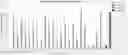


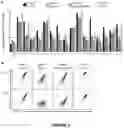
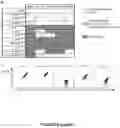
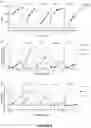


Sources:
- United States Patent and Trademark Office - verify current appl. status at the USPTO↗
Similar patent applications:
- » 20240190958
NOVEL ANTIBODY DRUG CONJUGATES WITH NOVEL NAPI2B ANTIBODIES, THERAPEUTIC METHODS AND USES THEREOF - » 20060030015
Novel process for producing antibody enzyme, novel antibody enzyme and utilization thereof - » 20150125473
NOVEL PROCESS FOR PREPARATION OF ANTIBODY CONJUGATES AND NOVEL ANTIBODY CONJUGATES - » 20160237113
Antibody purification method, antibody obtained therefrom, novel antibody purification method using cation exchanger, and antibody obtained therefrom - » 20060018914
Novel antibody conjugates reactive with human carcinomas - » 20100047243
NOVEL ANTIBODIES AGAINST IGF-IR - » 20100074903
NOVEL ANTIBODY FORMULATION - » 20050100528
Novel antibody delivery system for biological response modifiers - » 20060240006
Novel antibody structures derived from human germline sequences - » 20050158877
Novel antibody mediated surface enhanced raman scattering (SERS) immunoassay and multiplexing schemes
Recent applications in this class:
- » 20250171540 2025-05-29
PROTEIN-BASED T-CELL RECEPTOR KNOCKDOWN - » 20250163154 2025-05-22
Method of Antigen-Binding Protein Production - » 20250163153 2025-05-22
RELEASE SEGMENTS AND BINDING COMPOSITIONS COMPRISING SAME - » 20250154255 2025-05-15
DOSING REGIMEN FOR BCMAx-CD3 ANTIBODIES CONSTRUCTS - » 20250145711 2025-05-08
PROTEINS COMPRISING CD3 ANTIGEN BINDING DOMAINS AND USES THEREOF - » 20250145710 2025-05-08
ANTIBODIES DIRECTED TO CLAUDIN 6, INCLUDING BISPECIFIC FORMATS THEREOF - » 20250136690 2025-05-01
MULTISPECIFIC BINDING PROTEIN COMPOSITIONS AND USES THEREOF - » 20250136689 2025-05-01
COMPOSITIONS FOR AND METHODS OF TREATING HEMATOLOGICAL CANCERS - » 20250136688 2025-05-01
STABILIZED CD3 ANTIGEN BINDING AGENTS AND METHODS OF USE THEREOF - » 20250136687 2025-05-01
ANTI-HUMAN CD3 ANTIBODY AND USE THEREOF
Recent applications for this Assignee:
- » 20240197875 2024-06-20
NOVEL METHOD - » 20230159638 2023-05-25
EX VIVO GAMMA DELTA T CELL POPULATIONS - » 20210087528 2021-03-25
Expansion of γδ T cells, compositions, and methods of use thereof