INTERACTION PARADIGM
US20240249367A1
2024-07-25
18/100,936
2023-01-24
Smart Summary: A system shows social media posts linked to a user's account. If people report these posts for issues, the system takes note of these complaints. It can then identify the user as someone who may need help improving their content. If enough complaints come in about new posts from this user, the system will create tools to help address the problems. These tools are then shown to the user to assist them in making better content. 🚀 TL;DR
Abstract:
A method may include presenting one or more instances of social networking content associated with a first user account. The method may further include receiving one or more remediation requests associated with the one or more instances of social networking content. The method may further include identifying, based at least in part on the one or more remediation requests and the one or more instances of social networking content, the first user account as a reformable user account. The method may further include receiving a threshold number of subsequent remediation requests associated with one or more subsequent instances of social networking content associated with the reformable user account. The method may further include presenting, based at least in part on receiving the threshold number of subsequent remediation requests, one or more remediation interfaces associated with the one or more subsequent instances of social networking content.
Inventors:
- Neil Abburi 1 🇺🇸 Brooklyn, NY, United States
- Titilayo Moronke Ogunbayo 1 🇺🇸 Oakland, CA, United States
- Aaron McGuire 1 🇺🇸 Mesa, AZ, United States
Applicant:
Interested in similar patents?
Get notified when new applications in this technology area are published.
Classification:
G06Q50/01 » CPC main
Systems or methods specially adapted for specific business sectors, e.g. utilities or tourism Social networking
G06Q50/00 IPC
Systems or methods specially adapted for specific business sectors, e.g. utilities or tourism
Description
BACKGROUND
Often, the context of social networking interactions can help to clarify a particular social networking user's intent in posting specific content. Also, context regarding how or why specific content was negatively perceived by other users may help to foster a more empathetic social networking environment. Insights into user interactions can also inform a social networking platform as to what incentive mechanisms and/or reinforcement modalities (e.g., positive reinforcement versus negative reinforcement) may be appropriate for individual users. In other words, there may exist different motivators (e.g., punitive consequences, appeals to empathy, or education to name a few) to which different users respond more favorably. However, conventional social networking platforms typically rely on standardized interaction paradigms that only implement punitive measures to motivate users to reform their behavior. Thus, there exists a need for an interaction paradigm that considers more individualized motivators and/or incentives in its remediation protocols.
BRIEF DESCRIPTION OF THE DRAWINGS
The accompanying drawings illustrate a number of example embodiments and are a part of the specification. Together with the following description, these drawings demonstrate and explain various principles of the present disclosure.
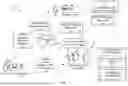
FIG. 1 is a view of an example system usable to receive remediation requests and present interfaces configured for users to perform self-remediation, according to some implementations.
FIG. 2 is an example system and device that is usable to implement the techniques described herein, according to some implementations.
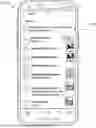
FIG. 3A is an example interface illustrating various modes for self-remediation according to some implementations.
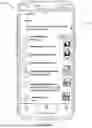
FIG. 3B is an example interface illustrating various modes for self-remediation according to some implementations.
Throughout the drawings, identical reference characters and descriptions indicate similar, but not necessarily identical, elements. While the example embodiments described herein are susceptible to various modifications and alternative forms, specific embodiments have been shown by way of example in the drawings and will be described in detail herein. However, the example embodiments described herein are not intended to be limited to the particular forms disclosed. Rather, the present disclosure covers all modifications, equivalents, and alternatives falling within the scope of the appended claims.
DETAILED DESCRIPTION OF EXAMPLE EMBODIMENTS
As discussed above, existing social networking platforms use standardized interaction and/or remediation protocols that penalize user accounts for posting content that violates community guidelines or are otherwise objectionable. However, this sort of negative reinforcement is reactionary, can cause confusion or distress to the user whose account was penalized, and/or may not materially improve future behavior of the users who's accounts were penalized. These traditional solutions do not consider the differing motivations for modifying behavior that different people have. This application describes an interaction paradigm that may be implemented within a social networking platform to foster a more empathetic and self-aware online environment. In some examples, the interaction paradigm may be implemented for comments, hashtags, reels, audio, video and/or other content that the user can produce via the social networking platform. Any or all of these sources/types of content can be configured to encourage a user to refrain from posting or otherwise producing content that is considered objectionable by other users.
Embodiments of the present disclosure may include an interaction paradigm that is configured to minimize the likelihood that users persist in posting objectionable content (e.g., hate speech, bullying or other content deemed to violate the social networking platform's community guidelines). Put another way, the interaction paradigm described herein is designed to incentivize users to adhere to community guidelines within a social networking platform—otherwise referred to herein as “self-remediation.” In order to facilitate the interaction paradigm described herein, a social networking system may determine a likelihood that “similar” user accounts will be incentivized to self-remediate objectionable content. As used herein, the phrase “similar” may describe a normalized statistical characterization of various user account demographics (e.g., age, social media usage data, geographic location, etc.) associated with the social networking system that is used to predict a particular outcome. In other words, the social networking system may be able to statistically predict the likelihood that a given instance of social media content will be self-remediated by a given user account, based on analysis of similarly situated user accounts.
The following will provide, with reference to FIGS. 1, 2, and 3, detailed descriptions of methods and systems for remediation of objectionable content within a social networking system.
FIG. 1 is a view of an example system 100 usable to implement an interaction paradigm within a social networking system according to some implementations. In some examples, the system 100 may include a user 102 who may be incentivized to reform one or more user account characteristics, as well as other users 104(1)-104(N) (collectively “users 104”). The system 100 may thus be used to incentivize the user 102 and/or the other users 104. The user 102 and the other users 104 may interact with a social networking system 106 via a network 108 using computing devices, generally indicated by 110 and 112, respectively.
In the illustrated example, the social networking system 106 may include an account reformation component 114. The account reformation component 114 may include a number of sub-components or modules, such as cohort data analysis component 118, and self-remediation component 120. The cohort data analysis component 118 may be configured to receive and analyze user account data relating to a plurality of user accounts in order to identify statistically similar accounts or “cohorts.” The cohort data analysis component 118 may thus be configured to perform statistical analysis using any appropriate cohort analysis scheme, including but not limited to time-based cohort analysis, size-based cohort analysis, segment-based cohort analysis, and the like. In some cases, the cohort data analysis component 118 may utilize cohort analysis to determine one or more similarities among reformable user accounts based on the type of objectionable content posted thereby. In some other cases, the cohort data analysis component 118 may be configured to determine one or more similarities among reformable user accounts based on a timeframe within which objectionable content was posted (e.g., to determine a statistically significant trend based on when similar user accounts post objectionable content). Therefore, the cohort data analysis component 118 may be configured to determine that similar user accounts are statistically likely to respond similarly to self-remediation prompts when presented.
The self-remediation component 120 may be configured at least to provide remediation interfaces to the user 102 (or other users 104) in association with one or more instances of social networking content. In at least some cases, the self-remediation component 120 may be further configured to determine a threshold remediation time frame. For example, the self-remediation component 120 may be configured to determine a time frame during which one or more self-remediation interactions are most likely to be effective. In one illustrative, but non-limiting example, the threshold remediation timeframe may be at least 24 hours after a threshold number of remediation requests are received, but not longer than one week thereafter.
With respect to FIG. 1, the user 102 may “post” social network content associated with a social networking account. Accordingly, at operation 122 (indicated by the numeral “1”), the social networking system 106 may present one or more instances of social networking content for consumption by the other users 104 of the social networking system.
In the illustrated example, at operation 124, (indicated by the numeral “2”), the social networking system 106 (i.e., the account reformation component 114 or one or more sub-components thereof) may receive one or more remediation requests in response to presenting the one or more instances of social networking content at operation 122. In some examples, the remediation requests may include any of a report of a particular content item as violative of the community guidelines, a request to remove as a follower an account associated with the one or more instances of social networking content, a request to unfollow the posting user, a request to block the posting user, and/or a request to restrict the posting user.
In the illustrated example, at operation 126, (indicated by the numeral “3”), the social networking system 106 (i.e., the account reformation component 114 or one or more sub-components thereof) may identify the user account associated with the user 102 (i.e., the posting account) as a reformable user account. In at least some cases, identifying the user account as a reformable user account includes determining that the one or more instances of social networking content are characterized by one or more sensitive content classifications. In such cases, one or more machine learning algorithms may be trained to detect and/or classify sound events in an audio signal, detect and/or classify video content, such as, based on multiple dimensions (e.g., x- and y-dimensions) present in individual frames, and/or and combine or aggregate the classifications of individual events in sound and/or video of content items. In this way, one or more machine learning algorithms may be trained to determine what is “happening” in social networking content (i.e., to determine whether the content is characterized by one or more sensitive content classifications).
In at least some cases, identifying the user account as a reformable user account includes contextualizing the one or more instances of social networking content. For example, the social networking system 106 (i.e., the account reformation component 114 or one or more sub-components thereof) may be configured to analyze or otherwise infer from the one or more instances of social networking content or other user account data associated with the user 102's account, one or more social misperception cues. Misperception cues provide an indication that a user may not realize that their content would be objectionable to other users, may not understand why their content would be found objectionable to other users, and/or may not have intended to post content that would be found objectionable to other users. Thus, such cues provide an indication that the user may be influenced to alter their behavior. Identification of such social misperception cues may contextualize the one or more posts for which remediation requests were received at operation 2. In this regard, the identified social misperception cues may be informative to enable the social networking system 106 to determine why certain social networking content may have been perceived as objectionable by some users but not so by a posting user.
As one illustrative but non-limiting example, the social networking system 106 (i.e., the account reformation component 114 or one or more sub-components thereof) may be configured to implement optical character recognition (OCR) technology in order to parse text data associated with the one or more instances of social networking content and implement a machine-learning algorithm to identify a context associated therewith. By identifying the context of a flagged or reported post, the social networking system 106 may determine or otherwise infer an intent of the poster. That is, the social networking system 106 may determine that the posting user (i.e., the user 102) did not intend for the social networking content to offend or otherwise be objectionable. Thus, the social networking system 106 (i.e., the account reformation component 114 or one or more sub-components thereof) may be configured to determine that one or more alternative remediation interactions may help to bring the reformable user account in line with the social network's community standards. In at least some examples, the one or more alternative remediation interactions include presenting one or more remediation interfaces in association with one or more instances of social networking content.
Next, at operation 128 (indicated by the numeral “4”), the social networking system 106 (i.e., the account reformation component 114 or one or more sub-components thereof) may receive a threshold number of subsequent remediation requests associated with subsequent social networking content posted by the user 102 from the reformable user account.
At optional operation 130 (indicated by the numeral “5”), the social networking system 106 (i.e., the account reformation component 114 or one or more sub-components thereof) may further (or additionally) determine that a threshold remediation time frame has lapsed. In some cases, a threshold remediation time frame may be a minimum time frame determined as effective to promote the user 102's willingness to self-remediate with regard to reported/flagged or otherwise objectionable content. In at least some cases, the threshold remediation time frame may be calculated or otherwise determined in connection with receipt of a threshold number of remediation requests as discussed at operation 128. For example, the social networking system 106 may be configured to correlate a time frame required to receive the threshold number of subsequent remediation requests with a likelihood that a posting user (i.e., the user 102) will self-remediate (e.g., remove a flagged post, issue an apology with regard to a flagged post, or the like). In some cases, the threshold remediation timeframe may be determined based at least in part on one or more self-remediation notification limits. For example, the social networking system 106 may be configured to determine one or more self-remediation notification limits above which the likelihood that a posting user (i.e., the user 102) is unlikely to self-remediate (e.g., because the user may become annoyed, upset, angered or otherwise less receptive to self-remediation). Accordingly, the social networking system 106 may be configured to adjust the threshold remediation timeframe to avoid such adverse user reaction. That is, the social networking system 106 may be configured to determine that the threshold remediation timeframe should be extended when the one or more self-remediation notification limits are exceeded or nearly exceeded or in similar instances. In at least one example, the one or more self-remediation notification limits are a maximum of three self-remediation notifications per user and no more than one self-remediation notification per user per week.
At operation 132 (indicated by the numeral “6”), the social networking system 106 may present one or more remediation interfaces associated with the one or more subsequent instances of social networking content for which a threshold number of subsequent remediation requests were received at operation 128. In the illustrated example, a remediation interface comprises a message stating: “Your comment may be hurtful to other people.” In some cases, presenting the one or more remediation interfaces may occur subsequent to determining that a threshold remediation time frame has lapsed.
In the illustrated example, each of the computing devices 110 and 112 may include one or more processors and memory storing computer executable instructions to implement the functionality discussed herein attributable to the various computing devices. In some examples, the computing devices 110 and 112 may include desktop computers, laptop computers, tablet computers, mobile devices (e.g., smart phones or other cellular or mobile phones, mobile gaming devices, portable media devices, etc.), or other suitable computing devices. The computing devices 110 and 112 may execute one or more client applications, such as a web browser (e.g., Microsoft Windows Internet Explorer, Mozilla Firefox, Apple Safari, Google Chrome, Opera, etc.) or a native or special-purpose client application (e.g., social media applications, messaging applications, email applications, games, etc.), to access and view content over the network 108.
The network 108 may represent a network or collection of networks (such as the Internet, a corporate intranet, a virtual private network (VPN), a local area network (LAN), a wireless local area network (WLAN), a cellular network, a wide area network (WAN), a metropolitan area network (MAN), or a combination of two or more such networks) over which the computing devices 110 and 112 may access the social networking system 106 and/or communicate with one another.
The social networking system 106 may include one or more servers or other computing devices, any or all of which may include one or more processors and memory storing computer executable instructions to implement the functionality discussed herein attributable to the social networking system or digital platform. The social networking system 106 may enable the user 102 and users 104 (such as persons or organizations) to interact with the social networking system 106 and with each other via the computing devices 110 and 112. The social networking system 106 may, with input from a user, create and store in the social networking system 106 a user account associated with the user. The user account may include demographic information, communication-channel information, and information on personal interests of the user. The social networking system 106 may also, with input from a user, create and store a record of relationships of the user with other users of the social networking system 106, as well as provide services (e.g., posts, comments, photo-sharing, messaging, tagging, mentioning of other users or entities, games, etc.) to facilitate social interaction between or among the users.
In some examples, the social networking system 106 may provide privacy features to the users 102 and 104 while interacting with the social networking system 106. In particular examples, one or more objects (e.g., content or other types of objects) of the system 106 may be associated with one or more privacy settings. The one or more objects may be stored on or otherwise associated with any suitable computing system or application, such as, for example, the social networking system 106, a client system, a third-party system, a social networking application, a messaging application, a photo-sharing application, or any other suitable computing system or application. Although the examples discussed herein are in the context of an online social network, these privacy settings may be applied to any other suitable computing system. Privacy settings (or “access settings”) for an object or item of content may be stored in any suitable manner, such as, for example, in association with the object, in an index on an authorization server, in another suitable manner, or any suitable combination thereof. A privacy setting for an object may specify how the object (or particular information associated with the object) can be accessed, stored, or otherwise used (e.g., viewed, shared, modified, copied, executed, surfaced, or identified) within the online social network. When privacy settings for an object allow a particular user or other entity to access that object, the object may be described as being “visible” with respect to that user or other entity. As an example, and not by way of limitation, a user of the online social network may specify privacy settings for a user-profile page that identify a set of users that may access work-experience information on the user-profile page, thus excluding other users from accessing that information.
In particular examples, privacy settings for an object may specify a “blocked list” and/or a “restricted list” of users or other entities that should not be allowed to access certain information associated with the object. In particular examples, the blocked list may include third-party entities. The blocked list or restricted list may specify one or more users or entities for which an object is not visible. As an example, and not by way of limitation, a user may specify a set of users who may not access photo albums associated with the user, thus excluding those users from accessing the photo albums (while also possibly allowing certain users not within the specified set of users to access the photo albums). In particular examples, privacy settings may be associated with particular social-graph elements. Privacy settings of a social-graph element, such as a node or an edge, may specify how the social-graph element, information associated with the social-graph element, or objects associated with the social-graph element can be accessed using the online social network. As an example, and not by way of limitation, a particular concept node corresponding to a particular photo may have a privacy setting specifying that the photo may be accessed only by users tagged in the photo and friends of the users tagged in the photo. In particular examples, privacy settings may allow users to opt in to or opt out of having their content, information, or actions stored/logged by the social-networking system or shared with other systems (e.g., a third-party system). Although this disclosure describes using particular privacy settings in a particular manner, this disclosure contemplates using any suitable privacy settings in any suitable manner.
In particular examples, privacy settings may be based on one or more nodes or edges of a social graph. A privacy setting may be specified for one or more edges or edge-types of the social graph, or with respect to one or more nodes or node-types of the social graph. The privacy settings applied to a particular edge connecting two nodes may control whether the relationship between the two entities corresponding to the nodes is visible to other users of the online social network. Similarly, the privacy settings applied to a particular node may control whether the user or concept corresponding to the node is visible to other users of the online social network. As an example, and not by way of limitation, a user, such as a user 102 and 104, may share an object to the social networking system 106. The object may be associated with a concept node connected to a user node of the user 102 and/or 104 by an edge. The user 102 and/or 104 may specify privacy settings that apply to a particular edge connecting to the concept node of the object or may specify privacy settings that apply to all edges connecting to the concept node. In some examples, the user 102 and/or 104 may share a set of objects of a particular object-type (e.g., a set of images). The user 102 and/or 104 may specify privacy settings with respect to all objects associated with the user 102 and/or 104 of that particular object-type as having a particular privacy setting (e.g., specifying that all images posted by the user 102 and/or 104 are visible only to friends of the user and/or users tagged in the images).
In particular examples, the social networking system 106 may present a “privacy wizard” (e.g., within a webpage, a module, one or more dialog boxes, or any other suitable interface) to the user 102 and/or 104 to assist the user in specifying one or more privacy settings. The privacy wizard may display instructions, suitable privacy-related information, current privacy settings, one or more input fields for accepting one or more inputs from the first user specifying a change or confirmation of privacy settings, or any suitable combination thereof. In particular examples, the social networking system 106 may offer a “dashboard” functionality to the user 102 and/or 104 that may display, to the user 102 and/or 104, current privacy settings of the user 102 and/or 104. The dashboard functionality may be displayed to the user 102 and/or 104 at any appropriate time (e.g., following an input from the user 102 and/or 104 summoning the dashboard functionality, following the occurrence of a particular event or trigger action). The dashboard functionality may allow the user 102 and/or 104 to modify one or more of the user's current privacy settings at any time, in any suitable manner (e.g., redirecting the user 102 and/or 104 to the privacy wizard).
Privacy settings associated with an object may specify any suitable granularity of permitted access or denial of access. As an example and not by way of limitation, access or denial of access may be specified for particular users (e.g., only me, my roommates, my boss), users within a particular degree-of-separation (e.g., friends, friends-of-friends), user groups (e.g., the gaming club, my family), user networks (e.g., employees of particular employers, students or alumni of particular university), all users (“public”), no users (“private”), users of third-party systems, particular applications (e.g., third-party applications, external websites), other suitable entities, or any suitable combination thereof. Although this disclosure describes particular granularities of permitted access or denial of access, this disclosure contemplates any suitable granularities of permitted access or denial of access.
In particular examples, one or more servers of the social networking system 106 may be authorization/privacy servers for enforcing privacy settings. In response to a request from the user 102 and/or 104 (or other entity) for a particular object stored in a data store, the social networking system 106 may send a request to the data store for the object. The request may identify the user 102 and/or 104 associated with the request and the object may be sent only to the user 102 and/or 104 (or a client system of the user) if the authorization server determines that the user 102 is authorized to access the object based on the privacy settings associated with the object. If the requesting user is not authorized to access the object, the authorization server may prevent the requested object from being retrieved from the data store or may prevent the requested object from being sent to the user. In the search-query context, an object may be provided as a search result only if the querying user is authorized to access the object, e.g., if the privacy settings for the object allow it to be surfaced to, discovered by, or otherwise visible to the querying user. In particular examples, an object may represent content that is visible to a user through a newsfeed of the user. As an example, and not by way of limitation, one or more objects may be visible to a user's “Trending” page. In particular examples, an object may correspond to a particular user. The object may be content associated with the particular user, or may be the particular user's account or information stored on the social networking system 106, or other computing systems. As an example, and not by way of limitation, the user 102 and/or 104 may view one or more other users 102 and/or 104 of an online social network through a “People You May Know” function of the online social network, or by viewing a list of friends of the user 102. As an example, and not by way of limitation, the user 102 and/or 104 may specify that they do not wish to see objects associated with a particular other user (e.g., the user 102 and/or 104) in their newsfeed or friends list. If the privacy settings for the object do not allow it to be surfaced to, discovered by, or visible to the user 102 and/or 104, the object may be excluded from the search results. Although this disclosure describes enforcing privacy settings in a particular manner, this disclosure contemplates enforcing privacy settings in any suitable manner.
In particular examples, different objects of the same type associated with a user may have different privacy settings. Different types of objects associated with a user may also have different types of privacy settings. As an example, and not by way of limitation, the user 102 and/or 104 may specify that the user's status updates are public, but any images shared by the user are visible only to the user's friends on the online social network. In some examples, the user 102 and/or 104 may specify different privacy settings for different types of entities, such as individual users, friends-of-friends, followers, user groups, or corporate entities. In some examples, the user 102 and/or 104 may specify a group of users that may view videos posted by the user 102 and/or 104, while keeping the videos from being visible to the user's employer. In particular examples, different privacy settings may be provided for different user groups or user demographics. As an example, and not by way of limitation, the user 102 and/or 104 may specify that other users who attend the same university as the user 102 and/or 104 may view the user's pictures, but that other users who are family members of the user 102 and/or 104 may not view those same pictures.
In particular examples, the social networking system 106 may provide one or more default privacy settings for each object of a particular object-type. A privacy setting for an object that is set to a default may be changed by a user associated with that object. As an example, and not by way of limitation, all images posted by the user 102 and/or 104 may have a default privacy setting of being visible only to friends of the first user and, for a particular image, the user 102 and/or 104 may change the privacy setting for the image to be visible to friends and friends-of-friends.
In particular examples, privacy settings may allow the user 102 and/or 104 to specify (e.g., by opting out, by not opting in) whether the social networking system 106 may receive, collect, log, or store particular objects or information associated with the user 102 and/or 104 for any purpose. In particular examples, privacy settings may allow the user 102 and/or 104 to specify whether particular applications or processes may access, store, or use particular objects or information associated with the user. The privacy settings may allow the user 102 and/or 104 to opt in or opt out of having objects or information accessed, stored, or used by specific applications or processes. The social networking system 106 may access such information in order to provide a particular function or service to the user 102 and/or 104, without the social networking system 106 having access to that information for any other purposes. Before accessing, storing, or using such objects or information, the social networking system 106 may prompt the user 102 and/or 104 to provide privacy settings specifying which applications or processes, if any, may access, store, or use the object or information prior to allowing any such action. As an example, and not by way of limitation, the user 102 and/or 104 may transmit a message to the user 102 and/or 104 via an application related to the online social network (e.g., a messaging app), and may specify privacy settings that such messages should not be stored by the social networking system 106.
In particular examples, the user 102 and/or 104 may specify whether particular types of objects or information associated with the user 102 and/or 104 may be accessed, stored, or used by the social networking system 106. As an example, and not by way of limitation, the user 102 and/or 104 may specify that images sent by the user 102 and/or 104 through the social networking system 106 may not be stored by the social networking system 106. In some examples, the user 102 and/or 104 may specify that messages sent from the user 102 and/or 104 to another user may not be stored by the social networking system 106. In some cases, the user 102 and/or 104 may specify that all objects sent via a particular application may be saved by the social networking system 106.
In particular examples, privacy settings may allow the user 102 and/or 104 to specify whether particular objects or information associated with the user 102 and/or 104 may be accessed from particular client systems or third-party systems. The privacy settings may allow the user 102 and/or 104 to opt in or opt out of having objects or information accessed from a particular device (e.g., the phone book on a user's smart phone), from a particular application (e.g., a messaging app), or from a particular system (e.g., an email server). The social networking system 106 may provide default privacy settings with respect to each device, system, or application, and/or the user 102 and/or 104 may be prompted to specify a particular privacy setting for each context. As an example, and not by way of limitation, the user 102 and/or 104 may utilize a location-services feature of the social networking system 106 to provide recommendations for restaurants or other places in proximity to the user 102 and/or 104. The default privacy settings of the user 102 and/or 104 may specify that the social networking system 106 may use location information provided from the computing device 110 and/or 112 of the user 102 and/or 104 to provide the location-based services, but that the social networking system 106 may not store the location information of the user 102 and/or 104 or provide it to any third-party systems. The user 102 and/or 104 may then update the privacy settings to allow location information to be used by a third-party image-sharing application in order to geo-tag photos.
In particular examples, privacy settings may allow a user to engage in the ephemeral sharing of objects on the online social network. Ephemeral sharing refers to the sharing of objects (e.g., posts, photos) or information for a finite period of time. Access or denial of access to the objects or information may be specified by time or date. As an example, and not by way of limitation, a user may specify that a particular image uploaded by the user is visible to the user's friends for the next week, after which time the image may no longer be accessible to other users. In some examples, a company may post content related to a product release ahead of the official launch and specify that the content may not be visible to other users until after the product launch.
In particular examples, for particular objects or information having privacy settings specifying that they are ephemeral, the social networking system 106 may be restricted in its access, storage, or use of the objects or information. The social networking system 106 may temporarily access, store, or use these particular objects or information in order to facilitate particular actions of a user associated with the objects or information, and may subsequently delete the objects or information, as specified by the respective privacy settings. As an example, and not by way of limitation, the user 102 may transmit a message to the user 104, and the social networking system 106 may temporarily store the message in a data store until the user 104 has viewed or downloaded the message, at which point the social networking system 106 may delete the message from the data store. In some examples, continuing with the prior example, the message may be stored for a specified period of time (e.g., 2 weeks), after which point the social networking system 106 may delete the message from the data store.
In particular examples, changes to privacy settings may take effect retroactively, affecting the visibility of objects and content shared prior to the change. As an example, and not by way of limitation, the user 102 may share a first image and specify that the first image is to be public to all other users. At a later time, the user 102 and/or 104 may specify that any images shared by the user should be made visible only to a first user group. The social networking system 106 may determine that this privacy setting also applies to the first image and make the first image visible only to the first user group. In particular examples, the change in privacy settings may take effect only going forward. Continuing the example above, if the user 102 and/or 104 changes privacy settings and then shares a second image, the second image may be visible only to the first user group, but the first image may remain visible to all users. In particular examples, in response to a user action to change a privacy setting, the social networking system 106 may further prompt the user to indicate whether the user wants to apply the changes to the privacy setting retroactively. In particular examples, a user change to privacy settings may be a one-off change specific to one object. In particular examples, a user's change to privacy may be a global change for all objects associated with the user.
In particular examples, the social networking system 106 may determine that user 102 and/or 104 may want to change one or more privacy settings in response to a trigger action associated with the user 102 and/or 104. The trigger action may be any suitable action on the online social network. As an example, and not by way of limitation, a trigger action may be a change in the relationship between a first and second user of the online social network (e.g., “un-friending” a user, changing the relationship status between the users, etc.). In particular examples, upon determining that a trigger action has occurred, the social networking system 106 may prompt the user 102 and/or 104 to change the privacy settings regarding the visibility of objects associated with the user 102 and/or 104. The prompt may redirect the user 102 and/or 104 to a workflow process for editing privacy settings with respect to one or more entities associated with the trigger action. The privacy settings associated with the user 102 and/or 104 may be changed only in response to an explicit input from the user 102 and/or 104 and may not be changed without the approval of the user 102 and/or 104. As an example, and not by way of limitation, the workflow process may include providing the user 102 with the current privacy settings with respect to the user 104 or to a group of users (e.g., un-tagging the user 102 or the user 104 from particular objects, changing the visibility of particular objects with respect to the user 104 or a group of users), and receiving an indication from the user 102 to change the privacy settings based on any of the methods described herein, or to keep the existing privacy settings.
In particular examples, a user may need to provide verification of a privacy setting before allowing the user to perform particular actions on the online social network, or to provide verification before changing a particular privacy setting. When performing particular actions or changing a particular privacy setting, a prompt may be presented to the user to remind the user of his or her current privacy settings and to ask the user to verify the privacy settings with respect to the particular action. Furthermore, a user may need to provide confirmation, double-confirmation, authentication, or other suitable types of verification before proceeding with the particular action, and the action may not be complete until such verification is provided. As an example, and not by way of limitation, a user's default privacy settings may indicate that a person's relationship status is visible to all users (i.e., “public”). However, if the user changes his or her relationship status, the social networking system 106 may determine that such action may be sensitive and may prompt the user to confirm that his or her relationship status should remain public before proceeding. In some examples, a user's privacy settings may specify that the user's posts are visible only to friends of the user. However, if the user changes the privacy setting for his or her posts to being public, the social networking system 106 may prompt the user with a reminder of the user's current privacy settings of posts being visible only to friends, and a warning that this change will make all of the user's past posts visible to the public. The user may then be required to provide a second verification, input authentication credentials, or provide other types of verification before proceeding with the change in privacy settings. In particular examples, a user may need to provide verification of a privacy setting on a periodic basis. A prompt or reminder may be periodically sent to the user based either on time elapsed or a number of user actions. As an example, and not by way of limitation, the social networking system 106 may send a reminder to the user to confirm his or her privacy settings every six months or after every ten photo posts. In particular examples, privacy settings may also allow users to control access to the objects or information on a per-request basis. As an example, and not by way of limitation, the social networking system 106 may notify the user whenever a third-party system attempts to access information associated with the user and require the user to provide verification that access should be allowed before proceeding.
FIG. 2 illustrates an example system 200 that includes an example computing device 202 that is representative of one or more computing systems and/or devices that may implement the various techniques described herein. This is illustrated through inclusion of a social networking system 220, which may be similar to social networking system 106 of FIG. 1. The illustrated social networking system 220 comprises a cohort data analysis component 224, and a self-remediation component 226. The cohort data analysis component 224, and self-remediation component 226 may each be similar, respectively, to the cohort data analysis component 118, and the self-remediation component 120 of FIG. 1.
The computing device 202 may be, for example, a server of a service provider, a device associated with a client (e.g., a client device), an on-chip system, and/or any other suitable computing device or computing system. The example computing device 202 as illustrated includes a processing system 204, one or more computer-readable media 206, and one or more I/O interfaces 208 that are communicatively coupled, one to another. Although not shown, the computing device 202 may further include a system bus or other data and command transfer system that couples the various components, one to another. A system bus can include any one or combination of different bus structures, such as a memory bus or memory controller, a peripheral bus, a universal serial bus, and/or a processor or local bus that utilizes any of a variety of bus architectures. A variety of other examples are also contemplated, such as control and data lines.
The processing system 204 is representative of functionality to perform one or more operations using hardware. Accordingly, the processing system 204 is illustrated as including hardware elements 210 that may be configured as processors, functional blocks, and so forth. This may include implementation in hardware as an application specific integrated circuit or other logic device formed using one or more semiconductors. The hardware elements 210 are not limited by the materials from which they are formed, or the processing mechanisms employed therein. For example, processors may be comprised of semiconductor(s) and/or transistors (e.g., electronic integrated circuits (ICs)). In such a context, processor-executable instructions may be electronically-executable instructions.
The computer-readable storage media 206 is illustrated as including memory/storage 212. The memory/storage 212 represents memory/storage capacity associated with one or more computer-readable media. The memory/storage 212 may include volatile media (such as random access memory (RAM)) and/or nonvolatile media (such as read only memory (ROM), Flash memory, optical disks, magnetic disks, and so forth). The memory/storage 212 may include fixed media (e.g., RAM, ROM, a fixed hard drive, and so on) as well as removable media (e.g., Flash memory, a removable hard drive, an optical disc, and so forth). The computer-readable media 206 may be configured in a variety of other ways as further described below.
Input/output interface(s) 208 are representative of functionality to allow a user to enter commands and information to computing device 202, and also allow information to be presented to the user and/or other components or devices using various input/output devices. Examples of input devices include a keyboard, a cursor control device (e.g., a mouse), a microphone, a scanner, touch functionality (e.g., capacitive or other sensors that are configured to detect physical touch), a camera (e.g., which may employ visible or non-visible wavelengths such as infrared frequencies to recognize movement as gestures that do not involve touch), and so forth. Examples of output devices include a display device (e.g., a monitor or projector), speakers, a printer, a network card, tactile-response device, and so forth. Thus, the computing device 202 may be configured in a variety of ways as further described below to support user interaction.
Various techniques may be described herein in the general context of software, hardware elements, or program modules. Generally, such modules include routines, programs, objects, elements, components, data structures, and so forth that perform particular tasks or implement particular abstract data types. The terms “module,” “functionality,” “logic,” and “component” as used herein generally represent software, firmware, hardware, or a combination thereof. The features of the techniques described herein are platform-independent, meaning that the techniques may be implemented on a variety of commercial computing platforms having a variety of processors.
An implementation of the described modules and techniques may be stored on and/or transmitted across some form of computer-readable media. The computer-readable media may include a variety of media that may be accessed by the computing device 202. By way of example, and not limitation, computer-readable media may include “computer-readable storage media” and “computer-readable transmission media.”
“Computer-readable storage media” may refer to media and/or devices that enable persistent and/or non-transitory storage of information in contrast to mere signal transmission, carrier waves, or signals per se. Thus, computer-readable storage media refers to non-signal bearing media. The computer-readable storage media includes hardware such as volatile and non-volatile, removable and non-removable media and/or storage devices implemented in a method or technology suitable for storage of information such as computer-readable instructions, data structures, program modules, logic elements/circuits, or other data. Examples of computer-readable storage media may include, but are not limited to, RAM, ROM, EEPROM, flash memory or other memory technology, CD-ROM, digital versatile disks (DVD) or other optical storage, hard disks, magnetic cassettes, magnetic tape, magnetic disk storage or other magnetic storage devices, or other storage device, tangible media, or article of manufacture suitable to store the desired information and which may be accessed by a computer.
“Computer-readable transmission media” may refer to a medium that is configured to transmit instructions to the hardware of the computing device 202, such as via a network. Computer-readable transmission media typically may transmit computer-readable instructions, data structures, program modules, or other data in a modulated data signal, such as carrier waves, data signals, or other transport mechanism. Computer-readable transmission media also includes any information delivery media. The term “modulated data signal” means a signal that has one or more of its characteristics set or changed in such a manner as to encode information in the signal. By way of example, and not limitation, computer-readable transmission media include wired media such as a wired network or direct-wired connection, and wireless media such as acoustic, radio frequency (RF), infrared, and other wireless media.
As previously described, hardware elements 210 and computer-readable media 206 are representative of modules, programmable device logic and/or device logic implemented in a hardware form that may be employed in some embodiments to implement at least some aspects of the techniques described herein, such as to perform one or more instructions. Hardware may include components of an integrated circuit or on-chip system, an application-specific integrated circuit (ASIC), a field-programmable gate array (FPGA), a complex programmable logic device (CPLD), and other implementations in silicon or other hardware. In this context, hardware may operate as a processing device that performs program tasks defined by instructions and/or logic embodied by the hardware as well as a hardware utilized to store instructions for execution, e.g., the computer-readable storage media described previously.
Combinations of the foregoing may also be employed to implement various techniques described herein. Accordingly, software, hardware, or executable modules may be implemented as one or more instructions and/or logic embodied on some form of computer-readable storage media and/or by one or more hardware elements 210. The computing device 202 may be configured to implement particular instructions and/or functions corresponding to the software and/or hardware modules. Accordingly, implementation of a module that is executable by the computing device 202 as software may be achieved at least partially in hardware, e.g., through use of computer-readable storage media and/or hardware elements 210 of the processing system 204. The instructions and/or functions may be executable/operable by one or more articles of manufacture (for example, one or more computing devices 202 and/or processing systems 204) to implement techniques, modules, and examples described herein.
The techniques described herein may be supported by various configurations of the computing device 202 and are not limited to the specific examples of the techniques described herein. This functionality may also be implemented all or in part through use of a distributed system, such as over a computing environment or “cloud” 214 via a platform 216 as described below.
The cloud 214 includes and/or is representative of a platform 216 for resources 218. The platform 216 abstracts underlying functionality of hardware (e.g., servers) and software resources of the cloud 214. The resources 218 may include applications and/or data that can be utilized while computer processing is executed on servers that are remote from the computing device 202. Resources 218 can also include services provided over the Internet and/or through a subscriber network, such as a cellular or Wi-Fi network.
The platform 216 may abstract resources and functions to connect the computing device 202 with other computing devices. The platform 216 may also be scalable to provide a corresponding level of scale to encountered demand for the resources 218 that are implemented via the platform 216. Accordingly, in an interconnected device embodiment, implementation of functionality described herein may be distributed throughout multiple devices of the system 200. For example, the functionality may be implemented in part on the computing device 202 as well as via the platform 216 which may represent a cloud computing environment.
FIGS. 3A-3B each illustrate an example interface 300A and 300B illustrating various modes for self-remediation according to some implementations. For example, the example interfaces 300A and 300B may each be similar to the I/O interface(s) 208 described above with regard to FIG. 2. In the example interface 300A illustrated in FIG. 3A, there is shown a context interface object 305. The context interface object may be configured to contextualize one or more alternative remediation interactions such as one or more remediation interfaces. For example, the example interface 300A may constitute a landing screen to which the user 102 may be directed upon an initial launch of the social networking system 106 on the computing device 110, following subsequent remediation requests. Thus, the context interface object 305 may serve to explain why the user 102 is being presented with the example interface 300A. Such explanation/context may include describing that a given instance of social networking content was reported by several users, describing emotions and/or perceptions reporting users said the reported content elicited, presenting the user 102 with an opportunity to review the instance of social networking content, or the like.
In some cases, the example interface 300B illustrated in FIG. 3B may be configured to be presented to the user 102 subsequent to presentation of the example interface 300A. As shown, the example interface 300B includes a context interface object 315, that may be similar to the context interface object 305. Thus, the context interface object 315 may configured to further contextualize a current remediation interaction. In the illustrated example, the context interface object describes that the example social networking content was “hurtful to other people.” The example interface 300B further includes a remove content interface object 320A and a retain content interface object 320B. The remove content interface object 320A is configured to receive user input effective to delete or otherwise remove flagged social networking content. The retain content interface object 320B is, on the contrary, configured to receive user input effect to retain or otherwise conserve flagged social networking content. Thus, each of the example interfaces 300A and 300B is configured to facilitate self-remediation of social networking content at least by contextualizing why other users of the social networking platform found the content offensive.
The process parameters and sequence of the steps described and/or illustrated herein are given by way of example only and can be varied as desired. For example, while the steps illustrated and/or described herein may be shown or discussed in a particular order, these steps do not necessarily need to be performed in the order illustrated or discussed. The various example methods described and/or illustrated herein may also omit one or more of the steps described or illustrated herein or include additional steps in addition to those disclosed.
The preceding description has been provided to enable others skilled in the art to best utilize various aspects of the example embodiments disclosed herein. This example description is not intended to be exhaustive or to be limited to any precise form disclosed. Many modifications and variations are possible without departing from the spirit and scope of the present disclosure. The embodiments disclosed herein should be considered in all respects illustrative and not restrictive. Reference should be made to the appended claims and their equivalents in determining the scope of the present disclosure.
Unless otherwise noted, the terms “connected to” and “coupled to” (and their derivatives), as used in the specification and claims, are to be construed as permitting both direct and indirect (i.e., via other elements or components) connection. In addition, the terms “a” or “an,” as used in the specification and claims, are to be construed as meaning “at least one of.” Finally, for ease of use, the terms “including” and “having” (and their derivatives), as used in the specification and claims, are interchangeable with and have the same meaning as the word “comprising.”
Claims
What is claimed is:1. A method comprising:
presenting one or more instances of social networking content associated with a first user account;
receiving one or more remediation requests associated with the one or more instances of social networking content;
identifying, based at least in part on the one or more remediation requests and the one or more instances of social networking content, the first user account as a reformable user account;
receiving a threshold number of subsequent remediation requests associated with one or more subsequent instances of social networking content associated with the reformable user account; and
presenting, based at least in part on receiving the threshold number of subsequent remediation requests, one or more remediation interfaces associated with the one or more subsequent instances of social networking content.
2. The method of claim 1, wherein identifying the first user account as the reformable user account comprises determining that the one or more instances of social networking content are characterized by one or more social misperception cues.
3. The method of claim 1, wherein an individual remediation interface of the one or more remediation interfaces comprises at least:
a first interface object configured to receive a remove content user input, and
a second interface object configured to receive a retain content user input.
4. The method of claim 3, wherein the individual remediation interface of the one or more remediation interfaces further comprises a third interface object configured to contextualize a user perception of one or more users associated with the threshold number of subsequent remediation requests.
5. The method of claim 1, wherein presenting the one or more remediation interfaces occurs subsequent to a remediation threshold time frame lapsing.
Images & Drawings included:


Sources:
- United States Patent and Trademark Office - verify current appl. status at the USPTO↗
Similar patent applications:
- » 20120278764
Platform agnostic UI/UX and human interaction paradigm - » 20230280742
Magic wand interface and other user interaction paradigms for a flying digital assistant - » 20230280746
User interaction paradigms for a flying digital assistant - » 20240402702
Magic Wand Interface And Other User Interaction Paradigms For A Flying Digital Assistant - » 20130298060
Drag and drop interaction paradigm with image swap - » 20150169179
Nature inspired interaction paradigm - » 20150370250
Magic wand interface and other user interaction paradigms for a flying digital assistant - » 20160327950
Virtual camera interface and other user interaction paradigms for a flying digital assistant - » 20180095459
User interaction paradigms for a flying digital assistant - » 20180246507
Magic wand interface and other user interaction paradigms for a flying digital assistant
Recent applications in this class:
- » 20250173799 2025-05-29
APPARATUS AND METHOD FOR SHORT VIDEO INTERACTION/INTRODUCTION - » 20250166090 2025-05-22
TOOL FOR CREATING AND MANAGING SOCIAL MEDIA-BASED CONTESTS WITH PRESENTATION-BALANCING COMPONENT AND STRENGTH-SCORING COMPONENT - » 20250166089 2025-05-22
ACTIVITY AREA ESTIMATION APPARATUS, ACTIVITY AREA ESTIMATION METHOD, AND NON-TRANSITORY COMPUTER READABLE MEDIUM - » 20250166088 2025-05-22
SYSTEMS AND METHODS TO ORGANIZE DATA FROM MULTIPLE PLATFORMS WITH NON-TRANSITORY COMPUTER-READABLE MEDIA AND DATA ORGANIZING METHODS - » 20250166087 2025-05-22
INFORMATION PROCESSING SYSTEM AND PROGRAM - » 20250156965 2025-05-15
SIMULATED NETWORK SYSTEM AND METHOD FOR RELATING USERS OF REAL-WORLD E-COMMERCE AND OTHER USER NETWORK SYSTEMS TO INFORMATION - » 20250156964 2025-05-15
SYSTEM, METHOD, AND APPLICATION FOR EXCHANGING CONTENT IN A SOCIAL NETWORK ENVIRONMENT - » 20250156963 2025-05-15
ADAPTIVE INTELLIGENCE AND SHARED INFRASTRUCTURE LENDING TRANSACTION ENABLEMENT PLATFORM RESPONSIVE TO CROWD SOURCED INFORMATION - » 20250156962 2025-05-15
USER COHORT CREATION BASED ON INTERACTIVITY AND PROFILE OF USERS - » 20250156961 2025-05-15
COMMUNITY-BASED ELECTRIC VEHICLES MARKETPLACE