CATIONIC COBALT COMPLEXES FOR ASYMMETRIC HYDROGENATION AND METHODS OF MAKING THE SAME
US20240390882A1
2024-11-28
18/719,574
2022-12-16
Smart Summary: Cationic cobalt complexes are used to help with a chemical process called asymmetric hydrogenation, which changes alkenes into different forms. The methods described make it easy to create these cobalt complexes quickly and efficiently. This allows researchers to test many different ligands, which are molecules that help the reaction happen. The cobalt complexes are in a specific state (Co(I)) that is useful for these reactions. Overall, this work improves the way scientists can produce and evaluate new chemical compounds. 🚀 TL;DR
Abstract:
In one aspect, methods for the facile synthesis of cationic cobalt complexes for asymmetric hydrogenation of alkenes are provided. Synthetic methods described herein, in some embodiments, provide Co(I) precatalysts on a time scale and yield permitting catalytic evaluation of a significant number of enantiopure ligands.
Inventors:
- Paul J. CHIRIK 21 🇺🇸 Princeton, NJ, United States
- Connor S. MacNeil 1 🇺🇸 Conshohocken, PA, United States
Applicant:
Interested in similar patents?
Get notified when new applications in this technology area are published.
Classification:
B01J31/2452 » CPC main
Catalysts comprising hydrides, coordination complexes or organic compounds containing coordination complexes; Phosphines, i.e. phosphorus bonded to only carbon atoms, or to both carbon and hydrogen atoms, including e.g. sp2-hybridised phosphorus compounds such as phosphabenzene, phosphole or anionic phospholide ligands; Cyclic ligands, including e.g. non-condensed polycyclic ligands, the phosphine-P atom being a ring member or a substituent on the ring comprising condensed ring systems and phosphine-P atoms as substituents on a ring of the condensed system or on a further attached ring with more than one complexing phosphine-P atom
B01J31/2295 » CPC further
Catalysts comprising hydrides, coordination complexes or organic compounds containing coordination complexes; Organic complexes; Unsaturated compounds used as ligands Cyclic compounds, e.g. cyclopentadienyls
C07F15/065 » CPC further
Compounds containing elements of Groups 8, 9, 10 or 18 of the Periodic System; Cobalt compounds without a metal-carbon linkage
B01J2231/645 » CPC further
Catalytic reactions performed with catalysts classified in; Reduction reactions, e.g. hydrogenation; Reductions in general of organic substrates, e.g. hydride reductions or hydrogenations; Hydrogenation of organic substrates, i.e. H or H-transfer hydrogenations, e.g. Fischer-Tropsch processes of C=C or C-C triple bonds
B01J2531/004 » CPC further
Additional information regarding catalytic systems classified in; General concepts, e.g. reviews, relating to catalyst systems and methods of making them, the concept being defined by a common material or method/theory; Materials Ligands
B01J2531/845 » CPC further
Additional information regarding catalytic systems classified in; Complexes comprising metals of Group VIII as the central metal; Metals of the iron group Cobalt
B01J31/24 IPC
Catalysts comprising hydrides, coordination complexes or organic compounds containing coordination complexes Phosphines, i.e. phosphorus bonded to only carbon atoms, or to both carbon and hydrogen atoms, including e.g. sp2-hybridised phosphorus compounds such as phosphabenzene, phosphole or anionic phospholide ligands
B01J31/22 IPC
Catalysts comprising hydrides, coordination complexes or organic compounds containing coordination complexes Organic complexes
C07F15/06 IPC
Compounds containing elements of Groups 8, 9, 10 or 18 of the Periodic System Cobalt compounds
Description
RELATED APPLICATION DATA
The present application claims priority pursuant to Article 8 of the Patent Cooperation Treaty to United States Provisional Patent Application Ser. No. 63/290,157 filed Dec. 16, 2021, which is incorporated herein by reference in its entirety.
FIELD
The present invention relates to transition metal catalysts for asymmetric hydrogenation and, in particular, to cationic Co(I) complexes and methods of making the same.
BACKGROUND
The asymmetric hydrogenation of olefins is one of the most powerful reactions for the synthesis of single enantiomer products. Traditionally, Schrock-Osborn type catalysts have been employed for asymmetric hydrogenation. While effective, these catalysts carry a high cost, given the rhodium metal center. In view of these economic disadvantages, catalysts employing more abundant transition metals remain elusive.
SUMMARY
In one aspect, methods for the facile synthesis of cationic cobalt complexes for asymmetric hydrogenation of alkenes are provided. Synthetic methods described herein, in some embodiments, provide cationic Co(I) precatalysts on a time scale and yield permitting catalytic evaluation of a significant number of enantiopure ligands. In some embodiments, a method of making a cationic cobalt (I) complex comprises providing a precursor complex of the formula:
and
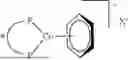
substituting ligands of the precursor complex with optically active bis(phosphine) ligand and arene ligand to provide the cationic cobalt (I) complex of formula:
wherein R1 and R2 are independently selected from the group consisting of alkyl and heteroalkyl, and X− is a counterion. As used herein, a heteroalkyl moiety includes one or more heteroatoms in the alkyl chain. In some embodiments, for example, heteroalkyl includes a silicon atom in the alkyl chain. Additionally, in some embodiments, one or both of the pyridine ligands of the precursor complex may be optionally substituted with one or more substituents. Substituents of one or both of the pyridine ligands can comprise any species not inconsistent with the technical objectives described herein. In some embodiments, substituents of the pyridine ligands can enhance crystallinity of the precursor complex, thereby facilitating handling of the precursor complex in synthetic methods described herein. In some embodiments, one or both of the pyridine ligands are independently substituted with alkyl substituents. One or more alkyl substituents may be the same or different between the two pyridine ligands. In some embodiments, the precursor complex is of the formula
wherein R3 and R4 are independently alkyl. R3 and R4 can be the same or different.
Additionally, in some embodiments, various silver salts can be employed in oxidation of bis(phosphine) cobalt dialkyl complexes in the synthesis of cationic cobalt complexes described herein. In some embodiments, for example, silver salts of AgOTf, AgSbF6 and/or AgBF4 can replace ferrocenium salts in the oxidation.
Moreover, in some embodiments, the optically active bis(phosphine) ligand can displace the pyridine ligands of the precursor complex to provide an intermediate complex of the formula:
Additionally, R1 and R2 can be any alkyl or heteroalkyl consistent with displacement by arene ligand in the formation of the cationic Co(I) complex. In some embodiments, for example, at least one of R1 and R2 is —CH2SiMe3.
In another aspect, a method of making a cationic cobalt (I) complex comprises providing a cationic cobalt (I) arene sandwich precursor complex, and substituting an arene ligand of the precursor complex with an optically active bis(phosphine) ligand to provide the cationic cobalt (I) complex of formula:
wherein X− is a counterion. In some embodiments, the cationic cobalt (I) arene sandwich precursor complex is of the formula:
In another aspect, methods of asymmetric alkene hydrogenation are described herein. In some embodiments, a method of asymmetric alkene hydrogenation comprises providing an alkene substrate, and hydrogenating the alkene in the presence of a cationic cobalt (I) catalyst to yield a single enantiomer reaction product, wherein the cationic cobalt (I) catalyst is derived from a precatalyst of the formula:
wherein
is optically active bis(phosphine) ligand, and X− is a counterion. The precatalyst is synthesized by providing a precursor complex of the formula:
wherein one or both of the pyridine ligands are optionally substituted with one or more alkyl substituents, and substituting ligands of the precursor complex with the optically active bis(phosphine) ligand and arene ligand, wherein R1 and R2 are independently selected from the group consisting of alkyl and heteroalkyl. In some embodiments, the alkene substrate is a pharmaceutical compound or a pharmaceutical precursor.
In another aspect, a method of asymmetric alkene hydrogenation comprises providing an alkene substrate, and hydrogenating the alkene in the presence of a cationic cobalt (I) catalyst to yield a single enantiomer reaction product, wherein the cationic cobalt (I) catalyst is derived from a precatalyst of the formula:
wherein
is optically active bis(phosphine) ligand, and X− is a counterion. The precatalyst is synthesized by providing a cationic cobalt (I) arene sandwich precursor complex, and substituting an arene ligand of the precursor complex with the optically active bis(phosphine) ligand.
In methods described herein, the optically active bis(phosphine) ligand can be enantiopure. In some embodiments, the optically active bis(phosphine) ligand is selected from the group consisting of DuPhos, BenzP*, TangPhos, and DuanPhos. Moreover, X can be any counterion consistent with the technical objectives of the present application.
Synthetic methods described herein can yield cationic Co(I) complexes in an amount of at least 90% or 95%, in some embodiments. Additionally, reaction time for producing the cationic Co(I) complexes according to synthetic methods described herein can be less than 10 minutes. In some embodiments, reaction time for Co(I) catalyst production ranges from 1-10 minutes. Such high yields and fast reaction times permit catalytic evaluation of a significant number of enantiopure ligands when incorporated into the Co(I) architecture.
These and other embodiments are further described in the following detailed description.
BRIEF DESCRIPTION OF THE DRAWINGS
FIG. 1 illustrates various cationic Co(I) complexes synthesized according to methods described herein.
FIG. 2 illustrates various alkene substrates for asymmetric hydrogenation with Co(I) complexes described herein.
FIG. 3 illustrates a synthetic route for a Co(I) complex according to one embodiment.
FIG. 4 illustrates a synthetic route for a Co(I) complex according to one embodiment.
FIG. 5 illustrates a synthetic route for a Co(I) complex according to one embodiment.
FIG. 6 illustrates a synthetic route for a Co(I) complex according to one embodiment.
FIG. 7 illustrates a synthetic route for a Co(I) complex according to one embodiment.
DETAILED DESCRIPTION
Embodiments described herein can be understood more readily by reference to the following detailed description and examples and their previous and following descriptions. Elements, apparatus and methods described herein, however, are not limited to the specific embodiments presented in the detailed description and examples. It should be recognized that these embodiments are merely illustrative of the principles of the present invention. Numerous modifications and adaptations will be readily apparent to those of skill in the art without departing from the spirit and scope of the invention.
Example 1—Synthesis of Cationic Co(I) Complex for Asymmetric Hydrogenation
A Co(I) complex for asymmetric hydrogenation was prepared according to the reaction scheme of FIG. 3 and as follows.
Preparation of [(S,S)-(MeDuPhos) Co(η6—C6H6)][BArF4]. In a nitrogen-filled glovebox, a 20 mL scintillation vial was charged with (py)2Co(CH2SiMe3)2 (0.097 g, 0.24 mmol) as a dark green semi-solid and 2 mL of diethyl ether were added. In a separate vial, (S,S)-MeDuPhos (0.078 g, 0.25 mmol) was weighed out as a crystalline white solid and dissolved in diethyl ether. To the ethereal solution of (S,S)-MeDuPhos was added (py)2Co(CH2SiMe3)2 dropwise. The dark green ethereal solution of (py)2Co(CH2SiMe3)2 instantly turned dark red when combined with bis(phosphine) and was stirred for 30 seconds at ambient temperature. Single-crystals of (S,S)-(MeDuPhos) Co(CH2SiMe3)2 deposited on the sides of the scintillation vial could be collected and used in the oxidatively-induced reductive elimination, however, routine precatalyst synthesis was done in one-pot. Finally, [(η5—C5H5)2Fe][BArF4] (0.251 g, 0.24 mmol) was weighed out as a deep blue solid and dissolved in 3 mL of a mixture of diethyl ether and benzene (2:1). When [(η5—C5H5)2Fe][BArF4] was added dropwise to the dark red ethereal solution of (S,S)-(MeDuPhos) Co(CH2SiMe3)2 (formed in situ), the deep blue color instantly gave way to bright yellow. The reaction mixture was stirred for 5 minutes at ambient temperature, at which point the solution became cloudy. Volatiles were removed under reduced pressure and the residue was washed with pentane to remove ferrocene and silane byproducts. The residue was taken up in diethyl ether and passed through a pad of Celite where it was then dried under reduced pressure to yield 0.301 g (96% yield) of [(S,S)-(MeDuPhos)Co(η6—C6H6)][BArF4] as an orange crystalline powder.
Anal Calcd for C52H46BCoF24P2: C, 51.48; H, 3.55. Found: C, 51.5; H, 3.2. 1H NMR (500 MHz, THF-d8, 23° C.): δ 7.79 (br m, 8H, o-B[(3,5-(CF3)2)C6H3]4), 7.68 (br m, 2H, iPrDuPhos Ar—H), 7.59 (br m, 2H, iPrDuPhos Ar—H), 7.57 (br m, 4H, p-B[(3,5-(CF3)2)C6H3]4), 6.38 (s, 6H, η6—C6H6), 2.65 (br m, 2H, iPrDuPhos CH), 2.34 (br m, 2H, iPrDuPhos CH), 2.31 (br m, 2H, iPrDuPhos CH2), 2.20 (br m, 2H, iPrDuPhos CH2), 1.80 (br m, 2H, iPrDuPhos CH2), 1.55 (br m, 2H, iPrDuPhos CH2), 1.37 (br m, 6H, iPrDuPhos CH3), 0.86 (br m, 6H, iPrDuPhos CH3). 13C{1H} NMR (125.7 MHz, THF-d8, 23° C.): δ 162.9 (q, 1JB-C=50.1 Hz, B[(3,5-(CF3)2)C6H3]4), 143.8 (app t, iPrDuPhos Ar), 135.8 (br s, B[(3,5-(CF3)2)C6H3]4), 132.5 (s, iPrDuPhos Ar), 132.0 (app t, iPrDuPhos Ar), 130.2 (m, B[(3,5-(CF3)2)C6H3]4), 125.7 (q, 1JC-F=272.5 Hz, B[(3,5-(CF3)2)C6H3]4), 118.4 (br s, B[(3,5-(CF3)2)C6H3]4), 93.6 (s, η6—C6H6), 45.9 (app t, iPrDuPhos CH), 42.6 (app t, iPrDuPhos CH), 37.2 (iPrDuPhos CH2), 36.8 (iPrDuPhos CH2), 17.9 (iPrDuPhos CH3), 13.9 (iPrDuPhos CH3). 31P{1H} NMR (202.4 MHz, THF-d8, 23° C.): δ 96.2 (s, 2P). 19F NMR (376.5 MHz, THF-d8, 23° C.): δ −63.4 (s, B[(3,5-(CF3)2)C6H3]4).
Example 2—Synthesis of Cationic Co(I) Complex for Asymmetric Hydrogenation
A Co(I) complex for asymmetric hydrogenation was prepared according to the reaction scheme of FIG. 4 and as follows.
Preparation of [(R,R)-(BenzP*)Co(η6—C6H6)][BArF4]. In a nitrogen-filled glovebox, a 20 mL scintillation vial was charged with (py)2Co(CH2SiMe3)2 (0.051 g, 0.13 mmol) as a dark green semi-solid and 2 mL of diethyl ether were added. In a separate vial, (R,R)-BenzP* (0.037 g, 0.13 mmol) was weighed out as a crystalline white solid and dissolved in diethyl ether. To the diethyl ether solution of (R,R)-BenzP* was added a diethyl ether solution of (py)2Co(CH2SiMe3)2 dropwise. A color change to bright orange was observed immediately and the mixture was stirred for an additional 30 seconds at ambient temperature. Finally, [(η5—C5H5)2Fe][BArF4] (0.136 g, 0.13 mmol) was weighed out as a deep blue solid and dissolved in a mixture of diethyl ether and benzene (2:1). When [(η5—C5H5)2Fe][BArF4] was added dropwise to the stirring ethereal solution of (R,R)-(BenzP*)Co(CH2SiMe3)2 (formed in situ), the deep blue color instantly gave way to bright yellow. The reaction mixture was stirred for 5 minutes at ambient temperature, at which point the solution became cloudy. Volatiles were removed under reduced pressure and the residue was washed with pentane to remove ferrocene and silane byproducts. The residue was extracted into diethyl ether and passed through a pad of Celite where it was then dried under reduced pressure to yield 0.163 g (99% yield) of [(R,R)-(BenzP*)Co(η6—C6H6)][BArF4] as an orange crystalline powder. Anal Calcd for C54H46BCoF24P2: C, 50.57; H, 3.62. Found: C, 46.07; H, 2.75. 1H NMR (500 MHz, THF-d8, 23° C.): δ 1H NMR (500 MHz, THF-d8, 23° C.): δ 7.79 (br m, 8H, o-B[(3,5-(CF3)2)C6H3]4), 7.76 (br m, 2H, BenzP* Ar), 7.64 (br m, 2H, BenzP* Ar), 7.57 (br m, p-B[(3,5-(CF3)2)C6H3]4), 6.38 (s, 6H, η6—C6H6), 1.89 (m, 6H, BenzP* CH3), 0.93 (m, 18H, BenzP* CH3). 13C{1H} NMR (125.7 MHz, THF-d8, 23° C.): δ 162.9 (q, 1JB-C=51.4 Hz, B[(3,5-(CF3)2)C6H3]4), 135.7 (br s, B[(3,5-(CF3)2)C6H3]4), 131.9 (s, BenzP* Ar), 131.4 (app t, BenzP* Ar), 127.9 (q, 1JC-F=269.9 Hz, B[(3,5-(CF3)2)C6H3]4), 118.3 (br m, B[(3,5-(CF3)2)C6H3]4), 93.3 (s, η6—C6H6), 36.8 (m, BenzP* CH3), 27.4 (s, BenzP* C(CH3)3), 11.7 (s, BenzP* C(CH3)2). 31P{1H} NMR (202.4 MHz, THF-d8, 23° C.): δ 77.3 (s, 2P). 19F NMR (376.5 MHz, THF-d8, 23° C.): 6-63.4 (s, B[(3,5-(CF3)2)C6H3]4).
Example 3—Synthesis of Cationic Co(I) Complex for Asymmetric Hydrogenation
A Co(I) complex for asymmetric hydrogenation was prepared according to the reaction scheme of FIG. 5 and as follows.
Preparation of [(1S,1′S,1R,1′R)-(DuanPhos)Co(η6—C6H6)][BArF4]. In a nitrogen-filled glovebox, a 20 mL scintillation vial was charged with (py)2Co(CH2SiMe3)2 (0.070 g, 0.18 mmol) as a dark green semi-solid and 2 mL of diethyl ether were added. In a separate vial, (1S,1′S,1R,1′R)-DuanPhos (0.075 g, 0.18 mmol) was weighed out as a crystalline orange solid and dissolved in diethyl ether. To the ethereal solution of (1S,1′S,R,1′R)-DuanPhos was added a diethyl ether solution of (py)2Co(CH2SiMe3)2 dropwise. A color change to bright orange was observed and the reaction mixture was stirred an additional 30 seconds at ambient temperature.
Finally, [(η5—C5H5)2Fe][BArF4] (0.188 g, 0.18 mmol) was weighed out as a deep blue solid and dissolved in a mixture of diethyl ether and benzene (2:1). The solution containing the [(η5—C5H5)2Fe][BArF4] was added dropwise to the stirring ethereal solution of (1S,1′S,R,1′R)-(DuanPhos)Co(CH2SiMe3)2 (formed in situ), and a color change from deep blue to dark orange was observed. The reaction mixture was stirred for 5 minutes at ambient temperature, at which point the solution became cloudy. Volatiles were removed under reduced pressure and the residue was washed with pentane to remove ferrocene and silane byproducts. The residue was taken up in diethyl ether and passed through a pad of Celite where it was then dried under reduced pressure to yield 0.253 g (92% yield) of [(1S,1′S,1R,1′R)-(DuanPhos)Co(η6—C6H6)][BArF4] as a dark orange crystalline powder. Anal Calcd for C62H50BCoF24P2: C, 50.41; H, 3.92. Found: C, 50.04; H, 3.51. 1H NMR (500 MHz, THF-d8, 23° C.): at 23° C., spectra were broad and uninformative. 31P{1H} NMR (202.4 MHz, THF-d8, 23° C.): δ 127.2 (s, 2P). 19F NMR (376.5 MHz, THF-d8, 23° C.): δ −63.5 (s, B[(3,5-(CF3)2)C6H3]4).
Example 4—Synthesis of Cationic Co(I) Complex for Asymmetric Hydrogenation
A Co(I) complex for asymmetric hydrogenation was prepared according to the reaction scheme of FIG. 6 and as follows.
Preparation of [(S,S′,R,R′)-(TangPhos)Co(η6—C6H6)][BArF4]. In a nitrogen-filled glovebox, a 20 mL scintillation vial was charged with (py)2Co(CH2SiMe3)2 (0.070 g, 0.18 mmol) as a dark green semi-solid and 2 mL of diethyl ether were added. In a separate vial, (S,S′,R,R′)-TangPhos (0.075 g, 0.18 mmol) was weighed out as a crystalline orange solid and dissolved in diethyl ether. To the ethereal solution of (S,S′,R,R′)-TangPhos was added (py)2Co(CH2SiMe3)2 dropwise. The dark green ethereal solution of (py)2Co(CH2SiMe3)2 instantly turned bright orange when combined with bis(phosphine) and was stirred for 30 seconds at ambient temperature.
Finally, [(η-C5H5)2Fe][BArF4] (0.188 g, 0.18 mmol) was weighed out as a deep blue solid and dissolved in a mixture of diethyl ether and benzene (2:1). When [(η5—C5H5)2Fe][BArF4] was added dropwise to the stirring ethereal solution of (S,S′,R,R′)-(TangPhos)Co(CH2SiMe3)2 (formed in situ), the deep blue color instantly gave way to dark orange. The reaction mixture was stirred for 5 minutes at ambient temperature, at which point the solution became cloudy. Volatiles were removed under reduced pressure and the residue was washed with pentane to remove ferrocene and silane byproducts. The residue was taken up in diethyl ether and passed through a pad of Celite where it was then dried under reduced pressure to yield 0.253 g (92% yield) of [(S,S′,R,R′)-(TangPhos)Co(η6—C6H6)][BArF4] as a dark orange crystalline powder. Anal Calcd for C54H50BCoF24P2: C, 50.41; H, 3.92. Found: C, 50.04; H, 3.51. 1H NMR (500 MHz, THF-d8, 23° C.): δ 7.78 (br m, 8H, o-B[(3,5-(CF3)2)C6H3]4), 7.57 (br m, p-B[(3,5-(CF3)2)C6H3]4), 6.26 (s, 6H, η6—C6H6), 2.43-2.31 (ov m, 4H, TangPhos CH+TangPhos CH2), 2.09-1.94 (ov m, 6H, TangPhos CH2), 1.63 (m, 2H, TangPhos CH2), 1.17 (m, 18H, TangPhos C(CH3)3). 13C{1H} NMR (125.7 MHz, THF-d8, 23° C.): δ 162.9 (q, 1JB-C=50.1 Hz, B[(3,5-(CF3)2)C6H3]4), 135.7 (br s, B[(3,5-(CF3)2)C6H3]4), 130.1 (br m, B[(3,5-(CF3)2)C6H3]4), 125.7 (q, 1JC-F=272.2 Hz, B[(3,5-(CF3)2)C6H3]4), 118.3 (br m, B[(3,5-(CF3)2)C6H3]4), 92.8 (s, η6—C6H6), 46.5 (app t, TangPhos CH), 37.4 (app t, TangPhos CH2), 35.5 (app t, TangPhos CH2), 33.6 (app t, TangPhos CH2), 28.5 (s, TangPhos C(CH3)3), 28.2 (s, TangPhos C(CH3)3). 31P{1H} NMR (202.4 MHz, THF-d8, 23° C.): δ 121.7 (s, 2P). 19F NMR (376.5 MHz, THF-d8, 23° C.): 6-63.4 (s, B[(3,5-(CF3)2)C6H3]4).
Example 5—Synthesis of Cationic Co(I) Complex for Asymmetric Hydrogenation
A Co(I) complex for asymmetric hydrogenation was prepared according to the reaction scheme of FIG. 7 and as follows.
This method utilizes a 20-electron arene ‘sandwich’ cation, (e.g. [Co(η6—C6H6)2][X]) stabilized by either the weakly coordinating anion (WCA), [Al(ORF)4]− (RF═C(CF3)3) developed by the group of Ingo Krossing, or commonly-used anions including BArF4−, SbF6−, PF6−, and BF4−. We have shown that combinations of [Co(η6—C6H6)2][Al(ORF)4] and optically-active bis(phosphines) including (R,R)-iPrDuPhos, lead to air-stable, 18-electron bis(phosphine) cobalt cations similar to those described above with the key distinction being the composition of the anion. The reaction to generate the 18-electron cations must be carried out in 1,2-difluorobenzene given the poor stability of the 20-electron arene ‘sandwich’ complex [Co(η6—C6H6)2][Al(ORF)4] in coordinating solvents including THF. A representative example is given below: In a nitrogen-filled glovebox, a 20 mL scintillation vial was charged with [Co(η6—C6H6)2][Al(ORF)4] (0.010 g, 8.5 μmol) and dissolved in 2 mL of 1,2-difluorobenzene to give an amber-colored solution. Separately, (R,R)-iPrDuPhos (0.004 g, 8.6 μmol) was dissolved in 2 mL of benzene and added to [Co(η6—C6H6)2][Al(ORF)4] at ambient temperature resulting in an immediate color change from amber to bright yellow. Characterization of the product by multinuclear NMR spectroscopy in THF-d8 gave nearly-identical shifts to the 18-electron cobalt complex [(R,R)-(iPrDuPhos)Co(η6—C6H6)][BArF4] with the exception of the 19F NMR spectrum which contained a single peak corresponding to the CF3 groups of the aluminate anion. The activity of this complex was surveyed in the asymmetric hydrogenation of dehydro-sitagliptin where it maintained excellent enantioselectivity (96% ee) at 50° C. under 1000 psi of H2.
Example 6—Synthesis of Cationic Co(I) Complex for Asymmetric Hydrogenation
Preparation of [(RR)-(iPrDuPhos)Co(η6—C6H6)][BArF4]. In a nitrogen-filled glovebox, a 20 mL scintillation vial was charged with (3,5-(Me)2-C5H3N)2Co(CH2SiMe3)2 (0.081 g, 0.18 mmol) as a dark green crystalline solid and dissolved in 2 mL of diethyl ether. In a separate vial, (R,R)-iPrDuPhos (0.075 g, 0.18 mmol) was weighed out as a crystalline white solid and dissolved in diethyl ether. To the ethereal solution of (R,R)-iPrDuPhos was added (3,5-(Me)2-C5H3N)2Co(CH2SiMe3)2 dropwise. The dark green ethereal solution of (3,5-(Me)2-C5H3N)2Co(CH2SiMe3)2 instantly turned bright orange when combined with bis(phosphine) and was stirred for 30 seconds at ambient temperature. Finally, [(η5—C5H5)2Fe][BArF4] (0.188 g, 0.18 mmol) was weighed out as a deep blue solid and dissolved in a mixture of diethyl ether and benzene (2:1). When [(η5—C5H5)2Fe][BArF4] was added dropwise to the stirring ethereal solution of (R,R)-(iPrDuPhos)Co(CH2SiMe3)2 (formed in situ), the deep blue color instantly gave way to bright yellow. The reaction mixture was stirred for 5 minutes at ambient temperature, at which point the solution became cloudy. Volatiles were removed under reduced pressure and the residue was washed with pentane to remove ferrocene and silane byproducts. The residue was taken up in diethyl ether and passed through a pad of Celite where it was then dried under reduced pressure to yield 0.251 g (98% yield) of [(R,R)-(iPrDuPhos)Co(η6—C6H6)][BArF4] as an orange-yellow crystalline powder. Characterization data were consistent with our previously-reported method involving chloride abstraction from [(R,R)-(iPrDuPhos)Co(μ-Cl)]2 with NaBArF4.
Various embodiments of the invention have been described in fulfillment of the various objectives of the invention. It should be recognized that these embodiments are merely illustrative of the principles of the present invention. Numerous modifications and adaptations thereof will be readily apparent to those skilled in the art without departing from the spirit and scope of the invention.
Claims
1. A method of making a cationic cobalt(I) complex comprising:
providing a precursor complex of the formula:
wherein one or both of the pyridine ligands are optionally substituted with one or more substituents; and
substituting ligands of the precursor complex with optically active bis(phosphine) ligand and arene ligand to provide the cationic cobalt(I) complex of formula:
wherein R1 and R2 are independently selected from the group consisting of alkyl and heteroalkyl, and X− is a counterion.
2. The method of claim 1, wherein the optically active bis(phosphine) ligand is enantiopure.
3. The method of claim 1, wherein the optically active bis(phosphine) ligand displaces the pyridine ligands of the precursor complex to provide an intermediate complex of the formula:
4. The method of claim 1 having a yield of the cationic cobalt(I) complex of greater than 90%.
5. The method of claim 1, wherein the cationic cobalt(I) complex is synthesized in a time period less than 10 minutes.
6. The method of claim 1, wherein the cationic cobalt(I) complex is synthesized in a time period of 5 minutes of less.
7. The method of claim 1, wherein the optically active bis(phosphine) ligand is selected from the group consisting of DuPhos, BenzP*, TangPhos, and DuanPhos.
8. The method of claim 1, wherein the precursor complex is of the formula
wherein R3 and R4 are independently alkyl.
9. A method of asymmetric alkene hydrogenation comprising:
providing an alkene substrate, and hydrogenating the alkene substrate in the presence of a cationic cobalt(I) catalyst to yield a single enantiomer reaction product, wherein the cationic cobalt(I) catalyst is derived from a precatalyst of the formula:
wherein
is optically active bis(phosphine) ligand, and X− is a counterion, the precatalyst being synthesized by providing a precursor complex of the formula:
wherein one or both of the pyridine ligands are optionally substituted with one or more substituents, and
substituting ligands of the precursor complex with the optically active bis(phosphine) ligand and arene ligand, wherein R1 and R2 are independently selected from the group consisting of alkyl and heteroalkyl.
10. The method of claim 9, wherein the optically active bis(phosphine) ligand is selected from the group consisting of DuPhos, BenzP*, TangPhos, and DuanPhos.
11. The method of claim 9, wherein the alkene substrate is a pharmaceutical compound or a pharmaceutical precursor.
12. The method of claim 11, wherein the alkene substrate is of the formula:
wherein R is selected from the group consisting of hydrogen and alkyl, and R′ is selected from the group consisting of hydrogen, acetate, and benzyl chloroformate.
13. The method of claim 11, wherein the alkene is of the formula:
is selected from the group consisting of hydrogen and alkyl, and R′ is selected from the group consisting of hydrogen, acetate, and benzyl chloroformate, and Y is selected from the group consisting of hydrogen and aryl.
14. The method of claim 9, wherein the precursor complex is of the formula
wherein R3 and R4 are independently alkyl.
15. A transition metal complex of the formula:
wherein
is optically active bis(phosphine) ligand, and R1 and R2 are independently selected from the group consisting of alkyl and heteroalkyl.
16. The transition metal complex of claim 15, wherein the optically active bis(phosphine) ligand is selected from the group consisting of DuPhos, BenzP*, TangPhos, and DuanPhos.
17. A method of making a cationic cobalt (I) complex comprising:
providing a cationic cobalt(I) arene sandwich precursor complex, and substituting an arene ligand of the precursor complex with an optically active bis(phosphine) ligand to provide the cationic cobalt(I) complex of formula:
wherein X− is a counterion.
18. The method of claim 17, wherein the cationic cobalt(I) arene sandwich precursor complex is of the formula:
Images & Drawings included:




Sources:
- United States Patent and Trademark Office - verify current appl. status at the USPTO↗
Recent applications in this class:
- » 20230145668 2023-05-11
Monocarbonyl ruthenium and osmium catalysts - » 20220168720 2022-06-02
Monocarbonyl ruthenium and osmium catalysts - » 20210154650 2021-05-27
Pincer-type ligand having acridane structure and metal complex using the same - » 20190232268 2019-08-01
Pincer-type ligand having acridane structure and metal complex using the same - » 20190030522 2019-01-31
Monocarbonyl ruthenium and osmium catalysts - » 20160175829 2016-06-23
CATALYST SYSTEMS FOR USE IN CONTINUOUS FLOW REACTORS AND METHODS OF MANUFACTURE AND USE THEREOF - » 20130253185 2013-09-26
NOVEL CATALYSTS - » 20100029977 2010-02-04
Cyanation catalyst and method for producing optically active cyanhydrin compound using the same - » 20070173660 2007-07-26
Catalytic composition and process for asymmetric hydrogenation