CLEANING APPARATUS
US20250160587A1
2025-05-22
18/936,139
2024-11-04
Smart Summary: A cleaning apparatus has a cart that can move on the ground. It features a vacuum assembly that can be attached or removed from the cart. The vacuum assembly includes a power head, a container for collecting dirt, and an inlet for sucking up dust and debris. There is also a cleaning head that connects to the cart but is separate from the vacuum assembly, allowing for easy removal. A nozzle on the cleaning head helps to draw in dirt through the vacuum assembly into the collection container. 🚀 TL;DR
Abstract:
A cleaning apparatus includes a cart having a base movable along a ground surface and a vacuum assembly removably receivable on the base. The vacuum assembly includes a power head, a collection container, and a suction inlet through which dust and debris is configured to be drawn via the power head into the collection container. The cleaning apparatus also includes a cleaning head coupled to the cart separate from the vacuum assembly such that the vacuum assembly is separable from the cleaning head when removed from the cart, the cleaning head configured to engage the ground surface and the dust and debris located thereon. The cleaning apparatus also includes a nozzle mounted at the cleaning head, the nozzle coupled to the suction inlet of the vacuum assembly and providing a suction path between the cleaning head into the collection container of the vacuum assembly.
Inventors:
- Timothy J. Campbell 13 🇺🇸 Brookfield, WI, United States
- Austin F. de Veer 8 🇺🇸 Lake Orion, MI, United States
- Adam M. Schroeder 5 🇺🇸 Waterford, WI, United States
- Bradford A. Gill 4 🇺🇸 Brookfield, WI, United States
- Seamus J. Herson 3 🇺🇸 Wauwatosa, WI, United States
- Richard M. Schieber 6 🇺🇸 Milwaukee, WI, United States
- Manas M. Mahaddalkar 4 🇺🇸 Milwaukee, WI, United States
- Eden Peterson 1 🇺🇸 Mt. Pleasant, WI, United States
Applicant:
Interested in similar patents?
Get notified when new applications in this technology area are published.
Classification:
A47L9/066 » CPC main
Details or accessories of suction cleaners, e.g. mechanical means for controlling the suction or for effecting pulsating action; Storing devices specially adapted to suction cleaners or parts thereof; Carrying-vehicles specially adapted for suction cleaners; Nozzles with fixed, e.g. adjustably fixed brushes or the like with adjustably mounted brushes, combs, lips or pads; Height adjustment of nozzle or dust loosening tools
A47L5/30 » CPC further
Structural features of suction cleaners with power-driven air-pumps or air-compressors, e.g. driven by motor vehicle engine vacuum with rotary fans; Suction cleaners with handles and nozzles fixed on the casings, e.g. wheeled suction cleaners with steering handle with driven dust-loosening tools, e.g. rotating brushes
A47L7/009 » CPC further
Suction cleaners adapted for additional purposes ; Tables with suction openings for cleaning purposes; Containers for cleaning articles by suction; Suction cleaners adapted to cleaning of brushes; Suction cleaners adapted to taking-up liquids Details of suction cleaner tools for additional purposes
A47L9/0477 » CPC further
Details or accessories of suction cleaners, e.g. mechanical means for controlling the suction or for effecting pulsating action; Storing devices specially adapted to suction cleaners or parts thereof; Carrying-vehicles specially adapted for suction cleaners; Nozzles with driven brushes or agitators; Dust-loosening tools, e.g. agitators, brushes; Rotating tools Rolls
A47L9/06 IPC
Details or accessories of suction cleaners, e.g. mechanical means for controlling the suction or for effecting pulsating action; Storing devices specially adapted to suction cleaners or parts thereof; Carrying-vehicles specially adapted for suction cleaners; Nozzles with fixed, e.g. adjustably fixed brushes or the like
A47L7/00 IPC
Suction cleaners adapted for additional purposes ; Tables with suction openings for cleaning purposes; Containers for cleaning articles by suction; Suction cleaners adapted to cleaning of brushes; Suction cleaners adapted to taking-up liquids
A47L9/04 IPC
Details or accessories of suction cleaners, e.g. mechanical means for controlling the suction or for effecting pulsating action; Storing devices specially adapted to suction cleaners or parts thereof; Carrying-vehicles specially adapted for suction cleaners; Nozzles with driven brushes or agitators
Description
CROSS-REFERENCE TO RELATED APPLICATIONS
This application claims the benefit of, and priority to, U.S. Provisional Patent Application No. 63/602,271, filed Nov. 22, 2023, and U.S. Provisional Patent Application No. 63/610,494, filed Dec. 15, 2023, the entire contents of each of which is hereby incorporated by reference.
SUMMARY
In some aspects, the techniques described herein relate to a cleaning apparatus including: a cart having a base movable along a ground surface; a vacuum assembly removably receivable on the base, the vacuum assembly including a power head, a collection container, and a suction inlet through which dust and debris is configured to be drawn via the power head into the collection container, the vacuum assembly operable to draw the dust and debris into the collection container when the vacuum assembly is received on the base of the cart and when the vacuum assembly is placed on the ground surface, separate from the cart; a cleaning head coupled to the cart separate from the vacuum assembly such that the vacuum assembly is separable from the cleaning head when removed from the cart, the cleaning head configured to engage the ground surface and the dust and debris located thereon; and a nozzle mounted at the cleaning head, the nozzle coupled to the suction inlet of the vacuum assembly and providing a suction path between the cleaning head into the collection container of the vacuum assembly.
In some aspects, the techniques described herein relate to a cleaning apparatus, wherein the cleaning head is selected from the group consisting of a sweeper head, a squeegee head, and an agitating head.
In some aspects, the techniques described herein relate to a cleaning apparatus, wherein cleaning head is an agitating head configured to dislodge debris attached to the ground surface, and wherein the agitating head is selected from the group consisting of a roller-brush, a scraper, and a pressure washer.
In some aspects, the techniques described herein relate to a cleaning apparatus, further including a hose extending between the nozzle and the suction inlet.
In some aspects, the techniques described herein relate to a cleaning apparatus, wherein the cart includes a handle coupled to the base, wherein the vacuum assembly is separable from the handle.
In some aspects, the techniques described herein relate to a cleaning apparatus, wherein the cart further includes a collection chamber separate from the collection chamber of the vacuum assembly, and wherein the collection chamber of the cart is configured to receive and store dust and debris collected by the cleaning head.
In some aspects, the techniques described herein relate to a cleaning apparatus, wherein the collection chamber of the vacuum assembly is connected to the collection chamber of the cart when the vacuum assembly is received on the base.
In some aspects, the techniques described herein relate to a cleaning apparatus, wherein the cleaning head is pivotably attached to the base of the cart.
In some aspects, the techniques described herein relate to a cleaning apparatus, wherein the cart includes a plurality of wheels configured to support the base on the ground surface, wherein the cleaning head is pivotable about an axis parallel to a rotational axis of the plurality of wheels.
In some aspects, the techniques described herein relate to a cleaning apparatus, wherein the cleaning head includes a mounting point, wherein the nozzle is secured to the mounting point.
In some aspects, the techniques described herein relate to a cleaning apparatus, wherein the mounting point is located at a leading edge of the cleaning head and a forward edge of the cart.
In some aspects, the techniques described herein relate to a cleaning apparatus, wherein the cleaning head includes two counter-rotating brushes, and wherein the mounting point is proximate a location where the two counter-rotating brushes come together.
In some aspects, the techniques described herein relate to a cleaning apparatus, wherein the cleaning head is powered by a first power supply and the vacuum assembly is powered by a second power supply.
In some aspects, the techniques described herein relate to a cleaning apparatus, wherein the base is a horizontal base formed as a recess sized and shaped to receive at least a portion of the collection container.
In some aspects, the techniques described herein relate to a method, the method including: locating the vacuum assembly on the base; securing the nozzle relative to the cleaning head, the nozzle connected to the suction inlet via a hose; operating the cleaning head to disrupt the dust and debris on the ground surface; and operating the vacuum assembly to draw the dust and debris through the nozzle and hose and into the collection container.
In some aspects, the techniques described herein relate to a method, wherein operating the cleaning head includes rotating a sweeper head or roller-brush against the ground surface.
In some aspects, the techniques described herein relate to a method, wherein operating the cleaning head includes moving a squeegee head or a scraper against the ground surface.
In some aspects, the techniques described herein relate to a cleaning apparatus including: a cart having a base movable along a ground surface; a vacuum assembly removably receivable on the base, the vacuum assembly including a power head, a collection container, and a suction inlet through which dust and debris is configured to be drawn via the power head into the collection container; a cleaning head coupled to a forward side of the cart, the cleaning head configured to dislodge dust and debris from a ground surface; and a hose removably coupled to the cleaning head and defining an inlet through which the dust and debris is directed to the suction inlet of the vacuum assembly.
In some aspects, the techniques described herein relate to a cleaning apparatus, wherein the cleaning head is selected from the group consisting of a sweeper head, a squeegee head, and an agitating head.
In some aspects, the techniques described herein relate to a cleaning apparatus, wherein cleaning head is an agitating head configured to dislodge material attached to the ground surface, and wherein the agitating head is selected from the group consisting of a roller-brush, a scraper, and a pressure washer.
BRIEF DESCRIPTION OF THE DRAWINGS
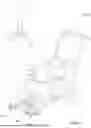
FIG. 1 is a front perspective view of one embodiment of a cleaning apparatus with a sweeper head incorporated therein.
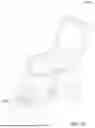
FIG. 2 is a side view of the cleaning apparatus of FIG. 1.
FIG. 3 is a side view of another embodiment of a cleaning apparatus with a sweeper head incorporated therein.
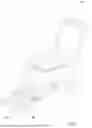
FIG. 4 is a front perspective view of another embodiment of a cleaning apparatus with a squeegee head incorporated therein.
FIG. 5 is a side view of the cleaning apparatus of FIG. 4.
FIG. 6 is a front perspective view of the cleaning apparatus of FIG. 4 with the squeegee head removed for hand-held use.
FIG. 7 is a front perspective view of another embodiment of a cleaning apparatus with an agitating head incorporated therein.
FIG. 8 is a side view of the cleaning apparatus of FIG. 6.
FIG. 9 is a front perspective view of another embodiment of a cleaning apparatus with an agitating head incorporated therein.
FIG. 10 is a front perspective view of another embodiment of a cleaning apparatus with an agitating head incorporated therein.
FIG. 11 is a front perspective view of another embodiment of a cleaning apparatus with an agitating head incorporated therein.
FIG. 12 is a front perspective view of another embodiment of a cleaning apparatus with an agitating head incorporated therein.
DETAILED DESCRIPTION
FIGS. 1 and 2 illustrate a first cleaning apparatus 100 including a cart 104, a sweeper head 108 movably coupled to the cart 104, a stand-alone vacuum assembly 112 in operable communication with the sweeper head 108, and a vacuum attachment or hose 116 in operable communication with both the vacuum assembly 112 and the sweeper head 108.
As shown in FIG. 1, the cart 104 includes a body or base 120 forming a seat or mounting point 124 onto which the vacuum assembly 112 may be placed and supported during operation. In the illustrated embodiment, the seat 124 generally includes a depression or recess that is sized and shaped to receive at least a portion of the collection container 164 of the vacuum assembly 112 therein to provide both vertical and lateral support. In other embodiments, clips or retainers may also be present to secure the vacuum assembly 112 to the base 120 during operation. While the illustrated seat 124 is formed integrally into the cart 104 itself, it is understood that in other embodiments the seat 124 may be retrofitted onto or separately attached to the base 120.
The cart 104 also includes a handle 128 through which the user may push the cart 104 during operation over a floor or other ground surface using one or more wheels 132. In the illustrated embodiment the wheels 132 are free-turning so that the user may manually push the cart 104 across the floor. However, in other embodiments the wheels 132 may be driven. Furthermore, one or more user interfaces (not shown) to control the various elements of the cleaning apparatus 100 may be positioned on the handle 128 for easy access by the user.
The cart 104 may also form an integral collection chamber 136 to receive and store dust and debris that is collected by the sweeper head 108 during operation. The illustrated collection chamber 136 is separate and isolated from the collection container 164 of the vacuum assembly 112 (discussed below). However, in other embodiments they may be interconnected. In some embodiments, the collection chamber 136 may form a drawer. In other embodiments, the collection chamber 146 may formed into the body such that it can be accessed via a door or other form of portal.
The sweeper head 108 of the cleaning apparatus 100 includes a body 140 that is attached to the cart 104 for movement with respect thereto. More specifically, the sweeper head 108 is pivotably attached to the body cart 104 for pivoting motion about an axis 144 that is substantially parallel to the axes of the wheels 132 (e.g., horizontally oriented).
The sweeper head 108 includes a pair of counter-rotating brushes 148 that rotate with respect to the sweeper head about axes that are generally vertical (e.g., perpendicular to the axis 144). During use, the brushes 148 rotate such that any dust or debris contacting the leading edges thereof will be directed toward the center of the sweeper head 108 for subsequent collection within the collection chamber 136. In the illustrated embodiment, the sweeper head 108 includes two circular brushes spaced approximately tangent to each other. However, in other embodiments more or fewer brushes may be positioned in different relative orientations to each other. Furthermore, one or more of the brushes 148 may have different sizes and/or shapes.
The sweeper head 108 also includes a mounting location or mounting point 150 for attaching and securing the inlet nozzle 154 of the vacuum attachment 116. The mounting location 150 is positioned so that the suction zone generated by the nozzle 154 is positioned at the leading edge of the sweeper head 108 and proximate the center thereof. More specifically, the mounting location 150 positions the inlet nozzle 154 so that the suction zone is proximate the location where the two counter-rotating brushes 148 come together (e.g., the location where the counter-rotating brushes 148 are directing the dirt and debris). In other embodiments, more than one mounting location 150 may be present on the sweeper head 108 to accommodate multiple nozzles or to allow a single nozzle to be re-positioned for different forms of cleaning (e.g., brushing along edges and the like). In instances where multiple nozzles 154 are present, such nozzles 154 may all direct back to a single vacuum assembly 112 or to multiple independent vacuum assemblies.
The vacuum attachment 116 includes an elongated tube having an inlet or nozzle end 154 and an outlet end 158. The inlet end 154 is sized and shaped to correspond with and coordinate with the size and shape of the leading edge of the sweeper head 108 to maximize the amount of dust and debris that the inlet 154 can collect during operation and the manner of dust and debris being collected (e.g., various sizes and types of dust and debris that can be collected). More specifically, the inlet 154 is positioned, sized, and shaped, to correspond with the size, shape, and location of the brushes 148. The outlet 158, in turn, is configured to be inserted into the standard opening 162 of the vacuum assembly 112 to allow the suction force generated by the vacuum assembly 112 to be used at the inlet 154.
As shown in FIG. 2, the vacuum assembly 112 is a standard, stand-alone, wet-dry vacuum with its own incorporated power head 160 (forming the opening 162), and collection container 164. The vacuum assembly 112 is detachable from the cart 104 and usable independently therefrom. The illustrated vacuum assembly 112 is also battery powered forming its own battery port into which a lithium-ion battery may be inserted.
Together, the cart 104 and sweeper head 108 form a powered sweeper assembly. In the illustrated embodiment, the cart 104, sweeper head 108, and vacuum assembly 112 are all powered by lithium-ion batteries. In some embodiments, each element may be powered individually (e.g., have its own battery attached thereto), however in other embodiments combinations of the devices may be powered by a single battery or collection of batteries. In the illustrated embodiment, the cart 104 and sweeper head 108 combination has a first power supply (e.g., first set of lithium-ion battery packs) and the vacuum assembly 112 has a second power supply (e.g., a second set of lithium-ion battery packs). In embodiments where only a single, shared set of lithium-ion battery packs are used, connection points may be present to allow for the transmission of electrical power and other electrical signals between elements (e.g., connection points between the cart 104 and the vacuum assembly 112 via the seat 124).
FIG. 3 illustrates another embodiment of the cleaning apparatus 1100. The cleaning apparatus 1100 includes a cart 1104, a sweeper assembly 1108, and a stand-alone vacuum assembly 1112. The cart 1104, in turn, includes a frame 1110 forming a seat or mounting point 1120 upon which both the vacuum assembly 1112 and the sweeper assembly 1108 may be placed (as discussed above). The cart 1104 also includes a handle 1124 for grasping and manipulating by the user. The cart 1104 may be powered or manually propelled.
The sweeper assembly 1108 is configured for placement on the seat 1120 of the cart 1104 (e.g., at a forward edge of the cart) and is in operable communication with the vacuum assembly 1116 via a connection tube 1116. More specifically, the sweeper assembly 1108 includes a base 1130 and a sweeper head 1134 movably coupled to the base 1130. During use, the base 1130 is positioned on the seat 1120 of the cart 1104 with the sweeper head 1134 overhanging the leading end thereof (e.g., opposite the handle 1124). Once placed on the cart, the user can then adjust the position of the sweeper head 1134 between a deployed position (A), in which the sweeper head 1134 is place in contact with the floor for cleaning, and a stowed position (B), in which the sweeper head 1134 is moved upwardly away from the floor and out of the way when not in use. In the illustrated embodiment, the sweeper head 1134 is pivoted between the stowed and deployed positions.
The base 1130 of the sweeper assembly 1108 defines a collection chamber 1138 configured to receive and store dust and debris that has been collected by the sweeper head 1134. The chamber 1138, in turn, may be formed as a drawer, or be accessible via a door, and the like. The base 1130 further includes a seat or mounting point 1136 on the top thereof upon which the vacuum assembly 1112 may be stacked. More specifically, the seat 1136 of the base 1130 is sized and shaped to at least partially receive the collection container 1140 of the vacuum assembly therein.
The sweeper head 1134 includes one or more brushes (not shown) that may be rotated, vibrated, or otherwise moved relative to the head 1134, and a suction port (not shown). During use, the movement of the brushes relative to the head 1134 helps to dislodge and collect dust and debris positioned on the floor where it is subsequently sucked into the suction port. In some embodiments, the suction port may be integrally formed with the sweeper head 1134. In still other embodiments, a separate nozzle may be attached to the sweeper head 1134 as described above.
In the illustrated embodiment, the suction port of the sweeper head 1134 is in operable communication with the vacuum assembly 1112 such that the power head 1144 of the vacuum assembly 1112 provides any suction forces required for operation. In other embodiments, the suction port may be powered by a separate internal blower, whereby the vacuum assembly 1112 helps to supplement the internal blower.
In the illustrated embodiment, the vacuum assembly 1112 includes both the power head 1144 and a collection container 1140 with the collection container 1140 being separate from the collection chamber 1138 of the sweeper assembly 1108. In other embodiments, the vacuum assembly 1112 may only include the power head 1144 whereby the power head 1144 is directly attached to the base 1130 of the sweeper assembly and in operable communication with the collection chamber 1138.
While the illustrated assembly 1100 is shown having a sweeper head 1134 attached thereto. It is understood that in other embodiments other types of cleaning heads (e.g., a squeegee head, an agitation head, and the like) may be present.
FIGS. 4 and 5 illustrate a third cleaning apparatus 2100. The cleaning apparatus 2100 includes a cart 2104, a squeegee head 2108 movably attached to the cart 2104, and a stand-alone vacuum assembly 2112 in operable communication with the squeegee head 2108. During use, the apparatus 2100 is rolled along the floor whereby the squeegee head 2108 helps to collect liquid positioned thereon whereby it is ultimately suctioned and stored by the vacuum assembly 2112.
The cart 2104 of the cleaning apparatus 2100 includes a body 2116 forming a seat or mounting point 2120 (described above) upon which the storage container 2124 of the vacuum assembly 2112 may be positioned and retained. The cart 2104 also includes a handle 2128 and wheels 2132. The cart 2104 may be either powered or manually propelled. In some embodiments, the cart 2104 may also include a head mounting point 2130 to which the squeegee head 2108 or other accessories may be attached. In such embodiments the head mounting point 2130 may be positioned on the leading edge of the cart 2104 (e.g., opposite the handle 2128).
The squeegee head 2108 of the cleaning apparatus includes a frame 2136 and a squeegee blade 2140 mounted to the frame 2136 in a generally arc-like shape. During use, the squeegee head 2108 is coupled to the cart 2104 for movement with respect thereto. In the illustrated embodiment, the squeegee head 2108 may move both horizontally (e.g., pivot relative to the cart 2104 about a vertical axis) and vertically (e.g., by translating axially along that same vertical axis). By doing so, the squeegee head 2108 can make sure that the blade 2140 remains in constant contact with the floor and pivot for efficient fluid collection. In some embodiments, the squeegee head 2108 may include a spring or biasing member to bias the squeegee head 2108 in a vertically downward direction (e.g., into the floor) to make sure the squeegee blade 2140 maintains a constant engagement pressure with the floor. In other embodiments, additional degrees of freedom may be present (e.g., pivot about a horizontal axis) to allow the squeegee blade 2140 to more directly follow the contour of the floor.
While the illustrated squeegee head 2108 is attached to the cart 2104 via the head mounting point 2130, it is understood that in other embodiments the squeegee head 2108 may be attached to the vacuum assembly 2112 (e.g., the storage container 2150 of the vacuum assembly 2112). In such embodiments the vacuum assembly 2112 may provide some form of mounting point to which the squeegee head 2108 may be attached during use.
As shown in FIG. 4, the squeegee head 2108 also includes a suction inlet 2154 incorporated therein. The suction inlet 2154 in configured to be placed in operable communication with the vacuum assembly 2112 so that the liquid collected by the squeegee blade 2140 can subsequently be sucked into the storage container 2150 of the vacuum assembly 2112. In the illustrated embodiment, the suction inlet 2154 is positioned proximate the center of the blade 2140 so that as liquid is collected it is directed toward the inlet 2154 by the curvature of the blade 2150. In the illustrated embodiment the suction inlet 2154 includes a mounting point to allow a flexible hose 2158 to be attached thereto to create a fluid pathway (i.e., suction path) between the inlet 2154 and the vacuum 2112.
FIG. 6 illustrates an alternative operating embodiment of the cleaning apparatus 2100. Specifically, the squeegee head 2108 has been detached from the mounting point 2130 of the cart 2104 and instead attached to a separate handle 2160. By doing so, the user is able to manually maneuver the squeegee head 2108 independent of the cart 2104 while still maintaining an operable connection to the vacuum assembly 2112 via the hose 2126.
FIGS. 7-8 illustrate another embodiment of a cleaning apparatus 3100. The cleaning apparatus 3100 includes a cart 3104, an agitating head 3108, and a stand-alone vacuum assembly 3112 in operable communication with the cleaning head 3108. During use, the apparatus 3100 is rolled along the floor whereby the agitation head 3108 helps agitate any debris that may be stuck or solidified onto the floor so that it can subsequently be sucked up by the vacuum assembly 3112. More specifically, the agitation head 3108 is configured for use with mud, drywall plaster, and other substances that can solidify and become stuck to a floor or other surface.
The cart 3104 of the cleaning apparatus 3100 includes a body 3116 forming a seat or mounting point 3120 (described above) upon which the storage container 3124 of the vacuum assembly 3112 may be positioned and retained. The cart 3104 also includes a handle 3128 and wheels 3132. The cart 3104 may be either powered or manually propelled. In some embodiments, the cart 3104 may also include a head mounting point 3130 to which the agitation head 3108 or other accessories may be attached. In such embodiments the head mounting point 3130 may be positioned on the leading edge of the cart 3104 (e.g., opposite the handle 3128). While the illustrated mounting point 3130 is shown with the agitation head 3108 attached thereto, it is understood that in other embodiments the mounting point 3130 may serve as a universal connection point for other types of accessories as well. In addition, while the current mounting point 3130 is mechanical, it is understood that other forms of connection may be present such as, but not limited to, electrical, pneumatic, fluid, and the like.
The agitation head 3108 of the cleaning apparatus includes a frame 3136, an agitation generator 3138 movably attached to the frame 3136, and an inlet 3140. During use, the agitation head 3108 is able to move relative to the cart 3104 so that the agitation generator 3138 remains in contact with the floor. The agitation generator 3138, in turn, is configured to kinetically engage the floor (and any debris stuck or solidified thereon) to pulverize or otherwise break-up the debris so that it can then be easily collected by the inlet 3140.
In the illustrated embodiment, the agitation generator 3108 is a battery powered roller-brush 3144 that is configured to rotate about a horizontal axis such that the portion of the outer surface in contact with the floor is rotating away from the cart 3104 (e.g., in the same direction as the direction of travel). The rotation, combined with the exterior attributes of the brush itself are configured to break up or dislodge any debris it becomes into contact with for subsequent collection.
The illustrated brush 3144 is configured so that the specific makeup of the brush may be modified. For example, the abrasiveness of the brush, bristle layout, bristle pattern, bristle type (e.g., fibers versus blades versus solid protrusions, and the like), and brush diameter may all be changed as necessary to accommodate the type of surface being cleaned and the substance attempting to be removed.
In other embodiments, different forms of agitation generators 3108 may be used. For example, in some embodiments the agitation generator may include a scraper or knife 3150 (see FIGS. 9 and 10). In such embodiments, the scraper 3150 may be actuated (e.g., reciprocated side-to-side, vibrated, and the like), heated, and the like to help enhanced the ability of the scraper 3150 to remove debris from the floor. In still other embodiments, the scraper 3150 may be used together with rotating brushes 3154 to help increase the cleaning capability.
In still another embodiment, the agitation generator 3108 may include a pressure washer assembly 3160 (see FIG. 11). In such embodiments, the pressure washer assembly 3160 may include a hood 3164 enclosing a plurality of nozzles therein that are positioned to direct pressurized fluid at the surface to be cleaned (e.g., the floor). In such embodiment, nozzles may be mounted for movement (e.g., rotation, reciprocation, and the like) to enhance the cleaning capability of the generator 3108. Still further, in other embodiments nozzles may also output some form of cleaning solution in addition to pressurized water.
In the illustrated embodiment, the agitation head 3108 is a stand-alone unit containing its own power source (e.g., a lithium-ion battery) and drive motor (e.g., to drive the roller-brush 3144 so that it may be operated independent of the vacuum assembly 3112.
In the embodiment shown in FIG. 12, the agitation generator 3204 is a sweeper includes two rotating brushes 3208 that rotate in opposing directions to create a dust agitation zone 3212 therebetween at the front of the cleaning apparatus 3200. The brushes 3208 rotate about generally parallel axes such that the two brushes 3208 are tangent to one another, form a small (less than 5% of the diameter of the brush) gap therebetween, or slightly (less than 5% of the diameter of the brush) overlap one another. In contrast to the embodiment shown in FIG. 9, the wet/dry vacuum 3220 mounted atop the body 3224 of the agitation generator 3204 is positioned rearward of the agitation generator 3204. The front of the body 3224 of the agitation generator 3204 includes a recessed portion that receives a wide vacuum nozzle 3228 to generate suction at the dust agitation zone 3212 to draw dust and debris into the wet/dry vacuum 3200 through a hose 3232 extending between the nozzle 3228 and the wet/dry vacuum 3220.
Debris drawn in through the nozzle 3228 and hose 3232 is deposited into the debris collection bin 3236 of the wet/dry vacuum 3220. The sweeper 3204 (including the two rotating brushes 3208) is operable separately from the wet/dry vacuum 3220. The wet/dry vacuum 3220 is operable when the sweeper 3204 is not operated. The wet/dry vacuum 3220 is operable when the sweeper 3204 is operated. Similarly, the sweeper 3204 is operable when the wet/dry vacuum 3220 is not operated and when the wet/dry vacuum 3220 is operated. Additional or alternative vacuum nozzles or ports may be incorporated elsewhere around the body 3224 of the agitation generator 3204. For example, vacuum ports may additionally or alternatively be located along the sides of the agitation generator 3204 where the brushes 3208 extend outward from the sides of the body 3224. Additionally, one or more vacuum ports may be located at the rear of the agitation generator 3204 (below the wet/dry vacuum 3220). The sweeper 3204 may be powered by DC power sources such as batteries, (e.g., lithium batteries) and/or by AC power sources such as a power cord connected to a wall outlet.
The nozzle 3228 of the wet/dry vacuum may be moved or removed from the mounting location shown in FIG. 12 with the wet/dry vacuum 3220 remaining mounted to the agitation generator 3204. By removing and/or moving the nozzle 3228, the wet-dry vacuum 3220 can provide spot cleaning and reach areas that the larger size of the agitation generator 3204 is unable to reach. The entirety of the wet/dry vacuum 3220 is also removable from the agitation generator 3204 and is operable as a standalone wet/dry vacuum 3204.
Claims
What is claimed is:1. A cleaning apparatus comprising:
a cart having a base movable along a ground surface;
a vacuum assembly removably receivable on the base, the vacuum assembly including a power head, a collection container, and a suction inlet through which dust and debris is configured to be drawn via the power head into the collection container, the vacuum assembly operable to draw the dust and debris into the collection container when the vacuum assembly is received on the base of the cart and when the vacuum assembly is placed on the ground surface, separate from the cart;
a cleaning head coupled to the cart separate from the vacuum assembly such that the vacuum assembly is separable from the cleaning head when removed from the cart, the cleaning head configured to engage the ground surface and the dust and debris located thereon; and
a nozzle mounted at the cleaning head, the nozzle coupled to the suction inlet of the vacuum assembly and providing a suction path between the cleaning head into the collection container of the vacuum assembly.
2. The cleaning apparatus of claim 1, wherein the cleaning head is selected from the group consisting of a sweeper head, a squeegee head, and an agitating head.
3. The cleaning apparatus of claim 2, wherein cleaning head is an agitating head configured to dislodge debris attached to the ground surface, and wherein the agitating head is selected from the group consisting of a roller-brush, a scraper, and a pressure washer.
4. The cleaning apparatus of claim 1, further comprising a hose extending between the nozzle and the suction inlet.
5. The cleaning apparatus of claim 1, wherein the cart includes a handle coupled to the base, wherein the vacuum assembly is separable from the handle.
6. The cleaning apparatus of claim 1, wherein the cart further includes a collection chamber separate from the collection chamber of the vacuum assembly, and wherein the collection chamber of the cart is configured to receive and store dust and debris collected by the cleaning head.
7. The cleaning apparatus of claim 6, wherein the collection chamber of the vacuum assembly is connected to the collection chamber of the cart when the vacuum assembly is received on the base.
8. The cleaning apparatus of claim 1, wherein the cleaning head is pivotably attached to the base of the cart.
9. The cleaning apparatus of claim 8, wherein the cart includes a plurality of wheels configured to support the base on the ground surface, wherein the cleaning head is pivotable about an axis parallel to a rotational axis of the plurality of wheels.
10. The cleaning apparatus of claim 1, wherein the cleaning head includes a mounting point, wherein the nozzle is secured to the mounting point.
11. The cleaning apparatus of claim 10, wherein the mounting point is located at a leading edge of the cleaning head and a forward edge of the cart.
12. The cleaning apparatus of claim 11, wherein the cleaning head includes two counter-rotating brushes, and wherein the mounting point is proximate a location where the two counter-rotating brushes come together.
13. The cleaning apparatus of claim 1, wherein the cleaning head is powered by a first power supply and the vacuum assembly is powered by a second power supply.
14. The cleaning apparatus of claim 1, wherein the base is a horizontal base formed as a recess sized and shaped to receive at least a portion of the collection container.
15. A method of operating the cleaning apparatus of claim 1, the method comprising:
locating the vacuum assembly on the base;
securing the nozzle relative to the cleaning head, the nozzle connected to the suction inlet via a hose;
operating the cleaning head to disrupt the dust and debris on the ground surface; and
operating the vacuum assembly to draw the dust and debris through the nozzle and hose and into the collection container.
16. The method of claim 15, wherein operating the cleaning head includes rotating a sweeper head or roller-brush against the ground surface.
17. The method of claim 15, wherein operating the cleaning head includes moving a squeegee head or a scraper against the ground surface.
18. A cleaning apparatus comprising:
a cart having a base movable along a ground surface;
a vacuum assembly removably receivable on the base, the vacuum assembly including a power head, a collection container, and a suction inlet through which dust and debris is configured to be drawn via the power head into the collection container;
a cleaning head coupled to a forward side of the cart, the cleaning head configured to dislodge dust and debris from a ground surface; and
a hose removably coupled to the cleaning head and defining an inlet through which the dust and debris is directed to the suction inlet of the vacuum assembly.
19. The cleaning apparatus of claim 18, wherein the cleaning head is selected from the group consisting of a sweeper head, a squeegee head, and an agitating head.
20. The cleaning apparatus of claim 19, wherein cleaning head is an agitating head configured to dislodge material attached to the ground surface, and wherein the agitating head is selected from the group consisting of a roller-brush, a scraper, and a pressure washer.
Images & Drawings included:










Sources:
- United States Patent and Trademark Office - verify current appl. status at the USPTO↗
Similar patent applications:
- » 20090084409
Cleaning apparatus, cleaning system using cleaning apparatus, cleaning method of substrate-to-be-cleaned - » 20170273529
DUST COLLECTING APPARATUS, CLEANING APPARATUS USING SAID DUST COLLECTING APPARATUS, AND METHOD OF CONTROLLING CLEANING APPARATUS - » 20210305069
Cleaning apparatus for cleaning member, substrate cleaning apparatus and cleaning member assembly - » 20230123409
Cleaning apparatus for cleaning an element that bears a toner image and image forming apparatus having the cleaning apparatus - » 20220002864
Cleaning apparatus for component for semiconductor production apparatus, cleaning method for component of semiconductor production apparatus, and cleaning system for component of semiconductor production apparatus - » 20210370358
Cleaning apparatus, imaging unit including cleaning apparatus, and cleaning method - » 20200020551
Plasma generator, cleaning liquid processing apparatus, semiconductor device cleaning apparatus, cleaning liquid processing method, and method of manufacturing semiconductor device - » 20070246086
Circuit board cleaning apparatus, burn-in board cleaning apparatus, methods of cleaning a circuit board, and methods of cleaning a burn-in board - » 20110243625
IMAGE FORMING APPARATUS, CLEANING APPARATUS, AND CLEANING METHOD - » 20050104997
Lens replacement type imaging apparatus, control apparatus, cleaning apparatus, and cleaning method
Recent applications in this class:
- » 20240423429 2024-12-26
MOBILE CLEANING ROBOT WITH ADJUSTABLE SUSPENSION - » 20240335075 2024-10-10
Vacuum Cleaner Nozzle Provided With A V-Shaped Front Scraping Member - » 20240225388 2024-07-11
FLOOR CLEANER WITH A MOVABLY MOUNTED SUCTION NOZZLE - » 20240130583 2024-04-25
FLOOR CLEANER WITH A MOVABLY MOUNTED SUCTION NOZZLE - » 20240122425 2024-04-18
TOOL FOR CLEANING DEBRIS BETWEEN PAVER BLOCKS - » 20230346182 2023-11-02
Mobile cleaning robot with adjustable suspension - » 20230035714 2023-02-02
Portable vacuum cleaner - » 20230032691 2023-02-02
Mobile cleaning robot with adjustable suspension - » 20220313038 2022-10-06
Vacuum cleaner floor brush with height-adjustable suction inlet - » 20210386257 2021-12-16
VACUUM CLEANER ASSEMBLY