APPARATUS AND METHOD FOR DETERMINING AN EXCITATION ELEMENT
US20260023974A1
2026-01-22
18/778,157
2024-07-19
Smart Summary: An apparatus is designed to identify an excitation element using advanced technology. It starts by creating a data structure that represents specific information. Then, it calculates various evaluation metrics based on this data. By adding more information to these metrics, it improves the analysis. Finally, a machine learning model is trained to link these metrics to specific excitation elements, which are then shown to the user on a display. 🚀 TL;DR
Abstract:
Described herein is an apparatus and method for determining an excitation element. In some embodiments, an apparatus may include a computing device configured to, using a representation generator, generate a representation data structure; determine a plurality of evaluation metrics as a function of the representation data structure; generate an augmented plurality of evaluation metrics by interpolating into the plurality of evaluation metrics an additional evaluation metric; determine an excitation element by training an excitation element machine learning model on a training dataset including a plurality of example evaluation metrics as inputs correlated to a plurality of example excitation elements as outputs; and generating an excitation element as a function of the augmented plurality of evaluation metrics using the trained excitation element machine learning model; and display the excitation element to a user through a user interface at a display device.
Assignee:
- Flourish Worldwide, LLC 10 🇺🇸 Denver, CO, United States
Applicant:
Interested in similar patents?
Get notified when new applications in this technology area are published.
Classification:
Description
FIELD OF THE INVENTION
The present invention generally relates to the field of machine learning. In particular, the present invention is directed to an apparatus and method for determining an excitation element.
BACKGROUND
Data used to inform computing devices running processes for improvement of systems often is collected from a single source, such as the system to be improved. Data provided by such systems may be incomplete and/or unreliable. These problems are especially apparent where user input is involved, as users may, for example, answer only a subset of required questions.
SUMMARY OF THE DISCLOSURE
In an aspect, an apparatus for determining an excitation element may include at least a processor; and a memory communicatively connected to the at least a processor, wherein the memory contains instructions configuring the at least a processor to using a representation generator, generate a representation data structure; determine a plurality of evaluation metrics as a function of the representation data structure; generate an augmented plurality of evaluation metrics by interpolating into the plurality of evaluation metrics an additional evaluation metric; determine an excitation element by training an excitation element machine learning model on a training dataset including a plurality of example evaluation metrics as inputs correlated to a plurality of example excitation elements as outputs; and generating an excitation element as a function of the augmented plurality of evaluation metrics using the trained excitation element machine learning model; and display the excitation element to a user through a user interface at a display device.
In another aspect, a method of determining an excitation element may include, using at least a processor and a representation generator, generating a representation data structure; using the at least a processor, determining a plurality of evaluation metrics as a function of the representation data structure; using the at least a processor, generating an augmented plurality of evaluation metrics by interpolating into the plurality of evaluation metrics an additional evaluation metric; using the at least a processor, determining an excitation element by training an excitation element machine learning model on a training dataset including a plurality of example evaluation metrics as inputs correlated to a plurality of example excitation elements as outputs; and generating an excitation element as a function of the augmented plurality of evaluation metrics using the trained excitation element machine learning model; and using the at least a processor, displaying the excitation element to a user through a user interface at a display device.
These and other aspects and features of non-limiting embodiments of the present invention will become apparent to those skilled in the art upon review of the following description of specific non-limiting embodiments of the invention in conjunction with the accompanying drawings.
BRIEF DESCRIPTION OF THE DRAWINGS
For the purpose of illustrating the invention, the drawings show aspects of one or more embodiments of the invention. However, it should be understood that the present invention is not limited to the precise arrangements and instrumentalities shown in the drawings, wherein:
FIG. 1 is a diagram depicting an exemplary embodiment of an apparatus for determining an excitation element;
FIG. 2 is a box diagram of an exemplary machine learning model;
FIG. 3 is a diagram of an exemplary neural network;
FIG. 4 is a diagram of an exemplary neural network node;
FIG. 5 is a diagram depicting an exemplary embodiment of an apparatus including a chatbot;
FIG. 6 is a table depicting exemplary domains;
FIG. 7 is an illustration of an exemplary embodiment of a remote device;
FIG. 8 is an illustration of an exemplary embodiment of a remote device;
FIG. 9 is an illustration of an exemplary embodiment of a remote device;
FIG. 10 is an illustration of an exemplary embodiment of a remote device;
FIG. 11 is an illustration of an exemplary embodiment of a remote device;
FIG. 12 is an illustration of an exemplary embodiment of a remote device;
FIG. 13 is a flow diagram depicting an exemplary embodiment of a method of determining an excitation element; and
FIG. 14 is a block diagram of a computing system that can be used to implement any one or more of the methodologies disclosed herein and any one or more portions thereof.
The drawings are not necessarily to scale and may be illustrated by phantom lines, diagrammatic representations and fragmentary views. In certain instances, details that are not necessary for an understanding of the embodiments or that render other details difficult to perceive may have been omitted.
DETAILED DESCRIPTION
At a high level, aspects of the present disclosure are directed to an apparatus and method for determining an excitation element. An apparatus may include a computing device configured to gather system data, use a representation generator to determine a representation data structure from such system data, and display the representation data structure to a user. A user may respond to representation data structure by inputting a plurality of evaluation metrics, which may be augmented and used to determine excitation element 180.
Referring now to FIG. 1, an exemplary embodiment of an apparatus 100 for determining an excitation element is illustrated. Apparatus 100 may include a computing device. Apparatus 100 may include a processor. Processor may include, without limitation, any processor described in this disclosure. Processor may be included in computing device. Computing device may include any computing device as described in this disclosure, including without limitation a microcontroller, microprocessor, digital signal processor (DSP) and/or system on a chip (SoC) as described in this disclosure. Computing device may include, be included in, and/or communicate with a mobile device such as a mobile telephone or smartphone. Computing device may include a single computing device operating independently, or may include two or more computing device operating in concert, in parallel, sequentially or the like; two or more computing devices may be included together in a single computing device or in two or more computing devices. Computing device may interface or communicate with one or more additional devices as described below in further detail via a network interface device. Network interface device may be utilized for connecting computing device to one or more of a variety of networks, and one or more devices. Examples of a network interface device include, but are not limited to, a network interface card (e.g., a mobile network interface card, a LAN card), a modem, and any combination thereof. Examples of a network include, but are not limited to, a wide area network (e.g., the Internet, an enterprise network), a local area network (e.g., a network associated with an office, a building, a campus or other relatively small geographic space), a telephone network, a data network associated with a telephone/voice provider (e.g., a mobile communications provider data and/or voice network), a direct connection between two computing devices, and any combinations thereof. A network may employ a wired and/or a wireless mode of communication. In general, any network topology may be used. Information (e.g., data, software etc.) may be communicated to and/or from a computer and/or a computing device.
Still referring to FIG. 1, in some embodiments, apparatus 100 may include at least a processor 104 and a memory 108 communicatively connected to the at least a processor 104, the memory 108 containing instructions 112 configuring the at least a processor 104 to perform one or more processes described herein. Computing device 116 may include processor 104 and/or memory 108. Computing device 116 may be configured to perform one or more processes described herein.
Still referring to FIG. 1, computing device 116 may include but is not limited to, for example, a computing device or cluster of computing devices in a first location and a second computing device or cluster of computing devices in a second location. Computing device 116 may include one or more computing devices dedicated to data storage, security, distribution of traffic for load balancing, and the like. Computing device 116 may distribute one or more computing tasks as described below across a plurality of computing devices of computing device, which may operate in parallel, in series, redundantly, or in any other manner used for distribution of tasks or memory between computing devices. Computing device 116 may be implemented, as a non-limiting example, using a “shared nothing” architecture.
With continued reference to FIG. 1, computing device 116 may be designed and/or configured to perform any method, method step, or sequence of method steps in any embodiment described in this disclosure, in any order and with any degree of repetition. For instance, computing device 116 may be configured to perform a single step or sequence repeatedly until a desired or commanded outcome is achieved; repetition of a step or a sequence of steps may be performed iteratively and/or recursively using outputs of previous repetitions as inputs to subsequent repetitions, aggregating inputs and/or outputs of repetitions to produce an aggregate result, reduction or decrement of one or more variables such as global variables, and/or division of a larger processing task into a set of iteratively addressed smaller processing tasks. Computing device 116 may perform any step or sequence of steps as described in this disclosure in parallel, such as simultaneously and/or substantially simultaneously performing a step two or more times using two or more parallel threads, processor cores, or the like; division of tasks between parallel threads and/or processes may be performed according to any protocol suitable for division of tasks between iterations. Persons skilled in the art, upon reviewing the entirety of this disclosure, will be aware of various ways in which steps, sequences of steps, processing tasks, and/or data may be subdivided, shared, or otherwise dealt with using iteration, recursion, and/or parallel processing.
Still referring to FIG. 1, as used in this disclosure, “communicatively connected” means connected by way of a connection, attachment or linkage between two or more relata which allows for reception and/or transmittance of information therebetween. For example, and without limitation, this connection may be wired or wireless, direct or indirect, and between two or more components, circuits, devices, systems, and the like, which allows for reception and/or transmittance of data and/or signal(s) therebetween. Data and/or signals therebetween may include, without limitation, electrical, electromagnetic, magnetic, video, audio, radio and microwave data and/or signals, combinations thereof, and the like, among others. A communicative connection may be achieved, for example and without limitation, through wired or wireless electronic, digital or analog, communication, either directly or by way of one or more intervening devices or components. Further, communicative connection may include electrically coupling or connecting at least an output of one device, component, or circuit to at least an input of another device, component, or circuit. For example, and without limitation, via a bus or other facility for intercommunication between elements of a computing device. Communicative connecting may also include indirect connections via, for example and without limitation, wireless connection, radio communication, low power wide area network, optical communication, magnetic, capacitive, or optical coupling, and the like. In some instances, the terminology “communicatively coupled” may be used in place of communicatively connected in this disclosure.
Still referring to FIG. 1, in some embodiments, apparatus 100 may receive system data 120. As used herein, “system data” is data representing a system. As used herein, a “system” is a device, entity, or both, that receives a stimuli from an apparatus and causes generation of a plurality of evaluation metrics in response. A system may include, in non-limiting examples, a user, a computing device, a tool communicatively connected to a computing device, and a sensor communicatively connected to a computing device. In a non-limiting example, a system may include a device for manufacturing a product, and system data may include the temperature of a component of the device. In another non-limiting example, a Attorney Docket No. 1229-007USU1 system may include a computing device, and system data may include the amount of time taken to perform a particular processing task. In another non-limiting example, a system may include a user, and system data may include a location of the user at a particular time. In some embodiments, system data 120 describing a user may include data such as demographic information, identifying information, interests of a user, location of a user, individuals which a user associates with, statements made by a user, and the like. As additional non-limiting examples, system data 120 may include name, and age.
Still referring to FIG. 1, system data 120 may be received from a system data source. As used herein, a “system data source” is a device, entity, system, or combination thereof containing system data, configured to transmit system data, configured to detect system data, or a combination thereof. In some embodiments, system data source may include one or more user devices, databases, computing devices, and/or users. For example, system data source may include user device 124. In non-limiting examples, user devices may include smartphones, smartwatches, tablets, and computers. User device 124 may include user interface 128. User interface 128 may include an output interface such as a screen, speaker, haptic feedback device, and the like. User interface 128 may include an input interface such as a button, keyboard, touchpad, mouse, lever, switch, touchscreen, microphone, camera, and the like. In some embodiments, a system data source may include a physical or digital form such as a form on a website or in an application. Exemplary forms include forms collecting demographic information. As another non-limiting example, a system data source may include a computing device configured to receive system data 120 using digital tracking, such as gathering information using a device fingerprint that allows a user device to be tracked across the internet. As a non-limiting example, a device fingerprint may allow a user device to be tracked to a social media website. In some embodiments, system data 120 may be received from a third party. In a non-limiting example, a third party may operate a database including system data 120, processor 104 may request system data 120 from the database using an application programming interface (API), and processor 104 may receive from the database, or a computing device associated with the database, system data 120.
Still referring to FIG. 1, system data 120 may be input through an interface. An interface may include a graphical user interface (GUI). An interface may include a touch-screen GUI interface. An interface may include a computing device configured to receive an input from a user. In some embodiments. an interface may be configured to prompt a user for an input. In a non-limiting example, an interface may request that a user input handles of social media accounts operated by a user. In some embodiments, an interface may include a chatbot interface. For example, apparatus 100 may prompt a user for system data using a chatbot. Chatbots are described further below.
Still referring to FIG. 1, in some embodiments, a system data source may include a web crawler or may store system data 120 obtained using a web crawler. A web crawler may be configured to automatically search and collect information related to a user. As used herein, a “web crawler” is a program that systematically browses the internet for the purpose of web indexing. The web crawler may be seeded with platform URLs, wherein the crawler may then visit the next related URL, retrieve the content, index the content, and/or measures the relevance of the content to the topic of interest. In one embodiment, the web crawler may be configured to scrape system data 120 from user related social media and networking platforms. The web crawler may be trained with information received from a user through a user interface. As a non-limiting example, a user may input into a user interface, social media platforms they have accounts on and would like to retrieve user data from. A user interface may include a graphical user interface (GUI), command line interface (CLI), menu-driven user interface, touch user interface, voice user interface (VUI), form-based user interface, and the like. Processor may receive system data 120 including information such as a user's name, user's profile, platform handles, platforms associated with the user, interests of a user, statements made by a user, data which may be used to verify data input by a user and the like. In some embodiments, a web crawler may be configured to generate a web query. A web query may include search criteria. Search criteria may include photos, videos, audio, user account handles, web page addresses and the like received from the user. A web crawler function may be configured to search for and/or detect one or more data patterns. A “data pattern” as used in this disclosure is any repeating forms of information. A data pattern may include, but is not limited to, features, phrases, and the like as described further below in this disclosure.
Still referring to FIG. 1, in some embodiments, a web crawler may work in tandem with a program designed to interpret information retrieved using a web crawler. As a non-limiting example, a machine learning model may be used to generate a new query as a function of prior search results. As another non-limiting example, data may be processed into another form, such as by using optical character recognition to interpret images of text. In some embodiments, a web crawler may be configured to determine the relevancy of a data pattern. Relevancy may be determined by a relevancy score. A relevancy score may be automatically generated by processor 104, received from a machine learning model, and/or received from a user. In some embodiments, a relevancy score may include a range of numerical values that may correspond to a relevancy strength of data received from a web crawler function. As a non-limiting example, a web crawler function may search the Internet for data related to social media accounts associated with a user. In some embodiments, computing device may determine a relevancy score of system data 120 retrieved by a web crawler.
Still referring to FIG. 1, in some embodiments, apparatus 100 generates representation data structure 132. As used herein, a “representation data structure” is a data structure describing a system, process, or both for evaluating a system. Such a system may include, in a non-limiting example, a user. A system or process for evaluating a system such as a user may include, in non-limiting examples, a questionnaire, a test of cognitive function and/or reasoning, a psychological test, and a physical measurement such as a measurement of height, weight, and/or strength. A system or process for evaluating a system such as a computing device may include recording performance metrics related to a processor of the computing device, performance metrics related to output of the computing device to a user, and the like. Subject matter of a system or process for evaluating a system may include, in non-limiting examples, spiritual well-being, marriage well-being, family well-being, health well-being, virtue well-being, emotional well-being, financial well-being, vocational well-being, intellectual well-being, lifestyle well-being, interest well-being, and social well-being. In some embodiments, representation data structure may be generated using representation generator 136. As used herein, a “representation generator” is a system, process or both, which produces a representation data structure. In some embodiments, representation generator 136 may include representation machine learning model 140. In some embodiments, representation data structure 132 may be determined as a function of system data 120. In some embodiments, representation machine learning model 140 may be trained to determine representation data structure 132 as a function of system data 120. For example, representation machine learning model 140 may be trained on a training dataset including example system data, associated with example representation data structures. Such a training dataset may be obtained by, for example, associating historical processes for evaluating systems with data describing such systems. Once representation machine learning model 140 is trained, it may be used to determine representation data structure 132. Apparatus 100 may input system data 120 into representation machine learning model 140, and apparatus 100 may receive representation data structure 132 from the model.
Still referring to FIG. 1, in some embodiments, representation machine learning model 140 may include a language model. In some embodiments, a language model may be used to process system data 120. In some embodiments, a language model may be used to generate representation data structure 132. As used herein, a “language model” is a program capable of interpreting natural language, generating natural language, or both. In some embodiments, a language model may be configured to interpret the output of an automatic speech recognition function and/or an optical character recognition (OCR) function. A language model may include a neural network. A language model may be trained using a dataset that includes natural language. In some embodiments, a language model may include a large language model (LLM) and/or utilize a technique described in the context of LLMs below.
Still referring to FIG. 1, in some embodiments, a language model may be configured to extract one or more words from a document. One or more words may include, without limitation, strings of one or more characters, including without limitation any sequence or sequences of letters, numbers, punctuation, diacritic marks, engineering symbols, geometric dimensioning and tolerancing (GD&T) symbols, chemical symbols and formulas, spaces, whitespace, and other symbols. Textual data may be parsed into tokens, which may include a simple word (sequence of letters separated by whitespace) or more generally a sequence of characters. As used herein, a “token,” is a smaller, individual grouping of text from a larger source of text. Tokens may be broken up by word, pair of words, sentence, or other delimitations. Tokens may in turn be parsed in various ways. Textual data may be parsed into words or sequences of words, which may be considered words as well. Textual data may be parsed into “n-grams”, where all sequences of n consecutive characters are considered. Any or all possible sequences of tokens or words may be stored as chains, for example for use as a Markov chain or Hidden Markov Model.
Still referring to FIG. 1, generating language model may include generating a vector space, which may be a collection of vectors, defined as a set of mathematical objects that can be added together under an operation of addition following properties of associativity, commutativity, existence of an identity element, and existence of an inverse element for each vector, and can be multiplied by scalar values under an operation of scalar multiplication compatible with field multiplication, and that has an identity element is distributive with respect to vector addition, and is distributive with respect to field addition. Each vector in an n-dimensional vector space may be represented by an n-tuple of numerical values. Each unique extracted word and/or language element as described above may be represented by a vector of the vector space. In an embodiment, each unique extracted and/or other language element may be represented by a dimension of vector space; as a non-limiting example, each element of a vector may include a number representing an enumeration of co-occurrences of the word and/or language element represented by the vector with another word and/or language element. Vectors may be normalized, scaled according to relative frequencies of appearance and/or file sizes. In an embodiment associating language elements to one another as described above may include computing a degree of vector similarity between a vector representing each language element and a vector representing another language element; vector similarity may be measured according to any norm for proximity and/or similarity of two vectors, including without limitation cosine similarity, which measures the similarity of two vectors by evaluating the cosine of the angle between the vectors, which can be computed using a dot product of the two vectors divided by the lengths of the two vectors. Degree of similarity may include any other geometric measure of distance between vectors.
Still referring to FIG. 1, processor 104 may determine one or more language elements in system data 120 by identifying and/or detecting associations between one or more language elements (including phonemes or phonological elements, morphemes or morphological elements, syntax or syntactic elements, semantics or semantic elements, and pragmatic elements) extracted from system data 120, including without limitation mathematical associations, between such words. Associations between language elements and relationships of such categories to other such term may include, without limitation, mathematical associations, including without limitation statistical correlations between any language element and any other language element and/or Language elements. Processor 104 may compare an input such as a sentence from system data 120 with a list of keywords or a dictionary to identify language elements. For example, processor 104 may identify whitespace and punctuation in a sentence and extract elements comprising a string of letters, numbers or characters occurring adjacent to the whitespace and punctuation. Processor 104 may then compare each of these with a list of keywords or a dictionary. Based on the determined keywords or meanings associated with each of the strings, processor 104 may determine an association between one or more of the extracted strings and a feature of a system, such as an association between the words “in”, “my”, and “forties” with the feature of being in the range of 40-49 years old. Associations may take the form of statistical correlations and/or mathematical associations, which may include probabilistic formulas or relationships indicating, for instance, a likelihood that a given extracted word indicates a given category of semantic meaning. As a further example, statistical correlations and/or mathematical associations may include probabilistic formulas or relationships indicating a positive and/or negative association between at least an extracted word and/or a given semantic meaning; positive or negative indication may include an indication that a given document is or is not indicating a category semantic meaning. Whether a phrase, sentence, word, or other textual element in a document or corpus of documents constitutes a positive or negative indicator may be determined, in an embodiment, by mathematical associations between detected words, comparisons to phrases and/or words indicating positive and/or negative indicators that are stored in memory.
Still referring to FIG. 1, processor 104 may be configured to determine one or more language elements in system data 120 using machine learning. For example, processor 104 may generate the language processing model by any suitable method, including without limitation a natural language processing classification algorithm; language processing model may include a natural language process classification model that enumerates and/or derives statistical relationships between input terms and output terms. An algorithm to generate language processing model may include a stochastic gradient descent algorithm, which may include a method that iteratively optimizes an objective function, such as an objective function representing a statistical estimation of relationships between terms, including relationships between input language elements and output patterns or conversational styles in the form of a sum of relationships to be estimated. In an alternative or additional approach, sequential tokens may be modeled as chains, serving as the observations in a Hidden Markov Model (HMM). HMMs as used herein are statistical models with inference algorithms that that may be applied to the models. In such models, a hidden state to be estimated may include an association between an extracted word, phrase, and/or other semantic unit. There may be a finite number of categories to which an extracted word may pertain; an HMM inference algorithm, such as the forward-backward algorithm or the Viterbi algorithm, may be used to estimate the most likely discrete state given a word or sequence of words. Language processing module may combine two or more approaches. For instance, and without limitation, machine-learning program may use a combination of Naive-Bayes (NB), Stochastic Gradient Descent (SGD), and parameter grid-searching classification techniques; the result may include a classification algorithm that returns ranked associations.
Still referring to FIG. 1, processor 104 may be configured to determine one or more language elements in system data 120 using machine learning by first creating or receiving language classification training data. Training data may include data containing correlations that a machine-learning process may use to model relationships between two or more categories of data elements. For instance, and without limitation, training data may include a plurality of data entries, each entry representing a set of data elements that were recorded, received, and/or generated together; data elements may be correlated by shared existence in a given data entry, by proximity in a given data entry, or the like. Multiple data entries in training data may evince one or more trends in correlations between categories of data elements; for instance, and without limitation, a higher value of a first data element belonging to a first category of data element may tend to correlate to a higher value of a second data element belonging to a second category of data element, indicating a possible proportional or other mathematical relationship linking values belonging to the two categories. Multiple categories of data elements may be related in training data according to various correlations; correlations may indicate causative and/or predictive links between categories of data elements, which may be modeled as relationships such as mathematical relationships by machine-learning processes as described in further detail below. Training data may be formatted and/or organized by categories of data elements, for instance by associating data elements with one or more descriptors corresponding to categories of data elements. As a non-limiting example, training data may include data entered in standardized forms by persons or processes, such that entry of a given data element in a given field in a form may be mapped to one or more descriptors of categories. Elements in training data may be linked to descriptors of categories by tags, tokens, or other data elements; for instance, and without limitation, training data may be provided in fixed-length formats, formats linking positions of data to categories such as comma-separated value (CSV) formats and/or self-describing formats such as extensible markup language (XML), JavaScript Object Notation (JSON), or the like, enabling processes or devices to detect categories of data.
Still referring to FIG. 1, training data may include one or more elements that are not categorized; that is, training data may not be formatted or contain descriptors for some elements of data. Machine-learning algorithms and/or other processes may sort training data according to one or more categorizations using, for instance, natural language processing algorithms, tokenization, detection of correlated values in raw data and the like; categories may be generated using correlation and/or other processing algorithms. As a non-limiting example, in a corpus of text, phrases making up a number “n” of compound words, such as nouns modified by other nouns, may be identified according to a statistically significant prevalence of n-grams containing such words in a particular order; such an n-gram may be categorized as an element of language such as a “word” to be tracked similarly to single words, generating a new category as a result of statistical analysis. Similarly, in a data entry including some textual data, a person's name may be identified by reference to a list, dictionary, or other compendium of terms, permitting ad-hoc categorization by machine-learning algorithms, and/or automated association of data in the data entry with descriptors or into a given format. The ability to categorize data entries automatedly may enable the same training data to be made applicable for two or more distinct machine-learning algorithms as described in further detail below.
Still referring to FIG. 1, language classification training data may be a training data set containing associations between language element inputs and associated language element outputs. Language element inputs and outputs may be categorized by communication form such as written language elements, spoken language elements, typed language elements, or language elements communicated in any suitable manner. Language elements may be categorized by component type, such as phonemes or phonological elements, morphemes or morphological elements, syntax or syntactic elements, semantics or semantic elements, and pragmatic elements. Associations may be made between similar communication types of language elements (e.g. associating one written language element with another written language element) or different language elements (e.g. associating a spoken language element with a written representation of the same language element). Associations may be identified between similar communication types of two different language elements, for example written input consisting of the syntactic element “that” may be associated with written phonemes/th/, /ă/, and/t/. Associations may be identified between different communication forms of different language elements. For example, the spoken form of the syntactic element “that” and the associated written phonemes above. Language classification training data may be created using a classifier such as a language classifier. An exemplary classifier may be created, instantiated, and/or run using processor 104, or another computing device. Language classification training data may create associations between any type of language element in any format and other type of language element in any format. Additionally, or alternatively, language classification training data may associate language element input data to a feature related to a user. For example, language classification training data may associate occurrences of the syntactic elements “bad” and “knee” in a single sentence with a user having a medical problem.
Still referring to FIG. 1, processor 104 may be configured to generate a classifier using a Naïve Bayes classification algorithm. Naïve Bayes classification algorithm generates classifiers by assigning class labels to problem instances, represented as vectors of element values. Class labels are drawn from a finite set. Naïve Bayes classification algorithm may include generating a family of algorithms that assume that the value of a particular element is independent of the value of any other element, given a class variable. Naïve Bayes classification algorithm may be based on Bayes Theorem expressed as P(A/B)=P(B/A) P(A)÷P(B), where P(A/B) is the probability of hypothesis A given data B also known as posterior probability; P(B/A) is the probability of data B given that the hypothesis A was true; P(A) is the probability of hypothesis A being true regardless of data also known as prior probability of A; and P(B) is the probability of the data regardless of the hypothesis. A naïve Bayes algorithm may be generated by first transforming training data into a frequency table. Processor 104 may then calculate a likelihood table by calculating probabilities of different data entries and classification labels. Processor 104 may utilize a naïve Bayes equation to calculate a posterior probability for each class. A class containing the highest posterior probability is the outcome of prediction. Naïve Bayes classification algorithm may include a gaussian model that follows a normal distribution. Naïve Bayes classification algorithm may include a multinomial model that is used for discrete counts. Naïve Bayes classification algorithm may include a Bernoulli model that may be utilized when vectors are binary.
Still referring to FIG. 1, processor 104 may be configured to generate a classifier using a K-nearest neighbors (KNN) algorithm. A “K-nearest neighbors algorithm” as used in this disclosure, includes a classification method that utilizes feature similarity to analyze how closely out-of-sample-features resemble training data to classify input data to one or more clusters and/or categories of features as represented in training data; this may be performed by representing both training data and input data in vector forms, and using one or more measures of vector similarity to identify classifications within training data, and to determine a classification of input data. K-nearest neighbors algorithm may include specifying a K-value, or a number directing the classifier to select the k most similar entries training data to a given sample, determining the most common classifier of the entries in the database, and classifying the known sample; this may be performed recursively and/or iteratively to generate a classifier that may be used to classify input data as further samples. For instance, an initial set of samples may be performed to cover an initial heuristic and/or “first guess” at an output and/or relationship, which may be seeded, without limitation, using expert input received according to any process as described herein. As a non-limiting example, an initial heuristic may include a ranking of associations between inputs and elements of training data. Heuristic may include selecting some number of highest-ranking associations and/or training data elements.
Still referring to FIG. 1, generating k-nearest neighbors algorithm may generate a first vector output containing a data entry cluster, generating a second vector output containing an input data, and calculate the distance between the first vector output and the second vector output using any suitable norm such as cosine similarity, Euclidean distance measurement, or the like. Each vector output may be represented, without limitation, as an n-tuple of values, where n is at least two values. Each value of n-tuple of values may represent a measurement or other quantitative value associated with a given category of data, or attribute, examples of which are provided in further detail below; a vector may be represented, without limitation, in n-dimensional space using an axis per category of value represented in n-tuple of values, such that a vector has a geometric direction characterizing the relative quantities of attributes in the n-tuple as compared to each other. Two vectors may be considered equivalent where their directions, and/or the relative quantities of values within each vector as compared to each other, are the same; thus, as a non-limiting example, a vector represented as [5, 10, 15] may be treated as equivalent, for purposes of this disclosure, as a vector represented as [1, 2, 3]. Vectors may be more similar where their directions are more similar, and more different where their directions are more divergent; however, vector similarity may alternatively or additionally be determined using averages of similarities between like attributes, or any other measure of similarity suitable for any n-tuple of values, or aggregation of numerical similarity measures for the purposes of loss functions as described in further detail below. Any vectors as described herein may be scaled, such that each vector represents each attribute along an equivalent scale of values. Each vector may be “normalized,” or divided by a “length” attribute, such as a length attribute l as derived using a Pythagorean norm:
l = ∑ i = 0 n a i 2 ,
where ai is attribute number i of the vector. Scaling and/or normalization may function to make vector comparison independent of absolute quantities of attributes, while preserving any dependency on similarity of attributes; this may, for instance, be advantageous where cases represented in training data are represented by different quantities of samples, which may result in proportionally equivalent vectors with divergent values.
Still referring to FIG. 1, language processing module may use a corpus of documents to generate associations between language elements in a language processing module, and a diagnostic engine may then use such associations to analyze words extracted from one or more documents and determine that the one or more documents indicate significance of a category. In an embodiment, a computing device may perform this analysis using a selected set of significant documents, such as documents identified by one or more experts as representing good information; experts may identify or enter such documents via graphical user interface, or may communicate identities of significant documents according to any other suitable method of electronic communication, or by providing such identity to other persons who may enter such identifications into a computing device. Documents may be entered into a computing device by being uploaded by an expert or other persons using, without limitation, file transfer protocol (FTP) or other suitable methods for transmission and/or upload of documents; alternatively or additionally, where a document is identified by a citation, a uniform resource identifier (URI), uniform resource locator (URL) or other datum permitting unambiguous identification of the document, diagnostic engine may automatically obtain the document using such an identifier, for instance by submitting a request to a database or compendium of documents such as JSTOR as provided by Ithaka Harbors, Inc. of New York.
Still referring to FIG. 1, in some embodiments, apparatus 100 determines a plurality of evaluation metrics 144 as a function of representation data structure 132. As used herein, an “evaluation metric” is a data structure describing an assessment of a feature of a system. In non-limiting examples, such a system may include a user or a computing device. In a non-limiting example, representation data structure 132 may include one or more fields and/or variables which may be modified by a system and/or user device 124, and an evaluation metric may include entries into such fields and/or values assigned to such variables. In some embodiments, an evaluation metric may include a numerical value such as a scalar or vector. In a non-limiting example, a representation data structure may describe a digital form requesting a description of daily activities of a user, and an evaluation metric may include a response by such user to a question on the digital form. In another non-limiting example, a representation data structure may include a data structure transmitted to a computing device associated with a system for manufacturing a product, where the representation data structure configures the computing device to respond with data describing the rate at which the product is produced. In some embodiments, an evaluation metric of plurality of evaluation metrics 144 may be determined by displaying representation data structure 132 to a user, such as through user device 124, and, using user interface 128, receiving from the user one or more of plurality of evaluation metrics 144.
Still referring to FIG. 1, in some embodiments, apparatus 100 may generate a visual element and/or visual element data structure and may transmit such visual element and/or visual element data structure to user device 124, configuring user device 124 to display a visual element to a user via user interface 128. A visual element data structure may include a visual element. As used herein, a “visual element” is a datum that is displayed visually to a user. In some embodiments, a visual element data structure may include a rule for displaying visual element. In some embodiments, a visual element data structure may be determined as a function of representation data structure 132. In some embodiments, a visual element data structure may be determined as a function of an item from the list consisting of system data 120 and representation data structure 132. In a non-limiting example, a visual element data structure may be generated such that visual element describing or highlighting representation data structure 132 is displayed to a user.
Still referring to FIG. 1, in some embodiments, visual element may include one or more elements of text, images, shapes, charts, particle effects, interactable features, and the like. In a non-limiting example, a visual element describing representation data structure 132 may include a field into which a user may input a response to representation data structure 132.
Still referring to FIG. 1, a visual element data structure may include rules governing if or when visual element is displayed. In a non-limiting example, a visual element data structure may include a rule causing a visual element describing representation data structure 132 to be displayed when a user selects representation data structure 132 using a graphical user interface (GUI).
Still referring to FIG. 1, a visual element data structure may include rules for presenting more than one visual element, or more than one visual element at a time. In an embodiment, about 1, 2, 3, 4, 5, 10, 20, or 50 visual elements are displayed simultaneously.
Still referring to FIG. 1, a visual element data structure rule may apply to a single visual element or datum, or to more than one visual element or datum. A visual element data structure may categorize data into one or more categories and may apply a rule to all data in a category, to all data in an intersection of categories, or all data in a subsection of a category (such as all data in a first category and not in a second category). A visual element data structure may rank data or assign numerical values to them. A numerical value may, for example, measure the degree to which a first datum is associated with a category or with a second datum. A visual element data structure may apply rules based on a comparison between a ranking or numerical value and a threshold. Rankings, numerical values, categories, and the like may be used to set visual element data structure rules. Similarly, rankings, numerical values, categories, and the like may be applied to visual elements, and visual elements may be applied based on them.
Still referring to FIG. 1, in some embodiments, visual element may be interacted with. For example, visual element may include an interface, such as a button or menu. In some embodiments, visual element may be interacted with using a user device such as a smartphone.
Still referring to FIG. 1, in some embodiments, apparatus 100 may transmit visual element data structure to user device 124. In some embodiments, visual element data structure may configure user device 124 to display visual element. In some embodiments, visual element data structure may cause an event handler to be triggered in an application of user device 124 such as a web browser. In some embodiments, triggering of an event handler may cause a change in an application of user device 124 such as display of visual element.
Still referring to FIG. 1, in some embodiments, apparatus 100 may transmit visual element to a display. A display may communicate visual element to user. A display may include, for example, a smartphone screen, a computer screen, or a tablet screen. A display may be configured to provide a visual interface. A visual interface may include one or more virtual interactive elements such as, without limitation, buttons, menus, and the like. A display may include one or more physical interactive elements, such as buttons, a computer mouse, or a touchscreen, that allow user to input data into the display. Interactive elements may be configured to enable interaction between a user and a computing device. In some embodiments, a visual element data structure is determined as a function of data input by user into a display.
Still referring to FIG. 1, in some embodiments, apparatus 100 may transmit a signal to user device 124, and the signal may configure user device 124 to communicate a datum such as representation data structure 132 to a user. User device 124 may communicate a datum to a user using, for example, a visual or audio format. Apparatus 100 may communicate a visual element and/or visual element data structure to user device 124. This may configure user device 124 to display a visual element. As used herein, a device “displays” a datum if the device outputs the datum in a format suitable for communication to a user. For example, a device may display a datum by outputting text or an image on a screen or outputting a sound using a speaker.
Still referring to FIG. 1, a variable and/or datum described herein may be represented as a data structure. In some embodiments, a data structure may include one or more functions and/or variables, as a class might in object-oriented programming. In some embodiments, a data structure may include data in the form of a Boolean, integer, float, string, date, and the like. In a non-limiting example, a representation data structure 132 may include a string value representing a prompt to be posed to a user. In some embodiments, data in a data structure may be organized in a linked list, tree, array, matrix, tenser, and the like. In some embodiments, a data structure may include or be associated with one or more elements of metadata. A data structure may include one or more self-referencing data elements, which processor 104 may use in interpreting the data structure. In a non-limiting example, a data structure may include “<date>” and “</date>,” tags, indicating that the content between the tags is a date.
Still referring to FIG. 1, a data structure may be stored in, for example, memory 108 or a database. Database may be implemented, without limitation, as a relational database, a key-value retrieval database such as a NOSQL database, or any other format or structure for use as a database that a person skilled in the art would recognize as suitable upon review of the entirety of this disclosure. Database may alternatively or additionally be implemented using a distributed data storage protocol and/or data structure, such as a distributed hash table or the like. Database may include a plurality of data entries and/or records as described above. Data entries in a database may be flagged with or linked to one or more additional elements of information, which may be reflected in data entry cells and/or in linked tables such as tables related by one or more indices in a relational database. Persons skilled in the art, upon reviewing the entirety of this disclosure, will be aware of various ways in which data entries in a database may store, retrieve, organize, and/or reflect data and/or records as used herein, as well as categories and/or populations of data consistently with this disclosure.
Still referring to FIG. 1, in some embodiments, a data structure may be read and/or manipulated by processor 104. In a non-limiting example, a representation data structure 132 may be read and used to determine a visual element.
Still referring to FIG. 1, in some embodiments, a data structure may be calibrated. In some embodiments, a data structure may be trained using a machine learning algorithm. In a non-limiting example, a data structure may include an array of data representing the biases of connections of a neural network. In this example, the neural network may be trained on a set of training data, and a back propagation algorithm may be used to modify the data in the array. Machine learning models and neural networks are described further herein.
Still referring to FIG. 1, in some embodiments, computing device 116 may receive from user device 124 one or more evaluation metrics of plurality of evaluation metrics 144. In some embodiments, an evaluation metric may include image data. In a non-limiting example, representation data structure 132 may include an instruction to answer one or more questions, a user may provide answers on paper, and a camera, such as a camera of user device 124, may be used to capture an image of such answers. Optical character recognition (OCR) may be performed on image data transmitted by user device 124 to computing device 116, and this OCR process may be used to determine plurality of evaluation metrics 144 in such a case.
Still referring to FIG. 1, in some embodiments, image data may be processed using optical character recognition. In some embodiments, optical character recognition or optical character reader (OCR) includes automatic conversion of images of written (e.g., typed, handwritten or printed text) into machine-encoded text. In some cases, recognition of at least a keyword from image data may include one or more processes, including without limitation optical character recognition (OCR), optical word recognition, intelligent character recognition, intelligent word recognition, and the like. In some cases, OCR may recognize written text, one glyph or character at a time. In some cases, optical word recognition may recognize written text, one word at a time, for example, for languages that use a space as a word divider. In some cases, intelligent character recognition (ICR) may recognize written text one glyph or character at a time, for instance by employing machine-learning processes. In some cases, intelligent word recognition (IWR) may recognize written text, one word at a time, for instance by employing machine-learning processes.
Still referring to FIG. 1, in some cases OCR may be an “offline” process, which analyses a static document or image frame. In some cases, handwriting movement analysis can be used as input to handwriting recognition. For example, instead of merely using shapes of glyphs and words, this technique may capture motions, such as the order in which segments are drawn, the direction, and the pattern of putting the pen down and lifting it. This additional information may make handwriting recognition more accurate. In some cases, this technology may be referred to as “online” character recognition, dynamic character recognition, real-time character recognition, and intelligent character recognition.
Still referring to FIG. 1, in some cases, OCR processes may employ pre-processing of image data. Pre-processing process may include without limitation de-skew, de-speckle, binarization, line removal, layout analysis or “zoning,” line and word detection, script recognition, character isolation or “segmentation,” and normalization. In some cases, a de-skew process may include applying a transform (e.g., homography or affine transform) to image data to align text. In some cases, a de-speckle process may include removing positive and negative spots and/or smoothing edges. In some cases, a binarization process may include converting an image from color or greyscale to black-and-white (i.e., a binary image). Binarization may be performed as a simple way of separating text (or any other desired image component) from a background of image data. In some cases, binarization may be required for example if an employed OCR algorithm only works on binary images. In some cases, a line removal process may include removal of non-glyph or non-character imagery (e.g., boxes and lines). In some cases, a layout analysis or “zoning” process may identify columns, paragraphs, captions, and the like as distinct blocks. In some cases, a line and word detection process may establish a baseline for word and character shapes and separate words, if necessary. In some cases, a script recognition process may, for example in multilingual documents, identify script allowing an appropriate OCR algorithm to be selected. In some cases, a character isolation or “segmentation” process may separate signal characters, for example character-based OCR algorithms. In some cases, a normalization process may normalize aspect ratio and/or scale of image data.
Still referring to FIG. 1, in some embodiments an OCR process may include an OCR algorithm. Exemplary OCR algorithms include matrix matching process and/or feature extraction processes. Matrix matching may involve comparing an image to a stored glyph on a pixel-by-pixel basis. In some case, matrix matching may also be known as “pattern matching,” “pattern recognition,” and/or “image correlation.” Matrix matching may rely on an input glyph being correctly isolated from the rest of image data. Matrix matching may also rely on a stored glyph being in a similar font and at a same scale as input glyph. Matrix matching may work best with typewritten text.
Still referring to FIG. 1, in some embodiments, an OCR process may include a feature extraction process. In some cases, feature extraction may decompose a glyph into at least a feature. Exemplary non-limiting features may include corners, edges, lines, closed loops, line direction, line intersections, and the like. In some cases, feature extraction may reduce dimensionality of representation and may make the recognition process computationally more efficient. In some cases, extracted feature may be compared with an abstract vector-like representation of a character, which might reduce to one or more glyph prototypes. General techniques of feature detection in computer vision are applicable to this type of OCR. In some embodiments, machine-learning processes like nearest neighbor classifiers (e.g., k-nearest neighbors algorithm) may be used to compare image features with stored glyph features and choose a nearest match. OCR may employ any machine-learning process described in this disclosure, for example machine-learning processes described with reference to FIGS. 2-4. Exemplary non-limiting OCR software includes Cuneiform and Tesseract. Cuneiform is a multi-language, open-source optical character recognition system originally developed by Cognitive Technologies of Moscow, Russia. Tesseract is free OCR software originally developed by Hewlett-Packard of Palo Alto, California, United States.
Still referring to FIG. 1, in some cases, OCR may employ a two-pass approach to character recognition. A first pass may try to recognize a character. Each character that is satisfactory is passed to an adaptive classifier as training data. The adaptive classifier then gets a chance to recognize characters more accurately as it further analyzes image data. Since the adaptive classifier may have learned something useful a little too late to recognize characters on the first pass, a second pass is run over the image data. Second pass may include adaptive recognition and use characters recognized with high confidence on the first pass to recognize better remaining characters on the second pass. In some cases, two-pass approach may be advantageous for unusual fonts or low-quality image data. Another exemplary OCR software tool include OCRopus. OCRopus development is led by German Research Centre for Artificial Intelligence in Kaiserslautern, Germany. In some cases, OCR software may employ neural networks.
Still referring to FIG. 1, in some cases, OCR may include post-processing. For example, OCR accuracy may be increased, in some cases, if output is constrained by a lexicon. A lexicon may include a list or set of words that are allowed to occur in a document. In some cases, a lexicon may include, for instance, all the words in the English language, or a more technical lexicon for a specific field. In some cases, an output stream may be a plain text stream or file of characters. In some cases, an OCR process may preserve an original layout of image data. In some cases, near-neighbor analysis can make use of co-occurrence frequencies to correct errors, by noting that certain words are often seen together. For example, “Washington, D.C.” is generally far more common in English than “Washington DOC.” In some cases, an OCR process may make us of a priori knowledge of grammar for a language being recognized. For example, grammar rules may be used to help determine if a word is likely to be a verb or a noun. Distance conceptualization may be employed for recognition and classification. For example, a Levenshtein distance algorithm may be used in OCR post-processing to further optimize results.
Still referring to FIG. 1, in some embodiments, apparatus 100 may apply a machine vision process in order to generate one or more evaluation metrics. For example, user device 124 may transmit image and/or video data to computing device 116 in response to representation data structure 132 and computing device 116 may apply a machine vision process to such image and/or video data in order to determine plurality of evaluation metrics 144. In a non-limiting example, representation data structure 132 may include an instruction to perform a physical task in front of a camera, and an image and/or video of performance of such task may be captured and transmitted by user device 124 to computing device 116. A machine vision process may be applied to such data.
Still referring to FIG. 1, in some embodiments, apparatus 100 may include at least a camera. As used in this disclosure, a “camera” is a device that is configured to sense electromagnetic radiation, such as without limitation visible light, and generate an image representing the electromagnetic radiation. In some cases, a camera may include one or more optics. Exemplary non-limiting optics include spherical lenses, aspherical lenses, reflectors, polarizers, filters, windows, aperture stops, and the like. In some cases, at least a camera may include an image sensor. Exemplary non-limiting image sensors include digital image sensors, such as without limitation charge-coupled device (CCD) sensors and complimentary metal-oxide-semiconductor (CMOS) sensors, chemical image sensors, and analog image sensors, such as without limitation film. In some cases, a camera may be sensitive within a non-visible range of electromagnetic radiation, such as without limitation infrared. As used in this disclosure, “image data” is information representing at least a physical scene, space, and/or object. In some cases, image data may be generated by a camera. “Image data” may be used interchangeably through this disclosure with “image,” where image is used as a noun. An image may be optical, such as without limitation where at least an optic is used to generate an image of an object. An image may be material, such as without limitation when film is used to capture an image. An image may be digital, such as without limitation when represented as a bitmap. Alternatively, an image may be comprised of any media capable of representing a physical scene, space, and/or object. Alternatively, where “image” is used as a verb, in this disclosure, it refers to generation and/or formation of an image.
Still referring to FIG. 1, in some embodiments, apparatus 100 may include a machine vision system. In some embodiments, a machine vision system may include at least a camera. A machine vision system may use images, such as images from at least a camera, to make a determination about a scene, space, and/or object. For example, in some cases a machine vision system may be used for world modeling or registration of objects within a space. In some cases, registration may include image processing, such as without limitation object recognition, feature detection, edge/corner detection, and the like. Non-limiting example of feature detection may include scale invariant feature transform (SIFT), Canny edge detection, Shi Tomasi corner detection, and the like. In some cases, registration may include one or more transformations to orient a camera frame (or an image or video stream) relative a three-dimensional coordinate system; exemplary transformations include without limitation homography transforms and affine transforms. In an embodiment, registration of first frame to a coordinate system may be verified and/or corrected using object identification and/or computer vision, as described above. For instance, and without limitation, an initial registration to two dimensions, represented for instance as registration to the x and y coordinates, may be performed using a two-dimensional projection of points in three dimensions onto a first frame, however. A third dimension of registration, representing depth and/or a z axis, may be detected by comparison of two frames; for instance, where first frame includes a pair of frames captured using a pair of cameras (e.g., stereoscopic camera also referred to in this disclosure as stereo-camera), image recognition and/or edge detection software may be used to detect a pair of stereoscopic views of images of an object; two stereoscopic views may be compared to derive z-axis values of points on object permitting, for instance, derivation of further z-axis points within and/or around the object using interpolation. This may be repeated with multiple objects in field of view, including without limitation environmental features of interest identified by object classifier and/or indicated by an operator. In an embodiment, x and y axes may be chosen to span a plane common to two cameras used for stereoscopic image capturing and/or an xy plane of a first frame; a result, x and y translational components and ϕ may be pre-populated in translational and rotational matrices, for affine transformation of coordinates of object, also as described above. Initial x and y coordinates and/or guesses at transformational matrices may alternatively or additionally be performed between first frame and second frame, as described above. For each point of a plurality of points on object and/or edge and/or edges of object as described above, x and y coordinates of a first stereoscopic frame may be populated, with an initial estimate of z coordinates based, for instance, on assumptions about object, such as an assumption that ground is substantially parallel to an xy plane as selected above. Z coordinates, and/or x, y, and z coordinates, registered using image capturing and/or object identification processes as described above may then be compared to coordinates predicted using initial guess at transformation matrices; an error function may be computed using by comparing the two sets of points, and new x, y, and/or z coordinates, may be iteratively estimated and compared until the error function drops below a threshold level. In some cases, a machine vision system may use a classifier, such as any classifier described throughout this disclosure.
Still referring to FIG. 1, an exemplary machine vision camera is an OpenMV Cam H7 from OpenMV, LLC of Atlanta, Georgia, U.S.A. OpenMV Cam comprises a small, low power, microcontroller which allows execution of machine vision applications. OpenMV Cam comprises an ARM Cortex M7 processor and a 640×480 image sensor operating at a frame rate up to 150 fps. OpenMV Cam may be programmed with Python using a Remote Python/Procedure Call (RPC) library. OpenMV CAM may be used to operate image classification and segmentation models, such as without limitation by way of TensorFlow Lite; detection motion, for example by way of frame differencing algorithms; marker detection, for example blob detection; object detection, for example face detection; eye tracking; person detection, for example by way of a trained machine learning model; camera motion detection, for example by way of optical flow detection; code (barcode) detection and decoding; image capture; and video recording.
Still referring to FIG. 1, in some embodiments, computing device 116 may determine plurality of evaluation metrics 144 using an automatic speech recognition system. For example, user device 124 may transmit audio data to computing device 116 in response to representation data structure 132. For example, representation data structure 132 may prompt a user to provide answers to a series of questions, and a user may record audio of themselves speaking answers to such questions. In some embodiments, apparatus 100 may perform automatic speech recognition on such audio data in order to determine one or more evaluation metrics. Output of an automatic speech recognition process may include, for example, a text transcript of speech of audio data. In some embodiments, such a transcript may be further analyzed using a language model. For example, a language model may be used to interpret such a transcript. Language models are described further herein.
Still referring to FIG. 1, in some embodiments, audio data may be processed using automatic speech recognition. In some embodiments, automatic speech recognition may require training (i.e., enrollment). In some cases, training an automatic speech recognition model may require an individual speaker to read text or isolated vocabulary. In some cases, audio training data may include an audio component having an audible verbal content, the contents of which are known a priori by a computing device. Computing device may then train an automatic speech recognition model according to training data which includes audible verbal content correlated to known content. In this way, computing device may analyze a person's specific voice and train an automatic speech recognition model to the person's speech, resulting in increased accuracy. Alternatively, or additionally, in some cases, computing device may include an automatic speech recognition model that is speaker independent. As used in this disclosure, a “speaker independent” automatic speech recognition process is an automatic speech recognition process that does not require training for each individual speaker. Conversely, as used in this disclosure, automatic speech recognition processes that employ individual speaker specific training are “speaker dependent.”
Still referring to FIG. 1, in some embodiments, an automatic speech recognition process may perform voice recognition or speaker identification. As used in this disclosure, “voice recognition” is a process of identifying a speaker, from audio content, rather than what the speaker is saying. In some cases, computing device may first recognize a speaker of verbal audio content and then automatically recognize speech of the speaker, for example by way of a speaker dependent automatic speech recognition model or process. In some embodiments, an automatic speech recognition process can be used to authenticate or verify an identity of a speaker. In some cases, a speaker may or may not include subject. For example, subject may speak within audio data, but others may speak as well.
Still referring to FIG. 1, in some embodiments, an automatic speech recognition process may include one or all of acoustic modeling, language modeling, and statistically based speech recognition algorithms. In some cases, an automatic speech recognition process may employ hidden Markov models (HMMs). As discussed in greater detail below, language modeling such as that employed in natural language processing applications like document classification or statistical machine translation, may also be employed by an automatic speech recognition process.
Still referring to FIG. 1, an exemplary algorithm employed in automatic speech recognition may include or even be based upon hidden Markov models. Hidden Markov models (HMMs) may include statistical models that output a sequence of symbols or quantities. HMMs can be used in speech recognition because a speech signal can be viewed as a piecewise stationary signal or a short-time stationary signal. For example, over a short time scale (e.g., 10 milliseconds), speech can be approximated as a stationary process. Speech (i.e., audible verbal content) can be understood as a Markov model for many stochastic purposes.
Still referring to FIG. 1, in some embodiments HMMs can be trained automatically and may be relatively simple and computationally feasible to use. In an exemplary automatic speech recognition process, a hidden Markov model may output a sequence of n-dimensional real-valued vectors (with n being a small integer, such as 10), at a rate of about one vector every 10 milliseconds. Vectors may consist of cepstral coefficients. A cepstral coefficient requires using a spectral domain. Cepstral coefficients may be obtained by taking a Fourier transform of a short time window of speech yielding a spectrum, decorrelating the spectrum using a cosine transform, and taking first (i.e., most significant) coefficients. In some cases, an HMM may have in each state a statistical distribution that is a mixture of diagonal covariance Gaussians, yielding a likelihood for each observed vector. In some cases, each word, or phoneme, may have a different output distribution; an HMM for a sequence of words or phonemes may be made by concatenating an HMMs for separate words and phonemes.
Still referring to FIG. 1, in some embodiments, an automatic speech recognition process may use various combinations of a number of techniques in order to improve results. In some cases, a large-vocabulary automatic speech recognition process may include context dependency for phonemes. For example, in some cases, phonemes with different left and right context may have different realizations as HMM states. In some cases, an automatic speech recognition process may use cepstral normalization to normalize for different speakers and recording conditions. In some cases, an automatic speech recognition process may use vocal tract length normalization (VTLN) for male-female normalization and maximum likelihood linear regression (MLLR) for more general speaker adaptation. In some cases, an automatic speech recognition process may determine so-called delta and delta-delta coefficients to capture speech dynamics and might use heteroscedastic linear discriminant analysis (HLDA). In some cases, an automatic speech recognition process may use splicing and a linear discriminate analysis (LDA)-based projection, which may include heteroscedastic linear discriminant analysis or a global semi-tied covariance transform (also known as maximum likelihood linear transform [MLLT]). In some cases, an automatic speech recognition process may use discriminative training techniques, which may dispense with a purely statistical approach to HMM parameter estimation and instead optimize some classification-related measure of training data; examples may include maximum mutual information (MMI), minimum classification error (MCE), and minimum phone error (MPE).
Still referring to FIG. 1, in some embodiments, an automatic speech recognition process may be said to decode speech (i.e., audible verbal content). Decoding of speech may occur when an automatic speech recognition system is presented with a new utterance and must compute a most likely sentence. In some cases, speech decoding may include a Viterbi algorithm. A Viterbi algorithm may include a dynamic programming algorithm for obtaining a maximum a posteriori probability estimate of a most likely sequence of hidden states (i.e., Viterbi path) that results in a sequence of observed events. Viterbi algorithms may be employed in context of Markov information sources and hidden Markov models. A Viterbi algorithm may be used to find a best path, for example using a dynamically created combination hidden Markov model, having both acoustic and language model information, using a statically created combination hidden Markov model (e.g., finite state transducer [FST] approach).
Still referring to FIG. 1, in some embodiments, speech (i.e., audible verbal content) decoding may include considering a set of good candidates and not only a best candidate, when presented with a new utterance. In some cases, a better scoring function (i.e., re-scoring) may be used to rate each of a set of good candidates, allowing selection of a best candidate according to this refined score. In some cases, a set of candidates can be kept either as a list (i.e., N-best list approach) or as a subset of models (i.e., a lattice). In some cases, re-scoring may be performed by optimizing Bayes risk (or an approximation thereof). In some cases, re-scoring may include optimizing for sentence (including keywords) that minimizes an expectancy of a given loss function with regards to all possible transcriptions. For example, re-scoring may allow selection of a sentence that minimizes an average distance to other possible sentences weighted by their estimated probability. In some cases, an employed loss function may include Levenshtein distance, although different distance calculations may be performed, for instance for specific tasks. In some cases, a set of candidates may be pruned to maintain tractability.
Still referring to FIG. 1, in some embodiments, an automatic speech recognition process may employ dynamic time warping (DTW)-based approaches. Dynamic time warping may include algorithms for measuring similarity between two sequences, which may vary in time or speed. For instance, similarities in walking patterns would be detected, even if in one video the person was walking slowly and if in another he or she were walking more quickly, or even if there were accelerations and deceleration during the course of one observation. DTW has been applied to video, audio, and graphics—indeed, any data that can be turned into a linear representation can be analyzed with DTW. In some cases, DTW may be used by an automatic speech recognition process to cope with different speaking (i.e., audible verbal content) speeds. In some cases, DTW may allow computing device to find an optimal match between two given sequences (e.g., time series) with certain restrictions. That is, in some cases, sequences can be “warped” non-linearly to match each other. In some cases, a DTW-based sequence alignment method may be used in context of hidden Markov models.
Still referring to FIG. 1, in some embodiments, an automatic speech recognition process may include a neural network. Neural network may include any neural network, for example those disclosed with reference to FIGS. 2-4. In some cases, neural networks may be used for automatic speech recognition, including phoneme classification, phoneme classification through multi-objective evolutionary algorithms, isolated word recognition, audiovisual speech recognition, audiovisual speaker recognition and speaker adaptation. In some cases, neural networks employed in automatic speech recognition may make fewer explicit assumptions about feature statistical properties than HMMs and therefore may have several qualities making them attractive recognition models for speech recognition. When used to estimate the probabilities of a speech feature segment, neural networks may allow discriminative training in a natural and efficient manner. In some cases, neural networks may be used to effectively classify audible verbal content over short-time interval, for instance such as individual phonemes and isolated words. In some embodiments, a neural network may be employed by automatic speech recognition processes for pre-processing, feature transformation and/or dimensionality reduction, for example prior to HMM-based recognition. In some embodiments, long short-term memory (LSTM) and related recurrent neural networks (RNNs) and Time Delay Neural Networks (TDNN's) may be used for automatic speech recognition, for example over longer time intervals for continuous speech recognition.
Still referring to FIG. 1, in some embodiments, apparatus 100 generates an augmented plurality of evaluation metrics 148. As used herein, an “augmented plurality of evaluation metrics” is a set of evaluation metrics, wherein the set is associated with a system, and at least one evaluation metric of the set is an additional evaluation metric. Apparatus 100 may generate augmented plurality of evaluation metrics 148 by interpolating into plurality of evaluation metrics 144 one or more additional evaluation metrics 152. As used herein, an “additional evaluation metric” is an evaluation metric which includes data not provided by a system, and which is interpolated into a set of evaluation metrics associated with the system. In non-limiting examples, such a system may include a user or a computing device. Interpolation of additional evaluation metric 152 into augmented plurality of evaluation metric 148 may include, for example, inclusion of additional evaluation metric 152 in a dataset including plurality of evaluation metrics 144. In some embodiments, interpolation may include addition of a category of data not present in plurality of evaluation metrics 144. For example, representation data structure may request from a user information on exercise habits, eating habits, and sleep habits of the user, plurality of evaluation metrics 144 may include only data on exercise habits and eating habits. In this example, additional evaluation metric 152 may include data on sleep habits, which may be determined based on, for example, a sensor of user device 124, such as a sensor which detects light levels, or movement. In another example, interpolation may include addition of data identified by a first system but not identified by a second system. For example, representation data structure may request from a computing device associated with a first system for detecting a phenomenon information on phenomena detected, and an additional evaluation metric may include information obtained from a second system for detecting phenomena of the same category. In some embodiments, interpolation of additional evaluation metric 152 may include anonymization of data of additional evaluation metric 152. For example, where data of a first user is interpolated into plurality of evaluation metrics of a second user, identifying information of the data of the first user may be removed. Additional evaluation metric 152 may be generated using additional evaluation metric generation module 156. Additional evaluation metric generation module 156 may include one or more systems and/or processes for generating additional evaluation metric 152. Additional evaluation metric generation module 156 may include, as examples, large language model (LLM) 160, generative machine learning model 164, aggregate evaluation metric 168, device fingerprint 172, and/or sensor 176.
Still referring to FIG. 1, in some embodiments, apparatus 100 generates augmented plurality of evaluation metrics 148 using LLM 160. In some embodiments, wherein generating augmented plurality of evaluation metrics 148 may include determining additional evaluation metric 152 as a function of an evaluation metric of plurality of evaluation metrics 144 using LLM 160. In some embodiments, LLM 160 may be used to generate additional evaluation metric 152 by inputting into LLM 160 a feature of a system, such as a feature derived from system data 120 and/or plurality of evaluation metrics 144 and receiving additional evaluation metric 152 from LLM 160. In a non-limiting example, if a user does not provide a response to one or more prompts of representation data structure 132, LLM 160 may be used to predict a response of such user based on other responses of the user. In another non-limiting example, LLM 160 may be used to provide a prediction of a physical or psychological feature of a user given other features of the user.
Still referring to FIG. 1, in some embodiments, LLM 160 may include one or more features of a language model as described above. A “large language model,” as used herein, is a deep learning data structure that can recognize, summarize, translate, predict and/or generate text and other content based on knowledge gained from massive datasets. Large language models may be trained on large sets of data. Training sets may be drawn from diverse sets of data such as, as non-limiting examples, novels, blog posts, articles, emails, unstructured data, electronic records, and the like. In some embodiments, training sets may include a variety of subject matters, such as, as nonlimiting examples, medical report documents, electronic health records, entity documents, business documents, inventory documentation, emails, user communications, advertising documents, newspaper articles, and the like. In some embodiments, training sets of an LLM may include information from one or more public or private databases. As a non-limiting example, training sets may include databases associated with an entity. In some embodiments, training sets may include portions of documents associated with the inputs correlated to examples of outputs. In an embodiment, an LLM may include one or more architectures based on capability requirements of an LLM. Exemplary architectures may include, without limitation, GPT (Generative Pretrained Transformer), BERT (Bidirectional Encoder Representations from Transformers), T5 (Text-To-Text Transfer Transformer), and the like. Architecture choice may depend on a needed capability such generative, contextual, or other specific capabilities.
With continued reference to FIG. 1, in some embodiments an LLM may include and/or be produced using Generative Pretrained Transformer (GPT), GPT-2, GPT-3, GPT-4, and the like. GPT, GPT-2, GPT-3, GPT-3.5, and GPT-4 are products of Open AI Inc., of San Francisco, CA. An LLM may include a text prediction based algorithm configured to receive an article and apply a probability distribution to the words already typed in a sentence to work out the most likely word to come next in augmented articles. For example, if some words that have already been typed are “Nice to meet”, then it may be highly likely that the word “you” will come next. An LLM may output such predictions by ranking words by likelihood or a prompt parameter. For the example given above, an LLM may score “you” as the most likely, “your” as the next most likely, “his” or “her” next, and the like. An LLM may include an encoder component and a decoder component.
Still referring to FIG. 1, an LLM may include a transformer architecture. In some embodiments, encoder component of an LLM may include transformer architecture. A “transformer architecture,” for the purposes of this disclosure is a neural network architecture that uses self-attention and positional encoding. Transformer architecture may be designed to process sequential input data, such as natural language, with applications towards tasks such as translation and text summarization. Transformer architecture may process the entire input all at once. “Positional encoding,” for the purposes of this disclosure, refers to a data processing technique that encodes the location or position of an entity in a sequence. In some embodiments, each position in the sequence may be assigned a unique representation. In some embodiments, positional encoding may include mapping each position in the sequence to a position vector. In some embodiments, trigonometric functions, such as sine and cosine, may be used to determine the values in the position vector. In some embodiments, position vectors for a plurality of positions in a sequence may be assembled into a position matrix, wherein each row of position matrix may represent a position in the sequence.
With continued reference to FIG. 1, an LLM and/or transformer architecture may include an attention mechanism. An “attention mechanism,” as used herein, is a part of a neural architecture that enables a system to dynamically quantify the relevant features of the input data. In the case of natural language processing, input data may be a sequence of textual elements. It may be applied directly to the raw input or to its higher-level representation.
With continued reference to FIG. 1, attention mechanism may represent an improvement over a limitation of an encoder-decoder model. An encoder-decider model encodes an input sequence to one fixed length vector from which the output is decoded at each time step. This issue may be seen as a problem when decoding long sequences because it may make it difficult for the neural network to cope with long sentences, such as those that are longer than the sentences in the training corpus. Applying an attention mechanism, an LLM may predict the next word by searching for a set of positions in a source sentence where the most relevant information is concentrated. An LLM may then predict the next word based on context vectors associated with these source positions and all the previously generated target words, such as textual data of a dictionary correlated to a prompt in a training data set. A “context vector,” as used herein, are fixed-length vector representations useful for document retrieval and word sense disambiguation.
Still referring to FIG. 1, attention mechanism may include, without limitation, generalized attention self-attention, multi-head attention, additive attention, global attention, and the like. In generalized attention, when a sequence of words or an image is fed to an LLM, it may verify each element of the input sequence and compare it against the output sequence. Each iteration may involve the mechanism's encoder capturing the input sequence and comparing it with each element of the decoder's sequence. From the comparison scores, the mechanism may then select the words or parts of the image that it needs to pay attention to. In self-attention, an LLM may pick up particular parts at different positions in the input sequence and over time compute an initial composition of the output sequence. In multi-head attention, an LLM may include a transformer model of an attention mechanism. Attention mechanisms, as described above, may provide context for any position in the input sequence. For example, if the input data is a natural language sentence, the transformer does not have to process one word at a time. In multi-head attention, computations by an LLM may be repeated over several iterations, each computation may form parallel layers known as attention heads. Each separate head may independently pass the input sequence and corresponding output sequence element through a separate head. A final attention score may be produced by combining attention scores at each head so that every nuance of the input sequence is taken into consideration. In additive attention (Bahdanau attention mechanism), an LLM may make use of attention alignment scores based on a number of factors. Alignment scores may be calculated at different points in a neural network, and/or at different stages represented by discrete neural networks. Source or input sequence words are correlated with target or output sequence words but not to an exact degree. This correlation may take into account all hidden states and the final alignment score is the summation of the matrix of alignment scores. In global attention (Luong mechanism), in situations where neural machine translations are required, an LLM may either attend to all source words or predict the target sentence, thereby attending to a smaller subset of words.
With continued reference to FIG. 1, multi-headed attention in encoder may apply a specific attention mechanism called self-attention. Self-attention allows models such as an LLM or components thereof to associate each word in the input, to other words. As a non-limiting example, an LLM may learn to associate the word “you”, with “how” and “are”. It's also possible that an LLM learns that words structured in this pattern are typically a question and to respond appropriately. In some embodiments, to achieve self-attention, input may be fed into three distinct fully connected neural network layers to create query, key, and value vectors. Query, key, and value vectors may be fed through a linear layer; then, the query and key vectors may be multiplied using dot product matrix multiplication in order to produce a score matrix. The score matrix may determine the amount of focus for a word should be put on other words (thus, each word may be a score that corresponds to other words in the time-step). The values in score matrix may be scaled down. As a non-limiting example, score matrix may be divided by the square root of the dimension of the query and key vectors. In some embodiments, the softmax of the scaled scores in score matrix may be taken. The output of this softmax function may be called the attention weights. Attention weights may be multiplied by your value vector to obtain an output vector. The output vector may then be fed through a final linear layer.
Still referencing FIG. 1, in order to use self-attention in a multi-headed attention computation, query, key, and value may be split into N vectors before applying self-attention. Each self-attention process may be called a “head.” Each head may produce an output vector and each output vector from each head may be concatenated into a single vector. This single vector may then be fed through the final linear layer discussed above. In theory, each head can learn something different from the input, therefore giving the encoder model more representation power.
With continued reference to FIG. 1, encoder of transformer may include a residual connection. Residual connection may include adding the output from multi-headed attention to the positional input embedding. In some embodiments, the output from residual connection may go through a layer normalization. In some embodiments, the normalized residual output may be projected through a pointwise feed-forward network for further processing. The pointwise feed-forward network may include a couple of linear layers with a ReLU activation in between. The output may then be added to the input of the pointwise feed-forward network and further normalized.
Continuing to refer to FIG. 1, transformer architecture may include a decoder. Decoder may a multi-headed attention layer, a pointwise feed-forward layer, one or more residual connections, and layer normalization (particularly after each sub-layer), as discussed in more detail above. In some embodiments, decoder may include two multi-headed attention layers. In some embodiments, decoder may be autoregressive. For the purposes of this disclosure, “autoregressive” means that the decoder takes in a list of previous outputs as inputs along with encoder outputs containing attention information from the input.
With further reference to FIG. 1, in some embodiments, input to decoder may go through an embedding layer and positional encoding layer in order to obtain positional embeddings. Decoder may include a first multi-headed attention layer, wherein the first multi-headed attention layer may receive positional embeddings.
With continued reference to FIG. 1, first multi-headed attention layer may be configured to not condition to future tokens. As a non-limiting example, when computing attention scores on the word “am,” decoder should not have access to the word “fine” in “I am fine,” because that word is a future word that was generated after. The word “am” should only have access to itself and the words before it. In some embodiments, this may be accomplished by implementing a look-ahead mask. Look ahead mask is a matrix of the same dimensions as the scaled attention score matrix that is filled with “0s” and negative infinities. For example, the top right triangle portion of look-ahead mask may be filled with negative infinities. Look-ahead mask may be added to scaled attention score matrix to obtain a masked score matrix. Masked score matrix may include scaled attention scores in the lower-left triangle of the matrix and negative infinities in the upper-right triangle of the matrix. Then, when the softmax of this matrix is taken, the negative infinities will be zeroed out; this leaves zero attention scores for “future tokens.”
Still referring to FIG. 1, second multi-headed attention layer may use encoder outputs as queries and keys and the outputs from the first multi-headed attention layer as values. This process matches the encoder's input to the decoder's input, allowing the decoder to decide which encoder input is relevant to put a focus on. The output from second multi-headed attention layer may be fed through a pointwise feedforward layer for further processing.
With continued reference to FIG. 1, the output of the pointwise feedforward layer may be fed through a final linear layer. This final linear layer may act as a classifier. This classifier may be as big as the number of classes that you have. For example, if you have 10,000 classes for 10,000 words, the output of that classifier will be of size 10,000. The output of this classifier may be fed into a softmax layer which may serve to produce probability scores between zero and one. The index may be taken of the highest probability score in order to determine a predicted word.
Still referring to FIG. 1, decoder may take this output and add it to the decoder inputs. Decoder may continue decoding until a token is predicted. Decoder may stop decoding once it predicts an end token.
Continuing to refer to FIG. 1, in some embodiment, decoder may be stacked N layers high, with each layer taking in inputs from the encoder and layers before it. Stacking layers may allow an LLM to learn to extract and focus on different combinations of attention from its attention heads.
With continued reference to FIG. 1, an LLM may receive an input. Input may include a string of one or more characters. Inputs may additionally include unstructured data. For example, input may include one or more words, a sentence, a paragraph, a thought, a query, and the like. A “query” for the purposes of the disclosure is a string of characters that poses a question. In some embodiments, input may be received from a user device. User device may be any computing device that is used by a user. As non-limiting examples, user device may include desktops, laptops, smartphones, tablets, and the like.
With continued reference to FIG. 1, an LLM may generate at least one annotation as an output. At least one annotation may be any annotation as described herein. In some embodiments, an LLM may include multiple sets of transformer architecture as described above. Output may include a textual output. A “textual output,” for the purposes of this disclosure is an output comprising a string of one or more characters. Textual output may include, for example, a plurality of annotations for unstructured data. In some embodiments, textual output may include a phrase or sentence identifying the status of a user query. In some embodiments, textual output may include a sentence or plurality of sentences describing a response to a user query. As a non-limiting example, this may include restrictions, timing, advice, dangers, benefits, and the like.
Still referring to FIG. 1, in some embodiments, additional evaluation metric 152 may be determined using generative machine learning model 164. In some embodiments, generating augmented plurality of evaluation metrics 148 may include determining additional evaluation metric 152 as a function of an evaluation metric of plurality of evaluation metrics 144 using generative machine learning model 164. In some embodiments, generative machine learning model 164 may be used to generate additional evaluation metric 152 by inputting into generative machine learning model 164 a feature of a system, such as a feature derived from system data 120 and/or plurality of evaluation metrics 144 and receiving additional evaluation metric 152 from generative machine learning model 164.
Still referring to FIG. 1, in some embodiments, a computing device may implement one or more aspects of “generative artificial intelligence,” a type of artificial intelligence (AI) that uses machine learning algorithms to create, establish, or otherwise generate data such as, without limitation, additional evaluation metric 152 and/or the like in any data structure as described herein (e.g., text, image, video, audio, among others) that is similar to one or more provided training examples. In an embodiment, machine learning module described herein may generate one or more generative machine learning models that are trained on one or more sets of training data. One or more generative machine learning models may be configured to generate new examples that are similar to the training data of the one or more generative machine learning models but are not exact replicas; for instance, and without limitation, data quality or attributes of the generated examples may bear a resemblance to the training data provided to one or more generative machine learning models, wherein the resemblance may pertain to underlying patterns, features, or structures found within the provided training data.
Still referring to FIG. 1, in some cases, generative machine learning models may include one or more generative models. As described herein, a “generative model” refers to a statistical model of the joint probability distribution P(X, Y) on a given observable variable x, representing features or data that can be directly measured or observed and target variable y, representing the outcomes or labels that one or more generative models aims to predict or generate. For example, such variable x may include data describing a system and such variable y may include additional evaluation metric 152.
Still referring to FIG. 1, in some cases, generative models may rely on Bayes theorem to find joint probability; for instance, and without limitation, Naïve Bayes classifiers may be employed by computing device to categorize input data such as, without limitation, data describing a system into different categories such as, without limitation, according to likelihood that a user would have a particular opinion.
Still referring to FIG. 1, in some embodiments, one or more generative machine learning models may include one or more Naïve Bayes classifiers generated, by computing device, using a Naïve bayes classification algorithm. Naïve Bayes classification algorithm generates classifiers by assigning class labels to problem instances, represented as vectors of element values. Class labels are drawn from a finite set. Naïve Bayes classification algorithm may include generating a family of algorithms that assume that the value of a particular element is independent of the value of any other element, given a class variable. Naïve Bayes classification algorithm may be based on Bayes Theorem expressed as P(A/B)=P(B/A) P(A)÷P(B), where P(A/B) is the probability of hypothesis A given data B also known as posterior probability; P(B/A) is the probability of data B given that the hypothesis A was true; P(A) is the probability of hypothesis A being true regardless of data also known as prior probability of A; and P(B) is the probability of the data regardless of the hypothesis. A naïve Bayes algorithm may be generated by first transforming training data into a frequency table. Computing Device may then calculate a likelihood table by calculating probabilities of different data entries and classification labels. Computing device may utilize a naïve Bayes equation to calculate a posterior probability for each class. A class containing the highest posterior probability is the outcome of prediction.
Still referring to FIG. 1, although Naïve Bayes classifier may be primarily known as a probabilistic classification algorithm; however, it may also be considered a generative model described herein due to its capability of modeling the joint probability distribution P(X, Y) over observable variables X and target variable Y. In an embodiment, Naïve Bayes classifier may be configured to make an assumption that the features X are conditionally independent given class label Y, allowing generative model to estimate the joint distribution as P(X, Y)=P(Y)πiP(Xi|Y), wherein P(Y) may be the prior probability of the class, and P(Xi|Y) is the conditional probability of each feature given the class. One or more generative machine learning models containing Naïve Bayes classifiers may be trained on labeled training data, estimating conditional probabilities P(Xi|Y) and prior probabilities P(Y) for each class; for instance, and without limitation, using techniques such as Maximum Likelihood Estimation (MLE). One or more generative machine learning models containing Naïve Bayes classifiers may select a class label y according to prior distribution P(Y), and for each feature Xi, sample at least a value according to conditional distribution P(Xi|y). Sampled feature values may then be combined to form one or more new data instance with selected class label y. In a non-limiting example, one or more generative machine learning models may include one or more Naïve Bayes classifiers to generate new examples of evaluation metrics based on classification of data describing a system (e.g. high likelihood, moderate likelihood, and low likelihood of having an opinion) wherein the models may be trained using training data containing a plurality of features e.g., features of data describing a system, and/or the like as input correlated to a plurality of labeled classes as outputs.
Still referring to FIG. 1, in some cases, one or more generative machine learning models may include generative adversarial network (GAN). As used in this disclosure, a “generative adversarial network” is a type of artificial neural network with at least two sub models (e.g., neural networks), a generator, and a discriminator, that compete against each other in a process that ultimately results in the generator learning to generate new data samples, wherein the “generator” is a component of the GAN that learns to create hypothetical data by incorporating feedbacks from the “discriminator” configured to distinguish real data from the hypothetical data. In some cases, generator may learn to make discriminator classify its output as real. In an embodiment, discriminator may include a supervised machine learning model while generator may include an unsupervised machine learning model as described in further detail with reference to FIG. 2.
Still referring to FIG. 1, in some embodiments, discriminator may include one or more discriminative models, i.e., models of conditional probability P(Y|X=x) of target variable Y, given observed variable X. In an embodiment, discriminative models may learn boundaries between classes or labels in given training data. In a non-limiting example, discriminator may include one or more classifiers as described in further detail below with reference to FIG. 2 to distinguish between different categories such as real vs fake or correct vs incorrect, or states such as TRUE vs. FALSE within the context of generated data such as, without limitations, additional evaluation metric 152, and/or the like. In some cases, computing device may implement one or more classification algorithms such as, without limitation, Support Vector Machines (SVM), Logistic Regression, Decision Trees, and/or the like to define decision boundaries.
Still referring to FIG. 1, in some embodiments, generator of GAN may be responsible for creating synthetic data that resembles real additional evaluation metric 152. In some cases, GAN may be configured to receive data describing a system as input and generates corresponding additional evaluation metric 152 containing information describing or evaluating the performance of one or more instances of data describing a system. On the other hand, discriminator of GAN may evaluate the authenticity of the generated content by comparing it to real additional evaluation metric 152, for example, discriminator may distinguish between genuine and generated content and providing feedback to generator to improve the model performance.
Still referring to FIG. 1, in some embodiments, one or more generative models may also include a variational autoencoder (VAE). As used in this disclosure, a “variational autoencoder” is an autoencoder (i.e., an artificial neural network architecture) whose encoding distribution is regularized during the model training process in order to ensure that its latent space includes desired properties allowing new data sample generation. In an embodiment, VAE may include a prior and noise distribution respectively, trained using expectation-maximization meta-algorithms such as, without limitation, probabilistic PCA, sparse coding, among others. In a non-limiting example, VEA may use a neural network as an amortized approach to jointly optimize across input data and output a plurality of parameters for corresponding variational distribution as it maps from a known input space to a low-dimensional latent space. Additionally, or alternatively, VAE may include a second neural network, for example, and without limitation, a decoder, wherein the “decoder” is configured to map from the latent space to the input space.
Still referring to FIG. 1, in some embodiments, VAE may be used by computing device to model complex relationships between data describing a system. In some cases, VAE may encode input data into a latent space, capturing additional evaluation metric 152. Such encoding process may include learning one or more probabilistic mappings from observed data describing a system to a lower-dimensional latent representation. Latent representation may then be decoded back into the original data space, therefore reconstructing the data describing a system. In some cases, such decoding process may allow VAE to generate new examples or variations that are consistent with the learned distributions.
Still referring to FIG. 1, in some embodiments, one or more generative machine learning models may utilize one or more predefined templates representing, for example, and without limitation, correct additional evaluation metric 152. In a non-limiting example, one or more templates (i.e., predefined models or representations of correct and ideal additional evaluation metric 152) may serve as benchmarks for comparing and evaluating data describing a system.
Still referring to FIG. 1, computing device may configure generative machine learning models to analyze input data to one or more predefined templates, thereby allowing computing device to identify discrepancies or deviations from a desired form of additional evaluation metric 152. In some cases, computing device may be configured to pinpoint specific errors in data describing a system. In a non-limiting example, computing device may be configured to implement generative machine learning models to incorporate additional models to detect additional instances of data describing a system. In some cases, errors may be classified into different categories or severity levels. In a non-limiting example, some errors may be considered minor, and generative machine learning model such as, without limitation, GAN may be configured to generate additional evaluation metric 152 contain only slight adjustments while others may be more significant and demand more substantial corrections. In some embodiments, computing device may be configured to flag or highlight an error in input data and computing device may edit data describing a system using one or more generative machine learning models described herein. In some cases, one or more generative machine learning models may be configured to generate and output indicators such as, without limitation, visual indicator, audio indicator, and/or any other indicators as described above. Such indicators may be used to signal the detected error described herein.
Still referring to FIG. 1, in some cases, computing device may be configured to identify, and rank detected common deficiencies across a plurality of data sources; for instance, and without limitation, one or more machine learning models may classify errors in a specific order such as by ranking deficiencies in a descending order of commonality. Such ranking process may enable a prioritization of most prevalent issues, allowing instructors or computing device to address the issue.
Still referring to FIG. 1, in some cases, one or more generative machine learning models may also be applied by computing device to edit, modify, or otherwise manipulate existing data or data structures. In an embodiment, output of training data used to train one or more generative machine learning models such as GAN as described herein may include training data that linguistically or visually demonstrate modified data describing a system. In some cases, additional evaluation metric 152 may be synchronized with data describing a system. In some cases, such additional evaluation metric 152 may be integrated with the data describing a system, offering a user a multisensory instructional experience.
Still referring to FIG. 1, computing device may be configured to continuously monitor data describing a system. In an embodiment, computing device may configure discriminator to provide ongoing feedback and further corrections as needed to subsequent input data. In some cases, one or more sensors such as, without limitation, wearable device, motion sensor, or other sensors or devices described herein may provide additional data describing a system that may be used as subsequent input data or training data for one or more generative machine learning models described herein. An iterative feedback loop may be created as computing device continuously receive real-time data, identify errors as a function of real-time data, delivering corrections based on the identified errors, and monitoring user responses on the delivered corrections. In an embodiment, computing device may be configured to retrain one or more generative machine learning models based on user responses or update training data of one or more generative machine learning models by integrating user responses into the original training data. In such embodiment, iterative feedback loop may allow machine learning module to adapt to a user's needs, enabling one or more generative machine learning models described herein to learn and update based on user responses and generated feedback.
Still referring to FIG. 1, other exemplary embodiments of generative machine learning models may include, without limitation, long short-term memory networks (LSTMs), (generative pre-trained) transformer (GPT) models, mixture density networks (MDN), and/or the like.
Still referring to FIG. 1, in a further non-limiting embodiment, machine learning module may be further configured to generate a multi-model neural network that combines various neural network architectures described herein. In a non-limiting example, multi-model neural network may combine LSTM for time-series analysis with GPT models for natural language processing. Such fusion may be applied by computing device to generate additional evaluation metric 152. In some cases, multi-model neural network may also include a hierarchical multi-model neural network, wherein the hierarchical multi-model neural network may involve a plurality of layers of integration; for instance, and without limitation, different models may be combined at various stages of the network. Convolutional neural network (CNN) may be used for image feature extraction, followed by LSTMs for sequential pattern recognition, and a MDN at the end for probabilistic modeling. Other exemplary embodiments of multi-model neural network may include, without limitation, ensemble-based multi-model neural network, cross-modal fusion, adaptive multi-model network, among others.
Still referring to FIG. 1, in some embodiments, additional evaluation metric 152 may be generated as a function of aggregate evaluation metric 168. In some embodiments, generating augmented plurality of evaluation metrics 148 may include determining additional evaluation metric 152 as a function of aggregate evaluation metric 168. As used herein, an “aggregate evaluation metric” is a data structure describing a feature typical of a system of a group of systems, a data structure describing a feature derived from multiple systems of a group of systems, or both. In a non-limiting example, an aggregate evaluation metric may include an average height of a population. In some embodiments, one or more features of a system may be used to determine a relevant aggregate evaluation metric 168. In some embodiments, an aggregate evaluation metric may be selected using a classifier. For example, a classifier may be used to categorize a system into a particular group of a plurality of groups based on data describing the system such as system data 120 and/or plurality of evaluation metrics 144, and such categorization may be used to select an aggregate evaluation metric 168 to be used as additional evaluation metric 152. An aggregate evaluation metric may include, in non-limiting examples, an average or a median of a measurement across a particular population. In some embodiments, an aggregate evaluation metric 168 may be used as additional evaluation metric 152 based on a system's membership or lack thereof in an associated population.
Still referring to FIG. 1, in some embodiments, additional evaluation metric 152 may be determined as a function of aggregate evaluation metric 168, where aggregate evaluation metric 168 is stored in memory 108 and/or on a database. In some embodiments, such a database may include a database including aggregated data on populations of individual systems. In some embodiments, additional evaluation metric 152 may be determined as a function of aggregate evaluation metric 168, where aggregate evaluation metric 168 is determined as a function of data on individual systems stored in memory 108 and/or on a database. In some embodiments, apparatus 100 may retrieve information of individual systems as a function their similarity to a system about which an additional evaluation metric is to be generated. For example, apparatus 100 may select one or more first systems about which information is recorded on a database as a function of similarity between first systems and a second system according to a first metric, and apparatus 100 may record a second metric describing first systems and may use such second metric as additional evaluation metric 152 with respect to the second system.
Still referring to FIG. 1, in some embodiments, apparatus 100 may record system data 120, plurality of evaluation metrics 144, additional evaluation metric 152, and/or other data collected about a particular system in memory 108 and/or may store such information in a database. Such information may later be used to generate additional evaluation metric 152 with respect to other systems as described above.
Still referring to FIG. 1, in some embodiments, additional evaluation metric 152 may be generated using device fingerprint 172. Device fingerprint 172 may include a device fingerprint of a computing device associated with a system, such as user device 124. A device fingerprint may be used to track activity of a device on the internet. For example, a device fingerprint may be used to determine which websites a device accesses and/or content interacted with on such websites. In some embodiments, user device 124 may transmit to computing device 116 information gathered using a device fingerprint. In some embodiments, a separate computing device, such as a computing device associated with a website visited by user device 124, may transmit to computing device 116 information gathered using a device fingerprint. A device fingerprint may be used to, in a non-limiting example, gather information about the amount of time a device is used to browse the internet.
Still referring to FIG. 1, in some embodiments, additional evaluation metric 152 may be collected using sensor 176. Sensor 176 may include, in non-limiting examples, an optical sensor and/or an audio sensor. In some embodiments, sensor 176 may include a sensor of user device 124. In a non-limiting example, a camera of user device 124 may be used to capture an image of a user, and such image may be used to estimate an age of the user. In another non-limiting example, a camera of user device 124 may be used to capture several images, and those images may be used to determine where an operator of user device 124 spends their time. In another non-limiting example, an audio sensor of user device 124 may be used to capture audio data, and such audio data may be used to identify and/or analyze interpersonal interactions of an operator of user device 124, such as through use of an automatic speech recognition process.
Still referring to FIG. 1, in some embodiments, apparatus 100 determines excitation element 180. As used herein, an “excitation element” is a data structure describing a change to be implemented to improve a system, a process performed by a system, or both. In some embodiments, such a system may include a user. In a non-limiting example, excitation element 180 may include a proposed change to habits of a user, where the proposed change may improve the health of the user. In another non-limiting example, excitation element 180 may include a proposed change to communication style of a user, where the proposed change may improve social connections of the user. Excitation element 180 may be determined as a function of augmented plurality of evaluation metrics 148. Use of augmented plurality of evaluation metrics 148 may improve quality of excitation elements 180 produced in comparison to use of plurality of evaluation metrics 144, as additional evaluation metric 152 may provide additional context and/or data for a process for determining excitation element 180 (such as a machine learning model) to use. For example, in cases in which a user does not provide sufficient data in plurality of evaluation metrics 144 to produce a high quality excitation element 180, additional evaluation metric 152 may be used to fill in gaps. In some embodiments, more additional evaluation metrics 152 are used where plurality of evaluation metrics 144 is lacking. In some embodiments, significance of additional evaluation metrics 152 in determining excitation element 180 is increased where plurality of evaluation metrics 144 is lacking.
Still referring to FIG. 1, in some embodiments, apparatus 100 may determine excitation element 180 using excitation element machine learning model 184. Excitation element machine learning model 184 may be trained using a supervised learning algorithm. Excitation element machine learning model 184 may be trained on a training dataset including example sets of evaluation metrics, associated with example excitation elements. Such a training dataset may be obtained by, for example, analysis of historical datasets including evaluation metrics and associated excitation elements, such as excitation elements recommended by humans. Once excitation element machine learning model 184 is trained, it may be used to determine excitation element 180. Apparatus 100 may input augmented plurality of evaluation metrics 148 into excitation element machine learning model 184, and apparatus 100 may receive excitation element 180 from the model. In some embodiments, multiple machine learning models may be used to determine excitation element 180. In some embodiments, a language model may be used to determine excitation element 180. For example, a language model may be used to determine a natural language output as a function of an input determined from augmented plurality of evaluation metrics 148. Such use of a language model may be used to, for example, customize excitation elements to particular systems.
Still referring to FIG. 1, in some embodiments, apparatus 100 may classify an evaluation metric of augmented plurality of evaluation metrics 148 to a domain of a plurality of domains using domain classifier 192; and select an excitation element machine learning model as a function of the domain. As used herein, a “domain” is an aspect of a system which improvement of the system focuses on. In some cases, domains may include, in non-limiting examples, a spiritual domain, a marriage domain, a family domain, a health domain, a virtue domain, an emotional domain, a financial domain, a vocational domain, an intellectual domain, a lifestyle domain, an interest domain, and a social domain. Exemplary domains are described below with reference to FIG. 6. In some embodiments, domain classifier 192 may be trained on a dataset including example sets of evaluation metrics as inputs associated with example domains as outputs. Such a training dataset may be gathered by, for example, collecting data on human recommendations as to which domains one should focus on. In some embodiments, excitation element 180 may be determined as a function of a choice of domain. For example, if a domain associated with emotional well-being is chosen, then excitation element 180 directed at improving emotional state of a system may be determined. In some embodiments, apparatus 100 may classify an evaluation metric of augmented plurality of evaluation metrics to a domain using domain classifier 192 and may select excitation element machine learning model from a plurality of excitation element machine learning models as a function of the domain chosen using domain classifier 192. For example, a first excitation element machine learning model may be trained to produce excitation elements associated with a first domain, and a second excitation element machine learning model may be trained to produce excitation elements associated with a second domain, and apparatus 100 may select excitation element machine learning model according to a chosen domain. In some embodiments, a plurality of domains which domain classifier categorizes an evaluation metric to may include a spiritual domain, a marriage domain, a family domain, a health domain, a virtue domain, an emotional domain, a financial domain, a vocational domain, an intellectual domain, a lifestyle domain, an interest domain, and/or a social domain.
Still referring to FIG. 1, in some embodiments, apparatus 100 displays excitation element 180 to a user. In some embodiments, display to a user may include transmission of excitation element 180 to user device 124, such that user device 124 is configured to display excitation element 180 to the user. Display of information to users is described above, for example, in the context of visual elements.
Still referring to FIG. 1, in some embodiments, apparatus 100 may determine error signal 188. As used herein, an “error signal” is a data structure describing a quality of a state of a system after display of an excitation element. Error signal 188 may be used to retrain representation machine learning model 140. For example, representation machine learning model 140 may be retrained using a reinforcement learning algorithm, using error signal 188 as a cost function. Error signal 188 may be associated with representation data structure 132 used to generate plurality of evaluation metrics 144 which is included in augmented plurality of evaluation metrics 148 which is used to determine excitation element 180 which precedes an observed state of a system. In a non-limiting example, apparatus 100 may collect additional data on a system after display of excitation element 180 to a user and may determine a quality of a state of a system; error signal 188 may be determined as a function of an observed state. In some embodiments, where error signal 188 indicates that a system is in a poor state, error signal 188 may be determined such that representation machine learning model 140 becomes less likely to produce such a representation data structure 132 given the inputs it generated representation data structure 132 based on. In some embodiments, error signal 188 may be generated based on quality of a system relative to prior quality of a system. For example, if quality of a system improves, then error signal 188 may be generated such that a reinforcement learning cost function is low. In some embodiments, error signal 188 may be specific to a particular domain, such as a domain selected using domain classifier 192.
Still referring to FIG. 1, in some embodiments, an additional evaluation metric 152 may be used to verify an evaluation metric of plurality of evaluation metrics 144. In some embodiments, computing device 116 may receive an inaccurate datum from user device 124 and may compare it to a datum collected from another source, such as a source described above in the context of additional evaluation metric generation module 156. In some embodiments, if such data is consistent, then it may be included in augmented plurality of evaluation metrics 148. However, if such data is inconsistent, then an additional process for determining accurate data may be initiated. For example, computing device 116 may display to a user a visual element asking the user to verify an element of data. In another example, computing device 116 may gather one or more additional elements of data and may use the result which the most data and/or the most reliable data indicates is accurate. In some embodiments, where multiple instances of plurality of evaluation metric 144 are gathered (such as when a process described herein is performed multiple times as described below), data of a first plurality of evaluation metrics may be compared to data of a second plurality of evaluation metrics to verify accuracy. In some embodiments, data of plurality of evaluation metrics 144 may be analyzed to determine if it is internally consistent and/or is consistent with system data 120. In some embodiments, an additional evaluation metric 152 may be used in place of data whose accuracy cannot be verified and/or is determined to be inaccurate. In some embodiments, additional evaluation metric 152 may be given more weight in determination of excitation element 180 and/or multiple instances of evaluation metric 152 may be used in determination of excitation element 180 where one or more evaluation metrics of plurality of evaluation metrics 144 include data whose accuracy cannot be verified and/or is determined to be inaccurate.
Still referring to FIG. 1, in some embodiments, one or more processes described herein may be performed multiple times. For example, a process from collection of system data 120 to display of excitation element 180 may be performed, with excitation element focusing on a first domain selected by domain classifier 192. Such process may then be repeated based on updated system data which describes a state of a system after display of excitation element 180, and a second excitation element may be produced which focuses on a different domain.
Referring now to FIG. 2, an exemplary embodiment of a machine-learning module 200 that may perform one or more machine-learning processes as described in this disclosure is illustrated. Machine-learning module may perform determinations, classification, and/or analysis steps, methods, processes, or the like as described in this disclosure using machine learning processes. A “machine learning process,” as used in this disclosure, is a process that automatedly uses training data 204 to generate an algorithm instantiated in hardware or software logic, data structures, and/or functions that will be performed by a computing device/module to produce outputs 208 given data provided as inputs 212; this is in contrast to a non-machine learning software program where the commands to be executed are determined in advance by a user and written in a programming language.
Still referring to FIG. 2, “training data,” as used herein, is data containing correlations that a machine-learning process may use to model relationships between two or more categories of data elements. For instance, and without limitation, training data 204 may include a plurality of data entries, also known as “training examples,” each entry representing a set of data elements that were recorded, received, and/or generated together; data elements may be correlated by shared existence in a given data entry, by proximity in a given data entry, or the like. Multiple data entries in training data 204 may evince one or more trends in correlations between categories of data elements; for instance, and without limitation, a higher value of a first data element belonging to a first category of data element may tend to correlate to a higher value of a second data element belonging to a second category of data element, indicating a possible proportional or other mathematical relationship linking values belonging to the two categories. Multiple categories of data elements may be related in training data 204 according to various correlations; correlations may indicate causative and/or predictive links between categories of data elements, which may be modeled as relationships such as mathematical relationships by machine-learning processes as described in further detail below. Training data 204 may be formatted and/or organized by categories of data elements, for instance by associating data elements with one or more descriptors corresponding to categories of data elements. As a non-limiting example, training data 204 may include data entered in standardized forms by persons or processes, such that entry of a given data element in a given field in a form may be mapped to one or more descriptors of categories. Elements in training data 204 may be linked to descriptors of categories by tags, tokens, or other data elements; for instance, and without limitation, training data 204 may be provided in fixed-length formats, formats linking positions of data to categories such as comma-separated value (CSV) formats and/or self-describing formats such as extensible markup language (XML), JavaScript Object Notation (JSON), or the like, enabling processes or devices to detect categories of data.
Alternatively or additionally, and continuing to refer to FIG. 2, training data 204 may include one or more elements that are not categorized; that is, training data 204 may not be formatted or contain descriptors for some elements of data. Machine-learning algorithms and/or other processes may sort training data 204 according to one or more categorizations using, for instance, natural language processing algorithms, tokenization, detection of correlated values in raw data and the like; categories may be generated using correlation and/or other processing algorithms. As a non-limiting example, in a corpus of text, phrases making up a number “n” of compound words, such as nouns modified by other nouns, may be identified according to a statistically significant prevalence of n-grams containing such words in a particular order; such an n-gram may be categorized as an element of language such as a “word” to be tracked similarly to single words, generating a new category as a result of statistical analysis. Similarly, in a data entry including some textual data, a person's name may be identified by reference to a list, dictionary, or other compendium of terms, permitting ad-hoc categorization by machine-learning algorithms, and/or automated association of data in the data entry with descriptors or into a given format. The ability to categorize data entries automatedly may enable the same training data 204 to be made applicable for two or more distinct machine-learning algorithms as described in further detail below. Training data 204 used by machine-learning module 200 may correlate any input data as described in this disclosure to any output data as described in this disclosure. As a non-limiting illustrative example, inputs may include images and outputs may include glyphs.
Further referring to FIG. 2, training data may be filtered, sorted, and/or selected using one or more supervised and/or unsupervised machine-learning processes and/or models as described in further detail below; such models may include without limitation a training data classifier 216. Training data classifier 216 may include a “classifier,” which as used in this disclosure is a machine-learning model as defined below, such as a data structure representing and/or using a mathematical model, neural net, or program generated by a machine learning algorithm known as a “classification algorithm,” as described in further detail below, that sorts inputs into categories or bins of data, outputting the categories or bins of data and/or labels associated therewith. A classifier may be configured to output at least a datum that labels or otherwise identifies a set of data that are clustered together, found to be close under a distance metric as described below, or the like. A distance metric may include any norm, such as, without limitation, a Pythagorean norm. Machine-learning module 200 may generate a classifier using a classification algorithm, defined as a processes whereby a computing device and/or any module and/or component operating thereon derives a classifier from training data 204. Classification may be performed using, without limitation, linear classifiers such as without limitation logistic regression and/or naive Bayes classifiers, nearest neighbor classifiers such as k-nearest neighbors classifiers, support vector machines, least squares support vector machines, fisher's linear discriminant, quadratic classifiers, decision trees, boosted trees, random forest classifiers, learning vector quantization, and/or neural network-based classifiers. As a non-limiting example, training data classifier 216 may classify elements of training data to particular glyphs.
Still referring to FIG. 2, computing device may be configured to generate a classifier using a Naïve Bayes classification algorithm. Naïve Bayes classification algorithm generates classifiers by assigning class labels to problem instances, represented as vectors of element values. Class labels are drawn from a finite set. Naïve Bayes classification algorithm may include generating a family of algorithms that assume that the value of a particular element is independent of the value of any other element, given a class variable. Naïve Bayes classification algorithm may be based on Bayes Theorem expressed as P(A/B)=P(B/A) P(A)+P(B), where P(A/B) is the probability of hypothesis A given data B also known as posterior probability; P(B/A) is the probability of data B given that the hypothesis A was true; P(A) is the probability of hypothesis A being true regardless of data also known as prior probability of A; and P(B) is the probability of the data regardless of the hypothesis. A naïve Bayes algorithm may be generated by first transforming training data into a frequency table. Computing device may then calculate a likelihood table by calculating probabilities of different data entries and classification labels. Computing device may utilize a naïve Bayes equation to calculate a posterior probability for each class. A class containing the highest posterior probability is the outcome of prediction. Naïve Bayes classification algorithm may include a gaussian model that follows a normal distribution. Naïve Bayes classification algorithm may include a multinomial model that is used for discrete counts. Naïve Bayes classification algorithm may include a Bernoulli model that may be utilized when vectors are binary.
With continued reference to FIG. 2, computing device may be configured to generate a classifier using a K-nearest neighbors (KNN) algorithm. A “K-nearest neighbors algorithm” as used in this disclosure, includes a classification method that utilizes feature similarity to analyze how closely out-of-sample-features resemble training data to classify input data to one or more clusters and/or categories of features as represented in training data; this may be performed by representing both training data and input data in vector forms, and using one or more measures of vector similarity to identify classifications within training data, and to determine a classification of input data. K-nearest neighbors algorithm may include specifying a K-value, or a number directing the classifier to select the k most similar entries training data to a given sample, determining the most common classifier of the entries in the database, and classifying the known sample; this may be performed recursively and/or iteratively to generate a classifier that may be used to classify input data as further samples. For instance, an initial set of samples may be performed to cover an initial heuristic and/or “first guess” at an output and/or relationship, which may be seeded, without limitation, using expert input received according to any process as described herein. As a non-limiting example, an initial heuristic may include a ranking of associations between inputs and elements of training data. Heuristic may include selecting some number of highest-ranking associations and/or training data elements.
With continued reference to FIG. 2, generating k-nearest neighbors algorithm may generate a first vector output containing a data entry cluster, generating a second vector output containing an input data, and calculate the distance between the first vector output and the second vector output using any suitable norm such as cosine similarity, Euclidean distance measurement, or the like. Each vector output may be represented, without limitation, as an n-tuple of values, where n is at least two values. Each value of n-tuple of values may represent a measurement or other quantitative value associated with a given category of data, or attribute, examples of which are provided in further detail below; a vector may be represented, without limitation, in n-dimensional space using an axis per category of value represented in n-tuple of values, such that a vector has a geometric direction characterizing the relative quantities of attributes in the n-tuple as compared to each other. Two vectors may be considered equivalent where their directions, and/or the relative quantities of values within each vector as compared to each other, are the same; thus, as a non-limiting example, a vector represented as [5, 10, 15] may be treated as equivalent, for purposes of this disclosure, as a vector represented as [1, 2, 3]. Vectors may be more similar where their directions are more similar, and more different where their directions are more divergent; however, vector similarity may alternatively or additionally be determined using averages of similarities between like attributes, or any other measure of similarity suitable for any n-tuple of values, or aggregation of numerical similarity measures for the purposes of loss functions as described in further detail below. Any vectors as described herein may be scaled, such that each vector represents each attribute along an equivalent scale of values. Each vector may be “normalized,” or divided by a “length” attribute, such as a length attribute l as derived using a Pythagorean norm
l = ∑ i = 0 n a i 2 ,
where ai is attribute number i of the vector. Scaling and/or normalization may function to make vector comparison independent of absolute quantities of attributes, while preserving any dependency on similarity of attributes; this may, for instance, be advantageous where cases represented in training data are represented by different quantities of samples, which may result in proportionally equivalent vectors with divergent values.
With further reference to FIG. 2, training examples for use as training data may be selected from a population of potential examples according to cohorts relevant to an analytical problem to be solved, a classification task, or the like. Alternatively or additionally, training data may be selected to span a set of likely circumstances or inputs for a machine-learning model and/or process to encounter when deployed. For instance, and without limitation, for each category of input data to a machine-learning process or model that may exist in a range of values in a population of phenomena such as images, user data, process data, physical data, or the like, a computing device, processor, and/or machine-learning model may select training examples representing each possible value on such a range and/or a representative sample of values on such a range. Selection of a representative sample may include selection of training examples in proportions matching a statistically determined and/or predicted distribution of such values according to relative frequency, such that, for instance, values encountered more frequently in a population of data so analyzed are represented by more training examples than values that are encountered less frequently. Alternatively or additionally, a set of training examples may be compared to a collection of representative values in a database and/or presented to a user, so that a process can detect, automatically or via user input, one or more values that are not included in the set of training examples. Computing device, processor, and/or module may automatically generate a missing training example; this may be done by receiving and/or retrieving a missing input and/or output value and correlating the missing input and/or output value with a corresponding output and/or input value collocated in a data record with the retrieved value, provided by a user and/or other device, or the like.
Continuing to refer to FIG. 2, computer, processor, and/or module may be configured to preprocess training data. “Preprocessing” training data, as used in this disclosure, is transforming training data from raw form to a format that can be used for training a machine learning model. Preprocessing may include sanitizing, feature selection, feature scaling, data augmentation and the like.
Still referring to FIG. 2, computer, processor, and/or module may be configured to sanitize training data. “Sanitizing” training data, as used in this disclosure, is a process whereby training examples are removed that interfere with convergence of a machine-learning model and/or process to a useful result. For instance, and without limitation, a training example may include an input and/or output value that is an outlier from typically encountered values, such that a machine-learning algorithm using the training example will be adapted to an unlikely amount as an input and/or output; a value that is more than a threshold number of standard deviations away from an average, mean, or expected value, for instance, may be eliminated. Alternatively or additionally, one or more training examples may be identified as having poor quality data, where “poor quality” is defined as having a signal to noise ratio below a threshold value. Sanitizing may include steps such as removing duplicative or otherwise redundant data, interpolating missing data, correcting data errors, standardizing data, identifying outliers, and the like. In a nonlimiting example, sanitization may include utilizing algorithms for identifying duplicate entries or spell-check algorithms.
As a non-limiting example, and with further reference to FIG. 2, images used to train an image classifier or other machine-learning model and/or process that takes images as inputs or generates images as outputs may be rejected if image quality is below a threshold value. For instance, and without limitation, computing device, processor, and/or module may perform blur detection, and eliminate one or more Blur detection may be performed, as a non-limiting example, by taking Fourier transform, or an approximation such as a Fast Fourier Transform (FFT) of the image and analyzing a distribution of low and high frequencies in the resulting frequency-domain depiction of the image; numbers of high-frequency values below a threshold level may indicate blurriness. As a further non-limiting example, detection of blurriness may be performed by convolving an image, a channel of an image, or the like with a Laplacian kernel; this may generate a numerical score reflecting a number of rapid changes in intensity shown in the image, such that a high score indicates clarity and a low score indicates blurriness. Blurriness detection may be performed using a gradient-based operator, which measures operators based on the gradient or first derivative of an image, based on the hypothesis that rapid changes indicate sharp edges in the image, and thus are indicative of a lower degree of blurriness. Blur detection may be performed using Wavelet-based operator, which takes advantage of the capability of coefficients of the discrete wavelet transform to describe the frequency and spatial content of images. Blur detection may be performed using statistics-based operators take advantage of several image statistics as texture descriptors in order to compute a focus level. Blur detection may be performed by using discrete cosine transform (DCT) coefficients in order to compute a focus level of an image from its frequency content.
Continuing to refer to FIG. 2, computing device, processor, and/or module may be configured to precondition one or more training examples. For instance, and without limitation, where a machine learning model and/or process has one or more inputs and/or outputs requiring, transmitting, or receiving a certain number of bits, samples, or other units of data, one or more training examples' elements to be used as or compared to inputs and/or outputs may be modified to have such a number of units of data. For instance, a computing device, processor, and/or module may convert a smaller number of units, such as in a low pixel count image, into a desired number of units, for instance by upsampling and interpolating. As a non-limiting example, a low pixel count image may have 100 pixels, however a desired number of pixels may be 128. Processor may interpolate the low pixel count image to convert the 100 pixels into 128 pixels. It should also be noted that one of ordinary skill in the art, upon reading this disclosure, would know the various methods to interpolate a smaller number of data units such as samples, pixels, bits, or the like to a desired number of such units. In some instances, a set of interpolation rules may be trained by sets of highly detailed inputs and/or outputs and corresponding inputs and/or outputs downsampled to smaller numbers of units, and a neural network or other machine learning model that is trained to predict interpolated pixel values using the training data. As a non-limiting example, a sample input and/or output, such as a sample picture, with sample-expanded data units (e.g., pixels added between the original pixels) may be input to a neural network or machine-learning model and output a pseudo replica sample-picture with dummy values assigned to pixels between the original pixels based on a set of interpolation rules. As a non-limiting example, in the context of an image classifier, a machine-learning model may have a set of interpolation rules trained by sets of highly detailed images and images that have been downsampled to smaller numbers of pixels, and a neural network or other machine learning model that is trained using those examples to predict interpolated pixel values in a facial picture context. As a result, an input with sample-expanded data units (the ones added between the original data units, with dummy values) may be run through a trained neural network and/or model, which may fill in values to replace the dummy values. Alternatively or additionally, processor, computing device, and/or module may utilize sample expander methods, a low-pass filter, or both. As used in this disclosure, a “low-pass filter” is a filter that passes signals with a frequency lower than a selected cutoff frequency and attenuates signals with frequencies higher than the cutoff frequency. The exact frequency response of the filter depends on the filter design. Computing device, processor, and/or module may use averaging, such as luma or chroma averaging in images, to fill in data units in between original data units.
In some embodiments, and with continued reference to FIG. 2, computing device, processor, and/or module may down-sample elements of a training example to a desired lower number of data elements. As a non-limiting example, a high pixel count image may have 256 pixels, however a desired number of pixels may be 128. Processor may down-sample the high pixel count image to convert the 256 pixels into 128 pixels. In some embodiments, processor may be configured to perform downsampling on data. Downsampling, also known as decimation, may include removing every Nth entry in a sequence of samples, all but every Nth entry, or the like, which is a process known as “compression,” and may be performed, for instance by an N-sample compressor implemented using hardware or software. Anti-aliasing and/or anti-imaging filters, and/or low-pass filters, may be used to clean up side-effects of compression.
Further referring to FIG. 2, feature selection includes narrowing and/or filtering training data to exclude features and/or elements, or training data including such elements, that are not relevant to a purpose for which a trained machine-learning model and/or algorithm is being trained, and/or collection of features and/or elements, or training data including such elements, on the basis of relevance or utility for an intended task or purpose for a trained machine-learning model and/or algorithm is being trained. Feature selection may be implemented, without limitation, using any process described in this disclosure, including without limitation using training data classifiers, exclusion of outliers, or the like.
With continued reference to FIG. 2, feature scaling may include, without limitation, normalization of data entries, which may be accomplished by dividing numerical fields by norms thereof, for instance as performed for vector normalization. Feature scaling may include absolute maximum scaling, wherein each quantitative datum is divided by the maximum absolute value of all quantitative data of a set or subset of quantitative data. Feature scaling may include min-max scaling, in which each value X has a minimum value Xmin in a set or subset of values subtracted therefrom, with the result divided by the range of the values, give maximum value in the set or subset Xmax:
X n e w = X - X min X max - X min .
Feature scaling may include mean normalization, which involves use of a mean value of a set and/or subset of values, Xmean with maximum and minimum values:
X n e w = X - X m e a n X max - X min .
Feature scaling may include standardization, where a difference between X and Xmean is divided by a standard deviation σ of a set or subset of values:
X n e w = X - X m e a n σ .
Scaling may be performed using a median value of a a set or subset Xmedian and/or interquartile range (IQR), which represents the difference between the 25th percentile value and the 50th percentile value (or closest values thereto by a rounding protocol), such as:
X n e w = X - X median IQR .
Persons skilled in the art, upon reviewing the entirety of this disclosure, will be aware of various alternative or additional approaches that may be used for feature scaling.
Further referring to FIG. 2, computing device, processor, and/or module may be configured to perform one or more processes of data augmentation. “Data augmentation” as used in this disclosure is addition of data to a training set using elements and/or entries already in the dataset. Data augmentation may be accomplished, without limitation, using interpolation, generation of modified copies of existing entries and/or examples, and/or one or more generative AI processes, for instance using deep neural networks and/or generative adversarial networks; generative processes may be referred to alternatively in this context as “data synthesis” and as creating “synthetic data.” Augmentation may include performing one or more transformations on data, such as geometric, color space, affine, brightness, cropping, and/or contrast transformations of images.
Still referring to FIG. 2, machine-learning module 200 may be configured to perform a lazy-learning process 220 and/or protocol, which may alternatively be referred to as a “lazy loading” or “call-when-needed” process and/or protocol, may be a process whereby machine learning is conducted upon receipt of an input to be converted to an output, by combining the input and training set to derive the algorithm to be used to produce the output on demand. For instance, an initial set of simulations may be performed to cover an initial heuristic and/or “first guess” at an output and/or relationship. As a non-limiting example, an initial heuristic may include a ranking of associations between inputs and elements of training data 204. Heuristic may include selecting some number of highest-ranking associations and/or training data 204 elements. Lazy learning may implement any suitable lazy learning algorithm, including without limitation a K-nearest neighbors algorithm, a lazy naïve Bayes algorithm, or the like; persons skilled in the art, upon reviewing the entirety of this disclosure, will be aware of various lazy-learning algorithms that may be applied to generate outputs as described in this disclosure, including without limitation lazy learning applications of machine-learning algorithms as described in further detail below.
Alternatively or additionally, and with continued reference to FIG. 2, machine-learning processes as described in this disclosure may be used to generate machine-learning models 224. A “machine-learning model,” as used in this disclosure, is a data structure representing and/or instantiating a mathematical and/or algorithmic representation of a relationship between inputs and outputs, as generated using any machine-learning process including without limitation any process as described above, and stored in memory; an input is submitted to a machine-learning model 224 once created, which generates an output based on the relationship that was derived. For instance, and without limitation, a linear regression model, generated using a linear regression algorithm, may compute a linear combination of input data using coefficients derived during machine-learning processes to calculate an output datum. As a further non-limiting example, a machine-learning model 224 may be generated by creating an artificial neural network, such as a convolutional neural network comprising an input layer of nodes, one or more intermediate layers, and an output layer of nodes. Connections between nodes may be created via the process of “training” the network, in which elements from a training data 204 set are applied to the input nodes, a suitable training algorithm (such as Levenberg-Marquardt, conjugate gradient, simulated annealing, or other algorithms) is then used to adjust the connections and weights between nodes in adjacent layers of the neural network to produce the desired values at the output nodes. This process is sometimes referred to as deep learning.
Still referring to FIG. 2, machine-learning algorithms may include at least a supervised machine-learning process 228. At least a supervised machine-learning process 228, as defined herein, include algorithms that receive a training set relating a number of inputs to a number of outputs, and seek to generate one or more data structures representing and/or instantiating one or more mathematical relations relating inputs to outputs, where each of the one or more mathematical relations is optimal according to some criterion specified to the algorithm using some scoring function. For instance, a supervised learning algorithm may include image data as described above as inputs, glyphs as outputs, and a scoring function representing a desired form of relationship to be detected between inputs and outputs; scoring function may, for instance, seek to maximize the probability that a given input and/or combination of elements inputs is associated with a given output to minimize the probability that a given input is not associated with a given output. Scoring function may be expressed as a risk function representing an “expected loss” of an algorithm relating inputs to outputs, where loss is computed as an error function representing a degree to which a prediction generated by the relation is incorrect when compared to a given input-output pair provided in training data 204. Persons skilled in the art, upon reviewing the entirety of this disclosure, will be aware of various possible variations of at least a supervised machine-learning process 228 that may be used to determine relation between inputs and outputs. Supervised machine-learning processes may include classification algorithms as defined above.
With further reference to FIG. 2, training a supervised machine-learning process may include, without limitation, iteratively updating coefficients, biases, weights based on an error function, expected loss, and/or risk function. For instance, an output generated by a supervised machine-learning model using an input example in a training example may be compared to an output example from the training example; an error function may be generated based on the comparison, which may include any error function suitable for use with any machine-learning algorithm described in this disclosure, including a square of a difference between one or more sets of compared values or the like. Such an error function may be used in turn to update one or more weights, biases, coefficients, or other parameters of a machine-learning model through any suitable process including without limitation gradient descent processes, least-squares processes, and/or other processes described in this disclosure. This may be done iteratively and/or recursively to gradually tune such weights, biases, coefficients, or other parameters. Updating may be performed, in neural networks, using one or more back-propagation algorithms. Iterative and/or recursive updates to weights, biases, coefficients, or other parameters as described above may be performed until currently available training data is exhausted and/or until a convergence test is passed, where a “convergence test” is a test for a condition selected as indicating that a model and/or weights, biases, coefficients, or other parameters thereof has reached a degree of accuracy. A convergence test may, for instance, compare a difference between two or more successive errors or error function values, where differences below a threshold amount may be taken to indicate convergence. Alternatively or additionally, one or more errors and/or error function values evaluated in training iterations may be compared to a threshold.
Still referring to FIG. 2, a computing device, processor, and/or module may be configured to perform method, method step, sequence of method steps and/or algorithm described in reference to this figure, in any order and with any degree of repetition. For instance, a computing device, processor, and/or module may be configured to perform a single step, sequence and/or algorithm repeatedly until a desired or commanded outcome is achieved; repetition of a step or a sequence of steps may be performed iteratively and/or recursively using outputs of previous repetitions as inputs to subsequent repetitions, aggregating inputs and/or outputs of repetitions to produce an aggregate result, reduction or decrement of one or more variables such as global variables, and/or division of a larger processing task into a set of iteratively addressed smaller processing tasks. A computing device, processor, and/or module may perform any step, sequence of steps, or algorithm in parallel, such as simultaneously and/or substantially simultaneously performing a step two or more times using two or more parallel threads, processor cores, or the like; division of tasks between parallel threads and/or processes may be performed according to any protocol suitable for division of tasks between iterations. Persons skilled in the art, upon reviewing the entirety of this disclosure, will be aware of various ways in which steps, sequences of steps, processing tasks, and/or data may be subdivided, shared, or otherwise dealt with using iteration, recursion, and/or parallel processing.
Further referring to FIG. 2, machine learning processes may include at least an unsupervised machine-learning processes 232. An unsupervised machine-learning process, as used herein, is a process that derives inferences in datasets without regard to labels; as a result, an unsupervised machine-learning process may be free to discover any structure, relationship, and/or correlation provided in the data. Unsupervised processes 232 may not require a response variable; unsupervised processes 232 may be used to find interesting patterns and/or inferences between variables, to determine a degree of correlation between two or more variables, or the like.
Still referring to FIG. 2, machine-learning module 200 may be designed and configured to create a machine-learning model 224 using techniques for development of linear regression models. Linear regression models may include ordinary least squares regression, which aims to minimize the square of the difference between predicted outcomes and actual outcomes according to an appropriate norm for measuring such a difference (e.g. a vector-space distance norm); coefficients of the resulting linear equation may be modified to improve minimization. Linear regression models may include ridge regression methods, where the function to be minimized includes the least-squares function plus term multiplying the square of each coefficient by a scalar amount to penalize large coefficients. Linear regression models may include least absolute shrinkage and selection operator (LASSO) models, in which ridge regression is combined with multiplying the least-squares term by a factor of 1 divided by double the number of samples. Linear regression models may include a multi-task lasso model wherein the norm applied in the least-squares term of the lasso model is the Frobenius norm amounting to the square root of the sum of squares of all terms. Linear regression models may include the elastic net model, a multi-task elastic net model, a least angle regression model, a LARS lasso model, an orthogonal matching pursuit model, a Bayesian regression model, a logistic regression model, a stochastic gradient descent model, a perceptron model, a passive aggressive algorithm, a robustness regression model, a Huber regression model, or any other suitable model that may occur to persons skilled in the art upon reviewing the entirety of this disclosure. Linear regression models may be generalized in an embodiment to polynomial regression models, whereby a polynomial equation (e.g. a quadratic, cubic or higher-order equation) providing a best predicted output/actual output fit is sought; similar methods to those described above may be applied to minimize error functions, as will be apparent to persons skilled in the art upon reviewing the entirety of this disclosure.
Continuing to refer to FIG. 2, machine-learning algorithms may include, without limitation, linear discriminant analysis. Machine-learning algorithm may include quadratic discriminant analysis. Machine-learning algorithms may include kernel ridge regression. Machine-learning algorithms may include support vector machines, including without limitation support vector classification-based regression processes. Machine-learning algorithms may include stochastic gradient descent algorithms, including classification and regression algorithms based on stochastic gradient descent. Machine-learning algorithms may include nearest neighbors algorithms. Machine-learning algorithms may include various forms of latent space regularization such as variational regularization. Machine-learning algorithms may include Gaussian processes such as Gaussian Process Regression. Machine-learning algorithms may include cross-decomposition algorithms, including partial least squares and/or canonical correlation analysis. Machine-learning algorithms may include naïve Bayes methods. Machine-learning algorithms may include algorithms based on decision trees, such as decision tree classification or regression algorithms. Machine-learning algorithms may include ensemble methods such as bagging meta-estimator, forest of randomized trees, AdaBoost, gradient tree boosting, and/or voting classifier methods. Machine-learning algorithms may include neural net algorithms, including convolutional neural net processes.
Still referring to FIG. 2, a machine-learning model and/or process may be deployed or instantiated by incorporation into a program, apparatus, system and/or module. For instance, and without limitation, a machine-learning model, neural network, and/or some or all parameters thereof may be stored and/or deployed in any memory or circuitry. Parameters such as coefficients, weights, and/or biases may be stored as circuit-based constants, such as arrays of wires and/or binary inputs and/or outputs set at logic “1” and “0” voltage levels in a logic circuit to represent a number according to any suitable encoding system including twos complement or the like or may be stored in any volatile and/or non-volatile memory. Similarly, mathematical operations and input and/or output of data to or from models, neural network layers, or the like may be instantiated in hardware circuitry and/or in the form of instructions in firmware, machine-code such as binary operation code instructions, assembly language, or any higher-order programming language. Any technology for hardware and/or software instantiation of memory, instructions, data structures, and/or algorithms may be used to instantiate a machine-learning process and/or model, including without limitation any combination of production and/or configuration of non-reconfigurable hardware elements, circuits, and/or modules such as without limitation ASICs, production and/or configuration of reconfigurable hardware elements, circuits, and/or modules such as without limitation FPGAs, production and/or of non-reconfigurable and/or configuration non-rewritable memory elements, circuits, and/or modules such as without limitation non-rewritable ROM, production and/or configuration of reconfigurable and/or rewritable memory elements, circuits, and/or modules such as without limitation rewritable ROM or other memory technology described in this disclosure, and/or production and/or configuration of any computing device and/or component thereof as described in this disclosure. Such deployed and/or instantiated machine-learning model and/or algorithm may receive inputs from any other process, module, and/or component described in this disclosure, and produce outputs to any other process, module, and/or component described in this disclosure.
Continuing to refer to FIG. 2, any process of training, retraining, deployment, and/or instantiation of any machine-learning model and/or algorithm may be performed and/or repeated after an initial deployment and/or instantiation to correct, refine, and/or improve the machine-learning model and/or algorithm. Such retraining, deployment, and/or instantiation may be performed as a periodic or regular process, such as retraining, deployment, and/or instantiation at regular elapsed time periods, after some measure of volume such as a number of bytes or other measures of data processed, a number of uses or performances of processes described in this disclosure, or the like, and/or according to a software, firmware, or other update schedule. Alternatively or additionally, retraining, deployment, and/or instantiation may be event-based, and may be triggered, without limitation, by user inputs indicating sub-optimal or otherwise problematic performance and/or by automated field testing and/or auditing processes, which may compare outputs of machine-learning models and/or algorithms, and/or errors and/or error functions thereof, to any thresholds, convergence tests, or the like, and/or may compare outputs of processes described herein to similar thresholds, convergence tests or the like. Event-based retraining, deployment, and/or instantiation may alternatively or additionally be triggered by receipt and/or generation of one or more new training examples; a number of new training examples may be compared to a preconfigured threshold, where exceeding the preconfigured threshold may trigger retraining, deployment, and/or instantiation.
Still referring to FIG. 2, retraining and/or additional training may be performed using any process for training described above, using any currently or previously deployed version of a machine-learning model and/or algorithm as a starting point. Training data for retraining may be collected, preconditioned, sorted, classified, sanitized or otherwise processed according to any process described in this disclosure. Training data may include, without limitation, training examples including inputs and correlated outputs used, received, and/or generated from any version of any system, module, machine-learning model or algorithm, apparatus, and/or method described in this disclosure; such examples may be modified and/or labeled according to user feedback or other processes to indicate desired results, and/or may have actual or measured results from a process being modeled and/or predicted by system, module, machine-learning model or algorithm, apparatus, and/or method as “desired” results to be compared to outputs for training processes as described above.
Redeployment may be performed using any reconfiguring and/or rewriting of reconfigurable and/or rewritable circuit and/or memory elements; alternatively, redeployment may be performed by production of new hardware and/or software components, circuits, instructions, or the like, which may be added to and/or may replace existing hardware and/or software components, circuits, instructions, or the like.
Further referring to FIG. 2, one or more processes or algorithms described above may be performed by at least a dedicated hardware unit 236. A “dedicated hardware unit,” for the purposes of this figure, is a hardware component, circuit, or the like, aside from a principal control circuit and/or processor performing method steps as described in this disclosure, that is specifically designated or selected to perform one or more specific tasks and/or processes described in reference to this figure, such as without limitation preconditioning and/or sanitization of training data and/or training a machine-learning algorithm and/or model. A dedicated hardware unit 236 may include, without limitation, a hardware unit that can perform iterative or massed calculations, such as matrix-based calculations to update or tune parameters, weights, coefficients, and/or biases of machine-learning models and/or neural networks, efficiently using pipelining, parallel processing, or the like; such a hardware unit may be optimized for such processes by, for instance, including dedicated circuitry for matrix and/or signal processing operations that includes, e.g., multiple arithmetic and/or logical circuit units such as multipliers and/or adders that can act simultaneously and/or in parallel or the like. Such dedicated hardware units 236 may include, without limitation, graphical processing units (GPUs), dedicated signal processing modules, FPGA or other reconfigurable hardware that has been configured to instantiate parallel processing units for one or more specific tasks, or the like, A computing device, processor, apparatus, or module may be configured to instruct one or more dedicated hardware units 236 to perform one or more operations described herein, such as evaluation of model and/or algorithm outputs, one-time or iterative updates to parameters, coefficients, weights, and/or biases, and/or any other operations such as vector and/or matrix operations as described in this disclosure.
With continued reference to FIG. 2, apparatus 100 may use user feedback to train the machine-learning models and/or classifiers described above. For example, classifier may be trained using past inputs and outputs of classifier. In some embodiments, if user feedback indicates that an output of classifier was “bad,” then that output and the corresponding input may be removed from training data used to train classifier, and/or may be replaced with a value entered by, e.g., another user that represents an ideal output given the input the classifier originally received, permitting use in retraining, and adding to training data; in either case, classifier may be retrained with modified training data as described in further detail below. In some embodiments, training data of classifier may include user feedback.
With continued reference to FIG. 2, in some embodiments, an accuracy score may be calculated for classifier using user feedback. For the purposes of this disclosure, “accuracy score,” is a numerical value concerning the accuracy of a machine-learning model. For example, a plurality of user feedback scores may be averaged to determine an accuracy score. In some embodiments, a cohort accuracy score may be determined for particular cohorts of persons. For example, user feedback for users belonging to a particular cohort of persons may be averaged together to determine the cohort accuracy score for that particular cohort of persons and used as described above. Accuracy score or another score as described above may indicate a degree of retraining needed for a machine-learning model such as a classifier; apparatus 100 may perform a larger number of retraining cycles for a higher number (or lower number, depending on a numerical interpretation used), and/or may collect more training data for such retraining, perform more training cycles, apply a more stringent convergence test such as a test requiring a lower mean squared error, and/or indicate to a user and/or operator that additional training data is needed.
Referring now to FIG. 3, an exemplary embodiment of neural network 300 is illustrated. A neural network 300, also known as an artificial neural network, is a network of “nodes,” or data structures having one or more inputs, one or more outputs, and a function determining outputs based on inputs. Such nodes may be organized in a network, such as without limitation a convolutional neural network, including an input layer of nodes 304, one or more intermediate layers 308, and an output layer of nodes 312. Connections between nodes may be created via the process of “training” the network, in which elements from a training dataset are applied to the input nodes, a suitable training algorithm (such as Levenberg-Marquardt, conjugate gradient, simulated annealing, or other algorithms) is then used to adjust the connections and weights between nodes in adjacent layers of the neural network to produce the desired values at the output nodes. This process is sometimes referred to as deep learning. Connections may run solely from input nodes toward output nodes in a “feed-forward” network, or may feed outputs of one layer back to inputs of the same or a different layer in a “recurrent network.” As a further non-limiting example, a neural network may include a convolutional neural network comprising an input layer of nodes, one or more intermediate layers, and an output layer of nodes. A “convolutional neural network,” as used in this disclosure, is a neural network in which at least one hidden layer is a convolutional layer that convolves inputs to that layer with a subset of inputs known as a “kernel,” along with one or more additional layers such as pooling layers, fully connected layers, and the like.
Referring now to FIG. 4, an exemplary embodiment of a node 400 of a neural network is illustrated. A node may include, without limitation a plurality of inputs xi that may receive numerical values from inputs to a neural network containing the node and/or from other nodes. Node may perform one or more activation functions to produce its output given one or more inputs, such as without limitation computing a binary step function comparing an input to a threshold value and outputting either a logic 1 or logic 0 output or something equivalent, a linear activation function whereby an output is directly proportional to the input, and/or a non-linear activation function, wherein the output is not proportional to the input. Non-linear activation functions may include, without limitation, a sigmoid function of the form
f ( x ) = 1 1 - e - x
given input x, a tanh (hyperbolic tangent) function, of the form
e x - e - x e x + e - x ,
a tanh derivative function such as ƒ(x)=tanh2(x), a rectified linear unit function such as ƒ(x)=max(0, x), a “leaky” and/or “parametric” rectified linear unit function such as ƒ(x)=max(ax, x) for some a, an exponential linear units function such as
f ( x ) = { x for x ≥ 0 α ( e x - 1 ) for x < 0
for some value of α (this function may be replaced and/or weighted by its own derivative in some embodiments), a softmax function such as
f ( x i ) = e x ∑ i x i
where the inputs to an instant layer are xi, a swish function such as ƒ(x)=x*sigmoid(x), a Gaussian error linear unit function such as f(x)=a(1+tanh(2/π(x+bxr))) for some values of a, b, and r, and/or a scaled exponential linear unit function such as
f ( x ) = λ { α ( e x - 1 ) for x < 0 x for x ≥ 0 .
Fundamentally, there is no limit to the nature of functions of inputs xi that may be used as activation functions. As a non-limiting and illustrative example, node may perform a weighted sum of inputs using weights wi that are multiplied by respective inputs xi. Additionally or alternatively, a bias b may be added to the weighted sum of the inputs such that an offset is added to each unit in the neural network layer that is independent of the input to the layer. The weighted sum may then be input into a function φ, which may generate one or more outputs y. Weight wi applied to an input xi may indicate whether the input is “excitatory,” indicating that it has strong influence on the one or more outputs y, for instance by the corresponding weight having a large numerical value, and/or a “inhibitory,” indicating it has a weak effect influence on the one more inputs y, for instance by the corresponding weight having a small numerical value. The values of weights wi may be determined by training a neural network using training data, which may be performed using any suitable process as described above.
Still referring to FIG. 4, a “convolutional neural network,” as used in this disclosure, is a neural network in which at least one hidden layer is a convolutional layer that convolves inputs to that layer with a subset of inputs known as a “kernel,” along with one or more additional layers such as pooling layers, fully connected layers, and the like. CNN may include, without limitation, a deep neural network (DNN) extension, where a DNN is defined as a neural network with two or more hidden layers.
Still referring to FIG. 4, in some embodiments, a convolutional neural network may learn from images. In non-limiting examples, a convolutional neural network may perform tasks such as classifying images, detecting objects depicted in an image, segmenting an image, and/or processing an image. In some embodiments, a convolutional neural network may operate such that each node in an input layer is only connected to a region of nodes in a hidden layer. In some embodiments, the regions in aggregate may create a feature map from an input layer to the hidden layer. In some embodiments, a convolutional neural network may include a layer in which the weights and biases for all nodes are the same. In some embodiments, this may allow a convolutional neural network to detect a feature, such as an edge, across different locations in an image.
Now referring to FIG. 5, in some embodiments, apparatus 500 may communicate with user and/or instructor using a chatbot. According to some embodiments, user interface 504 on user device 532 may be communicative with a computing device 508 that is configured to operate a chatbot. In some embodiments, user interface 504 may be local to user device 532. In some embodiments, user interface 504 may be local to computing device 508. Alternatively, or additionally, in some cases, user interface 504 may remote to user device 532 and communicative with user device 532, by way of one or more networks, such as without limitation the internet. Alternatively, or additionally, one or more user interfaces may communicate with computing device 508 using telephonic devices and networks, such as without limitation fax machines, short message service (SMS), or multimedia message service (MMS). Commonly, user communicate with computing device 508 using text-based communication, for example without limitation using a character encoding protocol, such as American Standard for Information Interchange (ASCII). Typically, user interfaces conversationally interface with a chatbot, by way of at least a submission, from a user interface to the chatbot, and a response, from the chatbot to the user interface. For example, user interface 504 may interface with a chatbot using submission 512 and response 516. In some embodiments, submission 512 and/or response 516 may use text-based communication. In some embodiments, submission 512 and/or response 516 may use audio communication.
Still referring to FIG. 5, submission 512, once received by computing device 508 operating a chatbot, may be processed by a processor 520. In some embodiments, processor 520 processes submission 512 using one or more of keyword recognition, pattern matching, and natural language processing. In some embodiments, processor employs real-time learning with evolutionary algorithms. In some cases, processor 520 may retrieve a pre-prepared response from at least a storage component 524, based upon submission 512. Alternatively or additionally, in some embodiments, processor 520 communicates a response 516 without first receiving a submission, thereby initiating conversation. In some cases, processor 520 communicates an inquiry to user interface 504; and processor 520 is configured to process an answer to the inquiry in a following submission from the user interface. In some cases, an answer to an inquiry present within a submission from a user device may be used by computing device 508 as an input to another function. In some embodiments, computing device 508 may include machine learning module 528. Machine learning module 528 may include any machine learning models described herein. In some embodiments, submission 512 may be input into a trained machine learning model within machine learning module 528. In some embodiments, submission 512 may undergo one or more processing steps before being input into a machine learning model. In some embodiments, submission 512 may be used to train a machine learning model within machine learning module 528.
Referring now to FIG. 6, exemplary domains 600 are illustrated by way of a table. As can be seen domains may include vocational 604, marriage 608, family 612, health 616, virtue 620, emotional 624, financial 628, spiritual 632, intellectual 636, lifestyle 640, interest 644, and social 648 to name a few. Each domain 600 may have a status. Exemplary, non-limiting statuses include breakthrough, emerging, growth, plateau, stagnation, and depletion to name a few. In some cases, a domain status may be determined according to one or more state variables. State variable may be affected by objective data and/or subjective data. Exemplary non-limiting examples of objective data include medical measurements, time spent on certain activities, events participated in, number of steps taken, and generally speaking anything that can be measured. In some cases, remote device may directly measure or infer objective data, for example remote device may measure number of steps taken by group, amount of screen time, and the like. Alternatively or additionally objective data may be input by group into remote device. For example, a group may include group weight, group blood pressure, or any other objective datum by way of remote device. In some cases, group may input subjective data, for example by way of remote device. Subjective data may include a numerical representation (e.g., 1-10 rating) of how a group thinks or feels about a current aspect relating to a domain. For example a group may rate a level of anxiety, a level of fulfilment, or the like. In an embodiment, one or more domains may be selected and/or isolated by a group. This may allow for a more focused and concentrated experience on one or more domains of interest to a group. In an embodiment, a group may select one or more domains to isolate and/or focus on. In yet another non-limiting example, a computing device may select one or more domains for a group to focus on, using a selection process that may include one or more machine learning processes as described throughout this application.
With continued reference to FIG. 6, at least a domain may include a vocational domain 604. Objective data that may be associated with vocational domain includes title, role, responsibility, compensation, and the like. Subjective data may include a rating of group's level of vocational fulfilment. An excitation element associated with vocational domain 604 may include a change in a subjective or objective datum associated with the vocational domain 604. Schedule components or events that may be added to exploit value in vocational domain 604 include professional training events, maximizing contribution, exploiting opportunities, and the like.
With continued reference to FIG. 6, at least a domain may include a marriage domain 608. Objective data that may be associated with marriage domain includes amount of time spent with spouse, for example time spent enjoying one another. Subjective data may include a rating of group's level of marriage fulfilment. An excitation element associated with marriage domain 608 may include a change in a subjective or objective datum associated with the marriage domain 608. Schedule components or events that may be added to exploit value in marriage domain 608 include events determined to maximize marriage fulfilment, including participating in couple centric events, self-sacrificial acts of love, couples therapy, honest communication sessions, and the like.
With continued reference to FIG. 6, at least a domain may include a family domain 612. Objective data that may be associated with family domain includes amount of time spent with family. Subjective data may include a rating of group's level of family fulfilment or a rating of a family member's level of fulfilment with group/spouse. An excitation element associated with family domain 612 may include a change in a subjective or objective datum associated with the family domain 612. Schedule components or events that may be added to exploit value in family domain 612 include events determined to maximize family fulfilment, including participating in family events, self-sacrificing acts of love, generosity of time, money, and service, and the like.
With continued reference to FIG. 6, at least a domain may include health domain 616. Objective data that may be associated with health domain includes medical data, such as without limitation body mass index, blood pressure, resting heart rate, blood oxygen content, and the like. Subjective data may include a rating of group's level of health fulfilment, a rating of number of activities a group feels are impaired by health concerns, a rating of overall concern with health, and the like. An excitation element associated with health domain 616 may include a change in a subjective or objective datum associated with the health domain 616. Schedule components or events that may be added to exploit value in health domain 616 include events determined to maximize health fulfilment, exercise, nutritional meals, visits to medical professionals, and the like.
With continued reference to FIG. 6, at least a domain may include a virtue domain 620. Objective data that may be associated with virtue domain includes amount of time acting virtuously, proportion of big decisions which are aligned with desirable virtues, amount of success or failure living within targeted virtue levels, evidence of retained or unretained resolve, quality of, severity of and time spent engaged in a vice that is considered the opposite of a desired virtue, and the like. Subjective data may include a rating of group's self-perceived level of virtue or a rating of group's perceived level of virtue from another. An excitation element associated with virtue domain 620 may include a change in a subjective or objective datum associated with the virtue domain 620. Schedule components or events that may be added to exploit value in virtue domain 620 include events determined to maximize virtue fulfilment, including participating habit building exercises designed to facilitate consistently good decision making.
With continued reference to FIG. 6, at least a domain may include an emotional domain 624. Objective data that may be associated with emotional domain includes amount of time spent in a state of emotional destress, amount of time in emotional harmony, amount of time sleeping, caloric intake, amount of time engaged in anxiety about the past or imagined future, and the like. Subjective data may include a rating of group's level of emotional fulfilment. An excitation element associated with emotional domain 624 may include a change in a subjective or objective datum associated with the emotional domain 624. Schedule components or events that may be added to exploit value in emotional domain 624 include therapy, treatment under the supervision of health care professionals, events and exercises that are likely to improve a group's emotions, and the like.
With continued reference to FIG. 6, at least a domain may include financial domain 628. Objective data that may be associated with financial domain includes amount of financial assets possessed and income earned by group. Subjective data may include a rating of group's sense of financial security independence and freedom. An excitation element associated with financial domain 628 may include a change in a subjective or objective datum associated with the financial domain 628. Schedule components or events that may be added to exploit value in financial domain 628 include meeting with a financial advisor, increasing savings contributions, budgeting, and the like.
With continued reference to FIG. 6, at least a domain may include an intellectual domain 636. Objective data that may be associated with intellectual domain includes amount performance in intellectual pursuits, such as graded performance in school. Subjective data may include a rating of group's level of intellectual fulfilment. An excitation element associated with intellectual domain 636 may include a change in a subjective or objective datum associated with the intellectual domain 636. Schedule components or events that may be added to exploit value in intellectual domain 636 include events determined to maximize intellectual fulfilment, including enrolling in educational programs, enjoying cultural events, and the like.
With continued reference to FIG. 6, at least a domain may include a lifestyle domain 640. Objective data that may be associated with lifestyle domain includes amount of time spent in ideal or unideal lifestyle settings. Subjective data may include a rating of group's level of lifestyle fulfilment. An excitation element associated with lifestyle domain 640 may include a change in a subjective or objective datum associated with the lifestyle domain 640. Schedule components or events that may be added to exploit value in lifestyle domain 640 include events determined to maximize lifestyle fulfilment, including housing, travel, wardrobe, toys, activities, groups and free time.
With continued reference to FIG. 6, at least a domain may include an interest domain 644. Objective data that may be associated with interest domain includes amount of time on avocational pursuits or personally enjoyable activities. Subjective data may include a rating of group's level of interest fulfilment. An excitation element associated with interest domain 644 may include a change in a subjective or objective datum associated with the interest domain 644. Schedule components or events that may be added to exploit value in interest domain 644 include events determined to maximize interest fulfilment, including hobbyist events, and the like.
With continued reference to FIG. 6, at least a domain may include a social domain 648. Objective data that may be associated with social domain includes amount of time spent with others in a social setting, for example time spent enjoying one another. Subjective data may include a rating of group's level of social fulfilment. An excitation element associated with social domain 648 may include a change in a subjective or objective datum associated with the social domain 648. Schedule components or events that may be added to exploit value in social domain 648 include events determined to maximize social fulfilment, including participating in social events, engaging with a club, friends, groups, entertainment events, and the like.
Referring now to FIG. 7, an exemplary embodiment of a remote device 700 is illustrated. In some cases, remote device 700 may interface with user by way of a graphical user interface (GUI) 704. In some cases, remote device 700 may display to user a schedule 708, such as without limitation a weekly schedule. In some cases, schedule 708 function allows a user to view and edit a user schedule. In some embodiments, schedule 708 may be an optimal user schedule generated using a computing device, such as, for example, an optimal user schedule and computing device. In some cases, remote device 700 may display to user domains 712a-1. In some cases, progress (e.g., evaluation results) related to a domain may be represented by GUI, such as by way of color coding. For example, family domain 712c is indicated with hashmarks to indicate that family is an undesirable (e.g., depleted) status. In some cases, a status for each domain may be indicated to user by way of GUI 704, for example in a home view 716. In some cases, GUI may allow user access to resources. In some cases, resources may be domain specific. Exemplary resources include guidance 720 and insight 724. Guidance 720 may include any audio information designed to enrich a user, for example within a specific domain. Insight 724 may include any media, such as video, text, and the like intended to enrich a user, for example within a specific domain. Focus 728 may isolate one or more domains that may aid in a more focused and concentrated experience to assist in driving change and progress. Solve 732 may include a scheduled focus for a particular period of time such as a day, week, month, quarter, year, and the like. Solve 732 may display information pertaining to particular issues and problems to solve and may aid in selecting one or more focus domains. Flow 736 may include habits, projects, rocks, collaborations, turns/actions, flywheels, achievements and to-dos that may be aligned with a user's priorities and interests. Overview 740 may include a big picture view of domains, realms, and/or categories. Notebook and/or intelligence may include one or more digital copies of handwritten tools that may be integrated and automatically updated and available within graphical user interface 704.
In some embodiments, GUI 704 may enable a user to interact with specific resources of a domain. For example, when a user interacts with home 716, GUI 704 may illuminate domains 712a-1 with different colors based at least on a status of each domain. Additionally, one or more domains may be considered as an undesirable status (e.g., depleted). As described in the above example, FIG. 7 illustrates family domain 712c being depleted. In some embodiments, display box for family domain 712c may be pulsating. That is, display box for family domain 712c may appear to rise and fall into the plane of GUI 704. This may draw a user's attention to family domain 712c. The pulsating feature may be especially beneficial for users with sight problems such as color blindness. In some embodiments, display box for family domain 712c may be interacted with and maximized to a full screen mode. While in full screen, a plurality of lessons and their respective completion statuses may be displayed. It should be noted that the full screen capability may be available upon interacting with any domain display box and is not limited to undesirable status domains. In some embodiments, full screen mode may be an automatic response to a user interacting with home 716. For example, a user may interact with home 716 and in response to the user's interaction, a full screen mode of one or more undesirable status domains or focus domains, with their respective plurality of lessons and completion statuses, will be displayed.
Referring now to FIG. 8, an exemplary remote device 800 is illustrated. In some cases, remote device 800 may interface with group by way of a graphical group interface (GUI) 804. In some cases, remote device 800 may display domain-specific information 808, for instance information related to health domain. In some cases, an overall domain-specific rating 812 (i.e., evaluation result) may be presented to group. Additionally, subordinate domain-specific ratings (i.e., evaluation results) 816a-g may be presented to group. For example, subordinate domain-specific ratings may be related to mode 816a, resolve 816b, learning 816c, support 816d, direction 816e, guardrail 816f, action 816g, and the like. In some cases, a domain may be prioritize, for example with an overall priority 820a and/or a breakthrough priority 820b. In some cases, domain-specific information may be enumerated and/or prioritized. Exemplary enumerations and/or prioritizations include without limitation big breakthroughs 824, biggest vulnerability to eliminate 828, biggest opportunity to capture 832, opportunities for improvement/enjoyment/gain 836, and the like.
Remote device 700, remote device 800, and/or a graphical user interface of such a remote device may be implemented as described in U.S. patent application Ser. No. 17/886,608 (having attorney docket number 1229-003USU1), filed on Aug. 12, 2022, and titled “METHODS AND SYSTEMS FOR OPTIMIZING VALUE IN CERTAIN DOMAINS,” the entirety of which is hereby incorporated by reference.
Referring now to FIG. 9, an exemplary remote device 900 including an exemplary graphical user interface 904 of a remote device illustrating the focus tab of the dashboard screen of a user is provided. In some cases, remote device 900 may interface with a system by way of a GUI 904. In some cases, remote device 900 may display domain-specific information 908, for instance information related to a health and fitness domain. In some cases, an overall domain-specific rating 912 (i.e., evaluation result) may be presented to a user. Additionally, subordinate domain-specific ratings (i.e., evaluation results) 916a-g may be presented to a user. For example, subordinate domain-specific ratings may be related to mode 916a, resolve 916b, learning 916c, support 916d, direction 916e, guardrail 916f, action 916g, and the like. In some cases, domain-specific information may be enumerated and/or prioritized. Exemplary enumerations and/or prioritizations include without limitation category flywheel 920, big breakthroughs 924, opportunities for improvement/enjoyment/gain 928, and the like. In some cases, focus 932 may isolate one or more domains that may aid in a more focused and concentrated experience to assist in driving change and progress. In some cases, flow 936 may include habits, projects, rocks and to-dos that may be aligned with a user's priorities and interests. In some embodiments, contents of a turns 940 tab may be as described below with reference to FIG. 12. In some cases, flywheel 944 may include a big picture view of domains, realms, and/or categories.
Referring now to FIG. 10, an exemplary remote device 1000 including an exemplary graphical user interface 1004 of a remote device illustrating the flywheel tab of the dashboard screen with exemplary domains. In some cases, remote device 1000 may interface with user by way of GUI 1004. In some cases, remote device 1000 may display to user a schedule 1008, such as without limitation a weekly schedule. In some cases, schedule 1008 function allows a user to view and edit a user schedule. In some embodiments, schedule 1008 may be an optimal user schedule generated using a computing device. In some cases, remote device 1000 may display to user domains 1012a-1. In some cases, progress (e.g., evaluation results) related to a domain may be represented by GUI, such as by way of color coding. For example, career excellence domain 1012c is indicated with hashmarks to indicate that career excellence is an undesirable (e.g., depleted) status. In some cases, a status for each domain may be indicated to user by way of GUI 1004, for example in Dashboard 1016. In some cases, GUI may allow user access to resources. In some cases, resources may be domain specific. Exemplary resources include guidance 1020 and insight 1024. Guidance 1020 may include any audio information designed to enrich a user, for example within a specific domain. Insight 1024 may include any media, such as video, text, and the like intended to enrich a user, for example within a specific domain. Focus 1028 may isolate one or more domains that may aid in a more focused and concentrated experience to assist in driving change and progress. Flow 1032 may include habits, projects, rocks and to-dos that may be aligned with a user's priorities and interests. In some embodiments, contents of a turns 1036 tab may be as described below with reference to FIG. 12. Flywheel 1040 may include a big picture view of domains, realms, and/or categories. Planner 1044 and/or intelligence 1048 may include one or more digital copies of handwritten tools that may be integrated and automatically updated and available within graphical user interface 1004.
In some embodiments, GUI 1004 may enable a user to interact with specific resources of a domain. For example, when a user interacts with dashboard 1016, GUI 1004 may illuminate domains 1012a-1 with different colors based at least on a status of each domain. Additionally, one or more domains may be considered as an undesirable status (e.g., depleted). In some embodiments, display box for career excellence 1012c may be pulsating. That is, display box for career excellence 1012c may appear to rise and fall into the plane of GUI 1004. This may draw a user's attention to career excellence 1012c. The pulsating feature may be especially beneficial for users with sight problems such as color blindness. In some embodiments, display box for career excellence domain 1012c may be interacted with and maximized to a full screen mode. While in full screen, a plurality of lessons and their respective completion statuses may be displayed. It should be noted that the full screen capability may be available upon interacting with any domain display box and is not limited to undesirable status domains. In some embodiments, full screen mode may be an automatic response to a user interacting with dashboard 1016. For example, a user may interact with dashboard 1016 and in response to the user's interaction, a full screen mode of one or more undesirable status domains, with their respective plurality of lessons and completion statuses, will be displayed.
Referring now to FIG. 11, an exemplary remote device 1100 including an exemplary graphical user interface 1104 of a remote device. In some cases, remote device 1100 may interface with user by way of a graphical user interface (GUI) 1104. In some cases, remote device 1100 may display to user a schedule 1108, such as without limitation a weekly schedule. In some cases, schedule 1108 function allows a user to view and edit a user schedule. In some embodiments, schedule 1108 may be an optimal user schedule generated using a computing device. In some embodiments, GUI 1104 may present one or more categories 1112a-d into which one or more domains 1116a-d are placed.
Referring now to FIG. 12, an exemplary remote device including an exemplary graphical user interface is provided. In some cases, remote device 1200 may interface with user by way of a GUI 1204. In some cases, remote device 1200 may display to user a schedule 1208, such as without limitation a weekly schedule. In some cases, schedule 1208 function allows a user to view and edit a user schedule. In some embodiments, schedule 1208 may be an optimal user schedule generated using a computing device. GUI 1204 may also include tabs for key turns this week 1212a, key turns this month 1212b, key turns this quarter 1212c, key turns this year 1212d, key turns this decade 1212e, and/or key turns this lifetime 1212f. Such tabs may, for example, include one or more evaluation metrics and/or changes in an evaluation metric over a relevant time frame. In some embodiments, such data may be restricted to a particular domain, such as a health & fitness domain 1216a and/or a family & affinity groups domain 1216b.
Referring now to FIG. 13, an exemplary embodiment of a method 1300 of determining an excitation element is illustrated. One or more steps if method 1300 may be implemented, without limitation, as described with reference to other figures. One or more steps of method 1300 may be implemented, without limitation, using at least a processor.
Still referring to FIG. 13, in some embodiments, method 1300 may include, using a representation generator, generating a representation data structure 1305.
Still referring to FIG. 13, in some embodiments, method 1300 may include determining a plurality of evaluation metrics as a function of the representation data structure 1310. In some embodiments, determining the plurality of evaluation metrics as a function of the representation data structure includes displaying the representation data structure to the user; and using a user interface, receiving from a user the plurality of evaluation metrics.
Still referring to FIG. 13, in some embodiments, method 1300 may include generating an augmented plurality of evaluation metrics by interpolating into the plurality of evaluation metrics an additional evaluation metric 1315. In some embodiments, generating the augmented plurality of evaluation metrics includes determining the additional evaluation metric as a function of an evaluation metric of the plurality of evaluation metrics using a large language model (LLM). In some embodiments, generating the augmented plurality of evaluation metrics includes determining the additional evaluation metric as a function of an evaluation metric of the plurality of evaluation metrics using a generative machine learning model. In some embodiments, generating the augmented plurality of evaluation metrics includes determining the additional evaluation metric as a function of an aggregate evaluation metric; wherein an aggregate evaluation metric is selected using a classifier.
Still referring to FIG. 13, in some embodiments, method 1300 may include determining an excitation element 1320. In some embodiments, determining an excitation element may include training an excitation element machine learning model on a training dataset including a plurality of example evaluation metrics as inputs correlated to a plurality of example excitation elements as outputs; and/or generating an excitation element as a function of the augmented plurality of evaluation metrics using the trained excitation element machine learning model.
Still referring to FIG. 13, in some embodiments, method 1300 may include displaying the excitation element to a user 1325. In some embodiments, excitation element may be displayed through a user interface at a display device.
Still referring to FIG. 13, in some embodiments, method 1300 further includes using the at least a processor, receiving system data; and using the at least a processor, generating the representation data structure as a function of the system data. In some embodiments, method 1300 further includes using the at least a processor, classifying an evaluation metric of the augmented plurality of evaluation metrics to a domain using a domain classifier; and using the at least a processor, selecting the excitation element machine learning model from a plurality of excitation element machine learning models as a function of the domain. In some embodiments, a plurality of domains comprises a spiritual domain, a marriage domain, a family domain, a health domain, a virtue domain, an emotional domain, a financial domain, a vocational domain, an intellectual domain, a lifestyle domain, an interest domain, and a social domain.
Still referring to FIG. 13, in some embodiments, receiving system data includes prompting the user for system data using a chatbot. In some embodiments, generating the representation data structure includes training a representation machine learning model on a training dataset including a plurality of example elements of system data as inputs correlated to a plurality of example representation data structures as outputs; and generating the representation data structure as a function of the system data using the trained representation machine learning model. In some embodiments, method 1300 further includes using the at least a processor, determining an error signal; and using the at least a processor, retraining the representation machine learning model as a function of the error signal.
An apparatus, system and/or method of this disclosure may be consistent with any apparatus, system and/or method disclosed in U.S. patent application Ser. No. 17/886,343 (having attorney docket number 1229-001USC1), filed on Aug. 11, 2022, and titled “METHODS AND SYSTEMS FOR EXPLOITING VALUE IN CERTAIN DOMAINS,” and/or U.S. patent application Ser. No. 18/778,094 (having attorney docket number 1229-006USU1), filed on Jul. 19, 2024, and titled “APPARATUS AND METHOD FOR TRAINING AN EXCITATION MODEL USING REPRESENTATION DATA”, the entirety of each of which is hereby incorporated by reference.
It is to be noted that any one or more of the aspects and embodiments described herein may be conveniently implemented using one or more machines (e.g., one or more computing devices that are utilized as a user computing device for an electronic document, one or more server devices, such as a document server, etc.) programmed according to the teachings of the present specification, as will be apparent to those of ordinary skill in the computer art. Appropriate software coding can readily be prepared by skilled programmers based on the teachings of the present disclosure, as will be apparent to those of ordinary skill in the software art. Aspects and implementations discussed above employing software and/or software modules may also include appropriate hardware for assisting in the implementation of the machine executable instructions of the software and/or software module.
Such software may be a computer program product that employs a machine-readable storage medium. A machine-readable storage medium may be any medium that is capable of storing and/or encoding a sequence of instructions for execution by a machine (e.g., a computing device) and that causes the machine to perform any one of the methodologies and/or embodiments described herein. Examples of a machine-readable storage medium include, but are not limited to, a magnetic disk, an optical disc (e.g., CD, CD-R, DVD, DVD-R, etc.), a magneto-optical disk, a read-only memory “ROM” device, a random access memory “RAM” device, a magnetic card, an optical card, a solid-state memory device, an EPROM, an EEPROM, and any combinations thereof. A machine-readable medium, as used herein, is intended to include a single medium as well as a collection of physically separate media, such as, for example, a collection of compact discs or one or more hard disk drives in combination with a computer memory. As used herein, a machine-readable storage medium does not include transitory forms of signal transmission.
Such software may also include information (e.g., data) carried as a data signal on a data carrier, such as a carrier wave. For example, machine-executable information may be included as a data-carrying signal embodied in a data carrier in which the signal encodes a sequence of instruction, or portion thereof, for execution by a machine (e.g., a computing device) and any related information (e.g., data structures and data) that causes the machine to perform any one of the methodologies and/or embodiments described herein.
Examples of a computing device include, but are not limited to, an electronic book reading device, a computer workstation, a terminal computer, a server computer, a handheld device (e.g., a tablet computer, a smartphone, etc.), a web appliance, a network router, a network switch, a network bridge, any machine capable of executing a sequence of instructions that specify an action to be taken by that machine, and any combinations thereof. In one example, a computing device may include and/or be included in a kiosk.
FIG. 14 shows a diagrammatic representation of one embodiment of a computing device in the exemplary form of a computer system 1400 within which a set of instructions for causing a control system to perform any one or more of the aspects and/or methodologies of the present disclosure may be executed. It is also contemplated that multiple computing devices may be utilized to implement a specially configured set of instructions for causing one or more of the devices to perform any one or more of the aspects and/or methodologies of the present disclosure. Computer system 1400 includes a processor 1404 and a memory 1408 that communicate with each other, and with other components, via a bus 1412. Bus 1412 may include any of several types of bus structures including, but not limited to, a memory bus, a memory controller, a peripheral bus, a local bus, and any combinations thereof, using any of a variety of bus architectures.
Processor 1404 may include any suitable processor, such as without limitation a processor incorporating logical circuitry for performing arithmetic and logical operations, such as an arithmetic and logic unit (ALU), which may be regulated with a state machine and directed by operational inputs from memory and/or sensors; processor 1404 may be organized according to Von Neumann and/or Harvard architecture as a non-limiting example. Processor 1404 may include, incorporate, and/or be incorporated in, without limitation, a microcontroller, microprocessor, digital signal processor (DSP), Field Programmable Gate Array (FPGA), Complex Programmable Logic Device (CPLD), Graphical Processing Unit (GPU), general purpose GPU, Tensor Processing Unit (TPU), analog or mixed signal processor, Trusted Platform Module (TPM), a floating point unit (FPU), and/or system on a chip (SoC).
Memory 1408 may include various components (e.g., machine-readable media) including, but not limited to, a random-access memory component, a read only component, and any combinations thereof. In one example, a basic input/output system 1416 (BIOS), including basic routines that help to transfer information between elements within computer system 1400, such as during start-up, may be stored in memory 1408. Memory 1408 may also include (e.g., stored on one or more machine-readable media) instructions (e.g., software) 1420 embodying any one or more of the aspects and/or methodologies of the present disclosure. In another example, memory 1408 may further include any number of program modules including, but not limited to, an operating system, one or more application programs, other program modules, program data, and any combinations thereof.
Computer system 1400 may also include a storage device 1424. Examples of a storage device (e.g., storage device 1424) include, but are not limited to, a hard disk drive, a magnetic disk drive, an optical disc drive in combination with an optical medium, a solid-state memory device, and any combinations thereof. Storage device 1424 may be connected to bus 1412 by an appropriate interface (not shown). Example interfaces include, but are not limited to, SCSI, advanced technology attachment (ATA), serial ATA, universal serial bus (USB), IEEE 1394 (FIREWIRE), and any combinations thereof. In one example, storage device 1424 (or one or more components thereof) may be removably interfaced with computer system 1400 (e.g., via an external port connector (not shown)). Particularly, storage device 1424 and an associated machine-readable medium 1428 may provide nonvolatile and/or volatile storage of machine-readable instructions, data structures, program modules, and/or other data for computer system 1400. In one example, software 1420 may reside, completely or partially, within machine-readable medium 1428. In another example, software 1420 may reside, completely or partially, within processor 1404.
Computer system 1400 may also include an input device 1432. In one example, a user of computer system 1400 may enter commands and/or other information into computer system 1400 via input device 1432. Examples of an input device 1432 include, but are not limited to, an alpha-numeric input device (e.g., a keyboard), a pointing device, a joystick, a gamepad, an audio input device (e.g., a microphone, a voice response system, etc.), a cursor control device (e.g., a mouse), a touchpad, an optical scanner, a video capture device (e.g., a still camera, a video camera), a touchscreen, and any combinations thereof. Input device 1432 may be interfaced to bus 1412 via any of a variety of interfaces (not shown) including, but not limited to, a serial interface, a parallel interface, a game port, a USB interface, a FIREWIRE interface, a direct interface to bus 1412, and any combinations thereof. Input device 1432 may include a touch screen interface that may be a part of or separate from display device 1436, discussed further below. Input device 1432 may be utilized as a user selection device for selecting one or more graphical representations in a graphical interface as described above.
A user may also input commands and/or other information to computer system 1400 via storage device 1424 (e.g., a removable disk drive, a flash drive, etc.) and/or network interface device 1440. A network interface device, such as network interface device 1440, may be utilized for connecting computer system 1400 to one or more of a variety of networks, such as network 1444, and one or more remote devices 1448 connected thereto. Examples of a network interface device include, but are not limited to, a network interface card (e.g., a mobile network interface card, a LAN card), a modem, and any combination thereof. Examples of a network include, but are not limited to, a wide area network (e.g., the Internet, an enterprise network), a local area network (e.g., a network associated with an office, a building, a campus or other relatively small geographic space), a telephone network, a data network associated with a telephone/voice provider (e.g., a mobile communications provider data and/or voice network), a direct connection between two computing devices, and any combinations thereof. A network, such as network 1444, may employ a wired and/or a wireless mode of communication. In general, any network topology may be used. Information (e.g., data, software 1420, etc.) may be communicated to and/or from computer system 1400 via network interface device 1440.
Computer system 1400 may further include a video display adapter 1452 for communicating a displayable image to a display device, such as display device 1436. Examples of a display device include, but are not limited to, a liquid crystal display (LCD), a cathode ray tube (CRT), a plasma display, a light emitting diode (LED) display, and any combinations thereof. Display adapter 1452 and display device 1436 may be utilized in combination with processor 1404 to provide graphical representations of aspects of the present disclosure. In addition to a display device, computer system 1400 may include one or more other peripheral output devices including, but not limited to, an audio speaker, a printer, and any combinations thereof. Such peripheral output devices may be connected to bus 1412 via a peripheral interface 1456. Examples of a peripheral interface include, but are not limited to, a serial port, a USB connection, a FIREWIRE connection, a parallel connection, and any combinations thereof.
The foregoing has been a detailed description of illustrative embodiments of the invention. Various modifications and additions can be made without departing from the spirit and scope of this invention. Features of each of the various embodiments described above may be combined with features of other described embodiments as appropriate in order to provide a multiplicity of feature combinations in associated new embodiments. Furthermore, while the foregoing describes a number of separate embodiments, what has been described herein is merely illustrative of the application of the principles of the present invention. Additionally, although particular methods herein may be illustrated and/or described as being performed in a specific order, the ordering is highly variable within ordinary skill to achieve methods, systems, and software according to the present disclosure. Accordingly, this description is meant to be taken only by way of example, and not to otherwise limit the scope of this invention.
Exemplary embodiments have been disclosed above and illustrated in the accompanying drawings. It will be understood by those skilled in the art that various changes, omissions and additions may be made to that which is specifically disclosed herein without departing from the spirit and scope of the present invention.
Claims
1. An apparatus for determining an excitation element, wherein the apparatus comprises:
at least a processor; and
a memory communicatively connected to the at least a processor, wherein the memory contains instructions configuring the at least a processor to:
receive system data using a web crawler trained with information received through a user interface, wherein the user interface comprises a chatbot interface configured to prompt a user for information used to collect the system data;
using a representation generator, generate a representation data structure based on the system data;
determine a plurality of evaluation metrics as a function of the representation data structure;
generate an augmented plurality of evaluation metrics by interpolating, into the plurality of evaluation metrics, an additional evaluation metric, wherein generating the augmented plurality of evaluation metrics comprises determining the additional evaluation metric as a function of an evaluation metric of the plurality of evaluation metrics using a generative machine learning model comprising a generative adversarial network further comprising a discriminator, wherein the generative machine learning model is iteratively trained by the at least a processor based on received user responses through a feedback loop, wherein the discriminator is configured to evaluate generated content of the generative machine learning model;
determine an excitation element by:
training an excitation element machine learning model on a first training dataset including a plurality of example evaluation metrics as inputs correlated to a plurality of example excitation elements as outputs; and
generating an excitation element as a function of the augmented plurality of evaluation metrics using the trained excitation element machine learning model; and
display the excitation element to the user through the user interface at a display device.
2. The apparatus of claim 1, wherein determining the plurality of evaluation metrics as a function of the representation data structure comprises:
using the user interface, displaying the representation data structure to the user; and
using the user interface, receiving from a user the plurality of evaluation metrics.
3. The apparatus of claim 1, wherein generating the augmented plurality of evaluation metrics comprises determining the additional evaluation metric as a function of an evaluation metric of the plurality of evaluation metrics using a large language model (LLM).
4. (canceled)
5. The apparatus of claim 1, wherein generating the augmented plurality of evaluation metrics comprises:
selecting an aggregate evaluation metric using a classifier; and
determining the additional evaluation metric as a function of the selected aggregate evaluation metric.
6. (canceled)
7. The apparatus of claim 1, wherein generating the representation data structure comprises:
training a representation machine learning model on a second training dataset including a plurality of example elements of system data as inputs correlated to a plurality of example representation data structures as outputs; and
generating the representation data structure as a function of the system data using the trained representation machine learning model.
8. The apparatus of claim 7, wherein the memory contains instructions configuring the at least a processor to:
determine an error signal; and
retrain the representation machine learning model as a function of the error signal.
9. The apparatus of claim 1, wherein the memory contains instructions configuring the at least a processor to:
classify an evaluation metric of the augmented plurality of evaluation metrics to a domain of a plurality of domains using a domain classifier; and
select the excitation element machine learning model from a plurality of excitation element machine learning models as a function of the domain.
10. The apparatus of claim 9, wherein the plurality of domains comprises a spiritual domain, a marriage domain, a family domain, a health domain, a virtue domain, an emotional domain, a financial domain, a vocational domain, an intellectual domain, a lifestyle domain, an interest domain, and a social domain.
11. A method of determining an excitation element, wherein the method comprises:
using at least a processor to receive system data using a web crawler trained with information received through a user interface, wherein the user interface comprises a chatbot interface configured to prompt a user for information used to collect the system data;
using the at least a processor and a representation generator, generating a representation data structure based on the system data;
using the at least a processor, determining a plurality of evaluation metrics as a function of the representation data structure;
using the at least a processor, generating an augmented plurality of evaluation metrics by interpolating into the plurality of evaluation metrics an additional evaluation metric, wherein generating the augmented plurality of evaluation metrics comprises determining the additional evaluation metric as a function of an evaluation metric of the plurality of evaluation metrics using a generative machine learning model comprising a generative adversarial network further comprising a discriminator, wherein the generative machine learning model is iteratively trained by the at least a processor based on received user responses through a feedback loop, wherein the discriminator is configured to evaluate generated content of the generative machine learning model;
using the at least a processor, determining an excitation element by:
training an excitation element machine learning model on a first training dataset including a plurality of example evaluation metrics as inputs correlated to a plurality of example excitation elements as outputs; and
generating an excitation element as a function of the augmented plurality of evaluation metrics using the trained excitation element machine learning model; and
using the at least a processor, displaying the excitation element to the user through the user interface at a display device.
12. The method of claim 11, wherein determining the plurality of evaluation metrics as a function of the representation data structure comprises:
using the user interface, displaying the representation data structure to the user; and
using the user interface, receiving from a user the plurality of evaluation metrics.
13. The method of claim 11, wherein generating the augmented plurality of evaluation metrics comprises determining the additional evaluation metric as a function of an evaluation metric of the plurality of evaluation metrics using a large language model (LLM).
14. (canceled)
15. The method of claim 11, wherein generating the augmented plurality of evaluation metrics comprises:
selecting an aggregate evaluation metric using a classifier; and
determining the additional evaluation metric as a function of the selected aggregate evaluation metric.
16. (canceled)
17. The method of claim 11, wherein generating the representation data structure comprises:
training a representation machine learning model on a second training dataset including a plurality of example elements of system data as inputs correlated to a plurality of example representation data structures as outputs; and
generating the representation data structure as a function of the system data using the trained representation machine learning model.
18. The method of claim 17, wherein the method further comprises:
using the at least a processor, determining an error signal; and
using the at least a processor, retraining the representation machine learning model as a function of the error signal.
19. The method of claim 11, wherein the method further comprises:
using the at least a processor, classifying an evaluation metric of the augmented plurality of evaluation metrics to a domain of a plurality of domains using a domain classifier; and
using the at least a processor, selecting the excitation element machine learning model from a plurality of excitation element machine learning models as a function of the domain.
20. The method of claim 19, wherein the plurality of domains comprises a spiritual domain, a marriage domain, a family domain, a health domain, a virtue domain, an emotional domain, a financial domain, a vocational domain, an intellectual domain, a lifestyle domain, an interest domain, and a social domain.
Images & Drawings included:

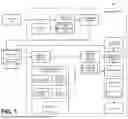


Sources:
- United States Patent and Trademark Office - verify current appl. status at the USPTO↗
Recent applications in this class:
- » 20260023975 2026-01-22
HOME: HIGH-ORDER MIXED MOMENT-BASED EMBEDDING FOR REPRESENTATION LEARNING - » 20260023973 2026-01-22
Configuration and Training of Classification Models - » 20260017525 2026-01-15
VALIDATING AUTONOMOUS ARTIFICIAL INTELLIGENCE (AI) AGENTS USING GENERATIVE AI - » 20260017524 2026-01-15
TRAINING OF A MACHINE LEARNING MODEL FOR PREDICTIVE MAINTENANCE TASKS - » 20260017523 2026-01-15
SELF-SUPERVISED LEARNING FOR DEVELOPING TEMPORALLY AGNOSTIC TRANSFORMERS - » 20260004137 2026-01-01
METHOD AND SYSTEM FOR PROVIDING DOMAIN-ADAPTIVE CHATBOT SERVICES BASED ON LARGE LANGUAGE MODELS - » 20260004136 2026-01-01
SELF-SUPERVISED LEARNING OF AMBIGUOUS ZONE OF AN EMBEDDING SPACE - » 20250384284 2025-12-18
METHOD AND SYSTEM FOR DYNAMIC WEIGHTED METRICS-BASED EVALUATION AND TOKENIZATION OF LARGE LANGUAGE MODELS - » 20250384283 2025-12-18
RAG PIPELINE OPTIMIZATION SYSTEM - » 20250384282 2025-12-18
ADAPTIVE SELF-LEARNING METHOD AND ADAPTIVE SELF-LEARNING SYSTEM
Recent applications for this Assignee:
- » 20260024647 2026-01-22
SYSTEMS AND METHODS FOR TRACKING NEUROLOGICAL IMPROVEMENTS - » 20260024032 2026-01-22
METHODS AND SYSTEMS FOR GENERATING PROJECTIONS OF REPRESENTATIONS OF DATA IN A PLURALITY OF SPACES - » 20260023966 2026-01-22
APPARATUS AND METHOD FOR TRAINING AN EXCITATION MODEL USING REPRESENTATION DATA - » 20250322370 2025-10-16
METHODS AND SYSTEMS FOR EXPLOITING VALUE IN CERTAIN DOMAINS - » 20240177081 2024-05-30
METHODS AND SYSTEMS FOR OPTIMIZING VALUE IN CERTAIN DOMAINS - » 20240104678 2024-03-28
METHODS AND SYSTEMS FOR SELECTING AN OPTIMAL SCHEDULE FOR EXPLOITING VALUE IN CERTAIN DOMAINS - » 20230177471 2023-06-08
METHODS AND SYSTEMS FOR EXPLOITING VALUE IN CERTAIN DOMAINS - » 18778031 2025-05-06
Methods and systems for generating projections of representations of data in a plurality of spaces - » 17886573 2023-10-31
Methods and systems for selecting an optimal schedule for exploiting value in certain domains