Innovative Open Waveguide Bend for Leakage Mitigation
US20260036670A1
2026-02-05
18/640,614
2024-04-19
Smart Summary: A radar control module has a printed circuit board with a radio frequency port. It features a trough waveguide antenna that has a base and two sidewalls. There is a fin in the middle of the antenna, creating two channels on either side. The design includes a bend where one channel is deeper than the other, helping to reduce signal leakage. This innovative structure improves the performance of radar systems by minimizing unwanted signal loss. 🚀 TL;DR
Abstract:
A radar control module includes a printed circuit board including a radio frequency port. A trough waveguide antenna is mounted to the printed circuit board and includes a base and a first sidewall and a second sidewall each extending from the base. A fin extends from the base along a center region between the first sidewall and the second sidewall and an open side opposite the base. A first channel is disposed between the first sidewall and the fin and a second channel is formed between the second sidewall and the fin. The trough waveguide antenna includes a bend region in which the first channel is on an interior of the bend region and the second channel is on an exterior of the bend region and a depth of the first channel is deeper in the bend region than a depth of the second channel in the bend region.
Inventors:
- Qinjiang RAO 2 🇺🇸 Oak Park, CA, United States
- Shawn SHI 2 🇺🇸 Newbury Park, CA, United States
Assignee:
- Aptiv Technologies AG 1 🇨🇳 Schaffhausen, China
Applicant:
Interested in similar patents?
Get notified when new applications in this technology area are published.
Classification:
G01S7/03 » CPC main
Details of systems according to groups of systems according to group Details of HF subsystems specially adapted therefor, e.g. common to transmitter and receiver
H01P1/022 » CPC further
Auxiliary devices; Bends; Corners; Twists in waveguides of polygonal cross-section
H01P5/022 » CPC further
Coupling devices of the waveguide type with invariable factor of coupling Transitions between lines of the same kind and shape, but with different dimensions
H05K1/0243 » CPC further
Printed circuits; Details; Electrical arrangements not otherwise provided for; High frequency adaptations Printed circuits associated with mounted high frequency components
H05K1/0243 » CPC further
Printed circuits; Details; Electrical arrangements not otherwise provided for; High frequency adaptations Printed circuits associated with mounted high frequency components
H05K2201/10098 » CPC further
Indexing scheme relating to printed circuits covered by; Details of components or other objects attached to or integrated in a printed circuit board; Types of components Components for radio transmission, e.g. radio frequency identification [RFID] tag, printed or non-printed antennas
H05K2201/10098 » CPC further
Indexing scheme relating to printed circuits covered by; Details of components or other objects attached to or integrated in a printed circuit board; Types of components Components for radio transmission, e.g. radio frequency identification [RFID] tag, printed or non-printed antennas
H01P1/02 IPC
Auxiliary devices Bends; Corners; Twists
H01P5/02 IPC
Coupling devices of the waveguide type with invariable factor of coupling
H05K1/02 IPC
Printed circuits Details
H05K1/02 IPC
Printed circuits Details
Description
FIELD
The present disclosure relates to an innovative open waveguide bend for leakage mitigation.
BACKGROUND
This section provides background information related to the present disclosure which is not necessarily prior art.
A side opened rectangular waveguide antenna called asymmetrical trough waveguide antennas have been proposed for use since the 1950s. The asymmetrical trough waveguide antenna provides for economical fabrication with a single layered structure and mechanical simplicity. Some trough waveguide antennas have a bend for antenna routing. The bend in the trough waveguide antenna results in unacceptable leaks. Accordingly, it is desirable to provide an open waveguide bend with improved leakage mitigation.
SUMMARY
This section provides a general summary of the disclosure, and is not a comprehensive disclosure of its full scope or all of its features.
According to an aspect of the present disclosure, a radar control module includes a printed circuit board including a radio frequency port. A trough waveguide antenna is mounted to the printed circuit board and includes a base and a first sidewall and a second sidewall each extending from the base. A fin extends from the base along a center region between the first sidewall and the second sidewall and an open side opposite the base. A first channel is disposed between the first sidewall and the fin and a second channel is formed between the second sidewall and the fin. The trough waveguide antenna includes a bend region in which the first channel is on an interior of the bend region and the second channel is on an exterior of the bend region and a depth of the first channel is deeper in the bend region than a depth of the second channel in the bend region.
According to a further aspect, the printed circuit board includes a monolithic microwave integrated circuit (MMIC) for providing radio frequency signals to the radio frequency port.
According to a further aspect, a transition path extends from the radio frequency port to an end of the trough waveguide antenna.
According to a further aspect, the depth of the first channel includes a transition region which gradually increases in depth at an end entering into the bend region.
According to a further aspect, the depth of the first channel includes a transition region which gradually decreases in depth at an end exiting the bend region.
According to a further aspect, the bend region includes a radiused 90 degree bend.
According to a further aspect, the depth of the second channel has a constant depth along a length of the trough waveguide antenna.
Further areas of applicability will become apparent from the description provided herein. The description and specific examples in this summary are intended for purposes of illustration only and are not intended to limit the scope of the present disclosure.
BRIEF DESCRIPTION OF THE DRAWINGS
The drawings described herein are for illustrative purposes only of selected embodiments and not all possible implementations, and are not intended to limit the scope of the present disclosure.
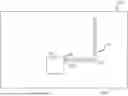
FIG. 1 is a schematic top view of a radar control module board according to the principles of the present disclosure;
FIG. 2 is a schematic side view of the radar control module board according to the principles of the present disclosure;
FIG. 3 is a perspective view of the space within the trough waveguide antenna according to the principles of the present disclosure;
FIG. 4 is a cross-sectional view of the space within a bend region of the trough waveguide antenna according to the principles of the present disclosure;
FIG. 5 is a cross-sectional view of the space within a straight region of the trough waveguide antenna according to the principles of the present disclosure;
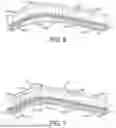
FIG. 6 is a perspective view of the space within the trough waveguide antenna having a bend region and illustrating the phase of the radio frequency signal in both the inner and outer channels according to the principles of the present disclosure;
FIG. 7 is a perspective view of the space within a conventional trough waveguide antenna having a bend region and illustrating the phase of the radio frequency signal in both the inner and outer channels; and
FIG. 8 is a perspective view of a known trough waveguide antenna according to the principles of the present disclosure.
Corresponding reference numerals indicate corresponding parts throughout the several views of the drawings.
DETAILED DESCRIPTION
Example embodiments will now be described more fully with reference to the accompanying drawings.
With reference to FIG. 8, a known trough waveguide antenna 10 is shown as disclosed in U.S. Pat. No. 3,015,100. The trough waveguide antenna includes a pair of sidewalls 12, 14, a bottom wall 16 and a substantially centrally disposed fin member 18. When the side walls 12, 14 are less than one half wavelength apart, a transverse electric mode may be propagated along the axis of the guide. This mode is “bound” to the center fin and has an electric field with a general configuration as shown in FIG. 8. The intensity of the filed lines of the electric vector increases from the bottom 16 of the waveguide to the top of the central vane or fin 18. The transverse currents on the sides of fin 18 vary from a minimum at the free edge to a maximum at its base.
With reference to FIGS. 1 and 2, a radar control module board 20 is shown including a printed circuit board 22. A monolithic microwave integrated circuit (MMIC) 24 is mounted to the printed circuit board 22. The MMIC 24 provides a radio frequency port 26. A trough waveguide antenna 28 is mounted to the printed circuit board 22. A transition structure 30 is mounted to an end of the trough waveguide antenna 28. The transition structure 30 defines a transition pathway for the radio frequency signal from the radio frequency port 26 of the MMIC 24. The trough waveguide antenna 28 includes a bend region 32 that can be provided for antenna routing on the printed circuit board 22.
The trough waveguide antenna 28 is similar to the trough waveguide antenna 10 disclosed in U.S. Pat. No. 3,015,100 and can be modified in known ways to include asymmetries 34 within the trough and other variations. In particular, the trough waveguide antenna 28 includes a pair of sidewalls 12, 14, a bottom wall 16 and a substantially centrally disposed fin member 18. The trough waveguide antenna 28 has an open side opposite the bottom wall and include open ends.
With reference to FIG. 7, a space 110 within a conventional trough waveguide antenna having a bend region 112 is shown. As illustrated by the markings 114a, 114b, the phase of the two channels 116, 118 on each side of the fin 18 are aligned prior to the bend region 112. However, as the radio frequency signal enters the bend region 112 of the trough waveguide antenna, the longer path of the outer channel 118 causes the phases within the two channels to be misaligned. The unmatched phase can result in losses and according to tests performed, a 5 dB signal loss per bend region has been observed.
With reference to FIGS. 3-6, according to the principles of the present disclosure, the trough waveguide antenna 28 includes an inner channel 36 that is on an interior side of the fin 18 in the bend region 32 and outer channel 38 that is on an outer side of the fin 18 in the bend region 32. The bend region 32 can include a radiused bend of between 30 and 120 degrees and, more preferably, 90 degrees. The inner channel 36′ transitions to have a greater depth within the bend region 32, as best illustrated in FIG. 4. At the end of the bend region 32, the inner channel 36 transitions back to having a shallower depth that can be equal to a depth of the outer channel 38, as best illustrated by FIG. 5.
With reference to FIG. 6, a three-dimensional illustration of the space within the trough waveguide antenna 28 having a bend region 32 according to the principles of the present disclosure is shown. As illustrated by the markings 40a, 40b, the phase of the two channels 36, 38 on each side of the fin 18 are aligned and remain aligned as the signal passes through the modified bend region having a deeper interior channel 36′ within the bend region that accounts for the longer path of the outer channel 38.
The change in depth of the inner channel can be determined based upon the bend radius and radio frequency that is used in order to maintain the radio frequencies passing through the inner and outer channels in phase. In addition, the depth of the inner channel within the bend region 32 can gradually get deeper through a first transition region 36a and maintain a constant depth through a deepest region 36b and then gradually gets shallower through a second transition region 36c until the inner channel has a same depth as the outer channel at the end of the bend region 32. Through testing, it has been confirmed that the modified inner channel depth 36′ results in reduced losses and according to tests performed, a 0.8 dB signal loss per bend region has been observed without adding an additional cost to the trough waveguide antenna.
Example embodiments are provided so that this disclosure will be thorough, and will fully convey the scope to those who are skilled in the art. Numerous specific details are set forth such as examples of specific components, devices, and methods, to provide a thorough understanding of embodiments of the present disclosure. It will be apparent to those skilled in the art that specific details need not be employed, that example embodiments may be embodied in many different forms and that neither should be construed to limit the scope of the disclosure. In some example embodiments, well-known processes, well-known device structures, and well-known technologies are not described in detail.
The terminology used herein is for the purpose of describing particular example embodiments only and is not intended to be limiting. As used herein, the singular forms “a,” “an,” and “the” may be intended to include the plural forms as well, unless the context clearly indicates otherwise. The terms “comprises,” “comprising,” “including,” and “having,” are inclusive and therefore specify the presence of stated features, integers, steps, operations, elements, and/or components, but do not preclude the presence or addition of one or more other features, integers, steps, operations, elements, components, and/or groups thereof. The method steps, processes, and operations described herein are not to be construed as necessarily requiring their performance in the particular order discussed or illustrated, unless specifically identified as an order of performance. It is also to be understood that additional or alternative steps may be employed.
When an element or layer is referred to as being “on,” “engaged to,” “connected to,” or “coupled to” another element or layer, it may be directly on, engaged, connected or coupled to the other element or layer, or intervening elements or layers may be present. In contrast, when an element is referred to as being “directly on,” “directly engaged to,” “directly connected to,” or “directly coupled to” another element or layer, there may be no intervening elements or layers present. Other words used to describe the relationship between elements should be interpreted in a like fashion (e.g., “between” versus “directly between,” “adjacent” versus “directly adjacent,” etc.). As used herein, the term “and/or” includes any and all combinations of one or more of the associated listed items.
Although the terms first, second, third, etc. may be used herein to describe various elements, components, regions, layers and/or sections, these elements, components, regions, layers and/or sections should not be limited by these terms. These terms may be only used to distinguish one element, component, region, layer or section from another region, layer or section. Terms such as “first,” “second,” and other numerical terms when used herein do not imply a sequence or order unless clearly indicated by the context. Thus, a first element, component, region, layer or section discussed below could be termed a second element, component, region, layer or section without departing from the teachings of the example embodiments.
Spatially relative terms, such as “inner,” “outer,” “beneath,” “below,” “lower,” “above,” “upper,” and the like, may be used herein for ease of description to describe one element or feature's relationship to another element(s) or feature(s) as illustrated in the figures. Spatially relative terms may be intended to encompass different orientations of the device in use or operation in addition to the orientation depicted in the figures. For example, if the device in the figures is turned over, elements described as “below” or “beneath” other elements or features would then be oriented “above” the other elements or features. Thus, the example term “below” can encompass both an orientation of above and below. The device may be otherwise oriented (rotated 90 degrees or at other orientations) and the spatially relative descriptors used herein interpreted accordingly.
The foregoing description of the embodiments has been provided for purposes of illustration and description. It is not intended to be exhaustive or to limit the disclosure. Individual elements or features of a particular embodiment are generally not limited to that particular embodiment, but, where applicable, are interchangeable and can be used in a selected embodiment, even if not specifically shown or described. The same may also be varied in many ways. Such variations are not to be regarded as a departure from the disclosure, and all such modifications are intended to be included within the scope of the disclosure.
Claims
What is claimed is:1. A radar control module, comprising:
a printed circuit board including a radio frequency port;
a trough waveguide antenna mounted to the printed circuit board and having a base and a pair of sidewalls extending from the base, a fin extending from the base along a center region between the pair of sidewalls and an open side opposite the base, wherein the trough waveguide antenna has a bend region in which a depth of the trough waveguide antenna is deeper on an interior of the fin in the bend region than a depth of the trough waveguide antenna on an exterior of the fin in the bend region.
2. The radar control module according to claim 1, wherein the printed circuit board includes a monolithic microwave integrated circuit (MMIC) for providing radio frequency signals to the radio frequency port.
3. The radar control module according to claim 1, further comprising a transition path from the radio frequency port to an end of the trough waveguide antenna.
4. The radar control module according to claim 1, wherein the depth of the trough on the interior of the fin includes a transition region which gradually increases in depth at an end entering into the bend region.
5. The radar control module according to claim 1, wherein the depth of the trough on the interior of the fin includes a transition region which gradually decreases in depth at an end exiting the bend region.
6. The radar control module according to claim 1, wherein the bend region includes a radiused 90 degree bend.
7. The radar control module according to claim 1, wherein the depth of the trough waveguide antenna on the exterior of the fin has a constant depth along a length of the trough waveguide antenna.
8. A radar control module, comprising:
a printed circuit board including a radio frequency port;
a trough waveguide antenna mounted to the printed circuit board and having a base and a first sidewall and a second sidewall each extending from the base, a fin extending from the base along a center region between the first sidewall and the second sidewall and an open side opposite the base, a first channel is disposed between the first sidewall and the fin and a second channel is formed between the second sidewall and the fin, wherein the trough waveguide antenna includes a bend region in which the first channel is on an interior of the bend region and the second channel is on an exterior of the bend region and a depth of the first channel is deeper in the bend region than a depth of the second channel in the bend region.
9. The radar control module according to claim 8, wherein the printed circuit board includes a monolithic microwave integrated circuit (MMIC) for providing radio frequency signals to the radio frequency port.
10. The radar control module according to claim 8, further comprising a transition path from the radio frequency port to an end of the trough waveguide antenna.
11. The radar control module according to claim 8, wherein the depth of the first channel includes a transition region which gradually increases in depth at an end entering into the bend region.
12. The radar control module according to claim 8, wherein the depth of the first channel includes a transition region which gradually decreases in depth at an end exiting the bend region.
13. The radar control module according to claim 8, wherein the bend region includes a radiused 90 degree bend.
14. The radar control module according to claim 8, wherein the depth of the second channel has a constant depth along a length of the trough waveguide antenna.
15. A radar control module, comprising:
a printed circuit board including a radio frequency port;
a trough waveguide antenna mounted to the printed circuit board and having a base and a first sidewall and a second sidewall each extending from the base, a fin extending from the base along a center region between the first sidewall and the second sidewall and an open side opposite the base, a first channel is disposed between the first sidewall and the fin and a second channel is formed between the second sidewall and the fin, wherein the trough waveguide antenna includes a bend region in which the first channel is on an interior of the bend region and the second channel is on an exterior of the bend region and a depth of the first channel is deeper in the bend region than a depth of the second channel in the bend region and the depth of the second channel has a constant depth along a length of the trough waveguide antenna.
16. The radar control module according to claim 15, wherein the printed circuit board includes a monolithic microwave integrated circuit (MMIC) for providing radio frequency signals to the radio frequency port.
17. The radar control module according to claim 15, further comprising a transition path from the radio frequency port to an end of the trough waveguide antenna.
18. The radar control module according to claim 15, wherein the depth of the first channel includes a transition region which gradually increases in depth at an end entering into the bend region.
19. The radar control module according to claim 15, wherein the depth of the first channel includes a transition region which gradually decreases in depth at an end exiting the bend region.
20. The radar control module according to claim 15, wherein the bend region includes a radiused 90 degree bend.
Images & Drawings included:



Sources:
- United States Patent and Trademark Office - verify current appl. status at the USPTO↗
Recent applications in this class:
- » 20260036671 2026-02-05
METHOD FOR A UWB DEVICE - » 20260029508 2026-01-29
RADAR SYSTEM - » 20250383423 2025-12-18
TRANSMITTING APPARATUS, CONTROL SYSTEM, AND TRANSMITTING METHOD - » 20250377440 2025-12-11
ANTENNA DEVICE AND RADAR APPARATUS - » 20250370089 2025-12-04
HIGH RESOLUTION DIGITAL IMAGING SYSTEM - » 20250355077 2025-11-20
RADAR APPARATUS - » 20250314740 2025-10-09
COMBINED RADIO ALTIMETER AND DOPPLER RADAR WITH SURFACE-MOUNTABLE ANTENNA ARRAY - » 20250306166 2025-10-02
Radar Behind License Plate - » 20250271542 2025-08-28
BIOMETRIC SIGNAL DETECTION DEVICE FOR OCCUPANT IN CABIN AND CONTROL METHOD OF SAME DEVICE - » 20250264574 2025-08-21
Radar System and Vehicle