Silicone Mesh Seating Device
US20260060448A1
2026-03-05
19/230,157
2025-06-06
Smart Summary: A new seating device is designed for children's walkers and jumpers. It replaces traditional fabric seats with a silicone mesh that is easier to clean and more hygienic. The seat has a round shape with holes for the child's legs and features an anti-microbial surface. It also comes with disposable covers that are water-resistant, making cleaning simple. Parents can easily use a fresh cover for their child, ensuring a safe and sanitary play area. 🚀 TL;DR
Abstract:
A mesh seating device is disclosed, which is a modified seat for use in children's walkers, jumpers, and other sit-upon apparatuses. The mesh seating device will essentially replace fabric seating with a sanitary, fabric-free seat, thus allowing for a more sanitary device for use in home and shared settings for children. The mesh seating device comprises a seat component that is configured in a round, bucket-like shape with a pair of leg through-holes. The seat component comprises an anti-microbial surface constructed entirely of silicone and constructed in a mesh configuration. Further, the seat component can accommodate disposable water-resistant covers for easy cleaning. The disposable covers are constructed with similar material as a surgical mask. Parents and caregivers can place a child in the seat with a new disposable seat cover to allow them to play in a safe sanitary environment with convenience and ease.
Applicant:
Interested in similar patents?
Get notified when new applications in this technology area are published.
Classification:
A47D13/043 » CPC main
Other nursery furniture; Apparatus for helping babies to walk; Baby walkers Baby walkers with a seat
A47D13/107 » CPC further
Other nursery furniture; Rocking-chairs ; swings resiliently suspended or supported, e.g. baby bouncers
A47D13/04 IPC
Other nursery furniture Apparatus for helping babies to walk; Baby walkers
A47D13/10 IPC
Other nursery furniture Rocking-chairs ; swings
Description
CROSS-REFERENCE TO RELATED APPLICATION
The present application claims priority to, and the benefit of, U.S. Provisional Application No. 63/690,858, which was filed on Sep. 5, 2024, and is incorporated herein by reference in its entirety.
FIELD OF THE INVENTION
The present invention relates generally to the field of mesh seating devices. More specifically, the present invention relates to a seating that is easy to clean and more sanitary for multiple children, lowering the risk of spreading infections. Accordingly, the present disclosure makes specific reference thereto. Nonetheless, it is to be appreciated that aspects of the present invention are also equally applicable to other like applications, devices and methods of manufacture.
BACKGROUND
By way of background, this invention relates to improvements in mesh seating devices. Generally, walker and jumpers along with other children's apparatuses used in public settings like daycare, therapy, and hospital settings are used by several children throughout the day. The traditional seating is made of fabric making it difficult to sanitize effectively to safely use for another child. Optional disposable covers will make it safer for use in a shared setting and more convenient in a home setting, as fabric seating can get soiled quickly.
Furthermore, these walkers and jumpers utilized by several children in daycare, therapy, and hospital settings, etc., require the use of durable materials so as not to break down, rendering the apparatus unusable. However, the walkers and jumpers still must be sanitized between children, requiring the use of cleaners to reduce the amount of bacteria and other microbes that collect on surfaces. However, because of this, the fabrics used on these walkers and jumpers, generally need to be sturdy. However, the use of fabric still makes it difficult to sanitize the seating, nor can such fabric withstand multiple harsh cleaning cycles without breaking down. Additionally, suitable fabrics such as vinyl, hard plastics, etc. tend to be less breathable and therefore less comfortable.
Accordingly, there is a demand for an improved mesh seating device that provides a silicone mesh seat that is easy to clean and more sanitary for multiple children. More particularly, there is a demand for a mesh seating device that includes optional disposable covers to make it easier to interchange between children.
Therefore, there exists a long felt need in the art for a mesh seating device that provides seating that is easy to clean and more sanitary for multiple children. There is also a long felt need in the art for a mesh seating device that lowers the risk of spreading infections from bodily fluids as it will be able to be properly sanitized. Further, there is a long felt need in the art for a mesh seating device that provides optional disposable covers which will make it easier to interchange between children. Moreover, there is a long felt need in the art for a device that utilizes silicone mesh material which will be antimicrobial and easily sanitized with disinfectant wipes eliminating the need to wash and dry traditional fabric seating. Further, there is a long felt need in the art for a mesh seating device that is effective for walkers, jumpers, and other children's apparatuses. Finally, there is a long felt need in the art for a mesh seating device that includes optional disposable covers constructed with material similar to a surgical mask.
The subject matter disclosed and claimed herein, in one embodiment thereof, comprises a mesh seating device. The device is a modified seat for use in children's walkers, jumpers, and other sit-upon apparatuses. The mesh seating device will essentially replace fabric seating with a sanitary, fabric-free seat, thus allowing for a more sanitary device for use in home and shared settings for children. The mesh seating device comprises a seat component that is configured in a round, bucket-like shape with a pair of leg through-holes. The seat component comprises an anti-microbial surface constructed entirely of silicone and constructed in a mesh configuration. Further, the seat component can accommodate disposable water-resistant covers for easy cleaning. The disposable covers are constructed with similar material as a surgical mask. Parents and caregivers can place a child in the seat with a new disposable seat cover to allow them to play in a safe sanitary environment with convenience and ease.
In this manner, the mesh seating device of the present invention accomplishes all of the forgoing objectives and provides a seating that is easy to clean and more sanitary for multiple children. The device is constructed of silicone mesh. The device can comprise a disposable seat cover.
SUMMARY OF THE INVENTION
The following presents a simplified summary in order to provide a basic understanding of some aspects of the disclosed innovation. This summary is not an extensive overview, and it is not intended to identify key/critical elements or to delineate the scope thereof. Its sole purpose is to present some general concepts in a simplified form as a prelude to the more detailed description that is presented later.
The subject matter disclosed and claimed herein, in one embodiment thereof, comprises a mesh seating device. The mesh seating device comprises a seat component with a pair of leg through-holes. The seat component comprises an anti-microbial surface constructed entirely of silicone and constructed in a mesh configuration. Further, the seat component can accommodate disposable water-resistant covers for easy cleaning. Accordingly, parents and caregivers can place a child in the seat with a new disposable seat cover to allow them to play in a safe sanitary environment with convenience and ease.
In one embodiment, the mesh seating device will essentially replace fabric seating with a sanitary, fabric-free seat, thus allowing for a more sanitary device for use in home and shared settings for children. Thus, the mesh seating device provides seating that is easy to clean and more sanitary for multiple children, lowering the risk of spreading infections from bodily fluids as it will be able to be properly sanitized.
In one embodiment, the device is a modified seat for use in children's walkers, jumpers, and other sit-upon apparatuses and toys. Generally, the walker or jumper comprises an internal seat area, suspended in the middle of a base component and having a plurality of legs extending downward to the ground. At the end of each leg is a wheel, roller or coaster. The base component supports a seat component.
In one embodiment, the mesh seating device comprises a seat component that is configured in a rounded, bucket-like shape with a pair of leg through-holes. The seat component is a one-piece construction that is available in different sizes and shapes to fit different sizes and shapes of walkers and jumpers. Specifically, the seat component comprises a circular frame with a mesh material secured. The mesh material is secured to the circular frame by any suitable means, such as rivets, screws, pins, etc. The mesh material allows the seat component to be flexible during use.
In one embodiment, the mesh seating device is inserted into the opening of the walker or jumper and releasably held in place by snaps, rivets, screws, pins, staples, etc., secured around a perimeter of the interior frame of the walker or jumper. Further, the pair of leg through-holes are rounded in shape and sized to retain a child's legs, without the child's legs being squeezed, or otherwise restricted when the child is positioned inside the seat component.
In one embodiment, the seat component comprises an anti-microbial surface constructed entirely of silicone and constructed in a mesh configuration. Specifically, the seat component is manufactured from a silicone mesh with 12 or more holes per inch. It has been found that silicone with this mesh size provides excellent breathability and ventilation without sacrificing durability. Durability is important as premature wear could be hazardous to the infant sitting in the seat. Further, the silicone mesh material must not break down when cleaned with strong cleaners like bleach and other disinfectants.
In one embodiment, the mesh material used in the seat component is replaced with a mesh including copper infused strands. The strands may be, for example, a polymer, nylon or similar type material to which a copper compound such as cuprous oxide, cuprous iodide etc. is added prior to the material being drawn into fibers or strands. In one particular embodiment, the strands are drawn from a polymer in which cuprous iodide particles are dispersed. The cuprous iodide particles may have a size generally between about 0.50 and about 2.0 microns and are dispersed within the polymer to produce a resultant fiber having a percentage weight of approximately 4% cuprous iodide. The copper infusion has been demonstrated to improve the antibacterial and/or antiviral properties of the material.
In one embodiment, the seat component can accommodate disposable water-resistant covers for easy cleaning. The disposable covers are sized and shaped to fit within the seat component. The disposable covers also include a pair of leg through-holes which align with the leg through-holes of the seat component, when the disposable cover is positioned within the seat component. The disposable covers are typically constructed with similar material as a surgical mask, thus allowing them to be water-resistant during use.
In one embodiment, the mesh seating device is manufactured from silicone, nylon, or other suitable polymer materials as is known in the art, or a combination of such materials. Further, the mesh seating device is also manufactured from a material that is water resistant or waterproof or comprises a coating that is water resistant or waterproof.
In one embodiment, the mesh seating device can be molded in various colors and patterns to match the walker or jumper, its placed within. In contrast, the mesh seating device may be molded in transparent or translucent plastic as well, based upon a user's preference.
In yet another embodiment, the mesh seating device comprises a plurality of indicia.
In yet another embodiment, a method of utilizing a more sanitary seat for a child's toy is disclosed. The method includes the steps of providing a mesh seating device comprising a seat component with a pair of leg through-holes. The method also comprises inserting the seat component into a child's toy, such as a walker or jumper. Further, the method comprises positioning a disposable cover within the seat component. The method also comprises placing a child within the seat component for use. The method also comprises removing the child after use. Further, the method comprises removing and disposing of the disposable cover. Finally, the method comprises sanitizing the seat component with disinfecting wipes.
Numerous benefits and advantages of this invention will become apparent to those skilled in the art to which it pertains, upon reading and understanding the following detailed specification.
To the accomplishment of the foregoing and related ends, certain illustrative aspects of the disclosed innovation are described herein in connection with the following description and the annexed drawings. These aspects are indicative, however, of but a few of the various ways in which the principles disclosed herein can be employed and are intended to include all such aspects and their equivalents. Other advantages and novel features will become apparent from the following detailed description when considered in conjunction with the drawings.
BRIEF DESCRIPTION OF THE DRAWINGS
The description refers to provided drawings in which similar reference characters refer to similar parts throughout the different views, and in which:
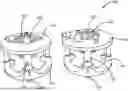
FIG. 1 illustrates a perspective view of one embodiment of the mesh seating device of the present invention showing the device in a walker available in different colors in accordance with the disclosed architecture;
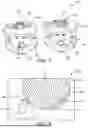
FIG. 2 illustrates a perspective view of one embodiment of the mesh seating device of the present invention showing the seat component of the device in accordance with the disclosed architecture;
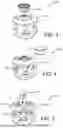
FIG. 3 illustrates a perspective view of one embodiment of the mesh seating device of the present invention showing how the seat component is inserted and removed from the walker in accordance with the disclosed architecture;
FIG. 4 illustrates a perspective view of one embodiment of the mesh seating device of the present invention showing the device inserted into a walker in accordance with the disclosed architecture;
FIG. 5 illustrates a perspective view of one embodiment of the mesh seating device of the present invention showing the device in use in accordance with the disclosed architecture; and
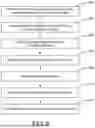
FIG. 6 illustrates a flowchart showing the method of utilizing a more sanitary seat for a child's toy in accordance with the disclosed architecture.
DETAILED DESCRIPTION OF THE PRESENT INVENTION
The innovation is now described with reference to the drawings, wherein like reference numerals are used to refer to like elements throughout. In the following description, for purposes of explanation, numerous specific details are set forth in order to provide a thorough understanding thereof. It may be evident, however, that the innovation can be practiced without these specific details. In other instances, well-known structures and devices are shown in block diagram form in order to facilitate a description thereof. Various embodiments are discussed hereinafter. It should be noted that the figures are described only to facilitate the description of the embodiments. They are not intended as an exhaustive description of the invention and do not limit the scope of the invention. Additionally, an illustrated embodiment need not have all the aspects or advantages shown. Thus, in other embodiments, any of the features described herein from different embodiments may be combined.
As noted above, there is a long felt need in the art for a mesh seating device that provides seating that is easy to clean and more sanitary for multiple children. There is also a long felt need in the art for a mesh seating device that lowers the risk of spreading infections from bodily fluids as it will be able to be properly sanitized. Further, there is a long felt need in the art for a mesh seating device that provides optional disposable covers which will make it easier to interchange between children. Moreover, there is a long felt need in the art for a device that utilizes silicone mesh material which will be antimicrobial and easily sanitized with disinfectant wipes eliminating the need to wash and dry traditional fabric seating. Further, there is a long felt need in the art for a mesh seating device that is effective for walkers, jumpers, and other children's apparatuses. Finally, there is a long felt need in the art for a mesh seating device that includes optional disposable covers constructed with material similar to a surgical mask.
The present invention, in one exemplary embodiment, is a novel mesh seating device. The mesh seating device comprises a seat component that is configured in a round, bucket-like shape with a pair of leg through-holes. The seat component comprises an anti-microbial surface constructed entirely of silicone and constructed in a mesh configuration. Further, the seat component can accommodate disposable water-resistant covers for easy cleaning. The disposable covers are constructed with similar material as a surgical mask. The present invention also includes a novel method of utilizing a more sanitary seat for a child's toy. The method includes the steps of providing a mesh seating device comprising a seat component with a pair of leg through-holes. The method also comprises inserting the seat component into a child's toy, such as a walker or jumper. Further, the method comprises positioning a disposable cover within the seat component. The method also comprises placing a child within the seat component for use. The method also comprises removing the child after use. Further, the method comprises removing and disposing of the disposable cover. Finally, the method comprises sanitizing the seat component with disinfecting wipes.
Referring initially to the drawings, FIG. 1 illustrates a perspective view of one embodiment of the mesh seating device 100 of the present invention. In the present embodiment, the mesh seating device 100 is an improved mesh seating device 100 that provides a user with an easy to clean and more sanitary seat for a child's toy, such as a walker or jumper. Specifically, the mesh seating device 100 comprises a seat component 102 with a pair of leg through-holes 104. The seat component 102 comprises an anti-microbial surface 106 constructed entirely of silicone and constructed in a mesh configuration 108. Further, the seat component 102 can accommodate disposable water-resistant covers 110 for easy cleaning. Accordingly, parents and caregivers can place a child 112 in the seat 102 with a new disposable seat cover 110 to allow them to play in a safe sanitary environment with convenience and ease.
Generally, the mesh seating device 100 will essentially replace fabric seating with a sanitary, fabric-free seat, thus allowing for a more sanitary device 100 for use in home and shared settings for children 112. Thus, the mesh seating device 100 provides seating that is easy to clean and more sanitary for multiple children 112, lowering the risk of spreading infections from bodily fluids as it will be able to be properly sanitized.
Further, the device 100 is a modified seat for use in children's walkers, jumpers, and other sit-upon apparatuses and toys 114. Generally, the walker or jumper 114 comprises an internal seat area 122, suspended in the middle of a base component 116 and having a plurality of legs 118 extending downward to the ground. At the end of each leg 118 is a wheel 120, roller or coaster. The base component 116 supports a seat component 102.
Additionally, the mesh seating device 100 can be molded in various colors and patterns to match the different colors and patterns of the walker or jumper 114, its placed within. In contrast, the mesh seating device 100 may be molded in transparent or translucent plastic as well, based upon a user's preference.
As shown in FIG. 2, the mesh seating device 100 comprises a seat component 102 that is configured in a rounded, bucket-like shape with a pair of leg through-holes 104. The seat component 102 is a one-piece construction that is available in different sizes and shapes to fit different sizes and shapes of walkers and jumpers 114. Specifically, the seat component 102 comprises a circular frame 200 with a mesh material 108 secured. The mesh material 108 is secured to the circular frame 200 by any suitable means, such as rivets, screws, pins, etc. The mesh material 108 allows the seat component 102 to be flexible during use.
Further, in one embodiment, the seat component 102 comprises an anti-microbial surface 106 constructed entirely of silicone and constructed in a mesh configuration 108. Specifically, the seat component 102 is manufactured from a silicone mesh 108 with 12 or more holes per inch. It has been found that silicone with this mesh size provides excellent breathability and ventilation without sacrificing durability. Durability is important as premature wear could be hazardous to the infant 112 sitting in the seat 102. Further, the silicone mesh material 108 must not break down when cleaned with strong cleaners like bleach and other disinfectants.
In another embodiment, the mesh material 108 used in the seat component 102 is replaced with a mesh including copper infused strands 202. The strands 202 may be, for example, a polymer, nylon or similar type material to which a copper compound such as cuprous oxide, cuprous iodide etc. is added prior to the material being drawn into fibers or strands. In one particular embodiment, the strands 202 are drawn from a polymer in which cuprous iodide particles are dispersed. The cuprous iodide particles may have a size generally between about 0.50 and about 2.0 microns and are dispersed within the polymer to produce a resultant fiber having a percentage weight of approximately 4% cuprous iodide. The copper infusion has been demonstrated to improve the antibacterial and/or antiviral properties of the material.
As shown in FIG. 3, the mesh seating device 100 is inserted into the opening (i.e., internal seat area 122) of the walker or jumper 114 and releasably held in place by snaps, rivets, screws, pins, staples, etc., secured around a perimeter of the interior frame (i.e., base component 116) of the walker or jumper 114. Further, the pair of leg through-holes 104 are rounded in shape and sized to retain a child's legs, without the child's legs being squeezed, or otherwise restricted when the child 112 is positioned inside the seat component 102.
As shown in FIG. 4, the seat component 102 can accommodate disposable water-resistant covers 110 for easy cleaning. The disposable covers 110 are sized and shaped to fit within the seat component 102. The disposable covers 110 also include a pair of leg through-holes 400 which align with the leg through-holes 104 of the seat component 102, when the disposable cover 110 is positioned within the seat component 102. The disposable covers 110 are typically constructed with similar material as a surgical mask, thus allowing them to be water-resistant during use. Further, the disposable covers 110 can be secured onto the seat component 102 via a suitable adhesive, that easily allows the disposable covers 110 to be peeled away after use.
As shown in FIG. 5, the mesh seating device 100 is manufactured from silicone, nylon, or other suitable polymer materials as is known in the art, or a combination of such materials. Further, the mesh seating device 100 is also manufactured from a material that is water resistant or waterproof or comprises a coating that is water resistant or waterproof.
In yet another embodiment, the mesh seating device 100 comprises a plurality of indicia 500. The seat component 102 of the device 100 may include advertising, a trademark, or other letters, designs, or characters, printed, painted, stamped, or integrated into the seat component 102, or any other indicia 500 as is known in the art. Specifically, any suitable indicia 500 as is known in the art can be included, such as but not limited to, patterns, logos, emblems, images, symbols, designs, letters, words, characters, animals, advertisements, brands, etc., that may or may not be jumper, seat, or brand related.
FIG. 6 illustrates a flowchart of the method of utilizing a more sanitary seat for a child's toy. The method includes the steps of at 600, providing a mesh seating device comprising a seat component with a pair of leg through-holes. The method also comprises at 602, inserting the seat component into a child's toy, such as a walker or jumper. Further, the method comprises at 604, positioning a disposable cover within the seat component. The method also comprises at 606, placing a child within the seat component for use. The method also comprises at 608, removing the child after use. Further, the method comprises at 610, removing and disposing of the disposable cover. Finally, the method comprises at 612, sanitizing the seat component with disinfecting wipes.
Certain terms are used throughout the following description and claims to refer to particular features or components. As one skilled in the art will appreciate, different users may refer to the same feature or component by different names. This document does not intend to distinguish between components or features that differ in name but not structure or function. As used herein “mesh seating device”, “seating device”, “mesh device”, and “device” are interchangeable and refer to the mesh seating device 100 of the present invention.
Notwithstanding the forgoing, the mesh seating device 100 of the present invention can be of any suitable size and configuration as is known in the art without affecting the overall concept of the invention, provided that it accomplishes the above stated objectives. One of ordinary skill in the art will appreciate that the mesh seating device 100 as shown in FIGS. 1-6 is for illustrative purposes only, and that many other sizes and shapes of the mesh seating device 100 are well within the scope of the present disclosure. Although the dimensions of the mesh seating device 100 are important design parameters for user convenience, the mesh seating device 100 may be of any size that ensures optimal performance during use and/or that suits the user's needs and/or preferences.
Various modifications and additions can be made to the exemplary embodiments discussed without departing from the scope of the present invention. While the embodiments described above refer to particular features, the scope of this invention also includes embodiments having different combinations of features and embodiments that do not include all of the described features. Accordingly, the scope of the present invention is intended to embrace all such alternatives, modifications, and variations as fall within the scope of the claims, together with all equivalents thereof.
What has been described above includes examples of the claimed subject matter. It is, of course, not possible to describe every conceivable combination of components or methodologies for purposes of describing the claimed subject matter, but one of ordinary skill in the art may recognize that many further combinations and permutations of the claimed subject matter are possible. Accordingly, the claimed subject matter is intended to embrace all such alterations, modifications and variations that fall within the spirit and scope of the appended claims. Furthermore, to the extent that the term “includes” is used in either the detailed description or the claims, such term is intended to be inclusive in a manner similar to the term “comprising” as “comprising” is interpreted when employed as a transitional word in a claim.
Claims
What is claimed is:1. A mesh seating device that provides a user with a more sanitary seat for a child's toy, the mesh seating device comprising:
a seat component; and
a pair of leg through-holes;
wherein the pair of leg through-holes are positioned within a bottom of the seat component
wherein the seat component is positioned within a child's sit upon toy; and
further wherein the seat component is anti-microbial and allows a child to play in a safe, sanitary environment.
2. The mesh seating device of claim 1, wherein the seat component is configured for use in a child's walker or jumper.
3. The mesh seating device of claim 2, wherein the walker or jumper comprises an internal seat area, suspended in a middle of a base component and having a plurality of legs extending downward with a wheel at an end.
4. The mesh seating device of claim 3, wherein the mesh seating device and the walkers and jumpers are available in multiple colors and sizes.
5. The mesh seating device of claim 4, wherein the seat component is a one-piece construction.
6. The mesh seating device of claim 5, wherein the seat component comprises a circular frame with a mesh material secured.
7. The mesh seating device of claim 6, wherein the seat component comprises an anti-microbial surface constructed entirely of silicone and constructed in a mesh configuration.
8. The mesh seating device of claim 7, wherein the seat component is configured with a mesh including copper infused strands for improved antibacterial or antiviral properties.
9. The mesh seating device of claim 8, wherein the seat component is inserted into an opening of the internal seat area of the walker or jumper and secured.
10. The mesh seating device of claim 9, wherein the pair of leg through-holes are rounded in shape and sized to retain a child's legs, without restriction.
11. The mesh seating device of claim 10, wherein further comprising a disposable water-resistant cover for easy cleaning.
12. The mesh seating device of claim 11, wherein the disposable water-resistant cover is sized and shaped to fit within the seat component and includes a pair of leg through-holes.
13. A mesh seating device that provides a user with a more sanitary seat for a child's toy, the mesh seating device comprising:
a seat component comprising a circular frame with a mesh material secured; and
a pair of leg through-holes rounded in shape and sized to retain a child's legs, without restriction;
wherein the pair of leg through-holes are positioned within a bottom of the seat component;
wherein the seat component is positioned within a child's walker or jumper and secured;
wherein a disposable water-resistant cover for easy cleaning is positioned within the seat component;
wherein the disposable water-resistant cover is sized and shaped to fit within the seat component and includes a pair of leg through-holes; and
further wherein the seat component is anti-microbial and allows a child to play in a safe, sanitary environment.
14. The mesh seating device of claim 13, wherein the disposable water-resistant cover is constructed with material similar to a surgical mask, making it water-resistant during use.
15. The mesh seating device of claim 14, wherein the disposable water-resistant cover is secured onto the seat component via a suitable adhesive.
16. The mesh seating device of claim 13 further comprising a plurality of indicia.
17. The mesh seating device of claim 13, wherein the seat component is manufactured from silicone.
18. The mesh seating device of claim 17, wherein the seat component comprises an anti-microbial surface constructed entirely of silicone and constructed in a mesh configuration with 12 or more holes per inch.
19. The mesh seating device of claim 13, wherein the mesh seating device and the walkers and jumpers are available in multiple colors and sizes.
20. A method of utilizing a more sanitary seat for a child's toy, the method comprising the following steps:
providing a mesh seating device comprising a seat component with a pair of leg through-holes;
inserting the seat component into a child's toy, such as a walker or jumper;
positioning a disposable cover within the seat component;
placing a child within the seat component for use;
removing the child after use;
removing and disposing of the disposable cover; and
sanitizing the seat component with disinfecting wipes.
Images & Drawings included:
Sources:
- United States Patent and Trademark Office - verify current appl. status at the USPTO↗
Recent applications in this class:
- » 20250241456 2025-07-31
MOTORIZED INFANT WALKER - » 20240122372 2024-04-18
SYSTEM AND METHOD FOR ENHANCING SAFETY OF A BABY WALKER - » 20210127851 2021-05-06
Folding walker with wheels - » 20210100369 2021-04-08
Walking Aid Apparatus for Toddlers - » 20200163467 2020-05-28
Baby walker apparatus and method of controlling the same - » 20200085208 2020-03-19
Baby tram - » 20200085207 2020-03-19
Modular table and walker - » 20190380509 2019-12-19
Folding walker with wheels - » 20190090658 2019-03-28
Juvenile walker - » 20150366372 2015-12-24
BABY WALKER WITH INFINITE-ADJUSTMENT FUNCTION