METHOD FOR DEPOSITING AN ALUMINUM OXIDE COATING
US20260062811A1
2026-03-05
19/106,002
2023-08-29
Smart Summary: A new way to create a coating of aluminum oxide on metal surfaces has been developed. This method uses a special heating technique called induction heating, which helps control the temperature and pressure during the process. The aluminum oxide is made from a solution that combines aluminum oxide with water and another solvent. The mixture is heated to very high temperatures, between 400°C and 700°C, and under high pressure, ranging from 1 MPa to 25 MPa. This results in a strong and continuous coating that can improve the metal's properties. 🚀 TL;DR
Abstract:
A method for depositing on a metal substrate a continuous coating of aluminum oxide by induction heating-assisted pressurized, temperature-controlled chemical deposition, the method including a solvothermal synthesis procedure based on an aluminum oxide precursor dissolved in a water-co-solvent mixture heated by induction to a temperature of between 400° C. and 700° C. and a pressure of between 1 MPa and 25 MPa.
Inventors:
- Cyril Aymonier 22 🇫🇷 Begles, France
- Marjorie Christine CAVARROC 7 🇫🇷 MOISSY-CRAMAYEL, France
- Angélique Nadine Jeanne POULON 3 🇫🇷 ARSAC, France
- Guillaume AUBERT 2 🇫🇷 Pessac, France
- Erwan PEIGNEY 1 🇫🇷 PARIS, France
Applicant:
Interested in similar patents?
Get notified when new applications in this technology area are published.
Classification:
C23C18/1216 » CPC main
Chemical coating by decomposition of either liquid compounds or solutions of the coating forming compounds, without leaving reaction products of surface material in the coating; Contact plating by thermal decomposition characterised by the deposition of inorganic material other than metallic material inorganic material, e.g. non-oxide and non-metallic such as sulfides, nitrides based compounds; Oxides, e.g. ceramics Metal oxides
C23C18/1241 » CPC further
Chemical coating by decomposition of either liquid compounds or solutions of the coating forming compounds, without leaving reaction products of surface material in the coating; Contact plating by thermal decomposition characterised by the deposition of inorganic material other than metallic material; Composition of the substrate Metallic substrates
C23C18/1291 » CPC further
Chemical coating by decomposition of either liquid compounds or solutions of the coating forming compounds, without leaving reaction products of surface material in the coating; Contact plating by thermal decomposition characterised by the deposition of inorganic material other than metallic material; Process of deposition of the inorganic material by heating of the substrate
C23C18/12 IPC
Chemical coating by decomposition of either liquid compounds or solutions of the coating forming compounds, without leaving reaction products of surface material in the coating; Contact plating by thermal decomposition characterised by the deposition of inorganic material other than metallic material
Description
TECHNICAL FIELD
The present invention relates to the general field of aluminum oxide coatings (also called alumina) and more particularly to coatings for metal alloys, and even more particularly it relates to a device and a method for depositing aluminum oxide coatings by means of pressurized and temperature-controlled chemical deposition.
PRIOR ART
Various metal alloys such as titanium alloys, TiAl, or nickel-based alloys require protection against oxidation and/or corrosion to maintain their performance at higher operating temperatures.
Among the many solutions that can be considered, an alpha alumina layer is the best possible solution in the majority of cases. Indeed, alpha alumina has excellent oxidation and corrosion resistance performances. In addition, the oxygen diffusion coefficient in its alpha crystalline form is low, which makes it relatively impermeable to oxygen. It is also the most stable form of alumina at high temperatures.
However, the temperature range usually required to grow alpha alumina (homogeneous and heterogeneous nucleations) is of the order of 900° C. and above. Indeed, alpha aluminum oxide is conventionally produced by chemical vapor deposition (CVD), physical vapor deposition (PVD) or sol-gel. Both CVD and sol-gel methods use temperatures above 1000° C. for stabilization of the alpha phase of aluminum oxide. This temperature is not compatible with most metal alloys. As for PVD, this technique allows stabilization of the desired phase at a lower temperature (from 480° C. to 580° C.), even if, generally, the coating has mixed phases of metastable aluminum oxide such as the gamma phase. The disadvantage of PVD is its directional aspect which does not offer the possibility of coating substrates with complex geometries such as turbine blades, unlike chemical deposition techniques. In addition, these methods generally suffer from a relatively low deposition speed.
Various studies have been conducted to attempt to obtain alpha alumina from alumina of a different phase. However, the conversion of an alumina of any phase into alpha alumina results in a significant volume change that impacts the mechanical performance of the coating, or even of the coated part.
It is known to use lower temperatures to obtain alpha alumina, but only in the context of homogeneous germination, which allows the synthesis of materials in powder form and not in the form of coatings. Alpha aluminum oxide is thus stabilized in water at relatively low pressure (from 1 MPa) and at a temperature of between 374° C. and 500° C., according to the binary diagram Al2O3—H2O.
By hydrothermal synthesis, aluminum oxide is produced in two successive steps. The first consists of the hydrolysis by water of an aluminum precursor in order to form a hydrated aluminum oxide, boehmite Y—AlO(OH):
Al ( NO 3 ) 3 + 2 H 2 O ----> γ - AlOOH + 3 HNO 3 ( Eq . 1 )
The second step consists of the dehydration of this intermediate phase which is boehmite in order to obtain alpha aluminum oxide:
2 γ - AlOOH ----> α - Al 2 O 3 + H 2 O ( Eq . 2 )
According to the literature, dehydration is the work of successive hydroxylation/dehydroxylation phenomena causing a reorganization of the solid state structure of boehmite towards alpha aluminum oxide.
However, as previously indicated, pressurized hydrothermal synthesis allows the production of alpha aluminum oxide but in the form of powders and not coatings.
The only solution that currently allows the growth of an alumina layer on the substrate, particularly in the case of TiAl, is the use of the halogen effect, as described for example in patent application WO2020/229747, which in fact requires the use of halogenated gases, which can pose toxicity problems.
Thus there is a need to find a new method allowing the deposition of a layer of alpha alumina on a substrate of complex geometry, such as a turbine blade, at a temperature compatible with most metal alloys and in particular below 850° C., without the use of halogenated gases and having sufficiently high deposition rates.
DISCLOSURE OF THE INVENTION
The inventors surprisingly discovered that it was possible to achieve such a deposition using solvothermal induction heating-assisted synthesis, which thus allows induction heating-assisted pressurized, temperature-controlled chemical deposition. The inventors discovered that such a method allowed to obtain a thick deposition (greater than 1 μm, advantageously greater than 10 μm) of alpha alumina and was furthermore adapted for the deposition of other types of aluminum oxide such as metastable aluminum oxides, on any metal substrate. It also avoids the use of halogenated gases and has a high deposition speed.
Thus, the use of a more efficient method (high speed) according to the invention is also advantageous for reducing the environmental footprint of the Applicant. Indeed,
-
- It allows to increase and optimize the manufacturing, production and/or repair capacity and, consequently, to significantly reduce the associated greenhouse gas emissions. This optimization also allows to reduce the consumption of raw materials;
- It allows to extend the service life of the components and, consequently, to reduce the number of replacements with new parts; and
- It allows to significantly reduce the number of scrapped parts that may be difficult to recycle.
In addition, the solution also has the advantage of reducing its energy input (water, electricity, etc.) and/or the use of any chemical products contrary to environmental standards and regulations in force.
The present invention therefore relates to a method for depositing on a metal substrate a continuous coating of aluminum oxide by means of induction heating-assisted pressurized, temperature-controlled chemical deposition comprising a solvothermal synthesis step based on an aluminum oxide precursor dissolved in a water-co-solvent mixture heated by induction to a temperature of between 400° C. and 700° C. and a pressure of between 1 MPa and 25 MPa.
In this application, the expressions “of between . . . and . . . ” must be understood to include the limits unless explicitly stated otherwise.
The metal substrate according to the invention is in particular a metal substrate comprising titanium, more particularly a titanium alloy, even more particularly a titanium-aluminium alloy, for example based on titanium aluminide, such as a gamma-TiAl alloy.
The metal substrate according to the invention may constitute a turbomachine part, and for example an aeronautical turbomachine part. The substrate is advantageously intended to be used in an oxidizing atmosphere and at a temperature greater than or equal to 800° C. The substrate may for example be a turbine part. It may for example be a turbine blade or a turbine ring sector. It may thus be a part with complex geometry, that is to say a non-planar, in particular 3D part. However, the method may also be implemented on a substrate with planar geometry.
In the context of the present invention, a pressurized fluid is a fluid whose pressure is higher than atmospheric pressure, in particular at a pressure of between 1 MPa and 25 MPa, advantageously between 6 MPa and 10 MPa.
In the context of the present invention, a pressurized and temperature-controlled chemical deposition is any deposition by chemical means at a pressure higher than atmospheric pressure, in particular at a pressure of between 1 MPa and 25 MPa, advantageously between 6 MPa and 10 MPa, and at a temperature higher than ambient temperature, advantageously lower than 850° C., in particular at a temperature of between 400° C. and 700° C.
The aluminum oxide precursor according to the invention is any water-soluble precursor, such as aluminum nitrate Al(NO3)3 or aluminum salts (such as Al2(SO4)3). Advantageously it is an aluminum nitrate Al(NO3)3.
The co-solvent according to the invention is selected from alcohols, in particular ethanol, nitrogen, carbon dioxide, argon and mixtures thereof, advantageously it is nitrogen. The co-solvent allows to better conduct heat and therefore to heat the substrate more easily.
In the context of the method according to the invention, it is pressurized and heated water which will allow the production of alumina from the precursor dissolved therein and therefore its deposition on the substrate.
Advantageously, the water/co-solvent molar ratio, in particular water/nitrogen, is of between 0.1 and 50%. In particular, the water flow rate is advantageously of between 0.1 and 10 mL/min, more particularly it is 1.3 mL/min. In one embodiment, the flow rate of the co-solvent, in particular nitrogen, is of between 0.1 and 10 mL/min, more particularly it is 2 mL/min.
The temperature of the solvothermal synthesis step is of between 400° C. and 700° C., advantageously between 500° C. and 700° C., more advantageously between 550° C. and 680° C., even more advantageously between 600° C. and 650° C., in particular it is 630° C.
The pressure of the hydrothermal synthesis step is of between 1 MPa and 25 MPa, advantageously between 5 MPa and 20 MPa, more advantageously between 7 MPa and 15 MPa, in particular it is 10 MPa.
The aluminum oxide of the continuous coating obtained on the surface of the metal substrate by the method according to the invention will depend on the temperature and pressure used, the co-solvent and the amount of water used during the reaction (such as the water/co-solvent ratio). Indeed, hydrothermal dehydration (or solvothermal synthesis) leads to alpha alumina while dehydration in air leads to other phases of alumina. Advantageously, the aluminum oxide of the continuous coating is a metastable aluminum oxide (such as kappa aluminum oxide or theta aluminum oxide or gamma aluminum oxide), an alpha aluminum oxide or a mixture of these oxides (a mixed oxide), advantageously it is an alpha aluminum oxide
The synthesis using the precursor Al(NO3)3 to obtain a continuous coating of alpha aluminum oxide is advantageously carried out at a pressure of 10 MPa, a temperature of 630° C. with a water/nitrogen mixture (nitrogen being the co-solvent), a water flow rate of 1.3 ml/min and a nitrogen flow rate of 2 ml/min.
In an advantageous embodiment, the continuous coating of aluminum oxide obtained is thick, that is to say of thickness greater than 1 μm, in particular of thickness of at least 2 μm, more particularly of thickness of between 1 μm and 75 μm, even more particularly of thickness greater than 10 μm, advantageously of thickness of between 50 μm and 72 μm.
In an advantageous embodiment, the coating deposition speed is of between 100 and 500 nm/min, advantageously it is 300 nm/min.
In an advantageous embodiment, the method according to the invention is implemented within an induction heating-assisted pressurized, temperature-controlled chemical deposition reactor.
Advantageously, the induction heating-assisted pressurized, temperature-controlled chemical deposition reactor usable in the method according to the invention is as described in application FR3112972, more particularly in the case where the pressure is of between 1 MPa and 10 MPa.
In another advantageous embodiment, the induction heating-assisted pressurized, temperature-controlled chemical deposition reactor usable in the method according to the invention is the device 100 for depositing an aluminum oxide on a metal substrate 104 as described below.
In an advantageous embodiment, the method according to the present invention comprises the following steps:
-
- a—adding the metal substrate to be coated to an induction heating-assisted pressurized, temperature-controlled chemical deposition reactor;
- b—adding the aluminum oxide precursor previously dissolved in water and the co-solvent to the reactor;
- c—implementing the solvothermal synthesis based on said aluminum oxide precursor by means of induction heating at a temperature of between 400° C. and 700° C. and a pressure of between 1 MPa and 25 MPa, advantageously between 6 MPa and 10 MPa, of the aluminum oxide precursor dissolved in the water-co-solvent mixture;
- d—recovering the substrate coated with a continuous coating of aluminum oxide.
In an advantageous embodiment, the water and the co-solvent are added separately to the reactor during step b).
In a particular embodiment, the method comprises an intermediate step a1), between steps a) and b), of preheating the reactor to a temperature of between 400° C. and 700° C. and pressurizing to a pressure of between 1 MPa and 25 MPa.
In an advantageous embodiment, the method is a semi-continuous or discontinuous method (or closed mode), advantageously semi-continuous.
In a semi-continuous method, the aluminum oxide precursor previously dissolved in water and the co-solvent are introduced continuously, in particular during step b) of the method according to the invention, circulate continuously, in particular within the previously heated and pressurized reactor according to the present invention, and are purged continuously. On the other hand, the substrate is fixed. It is therefore added to the reactor, advantageously in step a), prior to the continuous addition of the aluminum oxide precursor previously dissolved in water and the co-solvent, advantageously during step b) and the pressurization and heating of the reactor. The coated substrate is then recovered, once the method has been implemented and the reactor has cooled to room temperature and depressurized. During the semi-continuous method, the deposition grows as the precursor, water and co-solvent are added and react. This semi-continuous mode allows to precisely control and adjust the deposition and the quantities of precursor, water and co-solvent introduced for better control of the kinetics of formation and growth of aluminum oxide on the surface of the metal substrate.
In a discontinuous method (or closed mode), the amount of fluids (precursors+co-solvent+water) and the substrate are fixed and the fluids and the substrate are added beforehand to the reactor according to the invention. The reactor is then heated and pressurized in order to implement the solvothermal synthesis. In general, the amount of co-solvent and water governs the maximum pressure achievable depending on the temperature applied. No precursor, water or co-solvent is introduced during the growth of the aluminum oxide on the surface of the metal substrate. Once the deposition is carried out, the reactor is cooled to room temperature and depressurized in order to be able to recover the coated substrate. The fluids are also purged.
Advantageously, the duration of the method according to the invention is of between 30 min and 180 min.
The present invention also relates to a device for depositing an aluminum oxide (in particular as described above) on a metal substrate by means of pressurized and temperature-controlled chemical deposition, which device comprises:
-
- a chamber delimited by walls forming a closed volume (V), the chamber being intended to contain a pressurized and heated fluid (in particular under the temperature and pressure conditions as described above), the material of the walls of the chamber being transparent to electromagnetic radiation;
- a support also transparent to electromagnetic radiation intended to support the metal substrate located inside the chamber;
- an induction heating device surrounding the outside of the chamber so as to be able to heat the metal substrate positioned on the support;
- an inlet located in the upper portion of the chamber and configured to allow the precursor material previously dissolved in water, in particular as described above, to be added to the chamber;
- an inlet located in the lower portion of the chamber and configured to allow a fluid (or co-solvent in particular as described above) to be added to the chamber;
- at least one outlet configured to purge the closed volume (V);
- a sapphire window arranged on the upper portion of the chamber, allowing the temperature of the metal substrate to be controlled by a bichromatic pyrometer arranged outside the chamber;
- a set of polymer seals;
- a metal assembly rigidly screwed together by metal columns containing a circulating fluid, the temperature of which is controlled by a cryostat.
The device of the invention allows to form a continuous coating, which is in particular thick (greater than 1 μm), more particularly as described above, of aluminum oxide on flat metal substrates or on metal substrates with complex geometry, in particular as described above.
The induction heating device according to the invention, advantageously consisting of an induction generator and an induction loop, allows to heat only the metal substrate while keeping a temperature on the walls lower than the temperature of the metal substrate. Indeed, having walls transparent to electromagnetic radiation allows to avoid inductive couplings with these walls and to keep them at a temperature colder than that of the metal substrate in order to control convection movements within the chamber.
Induction heating also provides better performance than resistive heaters because it can heat the entire surface of the metal substrate with complex geometry more quickly and more evenly, or by limiting the highest heating to a thickness close to the outermost surface of the substrate.
According to a particular characteristic of the invention, the material of the walls of the chamber is a ceramic. The majority of ceramics are transparent to electromagnetic radiation, so ceramics are excellent candidates for forming the walls. Advantageously, it is a ceramic made of silicon nitride Si3N4.
This ceramic is pressure-resistant thanks to a set of seals made of polymer (such as PEEK (PolyEtherEtherKetone), Viton® (Fluorinated carbon rubber (FKM) marketed by the company DuPont), EPDM (ethylene-propylene-diene monomer) and/or Kalrez® (Perfluorinated rubber FFKM FFPM. marketed by the company DuPont) and a metal assembly, in particular cylindrical, rigidly screwed together by metal columns, in particular 6 in number distributed equidistant from each other, in which a fluid such as ethylene glycol circulates, which is temperature controlled at 20° C. by a cryostat.
Advantageously, the device according to the invention does not comprise a double wall.
Advantageously, the inlets of the device are equipped with a pump, in particular HPLC for the water inlet and Isco for the fluid inlet. In the case where the fluid is CO2, the Isco pump is replaced by a pump dedicated to the injection of liquid carbon dioxide which must therefore be cooled to 1° C. using a cryostat added at the pump.
Advantageously, the inlet located in the lower portion of the chamber and configured to allow to add a fluid is an inlet for the co-solvent as described above within the framework of the method, fluid which will serve, in mixture with water, as supercritical fluid.
Advantageously, the outlet of the device is equipped with a pressure regulator.
According to another particular characteristic of the invention, covers may be present at the ends of the chamber in order to close them. Advantageously, only one of the two covers is movable. The covers may for example be made of steel, and more particularly of 316L steel.
The present invention finally relates to the use of the device according to the invention for implementing the method according to the invention.
It further relates to a method according to the invention in which the induction heating-assisted pressurized, temperature-controlled chemical deposition reactor is the device according to the invention.
Thus, in a particular embodiment of the method according to the invention, the metal substrate to be coated is positioned in the chamber of the device (or reactor) on the support (step a) of the method according to the invention).
Then, in a subsequent step, the metal substrate is heated by induction using the induction heating means (step a1) of the method according to the invention).
Then, as soon as the temperature of the metal substrate is at a temperature of between 400° C. and 700° C., the aluminum oxide precursor (or precursor material) previously dissolved in water and the co-solvent (step b) of the method according to the invention) are started to be added to the chamber. The water in which the precursor is dissolved and the co-solvent added will then be subjected to an increase in pressure and temperature up to the desired pressure and temperature.
When the aluminum oxide precursor (or precursor material) previously dissolved in water and the co-solvent are added, the metal substrate is continued to be heated by induction. This allows to reach, in the vicinity of the metal substrate, the conditions necessary for the formation of aluminum oxide on the surface of the metal substrate.
The aluminum oxide precursor, water and co-solvent introduced therefore react under solvothermal conditions to form aluminum oxide on the surface of the substrate (step c) of the method according to the invention). Throughout the formation and growth of the aluminum oxide on the surface of the substrate, the aluminum oxide precursor previously dissolved in water and the co-solvent are introduced into the chamber. The formation of the aluminum oxide on the surface of the substrate thus takes place in semi-continuous mode. This allows to adjust the quantities of aluminum oxide precursor, water and co-solvent as the aluminum oxide layer grows.
When the thickness of the continuous layer of aluminum oxide is sufficient, the addition of the aluminum oxide precursor previously dissolved in water and of the co-solvent is stopped, the chamber is cooled before depressurizing it to recover the coated substrate (step d) of the method according to the invention).
In another particular embodiment of the method according to the invention, the metal substrate to be coated is positioned in the chamber of the device (or reactor) on the support (step a) of the method according to the invention).
Then, in a subsequent step, the metal substrate is heated by induction using the induction heating means (step a1) of the method according to the invention).
As soon as the temperature and pressure of the water/co-solvent mixture within the chamber (T, P)v reach the desired conditions, the precursor of the aluminium oxide (or precursor material) previously dissolved in the water and the co-solvent is introduced into the chamber, the water and the co-solvent thus being placed under pressure and temperature (step b) of the method according to the invention).
The aluminum oxide precursor, water and co-solvent introduced therefore react under pressurized and temperature-controlled conditions to form, by solvothermal synthesis, a continuous layer of aluminum oxide on the surface of the substrate which will grow throughout the duration of the reaction (step c) of the method according to the invention). During this reaction step, no precursor material (or aluminum oxide precursor) or fluid is added. The formation of aluminum oxide on the surface of the metal substrate takes place in a closed mode or discontinuous method.
When the growth of the continuous layer of aluminum oxide is complete, that is to say when all the precursor material (or aluminum oxide precursor) has reacted, the chamber is cooled before being depressurized to recover the coated substrate (step d) of the method according to the invention).
The present invention will be better understood in light of the description of the figures and examples which follow. The examples are given for information purposes only, without limitation.
BRIEF DESCRIPTION OF THE DRAWINGS
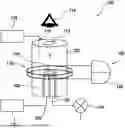
FIG. 1 shows the partial diagram of a device according to the invention, without the metal assembly or the seals.
FIG. 2 schematically and partially shows a sectional view of a device according to the invention with the metal assembly and the seals.
The device 100 allows to deposit an aluminum oxide coating on a metal substrate 104. The device 100 comprises a cylindrical chamber 102 delimited by walls forming a closed volume V. The chamber 102 is adapted to receive a pressurized and heated fluid by means of a set of polymer seals 200, in particular located at the sapphire window 112 and the junction between the metal assembly 202 and the chamber 102, a metal assembly 202, in particular cylindrical, rigidly screwed together by metal columns 204, in particular 6 in number distributed equidistant from each other, in which circulates a fluid controlled in temperature at 20° C. by a cryostat 206, in particular the fluid being located above and below the cylindrical chamber, more particularly on either side of the sapphire window 112 and the inlet 120 and outlet 124. The metal assembly 202, the metal columns 204 and the screws being in particular made of 306L steel.
The device 100 also comprises an inlet 120 located in the lower portion of the chamber 102 to be able to introduce into the volume V a fluid which will be the co-solvent. It also comprises an inlet 116 located in the upper portion of the chamber 102 to be able to add water and precursor materials previously dissolved in water to this same volume V. The inlets 116 and 120 can be equipped with a pump 118 and 122.
An outlet 124 is also present in the device 100 to purge the volume V, and thus allow semi-continuous operation of the deposition device 100. The outlet 124 can be equipped with a pressure regulator 126.
A support 106 is positioned in the chamber 120 to support the metal substrate 104 on which the coating is deposited. Preferably, the support 106 is positioned in the chamber 120 so that the metal substrate 104 is held in the center of the inductor forming the induction heater 109. Preferably, the support 106 has a shape allowing to support the metal substrate 104 with a minimum of contact points in order to coat the largest possible surface of the metal substrate with the deposited aluminum oxide coating and to limit disturbances in the convection flow of the induction. The support 106 is composed of a material transparent to electromagnetic radiation. It is for example composed of a thermally and electrically non-conductive material such as alumina.
An induction heater 109 consisting of an induction generator 108 and an induction loop 110 surrounds the chamber 102. The induction heater allows to heat the metal substrate 104 while limiting the heating of the precursor materials present in the volume V.
In order not to disturb the induction heating of the metal substrate 104, the walls of the chamber 102 are transparent to electromagnetic radiation. They are for example made of ceramic. The ceramics used can be boron nitride, aluminum nitride, alumina or silicon nitride, more particularly silicon nitride. These examples of dense and non-porous ceramics allow the walls of the chamber 102 to have excellent mechanical strength and thus to withstand the pressures present in the volume V.
A sapphire window 112 is arranged on the upper portion of the chamber 102 and allows the temperature of the metal substrate 104 to be controlled using a bichromatic pyrometer 114 arranged outside the chamber 102.
EXAMPLE
The reactor used in the examples and as described above with reference to FIGS. 1 and 2 and consists of a cylindrical ceramic chamber made of silicon nitride Si3N4 with an internal volume of approximately 300 mL which contains the pressurized fluid and the metal substrate held by an alumina support. This ceramic being insensitive to magnetic fields, it is surrounded by an induction loop, itself connected to an induction generator with a maximum power of 7 kW. This allows to preferentially heat the metal substrate located at the center of the pressurized fluid. This ceramic is maintained pressurized by a set of polymer seals (Peek, Viton®, EPDM and/or Kalrez®) and a cylindrical metal assembly rigidly screwed together by 6 metal columns equidistant from each other made of 316 L steel. To avoid excessive deformation due to the increase in the temperature of this metal assembly, a fluid (ethylene glycol) controlled in temperature at 20° C. by means of a cryostat circulates therein. This holding assembly offers the possibility of pressurizing a fluid up to 25 MPa. Another improvement concerns the addition of tappings on the upper metal portion allowing the injection of fluids from the top while maintaining the location of a sapphire window. The latter allows to control the temperature of the metal substrate using a bichromatic pyrometer while keeping the injection of fluids and the precursor from the top of the reactor. The fluids and precursors are injected at a controlled flow rate using an HPLC pump for water and an Isco pump for the co-solvent (here nitrogen). The pressure is maintained by an outlet pressure regulator. This reactor operates in semi-continuous mode with a fixed substrate and fluids in continuous circulation.
A parallelepiped metal substrate of gamma-based titanium-aluminium with dimensions of 1.5×1.5×0.5 cm is therefore introduced into this reactor.
Deposition of a continuous coating of alpha aluminum oxide with water and nitrogen (as co-solvent) flow rates of 1.3 mL/min and 2 mL/min respectively, a pressure of 10 MPa and temperatures of 510° C., 630° C. and 700° C. were carried out on this substrate using aluminum nitrate Al(NO3)3 as precursor material.
Using a grazing incidence X-ray diffractometer at an angle of 1° (or GIXRD for Grazing incidence angle XRD) on the coated substrate and analyzing the diffractogram obtained using EVA software, it is observed that at a temperature of 510° C., the deposition contains a mixture of metastable aluminum oxide, the kappa phase, and, above all, alpha aluminum oxide.
At a temperature of 630° C., the diffraction lines of an alpha aluminum oxide are more easily observed at 25.51° and 43.23°, still with this metastable phase which is kappa aluminum oxide.
At 700° C., it is difficult to note the presence of alpha aluminum oxide. The diffraction lines of a new metastable phase, theta aluminum oxide, are clearly distinguished.
By observation with a scanning electron microscope of the cross-section produced by metallographic preparation of the coated substrate, it can be seen that the morphology of the depositions produced in a water/nitrogen mixture is homogeneous and consists of aggregates of hexagonal grains of a few hundred nanometers.
It is also observed that the cross-section of this coating made at 600° C. provides information on the morphology of the deposition in depth and also on its thickness. The deposition appears to have two types of structures going from the substrate to the outside, a relatively dense one over 2 μm (the closest to the substrate) and a relatively porous one over 60 μm. Furthermore, the average thickness is approximately 61±11 μm which allows to establish a deposition speed of approximately 300 nm·min−1. These two areas consist of aluminum oxides.
In conclusion, this induction heating-assisted pressurized and temperature-controlled chemical deposition method allowed to develop alpha and mixed aluminum oxide coatings at temperatures significantly lower than 850° C. at a pressure of between 1 MPa to 25 MPa on TiAl metal substrates of complex geometries.
Claims
1. A method for depositing on a metal substrate a continuous coating of aluminum oxide by means of induction heating-assisted pressurized, temperature-controlled chemical deposition, said method comprising a solvothermal synthesis step based on an aluminum oxide precursor dissolved in a water-co-solvent mixture heated by induction to a temperature of between 400° C. and 700° C. and a pressure of between 1 MPa and 25 MPa.
2. The method according to claim 1, comprising the following steps:
a—adding the metal substrate to be coated to an induction heating-assisted pressurized, temperature-controlled chemical deposition reactor;
b—adding the aluminum oxide precursor previously dissolved in water and the co-solvent to the reactor;
c—implementing the solvothermal synthesis based on said aluminum oxide precursor by means of induction heating at a temperature of between 400° C. and 700° C. and a pressure of between 1 MPa and 25 MPa of the aluminum oxide precursor dissolved in the water-co-solvent mixture;
d—recovering the substrate coated with a continuous coating of aluminum oxide.
3. The method according to claim 1, wherein the metal substrate is made of titanium alloy.
4. The method according to claim 1 to 3, wherein the co-solvent is selected from alcohols, nitrogen, carbon dioxide, argon and mixtures thereof.
5. The method according to claim 1, which is a semi-continuous method.
6. The method according to claim 1, wherein the aluminum oxide of the continuous coating is a metastable aluminum oxide, an alpha aluminum oxide or a mixture of these oxides.
7. The method according to claim 1, wherein the deposition speed is of between 100 and 500 nm/min.
8. The method according to claim 2, wherein the pressure of step c) is of between 6 MPa and 10 MPa.
9. The method according to claim 3, wherein the metal substrate is made of an alloy based on titanium aluminide.
10. The method according to claim 4, wherein the co-solvent is nitrogen.
11. The method according to claim 6, wherein the aluminum oxide of the continuous coating is an alpha aluminum oxide.
12. The method according to claim 7, wherein the deposition speed is of 300 nm/min.
Images & Drawings included:


Sources:
- United States Patent and Trademark Office - verify current appl. status at the USPTO↗
Similar patent applications:
Recent applications in this class:
- » 20250198005 2025-06-19
Method for Coating a Component - » 20250171904 2025-05-29
AQUEOUS SOLUTION PRECURSORS FOR MAKING OXIDE THIN FILMS, AND COMPOSITION AND METHOD FOR MAKING CONDUCTIVE OXIDE THIN FILMS THEREFROM - » 20250129483 2025-04-24
COMPONENTS AND METHODS FOR FORMING A LAYER OF CHROMIA THEREON - » 20240410055 2024-12-12
METHOD AND FORMULATION FOR PREPARING OPTICAL METAL OXIDE LAYERS - » 20240141499 2024-05-02
METHOD OF FORMING METAL OXIDE LAYER AND METHOD OF MANUFACTURING PEROVSKITE SOLAR CELL USING THE SAME - » 20230349047 2023-11-02
NANOWIRE-EQUIPPED FILM AND NANOWIRE MANUFACTURING METHOD - » 20230287570 2023-09-14
Layer - » 20230193468 2023-06-22
COATING AGENT FOR FORMING OXIDE FILM, METHOD FOR PRODUCING OXIDE FILM, AND METHOD FOR PRODUCING METAL-PLATED STRUCTURE - » 20230101282 2023-03-30
ANTI-CORROSION COATINGS - » 20220145467 2022-05-12
Method for manufacturing amorphous multielement metal oxide hydroxide film