CARRYCOT
US20260069054A1
2026-03-12
19/320,098
2025-09-05
Smart Summary: A carrycot has a frame and a base that can fold. There is a special mechanism that allows the carrycot to lock in place when it's open and unlock when it's time to fold it. A locking member can be moved to either keep the carrycot open or allow it to fold. Two operating parts help control this locking mechanism. One part moves the lock, while the other can be adjusted to either block or allow that movement. 🚀 TL;DR
Abstract:
A carrycot is provided, including: a surrounding frame; a chassis; a folding mechanism connected between the surrounding frame and the chassis; a locking member movably provided on the folding mechanism and having a detent position in which it locks the folding mechanism in an unfolded state and a release position in which it unlocks the folding mechanism in the unfolded state; and an unlocking mechanism including first and second operating members movably provided on the folding mechanism. The first operating member is configured to drive the locking member to move. When the second operating member is in a first position, it is in a movement path of the first operating member; and when the second operating member is in a second position, it is displaced from the movement path of the first operating member.
Applicant:
Interested in similar patents?
Get notified when new applications in this technology area are published.
Classification:
A47D13/027 » CPC main
Other nursery furniture; Baby-carriers; Carry-cots Baby-carriers with rigid frames
A47D13/02 IPC
Other nursery furniture Baby-carriers; Carry-cots
Description
CROSS-REFERENCE TO RELATED APPLICATIONS
This application claims priority to Chinese Patent Application No. 202411255656.8, filed on Sep. 6, 2024, the disclosure of which is incorporated herein by reference in its entirety.
TECHNICAL FIELD
The present application relates to the technical field of infant carriers, and in particular, to a carrycot.
BACKGROUND
As family activities and travel frequency increase, the safety and convenience of carrying infants have become significant concerns for parents. In response, various infant carriers, such as carrycots, have emerged on the market, designed to provide parents with convenience while ensuring the safety and comfort of their children. These carriers are typically designed to be foldable, allowing for reduced volume when not in use, which facilitates carrying and storage.
However, while current folding mechanisms offer a certain degree of convenience, most employ simple mechanical structures that require only a pulling force or pressing force to unlock the folding mechanism during operation. This design poses a considerable safety risk, as the folding mechanism may be accidentally unlocked and folded due to an unintended touch from either the parent or the infant, potentially resulting in injury to the infant.
In view of this, regulatory requirements have been established in Canada for carrycots, mandating that two distinct actions be required to unlock the folding mechanism of the carrycot when it is required to fold the carrycot, and single-action unlocking mechanisms are not permitted.
SUMMARY
The present application provides a carrycot, including a surrounding frame, a chassis, a folding mechanism, a locking member, and an unlocking mechanism. The folding mechanism is connected between the surrounding frame and the chassis, and has an unfolded state and a folded state. The locking member is movably provided on the folding mechanism and has a detent position and a release position. When the locking member is in the detent position, the locking member locks the folding mechanism in the unfolded state. When the locking member is in the release position, the locking member unlocks the folding mechanism in the unfolded state to allow the folding mechanism to switch from the unfolded state to the folded state. The unlocking mechanism includes a first operating member and a second operating member. The first operating member is movably provided on the folding mechanism and has a lock position and an unlock position. The first operating member is configured to drive the locking member to move. When the first operating member is in the lock position, the locking member is in the detent position, and when the first operating member is in the unlock position, the locking member is in the release position. The second operating member is movably provided on the folding mechanism and has a first position and a second position. When the second operating member is in the first position, the first operating member is in the lock position, and the second operating member is in a movement path of the first operating member to restrict the first operating member from moving from the lock position to the unlock position. When the second operating member is in the second position, the second operating member is displaced from the movement path of the first operating member to allow the first operating member to move from the lock position to the unlock position.
In an embodiment, the first operating member is provided with a pushing portion. When the second operating member is in the first position, the pushing portion abuts against the second operating member.
In an embodiment, the second operating member is of a columnar structure. The columnar structure extends along a movement path of the second operating member. The pushing portion is a notch configured to match an outer peripheral wall of the columnar structure.
In an embodiment, when the folding mechanism is in the folded state, the first operating member presses against the second operating member to keep the second operating member in the second position.
In an embodiment, the movement path of the second operating member intersects with the movement path of the first operating member. Alternatively or additionally, the second operating member is located at an outer periphery of the first operating member and independent of the first operating member.
In an embodiment, the first operating member has an operating surface adapted to be operated. When the first operating member is in the lock position and the second operating member is in the first position, the operating surface is located behind the second operating member in a moving direction of the first operating member from the lock position to the unlock position.
In an embodiment, the first operating member includes a pressing portion. The pressing portion is configured to press against the second operating member to keep the second operating member in the second position. A sum of a size of the second operating member along the movement path of the first operating member and a size of the pressing portion along the movement path of the first operating member is greater than a moving distance of the first operating member from the lock position to the unlock position.
In an embodiment, the folding mechanism includes a first support member and a second support member. The first support member is connected to the surrounding frame. The second support member is connected to the chassis and pivotally connected to the first support member. One of the first support member and the second support member is provided with an engagement locking portion. The locking member is movably provided on another one of the first support member and the second support member. When the folding mechanism is in the unfolded state and the locking member is in the detent position, the locking member is locked with the engagement locking portion to restrict the first support member from pivoting relative to the second support member. When the folding mechanism is in the unfolded state and the locking member is in the release position, the locking member is unlocked with the engagement locking portion to allow the first support member to pivot relative to the second support member.
In an embodiment, both the first operating member and the second operating member are provided on either the first support member or the second support member that has the locking member.
In an embodiment, the locking member is provided with a locking convex portion. The engagement locking portion is of a concave structure. When the locking convex portion extends into the engagement locking portion for locking and engagement, the locking member is locked with the engagement locking portion. When the locking convex portion is withdrawn from the engagement locking portion for unlocking, the locking member is unlocked with the engagement locking portion.
In an embodiment, the carrycot further includes a first reset member. The first reset member provides the locking member with an elastic restoring force that biases the locking member towards the detent position. The first support member or the second support member that has the engagement locking portion is provided with a guide surface. The guide surface is located at an outer periphery of the engagement locking portion and is arc-shaped. When the folding mechanism is in the folded state, the locking convex portion abuts against the guide surface due to the elastic restoring force applied to the locking member by the first reset member, so that the locking member is located between the lock position and the unlock position, and the first operating member presses against the second operating member to keep the second operating member in the second position.
In an embodiment, the unlocking mechanism further includes a second reset member. The second reset member provides the second operating member with an elastic restoring force that biases the second operating member towards the first position.
BRIEF DESCRIPTION OF THE DRAWINGS
The accompanying drawings which form part of the present application are used to provide further understanding of the present application, and schematic embodiments of the present application and the description thereof are used to explain the present application and do not constitute improper definition of the present application.
In order to illustrate the technical solutions in the embodiments of the present application more clearly, the drawings required for describing the embodiments will be described briefly. Apparently, the following described drawings are merely for some embodiments of the present application, and other drawings can be derived from these drawings by those of ordinary skill in the art without any creative effort.
Furthermore, the drawings are not drawn to scale of 1:1, and the relative sizes of various elements are drawn in the drawings by way of example only and not necessarily to true scale. In the drawings:
FIG. 1 is a perspective view of a carrycot according to an embodiment of the present application, with a folding mechanism in an unfolded state;
FIG. 2 is a perspective view of the carrycot in FIG. 1 from another perspective, with a first operating member in a lock position;
FIG. 3 is a perspective view of the carrycot in FIG. 1 from another perspective, with the first operating member in an unlock position;
FIG. 4 is a perspective view of the carrycot according to an embodiment of the present application, with the folding mechanism in a transition state between an unfolded state and a folded state;
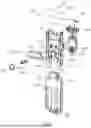
FIG. 5 is an exploded view of a partial structure of the carrycot in FIG. 2;
FIG. 6 is an exploded view of a partial structure of the carrycot in FIG. 3;
FIG. 7 is a perspective view of the carrycot in FIG. 2, with the folding mechanism in a sectional state; and
FIG. 8 is a perspective view of the carrycot in FIG. 3, with the folding mechanism is in the sectional state.
REFERENCE NUMERALS
-
- 1000: carrycot; 101: carrying space; 100: surrounding frame; 110: lateral surrounding rod; 120: transverse surrounding rod; 130: rotatable ring; 200: chassis; 210: rotation connecting portion; 300: folding mechanism; 310: first support member; 311: first connecting portion; 312: first pivoting portion; 313: inner cavity; 314: perforation; 315: guide hole; 320: second support member; 321: second connecting portion; 322: second pivoting portion; 323: engagement locking portion; 324: guide surface; 400: unlocking mechanism; 410: first operating member; 411: grip portion; 4111: operating surface; 412: driving portion; 413: pushing portion; 414: pressing portion; 420: second operating member; 430: second reset member; 500: grip; 600: locking member; 610: locking convex portion; 700: first reset member; F1: first direction; F2: second direction; F3: third direction; F4: fourth direction.
DETAILED DESCRIPTION
In order to make the aforementioned objects, features, and advantages of the present application more apparent and understandable, the specific embodiments of the present application are described below in detail with reference to the accompanying drawings. In the following description, numerous specific details are set forth to facilitate a thorough understanding of the present application. However, the present application may be implemented in many ways different from those described herein, those skilled in the art may make similar modifications without departing from the essence of the present application, and therefore, the present application is not limited to the specific embodiments disclosed below.
FIG. 1 shows a perspective view of a carrycot 1000 according to an embodiment of the present application. FIG. 2 and FIG. 3 show perspective views of the carrycot 1000 according to an embodiment of the present application from another perspective. The carrycot 1000 has a deployed state and a collapsed state. When the carrycot 1000 is in the deployed state, an infant can lie in the carrycot 1000 for resting, and when the carrycot 1000 is in the collapsed state, a volume of the carrycot 1000 is reduced to facilitate storage or transportation.
Referring to FIG. 1 to FIG. 4, in an embodiment, the carrycot 1000 may include, for example, a surrounding frame 100, a chassis 200, a folding mechanism 300, a locking member 600, and an unlocking mechanism 400. The folding mechanism 300 is connected between the surrounding frame 100 and the chassis 200. The folding mechanism 300 has an unfolded state and a folded state. As shown in FIG. 1 to FIG. 3, when the carrycot 1000 is in the deployed state, the folding mechanism 300 is in the unfolded state, and as shown in FIG. 4, when the carrycot 1000 is in the collapsed state, the folding mechanism 300 is in the folded state. It may also be regarded that when the folding mechanism 300 is in the unfolded state, the carrycot 1000 is correspondingly in the deployed state, and when the folding mechanism 300 is in the folded state, the carrycot 1000 is correspondingly in the collapsed state. In order to prevent a clamping injury to the infant caused by folding of the carrycot 1000 when the infant lies in the carrycot 1000, as shown in FIG. 5 to FIG. 8, the folding mechanism 300 is provided with a locking member 600. Specifically, the locking member 600 is movably provided on the folding mechanism 300 and has a detent position and a release position. As shown in FIG. 7, when the locking member 600 is in the detent position, the locking member 600 can lock the folding mechanism 300 in the unfolded state; in other words, the folding mechanism 300 in the unfolded state can be locked by the locking member 600, and the locking member 600 can keep the folding mechanism 300 in the unfolded state; that is, the locking member 600 can restrict the folding mechanism 300 in the unfolded state from switching to the folded state, so that the carrycot 1000 can be kept in the deployed state. As shown in FIG. 8, when the locking member 600 is in the release position, the locking member 600 can release the locking for the folding mechanism 300 in the unfolded state, so that the folding mechanism 300 can switch from the unfolded state to the folded state, and then the carrycot 1000 can switch to the collapsed state. In an embodiment, referring to FIG. 2, FIG. 3, and FIG. 6, the unlocking mechanism 400 is in driving fit with the locking member 600, and the unlocking mechanism 400 can be configured to control the locking member 600 to switch from the detent position to the release position, so that the locking for the folding mechanism 300 in the unfolded state by the locking member 600 can be released, and then the folding mechanism 300 is allowed to switch from the unfolded state to the folded state.
Specifically, the unlocking mechanism 400 can include a first operating member 410 and a second operating member 420. The first operating member 410 is movably provided on the folding mechanism 300 and has a lock position (see FIG. 2 and FIG. 7) and an unlock position (see FIG. 3 and FIG. 8). The first operating member 410 is in driving fit with the locking member 600. In other words, the first operating member 410 is configured to drive the locking member 600 to move. In particular, when the first operating member 410 is in the lock position, the locking member 600 is in the detent position; and when the first operating member 410 is in the unlock position, the locking member 600 is in the release position. Thus, a user can control a position of the locking member 600 by operating the first operating member 410 to control the folding mechanism 300 to switch between the unfolded state and the folded state. In order to improve the use reliability and safety of the carrycot 1000, and to prevent the folding mechanism 300 from accidentally folding due to an unintended touch of the first operating member 410 by the infant or user, the second operating member 420 is particularly provided. More specifically, the second operating member 420 is movably provided on the folding mechanism 300 and has a first position (see FIG. 2) and a second position (see FIG. 3). When the second operating member 420 is in the first position, the first operating member 410 is in the lock position, and in this case, the second operating member 420 is in the movement path of the first operating member 410 to restrict the first operating member 410 from moving from the lock position to the unlock position, thereby preventing the locking member 600 from switching from the detent position to the release position. When the second operating member 420 is in the second position, the second operating member 420 is displaced from the movement path of the first operating member 410 to allow the first operating member 410 to move from the lock position to the unlock position, thereby allowing the locking member 600 to switch from the detent position to the release position. Therefore, when the user does need to collapse the carrycot 1000, the user must first operate the second operating member 420 to move it out of the movement path of the first operating member 410, i.e., to release the restriction on the first operating member 410. Thereafter, the first operating member 410 can be operated normally to drive the locking member 600 to switch to the release position, thereby releasing the locking for the folding mechanism 300, and finally allowing the folding mechanism 300 to switch to the folded state to collapse the carrycot 1000. This two-step unlocking design significantly enhances the safety and reliability of the carrycot 1000 in use, and effectively prevents the accidental collapsing due to unintended touches, ensuring the safety of the infant.
In the carrycot 1000 described above, the folding mechanism 300 is connected between the surrounding frame 100 and the chassis 200. Since the folding mechanism 300 has the unfolded state and the folded state, when it switches between these two states, the surrounding frame 100 and the chassis 200 can be correspondingly driven closer together or further apart, enabling the flexible switching of the entire carrycot 1000 between the deployed state and the collapsed state. Specifically, when the carrycot 1000 needs to be used, only by adjusting the folding mechanism 300 to the unfolded state, the carrycot 1000 can automatically assumes the deployed state. Conversely, when the carrycot 1000 is not in use, by adjusting the folding mechanism 300 to the folded state, the carrycot 1000 can be collapsed into the collapsed state, thereby saving space.
It should be noted that in the above carrycot 1000, the surrounding frame 100 is located above the chassis 200 and is substantially parallel to the chassis 200. When the folding mechanism 300 is in the unfolded state, a carrying space 101 (see FIG. 1 and FIG. 2) is defined by the surrounding frame 100, the folding mechanism 300, and the chassis 200, and in this case, the carrycot 1000 can be used normally, and the infant can lie in the carrying space 101 for resting. When the folding mechanism 300 is in the folded state, the surrounding frame 100 and the chassis 200 get closer to each other, and in this case, the volume of the carrycot 1000 is reduced, and the carrycot 1000 can be made substantially flat for storage or transportation.
Referring to FIG. 1 and FIG. 2, in an embodiment, the surrounding frame 100 may be of an annular structure enclosed by a tubular member. The chassis 200 may also be of an annular structure enclosed by a tubular member. Alternatively, the chassis 200 may be of a plate-like structure, which forms a bottom wall of the carrying space 101 to stably carry the infant. A shape of the chassis 200 is substantially the same as that of the surrounding frame 100. For example, both the chassis 200 and the surrounding frame 100 may be substantially rectangular, circular, triangular, etc., which is not limited herein. Specifically, in the illustrated embodiment, the chassis 200 is of a substantially rectangular plate-like structure, and the surrounding frame 100 is of a substantially rectangular annular structure. The surrounding frame 100 includes two lateral surrounding rods 110 arranged opposite to each other, as well as two transverse surrounding rods 120 arranged opposite to each other and connected between the two lateral surrounding rods 110. The lateral surrounding rods 110 extend substantially in a first direction F1, and the transverse surrounding rods 120 extend substantially in a second direction F2. The first direction F1 is substantially perpendicular to the second direction F2. Specifically, the first direction F1 may be regarded as a front-rear direction of the carrycot 1000, and the second direction F2 may be regarded as a left-right direction of the carrycot 1000. More specifically, the two transverse surrounding rods 120 are each arranged at two ends of the lateral surrounding rods 110. In other words, the lateral surrounding rod 110 and transverse surrounding rod 120 adjacent to each other are connected by corresponding ends thereof.
It should be noted that, unless otherwise explicitly stated and defined, the orientation terms “front”, “rear”, “left”, “right”, and similar terms related to the carrycot 1000 in the embodiments of the present application are schematically illustrated in the drawings. The terms “front” and “rear” are indicated by arrows P and B, respectively, while “left” and “right” are indicated by arrows L and R, respectively. These orientation terms are used solely to make the description of the embodiments of the present application clearer, and are not intended to unduly limit the protection scope of the present application.
In an embodiment, the carrycot 1000 includes at least two folding mechanisms 300, for example, two, three, four, or more folding mechanisms 300. When the carrycot 1000 includes two folding mechanisms 300, in order to improve the structural stability of the carrycot 1000, the two folding mechanisms 300 are spaced apart in the front-rear direction or the left-right direction of the carrycot 1000. For example, the two folding mechanisms 300 are respectively connected between the two lateral surrounding rods 110 and the chassis 200; or alternatively, the two folding mechanisms 300 are respectively connected between the two transverse surrounding rods 120 and the chassis 200, which is not specifically limited herein. Specifically, in the illustrated embodiment, the carrycot 1000 includes four folding mechanisms 300, and each of the two lateral surrounding rods 110 and the two transverse surrounding rods 120 is connected to one folding mechanism 300.
Referring to FIG. 1 and FIG. 2, in an embodiment, the carrycot 1000 further includes a grip 500. The grip 500 is pivotally connected to the surrounding frame 100, allowing the user to conveniently carry the carrycot 1000 for easy movement. Specifically, two ends of the grip 500 may be respectively pivotally connected to the two lateral surrounding rods 110; certainly, in other embodiments, the two ends of the grip 500 may be respectively pivotally connected to the two transversal surrounding rods 120, which is not limited herein.
In an embodiment, a surrounding barrier (not shown in the drawings) may be connected between the chassis 200 and the surrounding frame 100, for example. The surrounding barrier may form a side wall of the carrying space 101. The surrounding barrier may be made of, for example, a flexible material. When the folding mechanism 300 is folded, the surrounding barrier is folded therewith; when the folding mechanism 300 is unfolded, the surrounding barrier is unfolded therewith to form the side wall of the carrying space 101. Optionally, a cloth cover (not shown in the drawings) may be wrapped around the surrounding frame 100 and/or the chassis 200, which not only shields the exposed surrounding frame 100 and the exposed chassis 200 for a better decorative effect, but also improves the comfort of the infant lying in the carrycot 1000.
Referring to FIG. 1 to FIG. 4 together, in an embodiment, the folding mechanism 300 includes a first support member 310 and a second support member 320 pivotally connected to each other. Specifically, an end of the first support member 310 away from the second support member 320 is connected to the surrounding frame 100, and an end of the second support member 320 away from the first support member 310 is connected to the chassis 200. More specifically, the end of the first support member 310 away from the second support member 320 is rotatably connected to the surrounding frame 100, and the end of the second support member 320 away from the first support member 310 is rotatably connected to the chassis 200. As such, when the first support member 310 pivots relative to the second support member 320 to get closer to the second support member 320 (i.e., switches from FIG. 3 to FIG. 4), that is, when the folding mechanism 300 switches from the unfolded state to the folded state, the first support member 310 can drive the surrounding frame 100 to gradually approach the chassis 200, causing the carrycot 1000 to switch to the collapsed state. When the first support member 310 pivots relative to the second support member 320 to move away from the second support member 320 (i.e., switches from FIG. 4 to FIG. 3), that is, when the folding mechanism 300 switches from the folded state to the unfolded state, the first support member 310 pushes the surrounding frame 100 to gradually move away from the chassis 200, causing the carrycot 1000 to switch to the deployed state.
It should be noted that, as shown in FIG. 1 to FIG. 3, when the folding mechanism 300 is in the unfolded state, the first support member 310 and the second support member 320 extend substantially along a same straight line, and an angle between the first support member 310 and the second support member 320 may be substantially 180°. When the folding mechanism 300 is in the folded state, the angle between the first support member 310 and the second support member 320 may be approximately 0° or greater than 0°, such as 10°, 20°, etc. It should be emphasized that the angle between the first support member 310 and the second support member 320 when the folding mechanism 300 is in the folded state is not limited herein; in other words, for example, the folding mechanism 300 can be considered to be in the folded state when the angle between the first support member 310 and the second support member 320 is 0°, 5°, 10° or 15°. It should be further noted that the folding mechanism 300 shown in FIG. 4 in the present application may be considered to be in the folded state; certainly, it may alternatively be considered to be in any transition state between the unfolded state and the folded state.
Referring to FIG. 5 to FIG. 8, in an embodiment, the locking member 600 is movably provided on one of the first support member 310 and the second support member 320. Correspondingly, the other of the first support member 310 and the second support member 320 is provided with an engagement locking portion 323. For example, the locking member 600 is movably provided on the first support member 310, and the engagement locking portion 323 is provided on the second support member 320. Alternatively, the locking member 600 is movably provided on the second support member 320, and the engagement locking portion 323 is provided on the first support member 310. The locking member 600 is configured to be locked and engaged with the engagement locking portion 323 to restrict the first support member 310 from pivoting relative to the second support member 320. Specifically, when the folding mechanism 300 is in the unfolded state and the locking member 600 is in the detent position, the locking member 600 is locked with the engagement locking portion 323 (see FIG. 7), and the first support member 310 is restricted from pivoting relative to the second support member 320, thereby keeping the folding mechanism 300 in the unfolded state. When the folding mechanism 300 is in the unfolded state and the locking member 600 is in the release position, the locking of the locking member 600 with the engagement locking portion 323 is released (see FIG. 8), and the first support member 310 is allowed to pivot relative to the second support member 320, thereby allowing the folding mechanism 300 to switch from the unfolded state to the folded state.
With continued reference to FIG. 5 to FIG. 8, in an embodiment, the first support member 310 and the second support member 320 may each have a substantially elongated cylindrical or plate-like structure. The first support member 310 includes a first connecting portion 311 and a first pivoting portion 312 connected to each other. The second support member 320 includes a second connecting portion 321 and a second pivoting portion 322 connected to each other. The first pivoting portion 312 and the second pivoting portion 322 are pivotally connected by a first pivot shaft (not shown in the drawings). The first connecting portion 311 is rotatably connected to the surrounding frame 100. The second connecting portion 321 is rotatably connected to the chassis 200. In this way, the first support member 310 is enabled to pivot relative to the second support member 320 around the first pivot shaft to drive the surrounding frame 100 and the chassis 200 to get closer to or further apart from each other.
It should be noted that the rotatable connection between the first connecting portion 311 and the surrounding frame 100 includes two implementations: first, the first connecting portion 311 is directly rotatably connected to the surrounding frame 100; and second, the first connecting portion 311 is indirectly rotatably connected to the surrounding frame 100. Specifically, in the illustrated embodiment, as shown in FIG. 5 and FIG. 6, a rotatable ring 130 is sleeved onto the surrounding frame 100 and can revolve relative to the surrounding frame 100, and the first connecting portion 311 is fixedly connected to the rotatable ring 130, so that the first connecting portion 311 can rotate relative to the surrounding frame 100. Similarly, the rotatable connection between the second connecting portion 321 and the chassis 200 also includes two implementations: first, the second connecting portion 321 is directly rotatably connected to the chassis 200; and second, the second connecting portion 321 is indirectly rotatably connected to the chassis 200. Specifically, in the illustrated embodiment, as shown in FIG. 5 and FIG. 6, a rotation connecting portion 210 is provided on the chassis 200, and the second connecting portion 321 is pivotally connected to the rotation connecting portion 210 through a second pivot shaft (not shown in the drawings), so that the second connecting portion 321 can rotate relative to the chassis 200.
In the illustrated embodiment, as shown in FIG. 6 to FIG. 8, the locking member 600 is movably provided on the first support member 310 and has the detent position and the release position on the first support member 310, and the engagement locking portion 323 is provided on the second support member 320. Specifically, the first support member 310 is provided with an inner cavity 313, and the locking member 600 is movably provided within the inner cavity 313. In addition, the first pivoting portion 312 of the first support member 310 is provided with a perforation 314 in communication with the inner cavity 313. Specifically, the engagement locking portion 323 is provided on the second pivoting portion 322 of the second support member 320, and may be of a concave structure (such as a groove or a hole structure). The locking member 600 is provided with a locking convex portion 610. The locking convex portion 610 moves with the locking member 600 and can extend through the perforation 314 into the engagement locking portion 323. Specifically, when the locking member 600 moves to allow the locking convex portion 610 to extend through the perforation 314 into the engagement locking portion 323 for locking and engagement (see FIG. 7), the locking member 600 is locked with the engagement locking portion 323, so that the first support member 310 and the second support member 320 are locked by the locking member 600, equivalent to that, the first support member 310 is restricted from pivoting relative to the second support member 320 around the first pivot shaft, and in this case, the folding mechanism 300 is restricted from switching from the unfolded state to the folded state, in other words, the folding mechanism 300 can be kept in the unfolded state. It should be noted that the detent position refers to a position of the locking member 600 within the inner cavity 313, where the locking convex portion 610 extends into the engagement locking portion 323. When the locking member 600 moves to allow the locking convex portion 610 to exit the engagement locking portion 323 for releasing the lock (see FIG. 8), the locking of the locking member 600 with the engagement locking portion 323 is released, so that the locking between the first support member 310 and the second support member 320 can be regarded as being released, equivalent to that, the first support member 310 is allowed to pivot relative to the second support member 320 around the first pivot shaft, and in this case, the folding mechanism 300 can switch from the unfolded state to the folded state. It should be noted that the release position refers to a position of the locking member 600 within the inner cavity 313, where the locking convex portion 610 exits the engagement locking portion 323.
In order to facilitate the user to control the locking member 600 to move from the detent position to the release position to switch the folding mechanism 300 to the folded state, the present application presents the following design. Referring to FIG. 2 and FIG. 3 again, in an embodiment, the first operating member 410 is movably provided on the first support member 310 and has the lock position (see FIG. 2) and the unlock position (see FIG. 3) on the first support member 310. The second operating member 420 is movably provided on the first support member 310 and has the first position (see FIG. 2) and the second position (see FIG. 3) on the first support member 310. In other words, both the first operating member 410 and the second operating frame 420 are provided on the first support member 310. Consequently, the user can drive each of the first operating member 410 and the second operating member 420 to move in a one-handed operation mode (the operation process can be referenced in the following description), thereby enhancing the convenience of operating the carrycot 1000. It should be noted that, in other embodiments, when the locking member 600 is provided on the second support member 320, both the first operating member 410 and the second operating member 420 are adapted to being provided on the second support member 320.
In the illustrated embodiment, the movement path of the second operating member 420 intersects with the movement path of the first operating member 410. Specifically, the movement paths are perpendicular to each other. More specifically, the movement path of the first operating member 410 is substantially parallel to a length extension direction of the first support member 310, and the movement path of the second operating member 420 is substantially perpendicular to the length extension direction of the first support member 310.
Referring to FIG. 6 and FIG. 7, in an embodiment, the first support member 310 is provided with a guide hole 315 in communication with the inner cavity 313. Specifically, the guide hole 315 extends in a movement direction of the locking member 600 and the first operating member 410. The first operating member 410 has a grip portion 411 and a driving portion 412 connected to each other. The driving portion 412 is configured to be connected to the locking member 600 through the guide hole 315. The grip portion 411 protrudes outward from the first support member 310 to facilitate user gripping. The user can grasp the grip portion 411 and push or pull the grip portion 411 to activate the first operating member 410 to drive the locking member 600 to move.
Referring to FIG. 6 to FIG. 8, in an embodiment, the folding mechanism 300 further includes a first reset member 700. The first reset member 700 may be an elastic member such as a spring and an elastic sheet, and is mainly configured to provide the locking member 600 with an elastic restoring force that biases it towards the detent position. Specifically, the first reset member 700 is mainly configured to provide the locking convex portion 610 with a constant tendency to be inserted into the engagement locking portion 323, thereby allowing the locking member 600 to maintain the locking of the folding mechanism 300. In the illustrated embodiment, the first reset member 700 is a compressed spring, which is provided within the inner cavity 313 of the first support member 310. One end of the compressed spring abuts against a cavity wall of the inner cavity 313, and the other end of the compressed spring abuts against the locking member 600. The compressed spring is configured to keep the locking member 600 in the detent position. In this way, the reliability and stability of the locking convex portion 610 extending into the engagement locking portion 323 can be enhanced, thereby improving the overall reliability of the folding mechanism 300 in the unfolded state. Additionally, the locking member 600 can be automatically reset to the detent position under the action of the first reset member 700.
In an embodiment, as shown in FIG. 6, the unlocking mechanism 400 further includes a second reset member 430. The second reset member 430 may also be, for example, an elastic member such as a spring and an elastic sheet, and is mainly configured to provide the second operating member 420 with an elastic restoring force that biases it towards the first position to keep the second operating member 420 in the first position. In this way, the second operating member 420 can limit the movement of the first operating member 410, and prevent the user or infant from unintended touching the first operating member 410, improving the use reliability and safety of the carrycot 1000. Specifically, in the illustrated embodiment, the second reset member 430 is a compressed spring that abuts between the second operating member 420 and the first support member 310 and configured to keep the second operating member 420 in the first position.
Referring to FIG. 2, FIG. 3 and FIG. 6, in an embodiment, a pushing portion 413 is provided on the first operating member 410, and the pushing portion 413 is adapted to abut against the second operating member 420. Specifically, when the second operating member 420 is in the first position, the pushing portion 413 abuts against the second operating member 420, so that the first operating member 410 is restricted from moving and is kept in the lock position. This design ensures that the first operating member 410 does not inadvertently move to the unlock position due to accidental touch without any action (such as pressing) on the second operating member 420, thereby avoiding the risk of the folding mechanism 300 being accidentally unlocked and switching to the folded state.
Referring to FIG. 6, in an embodiment, the second operating member 420 is of a columnar structure such as a cylinder, a triangular column, or other polygonal columns, which extends along the movement path of the second operating member 420. The pushing portion 413 is a notch that can match an outer peripheral wall of the columnar structure. Specifically, in the illustrated embodiment, the second operating member 420 has a cylindrical shape, however, due to its short length, the second operating member 420 can also be regarded as a disk, and the outer peripheral wall of the second operating member 420 is a circular outer wall. Correspondingly, a side wall of the notch is of an arc-shaped structure, and when the second operating member 420 abuts against the pushing portion 413, the circular outer wall of the second operating member 420 can be fitted snugly against the side wall of the notch.
It should be noted that, in the illustrated embodiment, as shown in FIG. 1 and FIG. 2, the pushing portion 413 is a notch formed in the circumferential side wall of the first operating member 410. When the second operating member 420 is in the first position, the second operating member 420 is positioned at the outer periphery of the first operating member 410 and abuts against the pushing portion 413, and the second operating member 420 is independent of the first operating member 410. This design allows the user to conveniently operate the second operating member 420 and the first operating member 410 with one hand, thereby enhancing the folding convenience of the carrycot 1000.
Referring to FIG. 2 and FIG. 3, in an embodiment, when the folding mechanism 300 is in the folded state, the first operating member 410 presses against the second operating member 420 to keep the second operating member 420 in the second position. Specifically, the first operating member 410 further includes a pressing portion 414, and the pressing portion 414 can be in press fit with the second operating member 420 to keep the second operating member 420 in the second position. Specifically, the pressing portion 414 is located at a side of the first operating member 410 proximate to the second operating member 420. More specifically, the pushing portion 413 is a notch formed at a side wall of the pressing portion 414; in other words, the pushing portion 413 may also be regarded as a side wall of the pressing portion 414. In the illustrated embodiment, a sum of a size of the second operating member 420 along the movement path of the first operating member 410 and a size of the pressing portion 414 along the movement path of the first operating member 410 is greater than a distance of the first operating member 410 moving from the lock position to the unlock position. Specifically, in the illustrated embodiment, referring to FIG. 2 and FIG. 3, taking the folding mechanism 300 in the unfolded state as an example, the movement direction of the first operating member 410 is referred to as a third direction F3, and a direction perpendicular to the movement path of the first operating member 410 is referred to as a fourth direction F4. In the illustrated embodiment, the second operating member 420 is in a disk shape, with its size in the third direction F3 referred to as a first height, the value of which varies in the fourth direction F4. Likewise, a size of the pressing portion 414 in the third direction F3 is referred to as a second height, and since the pressing portion 414 has an irregular shape, a value of the second height also varies in the fourth direction F4. More specifically, in the illustrated embodiment, a line parallel to the third direction F3 and passing through a circle center of the second operating member 420 is referred to as a virtual baseline S. Specifically, a first end of the pressing portion 414 in the fourth direction F4 coincides with the virtual baseline S. Therefore, taking the virtual baseline S as a reference, the aforementioned size of the second operating member 420 along the movement path of the first operating member 410 can be regarded as a first height of the second operating member 420 along the virtual baseline S, i.e., a diameter of the second operating member 420, which can be represented by D, and the aforementioned size of the pressing portion 414 along the movement path of the first operating member 410 can be regarded as a second height of the pressing portion 414 along the virtual baseline S, which can be represented by H. The distance of the first operating member 410 moving from the lock position to the unlock position is represented by L, so D+H>L. As such, when the first operating member 410 is in the unlock position, it can be ensured that the first operating member 410 presses against the second operating member 420 to keep the second operating member in the second position, thereby avoiding that the second operating member 420 is released from the pressed abutment with the pressing portion 414 of the first operating member 410 and reset to the first position under an acting force of the second reset member 430, and then avoiding interference with the first operating member 410 which may inhibit the first operating member 410 from being reset to the lock position and the locking member 600 from being reset to the detent position.
Certainly, in other embodiments, the sum of the size of the second operating member 420 along the movement path of the first operating member 410 and the size of the pressing portion 414 along the movement path of the first operating member 410 may be less than or equal to the distance of the first operating member 410 moving from the lock position to the unlock position, that is, D+H≤L. In this case, when the first operating member 410 is in the unlock position, the second operating member 420 is released from the pressed abutment with the pressing portion 414 of the first operating member 410, and the second operating member 420 is automatically reset to the first position under the elastic restoring force of the second reset member 430 such that it is positioned on the movement path of the first operating member 410. As a result, the second operating member 420 can restrict the first operating member 410 in the unlock position, thereby keeping the locking member 600 in the release position. When the user needs to reset the locking member 600 to the detent position, i.e., to reset the first operating member 410 to the lock position, the user needs to first operate (e.g., press) the second operating member 420 to move the second operating member 420 to the second position (even if the second operating member 420 is moved out of the path of the first operating member 410), so that the first reset member 700 can drive the locking member 600 to be automatically reset and then drive the first operating member 410 to be reset to the lock position.
The process and principle of flexible switching of the carrycot 1000 between the deployed state and the collapsed state is briefly described below in conjunction with the related figures.
Referring to FIG. 1 to FIG. 3, when the carrycot 1000 is in the deployed state, the folding mechanism 300 is correspondingly in the unfolded state. In this case, the first support member 310 and the second support member 320 are substantially located on the same straight line, and the first support member 310 and the second support member 320 act as a support between the surrounding frame 100 and the chassis 200, forming the carrying space 101 for the infant to lie. In this case, as shown in FIG. 7, the first operating member 410 is in the lock position, the second operating member 420 is in the first position, and the second operating member 420 can abut against the pushing portion 413 of the first operating member 410 to restrict the movement of the first operating member 410. Meanwhile, the locking convex portion 610 of the locking member 600 within the inner cavity 313 of the first support member 310 extends through the perforation 314 and is inserted into the engagement locking portion 323 of the second support member 320 to restrict the first support member 310 from pivoting relative to the second support member 320. Thus, the folding mechanism 300 can be stably kept in the unfolded state.
In an embodiment, the grip portion 411 includes an operating surface 4111 (referring to FIG. 2 and FIG. 7) adapted to being operated (e.g., pushed) by the user. Specifically, when the locking member 600 locks the folding mechanism 300 in the unfolded state, the first operating member 410 is in the lock position and the second operating member 420 is in the first position, and the operating surface 4111 is located behind the second operating member 420 in the moving direction of the first operating member 410 from the lock position to the unlock position. Therefore, when the user needs to switch the carrycot 1000 from the deployed state to the collapsed state, as shown in FIG. 2, the user first presses the second operating member 420 with the thumb or the index finger to move the second operating member 420 to the second position. Subsequently, the user pushes the operating surface 4111 of the grip portion 411 upwards with the index finger or the middle finger to move the first operating member 410 to the unlock position (switching from FIG. 2 to FIG. 3). During the first operating member 410 moving from the lock position to the unlock position, the driving portion 412 of the first operating member 410 drives the locking member 600 to move from the detent position to the release position (switching from FIG. 7 to FIG. 8), and once the locking convex portion 610 of the locking member 600 is disengaged from the engagement locking portion 323 of the second support member 320, the first support member 310 can pivot relative to the second support member 320 around the first pivot shaft, causing the folding mechanism 300 to switch to the folded state and then causing the carrycot 1000 collapsed (switching from FIG. 3 to FIG. 4).
It should be noted that, in case that the carrycot 1000 is in the deployed state and the folding mechanism 300 is correspondingly in the unfolded state, when the user releases the pushing force or pulling force applied to the operating surface 4111 of the grip portion 411 of the first operating member 410, the locking member 600 is automatically reset to the detent position due to the elastic restoring force of the first reset member 700, the first operating member 410 is reset to the lock position by moving with the locking member 600, and the second operating member 420 is automatically reset to the first position and abuts against the pushing portion 413 of the first operating member 410 again due to the elastic restoring force of the second reset member 430.
Referring to FIG. 7 and FIG. 8, in the illustrated embodiment, the second pivoting portion 322 of the second support member 320 is provided with a guide surface 324. The guide surface 324 is arc-shaped and located at an outer periphery of the engagement locking portion 323. After the locking convex portion 610 of the locking member 600 is disengaged from the engagement locking portion 323, and the first support member 310 rotates around the first pivot shaft relative to the second support member 320 to cause the folding mechanism 300 to switch to the folded state, when the user releases the first operating member 410, the locking member 600 automatically abuts against the guide surface 324 due to the elastic restoring force of the first reset member 700, and in this case, the locking member 600 is in a position between the detent position and the release position, and in this case, the first operating member 410 can still press against the second operating member 420 to keep the second operating member 420 in the second position. When the folding mechanism 300 is in the folded state, the locking member 600 still abuts against the guide surface 324 due to the elastic restoring force of the first reset member 700, the locking member 600 is still in a position between the lock position and the unlock position, and the first operating member 410 can still press against the second operating member 420. In this case, when the user needs to switch the carrycot 1000 from the collapsed state to the deployed state, the user can directly lift the surrounding frame 100 upwards to drive the first support member 310 to rotate around the first pivot shaft, and the locking member 600 can automatically make ways (i.e., move to the release position) due to the cooperation between the arc-shaped guide surface 324 and the first reset member 700. When the first support member 310 is rotated to cause the locking convex portion 610 to be opposite to the engagement locking portion 323, the first reset member 700 drives the locking member 600 to be reset, so that the locking convex portion 610 is inserted into the engagement locking portion 323 to achieve locking.
Optionally, in other embodiments, the above guide surface 324 may be omitted, and in this case, the locking member 600 can be automatically reset to the detent position due to the elastic restoring force of the first reset member 700 after the user releases the first operating member 410. Based on this, when the folding mechanism 300 is in the folded state, the locking member 600 is reset to the detent position, and the second operating member 420 is reset to the first position to abut against the pushing portion 413 of the first operating member 410 due to the elastic restoring force of the second reset member 430. In this case, when the user needs to switch the carrycot 1000 from the collapsed state to the deployed state, the user needs to first press the second operating member 420 with the thumb or the index finger to move the second operating member 420 to the second position. Subsequently, the user pushes the grip portion 411 of the first operating member 410 upwards with the index finger or the middle finger to move the first operating member 410 to the unlock position. During the first operating member 410 moving from the lock position to the unlock position, the driving portion 412 of the first operating member 410 drives the locking member 600 to move to cause the locking convex portion 610 of the locking member 600 to be retracted into the inner cavity 313. Thus, the locking convex portion 610 can be prevented from interfering with the second support member 320, allowing the first support member 310 to be fully unfolded relative to the second support member 320. When the engagement locking portion 323 of the second support member 320 is opposite to the locking convex portion 610, the user can directly release the first operating member 410. The locking member 600 can be automatically moved from the release position to the detent position due to the acting force of the first reset member 700, so that the locking convex portion 610 is inserted into the engagement locking portion 323.
The technical features of the above-mentioned embodiments can be combined arbitrarily. In order to make the description concise, not all possible combinations of the technical features of the embodiments are described. However, as long as there is no contradiction in the combinations of these technical features, the combinations should be considered as in the scope of the specification.
The above-described embodiments are only several implementations of the present application, and the descriptions are relatively specific and detailed, but they should not be construed as limiting the scope of the present application. It should be understood by those of ordinary skill in the art that various modifications and improvements can be made without departing from the concept of the present application, and all fall within the protection scope of the present application. Therefore, the protection scope of the present application should be subject to the appended claims.
Claims
1. A carrycot, comprising:
a surrounding frame;
a chassis;
a folding mechanism connected between the surrounding frame and the chassis and having an unfolded state and a folded state;
a locking member movably provided on the folding mechanism and having a detent position and a release position, wherein when the locking member is in the detent position, the locking member locks the folding mechanism in the unfolded state, and when the locking member is in the release position, the locking member unlocks the folding mechanism in the unfolded state to allow the folding mechanism to switch from the unfolded state to the folded state; and
an unlocking mechanism comprising a first operating member and a second operating member;
wherein the first operating member is movably provided on the folding mechanism and has a lock position and an unlock position; the first operating member is configured to drive the locking member to move; when the first operating member is in the lock position, the locking member is in the detent position, and when the first operating member is in the unlock position, the locking member is in the release position;
wherein the second operating member is movably provided on the folding mechanism and has a first position and a second position; when the second operating member is in the first position, the first operating member is in the lock position, and the second operating member is in a movement path of the first operating member to restrict the first operating member from moving from the lock position to the unlock position; and when the second operating member is in the second position, the second operating member is displaced from the movement path of the first operating member to allow the first operating member to move from the lock position to the unlock position.
2. The carrycot according to claim 1, wherein the first operating member is provided with a pushing portion, and when the second operating member is in the first position, the pushing portion abuts against the second operating member.
3. The carrycot according to claim 1, wherein the first operating member comprises a pressing portion, the pressing portion is configured to press against the second operating member to keep the second operating member in the second position, and a sum of a size of the second operating member along the movement path of the first operating member and a size of the pressing portion along the movement path of the first operating member is greater than a moving distance of the first operating member from the lock position to the unlock position.
4. The carrycot according to claim 1, wherein when the folding mechanism is in the folded state, the first operating member presses against the second operating member to keep the second operating member in the second position.
5. The carrycot according to claim 1, wherein:
a movement path of the second operating member intersects with the movement path of the first operating member; and/or
the second operating member is located at an outer periphery of the first operating member and independent of the first operating member.
6. The carrycot according to claim 1, wherein the first operating member has an operating surface adapted to be operated, and when the first operating member is in the lock position and the second operating member is in the first position, the operating surface is located behind the second operating member in a moving direction of the first operating member from the lock position to the unlock position.
7. The carrycot according to claim 1, wherein the folding mechanism comprises:
a first support member connected to the surrounding frame; and
a second support member connected to the chassis and pivotally connected to the first support member;
wherein one of the first support member and the second support member is provided with an engagement locking portion, and the locking member is movably provided on another one of the first support member and the second support member; when the folding mechanism is in the unfolded state and the locking member is in the detent position, the locking member is locked with the engagement locking portion to restrict the first support member from pivoting relative to the second support member, and when the folding mechanism is in the unfolded state and the locking member is in the release position, the locking member is unlocked with the engagement locking portion to allow the first support member to pivot relative to the second support member.
8. The carrycot according to claim 7, wherein both the first operating member and the second operating member are provided on either the first support member or the second support member that has the locking member.
9. The carrycot according to claim 7, wherein:
the locking member is provided with a locking convex portion, and the engagement locking portion is of a concave structure;
when the locking convex portion extends into the engagement locking portion, the locking member is locked with the engagement locking portion;
when the locking convex portion is withdrawn from the engagement locking portion, the locking member is unlocked with the engagement locking portion.
10. The carrycot according to claim 9, further comprising a first reset member, wherein:
the first reset member provides the locking member with an elastic restoring force that biases the locking member towards the detent position;
the first support member or the second support member that has the engagement locking portion is provided with a guide surface, and the guide surface is located at an outer periphery of the engagement locking portion and is arc-shaped; and
when the folding mechanism is in the folded state, the locking convex portion abuts against the guide surface due to the elastic restoring force applied to the locking member by the first reset member, so that the locking member is located between the lock position and the unlock position, and the first operating member presses against the second operating member to keep the second operating member in the second position.
11. The carrycot according to claim 2, wherein the second operating member is of a columnar structure extending along a movement path of the second operating member, and the pushing portion is a notch configured to match an outer peripheral wall of the columnar structure.
12. The carrycot according to claim 1, wherein the unlocking mechanism further comprising a second reset member, and the second reset member provides the second operating member with an elastic restoring force that biases the second operating member towards the first position.
13. The carrycot according to claim 7, wherein when the folding mechanism is in the unfolded state, the first support member and the second support member extend substantially along a same straight line.
14. The carrycot according to claim 7, wherein:
the first support member comprises a first connecting portion and a first pivoting portion connected to each other;
the second support member comprises a second connecting portion and a second pivoting portion connected to each other;
the first pivoting portion and the second pivoting portion are pivotally connected to each other; and
the first connecting portion is rotatably connected to the surrounding frame, and the second connecting portion is rotatably connected to the chassis.
15. The carrycot according to claim 14, wherein a rotatable ring is sleeved onto the surrounding frame and configured to revolve relative to the surrounding frame, and the first connecting portion is fixedly connected to the rotatable ring.
16. The carrycot according to claim 14, wherein a rotation connecting portion is provided on the chassis, and the second connecting portion is pivotally connected to the rotation connecting portion.
17. The carrycot according to claim 7, wherein:
the first support member is provided with an inner cavity, and the locking member is movably provided within the inner cavity;
the first pivoting portion of the first support member is provided with a perforation in communication with the inner cavity;
the engagement locking portion is provided on the second pivoting portion of the second support member; and
the locking member is configured to pass through the perforation to be locked with the engagement locking portion.
18. The carrycot according to claim 17, wherein the engagement locking portion is of a concave structure, the locking member is provided with a locking convex portion, and the locking convex portion is configured to move with the locking member to pass through the perforation to engage with the engagement locking portion.
19. The carrycot according to claim 17, wherein:
the first support member is provided with a guide hole in communication with the inner cavity; and
the first operating member has a grip portion and a driving portion connected to each other, the driving portion is connected to the locking member through the guide hole, and the grip portion protrudes outward from the first support member.
20. The carrycot according to claim 7, wherein the movement path of the first operating member is substantially parallel to a length extension direction of the first support member, and the movement path of the second operating member is substantially perpendicular to the length extension direction of the first support member.
Images & Drawings included:




Sources:
- United States Patent and Trademark Office - verify current appl. status at the USPTO↗
Similar patent applications:
- » 20250185822
CARRYCOT COVER AND CARRYCOT INCLUDING THE CARRYCOT COVER - » 20070246976
Device for removably fitting to prams carrycot seats and carrycots being provided with an articulated handle - » 10752941
Device for removably fitting carrycot seats and carrycots to baby carriages - » 20120180927
METHOD FOR MANUFACTURING THE BODY OF BABY CARRIERS, CARRYCOTS AND THE LIKE - » 20220346569
MULTI-FUNCTIONAL BABY CARRYCOT - » 20230033051
SUPPORT PLATE AND CARRYCOT USING THE SAME - » 20230165386
Carrycot with coupler for attaching to a carriage, stand, or other support structure - » 20230182625
CARRYCOT TO BE DETACHABLY MOUNTED ON A BASE BEING DISMOUNTABLY ATTACHED IN A VEHICLE OR ON A STROLLER FRAME - » 20230182626
CARRYCOT TO BE DETACHABLY MOUNTED ON A BASE BEING DISMOUNTABLY ATTACHED IN A VEHICLE OR ON A STROLLER FRAME - » 20250196733
AUTOMOBILE SAFETY SEAT AND ASSEMBLING AND DISASSEMBLING METHOD FOR CARRYCOT THEREOF, AND CHILD STROLLER
Recent applications in this class:
- » 20250375047 2025-12-11
CHILD CARRIER HAVING RETRACTABLE SHIELDING STRUCTURE AND AUXILIARY HEADREST ACCESSORY - » 20250268395 2025-08-28
Child Carrying Backpack Device - » 20250185822 2025-06-12
CARRYCOT COVER AND CARRYCOT INCLUDING THE CARRYCOT COVER - » 20240374051 2024-11-14
CHILD CARRIER - » 20240268571 2024-08-15
FOLDING MECHANISM - » 20240164549 2024-05-23
BABY CARRIER AND LOCKING MECHANISM THEREOF - » 20240000241 2024-01-04
FOLDABLE CARRY COT WITH CUSHION - » 20230135777 2023-05-04
Carrying device with a weight distribution support - » 20230057379 2023-02-23
FOLDABLE CHILD CARRIER - » 20230033051 2023-02-02
SUPPORT PLATE AND CARRYCOT USING THE SAME