METHOD FOR MANUFACTURING ALUMINUM BASE MATERIAL
US20260085380A1
2026-03-26
19/103,438
2023-07-27
Smart Summary: A new method creates aluminum-based particles using molten salt. By mixing aluminum foil with molten salt, liquid aluminum particles are formed. This process can easily produce aluminum powder with specific sizes by sorting the particles afterward. The aluminum foil used is very thin, often less than 0.5 mm, and is shredded into small pieces before being added to the salt. A mixture of sodium chloride and potassium chloride is recommended as the molten salt for this process. 🚀 TL;DR
Abstract:
A manufacturing method can obtain Al-based particles. A particle-dispersed molten salt (an example of an Al base material), in which Al-based particles (liquid phase) are dispersed in molten salt, can be obtained by bringing Al-based foil into contact with molten salt. Through particle-dispersed molten salt, for example, Al-based powder (an example of Al base material) composed of Al-based particles (solid phase) can be efficiently or easily obtained. By classifying Al-based particle groups, Al-based powder with a desired particle size distribution can be obtained. The Al-based foil has a thickness of, for example, at most 0.5 mm, and even 0.1 mm. The Al-based foil is supplied to molten salt in the form of shredded foil pieces. This allows Al-based powder to be obtained with a particle size distribution including fine particles. It is preferred to use, for example, a mixed salt containing NaCl and KCl as molten salt.
Inventors:
- Jun YAOKAWA 18 🇯🇵 Nagakute-shi, Japan
- Kazuma HIBI 9 🇯🇵 Nagakute-shi, Japan
- Takuma MINOURA 7 🇯🇵 Nagakute-shi, Japan
- Wataru TAKANO 1 🇯🇵 Nagoya-shi, Japan
- Shunsuke TAKASU 1 🇯🇵 Tahara-shi, Japan
Assignee:
- KABUSHIKI KAISHA TOYOTA CHUO KENKYUSHO 67 🇯🇵 Nagakute-shi, Aichi-ken, Japan
- TOYOTA TSUSHO CORPORATION 1 🇯🇵 Nagoya-shi, Aichi-ken, Japan
Applicant:
Interested in similar patents?
Get notified when new applications in this technology area are published.
Classification:
C22B21/062 » CPC main
Obtaining aluminium refining using salt or fluxing agents
B22F9/04 » CPC further
Making metallic powder or suspensions thereof using physical processes starting from solid material, e.g. by crushing, grinding or milling
C22B7/004 » CPC further
Working up raw materials other than ores, e.g. scrap, to produce non-ferrous metals and compounds thereof; Methods of a general interest or applied to the winning of more than two metals; Dry processes separating two or more metals by melting out (liquation), i.e. heating above the temperature of the lower melting metal component(s); by fractional crystallisation (controlled freezing)
C22C1/0416 » CPC further
Making alloys by powder metallurgy; Light metal alloys Aluminium-based alloys
C22B21/06 IPC
Obtaining aluminium refining
C22B7/00 IPC
Working up raw materials other than ores, e.g. scrap, to produce non-ferrous metals and compounds thereof; Methods of a general interest or applied to the winning of more than two metals
C22C1/04 IPC
Making alloys by powder metallurgy
Description
TECHNICAL FIELD
The present invention relates to a method for manufacturing aluminum base materials.
BACKGROUND ART
Pure aluminum (Al) and Al alloys are used in various products and fields. For example, Al-based particles (powders) composed of pure Al or Al alloys are used as raw materials for composites (fillers such as thermally conductive fillers and electrically conductive fillers or host materials), raw materials for sintering, raw materials for chemical reactions (such as thermite reactants), and pigments, etc.
In general, Al-based powders are manufactured by spraying Al-based molten metal (atomization method), dispersing Al-based molten metal (melt-spin method), scattering Al-based molten metal (melt-extraction method), crushing Al-based pieces (ball mill method, attritor method), etc., as described in Non-patent Document 1 below. Furthermore, in recent years, methods for manufacturing Al-based particles using molten salt have also been proposed, and related descriptions are found in the following patent documents.
PRIOR ART DOCUMENTS
Patent Documents
Patent Document 1: JP2016-191148A
Patent Document 2: JP2009-215569A
Patent Document 3: JP2017-20062A
Patent Document 4: Japanese translation of PCT international application, No. 2018-511776
Patent Document 5: Japanese translation of PCT international application, No. 2019-502890
Non-Patent Documents
Non-patent Document 1: Osamu IWAO, Production processes of aluminum and its alloy powders, Journal of Japan Institute of Light Metals (1987) 646-655
SUMMARY OF INVENTION
Technical Problem
In Patent Document 1, aluminum chloride molten salt is injected into molten sodium to obtain aluminum particles coated with sodium chloride. Metallic sodium, which is a reducing agent, is difficult to use from the standpoint of safety, cost, etc.
In Patent Document 2, metal A particles are subjected to a substitution reaction with ions of metal B, which is more noble than metal A, in a molten salt serving as a reaction medium, to obtain alloy particles in which metal B precipitates and diffuses into metal A particles. Patent Document 2, however, does not include any specific description of Al-based particles.
Patent Documents 3 to 5 include descriptions of dissolution methods using molten salts. None of the patent documents include any specific description of Al-based particles.
The present invention has been made in view of such circumstances, and objects of the present invention include providing a method for obtaining aluminum-based particles by a novel method different from the conventional methods and providing relevant techniques.
Solution to Problem
As a result of intensive studies to achieve the above object, the present inventors have newly found that when Al-based foil is put into a molten salt (reservoir), it becomes dispersed particles (liquid phase) rather than becoming an aggregated molten metal (agglomerate). Developing this discovery, the present inventors have accomplished the present invention, which will be described below.
«Method for Manufacturing Aluminum Base Material»
(1) The present invention provides a method for manufacturing an aluminum base material, comprising bringing an aluminum-based foil into contact with a molten salt to obtain aluminum-based particles.
The present invention may also provide, for example, a method manufacturing an aluminum base material, comprising: a melting step of putting an aluminum-based foil in a molten salt layer to melt the foil; and a collecting step of collecting aluminum-based particles obtained after the melting step.
(2) According to the manufacturing method of the present invention, aluminum-based particles (Al-based particles) or an aluminum base material (Al base material) based on Al-based particles can be obtained easily, efficiently, or with a high yield.
Incidentally, the standard free energy of formation when a representative metal element (e.g., Na, K, Mg, Ca, etc./specific metal element) constituting a molten salt becomes a halide (e.g., chloride, bromide, etc.) is much smaller than the standard free energy of formation when Al becomes an oxide. Therefore, according to the manufacturing method of the present invention, Al-based particles are obtained from which at least a part of the oxide (oxide film on the surface, etc.) present on the aluminum-based foil (Al-based foil) is removed (reduced). In addition, provided that the Al-based particles are in a state of being surrounded by the molten salt or its solidified salt (including film-like one), the Al-based particles are in a state in which oxidation is suppressed. Thus, according to the manufacturing method of the present invention, refined Al-based particles that do not contain oxides or the like can also be obtained.
Furthermore, the Al-based particles (liquid phase) obtained from the Al-based foil are readily spheroidized in the molten salt. Therefore, according to the manufacturing method of the present invention, an Al base material composed of Al-based particles with uniform particle shape (spheroidized) can also be obtained.
«Al-Based Particles/Al Base Material»
(1) The Al-based particles may be in a liquid-phase state, a solid phase state, or a solid-liquid coexistence state (semi-molten state).
Al-based molten metal obtained from a particle group in which liquid-phase Al-based particles are aggregated (collected) or from the bond (connection) thereof can be one form of the Al base material. Specifically, the Al-based particles may be liquid-phase particles, and the Al-based molten metal obtained from these liquid-phase particles may also be perceived as the Al base material according to the present invention.
Al-based powder obtained from a particle group in which solid-phase Al-based particles are aggregated (collected) can also be one form of the Al base material. Specifically, the Al-based particles may be solid-phase particles obtained by solidifying liquid-phase particles, and the Al-based powder obtained from these solid-phase particles may also be perceived as the Al base material according to the present invention.
(2) The Al-based particles may not have to be in a state of being segregated (separated, extracted, collected, recovered, etc.) from the molten salt or its solidified salt. In other words, a substance in which the Al-based particles coexist with the molten salt and/or the solidified salt can also be one form of the Al base material.
For example, the Al-based particles may be liquid-phase particles, and a particle-dispersed molten salt in which these liquid-phase particles are dispersed in the molten salt may also be perceived as the Al base material. In addition, the Al-based particles may be solid-phase particles obtained by solidifying liquid-phase particles, and the particle-dispersed solidified salt formed by dispersing the solid-phase particles in the solidified salt obtained by solidifying the molten salt may also be perceived as the Al base material. Furthermore, for example, the type (temperature) of the molten salt may be adjusted, and a particle-dispersed molten salt in which solid-phase particles of the Al-based particles are dispersed in the molten salt can also be perceived as the Al base material.
The particle-dispersed molten salt or the particle-dispersed solidified salt may be perceived as an independent trading object, or as a temporary (provisional) intermediate (such as intermediate raw material) for obtaining an Al-based molten metal, an Al-based powder, etc.
(3) An Al-based ingot, an Al-based casting (such as final product or intermediate product), an Al-based sintered body (material, product), an Al-based composite (material, product), a powder, etc. formed via the Al-based particles obtained from the Al-based foil may also be perceived as a specific example of the Al base material. The powder, which is an example of the Al base material, may be used as a filler or the like that maintains its particle form, or as a molten metal raw material to be melted, or as a sintering raw material or the like to be molded or fired.
«Others»
(1) As used in the present specification, the term “collection” and variants thereof refer to a state in which a plurality of particles (liquid-phase particles or solid-phase particles) are present. In addition, the term “dispersion” and variants thereof refer to a state in which the plurality of particles are present in another medium (molten salt or solidified salt). In any case, the degree, form, or the like thereof is not limited.
(2) As used in the present specification, the concentration, composition, and particle size distribution are expressed as a mass percentage (mass %) to the entire object (such as molten metal or particles) unless otherwise stated. Where appropriate, mass % is simply indicated as “%”.
(3) Unless otherwise stated, a numerical range “x to y” as referred to in the present specification includes the lower limit x and the upper limit y. Any numerical value included in various numerical values or numerical ranges described in the present specification may be selected or extracted as a new lower or upper limit, and any numerical range such as “a to b” can thereby be newly provided using such a new lower or upper limit.
BRIEF DESCRIPTION OF DRAWINGS
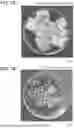
FIG. 1A is a photograph of Al-based foil pieces (0.018 mm thick×25 mm square).
FIG. 1B is a photograph of Al-based foil pieces (0.3 mm thick×1 mm wide).
FIG. 1C is a photograph of Al-based foil pieces (0.3 mm thick×3 mm square).
FIG. 2 is a schematic diagram for exemplifying the manufacturing process for Al-based particles (powder).
FIG. 3 is a table showing the correspondence between the form (thickness/size) of Al-based foil pieces as raw materials and the form (photograph) of the obtained Al-based particles.
FIG. 4 is a set of SEM images of Al-based particles obtained from Al-based foil pieces (0.011 mm thick×25 mm square).
FIG. 5 is a bar graph illustrating the relationship between the thickness of Al-based foil pieces as raw materials (25 mm square) and the particle size distribution of the obtained Al-based particles.
FIG. 6A is a bar graph illustrating the relationship between the size of Al-based foil pieces as raw materials (0.3 mm thick) and the particle size distribution of the obtained Al-based particles.
FIG. 6B is a bar graph illustrating the relationship between the size of Al-based foil pieces as raw materials (0.1 mm thick) and the particle size distribution of the obtained Al-based particles.
FIG. 6C is a bar graph illustrating the relationship between the size of Al-based foil pieces as raw materials (0.018 mm thick) and the particle size distribution of the obtained Al-based particles.
EMBODIMENTS FOR CARRYING OUT THE INVENTION
One or more features freely selected from the present specification can be added to the above-described features of the present invention. In the contents described in the present specification, methodological features can also be features regarding a product (e.g., Al-based particles, Al base material).
Al-Based Foil
(1) For the Al-based foil as the raw material, an Al base material (such as plate material or ingot) processed (such as rolled) to a desired thickness may be used, or an Al base material already in a foil form may also be used without any modification. The Al base material may be waste material collected from the market, a factory, or the like or a recycled material (massive form, plate form, foil form, etc.) thereof. The collected or recycled Al-based foil may be used without any modification, or may be subjected to pretreatment such as ink removal or cleaning or thickness adjustment. Al-based foil laminated with resin, etc. may be added to the molten salt without any modification, or may also be added to the molten salt after the laminate layer is removed. The Al-based foil may or may not have wrinkles, folds, bends, etc.
(2) The Al-based foil may be pure aluminum (pure Al) or an aluminum alloy (Al alloy). A mixture of Al-based foils with different component compositions may be used. The component composition of the Al-based foil as the raw material is reflected in the component composition of the obtained Al-based particles. Accordingly, the components, compounding, etc. of the Al-based foil as the raw material may be adjusted to obtain Al-based particles of the desired composition.
(3) The thickness and size of the Al-based foil are appropriately selected. The thickness and size (size other than thickness) of the Al-based foil (foil pieces) added to the molten salt may be adjusted in accordance with the particle size distribution of the desired Al-based particle group (powder). In this case, Al-based foils (foil pieces) with different thicknesses and/or sizes may be mixed. Usually, the thinner and/or smaller the Al-based foil (foil pieces), the higher the proportion of fine (small-diameter) Al-based particles. Conversely, the thicker and/or larger the Al-based foil (foil pieces), the higher the proportion of coarse (large-diameter) Al-based particles.
The thickness of the Al-based foil is, for example, 0.5 mm, 0.3 mm, 0.2 mm, 0.1 mm, 0.07 mm, 0.03 mm, or 0.02 mm as the upper limit (threshold for being equal to or less than or otherwise being less than). Suffice it to say that the lower limit (threshold for being equal to or more than or otherwise being more than) is, for example, 0.001 mm, 0.005 mm, or even 0.008 mm. The thickness of the Al-based foil is measured with a micrometer or the like. The thickness of the Al-based foil may vary by about ±10%. The arithmetic mean value of the thicknesses measured at any number of locations (e.g., 10 locations) may be appropriately used as the thickness of the Al-based foil. Unless otherwise stated, the “foil” as referred to in the present specification means a case in which the thickness is 0.5 mm or less (0.2 mm or less in an embodiment or less than 0.1 mm in another embodiment).
The size of the foil pieces is, for example, 200 mm, 150 mm, 100 mm, 50 mm, 30 mm, 20 mm, 10 mm, 5 mm, or 1 mm as the maximum length. The minimum length is, for example, 10 mm, 5 mm, 1 mm, or even 0.5 mm. The size of the foil pieces may be adjusted in accordance with the thickness of the foil pieces. For example, when the foil pieces are thin, larger foil pieces may be used, and when the foil pieces are thick, smaller foil pieces may be used. The foil pieces are obtained, for example, by shredding the Al-based foil (raw material) with a shredder or the like.
Molten Salt
The molten salt may be obtained, for example, from a stable metal halide (in particular, a chloride and/or bromide) as the raw material. The metal element constituting the halide is, for example, one or more of Ca, Na, Li, Sr, K, Mg, Cs, Ba, etc. In particular, Na and/or K halides are inexpensive and stable, and are suitable for the molten salt.
The temperature of the molten salt may be adjusted by compounding the raw materials (adjusting the components). The temperature of the molten salt may be preferably at least equal to or higher than (or exceeding) the melting temperature of the Al-based foil. The molten salt is not limited to a single layer, but may be a multi-layer. The molten salt may be preferably a molten salt reservoir (bath) with a depth or amount sufficient to immerse at least the Al-based foil. Normally, the Al-based particles (liquid phase) will remain or settle below the molten salt due to the density difference.
Al-Based Particles
(1) The particle size of the Al-based particles (referred to as a “particle diameter” regardless of the particle shape) may be constant or distributed. The thinner and smaller the Al-based foil pieces are melted, the more likely it is that a particle size distribution with a large number of fine Al-based particles will occur.
The Al-based particles may be liquid or solid particles as obtained from the Al-based foil (pieces), or may also be liquid or solid particles configured such that the particles are connected (bonded) to each other to be integrated (larger in diameter) or alloyed. The Al particles may be used without any modification, or may also be used after particle size adjustment (classification). According to the manufacturing method of the present invention, it is possible to obtain an Al powder composed of Al-based particles with a particle size of more than 1.7 mm, and it is also possible to obtain an Al powder composed of Al-based particles with a particle size of less than 0.1 mm.
As referred to in the present specification, unless otherwise stated, the particle size (or particle diameter) of powder is specified by sieving and expressed by the nominal sieve opening (mesh size) of the sieve (in accordance with JIS Z 8801). The particle size α to β (α<β) means that the powder is composed of particles (groups) that do not pass through a sieve with a nominal sieve opening of α μm, but pass through a sieve with a nominal sieve opening of βμm. Particle size α<-0 means that the powder is composed of particles (groups) that do not pass through a sieve with a nominal sieve opening of α μm. Particle size <β means that the powder is composed of particles (groups) that pass through a sieve with a nominal sieve opening of β μm. The particle diameter of the liquid-phase particles is considered to be approximately equal to the particle diameter of the solid-phase particles, excluding the thermal shrinkage.
(2) Al-based particles and Al base materials have various uses. For example, Al-based powder (solid-phase particles), which is one form of Al-based particles, can be used as a filler (such as thermally conductive filler or electrically conductive filler) that is dispersed in a host material (such as resin, dissimilar metal, or ceramics) to constitute a composite material, raw powder of a sintered material (such as main element powder or alloy element powder), raw material (such as reducing agent) that causes a chemical reaction (such as thermit reaction), pigment added to paint, etc.
EXAMPLES
Al-based foil was added to molten salt to produce Al-based particles (liquid-phase particles), which were then solidified. The present invention will be described in more detail based on such specific examples.
Preparation of Samples
(1) Raw Materials
Various foil pieces with different dimensions (size (planar size) and thickness) were prepared as raw materials. All foil pieces used were composed of pure Al (JIS 1000 series/purity of 99% or more) with a size of 100 mm×100 mm or more (Al-based foil). The foil thickness was 0.011 mm, 0.018 mm, 0.025 mm, 0.05 mm, 0.1 mm, 0.3 mm, or 0.8 mm.
The sizes of the foil pieces were 25 mm square (almost square), 3 mm square, 5 mm wide (25 mm long), and 1 mm wide (25 mm long). For both the 5 mm wide and 1 mm wide pieces, the size was adjusted by further shredding the 25 mm square foil pieces to a predetermined width.
The foil or foil pieces were cut (shredded) in the atmospheric air using scissors for metals. Thus, various foil pieces were obtained. The appearances of some of them are shown in FIGS. 1A to 1C.
(2) Molten Salt
A mixed salt of potassium chloride and sodium chloride (KCl-44 mass % NaCl): 100 g was placed in an alumina crucible (available from NIKKATO CORPORATION, B3) and heated in a furnace to 700° C. Thus, a molten salt (layer, reservoir) composed of the mixed salt was obtained.
(3) Melting Step
As illustrated in FIG. 2, a step of putting foil pieces (2.5 g) into the molten salt (100 g) and melting them was performed for respective foil pieces. No stirring was performed during this step, and the foil pieces were statically placed (for about 10 minutes) until they were dispersed and melted in the molten salt.
(4) Collecting Step
After the melting step, the crucible was left to cool outside the furnace (cooling step), and the molten salt (particle-dispersed molten salt) was solidified (solidification step). The solidified material (particle-dispersed solidified salt) taken out from the crucible was washed with water (water washing step/salt removal step). The particles remaining after salt removal were filtered and dried (filtration step, drying step). The particle groups corresponding to respective foil pieces thus obtained are collectively shown in FIG. 3.
(5) Classification Step
Respective particle groups were classified using sieves. Five types of sieves with opening dimensions (mesh sizes) of 1.7 mm, 0.85 mm, 0.425 mm, 0.212 mm, and 0.106 mm were used. The particle size distributions (mass ratios) of respective particle groups are illustrated in FIG. 5 and FIGS. 6A to 6C (collectively referred to as “FIG. 6”). FIG. 5 illustrates the relationship between the thickness of the foil pieces (25 mm square) used as the raw material and the particle size distribution of the obtained particle group. FIG. 6 illustrates the relationship between the size of the foil pieces and the particle size distribution.
(6) Comparative Sample
An Al ingot (50 g) was put into a crucible containing the above-described molten salt (100 g) to melt the Al ingot. The molten Al (bulk) formed in the molten salt was stirred with an alumina rod to disperse the molten Al in granular form in the molten salt. In the same manner as described above, the crucible was left to cool, and the solidified material obtained was washed with water, after which the obtained particles were filtered, dried, and classified.
Observation
An SEM image when observing with a scanning electron microscope (SEM) particles (particle size: <0.212 mm) obtained using foil pieces of 0.011 mm thick×25 mm square is shown in FIG. 4, along with its enlarged image.
Evaluation
(1) Particle Shape
As apparent from FIG. 4, it has been found that the Al-based particles obtained by bringing the Al-based foil pieces into contact with the molten salt are almost spherical even without stirring during the melting step. The shape of the Al-based particles of the comparative sample was slightly flattened and spherical.
(2) Particle Size Distribution
As apparent from FIG. 5, the thinner the Al-based foil used, the larger amount of fine particles was included in the particle size distribution obtained. Conversely, the thicker the Al-based foil used, the larger amount of large-diameter particles was included in the particle size distribution.
As apparent from FIG. 6A, when Al-based foil with a thickness of 0.3 mm or more (over 0.3 mm) was used, large-diameter particles were stably obtained regardless of the size. This appears to be because the thick Al-based foil (pieces) gradually melted from each end surface, increasing the opportunities for bonding with other Al-based particles (liquid phase) before spheroidization. Most of the Al-based particles of the comparative sample had a particle size of over 1.7 mm.
As apparent from FIGS. 6B and 6C, it has been found that the particle size distribution can be adjusted by the thickness of the Al-based foil and the size of the foil pieces. For example, when thin and small foil pieces were used, a powder with a particle size distribution containing a large amount of relatively fine particles was obtained. This appears to be because the thin and small foil pieces melted and became spherical within a short time, making them easier to disperse. Such a tendency was prominent when the thickness of the Al-based foil was 0.1 mm or less (or even less) or the width of the Al-based foil pieces was 1 mm or less (or even less).
Incidentally, Al-based particles (liquid phase) with a particle diameter (diameter) of approximately 2 mm or less were difficult to integrate and were easy to maintain a dispersed state in the molten salt.
Thus, according to the present invention, by using Al-based foil, a particle-dispersed molten salt in which Al-based particles are dispersed in the molten salt can be obtained. Furthermore, a desired Al base material (such as powder) can be obtained efficiently or easily from the particle-dispersed molten salt.
Claims
1. A method for manufacturing an aluminum base material, comprising bringing an aluminum-based foil into contact with a molten salt to obtain aluminum-based particles.
2. A method for manufacturing an aluminum base material, comprising:
a melting step of putting an aluminum-based foil in a molten salt layer to melt the foil; and
a collecting step of collecting aluminum-based particles obtained after the melting step.
3. The method for manufacturing an aluminum base material according to claim 1, wherein the aluminum-based foil comprises shredded foil pieces.
4. The method for manufacturing an aluminum base material according to claim 1, wherein the aluminum-based foil has a thickness of less than 0.1 mm.
5. The method for manufacturing an aluminum base material according to claim 1, wherein the molten salt comprises a mixed salt.
6. The method for manufacturing an aluminum base material according to claim 5, wherein the mixed salt contains NaCl and KCl.
7. The method for manufacturing an aluminum base material according to claim 1, wherein
the aluminum-based particles are liquid-phase particles, and
the aluminum base material is a particle-dispersed molten salt in which the liquid-phase particles are dispersed in the molten salt.
8. The method for manufacturing an aluminum base material according to claim 1, wherein
the aluminum-based particles are liquid-phase particles, and
the aluminum base material is an aluminum-based molten metal obtained from the liquid-phase particles.
9. The method for manufacturing an aluminum base material according to claim 1, wherein
the aluminum-based particles are solid-phase particles obtained by solidifying liquid-phase particles, and
the aluminum base material is a particle-dispersed solidified salt in which the solid-phase particles are dispersed in a solidified salt obtained by solidifying the molten salt.
10. The method for manufacturing an aluminum base material according to claim 1, wherein
the aluminum-based particles are solid-phase particles obtained by solidifying liquid-phase particles, and
the aluminum base material is an aluminum-based powder comprising the solid-phase particles.
11. The method for manufacturing an aluminum base material according to claim 2, wherein the aluminum-based foil comprises shredded foil pieces.
12. The method for manufacturing an aluminum base material according to claim 2, wherein the aluminum-based foil has a thickness of less than 0.1 mm.
13. The method for manufacturing an aluminum base material according to claim 2, wherein the molten salt comprises a mixed salt.
14. The method for manufacturing an aluminum base material according to claim 13, wherein the mixed salt contains NaCl and KCl.
15. The method for manufacturing an aluminum base material according to claim 2, wherein
the aluminum-based particles are liquid-phase particles, and
the aluminum base material is a particle-dispersed molten salt in which the liquid-phase particles are dispersed in the molten salt.
16. The method for manufacturing an aluminum base material according to claim 2, wherein
the aluminum-based particles are liquid-phase particles, and
the aluminum base material is an aluminum-based molten metal obtained from the liquid-phase particles.
17. The method for manufacturing an aluminum base material according to claim 2, wherein
the aluminum-based particles are solid-phase particles obtained by solidifying liquid-phase particles, and
the aluminum base material is a particle-dispersed solidified salt in which the solid-phase particles are dispersed in a solidified salt obtained by solidifying the molten salt.
18. The method for manufacturing an aluminum base material according to claim 2, wherein
the aluminum-based particles are solid-phase particles obtained by solidifying liquid-phase particles, and
the aluminum base material is an aluminum-based powder comprising the solid-phase particles.
Images & Drawings included:



Sources:
- United States Patent and Trademark Office - verify current appl. status at the USPTO↗
Similar patent applications:
- » 20070039668
Aluminum-based material and a method for manufacturing products from aluminum-based material - » 10457136
Aluminum-based material and a method for manufacturing products from aluminum-based material - » 20190122783
Aluminum based composite material, electric wire using the same, and manufacturing method of aluminum based composite material - » 20230097510
ALUMINUM BASE COMPOSITE MATERIAL, METHOD OF MANUFACTURING THE SAME, AND ELECTRICAL CONNECTION MEMBER - » 20160207235
ALUMINUM-BASED COMPOSITE MATERIAL AND METHOD OF MANUFACTURING THE SAME - » 20100104892
Aluminum-nitride-based composite material, method for manufacturing the same, and member for a semiconductor manufacturing apparatus - » 20120052326
Aluminum-nitride-based composite material, method for manufacturing the same, and member for a semiconductor manufacturing apparatus - » 20170073797
Aluminum-based composite material and method of manufacturing the same - » 20250015231
A LIGHT EMITTING DIODE EPITAXIAL STRUCTURE BASED ON ALUMINUM GALLIUM NITRIDE MATERIAL AND ITS MANUFACTURING METHOD - » 20050279957
Solenoid valve, manufacturing method thereof and binding method between iron-based material and aluminum-based member
Recent applications in this class:
- » 20230070997 2023-03-09
METAL REMOVAL AGENT - » 20230043661 2023-02-09
METAL REMOVAL METHOD AND METAL RECOVERY METHOD - » 20230030521 2023-02-02
MAGNESIUM REMOVAL AGENT AND PRODUCTION METHOD FOR ALUMINUM ALLOY - » 20160108496 2016-04-21
Rotary injector and process of adding fluxing solids in molten aluminum - » 20140083253 2014-03-27
Flux injection assembly and method - » 20070277908 2007-12-06
Non-Corrosive Auxiliary Agents For Soldering Aluminium - » 20070272057 2007-11-29
Method of cooling molten metal during fractional crystallisation
Recent applications for this Assignee:
- » 20260043047 2026-02-12
HOMOLOGOUS RECOMBINATION METHOD - » 20260001311 2026-01-01
SEPARATION METHOD AND SEPARATION DEVICE - » 20250046842 2025-02-06
CONDITION-ESTIMATING DEVICE, FAULT-DETERMINING DEVICE, AND CONDITION-ESTIMATING/FAULT-DETERMINING DEVICE - » 20240264237 2024-08-08
EVALUATION DEVICE, EVALUATION SYSTEM, EVALUATION METHOD AND ITS STORAGE MEDIUM - » 20240246826 2024-07-25
C/SIC COMPOSITE PARTICLES AND THEIR MANUFACTURING METHOD, ELECTRODE CATALYST AND POLYMER ELECTROLYTE FUEL CELL COMPRISING THE C/SIC COMPOSITE PARTICLES - » 20240201274 2024-06-20
DETECTION DEVICE, MANAGEMENT APPARATUS, AND DETECTION METHOD - » 20240186550 2024-06-06
FUEL CELL CONTROL PROGRAM AND FUEL CELL SYSTEM - » 20240068128 2024-02-29
HEAT-RESISTANT MEMBER - » 20240044827 2024-02-08
DETECTION DEVICE, MANAGEMENT DEVICE, AND DETECTION METHOD - » 20230406720 2023-12-21
Porous oxide semiconductor particles