GATED DELTA NETWORKS
US20260105282A1
2026-04-16
19/359,398
2025-10-15
Smart Summary: Gated Delta Networks are a type of model used in machine learning to help understand sequences of data better. They use a special gating system that allows the model to decide which information to keep and which to forget, especially when dealing with long pieces of data. This helps the model focus on the most important parts of the information. Additionally, the model updates its understanding in a way that adapts based on the data it sees. Overall, these improvements make it easier for the model to learn from complex sequences. 🚀 TL;DR
Abstract:
Linear transformer models implementing a data-dependent gating mechanism and secondary chunking in the delta update to improve sequence modeling performance, wherein the gating mechanism is utilized with a decay term in the linear recurrence of the delta update process, enabling the linear transformer models to selectively forget features during modeling of long contexts.
Inventors:
- Jan Kautz 179 🇺🇸 Lexington, MA, United States
- Ali Hatamizadeh 17 🇺🇸 Los Angeles, CA, United States
- Songlin Yang 1 🇺🇸 Santa Clara, CA, United States
Assignee:
- NVIDIA Corp. 210 🇺🇸 Santa Clara, CA, United States
Applicant:
Interested in similar patents?
Get notified when new applications in this technology area are published.
Classification:
Description
CROSS-REFERENCE TO RELATED APPLICATIONS
This application claims priority and benefit under 35 U.S.C. 119(e) to U.S. Application No. 63/708,095, “Gated Delta Networks”, filed on Oct. 16, 2024, the contents of which are incorporated herein by reference in their entirety.
BACKGROUND
Herein, “transformer model” refers to transformer model architectures utilizing quadratic-time attention mechanisms. “Linear transformer model” refers a subfamily of transformers wherein the attention mechanism scales linearly with sequence length, making them efficient for long-context tasks, at the cost of some accuracy.
Linear transformer models are popular for certain artificial intelligence applications due to their computational efficiency. One distinction between linear transformer models and plain “transformer models” lies in how the attention mechanism is computed.
In a standard (not linear) transformer model, each token typically attends to every other token in the input sequence through self-attention. The computational load of this attention operation scales quadratically 0(n2) with sequence length because each of the n tokens attends with every other token. This attention mechanisms is expressive and captures long-range dependencies in the input, but may become computationally very expensive for long token sequences. This attention mechanism may also require high memory utilization because the attention matrix grows as n2.
In linear transformer models, the self-attention mechanism is modified such that the computational load scales linearly 0(n) with sequence length. This may be implemented by replacing the Softmax-based dot product attention of non-linear transformer models with kernelized or approximated attention mechanisms.
Instead of explicitly building a full n×n attention matrix, linear transformer models may factorize or approximate the attention matrix using mechanisms such as kernel feature maps and low-rank projections. A low-rank projection approximates a high-dimensional matrix by one that has low rank—i.e., it captures only the most important directions of variation. This enables the computation of attention incrementally with recurrent updates without storing all pairwise interactions.
Linear transformer models may operate more efficiently than plain transformers for very long sequences (e.g., tens of thousands of tokens) and are useful for applications such as genomics, speech, and long-document processing.
Transformer models tend to outperform linear transformer models on intensive associative-recall tasks which require in-context retrieval capabilities. Some existing linear transformer models attempt to address this discrepancy by implementing a delta update rule. However, the delta update rule may not be suitable for training models with long sequence lengths. Attempts have been made to parallelize the delta update rule over long sequence lengths, but this approach may be inefficient and may scale poorly.
Some existing linear transformer models reduce memory requirements during inference by reframing as a linear recurrent neural network with matrix-valued states. Others incorporate data-dependent gating mechanisms akin to those implemented in Long Short-Term Memory models. Despite these attempts, challenges remain in effectively utilizing stored information over long sequences, particularly in tasks requiring associative recall/learning where traditional transformers still exhibit advantages over linear transformer models.
BRIEF DESCRIPTION OF THE SEVERAL VIEWS OF THE DRAWINGS
To easily identify the discussion of any particular element or act, the most significant digit or digits in a reference number refer to the figure number in which that element is first introduced.
FIG. 1 depicts a gated delta network structure in accordance with one embodiment.
FIG. 2 depicts a hybrid linear transformer model utilizing a gated delta network in one embodiment.
FIG. 3 depicts a hybrid linear transformer model utilizing a gated delta network in another embodiment.
FIG. 4 depicts a parallel processing unit configured to efficiently implement and operate a linear transformer model, in accordance with one embodiment.
FIG. 5 depicts a general processing cluster in accordance with one embodiment.
FIG. 6 depicts a memory partition unit in accordance with one embodiment.
FIG. 7 depicts a streaming multiprocessor in accordance with one embodiment.
FIG. 8 depicts a processing system in accordance with one embodiment.
FIG. 9 depicts an exemplary processing system in accordance with another embodiment.
DETAILED DESCRIPTION
Linear transformer models utilize accumulators to incrementally update attention in linear computation time. The incremental update is referred to as a “delta” and the algorithm to compute the update increment is referred to as the “delta update rule”.
An ungated delta update does not incorporate a mechanism to forget or selectively weight past inputs. Once a delta is added to the accumulation for determining attention, it cannot be undone or modified. A gated delta mechanisms comprises learnable (configurable via model training) gates that determine how much of a new (current) update to incorporate into the running attention determination, and how much of the old state to retain.
In linear transformer models, the number of orthogonal key-value pairs that may be stored in memory is bounded by the model's dimensionality. When the sequence length exceeds this dimensionality, memory collisions become inevitable, hindering exact retrieval.
Disclosed herein are linear transformer models implementing a data-dependent gating mechanism in the delta update to improve the language model performance. The gating mechanism is utilized with a decay term in the linear recurrence of the delta update. These features may improve a linear transformer model's expressivity and enhance its capability to selectively “forget” which may enhance the modeling of long contexts.
The gated delta update incorporates adaptivity to the attention mechanism of linear transformer models. The model can “forget” irrelevant tokens or dampen noisy updates, improving long-sequence stability and expressivity. Empirically, gating may improve model performance on long-context tasks by preventing uncontrolled accumulation of information.
The data-dependent decay factor utilized with the gating mechanism enables improved contextual understanding, effective captures long-term dependencies, and dynamically adapts to different inputs.
The disclosed mechanisms may further implement a feature referred to herein as “secondary chunking” for the delta update, wherein a “chunk” is a collection of tensor values from multiple time steps. Secondary chunking comprises a hardware-efficient mechanism that may significantly improve computational efficiency. Secondary chunking utilizes a chunkwise formulation of the delta update process, whereby recurrent terms are encoded into a WY representation and processed in a chunkwise parallel manner utilizing an extended WY representation of recurrent terms within each chunk. Secondary chunking applies half-precision matrix multiplications to encode interactions between sub-chunks of the inputs. This mechanism may significantly reduce occupancy of hardware math circuits by full-precision matrix multiplications.
At the primary level, the disclosed mechanisms decompose an input sequence into fixed size chunks (for example, 64 or 128 tokens) and convey a compact state from one chunk to the next. Inside a chunk, the model forms queries, keys, values, and two per token gates. A decay gate controls forgetting, and an update gate controls learning. A cumulative decay profile and a causal decay mask are also formed so that earlier tokens influence later ones appropriately.
To execute the gated delta update efficiently, sequential inner updates (recurrent terms) are rewritten in a compact WY/UT form. A lower triangular operator encodes intra chunk dependencies, and two (e.g., small) triangular systems are evaluated to obtain compact pseudo key and pseudo value factors.
Using only these factors, standard batched matrix multiplications, and the incoming state, the chunk processing may produce both the token outputs and the next state. This primary chunking keeps runtime proportional to sequence length and aligns work with hardware execution mechanisms such as GPU tensor core tiles.
At a secondary chunking level, each primary chunk is split again into smaller sub-chunks (i.e., “tiles” of for example 16 or 32 tokens). Key-to-key correlation tiles may be formed for each pair of sub-chunks and assembled into a block-lower triangular operator. Specifically, for each sub chunk in order, the disclosed mechanisms may accumulate contributions from all earlier sub chunks via tile-tile multiplications, then perform an efficient triangular evaluation on the current diagonal tile, yielding that sub-chunk's slices of the pseudo key and pseudo value.
Attention-like mixing of queries and keys may be determined in a similar manner. The decay mask may be applied by row/column scaling, and each sub-chunk multiplied only with tiles up to its position. The outgoing state may then formed from the pseudo value tiles, the keys, and a decayed copy of the incoming state.
The delta update process may thereby be formulated as batched multiplications of small square tiles, avoiding the implementation of scalar loops, and maintaining most floating point operations on hardware tensor cores. The disclosed mechanisms may thereby reproduce conventional the gated delta effects while substantially improving hardware utilization and throughput.
The disclosed linear transformer models may comprise a gating mechanism configured with a data-dependent decay applied to a delta update. The delta update comprises secondary chunking for hardware-efficient operation in a computing system.
The conventional delta network mechanism selectively updates memory by replacing an old key-value pair with the incoming one in a sequential manner. This mechanism only modifies a single key-value pair at a time and thus lacks the ability to rapidly clear outdated or irrelevant information, especially during context switches where previous data needs to be erased. Consequently, delta networks have been found to perform moderately on real-world recall-intensive tasks and struggle to generalize to sequences longer than those seen during training due to the absence of a robust memory-clearing mechanism.
The conventional Mamba2 mechanism implements a simple gated update at each iteration t:
S t = α t S t - 1 + v t k t T ,
where vt and kt are the key and value tensors, respectively. The attention for the timestep is calculated as ot=Stqt where qt is the query tensor. This mechanisms uniformly decays all key-value associations at each time step by a ratio αt∈(0,1).
This mechanism does not account for the varying importance of different key-value associations, potentially leading to inefficient memory utilization. If the model needs to forget specific key-value associations, all key-value associations are forgotten to an equal extent, making the process less targeted and efficient.
A conventional delta update dynamically erases the value
( tensor v t old )
associated with the current input key (tensor kt) and writes a new value
( v t new ) ,
which is a linear combination of the current input value and the old value. This process updates a key-value association pair at each time step, where the scalar βt∈(0, 1) determines the extent to which the old association is replaced by the new one:
S t = S t - 1 · ( I - β t k t k t T ) + β t v t k t T .
Here
( I - β t k t k t T )
is referred to as the “hidden state” and I is the identity matrix.
This structure enables memory-efficient and compact computation using the classical WY representation for products of Householder (or reflector) matrices.
Unlike the conventional delta rule, the disclosed mechanisms utilize a multiplicative, data-dependent scalar-valued decay term (a “forget gate”), for example αt∈(0, 1), applied to modulate transitions of the hidden state, to merge advantages of the gating mechanism with the flexibility of the delta update rule:
S t = S t - 1 · ( α t ( I - β t k t k t T ) ) + β t v t k t T . ( Eq . 1 )
The memory-efficient WY representation applicable to execution of the conventional delta update no longer applies to this gated delta update. Therefor the disclosed mechanisms implement additional adaptations:
S [ t + 1 ] = γ [ t ] S [ t ] + ( U [ t ] - Diag ( γ [ t ] ) W [ t ] S [ t ] T ) t K [ t ] ( 2 ) O [ t ] = Diag ( γ [ t ] ) Q [ t ] S [ t ] T + ( Q [ t ] K [ t ] T ⊙ T [ t ] ) ( U [ t ] - Diag ( γ [ t ] ) W [ t ] S [ t ] T ) ( 3 )
where [t] denotes a chunk of multiple time steps. Q[t] is a matrix wherein each row corresponds to a query vector for a single time step in the chunk [t]. K[t] is a matrix wherein each row corresponds to a key vector for a single time step in chunk [t]. At each time step the attention mechanisms of the model compares queries and keys to determine how features are weighted and aggregated. Q[t] and K[t] are structures for chunking the key and query tensors for parallel determination of attention across a chunk [t] of time steps.
U[t] and W[t] are matrix components of the extended WY mechanism to enable hardware-efficiency. Recurrent terms of the gated delta rule are encoded into a WY form to improve computational efficiency on parallel computing data processors such as graphics processing units. The sequential, step-by-step delta update rule is restructured into a block-based matrix computation, wherein U[t] and W[t] are intermediate forms that arise from this reformulation, enabling a complex recurrent update algorithm to be implemented as a series of more efficient matrix multiplications.
A causal mask matrix T[t] enforces causality within a parallel processed chunk. The structure of T[t] ensures that the determination at a given time step only depends on previous time steps, not future ones, by masking non-causal connections. The operation lower(·):=tril(·,−1) retains only those entries strictly below the main diagonal of a matrix, and may be utilized to create the causal mask T[t]. The T[t] matrix is applied element-wise (⊙) to the
Q [ t ] K [ t ] T
attention scores.
The gating vector γ[t] comprises the data-dependent decay or gating factors for each time step in the chunk [t]. The data-dependent, scalar-valued decay term (‘forget gate’) αt and the scalar gate βt in the iterative update rule are chunked together in the vector γ[t], which is then diagonalized. This enables these gates to be applied efficiently for all the time steps in a chunk simultaneously via parallelized matrix multiplication.
The transpose matrix ST is an intermediate matrix that arises from the UT transform used to parallelize the delta update computation.
Equations 1 and 2 implement matrix multiplications extensively, making them well-suited for tensor core-based graphics processing unit (GPU) acceleration. However, the extended WY formulation of Equations 1 and 2 is strictly sequential, and minimizing non-matrix multiplication computations may be critical to leveraging tensor cores effectively. Applying a UT transform to these relationships enables reformulation of the computation as matrix multiplication, enabling the operations to be executed in more hardware-efficient manner:
W [ t ] = A [ t ] W Diag ( β [ t ] ) K [ t ] , A [ t ] W = ( I - lower ( Diag ( β [ t ] ) K [ t ] K [ t ] T ) ) - 1 U [ t ] = A [ t ] U Diag ( β [ t ] ) V [ t ] , A [ t ] U = ( I - T [ t ] ⊙ lower ( Diag ( β [ t ] ) K [ t ] K [ t ] T ) ) - 1
where lower(·):=tril(·,−1), i.e., keep only the entries strictly below the main matrix diagonal. The inverse of a lower triangle matrix may be determined efficiently by back substitution.
The matrices A*[t] encode recurrent dynamics of the model's state, enabling the model to determine the cumulative influence of past signals for an entire sequence chunk in a single parallel operation, rather than step-by-step.
The
A [ t ] W and A [ t ] U
are distinct accumulation matrices used to determine different components of the model's state. The
A [ t ] W
matrix operates on the keys K[t] while the
A [ t ] U
matrix operates on the values V[t]. The form of these two matrices differs in that
A [ t ] U
comprises the element-wise mask T[t] thereby enabling for more modulated aggregation of value information compared to key information.
A linear transformer model configured with the gated delta mechanism (“gated DeltaNet”), is enabled with the capability to clear memory by setting αt→0, while selectively updating memory when needed without affecting other content, by setting αt→1 (i.e., switching to the conventional delta rule mechanism).
As described above, the gated DeltaNet may be implemented in a hardware-efficient manner that parallelizes the computation over the sequence length dimension by applying an extended version of the WY representation that supports chunkwise parallelism.
A token mixer in a transformer enables each token's representation to be updated based on other tokens. In linear transformers, the token mixer may implement a matrix multiplication across the sequence dimension. Without token mixing, each token's embedding would evolve independently, never “seeing” other tokens. In a conventional self-attention token mixer, each token aggregates context-dependent weighted sums of all others. In a linear-based token mixer, each token linearly combines information from all positions. Convolutions and linear layers may function as a localized token mixer in some hybrid architectures.
The gated delta network 102 embodiment depicted in FIG. 1 replaces the conventional self-attention mechanism utilized in linear transformer models with a gated delta token mixer 104. The gated delta network 102 comprises linear-convolution stacks 106 for generating the query, key, and value tensors. The linear layers project the hidden states to generate the query, key, and value vectors. The generated query, key, and value vectors are further projected by applying a short 1D convolution modulated by a SiLU activation function
( x · σ ( x ) = x · 1 1 + e - x ) .
The query and key vectors are then processed through L2 normalization 108 layers to ensure that the eigenvalues of the transition matrices remain less than one. Two additional projections through linear layers are used to configure the forget gate α and the output gate g. Subsequently, q, k, v, and α are processed through the gated delta token mixer 104, applying the recurrence logic of Eq. 1.
To stabilize training, root-mean square normalization 110 may applied resulting in the output o. A Swish-modulating output gate g is applied and the gated output is processed through the output projection layer 112. The Swish activation x·σ(βx) (or another activation) may be utilized to operate the output gate g, where β is a trainable or fixed scaling parameter. Alternate activation modulations that may be utilized at the output gate include GELU and SiLU, for example.
FIG. 2 depicts a hybrid linear transformer model utilizing a gated delta network 102 in one embodiment. The linear transformer model comprises, at least in part, sliding window attention 204 interposed between a plurality of multilayer perceptrons 202. Skip connections may be provided between an input to the linear transformer model and the sliding window attention 204, and between an input to the sliding window attention 204 and an output of the linear transformer model.
This structure may improve the linear transformer model's performance in handling local shifts and comparisons. Sliding window attention is a variant of self-attention designed to reduce the cost of standard (global) attention by restricting each token to attend only to its local neighborhood within a (typically) fixed-size window.
FIG. 3 depicts a hybrid linear transformer model utilizing a gated delta network 102 in another embodiment. The linear transformer model structure depicted in FIG. 2 is enhanced with a front-end comprising a Mamba2 304 block followed by a multilayer perceptron 302. As known in the art, Mamba2 304 replaces full attention more efficiently with structured state space recurrences/structured state space duality.
The mechanisms disclosed herein may be efficiently implemented in and/or by computing devices utilizing one or more graphic processing unit (GPU) and/or general purpose data processor (e.g., a “central processing unit” or CPU). A graphics processing unit may be a standalone chip or package, or may comprise graphics processing circuitry integrated with a central processing unit. Exemplary architectures will now be described that may be configured to implement the mechanisms disclosed herein, e.g., by configuring a main memory 904 with machine-readable instructions that when executed by one or more processor instantiate and operate the linear transformer models and gated delta networks described herein.
The following description may use certain acronyms and abbreviations as follows:
-
- “DPC” refers to a “data processing cluster”;
- “GPC” refers to a “general processing cluster”;
- “I/O” refers to a “input/output”;
- “L1 cache” refers to “level one cache”;
- “L2 cache” refers to “level two cache”;
- “LSU” refers to a “load/store unit”;
- “MMU” refers to a “memory management unit”;
- “MPC” refers to an “M-pipe controller”;
- “PPU” refers to a “parallel processing unit”;
- “PROP” refers to a “pre-raster operations unit”;
- “ROP” refers to a “raster operations”;
- “SFU” refers to a “special function unit”;
- “SM” refers to a “streaming multiprocessor”;
- “Viewport SCC” refers to “viewport scale, cull, and clip”;
- “WDX” refers to a “work distribution crossbar”; and
- “XBar” refers to a “crossbar”.
FIG. 4 depicts a parallel processing unit 402, in accordance with an embodiment. In an embodiment, the parallel processing unit 402 is a multi-threaded processor that is implemented on one or more integrated circuit devices. The parallel processing unit 402 is a latency hiding architecture designed to process many threads in parallel. A thread (e.g., a thread of execution) is an instantiation of a set of instructions configured to be executed by the parallel processing unit 402. In an embodiment, the parallel processing unit 402 is a graphics processing unit (GPU) configured to implement a graphics rendering pipeline for processing three-dimensional (3D) graphics data in order to generate two-dimensional (2D) image data for display on a display device such as a liquid crystal display (LCD) device. In other embodiments, the parallel processing unit 402 may be utilized for performing general-purpose computations. While one exemplary parallel processor is provided herein for illustrative purposes, it should be strongly noted that such processor is set forth for illustrative purposes only, and that any processor may be employed to supplement and/or substitute for the same.
One or more parallel processing unit 402 modules may be configured to accelerate thousands of High Performance Computing (HPC), data center, and machine learning applications. The parallel processing unit 402 may be configured to accelerate numerous deep learning systems and applications including autonomous vehicle platforms, deep learning, high-accuracy speech, image, and text recognition systems, intelligent video analytics, molecular simulations, drug discovery, disease diagnosis, weather forecasting, big data analytics, astronomy, molecular dynamics simulation, financial modeling, robotics, factory automation, real-time language translation, online search optimizations, and personalized user recommendations, and the like.
As shown in FIG. 4, the parallel processing unit 402 includes an I/O unit 404, a front-end unit 406, a scheduler unit 408, a work distribution unit 410, a hub 412, a crossbar 414, one or more general processing cluster 422 modules, and one or more memory partition unit 424 modules. The parallel processing unit 402 may be connected to a host processor or other parallel processing unit 402 modules via one or more high-speed NVLink 416 interconnects. The parallel processing unit 402 may be connected to a host processor or other peripheral devices via an interconnect 418. The parallel processing unit 402 may also be connected to a local memory comprising a number of memory 420 devices. In an embodiment, the local memory may comprise a number of dynamic random access memory (DRAM) devices. The DRAM devices may be configured as a high-bandwidth memory (HBM) subsystem, with multiple DRAM dies stacked within each device. The memory 420 may comprise logic to configure the parallel processing unit 402 to carry out aspects of the techniques disclosed herein.
The NVLink 416 interconnect enables systems to scale and include one or more parallel processing unit 402 modules combined with one or more CPUs, supports cache coherence between the parallel processing unit 402 modules and CPUs, and CPU mastering. Data and/or commands may be transmitted by the NVLink 416 through the hub 412 to/from other units of the parallel processing unit 402 such as one or more copy engines, a video encoder, a video decoder, a power management unit, etc. (not explicitly shown). The NVLink 416 is described in more detail in conjunction with FIG. 8.
The I/O unit 404 is configured to transmit and receive communications (e.g., commands, data, etc.) from a host processor (not shown) over the interconnect 418. The I/O unit 404 may communicate with the host processor directly via the interconnect 418 or through one or more intermediate devices such as a memory bridge. In an embodiment, the I/O unit 404 may communicate with one or more other processors, such as one or more parallel processing unit 402 modules via the interconnect 418. In an embodiment, the I/O unit 404 implements a Peripheral Component Interconnect Express (PCIe) interface for communications over a PCIe bus and the interconnect 418 is a PCIe bus. In alternative embodiments, the I/O unit 404 may implement other types of well-known interfaces for communicating with external devices.
The I/O unit 404 decodes packets received via the interconnect 418. In an embodiment, the packets represent commands configured to cause the parallel processing unit 402 to perform various operations. The I/O unit 404 transmits the decoded commands to various other units of the parallel processing unit 402 as the commands may specify. For example, some commands may be transmitted to the front-end unit 406. Other commands may be transmitted to the hub 412 or other units of the parallel processing unit 402 such as one or more copy engines, a video encoder, a video decoder, a power management unit, etc. (not explicitly shown). In other words, the I/O unit 404 is configured to route communications between and among the various logical units of the parallel processing unit 402.
In an embodiment, a program executed by the host processor encodes a command stream in a buffer that provides workloads to the parallel processing unit 402 for processing. A workload may comprise several instructions and data to be processed by those instructions. The buffer is a region in a memory that is accessible (e.g., read/write) by both the host processor and the parallel processing unit 402. For example, the I/O unit 404 may be configured to access the buffer in a system memory connected to the interconnect 418 via memory requests transmitted over the interconnect 418. In an embodiment, the host processor writes the command stream to the buffer and then transmits a pointer to the start of the command stream to the parallel processing unit 402. The front-end unit 406 receives pointers to one or more command streams. The front-end unit 406 manages the one or more streams, reading commands from the streams and forwarding commands to the various units of the parallel processing unit 402.
The front-end unit 406 is coupled to a scheduler unit 408 that configures the various general processing cluster 422 modules to process tasks defined by the one or more streams. The scheduler unit 408 is configured to track state information related to the various tasks managed by the scheduler unit 408. The state may indicate which general processing cluster 422 a task is assigned to, whether the task is active or inactive, a priority level associated with the task, and so forth. The scheduler unit 408 manages the execution of a plurality of tasks on the one or more general processing cluster 422 modules.
The scheduler unit 408 is coupled to a work distribution unit 410 that is configured to dispatch tasks for execution on the general processing cluster 422 modules. The work distribution unit 410 may track a number of scheduled tasks received from the scheduler unit 408. In an embodiment, the work distribution unit 410 manages a pending task pool and an active task pool for each of the general processing cluster 422 modules. The pending task pool may comprise a number of slots (e.g., 32 slots) that contain tasks assigned to be processed by a particular general processing cluster 422. The active task pool may comprise a number of slots (e.g., 4 slots) for tasks that are actively being processed by the general processing cluster 422 modules. As a general processing cluster 422 finishes the execution of a task, that task is evicted from the active task pool for the general processing cluster 422 and one of the other tasks from the pending task pool is selected and scheduled for execution on the general processing cluster 422. If an active task has been idle on the general processing cluster 422, such as while waiting for a data dependency to be resolved, then the active task may be evicted from the general processing cluster 422 and returned to the pending task pool while another task in the pending task pool is selected and scheduled for execution on the general processing cluster 422.
The work distribution unit 410 communicates with the one or more general processing cluster 422 modules via crossbar 414. The crossbar 414 is an interconnect network that couples many of the units of the parallel processing unit 402 to other units of the parallel processing unit 402. For example, the crossbar 414 may be configured to couple the work distribution unit 410 to a particular general processing cluster 422. Although not shown explicitly, one or more other units of the parallel processing unit 402 may also be connected to the crossbar 414 via the hub 412.
The tasks are managed by the scheduler unit 408 and dispatched to a general processing cluster 422 by the work distribution unit 410. The general processing cluster 422 is configured to process the task and generate results. The results may be consumed by other tasks within the general processing cluster 422, routed to a different general processing cluster 422 via the crossbar 414, or stored in the memory 420. The results can be written to the memory 420 via the memory partition unit 424 modules, which implement a memory interface for reading and writing data to/from the memory 420. The results can be transmitted to another parallel processing unit 402 or CPU via the NVLink 416. In an embodiment, the parallel processing unit 402 includes a number U of memory partition unit 424 modules that is equal to the number of separate and distinct memory 420 devices coupled to the parallel processing unit 402. A memory partition unit 424 will be described in more detail below in conjunction with FIG. 6.
In an embodiment, a host processor executes a driver kernel that implements an application programming interface (API) that enables one or more applications executing on the host processor to schedule operations for execution on the parallel processing unit 402. In an embodiment, multiple compute applications are simultaneously executed by the parallel processing unit 402 and the parallel processing unit 402 provides isolation, quality of service (QoS), and independent address spaces for the multiple compute applications. An application may generate instructions (e.g., API calls) that cause the driver kernel to generate one or more tasks for execution by the parallel processing unit 402. The driver kernel outputs tasks to one or more streams being processed by the parallel processing unit 402. Each task may comprise one or more groups of related threads, referred to herein as a warp. In an embodiment, a warp comprises 32 related threads that may be executed in parallel. Cooperating threads may refer to a plurality of threads including instructions to perform the task and that may exchange data through shared memory. Threads and cooperating threads are described in more detail in conjunction with FIG. 7.
FIG. 5 depicts a general processing cluster 422 of the parallel processing unit 402 of FIG. 4, in accordance with an embodiment. As shown in FIG. 5, each general processing cluster 422 includes a number of hardware units for processing tasks. In an embodiment, each general processing cluster 422 includes a pipeline manager 502, a pre-raster operations unit 504, a raster engine 506, a work distribution crossbar 508, a memory management unit 510, and one or more data processing cluster 512. It will be appreciated that the general processing cluster 422 of FIG. 5 may include other hardware units in lieu of or in addition to the units shown in FIG. 5.
In an embodiment, the operation of the general processing cluster 422 is controlled by the pipeline manager 502. The pipeline manager 502 manages the configuration of the one or more data processing cluster 512 modules for processing tasks allocated to the general processing cluster 422. In an embodiment, the pipeline manager 502 may configure at least one of the one or more data processing cluster 512 modules to implement at least a portion of a graphics rendering pipeline. For example, a data processing cluster 512 may be configured to execute a vertex shader program on the programmable streaming multiprocessor 518. The pipeline manager 502 may also be configured to route packets received from the work distribution unit 410 to the appropriate logical units within the general processing cluster 422. For example, some packets may be routed to fixed function hardware units in the pre-raster operations unit 504 and/or raster engine 506 while other packets may be routed to the data processing cluster 512 modules for processing by the primitive engine 514 or the streaming multiprocessor 518. In an embodiment, the pipeline manager 502 may configure at least one of the one or more data processing cluster 512 modules to implement a neural network model and/or a computing pipeline.
The pre-raster operations unit 504 is configured to route data generated by the raster engine 506 and the data processing cluster 512 modules to a Raster Operations (ROP) unit, described in more detail in conjunction with FIG. 6. The pre-raster operations unit 504 may also be configured to perform optimizations for color blending, organize pixel data, perform address translations, and the like.
The raster engine 506 includes a number of fixed function hardware units configured to perform various raster operations. In an embodiment, the raster engine 506 includes a setup engine, a coarse raster engine, a culling engine, a clipping engine, a fine raster engine, and a tile coalescing engine. The setup engine receives transformed vertices and generates plane equations associated with the geometric primitive defined by the vertices. The plane equations are transmitted to the coarse raster engine to generate coverage information (e.g., an x, y coverage mask for a tile) for the primitive. The output of the coarse raster engine is transmitted to the culling engine where fragments associated with the primitive that fail a z-test are culled, and transmitted to a clipping engine where fragments lying outside a viewing frustum are clipped. Those fragments that survive clipping and culling may be passed to the fine raster engine to generate attributes for the pixel fragments based on the plane equations generated by the setup engine. The output of the raster engine 506 comprises fragments to be processed, for example, by a fragment shader implemented within a data processing cluster 512.
Each data processing cluster 512 included in the general processing cluster 422 includes an M-pipe controller 516, a primitive engine 514, and one or more streaming multiprocessor 518 modules. The M-pipe controller 516 controls the operation of the data processing cluster 512, routing packets received from the pipeline manager 502 to the appropriate units in the data processing cluster 512. For example, packets associated with a vertex may be routed to the primitive engine 514, which is configured to fetch vertex attributes associated with the vertex from the memory 420. In contrast, packets associated with a shader program may be transmitted to the streaming multiprocessor 518.
The streaming multiprocessor 518 comprises a programmable streaming processor that is configured to process tasks represented by a number of threads. Each streaming multiprocessor 518 is multi-threaded and configured to execute a plurality of threads (e.g., 32 threads) from a particular group of threads concurrently. In an embodiment, the streaming multiprocessor 518 implements a Single-Instruction, Multiple-Data (SIMD) architecture where each thread in a group of threads (e.g., a warp) is configured to process a different set of data based on the same set of instructions. All threads in the group of threads execute the same instructions. In another embodiment, the streaming multiprocessor 518 implements a Single-Instruction, Multiple Thread (SIMT) architecture where each thread in a group of threads is configured to process a different set of data based on the same set of instructions, but where individual threads in the group of threads are allowed to diverge during execution. In an embodiment, a program counter, call stack, and execution state is maintained for each warp, enabling concurrency between warps and serial execution within warps when threads within the warp diverge. In another embodiment, a program counter, call stack, and execution state is maintained for each individual thread, enabling equal concurrency between all threads, within and between warps. When execution state is maintained for each individual thread, threads executing the same instructions may be converged and executed in parallel for maximum efficiency. The streaming multiprocessor 518 will be described in more detail below in conjunction with FIG. 7.
The memory management unit 510 provides an interface between the general processing cluster 422 and the memory partition unit 424. The memory management unit 510 may provide translation of virtual addresses into physical addresses, memory protection, and arbitration of memory requests. In an embodiment, the memory management unit 510 provides one or more translation lookaside buffers (TLBs) for performing translation of virtual addresses into physical addresses in the memory 420.
FIG. 6 depicts a memory partition unit 424 of the parallel processing unit 402 of FIG. 4, in accordance with an embodiment. As shown in FIG. 6, the memory partition unit 424 includes a raster operations unit 602, a level two cache 604, and a memory interface 606. The memory interface 606 is coupled to the memory 420. Memory interface 606 may implement 32, 64, 128, 1024-bit data buses, or the like, for high-speed data transfer. In an embodiment, the parallel processing unit 402 incorporates U memory interface 606 modules, one memory interface 606 per pair of memory partition unit 424 modules, where each pair of memory partition unit 424 modules is connected to a corresponding memory 420 device. For example, parallel processing unit 402 may be connected to up to Y memory 420 devices, such as high bandwidth memory stacks or graphics double-data-rate, version 5, synchronous dynamic random access memory, or other types of persistent storage.
In an embodiment, the memory interface 606 implements an HBM2 memory interface and Y equals half U. In an embodiment, the HBM2 memory stacks are located on the same physical package as the parallel processing unit 402, providing substantial power and area savings compared with conventional GDDR5 SDRAM systems. In an embodiment, each HBM2 stack includes four memory dies and Y equals 4, with HBM2 stack including two 128-bit channels per die for a total of 8 channels and a data bus width of 1024 bits.
In an embodiment, the memory 420 supports Single-Error Correcting Double-Error Detecting (SECDED) Error Correction Code (ECC) to protect data. ECC provides higher reliability for compute applications that are sensitive to data corruption. Reliability is especially important in large-scale cluster computing environments where parallel processing unit 402 modules process very large datasets and/or run applications for extended periods.
In an embodiment, the parallel processing unit 402 implements a multi-level memory hierarchy. In an embodiment, the memory partition unit 424 supports a unified memory to provide a single unified virtual address space for CPU and parallel processing unit 402 memory, enabling data sharing between virtual memory systems. In an embodiment the frequency of accesses by a parallel processing unit 402 to memory located on other processors is traced to ensure that memory pages are moved to the physical memory of the parallel processing unit 402 that is accessing the pages more frequently. In an embodiment, the NVLink 416 supports address translation services allowing the parallel processing unit 402 to directly access a CPU's page tables and providing full access to CPU memory by the parallel processing unit 402.
In an embodiment, copy engines transfer data between multiple parallel processing unit 402 modules or between parallel processing unit 402 modules and CPUs. The copy engines can generate page faults for addresses that are not mapped into the page tables. The memory partition unit 424 can then service the page faults, mapping the addresses into the page table, after which the copy engine can perform the transfer. In a conventional system, memory is pinned (e.g., non-pageable) for multiple copy engine operations between multiple processors, substantially reducing the available memory. With hardware page faulting, addresses can be passed to the copy engines without worrying if the memory pages are resident, and the copy process is transparent.
Data from the memory 420 or other system memory may be fetched by the memory partition unit 424 and stored in the level two cache 604, which is located on-chip and is shared between the various general processing cluster 422 modules. As shown, each memory partition unit 424 includes a portion of the level two cache 604 associated with a corresponding memory 420 device. Lower level caches may then be implemented in various units within the general processing cluster 422 modules. For example, each of the streaming multiprocessor 518 modules may implement an L1 cache. The L1 cache is private memory that is dedicated to a particular streaming multiprocessor 518. Data from the level two cache 604 may be fetched and stored in each of the L1 caches for processing in the functional units of the streaming multiprocessor 518 modules. The level two cache 604 is coupled to the memory interface 606 and the crossbar 414.
The raster operations unit 602 performs graphics raster operations related to pixel color, such as color compression, pixel blending, and the like. The raster operations unit 602 also implements depth testing in conjunction with the raster engine 506, receiving a depth for a sample location associated with a pixel fragment from the culling engine of the raster engine 506. The depth is tested against a corresponding depth in a depth buffer for a sample location associated with the fragment. If the fragment passes the depth test for the sample location, then the raster operations unit 602 updates the depth buffer and transmits a result of the depth test to the raster engine 506. It will be appreciated that the number of partition memory partition unit 424 modules may be different than the number of general processing cluster 422 modules and, therefore, each raster operations unit 602 may be coupled to each of the general processing cluster 422 modules. The raster operations unit 602 tracks packets received from the different general processing cluster 422 modules and determines which general processing cluster 1 that a result generated by the raster operations unit 602 is routed to through the crossbar 414. Although the raster operations unit 602 is included within the memory partition unit 424 in FIG. 6, in other embodiment, the raster operations unit 602 may be outside of the memory partition unit 424. For example, the raster operations unit 602 may reside in the general processing cluster 422 or another unit.
FIG. 7 illustrates the streaming multiprocessor 518 of FIG. 5, in accordance with an embodiment. As shown in FIG. 7, the streaming multiprocessor 518 includes an instruction cache 702, one or more scheduler unit 704 modules (e.g., such as scheduler unit 408), a register file 706, one or more processing core 708 modules, one or more special function unit 710 modules, one or more load/store unit 712 modules, an interconnect network 714, and a shared memory/L1 cache 716.
As described above, the work distribution unit 410 dispatches tasks for execution on the general processing cluster 422 modules of the parallel processing unit 402. The tasks are allocated to a particular data processing cluster 512 within a general processing cluster 422 and, if the task is associated with a shader program, the task may be allocated to a streaming multiprocessor 518. The scheduler unit 408 receives the tasks from the work distribution unit 410 and manages instruction scheduling for one or more thread blocks assigned to the streaming multiprocessor 518. The scheduler unit 704 schedules thread blocks for execution as warps of parallel threads, where each thread block is allocated at least one warp. In an embodiment, each warp executes 32 threads. The scheduler unit 704 may manage a plurality of different thread blocks, allocating the warps to the different thread blocks and then dispatching instructions from the plurality of different cooperative groups to the various functional units (e.g., core 708 modules, special function unit 710 modules, and load/store unit 712 modules) during each clock cycle.
Cooperative Groups is a programming model for organizing groups of communicating threads that allows developers to express the granularity at which threads are communicating, enabling the expression of richer, more efficient parallel decompositions. Cooperative launch APIs support synchronization amongst thread blocks for the execution of parallel algorithms. Conventional programming models provide a single, simple construct for synchronizing cooperating threads: a barrier across all threads of a thread block (e.g., the syncthreads( ) function). However, programmers would often like to define groups of threads at smaller than thread block granularities and synchronize within the defined groups to enable greater performance, design flexibility, and software reuse in the form of collective group-wide function interfaces.
Cooperative Groups enables programmers to define groups of threads explicitly at sub-block (e.g., as small as a single thread) and multi-block granularities, and to perform collective operations such as synchronization on the threads in a cooperative group. The programming model supports clean composition across software boundaries, so that libraries and utility functions can synchronize safely within their local context without having to make assumptions about convergence. Cooperative Groups primitives enable new patterns of cooperative parallelism, including producer-consumer parallelism, opportunistic parallelism, and global synchronization across an entire grid of thread blocks.
A dispatch 718 unit is configured within the scheduler unit 704 to transmit instructions to one or more of the functional units. In one embodiment, the scheduler unit 704 includes two dispatch 718 units that enable two different instructions from the same warp to be dispatched during each clock cycle. In alternative embodiments, each scheduler unit 704 may include a single dispatch 718 unit or additional dispatch 718 units.
Each streaming multiprocessor 518 includes a register file 706 that provides a set of registers for the functional units of the streaming multiprocessor 518. In an embodiment, the register file 706 is divided between each of the functional units such that each functional unit is allocated a dedicated portion of the register file 706. In another embodiment, the register file 706 is divided between the different warps being executed by the streaming multiprocessor 518. The register file 706 provides temporary storage for operands connected to the data paths of the functional units.
Each streaming multiprocessor 518 comprises L processing core 708 modules. In an embodiment, the streaming multiprocessor 518 includes a large number (e.g., 128, etc.) of distinct processing core 708 modules. Each core 708 may include a fully-pipelined, single-precision, double-precision, and/or mixed precision processing unit that includes a floating point arithmetic logic unit and an integer arithmetic logic unit. In an embodiment, the floating point arithmetic logic units implement the IEEE 754-2008 standard for floating point arithmetic. In an embodiment, the core 708 modules include 64 single-precision (32-bit) floating point cores, 64 integer cores, 32 double-precision (64-bit) floating point cores, and 8 tensor cores.
Tensor cores configured to perform matrix operations, and, in an embodiment, one or more tensor cores are included in the core 708 modules. In particular, the tensor cores are configured to perform deep learning matrix arithmetic, such as convolution operations for neural network training and inferencing. In an embodiment, each tensor core operates on a 4×4 matrix and performs a matrix multiply and accumulate operation D=A′B+C, where A, B, C, and D are 4×4 matrices.
In an embodiment, the matrix multiply inputs A and B are 16-bit floating point matrices, while the accumulation matrices C and D may be 16-bit floating point or 32-bit floating point matrices. Tensor Cores operate on 16-bit floating point input data with 32-bit floating point accumulation. The 16-bit floating point multiply requires 64 operations and results in a full precision product that is then accumulated using 32-bit floating point addition with the other intermediate products for a 4×4×4 matrix multiply. In practice, Tensor Cores are used to perform much larger two-dimensional or higher dimensional matrix operations, built up from these smaller elements. An API, such as CUDA 9 C++ API, exposes specialized matrix load, matrix multiply and accumulate, and matrix store operations to efficiently use Tensor Cores from a CUDA-C++ program. At the CUDA level, the warp-level interface assumes 16×16 size matrices spanning all 32 threads of the warp.
Each streaming multiprocessor 518 also comprises M special function unit 710 modules that perform special functions (e.g., attribute evaluation, reciprocal square root, and the like). In an embodiment, the special function unit 710 modules may include a tree traversal unit configured to traverse a hierarchical tree data structure. In an embodiment, the special function unit 710 modules may include texture unit configured to perform texture map filtering operations. In an embodiment, the texture units are configured to load texture maps (e.g., a 2D array of texels) from the memory 420 and sample the texture maps to produce sampled texture values for use in shader programs executed by the streaming multiprocessor 518. In an embodiment, the texture maps are stored in the shared memory/L1 cache 716. The texture units implement texture operations such as filtering operations using mip-maps (e.g., texture maps of varying levels of detail). In an embodiment, each streaming multiprocessor 518 includes two texture units.
Each streaming multiprocessor 518 also comprises N load/store unit 712 modules that implement load and store operations between the shared memory/L1 cache 716 and the register file 706. Each streaming multiprocessor 518 includes an interconnect network 714 that connects each of the functional units to the register file 706 and the load/store unit 712 to the register file 706 and shared memory/L1 cache 716. In an embodiment, the interconnect network 714 is a crossbar that can be configured to connect any of the functional units to any of the registers in the register file 706 and connect the load/store unit 712 modules to the register file 706 and memory locations in shared memory/L1 cache 716.
The shared memory/L1 cache 716 is an array of on-chip memory that allows for data storage and communication between the streaming multiprocessor 518 and the primitive engine 514 and between threads in the streaming multiprocessor 518. In an embodiment, the shared memory/L1 cache 716 comprises 128 KB of storage capacity and is in the path from the streaming multiprocessor 518 to the memory partition unit 424. The shared memory/L1 cache 716 can be used to cache reads and writes. One or more of the shared memory/L1 cache 716, level two cache 604, and memory 420 are backing stores.
Combining data cache and shared memory functionality into a single memory block provides the best overall performance for both types of memory accesses. The capacity is usable as a cache by programs that do not use shared memory. For example, if shared memory is configured to use half of the capacity, texture and load/store operations can use the remaining capacity. Integration within the shared memory/L1 cache 716 enables the shared memory/L1 cache 716 to function as a high-throughput conduit for streaming data while simultaneously providing high-bandwidth and low-latency access to frequently reused data.
When configured for general purpose parallel computation, a simpler configuration can be used compared with graphics processing. Specifically, the fixed function graphics processing units shown in FIG. 4, are bypassed, creating a much simpler programming model. In the general purpose parallel computation configuration, the work distribution unit 410 assigns and distributes blocks of threads directly to the data processing cluster 512 modules. The threads in a block execute the same program, using a unique thread ID in the calculation to ensure each thread generates unique results, using the streaming multiprocessor 518 to execute the program and perform calculations, shared memory/L1 cache 716 to communicate between threads, and the load/store unit 712 to read and write global memory through the shared memory/L1 cache 716 and the memory partition unit 424. When configured for general purpose parallel computation, the streaming multiprocessor 518 can also write commands that the scheduler unit 408 can use to launch new work on the data processing cluster 512 modules.
The parallel processing unit 402 may be included in a desktop computer, a laptop computer, a tablet computer, servers, supercomputers, a smart-phone (e.g., a wireless, hand-held device), personal digital assistant (PDA), a digital camera, a vehicle, a head mounted display, a hand-held electronic device, and the like. In an embodiment, the parallel processing unit 402 is embodied on a single semiconductor substrate. In another embodiment, the parallel processing unit 402 is included in a system-on-a-chip (SoC) along with one or more other devices such as additional parallel processing unit 402 modules, the memory 420, a reduced instruction set computer (RISC) CPU, a memory management unit (MMU), a digital-to-analog converter (DAC), and the like.
In an embodiment, the parallel processing unit 402 may be included on a graphics card that includes one or more memory devices. The graphics card may be configured to interface with a PCIe slot on a motherboard of a desktop computer. In yet another embodiment, the parallel processing unit 402 may be an integrated graphics processing unit (iGPU) or parallel processor included in the chipset of the motherboard.
Systems with multiple GPUs and CPUs are used in a variety of industries as developers expose and leverage more parallelism in applications such as artificial intelligence computing. High-performance GPU-accelerated systems with tens to many thousands of compute nodes are deployed in data centers, research facilities, and supercomputers to solve ever larger problems. As the number of processing devices within the high-performance systems increases, the communication and data transfer mechanisms need to scale to support the increased bandwidth.
FIG. 8 is a conceptual diagram of a processing system implemented using the parallel processing unit 402 of FIG. 4, in accordance with an embodiment. The processing system includes a central processing unit 802, an switch 804, and multiple parallel processing unit 402 modules each and respective memory 420 modules. The switch 804 is depicted with dashed lines, indicating that it is optional in some embodiments.
The NVLink 416 provides high-speed communication links between each of the parallel processing unit 402 modules. Although a particular number of NVLink 416 and interconnect 418 connections are illustrated in FIG. 8, the number of connections to each parallel processing unit 402 and the central processing unit 802 may vary. The switch 804 interfaces between the interconnect 418 and the central processing unit 802. The parallel processing unit 402 modules, memory 420 modules, and NVLink 416 connections may be situated on a single semiconductor platform to form a parallel processing module 806. In an embodiment, the switch 804 supports two or more protocols to interface between various different connections and/or links.
In another embodiment (not shown), the NVLink 416 provides one or more high-speed communication links between each of the parallel processing unit modules (parallel processing unit 402, parallel processing unit 402, parallel processing unit 402, and parallel processing unit 402) and the central processing unit 802 and the switch 804 (when present) interfaces between the interconnect 418 and each of the parallel processing unit modules. The parallel processing unit modules, memory 420 modules, and interconnect 418 may be situated on a single semiconductor platform to form a parallel processing module 806. In yet another embodiment (not shown), the interconnect 418 provides one or more communication links between each of the parallel processing unit modules and the central processing unit 802 and the switch 804 interfaces between each of the parallel processing unit modules using the NVLink 416 to provide one or more high-speed communication links between the parallel processing unit modules. In another embodiment (not shown), the NVLink 416 provides one or more high-speed communication links between the parallel processing unit modules and the central processing unit 802 through the switch 804. In yet another embodiment (not shown), the interconnect 418 provides one or more communication links between each of the parallel processing unit modules directly. One or more of the NVLink 416 high-speed communication links may be implemented as a physical NVLink interconnect or either an on-chip or on-die interconnect using the same protocol as the NVLink 416.
In the context of the present description, a single semiconductor platform may refer to a sole unitary semiconductor-based integrated circuit fabricated on a die or chip. It should be noted that the term single semiconductor platform may also refer to multi-chip modules with increased connectivity which simulate on-chip operation and make substantial improvements over utilizing a conventional bus implementation. Of course, the various circuits or devices may also be situated separately or in various combinations of semiconductor platforms per the desires of the user. Alternately, the parallel processing module 806 may be implemented as a circuit board substrate and each of the parallel processing unit modules and/or memory 420 modules may be packaged devices. In an embodiment, the central processing unit 802, switch 804, and the parallel processing module 806 are situated on a single semiconductor platform.
In an embodiment, each parallel processing unit module includes six NVLink 416 interfaces (as shown in FIG. 8, five NVLink 416 interfaces are included for each parallel processing unit module). The NVLink 416 may be operated exclusively for PPU-to-PPU communication as shown in FIG. 8, or some combination of PPU-to-PPU and PPU-to-CPU, when the central processing unit 802 also includes one or more NVLink 416 interfaces.
In an embodiment, the NVLink 416 allows direct load/store/atomic access from the central processing unit 802 to each parallel processing unit module's memory 420. In an embodiment, the NVLink 416 supports coherency operations, allowing data read from the memory 420 modules to be stored in the cache hierarchy of the central processing unit 802, reducing cache access latency for the central processing unit 802. In an embodiment, the NVLink 416 includes support for Address Translation Services (ATS), enabling the parallel processing unit module to directly access page tables within the central processing unit 802. One or more of the NVLink 416 may also be configured to operate in a low-power mode.
FIG. 9 depicts an exemplary processing system in which the various architecture and/or functionality of the various previous embodiments may be implemented. As shown, an exemplary processing system is provided including at least one central processing unit 802 that is connected to a communications bus 902. The communication communications bus 902 may be implemented using any suitable protocol, such as PCI (Peripheral Component Interconnect), PCI-Express, AGP (Accelerated Graphics Port), HyperTransport, or any other bus or point-to-point communication protocol(s). The exemplary processing system also includes a main memory 904. Control logic (software) and data are stored in the main memory 904 which may take the form of random access memory (RAM). For simplicity of illustration, the main memory 904 may be understood to comprise other forms of bulk memory, including non-volatile memory technologies.
The exemplary processing system also includes input devices 906, the parallel processing module 806, and display devices 908, e.g. a conventional CRT (cathode ray tube), LCD (liquid crystal display), LED (light emitting diode), plasma display or the like. User input may be received from the input devices 906, e.g., keyboard, mouse, touchpad, microphone, and the like. Each of the foregoing modules and/or devices may even be situated on a single semiconductor platform to form the exemplary processing system. Alternately, the various modules may also be situated separately or in various combinations of semiconductor platforms per the desires of the user.
Further, the exemplary processing system may be coupled to a network (e.g., a telecommunications network, local area network (LAN), wireless network, wide area network (WAN) such as the Internet, peer-to-peer network, cable network, or the like) through a network interface 910 for communication purposes.
The exemplary processing system may also include a secondary storage (not shown). The secondary storage includes, for example, a hard disk drive and/or a removable storage drive, representing a floppy disk drive, a magnetic tape drive, a compact disk drive, digital versatile disk (DVD) drive, recording device, universal serial bus (USB) flash memory. The removable storage drive reads from and/or writes to a removable storage unit in a well-known manner.
Computer programs, or computer control logic algorithms, may be stored in the main memory 904 and/or the secondary storage. Such computer programs, when executed, enable the exemplary processing system to perform various functions. The main memory 904, the storage, and/or any other storage are possible examples of computer-readable media (volatile and/or non-volatile, depending on the implementation).
The architecture and/or functionality of the various previous figures may be implemented in the context of a general computer system, a circuit board system, a game console system dedicated for entertainment purposes, an application-specific system, and/or any other desired system. For example, the exemplary processing system may take the form of a desktop computer, a laptop computer, a tablet computer, servers, supercomputers, a smart-phone (e.g., a wireless, hand-held device), personal digital assistant (PDA), a digital camera, a vehicle, a head mounted display, a hand-held electronic device, a mobile phone device, a television, workstation, game consoles, embedded system, and/or any other type of logic.
While various embodiments have been described above, it should be understood that they have been presented by way of example only, and not limitation. Thus, the breadth and scope of a preferred embodiment should not be limited by any of the above-described exemplary embodiments, but should be defined only in accordance with the following claims and their equivalents.
LISTING OF DRAWING ELEMENTS
-
- 102 gated delta network
- 104 gated delta token mixer
- 106 linear-convolution stack
- 108 L2 normalization
- 110 root-mean square normalization
- 112 output projection layer
- 202 multilayer perceptron
- 204 sliding window attention
- 302 multilayer perceptron
- 304 Mamba2
- 402 parallel processing unit
- 404 I/O unit
- 406 front-end unit
- 408 scheduler unit
- 410 work distribution unit
- 412 hub
- 414 crossbar
- 416 NVLink
- 418 interconnect
- 420 memory
- 422 general processing cluster
- 424 memory partition unit
- 502 pipeline manager
- 504 pre-raster operations unit
- 506 raster engine
- 508 work distribution crossbar
- 510 memory management unit
- 512 data processing cluster
- 514 primitive engine
- 516 M-pipe controller
- 518 streaming multiprocessor
- 602 raster operations unit
- 604 level two cache
- 606 memory interface
- 702 instruction cache
- 704 scheduler unit
- 706 register file
- 708 core
- 710 special function unit
- 712 load/store unit
- 714 interconnect network
- 716 shared memory/L1 cache
- 718 dispatch
- 802 central processing unit
- 804 switch
- 806 parallel processing module
- 902 communications bus
- 904 main memory
- 906 input devices
- 908 display devices
- 910 network interface
Various functional operations described herein may be implemented in logic that is referred to using a noun or noun phrase reflecting said operation or function. For example, an association operation may be carried out by an “associator” or “correlator”. Likewise, switching may be carried out by a “switch”, selection by a “selector”, and so on. “Logic” refers to machine memory circuits and non-transitory machine readable media configured with machine-executable instructions (software and firmware), and/or circuitry (hardware) which by way of its material and/or material-energy configuration comprises control and/or procedural signals, and/or settings and values (such as resistance, impedance, capacitance, inductance, current/voltage ratings, etc.), that may be applied to influence the operation of a device. Magnetic media, electronic circuits, electrical and optical memory, and firmware are examples of logic. Logic specifically excludes pure signals or software per se (however does not exclude non-transitory machine memories comprising software and thereby forming statutory configurations of matter). Logic symbols in the drawings should be understood to have their ordinary interpretation in the art in terms of functionality and various structures that may be utilized for their implementation, unless otherwise indicated.
Within this disclosure, different entities (which may variously be referred to as “units,” “circuits,” other components, etc.) may be described or claimed as “configured” to perform one or more tasks or operations. This formulation—[entity] configured to [perform one or more tasks]—is used herein to refer to structure (i.e., something physical, such as an electronic circuit). More specifically, this formulation is used to indicate that this structure is arranged to perform the one or more tasks during operation. A structure can be said to be “configured to” perform some task even if the structure is not currently being operated. A “credit distribution circuit configured to distribute credits to a plurality of processor cores” is intended to cover, for example, an integrated circuit that has circuitry that performs this function during operation, even if the integrated circuit in question is not currently being used (e.g., a power supply is not connected to it). Thus, an entity described or recited as “configured to” perform some task refers to something physical, such as a device, circuit, memory storing program instructions executable to implement the task, etc. This phrase is not used herein to refer to something intangible.
The term “configured to” is not intended to mean “configurable to.” An unprogrammed FPGA, for example, would not be considered to be “configured to” perform some specific function, although it may be “configurable to” perform that function after programming.
Reciting in the appended claims that a structure is “configured to” perform one or more tasks is expressly intended not to invoke 35 U.S.C. § 112(f) for that claim element. Accordingly, claims in this application that do not otherwise include the “means for” [performing a function] construct should not be interpreted under 35 U.S.C § 112(f).
As used herein, the term “based on” is used to describe one or more factors that affect a determination. This term does not foreclose the possibility that additional factors may affect the determination. That is, a determination may be solely based on specified factors or based on the specified factors as well as other, unspecified factors. Consider the phrase “determine A based on B.” This phrase specifies that B is a factor that is used to determine A or that affects the determination of A. This phrase does not foreclose that the determination of A may also be based on some other factor, such as C. This phrase is also intended to cover an embodiment in which A is determined based solely on B. As used herein, the phrase “based on” is synonymous with the phrase “based at least in part on.”
As used herein, the phrase “in response to” describes one or more factors that trigger an effect. This phrase does not foreclose the possibility that additional factors may affect or otherwise trigger the effect. That is, an effect may be solely in response to those factors, or may be in response to the specified factors as well as other, unspecified factors. Consider the phrase “perform A in response to B.” This phrase specifies that B is a factor that triggers the performance of A. This phrase does not foreclose that performing A may also be in response to some other factor, such as C. This phrase is also intended to cover an embodiment in which A is performed solely in response to B.
As used herein, the terms “first,” “second,” etc. are used as labels for nouns that they precede, and do not imply any type of ordering (e.g., spatial, temporal, logical, etc.), unless stated otherwise. For example, in a register file having eight registers, the terms “first register” and “second register” can be used to refer to any two of the eight registers, and not, for example, just logical registers 0 and 1.
When used in the claims, the term “or” is used as an inclusive or and not as an exclusive or. For example, the phrase “at least one of x, y, or z” means any one of x, y, and z, as well as any combination thereof.
As used herein, a recitation of “and/or” with respect to two or more elements should be interpreted to mean only one element, or a combination of elements. For example, “element A, element B, and/or element C” may include only element A, only element B, only element C, element A and element B, element A and element C, element B and element C, or elements A, B, and C. In addition, “at least one of element A or element B” may include at least one of element A, at least one of element B, or at least one of element A and at least one of element B. Further, “at least one of element A and element B” may include at least one of element A, at least one of element B, or at least one of element A and at least one of element B.
Although the terms “step” and/or “block” may be used herein to connote different elements of methods employed, the terms should not be interpreted as implying any particular order among or between various steps herein disclosed unless and except when the order of individual steps is explicitly described.
Having thus described illustrative embodiments in detail, it will be apparent that modifications and variations are possible without departing from the scope of the disclosure as claimed. The scope of inventive subject matter is not limited to the depicted embodiments but is rather set forth in the following Claims.
Claims
What is claimed is:1. A gated delta network comprising:
a plurality of linear-convolution layer stacks configured to transform an input into query, key, and value tensors;
a gated delta token mixer configured to receive and mix the query, key, and value tensors conditioned on a forget gate; and
an output gate configured to be responsive to an activation-modulated output of the gated delta token mixer.
2. The gated delta network of claim 1, wherein the gated delta token mixer is configured to perform secondary chunking.
3. The gated delta network of claim 2, wherein the forget gate comprises a data-dependent decay (at) configured to modulate a transition of a hidden state.
4. The gated delta network of claim 3, wherein αt∈(0, 1).
5. The gated delta network of claim 1, wherein the query and key tensors are configured to process through L2 normalization layers.
6. The gated delta network of claim 1, wherein the query, key, and value tensors are configured to be modulated by activations.
7. The gated delta network of claim 1, wherein the output gate is configured to be responsive to a Swish activation modulated output of the gated delta token mixer.
8. The gated delta network of claim 7, wherein a scaling parameter of the Swish activation is configured via training of the gated delta network.
9. The gated delta network of claim 1, wherein a convolution of the linear-convolution layer stacks is 1-dimensional.
10. The gated delta network of claim 1, further configured such that the forget gate is generated by projecting the input through a linear layer.
11. A linear transformer comprising:
a pair of multilayer perceptrons;
sliding window attention interposed between the multilayer perceptrons; and
a gated delta network disposed between an input to the linear transformer and the sliding window attention, the gated delta network configured to perform secondary chunking.
12. The linear transformer of claim 11, the gated delta network configured with a forget gate comprising a data-dependent decay applied to a hidden state.
13. The linear transformer of claim 11, wherein the gated delta network is further configured to receive an input from a Mamba2 component.
14. The linear transformer of claim 11, further comprising:
a skip connection configured between the input to the linear transformer and the sliding window attention.
15. The linear transformer of claim 11, further comprising:
a skip connection configured between an input to the sliding window attention and an output of the linear transformer.
16. A non-volatile machine-readable media comprising instructions that, when applied to one or more data processors in a computer system, configure the computer system with a linear transformer comprising:
a pair of multilayer perceptrons;
sliding window attention interposed between the multilayer perceptrons; and
a gated delta network disposed between an input to the linear transformer and the sliding window attention, the gated delta network configured to perform secondary chunking.
17. The non-volatile machine-readable media of claim 16, wherein the gated delta network comprises a forget gate configured with a data-dependent decay applied to a hidden state.
18. The non-volatile machine-readable media of claim 16, the linear transformer further comprising:
a Mamba2 component coupled to an input to the gated delta network.
19. The non-volatile machine-readable media of claim 16, the linear transformer further comprising:
a skip connection configured between the input to the linear transformer and the sliding window attention.
20. The non-volatile machine-readable media of claim 16, the linear transformer further comprising:
a skip connection configured between an input to the sliding window attention and an output of the linear transformer.
Images & Drawings included:
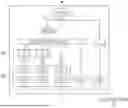

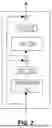





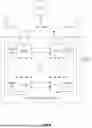
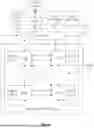





Sources:
- United States Patent and Trademark Office - verify current appl. status at the USPTO↗
Recent applications in this class:
- » 20260099697 2026-04-09
EXPERT SELECTION FROM MIXTURE OF EXPERTS IN LARGE LANGUAGE MODELS - » 20260099696 2026-04-09
ELECTRONIC APPARATUS FOR PROVIDING RECOMMENDATION INFORMATION AND OPERATING METHOD THEREOF - » 20260099695 2026-04-09
PYRAMID KEY-VALUE CACHE COMPRESSION FOR TRANSFORMER MODELS - » 20260093956 2026-04-02
PARAMETER-FREE ATTENTION - » 20260093955 2026-04-02
SERVER DEVICE, TERMINAL DEVICE, INFORMATION PROCESSING METHOD, AND INFORMATION PROCESSING SYSTEM - » 20260093954 2026-04-02
SYSTEMS AND METHODS FOR A TIME SERIES FORECASTING TRANSFORMER NETWORK - » 20260093953 2026-04-02
CACHE-AWARE DYNAMIC MODULE SELECTION - » 20260093952 2026-04-02
MANAGING INFERENCE MODEL CONSISTENCY - » 20260087312 2026-03-26
COMBINED DEEP LEARNING INFERENCE AND COMPRESSION USING SENSED DATA - » 20260087311 2026-03-26
CONTROLLING AGENTS USING AMBIGUITY-SENSITIVE NEURAL NETWORKS AND RISK-SENSITIVE NEURAL NETWORKS
Recent applications for this Assignee:
- » 20260105287 2026-04-16
ENERGY-BASED DIFFUSION LANGUAGE MODEL - » 20260093454 2026-04-02
FINE-GRAINED MIXED PRECISION FOR LARGE LANGUAGE MODEL INFERENCE - » 20260087713 2026-03-26
GENERATIVE ANIMATABLE GAUSSIAN AVATAR - » 20260087225 2026-03-26
INVERSE LITHOGRAPHY FOR HIGH QUALITY CURVY MASK GENERATION - » 20260086782 2026-03-26
HARDWARE CODE GENERATION FROM MULTIMEDIA SPECIFICATION DOCUMENTS - » 20260061605 2026-03-05
CONFIGURING A VISUAL LANGUAGE MODEL WITH SPATIAL UNDERSTANDING FOR ROBOTICS - » 20260057889 2026-02-26
SCENE-AWARE SPEECH RECOGNITION USING VISION-LANGUAGE MODELS - » 20260056367 2026-02-26
BIDIRECTIONAL MICRORING RESONATOR-BASED PHOTONIC LINK ARCHITECTURE - » 20260052198 2026-02-19
DYNAMIC PACKET COMPRESSION FOR TRANSMITTING NUMERICAL DATA - » 20260050562 2026-02-19
WIRE REDUCTION IN A HIGH PERFORMANCE INTERFACE