ROTOR AND ROTORCRAFT
US20260125152A1
2026-05-07
19/117,502
2023-07-11
Smart Summary: A rotor has a blade with special features on its surface. These features are called protruding structures, and they stick out from the blade. They are placed in a specific order along the length of the blade. Each pair of these protruding structures is at different heights, creating a height difference. This design may help improve the rotor's performance in flying machines. 🚀 TL;DR
Abstract:
A rotor includes a blade, a plurality of protruding structures protrude from the surface of the blade, the plurality of protruding structures are sequentially arranged at intervals in the spanwise direction of the blade, and a height difference is formed between every two adjacent protruding structures.
Inventors:
- Yifei ZHANG 51 🇨🇳 Beijing, China
- Lijun XU 5 🇨🇳 Beijing, China
- Longzhi ZHAO 1 🇨🇳 Beijing, China
- Tianming ZHAO 1 🇨🇳 Beijing, China
Applicant:
Interested in similar patents?
Get notified when new applications in this technology area are published.
Classification:
B64C27/467 » CPC main
Rotorcraft; Rotors peculiar thereto; Rotors; Blades Aerodynamic features
B64C2230/28 » CPC further
Boundary layer controls at propeller or rotor blades
Description
The disclosure claims the priority to Chinese Patent Application No. 202211679092.1, filed on Dec. 26, 2022 and entitled “rotary wing and rotary wing aircraft”, which is incorporated in its entirety herein by reference.
TECHNICAL FIELD
The disclosure relates to the technical field of aircrafts, and in particular to a rotary wing and a rotary wing aircraft.
BACKGROUND
A rotary wing aircraft is capable of vertical take-off and landing and low-altitude flight. With particular flight advantages, it has been widely applied to military and civilian fields, and will function as a dominant vehicle of urban air traffic in future.
SUMMARY
An objective of the invention is to provide a rotary wing and a rotary wing aircraft, so as to solve the technical problem in the related art and improve a noise reduction effect of the rotary wing.
In a first aspect, the disclosure provides a rotary wing. The rotary wing includes a blade, where a plurality of protruding structures are arranged on a surface of the blade in a protruding manner, the plurality of protruding structures are sequentially arranged at intervals in a spanwise direction of the blade, and a height difference is provided between adjacent protruding structures.
As described in the above rotary wing, a height of the plurality of protruding structures is sequentially reduced in the spanwise direction of the blade to form a stepped distribution.
As described in the above rotary wing, a height difference between a protruding structure closest to a rotation center of the blade and a protruding structure farthest from the rotation center is 0.1 mm.
As described in the above rotary wing, the protruding structures are polygonal bosses.
As described in the above rotary wing, each polygonal boss includes a front portion, where the front portion has a triangular cross section.
As described in the above rotary wing, an inner angle closest to a leading edge of the blade in a triangle is greater than or equal to 30° and less than or equal to 90°.
As described in the above rotary wing, a height of the protruding structures satisfies:
t = kc Re 0.2 ,
-
- where
- t is the height of the protruding structures; and
- k is a proportionality coefficient, and k ranges from 0.01 to 0.2;
- c is a local chord length; and
- Re is a local Reynolds number.
As described in the above rotary wing, where the local Reynolds number satisfies the following requirement:
Re = ρω rc μ ,
where
-
- ρ is an air density;
- ω is a rotational angular velocity of the blade; and
- r is a local spanwise position; and
- μ is aerodynamic viscosity.
As described in the above rotary wing, the local Reynolds number is greater than or equal to 10000, and less than or equal to 500000.
As described in the above rotary wing, the protruding structures have a chordwise length greater than or equal to 0.05c and less than or equal to 0.2c, where c is a local chord length.
As described in the above rotary wing, a ratio of a spanwise width of the protruding structures to a chordwise length of the protruding structures is greater than 0.01 and less than 0.2.
As described in the above rotary wing, a ratio of spacing between adjacent protruding structures to a spanwise width of the protruding structures is greater than 0.1 and less than 2.
As described in the above rotary wing, spacing between the protruding structures and a leading edge of the blade is greater than or equal to 0.05c and less than or equal to 0.5c, where c is a local chord length.
In a second aspect, the disclosure further provides a rotary wing aircraft. The rotary wing aircraft includes the above rotary wing.
Compared with the related art, in the disclosure, the plurality of protruding structures are sequentially arranged at intervals in the spanwise direction of the blade, and a contact region with air is increased by means of the plurality of protruding structures having the height difference to achieve forced turbulence transition on a laminar separation bubble of the blade, such that an air flow is more closely attached to the surface of the blade, and a thickness of a boundary layer of a trailing edge is reduced. Thus, an occurrence region of noise is reduced, and the purpose of reducing the noise is achieved.
BRIEF DESCRIPTION OF THE DRAWINGS
FIG. 1 is a perspective view of an overall structure of a rotary wing according to an embodiment of the disclosure;
FIG. 2 is a front view of an overall structure of a rotary wing according to an embodiment of the disclosure;
FIG. 3 is a schematic structural diagram of a local position of a rotary wing according to an embodiment of the disclosure; and
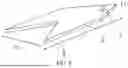
FIG. 4 is a perspective view of a protruding structure of a rotary wing according to an embodiment of the disclosure.
Description of reference numerals: 1—blade, 2—protruding structure, 3—main blade, 4—blade tip, 5—leading edge, 6—trailing edge, 7—front portion, and 8—recess.
DETAILED DESCRIPTION OF THE EMBODIMENTS
The embodiments described below with reference to the accompanying drawings are exemplary and are merely used to explain the disclosure, but cannot be interpreted as limiting the disclosure.
In the related art, a rotary wing aircraft is capable of vertical take-off and landing and low-altitude flight. With particular flight advantages, it has been widely applied to military and civilian fields, and will function as a dominant vehicle of urban air traffic in future. However, noise of the aircraft limits application scenarios of the rotary wing aircraft to a large extent, and the importance of reduction in aerodynamic noise of a propeller gradually emerges.
The disclosure provides a rotary wing and a rotary wing aircraft, so as to solve the technical problem in the related art and improve a noise reduction effect of the rotary wing. The rotary wing will be introduced below:
It should be noted herein that parameters involved in the disclosure are all defined in a common manner in the art. A blade in FIG. 2 is taken as an example. A wing section is defined as a two-dimensional section of the blade 1 at any position in a spanwise direction, a rotation center is set as an origin to establish a coordinate system, the rotation center is a center point for rotation of the blade 1, the blade 1 rotates about the rotation center, one end of the wing section close to the rotation center is a main blade 3, one end of the wing section away from the rotation center is a blade tip 4, and an extension direction from the main blade 3 to the blade tip 4 is defined as the spanwise direction (a left-to-right direction in FIG. 2). Correspondingly, a direction perpendicular to the spanwise direction is a chordwise direction. The chordwise direction of the blade 1 includes a leading edge 5 and a trailing edge 6. An extension direction from the trailing edge 6 to the leading edge 5 is a rotation direction of the blade.
With reference to FIG. 1 to FIG. 4, a rotary wing according to the disclosure includes a blade 1. A plurality of protruding structures 2 are arranged on a surface of the blade 1 in a protruding manner, the plurality of protruding structures 2 are sequentially arranged at intervals in a spanwise direction of the blade 1, and a height difference is provided between adjacent protruding structures 2. A contact region with air is increased by means of the plurality of protruding structures 2 having the height difference to achieve forced turbulence transition on a laminar separation bubble of the blade 1, such that an air flow is more closely attached to the surface of the blade 1, and a thickness of a boundary layer of a trailing edge is reduced. Thus, an occurrence region of noise is reduced, and the purpose of reducing the noise is reduced. According to an actual noise test, the rotary wing having the protruding structures 2 can reduce noise of up to 5 dBA under the same tension.
In the embodiment according to the disclosure, a height of the plurality of protruding structures 2 is sequentially reduced in the spanwise direction of the blade 1 to form a stepped distribution, thereby forcibly transiting the laminar separation bubble, effectively reducing a total sound pressure level, and further reducing nose of the whole blade 1. Preferably, the plurality of protruding structures 2 are distributed at equal intervals, a gap of the same size is provided between adjacent protruding structures 2, and a height difference between a height of a protruding structure 2 closest to the rotation center of the blade 1 and a height of a protruding structure 2 farthest from the rotation center of the blade 1 is 0.1 mm. In a feasible implementation, a height of a protruding structure closest to a rotation center of a blade is 0.2 mm, a height of a protruding structure 2 farthest from the rotation center of the blade 1 is 0.1 mm, and 40 to 50 protruding structures 2 are arranged between the two protruding structures. The height of the plurality of protruding structures 2 is linearly and progressively reduced. The protruding structure 2 farthest from the rotation center of the blade 1 is located at a tail end of a blade tip 4, and a local spanwise position r of the protruding structure 2 closest to the rotation center of the blade 1 is ¼ to ⅓ of a length R from the blade tip 4 to the rotation center of the blade 1.
Those skilled in the art may know that the plurality of protruding structures 2 may form distributions of other shapes. For example, the plurality of protruding structures 2 may be arranged in the spanwise direction of the blade 1 to form a zigzag distribution, and the plurality of protruding structures 2 are periodically changed in height in the spanwise direction of the blade 1.
In order to further reduce the noise, with reference to FIG. 3 and FIG. 4, the protruding structures 2 are polygonal bosses, and one ends of the polygonal bosses facing a leading edge 5 of the blade 1 form triangular front portions 7. Each front portion 7 includes two obliquely arranged outer wall surfaces. One ends of the two outer wall surfaces intersect with each other, and the other ends of the two outer wall surfaces are continuous with two side surfaces of the protruding structure 2 respectively. Openings of the front portions 7 are provided facing the trailing edge 6 of the blade 1, extension directions of center lines of the front portions 7 are parallel to a rotation direction of the blade 1, and the front portions 7 of the plurality of protruding structures 2 are arranged parallel to one another. Preferably, an inner angle closest to the leading edge 5 of the blade in a triangle is greater than or equal to 30° and less than or equal to 90°. Such an optimal design of front ends of the protruding structures 2 can weaken eddy current at the front ends of the protruding structures 2 and reduce interference of the eddy current, thereby achieving the purpose of reducing the noise.
In the embodiment according to the disclosure, one ends of the protruding structures 2 facing the trailing edge 6 of the blade 1 are provided with recesses 8. The recesses 8 are recesses that are recessed to be formed at rears of the protruding structures 2. Each recess has a shape of an arrow, and includes two obliquely arranged inner wall surfaces. One ends of the two inner wall surfaces intersect with each other, and the other ends of the two inner wall surfaces are continuous with the two side surfaces of the protruding structure 2 respectively. Openings of the recesses 8 are provided facing the trailing edge 6 of the blade 1, extension directions of center lines of the recesses 8 are parallel to the rotation directions of the blade 1, and the recesses 8 of the plurality of protruding structures 2 are arranged parallel to one another. Preferably, an included angle between the recesses 8 is located between 30° and 90°. Such an optimal design for rear ends of the protruding structures 2 can weaken the eddy current at the rear ends of the protruding structures 2, and reduce the interference of the eddy current, thereby achieving the purpose of reducing the noise.
In the embodiment according to the disclosure, the protruding structures 2 have a set height t, and the height satisfies:
t = kc Re 0.2 .
Specifically, t is the height of the protruding structures 2, k is a proportionality coefficient, c is a local chord length, i.e. a distance from the leading edge 5 to the trailing edge 6 of a wing section of a cross section of a station, and Re is a local Reynolds number.
A size and arrangement form of the protruding structures 2 are controlled, such that a total sound pressure level may be effectively reduced. It may be known from a first formula that the height t of the protruding structures 2 is changed, and is mainly changed according to a value of the local Reynolds number Re. Specifically, in the spanwise direction of the blade 1, the farther the local Reynolds number is from the rotation center, the larger the local Reynolds number Re is, and the smaller the height t of the protruding structures 2 is. The height of the protruding structures 2 is reduced in a gradient manner in the spanwise direction, such that the air flow is more closely attached to the surface of the blade 1. Thus, the laminar separation bubble is forcibly transited, and noise of the whole blade 1 is optimally reduced.
In the embodiment according to the disclosure, k ranges from 0.01 to 0.2, and includes endpoint values. A proper mapping relationship is maintained between the local chord length c, the local Reynolds number Re, and the height t of the protruding structures 2 based on a value of the proportionality coefficient k. After the local chord length c and the local Reynolds number Re are changed, the height of the protruding structures 2 is appropriately changed accordingly. A change of the height t of the protruding structures 2 can balance both aircraft aerodynamic performance and noise suppression, and reduce the noise of the rotary wing to some extent without affecting aerodynamic efficiency of the blade 1.
Further, a value of Re satisfies:
Re = ρω rc μ .
-
- ρ is an air density, ω is a rotational angular velocity of the blade 1, r is a local spanwise position, c is a local chord length, and μ is aerodynamic viscosity.
The local Reynolds number Re is changed along with changes of values of the air density ρ, the rotational angular velocity ω of the blade 1, the local spanwise position r, the local chord length c and the aerodynamic viscosity μ. After a rotation speed of the blade 1 is specified, the local Reynolds number Re is mainly related to the local spanwise position r and the local chord length c. The larger the local Reynolds number Re is, the smaller the height t of the protruding structures 2 is, the smaller the local Reynolds number Re is, and the larger the height t of the protruding structures 2 is. Protruding structures 2 having a larger height approaches the rotation center. Thus, the aerodynamic efficiency of a rotary wing aircraft is improved. The aerodynamic efficiency of the rotary wing aircraft is improved, and the lower rotation speed is required in a case of the same lifting surface distribution, such that it is possible to reduce the noise generated in a flight process of the rotary wing aircraft. Preferably, the local Reynolds number is greater than or equal to 10000 and less than or equal to 500000 to produce a desired noise reduction effect.
In the embodiment according to the disclosure, the protruding structures 2 have a set chordwise length L, and the chordwise length L is greater than or equal to 0.05c and less than or equal to 0.2c. L is the chordwise length of the protruding structures 2, and c is a local chord length. The chordwise length L of the protruding structures 2 maintains a proportional relationship with the local chord length c. The longer the local chord length c is, the longer the chordwise length L of the protruding structures 2 is, and the larger an action region of the protruding structures 2 is. Thus, the occurrence region of the noise is reduced.
In the embodiment according to the disclosure, the protruding structures 2 have a set spanwise width h1, and a ratio of the spanwise width h1 to the chordwise length L of the protruding structures is greater than 0.01 and less than 0.2. Specifically, h1 is a spanwise width of the protruding structures 2, and L is the chordwise length of the protruding structures 2. The protruding structures 2 have elongated structures, such that the air flow may smoothly flow to the trailing edge to obtain better aerodynamic performance and a better noise reduction effect.
In the embodiment according to the disclosure, a ratio of spacing h2 between the plurality of protruding structures 2 to a spanwise width h1 of the protruding structures 2 is greater than 0.1 and less than 2. Specifically, h1 is the spanwise width of the protruding structures 2, and h2 is the spacing between two adjacent protruding structures 2. In order to further reduce noise generated by rotation of the blade 1, with reference to FIG. 1 and FIG. 2, the plurality of protruding structures 2 are arranged close to the leading edge 5 of the blade 1. Specifically, the spacing between the protruding structures 2 and the leading edge 5 of the blade 1 is greater than or equal to 0.05c, and less than or equal to 0.5c.
Specifically, d is the spacing between the protruding structures 2 and the leading edge 5 of the blade 1, and c is the local chord length. According to a flow characteristic of a low Reynolds number laminar flow wing section, the laminar separation bubble is located near the leading edge 5 of the blade 1. The protruding structures 2 are arranged close to the leading edge 5 of the blade 1, such that the laminar separation bubble of the leading edge 5 is forcibly transited to interrupt spanwise flow of air on the leading edge 5 of the blade 1 when the blade 1 rotates, thereby reducing eddy current formed by the leading edge 5 of the blade 1, and further reducing noise generated when the blade 1 rotates.
With reference to FIG. 1 to FIG. 4, the protruding structures 2 have a cross section of an arrow-shaped structure. Those skilled in the art may know that the protruding structures 2 may further include a regular cross section of a circular cross section, a regular cross section or a polygonal cross section, or an irregular cross section, which is not limited herein.
Based on the above embodiment, the disclosure further provides a rotary wing aircraft. The rotary wing aircraft includes the above rotary wing, and has all the beneficial effects of the rotary wing, which will not be repeated herein.
The construction, features, and effects of the disclosure are described in detail according to the embodiments shown in the drawings above, what are described above are only one or more embodiments of the disclosure, but the disclosure does not limit the scope of implementation as shown in the drawings, and any changes made according to the concept of the disclosure, or equivalent embodiments modified to equivalent changes should all fall within the scope of protection of the disclosure when still not falling beyond the scope covered by the description and drawings.
Claims
1. A rotary wing, comprising a blade, wherein a plurality of protruding structures are arranged on a surface of the blade, the plurality of protruding structures are sequentially arranged at intervals in a spanwise direction of the blade, and a height difference is provided between adjacent protruding structures.
2. The rotary wing according to claim 1, wherein a height of the plurality of protruding structures is sequentially reduced in the spanwise direction of the blade to form a stepped distribution.
3. The rotary wing according to claim 2, wherein a height difference between a protruding structure closest to a rotation center of the blade and a protruding structure farthest from the rotation center is 0.1 mm.
4. The rotary wing according to claim 1, wherein the protruding structures are polygonal bosses.
5. The rotary wing according to claim 4, wherein each polygonal boss comprises a front portion, wherein the front portion has a triangular cross section.
6. The rotary wing according to claim 5, wherein an inner angle closest to a leading edge of the blade in a triangle is greater than or equal to 30° and less than or equal to 90°.
7. The rotary wing according to claim 1, wherein a height of the protruding structures satisfies:
t = k c Re 0.2 ,
wherein
t is the height of the protruding structures; and
k is a proportionality coefficient, and k ranges from 0.01 to 0.2;
c is a local chord length; and
Re is a local Reynolds number.
8. The rotary wing according to claim 7, wherein the local Reynolds number satisfies the following requirement:
Re = ρω rc μ ,
wherein
ρ is an air density;
ω is a rotational angular velocity of the blade;
r is a local spanwise position; and
μ is aerodynamic viscosity.
9. The rotary wing according to claim 8, wherein the local Reynolds number is greater than or equal to 10000, and less than or equal to 500000.
10. The rotary wing according to claim 1, wherein the protruding structures have a chordwise length greater than or equal to 0.05c and less than or equal to 0.2c, wherein c is a local chord length.
11. The rotary wing according to claim 1, wherein a ratio of a spanwise width of the protruding structures to a chordwise length of the protruding structures is greater than 0.01 and less than 0.2.
12. The rotary wing according to claim 1, wherein a ratio of spacing between adjacent protruding structures to a spanwise width of the protruding structures is greater than 0.1 and less than 2.
13. The rotary wing according to claim 1, wherein spacing between the protruding structures and a leading edge of the blade is greater than or equal to 0.05c and less than or equal to 0.5c, wherein c is a local chord length.
14. A rotary wing aircraft, comprising
a rotary wing, wherein the rotary wing comprises a blade, a plurality of protruding structures are arranged on a surface of the blade, the plurality of protruding structures are sequentially arranged at intervals in a spanwise direction of the blade, and a height difference is provided between adjacent protruding structures.
15. The rotary wing aircraft according to claim 14, wherein a height of the plurality of protruding structures is sequentially reduced in the spanwise direction of the blade to form a stepped distribution.
16. The rotary wing aircraft according to claim 15, wherein a height difference between a protruding structure closest to a rotation center of the blade and a protruding structure farthest from the rotation center is 0.1 mm.
17. The rotary wing aircraft according to claim 14, wherein the protruding structures are polygonal bosses.
18. The rotary wing aircraft according to claim 17, wherein each polygonal boss comprises a front portion, wherein the front portion has a triangular cross section.
19. The rotary wing aircraft according to claim 18, wherein an inner angle closest to a leading edge of the blade in a triangle is greater than or equal to 30° and less than or equal to 90°.
20. The rotary wing aircraft according to claim 14, wherein a height of the protruding structures satisfies:
t = kc Re 0.2 ,
wherein
t is the height of the protruding structures; and
k is a proportionality coefficient, and k ranges from 0.01 to 0.2;
c is a local chord length; and
Re is a local Reynolds number.
Images & Drawings included:





Sources:
- United States Patent and Trademark Office - verify current appl. status at the USPTO↗
Similar patent applications:
- » 20170210465
Bottom abutment device for a rotorcraft rotor, a rotorcraft rotor, and a rotorcraft - » 20150158582
Beam for a rotorcraft rotor and rotorcraft rotor - » 20160152332
Rotorcraft tail rotor, a rotorcraft fitted with such a tail rotor, and a method of statically and/or dynamically balancing a rotorcraft tail rotor - » 20170113792
System for controlling a rotorcraft rotor, a rotorcraft fitted with such a system, and an associated control method - » 20160297519
System for controlling a rotorcraft rotor, a rotorcraft fitted with such a system, and an associated control method - » 20170088281
Device for regulating the speed of rotation of a rotorcraft rotor, a rotorcraft fitted with such a device, and an associated regulation method - » 20110097193
Device for reducing vibration generated by rotorcraft rotor, and rotorcraft provided with such device - » 20180312250
Device for regulating a setpoint for a speed of rotation of a rotorcraft rotor, a rotorcraft fitted with such a device, and an associated method of regulation - » 20160280366
Flapping abutment mechanism for a lift assembly, a rotorcraft rotor including the abutment mechanism, and a rotorcraft - » 20150239556
Rotorcraft rotor including a flapping abutment mechanism, and a rotorcraft
Recent applications in this class:
- » 20250319965 2025-10-16
LOW DRAG AIRFOIL - » 20250010983 2025-01-09
METHOD OF STABILIZING ARTICULATED ROTOR BLADE - » 20240067333 2024-02-29
Method of stabilizing articulated rotor blade - » 20230322374 2023-10-12
Removable trailing edge assembly and system for rotor blade trailing edge actuation - » 20230322373 2023-10-12
High speed rotor blade design - » 20230303241 2023-09-28
Rotor blade using adaptive trailing edge assembly - » 20230242248 2023-08-03
ROTOR BLADE NOZZLE GENERATING AIR PRESSURE SYSTEM - » 20230122833 2023-04-20
Flight duration enhancement for single rotorcraft and multicopters - » 20220111955 2022-04-14
Method for improving the aerodynamic behavior of rotorcraft blades during hovering flight by moving the leading edge of the aerodynamic profiles of these blades - » 20210371095 2021-12-02
Method for constructing a rotor blade intended for a rotorcraft, blade and rotorcraft