SHEET MATERIAL INCLUDING METAL ORGANIC FRAMEWORK
US20260125852A1
2026-05-07
18/879,378
2023-06-14
Smart Summary: A new type of sheet material combines paper with special fibers and metal. The paper is made from fiber material, which gives it strength. It also includes a fibrous metal that adds extra durability. Additionally, there are metal organic frameworks made of metal and organic parts, which are attached to the fibrous metal. This combination makes the sheet material strong and potentially useful for various applications. 🚀 TL;DR
Abstract:
A sheet material 10 includes: paper 20 containing a fiber material 25; a fibrous metal 30 included in the paper 20; and metal organic frameworks 50 comprised of a metal and organic ligands, and the metal of the metal organic frameworks 50 is bonded to the fibrous metal 30.
Applicant:
Interested in similar patents?
Get notified when new applications in this technology area are published.
Classification:
D21H13/48 » CPC main
Pulp or paper, comprising synthetic cellulose or non-cellulose fibres or web-forming material; Inorganic fibres or flakes; Non-siliceous fibres, e.g. from metal oxides Metal or metallised fibres
Description
TECHNICAL FIELD
The present invention relates to a sheet material including metal organic frameworks. This application claims the benefit of priority to Japanese Patent Application No. 2022-106178 filed on Jun. 30, 2022. The entire contents of this application are hereby incorporated herein by reference.
BACKGROUND ART
In recent years, metal organic frameworks (MOFs) have been actively studied as materials for use in gas storage and separation, deodorization, purification of air and water, and other purposes. Metal organic frameworks are comprised of metals and organic ligands and have various structures. Metal organic frameworks contain regularly arranged minute pores and have significantly large surface area. Thus, metal organic frameworks are expected to be used in a wide range of fields. Patent Document 1, for example, discloses a sheet material in which porous metal complexes are fixed to a thermoplastic resin nonwoven fabric. In Patent Document 1, porous metal complex particles are adhered to the surfaces of fibers before being united into a nonwoven fabric, incorporated with a sticking agent in a papermaking process, or sprinkled onto a nonwoven sheet and then fixed by application of heat.
CITATION LIST
Patent Document
-
- Patent Document 1: Japanese Patent Application Publication No. 2019-162573
SUMMARY OF INVENTION
Technical Problems
Metal organic frameworks, which include significantly minute particles, are difficult to handle. When metal organic frameworks are fixed to another member such as paper or a nonwoven fabric, the metal organic frameworks are insufficiently fixed to the other member, and as a result, might be detached.
The present invention has been made in view of the foregoing problems, and has an object of providing a sheet material in which metal organic frameworks are more securely fixed to paper.
Solution to Problem
Through an intensive study, inventors of the present invention found that metal organic frameworks are more firmly fixed to paper not by fixing metal organic frameworks to the paper without any treatment but by bonding a metal of the metal organic frameworks to a metal included in the paper.
A sheet material according to the present invention includes: paper containing a fiber material; fibrous metal included in the paper; and metal organic frameworks comprised of a metal and organic ligands, wherein the metal of the metal organic frameworks is bonded to the fibrous metal.
In the sheet material according to the present invention, since the metal of the metal organic frameworks are bonded to the fibrous metal included in the paper, the metal organic frameworks are more firmly fixed to the paper than a case where the metal organic frameworks are bonded to paper without any treatment. This further suppresses detachment of the metal organic frameworks from the sheet material. In addition, since the metal is fibrous, the fiber material of the paper and the fibrous metal intertwine with each other to be more firmly fixed so that detachment of the metal organic frameworks is thereby suppressed. Furthermore, the metal organic frameworks can be arranged in a wider area in the paper.
Advantages of Invention
The present invention can provide a sheet material in which metal organic frameworks are more securely fixed to paper.
BRIEF DESCRIPTION OF THE DRAWINGS
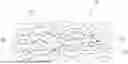
FIG. 1 is a partially enlarged cross-sectional view of a portion of a sheet material according to a first preferred embodiment.
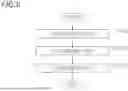
FIG. 2 is a flowchart showing a first production method that is a method for producing the sheet material according to the first preferred embodiment.
FIG. 3 is a flowchart showing a second production method that is a method for producing a sheet material according to the first preferred embodiment.
FIG. 4 is a partially enlarged cross-sectional view of a portion of a sheet material according to a second preferred embodiment.
FIG. 5 is a partially enlarged cross-sectional view of a portion of a sheet material according to a third preferred embodiment.
FIG. 6 is a flowchart showing a third production method that is a method for producing a sheet material according to the third preferred embodiment.
FIG. 7A is a perspective view of a formed body.
FIG. 7B is a front view of the formed body.
FIG. 8 is a flowchart showing a first production method of a formed body.
FIG. 9 is a flowchart showing a second production method of a formed body.
DESCRIPTION OF PREFERRED EMBODIMENTS
Preferred embodiments of a sheet material according to the present invention will be described with reference to the drawings. The sheet material is a member for use in adsorbing a specific gas, for example. The preferred embodiments described herein are, of course, not intended to particularly limit the present invention. Elements and features having the same functions are denoted by the same reference characters, and description for the same elements and features will not be repeated or will be simplified as appropriate.
First Preferred Embodiment
As illustrated in FIG. 1, a sheet material 10 includes paper 20, a metal 30 included in the paper 20, and metal organic frameworks 50 bonded to the metal 30. Ther term “bond” herein includes metallic bond and bond by intermolecular forces (e.g., adhesion). In this preferred embodiment, at least a portion of the metal 30 is located inside the paper 20. For example, 70 wt % to 100 wt % of the metal 30 included in the paper 20 is located inside the paper 20 and is not exposed to the outside. In this example, all the metal 30 is located inside the paper 20. It is sufficient that at least a portion of the metal 30 is located at the surface of the paper 20. For example, 70 wt % to 100 wt % of the metal 30 included in the paper 20 may be located at the surface of the paper 20.
As shown in FIG. 2, a method for producing the sheet material 10 according to this preferred embodiment (hereinafter also referred to as a first production method) includes a production step S10 of producing paper 20 by using a fiber material 25 (see FIG. 1) and a metal 30, and a synthesis step S20 of synthesizing metal organic frameworks 50 in the produced paper 20. In the production step S10 of the first production method, paper 20 is produced by using the fiber material 25 and the metal 30 with, for example, a wet paper making method. In the production step S10, a binder described later may be used. The synthesis step S20 will be described later.
The paper 20 includes the fiber material 25. Examples of the fiber material 25 include vegetable-based natural fibers, animal-based natural fibers, chemical fibers (man-made fibers), and inorganic fibers (e.g., glass fibers and carbon fibers). The paper 20 may be comprised of one fiber material 25 or two or more fiber materials 25. The fiber material 25 has an average length of approximately 0.01 μm to 30 mm. The fiber material 25 has an average diameter of approximately 1 nm to 0.1 mm. The average length and the average diameter can be typically values obtained by measurements based on electron microscopic observation. The paper 20 preferably includes a binder. Examples of the binder include acrylic binders such as a polyacrylate resin and a polymethacrylate resin, a polystyrene resin, a polyvinyl acetate resin, a polyurethane resin, and a polyvinyl alcohol resin. The paper 20 may include a metal oxide. Examples of the metal oxide include alumina (Al2O3), magnesia (MgO), silica (SiO2), titania (TiO), aluminium hydroxide (Al(OH)3), and tin oxides (Sno, SnO2).
The metal 30 of this preferred embodiment has a fibrous shape, for example. The fibrous metal 30 intertwines with the fiber material 25 of the paper 20, and thus, is firmly fixed to the fiber material 25. At least a portion of the fibrous metal 30 may be bent. The metal 30 has an average length of approximately 10 μm to 30 μm. The metal 30 has an average diameter of approximately 5 μm to 200 μm. The average diameter of the fibrous metal 30 is different from the average diameter of the fiber material 25. Accordingly, the structure is more complicated, and the metal 30 and the fiber material 25 more tightly intertwine with each other. The diameter of at least a portion of the fibrous metal 30 is wider than the average diameter of the fiber material 25. Accordingly, the metal 30 more tightly intertwines with the fiber material 25. The average length of the fibrous metal 30 is different from the average length of the fiber material 25. Accordingly, the structure is more complicated, and the metal 30 and the fiber material 25 more tightly intertwine with each other. The length of at least a portion of the fibrous metal 30 is larger than the average length of the fiber material 25. Accordingly, heat transfer is enhanced so that efficiency in desorbing a material adsorbed by the metal organic frameworks 50 thereby increases. The metal 30 is, for example, a metal of the same type as a metal of metal organic frameworks 50 described later. The metal 30 may be different from the metal of the metal organic frameworks 50. Examples of the metal 30 include metals belonging to Group 1 through 12 of the periodic table, gold, platinum, silver, copper, ruthenium, tin, palladium, rhodium, iridium, osmium, nickel, cobalt, zinc, iron, yttrium, magnesium, manganese, titanium, zirconium, hafnium, calcium, cadmium, vanadium, chromium, molybdenum, and scandium. The metal 30 can be one or more of the metals described above as appropriate depending on application, for example. The metal 30 may be a metal compound (e.g., metal oxide) including one or more of the metals described above.
The metal organic frameworks 50 are comprised of a metal (metal ions) and organic ligands. More specifically, the metal organic frameworks 50 are metal complexes with porous three-dimensional structures (i.e., porous structures) each comprised of a transition metal (transition metal ions) and organic ligands bonding the transition metal. The metal organic frameworks 50 of this preferred embodiment are bonded to the metal 30. More specifically, the metal of the metal organic frameworks 50 is bonded to the metal 30. The metal organic frameworks are synonymous with porous coordination polymer (PCP).
The metal constituting the metal organic frameworks 50 is not particularly limited as long as the metal can form a plurality of pores that can accommodate specific molecules by bonding to organic ligands. Examples of the metal include metals belonging to Group 1 through 12 of the periodic table, gold, platinum, silver, copper, ruthenium, tin, palladium, rhodium, iridium, osmium, nickel, cobalt, zinc, iron, yttrium, magnesium, manganese, titanium, zirconium, hafnium, calcium, cadmium, vanadium, chromium, molybdenum, and scandium. The metal constituting the metal organic frameworks 50 may be the same as the metal 30 or may be different from the metal 30. The metal constituting the metal organic frameworks 50 is preferably the same as the metal 30.
Organic ligands constituting the metal organic frameworks 50 are not particularly limited as long as the organic ligands are organic compounds including two or more sites enabling coordinate bond with a metal (metal ions) in each molecule and capable of forming a plurality of pores for accommodating specific molecules by bonding to a metal (metal ions). Examples of the organic ligands include dicarboxylic acid and a derivative thereof, tricarboxylic acid and a derivative thereof, tetracarboxylic acid and a derivative thereof, imidazoles and derivatives thereof, pyrazoles and derivatives thereof, triazoles and derivatives thereof, tetrazoles and derivatives thereof, pyridines and derivatives thereof, pyrimidines and derivatives thereof, and triazines and derivatives thereof. Examples of dicarboxylic acid include terephthalic acid, isophthalic acid, 2-aminoterephthalic acid, 1,4-naphthalenedicarboxylic acid, fumaric acid, malonic acid, and adipic acid.
The metal organic frameworks 50 are synthesized as a precipitate from a solvent by dissolving a metal salt including the metal and the organic ligands described above in water or an organic solvent to cause reaction therebetween, for example. Examples of the organic solvent include methanol, ethanol, propanol, diethyl ether, tetrahydrofuran, hexane, cyclohexane, benzene, toluene, methylene chloride, chloroform, acetone, ethyl acetate, acetonitrile, dimethyl sulfoxide, and dimethylformamide. A mixed solvent as a mixture of two or more types of the organic solvent may be used. In the synthesis step S20 of the first production method, a solution in which the organic ligands described above are dissolved is applied onto the paper 20 including the fiber material 25 and the metal 30, for example, so that metal ions eluted from the metal 30 are thereby bonded to the organic ligands, thereby synthesizing metal organic frameworks 50 bonded to the metal 30. In this process, the metal of the metal organic frameworks is bonded to the metal 30. The solution to be applied onto the metal 30 may contain a metal salt including the same metal as the metal 30 or including a metal different from the metal 30. In a case where the sheet material 10 includes a first metal and a second metal different from the first metal, as the metal 30, the metal organic frameworks 50 preferably include first metal organic frameworks including the same metal as the first metal and second metal organic frameworks including the same metal as the second metal.
As described above, in the sheet material 10 according to this preferred embodiment, since the metal of the metal organic frameworks 50 is bonded to the fibrous metal 30 included in the paper 20, the metal organic frameworks 50 are more firmly fixed to the paper 20 than a case where the metal organic frameworks 50 are bonded to the paper 20 without any treatment. This further suppresses detachment of the metal organic frameworks 50 from the sheet material 10. In addition, since the metal 30 is fibrous, the fiber material 25 of the paper 20 intertwines with the fibrous metal 30 and is more firmly fixed to the fibrous metal 30 so that detachment of the metal organic frameworks 50 is thereby suppressed. Furthermore, the metal organic frameworks 50 can be arranged in a wider area in the paper 20.
In the sheet material 10 according to this preferred embodiment, at least a portion of the metal 30 may be located at the surface of the paper 20. In this case, since the metal 30 bonded to the metal of the metal organic frameworks 50 is located at the surface of the paper 20, functions of the metal organic frameworks 50 can be effectively exhibited at the surface of the paper 20. That is, gas or other materials pass along the surface of the paper 20 to thereby increase frequency of contact between the gas and the metal organic frameworks 50.
In the sheet material 10 according to this preferred embodiment, at least a portion of the metal 30 is located inside the paper 20. In this case, since at least a portion of the metal 30 bonded to the metal of the metal organic frameworks 50 is located inside the paper 20, the metal 30 is more firmly fixed to the fiber material 25 of the paper 20. In addition, since the gas or other materials pass through the paper 20, frequency of contact with the metal organic frameworks 50 can be increased. The entire metal 30 is preferably located inside the paper 20. Since the entire metal 30 is located inside the paper 20, the metal 30 is more firmly fixed to the paper 20, and in addition, frequency of contact of the gas or other materials passing through the paper 20 with the metal organic frameworks 50 can be further increased.
In the sheet material 10 according to this preferred embodiment, the metal 30 is the same as the metal of the metal organic frameworks 50. In this case, the metal 30 is more firmly fixed to the metal of the metal organic frameworks 50. The metal 30 is also more firmly fixed to the paper 20.
In the sheet material 10 according to this preferred embodiment, the metal 30 may be different from the metal of the metal organic frameworks 50. In this case, since different metals can be used, costs can be reduced.
In the sheet material 10 according to this preferred embodiment, the metal 30 may include the first metal and the second metal, and the metal organic frameworks 50 may include the first metal organic frameworks including the same metal as the first metal and the second metal organic frameworks including the same metal as the second metal. In this case, since the paper 20 includes different metal organic frameworks 50, the sheet material 10 is allowed to have a plurality of functions.
In the sheet material 10 according to this preferred embodiment, the paper 20 includes the binder. In this case, the fiber material 25 and the metal 30 are more firmly bonded to each other by the binder.
The method for producing the sheet material 10 according to this preferred embodiment includes the production step S10 of producing the paper 20 by using the fiber material 25 and the metal 30, and the synthesis step S20 of synthesizing the metal organic frameworks 50 in the produced paper 20. In this case, since the metal organic frameworks 50 are synthesized after the paper 20 has been produced, entering of the fiber material 25 into the metal organic frameworks 50 is suppressed.
In the method for producing the sheet material 10 according to this preferred embodiment, the paper 20 includes the binder, and in the production step S10, the paper 20 is produced by using the fiber material 25, the binder, and the metal 30. In this case, since the metal organic frameworks 50 are synthesized after the paper 20 including the binder has been produced, entering of the binder into the metal organic frameworks 50 is suppressed. The use of the binder enhances strength of the paper 20.
The method for producing the sheet material 10 is not limited to the first production method described above. As shown in FIG. 3, another method for producing the sheet material 10 (hereinafter referred to as the second production method) includes: a synthesis step S110 of synthesizing metal organic frameworks 50 in a metal 30; and a production step S120 of producing paper 20 by using the metal organic frameworks 50 bonded to the metal 30 and a fiber material 25. In the synthesis step S110 of the second production method, a solution in which the organic ligands described above are dissolved is applied onto the metal 30, for example, so that metal ions eluted from the metal 30 are thereby bonded to the organic ligands, thereby synthesizing metal organic frameworks 50 bonded to the metal 30. In this process, the metal of the metal organic frameworks is bonded to the metal 30. The solution to be applied to the metal 30 may contain a metal salt including the same metal as the metal 30 or a metal salt including a metal different from the metal 30. In the production step S120 of the second production method, the paper 20 is produced by using the metal organic frameworks 50 bonded to the metal 30 and the fiber material 25 with, for example, a wet paper making method. In the production step S120, a binder is preferably used.
In the second production method, the metal organic frameworks 50 are first bonded to the metal 30, and thus, the metal organic frameworks 50 can be synthesized without any constraints by properties of the fiber material 25 under optimum conditions.
Second Preferred Embodiment
In the first preferred embodiment described above, the metal 30 of the sheet material 10 has a fibrous shape, but the present invention is not limited to this example. As illustrated in FIG. 4, a sheet material 110 may include paper 20, a particulate metal 130 included in the paper 20, and metal organic frameworks 50 bonded to the metal 130. In the case where the metal 130 is particulate, the metal 130 is preferably a porous body. The metal 130 has an average particle size of approximately 5 nm to 1 mm. The average particle size may be typically a value obtained by measurements based on electron microscopic observation. In a manner similar to the sheet material 10 described above, the sheet material 110 is produced by a first production method and a second production method.
In the sheet material 110 according to this preferred embodiment, the metal 130 is particulate. In this case, metal organic frameworks 50 can be partially placed in the paper 20.
In the sheet material 110 according to this preferred embodiment, the metal 130 is a porous body. In this case, the metal 130 has a larger surface area, and thus, a larger amount of metal organic frameworks 50 can be bonded to the metal 130.
Third Preferred Embodiment
In the first and second preferred embodiments, the metal 30 is located inside the paper 20, but the present invention is not limited to this example. As illustrated in FIG. 5, a sheet material 210 includes paper 20, a metal 230 included in the paper 20, and metal organic frameworks 50 bonded to the metal 230. In this preferred embodiment, at least a portion of the metal 230 is located at a surface 20A of the paper 20. For example, 70 wt % to 100 wt % of the metal 230 is located at the surface 20A of the paper 20, and exposed to the outside. In this preferred embodiment, the entire metal 230 is located at the surface 20A of the paper 20.
As shown in FIG. 6, a method for producing the sheet material 210 according to this preferred embodiment (also referred to as a third production method) includes: a preparation step S210 of preparing paper 20; a placement step S220 of placing the metal 230 at the surface 20A of the paper 20; and a synthesis step S230 of synthesizing metal organic frameworks 50 in the metal 230 placed at the surface 20A of the paper 20. In the preparation step S210 of third production method, the paper 20 is prepared. That is, previously produced paper 20 may be prepared, or paper 20 may be prepared by originally producing paper 20 with, for example, a wet paper making method. In the placement step S220 of the third production method, the metal 230 is placed on the surface 20A of the paper 20 by, for example, chemical vapor deposition (CVD) or physical vapor deposition (PVD). The metal 230 is placed at the surface 20A of the paper 20 by, for example, metal evaporation, plating, or sputtering. Accordingly, the metal 230 can be uniformly placed over the entire surface 20A of the paper 20. The metal 230 placed in the placement step S220 is particulate. The metal 230 has an average particle size smaller than an average particle size of the metal 130 of the second preferred embodiment, and is approximately 5 nm to 1 mm. In the synthesis step S230 of the third production method, a solution in which the organic ligands described above are dissolved is applied onto the metal 230 placed at the surface 20A of the paper 20, for example, so that metal ions eluted from the metal 230 are thereby bonded to the organic ligands, thereby synthesizing metal organic frameworks 50 bonded to the metal 230. More specifically, the metal of the metal organic frameworks 50 is bonded to the metal 230. The solution to be applied onto the metal 230 may contain a metal salt including the same metal as the metal 230 or a metal salt including a metal different from the metal 230. In the placement step S220, a fibrous metal may be placed at the surface 20A of the paper 20.
In sheet material 210 according to this preferred embodiment, the metal 230 is placed at the surface 20A of the paper 20. In this case, since the metal 230 to which the metal organic frameworks 50 are bonded is located at the surface 20A of the paper 20, functions of the metal organic frameworks 50 can be effectively exhibited at the surface 20A of the paper 20. That is, gas or other materials pass along the surface 20A of the paper 20 to thereby increase frequency of contact between the gas and the metal organic frameworks 50.
The method for producing the sheet material 210 according to this preferred embodiment includes: the placement step S220 of placing the metal 230 at the surface 20A of the paper 20; and the synthesis step S230 of synthesizing the metal organic frameworks 50 in the metal 230 placed at the surface 20A of the paper 20. In this case, the metal organic frameworks 50 can be more uniformly synthesized over the entire surface 20A of the paper 20.
In the method for producing the sheet material 210 according to this preferred embodiment, in the placement step S220, the metal 230 is placed at the surface 20A of the paper 20 by chemical vapor deposition or physical vapor deposition. In this case, the metal 230 can be easily placed at the surface 20A of the paper 20. The metal 230 is preferably placed at the surface 20A of the paper 20 by metal evaporation, plating, or sputtering. In this case, the metal 230 can be more uniformly placed at the surface 20A of the paper 20.
FIGS. 7A and 7B are views illustrating an example of a formed body 100 having a honeycomb structure. The formed body 100 is comprised of the sheet material 10, the sheet material 110, or the sheet material 210 described above. The formed body 100 includes, for example, the paper 20 including the fiber material 25, the metal 30 included in the paper 20, and the metal organic frameworks 50 comprised of a metal and organic ligands and bonded to the metal 30. The formed body 100 has a honeycomb structure. The formed body 100 has a cylindrical shape having a honeycomb structure therein, for example. The shape of the formed body 100 is not limited to the cylindrical shape. The formed body 100 is used for purifying exhaust gas emitted from a general-purpose engine of a device such as a molded body or an electric generator, for example.
As shown in FIG. 8, a method for producing the formed body 100 (hereinafter referred to as a first formed body production method) includes: a preparation step S310 of preparing paper 20 including a fiber material 25 and a metal 30; a production step S320 of producing an intermediate having a honeycomb structure by using the paper 20; and a synthesis step S330 of synthesizing metal organic frameworks 50 in the produced intermediate. In the preparation step S310 of the first formed body production method, the paper 20 including the fiber material 25 and the metal 30 is prepared. That is, previously produced paper 20 may be prepared, or paper 20 may be prepared by originally producing paper 20 with, for example, a wet paper making method. The metal included in the paper 20 may be the metal 130 or the metal 230 described above. In the production step S320 of the first formed body production method, a plurality of sheets of paper 20 are bent as appropriate and adhered to one another with, for example, an adhesive, thereby producing the intermediate (not shown) with the honeycomb structure. In the synthesis step S330 of the first formed body production method, a solution in which the organic ligands described above are dissolved is applied onto the metal 30 included in the intermediate with the honeycomb structure, for example, so that metal ions eluted from the metal 30 are thereby bonded to the organic ligands, thereby synthesizing metal organic frameworks 50 bonded to the metal 30. The solution to be applied to the metal 30 may contain a metal salt including the same metal as the metal 30 or a metal salt including a metal different from the metal 30.
In the first formed body production method, although the paper 20 is bent and adhered in forming the honeycomb structure, since the metal organic frameworks 50 are synthesized after the honeycomb structure has been formed, stress generated in forming the honeycomb structure is not applied to the metal organic frameworks 50, and the state of the metal organic frameworks 50 can be maintained.
The method for producing the formed body 100 is not limited to the first formed body production method. As shown in FIG. 9, another method for producing the formed body 100 (hereinafter referred to as a second formed body production method) includes: a preparation step S410 of preparing a sheet material 10 including paper 20, a metal 30, and metal organic frameworks 50 bonded to the metal 30; and a formation step S420 of forming a honeycomb structure by using the sheet material 10. In the preparation step S410 of the second formed body production method, the sheet material 10 produced by the first production method or the second production method described above is prepared, for example. In the preparation step S410, the sheet material 110 or the sheet material 210 may be prepared instead of the sheet material 10. In the formation step S420 of the second formed body production method, the plurality of sheet materials 10 are bent as appropriate and adhered to one another with, for example, an adhesive, thereby producing a formed body 100 with a honeycomb structure.
In the second formed body production method, since the honeycomb structure is formed by using the sheet material 10 including the metal organic frameworks 50, the metal organic frameworks 50 can be more uniformly disposed over the entire honeycomb structure of the sheet material 10.
The foregoing description is directed to the preferred embodiments of the present disclosure. The preferred embodiments described above, however, are merely examples, and the present disclosure can be performed in various modes.
In the preferred embodiments described above, the paper 20 includes one of the fibrous metal 30 and the particulate metal 130, but may include both the fibrous metal 30 and the particulate metal 130.
DESCRIPTION OF REFERENCE CHARACTERS
-
- 10 sheet material
- 20 paper
- 20A surface
- 25 fiber material
- 30 metal
- 50 metal organic framework
- 100 formed body
- 110 sheet material
- 130 metal
- 210 sheet material
- 230 metal
Claims
What is claimed is:1. A sheet material comprising:
paper containing a fiber material;
a fibrous metal included in the paper; and
metal organic frameworks comprised of a metal and organic ligands, wherein
the metal of the metal organic frameworks is bonded to the fibrous metal.
2. The sheet material according to claim 1, wherein at least a portion of the fibrous metal is located at a surface of the paper.
3. The sheet material according to claim 1, wherein at least a portion of the fibrous metal is located inside the paper.
4. The sheet material according to any one of claims 1 to 3, wherein the fibrous metal is identical to the metal of the metal organic frameworks.
5. The sheet material according to any one of claims 1 to 3, wherein the fibrous metal is different from the metal of the metal organic frameworks.
6. The sheet material according to any one of claims 1 to 3, wherein
the fibrous metal includes a first metal and a second metal, and
the metal organic frameworks include first metal organic frameworks including a metal identical to the first metal and second metal organic frameworks including a metal identical to the second metal.
7. The sheet material according to any one of claims 1 to 3, wherein the paper includes a binder.
8. A method for producing a sheet material including paper containing a fiber material, a first metal included in the paper, and metal organic frameworks comprised of a second metal and organic ligands, the first metal and the second metal being bonded to each other, the method comprising:
a production step of producing the paper by using the fiber material and the first metal; and
a synthesis step of synthesizing the metal organic frameworks in the produced paper.
9. The method according to claim 8, wherein
the paper includes a binder, and
in the production step, the paper is produced by using the fiber material, the binder, and the first metal.
10. A method for producing a formed body with a honeycomb structure including paper containing a fiber material, a first metal included in the paper, and metal organic frameworks comprised of a second metal and organic ligands, the first metal and the second metal being bonded to each other, the method comprising:
a preparation step of preparing the paper including the fiber material and the first metal;
a production step of producing an intermediate with the honeycomb structure by using the paper; and
a synthesis step of synthesizing the metal organic framework in the produced intermediate.
Images & Drawings included:




Sources:
- United States Patent and Trademark Office - verify current appl. status at the USPTO↗
Recent applications in this class:
- » 20220213651 2022-07-07
ELECTRICALLY CONDUCTIVE PAPER STRUCTURE, METHOD FOR MANUFACTURING SAME AND USE