Patent Applications published on Oct 26, 2006
Explore the 6,304 U.S. Patent Applications published on the 43rd week of 2006, including 3,781 applications that subsequently received a Patent Grant.
Featured patent applications from Oct 26, 2006
US20060238135A1
Physics
Semiconductor device comprising transistor having gate and drain connected through a current-voltage conversion element
When a signal inputted to a pixel is erased by setting potentials of a gate terminal and a source terminal of a driving transistor to be equal, a current slightly flows through the driving transistor in some cases, which leads to occur a display defect. The invention provides a display device which improves the yield while suppressing the increase in manufacturing cost. When a potential of a scan line for erasure is raised, a potential of the gate terminal of the driving transistor is raised accordingly. For example, the scan line and the gate terminal of the driving transistor are connected through a rectifying element.
Published: 2006-10-26 Assignee: Intuitive Surgical Operations, Inc., Intuitive Surgical, Inc..US20060241414A1
Human necessities
Repositioning and reorientation of master/slave relationship in minimally invasive telesurgery
The invention provides robotic surgical systems which allow selectable independent repositioning of an input handle of a master controller and/or a surgical end effector without corresponding movement of the other. In some embodiments, independent repositioning is limited to translational degrees of freedom. In other embodiments, the system provides an input device adjacent a manipulator supporting the surgical instrument so that an assistant can reposition the instrument at the patient's side.
Published: 2006-10-26 Assignee: REX MEDICAL, L.P..US20060241692A1
Human necessities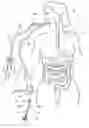
Apparatus and method for resectioning gastro-esophageal tissue
A system for stapling tissue comprises a flexible endoscope and an operative head including a pair of opposed, curved tissue clamping jaws sized to pass through an esophagus, the jaws being moveable with respect to one another between an open tissue receiving configuration and a closed tissue clamping configuration, a first one of the curved jaws including a stapling mechanism and a second one of the jaws including a staple forming anvil surface, the stapling mechanism including staple slots through which staples are fired arranged in a row extending from a proximal end of the first jaw to a distal end thereof in combination with a control handle which, when the operative head is in an operative position within one of a patient's stomach and esophagus, remains outside the patient, the control handle including a first actuator for moving the jaws relative to one another and a second actuator for operating the stapling mechanism.
Published: 2006-10-26 Assignee: Tyco Healthcare Group LP.US20060241655A1
Human necessities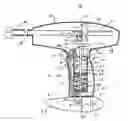
Energy stored in spring with controlled release
There is provided a surgical instrument including a handle having an elongated tubular member extending distally from the handle and one or more end effectors mounted on the distal end of the elongate tubular member. A driver is movably mounted within the handle and elongate tubular member in order to operate the end effectors. The surgical instrument includes an energy storage mechanism for storing and providing energy to move the driver and thereby actuate the surgical instrument. Various actuation mechanisms are disclosed which are operable on the energy storage mechanism to control the rate of release of the energy stored in the energy storage mechanism.
Published: 2006-10-26 Assignee: APPLE INC., Apple Computer Inc..US20060238517A1
Physics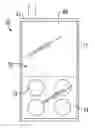
Electronic device having display and surrounding touch sensitive bezel for user interface and control
An electronic device has a display and has a touch sensitive bezel surrounding the display. Areas on the bezel are designated for controls used to operate the electronic device. Visual guides corresponding to the controls are displayed on the display adjacent the areas of the bezel designated for the controls. Touch data is generated by the bezel when a user touches an area of the bezel. The device determines which of the controls has been selected based on which designated area is associated with the touch data from the bezel. The device then initiates the determined control. The device can have a sensor for determining the orientation of the device. Based on the orientation, the device can alter the areas designated on the bezel for the controls and can alter the location of the visual guides for the display so that they match the altered areas on the bezel.
Published: 2006-10-26US20060241745A1
Human necessities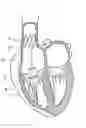
Blood flow controlling apparatus
A blood flow controlling apparatus, which is configured to be implanted into a blood circulatory system of a patient, comprises an anchoring means, which is arranged to fix the position of the apparatus in the blood circulatory system, and a valve means being connected to the anchoring means. The valve means is configured to be arranged within the blood circulatory system and is configured to be extendable in a direction transverse to blood flow in order to make contact with native tissue when inserted in the blood circulatory system. The valve means is further configured to release said contact as a result of being exposed to blood flow in a permitted direction.
Published: 2006-10-26 Assignee: MASIMO CORPORATION.US20060241358A1
Physics
Multiple wavelength sensor interconnect
A sensor interconnect assembly has a circuit substrate. An emitter portion of the substrate is adapted to mount emitters. A detector portion of the substrate is adapted to mount a detector. A cable portion of the substrate is adapted to connect a sensor cable. A first group of conductors are disposed on the substrate electrically interconnecting the emitter portion and the cable portion. A second group of conductors are disposed on the substrate electrically interconnecting the detector portion and the cable portion. A decoupling portion of the substrate disposed proximate the cable portion substantially mechanically isolating the cable portion from both the emitter portion and the detector portion so that sensor cable stiffness is not translated to the emitters or the detector.
Published: 2006-10-26US20060241666A1
Human necessities
Method and apparatus for body fluid sampling and analyte sensing
The method comprises providing a lancing device comprising a penetrating member (68) driver having a position sensor (74) and a processor (60) that can determine the relative position and velocity of the penetrating member (18, 72) based on measuring relative position of the penetrating member with respect to time; providing a predetermined velocity control trajectory based on a model of the driver (68) and a model of tissue to be contacted. Furthermore, a feedforward control is able to maintain penetrating member velocity along the trajectory.
Published: 2006-10-26 Assignee: UNIVERSAL DISPLAY CORPORATION.US20060240279A1
Electricity
Non-blocked phosphorescent OLEDs
An organic light emitting diode (OLED) architecture in which efficient operation is achieved without requiring a blocking layer by locating the recombination zone close to the hole transport side of the emissive layer. Aryl-based hosts and Ir-based dopants with suitable concentrations result in an efficient phosphorescent OLED structure. Previously, blocking layer utilization in phosphorescent OLED architectures was considered essential to avoid exciton and hole leakage from the emissive layer, and thus keep the recombination zone inside the emissive layer to provide high device efficiency and a pure emission spectrum.
Published: 2006-10-26 Assignee: MASIMO LABORATORIES, INC..US20060241363A1
Physics
Multiple wavelength sensor drivers
A cable is capable of communicating signals between a monitor and a physiological sensor. The monitor is capable of activating individual light emitters of an emitter array arranged in an electrical grid by driving at least one of row drive lines and at least one of column drive lines of the electrical grid. The cable has a first row input, a first column input, a second row input and a second column input. The cable also has a first output which combines the first row input and the first column input and a second output which combines the second row input and the second column input. The inputs are adapted to connect to electrical grid drive lines of a monitor. Further, the outputs are adapted to connect to contacts of a physiological sensor having back-to-back configured LEDs in electrical communication with the contacts.