Roller mechanism for separating paper
US20050042002A1
2005-02-24
10/825,312
2004-04-16
✅ Patent granted
US 7,092,666 B2
2006-08-15
-
-
Arthur T. Grimley | Ryan Gleitz
2024-08-24
Abstract:
A roller mechanism for separating paper has a fusing roller, a following roller, and at least two paper-separating rings. The fusing roller is formed with at least two annular grooves on a periphery thereof. The two paper-separating rings are respectively mounted in the annular grooves correspondingly. The following roller is contiguous to the fusing roller for heating a paper therebetween and transporting out the paper smoothly.
Inventors:
- Ming Te Hung 2 🇹🇼 Pan Chiao City, Taiwan
- Kung-Hsin Teng 1 🇹🇼 Ping Jen City, Taiwan
- Ming Te Hung 2 🇹🇼 Pan Chiao, Taiwan
- Kung-Hsin Teng 1 🇹🇼 Ping Jen, Taiwan
Assignee:
- LITE-ON TECHNOLOGY CORPORATION 933 🇹🇼 Taipei, Taiwan
Interested in similar patents?
Get notified when new applications in this technology area are published.
Classification:
G03G15/20 IPC
Apparatus for electrographic processes using a charge pattern for fixing, e.g. by using heat
B65H29/54 IPC
Delivering or advancing articles from machines; Advancing articles to or into piles Article strippers, e.g. for stripping from advancing elements
G03G15/2028 » CPC main
Apparatus for electrographic processes using a charge pattern for fixing, e.g. by using heat using heat using contact heat; Structural details of the fixing unit in general, e.g. cooling means, heat shielding means with means for handling the copy material in the fixing nip, e.g. introduction guides, stripping means
Y10S271/90 » CPC further
Sheet feeding or delivering Stripper
Description
BACKGROUND OF THE INVENTION1. Field of the Invention
The present invention relates to a roller mechanism for separating paper, and particularly to a roller mechanism applied in a business machine (for example, a laser printer, or a copy machine) for transporting out paper smoothly.
2. Description of the Prior Art
The operating principle of all the laser printer or copy machine, referring to the FIG. 1, is making a paper (P) absorbed carbon powder via electric charge, and making the carbon powder fused on the paper (P) by heating via a heating mechanism (H). The heating mechanism (H) is mounted in a fusing roller 2a. A follower roller 3a which is assembled under the fusing roller 2a exerts pressure upon another surface of the paper (P). Because of the carbon powder, the paper (P) will easily adhere to the fusing roller 2a when the fusing roller 2a heats the paper (P). Therefore, it needs a paper-separating mechanism for separating the paper (P) from the fusing roller 2a.
The fusing roller 2a of prior art comprises a pivoting device 4a which is disposed adjacent a paper outlet 5a, and a plurality of separating claws 6a which are pivoted on an end of the pivoting device 4a. The separating claws 6a are respectively formed with a sharp tip, and the sharp tips are contact with the surface of the fusing roller 2a. When the paper (P) passes the fusing roller 2a, the separating claws 6a separates the paper (P) from the fusing roller 2a, and the paper (P) is guided along the separating claws 6a to the paper outlet 5a.
However, the separating claws 6a of the prior art must be disposed accurately, each of the separating claws 6a must closes to the surface of the fusing roller 2a accurately. If one of the separating claws 6a is not closed, the paper (P) will probably adhere to the fusing roller 2a and roll thereon, even the paper (P) will wrap around the fusing roller 2a. At that time, it usually need to dismantle a rear panel of the laser printer and take the paper (P) out carefully to avoid injuring the separating claws 6a and the fusing roller 2a. Besides, it must consider particularly the material of the separating claws 6a for withstanding high temperature and not injuring the fusing roller 2a. Therefore the cost and accurateness requirement of the prior art are high.
Hence, an improved roller mechanism for separating paper is required to overcome the disadvantages of the prior art.
SUMMARY OF THE INVENTIONAn object of the present invention is to provide a paper-separating roller mechanism which is applied in business machine for simplifying structure and for assuring paper transported smoothly after image formed on the paper.
In order to achieve the above objects, the present invention according to one aspect thereof provides a roller mechanism for separating paper. The roller mechanism comprises a fusing roller formed with at least two annular grooves on a periphery thereof; at least two paper-separating rings respectively mounted in the annular grooves correspondingly; and a following roller contiguous to the fusing roller.
BRIEF DESCRIPTION OF THE DRAWINGSThe invention will be better understood and objects other than those set forth above will become apparent when consideration is given to the following detailed description thereof. Such a description makes reference to the annexed drawings wherein:
FIG. 1 is a side view of a paper-separating mechanism of prior art;
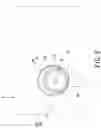
FIG. 2 is a side view of a paper-separating mechanism of the invention;
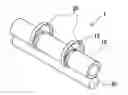
FIG. 3 is a perspective view of the first embodiment of an annular groove and a paper-separating ring; and
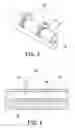
FIG. 4 is a perspective view of another embodiment of the annular groove and the paper-separating ring.
DESCRIPTION OF THE PREFERRED EMBODIMENTReferring to FIG. 2, it is a side-view of the present invention of the paper-separating mechanism. The roller mechanism 1 is mounted in a business machine 2, and adjacent to an paper outlet 40. The paper outlet 40 has a guiding mechanism 50. The business machine 2 could be a laser printer, copy machine, or any machine that need a paper-separating mechanism.
The paper-separating mechanism comprises a fusing roller 10 which is assembled with a heat mechanism (H) therein for heating the fusing roller 10, and a following roller 30 which is mounted under the fusing roller 10. The fusing roller 10 and the following roller 30 are contiguous to each other and respectively rotating along the center of a circle thereof. Therefore, after transporting a paper (P) through the fusing roller 10, the carbon powder that has been absorbed on the paper will fuse on the paper (P).
The fusing roller 10 is formed with at least two annular grooves 12 on a periphery thereof. At least two paper-separating rings 20 are respectively mounted in the corresponding annular grooves 12. The annular grooves 12 are parallel and formed along diameter-paths of the fusing roller 10, and have the same cross-section. The surface of the paper-separating rings 20 is coplanar with the surface of the fusing roller 10 after the paper-separating rings 20 are assembled in the annular grooves 12. A diameter of the paper-separating ring 20 is lager than that of the fusing roller 10.
The following roller 30 can be assembled above the fusing roller 10, so the paper-separating rings 20 will hang down on the fusing roller 10 naturally by gravity and do not need too much width.
Referring to the FIG. 3, which is a first embodiment of the annular groove and paper-separating ring of the present invention. The cross-section of the annular groove 20 along a diameter thereof could be a rectangular groove, and the cross-section of the paper-separating ring 20 along its diameter is mating with the rectangular groove.
Referring to the FIG. 4, which is another embodiment of the annular groove and paper-separating ring. The cross-section of the annular groove 20 along a diameter thereof could be a curve groove, and the cross-section of the paper-separating ring 20 along a diameter thereof is mating with the curve groove.
Wherein the paper-separating rings 20 are made of heat-conductible material.
By the above describing, it is manifest that the present invention simplifying the paper-separating mechanism of the prior art. By means of the annular paper-separating rings, the paper is easily and assuredly to separate from the fusing roller. The structure of the paper-separating ring is simple and easily to manufacture, it is obvious to reduce the manufacturing cost. In any case, the paper is certain to separate from the fusing roller, and effectively reduce the failure rate. In the prior art, if any one of the separating claw is not contiguous to the fusing roller, the paper will roll up and adhere to the surface of the fusing roller.
It is to be understood, however, that even though numerous characteristics and advantages of the present invention have been set forth in the foregoing description, together with details of the structure and function of the invention, the disclosure is illustrative only, and changes may be made in detail, especially in matter of shape, size, and arrangement of parts within the principles of the invention to the full extent indicated by the broad general meaning of the terms in which the appended claims are expressed.
Claims
1. A roller mechanism for separating paper comprising:
a fusing roller formed with at least two annular grooves on a periphery thereof;
at least two paper-separating rings respectively mounted in the annular grooves correspondingly; and
a following roller contiguous to the fusing roller.
2. The roller mechanism for separating paper as in claim 1, wherein the annular grooves are formed parallel to each other and along diameter paths of the fusing roller.
3. The roller mechanism for separating paper as in claim 1, wherein a surface of the paper-separating ring is coplanar with a surface of the fusing roller.
4. The roller mechanism for separating paper as in claim 3, wherein a diameter of the paper-separating ring is lager than that of the fusing roller.
5. The roller mechanism for separating paper as in claim 3, wherein a cross-section of the annular groove along a diameter thereof is a rectangular groove, and a cross-section of the paper-separating ring along a diameter thereof is mating with the rectangular groove.
6. The roller mechanism for separating paper as in claim 3, wherein a cross-section of the annular groove along a diameter thereof is a curve groove, and a cross-section of the paper-separating ring along a diameter thereof is mating with the curve groove.
7. The roller mechanism for separating paper as in claim 1, wherein the paper-separating rings are made of heat-conductible material.
8. A business machine with paper-separating mechanism, the business machine comprising:
a paper outlet;
a paper-separating mechanism assembled therein and adjacent the paper outlet, having:
a fusing roller formed with at least two annular grooves on a periphery thereof;
at least two paper-separating rings respectively mounted in the annular grooves correspondingly; and
a following roller contiguous to the fusing roller.
9. The business machine with paper-separating mechanism as in claim 8, wherein the annular grooves are parallel and formed along a diameter path of the fusing roller, and a diameter of the paper-separating ring is lager than that of the fusing roller.
10. The business machine with paper-separating mechanism as in claim 8, wherein a cross-section of the annular groove along a diameter thereof is mating with that of the fusing roller, and a surface of the paper-separating ring is level with a surface of the fusing roller.
11. The business machine with paper-separating mechanism as in claim 8, wherein the following roller is assembled above the fusing roller.
Images & Drawings included:

Sources:
- United States Patent and Trademark Office - verify current appl. status at the USPTO↗
Similar patent applications:
Recent applications in this class:
- » 20250278041 2025-09-04
FIXING DEVICE - » 20250224688 2025-07-10
IMAGE FORMING APPARATUS - » 20250208541 2025-06-26
FIXING DEVICE AND IMAGE FORMING APPARATUS - » 20250172892 2025-05-29
IMAGE FORMING APPARATUS - » 20250155839 2025-05-15
FIXING DEVICE AND IMAGE FORMING APPARATUS - » 20250138455 2025-05-01
IMAGE FORMING APPARATUS - » 20250130519 2025-04-24
IMAGE FORMING APPARATUS - » 20250102974 2025-03-27
FIXING DEVICE AND IMAGE FORMING APPARATUS - » 20250102973 2025-03-27
TRANSPORT DEVICE AND IMAGE FORMING APPARATUS - » 20250102972 2025-03-27
FIXING DEVICE AND IMAGE FORMING APPARATUS
Recent applications for this Assignee:
- » 20250271502 2025-08-28
TEST CONTROL DEVICE AND OPERATING METHOD THEREOF - » 20250181179 2025-06-05
INPUT DEVICE - » 20250175091 2025-05-29
POWER CONVERSION SYSTEM - » 20250173007 2025-05-29
TOUCH DEVICE AND INPUT DEVICE - » 20250151238 2025-05-08
HEAT DISSIPATION MODULE - » 20250130970 2025-04-24
SYSTEM AND METHOD USED FOR INTERFACE MANAGEMENT - » 20250100867 2025-03-27
LIQUID DISTRIBUTION MODULE - » 20250083542 2025-03-13
CHARGING DEVICE - » 20250031351 2025-01-23
COOLING SYSTEM AND RACK INCLUDING THE SAME - » 20250022672 2025-01-16
LIGHT-EMITTING KEYBOARD AND BACKLIGHT MODULE