Selective herbicides based on substituted cyclic keto-enols and safeners
US20050054535A1
2005-03-10
10/485,909
2002-07-29
✅ Patent granted
US 7,432,225 B2
2008-10-07
WO; PCT/EP02/08413; 20020729
WO; WO03/013249; 20030220
Johann Richter | Andriae M Holt
2024-05-01
Abstract:
The present invention relates to selective herbicidal compositions comprising an effective amount of an active compound combination comprising
(a) at least one substituted cyclic ketoenol of the formula (I)
in which X, Z, W and Y and the group CKE are as defined in the disclosure, and (b) at least one compound which improves crop plant compatibility selected from the group of compounds listed in the description, particularly cloquintocet-mexyl and mefenpyr-diethyl. The invention further relates to the use of these compositions as herbicides and to a method for controlling undesirable vegetation using these compositions.
Inventors:
- Reiner Fischer 301 🇩🇪 Monheim, Germany
- Peter DAHMEN 318 🇩🇪 Neuss, Germany
- Rolf PONTZEN 89 🇩🇪 Leichlingen, Germany
- DIETER FEUCHT 71 🇩🇪 MONHEIM, Germany
- MARK WILHELM DREWES 112 🇩🇪 LANGENFELD, Germany
Assignee:
- Bayer CropScience AG 1,003 🇩🇪 Monheim, Germany
Interested in similar patents?
Get notified when new applications in this technology area are published.
Classification:
A01N43/08 » CPC further
Biocides, pest repellants or attractants, or plant growth regulators containing heterocyclic compounds having rings with one or more oxygen or sulfur atoms as the only ring hetero atoms with one hetero atom five-membered rings with oxygen as the ring hetero atom
A01N43/10 » CPC further
Biocides, pest repellants or attractants, or plant growth regulators containing heterocyclic compounds having rings with one or more oxygen or sulfur atoms as the only ring hetero atoms with one hetero atom five-membered rings with sulfur as the ring hetero atom
A01N43/12 » CPC further
Biocides, pest repellants or attractants, or plant growth regulators containing heterocyclic compounds having rings with one or more oxygen or sulfur atoms as the only ring hetero atoms with one hetero atom five-membered rings condensed with a carbocyclic ring
A01N43/36 » CPC main
Biocides, pest repellants or attractants, or plant growth regulators containing heterocyclic compounds having rings with one nitrogen atom as the only ring hetero atom five-membered rings
A01N43/38 » CPC further
Biocides, pest repellants or attractants, or plant growth regulators containing heterocyclic compounds having rings with one nitrogen atom as the only ring hetero atom five-membered rings condensed with carbocyclic rings
A01N43/90 » CPC further
Biocides, pest repellants or attractants, or plant growth regulators containing heterocyclic compounds having two or more relevant hetero rings, condensed among themselves or with a common carbocyclic ring system
A01N2300/00 » CPC further
Combinations or mixtures of active ingredients covered by classes - with other active or formulation relevant ingredients, e.g. specific carrier materials or surfactants, covered by classes -
A01N37/32 IPC
Biocides, pest repellants or attractants, or plant growth regulators containing organic compounds containing a carbon atom having three bonds to hetero atoms with at the most two bonds to halogen, e.g. carboxylic acids containing the group —CO—N<, e.g. carboxylic acid amides or imides; Thio analogues thereof Cyclic imides of polybasic carboxylic acids or thio analogues thereof
A01N43/34 IPC
Biocides, pest repellants or attractants, or plant growth regulators containing heterocyclic compounds having rings with one nitrogen atom as the only ring hetero atom
A01N25/32 IPC
Biocides, pest repellants or attractants, or plant growth regulators, characterised by their forms, or by their non-active ingredients or by their methods of application, e.g. seed treatment or sequential application ; Substances for reducing the noxious effect of the active ingredients to organisms other than pests Ingredients for reducing the noxious effect of the active substances to organisms other than pests, e.g. toxicity reducing compositions, self-destructing compositions
C07D231/06 IPC
Heterocyclic compounds containing 1,2-diazole or hydrogenated 1,2-diazole rings not condensed with other rings having one double bond between ring members or between a ring member and a non-ring member
C07D207/40 IPC
Heterocyclic compounds containing five-membered rings not condensed with other rings, with one nitrogen atom as the only ring hetero atom with only hydrogen or carbon atoms directly attached to the ring nitrogen atom having two double bonds between ring members or between ring members and non-ring members with hetero atoms or with carbon atoms having three bonds to hetero atoms with at the most one bond to halogen, e.g. ester or nitrile radicals, directly attached to ring carbon atoms; Oxygen or sulfur atoms 2,5-Pyrrolidine-diones
A01N31/00 IPC
Biocides, pest repellants or attractants, or plant growth regulators containing organic oxygen or sulfur compounds
C07C211/00 IPC
Compounds containing amino groups bound to a carbon skeleton
Description
The invention relates to novel selective herbicidal active compound combinations which comprise substituted cyclic ketoenols, on the one hand, and at least one compound which improves crop plant compatibility, on the other, and which can be used with particularly good results for the selective control of weeds in various crops of useful plants.
Unsubstituted bicyclic 3-arylpyrrolidine-2,4-dione derivatives (EP-A-355 599, EP-A-415 211 and JP 12-053 670) and substituted monocyclic 3-arylpyrrolidine-2,4-dione derivatives (EP-A-377 893 and EP-A-442 077) having herbicidal action are already known.
Also known are polycyclic 3-arylpyrrolidine-2,4-dione derivatives (EP-A-442 073) and 1H-arylpyrrolidinedione derivatives (EP-A-456 063, EP-A-521 334, EP-A-596 298, EP-A-613 884, EP-A-613 885, WO 94/01 997, WO 95/26 954, WO 95/20 572, EP-A-0 668 267, WO 96/25 395, WO 96/35 664, WO 97/01 535, WO 97/02 243, WO 97/36 868, WO 97/43275, WO 98/05638, WO 98/06721, WO 98/25928, WO 99/16748, WO 99/24437, WO 99/43649, WO 99/48869, WO 99/55673, WO 01/17972 and WO 01/23354).
Also known are 3-aryl-Δ3-dihydrofuranone derivatives having herbicidal properties, from EP-A-528 156, EP-A-0 647 637, WO 95/26 345, WO 96/20 196, WO96/25 395, WO, 96/35 664, WO 97/01 535, WO 97/02243, WO 97/36868, WO 98/05638, WO 98/25928, WO 99/16748, WO 99/43649, WO 99/48869, WO 99/55673, JP 12-239 276 and WO 01/17972. 3-Aryl-Δ3-dihydrothiophenone derivatives, too, are known (WO 95/26 345, WO 96/25 395, WO 97/01 535, WO 97/02 243, WO 97/36 868, WO 98/05638, WO 98/25928, WO 99/16748, WO 99/43649, WO 99/48869, WO 99/55673, WO 01/17972, WO 01/23354).
Phenylpyrone derivatives which are substituted in the phenyl ring and have herbicidal properties are described in EP-A-588 137, WO 96/25 395, WO 96/35 664, WO 97/01 535, WO 97/02 243, WO 97/16 436, WO 97/19 941, WO 97/36 868, WO 98/05638, WO 99/43649, WO 99/48869, WO 99/55673 and WO 01/17972.
It is known that certain substituted 2-arylcyclopentanediones have herbicidal properties (cf. for example, U.S. Pat. Nos. 4,283,348; 4,338,122; 4,436,666; 4,526,723; 4,551,547; 4,632,698; WO 96/01 798; WO 96/03 366, WO 97/14 667 and also WO 98/39281, WO 99/43649, WO 99/48869, WO 99/55673 and WO 01/17972).
Moreover, it is known that certain substituted 2-arylcyclohexanediones have herbicidal and acaricidal properties (U.S. Pat. Nos. 4,175,135, 4,209,432, 4,256,657, 4,256,658, 4,256,659, 4,257,858, 4,283,348, 4,303,669, 4,351,666, 4,409,153, 4,436,666, 4,526,723, 4,613,617, 4,659,372, DE-A 2 813 341, and also Wheeler, T. N., J. Org. Chem. 44, 4906 (1979), WO 99/43649, WO 99/48869, WO 99/55673 and WO 01/17972).
However, the activity of these compounds and/or their compatibility with crop plants are not under all conditions entirely satisfactory.
Surprisingly, it has now been found that certain substituted cyclic ketoenols, when used together with the compounds (safeners/antidotes) described below which improve crop plant compatibilty, prevent damage to the crop plants extremely well and can be used particularly advantageously as broad-spectrum combination preparations for the selective control of undesirable plants in crops of useful plants, such as, for example, in cereals, but also in maize, soya beans and rice.
The invention provides selective herbicidal combinations comprising an effective amount of an active compound combination comprising
- (a) at least one substituted cyclic ketoenol of the formula (I)
- in which
- X represents halogen, alkyl, alkenyl, alkinyl, alkoxy, alkenyloxy, alkylthio, alkylsulphinyl, alkylsulphonyl, haloalkyl, haloalkoxy, haloalkenyloxy, nitro or cyano,
- Z represents hydrogen, in each case optionally substituted alkenyl, alkinyl, aryl or represents hetaryl,
- W and Y independently of one another represent hydrogen, halogen, alkyl, alkoxy, alkenyloxy, haloalkyl, haloalkoxy, haloalkenyloxy, nitro or cyano,
- with the proviso that, if Y represents 4-methyl, W and X do not simultaneously represent ethyl or W does not represent methoxy or difluoromethoxy if X represents ethyl,
- CKE represents one of the groups
- in which
- A represents hydrogen, in each case optionally halogen-substituted alkyl, alkenyl, alkoxyalkyl, alkylthioalkyl, saturated or unsaturated, optionally substituted cycloalkyl, in which optionally at least one ring atom is replaced by a heteroatom, or in each case optionally halogen-, alkyl-, haloalkyl-, alkoxy-, haloalkoxy-, cyano- or nitro-substituted aryl, arylalkyl or hetaryl,
- B represents hydrogen, alkyl or alkoxyalkyl, or
- A and B together with the carbon atom to which they are attached represent a saturated or unsaturated, unsubstituted or substituted cycle which optionally contains at least one heteroatom,
- D represents hydrogen or an optionally substituted radical from the group consisting of alkyl, alkenyl, alkinyl, alkoxyalkyl, saturated or unsaturated cycloalkyl, in which optioinally one or more ring members are replaced by heteroatoms, arylalkyl, aryl, hetarylalkyl or hetaryl, or
- A and D together with the atoms to which they are attached represent a saturated or unsaturated cycle which is unsubstituted or substituted in the A,D moiety and optionally contains at least one heteroatom, or
- A and Q1 together represent alkanediyl or alkenediyl which are in each case optionally substituted by hydroxyl or by in each case optionally substituted alkyl, alkoxy, alkylthio, cycloalkyl, benzyloxy or aryl, or
- Q1 represents hydrogen or alkyl,
- Q2, Q4, Q5 and Q6 independently of one another represent hydrogen or alkyl,
- Q3 represents hydrogen, alkyl, alkoxyalkyl, alkylthioalkyl, optionally substituted cycloalkyl (in which optionally one methylene group is replaced by oxygen or sulphur) or optionally substituted phenyl, or
- Q3 and Q4 together with the carbon atom to which they are attached, represent a saturated or unsaturated, unsubstituted or substituted cycle which optionally contains a heteroatom,
- G represents hydrogen (a) or represents one of the groups
- in which
- E represents a metal ion equivalent or an ammonium ion,
- L represents oxygen or sulphur,
- M represents oxygen or sulphur,
- R1 represents in each case optionally halogen-substituted alkyl, alkenyl, alkoxyalkyl, alkylthioalkyl, polyalkoxyalkyl or optionally halogen-, alkyl- or alkoxy-substituted cycloalkyl, which may be interrupted by at least one heteroatom, represents in each case optionally substituted phenyl, phenylalkyl, hetaryl, phenoxyalkyl or hetaryloxyalkyl,
- R2 represents in each case optionally halogen-substituted alkyl, alkenyl, alkoxyalkyl, polyalkoxyalkyl or represents in each case optionally substituted cycloalkyl, phenyl or benzyl,
- R3, R4 and R5 independently of one another represent in each case optionally halogen-substituted alkyl, alkoxy, alkylamino, dialkylamino, alkylthio, alkenylthio, cycloalkylthio and represent in each case optionally substituted phenyl, benzyl, phenoxy or phenylthio,
- R6 and R7 independently of one another represent hydrogen, in each case optionally halogen-substituted alkyl, cycloalkyl, alkenyl, alkoxy, alkoxyalkyl, represent optionally substituted phenyl, represent optionally substituted benzyl, or together with the N atom to which they are attached represent a cycle which is optionally interrupted by oxygen or sulphur,
- including all possible tautomeric forms of the compounds of the general formula (I) and the possible salts or acid or base adducts of the compounds of the general formula (I)—and
- (b) at least one compound which improves crop plant compatibility, from the group of compounds below:
- 4-dichloroacetyl-1-oxa-4-aza-spiro[4.5]-decane (AD-67, MON-4660), 1-dichloro-acetyl-hexahydro-3,3,8a-trimethylpyrrolo[1,2-a]-pyrimidin-6(2H)-one (dicyclonon, BAS-145138), 4-dichloroacetyl-3,4-dihydro-3-methyl-2H-1,4-benzoxazine (benoxacor), 1-methyl-hexyl 5-chloro-quinolin-8-oxy-acetate (cloquintocet-mexyl—cf. also related compounds in EP-A-86750, EP-A-94349, EP-A-191736, EP-A-492366), 3-(2-chloro-benzyl)-1-(1-methyl-1-phenyl-ethyl)-urea (cumyluron), α-(cyano methoximino)-phenylacetonitrile (cyometrinil), 2,4-dichloro-phenoxyacetic acid (2,4-D), 4-(2,4-dichloro-phenoxy)-butyric acid (2,4-DB), 1-(1-methyl-1-phenyl-ethyl)-3-(4-methyl-phenyl)-urea (daimuron, dymron), 3,6-dichloro-2-methoxy-benzoic acid (dicamba), S-1-methyl-1-phenyl-ethyl piperidine-1-thiocarboxylate (dimepiperate), 2,2-dichloro-N-(2-oxo-2-(2-propenylamino)-ethyl)-N-(2-propenyl)-acetamide (DKA-24), 2,2-dichloro-N,N-di-2-propenyl-acetamide (dichlormid), 4,6-dichloro-2-phenyl-pyrimidine (fenclorim), ethyl 1-(2,4-dichloro-phenyl)-5-trichloromethyl-1H-1,2,4-triazole-3-carboxylate (fenchlorazole-ethyl—cf. also related compounds in EP-A-174562 and EP-A-346620), phenylmethyl 2-chloro-4-trifluoromethyl-thiazole-5-carboxylate (flurazole), 4-chloro-N-(1,3-dioxolan-2-yl-methoxy)-α-trifluoro acetophenone oxime (fluxofenim), 3-dichloroacetyl-5-(2-furanyl)-2,2-dimethyl-oxazolidine (furilazole, MON-13900), ethyl 4,5-dihydro-5,5-diphenyl-3-isoxazolecarboxylate (isoxadifen-ethyl—cf. also related compounds in WO-A-95/07897), 1-(ethoxycarbonyl)-ethyl 3,6-dichloro-2-methoxybenzoate (lactidichlor), (4-chloro-o-tolyloxy)-acetic acid (MCPA), 2-(4-chloro-o-tolyloxy)-propionic acid (mecoprop), diethyl 1-(2,4-dichloro-phenyl)-4,5-dihydro-5-methyl-1H-pyrazole-3,5-dicarboxylate (mefenpyr-diethyl—cf. also related compounds in WO-A-91/07874), 2-dichloromethyl-2-methyl-1,3-dioxolane (MG-191), 2-propenyl-1-oxa-4-azaspiro[4.5]decane 4-carbodithioate (MG-838), 1,8-naphthalic anhydride, α-(1,3-dioxolan-2-yl-methoximino)-phenylacetonitrile (oxabetrinil), 2,2-dichloro-N-(1,3-dioxolan-2-yl-methyl)-N-(2-propenyl)-acetamide (PPG-1292), 3-dichloroacetyl-2,2-dimethyl-oxazolidine (R-28725), 3-dichloroacetyl-2,2,5-trimethyl-oxazolidine (R-29148), 4-(4-chloro-o-tolyl)-butyric acid, 4-(4-chloro-phenoxy)-butyric acid, diphenylmethoxyacetic acid, methyl diphenylmethoxyacetate, ethyl diphenyl-methoxyacetate, methyl 1-(2-chloro-phenyl)-5-phenyl-1H-pyrazole-3-carboxylate, ethyl 1-(2,4-dichloro-phenyl)-5-methyl-1H-pyrazole-3-carboxylate, ethyl 1-(2,4-dichloro-phenyl)-5-isopropyl-1H-pyrazole-3-carboxylate, ethyl 1-(2,4-dichloro-phenyl)-5-(1,1-dimethyl-ethyl)-1H-pyrazole-3-carboxylate, ethyl 1-(2,4-dichloro-phenyl)-5-phenyl-1H-pyrazole-3-carboxylate (cf also related compounds in EP-A-269806 and EP-A-333131), ethyl 5-(2,4-dichloro-benzyl)-2-isoxazoline-3-carboxylate, ethyl 5-phenyl-2-isoxazoline-3-carboxylate, ethyl 5-(4-fluoro-phenyl)-5-phenyl-2-isoxazoline-3-carboxylate (cf. also related compounds in WO-A-91/08202), 1,3-dimethyl-but-1-yl 5-chloro-quinolin-8-oxy-acetate, 4-allyloxy-butyl 5-chloro-quinolin-8-oxy-acetate, 1-allyloxy-prop-2-yl 5-chloro-quinolin-8-oxy-acetate, methyl 5-chloro-quinoxalin-8-oxy-acetate, ethyl 5-chloro-quinolin-8-oxy-acetate, allyl 5-chloro-quinoxalin-8-oxy-acetate, 2-oxo-prop-1-yl 5-chloro-quinolin-8-oxy-acetate, diethyl 5-chloro-quinolin-8-oxy-malonate, diallyl 5-chloro-quinoxalin-8-oxy-malonate, diethyl 5-chloro-quinolin-8-oxy-malonate (cf. also related compounds in EP-A-582198), 4-carboxy-chroman-4-yl-acetic acid (AC-304415, cf. EP-A-613618), 4-chloro-phenoxy-acetic acid, 3,3′-dimethyl-4-methoxy-benzophenone, 1-bromo-4-chloromethylsulphonyl-benzene, 1-[4-(N-2-methoxybenzoylsulphamoyl)-phenyl]-3-methyl-urea (alias N-(2-methoxy-benzoyl)-4-[(methylamino-carbonyl)-amino]-benzenesulphonamide), 1-[4-(N-2-methoxybenzoylsulphamoyl)-phenyl]-3,3-dimethyl-urea, 1-[4-(N-4,5-dimethylbenzoylsulphamoyl)-phenyl]-3-methyl-urea, 1-[4-(N-naphthylsulphamoyl)-phenyl]-3,3-dimethyl-urea, N-(2-methoxy-5-methyl-benzoyl)-4-(cyclopropylaminocarbonyl)-benzenesulphonamide,
- and/or one of the following compounds defined by general formulae
of the general formula (IIa)
or of the general formula (IIb)
or the formula (IIc)
where - n represents a number between 0 and 5,
- A1 represents one of the divalent heterocyclic groupings shown below
- A2 represents optionally C1-C4-alkyl- and/or C1-C4-alkoxy-carbonyl-substituted alkanediyl with 1 or 2 carbon atoms,
- R8 represents hydroxyl, mercapto, amino, C1-C6-alkoxy, C1-C6-alkylthio, C1-C6-alkylamino or di-(C1-C4-alkyl)-amino,
- R9 represents hydroxyl, mercapto, amino, C1-C6-alkoxy, C1-C6-alkylthio, C1-C6-alkylamino or di-(C1-C4-alkyl)-amino,
- R10 represents in each case optionally fluorine-, chlorine- and/or bromine-substituted C1-C4-alkyl,
- R11 represents hydrogen, in each case optionally fluorine-, chlorine- and/or bromine-substituted C1-C6-alkyl, C2-C6-alkenyl or C2-C6-alkinyl, C1-C4-alkoxy-C1-C4-alkyl, dioxolanyl-C1-C4-alkyl, furyl, furyl-C1-C4-alkyl, thienyl, thiazolyl, piperidinyl, or optionally fluorine-, chlorine- and/or bromine- or C1-C4-alkyl-substituted phenyl,
- R12 represents hydrogen, in each case optionally fluorine-, chlorine- and/or bromine-substituted C1-C6-alkyl, C2-C6-alkenyl or C2-C6-alkinyl, C1-C4-alkoxy-C1-C4-alkyl, dioxolanyl-C1-C4-alkyl, furyl, furyl-C1-C4-alkyl, thienyl, thiazolyl, piperidinyl, or optionally fluorine-, chlorine- and/or bromine- or C1-C4-alkyl-substituted phenyl, or together with R11 represents C3-C6-alkanediyl or C2-C5-oxaalkanediyl, each of which is optionally substituted by C1-C4-alkyl, phenyl, furyl, a fused-on benzene ring or by two substituents which together with the C atom to which they are attached form a 5- or 6-membered carbocycle,
- R13 represents hydrogen, cyano, halogen, or represents in each case optionally fluorine-, chlorine- and/or bromine-substituted C1-C4-alkyl, C3-C6-cycloalkyl or phenyl,
- R14 represents hydrogen, optionally hydroxyl-, cyano-, halogen- or C1-C4-alkoxy-substituted C1-C6-alkyl, C3-C6-cycloalkyl or tri-(C1-C4-alkyl)-silyl,
- R15 represents hydrogen, cyano, halogen, or represents in each case optionally fluorine-, chlorine- and/or bromine-substituted C1-C4-alkyl, C3-C6-cycloalkyl or phenyl,
- X1 represents nitro, cyano, halogen, C1-C4-alkyl, C1-C4-haloalkyl, C1-C4-alkoxy or C1-C4-haloalkoxy,
- X2 represents hydrogen, cyano, nitro, halogen, C1-C4-alkyl, C1-C4-haloalkyl, C1-C4-alkoxy or C1-C4-haloalkoxy,
- X3 represents hydrogen, cyano, nitro, halogen, C1-C4-alkyl, C1-C4-haloalkyl, C1-C4-alkoxy or C1-C4-haloalkoxy,
- and/or the following compounds defined by general formulae
of the general formula (IId)
or of the general formula (IIe)
where - n represents a number between 0 and 5,
- R16 represents hydrogen or C1-C4-alkyl,
- R17 represents hydrogen or C1-C4-alkyl,
- R18 represents hydrogen, in each case optionally cyano-, halogen- or C1-C4-alkoxy-substituted C1-C6-alkyl, C1-C6-alkoxy, C1-C6-alkylthio, C1-C6-alkylamino or di-(C1-C4-alkyl)-amino, or in each case optionally cyano-, halogen- or C1-C4-alkyl-substituted C3-C6-cycloalkyl, C3-C6-cycloalkyloxy, C3-C6-cycloalkylthio or C3-C6-cycloalkylamino,
- R19 represents hydrogen, optionally cyano-, hydroxyl-, halogen- or C1-C4-alkoxy-substituted C1-C6-alkyl, in each case optionally cyano- or halogen-substituted C3-C6-alkenyl or C3-C6-alkinyl, or optionally cyano-, halogen- or C1-C4-alkyl-substituted C3-C6-cycloalkyl,
- R20 represents hydrogen, optionally cyano-, hydroxyl-, halogen- or C1-C4-alkoxy-substituted C1-C6-alkyl, in each case optionally cyano- or halogen-substituted C3-C6-alkenyl or C3-C6-alkinyl, optionally cyano-, halogen- or C1-C4-alkyl-substituted C3-C6-cycloalkyl, or optionally nitro-, cyano-, halogen-, C1-C4-alkyl-, C1-C4-haloalkyl-, C1-C4-alkoxy- or C1-C4-haloalkoxy-substituted phenyl, or together with R19 represents in each case optionally C1-C4-alkyl-substituted C2-C6-alkanediyl or C2-C5-oxaalkanediyl,
- X4 represents nitro, cyano, carboxyl, carbamoyl, formyl, sulphamoyl, hydroxyl, amino, halogen, C1-C4-alkyl, C1-C4-haloalkyl, C1-C4-alkoxy or C1-C4-haloalkoxy, and
- X5 represents nitro, cyano, carboxyl, carbamoyl, formyl, sulphamoyl, hydroxyl, amino, halogen, C1-C4-alkyl, C1-C4-haloalkyl, C1-C4-alkoxy or C1-C4-haloalkoxy.
In the definitions, the hydrocarbon chains, such as an alkyl or alkanediyl, are in each case straight-chain or branched—including in combination with heteroatoms, such as in alkoxy.
Depending inter alia on the nature of the substituents, the compounds of the formula (I) can be present as geometrical and/or optical isomers or isomer mixtures of varying composition which, if appropriate, can be separated in a customary manner. The present invention provides both the pure isomers and the isomer mixtures, and their use and the compositions comprising them. However, for the sake of simplicity, hereinbelow only compounds of the formula (I) are referred to, although what is meant are both the pure compounds and, if appropriate, also mixtures having various proportions of isomeric compounds.
Including the meanings (1) to (6) of the groupe CKE, the following principal structures (I-1) to (I-6) result:
in which
- A, B, D, G, Q1, Q2, Q3, Q4, Q5, Q6, W, X, Y and Z are as defined above.
Including the different meanings (a), (b), (c), (d), (e), (f) and (g) of the group G, the following principal structures (I-1-a) to (I-1-g) result if CKE represents the group (1),
in which
- A, B, D, E, L, M, W, X, Y, Z, R1, R2, R3, R4, R5, R6 and R7 are as defined above.
Including the different meanings (a), (b), (c), (d), (e), (f) and (g) of the group G, the following principal structures (I-2-a) to (I-2-g) result if CKE represents the group (2)
in which
- A, B, E, L, M, W, X, Y, Z, R1, R2, R3, R4, R5, R6 and R7 are as defined above.
Including the different meanings (a), (b), (c), (d), (e), (f) and (g) of the group G, the following principal structures (I-3-a) to (I-3-g) result if CKE represents the group (3)
in which
- A, B, E, L, M, W, X, Y, Z, R1, R2, R3, R4, R5, R6 and R7 are as defined above.
Depending on the position of the substituent G, the compounds of the formula (I-4) can be present in the two isomeric forms of the formulae (I-4-A) and (I-4-B)
which is meant to be indicated by the broken line in formula (I-4).
The compounds of the formulae (I-4-A) and (I-4-B) can be present both as mixtures and in the form of their pure isomers. Mixtures of the compounds of the formulae (I-4-A) and (I-4-B) can, if appropriate, be separated in a manner known per se by physical methods, for example by chromatographic methods.
For reasons of clarity, hereinbelow only one of the possible isomers is shown in each case. This does not exclude that the compounds may, if appropriate, be present in the form of the isomer mixtures or in the respective other isomeric form.
Including the different meanings (a), (b), (c), (d), (e), (f) and (g) of the group G, the following principal structures (I-4-a) to (I-4-g) result if CKE represents the group (4)
in which
- A, D, E, L, M, W, X, Y, Z, R1, R2, R3, R4, R5, R6 and R7 are as defined above.
Depending on the position of the substituent G, the compounds of the formula (I-5) can be present in the two isomeric forms of the formulae (I-5-A) and (I-5-B)
which is meant to be indicated by the broken line in the formula (I-5).
The compounds of the formulae (I-5-A) and (I-5-B) can be present both as mixtures and in the form of their pure isomers. Mixtures of the compounds of the formulae (I-5-A) and (I-5-B) can, if appropriate, be separated by physical methods, for example by chromatographic methods.
For reasons of clarity, hereinbelow only one of the possible isomers is shown in each case. This does not exclude that the compounds may, if appropriate, be present in the form of the isomer mixtures or in the respective other isomeric form.
Including the different meanings (a), (b), (c), (d), (e), (f) and (g) of the group G, the following principal structures (I-5-a) to (I-5-g) result:
in which
- A, B, Q1, Q2, E, L, M, W, X, Y, Z, R1, R2, R3, R4, R5, R6 and R7 are as defined above.
Depending on the position of the substituent G, the compounds of the formula (I-6) can be present in the two isomeric forms of the formulae (I-6-A) and (I-6-B) which is meant to be indicated by the broken line in the formula (I-6):
The compounds of the formulae (I-6-A) and (I-6-B) can be present both as mixtures and in the form of their pure isomers. Mixtures of the compounds of the formulae (I-6-A) and (I-6-B) may, if appropriate, be separated by physical methods, for example by chromatographic methods.
For reasons of clarity, hereinbelow only one of the possible isomers is shown in each case. This includes that the compound in question may, if appropriate, be present as an isomer mixture or in the respective other isomeric form.
Including the different meanings (a), (b), (c), (d), (e), (f) and (g) of the group G, the following principal structures (I-6-a) to (I-6-g) result:
in which
- A, B, E, L, M, Q3, Q4, Q5, Q6, W, X, Y, Z, R1, R2, R3, R4, R5, R6 and R7 are as defined above.
The formula (I) provides a general definition of the substituted cyclic ketoenols according to the invention of the herbicidal compositions. Preferred substituents and ranges of the radicals given in the formulae mentioned above and below are illustrated below:
- X preferably represents halogen, C1-C6-alkyl, C2-C6-alkenyl, C1-C6-haloalkyl, C1-C6-alkoxy, C3-C6-alkenyloxy, C1-C6-haloalkoxy, C3-C6-haloalkenyloxy, nitro or cyano,
- Z preferably represents hydrogen, C2-C6-alkenyl, C2-C6-alkinyl or represents one of the radicals
- in which
- V1 represents hydrogen, halogen, C1-C12-alkyl, C1-C6-alkoxy, C1-C6-alkylthio, C1-C6-alkylsulphinyl, C1-C6-alkylsulphonyl, C1-C4-haloalkyl, C1-C4-haloalkoxy, nitro or cyano,
- V2 and V3 independently of one another represent hydrogen, halogen, C1-C6-alkyl, C1-C6-alkoxy, C1-C4-haloalkyl or C1-C4-haloalkoxy,
- W and Y independently of one another preferably represent hydrogen, halogen, C1-C6-alkyl, C1-C6-haloalkyl, C1-C6-alkoxy, C1-C6-haloalkoxy, nitro or cyano,
- with the proviso that, if Y represents 4-methyl, W and X do not simultaneously represent ethyl or W does not represent methoxy or difluoromethoxy if X represents ethyl.
- CKE preferably represents one of the groups
- A preferably represents hydrogen or in each case optionally halogen-substituted C1-C12-alkyl, C3-C8-alkenyl, C1-C10-alkoxy-C1-C8-alkyl, C1-C10-alkylthio-C1-C6-alkyl, optionally halogen-, C1-C6-alkyl- or C1-C6-alkoxy-substituted C3-C8-cycloalkyl, in which optionally one or two not directly adjacent ring members are replaced by oxygen and/or sulphur or represents in each case optionally halogen-, C1-C6-alkyl-, C1-C6-haloalkyl-, C1-C6-alkoxy-, C1-C6-haloalkoxy-, cyano- or nitro-substituted phenyl or phenyl-C1-C6-alkyl.
- B preferably represents hydrogen, C1-C12-alkyl or C1-C8-alkoxy-C1-C6-alkyl, or
- A, B and the carbon atom to which they are attached preferably represent saturated C3-C10-cycloalkyl or unsaturated C5-C10-cycloalkyl in which optionally one ring member is replaced by oxygen or sulphur and which are optionally mono- or disubstituted by C1-C8-alkyl, C3-C10-cycloalkyl, C1-C8-haloalkyl, C1-C8-alkoxy, C1-C8-alkylthio, halogen or phenyl, or
- A, B and the carbon atom to which they are attached preferably represent C3-C6-cycloalkyl which is substituted by an alkylenediyl or by an alkylenedioxyl or by an alkylenedithioyl group which, with the carbon atom to which it is attached, forms a further five- to eight-membered ring and which is optionally substituted by C1-C4-alkyl which optionally contain one or two not directly adjacent oxygen and/or sulphur atoms, or
- A, B and the carbon atom to which they are attached preferably represent C3-C8-cycloalkyl or C5-C8-cycloalkenyl in which two substituents together with the carbon atoms to which they are attached represent in each case optionally C1-C6-alkyl-, C1-C6-alkoxy- or halogen-substituted C2-C6-alkanediyl, C2-C6-alkenediyl or C4-C6-alkanedienediyl in which optionally one methylene group is replaced by oxygen or sulphur.
- D preferably represents hydrogen, in each case optionally halogen-substituted C1-C12-alkyl, C3-C8-alkenyl, C3-C8-alkinyl, C1-C10-alkoxy-C2-C8-alkyl, optionally halogen-, C1-C4-alkyl-, C1-C4-alkoxy- or C1-C4-haloalkyl-substituted C3-C8-cycloalkyl, in which optionally one ring member is replaced by oxygen or sulphur or in each case optionally halogen-, C1-C6-alkyl-, C1-C6-haloalkyl-, C1-C6-alkoxy-, C1-C6-haloalkoxy-, cyano- or nitro-substituted phenyl or phenyl-C1-C6-alkyl.
- A and D together preferably represent in each case optionally substituted C3-C6-alkanediyl or C3-C6-alkenediyl in which optionally one methylene group is replaced by a carbonyl group, by oxygen or by sulphur, possible substituents being in each case:
- halogen, hydroxyl, mercapto or in each case optionally halogen-substituted C1-C10-alkyl or C1-C6-alkoxy, or a further C3-C6-alkanediyl grouping, C3-C6-alkenediyl grouping or a butadienyl grouping which is optionally substituted by C1-C6-alkyl or in which optionally two adjacent substituents together with the carbon atoms to which they are attached form a further saturated or unsaturated cycle having 5 or 6 ring atoms (in the case of the compound of the formula (I-1), A and D together with the atoms to which they are attached then represent, for example, the groups AD-1 to AD-10 mentioned further below), which may contain oxygen or sulphur.
- A and Q1 together preferably represent C3-C6-alkanediyl or C4-C6-alkenediyl, each of which is optionally mono- or disubstituted by identical or different halogens, by C1-C10-alkyl, C1-C6-alkoxy, C1-C6-alkylthio or C3-C7-cycloalkyl, each of which is optionally mono- to trisubstituted by identical or different halogens, or by benzyloxy or phenyl, each of which is optionally mono- to trisubstituted by identical or different substituents from the group consisting of halogen, C1-C6-alkyl and C1-C6-alkoxy in which C3-C6-alkanediyl or C4-C6-alkenediyl is furthermore bridged by a C1-C2-alkanediyl group or by an oxygen atom, or
- Q1 preferably represents hydrogen or C1-C4-alkyl.
- Q2, Q4, Q5 and Q6 independently of one another preferably represent hydrogen or C1-C4-alkyl.
- Q3 preferably represents hydrogen, C1-C6-alkyl, C1-C6-alkoxy-C1-C2-alkyl, C1-C6-alkylthio-C1-C2-alkyl, optionally halogen-, C1-C4-alkyl- or C1-C4-alkoxy-substituted C3-C8-cycloalkyl in which optionally one methylene group is replaced by oxygen or sulphur or represents optionally halogen-, C1-C4-alkyl-, C1-C4-alkoxy-, C1-C2-haloalkyl-, C1-C2-haloalkoxy-, cyano- or nitro-substituted phenyl, or
- Q3 and Q4 together with the carbon atom to which they are attached preferably represent an optionally C1-C4-alkyl-, C1-C4-alkoxy- or C1-C2-haloalkyl-substituted C3-C7-ring in which optionally one ring atom is replaced by oxygen or sulphur.
- G preferably represents hydrogen (a) or represents one of the groups
- in particular (a), (b), (c) or (g),
- in which
- E represents a metal ion equivalent or an ammonium ion,
- L represents oxygen or sulphur, and
- M represents oxygen or sulphur.
- R1 preferably represents in each case optionally halogen-substituted C1-C20-alkyl, C2-C20-alkenyl, C1-C8-alkoxy-C1-C8-alkyl, C1-C8-alkylthio-C1-C8-alkyl, poly-C1-C8-alkoxy-C1-C8-alkyl or optionally halogen-, C1-C6-alkyl- or C1-C6-alkoxy-substituted C3-C8-cycloalkyl, in which optionally one or more (preferably not more than two) not directly adjacent ring members are replaced by oxygen and/or sulphur,
- represents optionally halogen-, cyano-, nitro-, C1-C6-alkyl-, C1-C6-alkoxy-, C1-C6-haloalkyl-, C1-C6-haloalkoxy-, C1-C6-alkylthio- or C1-C6-alkylsulphonyl-substituted phenyl,
- represents optionally halogen-, nitro-, cyano-, C1-C6-alkyl-, C1-C6-alkoxy-, C1-C6-haloalkyl- or C1-C6-haloalkoxy-substituted phenyl-C1-C6-alkyl,
- represents optionally halogen- or C1-C6-alkyl-substituted 5- or 6-membered hetaryl (for example pyrazolyl, thiazolyl, pyridyl, pyrimidyl, furanyl or thienyl),
- represents optionally halogen- or C1-C6-alkyl-substituted phenoxy-C1-C6-alkyl or
- represents optionally halogen-, amino- or C1-C6-alkyl-substituted 5- or 6-membered hetaryloxy-C1-C6-alkyl (for example pyridyloxy-C1-C6-alkyl, pyrimidyloxy-C1-C6-alkyl or thiazolyloxy-C1-C6-alkyl).
- R2 preferably represents in each case optionally halogen-substituted C1-C20-alkyl, C2-C20alkenyl, C1-C8-alkoxy-C2-C18-alkyl, poly-C1-C8-alkoxy-C2-C8-alkyl,
- represents optionally halogen-, C1-C6-alkyl- or C1-C6-alkoxy-substituted C3-C8-cycloalkyl or
- represents in each case optionally halogen-, cyano-, nitro-, C1-C6-alkyl-, C1-C6-alkoxy-, C1-C6-haloalkyl- or C1-C6-haloalkoxy-substituted phenyl or benzyl.
- R3 preferably represents optionally halogen-substituted C1-C8-alkyl or represents in each case optionally halogen-, C1-C6-alkyl-, C1-C6-alkoxy-, C1-C4-haloalkyl-, C1-C4-haloalkoxy-, cyano- or nitro-substituted phenyl or benzyl.
- R4 and R5 independently of one another preferably represent in each case optionally halogen-substituted C1-C8-alkyl, C1-C8-alkoxy, C1-C8-alkylamino, di-(C1-C8-alkyl)amino, C1-C8-alkylthio, C2-C8-alkenylthio, C3-C7-cyclo-alkylthio or represent in each case optionally halogen-, nitro-, cyano-, C1-C4-alkoxy-, C1-C4-haloalkoxy-, C1-C4-alkylthio-, C1-C4-haloalkylthio-, C1-C4-alkyl- or C1-C4-haloalkyl-substituted phenyl, phenoxy or phenylthio.
- R6 and R7 independently of one another preferably represent hydrogen, represent in each case optionally halogen-substituted C1-C8-alkyl, C3-C8-cycloalkyl, C1-C8-alkoxy, C3-C8-alkenyl, C1-C8-alkoxy-C1-C8-alkyl, represent optionally halogen-, C1-C8-haloalkyl-, C1-C8-alkyl- or C1-C8-alkoxy-substituted phenyl, optionally halogen-, C1-C8-alkyl-, C1-C8-haloalkyl- or C1-C8-alkoxy-substituted benzyl or together represent an optionally C1-C4-alkyl-substituted C3-C6-alkylene radical in which optionally one carbon atom is replaced by oxygen or sulphur.
In the radical definitions mentioned as being preferred, halogen represents fluorine, chlorine, bromine and iodine, in particular fluorine, chlorine and bromine.
- X particularly preferably represents fluorine, chlorine, bromine, C1-C4-alkyl, C2-C4-alkenyl, C1-C4-alkoxy, trifluoromethyl, trifluoromethoxy, trifluoro-ethoxy or cyano.
- Z particularly preferably represents hydrogen, C2-C4-alkenyl, C2-C4-alkinyl or represents the radical
- V1 particularly preferably represents hydrogen, fluorine, chlorine, bromine, C1-C6-alkyl, C1-C4-alkoxy, C1-C2-haloalkyl, C1-C2-haloalkoxy, nitro or cyano.
- V2 particularly preferably represents hydrogen, fluorine, chlorine, bromine, C1-C4-alkyl, C1-C4-alkoxy, C1-C2-haloalkyl or C1-C2-haloalkoxy.
- W and Y independently of one another particularly preferably represent hydrogen, fluorine, chlorine, bromine, C1-C4-alkyl, C1-C4-haloalkyl, C1-C4-alkoxy or C1-C4-haloalkoxy,
- with the proviso that, if Y represents 4-methyl, W and X do not simultaneously represent ethyl or W does not represent methoxy or difluoromethoxy if X represents ethyl and
- with the proviso that X does not represent alkenyl if Z does not represent hydrogen,
- CKE particularly preferably represents one of the groups
- A particularly preferably represents hydrogen, in each case optionally fluorine—or chlorine—substituted C1-C6-alkyl, C1-C4-alkoxy-C1-C4-alkyl or optionally fluorine-, chlorine-, C1-C4-alkyl- or C1-C4-alkoxy-substituted C3-C7-cycloalkyl.
- B particularly preferably represents hydrogen or C1-C6-alkyl, or
- A, B and the carbon atom to which they are attached particularly preferably represent saturated C3-C7-cycloalkyl or unsaturated C5-C7-cycloalkyl in which optionally one ring member is replaced by oxygen or sulphur and which is optionally monosubstituted by C1-C6-alkyl, C1-C3-haloalkyl or C1-C6-alkoxy, or
- A, B and the carbon atom to which they are attached particularly preferably represent C5-C6-cycloalkyl which is substituted by an alkylenediyl or by an alkylenedioxy or by an alkylenedithiol group which, together with the carbon atom to which it is attached, forms a further five- or six-membered ring and which is optionally substituted by methyl or ethyl and optionally contains one or two not directly adjacent oxygen or sulphur atoms, or
- A, B and the carbon atom to which they are attached particularly preferably represent C3-C6-cycloalkyl or C5-C6-cycloalkenyl in which two substituents together with the carbon atoms to which they are attached represent in each case optionally C1-C5-alkyl-, C1-C5-alkoxy-, fluorine-, chlorine- or bromine-substituted C2-C4-alkanediyl, C2-C4-alkenediyl in which optionally one methylene group is replaced by oxygen or sulphur or represent butadienediyl.
- D particularly preferably represents hydrogen, represents in each case optionally fluorine- or chlorine-substituted C1-C6-alkyl, C3-C6-alkenyl, C1-C4-alkoxy-C2-C3-alkyl, represents optionally C1-C4-alkyl-, C1-C4-alkoxy- or C1-C2-haloalkyl-substituted C3-C7-cycloalkyl in which optionally one methylene group is replaced by oxygen or sulphur or (but not in the case of compounds of the formula (I-1)) represents in each case optionally fluorine-, chlorine-, bromine-, C1-C4-alkyl-, C1-C4-haloalkyl-, C1-C4-alkoxy- or C1-C4-haloalkoxy-substituted phenyl, pyridyl or benzyl, or
- A and D together particularly preferably represent optionally substituted C3-C5-alkanediyl in which one methylene group may be replaced by oxygen or sulphur, possible substituents being C1-C4-alkyl, or
- A and D (in the case of the compounds of the formula (I-1)) together with the atoms to which they are attached represent one of the groups AD-1 to AD-10:
- A and Q1 together particularly preferably represent C3-C4-alkanediyl or C3-C4-alkenediyl, each of which is optionally mono- or disubstituted by identical or different substituents from the group consisting of C1-C4-alkyl and C1-C4-alkoxy, or
- Q1 particularly preferably represents hydrogen.
- Q2 particularly preferably represents hydrogen.
- Q4, Q5 and Q6 independently of one another particularly preferably represent hydrogen or C1-C2-alkyl.
- Q3 particularly preferably represents hydrogen, C1-C4-alkyl, C1-C4-alkoxy-C1-C2-alkyl, C1-C4-alkylthio-C1-C2-alkyl or optionally methyl- or methoxy-substituted C3-C6-cycloalkyl in which optionally one methylene group is replaced by oxygen or sulphur, or
- Q3 and Q4 together with the carbon to which they are attached particularly preferably represent an optionally C1-C4-alkyl- or C1-C4-alkoxy-substituted saturated C5-C6-ring in which optionally one ring member is replaced by oxygen or sulphur.
- G particularly preferably represents hydrogen (a) or represents one of the groups
- in particular (a), (b) or (c),
- in which
- E represents a metal ion equivalent or an ammonium ion,
- L represents oxygen or sulphur,
- M represents oxygen or sulphur,
- R1 particularly preferably represents in each case optionally fluorine- or chlorine-substituted C1-C16-alkyl, C2-C61-alkenyl, C1-C6-alkoxy-C1-C4-alkyl, C1-C6-alkylthio-C1-C6-alkyl or optionally fluorine-, chlorine-, C1-C4-alkyl- or C1-C4-alkoxy-substituted C3-C7-cycloalkyl in which optionally one or two not directly adjacent ring members are replaced by oxygen and/or sulphur,
- represents optionally fluorine-, chlorine-, bromine-, cyano-, nitro-, C1-C4-alkyl-, C1-C4-alkoxy-, C1-C3-haloalkyl- or C1-C3-haloalkoxy-substituted phenyl,
- R2 particularly preferably represents in each case optionally fluorine-substituted C1-C16-alkyl, C2-C16-alkenyl or C1-C6-alkoxy-C2-C6-alkyl,
- represents optionally fluorine-, chlorine-, C1-C4-alkyl- or C1-C4-alkoxy-substituted C3-C7-cycloalkyl,
- represents in each case optionally fluorine-, chlorine-, bromine-, cyano-, nitro-, C1-C4-alkyl-, C1-C3-alkoxy-, C1-C3-haloalkyl- or C1-C3-haloalkoxy-substituted phenyl or benzyl.
- R3 particularly preferably represents optionally fluorine-substituted C1-C6-alkyl or represents optionally fluorine-, chlorine-, bromine-, C1-C4-alkyl-, C1-C4-alkoxy-, C1-C3-haloalkyl-, C1-C3-haloalkoxy-, cyano- or nitro-substituted phenyl.
- R4 particularly preferably represents C1-C6-alkyl, C1-C6-alkoxy, C1-C6-alkylamino, di-(C1-C6-alkyl)amino, C1-C6-alkylthio, C3-C4-alkenylthio, C3-C6-cycloalkylthio or represents in each case optionally fluorine-, chlorine-, bromine-, nitro-, cyano-, C1-C3-alkoxy-, C1-C3-haloalkoxy-, C1-C3-alkylthio-, C1-C3-haloalkylthio-, C1-C3-alkyl- or C1-C3-haloalkyl-substituted phenyl, phenoxy or phenylthio.
- R5 particularly preferably represents C1-C6-alkoxy or C1-C6-alkylthio.
- R6 particularly preferably represents hydrogen, C1-C6-alkyl, C3-C6-cycloalkyl, C1-C6-alkoxy; C3-C6-alkenyl, C1-C6-alkoxy-C1-C4-alkyl, represents optionally fluorine-, chlorine-, bromine-, C1-C3-haloalkyl-, C1-C4-alkyl- or C1-C4-alkoxy-substituted phenyl, represents optionally fluorine-, chlorine-, bromine-, C1-C4-alkyl-, C1-C3-haloalkyl- or C1-C4-alkoxy-substituted benzyl.
- R7 particularly preferably represents C1-C6-alkyl, C3-C6-alkenyl or C1-C6-alkoxy-C1-C4-alkyl.
- R6 and R7 together particularly preferably represent an optionally methyl- or ethyl-substituted C4-C5-alkylene radical in which optionally one methylene group is replaced by oxygen or sulphur.
In the radical definitions mentioned as being particularly preferred, halogen represents fluorine, chlorine, bromine and iodine, in particular fluorine, chlorine and bromine.
- X very particularly preferably represents chlorine, bromine, methyl, ethyl, propyl, vinyl, methoxy, ethoxy, trifluoromethyl, difluoromethoxy, trifluoro-methoxy or cyano.
- Z very particularly preferably represents hydrogen, vinyl, ethinyl or represents the radical
- V1 very particularly preferably represents hydrogen, fluorine, chlorine, bromine, methyl, ethyl, n-propyl, isopropyl, n-butyl, isobutyl, tert-butyl, methoxy, ethoxy, n-propoxy, isopropoxy, trifluoromethyl, trifluoromethoxy, or cyano.
- V2 very particularly preferably represents hydrogen, fluorine, chlorine, methyl, ethyl, n-propyl, isopropyl, methoxy, ethoxy, trifluoromethyl or trifluoro-methoxy.
- W and Y independently of one another very particularly preferably represent hydrogen, fluorine, chlorine, bromine, methyl, ethyl, n-propyl, methoxy or ethoxy, with the proviso that, if Y represents 4-methyl, W and X do not simultaneously represent ethyl or W does not represent methoxy or difluoromethoxy if X represents ethyl and with the proviso that X does not represent vinyl if Z does not represent hydrogen.
- CKE very particularly preferably represents one of the groups
- A very particularly preferably represents hydrogen, represents C1-C4-alkyl or C1-C2-alkoxy-C1-C2-alkyl, each of which is optionally mono- to tri-substituted by fluorine, or represents C3-C6-cycloalkyl which is optionally monosubstituted by fluorine, methyl, ethyl or methoxy.
- B very particularly preferably represents hydrogen, methyl or ethyl, or
- A, B and the carbon atom to which they are attached very particularly preferably represent saturated C5-C6-cycloalkyl in which optionally one ring member is replaced by oxygen or sulphur and which is optionally monosubstituted by methyl, ethyl, propyl, isopropyl, trifluoromethyl, methoxy, ethoxy, propoxy, butoxy or isobutoxy, or
- A, B and the carbon atom to which they are attached very particularly preferably represent C5-C6-cycloalkyl which is substituted by an alkylenedioxyl group which contains two not directly adjacent oxygen atoms,
- D very particularly preferably represents hydrogen, represents in each case optionally fluorine- or chlorine-substituted C1-C4-alkyl, C3-C4-alkenyl, C1-C2-alkoxy-C2-C3-alkyl or C3-C6-cycloalkyl in which optionally one methylene group is replaced by oxygen or sulphur, or (but not in the case of the compounds of the formula (I-1)) represents phenyl or pyridyl, each of which is optionally monosubstituted by fluorine, chlorine, bromine, methyl, ethyl, n-propyl, isopropyl, methoxy, ethoxy, trifluoromethyl or trifluoromethoxy, or
- A and D together very particularly preferably represent optionally substituted C3-C4-alkanediyl in which optionally one carbon atom is replaced by oxygen or sulphur and which is optionally substituted by methyl, or
- A and D (in the case of compounds of the formula (I-1)) together with the atom to which they are attached represent the group
- A and Q1 together very particularly preferably represent C3-C4-alkanediyl which is optionally mono- or disubstituted by methyl or methoxy, or
- Q1 very particularly preferably represents hydrogen.
- Q2 very particularly preferably represents hydrogen.
- Q4, Q5 and Q6 independently of one another very particularly preferably represent hydrogen or methyl.
- Q3 very particularly preferably represents hydrogen, methyl, ethyl or C3-C6-cycloalkyl, or
- Q3 and Q4 together with the carbon to which they are attached very particularly preferably represent an optionally methyl- or methoxy-substituted saturated C5-C6-ring in which optionally one ring member is replaced by oxygen or sulphur.
- G very particularly preferably represents hydrogen (a) or represents one of the groups
- in particular (a), (b) or (c),
- in which
- E represents a metal ion equivalent or an ammonium ion,
- L represents oxygen,
- M represents oxygen or sulphur.
- R1 very particularly preferably represents C1-C10-alkyl, C2-C10-alkenyl, C1-C4-alkoxy-C1-C2-alkyl, C1-C4-alkylthio-C1-C2-alkyl each of which is optionally mono- to trisubstituted by fluorine or chlorine, or represents C3-C6-cycloalkyl which is optionally mono- or disubstituted by fluorine, chlorine, methyl, ethyl or methoxy,
- represents phenyl which is optionally mono- or disubstituted by fluorine, chlorine, bromine, cyano, nitro, methyl, methoxy, trifluoromethyl or trifluoromethoxy,
- R2 very particularly preferably represents C1-C10-alkyl, C2-C10-alkenyl or C1-C4-alkoxy-C2-C4-alkyl, each of which is optionally mono- to trisubstituted by fluorine, or
- represents C3-C6-cycloalkyl which is optionally monosubstituted by fluorine, methyl or methoxy,
- or represents phenyl or benzyl, each of which is optionally mono- or disubstituted by fluorine, chlorine, cyano, nitro, methyl, methoxy, tri-fluoromethyl or trifluoromethoxy.
- R3 very particularly preferably represents methyl, ethyl, n-propyl, isopropyl, each of which is optionally mono- to trisubstituted by fluorine, or represents phenyl which, is optionally monosubstituted by fluorine, chlorine, bromine, methyl, tert-butyl, methoxy, trifluoromethyl, trifluoromethoxy, cyano or nitro.
- R4 very particularly preferably represents C1-C4-alkyl, C1-C4-alkoxy, C1-C4-alkylamino, di-(C1-C4-alkyl)amino, C1-C4-alkylthio or represents phenyl, phenoxy or phenylthio, each of which is optionally monosubstituted by fluorine, chlorine, bromine, nitro, cyano, C1-C2-alkoxy, C1-C2-fluoroalkoxy, C1-C2-alkylthio, C1-C2-fluoroalkylthio or C1-C3-alkyl.
- R5 very particularly preferably represents C1-C3-alkoxy or C1-C3-alkylthio.
- R6 very particularly preferably represents hydrogen, represents C1-C4-alkyl, C3-C6-cycloalkyl, C1-C4-alkoxy, C3-C4-alkenyl, C1-C4-alkoxy-C1-C4-alkyl, represents phenyl which is optionally mono- or disubstituted by fluorine, chlorine, bromine, trifluoromethyl, methyl or methoxy, represents benzyl which is optionally monosubstituted by fluorine, chlorine, bromine, methyl, trifluoromethyl or methoxy.
- R7 very particularly preferably represents C1-C4-alkyl, C3-C4-alkenyl or C1-C4-alkoxy-C1-C2-alkyl.
- R6 and R7 together very particularly preferably represent a C5-C6-alkylene radical in which optionally one methylene group is replaced by oxygen or sulphur.
Most preferred are compounds in which Z represents hydrogen and Y is located in the position para to the group CKE or in which Z represents the group
in the position para or meta to the group CKE.
Emphasis is given to compounds in which Y represents 4-alkyl (in particular 4-methyl).
The general or preferred radical definitions or illustrations given above can be combined with one another as desired, i.e. including combinations between the respective ranges and preferred ranges.
Preference according to the invention is given to the compounds of the formula (I) which contain a combination of the meanings given above as being preferred (preferable).
Particular preference according to the invention is given to the compounds of the formula (I) which contain a combination of the meanings given above as being particularly preferred.
Very particular preference according to the invention is given to the compounds of the formula (I) which contain a combination of the meanings given above as being very particularly preferred.
Saturated or unsaturated hydrocarbon radicals such as alkyl or alkenyl can, as far as this is possible, in each case be straight-chain or branched, including in combination with heteroatoms, such as, for example, in alkoxy.
Unless indicated otherwise, optionally substituted radicals can be mono- or polysubstituted, where in the case of polysubstitution the substituents can be identical or different.
In the following, additional preferred radical definitions in the aryl moiety of the compounds of the formula (I) are mentioned. Compounds of the formula (I) containing these radical definitions form preferred subgroups of the compounds of the formula (I).
The following applies for such subgroups:
- W preferably represents C1-C6-alkyl or C1-C6-alkoxy,
- X preferably represents halogen, C1-C6-alkyl, C1-C6-alkoxy, C1-C4-halogeno-alkyl, C1-C4-halogenoalkoxy or cyano,
- Y is preferably in the 4-position where it preferably represents hydrogen, halogen, cyano or C1-C4-halogenoalkyl and
- Z preferably represents hydrogen.
- W also preferably represents hydrogen, halogen or C1-C6-alkyl,
- X also preferably represents halogen, C1-C6-alkyl, C1-C6-alkoxy, C1-C4-halogenoalkyl, C1-C4-halogenoalkoxy or cyano,
- Y is also preferably in the 4-position where it preferably represents the radical
- Z preferably also represents hydrogen,
- V1 preferably also represents halogen, C1-C12-alkyl, C1-C6-alkoxy, C1-C4-halogenoalkyl or C1-C4-halogenoalkoxy,
- V2 also preferably represents hydrogen, halogen, C1-C6-alkyl, C1-C6-alkoxy or C1-C4-halogenoalkyl,
- V1 and V2 also together preferably represent C3-C4-alkanediyl, which can optionally be substituted by halogen and/or C1-C2-allyl and which can optionally be interrupted by one or two oxygen atoms.
- W also preferably represents hydrogen or C1-C6-alkyl,
- X also preferably represents halogen, C1-C6-alkyl, C1-C6-alkoxy, C1-C4-halogenoalkyl, C1-C4-halogenoalkoxy or cyano or
- Y is also preferably in the 5-position where it preferably represents the radical
- Z is also preferably in the 4-position where it preferably represents hydrogen, C1-C6-alkyl or halogen,
- V1 also preferably represents halogen, C1-C12-alkyl, C1-C6-alkoxy, C1-C4-halogenoalkyl or C1-C4-halogenoalkoxy,
- V2 also preferably represents hydrogen, halogen, C1-C6-alkyl, C1-C6-alkoxy or C1-C4-halogenoalkyl,
- V1 and V2 together also preferably represent C3-C4-alkanediyl, which can optionally be substituted by halogen and C1-C2-alkyl and which can optionally be interrupted by one or two oxygen atoms.
- W also preferably represents hydrogen, methyl, propyl, isopropyl or halogen,
- X also preferably represents halogen, C1-C6-alkyl, C1-C6-alkoxy, C1-C4-halogenoalkyl, C1-C4-halogenoalkoxy or cyano,
- Y is also preferably in the 3- or 5-position where it preferably represents hydrogen, halogen or C1-C6-alkyl,
- Z is also preferably in the 4-position where it preferably represents hydrogen, halogen, C1-alkyl, C1-C4-halogenoalkyl, cyano or C1-C4-halogenoalkoxy.
The following also applies for the subgroups:
- W particularly preferably represents C1-C4-alkyl or C1-C4-alkoxy,
- X particularly preferably represents chlorine, bromine, C1-C4-alkyl, C1-C4-alkoxy, C1-C2-halogenoalkyl, C1-C2-halogenoalkoxy or cyano,
- Y is particularly preferably in the 4-position where it particularly preferably represents hydrogen, chlorine, bromine, cyano or trifluoromethyl.
- Z particularly preferably represents hydrogen.
- W also particularly preferably represents hydrogen, chlorine, bromine or C1-C4-alkyl,
- X also particularly preferably represents chlorine, bromine, C1-C4-alkyl, C1-C4-alkoxy, C1-C2-halogenoalkyl, C1-C2-halogenoalkoxy or cyano,
- Y is also particularly preferably in the 4-position where it particularly preferably represents the radical
- Z also particularly preferably represents hydrogen,
- V1 also particularly preferably represents fluorine, chlorine, C1-C4-alkyl, C1-C4-alkoxy, C1-C2-halogenoalkyl or C1-C2-halogenoalkoxy,
- V2 also particularly preferably represents hydrogen, fluorine, chlorine, C1-C4-alkyl, C1-C4-alkoxy or C1-C2-halogenoalkyl,
- V1 and V2 together also particularly preferably represent —O—CH2—O— and —O—CF2—O—.
- W also particularly preferably represents hydrogen or C1-C4-alkyl,
- X also particularly preferably represents chlorine, C1-C4-alkyl or C1-C2-halogenoalkyl,
- Y is also particularly preferably in the 5-position where it particularly preferably represents the radical
- Z is also particularly preferably in the 4-position where it particularly preferably represents hydrogen, C1-C4-alkyl or chlorine.
- V1 also particularly preferably represents fluorine, chlorine, C1-C4-alkyl, C1-C4-alkoxy, C1-C2-halogenoalkyl or C1-C2-halogenoalkoxy,
- V2 also particularly preferably represents hydrogen, fluorine, chlorine, C1-C4-alkyl, C1-C4-alkoxy or C1-C2-halogenoalkyl,
- V1 and V2 together also particularly preferably represent —O—CH2—O— and —O—CF2—O—.
- W also particularly preferably represents hydrogen, methyl, chlorine or bromine,
- X also particularly preferably represents chlorine, bromine, C1-C4-alkyl, C1-C4-alkoxy, C1-C2-halogenoalkyl, C1-C2-halogenoalkoxy or cyano,
- Y is also particularly preferably in the 3- or 5-position where it particularly preferably represents hydrogen, chlorine, bromine or C1-C4-alkyl,
- Z is also preferably in the 4-position where it preferably represents hydrogen, chlorine, bromine, C1-C4-alkyl, C1-C2-halogenoalkyl, cyano or C1-C2-halogenoalkoxy.
The following also applies for the subgroups:
- W very particularly preferably represents ethyl or methoxy,
- X very particularly preferably represents chlorine, bromine, methyl, ethyl, propyl, methoxy, trifluoromethyl, difluoromethoxy, trifluoroethoxy or cyano,
- Y is very particularly preferably in the 4-position where it very particularly preferably represents hydrogen, chlorine or bromine,
- Z very particularly preferably represents hydrogen.
- W also particularly preferably represents hydrogen, chlorine, bromine or methyl,
- X also very particularly preferably represents chlorine, bromine, methyl, ethyl, propyl, methoxy, trifluoromethyl, difluoromethoxy or cyano,
- Y is also very particularly preferably in the 4-position where it very particularly preferably represents the radical
- Z also very particularly preferably represents hydrogen,
- V1 also very particularly preferably represents fluorine, chlorine, methyl, methoxy, trifluoromethyl or trifluoromethoxy,
- V2 also very particularly preferably represents hydrogen, fluorine, chlorine, methyl, methoxy or trifluoromethyl.
- W also very particularly preferably represents hydrogen or methyl,
- X also very particularly preferably represents chlorine, methyl or trifluoro-methyl,
- Y is also very particularly preferably in the 5-position where it very particularly preferably represents the radical
- Z is also very particularly preferably in the 4-position where it very particularly preferably represents hydrogen or methyl,
- V1 also very particularly preferably represents fluorine, chlorine, methyl, methoxy, trifluoromethyl or trifluoromethoxy,
- V2 also very particularly preferably represents hydrogen, fluorine, chlorine, methyl, methoxy or trifluoromethyl.
- W also very particularly preferably represents hydrogen, methyl, chlorine or bromine,
- X also very particularly preferably represents chlorine, bromine, methyl, methoxy, trifluoromethyl, difluoromethoxy, trifluoroethoxy or cyano,
- Y is also very particularly preferably in the 3- or 5-position where it very particularly preferably represents hydrogen, chlorine, bromine or methyl,
- Z is also very particularly preferably in the 4-position where it very particularly preferably represents hydrogen, chlorine, bromine, methyl, trifluoromethyl or trifluoromethoxy.
The following also applies for the subgroups:
- W particularly preferably represents ethyl or methoxy,
- X particularly preferably represents chlorine, bromine, methyl, ethyl, propyl, methoxy, trifluoromethyl, difluoromethoxy or cyano,
- Y is particularly preferably in the 4-position where it particularly preferably represents hydrogen, chlorine or bromine,
- Z is particularly preferably in the 5-position where it particularly preferably represents hydrogen.
The following also applies for the subgroups:
- W also particularly preferably represents hydrogen, chlorine, bromine or methyl,
- X also particularly preferably represents chlorine, bromine, methyl, ethyl, propyl, methoxy, trifluoromethyl, difluoromethoxy or cyano,
- Y is also particularly preferably in the 4-position where it particularly preferably represents the radical
- Z also particularly preferably represents hydrogen,
- V1 also particularly preferably represents fluorine, chlorine, methyl, methoxy, tri-fluoromethyl or trifluoromethoxy,
- V2 also particularly preferably represents hydrogen, fluorine, chlorine, methyl, methoxy or trifluoromethyl.
- W also particularly represents hydrogen or methyl,
- X also particularly preferably represents chlorine or methyl,
- Y is also particularly preferably in the 5-position where it particularly preferably represents the radical
- Z is also particularly preferably in the 4-position where it particularly preferably represents hydrogen or methyl,
- V1 also particularly preferably represents fluorine, chlorine, methyl, methoxy, tri-fluoromethyl or trifluoromethoxy,
- V2 also particularly preferably represents hydrogen, fluorine, chlorine, methyl, methoxy or trifluoromethyl.
The following also applies for the subgroups:
- W also particularly preferably represents hydrogen, methyl, chlorine or bromine,
- X also particularly preferably represents chlorine, bromine, methyl, methoxy, trifluoromethyl, difluoromethoxy or cyano.
- Y is also particularly preferably in the 3- or 5-position where it particularly preferably represents hydrogen, chlorine, bromine or methyl,
- Z is also particularly preferably in the 4-position where it particularly preferably represents hydrogen, chlorine, bromine, methyl, trifluoromethyl or tri-fluoromethoxy.
In addition to the compounds mentioned in the examples, the following compounds of the formula (I-1-a) may be specifically mentioned:
| TABLE 1 |
| W═CH3, X═CH3, Y═4-CH3, Z═H. |
| A | B | D | |
| CH3 | CH3 | H | |
| C2H5 | CH3 | H | |
| C3H7 | CH3 | H | |
| i-C3H7 | CH3 | H | |
| CH3 | H | ||
| —(CH2)4 | H | |
| —(CH2)5— | H | |
| —(CH2)2—O—(CH2)2— | H | |
| —CH2—O—(CH2)3— | H | |
| —CH2—CHCH3—(CH2)3— | H | |
| —(CH2)2—CHCH3—(CH2)2— | H | |
| —(CH2)2—CHOCH3—(CH2)2— | H | |
| —(CH2)2—CHOC2H5—(CH2)2— | H | |
| —(CH2)2—C(CH3)2—(CH2)2— | H | |
| —(CH2)3— | H | |
| —(CH2)4— | H | |
| —(CH2)2—O—(CH2)— | H | |
| —(CH2)2—S—CH2— | H | |
| H | ||
| H | CH3 | H | |
| H | C2H5 | H | |
| H | C3H7 | H | |
| H | i-C3H7 | H | |
| H | H | ||
| H | H | ||
| CH3 | CH3 | H | |
| CH3 | C2H5 | H | |
| CH3 | i-C3H7 | H | |
| CH3 | H | ||
Table 2: A, B and D are as indicated in Table 1
-
- W═CH3; X═CH3; Y=4-Cl; Z=H.
Table 3: A, B and D are as indicated in Table 1
-
- W═CH3; X═CH3; Y=4-Br; Z=H.
Table 4: A, B and D are as indicated in Table 1
-
- W═C2H5; X═CH3; Y=4-Cl; Z=H.
Table 5: A, B and D are as indicated in Table 1
-
- W═C2H5; X═CH3; Y=4-Br; Z=H.
Table 6: A, B and D are as indicated in Table 1
-
- W═C2H5; X═C2H5; Y=4-Cl; Z=H.
Table 7: A, B and D are as indicated in Table 1
-
- W═C2H5; X═C2H5; Y=4-Br; Z=H.
Table 8: A, B and D are as indicated in Table 1
-
- W═CH3; X═Cl; Y=4-Cl; Z=H.
Table 9: A, B and D are as indicated in Table 1
-
- W═CH3; X═Br; Y=4-Br; Z=H.
Table 10: A, B and D are as indicated in Table 1
-
- W═CH3; X═Cl; Y=4-Br; Z=H.
Table 11: A, B and D are as indicated in Table 1
-
- W═CH3; X═Br; Y=4-Cl; Z=H.
Table 12: A, B and D are as indicated in Table 1
-
- W═C2H5; X═Cl; Y=4-Cl; Z=H.
Table 13: A, B and D are as indicated in Table 1
-
- W═C2H5; X═Br; Y=4-Br; Z=H.
Table 14: A, B and D are as indicated in Table 1
-
- W═C2H5; X═Cl; Y=4-Br; Z=H.
Table 15: A, B and D are as indicated in Table 1
-
- W═C2H5; X═Br; Y=4-Cl; Z=H.
Table 16: A, B and D are as indicated in Table 1
-
- W═CH3; X═CH3; Y═H; Z=4-(4-Cl—C6H4).
Table 17: A, B and D are as indicated in Table 1
-
- W═CH3; X═Cl; Y═H; Z=4-(4-Cl—C6H4).
Table 18: A, B and D are as indicated in Table 1
-
- W═C2H5; X═CH3; Y═H; Z=4-(4-Cl—C6H4).
Table 19: A, B and D are as indicated in Table 1
-
- W═C2H5; X═Cl; Y═H; Z=4-(4-Cl—C6H4).
Table 20: A, B and D are as indicated in Table 1
-
- W═C2H5; X═C2H5; Y═H; Z=4-(4-Cl—C6H4).
Table 21: A, B and D are as indicated in Table 1
-
- W═H; X═CH3; Y═H; Z=5-(4-Cl—C6H4).
Table 22: A, B and D are as indicated in Table 1
-
- W═H; X═CH3; Y=4-CH3; Z=5-(4-Cl—C6H4).
In addition to the compounds mentioned in the Preparation Examples, the following compounds of the formula (I-2-a) may be specifically mentioned:
| TABLE 23 |
| W═CH3, X═CH3, Y═4-CH3, Z═H |
| A | B | |
| CH3 | CH3 | |
| C2H5 | CH3 | |
| C3H7 | CH3 | |
| i-C3H7 | CH3 |
| —(CH2)5— |
| —(CH2)2—O—(CH2)2— |
| —CH2—O—(CH2)3— |
| —CH2—CHCH3—(CH2)3— |
| —(CH2)2—CHCH3—(CH2)2— |
| —(CH2)2—CHOCH3—(CH2)2— |
| —(CH2)2—CHOC2H5—(CH2)2— |
Table 24: A and B are as indicated in Table 23
-
- W═CH3; X═CH3; Y=4-Cl; Z=H.
Table 25: A and B are as indicated in Table 23
-
- W═CH3; X═CH3; Y=4-Br; Z=H.
Table 26: A and B are as indicated in Table 23
-
- W═C2H5; X═CH3; Y=4-Cl; Z=H.
Table 27: A and B are as indicated in Table 23
-
- W═C2H5; X═CH3; Y=4-Br; Z=H.
Table 28: A and B are as indicated in Table 23
-
- W═C2H5; X═C2H5; Y=4-Cl; Z=H.
Table 29: A and B are as indicated in Table 23
-
- W═C2H5; X═C2H5; Y=4-Br; Z=H.
Table 30: A and B are as indicated in Table 23
-
- W═CH3; X═CH3; Y═H; Z=4-(4-Cl—C6H4).
Table 31: A and B are as indicated in Table 23
-
- W═CH3; X═C2H5; Y═H; Z=4-(4-Cl—C6H4).
Table 32: A and B are as indicated in Table 23
-
- W═C2H5; X═C2H5; Y═H; Z=4-(4-Cl—C6H4).
Table 33: A and B are as indicated in Table 23
-
- W═Cl; X═CH3; Y═H; Z=4-(4-Cl—C6H4).
Table 34: A and B are as indicated in Table 23
-
- W═Cl; X═C2H5; Y═H; Z=4-(4-Cl—C6H4).
Table 35: A and B are as indicated in Table 23
-
- W═H; X═CH3; Y═H; Z=5-(4-Cl—C6H4).
Table 36: A and B are as indicated in Table 23
-
- W═H; X═CH3; Y=4-CH3; Z=5-(4-Cl—C6H4).
The combinations for W, X, Y and Z described in Tables 1-36 are likewise preferred combinations of radicals in the compounds of the formula (I).
Preferred meanings of the groups listed above in connection with the compounds improving crop plant compatibility (“herbicide safeners”) of the formulae (Ia), (IIb), (IIc), (IId) and (IIe) are defined below.
- n preferably represents the number 0, 1, 2, 3 or 4.
- A1 preferably represents one of the divalent heterocyclic groupings shown below
- A2 preferably represents in each case optionally methyl-, ethyl-, methoxycarbonyl- or ethoxy-carbonyl-substituted methylene or ethylene.
- R8 preferably represents hydroxyl, mercapto, amino, methoxy, ethoxy, n- or i-propoxy, n-, i-, s- or t-butoxy, methylthio, ethylthio, n- or i-propylthio, n-, i-, s- or t-butylthio, methylamino, ethylamino, n- or i-propylamino, n-, i-, s- or t-butylamino, dimethylamino or diethylamino.
- R9 preferably represents hydroxyl, mercapto, amino, methoxy, ethoxy, n- or i-propoxy, n-, i-, s- or t-butoxy, methylthio, ethylthio, n- or i-propylthio, n-, i-, s- or t-butylthio, methylamino, ethylamino, n- or i-propylamino, n-, i-, s- or t-butylamino, dimethylamino or diethylamino.
- R10 preferably represents in each case optionally fluorine-, chlorine- and/or bromine-substituted methyl, ethyl, n- or i-propyl.
- R11 preferably represents hydrogen, in each case optionally fluorine- and/or chlorine-substituted methyl, ethyl, n- or i-propyl, n-, i-, s- or t-butyl, propenyl, butenyl, propinyl or butinyl, methoxymethyl, ethoxymethyl, methoxyethyl, ethoxyethyl, dioxolanylmethyl, furyl, furylmethyl, thienyl, thiazolyl, piperidinyl, or optionally fluorine-, chlorine-, methyl-, ethyl-, n- or i-propyl-, n-, i-, s- or t-butyl-substituted phenyl.
- R12 preferably represents hydrogen, in each case optionally fluorine- and/or chlorine-substituted methyl, ethyl, n- or i-propyl, n-, i-, s- or t-butyl, propenyl, butenyl, propinyl or butinyl, methoxymethyl, ethoxymethyl, methoxyethyl, ethoxyethyl, dioxolanylmethyl, furyl, furylmethyl, thienyl, thiazolyl, piperidinyl, or optionally fluorine-, chlorine-, methyl-, ethyl-, n- or i-propyl-, n-, i-, s- or t-butyl-substituted phenyl, or together with R11 represents one of the radicals —CH2—O—CH2—CH2— and —CH2—CH2—O—CH2—CH2—, which are optionally substituted by methyl, ethyl, furyl, phenyl, a fused-on benzene ring or by two substituents which together with the C atom to which they are attached form a 5- or 6-membered carbocycle.
- R13 preferably represents hydrogen, cyano, fluorine, chlorine, bromine, or represents in each case optionally fluorine-, chlorine- and/or bromine-substituted methyl, ethyl, n- or i-propyl, cyclopropyl, cyclobutyl, cyclopentyl, cyclohexyl or phenyl.
- R14 preferably represents hydrogen, optionally hydroxyl-, cyano-, fluorine-, chlorine-, methoxy-, ethoxy-, n- or i-propoxy-substituted methyl, ethyl, n- or i-propyl, n-, i-, s- or t-butyl.
- R15 preferably represents hydrogen, cyano, fluorine, chlorine, bromine, or represents in each case optionally fluorine-, chlorine- and/or bromine-substituted methyl, ethyl, n- or i-propyl, n-, i-, s- or t-butyl, cyclopropyl, cyclobutyl, cyclopentyl, cyclohexyl or phenyl.
- X1 preferably represents nitro, cyano, fluorine, chlorine, bromine, methyl, ethyl, n- or i-propyl, n-, i-, s- or t-butyl, difluoromethyl, dichloromethyl, trifluoromethyl, trichloromethyl, chlorodifluoromethyl, fluorodichloromethyl, methoxy, ethoxy, n- or i-propoxy, difluoromethoxy or trifluoromethoxy.
- X2 preferably represents hydrogen, nitro, cyano, fluorine, chlorine, bromine, methyl, ethyl, n- or i-propyl, n-, i-, s- or t-butyl, difluoromethyl, dichloromethyl, trifluoromethyl, trichloromethyl, chlorodifluoromethyl, fluorodichloromethyl, methoxy, ethoxy, n- or i-propoxy, difluoromethoxy or trifluoromethoxy.
- X3 preferably represents hydrogen, nitro, cyano, fluorine, chlorine, bromine, methyl, ethyl, n- or i-propyl, n-, i-, s- or t-butyl, difluoromethyl, dichloromethyl, trifluoromethyl, trichloromethyl, chlorodifluoromethyl, fluorodichloromethyl, methoxy, ethoxy, n- or i-propoxy, difluoromethoxy or trifluoromethoxy.
- R16 preferably represents hydrogen, methyl, ethyl, n- or i-propyl.
- R17 preferably represents hydrogen, methyl, ethyl, n- or i-propyl.
- R18 preferably represents hydrogen, in each case optionally cyano-, fluorine-, chlorine-, methoxy-, ethoxy-, n- or i-propoxy-substituted methyl, ethyl, n- or i-propyl, n-, i-, s- or t-butyl, methoxy, ethoxy, n- or i-propoxy, n-, i-, s- or t-butoxy, methylthio, ethylthio, n- or i-propylthio, n-, i-, s- or t-butylthio, methylamino, ethylamino, n- or i-propylamino, n-, i-, s- or t-butylamino, dimethylamino or diethylamino, or in each case: optionally cyano-, fluorine-, chlorine-, bromine-, methyl-, ethyl-, n- or i-propyl-substituted cyclopropyl, cyclobutyl, cyclopentyl, cyclohexyl, cyclopropyloxy, cyclobutyloxy, cyclo-pentyloxy, cyclohexyloxy, cyclopropylthio, cyclobutylthio, cyclopentylthio, cyclohexylthio, cyclopropylamino, cyclobutylamino, cyclopentylamino or cyclohexylamino.
- R19 preferably represents hydrogen, in each case optionally cyano-, hydroxyl-, fluorine-, chlorine-, methoxy-, ethoxy-, n- or i-propoxy-substituted methyl, ethyl, n- or i-propyl, n-, i- or s-butyl, in each case optionally cyano-, fluorine-, chlorine- or bromine-substituted propenyl, butenyl, propinyl or butinyl, or in each case optionally cyano-, fluorine-, chlorine-, bromine-, methyl-, ethyl-, n- or i-propyl-substituted cyclopropyl, cyclobutyl, cyclopentyl or cyclohexyl.
- R20 preferably represents hydrogen, represents in each case optionally cyano-, hydroxyl-, fluorine-, chlorine-, methoxy-, ethoxy-, n- or i-propoxy-substituted methyl, ethyl, n- or i-propyl, n-, i- or s-butyl, in each case optionally cyano-, fluorine-, chlorine- or bromine-substituted propenyl, butenyl, propinyl or butinyl, in each case optionally cyano-, fluorine-, chlorine-, bromine-, methyl-, ethyl-, n- or i-propyl-substituted cyclopropyl, cyclobutyl, cyclopentyl or cyclohexyl, or optionally nitro-, cyano-, fluorine-, chlorine-, bromine-, methyl-, ethyl-, n- or i-propyl-, n-, i-, s- or t-butyl-, trifluoromethyl-, methoxy-, ethoxy-, n- or i-propoxy-, difluoromethoxy- or trifluoromethoxy-substituted phenyl, or together with R19 represents in each case optionally methyl- or ethyl-substituted butane-1,4-diyl (trimethylene), pentane-1,5-diyl, 1-oxa-butane-1,4-diyl or 3-oxa-pentane-1,5-diyl.
- X4 preferably represents nitro, cyano, carboxyl, carbamoyl, formyl, sulphamoyl, hydroxyl, amino, fluorine, chlorine, bromine, methyl, ethyl, n- or i-propyl, n-, i-, s- or t-butyl, trifluoromethyl, methoxy, ethoxy, n- or i-propoxy, difluoro-methoxy or trifluoromethoxy.
- X5 preferably represents nitro, cyano, carboxyl, carbamoyl, formyl, sulphamoyl, hydroxyl, amino, fluorine, chlorine, bromine, methyl, ethyl, n- or i-propyl, n-, i-, s- or t-butyl, trifluoromethyl, methoxy, ethoxy, n- or i-propoxy, difluoromethoxy or trifluoromethoxy.
Examples of compounds of the formula (IIa) which are very particularly preferred as herbicide safeners according to the invention are listed in Table 2 below.
| TABLE 2 |
| Examples of the compounds of the formula (IIa) |
| (IIa) |
| Example | (positions) | ||
| No. | (X1)n | A1 | R8 |
| IIa-1 | (2) Cl, (4) Cl | OCH3 | |
| IIa-2 | (2) Cl, (4) Cl | OCH3 | |
| IIa-3 | (2) Cl, (4) Cl | OC2H5 | |
| IIa-4 | (2) Cl, (4) Cl | OC2H5 | |
| IIa-5 | (2) Cl | OCH3 | |
| IIa-6 | (2) Cl, (4) Cl | OCH3 | |
| IIa-7 | (2) F | OCH3 | |
| IIa-8 | (2) F | OCH3 | |
| IIa-9 | (2) Cl, (4) Cl | OC2H5 | |
| IIa-10 | (2) Cl, (4) CF3 | OCH3 | |
| IIa-11 | (2) Cl | OCH3 | |
| IIa-12 | — | OC2H5 | |
| IIa-13 | (2) Cl, (4) Cl | OC2H5 | |
| IIa-14 | (2) Cl, (4) Cl | OC2H5 | |
| IIa-15 | (2) Cl, (4) Cl | OC2H5 | |
| IIa-16 | (2) Cl, (4) Cl | OC2H5 | |
| IIa-17 | (2) Cl, (4) Cl | OC2H5 | |
Examples of compounds of the formula (IIb) which are very particularly preferred as herbicide safeners according to the invention ate listed in Table 3 below.
| TABLE 3 |
| (IIb) |
| Examples of the compounds of the formula (IIb) |
| Ex- | ||||
| am- | ||||
| ple | (position) | (position) | ||
| No. | X2 | X3 | A2 | R9 |
| IIb-1 | (5) | — | CH2 | OH |
| Cl | ||||
| IIb-2 | (5) | — | CH2 | OCH3 |
| Cl | ||||
| IIb-3 | (5) | — | CH2 | OC2H5 |
| Cl | ||||
| IIb-4 | (5) | — | CH2 | OC3H7-n |
| Cl | ||||
| IIb-5 | (5) | — | CH2 | OC3H7-i |
| Cl | ||||
| IIb-6 | (5) | — | CH2 | OC4H9-n |
| Cl | ||||
| IIb-7 | (5) | — | CH2 | OCH(CH3)C5H11-n |
| Cl | ||||
| IIb-8 | (5) | (2) | CH2 | OH |
| Cl | F | |||
| IIb-9 | (5) | (2) | CH2 | OH |
| Cl | Cl | |||
| IIb- | (5) | — | CH2 | OCH2CH═CH2 |
| 10 | Cl | |||
| IIb- | (5) | — | CH2 | OC4H9-i |
| 11 | Cl | |||
| IIb- 12 | (5) Cl | — | CH2 | |
| IIb- 13 | (5) Cl | — | OCH2CH═CH2 | |
| IIb- 14 | (5) Cl | — | OC2H5 | |
Examples of the compounds (IIc) which are very particularly preferred as herbicide safeners according to the invention are listed in Table 4 below.
| TABLE 4 |
| (IIc) |
| Examples of the compounds of the formula (IIc) |
| Example | |||
| No. | R10 | N(R11, R12) | |
| IIc-1 | CHCl2 | N(CH2CH═CH2)2 | |
| IIc-2 | CHCl2 | ||
| IIc-3 | CHCl2 | ||
| IIc-4 | CHCl2 | ||
| IIc-5 | CHCl2 | ||
| IIc-6 | CHCl2 | ||
| IIc-7 | CHCl2 | ||
Examples of the compounds of the formula (IId) which are very particularly preferred as herbicide safeners according to the invention are listed in Table 5 below.
| TABLE 5 |
| (IId) |
| Examples of the compounds of the formula (IId) |
| Example | (positions) | (positions) | |||
| No. | R16 | R17 | R18 | (X4)n | (X5)n |
| IId-1 | H | H | CH3 | (2) OCH3 | — |
| IId-2 | H | H | C2H5 | (2) OCH3 | — |
| IId-3 | H | H | C3H7-n | (2) OCH3 | — |
| IId-4 | H | H | C3H7-i | (2) OCH3 | — |
| IId-5 | H | H | (2) OCH3 | — | |
| IId-6 | H | H | CH3 | (2) OCH3 | — |
| (5) CH3 | |||||
| IId-7 | H | H | C2H5 | (2) OCH3 | — |
| (5) CH3 | |||||
| IId-8 | H | H | C3H7-n | (2) OCH3 | — |
| (5) CH3 | |||||
| IId-9 | H | H | C3H7-i | (2) OCH3 | — |
| (5) CH3 | |||||
| IId-10 | H | H | (2) OCH3(5) CH3 | — | |
| IId-11 | H | H | OCH3 | (2) OCH3(5) CH3 | — |
| IId-12 | H | H | OC2H5 | (2) OCH3 | — |
| (5) CH3 | |||||
| IId-13 | H | H | OC3H7-i | (2) OCH3 | — |
| (5) CH3 | |||||
| IId-14 | H | H | SCH3 | (2) OCH3 | — |
| (5) CH3 | |||||
| IId-15 | H | H | SC2H5 | (2) OCH3 | — |
| (5) CH3 | |||||
| IId-16 | H | H | SC3H7-i | (2) OCH3 | — |
| (5) CH3 | |||||
| IId-17 | H | H | NHCH3 | (2) OCH3 | — |
| (5) CH3 | |||||
| IId-18 | H | H | NHC2H5 | (2) OCH3 | — |
| (5) CH3 | |||||
| IId-19 | H | H | NHC3H7-i | (2) OCH3 | — |
| (5) CH3 | |||||
| IId-20 | H | H | (2) OCH3(5) CH3 | — | |
| IId-21 | H | H | NHCH3 | (2) OCH3 | — |
| IId-22 | H | H | NHC3H7-i | (2) OCH3 | — |
| IId-23 | H | H | N(CH3)2 | (2) OCH3 | — |
| IId-24 | H | H | N(CH3)2 | (3) CH3 | — |
| (4) CH3 | |||||
Examples of the compounds of the formula (IIe) which are very particularly preferred as herbicide safeners according to the invention are listed in Table 6 below.
| TABLE 6 |
| (IIe) |
| Examples of the compounds of the formula (IIe) |
| Example | (positions) | (positions) | |||
| No. | R16 | R19 | R20 | (X4)n | (X5)n |
| IIe-1 | H | H | CH3 | (2) OCH3 | — |
| IIe-2 | H | H | C2H5 | (2) OCH3 | — |
| IIe-3 | H | H | C3H7-n | (2) OCH3 | — |
| IIe-4 | H | H | C3H7-i | (2) OCH3 | — |
| IIe-5 | H | H | (2) OCH3 | — | |
| IIe-6 | H | CH3 | CH3 | (2) OCH3 | — |
| IIe-7 | H | H | CH3 | (2) OCH3 | — |
| (5) CH3 | |||||
| IIe-8 | H | H | C2H5 | (2) OCH3 | — |
| (5) CH3 | |||||
| IIe-9 | H | H | C3H7-n | (2) OCH3 | — |
| (5) CH3 | |||||
| IIe-10 | H | H | C3H7-i | (2) OCH3 | — |
| (5) CH3 | |||||
| IIe-11 | H | H | (2) OCH3(5) CH3 | — | |
| IIe-12 | H | CH3 | CH3 | (2) OCH3 | — |
| (5) CH3 | |||||
Most preferred compounds which improve crop plant compatibility [component (b)] are cloquintocet-mexyl, fenchlorazole-ethyl, isoxadifen-ethyl, mefenpyr-diethyl, furilazole, fenclorim, cumyluron, dymron, dimepiperate and the compound IIe-11, and particular emphasis is given to cloquintocet-mexyl and mefenpyr-diethyl.
Examples of the selectively herbicidal combinations according to the invention of in each case one active compound of the formula (I) and in each case one of the safeners defined above are listed in Table 7 below.
| TABLE 7 |
| Examples of combinations according to the invention |
| Active compound | |
| of the formula | |
| (I) | Safener |
| I-1 | cloquintocet-mexyl |
| I-1 | fenchlorazole-ethyl |
| I-1 | isoxadifen-ethyl |
| I-1 | mefenpyr-diethyl |
| I-1 | furilazole |
| I-1 | fenclorim |
| I-1 | cumyluron |
| I-1 | daimuron/dymron |
| I-1 | dimepiperate |
| I-1 | IIe-11 |
| I-2 | cloquintocet-mexyl |
| I-2 | fenchlorazole-ethyl |
| I-2 | isoxadifen-ethyl |
| I-2 | mefenpyr-diethyl |
| I-2 | furilazole |
| I-2 | fenclorim |
| I-2 | cumyluron |
| I-2 | daimuron/dymron |
| I-2 | dimepiperate |
| I-2 | IIe-11 |
| I-3 | cloquintocet-mexyl |
| I-3 | fenchlorazole-ethyl |
| I-3 | isoxadifen-ethyl |
| I-3 | mefenpyr-diethyl |
| I-3 | furilazole |
| I-3 | fenclorim |
| I-3 | cumyluron |
| I-3 | daimuron/dymron |
| I-3 | dimepiperate |
| I-3 | IIe-11 |
| I-4 | cloquintocet-mexyl |
| I-4 | fenchlorazole-ethyl |
| I-4 | isoxadifen-ethyl |
| I-4 | mefenpyr-diethyl |
| I-4 | furilazole |
| I-4 | fenclorim |
| I-4 | cumyluron |
| I-4 | daimuron/dymron |
| I-4 | dimepiperate |
| I-4 | IIe-11 |
| I-5 | cloquintocet-mexyl |
| I-5 | fenchlorazole-ethyl |
| I-5 | isoxadifen-ethyl |
| I-5 | mefenpyr-diethyl |
| I-5 | furilazole |
| I-5 | fenclorim |
| I-5 | cumyluron |
| I-5 | daimuron/dymron |
| I-5 | dimepiperate |
| I-5 | IIe-11 |
| I-6 | cloquintocet-mexyl |
| I-6 | fenchlorazole-ethyl |
| I-6 | isoxadifen-ethyl |
| I-6 | mefenpyr-diethyl |
| I-6 | furilazole |
| I-6 | fenclorim |
| I-6 | cumyluron |
| I-6 | daimuron/dymron |
| I-6 | dimepiperate |
| I-6 | IIe-11 |
Surprisingly, it has now been found that the above-defined active compound combinations of substituted cyclic ketoenols of the general formula (I) and safeners (antidotes) of group (b) listed above, whilst being tolerated very well by crop plants, have particularly high herbicidal activity and can be used in various crops, in particular in cereal (especially wheat), but also in soya beans, potatoes, maize and rice, for the selective control of weeds.
Here, it has to be considered to be surprising that, from a large number of known safeners or antidotes which are capable of antagonizing the damaging effect of a herbicide on the crop plants, it is in particular the abovementioned compounds of group (b) which neutralize the damaging effect of substituted cyclic ketoenols on the crop plants virtually completely without negatively affecting the herbicidal activity with respect to the weeds.
Emphasis is given here to the particularly advantageous effect of the particularly and most preferred combination partners from group (b), in particular in respect of sparing cereal plants, such as, for example, wheat, barley and rye, but also maize and rice, as crop plants.
The active compound combinations according to the invention can be used, for example, in connection with the following plants:
- Dicotyledonous weeds of the genera: Sinapis, Lepidium, Galium, Stellaria, Matricaria, Anthemis, Galinsoga, Chenopodium, Urtica, Senecio, Amaranthus, Portulaca, Xanthium, Convolvulus, Ipomoea, Polygonum, Sesbania, Ambrosia, Cirsium, Carduus, Sonchus, Solanum, Rorippa, Rotala, Lindernia, Lamium, Veronica, Abutilon, Emex, Datura, Viola, Galeopsis, Papaver, Centaurea, Trifolium, Ranunculus, Taraxacum.
- Dicotyledonous crops of the genera: Gossypium, Glycine, Beta, Daucus, Phaseolus, Pisum, Solanum, Linum, Ipomoea, Vicia, Nicotiana, Lycopersicon, Arachis, Brassica, Lactuca, Cucumis, Cuburbita, Helianthus.
- Monocotyledonous weeds of the genera: Echinochloa, Setaria, Panicum, Digitaria, Phleum, Poa, Festuca, Eleusine, Brachiaria, Lolium, Bromus, Avena, Cyperus, Sorghum, Agropyron, Cynodon, Monochoria, Fimbristylis, Sagittaria, Eleocharis, Scirpus, Paspalum, Ischaemum, Sphenoclea, Dactyloctenium, Agrostis, Alopecurus, Apera.
- Monocotyledonous crops of the genera: Oryza, Zea, Triticum, Hordeum, Avena, Secale, Sorghum, Panicum, Saccharum, Ananas, Asparagus, Allium.
However, the use of the active compound combinations according to the invention is in no way restricted to these genera, but also extends in the same manner to other plants.
According to the invention, it is possible to treat all plants and parts of plants. Here, plants are to be understood as meaning all plant and plant populations such as desirable and undesirable wild plants or crop plants (including naturally occurring crop plants). Crop plants can be plants which are obtained by conventional breeding and optimization methods or by biotechnological and recombinant methods or combinations of these methods, including the transgenic plants and including the plant cultivars which can or cannot be protected by breeders' rights. Plant parts are to be understood as meaning all above-ground and below-grounds parts and organs of the plants, such as shoots, leaves, flowers and roots, where leaves, needles, stems, trunks, flowers, fruit bodies, fruits and seeds and also roots, tubers and rhizomes may be mentioned by way of example. Plant parts also include harvested produce and vegetative and generative propagation material, for example seedlings, tubers, rhizomes, cuttings and seeds.
The treatment according to the invention of the plants and plant parts with the active compounds is carried out directly or by action on their environment, habitat or storage space by customary treatment methods, for example by dipping, spraying, evaporating, atomizing, broadcasting, spreading-on and, in the case of propagation material, in particular in the case of the seeds, furthermore by applying one or more coats.
The advantageous effect of the crop plant compatibility of the active compound combinations according to the invention is particularly highly pronounced at certain concentration ratios. However, the weight ratios of the active compounds in the active compound combinations can be varied within relatively wide ranges. In general, 0.001 to 1000 parts by weight, preferably 0.01 to 100 parts by weight, particularly preferably 0.05, to 10 parts by weight and most preferably 0.07 to 1.5 parts by weight of one of the compounds which improve crop plant compatibility mentioned under (b) above (antidotes/safeners) are present per part by weight of active compound of the formula (I) or its salts.
The active compounds or active compound combinations can be converted into the customary formulations, such as solutions, emulsions, wettable powders, suspensions, powders, dusting agents, pastes, soluble powders, granules, suspoemulsion concentrates, natural and synthetic materials impregnated with active compound, and very fine capsules in polymeric substances.
These formulations are produced in a known manner, for example by mixing the active compounds with extenders, that is liquid solvents and/or solid carriers, optionally with the use of surfactants, that is emulsifiers and/or dispersants and/or foam-formers.
If the extender used is water, it is also possible to use, for example, organic solvents as auxiliary solvents. Suitable liquid solvents are essentially: aromatics, such as xylene, toluene or alkylnaphthalenes, chlorinated aromatics and chlorinated aliphatic hydrocarbons, such as chlorobenzenes, chloroethylenes or methylene chloride, aliphatic hydrocarbons, such as cyclohexane or paraffins, for example petroleum fractions, mineral and vegetable oils, alcohols, such as butanol or glycol, and also their ethers and esters, ketones, such as acetone, methyl ethyl ketone, methyl isobutyl ketone or cyclohexanone, strongly polar solvents, such as dimethylformamide and dimethyl sulphoxide, and also water.
Suitable solid carriers are:
- for example ammonium salts and ground natural minerals, such as kaolins, clays, talc, chalk, quartz, attapulgite, montmorillonite or diatomaceous earth, ground synthetic minerals, such as finely divided silica, alumina and silicates, suitable solid carriers for granules are: for example crushed and fractionated natural rocks such as calcite, marble, pumice, sepiolite and dolomite, and also synthetic granules of inorganic and organic meals, and granules of organic material such as sawdust, coconut shells, maize cobs and tobacco stalks; suitable emulsifiers and/or foam-formers are: for example non-ionic and anionic emulsifiers, such as polyoxyethylene fatty acid esters, polyoxyethylene fatty alcohol ethers, for example alkylaryl polyglycol ethers, alkylsulfonates, alkyl sulfates, arylsulfonates and protein hydrolysates; suitable dispersants are: for example lignosulfite waste liquors and methylcellulose.
Tackifiers such as carboxymethylcellulose and natural and synthetic polymers in the form of powders, granules or latices, such as gum arabic, polyvinyl alcohol and polyvinyl acetate, and also natural phospholipids, such as cephalins and lecithins, and synthetic phospholipids, can be used in the formulations. Other possible additives are mineral and vegetable oils.
It is possible to use colorants such as inorganic pigments, for example iron oxide, titanium oxide and Prussian Blue, and organic dyestuffs, such as alizarin dyestuffs, azo dyestuffs and metal phthalocyanine dyestuffs, and trace nutrients such as salts of iron, manganese, boron, copper, cobalt, molybdenum and zinc.
The formulations generally comprise from 0.1 to 95 percent by weight of active compounds including the safeners, preferably between 0.5 and 90%.
The active compound combinations according to the invention are generally used in the form of finished formulations. However, the active compounds contained in the active compound combinations can also be mixed in individual formulations when used, i.e. in the form of tank mixes.
The novel active compound combinations, as such or in their formulations, can furthermore be used as a mixture with other known herbicides, finished formulations or tank mixes again being possible. A mixture with other known active compounds, such as fungicides, insecticides, acaricides, nematicides, bird repellents, growth factors, plant nutrients and agents which improve soil structure, is also possible. For certain intended uses, in particular in the post-emergence method, it may furthermore be advantageous to include, as further additives in the formulations, mineral or vegetable oils which are tolerated by plants (for example the commercial preparation “Rako Binol”), or ammonium salts such as, for example, ammonium sulfate or ammonium thiocyanate.
The novel active compound combinations can be used as such, in the form of their formulations or the use forms prepared therefrom by further dilution, such as ready-to-use solutions, suspensions, emulsions, powders, pastes and granules. They are used in the customary manner, for example by washing, spraying, atomizing, dusting or scattering.
The amounts of the active compound combinations according to the invention applied can be varied within a certain range; they depend, inter alia, on the weather and on soil factors. In general, the application rates are between 0.005 and 5 kg per ha, preferably between 0.01 and 2 kg per ha, particularly preferably between 0.05 and 1.0 kg per ha.
The active compound combinations according to the invention can be applied before and after emergence of the plants, that is to say by the pre-emergence and post-emergence method.
USE EXAMPLESThe active compound or safener components are in each case dissolved in a few ml (generally 2-3 ml) of solvent (generally acetone or N,N-dimethyl-formamide), and the solutions are combined and then—if appropriate after addition of an emulsifier—diluted with water to the desired concentration. In general, an aqueous spray liquor was prepared using 0.1% of the additive Renex-36.
Example APost-Emergence Test
The test plants are grown under controlled conditions (temperature, light, atmospheric humidity) in a greenhouse. The test plants are sprayed when they have reached a height of 5-15 cm. The concentration of the spray liquor is chosen such that the particular amounts of active compound desired are applied in 500 l of water/ha.
After spraying, the pots with the test plants are kept in a greenhouse chamber under controlled conditions (temperature, light, atmospheric humidity) until the test has ended. About three weeks after the application, the degree of damage to the crop plants is rated in % damage in comparison to the development of the untreated control.
The figures denote:
-
- 0% no damage (like untreated control)
- 100% total destruction/damage
Active compounds, application rates, test plants and results are shown in the tables below, the terms being used in the tables being as defined below:
Active Compounds
Example I-1-A-1Example I-1-a-2
Example I-1-a-3
Example I-1-a-4
- Mefenpyr-diethyl (used as 100 EC)
Cloquintocet-mexyl, 99% pure
| TABLE A-1 | ||
| Application rate | Winter barley | |
| g of ai/ha | observed | |
| Example I-1-a-1 | 440 | 70 |
| 220 | 25 | |
| 110 | 10 | |
| Example I-1-a-1 + mefenpyr- | 440 + 50 | 15 |
| diethyl | 220 + 50 | 10 |
| 110 + 50 | 0 | |
| TABLE A-2 | ||
| Application rate | Winter wheat | |
| g of ai/ha | observed | |
| Example I-1-a-2 | 125 | 10 |
| Example I-1-a-2 + mefenpyr- | 125 + 50 | 5 |
| diethyl | ||
| TABLE A-3 | ||
| Application rate | Winter barley | |
| g of ai/ha | observed | |
| Example I-1-a-2 | 250 | 65 |
| 125 | 20 | |
| Example I-1-a-2 + mefenpyr- | 250 + 50 | 50 |
| diethyl | 125 + 50 | 10 |
| TABLE A-4 | ||
| Application rate | Winter wheat | |
| g of ai/ha | observed | |
| Example I-1-a-3 | 250 | 15 |
| 125 | 10 | |
| Example I-1-a-3 + mefenpyr- | 250 + 50 | 0 |
| diethyl | 125 + 50 | 0 |
| TABLE A-5 | ||
| Application rate | Winter barley | |
| g of ai/ha | observed | |
| Example I-1-a-4 | 250 | 35 |
| 125 | 35 | |
| 60 | 5 | |
| Example I-1-a-4 + mefenpyr- | 250 + 50 | 5 |
| diethyl | 125 + 50 | 0 |
| 60 + 50 | 0 | |
| TABLE A-6 | ||||
| Winter | Winter | |||
| Application rate | barley | wheat | ||
| g of ai/ha | observed | observed | ||
| Mefenpyr-diethyl | 50 | 0 | 0 | |
| TABLE A-7 | ||
| Application rate | Winter barley | |
| g of ai/ha | observed | |
| Example I-1-a-1 | 440 | 70 |
| 220 | 25 | |
| 110 | 10 | |
| Example I-1-a-1 + cloquintocet- | 440 + 50 | 10 |
| mexyl | 220 + 50 | 5 |
| 110 + 50 | 5 | |
| TABLE A-8 | ||
| Application rate | Winter wheat | |
| g of ai/ha | observed | |
| Example I-1-a-2 | 250 | 40 |
| Example I-1-a-2 + cloquintocet- | 250 + 50 | 15 |
| mexyl | ||
| TABLE A-9 | ||
| Application rate | Winter barley | |
| g of ai/ha | observed | |
| Example I-1-a-2 | 250 | 65 |
| 125 | 20 | |
| 60 | 5 | |
| Example I-1-a-2 + cloquintocet- | 250 + 50 | 15 |
| mexyl | 125 + 50 | 5 |
| 60 + 50 | 0 | |
| TABLE A-10 | ||
| Application rate | Winter barley | |
| g of ai/ha | observed | |
| Example I-1-a-3 | 250 | 40 |
| Example I-1-a-3 + cloquintocet- | 250 + 50 | 30 |
| mexyl | ||
| TABLE A-11 | ||
| Application rate | Winter barley | |
| g of ai/ha | observed | |
| Example I-1-a-4 | 250 | 35 |
| 125 | 35 | |
| Example I-1-a-4 + cloquintocet- | 250 + 50 | 10 |
| mexyl | 125 + 50 | 10 |
| TABLE A-12 | |||
| Winter | Winter | ||
| Application rate | wheat | barley | |
| g of ai/ha | observed | observed | |
| cloquintocet-mexyl | 50 | 0 | 0 |
Claims
1-11. (canceled)
12. A composition comprising an effective amount of an active compound combination comprising
(a) at least one substituted cyclic ketoenol of formula (I)
including any tautomeric forms thereof or a salt or an acid or base adduct of the compounds of formula (I) including any tautomeric forms thereof, in which
X represents halogen, alkyl, alkenyl, alkoxy, alkenyloxy, alkylthio, alkyl-sulphinyl, alkylsulphonyl, haloalkyl, haloalkoxy, haloalkenyloxy, nitro, or cyano,
Z represents hydrogen; or represents optionally substituted alkenyl, alkynyl, aryl, or hetaryl,
W and Y independently of one another represent hydrogen, halogen, alkyl, alkoxy, alkenyloxy, haloalkyl, haloalkoxy, haloalkenyloxy, nitro, or cyano,
with the proviso that W and X do not simultaneously represent ethyl when Y represents 4-methyl and W does not represent methoxy or difluoromethoxy when X represents ethyl, and
CKE represents one of the groups
in which
A represents hydrogen; represents optionally halogen-substituted alkyl, alkenyl, alkoxyalkyl, alkylthioalkyl, or saturated or unsaturated optionally substituted cycloalkyl in which one or more ring atoms is optionally replaced by a heteroatom; or represents optionally halogen-, alkyl-, haloalkyl-, alkoxy-, haloalkoxy-, cyano-, or nitro-substituted aryl, arylalkyl, or hetaryl,
B represents hydrogen, alkyl, or alkoxyalkyl, or
A and B together with the carbon atom to which they are attached represent a saturated or unsaturated unsubstituted or substituted cycle that optionally contains one or more heteroatoms,
D represents hydrogen; or represents an optionally substituted radical selected from the group consisting of alkyl, alkenyl, alkynyl, alkoxyalkyl, saturated or unsaturated cycloalkyl in which one or more ring members are optionally replaced by hetero-atoms, arylalkyl, aryl, hetarylalkyl, or hetaryl, or
A and D together with the atoms to which they are attached represent a saturated or unsaturated cycle that is unsubstituted or substituted in the A, D moiety and optionally contains one or more heteroatoms,
Q1 represents hydrogen or alkyl, or
A and Q1 together represent alkanediyl or alkenediyl that are each optionally substituted by hydroxyl or by optionally substituted alkyl, alkoxy, alkylthio, cycloalkyl, benzyloxy, or aryl,
Q2, Q4, Q5, and Q6 independently of one another represent hydrogen or alkyl,
Q3 represents hydrogen, alkyl, alkoxyalkyl, alkylthioalkyl, optionally substituted cycloalkyl in which one methylene group is optionally replaced by oxygen or sulphur, or optionally substituted phenyl, or
Q3 and Q4 together with the carbon atom to which they are attached, represent a saturated or unsaturated unsubstituted or substituted cycle that optionally contains a heteroatom, and
G represents hydrogen (a) or represents one of the groups
in which
E represents a metal ion equivalent or an ammonium ion,
L represents oxygen or sulphur,
M represents oxygen or sulphur,
R1 represents optionally halogen-substituted alkyl, alkenyl, alkoxyalkyl, alkylthioalkyl, or polyalkoxyalkyl; represents optionally halogen-, alkyl-, or alkoxy-substituted cycloalkyl that is optionally interrupted by one or more heteroatoms; or represents optionally substituted phenyl, phenylalkyl, hetaryl, phenoxyalkyl, or hetaryloxyalkyl,
R2 represents optionally halogen-substituted alkyl, alkenyl, alkoxyalkyl, or polyalkoxyalkyl; or represents optionally substituted cycloalkyl, phenyl, or benzyl,
R3, R4, and R5 independently of one another represent optionally halogen-substituted alkyl, alkoxy, alkylamino, dialkylamino, alkylthio, alkenylthio, or cycloalkylthio; or represent optionally substituted phenyl, benzyl, phenoxy, or phenylthio, and
R6 and R7 independently of one another represent hydrogen; represent optionally halogen-substituted alkyl, cycloalkyl, alkenyl, alkoxy, or alkoxyalkyl; represent optionally substituted phenyl; represent optionally substituted benzyl; or together with the N atom to which they are attached represent a cycle that is optionally interrupted by oxygen or sulphur, and
(b) at least one compound that improves crop plant compatibility selected from the compounds 4-dichloroacetyl-1-oxa-4-aza-spiro[4.5]-decane (AD-67, MON-4660), 1-dichloroacetyl-hexahydro-3,3,8a-trimethylpyrrolo[1,2-a]-pyrimidin-6(2H)-one (dicyclonon, BAS-145138), 4-dichloroacetyl-3,4-dihydro-3-methyl-2H-1,4-benzoxazine (benoxacor), 1-methyl-hexyl 5-chloro-quinolin-8-oxy-acetate (cloquintocet-mexyl), 3-(2-chloro-benzyl)-1-(1-methyl-1-phenyl-ethyl)-urea (cumyluron), α-(cyanomethoximino)-phenylacetonitrile (cyometrinil), 2,4-dichloro-phenoxyacetic acid (2,4-D), 4-(2,4-dichloro-phenoxy)-butyric acid (2,4-DB), 1-(1-methyl-1-phenyl-ethyl)-3-(4-methyl-phenyl)-urea (daimuron, dymron), 3,6-dichloro-2-methoxy-benzoic acid (dicamba), S-1-methyl-1-phenyl-ethyl piperidine-1-thiocarboxylate (dimepiperate), 2,2-dichloro-N-(2-oxo-2-(2-propenylamino)-ethyl)-N-(2-propenyl)-acetamide (DKA-24), 2,2-dichloro-N,N-di-2-propenyl-acetamide (dichlormid), 4,6-dichloro-2-phenyl-pyrimidine (fenclorim), ethyl 1-(2,4-dichloro-phenyl)-5-trichloromethyl-1H-1,2,4-triazole-3-carboxylate (fenchlorazole-ethyl), phenyl-methyl 2-chloro-4-trifluoromethyl-thiazole-5-carboxylate (flurazole), 4-chloro-N-(1,3-dioxolan-2-yl-methoxy)-α-trifluoro-acetophenone oxime (fluxofenim), 3-dichloroacetyl-5-(2-furanyl)-2,2-dimethyl-oxazolidine (furilazole, MON-13900), ethyl 4,5-dihydro-5,5-diphenyl-3-isoxazolecarboxylate (isoxadifen-ethyl), 1-(ethoxycarbonyl)-ethyl 3,6-dichloro-2-methoxybenzoate (lactidichlor), (4-chloro-o-tolyloxy)-acetic acid (MCPA), 2-(4-chloro-o-tolyloxy)-propionic acid (mecoprop), diethyl 1-(2,4-dichloro-phenyl)-4,5-dihydro-5-methyl-1H-pyrazole-3,5-dicarboxylate (mefenpyr-diethyl), 2-dichloromethyl-2-methyl-1,3-dioxolane (MG-191), 2-propenyl-1-oxa-4-azaspiro[4.5]decane 4-carbodithioate (MG-838), 1,8-naphthalic anhydride, α-(1,3-dioxolan-2-yl-methoximino)-phenylacetonitrile (oxabetrinil), 2,2-dichloro-N-(1,3-dioxolan-2-yl-methyl)-N-(2-propenyl)-acetamide (PPG-1292), 3-dichloroacetyl-2,2-dimethyl-oxazolidine (R-28725), 3-dichloro-acetyl-2,2,5-trimethyl-oxazolidine (R-29148), 4-(4-chloro-o-tolyl)-butyric acid, 4-(4-chloro-phenoxy)-butyric acid, diphenylmethoxyacetic acid, methyl diphenylmethoxyacetate, ethyl diphenylmethoxyacetate, methyl 1-(2-chloro-phenyl)-5-phenyl-1H-pyrazole-3-carboxylate, ethyl 1-(2,4-dichloro-phenyl)-5-methyl-1H-pyrazole-3-carboxylate, ethyl 1-(2,4-dichloro-phenyl)-5-isopropyl-1H-pyrazole-3-carboxylate, ethyl 1-(2,4-dichloro-phenyl)-5-(1,1-dimethyl-ethyl)-1H-pyrazole-3-carboxylate, ethyl 1-(2,4-dichloro-phenyl)-5-phenyl-1H-pyrazole-3-carboxylate, ethyl 5-(2,4-dichloro-benzyl)-2-isoxazoline-3-carboxylate, ethyl 5-phenyl-2-isoxazoline-3-carboxylate, ethyl 5-(4-fluoro-phenyl)-5-phenyl-2-isoxazoline-3-carboxylate, 1,3-dimethyl-but-1-yl 5-chloro-quinolin-8-oxy-acetate, 4-allyloxy-butyl 5-chloro-quinolin-8-oxy-acetate, 1-allyloxy-prop-2-yl 5-chloro-quinolin-8-oxy-acetate, methyl 5-chloro-quinoxalin-8-oxy-acetate, ethyl 5-chloro-quinolin-8-oxy-acetate, allyl 5-chloro-quinoxalin-8-oxy-acetate, 2-oxo-prop-1-yl 5-chloro-quinolin-8-oxy-acetate, diethyl 5-chloro-quinolin-8-oxy-malonate, diallyl 5-chloro-quinoxalin-8-oxy-malonate, diethyl 5-chloro-quinolin-8-oxy-malonate, 4-carboxy-chroman-4-yl-acetic acid (AC-304415), 4-chloro-phenoxy-acetic acid, 3,3′-dimethyl-4-methoxy-benzophenone, 1-bromo-4-chloromethylsulphonyl-benzene, 1-[4-(N-2-methoxybenzoylsulphamoyl)-phenyl]-3-methyl-urea (alias N-(2-methoxy-benzoyl)-4-[(methylamino-carbonyl)-amino]-benzenesulphonamide), 1-[4-(N-2-methoxybenzoylsulphamoyl)-phenyl]-3,3-dimethyl-urea, 1-[4-(N-4,5-dimethylbenzoylsulphamoyl)-phenyl]-3-methyl-urea, 1-[4-(N-naphthylsulphamoyl)-phenyl]-3,3-dimethyl-urea, and N-(2-methoxy-5-methyl-benzoyl)-4-(cyclopropylaminocarbonyl)-benzenesulphonamide, and/or
one or more compounds of formulas (IIa), (IIb), or (IIc)
where
n represents a number between 0 and 5,
A1 represents one of the divalent heterocyclic groups
A2 represents optionally C1-C4-alkyl- and/or C1-C4-alkoxy-carbonyl-substituted alkanediyl with 1 or 2 carbon atoms,
R8 represents hydroxyl, mercapto, amino, C1-C6-alkoxy, C1-C6-alkylthio, C1-C6-alkylamino, or di-(C1-C4-alkyl)-amino,
R9 represents hydroxyl, mercapto, amino, C1-C6-alkoxy, C1-C6-alkylthio, C1-C6-alkylamino, or di-(C1-C4-alkyl)-amino,
R10 represents optionally fluorine-, chlorine-, and/or bromine-substituted C1-C4-alkyl,
R11 represents hydrogen; represents optionally fluorine-, chlorine-, and/or bromine-substituted C1-C6-alkyl, C2-C6-alkenyl, or C2-C6-alkynyl, C1-C4-alkoxy-C1-C4-alkyl, dioxolanyl-C1-C4-alkyl, furyl, furyl-C1-C4-alkyl, thienyl, thiazolyl, or piperidinyl; or represents optionally fluorine-, chlorine-, and/or bromine- or C1-C4-alkyl-substituted phenyl,
R12 represents hydrogen; represents optionally fluorine-, chlorine-, and/or bromine-substituted C1-C6-alkyl, C2-C6-alkenyl, or C2-C6-alkynyl, C1-C4-alkoxy-C1-C4-alkyl, dioxolanyl-C1-C4-alkyl, furyl, furyl-C1-C4-alkyl, thienyl, thiazolyl, or piperidinyl; or represents optionally fluorine-, chlorine-, and/or bromine- or C1-C4-alkyl-substituted phenyl; or together with R11 represents C3-C6-alkanediyl or C2-C5-oxaalkanediyl, each of which is optionally substituted by C1-C4-alkyl, phenyl, furyl, a fused-on benzene ring or two substituents that together with the carbon atom to which they are attached form a 5- or 6-membered carbocycle,
R13 represents hydrogen, cyano, or halogen; or represents optionally fluorine-, chlorine-, and/or bromine-substituted C1-C4-alkyl, C3-C6-cycloalkyl, or phenyl,
R14 represents hydrogen; or represents optionally hydroxyl-, cyano-, halogen-, or C1-C4-alkoxy-substituted C1-C6-alkyl, C3-C6-cycloalkyl, or tri-(C1-C4-alkyl)-silyl,
R15 represents hydrogen, cyano, or halogen; or represents optionally fluorine-, chlorine-. and/or bromine-substituted C1-C4-alkyl, C3-C6-cycloalkyl, or phenyl,
X1 represents nitro, cyano, halogen, C1-C4-alkyl, C1-C4-haloalkyl, C1-C4-alkoxy, or C1-C4-haloalkoxy,
X2 represents hydrogen, cyano, nitro, halogen, C1-C4-alkyl, C1-C4-haloalkyl, C1-C4-alkoxy, or C1-C4-haloalkoxy, and
X3 represents hydrogen, cyano, nitro, halogen, C1-C4-alkyl, C1-C4-haloalkyl, C1-C4-alkoxy, or C1-C4-haloalkoxy, and/or
one or more compounds of formulas (lid) or (lie)
where
n represents a number between 0 and 5,
R16 represents hydrogen or C1-C4-alkyl,
R17 represents hydrogen or C1-C4-alkyl,
R18 represents hydrogen; represents optionally cyano-, halogen-, or C1-C4-alkoxy-substituted C1-C6-alkyl, C1-C6-alkoxy, C1-C6-alkylthio, C1-C6-alkylamino, or di-(C1-C4-alkyl)-amino; or represents optionally cyano-, halogen-, or C1-C4-alkyl-substituted C3-C6-cycloalkyl, C3-C6-cycloalkyloxy, C3-C6-cycloalkylthio, or C3-C6-cycloalkylamino,
R19 represents hydrogen; represents optionally cyano-, hydroxyl-, halogen-, or C1-C4-alkoxy-substituted C1-C6-alkyl; represents optionally cyano- or halogen-substituted C3-C6-alkenyl or C3-C6-alkynyl; or represents optionally cyano-, halogen-, or C1-C4-alkyl-substituted C3-C6-cycloalkyl,
R20 represents hydrogen; represents optionally cyano-, hydroxyl-, halogen-, or C1-C4-alkoxy-substituted C1-C6-alkyl; represents optionally cyano- or halogen-substituted C3-C6-alkenyl or C3-C6-alkynyl; represents optionally cyano-, halogen-, or C1-C4-alkyl-substituted C3-C6-cycloalkyl; or represents optionally nitro-, cyano-, halogen-, C1-C4-alkyl-, C1-C4-haloalkyl-, C1-C4-alkoxy-, C1-C4-haloalkoxy-substituted phenyl; or together with R19 represents optionally C1-C4-alkyl-substituted C2-C6-alkanediyl or C2-C5-oxaalkanediyl,
X4 represents nitro, cyano, carboxyl, carbamoyl, formyl, sulphamoyl, hydroxyl, amino, halogen, C1-C4-alkyl, C1-C4-haloalkyl, C1-C4-alkoxy, or C1-C4-haloalkoxy, and
X5 represents nitro, cyano, carboxyl, carbamoyl, formyl, sulphamoyl, hydroxyl, amino, halogen, C1-C4-alkyl, C1-C4-haloalkyl, C1-C4-alkoxy, or C1-C4-haloalkoxy.
13. A composition according to claim 12 where in formula (I)
X represents halogen, C1-C6-alkyl, C2-C6-alkenyl, C1-C6-haloalkyl, C1-C6-alkoxy, C3-C6-alkenyloxy, C1-C6-haloalkoxy, C3-C6-haloalkenyloxy, nitro, or cyano,
Z represents hydrogen, C2-C6-alkenyl, or C2-C6-alkynyl; or represents one of the radicals
in which
V1 represents hydrogen, halogen, C1-C12-alkyl, C1-C6-alkoxy, C1-C6-alkylthio, C1-C6-alkylsulphinyl, C1-C6-alkylsulphonyl, C1-C4-haloalkyl, C1-C4-haloalkoxy, nitro, or cyano,
V2 and V3 independently of one another represent hydrogen, halogen, C1-C6-alkyl, C1-C6-alkoxy, C1-C4-haloalkyl, or C1-C4-haloalkoxy,
W and Y independently of one another represent hydrogen, halogen, C1-C6-alkyl, C1-C6-haloalkyl, C1-C6-alkoxy, C1-C6-haloalkoxy, nitro, or cyano, with the proviso that W and X do not simultaneously represent ethyl when Y represents 4-methyl and W does not represent methoxy or difluoromethoxy when X represents ethyl, and
CKE represents one of the groups
in which
A represents hydrogen; represents optionally halogen-substituted C1-C12-alkyl, C3-C8-alkenyl, C1-C10-alkoxy-C1-C8-alkyl, C1-C10-alkylthio-C1-C6-alkyl; represents optionally halogen-, C1-C6-alkyl-, or C1-C6-alkoxy-substituted C3-C8-cycloalkyl in which one or two ring members that are not directly adjacent are optionally replaced by oxygen and/or sulphur; or represents optionally halogen-, C1-C6-alkyl-, C1-C6-haloalkyl-, C1-C6-alkoxy-, C1-C6-haloalkoxyl, cyano-, or nitro-substituted phenyl or phenyl-C1-C6-alkyl,
B represents hydrogen, C1-C12-alkyl, or C1-C8-alkoxy-C1-C6-alkyl, or
A, B, and the carbon atom to which they are attached represent saturated C3-C10-cycloalkyl or unsaturated C5-C10-cycloalkyl in which one ring member is optionally replaced by oxygen or sulphur and that are optionally mono- or disubstituted by C1-C8-alkyl, C3-C10-cycloalkyl, C1-C8-haloalkyl, C1-C8-alkoxy, C1-C8-alkylthio, halogen, or phenyl; or represent C3-C6-cycloalkyl that is substituted by an alkylenediyl, alkylenedioxyl, or alkylenedithioyl group that, together with the carbon atom to which it is attached, forms a further five- to eight-membered ring and that is optionally substituted by C1-C4-alkyl that optionally contain one or two oxygen and/or sulphur atoms that are not directly adjacent; or represent C3-C8-cycloalkyl or C5-C8-cycloalkenyl in which two substituents together with the carbon atoms to which they are attached represent optionally C1-C6-alkyl-, C1-C6-alkoxy-, or halogen-substituted C2-C6-alkanediyl, C2-C6-alkenediyl, or C4-C6-alkanedienediyl in which one methylene group is optionally replaced by oxygen or sulphur,
D represents hydrogen; represents optionally halogen-substituted C1-C12-alkyl, C3-C8-alkenyl, C3-C8-alkynyl, or C1-C10-alkoxy-C2-C8-alkyl; represents optionally halogen-, C1-C4-alkyl-, C1-C4-alkoxy-, or C1-C4-haloalkyl-substituted C3-C8-cycloalkyl in which one ring member is optionally replaced by oxygen or sulphur; or represents optionally halogen-, C1-C6-alkyl-, C1-C6-haloalkyl-, C1-C6-alkoxy-, C1-C6-haloalkoxy-, cyano-, or nitro-substituted phenyl or phenyl-C1-C6-alkyl, or
A and D together represent optionally substituted C3-C6-alkanediyl or C3-C6-alkenediyl in which one methylene group is optionally replaced by a carbonyl group, oxygen, or sulphur, wherein the substituents are halogen, hydroxyl, or mercapto; optionally halogen-substituted C1-C10-alkyl or C1-C6-alkoxy; or a further C3-C6-alkanediyl, C3-C6-alkenediyl, or butadienyl group that is optionally substituted by C1-C6-alkyl or in which two adjacent substituents together with the carbon atoms to which they are attached optionally form a further saturated or unsaturated cycle having 5 or 6 ring atoms that optionally contain oxygen or sulphur,
Q1 represents hydrogen or C1-C4-alkyl, or
A and Q1 together represent C3-C6-alkanediyl or C4-C6-alkenediyl, each of which is optionally mono- or disubstituted by identical or different halogens, by C1-C10-alkyl, C1-C6-alkoxy, C1-C6-alkylthio, or C3-C7-cycloalkyl, each of which is optionally mono- to trisubstituted by identical or different halogens, or by benzyloxy or phenyl, each of which is optionally mono- to trisubstituted by identical or different substituents selected from the group consisting of halogen, C1-C6-alkyl, and C1-C6-alkoxy in which C3-C6-alkanediyl or C4-C6-alkenediyl is further bridged by a C1-C2-alkanediyl group or by an oxygen atom,
Q2, Q4, Q5, and Q6 independently of one another represent hydrogen or C1-C4-alkyl,
Q3 represents hydrogen, C1-C6-alkyl, C1-C6-alkoxy-C1-C2-alkyl, C1-C6-alkylthio-C1-C2-alkyl, optionally halogen-, C1-C4-alkyl-, or C1-C4-alkoxy-substituted C3-C8-cycloalkyl in which one methylene group is optionally replaced by oxygen or sulphur or represents optionally halogen-, C1-C4-alkyl-, C1-C4-alkoxy-, C1-C2-haloalkyl-, C1-C2-haloalkoxy-, cyano-, or nitro-substituted phenyl, or
Q3 and Q4 together with the carbon atom to which they are attached represent an optionally C1-C4-alkyl-, C1-C4-alkoxy-, or C1-C2-haloalkyl-substituted C3-C7-ring in which one ring atom is optionally replaced by oxygen or sulphur, and
G represents hydrogen (a) or represents one of the groups
in which
E represents a metal ion equivalent or an ammonium ion,
L represents oxygen or sulphur,
M represents oxygen or sulphur,
R1 represents optionally halogen-substituted C1-C20-alkyl, C2-C20-alkenyl, C1-C8-alkoxy-C1-C8-alkyl, C1-C8-alkylthio-C1-C8-alkyl, or poly-C1-C8-alkoxy-C1-C8-alkyl; or represents optionally halogen-, C1-C6-alkyl-, or C1-C6-alkoxy-substituted C3-C8-cycloalkyl, in which optionally one or more ring members that are not directly adjacent are replaced by oxygen and/or sulphur; represents optionally halogen-, cyano-, nitro-, C1-C6-alkyl-, C1-C6-alkoxy-, C1-C6-haloalkyl-, C1-C6-haloalkoxy-, C1-C6-alkylthio-, or C1-C6-alkylsulphonyl-substituted phenyl; represents optionally halogen-, nitro-, cyano-, C1-C6-alkyl-, C1-C6-alkoxy-, C1-C6-haloalkyl-, or C1-C6-haloalkoxy-substituted phenyl-C1-C6-alkyl; represents optionally halogen- or C1-C6-alkyl-substituted 5- or 6-membered hetaryl; represents optionally halogen- or C1-C6-alkyl-substituted phenoxy-C1-C6-alkyl; or represents optionally halogen-, amino-, or C1-C6-alkyl-substituted 5- or 6-membered hetaryloxy-C1-C6-alkyl,
R2 represents optionally halogen-substituted C1-C20-alkyl, C2-C20-alkenyl, C1-C8-alkoxy-C2-C8-alkyl, or poly-C1-C8-alkoxy-C2-C8-alkyl; represents optionally halogen-, C1-C6-alkyl-, or C1-C6-alkoxy-substituted C3-C8-cycloalkyl; or represents optionally halogen-, cyano-, nitro-, C1-C6-alkyl-, C1-C6-alkoxy-, C1-C6-haloalkyl-, or C1-C6-haloalkoxy-substituted phenyl or benzyl,
R3 represents optionally halogen-substituted C1-C8-alkyl; or represents optionally halogen-, C1-C6-alkyl-, C1-C6-alkoxy-, C1-C4-haloalkyl-, C1-C4-haloalkoxy-, cyano-, or nitro-substituted phenyl or benzyl,
R4 and R5 independently of one another represent optionally halogen-substituted C1-C8-alkyl, C1-C8-alkoxy, C1-C8-alkylamino, di-(C1-C8-alkyl)amino, C1-C8-alkylthio, C2-C8-alkenylthio, or C3-C7-cycloalkylthio; or represent optionally halogen-, nitro-, cyano-, C1-C4-alkoxy-, C1-C4-haloalkoxy-, C1-C4-alkylthio-, C1-C4-haloalkylthio-, C1-C4-alkyl-, or C1-C4-haloalkyl-substituted phenyl, phenoxy or phenylthio, and
R6 and R7 independently of one another represent hydrogen; represent optionally halogen-substituted C1-C8-alkyl, C3-C8-cycloalkyl, C1-C8-alkoxy, C3-C8-alkenyl, or C1-C8-alkoxy-C1-C8-alkyl; represent optionally halogen-, C1-C8-haloalkyl-, C1-C8-alkyl-, or C1-C8-alkoxy-substituted phenyl; represent optionally halogen-, C1-C8-alkyl-, C1-C8-haloalkyl-, or C1-C8-alkoxy-substituted benzyl; or together represent an optionally C1-C4-alkyl-substituted C3-C6-alkylene radical in which one carbon atom is optionally replaced by oxygen or sulphur.
14. A composition according to claim 12 where in formula (I)
X represents fluorine, chlorine, bromine, C1-C4-alkyl, C2-C4-alkenyl, C1-C4-alkoxy, trifluoromethyl, trifluoromethoxy, trifluoroethoxy, or cyano,
Z represents hydrogen, C2-C4-alkenyl, or C2-C4-alkynyl; or represents the radical
in which
V1 represents hydrogen, fluorine, chlorine, bromine, C1-C6-alkyl, C1-C4-alkoxy, C1-C2-haloalkyl, C1-C2-haloalkoxy, nitro, or cyano, and
V2 represents hydrogen, fluorine, chlorine, bromine, C1-C4-alkyl, C1-C4-alkoxy, C1-C2-haloalkyl, or C1-C2-haloalkoxy,
W and Y independently of one another represent hydrogen, fluorine, chlorine, bromine, C1-C4-alkyl, C1-C4-haloalkyl, C1-C4-alkoxy, or C1-C4-haloalkoxy, with the proviso that W and X do not simultaneously represent ethyl when Y represents 4-methyl and W does not represent methoxy or difluoromethoxy when X represents ethyl, and with the further proviso that X does not represent alkenyl if Z does not represent hydrogen, and
CKE represents one of the groups
in which
A represents hydrogen; represents optionally fluorine- or chlorine-substituted C1-C6-alkyl, C1-C4-alkoxy-C1-C4-alkyl; or represents optionally fluorine-, chlorine-, C1-C4-alkyl-, or C1-C4-alkoxy-substituted C3-C7-cycloalkyl,
B represents hydrogen or C1-C6-alkyl, or
A, B, and the carbon atom to which they are attached represent saturated C3-C7-cycloalkyl or unsaturated C5-C7-cycloalkyl in which one ring member is optionally replaced by oxygen or sulphur and that is optionally monosubstituted by C1-C6-alkyl, C1-C3-haloalkyl, or C1-C6-alkoxy; or represent C5-C6-cycloalkyl that is substituted by an alkylenediyl, alkylenedioxy, or alkylenedithiol group that, together with the carbon atom to which it is attached, forms a further five- or six-membered ring and that is optionally substituted by methyl or ethyl and optionally contains one or two oxygen or sulphur atoms that are not directly adjacent; represent C3-C6-cycloalkyl or C5-C6-cycloalkenyl in which two substituents together with the carbon atoms to which they are attached represent optionally C1-C5-alkyl-, C1-C5-alkoxy-, fluorine-, chlorine-, or bromine-substituted C2-C4-alkanediyl, C2-C4-alkenediyl in which one methylene group is optionally replaced by oxygen or sulphur; or represent butadienediyl,
D represents hydrogen; represents optionally fluorine- or chlorine-substituted C1-C6-alkyl, C3-C6-alkenyl, or C1-C4-alkoxy-C2-C3-alkyl; represents optionally C1-C4-alkyl-, C1-C4-alkoxy-, or C1-C2-haloalkyl-substituted C3-C7-cycloalkyl in which one methylene group is optionally replaced by oxygen or sulphur; or, except for compounds of formula (I-1)
represents optionally fluorine-, chlorine-, bromine-, C1-C4-alkyl-, C1-C4-haloalkyl-, C1-C4-alkoxy-, or C1-C4-haloalkoxy-substituted phenyl, pyridyl, or benzyl; or
A and D together represent optionally substituted C3-C5-alkanediyl in which one methylene group is optionally replaced by oxygen or sulphur, wherein the substituents are C1-C4-alkyl; or, for compounds of formula (I-1)
together represent one of the groups AD-1 to AD-10:
Q1 represents hydrogen, or
A and Q1 together represent C3-C4-alkanediyl or C3-C4-alkenediyl, each of which is optionally mono- or disubstituted by identical or different substituents selected from the group consisting of C1-C4-alkyl and C1-C4-alkoxy,
Q2 represents hydrogen,
Q4, Q5 and Q6 independently of one another represent hydrogen or C1-C2-alkyl,
Q3 represents hydrogen, C1-C4-alkyl, C1-C4-alkoxy-C1-C2-alkyl, C1-C4-alkylthio-C1-C2-alkyl or optionally methyl- or methoxy-substituted C3C6-cycloalkyl in which optionally one methylene group is replaced by oxygen or sulphur, or
Q3 and Q4 together with the carbon to which they are attached represent an optionally C1-C4-alkyl- or C1-C4-alkoxy-substituted saturated C5-C6-ring in which one ring member is optionally replaced by oxygen or sulphur, and
G represents hydrogen (a) or represents one of the groups
in which
E represents a metal ion equivalent or an ammonium ion,
L represents oxygen or sulphur,
M represents oxygen or sulphur,
R1 represents optionally fluorine- or chlorine-substituted C1-C16-alkyl, C2-C16-alkenyl, C1-C6-alkoxy-C1-C4-alkyl, or C1-C6-alkylthio-C1-C6-alkyl; represents optionally fluorine-, chlorine-, C1-C4-alkyl-, or C1-C4-alkoxy-substituted C3-C7-cycloalkyl in which one or two ring members that are not directly adjacent are optionally replaced by oxygen and/or sulphur; represents optionally fluorine-, chlorine-, bromine-, cyano-, nitro-, C1-C4-alkyl-, C1-C4-alkoxy-, C1-C3-haloalkyl-, or C1-C3-haloalkoxy-substituted phenyl,
R2 represents optionally fluorine-substituted C1-C16-alkyl, C2-C16-alkenyl, or C1-C6-alkoxy-C2-C6-alkyl; represents optionally fluorine-, chlorine-, C1-C4-alkyl-, or C1-C4-alkoxy-substituted C3-C7-cycloalkyl; or represents optionally fluorine-, chlorine-, bromine-, cyano-, nitro-, C1-C4-alkyl-, C1-C3-alkoxy-, C1-C3-haloalkyl-, or C1-C3-haloalkoxy-substituted phenyl or benzyl,
R3 represents optionally fluorine-substituted C1-C6-alkyl; or represents optionally fluorine-, chlorine-, bromine-, C1-C4-alkyl-, C1-C4-alkoxy-, C1-C3-haloalkyl-, C1-C3-haloalkoxy-, cyano-, or nitro-substituted phenyl,
R4 represents C1-C6-alkyl, C1-C6-alkoxy, C1-C6-alkylamino, di-(C1-C6-alkyl)amino, C1-C6-alkylthio, C3-C4-alkenylthio, or C3-C6-cycloalkylthio; or represents optionally fluorine-, chlorine-, bromine-, nitro-, cyano-, C1-C3-alkoxy-, C1-C3-halo-alkoxy-, C1-C3-alkylthio-, C1-C3-haloalkylthio-, C1-C3-alkyl-, or C1-C3-haloalkyl-substituted phenyl, phenoxy, or phenylthio,
R5 represents C1-C6-alkoxy or C1-C6-alkylthio,
R6 represents hydrogen, C1-C6-alkyl, C3-C6-cycloalkyl, C1-C6-alkoxy, C3-C6-alkenyl, or C1-C6-alkoxy-C1-C4-alkyl; represents optionally fluorine-, chlorine-, bromine-, C1-C3-haloalkyl-, C1-C4-alkyl-, or C1-C4-alkoxy-substituted phenyl; represents optionally fluorine-, chlorine-, bromine-, C1-C4-alkyl-, C1-C3-haloalkyl-, or C1-C4-alkoxy-substituted benzyl, and
R7 represents C1-C6-alkyl, C3-C6-alkenyl, or C1-C6-alkoxy-C1-C4-alkyl, or
R6 and R7 together represent an optionally methyl- or ethyl-substituted C4-C5-alkylene radical in which one methylene group is optionally replaced by oxygen or sulphur.
15. A composition according to claim 12 where in formula (I)
X represents chlorine, bromine, methyl, ethyl, propyl, vinyl, ethynyl, methoxy, ethoxy, trifluoromethyl, difluoromethoxy, trifluoromethoxy, or cyano,
Z represents hydrogen, vinyl, or ethynyl; or represents the radical
in which
V1 represents hydrogen, fluorine, chlorine, bromine, methyl, ethyl, n-propyl, isopropyl, n-butyl, isobutyl, tert-butyl, methoxy, ethoxy, n-propoxy, isopropoxy, trifluoromethyl, trifluoromethoxy, trifluoroethoxy, or cyano, and
V2 represents hydrogen, fluorine, chlorine, methyl, ethyl, n-propyl, isopropyl, methoxy, ethoxy, trifluoromethyl, or trifluoromethoxy,
W and Y independently of one another represent hydrogen, fluorine, chlorine, bromine, methyl, ethyl, n-propyl, methoxy, or ethoxy, with the proviso that W and X do not simultaneously represent ethyl when Y represents 4-methyl and W does not represent methoxy or difluoromethoxy when X represents ethyl, and with the further proviso that X does not represent vinyl or ethynyl if Z does not represent hydrogen, and
CKE represents one of the groups
in which
A represents hydrogen; represents C1-C4-alkyl or C1-C2-alkoxy-C1-C2-alkyl, each of which is optionally mono- to trisubstituted by fluorine; or represents C3-C6-cycloalkyl that is optionally monosubstituted by fluorine, methyl, ethyl, or methoxy,
B represents hydrogen, methyl, or ethyl, or
A, B, and the carbon atom to which they are attached represent saturated C5-C6-cycloalkyl in which one ring member is optionally replaced by oxygen or sulphur and that is optionally monosubstituted by methyl, ethyl, propyl, isopropyl, trifluoromethyl, methoxy, ethoxy, propoxy, butoxy, or isobutoxy; or represent C5-C6-cycloalkyl that is substituted by an alkylenedioxyl group that contains two oxygen atoms that are not directly adjacent,
D represents hydrogen; represents optionally fluorine- or chlorine-substituted C1-C4-alkyl, C3-C4-alkenyl, C1-C2-alkoxy-C2-C3-alkyl, or C3-C6-cycloalkyl in which one methylene group is optionally replaced by oxygen or sulphur, or, except for compounds of formula (I-1)
represents phenyl or pyridyl, each of which is optionally mono-substituted by fluorine, chlorine, bromine, methyl, ethyl, n-propyl, isopropyl, methoxy, ethoxy, trifluoromethyl, or trifluoromethoxy, or
A and D together represent optionally substituted C3-C4-alkanediyl in which one carbon atom is optionally replaced by oxygen or sulphur and that is optionally substituted by methyl; or, for compounds of formula (I-1)
together represent the group
Q1 represents hydrogen, or
A and Q1 together represent C3-C4-alkanediyl that is optionally mono- or disubstituted by methyl, or methoxy,
Q2 represents hydrogen,
Q4, Q5, and Q6 independently of one another represent hydrogen or methyl,
Q3 represents hydrogen, methyl, ethyl, or C3-C6-cycloalkyl, or
Q3 and Q4 together with the carbon to which they are attached represent an optionally methyl- or methoxy-substituted saturated C5-C6-ring in which one ring member is optionally replaced by oxygen or sulphur, and
G represents hydrogen (a) or represents one of the groups
in which
E represents a metal ion equivalent or an ammonium ion,
L represents oxygen,
M represents oxygen or sulphur,
R1 represents C1-C10-alkyl, C2-C10-alkenyl, C1-C4-alkoxy-C1-C2-alkyl, C1-C4-alkylthio-C1-C2-alkyl, each of which is optionally mono- to trisubstituted by fluorine or chlorine; or represents C3-C6-cycloalkyl which is optionally mono- to trisubstituted by fluorine, chlorine, methyl, ethyl, or methoxy; represents phenyl that is optionally mono- or disubstituted by fluorine, chlorine, bromine, cyano, nitro, methyl, methoxy, trifluoromethyl, or trifluoromethoxy,
R2 represents C1-C10-alkyl, C2-C10-alkenyl, or C1-C4-alkoxy-C2-C4-alkyl, each of which is optionally mono- to trisubstituted by fluorine; represents C3-C6-cycloalkyl that is optionally mono-substituted by fluorine, methyl, or methoxy; or represents phenyl or benzyl, each of which is optionally mono- or disubstituted by fluorine, chlorine, cyano, nitro, methyl, methoxy, trifluoromethyl, or trifluoromethoxy,
R3 represents methyl, ethyl, n-propyl, or isopropyl, each of which is optionally mono- to trisubstituted by fluorine; or represents phenyl that is optionally monosubstituted by fluorine, chlorine, bromine, methyl, tert-butyl, methoxy, trifluoromethyl, trifluoro-methoxy, cyano, or nitro,
R4 represents C1-C4-alkyl, C1-C4-alkoxy, C1-C4-alkylamino, di-(C1-C4-alkyl)amino, or C1-C4-alkylthio; or represents phenyl, phenoxy, or phenylthio, each of which is optionally mono-substituted by fluorine, chlorine, bromine, nitro, cyano, C1-C2-alkoxy, C1-C2-fluoroalkoxy, C1-C2-alkylthio, C1-C2-fluoroalkyl-thio, or C1-C3-alkyl,
R5 represents C1-C3-alkoxy or C1-C3-alkylthio,
R6 represents hydrogen; represents C1-C4-alkyl, C3-C6-cycloalkyl, C1-C4-alkoxy, C3-C4-alkenyl, OR C1-C4-alkoxy-C1-C4-alkyl; represents phenyl that is optionally mono- or disubstituted by fluorine, chlorine, bromine, trifluoromethyl, methyl, or methoxy; or represents benzyl that is optionally monosubstituted by fluorine, chlorine, bromine, methyl, trifluoromethyl, or methoxy, and
R7 represents C1-C4-alkyl, C3-C4-alkenyl, or C1-C4-alkoxy-C1-C2-alkyl, or
R6 and R7 together represent a C5-C6-alkylene radical in which one methylene group is optionally replaced by oxygen or sulphur.
16. A composition according to claim 15 in which, in formula (I), Z represents hydrogen and Y is located in the position para to the group CKE, or in which Z represents the group
in the position para or meta to the group CKE.
17. A composition according to claim 12 in which, in formulas (IIa), (IIb), (IIc), (IId), and (IIe),
n represents the number 0, 1, 2, 3, or 4,
A1 represents one of the divalent heterocyclic groups
A2 represents optionally methyl-, ethyl-, methoxycarbonyl-, or ethoxycarbonyl-substituted methylene or ethylene,
R8 represents hydroxyl, mercapto, amino, methoxy, ethoxy, n- or i-propoxy, n-, i-, s-, or t-butoxy, methylthio, ethylthio, n- or i-propylthio, n-, i-, s-, or t-butylthio, methylamino, ethylamino, n- or i-propylamino, n-, i-, s-, or t-butylamino, dimethylamino, or diethylamino,
R9 represents hydroxyl, mercapto, amino, methoxy, ethoxy, n- or i-propoxy, n-, i-, s-, or t-butoxy, methylthio, ethylthio, n- or i-propylthio, n-, i-, s-, or t-butylthio, methylamino, ethylamino, n- or i-propylamino, n-, i-, s-, or t-butylamino, dimethylamino, or diethylamino,
R10 represents optionally fluorine-, chlorine-, and/or bromine-substituted methyl, ethyl, or n- or i-propyl,
R11 represents hydrogen; represents optionally fluorine- and/or chlorine-substituted methyl, ethyl, n- or i-propyl, n-, i-, s-, or t-butyl, propenyl, butenyl, propynyl, butynyl, methoxymethyl, ethoxymethyl, methoxyethyl, ethoxyethyl, dioxolanylmethyl, furyl, furylmethyl, thienyl, thiazolyl, or piperidinyl; or represents optionally fluorine-, chlorine-, methyl-, ethyl-, n- or i-propyl, or n-, i-, s-, or t-butyl-substituted phenyl,
R12 represents hydrogen; represents optionally fluorine- and/or chlorine-substituted methyl, ethyl, n- or i-propyl, n-, i-, s- or t-butyl, propenyl, butenyl, propynyl, butynyl, methoxymethyl, ethoxymethyl, methoxyethyl, ethoxyethyl, dioxolanylmethyl, furyl, furylmethyl, thienyl, thiazolyl, or piperidinyl; or represents optionally fluorine-, chlorine-, methyl-, ethyl-, n- or i-propyl-, or n-, i-, s-, or t-butyl-substituted phenyl; or together with R11 represents one of the radicals —CH2—O—CH2—CH2— and —CH2—CH2—O—CH2—CH2—, each of which is optionally substituted by methyl, ethyl, furyl, phenyl, a fused-on benzene ring, or by two substituents that together with the carbon atom to which they are attached form a 5- or 6-membered carbocycle,
R13 represents hydrogen, cyano, fluorine, chlorine, or bromine; or represents optionally fluorine-, chlorine-, and/or bromine-substituted methyl, ethyl, n- or i-propyl, cyclopropyl, cyclobutyl, cyclopentyl, cyclohexyl, or phenyl,
R14 represents hydrogen; or represents optionally hydroxyl-, cyano-, fluorine-, chlorine-, methoxy-, ethoxy-, or n- or i-propoxy-substituted methyl, ethyl, n- or i-propyl, or n-, i-, s-, or t-butyl,
R15 represents hydrogen, cyano, fluorine, chlorine, or bromine; or represents optionally fluorine-, chlorine-, and/or bromine-substituted methyl, ethyl, n- or i-propyl, n-, i-, s-, or t-butyl, cyclopropyl, cyclobutyl, cyclopentyl, cyclohexyl, or phenyl,
X1 represents nitro, cyano, fluorine, chlorine, bromine, methyl, ethyl, n- or i-propyl, n-, i-, s-, or t-butyl, difluoromethyl, dichloromethyl, trifluoromethyl, trichloromethyl, chlorodifluoromethyl, fluorodichloromethyl, methoxy, ethoxy, n- or i-propoxy, difluoromethoxy, or trifluoromethoxy,
X2 represents hydrogen, nitro, cyano, fluorine, chlorine, bromine, methyl, ethyl, n- or i-propyl, n-, i-, s-, or t-butyl, difluoromethyl, dichloromethyl, trifluoromethyl, trichloromethyl, chlorodifluoromethyl, fluorodichloromethyl, methoxy, ethoxy, n- or i-propoxy, difluoromethoxy, or trifluoromethoxy,
X3 represents hydrogen, nitro, cyano, fluorine, chlorine, bromine, methyl, ethyl, n- or i-propyl, n-, i-, s-, or t-butyl, difluoromethyl, dichloromethyl, trifluoromethyl, trichloromethyl, chlorodifluoromethyl, fluorodichloromethyl, methoxy, ethoxy, n- or i-propoxy, difluoromethoxy, or trifluoromethoxy,
R16 represents hydrogen, methyl, ethyl, or n- or i-propyl,
R17 represents hydrogen, methyl, ethyl, or n- or i-propyl,
R18 represents hydrogen; represents optionally cyano-, fluorine-, chlorine-, methoxy-, ethoxy-, or n- or i-propoxy-substituted methyl, ethyl, n- or i-propyl, n-, i-, s-, or t-butyl, methoxy, ethoxy, n- or i-propoxy, n-, i-, s-, or t-butoxy, methylthio, ethylthio, n- or i-propylthio, n-, i-, s-, or t-butylthio, methylamino, ethylamino, n- or i-propylamino, n-, i-, s-, or t-butylamino, dimethylamino, or diethylamino; or represents optionally cyano-, fluorine-, chlorine-, bromine-, methyl-, ethyl-, or n- or i-propyl-substituted cyclopropyl, cyclobutyl, cyclo-pentyl, cyclohexyl, cyclopropyloxy, cyclobutyloxy, cyclopentyloxy, cyclo-hexyloxy, cyclopropylthio, cyclobutylthio, cyclopentylthio, cyclohexylthio, cyclopropylamino, cyclobutylamino, cyclopentylamino, or cyclohexylamino,
R19 represents hydrogen; represents optionally cyano-, hydroxyl-, fluorine-, chlorine, methoxy-, ethoxy-, or n- or i-propoxy-substituted methyl, ethyl, n- or i-propyl, n-, i-, or s-butyl; represents optionally cyano-, fluorine-, chlorine-, or bromine-substituted propenyl, butenyl, propynyl, or butynyl; or represents optionally cyano-, fluorine-, chlorine-, bromine-, methyl-, ethyl-, n- or i-propyl-substituted cyclopropyl, cyclobutyl, cyclopentyl, or cyclohexyl,
R20 represents hydrogen; represents optionally cyano-, hydroxyl-, fluorine-, chlorine-, methoxy-, ethoxy-, or n- or i-propoxy-substituted methyl, ethyl, n- or i-propyl, or n-, i-, or s-butyl; represents optionally cyano-, fluorine-, chlorine-, or bromine-substituted propenyl, butenyl, propynyl, or butynyl; represents optionally cyano-, fluorine-, chlorine-, bromine-, methyl-, ethyl-, or n- or i-propyl-substituted cyclopropyl, cyclobutyl, cyclopentyl, or cyclohexyl; or represents optionally nitro-, cyano-, fluorine-, chlorine-, bromine-, methyl-, ethyl-, n- or i-propyl-, n-, i-, s-, or t-butyl-, trifluoromethyl-, methoxy-, ethoxy-, n- or i-propoxy-, difluoromethoxy-, or trifluoromethoxy-substituted phenyl; or together with R19 represents optionally methyl- or ethyl-substituted butane-1,4-diyl (trimethylene), pentane-1,5-diyl, 1-oxa-butane-1,4-diyl, or 3-oxa-pentane-1,5-diyl,
X4 represents nitro, cyano, carboxyl, carbamoyl, formyl, sulphamoyl, hydroxyl, amino, fluorine, chlorine, bromine, methyl, ethyl, n- or i-propyl, n-, i-, s-, or t-butyl, trifluoromethyl, methoxy, ethoxy, n- or i-propoxy, difluoromethoxy, or trifluoromethoxy, and
X5 represents nitro, cyano, carboxyl, carbamoyl, formyl, sulphamoyl, hydroxyl, amino, fluorine, chlorine, bromine, methyl, ethyl, n- or i-propyl, n-, i-, s-, or t-butyl, trifluoromethyl, methoxy, ethoxy, n- or i-propoxy, difluoromethoxy, or trifluoromethoxy.
18. A composition according to claim 12 in which the compound that improves crop plant compatibility is cloquintocet-mexyl, fenchlorazole-ethyl, isoxadifen-ethyl, mefenpyr-diethyl, furilazole, fenclorim, cumyluron, dymron, dimepiperate, or the compound
19. A composition according to claim 12 in which the compound that improves crop plant compatibility is cloquintocet-mexyl or mefenpyr-diethyl.
20. A composition according to claim 12 wherein from 0.05 to 10 parts by weight of the compound that improves crop plant compatibility are present per part by weight of the active compound of the formula (I).
21. A method for controlling undesirable vegetation comprising allowing an effective amount of a composition according to claim 12 to act on plants and/or their habitat.
Images & Drawings included:


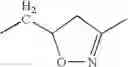


Sources:
- United States Patent and Trademark Office - verify current appl. status at the USPTO↗
Recent applications in this class:
- » 20250287947 2025-09-18
BIOCIDES AND ADHESIVE BINDING THEREOF - » 20250204528 2025-06-26
USE OF 2-AMINO-3-INDOLYL BUTYRIC ACID OR 3-METHYLPYRROLIDINE-2-CARBOXYLIC ACID AS PLANT IMMUNITY ELICITOR - » 20250194598 2025-06-19
PHYTOREGULATOR FOR PLANTS - » 20250031699 2025-01-30
Method for Controlling Parasitic Plants - » 20240108003 2024-04-04
COMPOSITIONS AND METHODS FOR IMPROVING PLANT PERFORMANCE - » 20240032538 2024-02-01
COMPOSITION OF FLUROCLORIDONE IN MICROEMULSION FORM - » 20230389545 2023-12-07
ANTIMICROBIAL COMPOSITION - » 20230371510 2023-11-23
APPLICATION OF PYRROLE-2-CARBOXALDEHYDE IN CONTROLLING PLANT ROOT-KNOT NEMATODES - » 20230270111 2023-08-31
PYRROLIDINONES HERBICIDES - » 20230225321 2023-07-20
ARTHROPOD REPELLENTS OBTAINED BY CHEMICALLY CONVERTING LACTIC ACID, LACTATES OR OTHER LACTIC ACID DERIVATIVES
Recent applications for this Assignee:
- » 20210053924 2021-02-25
Heterocyclic compounds as pesticides - » 20190367459 2019-12-05
Heterocyclic compounds as pesticides - » 20190239514 2019-08-08
Compositions comprising a biological control agent and an insecticide - » 20190092765 2019-03-28
N-CYCLOALKYL-N-[(HETEROCYCLYLPHENYL)METHYLENE]-(THIO)CARBOXAMIDE DERIVATIVES - » 20180327776 2018-11-15
AXMI554 delta-endotoxin gene and methods for its use - » 20180258036 2018-09-13
Method for producing bis(3-aminophenyl)disulfides and 3-aminothiols - » 20180098540 2018-04-12
Ternary fungicidal mixtures - » 20170339959 2017-11-30
Chemical stabilization of iodosulfuron-methyl sodium salt by hydroxystearates - » 20170305864 2017-10-26
Heterocyclic compounds as pesticides - » 20170245504 2017-08-31
Composition comprising a biological control agent and a fungicide