Herbicidal composition and method of using the same
US20050085387A1
2005-04-21
10/498,093
2002-12-19
✅ Patent granted
US 7,368,413 B2
2008-05-06
WO; PCT/JP02/13291; 20021219
WO; WO03/051117; 20030626
Sreeni Padmanabhan | Umamaheswar Ramachandran
2023-12-14
Abstract:
Herbicidal compositions containing as active ingredients, one or more compounds selected from light-induced herbicidal compounds, especially 3-substituted phenylpyrazole derivatives and one or more compounds selected from organophosphorus herbicidal compounds, characterized by containing as surfactants, one or more of alkenyl alcohol alkoxylates and one or more of alkyl alcohol alkoxylates; and methods of using the herbicidal compositions.
Inventors:
- Toshiaki Shimizu 1 🇯🇵 Kawachinagano-shi, Japan
- Miyako Aoki 1 🇯🇵 Osaka-shi, Japan
- Isao Ishimura 1 🇯🇵 Yao-shi, Japan
- Tsutomu Mabuchi 1 🇯🇵 Osakasayama-shi, Japan
- Toshiaki Shimizu 3 🇯🇵 Kawachinagano, Japan
- Miyako Aoki 1 🇯🇵 Osaka, Japan
- Isao Ishimura 1 🇯🇵 Yao, Japan
- Tsutomu Mabuchi 1 🇯🇵 Osakasayama, Japan
Assignee:
- NIHON NOHYAKU CO., LTD. 112 🇯🇵 Tokyo, Japan
Interested in similar patents?
Get notified when new applications in this technology area are published.
Classification:
A01N57/18 IPC
Biocides, pest repellants or attractants, or plant growth regulators containing organic phosphorus compounds having phosphorus-to-carbon bonds
A01N25/30 » CPC further
Biocides, pest repellants or attractants, or plant growth regulators, characterised by their forms, or by their non-active ingredients or by their methods of application, e.g. seed treatment or sequential application ; Substances for reducing the noxious effect of the active ingredients to organisms other than pests characterised by the surfactants
A01N37/46 » CPC further
Biocides, pest repellants or attractants, or plant growth regulators containing organic compounds containing a carbon atom having three bonds to hetero atoms with at the most two bonds to halogen, e.g. carboxylic acids containing at least one carboxylic group or a thio analogue, or a derivative thereof, and a nitrogen atom attached to the same carbon skeleton by a single or double bond, this nitrogen atom not being a member of a derivative or of a thio analogue of a carboxylic group, e.g. amino-carboxylic acids N-acyl derivatives
A01N39/04 » CPC further
Biocides, pest repellants or attractants, or plant growth regulators containing aryloxy- or arylthio-aliphatic or cycloaliphatic compounds, containing the group or , e.g. phenoxyethylamine, phenylthio-acetonitrile, phenoxyacetone; Aryloxy-carboxylic acids; Derivatives thereof Aryloxy-acetic acids; Derivatives thereof
A01N43/54 » CPC further
Biocides, pest repellants or attractants, or plant growth regulators containing heterocyclic compounds having rings with two nitrogen atoms as the only ring hetero atoms 1,3-Diazines; Hydrogenated 1,3-diazines
A01N43/56 » CPC further
Biocides, pest repellants or attractants, or plant growth regulators containing heterocyclic compounds having rings with two nitrogen atoms as the only ring hetero atoms 1,2-Diazoles; Hydrogenated 1,2-diazoles
A01N43/653 » CPC further
Biocides, pest repellants or attractants, or plant growth regulators containing heterocyclic compounds having rings with three nitrogen atoms as the only ring hetero atoms; Triazoles; Hydrogenated triazoles 1,2,4-Triazoles; Hydrogenated 1,2,4-triazoles
A01N43/82 » CPC further
Biocides, pest repellants or attractants, or plant growth regulators containing heterocyclic compounds having rings with nitrogen atoms and oxygen or sulfur atoms as ring hetero atoms five-membered rings with three ring hetero atoms
A01N43/84 » CPC further
Biocides, pest repellants or attractants, or plant growth regulators containing heterocyclic compounds having rings with nitrogen atoms and oxygen or sulfur atoms as ring hetero atoms six-membered rings with one nitrogen atom and either one oxygen atom or one sulfur atom in positions 1,4
A01N43/90 » CPC further
Biocides, pest repellants or attractants, or plant growth regulators containing heterocyclic compounds having two or more relevant hetero rings, condensed among themselves or with a common carbocyclic ring system
A01N57/20 » CPC main
Biocides, pest repellants or attractants, or plant growth regulators containing organic phosphorus compounds having phosphorus-to-carbon bonds containing acyclic or cycloaliphatic radicals
A01N2300/00 » CPC further
Combinations or mixtures of active ingredients covered by classes - with other active or formulation relevant ingredients, e.g. specific carrier materials or surfactants, covered by classes -
A01N43/00 IPC
Biocides, pest repellants or attractants, or plant growth regulators containing heterocyclic compounds
A01N43/36 IPC
Biocides, pest repellants or attractants, or plant growth regulators containing heterocyclic compounds having rings with one nitrogen atom as the only ring hetero atom five-membered rings
A01N25/00 IPC
Biocides; Pest repellants or attractants; Plant growth regulators
A01N25/00 IPC
Biocides, pest repellants or attractants, or plant growth regulators, characterised by their forms, or by their non-active ingredients or by their methods of application, e.g. seed treatment or sequential application ; Substances for reducing the noxious effect of the active ingredients to organisms other than pests
Description
TECHNICAL FIELDThe present invention relates to a herbicidal composition having a rapid action, an improved effect and a long-term stability of preparation, and a method of using the herbicidal composition.
BACKGROUND ARTAmong the light-induced herbicidal compounds represented by the general formula (I), 3-substituted phenylpyrazole derivatives represented by the general formula (I-1) are known compounds disclosed in Japanese Patent Laid-open Nos. Hei 3-163063 and Hei 4-211085, wherein it is mentioned that these compounds have, as herbicides for foliage treatment, an outstanding herbicidal activity on general broad-leaved weeds noxious in upland farming.
It is known that a number of compounds analogous to the chemical structure of the general formula (I-1) in the overall chemical structure and relative configuration of substituents exhibit a similar herbicidal activity as light-induced herbicides (Anderson et al., ACS Symposium Series, Vol. 559, Porphyric Pesticides, S. O. Duke and C. A. Robeiz eds., p.18-34 (1994)). It is also known that a resistance to these light-induced herbicides can generally be given to plants by introducing a specific gene into the plants (International Patent Application WO98/29554).
On the other hand, organophosphorus herbicidal compounds such as N-(phosphonomethyl) glycine or salts thereof disclosed in Japanese Patent Laid-open Nos. Sho 47-39538 and Sho 57-98994, 4-[hydroxy(methyl)phosphino]-DL-homoalanine or salts thereof disclosed in Japanese Patent Laid-open No. Sho 57-26564 and 4-[hydroxy(methyl)phosphino]-L-homoalanyl-L-alanyl-L-alanine or salts thereof disclosed in Japanese Patent Laid-open No. Sho 50-23282, etc. are well known as non-selective herbicides for foliage treatment.
Further, Japanese Patent Laid-open No. Hei 7-242510 discloses herbicidal compositions containing a 3-substituted phenylpyrazole derivative and an organophosphorus herbicidal compound.
Further, Weed Sci. Soc. 25, (1977), p.275-287 refers to an adjuvant effect of alkyl alcohol alkoxylates on N-(phosphonomethyl) glycine. However, this technique is insufficient in the adjuvant effect and the alkyl alcohol alkoxylates are not readily compatible with an aqueous solution of N-(phosphonomethyl) glycine.
Thus, it has been demanded to further improve the herbicidal effect and rapid action of a herbicidal composition containing a light-induced herbicidal compound, especially a 3-substituted phenylpyrazole derivative and an organophosphorus herbicidal compound.
DISCLOSURE OF INVENTIONThe present inventors have conducted extensive studies with the aim of solving the problems mentioned above to find that, by adding an alkenyl alcohol alkoxylate and an alkyl alcohol alkoxylate as surfactants to a herbicidal composition containing one or more compounds selected from light-induced herbicidal compounds, especially one or more compounds selected from the 3-substituted phenylpyrazole derivatives represented by the general formula (I-1), and one or more compounds selected from organophosphorus herbicidal compounds as active ingredients, the rapid action of the composition can be made excellent and the effect of the composition can be improved by a synergistic action of the active ingredients and the surfactants, besides there can be obtained a herbicidal composition keeping stable herbicidal activity for a long period of time. Based on this finding, the present invention has been accomplished.
The present invention relates to a herbicidal composition containing one or more compounds selected from light-induced herbicidal compounds and one more compounds selected from organophosphorus herbicidal compounds as active ingredients, and containing an alkenyl alcohol alkoxylate and an alkyl alcohol alkoxylate as surfactants, and a method of using the herbicidal composition. Particularly, the present invention relates to a herbicidal composition containing, as active ingredients, the light-induced herbicidal compounds which are one or more compounds selected from the group consisting of the compounds represented by the general formula (I):
P-Q (I)
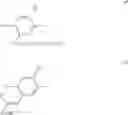
wherein P represents a group selected from P1 to P10:
wherein R3 represents a (C1-C6) alkyl group, a halo (C1-C6) alkyl group, a (C2-C6) alkenyl group or a (C2-C6) alkynyl group, R4 represents a hydrogen atom, a halogen atom or a (C1-C6) alkyl group, R5 represents a hydrogen atom, a (C1-C6) alkyl group, a halo (C1-C6) alkyl group, a (C2-C6) alkenyl group or a (C2-C6) alkynyl group, R6 represents a (C1-C6) alkyl group, a (C2-C6) alkenyl group or a (C2-C6) alkynyl group, R7 represents a hydrogen atom, a halogen atom or a (C1-C6) alkyl group, X1 represents a hydrogen atom or a halogen atom, Y represents —O—, —S—, —SO— or —SO2—, Y1 represents —O—, —NH— or —S—, and Y2 represents —O—, —S—, —NH— or —CH2—;
-
- Q represents Q1 to Q12:
wherein R1 represents a (C1-C6) alkyl group, R2 represents a hydrogen atom, a (C1-C6) alkyl group or a halo (C1-C6) alkyl group, R8 represents a hydrogen atom or a (C1-C6) alkyl group, X2 represents a halogen atom, Y is as defined above, and n represents an integer of 0 or 1; - and more particularly, one or more compounds selected from the group consisting of 3-substituted phenylpyrazole derivatives represented by the general formula (1-1)
wherein R represents —Y1—R3 (wherein R3 represents a (C1-C6) alkyl group, a halo (C1-C6) alkyl group, a (C2-C6) alkenyl group or a (C2-C6) alkynyl group and Y1 represents —O—, —NH— or —S—), —Y2CH(R4)CO—OR5 (wherein R4 represents a hydrogen atom, a halogen atom or a (C1-C6) alkyl group, R5 represents a hydrogen atom, a (C1-C6) alkyl group, a halo (C1-C6) alkyl group, a (C2-C6) alkenyl group or a (C2-C6) alkynyl group, and y2 represents —O—, —S—, —NH— or —CH2—), —COOCH(R4)CO—Y1R5 (wherein R4 represents a hydrogen atom, a halogen atom or a (C1-C6) alkyl group, R5 represents a hydrogen atom, a (C1-C6) alkyl group, a halo (C1-C6) alkyl group, a (C2-C6) alkenyl group or a (C2-C6) alkynyl group, Y1 represents —O—, —NH— or —S—), or —COOR6 (wherein R6 represents a (C1-C6) alkyl group, a (C2-C6) alkenyl group or a (C2-C6) alkynyl group), R1 represents a (C1-C6) alkyl group, R2 represents a hydrogen atom, a (C1-C6) alkyl group or a halo (C1-C6) alkyl group, X1 represents a hydrogen atom or a halogen atom, X2 represents a halogen atom, Y represents —O—, —S—, —SO— or —SO2—, and n represents an integer of 0 to 1; and - one or more compounds selected from the group consisting of organophosphorus herbicidal compounds, and
- further containing, as surfactants, an alkenyl alcohol alkoxylate and an alkyl alcohol alkoxylate; and further the present invention relates to a method of using the herbicidal composition.
- Q represents Q1 to Q12:
Among the substituents in the general formula (I) and general formula (I-1), the (C1-C6) alkyl group means a straight or branched chain alkyl group having 1-6 carbon atoms such as methyl, ethyl, n-propyl, i-propyl, n-butyl, i-butyl, s-butyl, t-butyl, n-pentyl, n-hexyl and the like; the halo (C1-C6) alkyl group means a straight or branched chain alkyl group having 1-6 carbon atoms substituted with one or more halogen atoms which are selected from the group consisting of chlorine atom, fluorine atom, iodine atom and bromine atom and may be the same or different; the (C2-C6) alkenyl group means a straight or branched chain alkenyl group having 2-6 carbon atoms; and the (C2-C6) alkynyl group means a straight or branched chain alkynyl group having 2-6 carbon atoms.
The light-induced herbicidal compounds in the present invention include for example the followings:
-
- (1) N-[4-chloro-2-fluoro-5-(1-methyl-prop-2-ynyloxy)phenyl]-3,4,5,6-tetrahydrophthalimide (common name: flumipropyn)
- (2) pentyl [2-chloro-5-(cyclohexa-1-ene-1,2-dicarboximide)-4-fluorophenoxy]-acetate (common name: flumiclorac-pentyl)
- (3) N-(7-fluoro-3,4-dihydro-3-oxo-4-prop-2-ynyl-2H-1,4-benzoxazin-6-yl)cyclohex-1-ene-1,2-dicarboxamide (common name: flumioxazin)
- (4) ethyl (RS)-2-chloro-3-[2-chloro-5-(4-difluoromethyl-4,5-dihydro-3-methyl-5-oxo-1H-1,2,4-triazol-1-yl)-4-fluorophenyl]propionate (common name: carfentrazone-ethyl)
- (5) 2′,4′-dichloro-5′-(4-difluoromethyl-4,5-dihydro-3-methyl-5-oxo-1H-1,2,4-triazol-1-yl) methanesulfonanilide (common name: sulfentrazone)
- (6) 2-(2,4-dichloro-5-prop-2-yloxyphenyl)-5,6,7,8-tetrahydro-1,2,4-triazolo[4,3-a]pyridin-3(2H)-one (common name: azafenidin)
- (7) methyl [2-chloro-4-fluoro-5-(tetrahydro-3-oxo-1H,3H-[1,3,4]thiadiazolo[3,4-a]pyridazin-1-ylideneamino)phenylthio]acetate (common name: fluthiacet-methyl)
- (8) 6 [(3Z)-6,7-dihydro-4,4-dimethyl-3H,5H-pyrrolido[2,1-c][1,2,4]thiadiazol-7-ylideneamino]-7-fluoro-4-(2-propynyl)-2H-1,4-benzoxadin-3(4H)-one (common name: thidiazimin)
- (9) 5-tert-butyl-3-(2,4-dichloro-5-isopropoxyphenyl)-1,3,4-oxadiazol-2(3H)-one (common name: oxadiazon)
- (10) 5-tert-butyl-3-[2,4-dichloro-5-(prop-2-ynyloxy)phenyl]-1,3,4-oxadiazol-(3H)-one (common name: oxadiargyl)
- (11) ethyl (Z)-2-chloro-3-[2-chloro-5-(cyclohex-1-ene-1,2-dicarboximido)phenyl]acrylate (common name: cinidon-ethyl)
(12) 1-(allyloxycarbonyl)-1-methylethyl 2-chloro-5-[1,2,3,6-tetrahydro-3-methyl-2,6-dioxo-4-(trifluoromethyl)pyrimidin-1-yl]benzoate (common name: butafenacil), and further the following 3-substituted phenylpyrazole derivatives represented by the general formula (I-1).
| TABLE 1 | |
| (I-1) | |
| (R1 = CH3) |
| No. | R | R2 | X1 | X2 | (Y)n | Physical Property |
| 1 | OCH2CH═CH2 | CH3 | Cl | Cl | S | nD 1.6131(25.3° C.) |
| 2 | OCH2CH═CH2 | CHF2 | Cl | Cl | O | nD 1.5536(28.4° C.) |
| 3 | OCH2CH═CH2 | CHF2 | F | Cl | O | m.p. 63.7-64.1° C. |
| 4 | SCH2CH═CH2 | CH3 | Cl | Cl | S | Paste |
| 5 | SCH2CH═CH2 | CHF2 | Cl | Cl | O | m.p. 52.0-55.0° C. |
| 6 | SCH2CH═CH2 | CHF2 | F | Cl | O | nD 1.5670(17.9° C.) |
| 7 | OCH2C≡CH | CH3 | Cl | Cl | S | m.p. 71.5° C. |
| 8 | OCH2C≡CH | CHF2 | Cl | Cl | O | m.p. 84.0° C. |
| 9 | OCH2C≡CH | CHF2 | F | Cl | O | m.p. 98.0-98.1° C. |
| 10 | SCH2C≡CH | CH3 | Cl | Cl | S | m.p. 94.5° C. |
| 11 | SCH2C≡CH | CHF2 | Cl | Cl | O | m.p. 127-129° C. |
| 12 | SCH2C≡CH | CHF2 | F | Cl | O | m.p. 82.8° C. |
| 13 | OCH2COOCH3 | CH3 | Cl | Cl | S | m.p. 126.2° C. |
| 14 | OCH2COOCH3 | CHF2 | Cl | Cl | O | m.p. 119.8° C. |
| 15 | OCH2COOCH3 | CHF2 | Cl | Br | O | m.p. 133.8° C. |
| 16 | OCH2COOCH3 | CHF2 | F | Cl | O | m.p. 122.8-123.1° C. |
| 17 | OCH2COOCH2CH3 | CH3 | Cl | Cl | S | m.p. 106.5° C. |
| 18 | OCH2COOCH2CH3 | CHF2 | Cl | Cl | O | m.p. 102.3° C. |
| 19 | OCH2COOCH2CH3 | CHF2 | F | Cl | O | m.p. 127.6° C. |
| 20 | OCH2COOC3H7-n | CHF2 | Cl | Cl | O | m.p. 89.7° C. |
| 21 | OCH2COOC3H7-n | CHF2 | Cl | F | O | m.p. 97.6-97.8° C. |
| 22 | OCH2COOC3H7-i | CHF2 | Cl | Cl | O | m.p. 106.0° C. |
| 23 | OCH2COOC3H7-i | CHF2 | F | Cl | O | m.p. 120.3-120.5° C. |
| 24 | OCH2COOCH2CH═CH2 | CHF2 | Cl | Cl | O | m.p. 84.7° C. |
| 25 | OCH2COOCH2CH═CH2 | CHF2 | F | Cl | O | m.p. 89.2-89.4° C. |
| 26 | OCH2COOCH2C≡CH | CHF2 | Cl | Cl | O | m.p. 119.6° C. |
| 27 | OCH2COOCH2C≡CH | CHF2 | F | Cl | O | m.p. 99.0° C. |
| 28 | OCH(CH3)COOH | CH3 | Cl | Cl | S | m.p. 191-194° C. |
| 29 | OCH(CH3)COOCH3 | CH3 | Cl | Cl | S | m.p. 90-93° C. |
| 30 | OCH(CH3)COOCH3 | CHF2 | F | Cl | O | m.p. 95.6° C. |
| 31 | OCH(CH3)COOC2H5 | CH3 | Cl | Cl | S | nD 1.5763(28.8° C.) |
| 32 | OCH(CH3)COOC2H5 | CHF2 | Cl | Cl | O | nD 1.5238(25.7° C.) |
| 33 | OCH(CH3)COOC2H5 | CHF2 | Cl | Br | O | nD 1.5396(20.8° C.) |
| 34 | OCH(CH3)COOC2H5 | CHF2 | F | Cl | O | m.p. 67.0-67.2° C. |
| 35 | OCH(CH3)COOC3H7-i | CH3 | Cl | Cl | S | m.p. 87-90° C. |
| 36 | SCH(CH3)COOCH3 | CHF2 | Cl | Cl | O | nD 1.5654(19.8° C.) |
| 37 | SCH(CH3)COOCH3 | CHF2 | F | Cl | O | nD 1.5494(25.0° C.) |
| 38 | SCH(CH3)COOC2H5 | CHF2 | Cl | Cl | O | nD 1.5565(28.0° C.) |
| 39 | SCH(CH3)COOC2H5 | CHF2 | F | Cl | O | nD 1.5328(18.0° C.) |
| 40 | NHCH(CH3)COOCH3 | CH3 | Cl | Cl | S | m.p. 144.2° C. |
| 41 | NHCH(CH3)COOC2H5 | CH3 | Cl | Cl | S | Paste |
| 42 | NHCH(CH3)COOC2H5 | CHF2 | Cl | Cl | O | nD 1.5371(23.4° C.) |
| 43 | NHCH(CH3)COOC2H5 | CHF2 | F | Cl | O | nD 1.5264(26.6° C.) |
| 44 | COOCH2COOCH3 | CHF2 | Cl | Cl | O | m.p. 74.4° C. |
| 45 | COOCH2COOCH3 | CHF2 | F | Cl | O | nD 1.5350(27.3° C.) |
| 46 | COOCH2COSCH3 | CHF2 | Cl | Cl | O | |
| 47 | COOCH2COSCH3 | CHF2 | F | Cl | O | |
| 48 | COOCH2COOC2H5 | CHF2 | Cl | Cl | O | m.p. 57.2° C. |
| 49 | COOCH2COOC2H5 | CHF2 | F | Cl | O | nD 1.5362(23.4° C.) |
| 50 | COOCH2COSC2H5 | CHF2 | Cl | Cl | O | nD 1.5763(20.7° C.) |
| 51 | COOCH2COSC2H5 | CHF2 | F | Cl | O | nD 1.5536(27.3° C.) |
| 52 | COOCH2COOC3H7-i | CHF2 | Cl | Cl | O | nD 1.5289(24.0° C.) |
| 53 | COOCH2COOC3H7-i | CHF2 | F | Cl | O | |
| 54 | COOCH2COSC3H7-i | CHF2 | Cl | Cl | O | nD 1.5684(20.2° C.) |
| 55 | COOCH2COSC3H7-i | CHF2 | F | Cl | O | |
| 56 | COOCH2COOCH2CH═CH2 | CHF2 | Cl | Cl | O | m.p. 45.4° C. |
| 57 | COOCH2COOCH2CH═CH2 | CHF2 | F | Cl | O | |
| 58 | COOCH2COOCH2C≡CH | CHF2 | Cl | Cl | O | m.p. 79.3° C. |
| 59 | COOCH2COOCH2C≡CH | CHF2 | F | Cl | O | |
| 60 | COOCH(CH3)COOCH3 | CHF2 | Cl | Cl | O | nD 1.5370(25.7° C.) |
| 61 | COOCH(CH3)COOCH3 | CHF2 | F | Cl | O | nD 1.5314(23.0° C.) |
| 62 | COOCH(CH3)COOC2H5 | CHF2 | Cl | Cl | O | nD 1.5672(26.0° C.) |
| 63 | COOCH(CH3)COOC2H5 | CHF2 | F | Cl | O | nD 1.5212(14.1° C.) |
| 64 | COOCH2C≡CH | CHF2 | Cl | Cl | O | m.p. 78.5° C. |
| 65 | COOCH3 | CHF2 | Cl | Cl | O | m.p. 63.9° C. |
| 66 | COOCH3 | CHF2 | F | Cl | O | nD 1.5430(17.0° C.) |
| 67 | COOC2H5 | CH3 | Cl | Cl | S | nD 1.6029(20.1° C.) |
| 68 | COOC2H5 | CHF2 | Cl | Cl | O | nD 1.5446(26.8° C.) |
| 69 | COOC2H5 | CHF2 | F | Cl | O | nD 1.5320(21.0° C.) |
| 70 | OCH2CH═CH2 | CHF2 | Cl | Cl | NH | m.p. 80.6° C. |
| 71 | OCH2C≡CH | CHF2 | Cl | Cl | NH | m.p. 118.9° C. |
| 72 | OCH2COOCH3 | i-C7H7 | Cl | Cl | — | Paste |
| 73 | OCH2CH═CH2 | i-C3H7 | Cl | Cl | — | Paste |
| 74 | OCH2C≡CH | i-C3H7 | Cl | Cl | — | Paste |
| 75 | SCH2COOCH3 | t-C4H9 | Cl | Cl | — | Paste |
| 76 | OCH2CH═CH2 | CH2Br | Cl | Cl | — | Paste |
Among the 3-substituted phenylpyrazole derivatives in the present invention represented by the general formula (I-1), the compound No. 19 is preferred.
On the other hand, the organophosphorus herbicidal compounds used in the present invention include, for example N-(phosphonomethyl) glycine or salts thereof, such as N-(phosphonomethyl) glycine isopropylamine salt (hereinafter, referred to as “compound A”), N-(phosphonomethyl) glycine ammonium salt, N-(phosphonomethyl) glycine trimethyl sulfonium salt, N-(phosphonomethyl) glycine potassium salt; 4-[hydroxy(methyl)phosphino]-DL-homoalanine or salts thereof, such as 4-[hydroxy(methyl)phosphino]-DL-homoalanine ammonium salt; 4-[hydroxy(methyl)phosphino]-L-homoalanyl-L-alanyl-L-alanine or salts thereof, such as 4-[hydroxy(methyl)phosphino]-L-homoalanyl-L-alanyl-L-alanine sodium salt, etc. Preferred organophosphorus herbicidal compounds are N-(phosphonomethyl) glycine isopropylamine salts.
The alkenyl alcohol alkoxylates used as a surfactant in the present invention include compounds represented by the general formula (II):
CaH2a−1—O-(Eo)b(Po)d—OH (II)
wherein Eo represents —O—CH2CH2—, Po represents —O—CH(CH3)CH2—, and a, b and c represent integers of 1 to 20 which are the same or different each other. The concrete examples thereof are an adduct of oleyl alcohol with polyoxyethylene, an adduct of oleyl alcohol with polyoxypropylene or a copolymer of oleyl alcohol, polyoxyethylene and polyoxypropylene. Preferable examples thereof include Noigen ET-89 (manufactured by Dai-ichi Kogyo Seiyaku Co., Ltd.), Noigen ET-109 (manufactured by the same company as above), Noigen ET-129 (manufactured by the same company as above), Noigen ET-149 (manufactured by the same company as above), Noigen ET-159 (manufactured by the same company as above), Pegnol O-107 (manufactured by Toho Chemical Industry Co., Ltd.) and Emulgen 409P (manufactured by Kao Corporation). One or more species of the above-mentioned alkenyl alcohol alkoxylates may be selected and put to use.
In addition, the alkyl alcohol alkoxylates include compounds represented by the general formula (III):
CeH2e+1—O—(Eo)f(Po)g—OH (III)
wherein Eo represents —O—CH2CH2—, Po represents —O—CH(CH3)CH2—, and e, f and g represent integers of 1 to 20 which are the same or different each other. Concrete examples thereof include primary alkyl alcohol ethoxylates, primary alkyl alcohol propoxylates, primary alkyl alcohol ethoxylate propoxylates, secondary alkyl alcohol ethoxylates, secondary alkyl alcohol propoxylates, secondary alkyl alcohol ethoxylate propoxylates, tertiary alkyl alcohol ethoxylates, tertiary alkyl alcohol propoxylates or tertiary alkyl alcohol ethoxylate propoxylates. Preferable examples thereof include Noigen ET-165 (manufactured by Dai-ichi Kogyo Seiyaku Co., Ltd.), Noigen ET-105 (manufactured by the same company as above), Adekatol SO-135 (manufactured by Asahi Denka Co., Ltd.), NK (Newkalgen)-D-1107S (manufactured by Takemoto Oil & Fat Co., Ltd), Lutensol T08 (manufactured by BASF AG), TO-347 (manufactured by Nippon Nyukazai Co., Ltd.), etc. One or more species of such alkyl alcohol alkoxylates may be selected and put to use.
In the herbicidal composition of the present invention, compounding ratios of the ingredients are as follows. That is, in 100 parts by weight of the herbicidal composition, the light-induced herbicidal compound is used in an amount of 0.01-10.0 parts by weight and preferably 0.1-2.0 parts by weight; the organophosphorus herbicidal compound is used in an amount of 1.0-60.0 parts by weight and preferably 5.0-40.0 parts by weight; the alkenyl alcohol alkoxylate is used in an amount of 0.1-20 parts by weight and preferably 5.0-15.0 parts by weight; and the alkyl alcohol alkoxylate is used in an amount of 0.1-20.0 parts by weight and preferably 5.0-15.0 parts by weight.
The compounding ratios of the alkenyl alcohol alkoxylate and alkyl alcohol alkoxylate in the herbicidal composition of the present invention are 5/1 to 1/5, preferably 2/1 to 1/2 in the weight of the alkenyl alcohol alkoxylate/the weight of alkyl alcohol alkoxylate.
When the herbicidal composition of the present invention is put to use, the composition is made into an appropriate preparation form in accordance with the purpose according to the conventional method in the pesticide preparation, and then put to use. For instance, the composition is blended with a solid carrier, a liquid carrier or other necessary adjuvants, and the blended mixture thus obtained is made into a preparation form such as a suspension concentrate in which the active ingredients exist in a state of suspended fine particles, or a wettable powder, or a water dispersible granule, or the like and then put to use.
Further, it is also possible to blend a preparation composition containing surfactants to be used in the present invention in an amount of 0.1-99.0 parts by weight, preferably 25.0-75.0 parts by weight per part by weight of the light-induced herbicide compound of general formula (I), with a commercially available preparation containing an organophosphorus compound as an active ingredient, at the time of preparing a liquid preparation to be sprayed, and thereafter to put to use.
When using a suspension concentrate or a water dispersible granule which contains a finely pulverized material comprising as active ingredients 0.01-10 parts by weight of the light-induced herbicidal compound represented by the general formula (I) and 1-50 parts by weight of an organophosphorus herbicidal compound and which contains no surfactant, it is also possible to mix and dissolve separately surfactants to be used in the present invention in the suspension concentrate or water dispersible granule at the time of preparing a liquid mixture to be sprayed, at a ratio of 10-90 parts by weight of the surfactant solution per part by weight of the light-induced herbicidal compound represented by the general formula (I).
BEST MODE FOR CARRYING OUT THE INVENTIONTypical examples and test examples of the present invention will be presented below. The present invention is by no means limited by these examples. In the meanwhile, the term “part” and “parts” mean part by weight or parts by weight, respectively.
(Base)
| Compound No. 19 | 40.0 parts | |
| Neocol YSK (manufactured by Dai-ichi | 1.0 part | |
| Kogyo Seiyaku Co., Ltd.) | ||
| Sorpol 7425 (Manufactured by Toho | 3.0 parts | |
| Chemical Industry Co., Ltd.) | ||
| Propylene glycol | 3.0 parts | |
| Silicone KM-73 (manufactured by Shin-Etsu | 0.5 part | |
| Chemical Co., Ltd.) | ||
| Proxel GXL (manufactured by Zeneca Japan) | 0.1 part | |
| Rhodopol 23 (manufactured by Rhone-Poulenc) | 0.02 part | |
| Water | Balance | |
| Total | 100 parts | |
Each of the mixtures having the above-mentioned compounding ratio was finely pulverized by means of Dyno-Mill (manufactured by Bachofen AG) filled with 0.3 mm ceramic beads (Toreceram, manufactured by Toray Industries, Inc.) to prepare a suspension composition containing 40% of Compound No. 19 as fine particles having a mean particle diameter of 0.3 μm.
The compositions of Examples 1-10 were prepared by using the suspension composition thus obtained as a base.
EXAMPLE 1
| Base of Compound No. 19 (40.0%) | 0.44 part | |
| Compound A (62.0% aqueous solution) | 50.80 parts | |
| Noigen ET-129 | 10.00 parts | |
| Lutensol T08 | 7.00 parts | |
| Propylene glycol | 5.00 parts | |
| Soprophor DSS/7-60 (manufactured by | 1.83 part | |
| Rhodia Nikka Co.) | ||
| N-Methyl-2-pyrrolidone | 0.15 part | |
| Silicone KM-73 | 0.50 part | |
| Proxel GXL | 0.10 part | |
| Attagel 50 | 0.50 parts | |
| Rhodopol 23 | 0.10 part | |
| Water | Balance | |
| Total | 100.00 parts | |
A mixture of the above-mentioned formulation was thoroughly homogenized by means of a mixer such as Autohomomixer (manufactured by Tokushu Kika K.K.) or the like to obtain a suspension composition containing 0.16% of Compound No. 19 and 30% of Compound A.
EXAMPLES 2-10Suspension concentrates were prepared by repeating Example 1, except that the alkenyl alcohol alkoxylate and the alkyl alcohol alkoxylate used in Example 1 were replaced with those shown in Table 2.
| TABLE 2 | ||
| Alkenyl alcohol alkoxylate | Compounding Ratio | |
| Example | Alkyl alcohol alkoxylate | (parts by weight) |
| 2 | Noigen ET-129 | 10.0 |
| Noigen ET-165 | 7.0 | |
| 3 | Noigen ET-129 | 10.0 |
| Noigen ET-115 | 7.0 | |
| 4 | Noigen ET-129 | 10.0 |
| Adekatol SO-135 | 7.0 | |
| 5 | Noigen ET-129 | 10.0 |
| TO-347 | 7.0 | |
| 6 | Pegnol O-107 | 10.0 |
| NK-D1107S | 7.0 | |
| 7 | Noigen ET-89 | 10.0 |
| NK-D1107S | 7.0 | |
| 8 | Noigen ET-109 | 10.0 |
| NK-D1107S | 7.0 | |
| 9 | Noigen ET-149 | 10.0 |
| NK-D1107S | 7.0 | |
| 10 | Noigen ET-159 | 10.0 |
| NK-D1107S | 7.0 | |
A commercial preparation containing Compound A as an active ingredient (glyphosate isopropylamine salt solution) was used.
COMPARATIVE EXAMPLE 2A composition was prepared by repeating Example 1, except that the alkyl alcohol alkoxylate was not used.
COMPARATIVE EXAMPLE 3A composition was prepared by repeating Example 1, except that the alkenyl alcohol alkoxylate was not used.
TEST EXAMPLE 1Barnyard grass (Echinochloa crus-galli) and cocklebur (Xanthium strumarium) were cultured in a plastic pot having a diameter of 12 cm. When the plants had reached 7-leaved stage or a later stage, a test agent solution adjusted to a prescribed concentration was sprayed, and the herbicidal effect was visually evaluated by naked eyes on the third day and twenty first day after the treatment (0: no herbicidal effect; 100: withering).
The results are summarized in Table 3.
| TABLE 3 | |||
| Compound (g/ha) | 3 days after | 21 days after |
| Compound | Barnyard | Cockle- | Barnyard | Cockle- | ||
| 19 | A | grass | bur | grass | bur | |
| Example 1 | 5.3 | 1000 | 70 | 95 | 100 | 100 |
| Example 2 | 5.3 | 1000 | 75 | 90 | 100 | 100 |
| Example 3 | 5.3 | 1000 | 75 | 95 | 100 | 100 |
| Example 4 | 5.3 | 1000 | 75 | 95 | 100 | 100 |
| Example 6 | 5.3 | 1000 | 75 | 90 | 100 | 100 |
| Example 9 | 5.3 | 1000 | 78 | 90 | 100 | 100 |
| Exam- | 5.3 | 1000 | 78 | 90 | 100 | 100 |
| ple 10 | ||||||
| Compa- | 0.0 | 1000 | 25 | 40 | 100 | 100 |
| rative | ||||||
| Example 1 | ||||||
| Compa- | 5.3 | 1000 | 60 | 75 | 100 | 100 |
| rative | ||||||
| Example 2 | ||||||
| Compa- | 5.3 | 1000 | 40 | 60 | 100 | 100 |
| rative | ||||||
| Example 3 | ||||||
Industrial Applicability
It has been found that, in a composition comprising a mixture of a light-induced herbicidal compound, especially a 3-substituted phenylpyrazole derivative, and an organophosphorus herbicidal compound, an excellent rapid herbicidal action and an improvement of the herbicidal effect can be achieved by incorporating an alkenyl alcohol alkoxylate and an alkyl alcohol alkoxylate into the composition.
Claims
1. A herbicidal composition containing one or more compounds selected from light-induced herbicidal compounds and one or more compounds selected from organophosphorus herbicidal compounds as active ingredients thereof, characterized by containing one or more surfactants selected from alkenyl alcohol alkoxylates and one or more surfactants selected from alkyl alcohol alkoxylates as surfactants.
2. The herbicidal composition according to claim 1, wherein the light-induced herbicidal compound is a compound represented by the general formula (I):
P-Q (I)
wherein P represents a group selected from P1 to P10:
wherein R3 represents a (C1-C6) alkyl group, a halo (C1-C6) alkyl group, a (C2-C6) alkenyl group or a (C2-C6) alkynyl group, R4 represents a hydrogen atom, a halogen atom or a (C1-C6) alkyl group, R5 represents a hydrogen atom, a (C1-C6) alkyl group, a halo (C1-C6) alkyl group, a (C2-C6) alkenyl group or a (C2-C6) alkynyl group, R6 represents a (C1-C6) alkyl group, a (C2-C6) alkenyl group or a (C2-C6) alkynyl group, R7 represents a hydrogen atom, a halogen atom or a (C1-C6) alkyl group, X1 represents a hydrogen atom or a halogen atom, Y represents —O—, —S—, —SO— or —SO2—, Y1 represents —O—, —NH— or —S—, and Y2 represents —O—, —S—, —NH— or —CH2—; Q represents Q1 to Q12:
wherein R1 represents a (C1-C6) alkyl group, R2 represents a hydrogen atom, a (C1-C6) alkyl group or a halo (C1-C6) alkyl group, R8 represents a hydrogen atom or a (C1-C6) alkyl group, X2 represents a halogen atom, Y is as defined above, and n represents an integer of 0 or 1.
3. The herbicidal composition according to claim 1, wherein the light-induced herbicidal compound is one or more compounds selected from 3-substituted phenylpyrazole derivatives represented by the general formula (I-1)
wherein R represents —Y1—R3 (wherein R3 represents a (C1-C6) alkyl group, a halo (C1-C6) alkyl group, a (C2-C6) alkenyl group or a (C2-C6) alkynyl group and Y1 represents —O—, —NH— or —S—), —Y2CH(R4)CO—OR5 (wherein R4 represents a hydrogen atom, a halogen atom or a (C1-C6) alkyl group, R5 represents a hydrogen atom, a (C1-C6) alkyl group, a halo (C1-C6) alkyl group, a (C2-C6) alkenyl group or a (C2-C6) alkynyl group, and Y represents —O—, —S—, —NH— or
—CH2—), —COOCH(R4)CO—Y1R5 (wherein R4 represents a hydrogen atom, a halogen atom or a (C1-C6) alkyl group, R5 represents a hydrogen atom, a (C1-C6) alkyl group, a halo (C1-C6) alkyl group, a (C2-C6) alkenyl group or a (C2-C6) alkynyl group, Y1 represents —O—, —NH— or —S—), or —COOR6 (wherein R6 represents a (C1-C6) alkyl group, a (C2-C6) alkenyl group or a (C2-C6) alkynyl group), R1 represents a (C1-C6) alkyl group, R2 represents a hydrogen atom, a (C1-C6) alkyl group or a halo (C1-C6) alkyl group, X1 represents a hydrogen atom or a halogen atom, X2 represents a halogen atom, Y represents —O—, —S—, —SO— or —SO2—, and n represents an integer of 0 to 1.
4. The herbicidal composition according to claim 1, wherein the organophosphorus herbicidal compound is one or more compounds selected from N-(phosphonomethyl) glycine or a salt thereof,
4-[hydroxy(methyl)phosphino]-DL-homoalanine or a salt thereof, or
4-[hydroxy(methyl)phosphino]-L-homoalanyl-L-alanyl-L-alanine or a salt thereof.
5. The herbicidal composition according to claim 1, wherein the alkenyl alcohol alkoxylate is one or more compounds selected from compounds represented by the general formula (II):
CaH2a−1—O—(Eo)b(Po)d—OH (II)
wherein Eo represents —O—CH2CH2—, Po represents —O—CH(CH3)CH2—, and a, b and c represent integers of 1 to 20 which are the same or different each other.
6. The herbicidal composition according to claim 5, wherein the alkenyl alcohol alkoxylate is one or more compounds selected from an adduct of oleyl alcohol with polyoxyethylene, an adduct of oleyl alcohol with polyoxypropylene, and a copolymer of oleyl alcohol, polyoxyethylene and polyoxypropylene.
7. The herbicidal composition according to claim 1, wherein the alkyl alcohol alkoxylate is one or more compounds selected from the compounds represented by the general formula (III):
CeH2e+1—O—(Eo)f(Po)g—OH (III)
wherein Eo represents —O—CH2CH2—, Po represents —O—CH(CH3)CH2—, and e, f and g represent integers of 1 to 20 which are the same or different each other.
8. The herbicidal composition according to claim 7, wherein the alkyl alcohol alkoxylate is one or more compounds selected from primary alkyl alcohol ethoxylates, primary alkyl alcohol propoxylates, primary alkyl alcohol ethoxylate propoxylates, secondary alkyl alcohol ethoxylates, secondary alkyl alcohol propoxylates, secondary alkyl alcohol ethoxylate propoxylates, tertiary alkyl alcohol ethoxylates, tertiary alkyl alcohol propoxylates or tertiary alkyl alcohol ethoxylate propoxylates.
9. The herbicidal composition according to claim 1, which contains one or more compounds selected from the light-induced herbicidal compounds in an amount of 0.01-10.0 parts by weight, the organophosphorus herbicidal compound in an amount of 1-60.0 parts by weight, the alkenyl alcohol alkoxylate in an amount of 0.1-20.0 parts by weight and the alkyl alcohol alkoxylate in an amount of 0.1-20.0 parts by weight, all per 100 parts by weight of the herbicidal composition.
10. The herbicidal composition according to claim 1, which a weight of the alkenyl alcohol alkoxylate/a weight of the alkyl alcohol alkoxylate ranges from 5/1 to 1/5.
11. The herbicidal composition according to claim 1, wherein the herbicidal composition is a suspension concentrate, a water dispersible granule or an aqueous preparation.
12. A method of using a herbicidal composition characterized by treating an objective weed or a soil with an effective amount of the herbicidal composition according to claim 1, for controlling the weeds harmful to crop plants.
Images & Drawings included:





Sources:
- United States Patent and Trademark Office - verify current appl. status at the USPTO↗
Similar patent applications:
- » 20140213446
HERBICIDAL COMPOSITIONS AND METHODS USING COMBINATIONS OF 4-AMINO-3-CHLORO-6-(4-CHLORO-2-FLUORO-3-METHOXYPHENYL)PYRIDINE-2-CARBOXYLIC ACID OR A DERIVATIVE THEREOF AND AN ARYLOXYPHENOXY PROPIONATE ACCASE INHIBITOR HERBICIDE - » 20250223268
4-Methylsulfonylbenzamide Compound, Preparation Method, Herbicidal Composition And Use - » 20180184661
Improved Herbicidal Composition, Method and Use - » 20190053496
Herbicidal agrichemical composition and herbicidal method using same - » 20220289696
ARYL FORMAMIDE COMPOUND CONTAINING CHIRAL SULFUR OXIDE OR SALT THEREOF, PREPARATION METHOD, HERBICIDAL COMPOSITION AND USE THEREOF - » 20230041563
N-(1,3,4-OXADIAZOL-2-YL)ARYLCARBOXAMIDES OR SALTS THEREOF, PREPARATION METHODS, HERBICIDAL COMPOSITIONS AND USES THEREOF - » 20140213449
Complex for use in stabilizing herbicidal compositions and methods for synthesizing and using the same - » 20130137573
HERBICIDAL COMPOSITIONS COMPRISING, AND METHODS OF USE OF, HERBICIDALLY ACTIVE PYRANDIONES - » 20120108424
Complex for use in stabilizing herbicidal compositions and methods for synthesizing and using - » 20060264328
Agricultural adjuvant compositions, herbicide compositions, and methods for using such compositions
Recent applications in this class:
- » 20250261645 2025-08-21
METHOD FOR CONTROLLING WEEDS - » 20250212883 2025-07-03
HERBICIDAL MIXTURES COMPRISING L-GLUFOSINATE AND THEIR USE IN CORN CULTURES - » 20250176552 2025-06-05
Herbicidal compositions comprising glufosinate - » 20250176551 2025-06-05
METHOD FOR CONTROLLING THE GROWTH OF UNDESIRABLE VEGETATION - » 20250160332 2025-05-22
HERBICIDAL COMBINATIONS AND A METHOD FOR CONTROLLING UNDESIRED VEGETATION - » 20250143319 2025-05-08
GLUFOSINATE ADDITIVE FOR IMPROVED WEED CONTROL - » 20250143318 2025-05-08
HERBICIDAL MIXTURES COMPRISING L-GLUFOSINATE OR ITS SALT AND A SECOND HERBICIDE - » 20250143317 2025-05-08
HERBICIDAL MIXTURES COMPRISING L-GLUFOSINATE AND THEIR USE IN COTTON CULTURES - » 20250143316 2025-05-08
HERBICIDAL MIXTURES COMPRISING L-GLUFOSINATE AND THEIR USE IN COTTON CULTURES - » 20250143315 2025-05-08
HERBICIDAL MIXTURES COMPRISING L-GLUFOSINATE AND THEIR USE IN SOYBEAN CULTURES
Recent applications for this Assignee:
- » 20250223275 2025-07-10
1-ARYLTETRAHYDROPYRIDAZINE-3,5-DIONE DERIVATIVE OR SALT THEREOF AND INSECTICIDAL AGENT CONTAINING THE COMPOUND AND METHOD FOR USING SAME - » 20250197384 2025-06-19
AZOLE COMPOUND AND ANTIFUNGAL AGENT - » 20250194600 2025-06-19
MESOIONIC ARYLPYRIDAZINIUM DERIVATIVE OR SALT THEREOF AND INSECTICIDAL AGENT CONTAINING THE COMPOUND AND METHOD FOR USING SAME - » 20250185656 2025-06-12
PIPERIDINONE DERIVATIVE OR SALT THEREOF, HARMFUL ORGANISM CONTROL AGENT CONTAINING SAID COMPOUND, AND METHOD FOR USING SAME - » 20250122147 2025-04-17
ARYL CYCLOHEXANEDIONE DERIVATIVE OR SALT THEREOF, PEST CONTROL AGENT CONTAINING SAME, AND METHOD FOR USE THEREOF - » 20250074896 2025-03-06
ARYLTETRAHYDROPYRIDAZINE DERIVATIVE OR SALT THEREOF AND INSECTICIDAL AGENT CONTAINING THE COMPOUND AND METHOD FOR USING SAME - » 20250072422 2025-03-06
ARYLCYCLOHEXANEDIONE DERIVATIVE OR SALT THEREOF, PEST CONTROL AGENT CONTAINING SAID COMPOUND, AND METHOD FOR USING SAME - » 20250072421 2025-03-06
ARYL DIHYDROPYRAN DERIVATIVE OR SALT THEREOF, PEST CONTROL AGENT CONTAINING SAME, AND METHOD FOR USE THEREOF - » 20250066303 2025-02-27
ARYL TETRAHYDROPYRIDINE DERIVATIVE OR SALT THEREOF, PEST CONTROL AGENT CONTAINING SAME, AND METHOD FOR USE THEREOF - » 20250002477 2025-01-02
BENZIMIDAZOLE COMPOUND OR SALT THEREOF, CANINE FILARIASIS CONTROL AGENT CONTAINING SAME, AND METHOD OF USE THEREOF