Halo-substituted active methylene compounds
US20050113607A1
2005-05-26
10/483,533
2003-06-09
✅ Patent granted
US 7,179,942 B2
2007-02-20
WO; PCT/IN03/00216; 20030609
WO; WO2004/108660; 20041216
Shailendra Kumar
2023-06-09
Abstract:
A novel process for the preparation of compounds of formula I
by employing novel halo-substituted active methylene compounds of formula III and process of preparation thereof.
Inventors:
- Joy Mathew 7 🇮🇳 Karnataka, India
- Sambasivam Ganesh 14 🇮🇳 Karnataka, India
- Joy Mathew 2 🇮🇳 Munnekolala, India
- Tom Thomas Puthiaparampil 7 🇮🇳 Karnataka, India
- Tom Thomas Puthiaparampil 1 🇮🇳 J.P. Nagar, India
- Madhavan Sridharan 9 🇮🇳 Karnataka, India
- Padudevastana Sathya Shanker 1 🇮🇳 Main Rose, India
- Padudevastana Sathya Shanker 1 🇮🇳 Karnataka, India
Assignee:
- Bicon Limited 1 Electronics City (PC), un
Interested in similar patents?
Get notified when new applications in this technology area are published.
Classification:
C07C233/07 IPC
Carboxylic acid amides having carbon atoms of carboxamide groups bound to hydrogen atoms or to acyclic carbon atoms having nitrogen atoms of carboxamide groups bound to hydrogen atoms or to carbon atoms of unsubstituted hydrocarbon radicals with carbon atoms of carboxamide groups bound to acyclic carbon atoms of an acyclic saturated carbon skeleton having the nitrogen atom of at least one of the carboxamide groups bound to a carbon atom of a six-membered aromatic ring
B01J20/285 » CPC main
Solid sorbent compositions or filter aid compositions; Sorbents for chromatography; Processes for preparing, regenerating or reactivating thereof; Sorbents specially adapted for preparative, analytical or investigative chromatography; Porous sorbents based on polymers
B01D15/08 » CPC further
Separating processes involving the treatment of liquids with solid sorbents ; Apparatus therefor Selective adsorption, e.g. chromatography
B01D59/12 » CPC further
Separation of different isotopes of the same chemical element; Separation by diffusion by diffusion through barriers
B01D59/20 » CPC further
Separation of different isotopes of the same chemical element Separation by centrifuging
B01D59/26 » CPC further
Separation of different isotopes of the same chemical element; Separation by extracting by sorption, i.e. absorption, adsorption, persorption
Description
TECHNICAL FIELDThe present invention relates to a novel halo-substituted active methylene compounds and a process for preparation of the same. More particularly, the present invention relates to a process for preparation of compounds of formula I by employing novel halo-substituted active methylene compounds of formula III.
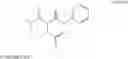
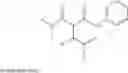
BACKGROUND U.S. Pat. No. 5,124,482 and U.S. Pat. No. 5,216,174 discloses the manufacture and use of 4-Fluoro-α-[2-methyl-1-oxopropyl]γ-oxo-N-β-diphenylbenzenebutane amide for preparation of [R-(R*,R*)]-2-(4-Fluorophenyl)-B,D-Dihydroxy-5-(1-Methylethyl)-3-Phenyl-4-[(Phenylamino) Carbonyl]-1h-Pyrrole-1-Heptanoic Acid. [R-(R*,R*)]-2-(4-Fluorophenyl)-B,D-Dihydroxy-5-(1-Methylethyl)-3-Phenyl-4-[(Phenylamino)Carbonyl]-1h-Pyrrole-1-Heptanoic Acid is inhibitor of HMG CoA reductase and thus is used as antihypercholesterolemic agent. Hitherto unknown compounds of the formula III
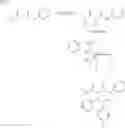
are extremely useful novel intermediates for an improved process for the preparation of 4-Fluoro-α-[2-methyl-1-oxopropyl]γ-oxo-N-β-diphenylbenzenebutaneamide (Scheme 1).
The present invention also relates to a process for preparation of novel intermediates of formula III.
The present invention also relates to novel process for preparation compounds of formula I.
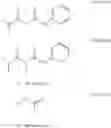
As mentioned earlier the compounds of formula I can be prepared by a novel process comprising,
-
- a) a) halogenation of compound of formula II to afford a compounds of formula III,
- b) reaction of compounds of formula III with compounds of formula IV.
Compounds of formula I are important intermediates for the preparation of drug molecules especially, HMG Co-A reductase inhibitors. The HMG Co-A reductase inhibitors are useful as inhibitors of the enzyme 3-hydroxy-3-methylglutaryl-coenzyme A reductase (HMG CoA reductase) and are thus useful as hypolipidemic or hypocholesterolemic agents.
FORMULA IThe process of the present invention is new, economical, and commercially feasible method for preparing intermediates used for the preparation of HMG CoA reductase inhibitors.
The reaction between compounds of formula II and III is carried out in the presence of reagents selected from Bromine, N-bromosuccinimide, thionyl chloride, Br2(CN)2, 4-(dimethylamino)pyridinium bromide or any such suitable halogenating agent.
The compounds of formula III can be further used for preparation of 4-Fluoro-α-[2-methyl-1-oxopropyl]γ-oxo-N-β-diphenylbenzene butane amide which is key intermediate for manufacture of [R-(R*,R*)]-2-(4-Fluorophenyl)-B,D-Dihydroxy-5-(1-Methylethyl)-3-Phenyl-4-[(Phenyl amino) Carbonyl]-1h-Pyrrole-1-Heptanoic Acid, by reacting with compound of formula IV.
The reaction between compounds of formula III and formula IV is carried out in the presence of reagents selected from Lithium diisopropylamide, sodium hydride n-butyllithium, sodium ethoxide or any such suitable base.
The following non-limiting examples illustrate the inventors' preferred method for preparing the compounds of the invention.
EXAMPLES Example 1 Preparation of 2-Bromo-4-methyl-3-oxo-pentanoic Acid PhenylamideTo a solution of 4-Methyl-3-oxo-pentanoic acid phenylamide (10 g, 0.048 mol) in chloroform (100 mL), liquid bromine (7.8 g, 0.048 mol) was added. After stirring for 30 minutes, the reaction mixture was concentrated and product was isolated by column chromatography (silica gel: 60-120 mesh, eluent: Pet. Ether/ethyl acetate-60:40).
Yield: 11.0 g, 80%
Example 2 Preparation of 2-Bromo-4-methyl-3-oxo-pentanoic Acid PhenylamideTo a solution of 4-Methyl-3-oxo-pentanoic acid phenylamide (10 g, 0.048 mol) in acetone 100 mL), N-bromosuccinimide (8.5 g, 0.048 mol) was added. After stirring for 3 hours, the reaction mixture was concentrated and product was isolated by crystallization from Pet. Ether/ethyl acetate.
Yield: 12.5 g, 92%
Example 3 Preparation of 4-Fluoro-α-[2-methyl-1-oxopropyl]γ-oxo-N-β-diphenylbenzene Butane AmideTo a chilled solution of diisopropylamine (8 mL, 0.056 mol) in dry THF(50 mL), n-butyl lithium (35 mL, 1.6 M, 0.056 mol) in hexane was added dropwise under nitrogen atmosphere, maintaining the temperature between −10° C. and −25° C. and stirred for 30 minutes at the same temperature. A solution of 1-(4-Fluoro-phenyl)-2-phenyl-ethanone (10 g, 0.047 mol) in THF (20 mL) was added to the reaction mixture dropwise, maintaining the temperature between −60° C. and −78° C. and stirred for 1 hour at the same temperature. 2-Bromo-4-methyl-3-oxo-pentanoic acid phenylamide (13.4 g, 0.047 mol) in THF (30 mL) was added dropwise to the reaction mixture, maintaining the temperature between −60° C. and −78° C. and stirred for 30 minutes. The reaction mixture was slowly warmed 10-15° C., over a period of 1 hour and quenched with water (50 mL). The product was extracted with ethyl acetate (2×50 mL). Combined organic extract was washed with water (2×50 mL) brine (2×50 mL) and concentrated to obtain title compound.
Yield: 16 g, 85%.
Example 4 Preparation of 4-Fluoro-α-[2-methyl-1-oxopropyl]γ-oxo-N-β-diphenylbenzene Butane AmideTo a chilled solution of diisopropylamine (8 mL, 0.056 mol) in dry THF (50 mL), n-butyl lithium (35 mL, 1.6 M, 0.056 mol) in hexane was added dropwise under nitrogen atmosphere, maintaining the temperature between −10° C. and −25° C. and stirred for 30 minutes at the same temperature. A solution of 1-(4-Fluoro-phenyl)-3-methyl-butan-1-one (8.4 g, 0.047 mol) in THF (20 mL) was added to the reaction mixture dropwise, maintaining the temperature between −60° C. and −78° C. and stirred for 1 hour at the same temperature. 2-Bromo-4-methyl-3-oxo-pentanoic acid phenylamide (13.4 g, 0.047 mol) in THF (30 mL) was added dropwise to the reaction mixture, maintaining the temperature between −60° C. and −78° C. and stirred for 30 minutes. The reaction mixture was slowly warmed 10-15° C., over a period of 1 hour and quenched with water (50 mL). The product was extracted with ethyl acetate (2×50 mL). Combined organic extract was washed with water (2×50 mL) brine (2×50 mL) and concentrated to obtain title compound.
Yield: 15 g, 87%.
Claims
1. A process for preparing compound of formula I
comprising the steps of
reaction of the compound of formula III with compounds of formula IV to obtain compound of formula I
2. A process as in claim 1, wherein the reaction between compounds of formula III and formula IV is carried out in the presence of reagents selected from lithium diisopropylamide, sodium hydride n-butyllithium, sodium ethoxide or any such suitable base.
3. A process as in claim 1, wherein the compounds of formula III is prepared
by halogenation of compound of formula II to afford a compound of formula II.
4. A process as in claim 3, wherein the halogenation is carried out in the presence of reagents selected from Bromine, N-bromosuccinimide, thionyl chloride, Br2(CN)2, 4-(dimethylamino)pyridinium bromide or any such suitable halogenating agent.
5. An intermediate of formula III
Images & Drawings included:





Sources:
- United States Patent and Trademark Office - verify current appl. status at the USPTO↗
Recent applications in this class:
- » 20250256263 2025-08-14
Chromatography Media and Methods for Producing Them - » 20250114768 2025-04-10
POROUS PROTEIN STRUCTURES - » 20240367150 2024-11-07
MONOLITHIC MICROPOROUS SUBSTRATE FOR CHROMATOGRAPHIC BEDS - » 20240316534 2024-09-26
POROUS PARTICLES, METHOD FOR PRODUCING SAME, AND FILLER FOR CHROMATOGRAPHY USING SAME - » 20240207817 2024-06-27
AGAROSE-CELLULOSE NANOCOMPOSITE POROUS GEL MICROSPHERE, PREPARATION METHOD, AND APPLICATION - » 20240165587 2024-05-23
Microporous carbon materials to separate nitrogen in associated and non-associated natural gas streams - » 20240157334 2024-05-16
PACKING MATERIAL AND METHOD FOR PRODUCING THE SAME, AND COLUMN FOR SIZE EXCLUSION CHROMATOGRAPHY - » 20240116027 2024-04-11
METHOD FOR PRODUCING CHROMATOGRAPHY CARRIER, METHOD FOR PRODUCING CHROMATOGRAPHY COLUMN, AND CHROMATOGRAPHY CARRIER - » 20240116026 2024-04-11
VACUUM DRIVEN GEL FILTRATION METHOD - » 20240100505 2024-03-28
MICRO-SEPARATOR INCLUDING 3D ORDERED NANOSHELL STRUCTURE OF CERAMIC-POLYMER COMPOSITE FOR GAS CHROMATOGRAPHY, METHOD FOR FABRICATING THE SAME AND METHOD FOR SEPARATING GAS MIXTURE USING THE SAME