Method for electrostatic coating of a paper web
US20050118347A1
2005-06-02
10/507,417
2003-03-11
✅ Patent granted
US 7,186,445 B2
2007-03-06
WO; PCT/FI03/00180; 20030311
WO; WO03/076715; 20030918
Fred J. Parker
2023-03-27
Abstract:
A method for preliminary treatment of particles of a powder in a dry surface treatment process before applying the powder particles on a surface of a substrate by utilizing an electric field created by electrodes. The Electrodes are located at opposite sides of the substrate in such a way that at least one first electrode is located at the side of the substrate to be coated, and at least one second electrode is located at the opposites side of the substrate. The particles of the powder are pre-charged before bringing them into the electric field.
Inventors:
- Juha Maijala 4 🇫🇮 Jarvenpaa, Finland
- Kaisa Putkisto 6 🇫🇮 Tampere, Finland
- Veli Kasma 4 🇫🇮 Tampere, Finland
Assignee:
- METSO PAPER, INC. 404 🇫🇮 Helsinki, Finland
Interested in similar patents?
Get notified when new applications in this technology area are published.
Classification:
B05D1/06 » CPC further
Processes for applying liquids or other fluent materials performed by spraying involving the use of an electrostatic field Applying particulate materials
B05B5/14 » CPC main
Electrostatic spraying apparatus; Spraying apparatus with means for charging the spray electrically; Apparatus for spraying liquids or other fluent materials by other electric means; Plant for applying liquids or other fluent materials to objects specially adapted for coating continuously moving elongated bodies, e.g. wires, strips, pipes
B05B5/087 » CPC further
Electrostatic spraying apparatus; Spraying apparatus with means for charging the spray electrically; Apparatus for spraying liquids or other fluent materials by other electric means; Plant for applying liquids or other fluent materials to objects Arrangements of electrodes, e.g. of charging, shielding, collecting electrodes
B05D1/04 » CPC further
Processes for applying liquids or other fluent materials performed by spraying involving the use of an electrostatic field
B05D1/045 » CPC further
Processes for applying liquids or other fluent materials performed by spraying involving the use of an electrostatic field on non-conductive substrates
B05D7/04 » CPC further
Processes, other than flocking, specially adapted for applying liquids or other fluent materials to particular surfaces or for applying particular liquids or other fluent materials to macromolecular substances, e.g. rubber to surfaces of films or sheets
D21H23/50 » CPC further
Processes or apparatus for adding material to the pulp or to the paper characterised by the manner in which substances are added; Addition to the formed paper Spraying or projecting
D21H23/64 » CPC further
Processes or apparatus for adding material to the pulp or to the paper characterised by the manner in which substances are added; Addition to the formed paper by contacting paper with a device carrying the material the material being non-fluent at the moment of transfer, e.g. in form of preformed, at least partially hardened coating
D21H25/08 » CPC further
After-treatment of paper not provided for in groups - Rearranging applied substances, e.g. metering, smoothing; Removing excess material
B05D1/007 » CPC further
Processes for applying liquids or other fluent materials using an electrostatic field
B05D1/40 » CPC further
Processes for applying liquids or other fluent materials Distributing applied liquids or other fluent materials by members moving relatively to surface
B05D3/0254 » CPC further
Pretreatment of surfaces to which liquids or other fluent materials are to be applied; After-treatment of applied coatings, e.g. intermediate treating of an applied coating preparatory to subsequent applications of liquids or other fluent materials by baking After-treatment
B05D3/12 » CPC further
Pretreatment of surfaces to which liquids or other fluent materials are to be applied; After-treatment of applied coatings, e.g. intermediate treating of an applied coating preparatory to subsequent applications of liquids or other fluent materials by mechanical means
B05D2201/00 » CPC further
Polymeric substrate or laminate
B05D2252/02 » CPC further
Sheets of indefinite length
B05D2252/10 » CPC further
Sheets Applying the material on both sides
B05D2401/32 » CPC further
Form of the coating product, e.g. solution, water dispersion, powders or the like the coating being applied in other forms than involving eliminable solvent, diluent or dispersant applied as powders
Description
CROSS REFERENCES TO RELATED APPLICATIONSThis application is a U.S. national stage application of International application No. PCT/FI03/00180, filed Mar. 11, 2003 and claims priority on Finnish Application No. 20020479, Filed Mar. 14, 2002, and Finnish Application No. 20021253, Filed Jun. 26, 2002.
STATEMENT AS TO RIGHTS TO INVENTIONS MADE UNDER FEDERALLY SPONSORED RESEARCH AND DEVELOPMENTNot applicable.
BACKGROUND OF THE INVENTIONThe present invention relates to a method for a preliminary treatment of particles of a powder in a dry surface treatment process before applying the powder particles on a surface of a substrate by utilizing an electric field created by electrodes, which are located at opposite sides of the substrate in such a way that at least one first electrode is located at the side of the substrate to be coated, and at least one second electrode is located at the opposite side of the substrate.
The dry surface treatment process of different substrates, such as paper, board, plastic, or metallic substrates, comprises dry powder application followed by a finishing step, for example thermomechanical fixing. The application of the powder utilizes an electric field to transfer the powder particles to the surface of the substrate and to enable an electrostatic adhesion prior to the finishing. Both the final adhesion and the surface smoothening of the dry powder are executed simultaneously through thermomechanical treatment or another suitable treatment. The powder, which is used, may be a coating composition comprising inorganic particles and binder particles, or a film forming material, which can be finished so that a pinhole-free film layer is formed.
In a dry surface treatment process, the charging of the powder has an essential role. If some inadequacies relating an amount of the charged particles, or a level of charging of a particle occur, it has an effect on efficiency and a cleanliness of the process. If the particles of the dry powder do not adhere properly to a substrate it causes an uneven powder layer on the substrate, dusting, material losses, and possibly harmful deposits.
SUMMARY OF THE INVENTIONThe method of the invention is an enhancement to the dry surface treatment process, and it diminishes the above-mentioned problems of the dry surface treatment process. The method is characterized in that the particles of the powder are pre-charged before bringing them into the electric field.
The method of the invention makes the efficiency of the dry surface treatment process better because the dry powder places itself on the substrate properly, and no material losses occur. As a consequence, also a coating layer of a higher quality is achieved. A clean process without dusting is also attained.
In a dry surface treatment process, an electric field is created between electrodes, which are in different potentials. A substrate to be coated is between the electrodes. At least one of the electrodes may be a corona charging electrode which charges surrounding gas. The charged gas atoms, molecules or molecule groups attach to particles of the coating powder, thus giving a charge to the particle.
A force according to the equation {overscore (F)}=q{overscore (E)}, where {overscore (E)} is an electric field, F is the force, and q is a charge, has an influence on a charge q in an electric field E. The force tends to convey the charge in the electric field, and in a stationary electric field only a position of the charge is meaningful. When a potential of the electric field is known, the strength of the electric field in a certain position is derived from the following equation: E _ = - ∂ V ∂ n u _ n , where E _ is the strength of the electric field, V is the potential of the electric field, and u _ n is the unit vector of the perpendicular of the plane.
The strength of the electric field can also be evaluated by the electric charge density when the relation between the electric flux density and the strength of the electric field is taken into consideration. The equation below is Gauss's law. ∂ E x ∂ x + ∂ E y ∂ y + ∂ E z ∂ z = ρ ɛ , where E x , y , z are the dimensional strengths of the electric field, ρ is a local electric charge density, and ɛ is the dielectric constant of the examined space.
As seen from the equation above, in a stationary electric field the charges create the field, and the distribution and the magnitude of the charges determine the strength of the field in different positions.
If a conductive particle (radius a, charge q) is exposed to a uniform electric field E0 in a unipolaric ion concentration N0, the electric field at the particle is formed from two components, namely an electric field created by the particle itself due to its own charge, and an outer electric field which is changed by the charge of the particle. This field is described by an equation E = 3 E 0 cos θ - q 4 π ɛ 0 a 2 where E is the resultant electric field, θ Is the incidence angle of the electric field focused to a particle, ɛ 0 is the dielectric constant of the free space, a is the diameter of the particle, and q is the charge of the particle.
The term 3E0 cos θ describes the change of the electric field as a consequence of the presence of the conductive particle. E0 is the undisturbed field. The charging of the particles is great, and it is restricted only by the ions conveyed onto the particle by the electric field. The change of the charge is defined as a stream, and it can be described by the equation ⅆ q ⅆ t = N 0 ⅇ b ∫ θ θ 0 ( 3 E 0 cos θ - q 4 π ɛ 0 a 2 ) ⅆ A where q is the charge of the particle, b is the mobility of ion, e is the charge of the electron, θ 0 is the critical angle of to the particle streaming charge, dA is the area of the component = 2 π a 2 sin θ d θ , and t is time
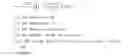
The above mentioned equation shows that the charge continues to stream to the particle until the field created by the particle and the outer field are balanced out. When a saturation charge is known, the level of charging can be derived from the equation
q
(
t
)
=
q
s
1
1
+
τ
/
t
where τ=4ε0/N0eb
For conductive materials, the saturation charge is qs=12τa2ε0E0. For non-conductive materials, to the equation shall be added 3κ/(κ+2).
The diffusion charge has also an effect on the particle. As a function of time, the diffusion charge can be expressed by the equation q ( t ) = akT e 1 n ( 1 + π avN 0 e 2 t kT ) where k is Bolzman’s constant, T is the temperature (K.), e is the charge of the electron, v is the thermal velocity of ions (rms), N 0 is the average amount of molecules in a certain volume, and t is time .
As can be concluded from the above mentioned equations, time is an important factor in charging of particles.
The pre-charging of the particles of the coating powder can be made either when the particles are brought at the final electric field or before bringing them into the final electric field. The aim of the pre-charging is to obtain a longer charging period compared to the process having only one charging step. The benefits of the longer charging period are a more homogenous charging level and a greater force of the electric field having influence on the particle.
The first embodiment of the invention is to pre-charge the particles of the coating powder when they are about to arrive into the final electric field. The pre-charging process is conducted in such a way that at least one charging electrode comprising a feeding nozzle is located farther away from the substrate to be coated. The dry powder is led to the charging electrode, and particles of the dry powder are charged by the charging electrode. After that the pre-charged particles enter to the final electric field formed by the other charging electrodes, for example corona charging electrodes, and a grounding electrode, or an electrode having an opposite sign. The pre-charged particles are blown towards a substrate to be coated. The substrate is preferably in a web form. The grounding electrode can be a stationary platy electrode, or it can be a roll rotating about its axis. The rotating roll is a preferred choice.
The second embodiment of the invention is to pre-charge the particles of the coating powder in another electric field(s) before the final electric field. In this embodiment, a dry powder is led first to a separate electric field and after that to the final electric field. Particles of the dry powder are pre-charged in a charging unit comprising a corona charging electrode, an electrode having a different potential compared to the corona charging electrode (e.g. a grounding electrode, an electrode in a lower or opposite potential), and a feeding nozzle.
Particles may also be charged by triboelectric charging, for example charging the particles by a friction between the particles, and walls of a transfer pipe, or a storage bin. After that the particles enter to another charging unit, which conducts the final charging of the particles. The final electric field is formed by electrodes at opposite sides of the substrate. The electrodes can be corona charging electrodes and a grounding electrode, other suitable electrodes and a grounding electrode, or electrodes being in different potentials at opposite sides of the substrate. The pre-charged particles are blown towards a substrate to be coated through a nozzle.
BRIEF DESCRIPTION OF THE DRAWINGSIn the following, the invention will be described by means of figures.
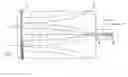
FIG. 1 shows the first embodiment of the invention.
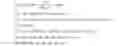
FIG. 2 shows the second embodiment of the invention.
DESCRIPTION OF THE PREFERRED EMBODIMENTSAccording to FIG. 1, a dry powder is led to a charging electrode 1 comprising a feeding nozzle. Particles of the dry powder are charged by the charging electrode 1. The charging electrode is located farther from other electrodes 2 so that the particles are pre-charged when they enter to the final electric field formed by the corona charging electrodes 1, 2 and a grounding electrode 3. The pre-charged particles are blown towards a substrate 4 to be coated. The substrate 4 is preferably in a web form. The grounding electrode 3 can be a stationary platy electrode, or it can be a roll rotating about its axis. The rotating roll is a preferred choice.
According to FIG. 2, a dry powder is led to a first electric field and after that to a second electric field. Particles of the dry powder are charged in a charging unit 7 comprising a corona charging electrode 6, a grounding electrode 5, and a feeding nozzle 8. The particles are pre-charged in the first electric field created in the charging unit 7 before entering to the second electric field formed by the corona charging electrodes 2 and a grounding electrode 3. The pre-charged particles are blown towards a substrate 4 to be coated. As in the embodiment shown in FIG. 1, the remarks concerning the form of the substrate 4 and the preferred grounding electrode 3 are also valid in this embodiment.
The invention is not restricted to the description above, but the invention may vary within the scope of the claims.
Claims
1-4. (canceled)
5. A method for coating a paper or board web in a dry surface treatment process comprising the steps of:
pre-charging particles of a dry powder by causing the dry powder to move between a first electrode producing a corona charge and an electrode at a lower or opposite potential to form pre-charged particles;
supplying the pre-charged particles to a feeding nozzle forming an electrode and blowing the pre-charged particles from the feeding nozzle toward the paper or board web, the feeding nozzle being positioned between a second electrode producing a corona discharge upstream of the feeding nozzle and a third electrode producing a corona discharge downstream of the feeding nozzle, wherein the feeding nozzle is spaced from the paper or board web a first distance, and wherein the second electrode and the third electrode are spaced from the paper or board web a distance which is less than the first distance;
wherein the paper or board web is backed by a grounding electrode at a potential which is lower than or opposite to the potentials of the feeding nozzle, the second electrode, and the third electrode, and wherein the feeding nozzle, the second electrode, and the third electrode are located on a side of the paper or board web opposite the grounding electrode.
6. The method of claim 5 wherein the grounding electrode is a rotatable roll.
7. The method of claim 7 wherein the grounding electrode is a stationary platy electrode.
8. A method for coating a paper or board web in a dry surface treatment process comprising the steps of:
pre-charging particles of a dry powder by causing the dry powder to move along the walls of a transfer pipe to charge the particles by triboelectric charging;
supplying the pre-charged particles to a feeding nozzle forming an electrode and blowing the pre-charged particles from the feeding nozzle toward the paper or board web, the feeding nozzle being positioned between a first electrode producing a corona discharge upstream of the feeding nozzle and a second electrode producing a corona discharge downstream of the feeding nozzle, wherein the feeding nozzle is spaced from the paper or board web a first distance, and wherein the first electrode and the second electrode are spaced from the paper or board web a distance which is less than the first distance;
wherein the paper or board web is backed by a grounding electrode at a potential which is lower than or opposite to the potentials of the feeding nozzle, the first electrode, and the second electrode, and wherein the feeding nozzle, the first electrode, and the second electrode are located on a side of the paper or board web opposite the grounding electrode.
9. The method of claim 8 wherein the grounding electrode is a rotatable roll.
10. The method of claim 8 wherein the grounding electrode is a stationary platy electrode.
11. A method for coating a dry surface treatment process comprising the steps of.
pre-charging particles of a dry powder by causing the dry powder to move between a first electrode producing a corona charge and an electrode at a lower or opposite potential to form pre-charged particles;
supplying the pre-charged particles to a feeding nozzle forming an electrode and blowing the pre-charged particles from the feeding nozzle toward the web, the feeding nozzle being positioned between a second electrode producing a corona discharge upstream of the feeding nozzle and a third electrode producing a corona discharge downstream of the feeding nozzle, wherein the feeding nozzle is spaced from the web a first distance, and wherein the second electrode and the third electrode are spaced from the web a distance which is less than the first distance;
wherein the web is backed by a grounding electrode at a potential which is lower than or opposite to the potentials of the feeding nozzle, the second electrode, and the third electrode, and wherein the feeding nozzle, the second electrode, and the third electrode are located on a side of the web opposite the grounding electrode.
12. The method of claim 11 wherein the grounding electrode is a rotatable roll.
13. The method of claim 11 wherein the grounding electrode is a stationary platy electrode.
14. A method for coating a web in a dry surface treatment process comprising the steps of:
pre-charging particles of a dry powder by causing the dry powder to move along the walls of a transfer pipe to charge the particles by triboelectric charging;
supplying the pre-charged particles to a feeding nozzle forming an electrode and blowing the pre-charged particles from the feeding nozzle toward the web, the feeding nozzle being positioned between a first electrode producing a corona discharge upstream of the feeding nozzle and a second electrode producing a corona discharge downstream of the feeding nozzle, wherein the feeding nozzle is spaced from the paper or board web a first distance, and wherein the first electrode and the second electrode are spaced from the paper or board web a distance which is less than the first distance;
wherein the paper or board web is backed by a grounding electrode at a potential which is lower than or opposite to the potentials of the feeding nozzle, the first electrode, and the second electrode, and wherein the feeding nozzle, the first electrode, and the second electrode are located on a side of the paper or board web opposite the grounding electrode.
15. The method of claim 14 wherein the grounding electrode is a rotatable roll.
16. The method of claim 14 wherein the grounding electrode is a stationary platy electrode.
Images & Drawings included:




Sources:
- United States Patent and Trademark Office - verify current appl. status at the USPTO↗
Recent applications in this class:
- » 20150217308 2015-08-06
Coating apparatus for applying coating material onto sheet member
Recent applications for this Assignee:
- » 20140240696 2014-08-28
Method for calibrating the position of the slitter blades of a slitter-winder - » 20140166442 2014-06-19
METHOD AND APPARATUS FOR UNLOADING A STOCKPILE - » 20140138471 2014-05-22
Slitter-winder of a fiber production line - » 20140083354 2014-03-27
Rod-bed assembly - » 20140061358 2014-03-06
Method for separating partial webs in a slitter winder - » 20130306770 2013-11-21
Refiner and blade element - » 20130306769 2013-11-21
Refiner and blade element - » 20130306768 2013-11-21
Blade element - » 20130277489 2013-10-24
Method and device for winding of fiber webs, especially of partial paper and board webs - » 20130270383 2013-10-17
Method and device for winding of fiber webs, especially of paper and board webs