Modular jack
US20050124225A1
2005-06-09
11/000,750
2004-11-30
✅ Patent granted
US 7,371,127 B2
2008-05-13
-
-
Edwin A. Leon
2025-03-13
Abstract:
A modular jack (100) is adapted for mounting on a printed circuit board (6) and has a housing (1) and a plurality of terminals (5) received in the housing. The housing includes a main body (4), an insert module (2), and a presser (3). The main body defines a cavity (40), a pair of grooves (41), and a pair of slots (42). The main body includes a pair of side walls (43). A pair of engaging ribs (44) outwardly project from each side wall and parallel to each other, thereby forming a mounting channel (46) for engaging the printed circuit board between the engaging ribs. As a result, the modular jack is mounted on the printed circuit board. The insert module has a pair of lead sections (21) slidably received in the grooves and a pair of guide sections (20). The presser has a pair of channels (30) slidably receiving the guide sections of the insert module and a pair of latches (33) reliably engaging with the slots of the main body. The presser further has a pair of blocks (31) abutting against bottom edges of the guide sections.
Assignee:
- Hon Hai Precision Ind. Co., Ltd. 1,929 🇹🇼 Taipei Hsien, Taiwan
Interested in similar patents?
Get notified when new applications in this technology area are published.
Classification:
H01R24/64 » CPC main
Two-part coupling devices, or either of their cooperating parts, characterised by their overall structure; Contacts spaced along planar side wall transverse to longitudinal axis of engagement; Sliding engagements with one side only, e.g. modular jack coupling devices for high frequency, e.g. RJ 45
H01R13/502 » CPC further
Details of coupling devices of the kinds covered by groups or -; Bases; Cases composed of different pieces
H01R24/00 IPC
Two-part coupling devices, or either of their cooperating parts, characterised by their overall structure
Description
BACKGROUND OF THE INVENTION1. Field of the Invention
The present invention generally relates to an electrical connector, and more particularly to a modular jack with a simple structure and a simplified method for mounting the modular jack on a printed circuit board.
2. Description of the Prior Art
Modular jacks are widely used in telecommunication systems for facilitating connection of components thereof. As electrical devices become thinner, electrical connectors should become smaller to benefit such thin and compact electrical devices.
U.S. Pat. No. 6,095,865 discloses a related modular jack. The conventional modular jack includes an insulative housing, a terminal assembly and a shielding assembly. A pair of legs outwardly and downwardly extends from opposite sides of the shield. A circuit board defines a rectangular cutout for snugly accommodating the modular jack and a pair of mounting slits for engaging with the legs, thereby securely mounting the modular jack to the circuit board. Apparently, the assembling structure of the modular jack is relatively complicate since the first shielding forms a leg and the circuit board must define a cutout. As a result, the manufacture of the modular jack becomes relatively complex and the cost of the modular jack becomes relatively high. Furthermore, the legs are too tiny to securely fix the modular jack on the circuit board.
Hence, an improved modular jack having a simplified structure is needed to solve the above problems.
BRIEF SUMMARY OF THE INVENTIONIt is an object of the present invention to provide a simple modular jack which is capable of being easily and securely assembled to a printed circuit board.
In order to attain the object above, a modular jack is adapted for mounting on a printed circuit board and has a housing and a plurality of terminals received in the housing. The housing includes a main body, an insert module, and a presser. The main body defines a cavity, a pair of grooves, and a pair of slots. The main body includes a pair of side walls, a pair of engaging ribs outwardly projecting from each side wall and parallel to each other, thereby forming a mounting channel for engaging the printed circuit board between the engaging ribs. A first elongate bump is formed on an inner surface of the top engaging rib and a second elongate bump is formed on an outside of each side wall, thereby securely fixing the printed circuit board. As a result, the modular jack is mounted on the printed circuit board. The insert module has a pair of lead sections slidably received in the grooves and a pair of guide sections. The presser has a pair of channels slidably receiving the guide sections of the insert module and a pair of latches reliably engaging with the slots of the main body. The presser further has a pair of blocks abutting against bottom edges of the guide sections.
Other objects, advantages and novel features of the invention will become more apparent from the following detailed description of the present embodiment when taken in conjunction with the accompanying drawings.
BRIEF DESCRIPTION OF THE DRAWINGSThe features of this invention which are believed to be novel are set forth with particularity in the appended claims. The invention, together with its objects and the advantages thereof, may be best understood by reference to the following description taken in conjunction with the accompanying drawings, in which like reference numerals identify like elements in the figures and in which:
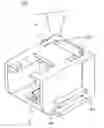
FIG. 1 is a perspective view of a modular jack of the present invention.
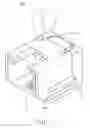
FIG. 2 is a cross-sectional view of FIG. 1;
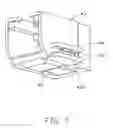
FIG. 3 is an exploded view of FIG. 1;
FIG. 4 is a similar view of FIG. 1, wherein the modular jack is mounted on a printed circuit board; and
FIG. 5 is a similar view of FIG. 1, but from another perspective.
DETAILED DESCRIPTION OF THE INVENTIONReference will now be made to the drawing figures to describe the present invention in detail.
Referring to FIGS. 1-3, a modular jack 100 in accordance with a preferred embodiment of the present invention has a housing 1 including an insert module 2, a presser 3, and a main body 4, and a plurality of terminals 5 received in the insert module 2 of the housing 1.
The insert module 2 is substantially in a L-shaped configuration and has a plate section 25 and a base section 26. The base section 26 extends forwardly from a bottom edge of the plate section 25. The plate section 25 has a pair of guide sections 20 formed on lateral sides thereof and a pair of first cutouts 24 defined adjacent to corresponding guide sections 20 in a rear wall (not labeled) thereof. The pair of first cutouts 24 extends downwardly toward each other thereby forming a V-shaped configuration. The plate section 25 further defines an indentation 23 in the rear wall thereof. The base section 26 has a pair of lead sections 21 formed on lateral sides thereof and a plurality of terminal receiving passageways 22 extending therethrough.
The presser 3 is generally in a shape of a rectangular block and has a rear wall (not labeled) and two side walls (not labeled). A receiving opening (not labeled) is defined between the rear wall and the side walls and extends from a top surface to a lower surface of the presser 3. The presser 3 forms a pair of latches 33 adjacent to a top edge thereof and a pair of blocks 31 at a bottom portion of the side walls protruding into the receiving opening. The presser 3 also defines a plurality of recesses 34 at a bottom portion thereof and communicating with the receiving opening, and a pair of channels 30 in inner walls of the side walls thereof and communicating with the receiving opening. A protrusion 32 is formed on an inner wall of the rear wall of the presser 3 and protruding into the receiving opening. In addition, a pair of arc-shaped second cutouts 35 is defined in the presser 3 communicating with the receiving opening.
The main body 4 defines a cavity 40, a pair of grooves 41 in a bottom wall (not labeled) thereof, a pair of passageways 45 in a rear wall (not labeled) thereof, and a pair of slots 42 in a rear portion of a top wall (not labeled) thereof. The main body 4 includes a pair of side walls 43. A pair of engaging ribs 44 outwardly projecting from a lower portion of each side wall 43, thereby forming a mounting channel 46 for engaging with a printed circuit board 6 therebetween. A first elongate bump 441 is formed on an inner surface of the top engaging rib 44 and a second elongate bump 442 is formed on an outside of each side wall 43. The elongate bumps 441, 442 project into the mounting channel 46 to securely fix the printed circuit board 6. The printed circuit board defines a cutout for receiving the modular jack. A profile of the cutout is configured corresponding to a profile of the modular jack.
Each terminal 5 has a contacting section 50, a beam section 51 bending rearwardly and horizontally from the contacting section 50, and a connecting section 52 extending upwardly from the beam section 51.
A method for assembling the modular jack comprises the following steps:
- (a) Assembling terminals 5 into corresponding terminal receiving passageways 22 of the base section 26 of the insert module 2.
- (b) Electrically connecting a plurality of wires (not shown) with corresponding free ends of the connecting sections 52 of the terminals 5.
- (c) Inserting the insert module 2 into the receiving opening of the presser 3 with the guide sections 20 sliding into corresponding channels 30 of the presser 3 from an upper surface toward a bottom surface of the presser 3. A bottom surface of each guide section 20 abuts against a corresponding block 31 of the presser. The first cutouts 24 and corresponding second cutouts 35 together define pilot holes 10 which receiving the wires therein. The connecting sections 52 of the terminals 5 are received in corresponding recesses 34 of the presser 3. The protrusion 32 of the presser 3 engages with the indentation 23 of the insert module 2.
- (d) Assembling the leading sections 21 of the insert module 2 into corresponding grooves 41 of the main body 4. The contacting portions 50 of the terminals 5 are received in the cavity 40 of the main body 4, and the distal portion of the contacting portion 50 of the terminals 5 is deflectably received in the passageway 45.
- (e) The latches 33 of the presser 3 engage with corresponding slots 42 of the main body 4 to secure the housing 1 tightly together.
- (f) The printed circuit board 6 latches into the mounting channel 46 of the main body 4, thereby mounting the modular jack on the printed circuit board. At the same time, the first and second elongate bumps 441, 442 securely fix the printed circuit board 6 in the mounting channels 46.
An advantage of the present invention over the prior art results from the fact that the insert module 2 of the modular jack 100 needs not defining a plurality of slots for receiving corresponding wire which electrically connect the terminals 5 to circuit traces of a printed circuit board 6 (PCB, not shown). Furthermore, the insert module 2 and the presser 3 together define pilot holes 10 for receiving the wires to connect with the terminals 5, and the presser 3 has a pair of latches 33 respectively engage with corresponding slots 42 of the main body 4. As a result, the wires are securely fixed in the modular jack 100 without being bent too many times to prevent form escaping therefrom, thus the structure of the modular jack 100 and the assembling process are remarkably simplified.
Additionally, because the modular jack employs a pair of mounting channels 46 in the side walls 43 of the main body, the printed circuit board 6 is capable of being easily and securely inserted in the mounting channels 46. The modular jack need not be assembled additional complex elements for engaging with the printed circuit board. Thus, the structure of the modular jack 100 and the assembling process are remarkably simplified.
It is to be understood, however, that even though numerous, characteristics and advantages of the present invention have been set fourth in the foregoing description, together with details of the structure and function of the invention, the disclosed is illustrative only, and changes may be made in detail, especially in matters of number, shape, size, and arrangement of parts within the principles of the invention to the full extent indicated by the broad general meaning of the terms in which the appended claims are expressed.
Claims
1. A modular jack mounting on a printed circuit board for connecting between a mating plug connector and a plurality of wires comprising:
a main body defining a cavity and a pair of side walls, a pair of mounting channels defined in the side walls for engaging with the printed circuit board;
an insert module mounted to the main body;
a plurality of terminals fixed in the insert module and extending into the cavity of the main body; and
a presser securely fixing the insert module to the main body.
2. The modular jack according to claim 1, wherein said main body includes a pair of parallel engaging ribs outwardly projecting from each side wall, said mounting channel being defined between corresponding pair of engaging ribs.
3. The modular jack according to claim 2, wherein the top engaging rib forms an elongate bump projecting into corresponding mounting channel.
4. The modular jack according to claim 1, wherein the main body defines a pair of grooves and the insert module has a pair of lead sections received in corresponding grooves of the main body.
5. The modular jack according to claim 1, wherein the insert module defines a pair of first cutouts, the presser defines a pair of second cutouts and the first and second cutouts together form a pair of pilot holes for receiving the wires when the presser fixes the insert module to the main body.
6. The modular jack according to claim 1, wherein the insert module defines an indentation and the presser forms a protrusion engaging with the indentation of the insert module.
7. The modular jack according to claim 1, wherein each terminal has a beam section bending rearward from a contacting portion and a connecting section extending upwardly from a rear end of the beam section.
8. The modular jack according to claim 7, wherein the presser defines a plurality of recesses receiving the connecting sections of the terminals.
9. An electrical connector assembly comprising:
a printed circuit board defining a notch in a front edge region thereof, a pair of locking edges being located by two lateral sides of said notch;
an electrical connector including an insulative housing defining a plurality of contacts therein and with two opposite channels extending along a front-to-back direction on two opposite lateral side faces, respectively; wherein
positions and dimensions of said two channels are configured to comply with and snugly receive said pair of locking edges so as to allow said connector to be assembled to said notch of the printed circuit board along said front-to-back direction.
10. The connector assembly as claimed in claim 9, wherein at least one bump is located in the channel to securely fix the locking edge in the channel.
11. The connector assembly as claimed in claim 9, wherein said housing defines a curved lower corner which is located adjacent to said front edge region.
12. The connector assembly as claimed in claim 11, wherein said channel is essentially located at a similar level with the curved lower corner.
13. The connector assembly as claimed in claim 9, wherein none of said contacts are connected to the printed circuit board.
14. The connector assembly as claimed in claim 13, wherein a plurality of wires are connected to the terminals in the housing while extend out of the housing around an upper portion thereof in opposite to the printed circuit board.
15. An electrical connector assembly comprising:
a printed circuit board defining a notch in a front edge region thereof, a pair of locking edges being located by two lateral sides of said notch;
an electrical connector including an insulative housing defining a plurality of contacts therein and with two supporting platforms extending along a front-to-back direction on lower portions of two opposite lateral side faces, respectively;
a curved configuration being formed around a lower corner of the housing and located around a similar level with said platforms; wherein
the connector is assembled into the notch of the printed circuit board with a curved lower corner located adjacent to said front edge region and with the platforms seated upon the locking edges.
16. The electrical connector assembly as claimed in claim 15, wherein none of said contacts are connected to the printed circuit board.
Images & Drawings included:


Sources:
- United States Patent and Trademark Office - verify current appl. status at the USPTO↗
Similar patent applications:
- » 20050085134
Modular jack and modular jack connector - » 20130045643
MODULAR JACK CIRCUIT AND MODULAR JACK USING THE SAME - » 9236920
Surface mount modular jack - » 10683201
Modular jack having an anti-mismating member to prevent incorrect insertion of a smaller sized plug - » 10685669
Modular jack with visual indicator - » 10196452
Modular jack for ethernet applications - » 10842760
Modular jack having an anti-mismating member to prevent incorrect insertion of a smaller sized plug - » 10727606
Modular jack - » 10852839
Multi-port modular jack assembly with accurate assemblying means - » 10209377
Modular jack assembly with signal conditioning
Recent applications in this class:
- » 20250118940 2025-04-10
ELECTRICAL CONNECTOR HOUSING HAVING CUT BLADE AND METHOD OF USING THE SAME - » 20250079780 2025-03-06
SINGLE PIECE CAT 6/6A PLUGS - » 20250038462 2025-01-30
MULTI-PIN NETWORK CABLE CONNECTOR - » 20250023306 2025-01-16
INTEGRATED MODULE FOR AN APPARATUS FROM LIGHTING, SOUND, VIDEO OR SPECIAL EFFECTS ENGINEERING FOR PROVIDING CONTROL BY MEANS OF AN ETHERNET CONNECTION - » 20240364059 2024-10-31
High Speed Communication Jack - » 20240347989 2024-10-17
BIDIRECTIONAL ELECTRICAL CONNECTION SOCKET, BIDIRECTIONAL ELECTRICAL CONNECTION PLUG AND COMBINATION THEREOF - » 20240322506 2024-09-26
SINGLE-PAIR ETHERNET SWITCHING APPARATUS - » 20240243534 2024-07-18
BUILT-IN CONNECTOR - » 20240235135 2024-07-11
BIDIRECTIONAL ELECTRICAL CONNECTION SOCKET, BIDIRECTIONAL ELECTRICAL CONNECTION PLUG AND COMBINATION THEREOF - » 20240128697 2024-04-18
PLUG ASSEMBLY
Recent applications for this Assignee:
- » 20110045702 2011-02-24
Electrical cable connector assembly with improved wire organizer - » 20110021088 2011-01-27
Electrical connector with improved contact footprints - » 20110021082 2011-01-27
High density backplane connector having improved terminal arrangement - » 20110008982 2011-01-13
N-in-1 card connector - » 20110005825 2011-01-13
Cable assembly with EMI protection - » 20110003508 2011-01-06
Electrical connector rotatably mounted to a portable device - » 20100330822 2010-12-30
Electrical connector having contact with upper terminal and lower terminal - » 20100317218 2010-12-16
Electrical connector assembly with latching mechanism - » 20100297861 2010-11-25
Socket connector having improved actuating mechanism for driving moving plate - » 20100291799 2010-11-18
Shielded connector with enlarged base supporting cantilevered brackets extending from the shielded connector