Fabric material processing method
US20050129864A1
2005-06-16
10/735,832
2003-12-16
Abstract:
A fabric material processing method of processing a fabric material to make the top surface hydrophobic and the bottom surface hydrophilic by: coating the fabric material with a layer of nanostructured metal liquid and dipping the fabric material in a nanostructured water repellant solution after drying of the nanostructured metal liquid, and then spraying a solvent on the bottom side of the fabric material to remove water repellant from the bottom side of the fabric material, and then grinding the fabric material to remove nanostructured metal from thee bottom side of the fabric material, and then drying desizing the fabric material, and then washing the fabric material with clean water, and finally drying the fabric material again.
Interested in similar patents?
Get notified when new applications in this technology area are published.
Classification:
D06M11/79 » CPC main
Treating fibres, threads, yarns, fabrics or fibrous goods made from such materials, with inorganic substances or complexes thereof; Such treatment combined with mechanical treatment, e.g. mercerising with silicon or compounds thereof with silicon dioxide, silicic acids or their salts
D06M11/44 » CPC further
Treating fibres, threads, yarns, fabrics or fibrous goods made from such materials, with inorganic substances or complexes thereof; Such treatment combined with mechanical treatment, e.g. mercerising with oxygen, ozone, ozonides, oxides, hydroxides or percompounds; Salts derived from anions with an amphoteric element-oxygen bond with oxides, hydroxides or mixed oxides; with salts derived from anions with an amphoteric element-oxygen bond Oxides or hydroxides of elements of Groups 2 or 12 of the Periodic System; Zincates; Cadmates
D06M11/46 » CPC further
Treating fibres, threads, yarns, fabrics or fibrous goods made from such materials, with inorganic substances or complexes thereof; Such treatment combined with mechanical treatment, e.g. mercerising with oxygen, ozone, ozonides, oxides, hydroxides or percompounds; Salts derived from anions with an amphoteric element-oxygen bond with oxides, hydroxides or mixed oxides; with salts derived from anions with an amphoteric element-oxygen bond Oxides or hydroxides of elements of Groups 4 or 14 of the Periodic System; Titanates; Zirconates; Stannates; Plumbates
D06M15/03 » CPC further
Treating fibres, threads, yarns, fabrics, or fibrous goods made from such materials, with macromolecular compounds; Such treatment combined with mechanical treatment with natural macromolecular compounds or derivatives thereof Polysaccharides or derivatives thereof
D06M15/227 » CPC further
Treating fibres, threads, yarns, fabrics, or fibrous goods made from such materials, with macromolecular compounds; Such treatment combined with mechanical treatment with synthetic macromolecular compounds; Macromolecular compounds obtained by reactions only involving carbon-to-carbon unsaturated bonds of hydrocarbons, or reaction products thereof, e.g. afterhalogenated or sulfochlorinated
D06M23/08 » CPC further
Treatment of fibres, threads, yarns, fabrics or fibrous goods made from such materials, characterised by the process Processes in which the treating agent is applied in powder or granular form
D06M23/10 » CPC further
Treatment of fibres, threads, yarns, fabrics or fibrous goods made from such materials, characterised by the process Processes in which the treating agent is dissolved or dispersed in organic solvents; Processes for the recovery of organic solvents thereof
D06N3/0063 » CPC further
Artificial leather, oilcloth or other material obtained by covering fibrous webs with macromolecular material, e.g. resins, rubber or derivatives thereof characterised by the compounding ingredients of the macro-molecular coating Inorganic compounding ingredients, e.g. metals, carbon fibres, NaCO, metal layers; Post-treatment with inorganic compounds
D06N7/0094 » CPC further
Flexible sheet materials not otherwise provided for, e.g. textile threads, filaments, yarns or tow, glued on macromolecular material Fibrous material being coated on one surface with at least one layer of an inorganic material and at least one layer of a macromolecular material
D06M2200/05 » CPC further
Functionality of the treatment composition and/or properties imparted to the textile material Lotus effect
D06N2209/123 » CPC further
Properties of the materials; Permeability or impermeability properties; Permeability to gases, adsorption Breathable
D06N2209/126 » CPC further
Properties of the materials; Permeability or impermeability properties Permeability to liquids, absorption
D06N2209/141 » CPC further
Properties of the materials having chemical properties Hydrophilic
D06N2209/142 » CPC further
Properties of the materials having chemical properties Hydrophobic
D06N2209/1671 » CPC further
Properties of the materials having other properties Resistance to bacteria, mildew, mould, fungi
Description
BACKGROUND OF THE INVENTION1. Field of the Invention
The present invention relates a fabric material processing method and, more specifically, to a method of processing a fabric material to have a hydrophobic top surface and a hydrophilic bottom surface.
2. Description of the Related Art
Because of the effect of material properties, regular fabric materials can breathe and absorb water when not specially treaded. For special purposes, fabric materials can be processed to have hydrophobic property. However, hydrophobic fabric materials do not breathe. It is not comfortable to wear clothes made of hydrophobic fabric materials.
Further, the so-called “lotus effect” mainly means the superhydrophobicity and self-cleaning features of lotus. When rainwater dropped to the hydrophobic surface of the leaves of a lotus, it forms into water beads due to the effect of surface tension, i.e., the contact angle between the surface of the leaves of the lotus and water will be over 140°, and the water beads will roll away from the leaves when shaking the leaves. Further, rolling water beads carry dust from the surface of the leaves. Therefore, the surface of the leaves is maintained clean and dry after a heavy rain.
Through an electronic microscope, we can see that the surface of a lotus leaf has protruding epidermal cells of size about 5˜15 μm, and a wax crystal of about one nanometer covered on each epidermal cell. The chemical structure of the wax crystal is hydrophobic. When water contacted the surface of a lotus leaf, it forms into water beads due to the effect of surface tension. Due to the effect of the fine protruding epidermal cell structure, the contact area between water and the surface of the leaf is minimized and the contact angle between water and the surface of the leaf is maximized, enhancing the effect of hydrophobicity, and lowering the adhesion power of solid matter to the surface of the leaf.
Actually, the nanometered fine structure acts an important role in self-cleaning. The contact area between water beads and the surface of a lotus leaf is about 2˜3% of the total area of the leaf. When tilting the leaf, rolling water beads immediately pick up solid matter from the surface of the leaf, achieving a cleaning effect. However, rolling water beads on the hydrophobic smooth surfaces of other plants or man-made products cannot cause water beads to carry solid matter from the surfaces.
In the natural world, plants are exposed to different pollutants including dust, mud, organic bacteria, fungi, and etc. In addition to the function of self-cleaning, the fine nanometered surface structure of lotus leaves prohibits infection of bacteria and virus. Lotus leaves become clean and fresh when washed by a heavy rain.
Therefore, it is desirable to provide a fabric processing method of processing fabric material to have a hydrophobic top surface and a hydrophilic bottom surface.
SUMMARY OF THE INVENTIONThe present invention has been accomplished under the circumstances in view. It is the main object of the present invention to provide a fabric processing method, which is practical to process fabric materials to have a top surface that provides hydrophobic, self-cleaning, dust-proof, and anti-bacteria features, and a bottom surface that breathes and absorbs water.
According to the first embodiment of the present invention, the fabric material processing method includes the steps of (a) coating the surface of each of the top and bottom sides of a prepared fabric material with a layer of nanostructured metal liquid; (b) drying the fabric material, (c) dipping the fabric material in a nanostructured water repellant solution to absorb water repellant, (d) drying the fabric material, (e) spraying a solvent on the surface of the bottom side of the fabric material to remove water repellant from the surface of the bottom side of the fabric material, (f) grinding the surface of the bottom side of the fabric material with a grinding wheel before drying of the solvent, so as to remove nanostructured metal from the surface of the bottom side of the fabric material, (g) drying the fabric material and then desizing the fabric material, (h) washing the fabric material with clean water, and (i) drying the fabric material.
According to the second embodiment of the present invention, a nanostructured metal and a nanostructured resin are mixed to form a nanostructured solution, which is then sprayed on the top surface of the prepared fabric material, and then the fabric material is dried, and then the nanostructured solution spraying and fabric material drying steps are repeated three times.
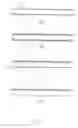
BRIEF DESCRIPTION OF THE DRAWINGSFIG. 1 is a series of schematic drawings showing the processing process of the first embodiment of the present invention.
FIG. 2 is a schematic drawing showing the processing process of the second embodiment of the present invention.
DETAILED DESCRIPTION OF THE INVENTIONReferring to FIG. 1, a fabric material processing process in accordance with the first embodiment of the present invention comprises the steps of:
-
- (a) Coating the surface of a prepared fabric material with a layer of nanostructured metal liquid;
- (b) Drying the fabric material;
- (c) Dipping the fabric material in a nanostructured water repellant solution to absorb water repellant;
- (d) Drying the fabric material;
- (e) Spraying a solvent on the bottom surface of the: fabric material to remove water repellant;
- (f) Grinding the bottom surface of the fabric material with a grinding wheel before drying of the solve so as to remove nanostructured metal from the bottom surface of the fabric material;
- (g) Drying the fabric material and then desizing the fabric material;
- (h) Washing the fabric material;
- (i) Drying the fabric material.
The aforesaid nanostructured metal liquid is a water solution containing 1% nanostructured titanium dioxide (TiO2), silicon dioxide (SiO2), or zinc dioxide (ZnO2) of molecule diameter about 20 nanometers, and 10% water soluble dextrin or polyethylene. Deionized water, water wax, or any of a variety of other solutions that soluble in alcohol may be used to substitute for water for mixing with nanostructured titanium dioxide (TiO2)/silicon dioxide (SiO2)/zinc dioxide (ZnO2) and water soluble dextrin or polyethylene. After coating of the prepared nanostructured metal liquid on the fabric material 1 and drying of the nanostructured metal liquid, nanostructured metal fills open spaces in the top and bottom surfaces of the fabric material 1, thereby causing an isolation layer 2 to be formed on each of the top and bottom surfaces of the fabric material 1 (see FIG. 1A).
The aforesaid nanostructured water repellant solution is a methylbenzene solution containing 1% nanostructured metal (for example, titanium dioxide, silicon dioxide, or zinc dioxide), 1% stearate, and 1.2% silicon water repellant. Iso-acetone may be used to substitute for methylbenzene. After the formation of the isolation layer, the fabric material is directly dipped in the nanostructured water repellant solution, enabling a layer of water repellant to be adhered to the surface of the isolation layer 2, and therefore a water repellant layer 3 is formed on the surface of the isolation layer 2 when dried (see FIG. 1B). Thereafter, a solvent is sprayed over the bottom side of the fabric material 1 to remove the water repellant layer 3 from the bottom side of the fabric material 1 (see FIG. 1C). Before drying of the fabric material 1, a grinding wheel is used to grind the bottom side of the fabric material 1 and to further remote the isolation layer 2 (the nanostructured metal layer) from the bottom side of the fabric material 1 (see FIG. 1D). Thereafter, the fabric material is baked to a dry status, and then desized, and then washed, and finally baked to a dry status. Thus the finished fabric material has a hydrophobic top surface that repel water, and a hydrophilic bottom surface that breathes and absorbs water.
FIG. 2 is a schematic drawing showing the processing process of the second embodiment of the present invention. According to this embodiment, nanostructured metal and nanostructured resin are mixed to form a coating solution 4, and then the coating solution 4 is sprayed over the surface of the fabric material 1, and then the fabric material 1 is dried, and then the coating solution 4 spraying and fabric material drying steps are repeated three times, forming a water repellant layer on the top surface of the fabric material 1, which water repellant layer fills up open spaces in the top surface of the fabric material 1. When finished, the bottom side of the fabric material 1 is maintained hydrophilic.
According to the aforesaid second embodiment of the present invention, high polymer resin is mixed with a nanostructured metal oxide compound, and then the compound is sprayed over the top surface of the fabric material at room temperature. When the high polymer resin hardened, it serves as an interface to bind the nanostructured metal oxide compound to the top surface of the fabric material, enabling nanometered metal oxide particles to fill up open spaces in the top surface of the fabric material, and therefore the top surface of the fabric material has self-cleaning and hydrophobic properties like the leaves of a lotus.
Although particular embodiments of the invention have been described in detail for purposes of illustration, various modifications and enhancements may be made without departing from the spirit and scope of the invention. Accordingly, the invention is not to be limited except as by the appended claims.
Claims
1. A fabric material processing method comprising the steps of:
(a) Coating the surface of each of top and bottom sides of a prepared fabric material with a layer of nanostructured metal liquid;
(b) Drying said fabric material;
(c) Dipping said fabric material in a nanostructured water repellant solution to absorb water repellant;
(d) Drying said fabric material;
(e) Spraying a solvent on the surface of the bottom side of said fabric material to remove water repellant from the surface of the bottom side of said fabric material;
(f) Grinding the surface of the bottom side of said fabric material with a grinding wheel before drying of said solvent, so as to remove nanostructured metal from the surface of the bottom side of said fabric material;
(g) Drying said fabric material and then desizing said fabric material;
(h) Washing said fabric material with clean water; and
(i) Drying said fabric material.
2. The fabric material processing method as claimed in claim 1, wherein said nanostructured metal liquid is a water solution containing 1% nanostructured titanium dioxide (TiO2), and 10% water soluble dextrin.
3. The fabric material processing method as claimed in claim 1, wherein said nanostructured metal liquid is a water solution containing 1% nanostructured silicon dioxide (SiO2), and 10% water soluble dextrin.
4. The fabric material processing method as claimed in claim 1, wherein said nanostructured metal liquid is a water solution containing 1% nanostructured zinc dioxide (ZnO2), and 10% water soluble dextrin.
5. The fabric material processing method as claimed in claim 1, wherein said nanostructured metal liquid is a water solution containing 1% nanostructured titanium dioxide (TiO2), and 10% polyethylene.
6. The fabric material processing method as claimed in claim 1, wherein said nanostructured metal liquid is a water solution containing 1% nanostructured silicon dioxide (SiO2), and 10% polyethylene.
7. The fabric material processing method as claimed in claim 1, wherein said nanostructured metal liquid is a water solution containing 1% nanostructured zinc dioxide (ZnO2), and 10% polyethylene.
8. The fabric material processing method as claimed in claim 1, wherein said nanostructured water repellant solution is a methylbenzene solution containing 1% nanostructured metal, 1% stearate, and 1.2% silicon water repellant.
9. The fabric material processing method as claimed in claim 1, wherein said nanostructured water repellant solution is an iso-acetone solution containing 1% nanostructured metal, 1% stearate, and 1.2% silicon water repellant.
10. A fabric material processing method comprising the steps of (a) mixing a nanostructured metal with a nanostructured resin to form a nanostructured solution, (b) spraying said nanostructured solution on the top surface of a fabric material and then drying said fabric material, and (c) repeating step (a) and step (b) three times.
Images & Drawings included:


Sources:
- United States Patent and Trademark Office - verify current appl. status at the USPTO↗
Similar patent applications:
- » 20190393017
Substrate processing apparatus, signal source device, method of processing material layer, and method of fabricating semiconductor device - » 20230147992
SUBSTRATE PROCESSING APPARATUS, SIGNAL SOURCE DEVICE, METHOD OF PROCESSING MATERIAL LAYER, AND METHOD OF FABRICATING SEMICONDUCTOR DEVICE - » 20100323523
Methods of plasma etching platinum-comprising materials, methods of processing semiconductor substrates in the fabrication of integrated circuitry, and methods of forming a plurality of memory cells - » 20100049179
Laser processing apparatus, osseointegration method, implant material, and implant-material fabrication method - » 20140277455
LASER PROCESSING APPARATUS, OSSEOINTEGRATION METHOD, IMPLANT MATERIAL, AND IMPLANT-MATERIAL FABRICATION METHOD - » 20110171732
HIGHLY POROUS SOLID MATERIAL MADE OF BIODEGRADABLE POLYMER AND METHOD OF FABRICATING, PROCESSING, AND CELL-SEEDING THE SAME - » 20160283917
Method and system of processing waste fabrics to rejuvenated fibrous materials - » 20200290263
SYSTEM AND METHOD FOR PROCESSING PAINT-ROLLER COVER FABRIC AND STRIP MATERIAL - » 20120007073
Semiconductor Wafer Constructions, And Methods For Quality Testing Material Removal Procedures During Semiconductor Fabrication Processes - » 20050064138
Method for precision bending of sheet of materials, slit sheets fabrication process
Recent applications in this class:
- » 20250092599 2025-03-20
FABRICATING METHOD OF NON-WOVEN FILM FOR ELECTRONIC COMPONENTS - » 20250084586 2025-03-13
BIO CERAMIC ADDITIVE POLYESTER THREAD AND PRODUCTION METHOD - » 20230002962 2023-01-05
NONFLUORINATED HYDROPHOBIC WATERBORNE TREATMENTS AND COATINGS - » 20220243389 2022-08-04
Method and Composition for Lightning Protection - » 20220178071 2022-06-09
Non-woven film for electronic components and fabricating method thereof - » 20220154391 2022-05-19
COMPOSITES OF POLYMERIC ULTRAFINE FIBERS AND SHEAR-THICKENING FLUIDS - » 20210180244 2021-06-17
Thermal insulation sheet and method for producing the same, and electronic device and battery unit - » 20210131025 2021-05-06
Thermal insulation sheet and manufacturing method therefor - » 20210115622 2021-04-22
HEAT-INSULATING SHEET AND MANUFACTURING METHOD THEREFOR - » 20210062410 2021-03-04
Fiber comprising thermoplastic elastomer and silica nanoparticle, stretchable hydrophobic fiber article prepared therewith, and method for preparing the same