Multiple database, user-choice-compiled program and event guide
US20050138657A1
2005-06-23
10/967,672
2004-10-15
✅ Patent granted
US 7,543,321 B2
2009-06-02
-
-
Ngoc K Vu
2025-04-29
Abstract:
An electronic programming guide generator utilizes filters to select only programming filtered to display in an electronic programming guide display.
Assignee:
- Starsight Telecast, Inc. 49 🇺🇸 Fremont, CA, United States
Interested in similar patents?
Get notified when new applications in this technology area are published.
Classification:
H04N21/431 » CPC main
Selective content distribution, e.g. interactive television or video on demand [VOD]; Client devices specifically adapted for the reception of or interaction with content, e.g. set-top-box [STB]; Operations thereof; Processing of content or additional data, e.g. demultiplexing additional data from a digital video stream; Elementary client operations, e.g. monitoring of home network or synchronising decoder's clock; Client middleware Generation of visual interfaces for content selection or interaction ; Content or additional data rendering
H04N5/76 » CPC further
Details of television systems Television signal recording
H04N5/782 » CPC further
Details of television systems; Television signal recording using magnetic recording on tape
H04N7/162 » CPC further
Television systems; Analogue secrecy systems; Analogue subscription systems Authorising the user terminal, e.g. by paying; Registering the use of a subscription channel, e.g. billing
H04N21/4332 » CPC further
Selective content distribution, e.g. interactive television or video on demand [VOD]; Client devices specifically adapted for the reception of or interaction with content, e.g. set-top-box [STB]; Operations thereof; Processing of content or additional data, e.g. demultiplexing additional data from a digital video stream; Elementary client operations, e.g. monitoring of home network or synchronising decoder's clock; Client middleware; Content storage operation, e.g. storage operation in response to a pause request, caching operations by placing content in organized collections, e.g. local EPG data repository
H04N21/4351 » CPC further
Selective content distribution, e.g. interactive television or video on demand [VOD]; Client devices specifically adapted for the reception of or interaction with content, e.g. set-top-box [STB]; Operations thereof; Processing of content or additional data, e.g. demultiplexing additional data from a digital video stream; Elementary client operations, e.g. monitoring of home network or synchronising decoder's clock; Client middleware; Processing of additional data, e.g. decrypting of additional data, reconstructing software from modules extracted from the transport stream involving reassembling additional data, e.g. rebuilding an executable program from recovered modules
H04N21/4532 » CPC further
Selective content distribution, e.g. interactive television or video on demand [VOD]; Client devices specifically adapted for the reception of or interaction with content, e.g. set-top-box [STB]; Operations thereof; Management operations performed by the client for facilitating the reception of or the interaction with the content or administrating data related to the end-user or to the client device itself, e.g. learning user preferences for recommending movies, resolving scheduling conflicts; Management of client data or end-user data involving end-user characteristics, e.g. viewer profile, preferences
H04N21/4622 » CPC further
Selective content distribution, e.g. interactive television or video on demand [VOD]; Client devices specifically adapted for the reception of or interaction with content, e.g. set-top-box [STB]; Operations thereof; Management operations performed by the client for facilitating the reception of or the interaction with the content or administrating data related to the end-user or to the client device itself, e.g. learning user preferences for recommending movies, resolving scheduling conflicts; Content or additional data management, e.g. creating a master electronic program guide from data received from the Internet and a Head-end, controlling the complexity of a video stream by scaling the resolution or bit-rate based on the client capabilities Retrieving content or additional data from different sources, e.g. from a broadcast channel and the Internet
H04N21/47 » CPC further
Selective content distribution, e.g. interactive television or video on demand [VOD]; Client devices specifically adapted for the reception of or interaction with content, e.g. set-top-box [STB]; Operations thereof End-user applications
H04N21/4821 » CPC further
Selective content distribution, e.g. interactive television or video on demand [VOD]; Client devices specifically adapted for the reception of or interaction with content, e.g. set-top-box [STB]; Operations thereof; End-user applications; End-user interface for program selection using a grid, e.g. sorted out by channel and broadcast time
H04N21/4826 » CPC further
Selective content distribution, e.g. interactive television or video on demand [VOD]; Client devices specifically adapted for the reception of or interaction with content, e.g. set-top-box [STB]; Operations thereof; End-user applications; End-user interface for program selection using recommendation lists, e.g. of programs or channels sorted out according to their score
H04N21/84 » CPC further
Selective content distribution, e.g. interactive television or video on demand [VOD]; Generation or processing of content or additional data by content creator independently of the distribution process; Content; Generation or processing of protective or descriptive data associated with content; Content structuring Generation or processing of descriptive data, e.g. content descriptors
G06F3/00 IPC
Input arrangements for transferring data to be processed into a form capable of being handled by the computer; Output arrangements for transferring data from processing unit to output unit, e.g. interface arrangements
G06F13/00 IPC
Interconnection of, or transfer of information or other signals between, memories, input/output devices or central processing units
H04N5/445 IPC
Details of television systems; Receiver circuitry for the reception of television signals according to analogue transmission standards for displaying additional information
Description
BACKGROUND OF THE INVENTIONThe present invention generally relates to television schedule information, and more particularly to a system and method for providing previews of scheduled programming to assist a viewer in making scheduling decisions.
As the number of television stations in a metropolitan area or on a cable network has increased, the number of programs of potential interest that are presented to a viewer has risen dramatically. With the use of dish antennas capable of receiving direct satellite signals, the multitude of programs available to the viewer has further increased.
Additionally, television faces a digital future that will see the merger of television and PC technology. The television set of the future will include a micro-computer, a modem of interconnectivity with other computers over networks, intranets, and the internet, and be connectable to computer peripherals such as printers. Such capabilities as near “video on demand” (NVOD), “video on demand,” “access to the world wide web,” “audio on demand,” etc., will present the viewer with a plethora of information and bandwidth.
As has become increasingly evident, information overload can actually reduce the usefulness of the information delivered. Accordingly, a great challenge exists to provide an interface that manages and provides an intelligent, user-friendly interface to the information available.
Consequently, television schedule systems that are provided directly on the viewer's television screen have been developed to assist the viewer in sorting through these various programs and determining which programs to watch or record. One such television schedule system is disclosed in commonly assigned U.S. Pat. No. 5,353,121 (Young et al.), the complete disclosure of which is hereby incorporated by reference. In one embodiment of Young, the television schedule includes a series of menu screens having an array of cells corresponding to different television programs. The viewer may scroll through the cells to view which television programs are being presented on various channels at various times. In addition, the viewer may select certain cells to obtain more information on the associated program or to pull up other submenus with additional options.
The recent development of television schedule systems, such as the above described patent to Young, have created many new challenges. Today's guides have only a single source listing, with all available programming presented in a time-based schedule grid. There is also no current ability to allow third parties with different finding/filtering criteria to create useful listings and/or access for viewers.
Also, there is an increasingly important dual need among users to both screen out unwanted programming and find desired programming. As the number of programs/events accessible increases, these issues will become even more important and current strategies such as simple program ratings will not be effective or efficient enough to handle these interrelated user needs.
SUMMARY OF THE INVENTIONThe present invention is related to the complementary aspects of Finding Programming and Blocking Programming. The model assumes that certain channels are available to a viewer and other channels are accessible.
According to one aspect of the invention, Editable Filters (EFs) are created based on a standardized program database. These EFs include a basic menu supplied upon startup and optional menus which could be included in the SS database or be downloadable from the WWW. Third party editors will be able to build an EF by utilizing entries which are used to interact with the DB.
According to another concept of the invention, the editable filters are ordered in a hierarchy. Channel select and parental control filters will supersede all other filters. Thus, even if a selected EF allows a program, parental control will override the selection.
According to another aspect of the invention, the viewer will register to use a list.
Other features and advantages will be apparent in view of the detailed description filed herewith and the following claims.
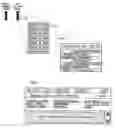
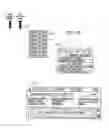
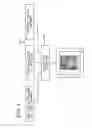
BRIEF DESCRIPTION OF THE DRAWINGSFIG. 1A is a schematic drawing of a television system;
FIG. 1B is schematic diagram depicting of an implementation of a filter;
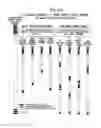
FIG. 2A is a schematic diagram depicting source provider guide listings and third-party edited listings;
FIG. 2B is a schematic diagram depicting alternative formats of an EPG display;
FIG. 3 is a schematic diagram of a system of selecting filters; and
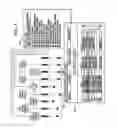
FIG. 4 is a schematic diagram depicting program/event sources for a PCTV utilizing a filter system.
DETAILED DESCRIPTION OF THE PREFERRED EMBODIMENTSElectronic programming guides (EPGS) are well-known in the art. One type of programming guide is provided by the assignee of the present invention, StarSight and described in U.S. Pat. No. 5,169,274, is displayed as a grid of program entries with the vertical axis of the grid being the channels or program sources of program entries and the horizontal axis being starting times of programming entries. Other EPGs are provides by satellite services.
An EPG is generated from a data base based on programming provided by a local service provider. Existing EPG services include some program blocking features and also provide for selecting favorite channels and ordering the channels in a preferred manner.
In a preferred embodiment, the electronic program guide of the invention may be implemented either on a personal computer, a PCTV, a television connected to a set-top box, or a television including a custom board. However, the invention is not limited to any particular hardware configuration and will have increased utility as new combinations of computers and television systems are developed. In the following, any of the above will sometimes be referred to as a “TV system.” Block diagrams of representative TV systems are depicted in FIG. 1A. Details of implementation are not depicted because the invention is not limited to any particular TV system.
As is well-known, the picture to be displayed may be transmitted as an analog signal, for example according to the NTSC standard utilized in the United States, or as a digital signal modulated onto an analog carrier. The signals may be received over a cable or via an antenna or satellite dish. Typically, television sets are designed to receive analog signals and computer display devices are designed to display pictures encoded in a digital format. However, the decoder system converts the digital data to an analog signal for display on a television set and TV modems can format analog TV signals for display on a monitor.
In FIG. 1A, analog or digital TV signals, received via cable 30, antenna 32, or satellite dish 34, are provided to a television system. If the signal is from a digital broadcast service, then a decoder 36 converts the signal to baseband video and audio or channel 3/4 RF. If the signal is an analog signal it is passed through as a live video output. The television system 38, depending on its configuration, receives selected ones of the outputs and displays the received program.
A PCTV includes a TV card 42, connected to either live video, baseband video, or channel 3/4 output, digitizes the video image and displays the video image in a resizable window on the computer monitor. The PCTV is also coupled to land telephone lines by a modem 44.
If the received signal is an analog TV signal, the TV card of the PCTV digitizes the analog signal and extracts included information from the vertical blanking intervals. On the other hand, if the signal is a digital signal, separate audio, video, VBI (vertical blanking information such as closed caption, teletext, and program related information), program guide, and conditional access information are provided as separate bitstreams. The video and audio bitstreams for programs are converted to a format for display and the program guide information is processed to form a program guide database. The processor, executing software stored in memory, generates interactive electronic program guide images and images of received programs. The guide can be used to interact with and control programs displayed in the window.
In a preferred embodiment of the invention, filters are utilized to select and screen programming displayed by an EPG. In this context, a filter is a mechanism for selecting programs based on a selected criteria.
However, for a filter to be useful in the present context, it is in the form of a list of programs or event entries where the entries must be in a format usable by the EPG generating system.
An example of a usable format for filters is depicted in FIG. 1. In FIG. 1, a filter 100 is a list of program or event entries 102. The filter entitled “The Sci-Fi Fan's Guide” is a list of programs selected according to a criteria that selects programs of interest to sci-fi fans.
The format for a program or event entry is depicted in the table 104. The information in the table is used by the EPG generating system to generate an EPG display as described below. The table could be formatted in HTML so that the filter entries 102 could be displayed in a user friendly format 106.
In a preferred embodiment both service provider guide listings and third-party edited guide listings are utilized to select programming displayed in the EPG.
Examples of Subscription-based, Filtering Program/Event Services; live or archived
- e.g.: The Family-Friendly subscription service (delivering a described/understood mix of general audience programs/events, some of which may be custom-selected according to a subscriber's viewing history/preferences.)
- e.g.: The Science Source subscription service (delivering a described/understood mix of science-related programs/events, some of which may be custom-selected according to a subscriber's viewing history/preferences.)
- e.g.: Bob Smith's Cult Film Access Listing (allowing a Starsight user to incorporate a third party's list into the Guide) (providing access links to a described/understood mix of cult film-related programs/events.)
FIG. 2 illustrates the use of third-party edited guide listings. The entire universe of available programming is indicated by the list of all programs/events provided by the local service provider 200.
As depicted in FIG. 2A, some of the programs listed in the Sci-Fi Fan's Guide are either not available (light gray bar) or available/not accessible (dark gray bar). A program available but not accessible is a premium program not subscribed to by the user.
The EPG generator utilizes to filter to display those programs available/accessible in the EPG. Alternatively, programs available/not accessible might also be displayed as an incentive to the viewer to subscribe to the premium program which meets a selected filter's criteria. This could be a powerful revenue generator for the service provider.
FIG. 2B depicts alternate ways of formatting an EPG. For programs events which are available only at prescribed times the show listings are displayed in a grid 250. Those programs/events which are randomly accessible, e.g., archives, libraries, file libraries, etc., appear in a list section of the EPG.
In a preferred embodiment, the actual filtering of the programs to be displayed in an EPG is performed utilizing the Program\Event ID in the entry table 104 (FIG. 1).
In the present embodiment, the EPG generator provides an interactive filter selective mechanism. In FIG. 3, a user configuration screen 300 lists both service provider filters 302 and third-party filters 304. Each time a new filter is added it is registered with the EPG generator and added to the list in the user configuration screen 300. Only those programs filtered by the selected filters will be displayed on the EPG screen 306.
In a preferred embodiment, the filters may be prioritized. For example, in a family with small children the most important criteria might be that a program be included in the Family Friendly Viewing filter. This filter is assigned the highest priority. Then, for example, a program included in the Sci-Fi Fan's filter but not included in the Family Friendly Viewing filter would not be displayed in the guide. Further, the filters could be prioritized by time. Family Friendly Viewing would have the highest priority during the hours when children are viewing and then automatically drop to a later priority during late hours.
In the example described above with reference to FIG. 2A, the filters were applied to programming provided by the local service provider over a cable. However, as depicted in FIG. 4, the filters may also be applied to programs and events delivered by non-cable sources such as wireless, Internet, and satellite. These non-cable sources 400 supply program guide data to the EPG generator 402 which is stored in a data base. The filters can then be applied to program data stored in the data base to generate a filtered EPG for cable and non-cable programming.
Another use of non-cable supplied information is to use the internet to provide offers for premium cable-supplied subscription services. The subscription is initiated through the internet and premium subscription service is made available to the user.
Claims
1-4. (canceled)
5. A method for managing program listings comprising:
storing available program listings in at least one database, wherein the program listings comprise a plurality of program/event entries;
selecting a first subset of the plurality of program/event entries using a first filter, wherein the first filter selects the first subset by comparing a predetermined list of program/event entries to the program listings;
generating an electronic program guide including the first subset of the plurality of program/event entries; and
displaying the electronic program guide.
6. The method of claim 5 further comprising:
selecting a second subset of the plurality of program/event entries using a second filter, wherein the second filter selects the second subset by comparing a second predetermined list of program/event entries to the program listings; and
generating the electronic program guide including the first subset and the second subset of the plurality of program/event entries.
7. The method of claim 5 further comprising:
selecting a second subset of the plurality of program/event entries using a second filter, wherein the first subset and the second subset both include at least one same program/event entry from the plurality of program/event entries; and
generating the electronic program guide including each same program/event entry included in both the first subset and said second subset.
8. The method of claim 5 further comprising:
prior to selecting the first subset of the plurality of program/event entries, creating the first filter using the predetermined list of program/event entries in the at least one database.
9. The method of claim 5 further comprising storing the program listings and the first filter in a consumer device from a source external to the consumer device.
10. The method of claim 5 wherein the first filter is an editable filter.
11. A system for managing program listings comprising:
a memory configured to store:
a database of available program listings comprising a plurality of program/event entries, and
a first filter comprising a predetermined list of program/event entries;
a processor configured to:
select a first subset of programs of the plurality of program/event entries using the first filter by comparing the predetermined list of program/event entries to the program listings,
generate an electronic program guide including the first subset of the plurality of program/event entries; and
a display device configured to display the electronic program guide.
12. The system of claim 11 wherein:
the memory is further configured to store a second filter comprising a second predetermined list of program/event entries; and
the processor is further configured to:
select a second subset of the plurality of program/event entries using the second filter by comparing the predetermined list of program/event entries to the program listings, and
generate the electronic program guide including the first subset and the second subset of the plurality of program/event entries.
13. The system of claim 11 wherein:
the memory is further configured to store a second filter comprising a second predetermined list of program/event entries; and
the processor is further configured to:
select a second subset of the plurality of program/event entries using the second filter by comparing the predetermined list of program/event entries to the program listings, wherein the first subset and the second subset both include at least one same program/event entry from the plurality of program/event entries, and
generate the electronic program guide including each same program/event entry included in both the first subset and said second subset.
14. The system of claim 11 wherein the processor is further configured to, prior to selecting the first subset of the plurality of program/event entries, create the first filter using the predetermined list of program/event entries in the database.
15. The system of claim 11 further comprising a consumer device configured to store the program listings and the first filter from a source external to the consumer device.
16. The system of claim 11 wherein the first filter is an editable filter.
17. A system for managing program listings comprising:
means for storing available program listings in at least one database, wherein the program listings comprises a plurality of program/event entries;
means for selecting a first subset of the plurality of program/event entries using a first filter, wherein the first filter selects the first subset by comparing a predetermined list of program/event entries to the program listings;
means for generating an electronic program guide including the first subset of the plurality of program/event entries; and
means for displaying the electronic program guide.
18. The system of claim 17 further comprising:
means for selecting a second subset of the plurality of program/event entries using a second filter, wherein the second filter selects the second subset by comparing a second predetermined list of program/event entries to the program listings; and
means for generating the electronic program guide including the first subset and the second subset of the plurality of program/event entries.
19. The system of claim 17 further comprising:
means for selecting a second subset of the plurality of program/event entries using a second filter, wherein the first subset and the second subset both include at least one same program/event entry from the plurality of program/event entries; and
means for generating the electronic program guide including each same program/event entry included in both the first subset and said second subset.
20. The system of claim 17 further comprising:
prior to the means for selecting the first subset of the plurality of program/event entries, means for creating the first filter using the predetermined list of program/event entries in the at least one database.
21. The system of claim 17 further comprising means for storing the program listings and the first filter in a consumer device from a source external to the consumer device.
22. The system of claim 17 wherein the first filter is an editable filter.
Images & Drawings included:


Sources:
- United States Patent and Trademark Office - verify current appl. status at the USPTO↗
Similar patent applications:
Recent applications in this class:
- » 20250267328 2025-08-21
COMMUNICATION EXCHANGE SYSTEM FOR REMOTELY COMMUNICATING INSTRUCTIONS - » 20250227322 2025-07-10
SYSTEMS AND METHODS TO DEFINE A CREATIVE ASSET FOR PRESENTATION WITH STREAMING VIDEO CONTENT THROUGH DIFFERENT VERSIONS OF A STREAMING VIDEO PLAYER APPLICATION - » 20250142157 2025-05-01
SYSTEMS AND METHODS FOR PROVIDING AN ENHANCED SHOPPING EXPERIENCE INCLUDING EXECUTABLE TRANSACTIONS AND CONTENT DELIVERY - » 20250097510 2025-03-20
DIGITAL CONTENTS RECEIVER, DIGITAL CONTENTS RECEIVING METHOD AND DIGITAL CONTENTS TRANSMITTING AND RECEIVING METHOD - » 20250097509 2025-03-20
SYSTEMS AND METHODS FOR A COMPUTING DEVICE MULTI-USER USER INTERFACE - » 20250056083 2025-02-13
RENDERING MEDIA STREAMS - » 20240323476 2024-09-26
METHOD AND APPARATUS FOR CONTROLLING POP-UP WINDOW, AND MEDIUM AND ELECTRONIC DEVICE - » 20240305854 2024-09-12
METHODS AND SYSTEMS FOR AUTOMATED CONTENT GENERATION - » 20240276055 2024-08-15
Video processing method and electronic device - » 20240231602 2024-07-11
INTERACTION METHOD AND APPARATUS, ELECTRONIC DEVICE, AND READABLE STORAGE MEDIUM
Recent applications for this Assignee:
- » 20140181870 2014-06-26
Information system - » 20140173431 2014-06-19
Information system - » 20140150027 2014-05-29
Television control interface with electronic guide - » 20140137157 2014-05-15
Television control interface with electronic guide - » 20140101698 2014-04-10
Television schedule system and method of operation for multiple program occurrences - » 20130014154 2013-01-10
TELEVISION SCHEDULE SYSTEM WITH ACCESS CONTROL - » 20120266194 2012-10-18
Multi-source switching in a television system displaying source indicators - » 20120210363 2012-08-16
Multiple database, user-choice-compiled program and event guide - » 20120151544 2012-06-14
SYSTEMS AND METHODS FOR LINKING TELEVISION VIEWERS WITH ADVERTISERS AND BROADCASTERS - » 20120079539 2012-03-29
INTERACTIVE COMPUTER SYSTEM FOR PROVIDING TELEVISION SCHEDULE INFORMATION