Phosphor for light sources and associated light source
US20050145868A1
2005-07-07
11/066,671
2005-02-25
✅ Patent granted
US 7,063,807 B2
2006-06-20
-
-
C. Melissa Koslow
2025-02-25
Abstract:
A phosphor for light sources, the emission from which lies in the short-wave optical spectral region, as a garnet structure A3B5O12. It is activated with Ce, the second component B representing at least one of the elements Al and Ga, and the first component A is terbium or terbium together with at least one of the elements Y, Gd, La and/or Lu.
In a preferred embodiment, a phosphor having a garnet of structure (Tb1-x-yRExCey)3(Al,Ga)5O12, where RE=Y, Gd, La and/or Lu; 0≦x≦0.5-y; 0<y<0.1 is used.
Inventors:
- Franz Zwaschka 14 🇩🇪 Ismaning, Germany
- Guenther Waitl 6 🇩🇪 Regensburg, Germany
- Franz Kummer 2 🇩🇪 Muenchen, Germany
- Andries Ellens 2 🇩🇪 Muenchen, Germany
- Alexandra Debray 3 🇩🇪 Neumarkt, Germany
- Franz Kummer 3 🇩🇪 Munich, Germany
- Andries Ellens 3 🇩🇪 Munich, Germany
Assignee:
- Patent-Treuhand-Gesellschaft fuer Elektrische Gluehlampen mbH 35 🇩🇪 Munich, Germany
- OSRAM Opto Semiconductors GmbH & Co. oHG 5 🇩🇪 Regensburg, Germany
Interested in similar patents?
Get notified when new applications in this technology area are published.
Classification:
H01L33/502 » CPC main
Semiconductor devices with at least one potential-jump barrier or surface barrier specially adapted for light emission; Processes or apparatus specially adapted for the manufacture or treatment thereof or of parts thereof; Details thereof characterised by the semiconductor body packages; Wavelength conversion elements characterised by the materials, e.g. binder Wavelength conversion materials
C09K11/7715 » CPC further
Luminescent, e.g. electroluminescent, chemiluminescent materials containing inorganic luminescent materials containing rare earth metals containing cerium
C09K11/7769 » CPC further
Luminescent, e.g. electroluminescent, chemiluminescent materials containing inorganic luminescent materials containing rare earth metals containing two or more rare earth metals; Chalcogenides Oxides
C09K11/7774 » CPC further
Luminescent, e.g. electroluminescent, chemiluminescent materials containing inorganic luminescent materials containing rare earth metals containing two or more rare earth metals Aluminates
H01L33/504 » CPC further
Semiconductor devices with at least one potential-jump barrier or surface barrier specially adapted for light emission; Processes or apparatus specially adapted for the manufacture or treatment thereof or of parts thereof; Details thereof characterised by the semiconductor body packages; Wavelength conversion elements characterised by the materials, e.g. binder; Wavelength conversion materials Elements with two or more wavelength conversion materials
H05B33/14 » CPC further
Electroluminescent light sources; Light sources with substantially two-dimensional radiating surfaces characterised by the chemical or physical composition or the arrangement of the electroluminescent material, or by the simultaneous addition of the electroluminescent material in or onto the light source
H05B33/00 IPC
Electroluminescent light sources
Description
CROSS REFERENCES TO RELATED APPLICATIONSThis application is a continuation of copending application Ser. No. 10/687,436, filed Oct. 16, 2003, which is a continuation of application Serial No. Ser. No. 09/787,208, filed Mar. 15, 2001, now U.S. Pat. No. 6,669,866.
TECHNICAL FIELDThe invention relates in particular to a yellow-emitting garnet phosphor for excitation by a light source with short wavelengths in the visible blue spectral region, with the result that white light is generated. A lamp (primarily a fluorescent lamp) or an LED (light-emitting diode) is particularly suitable as the light source.
PRIOR ARTWO 98/05078 has already disclosed a phosphor for light sources and an associated light source. In that document, the phosphor used is a garnet of the structure A3B5O12, the host lattice of which, as first component A, comprises at least one of the rare earths Y, Lu, Sc, La, Gd or Sm. Furthermore, one of the elements Al, Ga or In is used for the second component B. The only dopant used is Ce.
A very similar phosphor is known from WO 97/50132. The dopant used in that document is either Ce or Tb. While Ce emits in the yellow spectral region, the emission from Tb is in the green spectral region. In both cases, the complementary color principle (blue-emitting light source and yellow-emitting phosphor) is used to achieve a white luminous color.
Finally, EP-A 124 175 describes a fluorescent lamp which, in addition to a mercury fill, contains a plurality of phosphors. These are excited by UV radiation (254 nm) or also by short-wave radiation at 460 nm. Three phosphors are selected in such a way that they add up to form white (color mixture).
SUMMARY OF THE INVENTIONAccording to the invention, for light sources from which the emission lies in the short-wave optical spectral region, a phosphor which has a garnet structure A3B5O12 and which is doped with Ce is used, the second component B representing at least one of the elements Al and Ga and the first component A containing terbium. Surprisingly, it has been found that under particular circumstances, namely under blue excitation in the range from 420 to 490 nm, terbium (Tb) is suitable as a constituent of the host lattice (first component of the garnet) for a yellow-emitting phosphor, the activator of which is cerium. Previously, in this context Tb has only been considered as an activator or coactivator, together with cerium, for emission in the green region, if excitation is produced by cathode rays (electrons) or short-wave UV photons (GB-A 1 600 492 and EP-A 208 713).
In this case, terbium, as the principal constituent of the first component A of the garnet, can be used on its own or together with at least one of the rare earths Y, Gd, La and/or Lu.
At least one of the elements Al or Ga is used as the second component. The second component B may additionally contain In. The activator is cerium. In a particularly preferred embodiment, a garnet of the structure
(Tb1-x-yRExCey)3(Al, Ga)5O12, where
- RE=Y, Gd, La and/or Lu;
- 0≦x≦0.5-y;
- 0<y<0.1 is used.
The phosphor absorbs in the range from 420 to 490 nm and can thus be excited by the radiation from a blue light source, which is in particular the radiation source for a lamp or LED. Good results have been achieved with a blue LED whose emission peak was at 430 to 470 nm. The emission peak of the Tb-garnet: Ce phosphor is at approximately 550 nm.
This phosphor is particularly useful for use in a white LED based on the combination of a blue LED with the Tb-garnet-containing phosphor, which is excited by absorption of part of the emission from the blue LED and the emission from which supplements a remaining radiation from the LED, to form white light.
A Ga(In)N-LED is particularly suitable as the blue LED, but any other route for producing a blue LED which emits in the range from 420 to 490 nm is also suitable. 430 to 470 nm is particularly recommended as the principal emission region, since this is where efficiency is highest.
By selecting the type and quantity of rare earths, it is possible to fine-tune the location of the absorption and emission bands, in a similar way to that which is known from the literature for other phosphors of type YAG:Ce. In conjunction with light-emitting diodes, it is particularly suitable for x to be 0.25≦x≦0.5-y.
The particularly preferred range for y is 0.02<y<0.06.
The phosphor according to the invention is also suitable for combination with other phosphors.
A garnet of structure
(TbxRE1-x-yCey)3(Al,Ga)5O12,
- where RE=Y, Gd, La and/or Lu;
- 0≦x≦0.02, in particular x=0.01;
- 0<y<0.1 has proven particularly suitable as the phosphor. Y frequently lies in the range from 0.01 to 0.05.
Generally, relatively small amounts of Tb in the host lattice serve primarily to improve the properties of known cerium-activated phosphors, while the addition of relatively large amounts of Tb can be used in a controlled way in particular to shift the wavelength of the emission from known cerium-activated phosphors. Therefore, a high proportion of Tb is particularly suitable for white LEDs with a low color temperature of below 5000 K.
BRIEF DESCRIPTION OF THE DRAWINGSThe invention is to be explained in more detail below with reference to a number of exemplary embodiments. In the drawing:
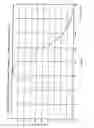
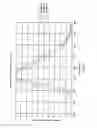
FIG. 1 shows an emission spectrum of a first Tb-garnet phosphor;
FIG. 2 shows the reflectance spectrum of this Tb-garnet phosphor;
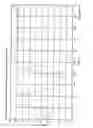
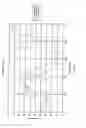
FIG. 3 shows emission spectra of further Tb-garnet phosphors;
FIG. 4 shows reflectance spectra of the Tb-garnet phosphors from FIG. 3;
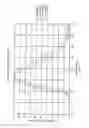
FIG. 5 shows emission spectra for further Tb-garnet phosphors;
FIG. 6 shows reflectance spectra for the Tb-garnet phosphors from FIG. 5;
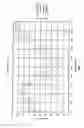
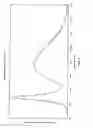
FIG. 7 shows an emission spectrum for a white LED with Tb-garnet phosphor.
DETAILED DESCRIPTION OF THE INVENTION Exemplary Embodiment No. 1The components
| 9.82 g | Yttrium oxide Y2O3 | |
| 2.07 g | Cerium oxide CeO2 | |
| 37.57 g | Terbium oxide Tb4O7 | |
| 26.41 g | Aluminum oxide Al2O3 | |
| 0.15 g | Barium fluoride BaF2 | |
| 0.077 g | Boric acid H3BO3 | |
are mixed and comminuted together for two hours in a 250 ml polyethylene wide-necked bottle using 150 g of aluminum oxide balls with a diameter of 10 mm. Barium fluoride and boric acid serve as fluxes. The mixture is fired for three hours in a covered corundum crucible at 1550° C. in forming gas (nitrogen containing 2.3% by volume hydrogen) and then milled in an automatic mortar mill and screened through a screen with a mesh width of 53 um. This is followed by a second firing for three hours at 1500° C. under forming gas (nitrogen containing 0.5% by volume hydrogen). Then, milling and screening is carried out as after the first firing. The phosphor obtained corresponds to the composition (Y0.29Tb0.67Ce0.04)3Al5O12. It has a strong yellow body color. An emission spectrum for this phosphor when excited at 430 nm and a reflectance spectrum for the phosphor between 300 and 800 nm are shown in FIGS. 1 and 2. Exemplary Embodiment No. 2
The components
| 43.07 g | Terbium oxide Tb4O7 | |
| 1.65 g | Cerium oxide CeO2 | |
| 21.13 g | Aluminum oxide Al2O3 | |
| 0.12 g | Barium fluoride BaF2 | |
| 0.062 g | Boric acid H3BO3 | |
are intimately mixed and processed as described under Example 1. The phosphor obtained corresponds to the overall composition (Tb0.96Ce0.04)3Al5O12 or, in the representation which illustrates the host lattice, Tb3Al5O12:Ce. It has a strong yellow body color. The X-ray diffraction diagram shows that there is a cubic garnet phase. The emission spectrum and reflectance spectrum for this phosphor are shown in FIGS. 3 and 4, respectively. Exemplary Embodiment No. 3
The components
| 32.18 g | Yttrium oxide Y2O3 | |
| 0.56 g | Terbium oxide Tb4O7 | |
| 2.07 g | Cerium oxide CeO2 | |
| 26.41 g | Aluminum oxide Al2O3 | |
| 0.077 g | Boric acid H3BO3 | |
are intimately mixed and processed as described under Example No. 1. The phosphor obtained corresponds to the composition (Y0.95Tb0.01Ce0.04)3Al5O12. It has a strong yellow body color. The emission spectrum and reflectance spectrum for this phosphor are shown in FIGS. 3 and 4, respectively. Exemplary Embodiment No. 4
The components
| 26.76 g | Yttrium oxide Y2O3 | |
| 9.53 g | Terbium oxide Tb4O7 | |
| 2.07 g | Cerium oxide CeO2 | |
| 26.41 g | Aluminum oxide Al2O3 | |
| 0.149 g | Barium fluoride BaF2 | |
| 0.077 g | Boric acid H3BO3 | |
are intimately mixed and processed as described under Example No. 1. The phosphor obtained corresponds to the composition (Y0.79Tb0.17Ce0.04)3Al5O12. It has a strong yellow body color. The emission spectrum and reflectance spectrum for this phosphor are shown in FIGS. 3 and 4, respectively. Exemplary Embodiment No. 5
The components
| 30.82 g | Yttrium oxide Y2O3 | |
| 0.56 g | Terbium oxide Tb4O7 | |
| 4.13 g | Cerium oxide CeO2 | |
| 26.41 g | Aluminum oxide Al2O3 | |
| 0.149 g | Barium fluoride BaF2 | |
| 0.077 g | Boric acid H3BO3 | |
are intimately mixed and processed as described under Example No. 1. The phosphor obtained corresponds to the composition (Y0.91Tb0.01Ce0.08)3Al5O12. It has a strong yellow body color. Exemplary Embodiment No. 6
The components
| 43.07 g | Terbium oxide Tb4O7 | |
| 1.65 g | Cerium oxide CeO2 | |
| 21.13 g | Aluminum oxide Al2O3 | |
| 0.062 g | Boric acid H3BO3 | |
are intimately mixed and processed as described under Example 1, except that the temperature during the two firings is lower by 50° C. in each case. The phosphor obtained corresponds to the composition (Tb0.96Ce0.04)3Al5O12. It has a strong yellow body color. The emission spectrum and reflectance spectrum for this phosphor are shown in FIGS. 5 and 6, respectively. Exemplary Embodiment No. 7
The components
| 43.07 g | Terbium oxide Tb4O7 | |
| 1.65 g | Cerium oxide CeO2 | |
| 17.05 g | Aluminum oxide Al2O3 | |
| 7.50 g | Gallium oxide Ga2O3 | |
| 0.062 g | Boric acid H3BO3 | |
are intimately mixed and processed as described under Example 1, except that the temperature for the two firings is lower by 50° C. in each case. The phosphor obtained corresponds to the composition (Tb0.96Ce0.04)Al4GaO12. It has a strong yellow body color. The emission spectrum and reflectance spectrum for this phosphor are shown in FIGS. 5 and 6, respectively. Exemplary Embodiment No. 8
The components
| 43.07 g | Terbium oxide Tb4O7 | |
| 1.65 g | Cerium oxide CeO2 | |
| 12.97 g | Aluminum oxide Al2O3 | |
| 15.00 g | Gallium oxide Ga2O3 | |
| 0.062 g | Boric acid H3BO3 | |
are intimately mixed and processed as described under Example 1, except that the temperature for the two firings is lower by 50° C. in each case. The phosphor obtained corresponds to the composition (Tb0.96Ce0.04)3Al3Ga2O12. It has a yellow body color. The emission spectrum and reflectance spectrum of this phosphor are shown in FIGS. 5 and 6, respectively. Exemplary Embodiment No. 9
The components
| 4.88 | kg | Yttrium oxide Y2O3 |
| 7.05 | kg | Gadolinium oxide Gd2O3 |
| 161.6 | g | Terbium oxide Tb4O7 |
| 595 | g | Cerium oxide CeO2 |
| 7.34 | kg | Aluminum oxide Al2O3 |
| 5.50 | g | Boric acid H3BO3 |
are mixed for 24 hours in a 60 l polyethylene vessel. The mixture is introduced into crucibles made from aluminum oxide with a capacity of approx. 1 l and is fired in a pushed-bat kiln for 6 hours at 1550° C. under forming gas. The fired material is milled in an automatic mortar mill and then finely screened. The phosphor obtained has the composition (Y0.50Gd0.45Tb0.01Ce0.04)3Al5O12. It has a strong yellow body color. The emission spectrum and reflectance spectrum for this phosphor are shown in FIGS. 3 and 4, respectively. Exemplary Embodiment 10 (LED)
When these phosphors are used in a white LED together with GaInN, a structure similar to that described in WO 97/50132 is employed. By way of example, identical fractions of phosphor in accordance with Example 1 and of phosphor in accordance with Example 4 are dispersed in epoxy resin and a LED with an emission peak of approximately 450 nm (blue) is encapsulated by this resin mixture. The emission spectrum of a white LED obtained in this way is shown in FIG. 7. In this case, the mixture of the blue LED radiation with the yellow phosphor emission results in a color locus of x=0.359/y=0.350, corresponding to white light of color temperature 4500 K.
The phosphors described above generally have a yellow body color. They emit in the yellow spectral region. When Ga is added or used on its own instead of Al, the emission shifts more toward green, so that it is also possible in particular to achieve higher color temperatures. In particular, Ga-containing (or Ga,Al-containing) Tb-garnets and purely Al-containing Tb-garnets can be used in mixed form in order to be able to adapt to desired color loci.
Claims
1-11. (canceled)
12. A white light-emitting device comprising:
a light-emitting diode that emits blue light; and
a phosphor that converts at least a part of the blue light into longer-wavelength radiation, wherein the phosphor is an Al-containing Tb-garnet phosphor, a Ga-containing Tb-garnet phosphor, a Ga,Al-containing Tb-garnet phosphor, or a mixture thereof, whereby the device emits white light.
13. The device of claim 12 wherein Tb is substituted from 0 to 99 mol % by Y, Gd, La, and/or Lu.
14. The device of claim 12 wherein less than 50 mol % of Tb is substituted by Y, Gd, La, and/or Lu.
15. The device of claim 12 wherein the phosphor is a yellow-emitting phosphor.
16. The device of claim 12 additionally comprising a yttrium aluminum garnet phosphor activated with cerium.
17. The device of claim 12 wherein the blue light from the light-emitting diode has a peak emission in the range from 430 to 470 nm.
18. The device of claim 12 wherein the emission peak of the phosphor is at approximately 550 nm.
19. The device of claim 12 wherein the white light has a color temperature below 5000 K.
20. The device of claim 12 wherein the blue light from the light-emitting diode comprises an excitation in the range from 420 to 490 nm.
21. The device of claim 12 wherein the phosphor is activated by cerium.
22. A device that produces white light, the device comprising:
a light-emitting diode that emits blue light; and
a yellow-emitting phosphor, wherein the phosphor is a cerium-activated terbium aluminate that converts at least a part of the blue light from the light-emitting diode into yellow light, the device emitting a mix of at least blue light and yellow light to produce white light.
23. The device of claim 22 wherein at least a portion of the aluminum is substituted by gallium.
24. The device of claim 22 wherein a portion of the terbium is substituted by yttrium, gadolinium, lanthanum, and/or lutetium.
25. The device of claim 23 wherein a portion of the terbium is substituted by yttrium, gadolinium, lanthanum, and/or lutetium.
26. The device of claim 22 wherein less than 50 mol % of Tb is substituted by Y, Gd, La, and/or Lu.
27. The device of claim 23 wherein less than 50 mol % of Tb is substituted by Y, Gd, La, and/or Lu.
28. The device of claim 22 additionally comprising a yttrium aluminum garnet phosphor activated with cerium.
29. The device of claim 22 wherein the blue light from the light-emitting diode has a peak emission in the range from 430 to 470 nm.
30. The device of claim 22 wherein the emission peak of the phosphor is at approximately 550 nm.
31. The device of claim 22 wherein the white light has a color temperature below 5000 K.
32. The device of claim 22 wherein the blue light from the light-emitting diode comprises an excitation in the range from 420 to 490 nm.
Images & Drawings included:
Sources:
- United States Patent and Trademark Office - verify current appl. status at the USPTO↗
Similar patent applications:
Recent applications in this class:
- » 20250072174 2025-02-27
LIGHT EMITTING SUBSTRATE, DISPLAY APPARATUS, SPLICING SCREEEN DISPLAY APPARATUS, AND METHOD OF OPERATING DISPLAY APPARATUS - » 20250063864 2025-02-20
LED LIGHT SOURCE FOR MEDICAL OPTICAL COHERENCE TOMOGRAPHY WITH HIGH AXIAL RESOLUTION - » 20250063863 2025-02-20
LIGHT-CONVERSION MODULE, METHOD FOR MANUFACTURING THE SAME, AND DISPLAY - » 20250063862 2025-02-20
LIGHT-EMITTING DEVICE AND DISPLAY APPARATUS - » 20250056934 2025-02-13
Method for manufacturing a colour conversion optoelectronic device, including a step of optically forming surface potential patterns in an electret layer - » 20250048801 2025-02-06
DISPLAY DEVICE AND METHOD OF MANUFACTURING THE SAME - » 20250040314 2025-01-30
Light-Emitting Device and Manufacturing Method Thereof, Taillight and Vehicle - » 20250031494 2025-01-23
MANUFACTURING METHOD OF MICRO LIGHT-EMITTING DIODE DISPLAY DEVICE - » 20250031493 2025-01-23
OPTICAL PART, LIGHT-EMITTING DEVICE WITH QUANTUM DOTS, AND MANUFACTURING METHOD THEREOF - » 20250022989 2025-01-16
DISPLAY PANEL AND METHOD FOR MANUFACTURING THE SAME
Recent applications for this Assignee:
- » 20060038162 2006-02-23
Phosphor composition for lamps - » 20060028142 2006-02-09
Solder-free contact-making of dielectrically impeded discharge lamps - » 20050260917 2005-11-24
Process for producing a discharge lamp by softening a support element outside of a discharge chamber - » 20050259445 2005-11-24
Illumination system having a housing and a flat lamp arranged therein - » 20050242329 2005-11-03
Phosphor and light source comprising such a phosphor - » 20050236640 2005-10-27
Laminates for encapsulating devices - » 20050215166 2005-09-29
Discharge lamp with stabilized discharge vessel plate - » 20050184639 2005-08-25
Dielectric barrier discharge lamp having divided electrodes - » 20050176333 2005-08-11
Method for producing a flat gas discharge lamp - » 20050158224 2005-07-21
Process for producing a phosphate of the lanthanoids, and phosphate produced thereby