Life vest
US20050150257A1
2005-07-14
11/023,513
2004-12-29
✅ Patent granted
US 7,024,891 B2
2006-04-11
-
-
Danny Worrell
2024-12-29
Abstract:
A method for making a life vest includes knitting or weaving, wherein a material including synthetic filament, synthetic monofilament and elastic yarn is combined by a double weft knitting machine to make a textile for the life vest, and dyeing and sewing. Appropriate cutting and sewing processes are employed to finish the formation of the life vest.
Assignee:
- Trueway Corporation 1 🇹🇼 Taoyuan, Taiwan
Interested in similar patents?
Get notified when new applications in this technology area are published.
Classification:
D04B1/22 IPC
Weft knitting processes for the production of fabrics or articles not dependent on the use of particular machines; Fabrics or articles defined by such processes specially adapted for knitting goods of particular configuration
B63C9/08 » CPC main
Life-saving in water Life-buoys, e.g. rings; Life-belts, jackets, suits, or the like
B32B7/08 » CPC further
Layered products characterised by the relation between layers; Layered products characterised by the relative orientation of features between layers, or by the relative values of a measurable parameter between layers, i.e. products comprising layers having different physical, chemical or physicochemical properties; Layered products characterised by the interconnection of layers; Interconnection of layers by mechanical means
D04B1/16 » CPC further
Weft knitting processes for the production of fabrics or articles not dependent on the use of particular machines; Fabrics or articles defined by such processes; Other fabrics or articles characterised primarily by the use of particular thread materials synthetic threads
D04B1/18 » CPC further
Weft knitting processes for the production of fabrics or articles not dependent on the use of particular machines; Fabrics or articles defined by such processes; Other fabrics or articles characterised primarily by the use of particular thread materials elastic threads
Description
BACKGROUND OF THE INVENTION1. Field of the Invention
The present invention relates to a life vest, and more particularly to the life vest that is made of synthetic filament, synthetic monofilament and elastic yarn. The synthetic filament is selected from a group consisting of polyester filament, polyamide filament or polypropylene filament. The synthetic monofilament is selected from a group consisting of polyester monofilament or polyamide monofilament. The elastic yarn concerns yarn that is of at least 20 denier.
2. Description of Related Art
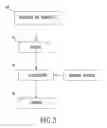
Conventionally, the process for making a life vest as shown in FIG. 3 is first using a fabric to be processed by weaving or knitting (40). The knitted fabric is then treated with a dyeing process (41). Thereafter, the dyed fabric undergoes a lamination process (42) with rubber sponge. Finally, the semi-finished life vest undergoes a sewing process (43) to allow a floatation material to be sewed into the life vest to enable the life vest to be floatable.
With reference to FIG. 4, it is noted that after the conventional life vest is finished, a layer of rubber sponge (50) is sandwiched between two fabrics (51). It is well appreciated that rubber sponge (50) is elastic and hydrophobic so that it has long been the best choice for making the finished product have a strength that fully complies with the regulations. However, the life vest so made is bulky and heavy such that the wearer's movement is limited. Besides, the rubber sponge fabric sheets (the fabric (51) attached to the rubber sponge (50)) do not have a porous structure so that the wearer feels stuffy and uncomfortable especially on humid and hot summer days. Furthermore, the rubber sponge is easily affected by weather conditions such that without any post-manufacture care, it hardens due to exposure to light, heat, and so on. This hardening makes the vest uncomfortable, thereby leading to the dangerous situation where a sailor etc declines to wear the vest. To overcome the shortcomings, the present invention tends to provide an improved life vest to mitigate the aforementioned problems.
SUMMARY OF THE INVENTIONThe primary objective of the present invention is to provide an improved life vest made of synthetic filament and synthetic monofilament. The life vest has great water repellency, floatation ability and structural strength.
In order to accomplish the aforementioned objective, the life vest of the present invention is made of synthetic filament, synthetic monofilament and elastic yarn.
The synthetic filament is selected from a group consisting of polyester filament, polyamide filament or polypropylene filament. The synthetic monofilament is selected from a group consisting of polyester monofilament or polyamide monofilament. The elastic yarn includes yarns of at least 20 denier.
Other objects, advantages and novel features of the invention will become more apparent from the following detailed description when taken in conjunction with the accompanying drawings.
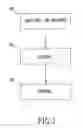
BRIEF DESCRIPTION OF THE DRAWINGSFIG. 1 is a flow chart showing the process for making a life vest of the present invention;
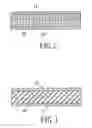
FIG. 2 is a cross sectional view showing the structure of the life vest of the present invention;
FIG. 3 is a flow chart showing the conventional process for making a life vest; and
FIG. 4 is a cross sectional view showing the structure of the conventional life vest.
DETAILED DESCRIPTION OF THE PREFERRED EMBODIMENTWith reference to FIG. 1, the material for the life vest in accordance with the present invention includes synthetic filament, synthetic monofilament and elastic yarn. The synthetic filament is selected from a group consisting of polyester filament, polyamide filament or polypropylene filament. The synthetic monofilament selected from a group consisting of polyester monofilament or polyamide monofilament. The elastic yarn is yarn of at least 20 denier.
The process for making the life vest of the present invention includes weaving or knitting (10), dyeing (20) and sewing (30). The finished product has three layers, as shown in FIG. 2, namely the top layer (11), the middle layer (12) and the bottom layer (13). The top layer (11) and the bottom layer (13) are the combination of the synthetic filament and the elastic yarn. The middle layer (12) is the synthetic monofilament. The top layer (11), the middle layer (12) and the bottom layer (13) are combined by using the double weft knitting machine to have a thickness between 1.5 mm to 5 mm. The synthetic monofilament in the middle layer (12) is securely connected to both the top layer (11) and the bottom layer (13) and has large voids in-between so that the finished product is lightweight and has great ventilation effect.
The dyeing process provides the semi-finished product (three-layer fabric) features such as firm hand-feel, elasticity and water repellency. The structural strength (ball burst strength) is larger than 14 kgf/cm2 and the weight is around 300 to 700 g/m2. Experiments show the result that after immersing the finished product in the water for 60 mins, the weight increment is less than 100% and the water vaporization rate under room temperature for 30 mins is larger than 20%.
Following is an experiment to show the content of the product and the results after tests.
First, the synthetic filament of 75 denier and elastic yarn of 40 denier are respectively used as the material for the top layer and the bottom layer. The synthetic monofilament of 30 denier is used as the material for the middle layer. After treatment by the double weft knitting machine, dyeing process and appropriate cutting and knitting, the life vest in accordance with the present invention is finished.
A table is presented to show the differences between the finished textile of the life vest of the present invention and the rubber sponge fabric sheet for the conventional life vest.
| Textile of | |||
| the present | Conventional | ||
| Item | invention | structure | Testing method |
| Weight (g/m2) | 493 | 504 | |
| Ball burst strength | 17 | 17 | ASTM3787 |
| (kgf/cm2) |
| Breaking | Warp | 271 | 191 | specimen 2.54 × |
| elongation (%) | Weft | 164 | 230 | 12 cm |
| Breaking strength | Warp | 31 | 36 | specimen 2.54 × |
| (kg) | Weft | 39 | 32 | 12 cm |
| Water absorbing rate(%) | 80 | 89 | water bath for |
| 60 mins | |||
| Vaporization | 30 | 13 | under room |
| rate(%/30 min) | temperature for | ||
| 30 mins | |||
| Ventilation | good | not good | — |
| Comfort | excellent | bad | — |
| Odor | no | yes | — |
| Application status | repeatable, | easy to wear | — |
| long life | out and short | ||
| span | life span | ||
| Environmental issue | no | pollutant | — |
It is to be understood, however, that even though numerous characteristics and advantages of the present invention have been set forth in the foregoing description, together with details of the structure and function of the invention, the disclosure is illustrative only, and changes may be made in detail, especially in matters of shape, size, and arrangement of parts within the principles of the invention to the full extent indicated by the broad general meaning of the terms in which the appended claims are expressed.
Claims
1. A method for making a life vest comprising the steps of:
knitting or weaving, wherein a material including synthetic filament, synthetic monofilament and elastic yarn is combined by a double weft knitting machine to make a textile for the life vest;
dyeing; and
sewing, wherein appropriate cutting and sewing processes are employed to finish the formation of the life vest having voids in the synthetic monofilament.
2. The method as claimed in claim 1, wherein the synthetic filament is selected from a group consisting of polyester filament, polyamide filament or polypropylene filament.
3. The method as claimed in claim 2, wherein the synthetic monofilament is selected from a group consisting of polyester monofilament or polyamide.
4. The method as claimed in claim 3, wherein the elastic yarn is yarn of at least 20 denier.
5. The method as claimed in claim 4, wherein the textile is composed of a top layer, a bottom layer and a middle layer sandwiched between the top layer and the bottom layer, the top layer and the bottom layer are combination of synthetic filament and elastic yarn and the middle layer is synthetic monofilament, a thickness of the textile is 1.5 to 5.0 mm, ball burst strength of the textile is larger than 14 kgf/am2 and the weight thereof is around 300 to 700 g/m2.
Images & Drawings included:
Sources:
- United States Patent and Trademark Office - verify current appl. status at the USPTO↗
Similar patent applications:
- » 20250066021
LIFE VEST CONTAINER, METHOD FOR ASSEMBLING A LIFE VEST CONTAINER AND METHOD FOR REMOVING A LIFE VEST FROM A LIFE VEST CONTAINER - » 20230348030
A SAFETY DEVICE FOR SECURING A THREADED CONNECTION BETWEEN A GAS CYLINDER AND AN ACTUATOR OF AN INFLATABLE LIFE VEST, A SAFETY ARRANGEMENT, A LIFE VEST ASSEMBLY, AND USE OF SUCH DEVICE, ARRANGEMENT AND ASSEMBLY - » 12584964
Life vest with rescue handle - » 14170991
Life vest with rescue handle - » 15082673
Life vest with rescue handle - » 15396483
Inflatable life vest - » 17461274
Life vest marker - » 15905314
Life vest with rescue handle - » 20060099864
Life vest with integrated audio device and method of use - » 13601041
Life vest with rescue handle
Recent applications in this class:
- » 20230365240 2023-11-16
RESCUE THROW DEVICE - » 20210009244 2021-01-14
PET FLOTATION AND SAFETY VEST DEVICE - » 20200189697 2020-06-18
Emergency rescue equipment suitable for wide area water surface - » 20200148320 2020-05-14
Autonomous lifebuoy - » 20190375486 2019-12-12
Water rescue devices using expanding flotation nets and other expanding, body-gripping forms - » 20190337600 2019-11-07
Flotation aid - » 20190248457 2019-08-15
Fuel cell-based life jacket - » 20170305515 2017-10-26
PET FLOTATION AND SAFETY VEST DEVICE - » 20170081001 2017-03-23
PORTABLE RESCUE FLOTATION DEVICE WITH SKIN AND FILLER - » 20160304177 2016-10-20
Personal flotation assembly with protective shell